Today’s we’re going to talk about cybersecurity and whether we can ever be safe . Well, the short answer is no. However , we can try damn hard to be safe . We can be diligent and continue the game of cat and mouse to make sure that we’re on top of it. The good news is crime , in general , is on the down , but online , there are lot of risks. You can hold people , people , companies to ransom. One of the easiest way to secure yourself is to make sure that you’ve got your stuff backed up and it’s an offsite location. If you’ve got a managed IT service provider, they can make sure that they’re looking after that for you and they’re backing it up onsite and remotely in your own private cloud.
However , we can try damn hard to be safe. We can be diligent and continue the game. No, one is safe , be it India or to be it any other nation of the world . Cybersecurity will be a problem for everything , not just you and just for applications , they don’t want to target people like you. They want to target companies like Microsoft , Dropbox , and Sony since these big companies that have lots and lots data . The final word today is very simple . Make sure you are doing all you can to protect yourself and your business from the risks of cybersecurity . Backup, make it hard for hackers to get into your systems and be diligent . Stay safe!
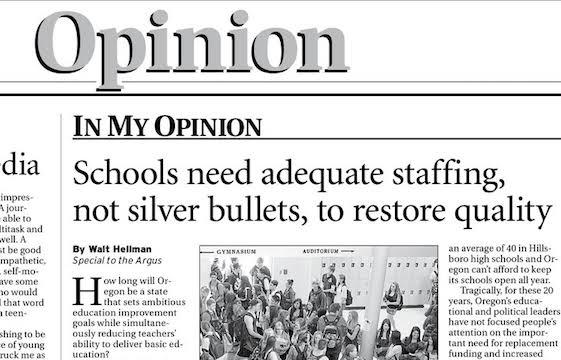
As you all guessed it already, yes, it is a section in a newspaper. So, what do you think exactly is the expansion of ‘opt ed’ and the meaning behind it? Before going deep into the answer, let’s know editorial page in a newspaper is a separate page that is fully devoted for public express their opinions through letters to the editor. This is important to know as Opt ed is often placed on the editorial page.
Opt ed column
What is Opt ed?
Opt ed is the abbreviation of the word opposite the editorial page. Opt ed is an article that often has the author expressing an opinion to create a discussion among the readers, this article is not affiliated with the media publisher. It is written by a person who is qualified enough to have an opinion. It is between 700 – 800 words. As it represents the clarity of thinking, it is very important for the person who is writing the opt ed to have a defined clarity on his or her opinion.
How to write one?
There are few suggestions to produce an effective opt ed article.
Ways to attract a reader
Catchy title
The title of the article should be appealing, as you have not got all the time of the reader. The reader should be pulled in to read the article just by looking at the title and be convinced that it’s worth his or her time to continue.
Start your article by addressing the issue
Instead of spending a paragraph to introduce the issue, it is better to get straight to the main point. As a lengthy introduction can tire the reader.
Make it look short
Sticking to the word limit is an important rule to be followed. Article will be more effective if it is short and clear. As lengthy-looking articles are often rejected by readers. In other words, sticking to the word limit decides whether the reader will pick the paper or not.
The opinion should belong to you
You should own the opinion that is being expressed. It is better not to be a ghost writer (a person writing someone else’s opinion). Owning the opinion is very important as the ghost writer may not always agree with your opinion, which will end with the article being not so effective and powerful.
Evidence
The article would be well built if your points or opinion on an issue is addressed with evidences. Placing more evidences on the article can give more clarity to the readers.
Knowledge
You should have significant knowledge on the issue that you are going to write about. Providing information regarding the topic with inaccuracy will land you and the newspaper organization that published on trouble. On the other hand, it will mislead the readers.
Do Opt ed writers get paid?
Before knowing the answer, let us know Opt ed writers are of two types – one that works when the newspaper organization approaches him or her to write an Opt ed article and the other is one of the readers (public) who approach the newspaper organization to get their article published on their newspaper columns. The first type of Opt ed writers get paid mostly while the second type often gets rewarded with publicity that adds to their market image.
Visiting places is a great source of recreation. After all the work that you did in the last week, you deserve a vacation. People are different and so are their choices. Some may like to visit a park, to some, a monument might be a place for leisure. Others may go to a science exhibition or a museum. A commonplace that we all must have been at least once, is a zoo ( abbreviated form of Zoological Park).
A zoo is an enthralling place for it is home (artificial though) to a lot of animals. And it is the basic nature of an organism to be intrigued by a creature of another species. That is the reason we like going to zoos. Mostly, people visit the premises with their children. Children are the ones who enjoy the sight of animals the most. These children later become adults and take their children to zoos and the cycle continues.
But is it worth it going to a zoo? Rather the question should be that ‘Should we go to a zoo?’
I would say no. Reasons are less but carry weight and are mentioned below in as systematic a way as possible.
It is not their natural habitat – Ever saw a tiger inside a cage? How does it behave? Does he seem happy or is he angry and frustrated? No doubt, big cats like lions, jaguars, and tigers and provided a decent place to live, but is that adequate for them? These creatures and built to live in the open, hunt, run, and enjoy life. But here, in a zoo, they are enclosed within a designated area in the name of preservation and people enjoy their sight.
The same is the case with a chimp or a crocodile or several animals and birds present there. Rather all of them.
Are they fed enough? – On average, an adult tiger or lion requires about 6-12 kg of meat daily. So, is this consumption need of these cats being fulfilled at the zoo? Corruption in the funds for the food for the animals has been in news many times. Not only this, a normal prudent man can, just by looking at the physical appearance of the animals deduce that they aren’t well-fed and properly taken care of.
What are you throwing at them and why are jumping off?– People throwing stones, food items that are not even good for the animals is a rare sight. Imagine the number of damages the animals suffer due to this callous behavior of the visitors. And a drunk man jumping off the railing into a white tiger’s area is a story that needs no elucidation. The incident made evident the lack of security and careless behavior on part of the authorities to ‘protect’ the animals.
Are they an item for viewing?- Don’t these animals that you and your family enjoy viewing have a right to live; that too freely? Are they items to be viewed and enjoyed?
A good, healthy thought needs to be given to this and if some sense knocks in, things will change for sure.
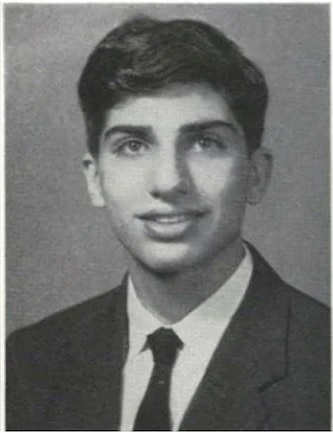
Ratan Naval Tata- an epitome of benevolence, nobility & perspicaciousness. He is the country’s true treasure. He was born to Naval Tata and Sooni Tata. Naval Tata was the adopted son of Ratanji Tata, the younger son of Jamsetji Tata, founding father of the Tata group.
Ratan Tata received his early education at Campion School, Mumbai. Later, he enrolled at The Cathedral & John Connan School, Mumbai & at the Bishop Cotton School, Shimla. he graduated from New York’s Riverdale Country School in 1955 & holds an architecture degree from Cornell University, USA. He is also a Harvard Business School graduate.
During his tenure as Chairman of the Tata Group (1991-2012), Revenues soared over 40 times & profits increased by 50 times. The company’s revenue grew from $5.7 billion in 1991 to an astounding $103 billion in 2016. His efforts propelled India’s ascension to the forefront of global trade. His acquisition of renowned and fabled foreign companies made Tata more global.
Tetley, the UK’s largest tea brand; a 25% stake in VSNL; NatSteel, Singapore’s single largest steel producer; South Korea’sDaewoo Motors; New York’s iconic – The Pierre hotel; Boston’s Ritz-Carlton hotel; San Francisco’s Campton Hotel; and Ford’s Jaguar and Land Rover are just a few of his cardinal acquisitions.
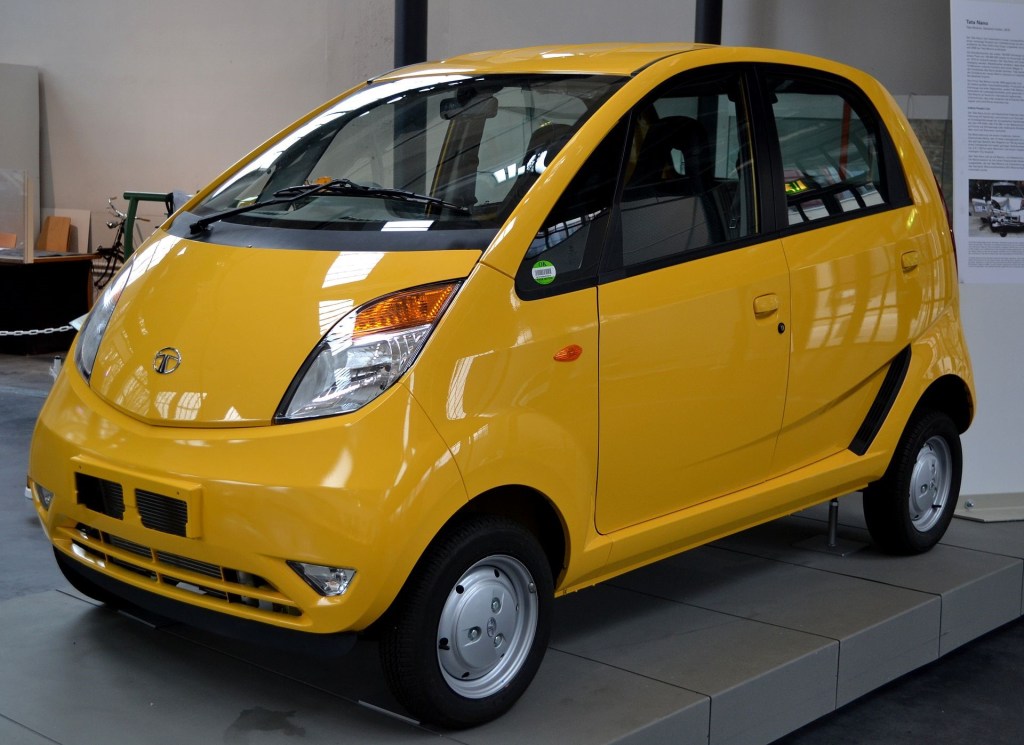
TATA NANO- Ratan Tata’s Dream Project
Nano cleped as the “World’s Cheapest Car” has a backstory worth knowing. The idea of an ‘economical and safe transport’ was devised in Sir Ratan Tata’s mind when he saw a family of 4 on a scooter, riding away in the rain on the treacherous road. It made him worried, not just about their safety but for many other families just like them.
“The fact of unsafe travel was bothering me,” said Ratan Tata, Chairman Emeritus, Tata Sons and Chairman, Tata Trusts.
“What really motivated me, and sparked a desire to produce such a vehicle, was constantly seeing Indian families riding on scooters, four or five on a scooter, maybe the child sandwiched between the mother and father, riding to wherever they were going, often on slippery roads in the dark.” He further quoted.
His initial idea wasn’t a Car, it was to make scooters safer. “That mutated into four wheels, no windows, no doors, just a basic dune buggy. I finally decided it should be a car.” stated Tata.
Nano was more than just a car, it represented a promise. He promised the people an “economical and safer” mode of transportation, quoting a price of 1,00,000 Rupees. Even though ‘The People’s Car’ had a bumpy ride in the market and is now discontinued, Sir Ratan Tata’s gesture will live on in the hearts of all Indians.
PHILANTHROPY- THE TATA WAY
Ratan Tata has done a lot of humanitarian work, following in the footsteps of Jamshedji Tata, the Century’s Greatest Philanthropist. But it was his grandmother, Navajbai Tata’s, generosity that truly inspired him and has lingered with him to this day. “She had homes for the poor all over the country…she operated in that way not to gain visibility for herself, but she was a very Kind-hearted & passionate in terms of doing away with misery,” Tata said, talking about his grandmother.
To help India battle the baneful & virulent COVID-19, he donated 1500 crores. “The COVID 19 crisis is one of the toughest challenges we will face as a race. The Tata Trusts and the Tata group companies have in the past risen to the needs of the nation. At this moment, the need of the hour is greater than any other time.” In an Instagram post, he stated.
Tata Education and Development Trust – a philanthropic affiliate of India’s Tata Group – a $25 million endowment, that allows Cornell to provide financial aid to undergraduate students from India.
The Tata Trust also teamed up with khan academy, a Non-Profit-Organization, to provide free online education to all Indians.
Tata group donated a 551 bedded COVID-19 Hospital, built from scratch utilizing prefabricated shipping containers.
Tata Steel’s 1000 school project, awarded the “Most Impactful CSR Project, 2018″, Aimed at improving the quality of education in Government schools as well as strengthening the governance against child labour & increasing access to schools.
Tata’s contribution to building India is unmatchable & prodigious.
As you all guessed it already, yes, it is a section in a newspaper. So, what do you think exactly is the expansion of ‘opt ed’ and the meaning behind it? Before going deep into the answer, let’s know editorial page in a newspaper is a separate page that is fully devoted for public express their opinions through letters to the editor. This is important to know as Opt ed is often placed on the editorial page.What is Opt ed?Opt ed is the abbreviation of the word opposite the editorial page. Opt ed is an article that often has the author expressing an opinion to create a discussion among the readers, this article is not affiliated with the media publisher. It is written by a person who is qualified enough to have an opinion. It is between 700 – 800 words. As it represents the clarity of thinking, it is very important for the person who is writing the opt ed to have a defined clarity on hi or her opinion.How to write one?There are few suggestions to produce an effective opt ed article.Catchy titleThe title of the article should be appealing, as you have not got all the time of the reader. The reader should be pulled in to read the article just by looking at the title and be convinced that it’s worth his or her time to continue.Start your article by addressing the issueInstead of spending a paragraph to introduce the issue, it is better to get straight to the main point. As a lengthy introduction can tire the reader.Make it look shortSticking to the word limit is an important rule to be followed. Article will be more effective if it is short and clear. As lengthy-looking articles are often rejected by readers. In other words, sticking to the word limit decides whether the reader will pick the paper or not.The opinion should belong to belong to youYou should own the opinion that is being expressed. It is better not to be a ghost writer (a person writing someone else’s opinion). Owning the opinion is very important as the ghost writer may not always agree with your opinion, which will end with the article being not so effective and powerful.EvidenceThe article would be well built if your points or opinion on an issue is addressed with evidences. Placing more evidences on the article can give more clarity to the readers.KnowledgeYou should have significant knowledge on the issue that you are going to write about. Providing information regarding the topic with inaccuracy will land you and the newspaper organization that published on trouble. On the other hand, it will mislead the readers.Do Opt ed writers get paid?Before knowing the answer, let us know Opt ed writers are of two types – one that works when the newspaper organization approaches him or her to write an Opt ed article and the other is one of the readers (public) who approach the newspaper organization to get their article published on their newspaper columns.The first type of Opt ed writers get paid mostly while the second type often gets rewarded with publicity that adds to their market image.
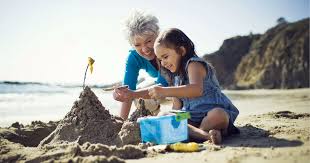
Summer vacations are the best time in a year for every student. It offers every student an opportunity to explore new stuff. It also offers a chance of taking a break from the daily routine and shift to new hobbies such as gardening, painting, singing, and dancing while having fun with friends. All of us spend summer vacation doing what we love the most. Some people like to play at home simple, while others prefer stepping out to explore new things.
How I spent my summer Vacation, before Pandemic?
One reason why we have a long summer holiday is that the weather is just too hot to study or play or do anything comfortably. Many of my school friends run away with their families to the cool comfort of the hills. Those who stay back in the city get up late, hang around with friends, sleep an hour or two in the afternoons, and watch TV or play video games in the evenings. To me this amounts to doing almost nothing. During my last summer holidays, however, I did do something!
Of course, in the first three days of my month-long break it was great to wake up at six in the morning, take a look at my watch, and go back to sleep. I woke up at six-thirty, and that extra half- hour was pure heaven. But from the fourth day onwards, there was something else on my agenda-a three-week table-tennis coaching camp for school students. It was being conducted for three hours in the morning, five days a week, in a local club. The head coach, in his playing days, had represented India. Here was an opportunity I did not want to miss at any cost. After all, I too want to play for my country some day.
Since the camp started at 8 am, I was back to getting up at six. At the camp I learnt some new ways to serve, and some new strokes like the jab. I improved my ability to handle spin. I quickened my reflexes. I also learnt how to quickly find out an opponent’s weaknesses, and attack him there. Returning home and bathing with lots and lots of water was quite a treat. In the afternoons, I studied and slept. In the evenings there was a great family reunion with all of us sitting together to watch TV. When school was on, there just wasn’t enough time for this. Before I knew it, my summer vacation was over, and I was itching to display my new-found table tennis skills in our Indoor Games Hall in school!
How I spent my summer vacation, during Pandemic?
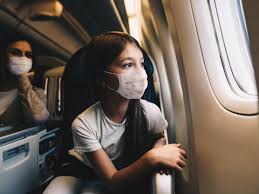
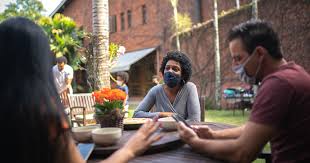
Given the COVID-19 pandemic, summer vacations may look different this year. Thus, there are some additional considerations to assess when taking time off. Here are some tips for lawyers considering vacationing during the summer months.
The New Normal: Consider Travel Restrictions and Self-Quarantines Before planning any trips out of state, it can be helpful to consider whether your law firm has policies on local and international travel. Many law firms have travel restrictions or other parameters restricting an attorney’s return to an office after travel. If traveling out of state, depending on the destination since some states are considered “hotspots,” you may have to observe self-quarantining requirements before returning to the office.
If a planned vacation is to a hotspot area or an area with increased levels of infection, it can be helpful to consider beforehand whether you have the capability to work from home if you cannot return to the office for 14 days after travel. Many attorneys also are confirming whether their existing plans to visit other states still make sense at this time. For example, some states are requiring people to quarantine upon arrival. Other popular vacation destinations may pose an increased risk to vacationers who were otherwise practicing social distancing and other steps to reduce risks at home. Thus, the vacationing attorney may consider where the original plan can be revised or altered to reduce ongoing risk of getting sick or of being unable to return to the office in a timely way.
Plan Ahead:- Given that the COVID-19 pandemic has drastically changed how many of us work, it is important to consider the ramifications of the new normal and the impact of the vacationing attorney on others. As such, the vacationing attorney can plan ahead to ensure that everyone is given latitude to adjust their schedules to accommodate potential additional work or issues that may require attention.
health is prior to enjoyment so ‘Stay Home, Stay Safe’.
As one of the oldest civilisations,the Egyptian Civilisation is known for its monumental architecture, agriculture,arts, sciences and crafts at a very early age.
Geography
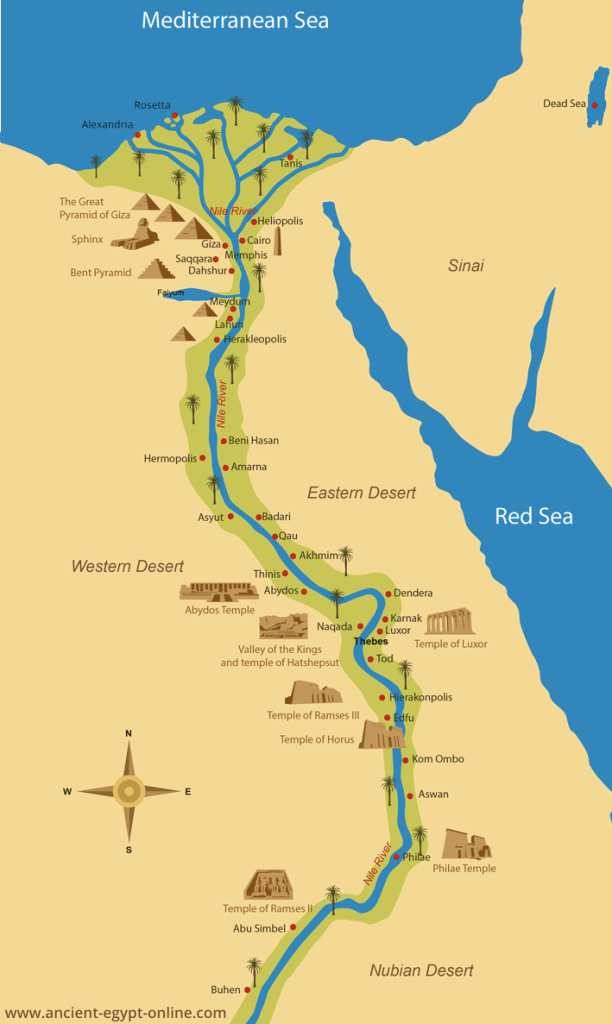
Egypt lies in the north-eastern corner of the African continent.It is bounded by the Red sea on the east and Mediterranean sea in the north.Egypt is irrigated by the River Nile,
Early world civilisations
Which originates in Lake Victoria in the south and flows into the Mediterranean sea in the south and flows into the Mediterranean sea in the north.Deserts are seen on both sides of the Nile River. The Egyptian Civilisation depended solely upon the flow of Nile River,and hence Egypt as called the Gift of Nile by the Greek historian Herodotu. The Nile also served as a means of transport. The Nile valley is very rich and fertile as the river deposits fresh alluvium every year.This alluvium nurtured agriculture and helped to produce surplus of food grains, leading to the development of Egyptian Civilisation.The dry regions on both the sides of the Miles, however remained deserts. Egypt became initimately connected with the Sangam Age Tamilagam by the sea route.
The Hyksos were the rules of the 15th of Egypt and they were probably from West Asia. Persians are the people from the region of Persia,the ancient Iran. Greek refers to the language and people of modern-day state of Greece in Europe. Rome refers to the ancient Roman Empire, which had as its capital the city of Rome in Italy.
Pharaohs,Society and Administration
The Egyptian king was known as the Pharaoh.The people treated pharaoh as a divine form.Under the pharaoh,there was a hierarchy of officials including viziers,the governors of provinces,local mayors and tax collectors.The entire social system was supported by the work and production of artisans including stone cuttors, masons,potters, carpenters,coppersmiths and goldsmith, peasants and workers. Land belonged to the king and was assigned to the officials. Slavery was not common,but captives were used as slaves.Viziers were the high officials who administered territories under the direction of the Pharaohs.The Egyptians believed in life after death.Therefore,they preserved the dead body. The art of preserving the dead body is known as mummification.Pyramids and tombs were built to preserve the body of Pharaohs.The famous Egyptian pharaoh Tutankhamen’s (who ruled from 1332 to 1322 BC (BCE)) tomb with a rich variety of offerings is located near Luxor in Egypt.The mask of his mummy made of gold and decorated with precious stones is an important artefact of the Egyptian Civilisation.
Agriculture and Trade
The Egyptians cultivated wheat,barley,millets, vegetables,fruits,papyrus and cotton.
The cities of Egyptian Civilisation
Papyrus was used for making rope mats sandals and later for producing paper.They domesticated cattle,sheep,goat and pigs,and hunted wild animals.They had pets such as dogs,cats and monkeys.The Egyptians had trade relations with Lebanon,Crete,Phoenicia, Palestine and Syria. Gold,silver and ivory were imported,and they acquired the Lapis Lazuli,a precious stone of bluish colour,from Afghanistan.
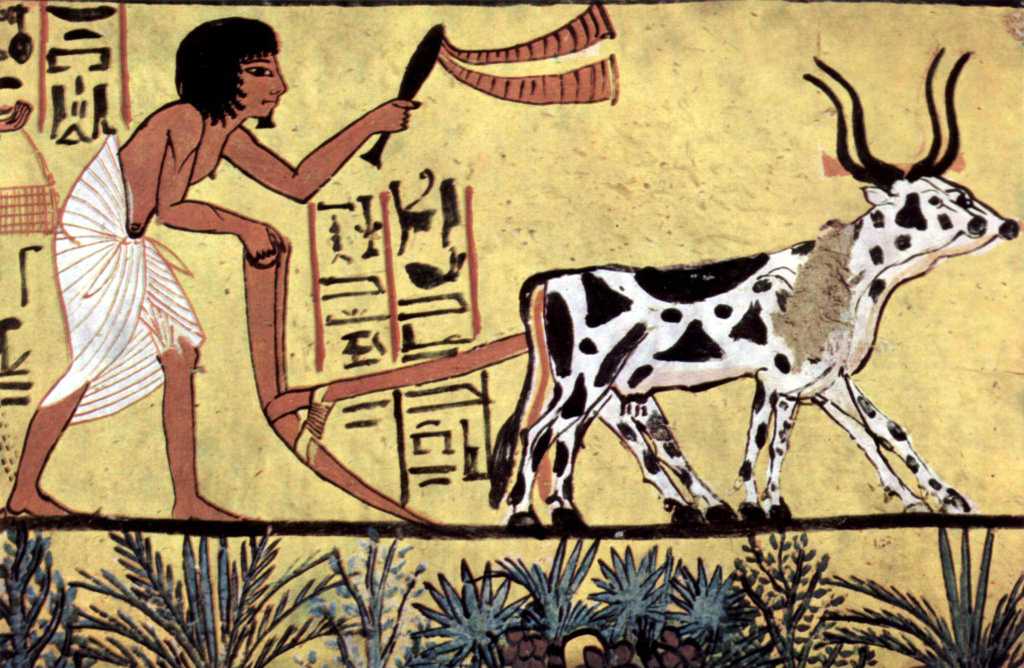
A ploughing farmer,1200 BC (BCE)Depiction of grain harvest
Art and Architecture
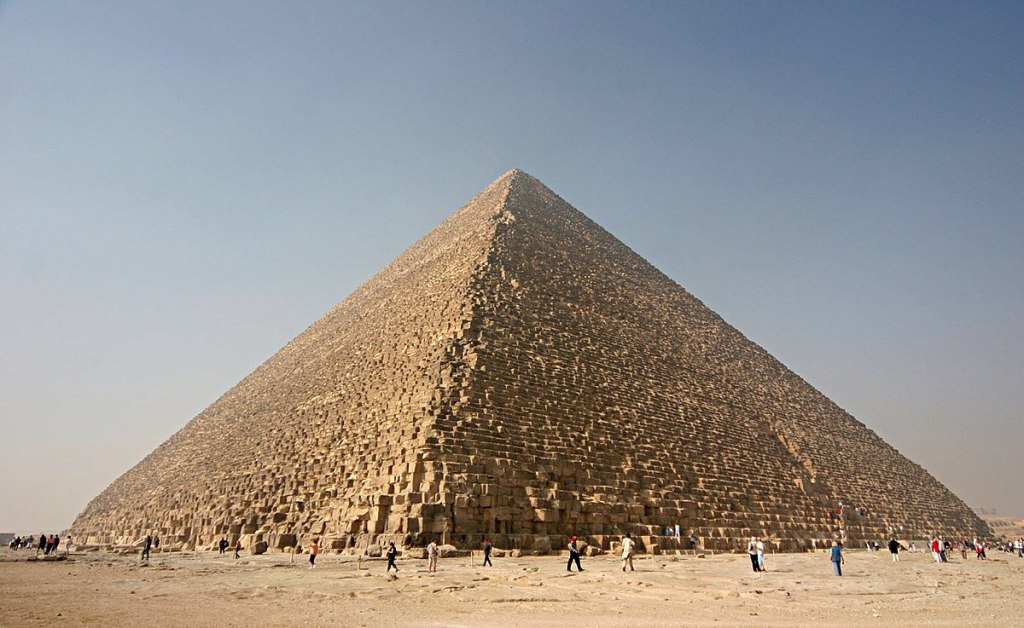
The Egyptians excelled in artan architecture.Their writing is also a form of art.Numerous sculptures,painting and carvings attest to the artistic skills of the Egyptians.The pyramids are massive monuments built as tombs of mourning to the Pharaohs.The great pyramids of mourning to the Pharaohs.The great pyramids near Cairo are known as the Giza pyramids.
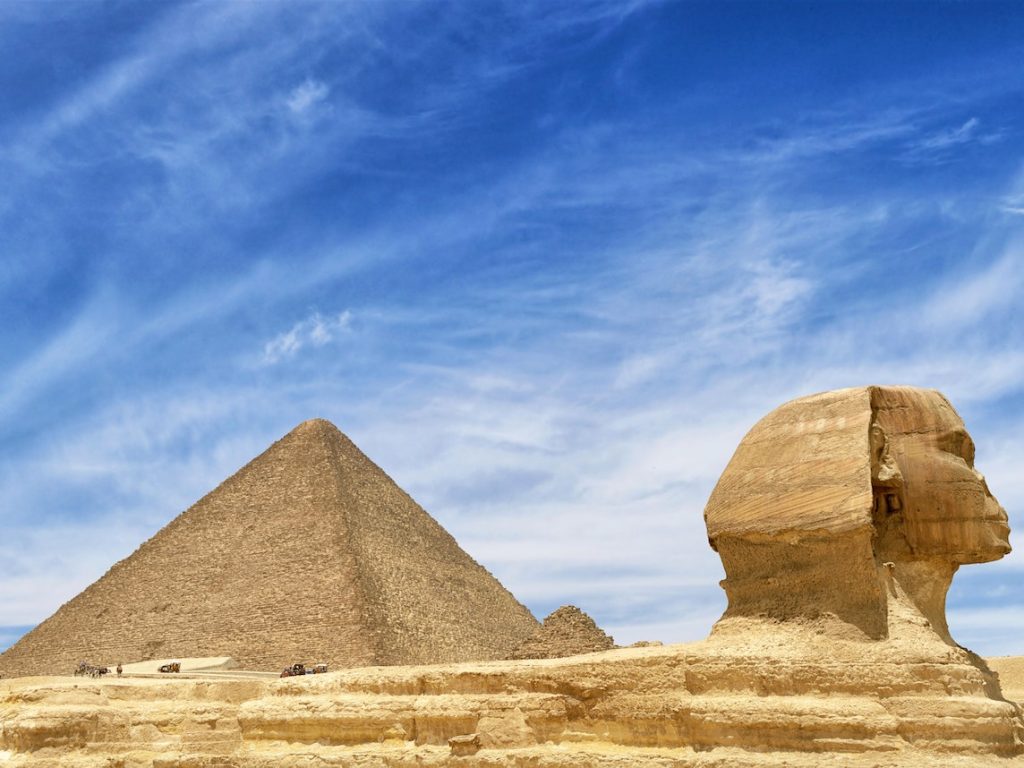
The Great Sphinx of Giza is a massive limestone image of a lion with a human head.It is dated to the time of Pharaoh Khatre.It is one of the largest sculptures of the world and measures seventy three metres in length and twenty metres in height.
The Great pyramid of GizaView of the sphinx with the Great pyramid, Egypt
Religion
The Egyptians practiced polytheism.Amon,Re,Seth,Thoth,Horus and Anubis are some of the gods of Egyptians. They worshipped many Gods,but the Sun God,Re,was the predominant one. Later on,the sun God was called Amon.
Philosophy, Science and Literature
The Egyptian Civilisation excelled in science, literature, philosophy, astronomy, mathematics and the measurement system. Sundial ,water clock and glass were developed by the Egyptians. They devised a solar calendar that consisted of twelve months of thirty days each,with five days added to the end of the year. This calendar was introduced as early as 4200 BC (BCE). Literally works included treatises on mathematics, astronomy, medicine,magic and religion. The Egyptians also distinguished themselves in painting,art, sculpture,pottery,music and weaving.
Ancient Egyptian Gods
Writing system
The Egyptians are well known for their writing system. Their form of writing is known as hieroglyphic. Hieroglyphic was used in the inscriptions on seals and other objects. The heretic, an another form of writing, was used for common purposes. This form of writing used a pictogram-based system. It was developed around 3000 BC (BCE) and many texts and books were written using this script.Now this inscription is on display in British Museum,London.
Hieroglyphic script on a Rosetta Stone
Characteristics and Contributions of the Egyptian Civilisation
The Egyptians developed a solar calendar system.
The pyramids and their designs show their mathematical and surveying skills.
Hieroglyphic writing system attests to their skills in handling symbols.
Preservation of human body in the form of Mummies.
They applied innovation in the use of science and technology.
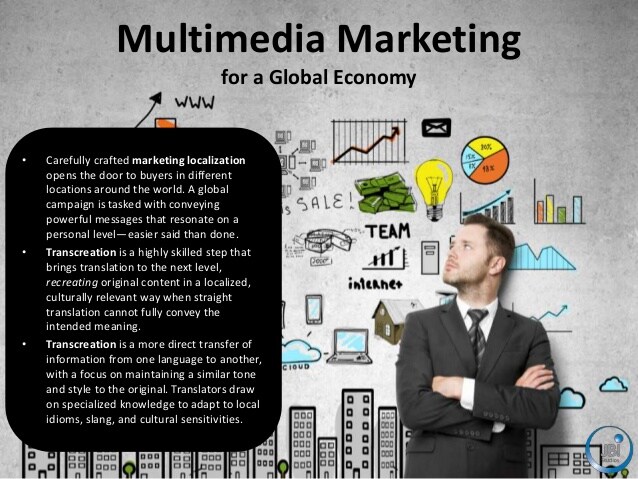
Advertising has become very prevalent in our daily lives , so for a product to stand apart , it is very essential to present it in a dynamic , visually stimulating manner to grab the attention of consumers . The business world is slowly rejecting run of the mill tradition methods (such as placing ads in yellow pages , distributing pamphlets , etc.) and adopting solutions from the electronic era . Only companies with a nerve to radically change their marketing strategies for the new millennium will survive and be able to cater to ever- changing customer’s mindset . Applications of multimedia in the marketing field include the following :
Presentations for launching the products of a company . Reaching the target audience with necessary technical services or products requires clear communication stating the benefits and features , outlining its applications and any other product -related details , all presented in a well- designed and interactive manner so that the users can be familiarized faster . Multimedia presentations helps in motivating , informing and captivating audiences via PCs , laptops , plasma screens or kiosks delivered via CD-ROM or the Internet .
Multimedia is used to create interactive product catalogues , training tutorials , buyer guides and information directories with adequate search and navigation facilities to guide the user to easily trace the desired information . A buyer guide can list the nearly dealers , a comparison of the top brands , maps of the city and other helpful guest services .
E-mail advertising or placing banner ads on the internet is an extremely cost -effective method of launching a product , promoting an event or selling services . Effective use of multimedia in advertising can make potential clients sit up and make notice .
Multimedia applications help in building brand loyalty as well as improving sales .Brand loyalty will be improved as the users are provided a custom application which entertains ; informs or assists them .
Graphical elements , animations , as well as audio and video can be used to more effectively deliver sales instructional or marketing messages , thereby differentiating a firm from its competitors .
Cloud computing refers to any kind of hosted service delivered over the internet. These services often include servers, databases, software, networks, analytics and other computing functions that can be operated through the cloud.
Files and programs stored in the cloud can be accessed anywhere by users on the service, eliminating the need to always be near physical hardware. In the past, for example, user-created documents and spreadsheets had to be saved to a physical hard drive, USB drive or disk. Without some kind of hardware component, the files were completely inaccessible outside the computer they originated on. Thanks to the cloud, few people worry anymore about fried hard drives or lost or corrupted USB drives. Cloud computing makes the documents available everywhere because the data actually lives on a network of hosted servers that transmit data over the internet.
The need of Cloud Computing
One of the major reason why huge number of small scale and large scale business sectors from all over the world are using cloud today, is because of tremendous effect on cost saving. Yes, Cloud computing has made drastic change in the reduction of hardware and software cost and other server resources as well
We can run all our workload data of applications and processes online over the internet remotely instead of using physical hardware and software
Day to day issues related to server maintenance or installation of software/ hardware or whether it is renewal of license, all those factors are undertaken via cloud computing service providers
With the help of cloud we can access any data, applications whenever and wherever we want to, over the internet. 100 of pre-configured applications can be install and updated
Cloud not only handles data storage remotely but it also protects and recovers all crashed or loss data, so we don’t have to worry about crashed or loss of data, it gives you high security
Cloud Computing Service Types
Cloud computing services are broken down into three major categories: software-as-a-service (SaaS), platform-as-a-service (PaaS) and infrastructure-as-a-service (IaaS).
Software-as-a-Service
SaaS is the most common cloud service type. Many of us use it on a daily basis. The SaaS model makes software accessible through an app or web browser. Some SaaS programs are free, but many require a monthly or annual subscription to maintain the service. Requiring no hardware installation or management, SaaS solutions are a big hit in the business world.
Examples of SaaS: Microsoft Office 365, Salesforce, Cisco WebEx, Google Apps
Platform-as-a-Service
PaaS is a cloud environment supporting web application development and deployment. PaaS supports the full lifecycle of applications, helping users build, test, deploy, manage and update all in one place. The service also includes development tools, middleware and business intelligence solutions.
Notable examples include Windows Azure, AWS Elastic Beanstalk and Google App Engine.
Infrastructure-as-a-Service
IaaS provides users with basic computer infrastructure capabilities like data storage, servers and hardware — all in the cloud. IaaS gives businesses access to large platforms and applications without the need for large onsite physical infrastructures.
Notable examples of IaaS include DigitalOcean, Amazon EC2 and Google Compute Engine.
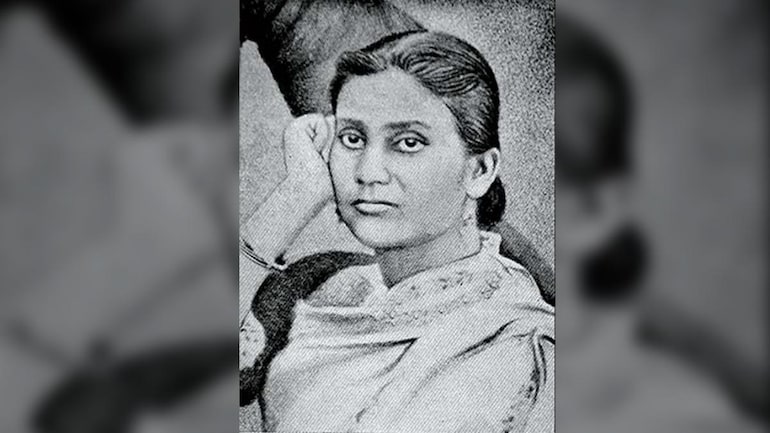
On July 18, 1861, Kadambini Bose was born in Bhagalpur, British India (modern-day Bangladesh). She was born during the Bengali renaissance, a period of religious, social, and educational developments in the Bengal area from the nineteenth to the early twentieth centuries. This cultural revolution had a direct influence on Kadambini since her father was a prominent member of the Hindu reformation movement Brahmo Samaj, as well as co-founder of India’s first women’s rights group, Bhagalpur Mahila Samiti. And, despite the fact that educational options for Indian women were limited at the time, Kadambini’s father, the headmaster of Bhagalpur School, recognised the value of education and enabled Kadambini to attend.
Kadambini married Dwarkanath Ganguly, her mentor and instructor at Bethune College, after graduation. Dwarkanath, an outspoken advocate for women’s rights in India, urged his wife to seek a medical degree.Calcutta Medical College declined to enrol Kadambini, but the couple persisted, and she was finally admitted as the college’s first female medical student. Despite continuous opposition from instructors and staff, Kadambini received her Graduate of Bengal Medical College degree in Calcutta in 1886, becoming the first Indian-educated female doctor.(Anandi Gopal Joshi was the first female Indian doctor, although she received her education in America.)
Kadambini had only been practising medicine for a few months when a hardline Hindu news publication published an article questioning her doctorate credentials and referring to her in derogatory terms. Kadambini took the case to court, and after a lengthy legal struggle, the article’s editor was convicted to six months in jail for libel. Conservatives opposed to female emancipation could not stop her, and Kadambini chose to pursue the highest possible medical qualification; she flew to the United Kingdom in 1892 and obtained three additional doctorate certificates. She returned to India and worked as a gynaecologist at Lady Dufferin Hospital before opening her own private practise.
Kadambini’s hectic life as a doctor and mother of eight children did not prevent her from playing a part in India’s women’s rights movement. She was one of six delegates in the first female delegation to the Indian National Congress in 1889, and she helped organise the Women’s Conference in Calcutta in 1906. She was also quite involved in a number of other campaigns, such as one that sought to better working conditions for female Eastern Indian coal workers.
A mobile phone ( also known as a wireless phone,cell phone, or cellular telephone) is a small portable radio telephone.
The mobile phone can be used to communicate over long distances without wires. It works by communicating with a nearby base station (“also called a cell site”) which connects it to the main phone network. When moving, if the mobile phone gets too far away from the cell it is connected to, that cell sends a message to another cell to tell the new cell to take over the call. This is called a “hand off,” and the call continues with the new cell the phone is connected to.
The hand off is done so well and carefully that the user will usually never even know that the call was transferred to another cell.
Mobile phone
USE OF MOBILE PHONE
Mobile phones are used for a variety of purposes, such as keeping in touch with family members, for conducting business, and in order to have access to a telephone in the event of an emergency. Some people carry more than one mobile phone for different purposes, such as business and personal use.
Multiple SIM cards may be used to take advantage of the benefits of different calling plans. For example, a particular plan might provide for cheaper local calls, long distance calls, international calls, or roaming.
The mobile phone has been used in a variety of diverse contexts in society. For example:
* A study by Motorola found that one in ten mobile phone subscribes have a second phone that is often kept secret from other family members.
* Some organization assist victims of domestic violence by providing mobile phones for use I’m emergencies. These are often refurbished phones.
* Mobile telephony also facilities activism and citizen journalism.
* The advent of widespread text messaging has resulted in the cell phone novel, the first literary genre to emerge from the cellular age, via text messaging to a website that collects the novels as a whole.
* The TV industry has recently started using mobile phones to drive live TV viewing through mobile apps, advertising, social TV and mobile TV. It is estimated that 86% of Americans use their mobile phone while watching TV.
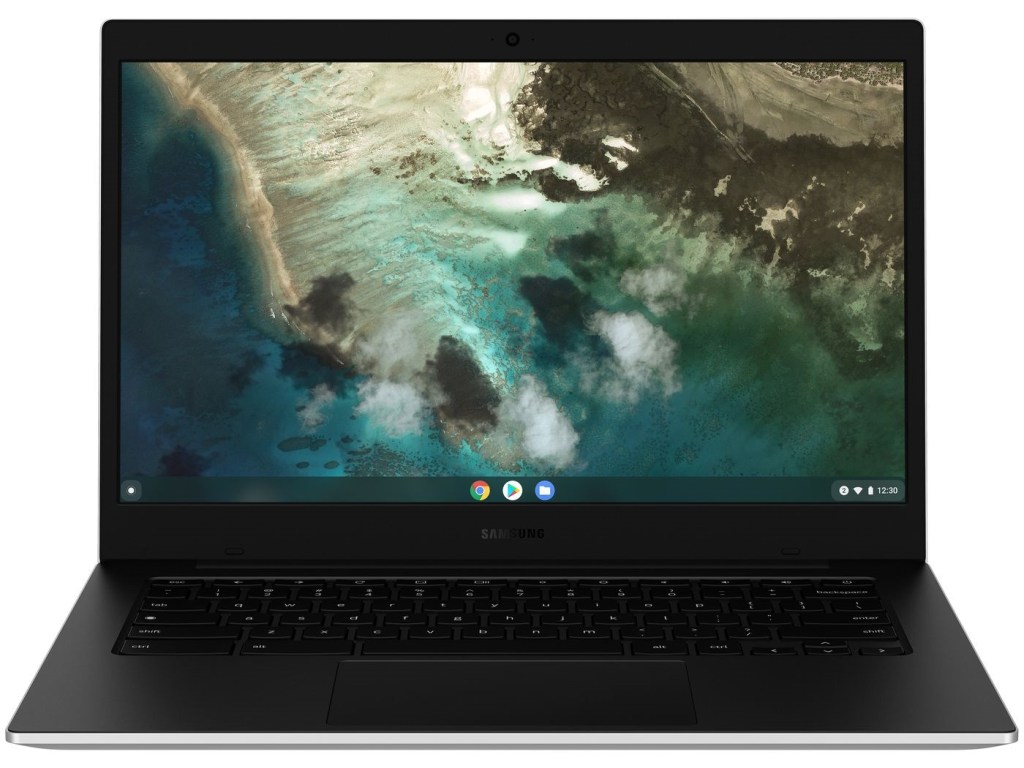
The Galaxy Chromebook Go launched on Samsung’s website last month as a new cheap Chromebook from the company. There were still a lot of unknown facts regarding the 14-inch tablet, other than a few specifications and pictures. The notebook is now official and may be purchased.
While just the Wi-Fi variant will be available on Thursday, Samsung plans to release an LTE version in the following weeks, which could be a great bonus for on-the-go web browsing.
Galaxy Chromebook Go.
The low pricing of the Galaxy Chromebook Go appears to be reflected in its features. It has a 14-inch 1366 x 768 HD display, which is a significant downgrade from the Galaxy Chromebook 2’s 4K OLED panel. It also has an Intel Celeron N4500 CPU and 4GB of RAM, which won’t set the world on fire but should suffice for everyday Chrome use.
Two USB Type-C connectors, a USB 3.0 port, and a headphone-out/microphone-in combination port are included on the Galaxy Chromebook Go. The Chromebook boasts a military-grade construction and weighs only 3.2 pounds, according to Samsung (1.45kg). The island-style keyboard is spillproof and can withstand the odd drop. There are two 1.5W speakers included, as well as Wi-Fi 6 which is significantly quicker.
Samsung says that the Galaxy Chromebook Go’s 5480mAh battery would last 12 hours on a single charge, which is impressive compared to the Chromebook 2’s seven-hour battery life (in our tests) but is likely due to the changes in display and CPUs.
The Galaxy Chromebook Go is already available for purchase on Samsung’s website for $299. You may get it for as little as $129.99 if you have a device that can be traded in. An LTE version will be available shortly, according to Samsung.
• NITI Aayog document – ‘Investment Opportunities in India’s Healthcare Sector’
Promotes further privatisation of health care Explores the pandemic as business opportunity for the health “industry” to grow. • Author – Importance of public health and an enhanced government role in health delivery services. • Story of 2 states (model) Kerala and Maharashtra comparison Both are big states – comparable state GDPs Kerala COVID mortality – 0.48% Maharashtra COVID mortality – 2%. Reasons Huge differences in the effectiveness of public health systems Kerala has more government doctors compared to Maharashtra Kerala also has a higher proportion of government hospital beds Kerala allocates over one and half times higher funds on public health every year in per capita terms compared to Maharashtra. Weak public health system has proved to be a critical deficiency Clear message: a neglect of public health systems means large-scale, avoidable losses of lives.
Lacunae in the health care system
Resource allocation
• Central vista project – ₹20,000 crores
• Could be utilised for setting up oxygen plants, numerous lives would have been saved.
• Paltry allocation for National Urban health
• Last time allocation – Rs. 1000 crores (amounts to Rs 2 per individual per month)
• Parliamentary Standing Committee – Suggested allocating ₹1.6 lakh crores for public health during the current year (almost doubling of the present central health Budget)
2.To regulate the private players in health sector
• High Pricing COVID-19 care often costs ₹1 lakh to ₹3 lakh per week in large private hospitals Massive hospital bills – untold distress even among the middle class.
• Unregulated drug use Eg. Drug Remidesvir was used in COVID patients without valid evidence on efficacy Indiscriminate use of steroids culminated
Mucormycosis infections
• Effective implementation of Clinical Establishments (Registration and Regulation) Act Only 11 states have implemented it Not effectively implemented due to a major delay in notification of central minimum standards, and failure to develop the central framework for regulation of rates.
• In essence : Need to regulate the private hospitals. And invest more in the public health
Democracy is a system of government in which the supreme power is vested in the people of a country and people elect their representatives either directly or indirectly through fair and free elections, which are usually held periodically.
Definition
According to Mahatma Gandhi, “True democracy cannot be worked by twenty men sitting at the centre. It has to be worked from below by the people of every village”.
Salient Features of Democracy
✓Elected representatives of people and final decision-making power to the representatives. ✓Free and fair elections. ✓Voting right is with equal value to those who have attained the age of 18. ✓Fundamental rights and protection of individual freedom.
Evolution of Democracy
Democracy began 2,500 years ago in some of the city-states of ancient Greece. It is important to know that democratic institutions existed in India as early as the Vedic period. Chanakya’s Arthashastra tells us that in ancient India, an autonomous village community was the basic unit of the local government. During the later chola period ancient Tamil Nadu, Kudavolai system was a very notable and unique feature of the village administration of the Cholas. The evolution towards a democracy is represented by the following values: freedom, equality, fraternity, accountability, transparency and trust.
Forms of Democratic government
Types of Democracy
There are two types of democracies ✓Direct democracy ✓Indirect (representative) democracy
Direct Democracy
When the people themselves directly express their will on public affairs, the type of government is called pure or direct democracy. Example: Ancient Greek city-states, Switzerland
Indirect Democracy
When the people express their will on public affairs, through their elected representatives, the type of government is called Indirect or representative democracy.
Democracy in India
India has a parliamentary form of democracy. The Indian Parliament comprises the elected representatives of people and makes the laws for the country. The participation of people in the decision making and the consent of citizens are the two important elements of the parliamentary form of government in India.
India is the largest democratic country in the world. Democracy in India works on five basic principles. These are sovereign, socialist, secular, democratic, republic.
Election in India
India has a quasi-federal government, with elected representatives at the federal, state and local levels. The general elections are conducted by the Election Commission of India. At the national level, the president of India, appoints the Prime Minister, who enjoys majority in the Lok Sabha, the lower house of the Parliament of India.
The First Elections in Democratic India
General elections to the first Lok Sabha since independence were held in India between 25 October 1951 and 21 February 1952. The Indian National Congress emerged victorious by winning 364 of the 489 seats. JawaharlalNehru became the first democratically elected Prime Minister of the country.
Rani Lakshmibai or Jhansi ki Rani, the queen of Jhansi. The birth anniversary of Rani Lakshmibai is 19 november 1828 in Manikarnika Tambe in Varanasi. It is is celebrated as Martyr’s Day in Jhansi. Rani Lakshmibai,is one of the famous warriors of India’s struggle for Independence. Rani Lakshmi Bai was a brave queen who fought battle with English people to save her country. She saved her name in battle field. she is a great symbol of strength of females of India. She was the wife of Maharaja Gangadhar Rao . He is the king of jhasi . She was one of the leading figures of the Indian Rebellion of 1857 and became a symbol of resistance to the British Raj for Indian nationalists. She died in the Rebellion, wounded and killed in a battle. She died on 18 June 1858. The Rebellion was suppressed by November that year. She was named Manikarnika Tambe and was nicknamed Manu. Her father was Moropant Tambe and her mother Bhagirathi Sapre (Bhagirathi Bai). Her parents came from Maharashtra. Her mother died when she was only four years old. Her father was the Commander of the war of Kalyanpranth. Her father worked for Peshwa Baji Rao II of Bithoor district. She was educated at home. She was able to read and write, She was more independent in her childhood than others of her age, her studies included shooting, horsemanship, archery. Rani Lakshmibai was very much interested to riding on horseback between the palace and the temple, sometimes she was carried in a palanquin. Her palace, the Rani Mahal, has now been converted into a museum. It houses a collection of archaeological remains of the period between the 9th and 12th centuries AD. Growing up with the boys in the peshwa’s court, she was trained in martial arts and became proficient in sword fighting and riding. She was widowed without bearing a surviving heir to the throne. She was widowed without bearing a surviving heir to the throne. Following established Hindu tradition, just before his death the maharaja adopted a boy as his heir. The 22-year-old queen refused to cede Jhansi to the British. Shortly after the beginning of the mutiny in 1857, which broke out in Meerut, Lakshmi Bai was proclaimed the regent of Jhansi, and she ruled on behalf of the minor heir. Joining the uprising against the British, she rapidly organized her troops and assumed charge of the rebels in the Bundelkhand region. In 1842, Lakshmi bai got married and got the name of Rani Lakshmibai. Few years after marriage, Manikarnika gave birth to a boy but he couldn’t survive and died after four months. Lakshmibai gave a great fight to the British as the siege of Jhansi lasted for about two weeks. After a the war, when the British army entered Jhansi, Rani Lakshmibai, tied her son Damodar Rao to her back and fought bravely using two swords in both her hands. She escaped to Kalpi and was accompanied by other rebellions. She then departed to Gwalior and a fierce battle was fought between the British and Lakshmibai’s army. Her body was cremated as per her wish, as she didn’t want it to be captured by the British.


















You must be logged in to post a comment.