Humanity hit a new low when an Indian origin American girl was heavily trolled by netizens just because of her faith. NASA, in order to invite new interns tweeted an application showcasing the diverse nature of the organization. An Indian girl also featured in the tweet with Hindu idols in the background of her picture.
An innumerable number of trolls targeted the girl criticizing NASA for including such a “stereotypical” image of Indians according them. But is it okay to bash someone merely because they follow a particular faith or religion? The girl undoubtedly secured a place through her efforts and a futile, good for nothing crowd directly mocked her as a fake science-lover only because she believes in her Gods. If atheism was a criterion to get selected in any scientific organization then people should also nullify the work and contributions of Einstein, Newton and Darwin.
It is so shameful to read the tweets and realize how much hatred and Hinduphobia is prevalent in society. Some of the tweets read ‘She missed Lord Ganesha and 33 million other Gods’, ‘NASA and gods don’t mix. The Indian kid seems to have some kind of obsession with Gods’. Other tweets are too vile to read.
Another user very accurately pointed out “All those mocking her: Hijab, polygamy, child marriages, Niqab, prayers on road, etc. are supposed to be respected under the concept of ‘choice’ and ‘pluralism’ but a Hindu lady practicing her faith has to be ridiculed. Carry on! Your bigotry will make her faith stronger.”
It is indeed true that the case would have been very contrasting only if the girl was wearing either hijab or had a Christ portrait in the background. However, irrespective of any religion or faith, no one should be criticked or targeted just because they are proud of their roots.
The word “Literacy” means an ability to read and write with understanding in any language.A person, who can only read but cannot write is not literate.An illiterate person has to face many practical difficulties in life he cannot read a letter addressed to him by his near and dear ones, he cannot calculate his own income and expenses etc.
The percentage of literate person in India has considerably increased when compared to earlier years.Educated citizens makes intelligent choices and undertake research and development projects.The literacy rate in India is 64.84%.Among all the states in India, Kerala had the highest literacy rate with 94%.
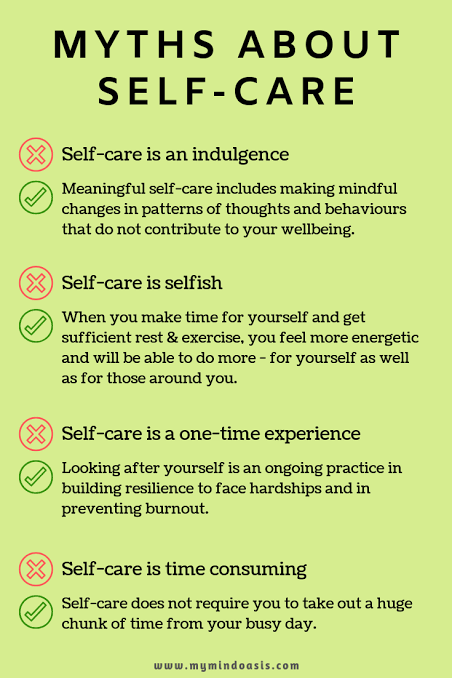
Imagine human mind as a bank account. In order to withdraw money from an account, we need a basic primary balance and we need to deposit from time to time in order to make future withdrawals. Similarly, human mind and body needs equal deposits of self-love, care and compassion in order to reflect that upon others. You cannot pour water from an empty pot. So, it is necessary to fill your pot before you pour it out.
The Social – Media and Magazine definition of self includes Hair-Care, Skin-Care, Spa sessions, etc but we often forget the most important part of our body that requires equal care and nurturing. Yes, our Mind. Our mind works 24/7 unlike our body, hence this calls for a special day to celebrate it’s success and hard work. Self-care is a broad term. It involves any and everything that makes you happy. Be it having an ice cream, putting on a good hair mask or dancing in your bedroom to silly item numbers. The best part about itisthat it doesn’t have to make sense to others.
It is okay to take a day off just to sit with yourself and do nothing. It is okay to binge watch the new show you always wanted to see but never got enough time to do so. It is okay to avoid social gatherings if it’s getting too much for you. It is okay to sleep early and miss out on parties and night-life. It is completely okay to avoid that person, phone call or that text to maintain the sanity of your mind. It is okay to not be okay all the time
But what’s not okay, is to not listen to your heart and letting others decide what you do with your life. Self-care involves standing up to your beliefs unapologetically and living on your terms. It might not always be right but its worth a try. After all life’s too short to not live and sadly most of us are working on auto-pilot mode. So, get up with the sun. Eat your favourite breakfast, binge on your most awaited show, go for long walks and dance to your favourite song till you sleep.
In the aftermath of a rape, victims can face immensely difficult and painful emotions and experiences. Every victim responds to traumatic events in their own way. The effects of the trauma can be for a short while or can last long after the rape.
We all know that rape is a traumatic experience that affects the victim in a physical, psychological, and sociological way. Even though the effects and aftermath of rape differentiate among victims, they are tend to suffer from similar issues found within these three categories. Long term reactions may involve the development of coping mechanisms that will either benefit the victim, such as social support, or inhibit their recovery. Seeking support and professional resources may assist the victim in numerous ways.
Physical Effects:-
Gynecological Effects experienced by the victims include; Vaginal or anal bleeding or infection, hypoactive sexual desire disorder, vaginitis or vaginal inflammation, dyspareunia – painful sexual intercourse, vaginismus – a condition affecting a woman’s ability to engage in any form of vaginal penetration, chronic pelvic pain, Urinary tract infections, pregnancy, HIV/AIDS.
Pregnancy is a potential result of rape. Rape can cause difficulties during and after pregnancy, with potential negative consequences for both the victim and a resulting child. Medical treatment following a rape includes testing for, preventing, and managing pregnancy. A woman who becomes pregnant after a rape may face a decision about whether to raise the child or to make an adoption plan or abort the child.
Sexually Transmitted Diseases(STDs) can affect both the victim and the rapist. While penetrative rape generally does not involve the use of a condom, in some cases a condom is used. The use of a condom significantly reduces the likelihood of pregnancy and disease transmission, both to the victim and the rapist. Rationales for condom use include: avoiding contracting infections or diseases (particularly HIV), especially in cases of rape of sex workers or in gang rape.
Psychological Effects:-
In the immediate effects the victim of rape may often have anxiety and fear directly following their attack. According to a study on the reactions after rape, 96 percent of women said they were scared, shaking, or trembling a few hours after their attack. After more time is passed, the previous symptoms decreased while the levels of depression, exhaustion, and restlessness increased.
After an attack, rape survivors experience heightened anxiety and fear. According to Dean G. Kilpatrick, a distinguished psychologist, survivors of rape have high levels of anxiety and phobia-related anxiety. This includes and is not limited to the following; Feelings of dread, feeling nervous, feeling tense or uneasy, having panic attacks, having an irrational response to certain stimuli.
Post-Traumatic Stress Disorder is an effect which is very common among rape victims. The National Victim Center and the Crime Victim’s Research and Treatment Center released a report that found 31% of women who were raped develop PTSD at some point in their lives following their attack
Self-blame is among the most common of both short- and long-term effects .There are two main types of self-blame: behavioral self-blame (undeserved blame based on actions) and characterological self-blame (undeserved blame based on character). Survivors who experience behavioral self-blame feel that they should have done something differently, and therefore feel at fault. Survivors who experience characterological self-blame feel there is something inherently wrong with them which has caused them to deserve to be assaulted.
Suicide or the attempt of suicide is a common effect among rape victims. Survivors of rape are more likely to attempt or commit suicide. This effect remains, even after controlling for sex, age, education, symptoms of post-traumatic stress disorder and the presence of psychiatric disorders.
Sociological Effects:-
Rape is a stigmatizing in cultures with strong customs and taboos regarding sex and sexuality. For example, a rape victim (especially one who was previously a virgin) may be viewed by society as being “impure.” Victims in these cultures may suffer isolation, be disowned by friends and family, be prohibited from marrying, be divorced if already married, or even killed. This phenomenon is known as secondary victimization. While society targets secondary victimization mainly towards women, male victims can also feel shameful, or experience a loss of purity.
The term victim blaming refers to holding the victim of a crime to be responsible for that crime, either in whole or in part. In the context of rape, it refers to the attitude that certain victim behaviors (such as flirting or wearing sexually provocative clothing) may have encouraged the assault. This can cause the victim to believe the crime was indeed their fault. Rapists are known to use victim blaming as their primary psychological disconnect from their crime and in some cases it has led to their conviction.]Female rape victims receive more blame when they exhibit behavior which breaks the gender roles of society.
To combat the coronavirus epidemic, officials in a Chinese city bordering Myanmar have deployed facial recognition technology connected to personal health codes.
In the last five years, China’s government has rushed to install more than 200 million Surveillance cameras to “cover all public areas,” making it one of the world’s most surveilled countries.
In China, which was the first country to deploy a QR code system to register test results and monitor interactions, surveillance has also been widely used to combat COVID-19.
However, this is the first time that face recognition has been used to follow a person’s activities and health state as they enter and depart residential neighborhoods, supermarkets, transportation hubs, and other public locations.
On Saturday, officials in Ruili, Yunnan province, informed reporters that “everyone who comes in and out needs to have their (health) code and face scanned to pass.”
According to data released Tuesday, Ruili found 155 cases in the previous week, making it one of the deadliest viral outbreaks in recent months in China.
In critical places, security technologies like face recognition cameras, smart door locks, and road barricades (managed by police or community volunteers) have been installed, according to local authorities.
According to China National Radio, the scanners can also monitor people’s temperatures.
There are no specifics on how long the database will keep records or whether the system, which is being overseen by the city’s pandemic prevention team, would be shut down once the outbreak is under control.
Privacy related concerns
Ruili, a city of about 210,000 people, is a key crossing point from Muse, Myanmar, which has witnessed growing instability since a February 1 coup, generating worries that people would flee the bloodshed by crossing the Chinese border.
According to the Yunnan Provincial Health Commission, Myanmar citizens accounted for over half of the new cases recorded in the last week, but it was unclear how they reached the city.
When it comes to coronavirus clusters, China has taken a zero-risk strategy.
With strict border restrictions, mass testing, lockdowns, and tie-ups with big tech for surveillance, the illness has been mostly contained since it first surfaced in the central city of Wuhan in late 2019.
However, the proliferation of new health tracking applications has prompted worries about privacy.
According to a New York Times investigation in January, a widely used app monitoring travel history and virus testing produced by Chinese e-commerce giant Alibaba exchanged data with the authorities.
During the peak of the epidemic, police officers in major cities donned helmets with facial recognition technology and infrared cameras to monitor pedestrian temperatures.
China’s ubiquitous monitoring network has been criticized by human rights groups, who claim it is being used to stifle dissent and target minority, ethnic groups.
The Cholas are one among the popular and well-known Tamil morarchs in the history of South India.The elaborate state structure,the extensive irrigation network,the vast number of temples they built, their great contributions to art and architecture and their overseas explots have given them a pre-eminent position in history.
Revival of the Chola Rule
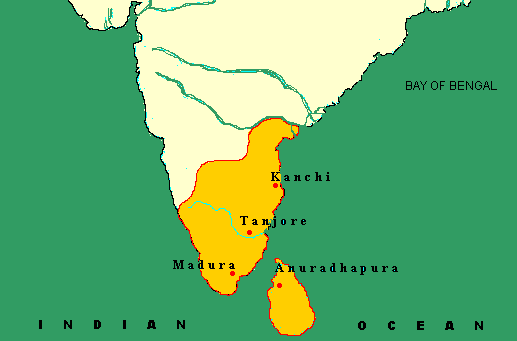
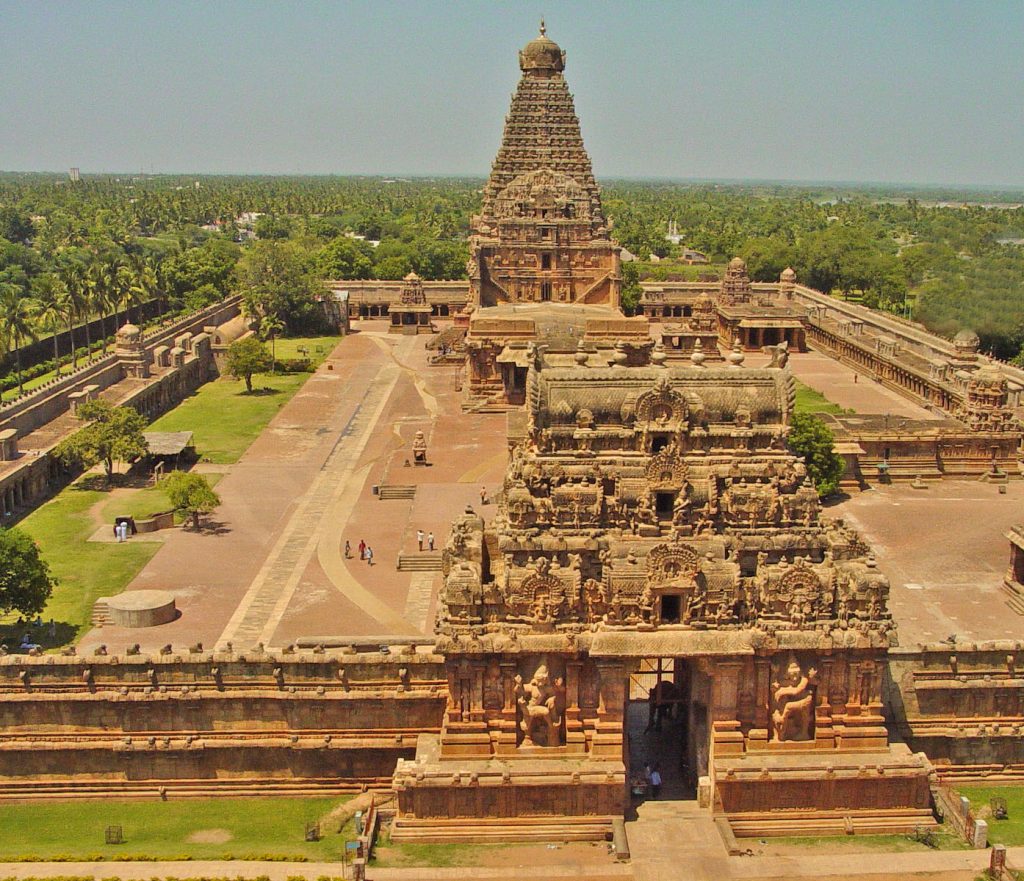
The ancient Chola kingdom resigned supreme with the Kaveri delta forming the core area of its rule and with Uraiyur (present-day Tiruchirapalli) as its capital.It rose to prominence during the regine of Karikala but gradually declined under his successors.In the 9th century vijayalaya, ruling over a small territory lying north of the Kaveri,revived the Chola Dynasty.He conquered Thanjavur and made it his capital.Later Rajendra l and his successors ruled the empire from Gangaikonda Cholapuram,the newly built capital. Rajaraja |(A.D.(CE) 985–1014) was the most powerful ruler of Chola empire and also grew popular beyond his times.He established Chola authority over large parts of South India.His much–acculaimed naval expeditios led to the expansion of Cholas into the West Coast and Sri Lanka.He built the famous Rajarajeswaram (Brihadeshwara) Temple in Thanjavur.His son and successor, Rajendra Chola |(A.D.(CE)1014 – 1044,matched his father in his ability to expand the empire.The Chola empire remained a powerful force in South India during his region.After his accession,his striking military expedition was to northern India,capturing much territory there. He proclaimed himself the Gangaikondan.The Gangaikonda Cholapuram temple was built to commemorate his victories in North India.The navy of Rajendra Chola enabled him to conquer the kingdom of Srivijaya (southern Sumatra ).Cholas control over the seas facilitated a flourishing overseas trade.
Decline of the Chola Empire
Rajendra Chola’s three successors were not capable rulers.The third successor Veerarajendra’s son Athirajendra was killed in civil unrest.with his death ended the vijayalaya line of Chola rule.
Ruins of Gangaikonda Cholapuram
On hearing the death of Athirajendra,the Eastern Chalukya prince Rajendra Chalukya seized the Chola throne and began the rule of Chalukya-Chola dynasty as Kulothunga |. Kulothunga established himself firmly on the Chola throne soon eliminating all the threats to the Chola Empire.He avoided unnessary wars and earned the goodwill of his subjects.But Kulothunga lost the territories in Ceylon.The Pandya territory also began to slip out of Chola control.Kanchipuram was lost to the Telugu Cholas.The year 1279 marks the end of Chola dynasty when king Maravarman Kulasekara Pandyan | defeated the last king Rajendra Chola lll and established the rule of the pandyas in present -day Tamil Nadu.
Administration
The central administration was in the hands of king.As the head of the state ,the king enjoyed enormous powers.The king’s orders were written down in palm leaves by his officials or inscribed on the temple walls. The Kingship was hereditary in nature.The ruler selected his eldest sona as the heir apparent.He was known as Yuvaraja.The Yuvarajas wer e appointed as Governers in the provinces mainly for administrative training.The Chola rulers established a well- organised system of administration.The empire,for administrative convenience,was divided into provinces or mandalams.Each mandalam was sub-divided into naadus.Within each naadu,there were many kurrams.The lowest unit was the gramam(village).
Local Governance
Local administration worked through various bodies such as Urar,Sabhaiyar ,Nagarattar and Nattra.With the expansion of agriculture, numerous peasant settlements came up on the countryside.They were Known as Ur.The Urar,who were landholders acted as spokesmen in the Ur.Sabhaiyar in Brahman villages also functioned in carrying out administrative, financial and judical functions.Nagarattar administrated the settlement of traders.However,skilled artisans like mansons,blackmiths ,goldsmiths,weavers and potters also lived in Nagaram.Nattur functioned as an assembly of Nadu and decided all the disputes and issues pertaining to Nadu.The assembles in Ur,Sabha,Nagaram and Nadu worked through various committees.The committees took care of irrigation,roads, temples,gardens, collection of revenue and conduct of religious festivals.
Uttiramerur Inscriptions
Uttiramerur presently in Kanchipuram district was a Brahmadeya village (land grants given to Brahmins).There is a detailed description of how members were elected to the committees of the village sabha in the inscriptions found there.One member was to be elected from each ward.There were 30 wards in total.The eligibility to contest was to men in the age group of 35-70, well-versed in Vedic texts and scriptures, and also owned land and house.The process of election was as follows:The names of qualified candidates from each ward were written on the palm-leaf slips and put into a pot.The eldest of the assembly would engage a boy to pull out one slip and declare in this way.
Revenue
The revenue of the Chola state came mainly from the land.The land tax was known as Kanikadan.The Chola rulers carried out an elaborate survey of land in order to fix the government’s share of the land revenue.One – third of produce was collected as land tax.It was collected mostly in Kind.In addition to land tax,there were taxes on profession and tolls on trade.
Social structure Based on Land Relations
The Chola rulers gifted tax-free lands to royal officials, Brahmins, temples and Jain institutions was called pallichchandam.There were also of vellanvagai land and the holders of this land were called Vellalars.Ulu-kudi,a sub-section of Vellalar, could not own land but had to cultivate Brahmadeya and Vellanvagai lands.The holders of vellanvagai land retained melvaram.The ulu-kudi got kil-varam.Adimai and panicey-makkal occupied the lowest rung of society.In the intermediate section came the armed men and traders.
Irrigation
Cholas gave importance to irrigation.The 16 – mile long embankment built by Rajendra Chola in Gangaikonda Cholapuram is an illustrious example.Vati-vaykkal,a criss-cross channel,is a traditional type of harnessing rain water in the cauvery delta.Vati is a drainage channel and a vaykkal is the supply channel.The commonly owned village channel was called ur-vaykkal.
Religion
Chola rulers were ardent saivites.Hymns,in praise of the deeds of Lord siva,were composed by the Saiva saints,the Nayanmars.
Temples
The Chola period witnessed an extensive construction of temples.The temples in Thanjavur, Gangaikonda Cholapuram and Darasuram are the repository of architecture, sculpture, paintings and iconography of the Chola art . Temples during the Chola period were not merely places of worship.They were the largest landholders.Temples promoted education ,and devotional forms of art such as dance,music and drama.The staff of the temples included temple officials, dancing girls, musicians,singers ,players of musical instruments and the priests.
Thanjavur Temple
Gangaikonda Cholapuram temple
Trade
There was a flourishing trade during the Chola period.Trade was carried out by two guild-like groups: anju-vannattar and mani-gramattar.Anju-vannattar comprised west Asians,Arabs,Jews, Christians and Muslims.They were maritime traders and settled on the port towns all along the west Coast.It is said that mangi-gramattur were the traders engaged in inland trade.In due course,both groups merged under the banner of ai-nutruvar and disai-ayirattu -ai-nutruvar functioning through the head guild in Ayyavole, Karnataka.This ai-nutruvar guild operated the maritime trade covering South-east Asian countries.
⭐ Ramakrishna was a simple priest of Dakshineswar near Kolkata. ⭐He emphasised the spiritual Union with God through ecstatic practices such as singing bhajans. ⭐He declared that the manifestations of the divine mother was infinite.
Ramakrishna Mission:
🔅 Ramakrishna’s primary achievement was his ability to attract educated youth who were dissatisfied with the rational orientation of religious reform organizations such as the Brahmin Samaj. 🔅After his death in 1886, his discipline undertook the task of making his life and teaching known in India and abroad. 🔅Vivekananda established the Ramakrishna Mission which was actively involved in social cause such as education, health care and relief in times of calamities.
Swami Vivekananda:
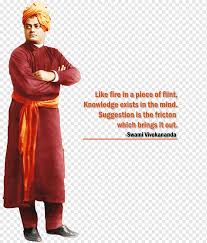
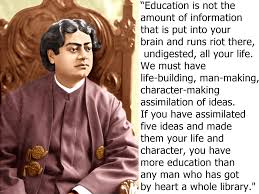
🔅Swami Vivekananda, was the prime follower of Ramakrishna Paramahamsa. 🔅Dissatisfied with conventional philosophical positions and practices, he advocated the practical Vedanta of service to humanity. 🔅He attacked the tendency to defend every institution simply because it was connected with religion. 🔅He emphasized a cultural nationalism and made a call to Indian youth to regenerate Hindu Society.
🔅His ideas bred a sense of self – confidence among Indians who felt like inferior in relation to the materialist achievement of the West. 🔅He was condemned by orthodox Hindus for suggesting that the lower castes should be allowed to engage in the Hindu ritual from which they were traditionally excluded. 🔅Vivekananda’s activist ideology rekindled the desire for political change among many Western – education young Bengalis. 🔅Many of the youths who were involved in the militant nationalist struggle during the Swadeshi movement following the Partition of Bengal were inspired by Vivekananda.
• NCT or The National Capital Territory of Delhi. Area – 1,500 sq.km. Includes parts of Haryana, Uttar Pradesh, and Rajasthan.
• States Reorganization Act, 1956 created the UT of Delhi – governed by a Lieutenant Governor.
• L-G acted on the advice of the Central government – answerable to the President of India.
• 1966 – the Delhi Administration Act brought the Delhi Metropolitan Council. 56 elected and 5 nominated members. Headed by the Lieutenant Governor. No legislative powers. Advisory role in the Government of Delhi.
The Constitution (69th Amendment) Act
Inserted Article 239A and 239AB. Advisory Council replaced by a full-fledged Legislative Assembly. Delhi became a Special Union Territory and known as the NCT of Delhi.
L-G – huge powers vested – appointed by President on the advise of Centre. Land, Law & order and Police – retained in centre’s control.
• Delhi Government No control over 3 primary bodies – Reserved Subjects.
Delhi Development Authority (DDA).
Delhi Police.
Municipal Corporation of Delhi (MCD). Complete control – PWD, Delhi Jal Board, Ministry of Power, Health & Sanitation, and Transport & Education
• Power struggle between central govt and NCR govt.
• 2018 SC judgment – L-G should act on the advice of the elected government. Except on three reserved subjects – police, public order and land – discretion of L-
Issue
• Committee of Delhi Assembly summoned a senior official of Facebook: Accusation – spreading fake news and triggering widespread violence. • Facebook resisted summons on grounds –
It is beyond the powers of the legislature.
IT Act is a central law and Delhi legislature has no jurisdiction.
L&O is a subject of centre – Delhi legislature has no jurisdiction. Supreme court verdict
• Upheld the authority of the committee of Delhi Assembly – to summon the senior official of Facebook
• Legislative Assembly does not only perform the function of legislating – also has “inquisitorial” and “recommendatory” powers.
• Implications Emphasised the importance of federalism and importance of elected government at the NCR level. Social media platforms’ responsibility toward the many legislatures will increase – avenue for scrutiny of social media platforms by other States.
“Toleration is the prerogative of humanity; we are all full of weaknesses and mistakes; let us reciprocally forgive ourselves. It is the first law of nature.”
-Voltaire
The Bastille Day is quite an unheard term in most of the parts of the world, unless you are a Francophone of course. The day commemorates the qualities of valour, unity and egalitarianism, which were on display when a huge crowd of people set off to destroy the gigantic prison, Bastille located in central Paris on 14th July, 1789. It symbolized the commencement of the French Revolution, against the existing Bourbon monarchy in mainland France.
The streets around France are usually flogged with cheerful families, enjoying leisurely activities. There is a beautiful spectacle at display at the Champs-Elysees, the epicentre of all celebration. The military parade, consisting of several reputed officers, show the strength of the armed forces, in a synchronised form. Similarly, a Bastille Day without a sense of firecrackers would be like having a meal without salt, so there are going to be several firecrackers display across Paris.
Wishing everyone a happy Bastille Day in advance. Joyeux jour de la Bastille
Its a Romantic story written by Mikki Duaghtry, Rachael Lippincott and Tobias laconis . This film was directed by Justin Baldoni . Stella Grant and Will , who are the victims of cystic fibrosis fall in love with each other . Stella meets Will for the first time when he gets admitted for a medication for the bacterial infection in his lungs. It is strictly to be adhered that the CF’s patient must maintain a distance of 6 feet apart to avoid cross infection.
Will was first not interested in his treatment and life but eventually he agrees to the treatment because of his desire to live a life with, and for Stella whom he fell in love with. What kind of love the life has offered them where you can never know or even feel the warmth of the breath of your loved ones. Both start meeting each other in secrecy.
A time comes where Stella wants to see the lights along with Will after she gets devastated seeing her best friend die . Two of them leave behind the worries and world behind and goes on to see the lights. On the same time Stella receives a donor . As she was missing from the hospital and not responding to the messages , they contact Will to inform about her donor. Stella refuses to take it as she does not want to extend her life leaving behind Will . But Will convinces her to take the transplant where she unfortunately falls inside the frozen pond.
Will rescues her and performs CPR as he could not see her breathing . Miraculously she was not infected from him and the surgery becomes a success. When she wakes up ,Will decorated the outside of her room with lights which she wished to watch with him. She saw him standing outside the glass ,where he says that his drug trial isn’t working and doesn’t want her to see him die. He asks her to close her eyes for him to make a move and he walks away. It is fortunate that both their deaths are not shown.
IT IS SAID DO GOOD TO PEOPLE, DO GOOD TO EVERYBODY, KEEP YOUR KARMAS CLEAN. BUT, GOOD PEOPLE, THOSE WHO DO GOOD TO EVERYBODY ARE THE ONES WHO GO THROUGH THE NEGATIVES .THEY GO THROUGH TORMENTING AND AFFLICTING ISSUES. THEN WHY SHOULD WE DO GOOD TO PEOPLE? WHY?
NO MATTER HOW MANY BAD SITUATIONS A GOOD PERSON GOES THROUGH. HE/SHE WILL ONE OR THE OTHER DAY GET THE PAYMENT OF HIS/HER GOOD KARMAS.
THERE ARE TIMES WE FEEL , THAT EVEN WE SHOULD START DOING BAD TO PEOPLE. BUT, THAT WONT STOP THE NEGATIVITY COMING TOWARDS US BUT WILL WILL INCREASE THE ENERGY OF NEGATIVITY.
OUR KARMATIC CHAIN KEEP A STRONG RECORD OF OUR DEEDS. IF WE DO BAD TO PEOPLE AND TO CORRECT IT WE DO GOOD TO OTHERS THEN TOO WE WOULD HAVE TO PAY FOR THE BAD KARMA AND THAT WOULD NOT LET US ENJOY THE BENEFITSN OF GOOD KARMA.
KEEP A GOOD CHECK OVER YOUR KARMAS, IF YOU CONTINUE DOING GOOD KARMAS, ONE DAY FOR SURE YOU WILL BE ABLE TO FLUSH ALL YOUR BAD KARMAS AND ENJOY A PEACEFUL LIFE.
The Dominica High Court has granted bail to fugitive diamantaire Mehul Choksi, allowing him to travel to An- tigua and Barbuda for treat- ment of his neurological condition, local media there reported. The court has granted a consent order by Choksi’s legal team permitting him to go to Antigua, where he has been staying as a citizen since 2018 after he left India, after depositing 10,000 Eastern Caribbean dollars (approximately ₹2.75 lakh) as bail money to seek medi- cal attention from a special- ised neurologist, Nature Isle News reported. The court has also stayed the ongoing trial before a magistrate for his alleged il- legal entry into Dominica on May 23, till his return, it said. The court order has come as a major jolt to Indian ef- forts to bring back Choksi, wanted in the ₹13,500-crore scam in the Punjab National Bank, from Dominica, where he was held for illegal entry after his disappea- rance from Antigua and Barbuda. “Dominica courts fnally upheld the rule of law and rights of a human to be treated in the medical facili- ties of his choice,” Choksi’s lawyer Vijay Aggarwal said.
“Entrepreneurship is an activity that entails putting one’s own resources at risk in order to start a business or produce something with a commercial purpose.” The act of starting a firm in order to make a profit is the basic definition of entrepreneurship. In today’s society, however, entrepreneurship has expanded to include the act of changing the world by solving large-scale problems. With the introduction of the internet, entrepreneurship now has the ability to effect social change by developing a service or product that has a good influence on individuals and addresses societal concerns with innovative solutions. Entrepreneurship including land, labour, natural resources, and capital can yield a profit in economics. The entrepreneurial mindset is characterized by exploration and risk-taking, and it is an essential component of a country’s ability to compete in an ever-changing and increasingly competitive global marketplace.
What is an entrepreneur?
An entrepreneur is a person who starts a new firm, taking on the most of the risks and reaping the majority of the benefits. The entrepreneur is often thought of as a creator of new ideas, products, services, and business or methods. The entrepreneurs on this list hail from all over the world (from the United States to Europe to Asia) and operate in a wide range of fields (HR, digital, health, finance, entertainment, art, design, and so on), but they all have one thing in common: a passion for what they do. Small or home-based businesses to global corporations are all types of businesses. An entrepreneur’s earnings are made through a combination of land, natural resources, labour, and capital, according to economic theory. In a word, an entrepreneur is someone who has the desire and determination to start a new business and is willing to take on all of the risks that come with it.
Characteristics of Entrepreneurship:
1.Self-motivation: One of the most important attributes of entrepreneurs is their ability to motivate themselves. Even if you don’t have an immediate source of revenue, you must stick to your plan and keep moving forward.
2.Job Creation: Entrepreneurship leads to the creation of jobs. It offers an entry-level role, which allows unskilled workers to gain experience and training. 3.Increased Standard of Living: Entrepreneurship helps to raise a person’s standard of living by raising his or her income. The term “standard of living” refers to a growth in a household’s consumption of various products and services through time. 4.Risk Bearing: The essence of entrepreneurship is the willingness to take risks, without which one cannot thrive. It occurs as a result of the development and implementation of new concepts. Because such ideas are sometimes speculative, the outcome may or may not be favourable and immediate. 5.Encourages research and development: Before introducing a new product or service, it must be thoroughly investigated and tested. As a result, entrepreneurship helps universities and research institutes to support research and development. This encourages economic growth, research, and development. 6.Be enthusiastic about your work: At the end of the day, successful entrepreneurs are driven by their passion. They are passionate about their product, service, or mission. When you’re feeling down, passion will help you discover inspiration and propel you forward. To keep going forward with your self-employment ideas, you’ll need passion.
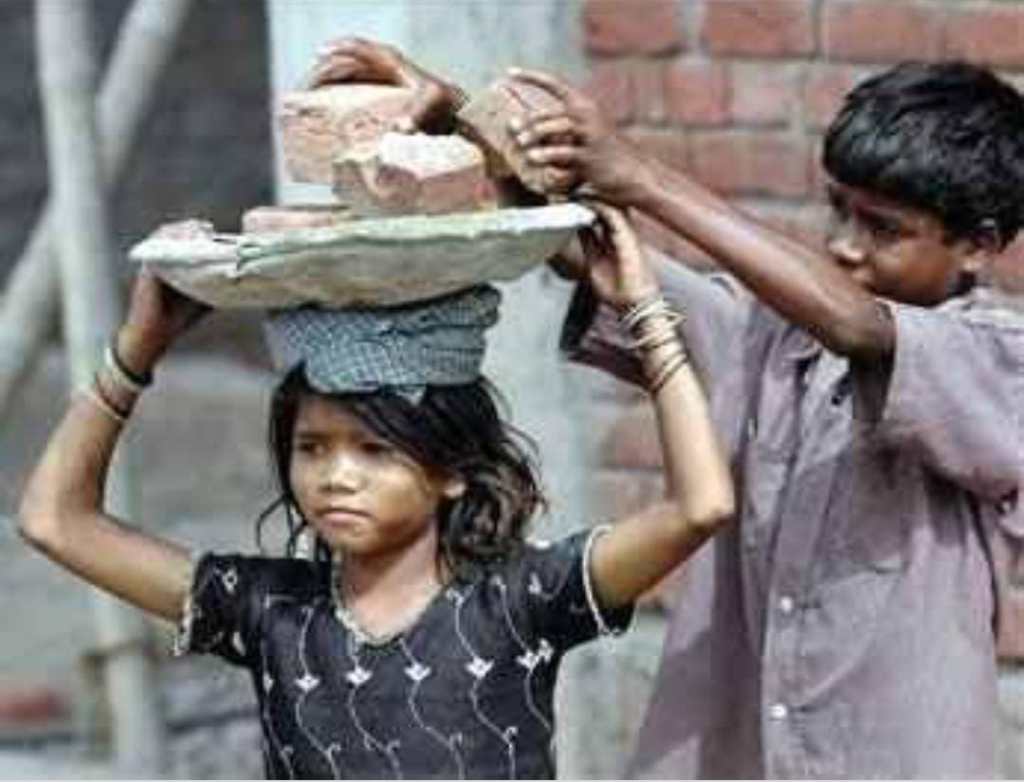
According to the International labour organisation(ILO) there are around 12.9 million Indian children engaged in work between ages of 7 to 17 years old.According to ILO, children up to the age limit of 15 should not be in job forcibly by the parents or masters in factories,offices or restaurants.
There are several reasons for child labour like poverty,irregular education,insufficient laws and rules etc.First of all the mindset of the society should be changed to emphasize that children must go to school and adults should be employed.Government should make stricter law to eradicate child labour.
How to prevent Child Labour
Children should be given first priority by their parents to take proper and regular education.
Every family must earn their minimum income to survive and prevent child labour.
Children work should be given to adults.In this way, an adult will get work and children are free from labour.
Fundamental rights are required for the all round development of a human being. They make the life of people meaningful by giving them rights like speech and to live in an area of their choice.
The fundamental rights are : ☆ Right to Equality ☆ Right to Freedom ☆ Right against Exploitation ☆ Right to Freedom of Conscience and Religion. ☆ Cultural and Educational Rights for minorities. ☆ Right to Constitutional Remedies.
Right to Equality
It refers to equality before law and equal protection of law. Prohibition or discrimination on the grounds of religion, caste, races, gender or place of birth is offensive and one can seek justice from court.
Right to Freedom
Six different types of freedom are mentioned in the Constitution. They are : ✓Freedom of speech and expression. ✓Freedom to assemble peacefully without arms. ✓Freedom to form association and unions. ✓Freedom to reside and settle in any part of India. ✓Freedom to move freely throughout the territory of India. ✓Freedom to practice any profession and carry on any occupation, trade and business.
Right against Exploitation
It is against the law to employ children below 14 years of age in mines, factories or other occupations. Neither contractor nor an employer can force a worker to do a job against the their will.
Right to Freedom of Conscience and Religion
This rights gives the citizens freedom to follow and practice a religion of their choice. All citizens have the freedom of conscience or ideas. The citizens also have the freedom to follow their own ways for practicing any religion.
Cultural and Educational Rights
The constitution gives us the right to preserve, protect and promote culture. We have the right to open schools, associations and societies to preserve and promote our tradition and culture. Similarly a group of people may open a school for imparting religious education to children. The government also promotes such activities by giving grants. However, such institutions cannot deny admission to anyone based on their caste, colour, creed or even religion.
Right to Constitutional Remedies
Fundamental Rights are guaranteed by the Constitution. By this right, a person can adopt Constitutional means and approach a court if he is denied the Fundamental Rights. The court then issues orders which are called ‘ Writs’ to the government to restore the rights to the citizen. The Constitutional Remedies put to right anything which may be wrong in terms of the Constitution. This right therefore protects and safeguards all other rights.
























You must be logged in to post a comment.