If you invest any energy on the web, it’s probably you’re comfortable with a portion of the world’s most visited engaging sites. On the present web, a modest bunch of monsters have unrivaled predominance.
1)Google
2)youtube
3)Facebook
Together, the main three sites rake in 152 billion visits month to month, dominating the following 7 sites consolidated. Likewise, as the pandemic changed everything from the manner in which we work, learn, convey, and greater part diversion.
There are tons and huge loads of sites accessible on the Internet today and with regards to discovering the absolute most fascinating ones, it turns into a somewhat exhausting errand. Large numbers of us truly don’t realize that a ton of stunning locales exist on the web that can paralyze you with their highlights. Here and there taking a break from conventional sites is must to mitigate your pressure and unwind while you work.
4)AintItCool.com
On the off chance that you need to plunge further into films, TV and comic books than normal locales go, AintItCool.com is for you. They have been at the cutting edge of online amusement geekery since 1996, a decent 10 years before geeks began to get cool. Look at audits, online talks and a gathering where you would geek be able to out about pretty much anything without feeling shaky.
5)AVClub.com
While TheOnion.com is amusing phony information, AVClub.com is 100% genuine, yet composed with a similar degree of humor and aptitude. They cover everything in mainstream society, and even survey stand-up parody collections, which as a rule don’t get inclusion. Their meetings with periphery big names dive as deep and are just about as intriguing as the A-rundown stars they highlight. Each time you head here, you’ll track down some exemplary faction film to watch or something standard to get amped up for.
6)Netflix.com
Netflix is the world’s driving Internet telecom company with in excess of 36 million individuals in 40 nations appreciating more than one billion hours of TV shows and motion pictures each month, including unique arrangement. For one low month to month value, Netflix individuals can look however much they need, whenever, anyplace, on almost any Internet-associated screen. Individuals can play, respite and resume watching, all without plugs or responsibilities.
7) Hulu
Hulu Plus offers limitless moment spilling of current hit shows, exemplary arrangement and acclaimed motion pictures. You can observe any flow season scene of top shows on moment streaming. Like Netflix, you will pay a low month to month expense for their limitless assistance.
8)The National Geography
The National Geographic Society has been motivating individuals to think often about the planet since 1888. It is one of the biggest philanthropic logical and instructive foundations on the planet. Its inclinations incorporate topography, archaic exploration and normal science, and the advancement of natural and recorded protection.
9)StubHub.com
StubHub permits you to purchase tickets for anything you can consider, with the exception of the films. It gives fans a protected, advantageous spot to get passes to the games, shows, and theater shows they need to see.
10)ImperialLibrary.com
Imperial Library is a public safe of filtered books. As a little something extra, it’s regulated by a person with a Riseup email address. Until now, almost 400,000 books have been transferred.
As India continues to fight the aftermath of the second wave of the deadly coronavirus, doctors have established a linkage between Covid 19 patients and Avascular Necrosis ( AVN) being referred to as bone death.
AVN is a painful condition affecting the hip joint and thigh bones of Covid-19 patients, adding to the long list of post-Covid complications among recovered patients.
HOW WAS BONE DEATH DETECTED IN COVID RECOVERED PATIENTS?
The complication came to light when Dr Manish Khobragade, a recovered Covid-19 patient suddenly developed pain in the left hip joint. He initially thought that it was a simple joint pain, but since it did not subside even after a week he contacted an orthopaedic surgeon and was advised an X-Ray test. The X-Ray didn’t detect any glaring issues and was hence prescribed regular medications, pain killers and muscle relaxers. But even after a month and half the doctors felt no relief.
Khobragade said that it was at that point that he realised that the pain was different from the routine problem, and there was something wrong with the hip joint. He then got the MRI done post which he was diagnosed with bone death. However, by that time he couldn’t even stand for long hours. Even walking became a difficult task. He couldn’t squat at all.
WHAT IS AVN OR BONE DEATH ?
AVN, known as Avascular Necrosis is a condition where the blood supply to the bone gets affected, killing it slowly. “That sector of the bone dies, just like it would in the heart or the brain,” the doctors said. Because it is bone and there is a lot of structure around the bone, it does not necessarily collapse right away, but it begins to pain.
Doctors said that it is not something that one needs to keep thinking about for every piece of pain in the bone is not AVN. The pain can sometimes be attributed to a sprain or injury as well. However, “we know that this can happen in the hip. When you get pain in the hip and if there is a restriction of movement, the person concerned should seek the advice of an orthopaedic surgeon.”
Patients who have been given steroids that have improved lung function, may be prone to get AVN on the hip. “We recognised that since the patient has had Covid-19, he may have a chance of thrombosis of his blood vessels and more likely because he has been on steroids,” they added.
HOW TO IDENTIFY BONE DEATH AND TREATMENT ?
Doctors say that the best way is to get a clinical diagnosis and can be confirmed by an MRI. This is the most sensitive test available now. Just taking plain X-rays would not be sufficient to identify bone death. The doctors said that there is a possibility of treating the condition at an early stage.
Microsoft windows also known as windows; windows operation system is developed by Microsoft Corporation to run personal computer. On 20th November Microsoft introduce an operating environment called Windows as a graphical user interfaces for MS-DOS in responds to growth more interest in graphical user interfaces. Microsoft also overtake Apple OS in profit which introduce in 1984.
Version History:
The first version of Windows was Windows 1.0. Microsoft started a program called “Interface Manager” in 1981 and it was announced in 1983 under the name windows but windows 1.0 released on November,1985. The Shell of Windows 1.0 known as MS-DOS executive. Component included Calculator, calendar, clock, control panel etc. Next released version was windows 2.0 and it was released on December, 1987 and was most popular than its previous one. It had an improvement of the user interface and memory management. Windows 2.1 released in two different version: Windows/286 and windows/386. Windows/386 use virtual 8086 mode of the intel 80386 to multitask several DOS Programs and the Paged Memory model to emulate expanded memory using available extended memory.
Windows NT:
In November 1998, a new development team within Microsoft began work on a revamped version of IBM and Microsoft’s OS/2 operating system known as “NT OS/2”.
Windows XP:
The next major version of Windows of after Windows NT is Windows XP and it was released on 25th oct, 2001. Windows XP would also introduce a redesigned user interface with start menu and a “task-oriented” Windows Explorer. With retaining some feature from previous version, Windows XP introduce an interface which was a new visual appearance, with an increased use of Alpha Composition effects, drop shadow, and Visual Style.
Windows Vista:
After Lengthy Development process, Windows Vista was released on 30th November, 2006. It introduces a number of features form redesigned shell and user interface to significant technical changes with a particular focus on security features.
Windows 7:
Windows 7 was released on july22, 2009. Windows 7 was intended to be more focused, incremental upgrade to windows line, with the goal of being compatible with applications and hardware with which windows Vista was already compatible. Windows 7 had multi-touch support with an updated taskbar and redesigned windows shell.
Windows 8:
Windows 8 was released on 26 oct, 2012. Windows 8 introduces a number oof change including the introduction of user interface based around Microsoft’s Metro Designed language with optimization for touch-based devices such as tablets and all-in-one pc.
Windows 10:
Windows 10 was released on 30th September,2014 as a successor of windows 8.1. Changes of pc returns on the start menu, a virtual desktop system, and the ability to run windows stores apps within windows on the desktop rather than in full-screen mode. In June 2021, shortly before Microsoft’s announcement of Windows 11, Microsoft updated their lifecycle policy pages for Windows 10, revealing that support for their last release of Windows 10 will be October 14, 2025.
Windows 11:
On June 24, 2021, Windows 11 was announced as the successor to Windows 10 during a livestream. The new operating system was designed to be more user-friendly and understandable. It is set to release in Fall 2021. Windows 11 will be a free upgrade to all Windows 10 users.
HOW TO BECOME AN ESTABLISHED CONTENT WRITER Content writing is considered the most growing and existing job in India. Content writing offers knowledge, experience and money at the same time. Content writing companies help one to develop good vocabulary and lingual skills that make it more beneficial for the writers and for their futures as well.Content writers in India have experienced a lot of things in the market which has helped them in growing their skills and experience.According to the demands there are a lot of hurdles that hamper a person from being a content writer in India. But here are a few tips which may help.
Create a portfolio– Portfolio is considered as your first impression, one portfolio can do wonders for you. If you are a new content writer then there are fewer chances to win the trust of people. You have to be individual and certain to win their trust in any way you can. So by creating a portfolio you’re representing yourself in front of them, make sure it’s as per the requirement of the clients.
Blogging– Blogging is becoming a truly popular choice among youngsters. It can be a great start if you are planning something in the field of content writing. Follow some easy tips and tricks like – plan your blog post by choosing the topic, creating an outline, conducting research and check facts. Use images to enhance your post, improve its flow and explain complex topics.
Certification – Many online portals provide you with a chance to showcase your skills and get a certification for the same. Flaunted by taking certification assessments. Share some level of expertise in various domains then go for a skill certificate. You can even attend workshops and short term courses. To content writing comes with practice and imagination so, practice will fuel your writing skills.
Internships – You can do an internship as early as possible, one must consider the internship option very actively. You can do a part time internship because a full time internship can be a pain while studying. There are plenty of online internship opportunities that pay you on an hourly basis. Hence, you can flexibly work according to your college schedule. See, one is required to curate wide-ranging content while taking up a content writing role.
Qualifications– Freshers who ponder on how to become a content writer must know the qualification. Skills like editing ,language skill, flexible writing skill ,awareness about social media. These are some qualifications and skills which are helpful for content writers to create amazing content. These skills will help you to stand out from the crowd.
Conclusion– My biggest advice to all aspiring content writers would be to keep experimenting until you satisfy your own creative urges. The written word is a strong medium of expression of your thoughts, ideas, opinions and by extension your own self. So, if you see your future in content writing , don’t be afraid to take the leap.
The origin of the word “tax” is from “taxation,” which means an estimate.Taxation is a means by which goverments finance their expenditure by imposing charges on citizens and corporate entities.The main purpose of taxation is to accumulate funds for the functioning of the government machinery.Tax has come into forefront on account of the new concept of “Welfare state”.Modern goverments do not confine themselves to law and order only.The importance of public finance (tax) has vastly increased in recent years.
Taxes are compulsory payments to government without expectation of direct return (or) benefit to the tax payer.prof.Selingman also defined a tax as a “a compulsory contribution from a person to the government to defray the expenses incurred in the common interest of all, without refference to special benefits conferred”.
Tax system
Every type of tax has some advantages and some disadvantages.So we have a tax system,that is,a collection of variety of taxes.All countries use a variety of taxes.There are some characteristics of tax system that economists think should be followed while designing a tax system.These characteristics are called as canons of taxation.From Adam Smith ,many economics have given lists of canons of taxation.It is important to recall those common among them for discussion here.
Canon of equity
Since tax is a compulsory payment,all economists agree that equity is the cardinal principal in designing the tax system.The equity principal says that the rich should pay more tax revenue to government than the poor, because rich has more ability than the poor to pay the tax.Morever,after payment of tax,you will find the economic difference is reduced between the rich and the poor.You can do an exercise to find out which of the taxes adhere to the canon of equity.
Canon of certainty
Government should announce in advance the tax system so that every tax payer will be to calculate how much tax amount one may have to pay during a year to the government.In other words, government should not change the tax system frequently and should not announce sudden changes in the tax system.
Canons of Economy and Convenience
These two canons are related.As tax payers we incur a cost to process our accounts and pay the tax,for example ,salary paid to accountants and auditors.Similarly government also pays salary to its taxmen and run huge institutions.If the tax is simple,then the cost of collecting taxes(tax payer cost + tax collector cost)will be very low.Further,tax should be collected from a person at the time he gets enough money to pay the tax.This is called Canon of Convenience.A convenient tax reduces the cost of collecting tax.
Canons of productivity and Elasticity
Government should choose the taxes that can get enough tax revenue to it.In other words,it should choose a few taxes that can fetch more tax revenue,instead of lots of taxes and each one their incomes.Therefore the tax system should be designed in such a way that the people out their incomes.Therefore the tax system should be designed in such a way that the people automatically pay more tax revenue if their incomes grow.This is called Canon of elasticity.In a broader sense,as the economy is growing the people will get more income and consequently they will also pay more tax revenue to government if the tax system is elastic
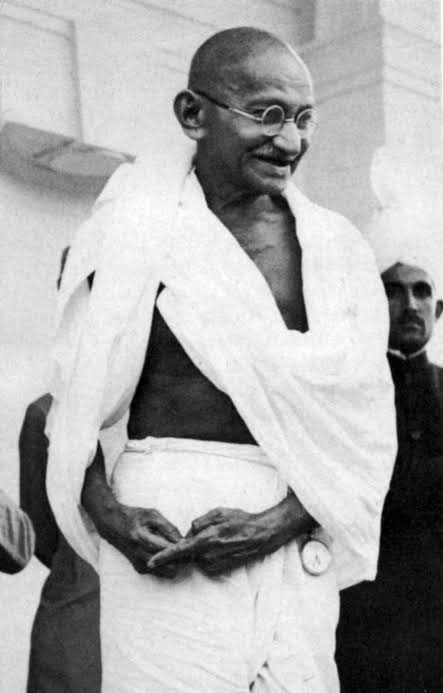
Revered the world over for his nonviolent philosophy of passive resistance, Mohandas Karamchand Gandhi was known to his many followers as Mahatma, or “the great-souled one.” He began his activism as an Indian immigrant in South Africa in the early 1900s, and in the years following World War I became the leading figure in India’s struggle to gain independence from Great Britain. Known for his ascetic lifestyle–he often dressed only in a loincloth and shawl–and devout Hindu faith, Gandhi was imprisoned several times during his pursuit of non-cooperation, and undertook a number of hunger strikes to protest the oppression of India’s poorest classes, among other injustices. After Partition in 1947, he continued to work toward peace between Hindus and Muslims. Gandhi was shot to death in Delhi in January 1948 by a Hindu fundamentalist.
Early Life
Mohandas Karamchand Gandhi was born on October 2, 1869, at Porbandar, in the present-day Indian state of Gujarat. His father was the dewan (chief minister) of Porbandar; his deeply religious mother was a devoted practitioner of Vaishnavism (worship of the Hindu god Vishnu), influenced by Jainism, an ascetic religion governed by tenets of self-discipline and nonviolence. At the age of 19, Mohandas left home to study law in London at the Inner Temple, one of the city’s four law colleges. Upon returning to India in mid-1891, he set up a law practice in Bombay, but met with little success. He soon accepted a position with an Indian firm that sent him to its office in South Africa. Along with his wife, Kasturbai, and their children, Gandhi remained in South Africa for nearly 20 years.
Did you know? In the famous Salt March of April-May 1930, thousands of Indians followed Gandhi from Ahmadabad to the Arabian Sea. The march resulted in the arrest of nearly 60,000 people, including Gandhi himself
Gandhi was appalled by the discrimination he experienced as an Indian immigrant in South Africa. When a European magistrate in Durban asked him to take off his turban, he refused and left the courtroom. On a train voyage to Pretoria, he was thrown out of a first-class railway compartment and beaten up by a white stagecoach driver after refusing to give up his seat for a European passenger. That train journey served as a turning point for Gandhi, and he soon began developing and teaching the concept of satyagraha (“truth and firmness”), or passive resistance, as a way of non-cooperation with authorities.
The Birth of Passive Resistance
In 1906, after the Transvaal government passed an ordinance regarding the registration of its Indian population, Gandhi led a campaign of civil disobedience that would last for the next eight years. During its final phase in 1913, hundreds of Indians living in South Africa, including women, went to jail, and thousands of striking Indian miners were imprisoned, flogged and even shot. Finally, under pressure from the British and Indian governments, the government of South Africa accepted a compromise negotiated by Gandhi and General Jan Christian Smuts, which included important concessions such as the recognition of Indian marriages and the abolition of the existing poll tax for Indians.
In July 1914, Gandhi left South Africa to return to India. He supported the British war effort in World War I but remained critical of colonial authorities for measures he felt were unjust. In 1919, Gandhi launched an organized campaign of passive resistance in response to Parliament’s passage of the Rowlatt Acts, which gave colonial authorities emergency powers to suppress subversive activities. He backed off after violence broke out–including the massacre by British-led soldiers of some 400 Indians attending a meeting at Amritsar–but only temporarily, and by 1920 he was the most visible figure in the movement for Indian independence.
Leader of a Movement
As part of his nonviolent non-cooperation campaign for home rule, Gandhi stressed the importance of economic independence for India. He particularly advocated the manufacture of khaddar, or homespun cloth, in order to replace imported textiles from Britain. Gandhi’s eloquence and embrace of an ascetic lifestyle based on prayer, fasting and meditation earned him the reverence of his followers, who called him Mahatma (Sanskrit for “the great-souled one”). Invested with all the authority of the Indian National Congress (INC or Congress Party), Gandhi turned the independence movement into a massive organization, leading boycotts of British manufacturers and institutions representing British influence in India, including legislatures and schools.
After sporadic violence broke out, Gandhi announced the end of the resistance movement, to the dismay of his followers. British authorities arrested Gandhi in March 1922 and tried him for sedition; he was sentenced to six years in prison but was released in 1924 after undergoing an operation for appendicitis. He refrained from active participation in politics for the next several years, but in 1930 launched a new civil disobedience campaign against the colonial government’s tax on salt, which greatly affected Indian’s poorest citizens.
A Divided Movement
In 1931, after British authorities made some concessions, Gandhi again called off the resistance movement and agreed to represent the Congress Party at the Round Table Conference in London. Meanwhile, some of his party colleagues–particularly Mohammed Ali Jinnah, a leading voice for India’s Muslim minority–grew frustrated with Gandhi’s methods, and what they saw as a lack of concrete gains. Arrested upon his return by a newly aggressive colonial government, Gandhi began a series of hunger strikes in protest of the treatment of India’s so-called “untouchables” (the poorer classes), whom he renamed Harijans, or “children of God.” The fasting caused an uproar among his followers and resulted in swift reforms by the Hindu community and the government.
In 1934, Gandhi announced his retirement from politics in, as well as his resignation from the Congress Party, in order to concentrate his efforts on working within rural communities. Drawn back into the political fray by the outbreak of World War II, Gandhi again took control of the INC, demanding a British withdrawal from India in return for Indian cooperation with the war effort. Instead, British forces imprisoned the entire Congress leadership, bringing Anglo-Indian relations to a new low point.
Partition and Death of Gandhi
After the Labor Party took power in Britain in 1947, negotiations over Indian home rule began between the British, the Congress Party and the Muslim League (now led by Jinnah). Later that year, Britain granted India its independence but split the country into two dominions: India and Pakistan. Gandhi strongly opposed Partition, but he agreed to it in hopes that after independence Hindus and Muslims could achieve peace internally. Amid the massive riots that followed Partition, Gandhi urged Hindus and Muslims to live peacefully together, and undertook a hunger strike until riots in Calcutta ceased.
In January 1948, Gandhi carried out yet another fast, this time to bring about peace in the city of Delhi. On January 30, 12 days after that fast ended, Gandhi was on his way to an evening prayer meeting in Delhi when he was shot to death by Nathuram Godse, a Hindu fanatic enraged by Mahatma’s efforts to negotiate with Jinnah and other Muslims. The next day, roughly 1 million people followed the procession as Gandhi’s body was carried in state through the streets of the city and cremated on the banks of the holy Jumna River.
The Vedas are the oldest religious texts of the Hindus. Vedas are regarded as the world’s oldest piece of literature. It is believed that the Veda have composed several thousands of years ago. They were written down by several seers known as “Rishis” in the Hindu tradition. The Vedas were composed in Sanskrit and contain hymns describing the glories of God. They include material, religious, and spiritual knowledge.
The term veda means “knowledge” in that they are thought to contain the fundamental knowledge relating to the underlying cause of, function of, and personal response to existence. They are considered among the oldest, religious works in the world. They are commonly referred to as “scripture”, which is accurate in that they can be defined as holy writ concerning the nature of the Divine.
Unlike the scriptures of other religions, however, the Vedas are not thought to have been revealed to a certain person or persons at a specific historical moment; they are believed to have always existed and were apprehended by sages in deep meditative states at some point prior to c. 1500 BCE but precisely when is unknown. The Vedas existed in oral form and were passed down from master to student for generations until they were committed to writing between c. 1500 – c. 500 BCE (the so-called Vedic Period) in India. They were carefully preserved orally as masters would have students memorize them forwards and backwards with emphasis on exact pronunciation in order to keep what was originally heard intact.
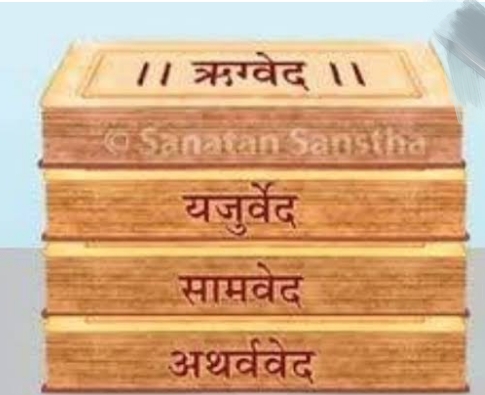
The Vedas are therefore regarded as Shruti in Hinduism meaning “what is heard” as contrasted with other texts designated Smritis (“what is remembered”), accounts of great heroes and their struggles in works such as the Mahabharat, Ramayan, and Bhagvat Gita (although some sects of Hinduism regard the Bhagavat Gita as Shruti). The texts which make up the Four Vedas are:
1. Rig Veda 2.Yajur Veda 3.Sama Veda 4.Atharva Veda
The Rig Veda is the oldest and the Sama Veda and Yajur Veda draw from it directly while the Atharva Veda takes a different course. All four, however, maintain the same vision, and the Upanishads for each of these address the themes and concepts expressed.
Each of these is further divided into types of text included within them:
Aranyakas – rituals, observances
Brahmanas – commentaries on said rituals
Samhitas – benedictions, prayers, mantras
Upanishads – philosophical narratives and dialogues
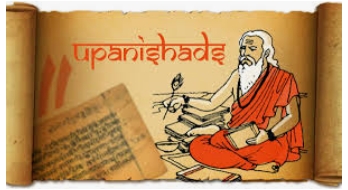
The Upanishads are an assortment of texts central to Hinduism that are recorded from oral traditions. They contain information regarding the philosophical principles and concepts of Hinduism, including karma (right action), brahman (ultimate reality), the atman (true Self or soul), moksha (liberation from the cycle of reincarnation) and Vedic doctrines that explain Self-realization through yoga and meditation practices. Upanishad is a Sanskrit word that translates in English to mean “sitting at the feet of” or “sitting down near.” This illustrates the position of receiving wisdom and guidance humbly from a teacher or guru.
The Upanishads are the best known and most often read of the Vedas because their discourse is presented in dialogue/narrative form and they were the first to be translated into other languages. The four Vedas, conversely, are considered the literal sounds of the Divine which, when recited or sung, recreate the primal vibrations of the universe. Accordingly, they are actually impossible to translate and what one reads in a translation should be understood as a paraphrase at best.
The word Upanishad is usually interpreted as “sitting down beside.” This Sanskrit word can be broken down into three parts and translated as “upa” meaning near, “ni” as down and “shad” as to sit.
The 13 Upanishads are:
Brhadaranyaka Upanishad
Chandogya Upanishad
Taittiriya Upanishad
Aitereya Upanishad
Kausitaki Upanishad
Kena Upanishad
Katha Upanishad
Isha Upanishad
Svetasvatara Upanishad
Mundaka Upanishad
Prashna Upanishad
Maitri Upanishad
Mandukya Upanishad
Their origin and dating are considered unknown by some schools of thought but, generally, their composition is dated to between c. 800 – c. 500 BCE for the first six (Brhadaranyaka to Kena) with later dates for the last seven (Katha to Mandukya).
In these sacred texts, we see an internalization of the sacrifice and worship extolled in the Vedas and a deeper understanding and exploration of the internal world of mind and spirit. Composed over several centuries and in many volumes, the Upanishads reflect a strong need to express and communicate the deep mystical states and spiritual contemplations that the ancient yogis experienced.
According to tradition, there were over two hundred Upanishads, but there are only eleven “principal” Upanishads, as commented on by the ancient sage Shankara. The texts are written in a passionate poetic verse describing mystical states and spiritual concepts or in descriptive short stories and dialogues between historical figures.
The teachings of the Upanishads revolve around four primary spiritual themes. These four philosophical concepts are described in many different ways as they can be difficult to grasp. These main teachings are repeatedly reinforced in the texts of the eleven principal Upanishads.
The first and most important is the realization that the ultimate, formless, and inconceivable Brahman (Godhead) is the same as Atman, as our internal soul. Brahman represents the entire universe, and the Atman is a little piece of that divine oneness that we contain inside us. This philosophical idea is summed up in the mantra Tat Tvam Asi (That Art Thou).
The idea that the Atman is eternal, and becomes reborn over and over again is central to the concept of reincarnation that is taught in the Upanishads.
This concept of rebirth is highly tied to the teachings of Karma: the future consequences of one’s current intentions, thoughts, behaviors, and actions.
It is the accumulation of Karma that binds us to Samsara, the cycle of death and rebirth. To escape the endless cycle of Samsara requires one to attain enlightenment through the realization of Atman/Brahman. It is this state of Self realization that the majority of the Upanishads attempt to describe and encourage us to achieve through the yoga practices of meditation, mental discrimination, and mantra recitation.
Spiritual concepts have exerted a profound influence on the development of Yoga, Hindu, and Indian philosophy. While the yogic practices taught in the Upanishads were primarily mediation based, these philosophical teachings will remain the core beliefs for all of the future developments in the many paths and practices of yoga.
According to the World Health Organization, more than 785 million people lack clean drinking water. Although 71% of the Earth’s surface is covered with seawater, we can’t drink it. Scientists around the world are working to find effective means of desalinating seawater at a low cost. Now, a team of Korean scientists may have figured out how to do it in a matter of minutes.
The freshwater necessary for most human activities represents only 2.5 percent of the total water available on the planet. Rivers and lakes hold only a fraction of them, but that is what life on Earth depends so much on.. Unfortunately, human activities are putting this vital resource under tremendous strain.
Diagram of the electrothreading device used to make this membrane from nanofibres.
It is hardly surprising that desalination of seawater is the easiest way to address this issue. But these processes have their limitations. One such limitation is membrane wetting. Wetting the membrane pores eliminates dry pathways where contaminants, like particles, gels, or bubbles could pass through, resulting in high defect levels in your process. Polymer membranes are natively hydrophobic or hydrophilic.
• Hydrophobic – having a natural aversion to water
• Hydrophilic – having a natural affinity to water
If a membrane is hydrophobic, it is difficult to wet with water. This results in a high contact angle, or a very round bead of water sitting on top of the membrane. If a membrane is hydrophilic, it is easily wet with water, and the water will penetrate the pores of the membrane.
When using membranes to filter seawater, the membrane must remain dry for long periods. If the membrane becomes moist, the filtration process becomes inefficient and permits large quantities of salt to pass through the membrane. For long-term operations, progressive membrane wetting has been observed regularly, which be resolved by changing the membrane.
Researcher Yunchul Woo and his team at the Korea Institute of engineering and Building Technology (KICT) have now developed a membrane that’s less vulnerable to wetting and is stable within the future .
The membrane is formed of nanofibres that are fabricated into a three-dimensional hierarchical data structure , This was achieved by employing a sort of nanotechnology called electrospinning. Using this technology, the researchers were ready to fabricate a highly hydrophobic membrane — i.e. water repellent.
The hydrophobic nature of the membrane is valuable because it is designed to keep water molecules from passing through. Instead, a temperature differential is applied on both sides of the membrane which causes the water to evaporate from one end to the water vapor. The membrane allows water vapor to pass, which then condenses onto the cooler side. Called, membrane distillation, this is a commonly used method of desalination using membranes. Because salt particles are not transformed into gas, they are set aside on one side of the membrane, giving highly purified water on the other side.
The Korean researchers also used silica aerogel in their membrane fabrication process which further enhanced the flow of water vapor through the membrane, providing quicker access to desalinated water.
In tests, the team ran the new membrane for 30 days, and found that it still filtered out 99.99 percent of the salt after that time. That’s a far longer runtime than other electrospun nanofiber membranes, which the team says struggle to last more than 50 hours of continuous use before they begin to leak.
“The co-axial electrospun nanofiber membrane have strong potential for the treatment of seawater solutions without suffering from wetting issues and may be the appropriate membrane for pilot-scale and real-scale membrane distillation applications,” says Dr. Yunchul Woo, lead researcher on the study.
Systems Applications and merchandise in processing SAP stands for Systems Applications and merchandise in processing. SAP, by definition, is additionally the name of the ERP (Enterprise Resource Planning) software package in addition because the name of the corporate. SAP software package may be a European transnational, based in 1972 by Wellenreuther, Hopp, Hector, Plattner, and Tschira.
SAP, or Systems Applications and merchandise, may be a widely-used enterprise resource designing (ERP) software package SAP creates a centralized system for businesses that allows each department to access and share common information to make a stronger work atmosphere for each worker within the company.
What is ERP? Enterprise resource designing, referred to as ERP, may be a software package application system that enables businesses to manage their primary business functions in one place. Sales, marketing, procural, human resources associate degreed different departments have the power to speak and set up with each other through an ERP. SAP may be a software package resolution that falls underneath the ERP umbrella What will SAP do and why is it important? SAP collects and processes information from all functions in a very business on one platform. SAP is crucial for several businesses as a result of it permits each department to speak with one another simply. The success of any organization depends on effective communication and information exchange between its functions, and SAP is a good thanks to support those efforts.
What square measure SAP skills? Developing SAP skills will cause you to a competitive candidate if you’re applying at corporations that use enterprise resource designing software package. expertise and proficiency with SAP could even be a demand for a few roles. Here square measure many common SAP skills Utilizing transactions having the ability to use transactions and computer file into the SAP software package will provide you with a bonus once applying for employment that needs you to be able to manage sales.
Reporting Understanding a way to execute reports will offer information that you simply, your manager or another department may want.
Accounting Knowing a way to use the accounting modules within the SAP software package will provide you with a bonus in a very finance or accounting job however may be helpful to any worker operating within the accounting department of a corporation.
Recruiting Understanding the recruiting modules of SAP software package will facilitate human resource professionals higher manage candidates and potential staff.
Management There square measure a range of management modules inside SAP, together with client management, project management, warehouse management, transportation management and inventory management. Gaining skills in management systems will provide you with a bonus once applying for a management position.
Communication one in every of the foremost vital aspects of SAP software package is that the ability to speak with different departments to stay a corporation running swimmingly. having the ability to indicate a recruiter or inquirer your understanding of communication among departments exploitation SAP software package will provide you with a bonus over different candidates at any job.
New classicism refers to the habit of imitating the great authors of antiquity as a matter of aesthetic principle and the acceptance of the critical precepts, which emerged to guide that imitation. Up to the last quarter of 17th-century neoclassicism had little influence in England except for Samuel Johnson. No important writer paid strict attention to the rules humanist critics had formulated Dryden also produced all for love (1677) which has been called the only correct neo-classical tragedy in English, but the fashion was outdated.
The usual excuse of rules was that they helped writers to be true to nature. Alexander Pope wrote, those rules of old discovered not devis’d, Are Nature still but Nature methodized, and implicit in his view was the assumption that ‘nature’ consisted in what was generally true. Following the list of ideas and characteristics as mentioned by M. H. Abrams was shared, between 1660 and late 1700 by authors such as John Dryden, Alexander Pope, Joseph Addison, Jonathan Swift, Samuel Johnson, Oliver Goldsmith, and Edmund Burke. These may serve as an introductory sketch of some prominent features of new classic literature.
These authors exhibit a strong traditionalism which was often joined to a distrust of radical innovation and was evidenced above all in their great respect for classical writers. Literature was convinced to be primarily an ‘art’ that is a set of skills, which though it requires innate talent, must be perfected by long study and practice, and consist mainly in the deliberate adaptation of known and tested means of the achievements of foreseen ends upon the audience of readers.
Human beings as an integral part of a social organization were regarded as the primary subject matter of literature. Poetry was held to be an imitation of human life- is a common phrase a mirror helps us to nurture. And by the human action it imitates, and the art form it gives to the imitation. Poetry is designed to yield both instruction and aesthetic pleasure to the people who read it. Not art for art’s sake but art for humanity sake was the central idea of neo-classic Humanism
Both in the subject matter and the appeal of art, emphasis was placed on what human beings possess in common. Neo-classic writers viewed human beings as the limited agent who ought to set themselves only accessible goals. Many of the great works of the period satiric and didactic, attack human pride.
Being a comedian, Tanmay Bhat has his way with words. Hence, what could be better than learning about stocks, trading, coding and other financial topics in his voice. It’s a platform where fun meets learning. It’s great for newbies who want to learn about finance or just utilise their time watching something resourceful rather than mindlessly scrolling on social-media.
BUSINESS INSIDER
This YouTube channel is exactly what it sounds like. You can find the inside and the development process of a large variety of topics from art, food, colours to industries, housing, etc. The channel is not geographically restricted. They have covered almost any and every country in the world, portraying what each has to offer, that adds on to their uniqueness.
RADHI DEVLUKIA
Roshni Devlukia aka Radhi is the wife of former monk and life-coach Jay Shetty. She’s a Nutritionists by profession. She uses her Instagram and YouTube channel to influences people to adapt to a healthy lifestyle. She is one of the most honest and transparent YouTuber i have found online. Her video’s are inspirational and her content is to the point (without unnecessary exaggerations). It’s on a must-check list for people interested in meditation, spirituality, self-love and growth.
MOSTLY SANE
MOSTLY SANE aka Prajakta Koli.She is one of the most famous Indian Youtuber and Diverse contentcreator online. Her content varies from Funny videos, vlogs, interviews to inspirational guidance, sister talk, life advisor, habit building, etc. Her channel shows the most transparent life a common yet hard working teenager turning into a successful adult. Her content include any and every adulting topic which we all can relate to. ( Basically, She’s a mix of Mummy, Didi and Best-Friend Advices)
ARJUNA HARJAI
Arjuna Harjai is a music creator, singer and vlogger. Love Kids? Then his channel is the perfect place to find the cuteness along with a reality check of a young parent’s life. Personally, watching his vlogs works more like a dose of serotonin for me as they have the cutest child. The couple went famous from a viral tiktok showing childhood love-birds turning into wedded couple and then to parents of a adorable child. They perfectly portray modernparenting and life after you marry your best-friend.
July 4 is the 185th day of the year (186th in leap years) in the Gregorian calendar; 180 days remain until the end of the year
4th of Julyin American history
Its the Independence day and the day of celebration for America. It is remarked on the year of 1776 during which the US got its independence from the great Britain. Its the day that represents the country’s liberations from Britain , giving them their rights ,liberty and their happiness. On this day all states in and around of USA celebrate the joy of independence with the fireworks, which is one of the largest display works. It is a day of federal holiday in united states. The Continental Congress declared that the thirteen American colonies were no longer subject to the monarch of Britain King George III and were now united ,free and independent states. Independence is not free of cost . As usual it has to pay for it. A revolt broke out in April 1775, which sparkled the fire of independence.
And finally after the revolutionary Americans continued to commemorate Independence Day every year, in celebrations that allowed the new nation’s emerging political leaders to address citizens and create a feeling of unity.
4th of July in Indian history
Freedom is not given; it’s taken
– Netaji Bose
In the year of 1947 the “Indian Independence Bill” is presented before the British House of Commons, proposing the independence of the Provinces of British India into two sovereign countries: India and Pakistan .
In the year 1789 an Agreement made between British East India Company, Peshwa of Pune and Nizam of Hyderabad to attack Tipu Sultan territory.
In the year of 1966 the Press Council of India was first constituted on 4th July, as an autonomous, statutory, quasi-judicial body, with Shri Justice J R Mudholkar, then a Judge of the Supreme Court, as Chairman under The Press Council Act, 1965.
In the year of 1999 India Army recaptured Tiger Hill.
During each night a person goes through two stages of sleep that alternate with each other.They are
1)Slow wave sleep and
2)REM sleep
Slow wave sleep
In this type of sleep the brain waves are very slow.Though this sleep is frequently called “dreamless sleep”,dreams actually occur very often and even nightmares occur during this sleep.During this sleep the process of consolidation of the dreams in memory does not occur.This sleep is highly useful in decreasing blood pressure, respiratory rate and basal metabolic rate.
REM sleep or Rapid eye movement sleep
In a normal night sleep,REM sleep lasting 5-30 minutes usually appear on an average every 90 minutes.It is usually associated with active dreaming.The muscle tone throughout the body is exceedingly depressed during this sleep indicating strong inhibition of the spinal projections from the reticular formation of the brain stem.
The heart rate and respiration usually become irregular,which is characteristic of the dream state.During REM sleep,the brain is quite active.But,the brain activity is not channeled in the proper direction for persons to be aware of their sorroundings and therefore to be awake.
Physical effects of sleep
Sleep restores both normal sensitivities of nervous system and “balance” among the different parts of the central nervous system.Due to good sleep arterial blood pressure falls,pulse rate decreases,skin vessels dilate, muscles fall into relaxed state and overall metabolic rate of the body falls by 10-30 Percent.
Gratitude is the characteristic of being joyful and is the willingness to express gratitude for and reciprocate kindness. According to Harvard medical school “People express thanks for the wonderful things in their lives As a consequence of which gratitude allows people to connect to something bigger than themselves whether it’s other people, nature, or a greater force.”
It serves as a reminder that you have enough and that you are sufficient.
Gratitude is a life changing habit because it has plethora of scientifically validated advantages. People who consistently practice gratitude in their daily lives by setting aside time to notice and reflect on the things for which they are grateful about get endless advantages as follows:-
Enhances mental well-being
Gratitude has a significant positive effect on psychological well-being. It boosts our self-esteem, stimulates positive thoughts, and elevates our optimism. In an older research from 2003 it has been found out that gratitude was connected to enhanced mood. Recently, According to a study published in 2020, expressing thankfulness on a regular basis might help alleviate anxiety and depressive symptoms.
Immune system booster
Gratitude has been demonstrated to aid in the development of a positive attitude. Over the years various researches have been conducted which shows improved immune system and lower stress levels as a result of practicing gratitude. According to a 2004 assessment of data, stress reduces the immune response to possible physiological threats, but mental well-being can assist your body fight sickness which can be done by being thankful.
It multiplies happiness and makes you a happier person
Many researchers have found out that Gratefulness and happiness are inextricably linked. Practicing to be grateful might be a simple and effective strategy to increase your happiness. Gratitude, whether expressed or received, makes both people happier and allows them to see things in a more positive light which helps in lowering our focus on negative emotions and accepting everything about our situation if its bad and good.
It also helps in building better relations
Gratitude is essential in the formation of new connections as well as the strengthening of old ones. According to a 2010 study, spouses who expressed appreciation to one another reported higher relationship satisfaction and pleasure the next day. Thus, it can be said that Gratitude might make couples feel more happy with one other in love relationships and help them in building a strong relationship with each other.
Boosts optimism
It also makes a person optimistic who thinks that good things will happen. It can be concluded by seeing the result of 2018 study which states that gratitude practice might help you create an optimistic perspective if you’re not typically optimistic. A study was also conducted in 2003 on participants in which Participants felt more hopeful and positive about their current lives and the future after just 10 weeks of frequent gratitude practice.
So, I want to conclude that Gratitude is essential for bringing about change in one’s life. It relieves tension, makes you humble, and improves the quality of your relationships. It takes away your bad energy and replaces it with positivity. I believe that everyone should master the art of thankfulness in order to witness a positive shift in their lives. It can be done by making a gratitude journal of your own, meditation and Paying attention to the small pleasures in life which will offer you a lot of delight andshall almost certainly have a beneficial long-term impact on your mental health and well-being, if practiced daily.























You must be logged in to post a comment.