Introduction about different Schools, Colleges, Universities

Introduction about different Schools:-

INTRODUCTION:-

ust as teachers may teach a broad spectrum of subject matter from math, science, English, to foreign languages, technology and the arts, they also teach across a wide age range and in many different classroom settings around the country.

The specific type of school in which a teacher teaches can have a huge impact on many aspects of their teaching career. From public schools — including magnet schools, charter schools, urban schools, rural schools and high needs schools — to private schools including military schools and boarding schools, every classroom setting is different and each has it’s own unique benefits and challenges. Deciding where you are best able to make a difference can be difficult.

Learn more about each type of schools to help you decide where you can fit in best:

  • Public Schools
  • Charter Schools
  • Magnet Schools
  • Private Schools
  • High Needs Schools
  • Urban Schools
  • Rural Schools

1. Public Schools:-

 A public school is government funded and all students attend free of cost.Because of funding from several sources, private schools may teach above and beyond the standard curriculum, may cater to a specific kind of students (gifted, special needs, specific religion/language) or have an alternative curriculum like art, drama, technology etc. Public schools have to adhere to the curriculum charted out by the district, and cannot deny admission to any child within the residential school zone.Public schools are often thought of as shoddy, less disciplined and low-grade curriculum.

2. Charter Schools:-

A charter school is a public school that operates as a school of choice. Charter schools commit to obtaining specific educational objectives in return for a charter to operate a school. Charter schools are exempt from significant state or local regulations related to operation and management but otherwise adhere to regulations of public schools — for example, charter schools cannot charge tuition or be affiliated with a religious institution.In other words, charter schools are publicly accountable — they rely on families choosing to enroll their children, and they must have a written performance contract with the authorized public chartering agency. Charter schools are also autonomous — they have more flexibility in the operations and management of the school than traditional public schools.

3. What Is A Magnet School:-

Unlike charter schools or private schools, a magnet school is part of the local public school system. At regular public schools, students are generally zoned into their schools based on the location of their home – students go to the school that is nearest where they live. However, this may not always be true since boundaries can seem arbitrary and in some smaller towns schools are not zoned at all. But, magnet schools exist outside of zoned school boundaries. Whereas private schools are completely separate from local public school districts, and charter schools are public schools with private oversight, magnet schools remain part of the public school system and operate under the same administration and school board.

4. Private Schools:-

Many of the private primary and secondary schools in the United States were founded by religious institutions in order to incorporate religious beliefs and teachings into their students’ education, integrating it with a traditional academic curriculum. Some of the first religious schools were founded by the Catholic Church, and these parochial schools are still prevalent amongst private schools. Since then, however, many other religious denominations have started schools to provide religious education, and families often choose to enroll their children in schools whose policies reflect their own values. Nowadays, Protestant, Jewish, Muslim, Orthodox Christian and other religiously based schools are quite common. In addition, some private schools, boarding schools and military academies, offer their own unique approaches to education.

5. High Needs Schools:-

The No Child Left Behind Act of 2001 External link  defines a high-needs school as “within the top quartile of elementary and secondary schools statewide, as ranked by the number of unfilled, available teacher positions; or is located in an area where at least 30 percent of students come from families with incomes below the poverty line; or an area with a high percentage of out-of-field-teachers, high teacher turnover rate, or a high percentage of teachers who are not certified or licensed.” Essentially, high needs schools require teachers because they cannot fill job vacancies or retain teachers, or they have teachers who are not qualified or who teach in subjects outside their field. High-needs schools also serve communities of higher poverty rates, where classrooms are influenced by the difficulties of their students’ lives. Most high-needs schools are located in rural or urban areas.

6. Urban Schools:-

When thinking of high need schools, the first thing that comes to mind for many people is the image of an inner city school, crowded and poorly funded. The truth is, while this is a stereotype and many urban schools perform exceptionally well, there are still urban schools across the country that are in high need of teachers and resources.At the most technical level, urban schools are classified as city schools by the National Center for Education Statistics External link  (NCES). The NCES categorizes all schools into four locales by their size, population density and location in relation to a city. This is an “urban-centric” classification system. The four locale categories used by the NCES’ urban centric classification system External link  are city, suburb, town and rural. Urban schools are then broken down into three subcategories based on the Census Bureau External link ’s definitions of urbanicity:

7. Rural Schools:-

Ultimately, the technical definition of a rural school corresponds to our general understanding of rural areas; they are characterized by geographic isolation and small population size. All schools are categorized into four locales by their size, population density and location. The National Center for Education Statistics External link  (NCES) defines these locales by the school’s proximity to a city an “urban-centric” classification system. The four locale categories used by the NCES’ urban centric classification system External link  are city, suburb, town and rural. Rural schools are then broken down into three subcategories based on the Census Bureau External link ’s definitions of urbanicity. Rural schools are also all classified as high need schools.

Introduction about different Colleges:-

INTRODUCTION:-

A college (Latin: collegium) is an educational institution or a constituent part of one. A college may be a degree-awarding tertiary educational institution, a part of a collegiate or federal university, an institution offering vocational education, or a secondary school.

In most of the world, a college may be a high school or secondary school, a college of further education, a training institution that awards trade qualifications, a higher-education provider that does not have university status (often without its own degree-awarding powers), or a constituent part of a university. In the United States, a college offers undergraduate programs; it may be independent or the undergraduate program of a university, it is generally also used as a synonym for a universitywhile in some instances a college may also be a residential college. A college in francophone countries [fr]—France (see secondary education in France), Belgium, and Switzerland—provides secondary education. However, the Collège de France is a prestigious advanced research institute in Paris.

Learn more about each type of colleges to help you decide where you can fit in best:

  • Community and Junior Colleges
  • Historically Black Colleges and Universities 
  • Liberal Arts Colleges
  • Women’s Colleges
  • Tribal Colleges
  • Technical Institutes and Professional Schools

1. Community and Junior Colleges:-

These colleges offer the first two years of a liberal arts education, as well as career or vocational training. Successful completion of a community or junior college curriculum earns graduates an associates degree. Many students continue on to a four-year institution after completing a community or junior college program.

2. Historically Black Colleges and Universities:-

These colleges originated when African-American students were legally denied access to most other institutions of higher education. Now, these colleges celebrate African-American culture and empowerment, and give black students the chance to experience an educational community in which they are finally part of the majority. A common abbreviation for this type of college is HBCU.

3. Liberal Arts Colleges:-

These colleges focus on the education of undergraduate students (students who are earning a bachelors degree). Classes are generally taught by professors who see teaching as their primary responsibility. Because most liberal arts colleges are smaller than universities, classes tend to be smaller and more personal attention  is available. Instead of preparing for a specific career path, students who attend liberal arts colleges are exposed to a broad sampling of classes. In addition, they select at least one area of in-depth study that is their college “major.” Many employers look for graduates of liberal arts programs.

4. Women’s Colleges:-

These colleges offer women the opportunity to enjoy a learning community where they are in the majority. Additionally, these colleges have a much larger population of female faculty and administrators. Women’s colleges graduate a high number of science majors, as well as students who continue on to graduate school or professional studies.

5. Tribal Colleges:-

Like HBCUs or Women’s colleges, these colleges focus on the needs and education of a group that has been traditionally underrepresented in higher education. In this case, these colleges focus on the education and empowerment of Native American students while celebrating a specific tribe’s unique culture and accomplishments.

6. Technical Institutes and Professional Schools:-

These colleges or institutes enroll students who have made a choice as to what career path they are taking. The curriculum at these colleges focuses solely on preparing students for these specific careers. Most of the career options offered at these colleges are in music, fine arts, engineering, or technical sciences.

Introduction about different Universities:-

INTRODUCTION:-

The original Latin word universitas refers in general to “a number of persons associated into one body, a society, company, community, guild, corporation, etc”. At the time of the emergence of urban town life and medieval guilds, specialized “associations of students and teachers with collective legal rights usually guaranteed by charters issued by princes, prelates, or the towns in which they were located” came to be denominated by this general term. Like other guilds, they were self-regulating and determined the qualifications of their members.

In modern usage the word has come to mean “An institution of higher education offering tuition in mainly non-vocational subjects and typically having the power to confer degrees,” with the earlier emphasis on its corporate organization considered as applying historically to Medieval universities.The original Latin word referred to degree-awarding institutions of learning in Western and Central Europe, where this form of legal organisation was prevalent and from where the institution spread around the world.

Learn more about each type of Universities to help you decide where you can fit in best:

  • Central universities, or Union universities
  • State Universities
  • Private Universities
  • Deemed university

1. Central universities, or Union universities:-

in India are established by an Act of Parliament and are under the purview of the Department of Higher Education in the Ministry of Education.In general, universities in India are recognised by the University Grants Commission (UGC), which draws its power from the University Grants Commission Act, 1956.In addition, 15 Professional Councils are established, controlling different aspects of accreditation and coordination.Central universities, in addition, are covered by the Central Universities Act, 2009, which regulates their purpose, powers, governance etc., and established 12 new universities.As of 1 June 2020, The list of central universities published by the UGC includes 54 central universities.

Other types of universities controlled by the UGC include:

  • State universities are run by the state government of each of the states and territories of India, and are usually established by a local legislative assembly act.
  • Deemed university, or “Deemed-to-be-University”, is a status of autonomy granted by the Department of Higher Education on the advice of the UGC, under Section 3 of UGC Act, 1956.
  • Private universities are approved by the UGC. They can grant degrees but they are not allowed to have off-campus affiliated colleges.

Apart from the above universities, other institutions are granted the permission to autonomously award degrees. These institutes do not affiliate colleges and are not officially called “universities” but “autonomous organisations” or “autonomous institutes”. They fall under the administrative control of the Department of Higher Education.These organisations include the Indian Institutes of Technology, the National Institutes of Technology, the Indian Institutes of Science Education and Research, the Indian Institutes of Engineering Science and Technology, the Indian Institutes of Management, the National Law Schools, the All India Institute of Medical Sciences, and other autonomous institutes.

2. State Universities:-

State universities are run by the state government of each of the states and territories of India, and are usually established by a local parliament act. As of 26 August 2011, the UGC lists 281 state universities, around 170 of which are receiving Central/UGC assistance. The oldest establishment date listed by the UGC is 1857, shared by the University of Mumbai, the University of Madras and the University of Calcutta.

In India, state universities are run and funded by the state government of each of the states of India.Following the adoption of the Constitution of India in 1950, education became a state responsibility. Following a constitutional change in 1976, it became a joint responsibility of the states and the central government.As of 17 March 2021, the UGC lists 426 state universities.

3. Private Universities:-

Private universities are approved by the UGC. They can grant degrees but they are not allowed to have off-campus affiliated colleges. The UGC list from 1 September 2011 lists 94 private universities.

Private universities and private colleges are usually not operated by governments, although many receive tax breaks, public student loans, and grants. Depending on their location, private universities may be subject to government regulation. This is in contrast to public universities and national universities. Many private universities are nonprofit organizations.

4. Deemed university:-

Deemed university, or deemed-to-be-university, is an accreditation granted to higher educational institutions in India, conferring the status of a university. It is granted by the Department of Higher Education.To quote the Ministry of Human Resource Development (MHRD), “An Institution of Higher Education, other than universities, working at a very high standard in specific area of study, can be declared by the Central Government on the advice of the University Grants Commission (UGC), as an Institution ‘Deemed-to-be-university’. Institutions that are ‘deemed-to-be-university’ enjoy the academic status and privileges of a university.”

Deemed university, or “Deemed-to-be-University”, is a status of autonomy granted by the Department of Higher Education on the advice of the UGC, under Section 3 of UGC Act, 1956. The UGC list from 23 June 2008 lists 130 deemed universities. According to this list, the first institute to be granted deemed university status was Indian Institute of Science which was granted this status on 12 May 1958. Note that in many cases, the same listing by the UGC covers several institutes. For example, the listing for Homi Bhabha National Institute covers the Institute of Mathematical Sciences, the Indira Gandhi Centre for Atomic Research and other institutes. The list below includes only the major institute granted the status, and such additional institutes are not listed separately.

Reference Link:-

https://teach.com/careers/become-a-teacher/where-can-i-teach/types-of-schools/rural/

https://www.cappex.com/articles/match-and-fit/the-different-types-of-colleges

https://sites.google.com/site/universitiesindiaonline/types-of-universities-in-india

Broken heart 💔

The day you made me realize that you’re not mine, you broke my heart into pieces but I wonder how, each and every single peace of it loves you still !!! They say crying all alone makes you forget even someone special, but even then my every little water drops brings back your memory and makes me cry even more. I literally can’t sleep or even relax for a minute if I come to know that someone is crying because of me, but I don’t know how , you make me cry each and every second and you still remain silent even after knowing that, you’re the reason of it.

” YOUR SILENCE KILL ME MORE, THAN YOU SPEECH”

” Sometimes we put up walls, not to stay away from people but to see who cares enough” but you never turned up….

Every time I come to online to check whether you’re in ,the moment I see you online I feel happy but the next minute I fall into depression by realising that, it was not for me…I know very well my tears can’t bring you back to me but, I’m in a state where I can’t control myself.

I wanted to spend time with people to come out of your memories but I could see only one face in each and every one of them and that’s you…

I’m sure I can’t live without you….

“I WILL WAIT FOR YOU IN THE SAME PLACE WHERE YOU LEFT ME ,TILL THE DAY I CAN FORGET YOU OR TILL THE DAY YOU REALIZE YOU CAN’T FORGOT ME”….

Elon Musk

Elon musk is South African-born American entrepreneur and a business magnate. He is one Billionaire in the world. He is the founder and CEO of SpaceX, CEO of Tesla, founder of Boring company and Co-founder of OpenAI and Neuralink. In this blog, we are going the discuss the success story of Elon Musk.

PERSONAL LIFE

Elon Revee Musk was born on 28 June 1971 in Pretoria, South Africa. His father is Errol Musk, a electromechanical engineer, pilot and a sailor. His mother is Maye Musk, who is a model. From a very young age Elon musk was very interested in computers and programming. At the age of 12, he created a video game and sold it to computer magazines for $500. His friends used to tease him calling introverted child. After his parents divorced in 1980, he used to live with his father. After two years, he estranged from his father.

EDUCATION

Musk studied in Waterkloof House Preparatory school and Bryanston High School before graduating from Pretoria Boys High School.After that his high school, he want to study in America and by knowing that it would be easily to enter in America through Canada. In 1988, Musk applied to Canadian passport through his Canadian born mother after obtaining the passport he left South Africa because of the apartheid system, that force to work in South Africa Military. After arriving in Canada, he was failed to stay with his great-uncle instead of that he stayed at a youth hostel. In 1990, he enrolled in Queen’s University in Kingston, in Ontario. After two years, he transferred to University of Pennsylvania. In 1995, he enrolled in Stanford University to study P.H.D in Material Science. Just after two days, he decide to left Stanford University to start an Internet Startup. In 1997, he graduated from University of Pennsylvania with a bachelor degree in Economics and bachelor of Arts degree in Physics.

BUSINESS CAREER

ZIP2

In 1995, Musk with his brother Kambal and Gred Kouri founded ZIP2 company, which provides map, directions to news paper publishing industries. Musk used to write code all days in a week for zip2. In 1999, Compaq(a computer manufacturing company) bought zip2 for $307 million, in which musk got $22 million for his 7 percent share in ZIP2 company.

X.com and PayPal

In 1999, Musk Co-Founded X.com, which was an online e-mail payment company. Within its initial months, the company eventually reached 200000 customers joined the company. In the same year, X.com merged with Confinity, which had its own money-transfer service PayPal. In 2001, the company renamed as PayPal. In 2002, eBay bought PayPal for $1.5 Billion in stock in which Musk was the largest stakeholder with 11.7 percent and received 100 million.

SpaceX

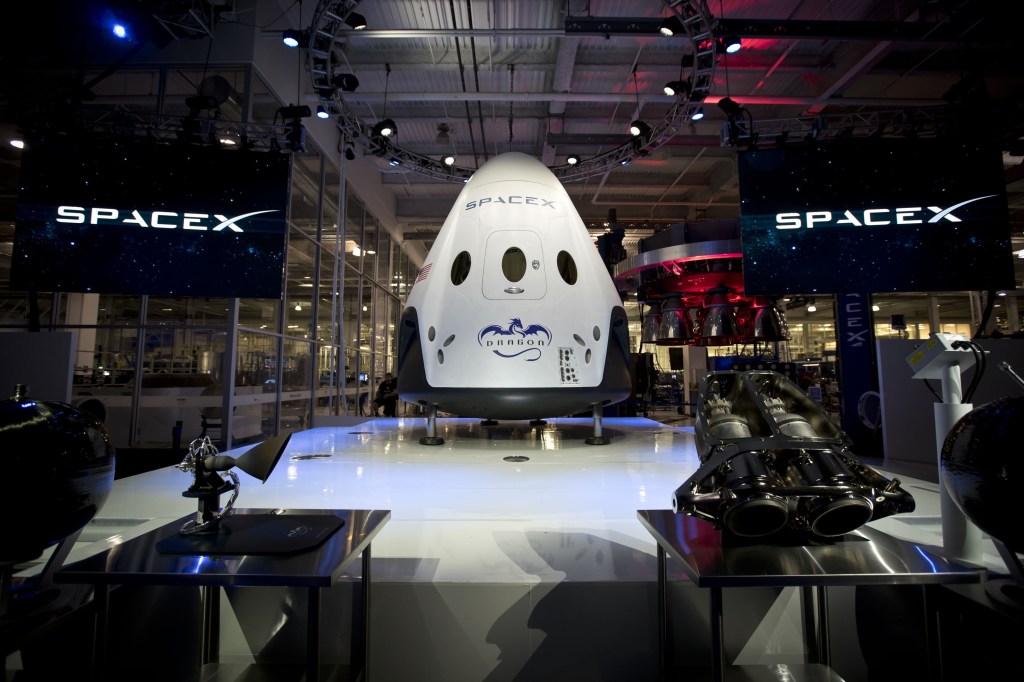
In February 2002, Musk founded Space Exploration Technologies Corporation traded as SpaceX with his $100 million. In 2006, SpaceX launched there first rocket, Falcon 1 but it failed in just 33 seconds. In 2007, SpaceX launched there second rocket, this due to engine failure the engines shutdown completely and the fail to reach the orbit. Another failure for SpaceX. Then SpaceX launched there third rocket, this time also it failed. The failure almost killed the company. After three failed launches, SpaceX successfully launched there 4 rocket. It was the first privately fueled rocket to reach the earth orbit. After the successful launch, SpaceX received $1.6 Billion for Commercial Resupply Service contract.

TESLA

Tesla motors originally known as Tesla was founded by Martin Eberhard and Marc Terpenning. In 2004, Elon Musk become the funders of Tesla and joined Tesla’s board of directors as a chairman. Musk played an active role in Tesla. In 2008, Musk become the CEO of Tesla. Now Tesla is one of the top company of electric cars.

Why we should exercise?

Exercise is physical activity that is planned, structured and repetitive for the purpose of conditioning any part of the body used to improve health and maintain fitness. Generally you work up a sweat, breath heavy and increase your heart rate during exercise.

The muscle inactivity always leads to weakness and wasting of muscles.Muscles are no exception to the saying “use it or lose it”.Regular exercise increases muscle size, strength and endurance.There are several exercises according to the needs and benefits.For example jogging or biking results in stronger,more flexible muscles with greater resistance to fatigue.Stamina formation is mainly carried out through aerobic activities,such as running and swimming.

Benefits of aerobic exercise:

⭐Physical exercise is a major contributor to health and can improve the body in three ways:more efficient heart,and lungs, improved muscle tone,and more supply joints.

⭐It is also essential to prevent obesity.Due to regular exercise,blood supply to muscle increases,it results in supply of more oxygen.

⭐Further exercises make body metabolism more efficient, improve digestion and enhance neuromuscular coordination.

⭐Heart beat enlarges,so that more blood is pumped out with each beat,fat deposits are cleared from the blood vessels and the lungs become more efficient in gaseous exchange.

⭐These benefits may be temporary or permanent on the basis of regular and vigorous exercises.Aerobic exercises do not cause the muscle to increase in size,even though the exercise may go on for hours.

⭐Aerobic exercises increase the adaptability of muscles and give greater endurance to muscles.

⭐To gain good health,it is suggested that a total of atleast 20 minutes per day,of moderate exercise,to burn around 200 calories (837)a day,is required.Regular exercise is preferrable to occasional intense sessions.

The bulging of muscles of a body builder or proffesional weight lifter results mainly from resistance or isometric exercise in which muscles are pitted against some immovable,or nearly so, object.

Endurance and resistance exercises produce different patterns of muscle response,it is important to know what your exercise goals are.

Weight lift will not improve your endurance for a marathon race.At the same time, jogging will do little to improve your muscle definition nor will it make you stronger.Proper exercise for proper goal is necessary.

IMPACT OF COVID-19 ON EDUCATION IN INDIA

India is the one of best and largest place for education systems in the world.

India is the country with over 1,000 universities and 50,000 colleges and institutions. The impact of covid 19 is observed in every sector around the world. The education sectors of India as well as world are badly affected by this.

Due to this pandemic, around 32 crore learners stopped to move schools/ colleges, all educational institutions are halted in India. COVID-19 made all the institutions to grow and opt for platforms , techniques, that are not used before. All the classes suspended and all the examinations, entrance tests are postponed.

This pandemic completely destroyed all the schedules of every student. COVID-19 Impact on education is also leads a great damage on country economy at present and in future.

COVID-19 has created many opportunities and challenges for educational institutions to strengthen their technological knowledge and infrastructure.

The lockdown made the entire education online, the teachers are teaching and assigning works through online by using some apps like zoom, Google meet, teams, YouTube, Facebook, skype .,etc.

India is not fully equipped to make education reach every corner of the country through online process. The students those who are not having access to internet will suffer a lot due to the present choice of digital platforms.

Universities and the government of India are relentlessly trying to come up with a solution to this problem.

Database Concepts

Database :- It is collection of information in such a way that computer program can quickly retrieve desired pieces of data and do operations.

DBMS ( Database management system) :- It is collection of programs that allows us to store, modify and extract information from database.

Data Independence :- Data independence implies that data stored at different levels should not affect each other when get changed.

Table :- A predefined row/column format for storing information in relational databasse.

Attributes :- Columns of table are called attributes.

Tuples :- Rows of table are called tuples.

Degree :- Number of attributes (columns) in a relation is called its degree.

Cardinality :- The number of tuples (rows) in relation is called cardinality.

Key :- Keys help in identifying, retrieving and establishing relationship among tables. There are various keys some of them are primary key, foreign key, alternate key, etc.

Data Integrity :- It means that one person can correctly and consistently navigate and manipulate the tables in database.

Entity Integrity :- It state that value of primary key can never be null and for each roe, it should be unique.

Referential Integrity :- It state that if a relational table has foreign key, then every value of foreign key must be either null or match the value in the relational table in which foreign key is a primary key.

Join :- It is used to combine related tuples from two relation. The join operator is cross product of two relations.

SQL (structured Query Language ) :- It is standard language used for communicating with RDBMS. It looks like English language.

DML ( Data Manipulation Language ) :- It is a part of SQL that provides statements for manipulating database. DML statements can modify the data stored in a database, but they can’t change its structured. Some of DML statements are : Insert Into, Delete , Select, Update, etc.

DDl ( Data Definition language ) :- It is a part of SQL that provides statements for creation and deletion of database. DDL statements are : Create Table, Alter Table, Drop Table, Create Index, etc.

Manali flooded with tourist amid third wave warning; covid protocols getting ignored.

Inspite of third wave warning lakhs of tourists have thronged Himachal Pradesh in less than a month.Videos emerging from Manali and Shimla show that social distancing norms put in place to contain the coronavirus pandemic have gone for a toss.Highways choked, hotels fully booked after the Himachal Pradesh government relaxed Covid-19 related restrictions.Hotel occupancy in major tourist spots, including Shimla, Manali and Dharamshala, is almost full and tourists have been heading to less popular tourist spots in a bid to find accommodation and in guest houses.

Even though the governments, health experts have been warning against large crowds, a sea of tourists was seen in Manali town in Kullu district as the Himachal Pradesh government eased COVID restrictions.the increase in the number of tourists has posed a challenge for the authorities who are struggling to ensure implementation of Covid protocols amid fears of an impending third wave of coronavirus infections.

Reason behind this huge influx of tourist

  1. The prime reason is that the Himachal administration has withdrawn the mandatory need of a negative RTPCR report and e-Covid pass to enter the hill state.
  2. Another reason, behind the rush of tourists, is the ongoing heatwave in North India.
  3. while the third reason is that some people fear that lockdown-like restrictions may be imposed if the third wave of coronavirus strikes the nation. So many have decided to use this opportunity to visit some places

Twitterati reaction

Social media was abuzz with pictures of crowded Manali markets and tourist spots. While some were concerned over the violation of Covid protocols by the tourists, others shared memes and took taunt at the carelessness of the public.

for more news related to covid vist the link👇

https://www.timesnownews.com/india/article/tourism-with-a-vengeance-in-himachal-pradesh-shimla-manali-jampacked-covid-protocols-thrown-to-wind/780836

https://news.google.com/covid19/map

Description of Metals, non-metals and metalloids


The process of man towards civilization is linked with the discovery of several metals and non-metals. Even today, the index of prosperity of a country depends upon the amount of metals and non-metals it produces. The wealth of a country is measured by the amount of gold in its reserve.

 An element can be identified as metal or non-metal by comparing its properties with the general properties of metals and non-metals. In doing so, we find that some elements neither fit with the metals nor with non-metals.

Such elements are called semi-metals or metalloids. Elements are classified into metals, non-metals and metalloids based on their properties.

METALS


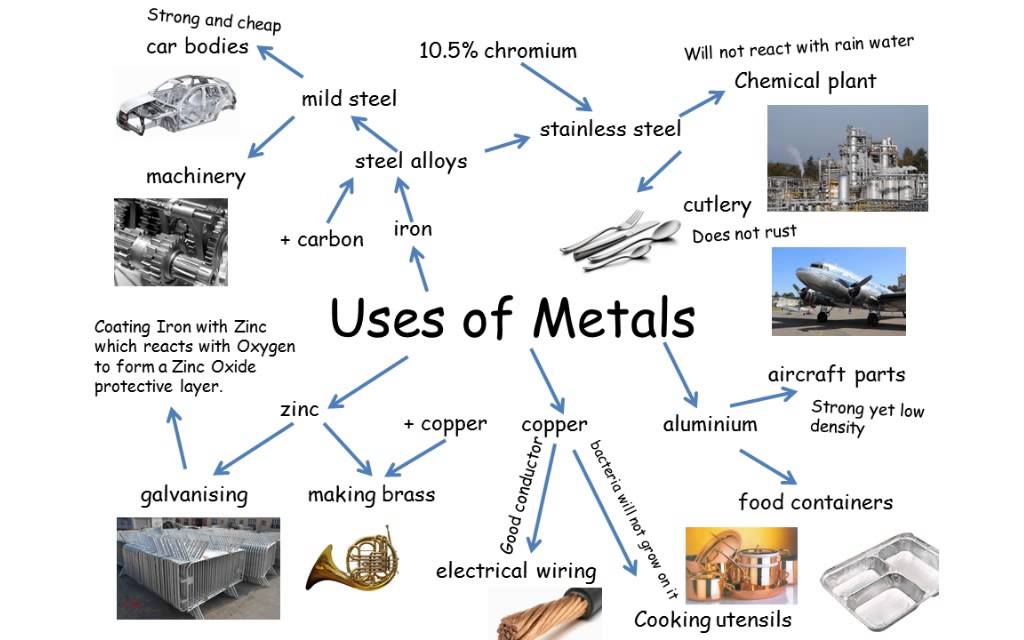
Iron, copper, gold, silver, etc. That we use in our daily life are metals. The properties and uses of metals are given below.

PHYSICAL PROPERTIES OF METALS
Metals are solid under normal conditions of temperature and pressure.
Most metals are hard.
All metals are shiny. The typical shine of metals is called metallic lustre.
Metals generally have high density.


Metals in general have high melting point and boiling point.
Metals can be hammered into very thin sheets. This tendency of metals is called malleability. Using this property aluminium is transformed into silvery foils.
Metals can be drawn into thin wires. This property of metals is called ductility. Example : copper wires.
Generally metals are good conductors of heat and electricity.
On being hit, metals produce a typical sound. Hence, they are said to be sonorous. This property is being made used in making temple bells.

USES OF METALS
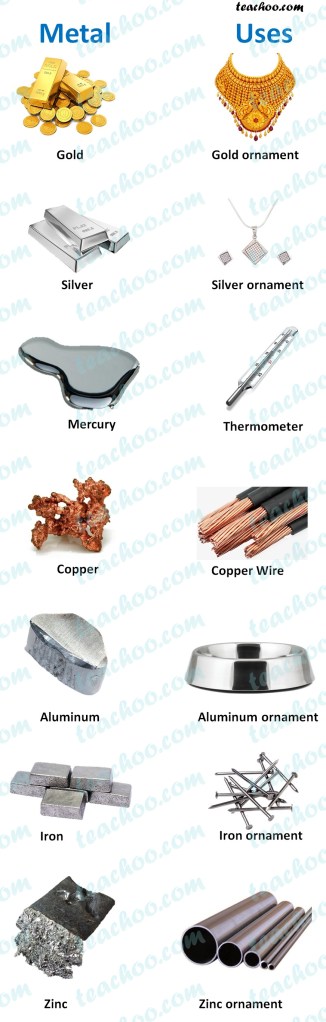
Iron is used for making bridges, engine parts, iron-sheets and bars.
Copper is used for making electrical wires, coins and statue.
Silver and gold are used for making jewels and for decorative purposes and photography.


Mercury is used in thermometers and barometers because of its high density and uniform expansion at different temperature.
Aluminium is used in electrical wires, cables and in aerospace industries.
Lead is used in automobile batteries, X-ray machines


NON-METALS


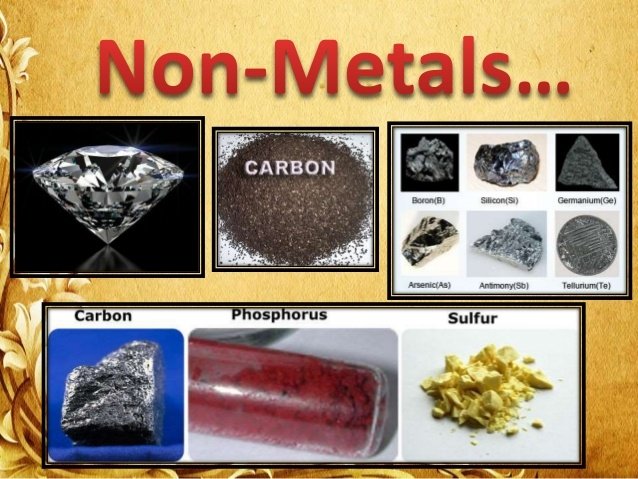
Elements like sulphur, carbon, oxygen etc. are non-metals. Some of the properties and uses of non-metals are given below.

PROPERTIES OF NON-METALS
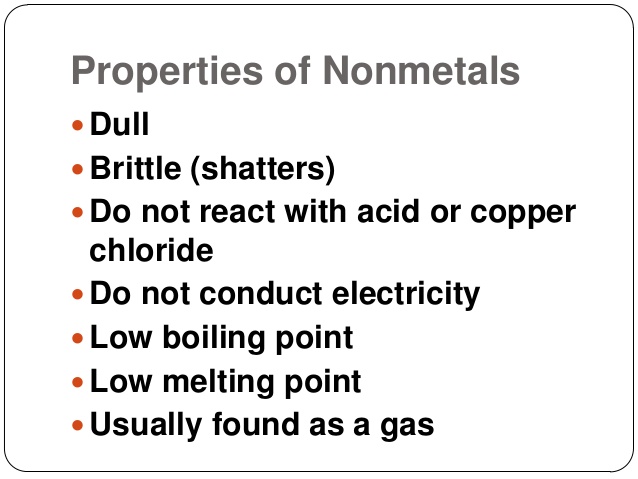
Non-metals occur as solids, liquids or gases at normal temperature. For example, sulphur and phosphorus occur in solid state while bromine occurs in liquid state. Elements like oxygen, nitrogen etc., occur in gaseous state.
Non-metals are generally not hard except diamond (a form of carbon).
Non-metals have a dull appearance.


Non-metals are generally soft and have low densities. The exception here is a diamond (a form of carbon) which is the hardest naturally occurring substance.
Non-metals have low melting point and boiling point.
Non-metals are non-malleable.
Non-metals are not ductile. Carbon fibre is highly ductile.
Non-metals are generally bad conductors of electricity. Graphite (a form of carbon) is an exception.
Non-metals do not produce sound (non-sonorous) when hit.


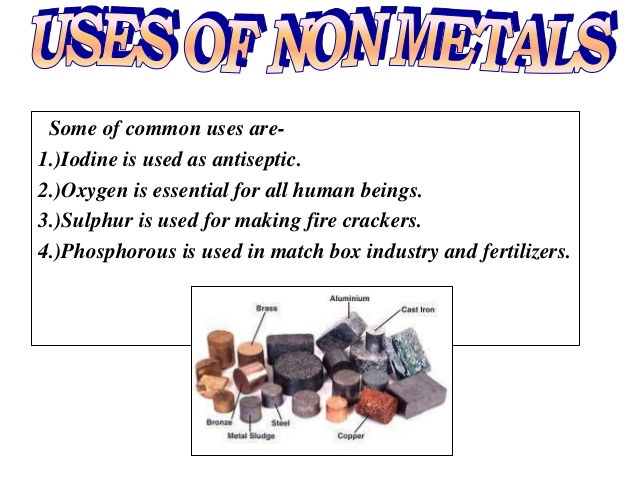
USES OF NON-METALS
Diamond (a form of carbon) is used for making jewels, cutting and grinding equipments. Graphite is used in making pencil lead.
Sulphur is used in manufacturing of gun powder and vulcanization of rubber.


Phosphorus is used to make match boxes, rat poison etc.,
Nitrogen is used for manufacturing ammonia.
Chlorine is used as a bleaching agent and in sterilizing water.
Hydrogen is used as a rocket fuel and hydrogen flame is used for cutting and welding purposes. Hydrogen is also used as a reducing agent.

METALLOIDS
The elements which exhibit properties of metals as well as non-metals are called metalloids.

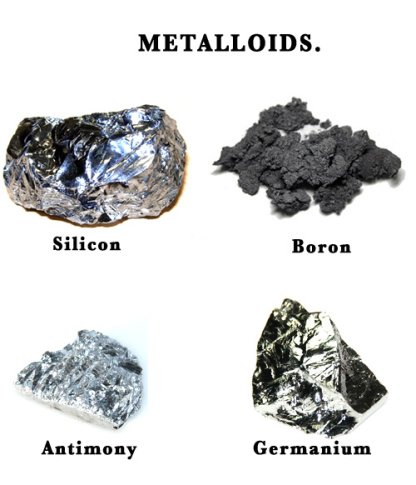
Examples: Boron, Silicon, Arsenic, Germanium, Antimony, Tellurium and Polonium.

PHYSICAL PROPERTIES OF METALLOIDS
Metalloids are solids at room temperature.
They can form alloys with other metals.
Some metalloids, such as silicon and germanium, can act as electrical conductors under specific conditions. Thus, they are called semiconductors.

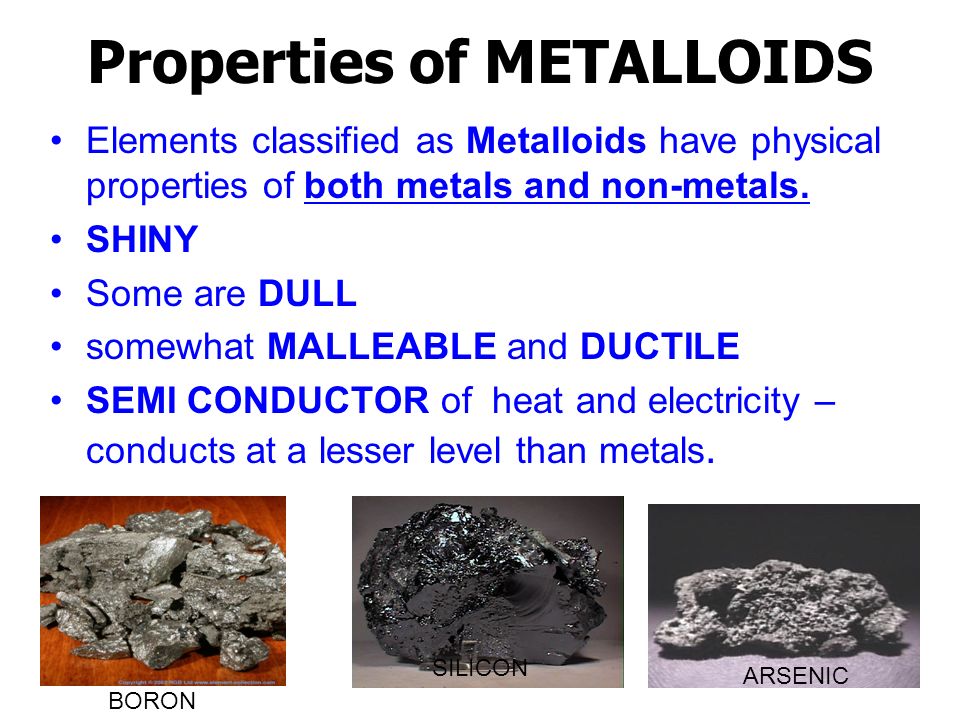
Elements classified as Metalloids have physical properties of both metals and non-metals. SHINY. Some are DULL. somewhat MALLEABLE and DUCTILE. SEMI CONDUCTOR of heat and electricity – conducts at a lesser level than metals. SILICON. ARSENIC. BORON.


Silicon which is a metalloid appears lustrous, but it is neither malleable nor ductile. It is brittle – a characteristic of some non metals. It is a much poorer conductor of heat and electricity than the metals.
The physical properties of metalloids tend to be metallic, but their chemical properties tend to be non-metallic.

USES OF METALLOIDS


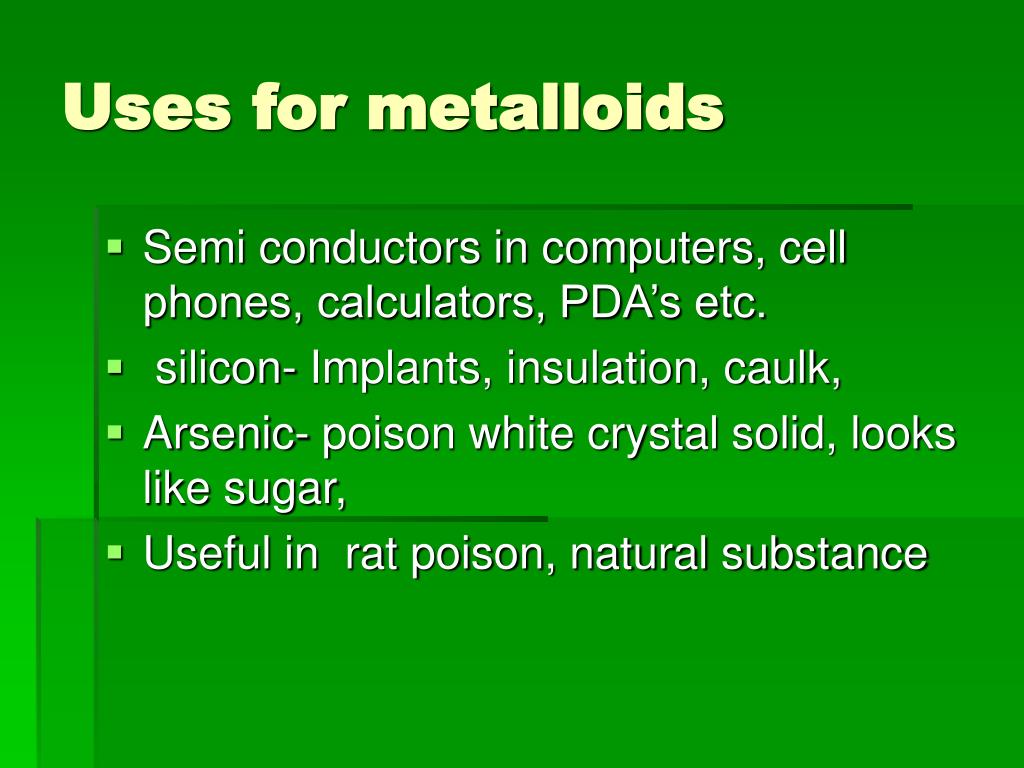
Silicon is used in electronic devices.
Boron is used in fireworks and as a fuel for ignition in rocket.

WINDOWS XP

Windows XP is still going strong

Windows XP is a line of proprietary operating system which was developed by Microsoft and is meant to be used for general purpose computers , such as home computers and business desktops , notebook computers and various types of media centres . Windows XP succeeds Windows 2000 and Windows ME , and is the first consumer – oriented operating system produced by Microsoft to be built on the Windows NT kernel and architecture . The most popular operating systems versions are Windows XP Home Edition , which is primarily meant for home users , and Windows XP Professional , which boasts additional features , such as support for Windows Server domains and dual processors , and is meant for professionals and other experts . Windows XP Media Centre Edition has additional multimedia features . Windows XP has an edge over the earlier versions of Microsoft Windows because of enhanced efficiency and better stability .

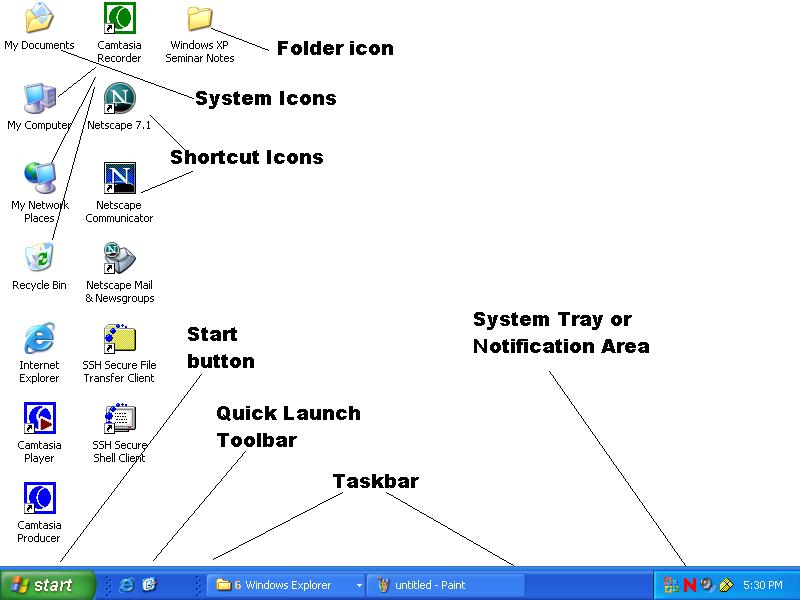
Windows XP helps you access and manage your files on the pc using a Graphical _User Interface GUI . All Programs and files stored on the PC are represented as pictures that are called icons . These icons are stored on the desktop .

Components of Windows XP

Windows XP

The Windows XP user interface consists of various components and concepts that help make Windows XP user friendly and intuitive . Some of the important components are :-

  1. Desktop
  2. Start Menu
  3. Taskbar
  4. Icons
  5. Recycle Bin
  6. Windows
  7. Applications
  8. Folders
  9. Files
  10. Control Panels

Social networking

In our world many people are using social network apps like facebook,Instagram,WhatsApp ,Twitter, etc…….. Buy using these networking apps we have a lot of advantages and disadvantages

Some advantages of social networking. 1.stayin connected with friends…… 2.for means of communication…….. 3.keeping up_to_date news quickly………. 4.achiving a more personal connection……. 5.making friends with similar interests and likes…6.for free advertising…….. 7.for creative expression…….. 8.experience global exposure………. 9.creating a positive impact on the world ……… 10. The above expressions are advantages

Disadvantages of social networking. 1.lack of emotional connection…… 2.gives people a licence to be harmful…… 3.decrese face_to_face communication skills……. 4.conveys inauthentic expression of feelings……… 5.diminishes understanding and thoughtfulness…6.causes face_to_face interactions to feel disconnected…….. 7.facilitates laziness…… 8.creates a skewed self_ image…….. 9.reduces family closeness………. These are disadvantages of social networking

The above subject discribes the advantages and disadvantages of social networking

Have we all forgotten Hathras Rape case ?

A very prominent example of how caste have its root in Indian Society is the recent Hathras Case. The case brings into limelight the issues of pollution and purity of the caste system which has prevailed in the Indian society from centuries before. The idea of caste and stratification had been existent in India since the times of Varna system. And till date this system has not faded in India especially for the lower classes. As you go higher in the system of stratification the more the chances of caste system fading out.

The case of Hathras throws light on the cruel side of patriarchy and caste system. A 19 year old Dalit girl was gangraped by 4 men. Men belonging to the upper caste. This issue talks about two different aspects. One is the aspect of the caste system about how the women was from a lower caste and the men from a higher one. While the second aspect is about the system of patriarch, which has been ruling India ever since the beginning of times. The case had a lot of controversies attached to it, the police investigating it even claimed that ​the girl was not raped. To top with all of this the body of the girl was cremated by the police itself without seeking the permission of the family. The girl was not given dignity in her life and death too. 

The policemen investigating the crime were adamant about denying that the girl was raped and kept on blaming the victim rather than investigating about the circumstances leading to her inhuman death. Even the media who tried to tell the truth were also manhandled. This shows the cruel side of how money and power can win over the justice and victims. The case gained its momentum because of how the girl was cruelly killed and denied dignity in her death too. This was possible mainly because the men were of higher caste yielding power to control manpower as they wish. The roots of caste system and patriarchy is deeply connected. 

Something that we see very common in India is the justice served to the rape victims. The daily raising numbers are worrisome. And the delayed justice acts as a barrier for many victims to even file a case. So many of these problems are connected and erasing of one system can always diminish or erase the other one too.

How to become an established content writer

Content writing is considered the most growing and existing job in India. Content writing offers knowledge, experience and money at the same time. Content writing companies help one to develop good vocabulary and lingual skills that make it more beneficial for the writers and for their futures as well.

Create a portfolio– Portfolio is considered as your first impression, one portfolio can do wonders for you. If you are a new content writer then there are fewer chances to win the trust of people. You have to be individual and certain to win their trust in any way you can. So by creating a portfolio you’re representing yourself in front of them, make sure it’s as per the requirement of the clients.

Blogging– Blogging is becoming a truly popular choice among youngsters. It can be a great start if you are planning something in the field of content writing. Follow some easy tips and tricks like – plan your blog post by choosing the topic, creating an outline, conducting research and check facts. Use images to enhance your post, improve its flow and explain complex topics.

Certification – Many online portals provide you with a chance to showcase your skills and get a certification for the same. Flaunted by taking certification assessments. Share some level of expertise in various domains then go for a skill certificate. You can even attend workshops and short term courses. To content writing comes with practice and imagination so, practice will fuel your writing skills.

Internships – You can do an internship as early as possible, one must consider the internship option very actively. You can do a part time internship because a full time internship can be a pain while studying. There are plenty of online internship opportunities that pay you on an hourly basis. Hence, you can flexibly work according to your college schedule. See, one is required to curate wide-ranging content while taking up a content writing role.

Qualifications– Freshers who ponder on how to become a content writer must know the qualification. Skills like editing ,language skill, flexible writing skill ,awareness about social media. These are some qualifications and skills which are helpful for content writers to create amazing content. These skills will help you to stand out from the crowd.

Conclusion– My biggest advice to all aspiring content writers would be to keep experimenting until you satisfy your own creative urges. The written word is a strong medium of expression of your thoughts, ideas, opinions and by extension your own self. So, if you see your future in content writing , don’t be afraid to take the leap.

Is Digital a future ?

As a student of marketing we all believe that we are goanna be placed well and we are opportunistic but is that real ? . if u ask me its a big no things will not be standard untill we graduate. we all are being lied that we are gonna be placed in a good company but the truth is.

How do we prepare ourselves for the better future ?

Its simple for us to say work hard but that will be so funny when you cant find rightful resources when this internet is full of ads and paid E – Commerce sites to take our attention away.now let me say how you can prepare yourself best way to learn something is to learn yourself . set a proper goal and try to learn each and everything related to those thing not only learning will help us we have to implement practically.

How to learn digital marketing ?

Digital marketing is nothing new without knowing we are already in digital marketing for example YouTube , Twitter , Instagram , Facebook and so on are the important platform of digital marketing . So , try to create your own website lets a gaming channel or whatever you like and try to find a way to attract people with your contents and make sure you do learn something from it . Don’t make a large investment before you get something in return and try to monetize yourself.

Digital marketing a future

In 90’s people bought products based on what they say on advertisement but now people dont have time watch tv’s and most of them have changed to smart TV so marketing needed a change then came the digital marketing i wont say that advertisement will be total failure that’s for a different conversation . Now its about DM a survey says that Internet users across India spend nearly six and half hours online daily in the third quarter of 2020. by another 5 years it will be doubled so DM is the only way to make people see our product . so people who are planning to take marketing as a career should concentrate on his/her skills on digital marketing ( e- mail , YouTube , twitter , Facebook marketing )

SPACE DEBRIS

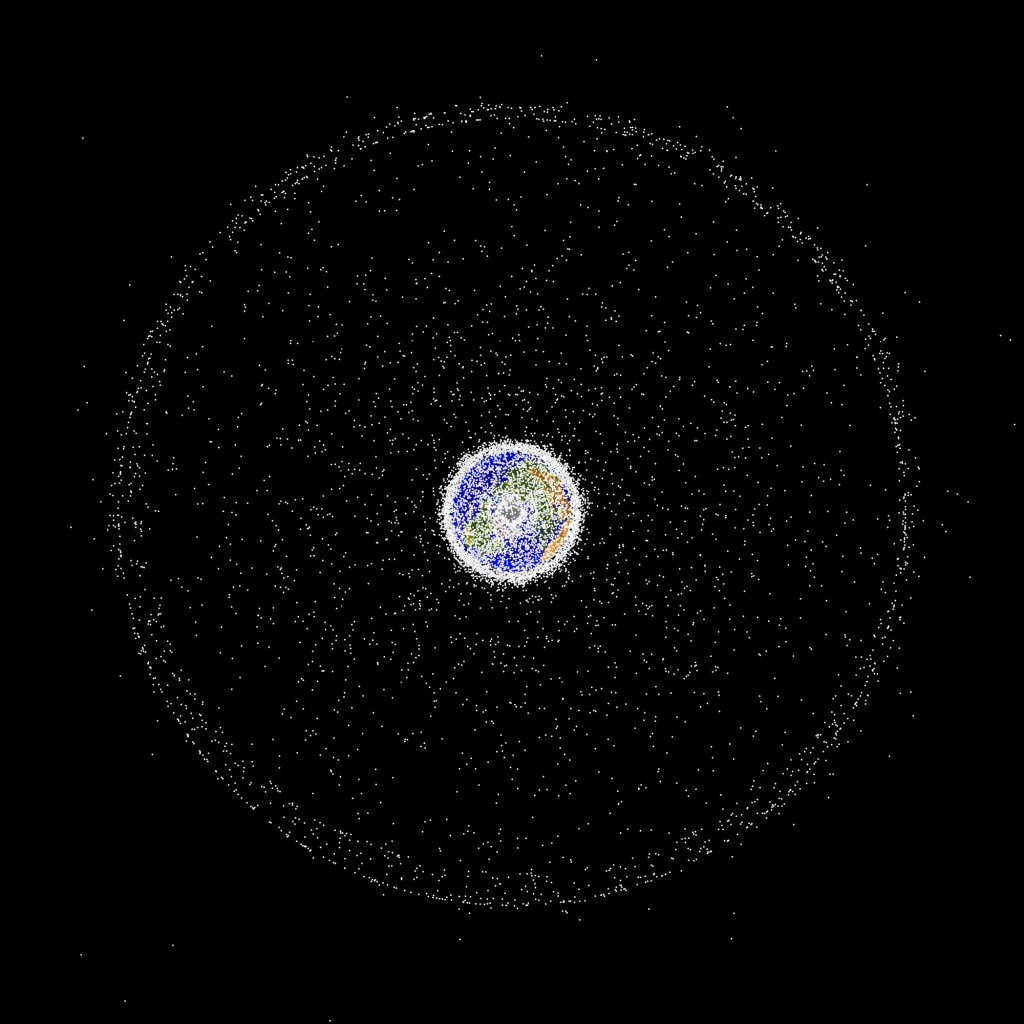
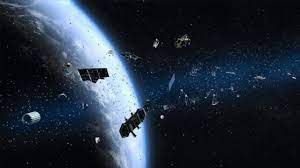
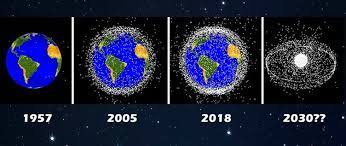
Space debris is the combination of natural(meteoroid) and artificial(man-made) particles. Natural debris orbits around the sun and artificial debris orbits around the earth. Hence they are called Orbital Debris. This can be any man-made object in the orbit moving in the earth’s orbit. Such debris includes nonfunctional spacecraft, abandoned launch vehicle stages, mission-related debris, and fragmentation debris.

In this article, we are going to focus on Artificial Debris, the Reason for its cause, and its prevention.

Space debris

What is Artificial space debris?

Any non-functional man-made object in space is called Artificial debris. 

They come from 

  • Satellites and spacecraft which are failed.
  • Satellites whose life has ended.
  • Rocket dismantle stages during the launch.
  • Hardware like nuts, bolts, payload covers, etc.
  • Solid propellant slag.
  • Cast aways during space activities like human wastes.
  • Fragments due to battery explosions, collisions, etc.

When two satellites collide they produce thousands of particles that are dangerous and can cause further destruction which makes Earth’s orbit unfit for satellite launches.

Artificial means man-made satellites

The number of satellite and rocket launches as of April 2021 is given below:

Number of rockets launched(excluding failures) since 19575560
Number of satellites carried by rockets launched11139
Number of satellites still in space7389
Number of satellites still functioning3170

Let’s have a look at the number of satellites launched only in 2020 and 2021(April)

Satellites launched in 20201283
Satellites launched in 2021 (April)853(65% of 2020)

History

In the year 2009, 19,000 debris over 5 cm in size were tracked. 

In July 2013, more than 170 million debris smaller than 1 cm(0.4), around 670,000 debris of 1 to 10 cm in size, and approximately 29,000 larger debris were detected.

By July 2016, nearly 18,000 artificial debris were orbiting the earth.

In October 2019, nearly 20,000 artificial objects including 2,218 were tracked.

The speed with which the debris travel is more than 28,000 kph(23 times the speed of sound).

Have you heard of Kessler syndrome?

NASA scientist Donald Kessler in 1978, proposed that more launches could increase the junk around the earth which results in the chain reaction of collision of objects in space and further making the earth’s orbit unfit for satellites.

This situation would be extreme, but some experts worry that a variant of this could be a problem one day, and precautionary steps should be taken to avoid the problem.

How do they track space debris?

The USA and Russia have set up tracking networks to monitor the orbital space object population. The European Union is also starting to develop its ways to track debris.

Powerful lasers are used to measure the distance of these objects, like radar or sonar. When a laser beam hits the debris and bounces back to Earth, ground crews can measure how long it takes to figure out where they are and where they are going it alerts the ground stations in case of collisions. But usually, laser technology is used to detect the movement of satellites and if the same technique is used to detect the debris then continuous monitoring should be there since debris are found randomly in space.

Detection of objects through laser technology

India’s status on tracking debris

NETRA(Network for space Objects, Tracking, and Analysis)

Till now, ISRO was dependent on NORAD(North America Aerospace Defense Command) data,

which is available in the public domain, to keep track of space debris and monitor our active and passive satellites. However, this global data is not accurate but NORAD keeps accurate data available for those who are members of its network. Therefore, ISRO cannot access the data.

But now, ISRO has decided to set up telescopes and radars in four corners of the country to get accurate data and avoid unwanted collisions of the satellites.

In September 2019, India launched the early warning system NETRA to secure satellites and other assets in space.

Can satellites be protected from space debris?

There are two ways in which the satellites and spacecraft can be protected:

  • Computer programs can search for possible collisions between large debris. This system is used in the International Space Station to detect. These operations are expensive and can disturb delicate experiments. Space tracking networks can only track objects more than 100 mm in size. Even a 10 mm object can cause big trouble this cannot be called 100% effective.
  • A debris shield can be designed to provide additional protection for a spacecraft. One way is to increase the thickness of the craft but that can increase the mass of the craft/satellite. Hence, a specially designed shield called the Wipple shield was used. It was made of two thin walls separated by some space. It was observed that this wall was more resistant to debris. The outer layer absorbs a lot of debris energy so that the inner wall is not punctured.
Protection of satellites through shields

Space debris Removal

Removing space junk, especially larger pieces before they fragment is not easy. The best way to do this is retarding the force and deorbiting the junk. When it drops in altitude less than 400 km above the earth it is burnt.

For years NASA, ESA, and other space agencies are studying debris removal technologies. Some of the ideas include the usage of nets to gather junk and robotic arm. Japanese are now developing a type of satellite that uses magnets to catch and destroy the debris. Last year, UK has successfully cast a net around a dummy satellite.

Clearspace one

Clearspace-1 will be the first space mission to remove debris from the Earth orbit, it was planned to launch in 2025. The technology demonstration satellite was first developed by the Swiss Federal Institute of Technology in Lausanne. 

Clearspace one

Many countries are trying to invent new technologies to reduce the threat of debris. Russia invented a Self Destroying Satellite. Australian researchers are developing the Hunter-Killer satellite to neutralize space junk. Finland has developed a Wooden Satellite and planning to launch this year.

credits to the right owners of the pictures used.

DOWRY

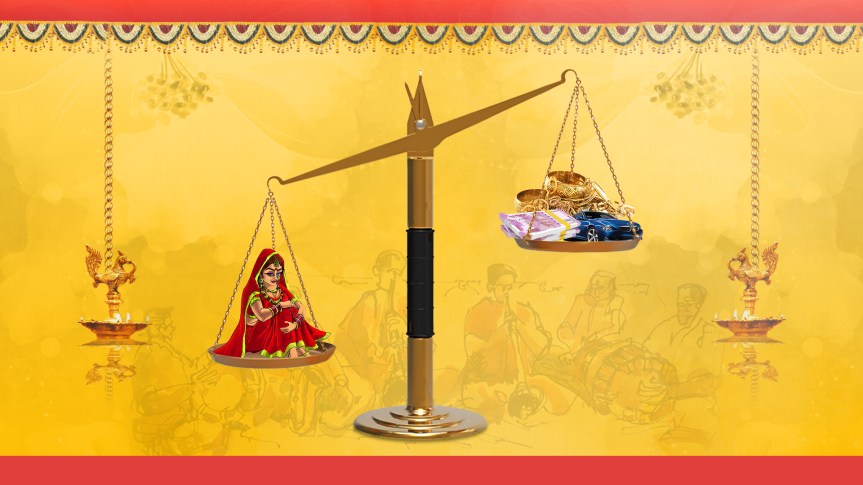
“Oh no it’s a girl child” started because of practices like dowry. When parents find out that they have to pay a huge fee in return for their daughter, no one would be happy at the birth of a girl child. We also have the society showing pity to parents of the girl child and saying things like:

“Oh you have a daughter in your family, you must have to pay a lot.”

“Thank God I am blessed with sons; money shall come my way”

Practices like dowry are what made female foeticide come to life. They check the gender of the child and undergo an abortion if it is a girl child.

Did you know that 20 women die every day due to the harassment of dowry?

You may think that practices like dowry only exists in the rural areas, but it also exists in the metropolitan cities. Well-educated families with both the men and the women working also believe in paying dowry.

Let’s talk about the concept of modern-day dowry. People no longer ask for dowry directly. They just expect “gifts.” These “gifts” make the bride’s side of the family go broke. The bride’s family spends so much money on the “gifts” and the marriage that a lot of the time they have to take a loan.

Do you think it is fair that the earnings and savings of parents are going to the groom’s family? I am sure a lot of us have heard sentences like “we need to save gold for the girl’s marriage”. Sentences like these are so normalised because the girl’s family has no option but to save money because the groom’s family needs “gifts”.

Tell me one reason why they deserve all the earnings of the girl’s family?

In old times the practice of dowry started because girls would not earn. So, parents would give the groom’s family dowry in return for taking care of their daughter’s expenses and living. But, even if the wives did not have a job they would still cook, clean, do the chores and support the groom’s family.

Now in modern society, when women do earn on their own what are we still giving the dowry for?

We as a society need to stop the practice of dowry because:

It financially drains the bride’s family: these so-called “gifts” which come as cars, gold, furniture, properties, money costs a lot and financially drains the family.

It makes the men more superior: if we pay the groom so much just because he is a man, the society is going to keep celebrating the birth of a boy child and look down upon the birth of the female child because it will cost them a lot.

It stops the women from growing: so many women are not able to study because the parents cannot afford dowry and education. Girls often sacrifice their dreams because their parents want to pay money to an unknown family.

Now, here me out. If all the bride’s family stop paying dowry or gifts to the groom’s family what will happen?

The girl won’t get married. Right?

Well, there are many countries where they don’t have to pay dowry to get married.

Shocking isn’t it?

Secondly, we all have to stop our so-called obsession with marriages. When a girl child is born why is marriage the only destination. The woman should be first encouraged to be independent on her own, have her own house, be successful without a man.

So can we all as a society stop these useless practices where we pay the groom’s family for no reason? Instead, can we start fulfilling the dreams of our daughters? The practice of dowry will only stop if all of us come together and say no to it.