Brahadeeswara Temple

The year 2010 celebrated the thousand years of cultural and historical, heritage of the Brahadeeswarar Temple.The 1000-years old Timeless Heritage :King Rajaraja cholesterol constructed the Brahadeewarar Temple, commonly known as the Big Temple by the natives of Tanjore . It’s architecture marvel,fine proportions and intricate carvings and grandeur make it a symbol of cultural and sculptural expertise. Tanjore ” The Granary of Tamilnadu”, is also the seat of Carnatic music,dance,traditional handicrafts and stylized bronze work. Hence, the Chola’s made it their capital.Visit to the Nayak Palace :With a great thirst for Indian culture ,the author visited the palace complex which was built by the Nayaks in the 16 th Century. The Martha’s had renovated it later. The Royal Muslim here has a collection of urns,drums,manuscripts,gifts, jewellery weapons and other belongings of the Maratha.
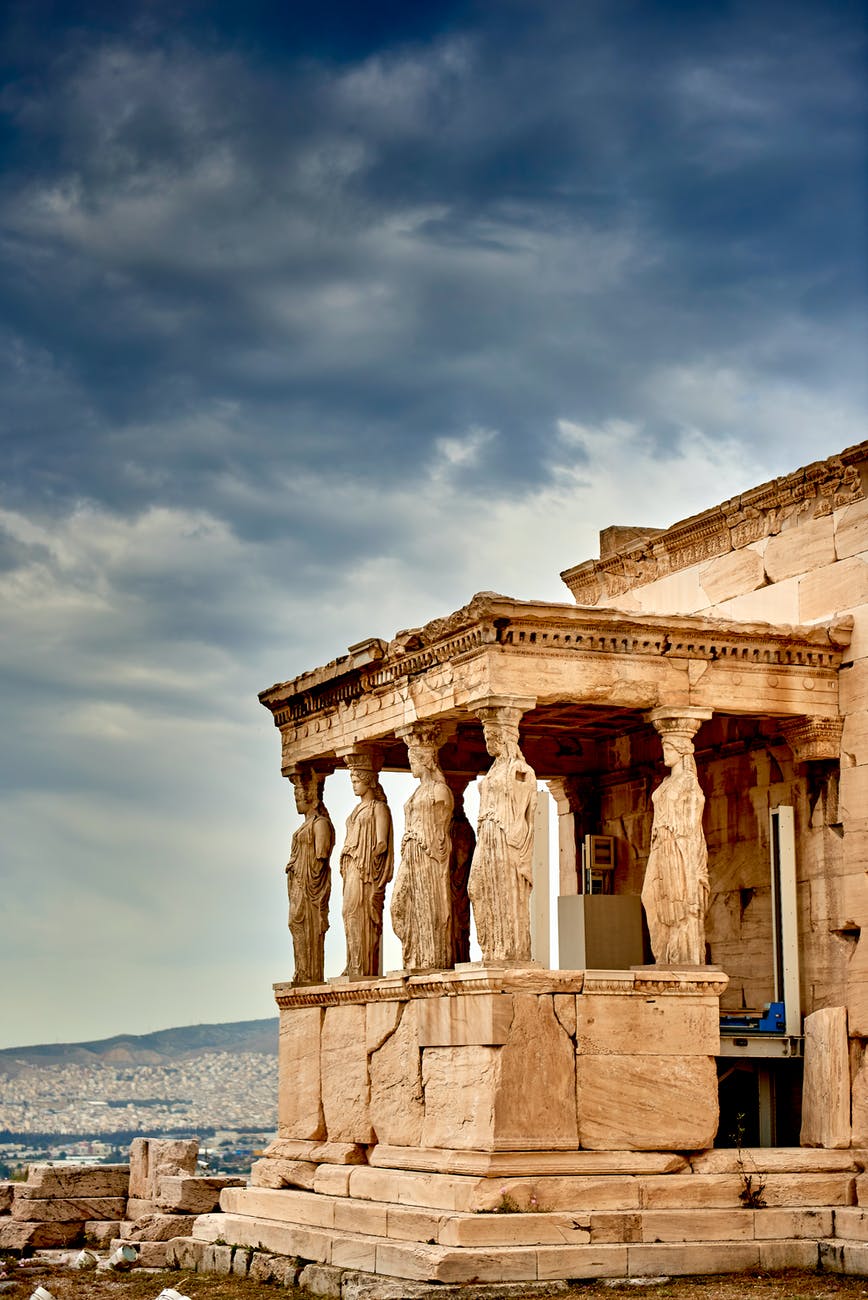
Photo by Josiah Lewis on Pexels.com

A painting of Maratha King welcomes one to the Durbar Hall. An array of pallava and chola on the craftsmanship of their Era.The 11th century Brahadeeswarar Temple :The magnificent structure of the Big Temple, situated in an area of 750 feet by 400 feet surrounded by a moat welcomed him. Its marvellous engineering technology could be judge by the vimanam. The towering vimanam is built up with stones with bonding and notching and without the use of mortar. It is baffling to note how the topmost stone of 80 tons was placed without modern of the divine mount Kailash. The sculpture and structure is incomparable. The shrine for lord Muruga is an integral part of the Temple. It is an elaborately carved stone structure, a designer’s delight. It would take weeks if not months to copy the unrepeated designs on each of the short pillars of this shrine. The chiseled would have indeed taken months to complete each shapes.The magnanimous King Rajaraja Chola :The author stood in awe,astonishment and reverence when he saw a walled fortress inside -a standing testimony of the Chola’s opulence and vision . The huge statues reflect their steadfast reverence to Lord Shiva. Rajaraja, his sisters and his queens donated gold and silver to build this Temple.The intricate carvings and murals :The delicate carvings on the pillars and the inscriptions on the walls of the temple are delight to a historian’s sense. The deities and Shiva Linda’s in the pillaged cloisters are worthy to be admired. The huge Shiva Linga in the sanctum sanatorium and the Nandhi Statue depict the large heartedness of Cholas , who did not hesitate to spend large sums of money.

The sculpture and engineering technology of this 11th century Temple is truly admirable. The huge granite stones had been interlocked so perfectly with a harmonious bonding that they can withstand rains ,wind and heat down the centuries.The might vimanam:Unlike many Temple the 58m tall and 13-storyed vimanam makes the Gopurams. In its splendid idea ,it’s impressive vision, its displays of the mighty effort of construction-it stands as a testimony for centuries to come.It’s Dedication :Among all the temples dedicated to all suites, this is the only Temple which has been dedicated to Brahadeeswarar. When the devotee king anointed it with holy water from all the sacred rivers of India, little did he think that the Big Temple would stand for 1000 years and forever. The big Temple will live as long as Indian history lives.

PINK CITY OF JAIPUR

A City With History In Every Corner

India is one of the most beautiful countries in the world. Every street, every corner has a story to tell. One of the cities that attracts the most tourists is: Jaipur, also known as The Pink City. Jaipur is the land of history and monuments. It is the capital city of Rajasthan and was founded by Maharaj Jai Singh II in 1727. The city is an architectural beauty. It is said that the Maharaj consulted various books before drawing the layout of the city. The entire city is built on the principles of Vastu Shastra and is a historical landmark. Here is a brief overview of my favorite attractions in and around the city:

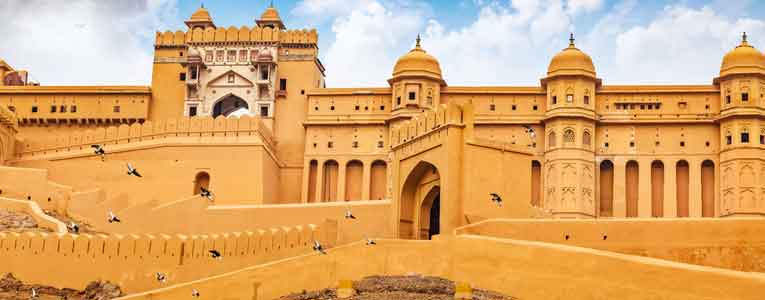
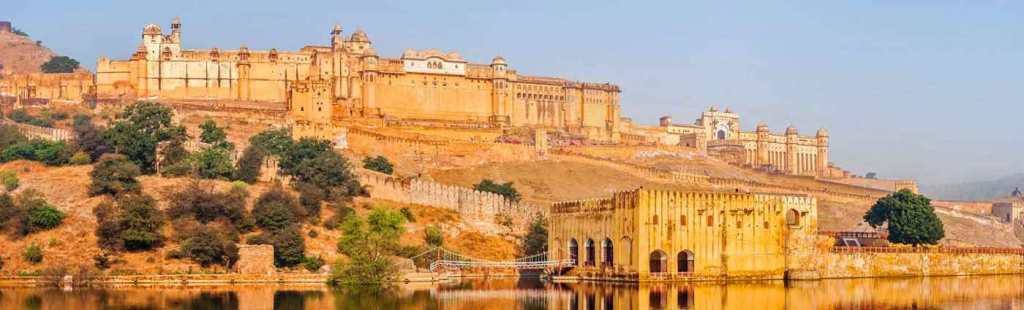
AMER FORT: The most magnificent attractions of Jaipur is the Amer Fort. The fort was built by Raja Maan Singh and is situated about 11 kilometres from Jaipur. The fort is divided into four courtyards and each section has its own entry and exit. Each section represents a different and interesting part of history. The fort interior is something to die for. The parts of the fort include:

  • First Courtyard or Jaleb Chownk
  • Second Courtyard where Deewan-e-Khas and Deewan-e-Aam is built
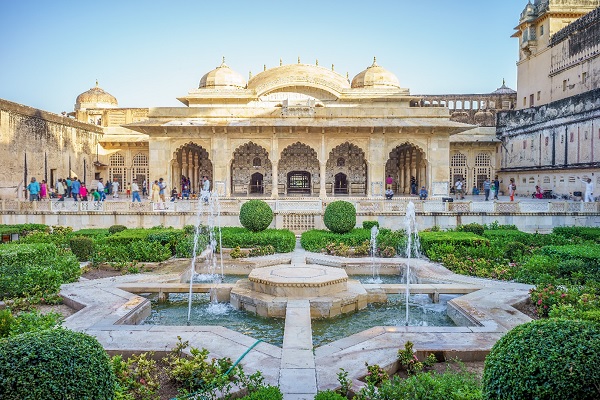
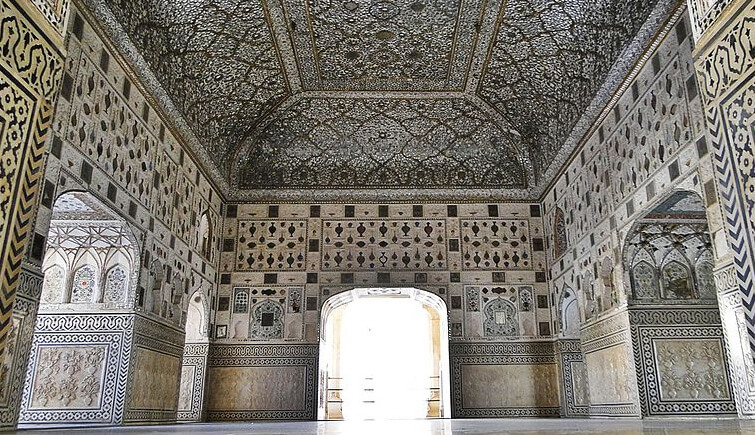
  • Third Courtyard is the site for Jai Mandir ( also known as Sheesh Mahal or the mirror palace) and Sukh Niwas. The two buildings are connected by a garden which are same as the Mughal gardens.
  • Fourth Courtyard is the place where the royal ladies and their helpers used to reside. The king built twelve rooms for his twelve queens.

The construction is so alluring and all the details have been well taken care of. Each and every section narrates an incident you would want to hear.

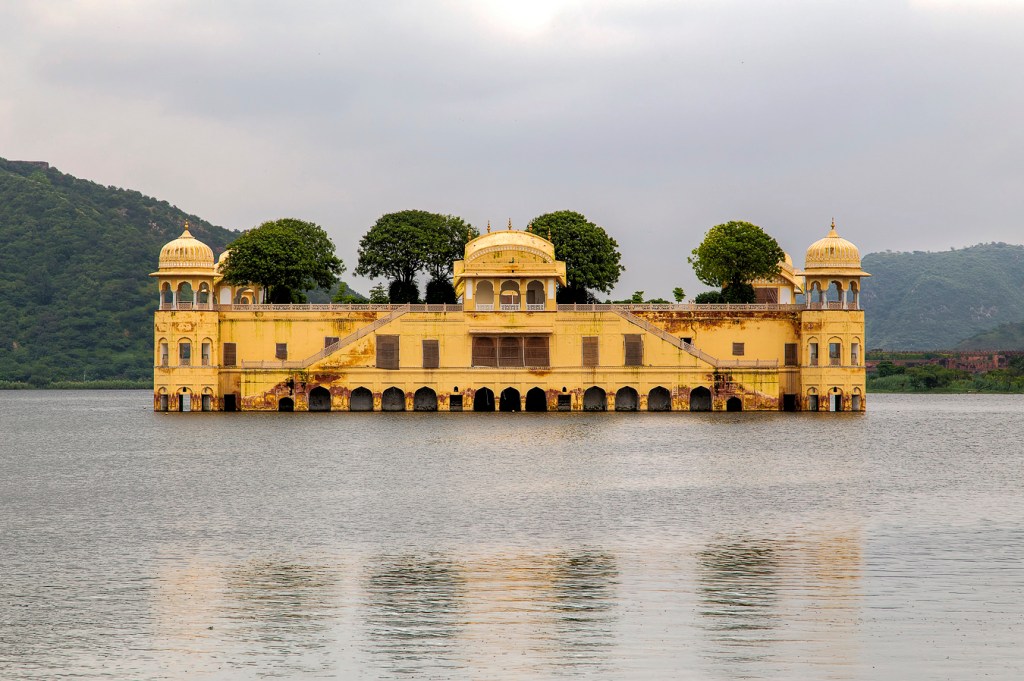
JAL MAHAL: A fort situated in water, how can someone not appreciate such a beauty. Jal mahal was built by Pratap Singh of Jaipur who was the grandson of Maharaj Jai Singh II, the founder of Jaipur. The fort was built in 1799 and is situated in the middle of Man Sagar Lake. It is a gorgeous five story palace made entirely of red stone. The interesting thing is that four floors of the fort are beneath the water and only one of the floor is visible. Tourists are not allowed to enter the fort but can appreciate the scenic from afar.

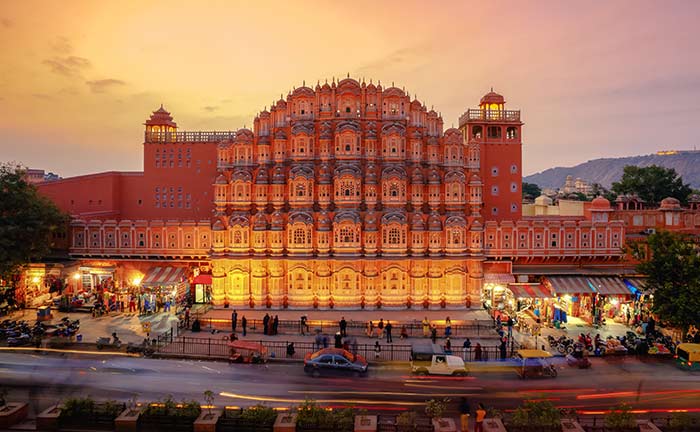
HAWA MAHAL: Hawa mahal is an example of pure architecture marvel. The structure was also built by Pratap Singh in 1799. The entire structure is made of pink and red stones. It is a five story building with 953 windows called Jharokhas which have been designed with intricate latticework. The structure was built for the ladies to watch special occasions and interestingly no one from the outside can view the interior of the building. Also, there is no main entrance. Tourists have to enter through the City Palace to see the building from the inside. Another fascinating factoid is that the structure has no foundation and is the tallest structure in the world with no foundation.

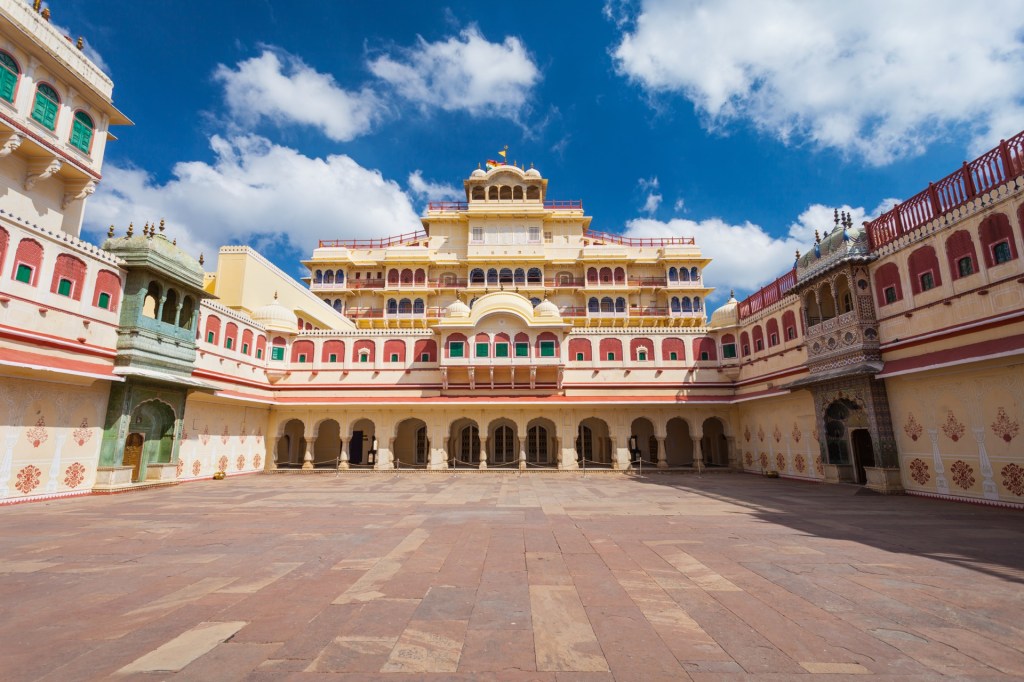
CITY PALACE: City Palace is another eye candy in the long list of historical monuments. The palace is situated in the heart of the city and has several sections and courtyards like Deewan-e-khas, Deewan-e-aam, etc. Mubarak Mahal and Chandra Mahal located in the courtyard of the place are two beautifully built structures with carving in white marble.

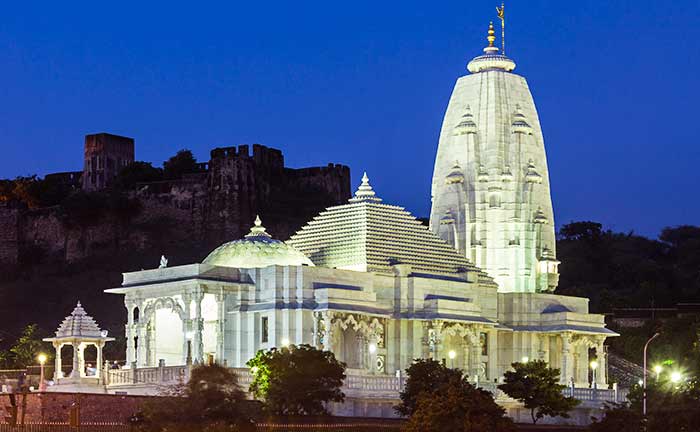
BIRLA MANDIR: Birla Mandir was built by B.M. Birla Foundation in 1988. The entire mandir is made of white marble and is dedicated to Lord Shiva and Goddess Lakshmi. It is one of the fourteen Birla mandirs in India. This temple is particularly famous to the devotees. Apart from the main temple, the Birla Temple complex incorporates a museum that displays the ancestral possessions of the Birla family, and a garden with a shopping complex.

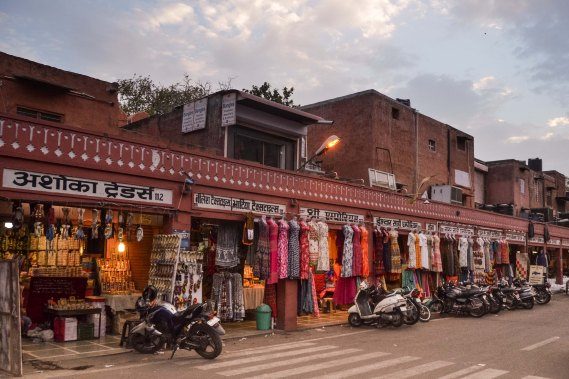
MARKETS OF JAIPUR: Jaipur is the home to some of the best market areas. One of them is Bapu Bazaar. Bapu bazaar has all kinds of stuff from clothes to artificial jewelry to decoration pieces all available within a reasonable price range. If you ever plan on visiting this marvelous city, you must visit the bazaar and grab yourself a souvenir as a memory of the trip.

So, if you are planning a trip you must keep Jaipur in mind. There is so much in the city that you can absorb. The idle time to visit would be during the winter season when the sun rays are a bliss. You visit Jaipur once and you will find yourself craving to visit again and to learn more about its history.

IMPORTANCE OF MENTAL HEALTH

BY: VAIBHAVI MENON

“The only journey is the journey within.” Being raised in an Indian household, mental health was something that was frowned upon or considered unimportant while academic scores decided how happy you were or would be in life. Mental health includes our emotional, psychological, and social well-being. It affects how we think, feel, and act as we cope with life. Mental health, defined by the World Health Organization, is “a state of well-being in which the individual realizes his or her own abilities, can cope with the normal stresses of life, can work productively and fruitfully, and is able to make a contribution to his or her community”

Mental illnesses affect 19% of the adult population, 46% of teenagers and 13% of children each year. People struggling with their mental health may be in your family, live next door, teach your children, work in the next cubicle or sit in the same church pew. However, only half of those affected receive treatment, often because of the stigma attached to mental health. Untreated, mental illness can contribute to higher medical expenses, poorer performance at school and work, fewer employment opportunities and increased risk of suicide. Stress can be the cause mental health problems and make existing problems worse. For example, if you often struggle to manage feelings of stress, you might develop a mental health problem like anxiety or depression. Mental health problems can cause stress. You might find coping with the day-to-day symptoms of your mental health problem, as well as potentially needing to manage medication, heath care appointments or treatments, can become extra sources of stress. Stress can impact on how you feel physically. May is Mental Health Awareness Month, also known as Mental Health Month. It has been observed each May in the United States since 1949. It has never been more important than now to recognize that mental health is an essential component to one’s overall health and wellbeing, and that mental illnesses are common and treatable. While it may be that some of us are more vulnerable than others, everyone faces challenges in life that can impact their mental health. After all, just a few months ago, none of us had any idea that all our worlds would be upended by the coronavirus, and that worry, isolation, loneliness, depression and anxiety would become collective experiences shared by literally everyone. By virtue of our birthright, as human beings none of us are immune.  Perhaps this collective experience of living with the emotional and psychological impacts brought on by COVID will help cultivate not only more awareness of mental health issues, but more compassion too. One can hope. According to a 2017 Centers for Disease Control report, suicide was the tenth leading cause of death overall in the United States, claiming the lives of nearly 47,000 people. Suicide was the second leading cause of death among individuals between the ages of 10 and 34, and the fourth leading cause of death among individuals between the ages of 35 and 54. There were more than twice as many suicides in the United States as there were homicides.

Therefore mental health is very important and we should do our part by talking to others and listening to the ones in need of it.

SOFT SKILLS

What are soft skills?

Soft skills are the traits that make your character. These are the skills that are common for anyone who is seeking a job regardless of the work domain. Soft skills are opposite to the hard skills that are completely related to the job stream. Hard skills differ from person to person while soft skills are common to all. These are the skills that should be demonstrated in our work environment and cannot be added to the resume. Some of the soft skills are communication, leadership, interpersonal skills, teamwork, critical thinking, creativity, work ethic, and many more.

Communication

Communication is the most important soft skill that anybody can possess. It is the speaking and writing skills that show the way you express yourself and your thoughts. It is a crucial skill for people in sales fields. Some common skills that fall under communication are presentation, public speaking, verbal and non-verbal communication, and listening.

Leadership

It is the quality that takes a person to higher positions. It shows how you mentor and your co-workers and employees and guide your teams. This includes the quality of volunteering and taking responsibility. This skill helps you to grow in your career. It is also critical for entrepreneurs. The leader must be able to take decisions. It includes decision-making skills, management skills, and mentorship.

Inter-personal skills

Inter-personal skills are the ones that we use unknowingly on a daily basis. These include the way we communicate with our teammates and co-workers. The relationship we maintain with others in the work environment and the optimistic approach towards things also are considered interpersonal skills. Some other skills which come under this are empathy, patience, diplomacy, etc.

Teamwork

It is the coordination that you maintain within the team. Taking the consent of each team member before starting work, giving equal opportunity and priority to each member’s opinion, discussing the plans and executing it in the right way, working together and faster to accomplish tasks – all these are combined and said as teamwork.  

Critical thinking

It is the ability to analyze and understand the problems and find out a solution for them. The person should have the quality of making the right decisions and changing them if they went wrong. The situations need to be handled smoothly without tension and stress. Observation, logical thinking, troubleshooting, flexibility, curiosity, and acceptance of changes come under critical thinking.

Work ethic

This is the quality of being punctual, organized in their works, submitting reports before the deadline. It is most essential for any type of job, be it small or big. Some of the work ethics are being independent, dedication, attentiveness, multitasking, time management, and so on. Employers are more likely to offer the job to a person with a good work ethic as it shows your professional behavior and organized approach towards work.

Creativity

It is a skill that requires innovative thinking to find a solution. It is needed in every field but it is most indispensable for designers, architects, and artists. Some skills that are included in creativity are thinking out of the box, imagination, mind mapping, application of the idea, experimenting, etc.

Apart from these, there are many more soft skills like planning, management, business ethics, business etiquette, self-confidence, time management and stress management, decision making, etc. You can cultivate these skills by practicing in your day-to-day life with your colleagues and friends.

Do check this course to learn more about it. 

Source: https://learning.tcsionhub.in/courses/career-edge-young-professional/

Computed Tomography

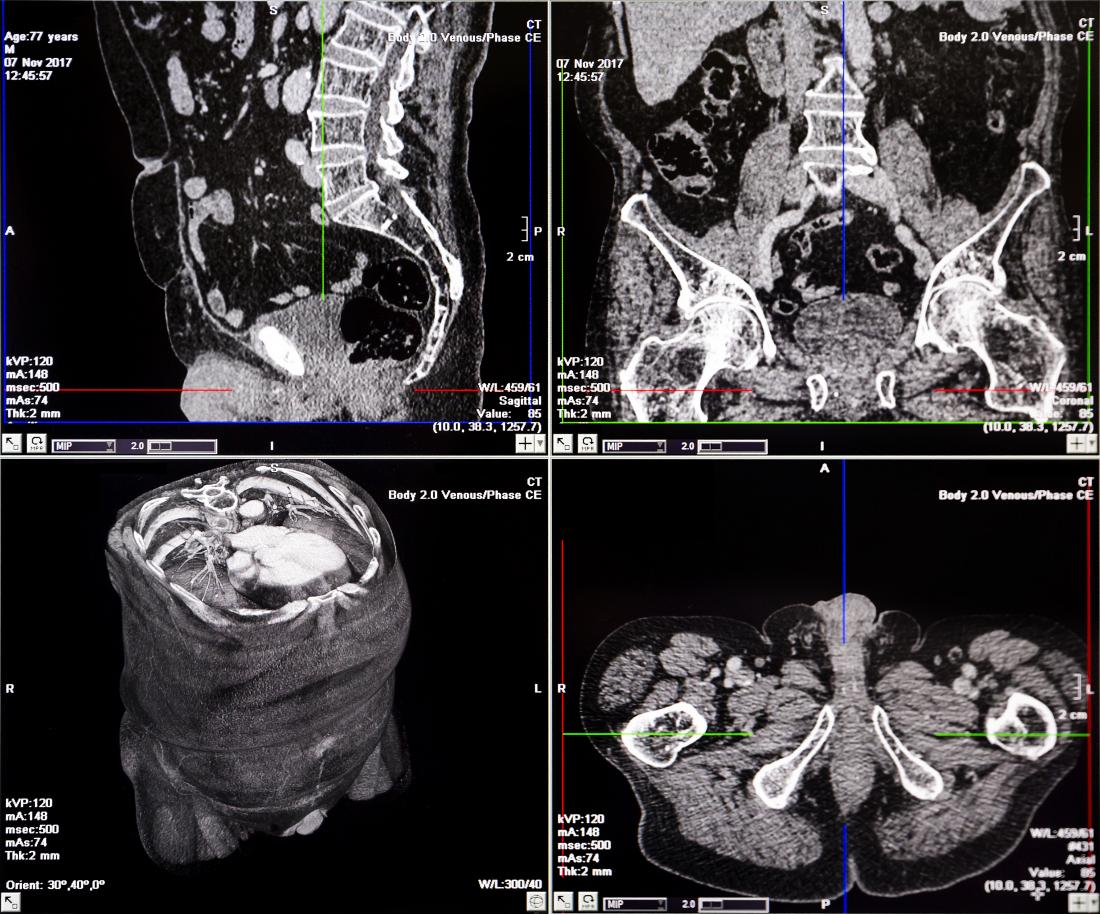
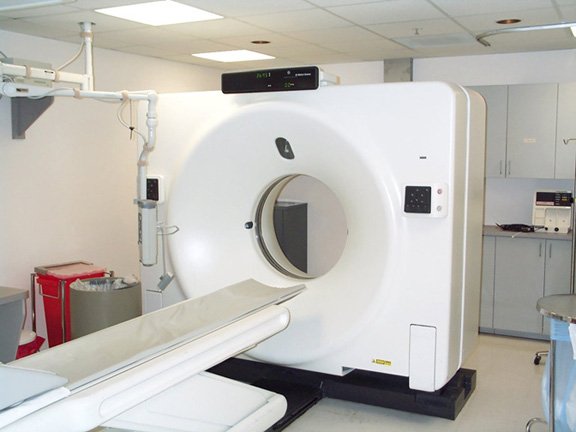
Computed Tomography (CT) which is also called Computerized axial Tomography (CAT) is an technology which has revolutionized the medical world.It enables the doctors to watch the vital organs, identify the blockages and growths and diagnose signs of diseases without surgery.

What is Computed Tomography scan?

Computed Tomography scan combines the us of a digital computer together with a rotating X-ray device to create detailed cross sectional images or slices of the different organs.

Advantages of CT over other imaging techniques

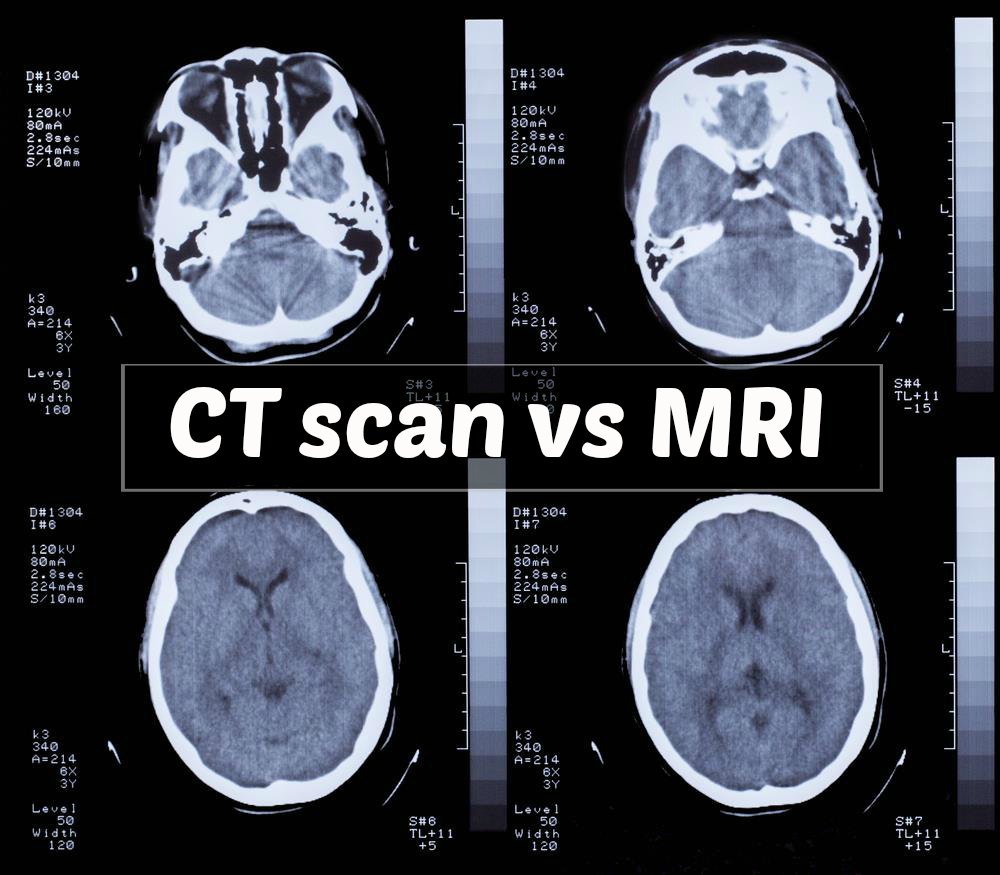
CT scan is a painless and less sensitive to patient than MRI.Among the various imaging techniques CT has the unique ability to image a combination of soft tissues,bone,and blood vessels.Here no radiation remains in the patient body after a CT examination.X-ray image of the head can only show the dense bone structure of the skull.Magnetic resonance (MR) imaging does an excellent job of showing blood vessels and soft tissue,but MR does not give as much details of bony structures such as the skull.CT images of the head allow the physicians to see soft-tissues ,anatomic structures like the brain’s ventricles,of grey and white matter.And,CT can provide detailed cross sectional images and diagnostic information for nearly every part of the body.

Role of CT scan in the diagnosis of covid -19

Chest CT scanning in patients with covid associated pneumonia usually shows ground glass opacification,possibly with consolidation.Though CT scans aren’t recommended as the only way to diagnose COVID-19, it may be appropriate on a case-by-case basis. For patients with severe symptoms, imaging might help to assess the seriousness of the disease. And when used with lab tests, a thorough medical history and a physical exam, CT scans can be helpful for determining a plan of care for a patient

Uses of CT scan

⭐CT scan can be used to measure bone mineral density for the detection of osteoporosis.

⭐CT has excellent application in trauma cases and other internal bleeding in patients.

⭐CT is an invaluable tool in the cancer diagnosis and is often the preferred method for diagnosis lung,liver and pancreas cancer.

⭐CT imaging and CT angiography and finding a greater role in the detection, diagnosis and treatment of heart disease, vascular diseases and acute stroke,which lead to stroke,gangrene or kidney failure.

⭐CT is used extensively for diagnosing problems of the inner ears and sinuses.CT is excellent for imaging tumors or polyps in the sinuses and diseases that cause degeneration of the small bones in the inner ear.

⭐CT has been the basis for interventional work like CT guided biopsy and minimally invasive theraphy.CT is also often used to follow the course of cancer treatment to determine how the tumour is responding to treatment.

Disadvantages of CT scan

⭐ CT scan,being a valuable tool for diagnosis and screening, a CT scan does carry risks, which relate to increasing your risk of cancer and reacting to contrast agents.It is really expensive.

⭐It is not suitable for tracking the progress of the stone over time, supporting the recommendation for KUB radiography along with the CT scan.

⭐At the low doses of radiation a CT scan uses, your risk of developing cancer from it is so small that it can’t be reliably measured.

Brahadeeswara Temple

The year 2010 celebrated the thousand years of cultural and historical, heritage of the Brahadeeswarar Temple.The 1000-years old Timeless Heritage :King Rajaraja cholesterol constructed the Brahadeewarar Temple, commonly known as the Big Temple by the natives of Tanjore . It’s architecture marvel,fine proportions and intricate carvings and grandeur make it a symbol of cultural and sculptural expertise. Tanjore ” The Granary of Tamilnadu”, is also the seat of Carnatic music,dance,traditional handicrafts and stylized bronze work. Hence, the Chola’s made it their capital.Visit to the Nayak Palace :With a great thirst for Indian culture ,the author visited the palace complex which was built by the Nayaks in the 16 th Century. The Martha’s had renovated it later. The Royal Muslim here has a collection of urns,drums,manuscripts,gifts, jewellery weapons and other belongings of the Maratha. A painting of Maratha King welcomes one to the Durbar Hall. An array of pallava and chola on the craftsmanship of their Era.The 11th century Brahadeeswarar Temple :The magnificent structure of the Big Temple, situated in an area of 750 feet by 400 feet surrounded by a moat welcomed him. Its marvellous engineering technology could be judge by the vimanam. The towering vimanam is built up with stones with bonding and notching and without the use of mortar. It is baffling to note how the topmost stone of 80 tons was placed without modern of the divine mount Kailash. The sculpture and structure is incomparable.

Photo by Pixabay on Pexels.com

The shrine for lord Muruga is an integral part of the Temple. It is an elaborately carved stone structure, a designer’s delight. It would take weeks if not months to copy the unrepeated designs on each of the short pillars of this shrine. The chiseled would have indeed taken months to complete each shapes.The magnanimous King Rajaraja Chola :The author stood in awe,astonishment and reverence when he saw a walled fortress inside -a standing testimony of the Chola’s opulence and vision . The huge statues reflect their steadfast reverence to Lord Shiva. Rajaraja, his sisters and his queens donated gold and silver to build this Temple.The intricate carvings and murals :The delicate carvings on the pillars and the inscriptions on the walls of the temple are delight to a historian’s sense. The deities and Shiva Linda’s in the pillaged cloisters are worthy to be admired. The huge Shiva Linga in the sanctum sanatorium and the Nandhi Statue depict the large heartedness of Cholas , who did not hesitate to spend large sums of money. The sculpture and engineering technology of this 11th century Temple is truly admirable. The huge granite stones had been interlocked so perfectly with a harmonious bonding that they can withstand rains ,wind and heat down the centuries.The might vimanam:Unlike many Temple the 58m tall and 13-storyed vimanam makes the Gopurams. In its splendid idea ,it’s impressive vision, its displays of the mighty effort of construction-it stands as a testimony for centuries to come.It’s Dedication :Among all the temples dedicated to all suites, this is the only Temple which has been dedicated to Brahadeeswarar. When the devotee king anointed it with holy water from all the sacred rivers of India, little did he think that the Big Temple would stand for 1000 years and forever. The big Temple will live as long as Indian history lives.
SOCIAL MEDIA

Needs and merits

The ability to build real relationships is one of the most important aspects of social media and a key factor in attracting people of all ages, genders and nationalities. It is an important part of developing healthy social networks and powerful social network tools. People can share their business, products and services with the world as long as they stay connected and use social media. Social networks allow people to communicate, and everyone can update and report at any time. Companies make full use of social media to improve your online reputation and greatly help increase sales and personal income.

  • You need to make sure to use all social media platforms to gain insight into the needs of your customers. To make the most of social media for your business, make sure you have a content marketing plan. If you need content on any social media platform, you can use social media asset management tools to create high-quality content.
  • You can also use social media to track what people say on social media. Although social media is mainly used by the public, the government also uses it to raise public awareness.
  • Although the use of social media for teaching can be distracting, educators can do everything they can to guide students to develop good habits and practices, Benefit. Regarding the advantages provided by social networks.
  • If you consistently and continuously invest time and effort, you will see the real benefits of social media marketing. Social media can give your business a huge advantage by helping you connect with your target audience. It can cover a large number of people, but for social media, it is also a media sharing network.
  • Social media advertising is one of the two components used together to attract potential customers and spread information and brand awareness. Different from classic ads. When you actively post on social media pages, social media marketing is easy.

SOCIAL MEDIA AS A BLESSING

There are some people who actually make a good or can say the best use of the social media. Like if we talk about the young entrepreneurs who have just begun with a start up but is lacking in public attraction and funding so they create a short 30seconds advertisement and attach it with the trending apps which work through network connection . Talking about the awareness ;both the social media and mass media have been playing their roles very well by keeping their viewers updated with the latest screamers , exposing the Scams ,scandals , and even the worse parts of humanity .

Brazil’s fight against deforestation

The Amazon rainforest is considered to be the largest rainforest in the world spread over 6 lakhs sq. km it contributes to more than half of the forests present in the world. Home to a variety of species of animals like the Amazon River dolphin, the Howler monkey and many other rare and endangered species. It also hosts the most beautiful and diverse flora and fauna that cannot be found anywhere on the planet except here.

The Amazon currently lies in almost nine different countries, but a major part of it is situated in Brazil. It is the home of over 2 million insect species and thousands of varieties of plants and at least 1000 different species of mammals and birds. It is considered a haven for several thousands of migratory birds that reside in these thick rainforests.

During the pre-Columbian period, parts of the forest were highly populated solely for agriculture. Once the Europeans arrived in the 16th century, the hunt began for Gold and rubber. But later on, these settlements were abandoned due to famines and some slavery revolts. The Amazon has not only been home to flora and fauna and several other species, but it has also provided immense support and resources for the local tribes to sustain their lives in the forest.

Presently, environmentalists are severely concerned about the future of the Amazon rainforest. They are concerned about the loss of biodiversity that might occur due to deforestation. Due to deforestation, there might also be a huge imbalance in the carbon cycle which could lead to severe issues.

Deforestation has increased exponentially over the past few years; we have witnessed the most amount of deforestation this month over the past 12 years. Deforestation mainly occurs due to many factors like exploitation of resources, cattle grazing, agriculture and many others.

Well according to a paper published by the World bank in 2004 the cattle sector which contributed towards beef and leather industries contributed to over 80% of the deforestation caused. In the year 2019, a devastating forest fire lasted for over half a year shrinking the forest cover by around 1300 sq.km. To add on to this in the year 2020 deforestation caused rose by almost 50% in the first three months.

In efforts to curb the rates at which deforestation is occurring the President of Brazil has ordered troops into the forest to protect the forest by preventing illegal activities like mining and slaughtering of wild animals. This action was forced onto the president after the severe surge in deforestation and criticism from numerous international organizations and media houses.  

The move from the President was applaudable but did not contain any details on the number of troops sent into the forest or the target they intend to achieve in this fight against deforestation. Moreover, it is immensely important to note that a move has been taken to control deforestation.

The Vice President stated that the operation will be kept active for two months since the current season in the Amazon is very dry and allows easy mobility into the forests. The government’s main intention is to take control over the illegal activities occurring in the rainforest and help make the forest a haven for the species dependent on it.

Scope of SEO in india

The developing utilization of online applications has opened diverse vocation roads for youth across the globe. Regardless of an applicant is a fresher or an accomplished one, these new position profiles help one in better proficient future and furthermore great motivations.

One of such occupation profile is of Search Engine Optimization (SEO) proficient. As a large portion of individuals across the world use web crawlers like Google to determine their questions. Website design enhancement is one of the advanced showcasing methods that assistance in better streamlining of a site and rank it top in web search tools for applicable questions.

There are many type of improvement, for example, on location content and site page enhancement or site backlink streamlining. Web optimization not just plans to rank better sites or drive quality traffic yet in addition assist with building brand perceivability in the online world.

Different ongoing investigations recommend that SEO will be a significant showcasing device for creating leads and procuring new clients. It has constrained pretty much every organization to put more in SEO prompting expanded interest of SEO experts in India. The developing interest of SEO experts has constrained alumni and website specialists to learn SEO for a superior profession ahead.

Mental Wellness

According to WHO ,mental Wellness means that your mind is in order and functioning in your best intrest .You are able to think ,feel and act in ways that create a positive impact on your social and physical well-being.According to report by WHO , depression is the most common illness worldwide ,with more than 264 million people affected.Close to 800,000 people die due to suicide every year .Suicide is the second leading cause of death in 15-29 years-olds.A friendly reminder to check in on your family and friends to make sure they doing okay and they know you’re there for them .

Self help and personality development

INTRODUCTION:-

While self-improvement is essentially a solo act i.e. usually picking up a book and learning the technique of improving the target area on your own and at your own pace. Personality Developing on the other hand, usually involves some external help. … You cannot get there without Personal Development and self-improvement.

Self help:-

Self Help Word Cloud, Health Concept Stock Photo, Picture And Royalty Free  Image. Image 41206493.
SELF Help Group are small groups of 15-20 members of rural people in particular women belonging to one neighbouhood who meet and saves regularly. The members of the group can take small loan to meet their needs on low interest rate.

Functioning:

  • Most of the decisions regarding the savings and loan activities are taken by the group members.
  • The group decides as regards the loans to be granted- the purpose, amount, interest to be
    charged, repayment schedule etc.
  • Group is responsible for the repayment of the loan.
  • Any case of non-repayment of loan, by any one member is followed up seriously by other members in the group.
  • The SHG help borrowers overcome the problem of collateral.
  • They provide timely loans for a variety of purposes and at a reasonable interest rate.
  • The group provrdes a platform to discuss and act on a variety of social issues such as health, nutrition, domestic violence, etc.

Personality development:-

Definition:

Personality development is the development of the organized pattern of behaviors and attitudes that makes a person distinctive. Personality development occurs by the ongoing interaction of temperament , character, and environment.

Description:

Personality is what makes a person a unique person, and it is recognizable soon after birth. A child’s personality has several components: temperament, environment, and character. Temperament is the set of genetically determined traits that determine the child’s approach to the world and how the child learns about the world. There are no genes that specify personality traits, but some genes do control the development of the nervous system, which in turn controls behavior.
A second component of personality comes from adaptive patterns related to a child’s specific environment. Most psychologists agree that these two factors—temperament and environment—influence the development of a person’s personality the most. Temperament, with its dependence on genetic factors, is sometimes referred to as “nature,” while the environmental factors are called “nurture.”
While there is still controversy as to which factor ranks higher in affecting personality development, all experts agree that high-quality parenting plays a critical role in the development of a child’s personality. When parents understand how their child responds to certain situations, they can anticipate issues that might be problematic for their child. They can prepare the child for the situation or in some cases they may avoid a potentially difficult situation altogether. Parents who know how to adapt their parenting approach to the particular temperament of their child can best provide guidance and ensure the successful development of their child’s personality.
Finally, the third component of personality is character—the set of emotional, cognitive, and behavioral patterns learned from experience that determines how a person thinks, feels, and behaves. A person’s character continues to evolve throughout life, although much depends on inborn traits and early experiences. Character is also dependent on a person’s moral development .
In 1956, psychiatrist Erik Erikson provided an insightful description as to how personality develops based on his extensive experience in psychotherapy with children and adolescents from low, upper, and middle-class backgrounds. According to Erikson, the socialization process of an individual consists of eight phases, each one accompanied by a “psychosocial crisis” that must be solved if the person is to manage the next and subsequent phases satisfactorily. The stages significantly influence personality development, with five of them occurring during infancy, childhood, and adolescence .

Infancy:

During the first two years of life, an infant goes through the first stage: Learning Basic Trust or Mistrust (Hope) . Well-nurtured and loved, the infant develops trust and security and a basic optimism. Badly handled, the infant becomes insecure and learns “basic mistrust.”

Toddlerhood:

The second stage occurs during early childhood, between about 18 months to two years and three to four years of age. It deals with Learning Autonomy or Shame (Will) . Well-parented, the child emerges from this stage with self-confidence, elated with his or her newly found control. The early part of this stage can also include stormy tantrums , stubbornness, and negativism, depending on the child’s temperament.

Preschool:

The third stage occurs during the “play age,” or the later preschool years from about three to entry into formal school. The developing child goes through Learning Initiative or Guilt (Purpose) . The child learns to use imagination; to broaden skills through active play and fantasy; to cooperate with others; and to lead as well as to follow. If unsuccessful, the child becomes fearful, is unable to join groups, and harbors guilty feelings. The child depends excessively on adults and is restricted both in the development of play skills and in imagination.

School age:

The fourth stage, Learning Industry or Inferiority (Competence) , occurs during school age, up to and possibly including junior high school. The child learns to master more formal skills:
  • relating with peers according to rules
  • progressing from free play to play that is structured by rules and requires teamwork (team sports)
  • learning basic intellectual skills (reading, arithmetic)
At this stage, the need for self-discipline increases every year. The child who, because of his or her successful passage through earlier stages, is trusting, autonomous, and full of initiative, will quickly learn to be industrious. However, the mistrusting child will doubt the future and will feel inferior.

Adolescence:

The fifth stage, Learning Identity or Identity Diffusion (Fidelity) , occurs during adolescence from age 13 or 14. Maturity starts developing during this time; the young person acquires self-certainty as opposed to self-doubt and experiments with different constructive roles rather than adopting a negative identity, such as delinquency. The well-adjusted adolescent actually looks forward to achievement, and, in later adolescence, clear sexual identity is established. The adolescent seeks leadership (someone to inspire him or her), and gradually develops a set of ideals to live by.
The Child Development Institute (CDI) rightfully points out that very little knowledge is available on the type of specific environment that will result, for example, in traits of trust being more developed in a person’s personality. Helping the child through the various stages of emotional and personality development is a complex and difficult task. Searching for the best ways of accomplishing this task accounts for most of the research carried out in the field of child development today.
Renowned psychologist Carl Rogers emphasized how childhood experiences affect personality development. Many psychologists believe that there are certain critical periods in personality development—periods when the child will be more sensitive to certain environmental factors. Most experts believe that a child’s experiences in the family are important for his or her personality development, although not exactly as described by Erikson’s stages, but in good agreement with the importance of how a child’s needs should to be met in the family environment. For example, children who are toilet trained too early or have their toilet training carried out too strictly may become rebellious. Another example is shown by children who learn appropriate behavior to their sex lives when there is a good relationship with their same-sex parent.
Another environmental factor of importance is culture. Researchers comparing cultural groups for specific personality types have found some important differences. For example, Northern European countries and the United States have individualistic cultures that put more emphasis on individual needs and accomplishments. In contrast, Asian, African, Central American, and South American countries are characterized more by community-centered cultures that focus on belonging to a larger group, such as a family, or nation. In these cultures, cooperation is considered a more important value than competitiveness, which will necessarily affect personality development.

Common problems:

Infants who are just a few weeks old display differences between each other in how active they are, how responsive they are to change, and how irritable they are. Some infants cry constantly while others seem happy and stay fairly quiet. Child development research conducted by the CDI has identified nine temperamental traits that may contribute to a child’s personality development being challenging or difficult:
  • activity level (how active the child is generally)
  • distractibility (degree of concentration and paying attention when the child is not particularly interested)
  • intensity (how loud the child is)
  • regularity (the predictability of biological functions like appetite and sleep)
  • sensory threshold (how sensitive the child is to physical stimuli: touch, taste, smell, sound, light)
  • approach/withdrawal (characteristic responses of a child to a new situation or to strangers)
  • adaptability (how easily the child adapts to transitions and changes such as switching to a new activity)
  • persistence (stubbornness, inability to give up)
  • mood (tendency to react to the world primarily in a positive or negative way)
Temperamental traits are enduring personality characteristics that are neither “good” nor “bad.” Early on, parents can work with the child’s temperamental traits rather than oppose them. Later, as the child grows up, parents can help the child to adapt to his or her own world in spite of inborn temperament.

Parental concerns:

Most children experience healthy personality development. However, some parents worry as to whether their infant, child, or teenager has a personality disorder. Parents are usually the first to recognize that their child has a problem with emotions or behaviors that may point to a personality disorder.
Children with personality disorders have great difficulty dealing with other people. They tend to be inflexible, rigid, and unable to respond to the changes and normal stresses of life and find it very difficult to participate in social activities. When these characteristics are present in a child to an extreme, when they are persistent and when they interfere with healthy development, a diagnostic evaluation with a licensed physician or mental health professional is recommended.

When to call the doctor:

Parents who suspect that their child has a personality disorder should seek professional help. It is a very important first step in knowing for sure whether there is a disorder, and if so, what treatment can best help the child. Child and adolescent psychiatrists are trained to help parents sort out whether their child’s personality development is normal.

KEY TERMS:

Behavior —A stereotyped motor response to an internal or external stimulus.
Character —An individual’s set of emotional, cognitive, and behavioral patterns learned and accumulated over time.
Cognition —The act or process of knowing or perceiving.
Cognitive —The ability (or lack of) to think, learn, and memorize.
Gene —A building block of inheritance, which contains the instructions for the production of a particular protein, and is made up of a molecular sequence found on a section of DNA. Each gene is found on a precise location on a chromosome.
Identity —The condition of being the same with, or possessing, a character that is well described, asserted, or defined.
Maturity —A state of full development or completed growth.
Personality —The organized pattern of behaviors and attitudes that makes a human being distinctive. Personality is formed by the ongoing interaction of temperament, character, and environment.
Socialization —The process by which new members of a social group are integrated in the group.
Temperament —A person’s natural disposition or inborn combination of mental and emotional traits.

Resources:-

BOOKS:

AACAP and David Pruitt. Your Child: Emotional, Behavioral, and Cognitive Development from Infancy through Pre-Adolescence. New York: Harper Collins, 1998.
AACAP and David Pruitt. Your Adolescent: Emotional, Behavioral, and Cognitive Development from Early Adolescence through the Teen Years. New York: Harper Collins, 1999.
Allen, Bem P. Personality Theories: Development, Growth, and Diversity. Harlow, UK: Allyn & Bacon, 2002.
Berger, Elizabeth. Raising Children With Character: Parents, Trust, and the Development of Personal Integrity. Lanham, MD: Rowman & Littlefield Publishers, 1999.
Erikson, Erik. Childhood and Society. New York: W.W. Norton & Company, 1993.
Erikson, Erik. The Erik Erikson Reader. New York: W.W. Norton & Company, 2000.
Goleman, Daniel. Working With Emotional Intelligence. New York: Bantam, 1998.
Rogers, Carl. On Becoming a Person. Boston: Mariner Books, 1995.
Shaffer, David R. Social and Personality Development. Independence, KT: Wadsworth Publishing, 1999.
“Social, Emotional, and Personality Development.” Handbook of Child Psychology , edited by William Damon and Nancy Eisenberg. 5th ed. New York: Wiley, 2000.

PERIODICALS:-

Biesanz, J. C. et al. “Personality over time: Methodological approaches to the study of short-term and long-term development and change.” Journal of Personality. 71, no. 6 (December, 2003): 905–41.
Hart, D. et al. “Personality and development in childhood: a person-centered approach.” Monographs in Social Research on Child Development. 68, no. 1 (2003): 1–119.
Jensen-Campbell, L. A. et al. “Interpersonal conflict, agreeableness, and personality development.” Journal of Personality. 71, no. 6 (December, 2003): 1059–85.
Roberts, B. W. and R. W. Robins. “Person-Environment Fit and its implications for personality development: a longitudinal study.” Journal of Personality. 72, no. 1 (February, 2004): 89–110.
Roberts, B. W. et al. “The kids are alright: growth and stability in personality development from adolescence to adulthood.” Journal of Personality & Social Psychology. 81, no. 4 (October, 2001): 670–83.
Shiner, R, and A. Caspi. “Personality differences in childhood and adolescence: measurement, development, and consequences.” Journal of Child Psychology & Psychiatry. 44, no. 1 (January, 2003): 2–32.

ORGANIZATIONS:-

American Academy of Child & Adolescent Psychiatry (AACAP). 3615 Wisconsin Ave., N.W., Washington, DC. 20016–3007. (202) 966–7300. Web site: http://www.aacap.org.
American Academy of Pediatrics (AAP). 141 Northwest Point Boulevard, Elk Grove Village, IL 60007–1098. (847) 434–4000. Web site: http://www.aap.org.
American Psychological Association (APA). 750 First Street, NE, Washington, DC 20002–4242. (800) 374–2721. Web site: http://www.apa.org.
Child Development Institute (CDI). 3528 E Ridgeway Road, Orange, California 92867. (714) 998–8617. Web site: http://www.childdevelopmentinfo.com.

WEB SITES:-

CDI. Child Development Basics. Available online at: http://www.childdevelopmentinfo.com/development (accessed March 5, 2005).
Great Ideas in Personality. Available online at: http://www.personalityresearch.org/ (accessed March 5, 2005).
The Personality Project. Available online at: http://www.personality-project.org/personality.html (accessed March 5, 2005).
Monique Laberge, Ph.D.

Reference Links:

https://ask.learncbse.in/t/what-are-self-help-groups-describe-in-brief-their-functioning/43084
http://www.healthofchildren.com/P/Personality-Development.html

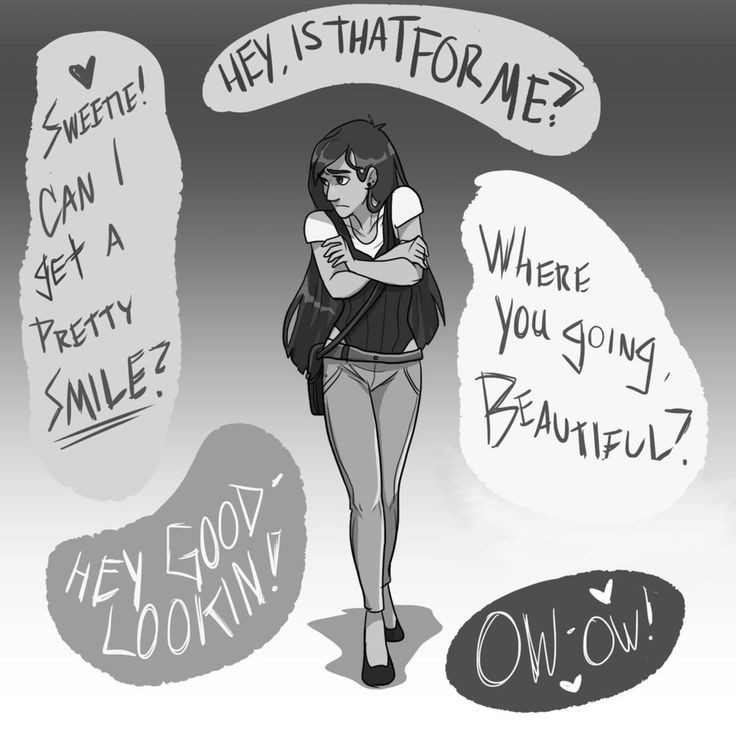
What is Catcalling?

Catcalling is a form of harassment primarily consisting of unwanted sexual comments. This may include honking, wolf-whistling and indecent exposures. Most of the time, it is a man who catcalls and a woman who is catcalled.

According to surveys by Stop Street Harassment (a non-profit organization):

  • Nearly 95% of female respondents were honked at one or more times
  • Nearly 82% of female respondents were the target of a vulgar gesture at least once
  • Nearly 81% of female respondents were the target of sexually explicit comments from an unknown man at least once
  • Just over 77% of women said they were the target of kissing noises from men.

Where catcalling takes place?

Catcalling doesn’t only happen on the streets. Sexual harassers find targets on campus sidewalks, in restaurants and movie theaters, at work, inside homes – literally anywhere. Similarly, anyone can be a catcaller – including a person’s acquaintances. Online catcalling is also an issue just as severe as in-person catcalling. What’s worse, people on social media are able to say more because they are protected by a screen.

The Problems with Catcalling

  • It’s disrespectful: Catcalling is uncalled-for and usually makes the victim feel exposed and uncomfortable. In some cases, catcalling is used as a method of expressing power over someone, rather than the misperception of it being a “compliment”.
  • It’s not impressive: Someone may catcall in order to impress their friends, or the person they are catcalling at, but it’s actually unimpressive and immature.

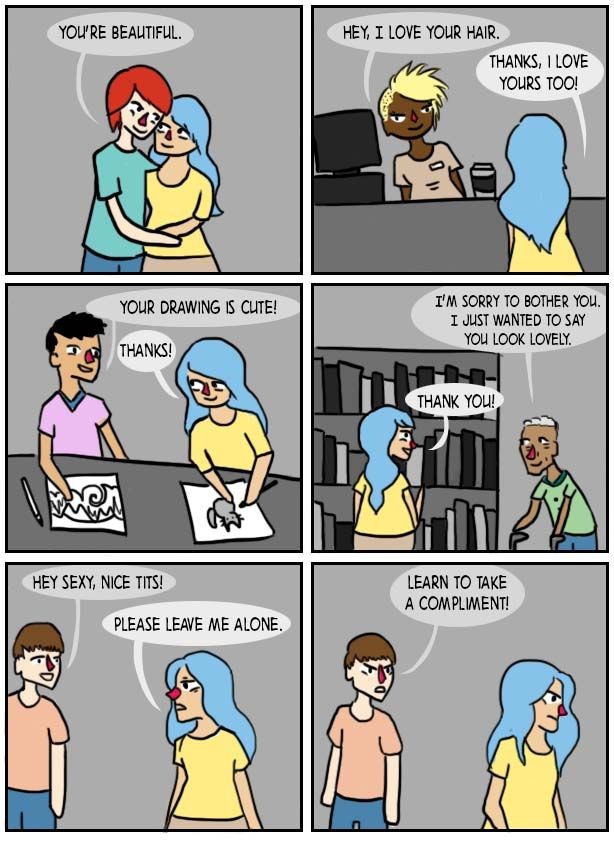
Catcalling is not a compliment, it’s a harassment!!

Whilst compliments and flirting can be harmless and fun, shouting at strangers is not flattering, it leaves “targets” feeling exposed.

Catcalling is degrading, demeaning, and disgusting.

Women have the right to be treated with as much respect and dignity when walking down the street as any man. Women deserve to feel safe.

How to react if you are being catcalled?

  • Catcallers usually look for a reaction. Don’t give them one, especially fear.
  • Get to a safe or crowded place as soon as you can. Seek help if needed.
  • If you are around other people and it’s safe, you can use a simple comeback like “that’s harassment” or “don’t do that”.
  • While snapping back (if you choose to do so), make sure to keep walking and don’t stop.
  • Avoid the use of swear words or eye contact.
  • If it’s online, you can block and report them. Choosing to reply is also an option (e.g., asking “would you find it okay if someone spoke to your mother or sister in that way?”).
  • Document it: write it down or take a picture/screenshot. By doing this you can call them out later.
  • Share your story if you feel comfortable.

How to intervene if someone is being catcalled?

  • Call out the harasser if it is safe to do so.
  • Create a distraction or start chatting with the target (e.g., drop your keys and ask “are these yours?”).
  • Approach the target afterwards to see if they need company or if there is anything else you can do to help.
  • Whatever you do, don’t put the person who is catcalled at greater risk (e.g., becoming aggressive).

Catcalling has become normalized, as it is often disregarded as a “joke”, or even a compliment. These are some tips to learn why this is absolutely not the case.

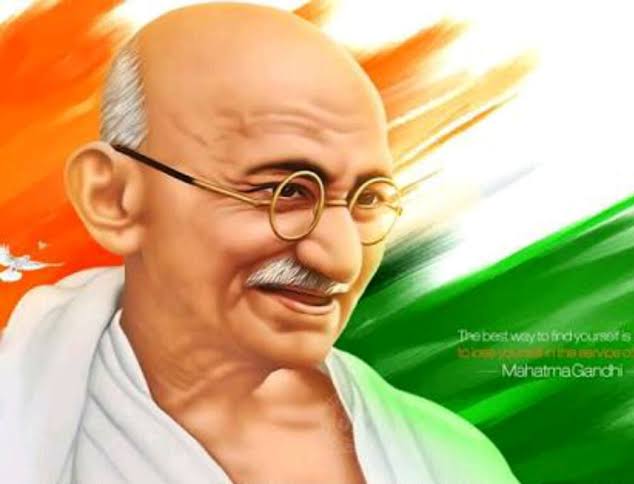
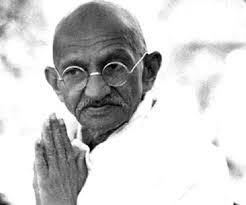
MAHATMA GANDHI (1869)

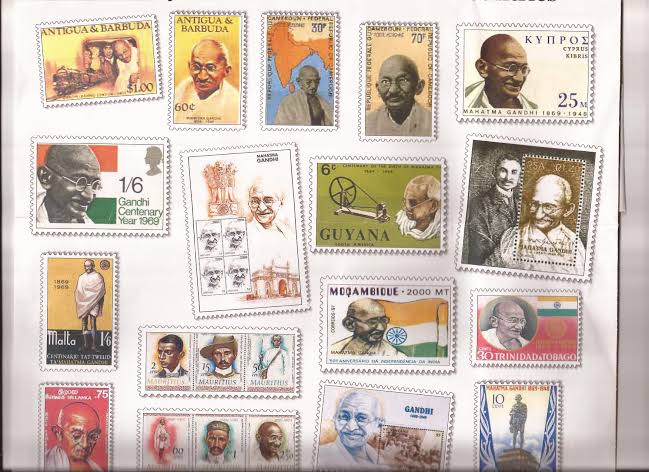
Mohandas Karamchand Gandhi (2 October  1869- 30th January 1948), Popularly known as MAHATMa Gandhi or Bapu (Father of Nation ),he was the pre-eminent leader of Indian nationalism in British -ruled India . Employing non-violent Civil disobedience, Gandhi led India to independence and inspired movements of non-violence ,civil rights and freedom across the world.

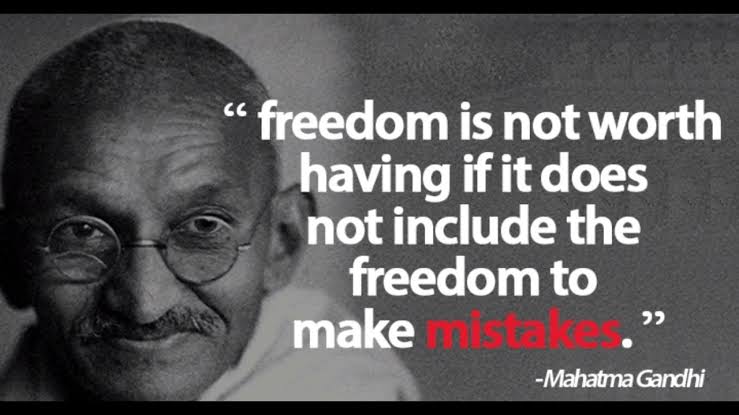
     He is known in India as the Father of Nation ;his birthday, 2 October, is celebrated as Gandhi Jayanthi, a National holiday and world -wide as the international Day of Non-violence .world-wide Gandhi’s philosophy was not theoretical but of pragmatism. Asked to give messages to the people, he responded, “My life is my messages “.

Civil rights movements in South Africa (1893-1914)

Gandhi was 24 when he arrived in South Africa to work as a legal representative for the Muslim Indian Traders based in the city of Pretoria.He spent 21 years in south Africa, where he developed his political view,ethics and political leadership skills.

     In South Africa, Gandhi faced the discrimination directed at all coloured people. Heels thrown off a train at Pietermaritzburg after refusing to move from the first -class though he had a first-class  ticket.

Struggle for Indian Independence (1915-47)🇮🇳🍚

In 1915,Gandhi returned to India permanently . He attained an international reputation as leafing Indian nationalist ,theorist and organizer . He joined the Indian National congress and was introduced to Indian issues, politics and the Indian people primarily  by Gopala Krishna Gokhale. Gokhale was a key leader of the Congress Party best known for his  restraint and moderation,and his insistence on working inside the system .Gandhi took Gokhale’s liberal approach based on British Whiggish tradition and transformed it to make it look wholly Indian.

Champaran and kheda

        Gandhi’s first major achievements came in 1918 with the Champaran and Kheda agitations of Bihar and Gujarat. The Champaran  agitation pitted the local peasantry against their largely British landlords who were backed by the local administration. The peasantry was forced to grow Indigo, a cash crop whose demand had been declining over two decades, and were forced to sell their crops to the planters at a fixed price

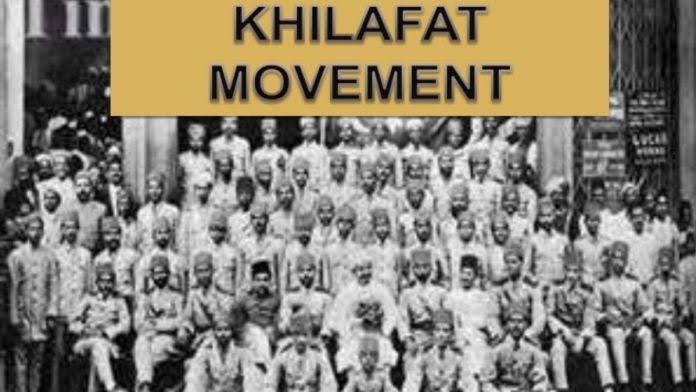
Khilafat movements


      In 1919 Gandhi ,with his weak position in congress, decided to broaden his base  by increasing his appeal to Muslims.  The opportunity came from the khilafat movement, a worldwide protest by Muslims against the collapsing status of the caliph,the leader of their religion. His success made him India’s first national leader with a multicultural base and facilitated his rise to power  within congress,which had previously been unable to reach many Muslims. In 1920 Gandhi became a major  leader in congress.
      Gandhi always fought against “communalism “,which pitted Muslims against Hindus in politics, but he could not reverse the rapid growth of communication  after 1922.

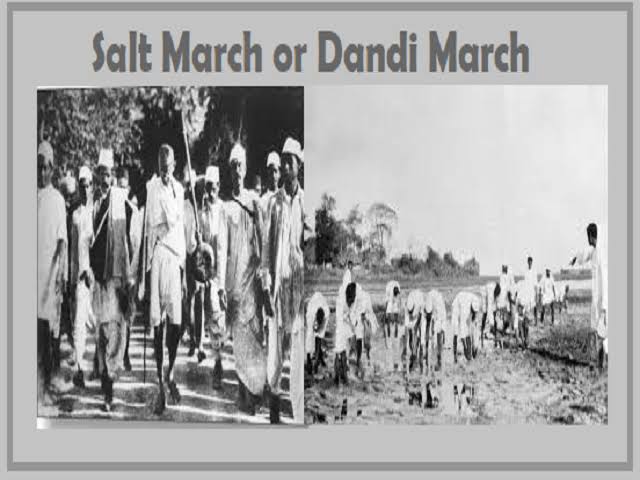
Salt Satyagraha(Salt  March)🍚🧂

     Gandhi stayed out of active politics and,as such,the limelight for most of the 1920s. He focused  instead on resolving  the wedge between  the swaraj party and the Indian National Congress, and expanding initiatives  against  untouchability , alcoholism,ignorance  and poverty. He returned to the fore in 1928.In the preceding year, the British government  had appointed a new constitutional reform commission under sir John Simon, which did not include any Indian  as its member.
      Gandhi then launched a new Satyagraha against  the tax on slat in March 1930.This was highlighted by famous Salt March  to Dandi.

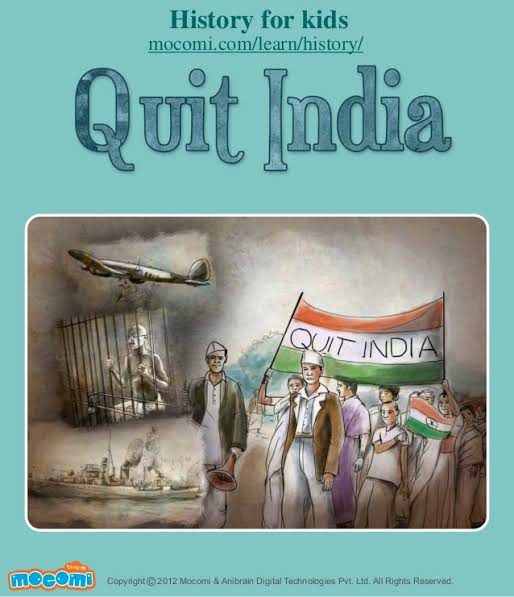
Quit India Movement🏳⚪


     Quit India became the most forceful movement in the history of struggle,with mass arrests and violence on an unprecedented  scale.
      In 1942  although  stillb committed in hid efforts to “launch a non-violent movement “,Gandhi clarified that the  movement would not be stopped by individual act of violence, saying that the ” ordered  anarchy ” of “the present system  of administration ” was “worse than real anarchy “.He called on all congressmen and Indians to maintain discipline via ahimsa,and Karo ya maro (“Do or die”) in the cause of ultimate freedom 

Non-violence🙅‍♀️

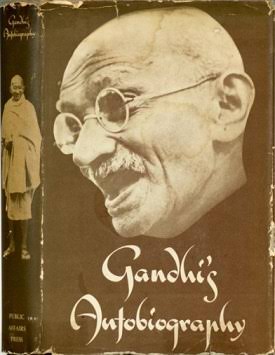
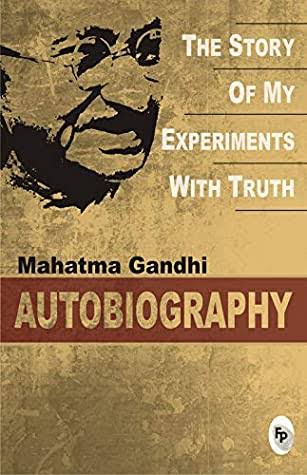
     Gandhi explains  his philosophy and way of life in his autobiography “The story of My Experiments with Truth “.

Literary works📝✍📖

        Gandhi was a prolific writer. One of Gandhi’s earliest  publications, Hind Swaraj,Published language; Indian Opinion while in South America and, Young India, in English, and Navajivan ,a Gujarati monthly, on his returns to India. Later,Nakajima was also published in hindi. In addition, he wrote letters  almost every day to individuals and newspapers.
     Gandhi  also wrote several books including his autobiography, “The Story of My Experiments with Truth “.
Rabindranath Tagore is said to have accorded the title ” Mahatma” to Gandhi.

World Farm Animals Day🐐🐓

        Gandhi’s birthday is chosen as a commemoration for the billions of non-human animals that are slaughtered  by the human farming industry each year. The practice started in 1983.

Assassination👨‍🏭

       On 30 January 1948,just five months of coyntry’s Independence, the Mahatma was on his way to his usual prayer meeting in the Birla Mandir in the capital city. His smiling face revealed only a divine serenity. Suddenly a middle-aged man named Nathuran Godse entered his path and directly facing him fired three shots point and blank at the 79 year old disarmed leader. Dignitaries Jawaharlal Nehru declared: “The lights has gone out of our lives”.
     It is nearly six decades that Gandhiji departed from us,but Gandism is still very much alive and kicking in the national psyche of India.

Current impact within Indiai🇮🇳

    Gandhi’s birthday, 2 October, is National holiday in India, Gandhi’s date of death death,30 January, is commemorated as a Martyrs’ Day in India.
        There are two temples in India dedicated to Gandhi,One is located sambalpur in orissa and the other at Nidaghatta village nera kadur in chikmangalur district of Karnataka.  The Gandhi Memorial in Kanyakumari resembles central Indian Hindu temples and the Tamukkan or Summer palace in Madurai now houses the Mahatma Gandhi Museum.

Digital Life

Education is the important part of our life to be an independent person education is the first key to achieve the success. But ever wonder how due to Covid19 so many dreams got destroyed whole world is moving Digital. The villages where government schools were established for the poor children their RIGHT TO EDUCATION how they will continue their education in this present situation. They don’t have smart phones, tablets, PC how they will get the privilege opportunities. We people are lucky to live a life where in the lockdown scenarios also we are able to continue our education. Indeed digital world is strong many lives became easy now due to technology platforms like zooms, google meet playing an important roles for education , students from kindergarten started their education online. It’s affecting the life of the children from the poor family due to lack of opportunities they have to discontinue their education . People from the middle class, poor class families became unemployed lost their jobs due to Covid19, Only one thing they have question now “ how to run their family ?” . Mostly people working from home and earning money chilling Netflix .But in this situation also many people started working hard risking their life , so that their family can eat one time meal and even the children also started working to support their family . Whole world is about privilege opportunities , fighting competitions to achieve dreams so that everyone can live peaceful , searching for perfect life where world rotating with scars, only one dream they started watching the poor parents dreaming their children going to school carrying books and living their dreams but due to the situation they lost the opportunities .

Digital education is fine for privilege families but think about the poor families, don’t you think some steps should be taken immediately for their betterment for the poor kids who also want to set in the digital world , many places in India don’t have electricity , no internet connection then how they will survive in the digital world. Government mid day meal also organized for the poor kids even they lost their one chance. We all ordering food from Zomato and Swiggy living our best life . Think about the small kids they lost their faith to live their dreams and even their health situation is weak to survive in this way . Many people got positive in Covid19 due to their state because they can’t afford the life living in lockdown and lack of medical facilities in their villages. In the city life mostly people treated in hospitals and also in home online appointment and medicines facilities are available too .

This is how digital life background in the environment but for some people they can’t get close to it .

Written by : Rasmita Dey

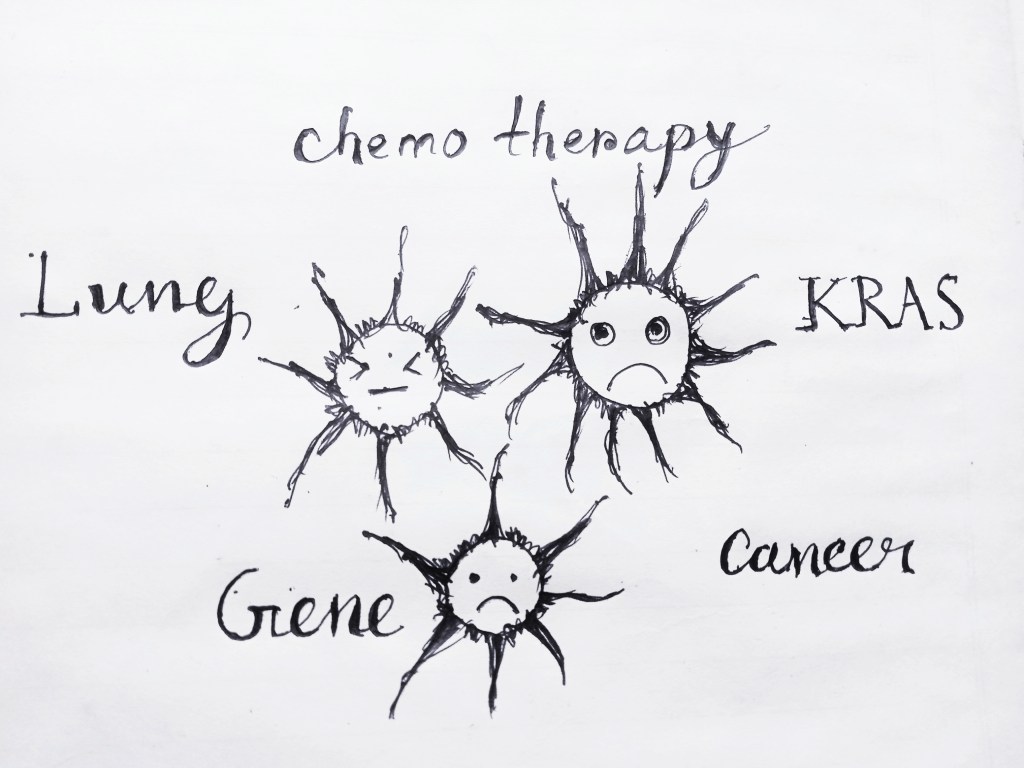
Sotorasib, the new fighter for lung cancer:

Lung cancer, which is considered as the deadliest cancer, takes lakhs of lives every year.

Sotorasib, the new Amgen drug has bring a new ray of hope in this field.

U.S. food and administration has approved this drug for small cell lung cancer, which will be sold under the brand name Lumakras. Patients having small cell lung cancers with the KRAS mutation, non-small lung cancer with KRASG12C mutation, and some colorectal and other type of cancers will be benefitted via this; because chemotherapy and other medicines didn’t show expected results in treating these.

 The company officials assured that the drug can have U.S. list price of $17,900 per month

.