The Human nature

There is no perfect person in the world, but the most holy and supreme person has his shortcomings, but I believe that everyone is born innocent, because of course you can’t make mistakes in your childhood. But I think people are not really good or bad or both.

  • Not all people are good people. No matter how hard you try, everyone has their own shortcomings. I also feel bad about people.
  • The mistakes they make will anger God; therefore human beings are both. People are bad because someone has to do some naughty or bad things in their lives. No one can be so good, because I believe that if you think you are a good person, you should not do anything at all. Lock yourself in the room. people are bad mainly because of temptation. We have all done some non-model things, sometimes without even realizing it.At some point we are all bad people, but most people are not bad, just like everyone goes to jail, so we keep our balance. So we have good and bad. We have holy days and bad days.
  • We are not perfect people. When we start to think for ourselves and know what is happening, we will do this to ourselves. Our environment, except when we were young, they told us what to do, and now we can control our lives. Our daily decisions make us who we are today.
  • Sometimes we can be good, sometimes we can be bad. He mentioned in his sermon that God loves everyone, no matter what. Whether you are good or bad, as long as you are willing to give, God will always find in his heart to forgive your sins.

BEST OF YOUTUBE – PART 1

TANMAY BHAT

He is one of the most hilarious stand-up comedian that I have come across. He is one of the co founder of a comedy group called All India Bakchod. His YouTube channel is a great source of free laughter therapy. His contents include daily vlogs, gaming streams, video reviews.

(Go and check out all parts of Mummy-Papa Pitai review, you’ll die laughing)

AVANTI NAGRAL


Avanti Nagral is a Artist, Song-writer, Influencer and a You-Tube who has completed a dual degree from Harvard University and Berklee College of Music. She uses her music to convey various social messages and creates YouTube contents to break the stereotyped norms by openly discussing sexual topics with her family members in a one-on-one interview, held in a very respectful manner.

(Check out her music video ‘Sun Toh Lo’)

JAY SHETTY

Jay Shetty is a 33 years old monk turned into a life-coach, author, podcaster, you-tuber and an influencer. His channel is inspirational to people of every age group however, his videos focuses on teenagers and young adults. His content includes podcasts and clips where he provides insight on the topics of motivation, wisdom, love and relationships.

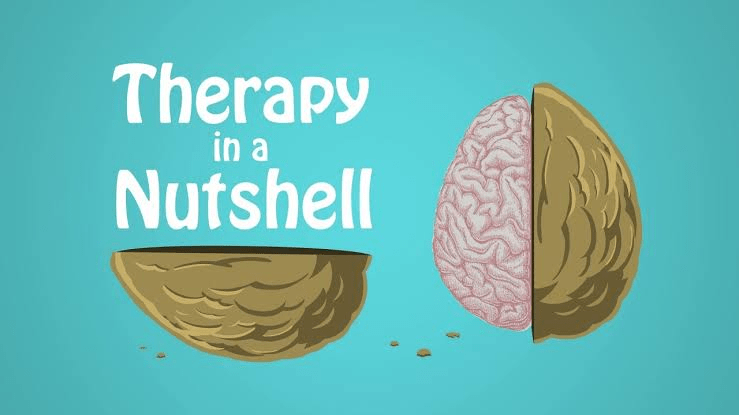
THERAPY IN A NUTSHELL

As the name suggests, Therapy in a Nutshell is a YouTube channel owned by Emma McAdam, a Licensed Therapist who makes weekly videos on mental health skills that are easy to understand via YouTube videos and Online Courses. It’s a good platform for people to learn new personal skills and live better. Her video’s cover various topics from Depression, Anxiety, OCD to Sleep disorders and ways to control them. It’s definitely a good investment for people who are curious to learn about mental health.


RANVEER ALLAHBADIA

Ranveer Allahbadia aka BeerBiceps is one of the most famous Indian Youtuber, fitness mentor, social media influencer, and entrepreneur. It’s one of the most informative channels that I have come across. It includes videos on a variety of topics from finance, fashion, etiquette, grooming to meditation, yoga, body-building. They conduct one-on-one podcasts with famous Celebrities, Nutritionists, Health Experts, Monks, etc. Hence, his channel is a good source of free knowledge.

Bandwagon Effect

What Is the Bandwagon Effect?

The bandwagon effect is a psychological phenomenon in which people do something primarily because other people are doing it, regardless of their own beliefs, which they may ignore or override. This tendency of people to align their beliefs and behaviors with those of a group is also called a herd mentality. The term “bandwagon effect” originates from politics but has wide implications commonly seen in consumer behavior and investment activities. This phenomenon can be seen during bull markets and the growth of asset bubbles.

Understanding the Bandwagon Effect

The bandwagon effect arises from psychological, sociological, and, to some extent, economic factors. People like to be on the winning team and they like to signal their social identity. Economically, some amount of bandwagon effect can make sense, in that it allows people to economize on the costs of gathering information by relying on the knowledge and opinions of others. The bandwagon effect permeates many aspects of life, from stock markets to clothing trends to sports fandom.

Politics

In politics, the bandwagon effect might cause citizens to vote for the person who appears to have more popular support because they want to belong to the majority. The term “bandwagon” refers to a wagon that carries a band through a parade. During the 19th century, an entertainer named Dan Rice traveled the country campaigning for President Zachary Taylor. Rice’s bandwagon was the centerpiece of his campaign events, and he encouraged those in the crowd to “jump on the bandwagon” and support Taylor. By the early 20th century, bandwagons were commonplace in political campaigns, and “jump on the bandwagon” had become a derogatory term used to describe the social phenomenon of wanting to be part of the majority, even when it means going against one’s principles or beliefs.

Consumer Behavior

Consumers often economize on the cost of gathering information and evaluating the quality of consumer goods by relying on the opinions and purchasing behavior of other consumers. To some extent, this is a beneficial and useful tendency; if other people’s preferences are similar, their consumption decisions are rational, and they have accurate information about the relative quality of available consumer goods, then it makes perfect sense to follow their lead and effectively outsource the cost of gathering information to someone else.

However, this kind of bandwagon effect can create a problem in that it gives every consumer an incentive to free ride on the information and preferences of other consumers. To the extent that it leads to a situation where information regarding consumer products might be underproduced, or produced solely or mostly by marketers, it can be criticized. For example, people might buy a new electronic item because of its popularity, regardless of whether they need it, can afford it, or even really want it.

Bandwagon effects in consumption can also be related to conspicuous consumption, where consumers buy expensive products as a signal of economic status. 

Investment and Finance

Investing and financial markets can be especially vulnerable to bandwagon effects because not only will the same kind of social, psychological, and information-economizing factors occur, but additionally the prices of assets tend to rise as more people jump on the bandwagon. This can create a positive feedback loop of rising prices and increased demand for an asset, related to George Soros’ concept of reflexivity.

For example, during the dotcom bubble of the late 1990s, dozens of tech startups emerged that had no viable business plans, no products or services ready to bring to market, and in many cases, nothing more than a name (usually something tech-sounding with “.com” or “.net” as a suffix). Despite lacking in vision and scope, these companies attracted millions of investment dollars in large part due to the bandwagon effect.

Viruses and Malicious software

A computer virus is a piece of software that can “infect” other programs by modifying them; The modification includes injecting the original program with a routine to make copies of the virus program, which can then go on to infect other programs. A virus can do anything that other programs do. The difference is that a virus attaches itself to another program and executes secretly when the host program is run.

The terminology in this area presents problems because of a lack of universal agreement on all of the terms and because some of the categories overlap. Malicious software can be divided into two categories: those that need a host program, and those that are independent.

  • Need a host program : The former, referred to as parasitic, are essentially fragments of programs that cannot exist independently of some actual application program, utility, or system program.  Examples: Viruses, logic bombs, and backdoors
  • Independent malware is a self-contained program that can be scheduled and run by the operating system.  Examples : Worms and bot programs

Backdoor or Trapdoor

A backdoor, also known as a trapdoor, is a secret entry point into a program that allows someone who is aware of the
backdoor to gain access without going through the usual security access procedures. Programmers have used backdoors legitimately for many years to debug and test programs; such a backdoor is called a maintenance hook. It Has been commonly used by developers. A threat when left in production programs allowing exploited by attackers. It is very hard to block in O/S. It requires good s/w development & update.

Logic Bomb

It is one of oldest types of malicious software. The code is embedded in legitimate program. It is activated when specified conditions met
 Eg presence/absence of some file
 Particular date/time
 Particular user
When it is triggered it typically damages system, Modify/delete files/disks, halt machine, etc.

Trojan Horse

A Trojan horse is a useful, or apparently useful, program or command procedure containing hidden code that, when invoked, performs some unwanted or harmful function. Trojan horse programs can be used to accomplish functions
indirectly that an unauthorized user could not accomplish directly, Which is usually superficially attractive. Eg game, s/w upgrade etc. When it runs performs some additional tasks. Allows attacker to indirectly gain access they do not have directly. Often used to propagate a virus/worm or install a backdoor. Another common motivation for the Trojan horse is data destruction. The program appears to be performing a useful function (e.g., a calculator program), but it may also be quietly deleting the user’s files.

Zombie

Program which secretly takes over another networked computer is called zombie. Then uses it to indirectly launch attacks. Often used to launch distributed denial of service (DDoS) attacks. Exploits known flaws in network systems.

Getting a Job in Google.

Year after year, Google has been ranked as one of the top companies to work for, so it’s no surprise that the tech giant receives roughly three million applications per year. With an acceptance rate of 0.2%, you’d have a better chance of getting into Harvard.

It is difficult to get a job at Google because of their quality standards and the high number of applications they receive per year. For example, INC reported that Google receives 2 million job applications per year, which means it’s more competitive to get into than Harvard University.

Google is an employer of choice for the world’s top talent, typically receiving hundreds of resumes for every opening, which allows them to be extremely selective in their hiring.The hardest part is getting an interview. If you attend a university, go through campus recruiting.

According to the Pascale, The lowest paid Google employees are Entry Levels at $51,000.Google says there is no degree or prior experience required. In fact, 61% of learners enrolled do not hold a four-year degree. This certificate could be a perfect launchpad to a career in IT.

So if you have a keen interest in working at Google California or at any other branches of Google work hard my friend. More than studies work on yourselves, on your IQ level the interviewees are not going to ask you a question from your syllabus.

The most powerful thing


Have you ever wondered what the most powerful thing that exist in earth. It is love, nothing in the world exist which can stand against it or have the potential to win over it. But still most people have difficulty in identifying it and prove its existence. Before finding it you need to define it. LOVE, it is the most beautiful and powerful thing which exist on earth. This appears between every single soul but only few are gifted to identify it. It is a unconditional care that one show for another without any cause or reason.

Let me explain a scenario, when a child is born he is just new to the earth indeed new to everyone. The child is even a stranger to his mother, but she still shows endless care for her child. She might stand against everything for the child even her friends and family. She tend to protect the child and always ready to sacrifice herself for the child.

Love can occur anywhere, with anyone. It never raises the question ‘WHOM YOU ARE.?’, it only sees ‘ WHY YOU ARE ?’. It doesn’t end with recieving, it can only be felt when giving. Love everyone around you regardless of how bad they appear or react to you.The person who receive it might not be good to you but it doesn’t mean you need to hate them, just love them back. You must not presume that expecting will leave you hurt sometimes but that’s a misconception because love ultimately lies in giving it,thus you might never need to expect one back perhaps you will feel it while giving. Spreading hatred is nothing of gain to you, its just a false pleasure. You don’t have any reason to be hard to anyone, how bad a person be just forgive because they are nothing but your fellow mates. Very few realise this soon but in many case people realise it later, but it is never late so love everyone. Be good to your fellow mates and spread love. If everyone tend to practice this the world would be a better place.

HOW MUCH ‘INSPIRATION’ DO WE NEED?

“THE PESSIMIST SEES DIFFICULTY IN EVERY OPPORTUNITY. THE OPTIMIST SEES OPPORTUNITY IN EVERY DIFFICULTY.” – Winston Churchill

EFFECTS OF INSPIRATION

The word “Inspiration” rings out many bells in one’s mind. It suggests many feelings such as promise and self-confidence which further charges up the other emotions to move forward in whatever domain one want to. Inspiration is a highly effective dose to bring out all the hidden personalities and characters in one’s disposition, which helps him or her to comprehend the potential and attain the set goals.

IT IS OMNIPRESENT

All the renowned and celebrated people who have made a mark in their life have been inspired and motivated at some or the other point of their life. We can take examples of people in the field of Art, Music and Medicine’ or in the field of Technology. Even politicians and great saints cannot be ruled out. One can get inspired in countless ways, it can be verbal, written or may be through some of the work done or an example set by the person they kind of became role models. When you carry a deep feeling for a person, you start trusting and have a blind faith in his thinking and philosophy and just start following the tracks without even being sure of that.

WE ALL NEED A MENTOR

The person you are impressed with or whom you ae following becomes your counsellor and you have to consider him like your ‘leader’. Only then, benefits can be gained and dreams can be appreciated. If we turn the pages of history Arjuna got so inspired after Lord Krishna’s sermons and he realized that if he did not listen to Lord Krishna at that time, then he will not be able to fight and protect Dharma’, as by that time he was totally influenced.

A TRUE LEADER ENKINDLES OUR FAITH IN THE ACTION

There are many saints who have earned name and fame in people’ s heart by simply following their ‘expert’ for an inspiration in life. So, an inspiration coming from the right person helps us to internalize our goals and we attain our mission Sometimes when we are depressed and are literally down in the junkyards, at that time a Comforting sentence or a gentle hand on the head gives us much required and desirable confidence and assurance. Such motivation goes a long way.

SUPPORT INSPIRATION

Therefore, one can work hard only if there is moral support and inspiration. As the saying goes that there can be perspiration only if there is an inspiration.

INTROVERTS

Introverts are people who like spending time alone or with a few close people. Introverts enjoy being by themselves or being with a few people they trust. There is nothing wrong with being an introvert. One in every third person is an introvert.

Our society fails to understand what introversion is and, has labelled introverts with people who are “shy” or have “social anxiety”. Yes, some introverts are shy or have social anxiety but not most of them. They think introverts are scared of social surroundings which is not true. They just would rather do something else than interact with every single person.

Even characters of fiction make introverts look like bookworms, and that no one knows they exist meanwhile, extroverts are the social butterflies that everyone loves.

Our society apparently doesn’t like “introverts”. They think that extroversion is the only way of living. You can often see this at workplaces and schools. Only the children who are extroverts are appreciated in schools.

Did you know introverts are likely to get more marks in school or become leaders?

Another thing that our society does not understand is that people have their own ways to recharge. Extroverts like to seek out social stimulation and engage with people to recharge. While Introverts need solitude to recharge.

Another annoying thing that people do is expect introverts to become extroverts. I remember a few of my friends making me feel bad for not being as social as them. Which is wrong and is something a lot of introverts go through.

Introverts and extroverts have very different brains. Studies show that:

  • Processing events and interactions are more complicated for introverts. This is because introverts have a longer pathway for processing stimuli.
  • Introverts and extroverts also react differently to dopamine. While extroverts thrive on engaging and interacting with people, introverts feel drained by it.

People need to stop expecting introverts to become extroverts cause clearly, their brain does not work like that. Forcing them to act socially will drain their energy.

If you are an introvert who is trying to be an extrovert to be accepted by society. You need to stop. I show traits of both extroverts and introverts based on my mood. There are some days where I don’t feel like socializing, and because of the pressure, I would try to socialize and It would just drain my mental health. So, trust me it’s not worth it.

Our life is not a social competition where only the people with the most social skills will succeed. Introverts have way more knowledge and more understanding of themselves and their surroundings. People need introverts just as much as they need extroverts.

We need to do what makes us happy. If staying in a room and reading is what makes you happy do it. If only going out with two friends is what makes you happy do it.

People need to start understanding and accepting introverts as who they are. An extrovert may feel bored by themselves or with a few people, the same way an introvert may not like being surrounded by a bunch of people.

Our social skills do not define who we are. A workplace will always need both extroverts and introverts. Introverts have skills that extroverts don’t have and vice versa. So, only appreciating extroverts and making introverts feel bad for being themselves does not make sense.

Flavors of Unix

Unix is not a single operating system. It is in fact a general name given to dozens of o.s. by different companies, organizations or groups of individuals. These variants of unix are referred to as flavors. Although based on the same core set of unix commands, different flavors can have their own unique commands and features, and are designed to work with different types of h/w. Linux is often considered a unix flavor.

Among the ways in which the various flavors of UNIX differ are (1) fundamental design, (2) commands and features, (3) the hardware platform(s) (i.e., processors) for which they are intended and (4) whether they are proprietary software (i.e., commercial software) or free software (i.e., software that anyone can obtain at no cost and use for any desired
purpose).

Linux :
The most popular and fastest growing of all the Unix-like operating systems. It is developed by Linus Torvalds, Linux is a product that mimics the form and function of a UNIX system, but is not derived from licensed source code. Rather, it was developed independently; by a group of developers in an informal alliance on the net. A major benefit is that the source code is freely available (under the GNU copyleft), enabling the technically astute to alter and amend the system; it also means that there are many, freely available, utilities and specialist drivers available on the net. Linux is a registered trademark of Linus Torvalds. Recent versions of Glibc include much functionality from the Single UNIX Specification, Version 2 (for UNIX 98) and later.

FreeBSD :
The most popular of the BSD systems (all of which are direct descendants of BSD UNIX, which was developed at the University of California at Berkeley). BSDI is an independent company that markets products derived from the Berkeley Systems Distribution (BSD), developed at the University of California at Berkeley in the 60’s and 70’s. It is the operating
system of choice for many Internet service providers. It is, as with Linux, not a registered. UNIX system, though in this case there is a common code heritage if one looks far enough back in history.

IBM :
IBM has been quietly working on its mainframe operating system (formerly MVS) to add open interfaces for some years. In September 1996, The Open Group announced that OS/390 had been awarded the X/Open UNIX brand, enabling IBM to identify its premier operating system to be marked UNIX 95. This is a significant event as OS/390 is the first product to guarantee conformance to the Single UNIX Specification, and therefore to carry the label UNIX 95, that is not derived from the AT&T/ SCO source code.

NetBSD :
NetBSD is a free, fast, secure, and highly portable Unix-like Open Source operating system. It is available for a wide range of platforms, from large-scale servers and powerful desktop systems to handheld and embedded devices. Features the ability to run on more than 50 platforms, ranging from acorn26 to x68k

OpenBSD :
The OpenBSD project produces a FREE, multi-platform 4.4BSD-based UNIX-like operating system. Our efforts emphasize portability, standardization, correctness, proactive security and integrated cryptography. As an example of the effect
OpenBSD has, the popular OpenSSH software comes from OpenBSD. It May have already attained its goal of becoming the most secure of all computer operating systems.

Darwin :
Darwin is an open-source Unix-like operating system first released by Apple Inc. in 2000. It is composed of code developed by Apple, as well as code derived from NeXTSTEP, BSD, Mach, and other free software projects The new version of BSD that serves as the core for the Mac OS X

Many of the proprietary flavors have been designed to run only (or mainly) on proprietary hardware sold by the same company that has developed them. Examples include:

  • AIX – developed by IBM for use on its mainframe computers
  • BSD/OS – a commercial version of BSD developed by Wind River for Intel processors
  • HP-UX – developed by Hewlett-Packard for its HP 9000 series of business servers
  • IRIX – developed by SGI for applications that use 3-D visualization and virtual reality
  • QNX – a real time operating system developed by QNX Software Systems primarily for use in embedded systems
  • Solaris – developed by Sun Microsystems for the SPARC platform and the most widely used proprietary flavor for web servers
  • Tru64 – developed by Compaq for the Alpha processor

JOURNEY TO SANITY – MINDFULNESS

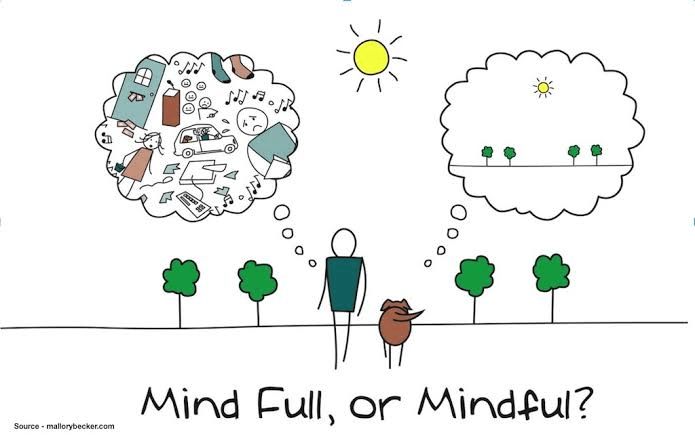
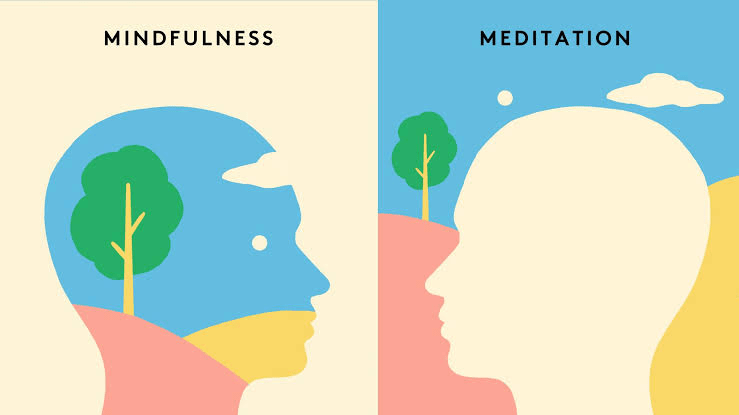
In the current world, we might have taken the term mindfulness too seriously in literal terms. We constantly keep our minds filled with news, gossips, shows and every other non-important thing in order to avoid the most important thing – OURSELVES. However, Mindfulness in reality is the art of being in the present both physically and mentally.
Many a times we get caught up in planning for the future or cherishing the past memories. It is good to remember old things and look forward to new experiences, but not at the expense of the present.
As it’s beautifully quoted by Master Oogway: “Yesterday is history, tomorrow is mystery but today is a gift. That is why it’s called Present”.

So, now the question that arises is, how to stop the urge to overthink?
To answer that, It’s hard to control your mind as the more you try to control it, the more it wonders. Kind of like caging a bird, who yarns for freedom. A good master is considered to be a person who sets the bird free and allows it to come back to him. Similarly, mindfulness does not mean the absence of distractions or complete numbness. It is the ability to be aware of the thought, accepting the thought and then, gently bringing it back to the present.

Other ways to be more mindful can be :

~ Eating with complete attention on the food you intake, without being distracted by television, phone, etc.

~ Avoid multitasking and juggling between different works.

~ Avoid using phones in the washroom (I know you do)

Though it might seem as we have just today to achieve everything possible and today will change our future but relax, listen to your heart. It might not be that bad to rest and enjoy life for once

Do not forget to read more from the series 🙂

JOURNEY TO SANITY – ACCEPTANCE

JOURNEY TO SANITY -JOURNALING

JOURNEY TO SANITY – SELF CARE

JOURNEY TO SANITY – DOUBLE STANDARDS

JOURNEY TO SANITY – SUNSHINE 🌤️

.

6 forgotten things to do in Weekends.

It is very difficult for all of us to pass our time in weekends and especially if weekends fall in between big pandemic lockdowns. For many of us, each day has become like a weekend due to long imposed lockdowns in our respective areas.

We must utilise our time in something productive and productive doesn’t have to necessarily mean learning a new skill or cleaning our house. Being productive is so much more than that! Productive is also when we give times to things that would bring us instant joy.

Let’s get back in time and relive some of the moments that were daily habits for us at some point in time and practise them in these weekends.

1) Take out Old Photo Albums.

Photo Credits: The Guardian

Remember the time when there used to be only one camera at our homes? A photo album carries so much in itself. From our grandparents’ youth to our parents’ wedding to our own childhood, photo albums are always refreshing even after being so old. It’s always good to visit our family’s old family photo albums and live those old memories yet again.!

2) Write Journal or Diary.

Photo Credits : She The People Tv.

Writing has always been fun, isn’t it? Well, now writing means just WhatsApp or Email or for other professional purposes. It’s time for us to give one day to write happenings around us on a piece of paper in a diary or in a journal like we used to do in our childhood. The time when we used to collect those New Year gift diaries all for diary writing!

3) Solo Indoor Picnic.

Photo Credits: Medium.

It’s always good to eat and it’s even better when we can eat all the food alone. Although some people might be thinking that this never used to happen in the past. So yes, you’re correct. Solo Picnics never used to happen in the past. Picnic itself means social gathering with friends or families. However, here I’m urging everyone to have a solo picnic indoor because of the ongoing pandemic. Though if you’re living in a nuclear or joint family, go for a picnic indoor with them. Cook great food, eat and chill.

4) Read Old Books and Magazines:

Photo Credits: Etsy

We always have a shelf in our house with full of books and magazines from the past era. We just keep them aside and forget about them after reading them once. There are also our favourite magazines that we used to collect during our childhood, may be because of their content or because they used to have our favourite celebrity on their covers. We can just relive those memories by simply taking out and reading them.

5) Put on the radio!

Photo Credits: The Conversation.

Don’t have a radio? Don’t worry about it at all. There are plenty of mediums in this new era that would give you the feeling of a typical radio. There are also radio stations available on new smartphones, some are even available on normal typing phones! You can always look for radio in these platforms in absolutely no cost. Just listen to the Radio Jockeys narration and listen to news stories and music in that old style.

6) Take out Old CDs

Photo Credits: Britannica

This is somewhat similar to photo albums. Do you also have old compact discs in your home cupboards. Well, then just take them out and watch your old family happenings recorded in them and enjoy!

Yes, lockdown and weekends have always been stressful for each one of us. But we can always find a way to engage ourselves in something that would make us happy and lively! Try these six ways and get nostalgic!

Minimalism

What is Minimalism?

Minimalism is defined as a design or style in which the simplest and fewest elements are used to create the maximum effect. Minimalism had its origins in the arts—with the artwork featuring simple lines, only a few colors, and careful placement of those lines and colors. More recently, it has become representative of a lifestyle that aims to remove clutter from all facets of life. 

Minimalism is all about owning only what adds value and meaning to your life (as well as the lives of the people you care about) and removing the rest. It’s about removing the clutter and using your time and energy for the things that remain. We only have a certain amount of energy, time, and space in our lives. In order to make the most of it, we must be intentional about how we’re living each day.

There are many different approaches to minimalism, but it’s really just a tool to help you prioritize what’s important in your life.

Joshua Becker of Becoming Minimalist offers this definition: “Minimalism is the intentional promotion of the things that bring you joy and the removal of those that do not.” It might be called simple living, tiny living, intentional living, and a myriad of other things—but there is at least one common thread: the idea of curating the things we own to best reflect our priorities and vision for our lives.

If the idea of minimalism sounds intimidating to you or if you’ve seen some images and thought, “that’s a nice idea, but I’d never want to live like that,” don’t worry. You can benefit from applying minimalism in your life whether you live in a tiny home, suburban house, or a mansion. You can use minimalism as a guiding philosophy and customize based on what works best for you.

Common Misconceptions of Minimalism

Contrary to what some people think, there aren’t any actual rules to minimalism. There’s no official board of minimalism to determine whether or not you’re doing minimalism right. Minimalism truly looks different for everyone.

You don’t have to own below a certain number of items. You can still have nice things, and no, you don’t need to get rid of your favorite collection—whether it’s books, shoes, or music. Minimalism doesn’t have to look like white-walled, modern and sparse homes you’ve probably seen in magazines and videos, a common minimalism mistake. Minimalism is also not a one and done project. It is a a continual practice to ensure everything in our lives is working for us in our vision, not against us. Its used over the years to make substantial changes in our careers, home, lifestyle, buying behaviors, etc.

Everyone can benefit from applying the principles of minimalism to their lives. It’s a process of removing distractions and things that no longer add value to our lives.

Why Minimalism Is An Effective Tool For Living An Intentional Life?

In the end, minimalism is less about owning fewer items and more about actively making choices on what kind of things truly matter to you.

We exist in a society that creates false value on owning more stuff and having no time to use them much. The constant pursuit of bigger and better is an endless cycle. There will always be a nicer car to buy, a bigger boat, a larger home, and or a faster private jet. Did you know that there’s a website for billionaires to shop? Yeah. It never ends.

It may seem like an overwhelming challenge at first, but as you untangle the life you built around owning more things, you’ll find the stress disappearing and the world starting to slow down. Those choices you make will begin to build a muscle that will fundamentally change the way you live your life.


JOURNEY TO SANITY – ACCEPTANCE

We thrive to learn skills in order to make ourselves useful. But the most useful skill of all is the art of learning to do nothing. In this fast-moving world where everyone is doing something and proving themselves, a large group of people who are probably doing their best might start doubting their abilities and start to compare their success from that of others. This might form a vicious circle of never-ending doubt and low self-confidence. Over time, it might get serious and even effect a person’s ability to work or look at things with a clear perspective.
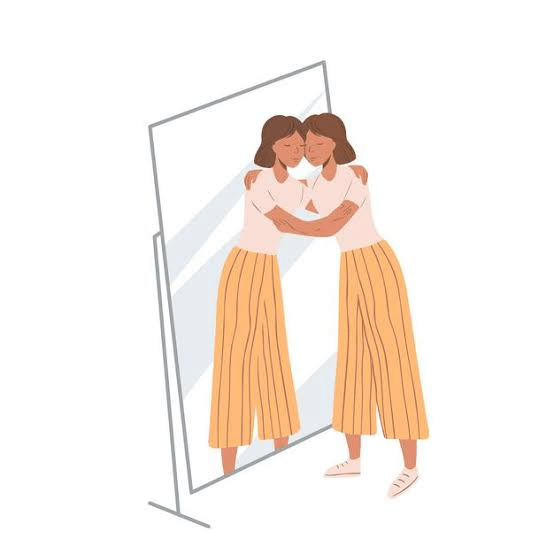
However, self-acceptance and self-awareness is a tool that might help rebuilding the confidence and boosting positivity. Self-acceptance means accepting oneself completely irrespective of the flaws.

The question that arises here is that how will accepting a flaw change the situation and make us feel better?

To answer that, Acceptance is the first step to change. Acceptance does not mean that we have to live with it whether we like or not. Acceptance is the fact that we are aware of the flaw. We know the flaw and how it effects us. Acceptance means knowing and understanding the flaw. One cannot change anything without knowing the cause of the problem. Now, that we have accepted the problem and are at peace with it’s presence, we start to take small steps to change it into the way we like.

Let’s understand it in a simple way
You hurt your finger while chopping vegetables. So, the first thing you do is notice the wound and clean it and then, apply appropriate antiseptic medicine. You do not deny to look at the cut and let it be to heal itself on it’s own. Moreover, if we leave a wound open it might even get infected or worse. Similarly, a flaw or a problem in our life is like a open wound. We might choose to ignore it but that will never solve the problem, rather it would make it worse. Just like the wounded finger our own wounds need to be seen and heard. It requires acceptance and then only we can choose the correct medicine or the correct way to heal it.
It might be difficult to begin with as we have been conditioned to constantly find our flaws and compare ourselves with others who are better than us. But only self-awareness and acceptance can change that. One of the most promising way to do that is listening to positive affirmation before going to bed and after waking up. Repeated affirmations might help the subconscious brain to reprogram itself into believing new things and changing itself.

Do not forget to read more from the series 🙂

JOURNEY TO SANITY – MINDFULNESS

JOURNEY TO SANITY -JOURNALING

JOURNEY TO SANITY – SELF CARE

JOURNEY TO SANITY – DOUBLE STANDARDS

JOURNEY TO SANITY – SUNSHINE 🌤️

JOURNEY TO SANITY -JOURNALING

A sudden change in the external environment surrounding a person might affect ones physical, mental and emotional health. As we all have been facing an unusual situation for past one year, the importance of sanity and peace has increased. It might not possibly change the outer environment but it can certainly change the way a person sees the situation and help them fight the hardships of life.
There is no thumb-rule to living a perfect life. However, there are certain qualities we can attain that might help us make our lives nearly perfect. JOURNALING AND WRITING ONE’S EMOTIONS OUT, is something we have heard since ages. How children make a personal diary and write their emotions out where they feel the need to be heard.
I know it sounds boring to a lot of people but Journaling and letting ones feeling out can reduce a lot of burden from one’s chest (Yes, children can be smarter than adults). In life, we have a lot of things that generally cannot be shared with others and we tend to keep those emotions inside us, hoping that they won’t bother us anymore. But little do people know how suppressed emotions can harm a person’s mind and even manifest itself in form of physical illness.

Looking at our own life from an outside perspective.

So, the first issue with Journaling might be accepting one’s emotions which we have denied for a long-time. I know, that accepting might not change the situation but might help in making peace with it. If not so, then a little writing might not affect a person as it might give you a clearer picture of the issue and maybe possible outcomes or ways to make things better for it.

Probably we have started considering writing our issues out but what about others getting an insight into our hidden lives by reading the journal. For such cases, thanks to technology we have free apps for IOS and Android that keeps a person’s account confidential and provides app locks for security purpose. Since we have checked out two major issues from our list, I guess we might start to consider Journaling.

Additionally, it is win – win situation as there’s no loss. However, there might be some gain in terms of gaining more understanding, compassion and peace.

Do not forget to read more from the series 🙂

JOURNEY TO SANITY – ACCEPTANCE

JOURNEY TO SANITY – MINDFULNESS

JOURNEY TO SANITY – SELF CARE

JOURNEY TO SANITY – DOUBLE STANDARDS

JOURNEY TO SANITY – SUNSHINE 🌤️

Culture and history

China and Japan India and Byzantium traveling culture and history vector geisha and samurai men and women Taj Mahal and torii gate capitol building and Great wall landmarks and heritage nationalities.

Culture and history is the main building block of our lifes

The Culture is the characteristics and knowledge of a particular group of people, encompassing language, religion, cuisine, social habits, music and arts.

The word “culture” derives from a French term, which in turn derives from the Latin “colere,” which means to tend to the earth and grow, or cultivation and nurture

History is the study of life in society in the past, in all its aspect, in relation to present developments and future hopes. It is the story of man in time, an inquiry into the past based on evidence.

As with any scholarly approach that boasts of being “new” when it bursts onto the scene, new cultural history was fairly well established as one among many ways of thinking about history by the twenty-first century. This is not to say that new cultural historians enjoyed the unanimous esteem of their more traditional colleagues, for the field still managed to draw the fire of critics from the left and the right who believed that after twenty years this approach still represented a mere “trend.” One could agree with Peter Novick that this attests to the fragmentation of the historical profession into a plethora of specializations that no longer cohered around shared principles and whose denizens had little common ground for discussion. Yet much has changed in cultural history since its heyday in the 1980s.

 When new cultural history was actually “new” it provided innovations both in terms of the topics considered worthy of historical attention and in terms of the ways of theorizing such topics within their respective contexts. It is nevertheless apparent that a good portion of what was marketed in 2000 as “cultural history” reflected more of the topical rather than theoretical innovations entailed by this approach. In fact, some of these works even read more like conventional social histories with a few obligatory nods to one of many privileged theorists.

To some extent this state of affairs reflects the success of this approach in the academy and the willingness of historians to combine methodologies in a creative and eclectic manner. On the other hand, though, one might argue that cultural history lost much of its edge by becoming subsumed into a more or less nonreflective historical establishment. Some historians see less fragmentation than the cooptation of erstwhile radical approaches back into a surprisingly resilient mainstream.

“Whatever possibilities become evident,” notes Patrick Joyce, “something is needed to shake the hold of a history which continually reproduces itself, in the process sucking the erstwhile heterodox into its consensus, in much the way that ‘cultural history’ is slowly but surely becoming routinized as more methodology, yet one more subdiscipline in the house of history.” Joyce’s observation is astute, yet one wonders whether a historical approach that could successfully resist such cooptation is possible and, even if it were, whether it would still merit the name “history.” It seems evident that what makes history “history” has little to do with methodologies and innovations that are unique to it, and perhaps a more thoroughgoing interdisciplinarity would discourage the domestication of future innovations into mere additions to the mansion of conventional history.