

The curious mind of man invented various means to record his observations and experiences. As time progressed, alphabets of various languages came into existence and literature , was produced. One field on which the teachers would lay thrust was the art of writing beautifully and they would ensure that their students would master the art of flowing handwriting. So the students were required to write with a reed ‘kalam’ on wooden plank or takhti for as long as the first five years in the early years to master the art of calligraphy. They would invariably had to write something on their takhtis everyday and show it to the teacher to get appreciation as’good’. Contrary to all this, children these days are introduced to phones, computers, laptops as even before they are able to learn to speak clearly. As students reached the sixth class, they were allowed to use pen holders into which nibs could be inserted and students had to dip their pens into inkpot to write on their notebooks having four lines. It was followed by fountain pen which could hold ink but it too had one disadvantage. While refilling the pen, sometimes the ink would spoil the hands or smudge the paper .The spilled ink would, then be wiped out with a handkerchief or a piece of cloth. The students were required to write cursive and fluent exercises, often on four lined pages for days and weeks with the result that as time passed, most of the students developed flowing handwriting with a distinctiveness of their own having proper length and space between the letters and the words. Then came the ball point pens and gel pens which did not require any bottle of ink for their use .So many people gravitated towards these pens for writing exercises or signing documents. One of the advantages of the ball point pens and gel pens is that they could be thrown out after use. When one writes on paper, there is something and personal comforting the mind and the soul. Thus, putting pen to the paper is a satisfying experience for the writer. One feels elated and uplifted to see his good handwriting. Writing letters in good and flowing handwriting using words pregnant with meaning was what every young man would aspire to impress his beloved and friends. At school ,calligraphy competitions used to be organized frequently and those who wrote beautifully were honoured and profusely appreciated. But now a days, both young and the old are so busy in their phones, ipads, desktops/laptops that they have little time and inclination to write in ink. Most people don’t take pride in owning pens of internationally famous brands. They simply type messages on the phone and post them on the social sites.
But it must be remememberd that pen is not going to lose its importance. Taking time to write letters or invitation using a pen is relaxing and tactile process. With e-mail and text becoming the primary source of communication tool but emails may get overlooked or deleted without much thought but a well and beautifully written letter itself has power to demonstrate love, care, effort and time it took for the composer to write it. There is something in the act of pouring thoughts out on paper, the scritch-scratch of the fountain pen and the romantic blue, black, blue-black or green ink that covers the paper, which is quite personal. The intimate act of sitting down to write a letter to a friend as opposed to the gesture of sending an email, a text or a tweet transfers the communication into a more thoughtful and meticulous enterprise. The act of writing itself is cathartic and it requires a hard work to communicate and wrestle with ideas to form letters with greater attention to uniformity in look, shape, height etc of letters to convey ideas.But in the wake of modern technology and texting of messages and emails, many people don’t use pen for purposes other than putting down their signatures on documents and elsewhere.But it must be remembered that pen is not going to lose its relevance in the times to come.Shorthand came and became obsolete; type writers met the same fate, similar may be the fate of desktops and laptops in the years to come as these gadgets may be replaced by some more advanced technological inventions but pen will continue to rule the world and prove that it is more powerful than all these things.All the people should cultivate the habit of writing letters and messages in ink.Parents too should encourage their children to write’birthday’wishes and ‘thanks’ notes in flowing handwriting. We should also wish our relatives and friends by writing handwritten letters as sending a handwritten note conveys much more closeness than a typed one on the social sites can. It simply means sending a part of yourself to your friend or relatives.
Ratan Tata
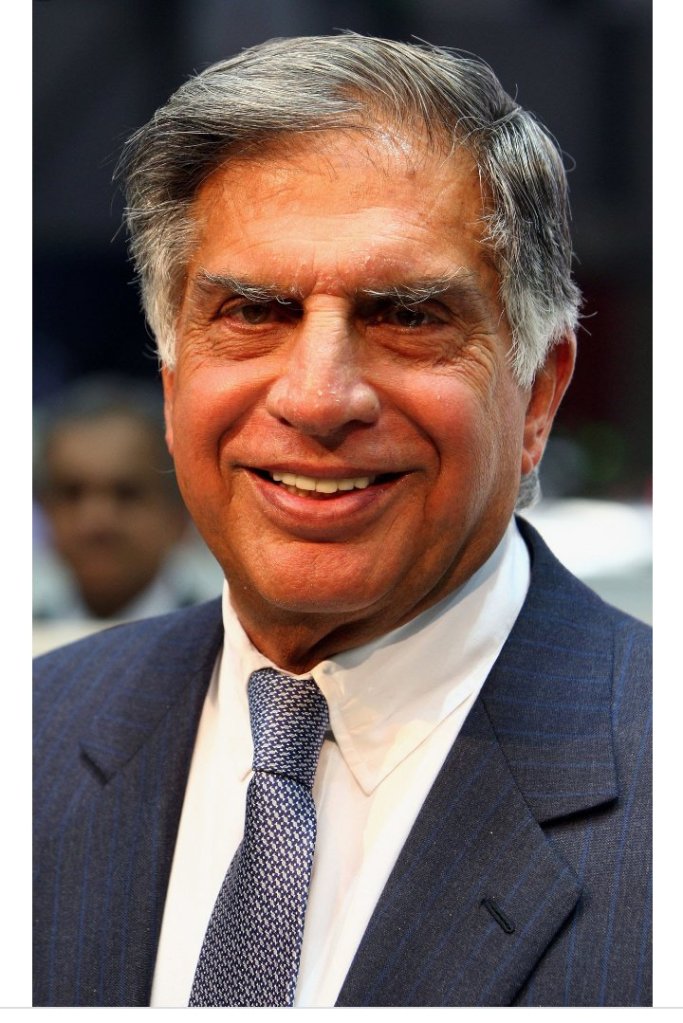
One of the most well-known and respected industrialists in India, Ratan Naval Tata is the Chairman of Tata Sons and Tata Group. At the age of 73, Tata heads one of the country’s largest conglomerates which comprise nearly 100 firms with revenues totaling about USD 67 billion. He is also the chairman of major Tata companies such as Tata Steel, Tata Motors, Tata Teleservices. Power, Tata Consultancy Services, Tata Tea, Tata Chemicals, and The Indian Hotels Company.
Tata was born on December 28, 1937 in Mumbai, in one of the richest families. His great grandfather was Jamsedji Tata, founder of the Tata group. As a young boy, Tata had a disturbed childhood after his parents split. He was raised by his grandmother, Lady Navajbai in the lap of luxury at Tata Palace. America held a special fascination for the Tata scion and he went to Cornell University to study architecture and structural engineering. Later he pursued a management course from Harvard University.
A member of a prominent family of Indian industrialists and philanthropists, he was educated at Cornell University, Ithaca, New York, where he earned a B.S. (1962) in architecture before returning to work in India. He gained experience in a number of Tata Group businesses and was named director in charge (1971) of one of them, the National Radio and Electronics Co. He became chairman of Tata Industries a decade later and in 1991 succeeded his uncle, J.R.D. Tata, as chairman of the Tata Group.
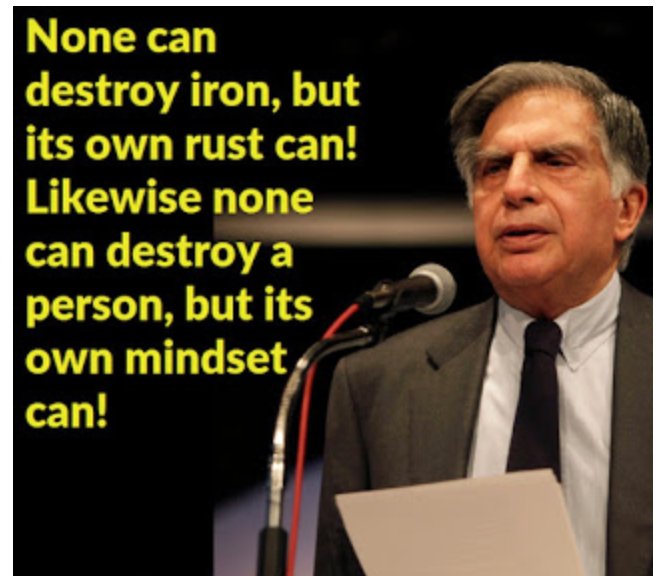
Success is the best revenge, and Ratan Tata is the best example of this line. Once upon a time, Tata group launched his car Tata Indicom in 1998, it was the dream project of Ratan Tata, and he gave a lot of hard work to establish this car, but Indica car fails in the market, and due to this car, TATA motors is in low profit.
Ratan Tata partnership members give advice to Ratan Tata that he should sell his company to get lost money. Ratan Tata did not want to sell his company, but he has no other option left, so he goes to Ford company to sell his company. The headquarter of the Ford company is in America.
With Ford company Ratan Tata and his partners meeting 3 hours. Ford company chairman William Clay Ford Jr. show rude behavior with Ratan Tata. He said to Ratan Tata that if you don’t have any knowledge of this business so why you invest so much money in this indigo car? We just to do a fever to buy your company. These lines hurt Ratan Tata very much, and he takes flight and comes back without selling his company. Ratan Tata does not forget what William Clay Ford Jr. said to him. After that, Ratan Tata decided that he would not sell his company to anyone.
Revenge took by Ratan Tata: Ratan Tata gives all his energy and hard work to stand Tata motor, and his hard work is a success. Tata motor cars selling very fast in the market and earn too much profit. On the other side, the Ford company is going in loss. At the end of 2018, Ford company is in the stage of shutting down. At this time, Ratan Tata proposes Ford company that he will buy Ford luxury cars Jaguar and Range Rover and gave too much money for those cars. William clay ford is in huge loss due to these two cars Range Rover and Jaguar, and he will happily accept the proposed of Ratan Tata. William clay ford will go to the head office of Ratan Tata company with his partners. The past is repeating the same, but the person and place are changed.
In a meeting, the owner of companies decided that 9300 crore rupees Jaguar and Range Rover, are part of the Tata motor company. At this time, William clay ford repeats the line that he says in the past with the few changes he says to Ratan Tata, you can give me a favor to buy Range Rover and Jaguar Cars.
Today Jaguar and Range Rover are part of the Tata motors company and grow with colossal profit day by day. If Ratan Tata wants to shut the mouth of William clay ford in the meeting as remembering his past, he will do it, but he doesn’t do that because Ratan Tata was not in the intoxication of success.
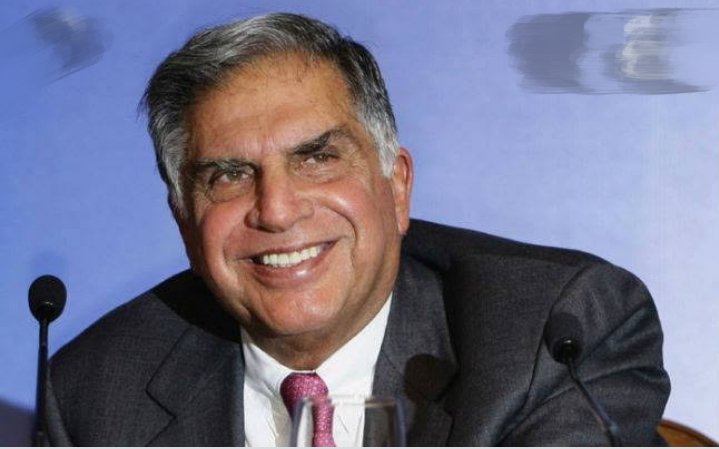
In year 2000, he was honored with Padma Bhushan by the government of India. He was also conferred an honorary doctorate in business administration by Ohio State University, an honorary doctorate in technology by the Asian Institute of Technology, Bangkok, and an honorary doctorate in science by the University of Warwick. Tata has a personal fortune of GBP 300 million and owns less than 1% of the colossal group. Over two thirds of Tata Group is owned by charitable trusts that finance good causes.
Tata set a perfect example of generosity and leadership during the 26/11 attacks. Unarmed he stood all alone outside the Taj hotel and supervised the activities to help the victims. He showcased his humane gesture by personally visiting the families of all the 80 employees who were killed or injured. He left no stone unturned to provide relief to the victims and even asked the families and dependents as to what they wanted him to do.
His also steered plan to provide cheap and clean drinking water and helped a few Pune-based designers develop a sub-Rs 1,000 water purifier, Swach. Design Directions Private Limited took more than three years to make this 560-mm unit for purifying water.
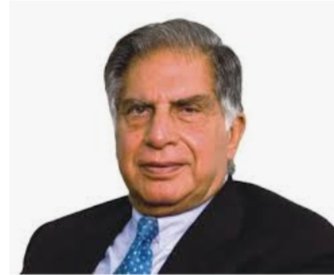
A bachelor in real life, Tata loves privacy and shuns media spotlight. He has only CDs, books and dogs for company. The business baron drives himself to work in an unremarkable Tata sedan.
Social Media
Social Media and Mental Health
Social media plays a very important role in shaping our mind, personality.
And talking about mental health, yes social media effects our mental health sometimes in positive and some times in negative ways. It all depend upon what you wish to see in social media.
It you follow negative people like the people who are always showing off and bragging about everything then they might effect you negatively so we should stay away from such people. We should be very careful in choosing what to follow and we should always keep a filter and grasp only positive things. Every one is different and if certain pages or account trigger you unfollow them or you can even mute them.

And in tern you should fill that void with positive content like following business pages they post very positive content which help you to grow mentally.
We should take of our mental health First then comes everything else. so if you wish to take a break from social media you can at any moment. frankly speaking nobody cares whether you are their or not they won’t even notice.so stop having FOMO and do it.
As India is a country of diversity, Thinking of oneness for India is like a nightmare!

INDIA: A Diverse Country
Indian culture is one of the most ancient cultures present in the world. The country is quite diverse and is home to several communities, each of whom has their own culture and traditions. It is this combination of various amazing cultures that make India one of a kind. The Indian cultural diversity is what makes India unique and beautiful.
The vast differences in the customs, traditional beliefs and rituals can be witnessed across every state of India. The festivals, the art forms, and to an extent, even the dressing style of the people are quite different in Northern India when compared to those in Southern India. While most of the Indian women wear the saree, the style of draping the saree varies in different parts of India. This difference can be seen, not only among different states but also among the various communities within the same state. The people differ considerably in the social habits. They differ in their dresses, customs, food habits and manners. Different kinds of festivals are observed in different parts of the country by different categories of people. The people of India speak different languages. There are in India separate group of people with their own language. Each of these people’s has its own literature. More than 200 different languages are used in India. The principal languages of India are Sanskrit, Hindi, Bengali, Oriya, Assamese, Gujarati, Marathi, Sindhi, Urdu, Punjabi, Tamil, Telegu, Malayalam, Kashmiri and Kannada.
Thinking of oneness: A Nightmare
A century ago millions of people saw the dream of a free India, a country where all the people of so much diversity in language, religion, social status, community and tradition would live in peace and harmony this dream came true in 1947 when our country got its independence. A part of our ancestors dream was respect and protection of diversity which was written into the Constitution. The leaders wanted a constitution for all Indians which guaranteed their rights and protect them.
India is home for more than 1.3 billion people and if there is some level of discrimination towards a particular section of the society then the integrity of India may face many challenges. Time and again, history has shown that if the ruling group i.e. government is partial towards a certain group then the unity of people comes under great danger. The Act is in complete violation of Article 14 (Right to Equality) as our constitution specifically prohibits any kind of discrimination on the basis of religion. When this republic was being built by our founding fathers, this factor was considered to be one of the major pillars of the country. Conflicts between people can be created by political parties. Political leaders fight elections on the lines of cast, community and religions, they may divide the people on communal basis to use them as their vote banks. These tendencies are very harmful and unhealthy for any society. Riots may take place between different sections of our country which will eventually lead to bloodbath and destruction of our motherland. Situations like these are nothing but a nightmare!
SPACE RASPBERRIES AND RUM !


For the past few years, scientists have been studying a dust cloud near the centre of our Milky Way Galaxy. If there is a God out there, it seems that he decided to get creative – this dust cloud , named Sagittarius B2, smells of rum and tastes like raspberries… This gas cloud consists largely of ethyl formate. This large cloud is said to contain a billion , billion, billion liters of the stuff, which would be great , if it wasn’t rendered undrinkable by pesky particles like propyl cyanide. The creation and distribution of these more complex molecules is still a mystery to scientists.
Sustainability In India
Pollution is not just an undesirable outcome that causes environmental deterioration in India; it is also a major roadblock to growth and development in the country. It would have a negative effect on economic growth if it is not addressed properly and managed.
This resulted in a major shift in people’s attitudes and political will. Significant advances in clean energy technologies have opened the path for commercial possibilities arising from the ‘green economy transformation.’ Clean technology will be in high demand. Countries that adequately upskill and establish industry sectors to manufacture it stand to benefit greatly. They may earn profit from clean technology exports and earn access to global markets.
While India already is trying to make tremendous progress in the field of sustainability, there seems to be an imperative need to involve our country’s youth in order to fulfil our sustainable development goals.
Sustainability became one of the most defining terms of the twenty-first century, and for valid reason: the contemporary world is now struggling with the consequences of unrestricted consumption and production tendencies. Simply stated, even as our population grows and technology advances at a breakneck pace, our quality of life is progressively deteriorating. India, which is on the verge of a new age of growth, is at an important crossroads in terms of its approach to sustainability. While our nation has some of the lowest per-capita emissions in the world, we are the third-largest emitter globally. The two most significant hurdles to our approach to sustainability are our population and the swift pace of our economic progress.
India, though, has made significant progress as an aspiring change-maker in addressing climate change and developing development plans which are in line with the Sustainable Development Goals, that were implemented in September 2015 and encapsulate the social, environmental, and social dimensions of sustainability, as well as the abolition of all forms of poverty.
To that aim, attempts have been made to include all stakeholders – public and private – in the development of successful guidelines, implementation methods, and best practises. For example, in February 2018, a nationwide seminar on capacity building was organised with the objective of localising the SDGs. In December 2018, the NITI Aayog released the SDG India Index — Baseline Report 2018 to monitor the progress the states and union territories have made on the strategies and initiatives launched by the central government.
The country was also a significant participant in formulating the Paris Agreement and has implemented a variety of energy-efficiency initiatives. Sustainability is also an important aspect of Indian culture, thought, and beliefs. Rural areas, which accounted for about 70% of the nation’s population in 2011, maintain a modest and inexpensive way of living. According to Greendex, an international study on sustainable living which analyses how individuals respond to environmental issues in their housing, transportation, food, and products choices, India ranks first among 18 countries, including China and the United States.
India has also had one of the most effective programmes in terms of eliminating single-use plastic and promoting the Swachh Bharat campaign, an initiative launched by the central government. This has aided in increasing awareness beginning in primary school, with children asking their parents about their right to cleanliness.
That being said, as the economy develops and grows, there is a noticeable change in socio-economic patterns. The nation still has to confront several significant environmental challenges, particularly in terms of building sustainable communities.
Being one of the world’s youngest countries — 42% of India’s population is between the ages of 15 and 35, and this estimate is expected to rise to 55% in the coming 30 years — the youth in our country should be encouraged to develop environmentally friendly economic solutions.
BANGLADESH FACTORY FIRE:
Massive blast tears through the food processing factory and has killed 52 people through flames.
Rup Ganj, Bangladesh;5:00 pm:
A massive blast that teared up on Bangladesh killed 52 people by flames and 50 other injured. The fire broke put on the industrial town, east of capital Dhaka, on 9th Thursday, afternoon.
It was burning for about 24 hours, as per reports. Police said that,the fire broke out at the Shezan juice factory in Rupganj at about 5:00 pm on thursday.
“Once the fire is under control ,we will conduct a search and rescue operation inside the factory. then we can conform any further causalities if any “, said the fire person Debashish Bardhan.
Initially fire broke out at the first floor due to plastics and chemicals and then spread wild. Eighteen firefighting units were struggling to douse the fire at the factory building of Hashem Foods Limited. Many workers were missing, later found out 44 identities of missing workers. It was also told that the building did not have proper fire safety measures.
Apart from this in 2012, a garment factory was set on fire on the outer parts of Dhaka. In 2010, a house illegally storing chemicals killed at least 123 people. Also in 2019, a 400 year area of Dhaka with apartment, warehouse and shops left 67 people dead.

The Untold story of Begum Hazrat Mahal

Begum Hazrat Mahal’s name was Muhammedi khanum, born in Faziabad, Awadh, India. She was sold by her parents, and became a courtesan by profession.
She entered the royal harem as a khawasin after having been sold to Royal agents, where she was promoted to a pari, and was known as Mahak Pari. She became a Begum after being accepted as a royal concubine of the King of Awadh, the last Tajdaar-e-Awadh, Wajid Ali Shah; became his junior wife and the title ‘Hazrat Mahal’ was bestowed on her after the birth of their son, Birjis Qadr.
In 1856, the British annexed Awadh, and Wajid Ali Shah was exiled to Calcutta. She was eventually to take charge of the affairs of the state of Awadh despite her divorce from the Nawab.
Begum Hazrat Mahal (1820 – 7 April 1879), also known as the Begum of Awadh, was the second wife of Nawab of Awadh Wajid Ali Shah, and the regent of Awadh in 1857-1858. She is known for the leading role she had in the rebellion against the British East India Company during the Indian Rebellion of 1857.
After her husband had been exiled to Calcutta and the Indian Rebellion broke out, she made her son, Prince Birjis Qadr, the Wali (ruler) of Awadh, with herself as regent during his minority. However, she was forced to abandon this role after a short reign. She finally found asylum in Nepal onto Hallaur, she died in 1879 Nepal. Her role in the rebellion has given her a heroine status.
Indian Rebellion of 1857
During the Indian Rebellion of 1857, Begum Hazrat Mahal’s band of supporters rebelled against the forces of the British under the leadership of Raja Jalal Singh; they seized control of Lucknow, and she took power as the guardian of her minor son, Prince Birjis Qadr, whom she had declared as the ruler (Wali) of Awadh.[3] As regent, she automatically came to have a leadership role in the rebellion against the British.
One of the principal complaints of Begum Hazrat Mahal was that the East India Company had casually demolished Temples and mosques just to make way for roads. In a proclamation issued during the final days of the revolt, she mocked the British claim to allow freedom of worship:
To eat pigs and drink wine, to bite greased cartridges and to mix pig’s fat with sweetmeats, to destroy Hindu and Mussalman temples on the pretense of making roads, to build churches, to send clergymen into the streets to preach the Christian religion, to institute English schools, and pay people a monthly stipend for learning the English sciences, while the places of worship of Hindus and Mussalmans are to this day entirely neglected; with all this, how can people believe that religion will not be interfered with?
Hazrat Mahal worked in association with Nana Saheb, but later joined the Maulavi of Faizabad in the attack on Shahjahanpur.
When the forces under the command of the British re-captured Lucknow and most of Oudh, she was forced to retreat.
Later life
Ultimately, she had to retreat to Nepal, where she was initially refused asylum by the Rana prime minister Jang Bahadur, but was later allowed to stay.
She died there in 1879 and was buried in a nameless grave in the grounds of Kathmandu’s Jama Masjid.
After her death, on the occasion of the jubilee of Queen Victoria (1887), the British Government pardoned Birjis Qadr and he was allowed to return home.
Health
Health is a state of complete physical, mental and social well being and not merely the absence of disease or infirmity.
This is the definition given by WHO.

Health
Mental
Physical
Social
Concepts of health.
There are four main concepts of health, let us discuss each one of it below in detail.
Biomedical concept
So, if you are free from disease, then we can say you are healthy one. This is known as Biomedical concept of health and this theory is based on the germ theory of the disease.
But the development of the mankind says that only biomedical health is inadequate and we can’t say he/she is healthy.
Ecological concept
As the biomedical concept of health is inadequate the ecologist came out with the ecological concept of health.
They viewed the dynamic equilibirium between the mankind and the environment, from this if the mankind is balanced with the environment, we can say he/she is healthy.
Psychological concept
This concept say’s that the health is influenced by social, psychological, cultural, economic and political factors of the people. So, for calculating the health one should consider all above things.
Holistic concept
It involves all the above strength of social, economic, politic and environment.
This concept clearly explains that every sector plays an important role to calculate the healthiness of the individual.

Small poem for your mental health.
The healthy mind
with healthy thoughts
The days are filled
with running thoughts
The soundful brain
with peaceful heart
The calmness fills
with sparkling thoughts
The smiles are drizzling
with trustful love
The twists and turns are plays of God
with winning moments that hit the sky
The past was bitter
with bitterest lie’s
Yet, the future is to be accompanied
with colourful flies
The present is perfect
with worthiest tries
The moods may swing
with meaning less thoughts
But the mental health was binded
with the cheerful thoughts
So, life is a heavenly journey
with freely thoughts
That provokes the healthy heart
How to deal with workplace harassment?
Harassment is any verbal or physical badgering based on sex, religion, or race. Harassing may include offensive jokes, slurs, name calling, physical assaults or threats, insults, offensive pictures, and other behavior. Ninety percent of workplace harassment is never officially reported. Workplace harassment has many forms. The most basic types of harassment are verbal and psychological.

There is a proper way to respond and effectively deal with that. This is definately something that a affects a lot of womens and sometimes we don’t say anything or don’t do anything. That’s not the best response you should do something you have the power to stand up for yourself.
Address the person directly one on one. Avoiding it or ignoring the person should never be an option. If someone does something you don’t like you should definately something to that person and let them know you don’t like that behavior. You can tell all this to your supervisor or HR. Talk to someone who can make a difference.
Write it down. Be more specific about place, date, time, or witnesses. When you report it to some person, also write down what the person said. If you are not the only employee to experience harassment, ask other people at work to also write down. Keep the record at safe place.

Don’t ignore it. Don’t ignore the feeling that your are being bullied. Learn about what is bullying behaviour.
Get witnesses. Talk to your coworkers, who may have witnessed your harassment.
Talk to your friends and family. Tell them about the abuse. Talking with family can give you much needed support, and helps you to file complain against the action, if needed.You’ve tried everything, but the bullying still won’t let up? It’s probably time to report the abuse to someone outside of your work.
If you know someone who is being harassed, encourages him or her to take these steps and support them. Standing against harassment is everyone’s responsibility. Keep calm.
“Becoming By Michelle Obama” by “Michelle Obama”
Becoming By Michelle Obama book written by Michelle Obama and published in the year on November 13 2018 and this book remains us that skin doesn’t matter color doesn’t matter accent doesn’t matter and what matters most is who we can have and what impact we create in this world I am talking about Vishal Obama’s book becoming now this is also a documentary Netflix about becoming a documentary and the book a completely different book is a memo its own story, however, the documentary focuses on young women and girls.

This book is a personal experience it’s about the experience that has shaped the about journey from childhood to teenage adults it’s about how she found her voice how she met Obama her role as a mother and the time she accepted White House it’s not a political book but you might find some political thinkers.
The book is divided into three parts the first part of the book is becoming me the second part is becoming us and the third part is becoming more and in each part of the book writing style is refined and straight forward it is a philosophical touch it will give you a feel that you are talking to close friend about her life story she keeps the reader engaged and throughout the book you will get to know more about her determination her vulnerability her moments of doubt and confidence for becoming reminds us that everything in your life is temporary Obama’s lived in the White House over 8 years and then they had to leave it reminds us that believe it reminds us that nothing is permanent again it reminds us the idea of self-confidence Michelle Advisors how you can develop your self-confidence and it’s all about your mindset it all about your belief in yourself in this book she talks about her journey of self-confidence and situations where she had to develop confidence so quickly and like on the spot it reminds us a lot many things that you will get to know once you’ve read the book this book is a must-read for everyone especially for women as I feel every woman can relate to her the story in some way or the other stories cheerful it has encountered by some dark heart touching heart-melting moments.
She described in such an honest way boldly and with confidence from this book, you will learn that becoming is not about achieving something in life and that and it’s about never giving up an idea that there is more growing more grooming that needs to be done. There are so many quotes in this book that make me think twice just tried an example to hear the audiobook. an amazing experience to hear her story from her voice just try it I hope this review was helpful.
Lal Bahadur Shastri
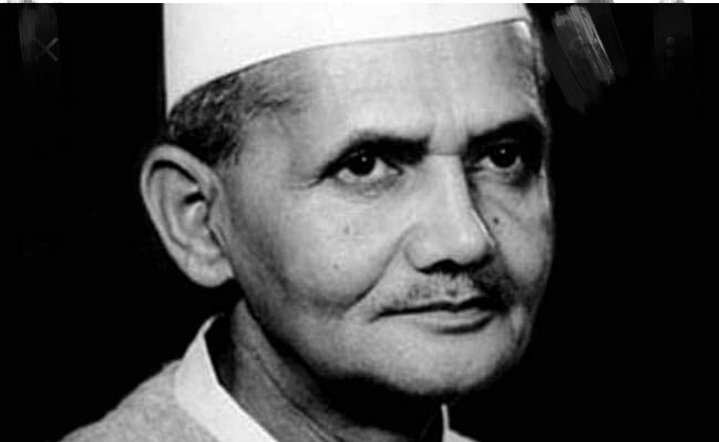
Shri Lal Bahadur Shastri was born on October 2, 1904 at Mughalsarai, a small railway town seven miles from Varanasi in Uttar Pradesh. His father was a school teacher who died when Lal Bahadur Shastri was only a year and half old. His mother, still in her twenties, took her three children to her father’s house and settled down there. Shastriji did his initial schooling from a small town. He had a happy enough childhood despite the poverty that dogged him.
He was sent to live with an uncle in Varanasi so that he could go to high school. Nanhe, as he was called at home, walked many miles to school without shoes, even when the streets burned in the summer’s heat.
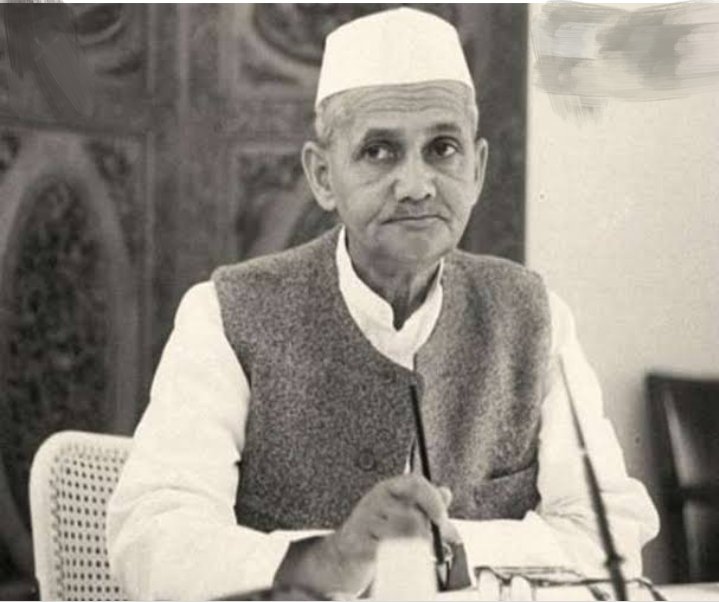
As he grew up, Lal Bahadur Shastri became more and more interested in the country’s struggle for freedom from foreign yoke. He was greatly impressed by Mahatma Gandhi’s denunciation of Indian Princes for their support of British rule in India. Lal Bahadur Sashtri was only eleven at the time, but the process that was end day to catapult him to the national stage had already begun in his mind.
Lal Bahadur Shastri was sixteen when Gandhiji called upon his countrymen to join the Non-Cooperation Movement. He decided at once to give up his studies in response to the Mahatma’s call. The decision shattered his mother’s hopes. The family could not dissuade him from what they thought was a disastrous course of action. But Lal Bahadur had made up his mind. All those who were close to him knew that he would never change his mind once it was made up, for behind his soft exterior was the firmness of a rock.
He joined the Kashi VidyaPeeth in Varanasi, one of the many national institutions set up in defiance of the British rule. ‘Shastri’ was the bachelor’s degree awarded to him by the Vidya Peeth but has stuck in the minds of the people as part of his name.
In 1927, he got married. His wife, Lalita Devi, came from Mirzapur, near his home town. The wedding was traditional in all senses but one. A spinning wheel and a few yards of handspun cloth was all the dowry. The bridegroom would accept nothing more.
He was minister in the Union Cabinet from 1951 to 1956 when he resigned taking responsibility for the railway accident and later from 1957-1964.
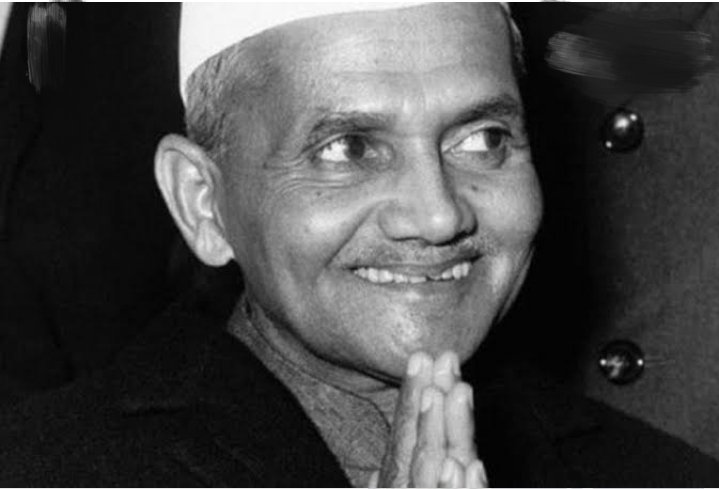
He was India’s second Prime Minister (1964-66). During Shastri’s brief Prime Ministership, the country faced two major challenges.While India was still recovering from the economic implications of the war with China (1962), failed monsoons, droughtand serious food crisis presented a grave challenge. The country also faced a war with Pakistan in 1965.
Shastri’s famous slogan ‘Jai Jawan Jai Kisan’, symbolised the country’s resolve to face both these challenges
Shastri’s Prime Ministership came to an abrupt end on 10th January 1966, when he suddenly expired in Tashkent, then in USSR and currently the capital of Uzbekistan. He was there to discuss and sign an agreement (Tashkent Agreement) with Muhammad Ayub Khan, the then President of Pakistan, to end the war.
He signed an agreement with then Ceylon (now Sri Lanka) on persons of Indian origin there, in 1964 — an endorsement of the importance of neighbourhood.
He was the first person to be posthumously awarded the Bharat Ratna (1966).
|Ageing Dams|
India is ranked third in the world in terms of building large dams, of the over 5,200 large dams built so far, about 1,100 large dams have already reached 50 years of age and some are older than 120 years.
Minor and medium dam shelf-life is lower than large dams for example Krishna Raja Sagar dam built in 1931 is 90 years old and Mettur dam built in 1934 is 87 years old.
Implications of ageing dams:
In a paper ‘supply-side hydrology last gasp’ Rohan D’Souza writes the siltation rate of Bhakra dam is 130.86 % so at this rate it will function for merely 47 years as against the original estimate of 88 years.
When when the dams ages the soil replaces water, the supply of water decreases and this in turn leads to reduction in the cropped area as less water is received and which increases dependency on on the rain which is erratic in nature and groundwater is overexploited, the crop yield increases and farmers income thereby decreases.
By 2050 this will pose difficulties such as scarcity of water to feed the ever increasing population.
The flawed siltation rates reinforce the argument that designed flood cushions within several reservoirs across many river basins may have already depleted substantially due to which floods become more frequent downstream of dams. For example the flooding of Bharuch in 2020, Kerala in 2018 and Chennai 2015 a few examples attributed to downstream releases from reservoirs.
Way forward:
The way forward in the situation can be the building of medium or minor irrigation based small storage structures, identifying mechanisms to recharge aquifers and store water underground.
Hence, India will eventually feel difficulty in finding sufficient water in the 21st century to feed the rising population by 2050, grow abundant crops, create sustainable cities, or ensure growth. Therefore all stakeholders must come together to address this situation urgently.
Universal destruction
How could it be possible that when the time gets worse we often ignore the vulnerable?
Nikhil Meshram
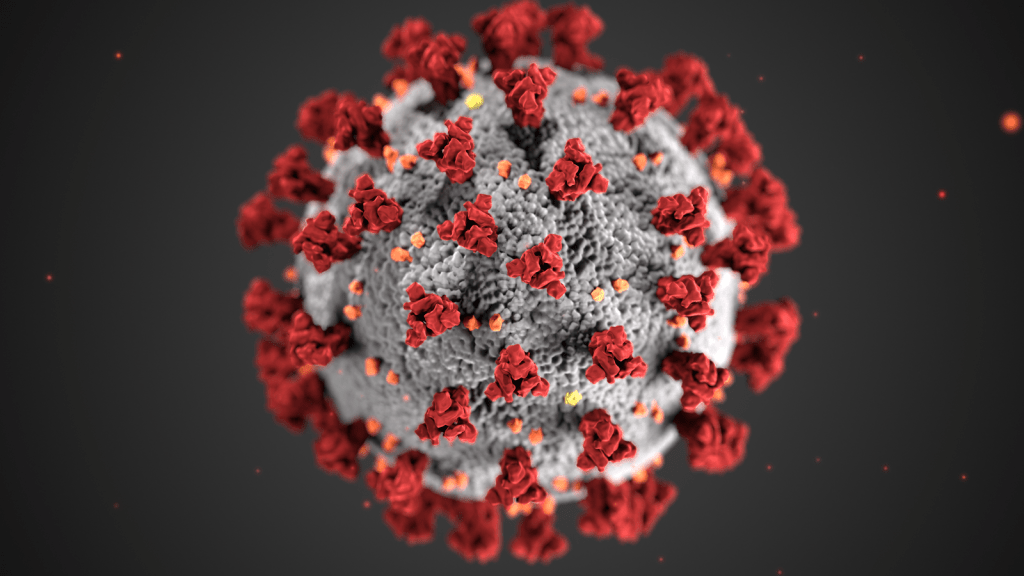
We are living in the world , where no one can intrude . A life , where you can’t touch the one you want . A life, where one has to stay away from his own . A life , where no one can go in one’s home . Yes , it’s a life we are living ‘ A life of a LOG’ .
Coronavirus , I believe it’s not a new word in your dictionary . This eleven letter word creating a massive destruction all over the world . I know you are well aware but the real question is , are you following the protocols properly?
Firstly let’s get some knowledge about coronavirus.
The origin .

The recent outbreak began in Wuhan, a city in the Hubei province of China. Reports of the first COVID-19 cases started in December 2019.
Coronaviruses are common in certain species of animals, such as cattle and camels. Although the transmission of coronaviruses from animals to humans is rareTrusted Source, this new strain likely came from bats, though one study suggests pangolins may be the origin.
However, it remains unclear exactly how the virus first spread to humans.
Some reports trace the earliest cases back to a seafood and animal market in Wuhan. It may have been from here that SARS-CoV-2 started to spread to humans.
Coronaviruses are a group of viruses that can cause disease in both animals and humans. The severe acute respiratory syndrome (SARS) virus strain known as SARS-CoV is an example of a coronavirus. SARS spread rapidly in 2002–2003.
The new strain of coronavirus is called severe acute respiratory syndrome coronavirus 2 (SARS-CoV-2). The virus causes coronavirus disease 19 (COVID-19).
Around 80%Trusted Source of people with COVID-19 recover without specialist treatment. These people may experience mild, flu-like symptoms. However, 1 in 6 peopleTrusted Source may experience severe symptoms, such as trouble breathing.
The new coronavirus has spread rapidly in many parts of the world. On March 11, 2020, the World Health Organization (WHO)Trusted Source declared COVID-19 a pandemic. A pandemic occurs when a disease that people are not immune to spreads across large regions.

It’s okay take a deep breath . Yes, it’s a lot to take in but we all know how china played with the whole world .
The protocols.

- Wear masks ,
- Wash hands ,
- Use sanitizers ,
- Social distancing , etc,.
Is it important to follow protocols ?
You say NO , I say ‘if you want to die you can easily ignore the protocols ’ . Well I don’t want to die , I have my whole 20s , 30s and so on…… .
According to the survey, people have been moving around freely, meeting different social groups and attending gatherings, going to malls and markets. This indicates that a pandemic fatigue has set in after after a year of restrictions on movement, social distancing and strict mask wearing norms.
Well , if you are saying this is what following protocols is than I am happy to stay home rather than chilling around like a monkey . Like really , a monkey also has a common sense that when to do chilling and when to fight for himself . What we are doing is putting masks in our pocket to showcase the world that I have one . Haha it’s kinda funny .
We long to return to normal, but **normal led to this**. To avert the future pandemics we know are coming, we MUST grapple with all the ways normal failed us. We have to build something better. I hope this piece, in showing what went wrong, helps.
Link :
CANCER- EATING PRECIOUS LIVES

Cancer has a major impact on society across the world. Cancer statistics describe what happens in large groups of people and provide a picture in time of the burden of cancer on society. Cancer has become one of the leading causes of death worldwide. Each year so many people die of cancer either because they could not survive the chemotherapy treatments given to them or due to lack of money they could not afford the treatment. The most common Cancers(listed according to estimated new cases in 2020) are Breast cancer, Non- Hodgkin Lymphoma, Kidney and Renal Pelvis cancer, Endometrial cancer, Leukemia, Pancreatic cancer, Thyroid cancer, Liver cancer.
Prostate, lung and colorectal cancers account for an estimated 43% of all cancers diagnosed in men. For Women, the three most common cancers are Breast, lung, colorectal and they account for an estimated 50%.
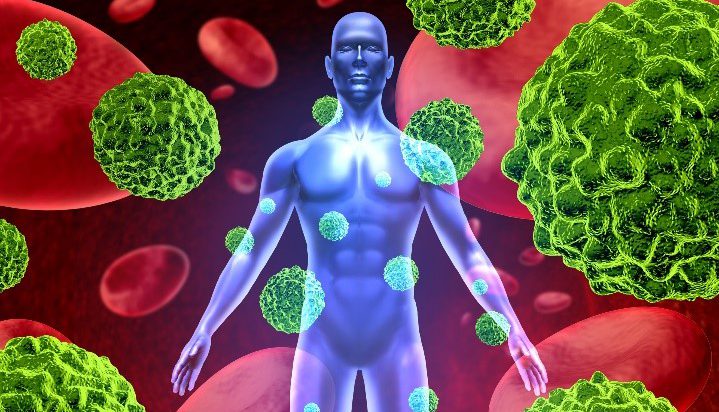
WHAT IS CANCER?
Cancer is a group of diseases involving abnormal cell growth with the potential to invade or spread to other parts of the body. Benign tumors do not spread to all parts of the body whereas Malignant tumors spread to the different parts and grow where ever they get accumulated. Cancerous cells have the ability to infiltrate and destroy normal body tissues.
SYMPTOMS
Signs and symptoms caused by cancer vary depending upon the part of body getting infected. Some of the general signs and symptoms associated with the same are:-
- fatigue
- lump or area of thickening that can be felt under the skin.
- weight changes, including unintended loss or gain.
- skin changes, such as yellowing, darkening or redness of skin, sores that won’t heal or changes to existing moles.
- changes in bowel or bladder habits.
- persistent cough or trouble breathing.
- difficulty in swallowing.
- hoarseness
- persistent indigestion or discomfort after eating.
- persistent muscle or joint pain.
- persistent fever/night sweats/bleeding.
CAUSES OF CANCER
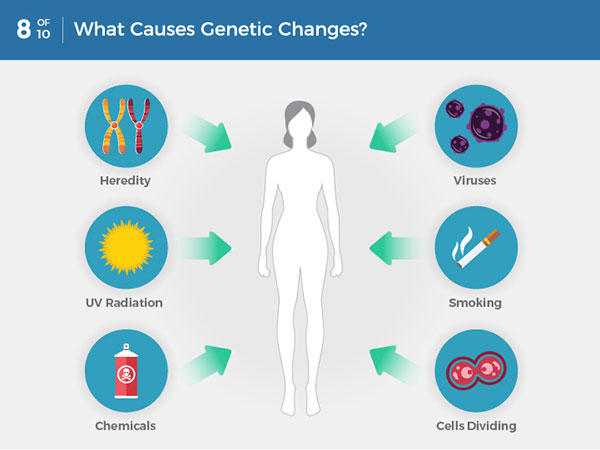
Factors causing cancer include certain infections, exposure to ionizing radiations, mutations in genes and environmental pollutants. Cancer is caused by changes(mutations) to the DNA within the cells(in majority of cases). The DNA inside a cell is packaged into a large number of individual genes, each of which contains a set of instructions telling the cell what functions to perform as well as how to grow and divide. A gene mutation can instruct a healthy cell to:-
- allow rapid growth– a gene mutation can tell a cell to grow and divide more rapidly. This creates many new cells that all have that same mutation.
- fail to stop uncontrolled cell growth– normal cells know when to stop growing but cancerous cells lose the control(tumor suppressor genes) that tell them when to stop growing. A mutation in tumor suppressor gene allows cancer cells to continue growing and accumulating.
- make mistakes when repairing DNA errors– DNA repair genes look for errors in a cell’s DNA and make corrections. A mutation in DNA repair gene means that other errors aren’t corrected.
PREVENTION
- Stop smoking.
- Avoid excessive sun exposure- harmful UV rays from the sun can increase the risk of skin cancer.
- Eat a healthy diet.
- Exercise most days of a week.
- Maintain a healthy weight- being overweight or obese may increase the risk of cancer.
 Eduindex
You must be logged in to post a comment.