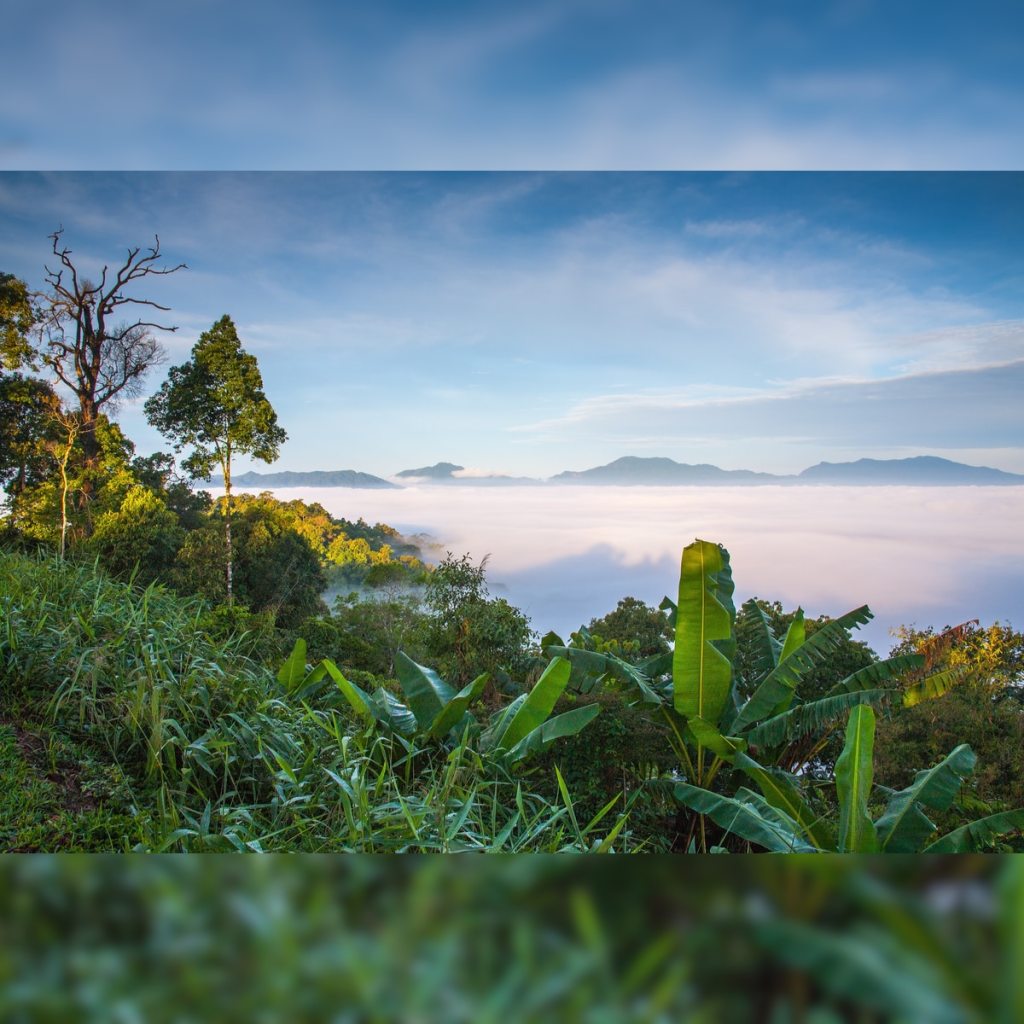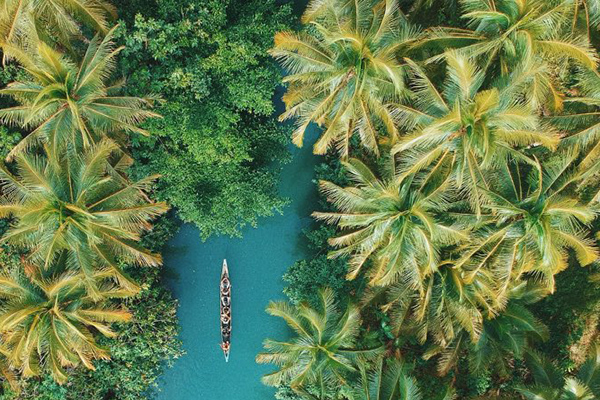
Environmental pollution

“Humankind has not woven the web of life. We are but one thread within it. Whatever we do to the web, we do to ourselves. All things are bound together. All things connect.”

~ Chief Seattle

What is environmental pollution ?

Is it degrading our lifestyle ?

How can we improve our environment ?

Let’s get through the topic .

Introduction
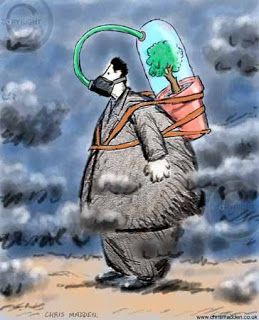
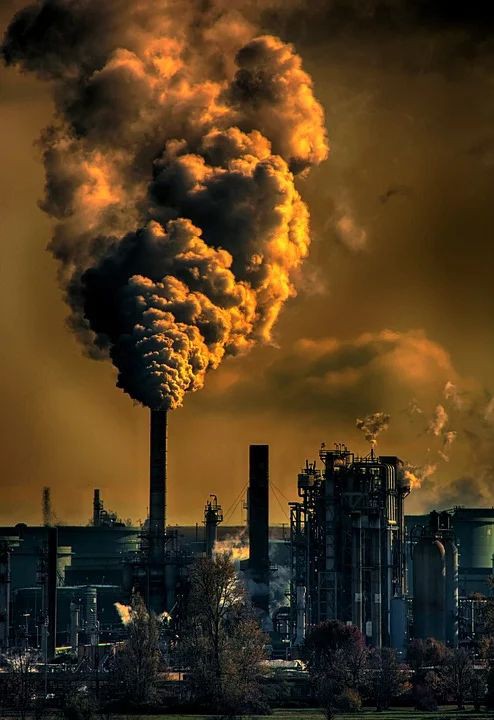
One of the greatest problems that the world is facing today is that of environmental pollution, which is causing grave and irreparable damage to the natural world and human society with about 40% of deaths worldwide being caused by water, air and soil pollution and coupled with human overpopulation has contributed to the malnutrition of 3.7 billion people worldwide, making them more susceptible to disease.

Environmental pollution is defined as “the contamination of the physical and biological components of the earth/atmosphere system to such an extent that normal environmental processes are adversely affected.”

From: Environmental Management, 2017

We all are well known about the word Environmental pollution . It is not some kind of new phenomenon , yet it is a greatest problem facing by our society . Still , people are avoiding the topic to its utmost.

Environmental pollution is one of the most serious global challenges. Wild-type organisms have a slower degradation rate of hazardous materials.

Both developed and developing nations share this burden together, though awareness and stricter laws in developed countries have contributed to a larger extent in protecting their environment.

Reasons behind environmental pollution

  • The Burning of Fossil Fuels. Industrial Emission.
  • Indoor Air Pollution.
  • Wildfires.
  • Microbial Decaying Process.
  • Transportation.
  • Open Burning of Garbage Waste.
  • Construction and Demolition.
  • Urbanization and industrialization. Since the era of industrial revolution, man has continued to introduce hazardous materials into the environment at an alarming rate.Mining and exploration.
  • Agricultural activities.
  • Particulate matter.
  • Plastics.
  • Energy production.
  • Deforestation.
  • Mining.
  • Over population.
  • Increase in global average temperature.

Effects of environmental pollution

Environmental pollution is an incurable disease . It can only be prevented.

Barry commoner

1. Effects on Humans. The effects of environmental pollution on humans are mainly physical, but can also turn into neuro-affections in the long term. The best-known troubles to us are respiratory, in the form of allergies, asthma, irritation of the eyes and nasal passages, or other forms of respiratory infections. Other rarer diseases include hepatitis, typhoid affections, diarrhea, and hormonal disruptions.

2. Effects on Animals . Environmental pollution mainly affects animals by causing harm to their living environment, making it toxic for them to live in.

3. Effects on plants . As for animals, plants, and especially trees, can be destroyed by acid rains (and this will also have a negative impact on animals as well, as their natural environment will be modified), ozone in the lower atmosphere block the plant respiration, and harmful pollutants can be absorbed from the water or soil.

Solutions for environmental pollution.

  • Evironment planning.
  • Shifting to eco-friendly transportation.
  • Air pollution must involve moving away from fossil fuels, replace them with sustainable fuels .
  • Solar power .
  • Wind power.
  • Go green.
  • Storage facilities for solid waste.
  • Environmental friendly products.
  • Policies implimentation for environmental pollution.
  • We also need to work on electromagnetic radiation (ER) reduction.
  • Awareness through mass media.
  • More green parks and areas.
  • Environmental education, etc,.

“We say we love flowers, yet we pluck them. We say we love trees, yet we cut them down. And people still wonder why some are afraid when told they are loved.”

~ Paul Morley

Link
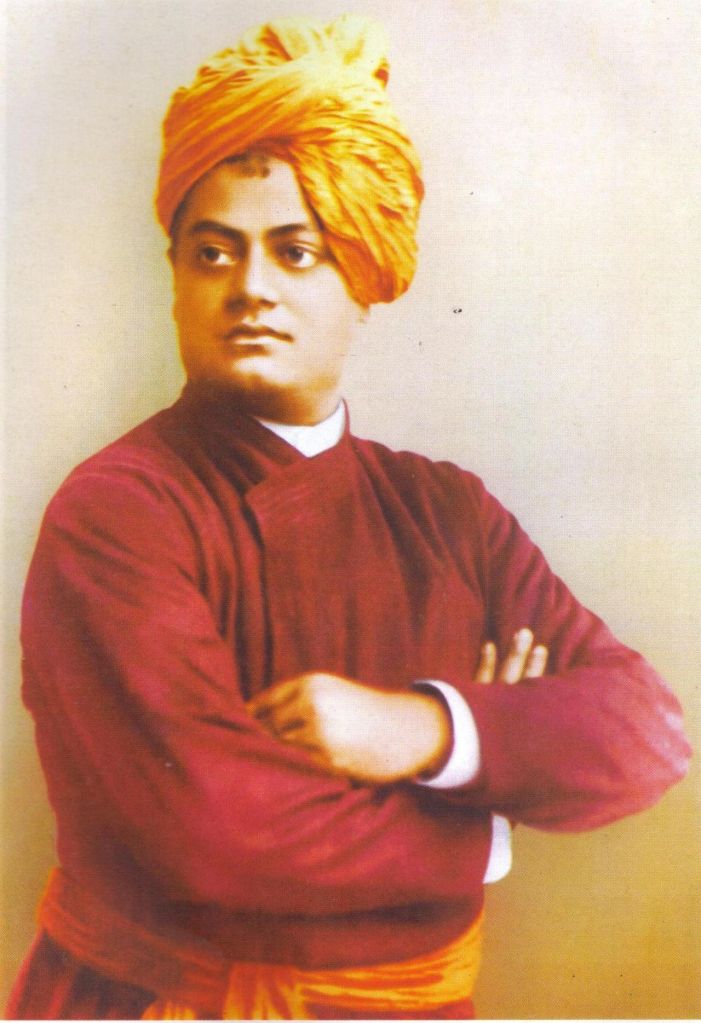
Swami Vivekanand

Early life

Vivekananda was born Narendranath Datta (shortened to Narendra or Naren) in a bengali family at his ancestral home at 3 Gourmohan Mukherjee street in Calcutta, the capital of British india, on 12 January 1863 during the Makar sanskrati festival. He belonged to a traditional family and was one of nine siblings. His father, Vishwanath Datta , was an attorney at the Calcutta high Court. Durgacharan Datta, Narendra’s grandfather was a sanskrti  and Persian  scholar who left his family and became a monk at age twenty-five. His mother, Bhubaneswari Devi, was a devout housewife. The progressive, rational attitude of Narendra’s father and the religious temperament of his mother helped shape his thinking and personality.

Narendranath was interested in spirituality from a young age and used to meditate before the images of deities such as Shiva, rama, sita, and mahavir hanuman. He was fascinated by wandering ascetics and monks. Narendra was naughty and restless as a child, and his parents often had difficulty controlling him. His mother said, “I prayed to Shiva for a son and he has sent me one of his demons”.

Education

1871, at the age of eight, Narendranath enrolled at Ishwar Chandra Vidhyasagar’s Metropolitan institutions, where he went to school until his family moved to Raipur in 1877. In 1879, after his family’s return to Calcutta, he was the only student to receive first-division mark entrance examination.  He was an avid reader in a wide range of subjects, including philosophy, religion, history, social science, art and literature was also interested in Hindu scriptures, including the vedas, the upanishads, the Bhagvad gita, the Ramayana, Mahabharata and the puranas. Narendra was trained in Indian classical music and regularly participated in physical exercise, sports and organised activities.

Narendra studied Western logic, Western philosophy  and European history General assemblyinstitutions (now known as the Scottish Church College). In 1881, he passed the fine arts examination, and completed a Bachelor of Arts degree in 1884. Narendra studied the works He became fascinated with the evolution  of herbert Spencer and corresponded with him, translating Herbert’s Spencer book Education (1861) into Bengali. While studying Western philosophers, he also learned Sanskrit scriptures and Bengali literature.

William hestie (principal of Christian College, Calcutta, from where Narendra graduated) wrote, “Narendra is really a genius. I have travelled far and wide but I have never come across a lad of his talents and possibilities, even in German universities, among philosophical students. He is bound to make his mark in life”.

Narendra was known for his prodigious memory and the ability at speed reading. Several incidents have been given as examples. In a talk, he once quoted verbatim, two or three pages from Pickwick papers. Another incident that is given is his argument with a Swedish national where he gave reference to some details on Swedish history that the Swede originally disagreed with but later conceded.

In another incident with Dr. Paul Deussen’s at kiel in Germany, Vivekananda was going over some poetical work and did not reply when the professor spoke to him. Later, he apologised to Dr. Deussen explaining that he was too absorbed in reading and hence did not hear him. The professor was not satisfied with this explanation, but Vivekananda quoted and interpreted verses from the text, leaving the professor dumbfounded about his feat of memory. Once, he requested some books written by Sir John Lubbock from a library and returned them the very next day, claiming that he had read them. The librarian refused to believe him until cross-examination about the contents convinced him that Vivekananda was being truthful.

Michael Jackson

Michael Joseph Jackson(1958-2009) also popularly known as Michael Jackson,was an American singer, songwriter, and dancer. He is famously known as king of pop,he is regarded as one of the most significant cultural figures of the 20th century. 

His contributions to music, dance, fashion, and philanthropy, made him a global figure.

He influenced many people, many genres across the world through stage and video performances.

His popularized dance moves like moon walk , still this complicated dance gestures is creating popularity, records.He is the most awarded music artist in history.

Jackson is one of the best selling music artists of all time, with estimated sales of over 350 million records worldwide. For his incredible contribution to music,dance he was honoured with 15 Grammy awards, six Brit awards, a golden globe award, and 39 Guinness world records.

Michael Jackson, also known as most commercially successful entertainers of all time. At the age of 50, Michael Jackson passed away,at his home in Los Angeles, California, after suffering from cardiac arrest caused by a fatal combination of drugs given to him by his personal doctor.

Agriculture

When tillage begins, other arts follow. The farmers, therefore, are the founders of human civilization.”

— Daniel Webster

Introduction

It all started thousand of years ago , when the human civilization came into existence . Agriculture was a key to survival . People were farming for there domestic purpose , not for the others .

As the civilization started to grow accustomed of agriculture , they grew food in surplus that enabled people to live in cities. Plants were independently cultivated in at least 11 regions of the world.

The development of agriculture enabled the human population to grow many times larger than could be sustained by hunting and gathering.

It was the beginning of different civilization in different parts of the World. From those civilizations , one of them was our’s The Indus Valley Civilization . Vedic literature provides some of the earliest written record of agriculture in India. Rigveda hymns , describes plowing, fallowing, irrigation, fruit and vegetable cultivation.

Some of the ancient and historical evidence suggests rice and cotton were cultivated in the Indus Valley.

Agriculture : In India and World today .

India ranks second worldwide in farm outputs. As per 2018, agriculture employed Indian work force and contributed 17–18% to country’s GDP.

In 2016, agriculture and allied sectors like animal husbandry, forestry and fisheries accounted for 15.4% of the GDP (gross domestic product) with about 41.49% of the workforce in 2020.India ranks first in the world with highest net cropped area followed by US and China.The total agriculture commodities export was US $ 3.50 billion in March – June 2020.

Agriculture is the primary source of livelihood for about 58% of India’s population. Share of agriculture and allied sectors in gross value added (GVA) of India at current prices stood at 17.8 % in FY20.

During 2019-20 crop year, food grain production reached a record of 296.65 million tonnes. In 2020-21, Government of India is targeting food grain production of 298 million tonnes.

India is among the 15 leading exporters of agricultural products in the world. Agricultural export from India reached US$ 38.54 billion in FY19 and US$ 35.09 billion in FY20.

Agriculture is an important industry in the United States. The agriculture industry, which includes both crops and livestock, is responsible for producing most of the world’s foods and fabrics. Agriculture impacts so many things that it’s hard to imagine a world without this important industry.

Schemes and Initiatives

Due to the high requirement of agriculture . It is important for the government to take initiatives and provide better infrastructure to the farmers. However , the required level of investment for the development of marketing, storage and cold storage infrastructure is estimated to be huge.

The Indian Council of Agricultural Research (ICAR), established in 1905, was responsible for the search leading to the “Indian Green Revolution” of the 1970s. The Union Minister of Agriculture is the president of the ICAR. The Indian Agricultural Statistics Research Institute develops new techniques for the design of agricultural experiments, analyses data in agriculture, and specialises in statistical techniques for animal and plant breeding.

Schemes by government for Indian agriculture :

  • Dairy Entrepreneurship Development Scheme.
  • Rainfed Area Development Programme (RADP)
  • Paramparagat Krishi Vikas Yojana (PKVY)
  • Pradhan Mantri Krishi Sinchai Yojana (PMKSY)
  • National Agriculture Market (e-NAM)
  • Pradhan Mantri Kisan Maandhan yojana.
  • Pradhan Mantri Fasal Bima Yojana (PMFBY)
  • Kisan Credit Card (KCC) scheme.
  • Pashu Kisan Credit Card Scheme.
  • PM-Kisan Scheme.

Conclusion

Agriculture sector is one of the prominent sector in India as well as all over the world . India is becoming self – sufficient in pulses and other crops .

Gone are the days , when India was unable to provide sufficient amount of food to the citizens . Gone are the days , when people used to think agriculture was not as important as other sectors . Gone are the days , when people used to think less of farmers . And gone are the days , when people were less educated about agriculture.

Farming is a profession of hope.

— Brett Brian

Link

Swami Vivekananda: A Tribute to the Godly Figure.

Swami Vivekananda as we all know was born on January 12, 1863 in Calcutta (present day Kolkata). Swami Vivekananda was never religious in his early life but was always interested in spirituality and meditation from young age.

Swami Vivekananda got educated from Calcutta University and had keen interest in subjects like history, religion, social science, philosophy and like. Today, July 4 is his death anniversary and us know five important incidents from his life.

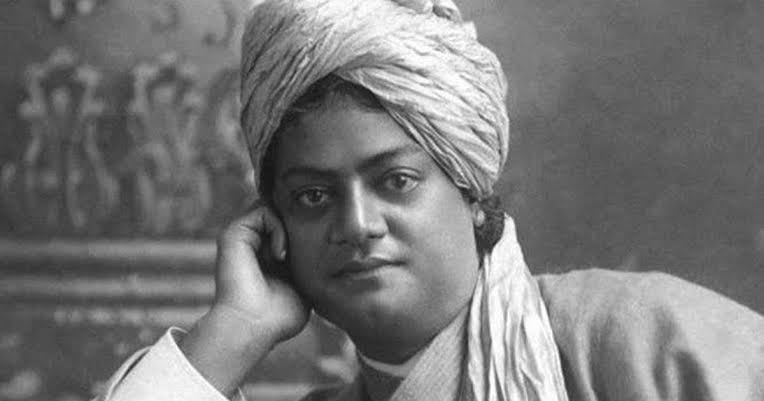
1) Swami Vivekananda at Parliament of World Religions, 1893.

Photo Credits: India TV

Swami Vivekananda became extremely popular when he went to Chicago in 1893 for Parliament of World Religions where he represented India and Hinduism. He addressed Americans as “Sisters and Brothers of America” in his speech which led to widespread appreciation. In this event, he spoke about how the land of Vedas, Yoga and Saints has taught tolerance and universal acceptance to the world.

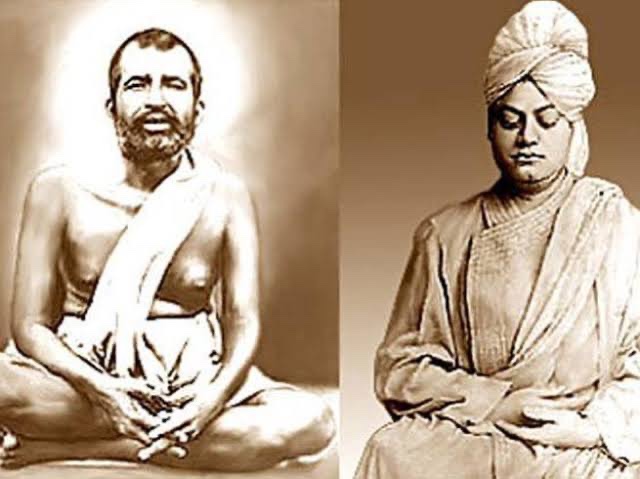
2) First meet of Swami Vivekananda and Ramkrishna Dev.

Photo Credits: Navbharat Times.

Swami Vivekananda met his mentor Ramkrishna Dev first in Dakshineswar Temple in Kolkata where Ramkrishna Dev used to reside but their relationship began when they met at the house of Surendra Nath Mitra. Ramkrishna Dev asked Swami Vivekananda to sing and impressed by his singing talent Ramkrishna Dev invited Swami Vivekananda to Dakshineswar.

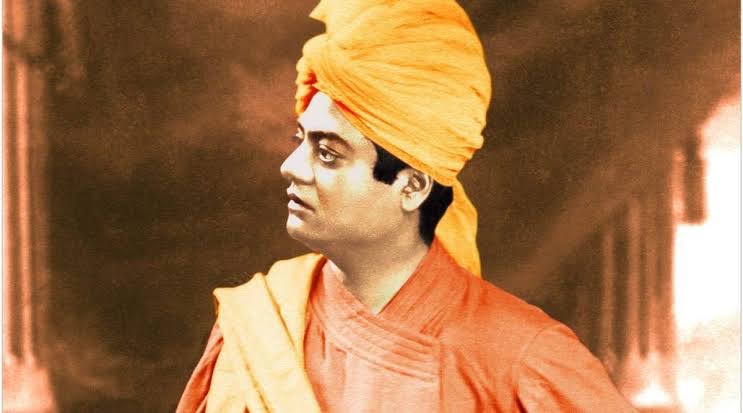
3) Life in Dakshineswar, Kolkata.

Photo Credits: Scroll.

Swami Vivekananda’s constant meetings with Ramkrishna Dev became important and life changing moments for him. Initially, Swami Vivekananda was amused and nervous when he first interacted with Ramkrishna Dev. After giving many tests, Swami Vivekananda finally accepted Ramkrishna Dev as his spiritual teacher in 1882. He remained there until Ramkrishna Dev’s death in 1886.

4) Enlightenment of Swami Vivekananda.

Photo Credits: The Indian Express

Swami Vivekananda once asked Ramkrishna Dev whether there’s any God or not (as Ramkrishna used to keep telling him about God ), to which Ramkrishna Dev replied “I am the proof that God exists”. After three days, Swami Vivekananda retuned to him and asked whether Ramkrishna Dev can show him God or not. Ramkrishna Dev asked a counter question that whether Swami Vivekananda has the courage to see God or not to which Swami Vivekananda replied “Yes”. After this, Ramkrishna Dev placed his foot on Swami Vivekananda’s chest and Swami Vivekananda lost his consciousness after that. He restored his consciousness after twelve hours but he was totally changed by then.

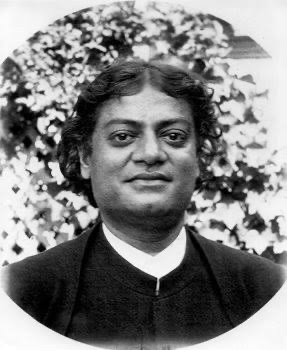
5) Establishment of Ramkrishna Mission and relationship with Sharada Devi.

Photo Credits: Old Indian Photos.

Swami Vivekananda founded The Ramkrishna Mission on May 1, 1897 to honour and recognise the efforts and teachings of Ramkrishna Dev. Swami Vivekananda also had a very respectful and loving approach with Sarada Devi as he went to Chicago in 1893 only after taking her blessings.

At the end let’s apply Swami Vivekananda’s words in real life and as Indians, we should always move towards social equality and individual freedom which were his primary teachings.

INCREDIBLE INDIA

Indian culture is the heritage of social norms, ethical values, traditional customs, belief system, political systems, artifactcs and technologies that originated in or are associated with the Indian subcontinent. Over the centuries, there has been a significant fusion of cultures between Buddhists, Hindus, Muslims, Jain, sikhs and various tribal population in India.

>Importance of Indian Culture :

Indians are proud of its culture. In our country it is traditional to respect elders, be truthful and honest and also to help out others in need. It is also considered traditional to celebrate our cultural festivals and religious activities with the family and neighbours.

>Indian culture and values :

The two most tenents of Indian culture are Human Values and Holism. Human values refer to moral, spiritual and ethical values whereas Holism means unity.

>Features of Indian culture :

Unity in diversity, tolerance , longevity and continuity , amalgamation of spirituality and materialism.

India is the land of ‘UNITY IN DIVERSITY’, and our dances are no different. Different forms of dances find origin of different parts of the country, and they are a way of representation of the particular culture from which they originate.

INDIAN CULTURE IS VERY RICH AND DIVERSE AND TEACHES US TO BE TOLERANT TO OTHERS.

EXTERNAL REFERENCE

•India and World Cultural Heritage

•India’s intangible cultural heritage

INDONESIA- THE WORLD’S LARGEST ISLAND COUNTRY

Let’s do a travel by my article

Officially Indonesia is a country in Southeast Asia and Oceania between the Indian and Pacific oceans.It is the world’s largest island country and the 14th-largest country by land area, at 1,904,569 square kilometres  which consists of over seventeen thousand islands, including Sumatra, Java, Sulawesi, and parts of Borneo and New Guinea.Indonesia is the world’s fourth-most populous country and the most populous Muslim-majority country. Jakarta is the capital of Indonesia and it is the world’s second-most populous urban area. 

HOW IS THE CLIMATE OF INDONESIA?

Basically Indonesia’s climate  is almost entirely tropical.The coastal plains’ climate is  average 28 °C, the inland and mountain areas are 26 °C, and the higher mountain regions, 23 °C. Temperature depends on the season, and through the change of seasons there is little change in the length of daylight hours.The main changeable thing is not Indonesia’s climate or air pressure, but rainfall. The area’s correlative humidity ranges between 70% and 90%. Although air temperature changes little from season to season or from one region to the next, cooler temperatures prevail at higher elevations. In general, temperatures drop approximately 1°C/90-meter increase in elevation.

Indonesia is a  naturally tropical country, that’s why there are two seasons those are mainly Rainy and Dry, and it  does not have spring, summer, autumn, or winter. In most of the country (including Java and Bali) the dry season is from April to October, while the wet season is from November to March.

PLACES TO VISIT –

There are many places to visit and each and every one is very beautiful. Indonesia is one of the world’s most beautiful places to visit and the most visited holiday destination. Let’s find out by my article what makes Indonesia so interesting !! 

Gili Islands is for the best nightlife,Raja Ampat Islands for explore rare species of corals,Maluk Beach for witness the changing colors of sun rays,Kelimutu Lake for dramatic volcanic peaks,Lake Toba for largest caldera,Bunaken Marine Park for exotic range of fish species,Komodo National Park  for giant monitor lizards,Mount Bromo for the active volcano,Mount Rinjani which is the second highest volcano of indonesia,Ijen for mining activities,Dieng Plateau which is an abode of god,Torajaland which relishes the culture,Borobudur Temple which is the world’s biggest buddhist sanctuary,Ubud for hike through rainforests & rice paddy fields,Tanjung Puting National Park for trekking in tropical jungle,Derawan Islands for  relaxing & unwinding,Belitung for dutch colonial architecture,Nusa Dua for white sand beaches,Seminyak is the most happening place,Jakarta which is melting pot of cultures,Lombok is a stunning marine life,North Sulawesi is the best diving sites,Nusa Penida is offbeat yet spectacular,Bali which is cliche yet the best,Yogyakarta is a quaint little pretty place,Bandung is a different kind of calm,Bangka Islands is simply blissful and the Wae Rebo village is for iconic culture.

Indonesia city

LET’S TALK ABOUT 10 BEST PLACES IN INDONESIA-

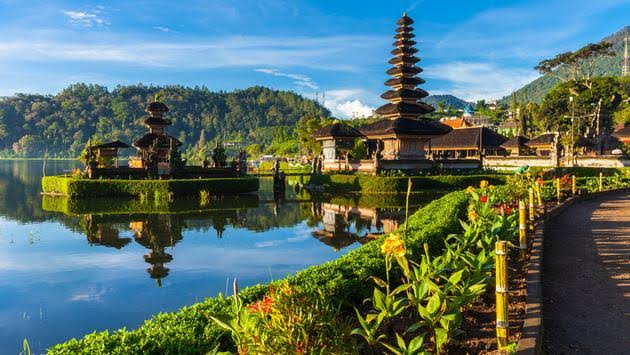
  • Bali- Bali is the most desirable place in Indonesia. We can say it is a dream destination.  Bali is a fair of beautiful beaches, volcanic hills, lush rice paddies, and thousands upon thousands of Indonesian temples.It has the nickname “Island of God”.
Bali
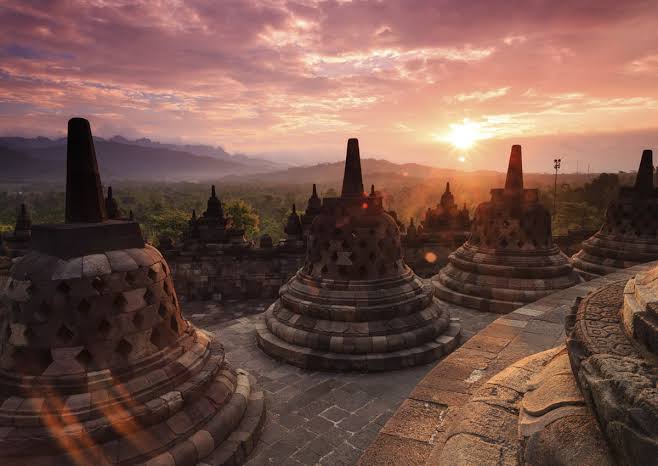
  • Yogyakarta- It is located on the Island of Java. Yogyakarta is regarded as an important centre for classical Javanese fine arts and culture such as ballet, batik textiles, drama, literature, music, poetry, silversmithing, visual arts, and wayang puppetry.
Yogyakarta
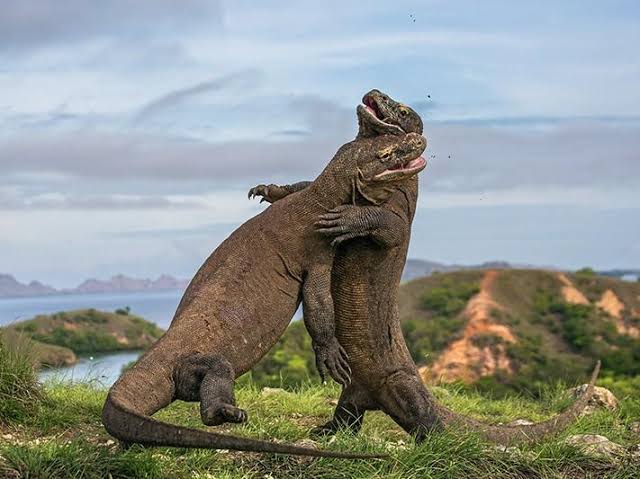
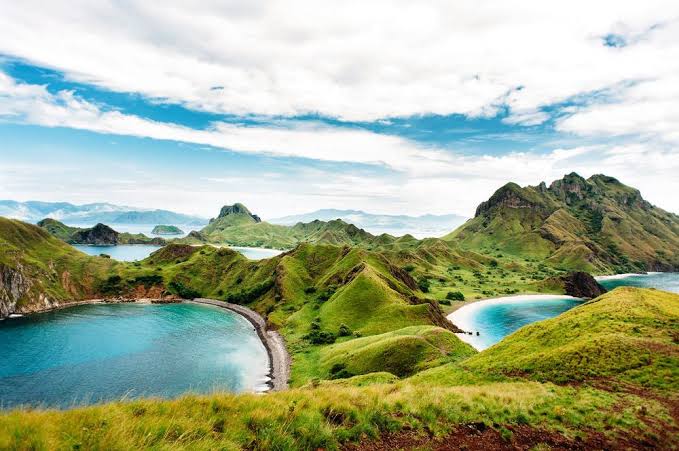
  • Komodo National Park-  It is a national park which is located within the Lesser Sunda Islands in the border region between the provinces of East Nusa Tenggara and West Nusa Tenggara. It is founded to protect the world’s largest lizard. Now it protects other species, including marine species. In 1991 UNESCO declared it a World Heritage Site.
Komodo National Park
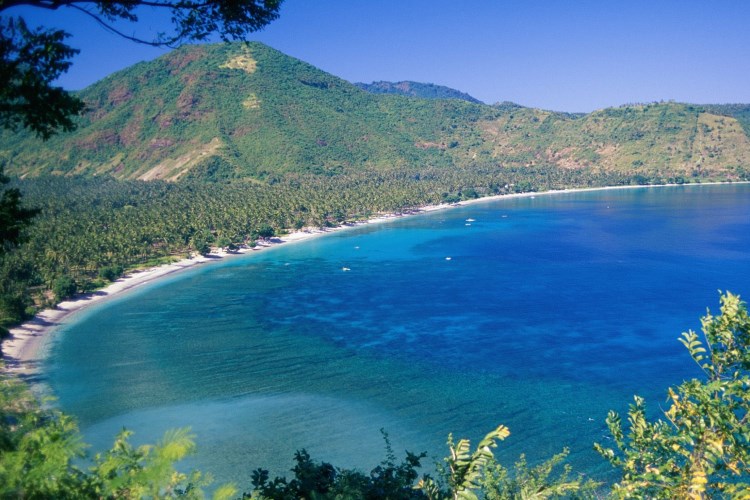
  • Lombok- It is an Island which is located in West Nusa Tenggara province.Lombok is surrounded by a number of smaller islands locally called Gili. Other interesting things are surfing hotspots, uncrowded beaches, and magical waterfalls tucked within steamy jungles, of which Tiu Kelep Waterfall tops the list without question.There’s also a fantastic nightlife scene.
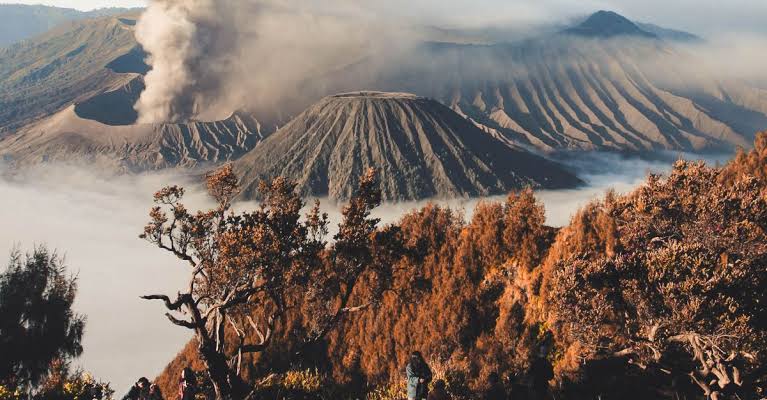
  • Bromo Tengger Semeru National Park-  Bromo Tengger Semeru National Park, known locally as Taman Nasional Bromo Tengger Semeru (TNBTS) is a national park located in East Java. It is an ethereal yet barren wonderland of volcanic calderas seemingly continuously surrounded by smoke and clouds.
Bromo Tengger Semeru National Park
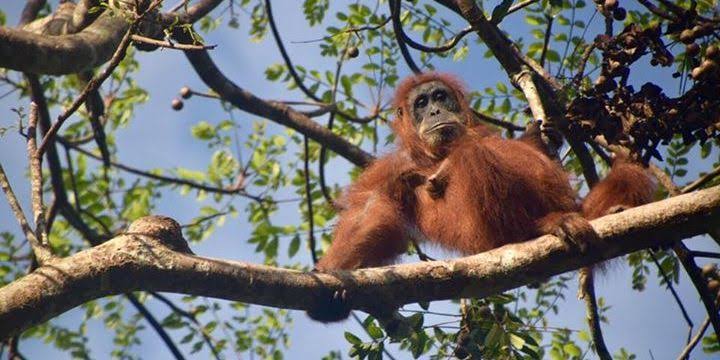
  • Bukit Lawang- It is a small tourist village on the bank of Bahorok River in North Sumatra province.Bukit Lawang is known for the largest animal sanctuary of Sumatran orangutan and also the main access point to the Gunung Leuser National Park from the east side.
Bukit Lawang
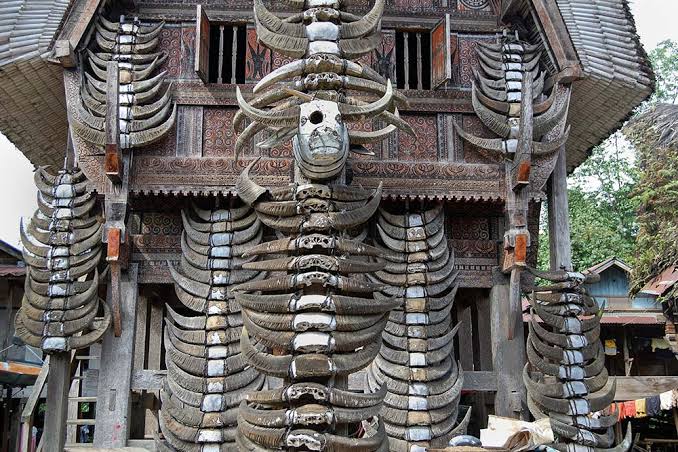
  • Torajaland- Nickname is ‘the Land of the Heavenly Kings,’it is famous for their massive peaked-roof houses known as tongkonan and spectacular but gruesome funeral rites. After a person’s death, the body is often kept for several years until the actual funeral ceremony. The deceased is then finally buried in a small cave or in a hollow tree. The biggest funerals are usually held in the dry-season months of July and August, but there are funerals year-round.
Torajaland
  • Flores Island- it is one of the Lesser Sunda Islands,The lakes are truly a sight to behold in every color you can think of – from browns and greens to aqua blue; colors caused by the minerals reacting to the gas of the region’s volcanoes. The Kelimutu three-colored lake is a must-see from the top of the volcano at sunrise.
Flores Island
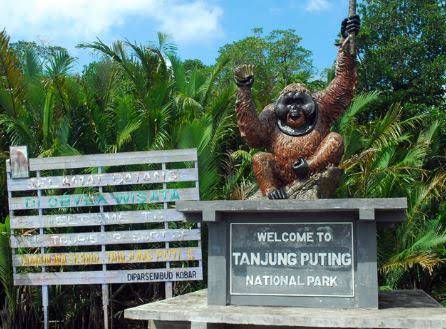
  • Tanjung Puting National Park- Located in the jungles of Borneo.The third-largest island in the world that’s part of Indonesia.
Tanjung Puting National Park
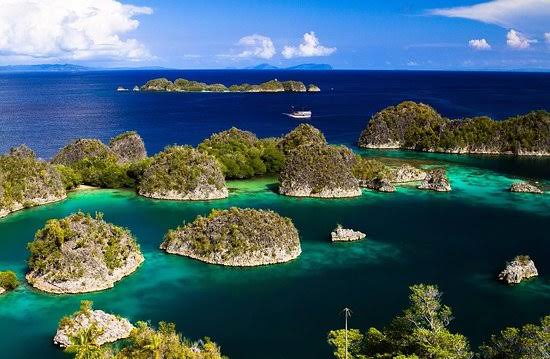
  • Raja Ampat Islands- Raja Ampat is one of the most sensational diving destinations in Indonesia. Raja Ampat, which means ‘Four Kings’. It consists of four major jungles.Clad islands surrounded by turquoise lagoons and pearly,white palm,fringed beaches like Waigeo,Salawati, Misool, and Batanta and along with thousands of smaller islands.
Raja Ampat Islands

Why do Indians eat with hands?

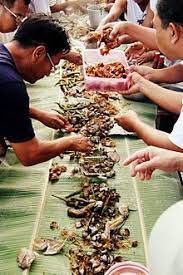
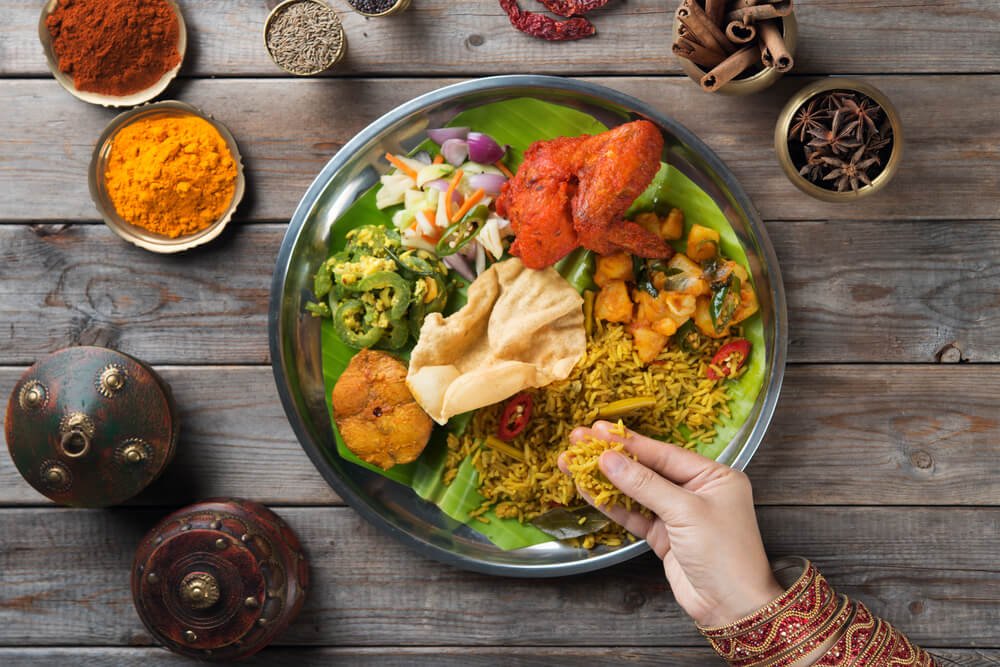
Eating with bare hand is a traditional Indian culture, which people still follow. Eating is a mindful process since the sensory organs like touch and taste are involved. Fingertips are used to feel the temperature and texture of our food. Nerves at our fingertips send a signal to our brain, and the brain activates the human body’s digestive system and further improves the digestion process. In practice, Indians sit down on the floor in comfortable clothes and eat in a big banana leaf or Saili leaf. This process activates your senses and makes you enjoy your meal.

Eating with hand is a mindful eating…

But, is it good or bad to use hands?

Stay till the end…

Imagine eating roti with a spoon and dosa with a fork. Sounds weird right? Oh well, it is!

Traditional Indian foods are made to eat with hand. We use hands to eat foods like rice, chappati, vada, dosa, chicken, fish, papad, Pongal, and many more. While eating, curry is mixed with rice or stuffed in a roti that gives a flavor of multiple spices added while preparing the dish.

Here raises a question…

Is eating with your hand “unhygienic”?

Washing hands before eating is a habit of everybody. Indian tradition follows hygiene and cleanliness during dining. The hand once used by a person to consume their food is not used to serve or to share because that is treated as ‘jootha’ meaning contamination and treated as an unhygienic way of eating. People are supposed to wash their own dishes after eating which reduces the intermixing of saliva of two individuals as a concern of one’s health.

Significance of eating with hands:

According to the ancient theory, all five fingers of our hand has its own spiritual significance and it symbolizes the 5 elements of nature. 

  1. Thumb finger- Fire
  2. Index finger- Air
  3. Middle finger- Space
  4. Ring finger- Earth
  5. Little finger- Water

Apart from those theories, it was proved that using hand while eating improves the healthy digestion of food. Our palms and fingers are protected by a bacteria called Normal Flora. Normal Flora protects our skin from harmful microbes. Hence your hand is safe to use.

Is India the only country where people eat with their hands? 

Obviously Not!! 

India is not the only country where people follow the tradition of eating with hands. People from large swaths like the Middle East, Africa, South Asia, South America follow the norm of using their hands to eat. Tribes in Nigeria, Amazighs (Berbers) in North Africa, Black Africa, the Arabs of the Middle East also follow this tradition.

‘Kamayan‘ meaning “with hands.” Kamayan is an ancient tradition traditional Filipino practice of eating with the hands. They believe that eating with hands has its own significance than eating with fork and knife. It is also referred to specific type of Filipino feast known as the “boodle fight”.

Ethopian eating culture

Conclusion

Remember, it’s your culture and there is nothing to be ashamed of using your hand. Every culture in this world deserves respect. This article is all about bringing out the importance of Indian culture and not to dishonor western dining etiquette. Nowadays, restaurants and cafes are all westernized. As the customs and lifestyle changes it is our responsibility to hold and accept our own culture first. 

Creating an awareness among the people about the science behind our culture is the main motive of this article!!

References:

https://en.wikipedia.org/wiki/Customs_and_etiquette_in_Indian_dining

https://www.indiatoday.in/fyi/story/eat-hands-indians-357398-2016-12-14

http://www.timotis.com/news-1/eat-with-your-hands

credits to the right owner of the images used.

Culture and history related

INTRODUCTION:-

Cultural history brings to life a past time and place. In this search, cultural historians study beliefs and ideas, much as intellectual historians do. In addition to the writings of intellectual elites, they consider the notions (sometimes unwritten) of the less privileged and less educated. These are reflected in the products of deliberately artistic culture, but also include the objects and experiences of everyday life, such as clothing or cuisine. “Culture” can also imply everyday attitudes, values, assumptions and prejudices, and the rituals and practices that express them, from magical beliefs to gender roles and racial hierarchies. In this sense, our instincts, thoughts, and acts have an ancestry which cultural history can illuminate and examine critically. Historians of culture at Yale study all these aspects of the past in their global interconnectedness, and explore how they relate to our many understandings of our varied presents.Cultural history is an effort to inhabit the minds of the people of different worlds. This journey is, like great literature, thrilling in itself. It is also invaluable for rethinking our own historical moment. Like the air we breathe, the cultural context that shapes our understanding of the world is often invisible for those who are surrounded by it; cultural history allows us to take a step back, and recognize that some of what we take for granted is remarkable, and that some of what we have thought immutable and natural is contingent and open to change. Studying how mental categories have shifted inspires us to think how our own cultures and societies can evolve, and to ask what we can do as individuals to shape that process.

5 Fascinating Culture and History Topics to Explore Today:-

clip_image002
If you’re absolutely in love with the experience of reading and learning, then it only stands to reason that you’ve read your share of non-fiction books over the years. It’s not hard to see why, either. Non-fiction literature on topics like history, culture, and people are so much more than just collections of information. They’re also part of our collective story as human beings. That said, if regional interest reading material isn’t on your radar yet, it definitely should be. Local interest books are a wonderful way to explore a wide range of different topics from unique points of view that you might not have the chance to experience otherwise. The following are just a few options to consider the next time you’re looking for something new to explore.
 

1. Business and Entrepreneurship:-

Thanks to modern technology and the Internet, more people than ever before are exploring the wide, wonderful world of going into business for themselves. Topics like economics, business management, and product development are no longer just topics of interest for CEOs and company managers. These days, just about everyone is interested in what makes businesses of all types tick.Thanks to modern technology and the Internet, more people than ever before are exploring the wide, wonderful world of going into business for themselves. Topics like economics, business management, and product development are no longer just topics of interest for CEOs and company managers. These days, just about everyone is interested in what makes businesses of all types tick.

2. Ethnic Studies and Immigrants:-

Many people tend to think of America as not having much of a culture of its own. However, it would be more accurate to say that it’s a perfect patchwork of all the cultural influences that have made it what it is today. Our country would quite simply not be the same wonderful place without the immigrants that have called it home over the years.Exploring regional interest books on various communities and ethnic groups in America is a wonderful way to discover the amazing backstories of American immigrants and minorities through the ages. Learn how the contributions of immigrant Japanese, Italians, Irish, Chinese, and more helped shape their communities throughout history. Enrich your understanding of notable African American communities from all over the nation. Explore the many cultural influences as they relate to your own hometown’s backstory.

3. Food, Drink, and Restaurants:-

Food and drink is another incredibly hot topic these days. Just about everyone is exploring the possibilities offered by farm to table dining, food truck culture, craft brewing, or fusion cuisine. Local interest literature offers you the opportunity to dig even deeper and get to know your favorite culinary topics on an entirely new level.Explore the origins and influences behind the local cuisine in your hometown or in regards to your favorite vacation spots. Discover the rich traditions behind Cajun cuisine or learn all about how food trucks came to be considered such an essential Los Angeles staple. Explore the backstories behind individual eateries, farms, and local ingredients throughout history.

4. Hauntings and Paranormal:-

You’d be hard-pressed to find anyone who doesn’t appreciate a well-told ghost story. Stories of hauntings, paranormal phenomena, and unexplained happenings only become more fascinating when they’re rooted in history and based on real-life accounts.Regional interest literature is perhaps one of the best, most detailed ways to explore the history of hauntings and paranormal phenomena in America. Devour fascinating volumes devoted to some of America’s most infamously haunted cities, like Nashville, Boston, Charleston, and New Orleans. Even Reno and Las Vegas come alongside their own chilling tales of historic hauntings rooted in a fascinating past.

5. American Sports History:-

It’s hard to think of anything more American than sports. Whether you’re into baseball, football, hockey, or golf, the chances are excellent that you’ve been following your favorite teams in one capacity or another since childhood. However, there’s a lot more to being an avid sports enthusiast than stats and averages.Local interest history allows you a rivetingly intimate look at your favorite sports as they relate to American culture throughout history. Absorb the personal backstories of local legends that influenced the way sports are played forever. Learn more about the nation’s finest, most noteworthy college teams. Delve into the histories of famous venues, techniques, and strategies.With Arcadia Publishing’s robust collection of regional and local interest literature in your corner, the possibilities are wide open as far as all you can discover and learn. Start exploring today, and get to know all of your favorite topics, cities, and points of interest on an intimate new level.

Reference Links:-

https://history.yale.edu/undergraduate/regions-and-pathways/cultural-history
https://www.arcadiapublishing.com/Navigation/Community/Arcadia-and-THP-Blog/April-2016/5-Fascinating-Culture-and-History-Topics-to-Explor

Globalization!

Globalization is the word used to describe the growing interdependence of the world’s economies, cultures, and populations, brought about by cross-border trade in goods and services, technology, and flows of investment, people, and information.

Globalization is driven by the convergence of political, cultural and economic systems that ultimately promote — and often necessitate — increased interaction, integration and dependency amongst nations.

The more that disparate regions of the world become intertwined politically, culturally and economically, the more globalized the world becomes.

These international interactions and dependencies are enabled and accelerated by advances in technology, especially in transportation and telecommunications. In general, money, technology, materials and even people flow more swiftly across national boundaries today than they ever have in the past. The flow of knowledge, ideas and cultures is expediated through Internet communications.

There are three types of globalization:

1. Economic globalization. This type focuses on the unification and integration of international financial markets, as well as multinational corporations that have a significant influence on international markets.
2. Political globalization. This type deals mainly with policies designed to facilitate international trade and commerce. It also deals with the institutions that implement these policies, which can include national governments as well as international institutions, such as the International Monetary Fund and the World Trade Organization.
3. Cultural globalization. This type focuses on the social factors that cause cultures to converge — such as increased ease of communication and transportation, brought about by technology.

A Survivor : The Story of Lakshmi Agarwal

She was just a 15 year old girl . A girl , full of life . But what happened to her .

It’s her story . A story of a survivor.

She was powerful not because she wasn’t scared but because she went on so strongly, despite the fear.”

– Atticus

At the age of 15 , when a girl or a boy makes happy memories and learn about life . She was attacked in the market full of people . She was attacked because she rejected an old jerk of 32 years old.

A 32 year old proposed a marriage proposal to a 15 year old girl , who lives near the neighborhood. She ignored and rejected him and he planned an acid attack .

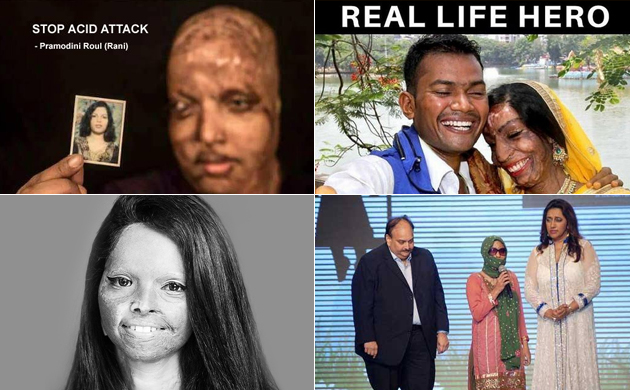
Her name is Lakshmi Agarwal , she was attacked at the age of 15 in 2005 in New Delhi after rejecting the romantic advances of Naeem Khan . She didn’t inform anyone about the scenario because she believed her parents and society would have blamed her and stopped her study .

After 10 months , Lakshmi was in the market and Naeem asked her again through message about the marriage proposal but she didn’t respond . And in no time , Kamran (Naeem’s older brother ) and his girlfriend attacked her with acid . He was in the motorcycle and his girlfriend Rakhi threw acid on Lakshmi , when Kamran called her name and she looked behind for response.

She fainted on the road and when she regain consciousness she went middle of the road asked for help and met with multiple accidents but no one stopped to help her . She was burning in fire and her skin was melting.

A man named Arun Singh called PCR and told police about the situation . Someone threw water to help her but it turned out opposite and the acid burnt her neck . Arun think it might be late , so he helped her on the backseat of his car , later the seat cover turned into black hole due to the acid .

Arun admitted her in the hospital , called police and her family . Lakshmi went through many surgeries and operations including eye surgery. Four days later Naeem Khan got arrested but was bailed after a month later .

Protests and media attention.

After many protests and media attention Naeem got life imprisonment .

Lakshmi’s story was one of the series in the Hindustan Times. Lakshmi was scared after the attack because most of her face and body parts were not same as before . But she didn’t loose hope ,she fought for justice , asked for help for the victims of acid attacks and pleaded the law for the ban on sale of acid.

Meanwhile government failed to frame policies on acid sale and chemical attacks .

Seriousness is not seen on the part of the government in handling the issue,” the bench headed by Justice RM Lodha.

In 2013 , the plea of Agarwal was heard and later claims that “ Acid is freely available in shops. Our own volunteers have gone and purchased acid easily. In fact, I have myself purchased acid,” she said. “We have launched a new initiative called ‘Shoot Acid’.

After , the law passed by Supreme court . Lakshmi founded NGO named Chhanv Foundation to help acid attack survivors in India.

In 2019, she was honored with the International Women Empowerment Award from the Ministry of Women and Child Development, the Ministry of Drinking Water and Sanitation and UNICEF for her campaign of Stop Acid Sale. In 2014, she received the International Women of Courage award at the hands of First Lady Michelle Obama.

And the movie Chhapaak is based on her life and stars Deepika Padukone in her role.

“And one day she discovered that she was fierce, and strong, and full of fire, and that not even she could hold herself back because her passion burned brighter than her fears.”

– Mark Anthony

Link
The Private-Public Distinction: Through a Feminist Lens:

From the beginning to this day, women have always been oppressed be it by men in their family or by the state that was and is still highly patriarchal. Earlier, the private (households) and the public (political, business world) were strictly kept separate. State had no roles in what was happening in the private sphere. And the major factor of this separation was that public was controlled by males and private appeared to be in control of females.

The separation between private (home) and public (work) made a significant difference in the lives of males and females, and of course, it was negative for women. For example, males were expected to work out and hence they dominated the outside world while females were expected to stay at home and decide the household decisions and thus they happened to be the controllers of the households.
However, the above situation was far away from reality. In most cases, as public was controlled by males it used to have a direct influence on the private sphere. And therefore, the then feminists and scholars labelled this distinction as baseless and started demanding for political rights of females like voting rights, reproductive rights and like. It was through the second wave of feminism in 1960s, feminists began to bring up more such marginalised communities and issues into the picture.

Earlier only a “white heterosexual male” normative was followed in the world and especially in western civilisations.
Feminists have rejected the public-private boundary as an acceptable rationale for legal action or inaction. A feminist argument is that such a separation disadvantages women of their rights and advantages privileged groups like white heterosexual males.

Three major arguments that were brought by feminists which aimed to challenge the public-private distinction are, first,
politics and society, both had ignored the domestic sphere, second, public-private distinction is deeply gendered and
sexist as its assigns roles to people based on their biological characteristics and because of this women become the most affected underprivileged group, third, calling “family” a
private sphere was an attempt to hide domination and abuse in the relationships in families from legal discourse.

To put an end to all of this ignorance, women activists fought against the injustices and demanded the states to intervene in household matters like laws against domestic violence, divorce rights to women, abortion rights and other rights to choose. Along with these domestic protection rights, many other rights on the public sphere were also demanded.

Feminists from the second feminist wave asked for equal representation in politics, law-making and other decision making procedures which were of both public and private significance.

Examples:

1) Paid Work:

Even though working environment has
changed nowadays as compared to earlier times, females suffer from hard labour but less payment. From corporate houses to films and television everywhere females are paid less than their male counterparts even though all of them do the same work. At times, female actors do more work as they have dance sequences in addition in the movies but still get paid less for the work. This has witnessed a change in recent times where female actors have begun to charge lump sum amount.

2) Patriarchal State:

States can be extremely patriarchal to
women in terms of legal and political rights. This can happen in two ways- one by creating patriarchal and misogynist laws for women, two by not doing anything progressive for women (because not interfering into women’s rights is also equal to creating misogynist laws for women). Over the past few decades, this has also witnessed a change where we have seen governments making women friendly laws like reservations and special commissions for women or anti dowry and anti-domestic violence rights.

3) Male Violence:

This can mean anything that happens both in public and private sphere. Sexual harassment at workplaces is at peak all over the world. Thanks to social activists and NGOs in India who all fought for implementation of sexual harassment act back in 1990s when a social worker was brutally sexually assaulted for stopping a child marriage in the Indian state of Rajasthan.

At the end, we all as a society collectively need to understand that opposite of patriarchy is gender equality, that is, feminism, nothing else.

SOME ATTRACTIONS OF ISTANBUL-TURKEY

The incredible Istanbul

Istanbul is the main attraction of Turkey. Istanbul is the center of this country for its culture,economic status and history. Also Istanbul is the capital city. According to history , in 657 BCE , Istanbul was founded as Byzantion by Megarian colonists. Later it became Istanbul .

Galata tower

Istanbul is a country which is covered by empires across the centuries and stands in both Europe and Asia. It is one of the most popular travel spots in the World. Some popular and attractive tourist spots are- Aya Sophia, Topkapi Palace, Basilica Cistern, Blue Mosque,Istanbul Archaeology Museum, Hippodrome,Süleymaniye Mosque,Grand Bazaar,Spice Bazaar,Chora Church,Dolmabahçe Palace,Little Aya Sofya,Museum of Turkish and Islamic Arts,Rüstem Pasa Mosque,Yedikule Fortress,Galata Tower,Carpet Museum,Fatih Mosque,Pera Museum,Istiklal Caddesi and Taksim,Üsküdar and most popular Cappadocia hot balloon.

Let’s be introduce with some of them-

Aya Sofya or Hagia Sophia

Aya Sofya or Hagia Sophia

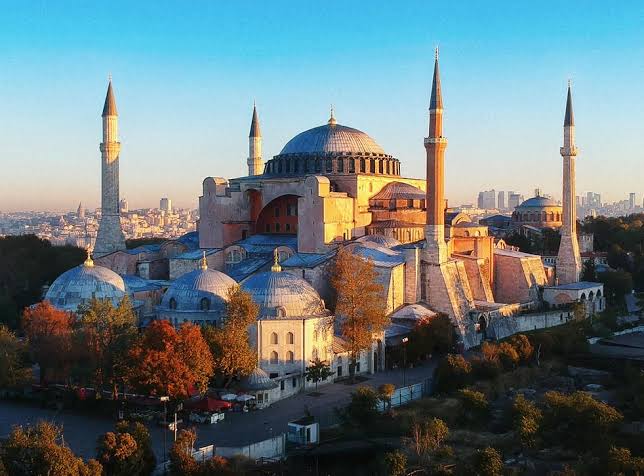
According to history in AD 536, for the 1st time  when the Byzantine Emperor Justinian entered his finished church, he cried out “Glory to God that I have been judged worthy of such a work. Oh Solomon, I have outdone you!” Aya Sofya or Hagia Sophia means ‘holy wisdom’. It is a domed monument of Constantinople (6th century AD). It was the emperor’s swaggering statement to the world of the wealth and technical ability of his empire. Tradition maintained that the area surrounding the emperor’s throne within the church was the official center of the world.

 Topkapi Palace 

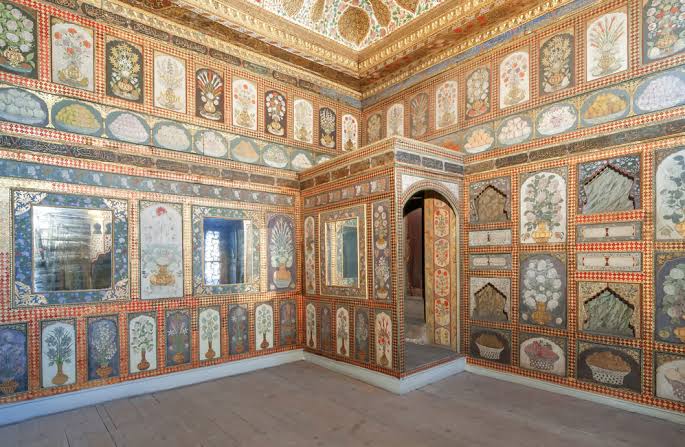
The Topkapi Palace is a large museum in the east of the Fatih district of Istanbul in Turkey, there are the imperial collections of the Ottoman Empire and maintains an extensive collection of books and manuscripts in its library.

Topkapi Palace

The Blue Mosquewhich

The Blue Mosquewhich

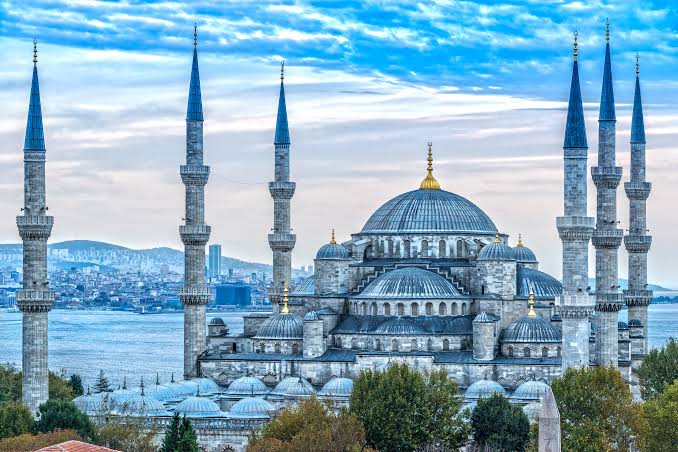
The Blue Mosquewhich is called Sultanahmet Camii in Turkish is an historical mosque in Istanbul .For the blue tiles surrounding the wall  it is known as Blue Mosque. It was situated between 1609 and 1616 years, like many other mosques, it also comprises a tomb of the founder, a madrasa and a hospice.

The Basilica Cistern

The Basilica Cistern

The Basilica Cistern is the largest among the ancient cisterns beneath the city which provided a water filtration system for the nearby buildings. This underground chamber measures approximately 138 meters (453 ft) by 64.6 meters (212 ft) and is capable of holding 80,000 cubic meters (2,800,000 cu ft) of water. The ceiling is supported by 336 marble columns.

The Hippodrome

The Hippodrome

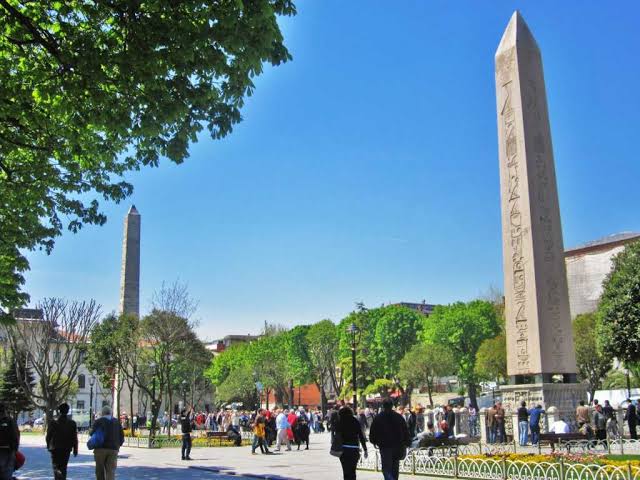
The Hippodrome’s name comes from Greek word hippos(horse) and dromos(course). It was an ancient Greek stadium for horse racing and chariot racing. But in present day  there isn’t much of the Hippodrome left to see, except for a small section of the gallery walls on the southern side, but the At Meydani (park), which now stands on the site, is home to a variety of monuments.

Archaeology Museum

Archaeology Museum

The Istanbul Archaeology Museums are a group of three archaeological museums which are  located in the Eminönü quarter of Istanbul, Turkey, near Gülhane Park and Topkapı Palace. The three museums are- in the main building the Archaeological museum, Museums of the Ancient Orient and Museum of Islamic Art.

Grand Bazaar

Grand Bazaar

In Istanbul, the Grand Bazaar is one of the largest and oldest covered markets in the world. It has a total area of 30,700 m2. There are 61 covered streets and over 4,000 shops attracting between 250,000 and 400,000 visitors daily.

The Süleymaniye Camii 

The Süleymaniye Camii

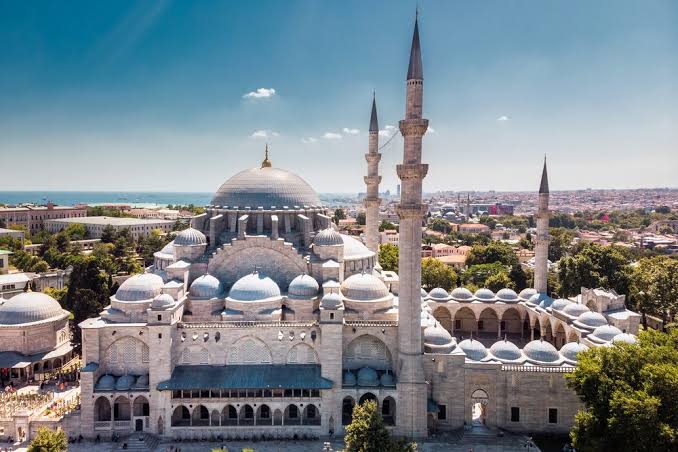
The Süleymaniye Camii (Suleymaniye Mosque) is one of its most distinctive features with its truly staggering size which was built by the legendary architect, Mimar Sinan, it is one of his masterpieces and his largest design. It is not only the inspiring size that is impressive (the central dome stands 47m high), but also the elegantly decorated interior.  The sense of space and light is emphasized by the supporting semi-domes to the northwest and southeast and the monumental arched spaces to the southwest and northeast.

The Spice Bazaar 

The Spice Bazaar 

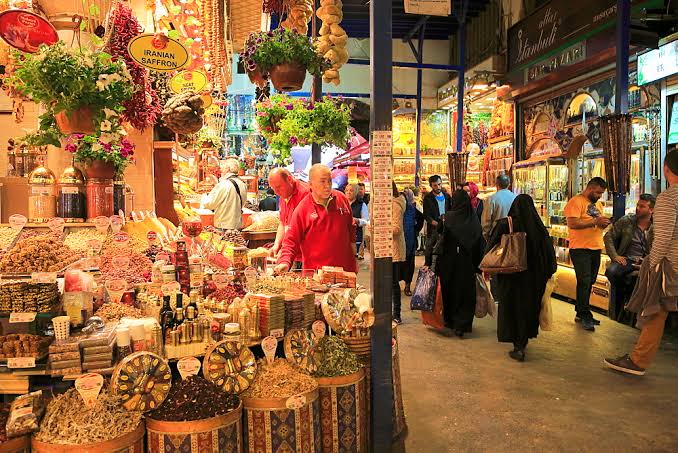
The Spice Bazaar  is one of the largest bazaars in this city. Located in the Eminönü quarter of the Fatih district, it is the most famous covered shopping complex after the Grand Bazaar.

Cappadocia

Cappadocia the hot balloons

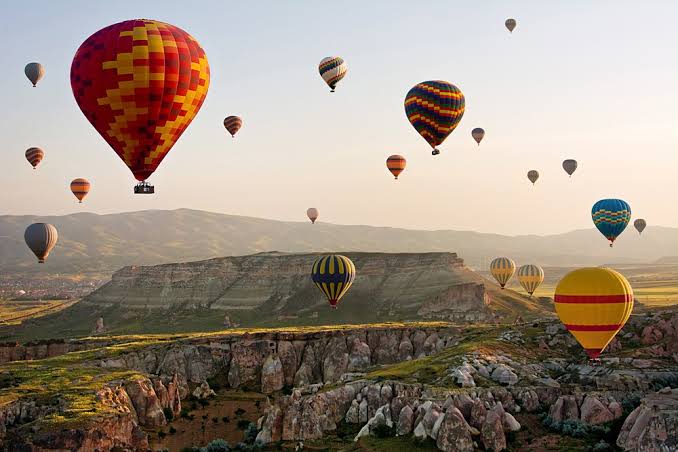
Cappadocia is  in central Anatolia, in the heartland of what is now Turkey.The area is popular for the hot balloon ride. As it has many areas with unique geological, historic, and cultural features.Hot-air ballooning is very popular in Cappadocia and is available in Göreme. Trekking is enjoyed in Ihlara Valley, Monastery Valley (Guzelyurt), Ürgüp and Göreme.

So we must say Istanbul is incredible.

International day of Tropics

The serenity of the lulling ocean is a wondrous thing to behold..more precious than the gems coveted and covered in platinum or gold…

Oksana Rus

Introduction

International day of Tropics is observed every year on June 29th . This day is celebrated to highlight the different challenges and opportunities faced by the nation as well as by the people who lived in tropical areas .

Firstly , you want to know about things like :

What are tropics ?

Why we celebrate international day of Tropics ?

Or

Is it worth it to talk about these things and is it really important ?

Well hold your horses and try to calm .

What is tropic day and why we celebrate it ?

Well a tropic day is celebrated to highlight the importance of Tropics , it signifies extraordinary and astounding diversity of tropical nations .

The Tropic defined as a area /region between tropic of Cancer and tropic of Capricorn . The day aim at promoting tropical regions and awareness to the people about the diversity of these regions .

While these regions go through little seasonal changes on day to day basis because of some factors like tomography , climatic variation that causes changes in temperature and make these regions warm.

This day introduced to the world when in June 29th , 2014 twelve leading tropical research institutes come together and collaborate. The inaugural state of the Tropics report was launched . The report offers some unique perspective for the increasing the importance of these regions .

United Nations General Assembly adopted resolution A/RES/70/267 in 2016, which declared that 29 June of each year is to be observed as the International Day of the Tropics.

The International day of Tropics briefly explained the issues affecting the tropical zone’s all over the world. To raise awareness and important role the countries played to Sustainable goals .

International day of Tropics 2021

As per the state tropics report the theme of this year is “ THE DIGITAL DIVIDE IN THE TROPICS ”

With the record of sustainable development goals as well as developmental scope . The biodiversity of these regions are maximum and its loss is also greater there. Tropical regions comprise 98% world’s mangrove forests, and around 99% mangrove species.

Due to the subpolar zone the Sun is directly overhead which is one of the region of extinction of flora and fauna in the Tropics. The region is subjected to myriad and need immediate attention to ensure sustainable development.

More than 50% of renewable water resource could be founded their. But the threat lies which causes eviction of lives in the Tropics.

Importance :

Due to the problems it’s our duty as a human being to spread awareness about the implications in climate changes , deforestation , urbanization , global warming effect the biodiversity and lives in Tropics.

The International day of Tropics organize many events in which people share their stories , events and lives in these areas and formulate strategies to ensure the development of such regions .

You who sacrifice fortunes to see the luxuriance of the tropics or the polar lights of the arctic, must pay more dearly to see the One for whom the luxuriance of the tropics is poverty and the polar lights are a tallow candle.

Nikolaj Velimirović, Prayers by the Lake

Link:

TERRACOTTA- LET’S COLLECT KNOWLEDGE ABOUT IT

Sparkle of Terracotta

TERRACOTTA- AN UNIQUE STYLE OF ART

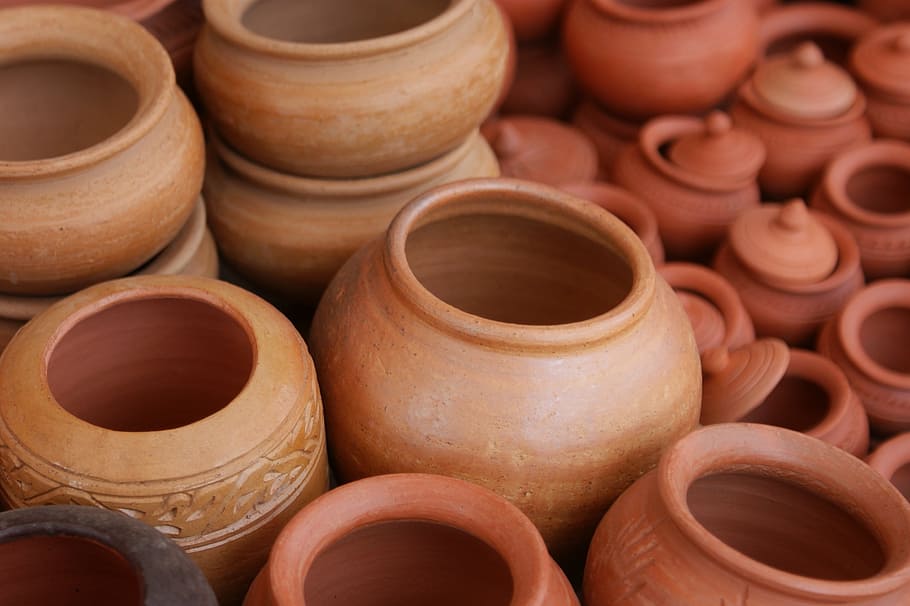
According to the dictionary the Terracotta art means hard,fired clay,brownish in colour when unglazed which is used to make architectural ornaments and facings, structural units, pottery and as a material for sculpture. The word ‘Terracotta’ came from Latin word ‘Terra-cotta’ and in Italian language Terrakotta means ‘baked-earth’.  

 Basically Terracotta is a type of earthenware or Ceramic pottery. At 1st we should have enough knowledge about earthenware. Earthenware is glazed or unglazed non-vitreous pottery which is made on fire below 1,200°C (2,190°F). So what do you say ? ‘baked-earth’ makes sense right? 

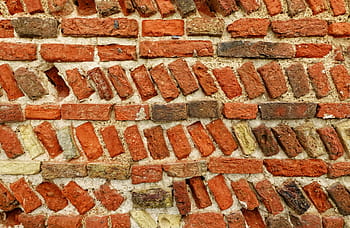
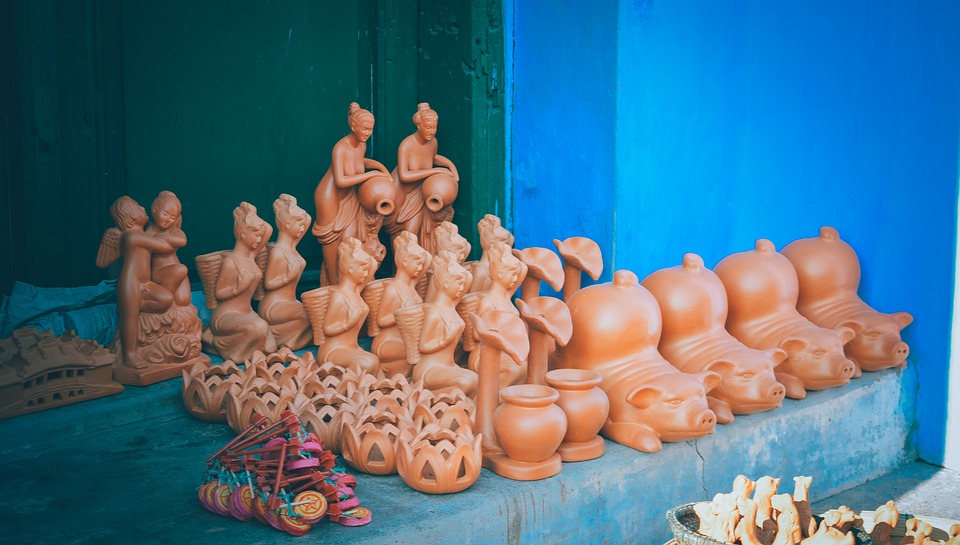
Normally Terracotta is used for sculpture making. But not only for sculpture but also for flower vas, doll,pot,water pipes, bricks,roofing tiles etc. Even there are also many temples of Terracotta. It is too flexible material for sculpture.Terracotta is usually a fairly coarse, porous type of clay. At first it has to be shaped then fired until hard. In the past, it was left to harden in the hot sun ,after that it was baked in primitive ovens. Ultimately, it was fired (at about 1000°C) in a special oven, kilns. After baking the clay became a brownish colour. Until it was glazed it was not watertight.terracotta is too simple than other bronze or other material work. 

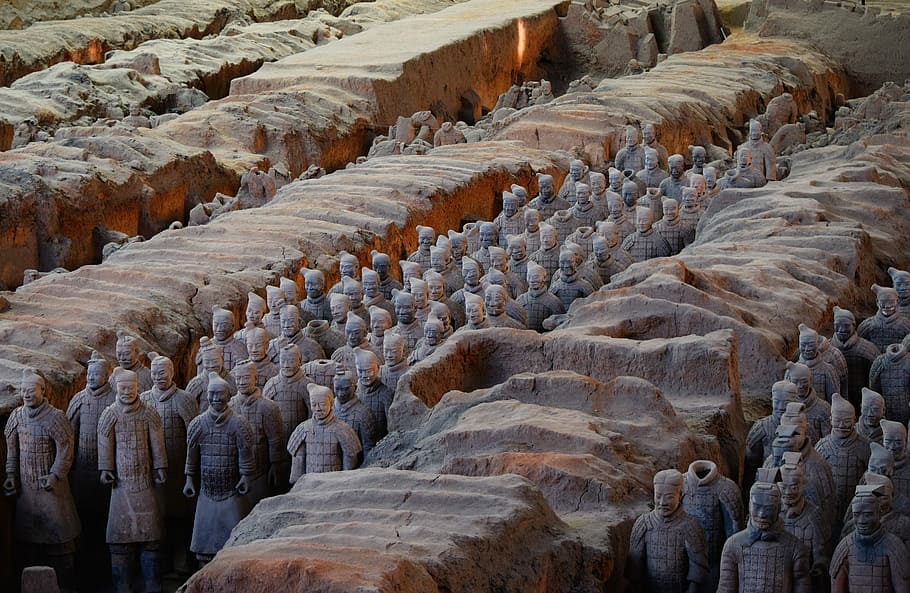
It was 1st used in Prehistoric art according to Venus of Dolni Vestonice (26,000-24,000 BCE) which was found buried in a layer of ash in Moravia at a paleolithic encampment. Some famous Terracotta figures are- The Thinker of Cernavoda(5000 BCE), The Enthroned Goddess Figurine(6000 BCE).Bronze and Iron Age artists kept the culture of the terracotta tradition, like the female fertility cult figures unearthed at Mohenjo-daro in Pakistan (3000-1500 BCE), and The Burney Relief (1950 BCE) from Ancient Mesopotamia. On the other hand we must say Chinese art created the biggest example of Terracotta art, those are-The Terracotta Army (246-208 BCE). Around the Mediterranean,such as early Egyptian, Minoan, Mycenaean, Greek and Etruscan cultures, employed terracotta for figurative works – such as the Tanagra Figurines from Boeotia in central Greece – besides  decorative art and architectural ornamentation.Particularly in the era of Hellenistic art (323-30 BCE) it was widely used by sculptors. It was also used in Early Christian art, for tomb reliefs (from c.200 CE). Terracotta is also famous in African sculpture, pre-Columbian art.

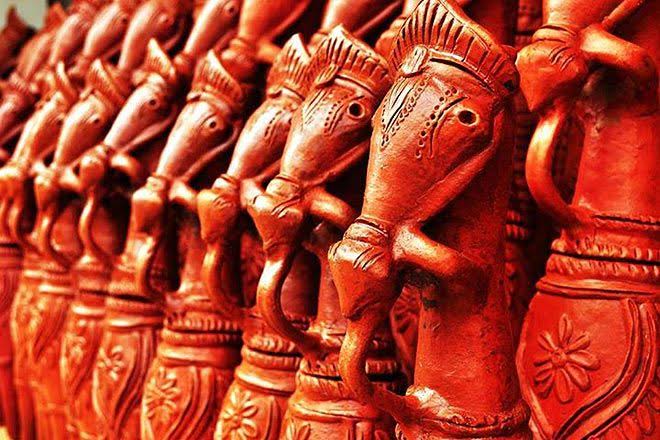
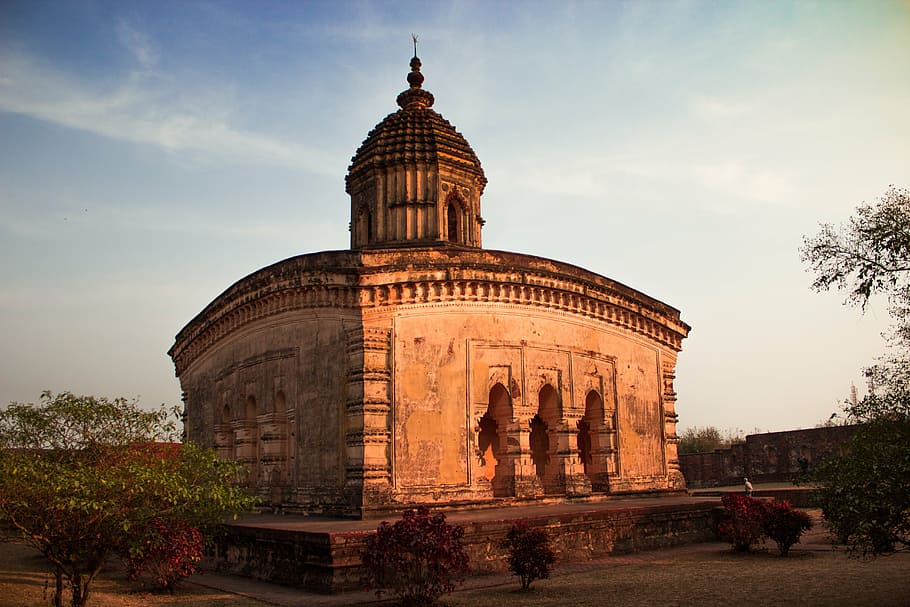
In India Terracotta is famous in the same way as in the past. In India Terracotta is a heritage culture. It is very common that there are many things of terracotta at most homes in India. ‘Bishnupur’ in West Bengal is a great source of Terracotta sculptures or other things. Murshidabad, Birbhum, Jessore, Digha (all are in West Bengal)  are also the treasure of Terracotta. There are also famous in Rajasthan, Bihar, Haryana, Himachal Pradesh, Odisha, Jammu and Kashmir etc.