Resting the body from exertionby the medicine of Sleeping

Article by – Shishir Tripathi

Intern at Hariyali Foundation
In collaboration with
Educational News

In the present world where everyone is running all the day and even night too, it is highly important to have a proper sleep schedule so that the body and the brain relaxes when the tiring day of an individual ends. Not only people working in offices, but also the women at home require rest after the tiring day doing all types of house chores. Kids in the family too need rest after playing all day.

Many working people who sit the entire day in front of computer/laptop screens, mobile phones/tablets, need rest after time to time. Doctors advise that doing eye exercises and yoga for people whose eyes are exposed to electronic screens for the entire day. In big offices, there are separate areas for relaxing after the office work ends or in between too.

The human body is not a machine to be taken work all the day and expecting the machine to do more work the next day that too at a faster speed and more energy.

Students these days are attending online classes all day long sitting in front of mobile phone or laptops. Continuous screen exposure is really very harmful for the eyes, for the spine and can cause severe headache and pain. Not only classes, children but the entire youth is continuously online on social media for hours with all the recent updates. Continuous usage of phone and electronic devices may ruin the sleep schedule and will cause disruption in the normal sleeping process. Many people come to the doctor, complaining that they want to sleep at night when they are in bed but couldn’t. Many psychological disorders and other physical disorders and abnormalities are harming the normal, regular sleep schedule of the person.

Women too doing all the kitchen chores and other chores including cleaning, dusting, washing and the endless work at home face regular ache in the body and if not treated at time can cause internal injuries in bones and severe pain that can last for the rest life. Women at home should take rest time-to-time so that any physical ache and headache should not trouble them any day.

People do different work and have different sort of lifestyles but the one most common way of resting the brain and the body is ‘Sleep’. Many people argue that we feel by sharing updates on our social media handles or by playing any game or by following a certain hobby, but the most appropriate way of resting is sleeping after a tiring day. If one requires, he or she can have short naps in their offices in between the work. But only short naps won’t work. An adequate sleep in bed is so important for proper working of the human body and its internal organs/glands too. When a person sleeps, his body is involved in healing and repairing of heart and blood vessels and sleep reduces the risk of heart disease, kidney disease, blood pressure and stroke. Sleeping and relaxing the body will help the person wake up with more energy and a joyful and calm mood too.

Many so called health conscious people say that one must not sleep in afternoon; otherwise they’ll not be able to sleep at night. It is true to some extent but not entirely correct for all the people. It is the basic fundamental of every machine that if one want more work from it then surely extra rest and extra care is required. If that extra care and attention is not given to a machine, it will be surely going to collapse one day. This was just an example to understand that if a person is doing more of physical and mental work all day, then he or she needs proportionate rest too at the end of the day to release all the exertion of the day.

Experts say that 6-8 hours of sleep is required by the human body. But actually it is up to the person that how much he or she is tired, how much physical or mental exertion he or she is exposed to? It is purely a person’s own choice to sleep as per his awareness and benefits of sleep and his exertion from work.
The best way to sleep is either sleeping on the back with straight body and facing up towards the ceiling or sleeping towards the left side. Moreover sleeping towards the life side is considered good because it helps the body to clear intestinal waste from the brain and reduces the risk of developing Alzheimer’s, Parkinson’s and other neurological diseases.

So these were the benefits of taking rest and sleeping but still for the people who sleep a lot, there are disadvantages too. For people who are the least tired and sleep a lot (oversleeping basically) it can cause problems like obesity, heart disease, diabetes, increased pain and inflammation, cognitive impairment, impaired fertility, depression etc.

Therefore, one must take rest as per he or she takes work from his or her body and at the same time oversleeping and resting without doing anything will even cause severe problems.


So have adequate rest and work with full enthusiasm and energy.
A Restless Mind.

A mind which is not stable. When there lots of thoughts keep running in your mind and cannot find any answer to the question. Then, that is called a restless mind. Basically, it is nothing more then a mind that is always insecure about there decision.

Hey there, today I’m going to talk about the most ignored problem of the time. People think it is mind, so, it doesn’t need to be settled. It should be running all the time. Yeah! I don’t totally disagree with them but there should be some limitations for self. Just like excessive use of something is always harmful.

Like for an example, when you want something to happen, you also think about or guess the consequences that might happen, if things doesn’t happen in the same way you thought. And now you are stuck. Whatever you do, you will be having a backup thought about every thing. Like, I’m having a thought for writing this and on the same time I’m questioning myself “Am I writing correctly”.

Many says that this is over thinking. Then let me just tell you something, even planning is also an over thinking or deciding anything is over thinking because, then why you have to decide, when everything is already been decided, right?.  And now a days over thinking is not discussed as a problem, it is shifted or got dragged into “Being cool” stuffs. Like if you throw a stone on anyone in a crowd, hey/she will say they do over thinking. Come on its not over thinking, it is the only way our mind works. Like when you go for a trip you think about the pros and cons and the ways of dealing them. Where to stay, where to eat, where to roam, before packing your stuff. So, what is that, over thinking or planning? For some of you it may be a planning but for other or for most of them it is over thinking and they are fed up with.

But, a restless mind is all about that mind who not think about the consequences because of Being to restless to decide. Yeah! This brings the problem of anxiety, self doubting, creating chaos outside, unhappiness and many more. And there can be a lot of problems for that, but, for now it’s your mobile, probably on which you are reading this. Now, it is more then a source of entertainment for you. You literally depend on it. Like, if you got your mood off you want songs or videos to deal with it.

So, how can we deal with it? What can be best measure for it? Frankly, I don’t know. I’m also finding an answer for it. I just wanted to raise a question infront of you, just to make you aware that there are these questions which needs to answered.

Although, Everybody has there different answer, but, every answers will come to same place. Like, for me is staying away from social media for a bit everyday. I need this to be in my habit so that I can focus on my decision or restlessness.

Tell me your ways to deal with this in the comment section below. Till then have a great day and try to think about it, seriously.

See yaa..

Youth and Mental Health!…

We follow a typical pattern while growing up a girl child or a boy child. When a boy becomes a man, he is supposed to take up all the responsibilities and earn money. When a girl grows up, she is supposed to complete the education and get married. So we all live and apply this ancient but not practical philosophy.
When a boy grows up, there might be a possibility that he wants to study more or explore his hobby or do some social work. When it’s about a girl, then also it’s possible that she wants to make time for her career first and be independent. But we as a society never go this way. We keep on burdening kids since childhood with this typical philosophy. In a way, we snatch away things they really want to do. We even forget that humans work better in a job they love to do.
When they do some other task or life event, this frustration keeps on building up. Always remember frustration is nothing but the beginning of the depression. The youth can do wonders for the nation but are in the place not of their choice. I know money is important, marriage is important but not more than life. People harm themselves not to get married or forced for some work. We hear this every day. But this stereotype makes us ignore mental health. We only focus on pointing out the age and social or economical status. Look he’s 25, still earns nothing, look she’s 25, yet not married. But who are we to judge anyone. It’s totally their personal choice what they want to do and at what age. Even families fear of what people will say and keep poking their kids for career or a marriage. Few take it in a casual way but there are many who fall prey to depression in all this. Expectations, demand vs the failures, such battle begins. With each failure, a person moves deeper into the valley of depression. The feeling that I’m not good enough comes in to add more into it.
Every human takes birth for some reason. Everyone is one of a kind. God never creates garbage. So instead of putting someone under the burden of expectations, we can help them. A man or woman herself should understand what’s good or bad for her. This generation is extra sensitive, they go deep inside everything. They also need to change their attitude handling failures. Failures, criticism, taunts are a part of life and a license to grow. Keep them at their places and focus on your work. Don’t let it eat your head. Work hard, take a stand for yourself, be brave, be confident and everything will fall at its place. Always remember worrying or crying can’t ever be the solution. Life can never be a smooth road, there will be ups and downs for sure and these ups and downs only make it interesting otherwise a flat line doesn’t mean human alive.

Organic Farming: Beneficial for the farmers,For the ConsumersAnd to the Nature

Article by – Shishir Tripathi

Intern at Hariyali Foundation
In collaboration with
Educational News

In the present times with new inventions in the field of chemicals and agriculture various fertilizers have been invented and are sold to the farmers to be used in farms. Farmers use those fertilizers and get higher yields in the starting one or two years but after some years the fertility of the soil starts falling. At the end, the farmland needs more and more fertilizers and failing to provide fertilizers in high amount to the soil, the fields are left uncultivated and hence the lands turns barren.

But wait!, in this world of new scientific inventions, some people have found a new technique which will help the soil regain its lost fertility and stay fertile for some more years. Yes, the technique is Organic Farming. Though the name sounds somewhat scientific, in actual it is scientific but will not at all harm the soil but will maintain its fertility for many years.

Organic farming is an integrated farming system that strives for sustainability, the enhancement of soil fertility and biological diversity while prohibiting synthetic pesticides and antibiotics, synthetic fertilizers genetically modified organisms and other unnatural methods of growth.

When talking about fields or farms, growing different cops on the same farm at the same time will help the soil to have a balance of nutrients otherwise it happens that certain crops consume more nutrients from the soil and there are lesser nutrients for the crop grown in the other season. This method of farming different crops is known as polyculture. Planting a variety of vegetable crops supports a wider range of beneficial insects, soil microorganisms, and other factors that add up to overall farm health. Crop diversity helps environments thrive and protects species from going extinct.

Secondly, the organic farming is concerned with management o soil. The soil loses nutrients each time a crop is grown on it, so for regaining those nutrients, compost, vermicompost and green manure can be used. These are environment friendly techniques having good impact on the soil for years. Also other techniques like crop rotation, crop covering, reduced tillage; intercropping and other similar techniques are needed to be followed for increasing the productivity of soil. Also crop residues can be ploughed once again with soil and will work as manure.

Thirdly, weed management on the fields is equally important. Weeds are those unwanted plants that consume nutrients from the soil and affect the growth of the crops. Removal of weeds from the fields is important so that the crop grown can grow in the soil without any hindrance in the process of consuming nutrients by unwanted plants of the other types. Weeds can be removed by introducing animals who do not consume the crop grown and just consume the weeds. Techniques like Mulching, flame weeding, thermal weeding, mowing and cutting, etc could be used for removal of weeds from the fields.

There are different factors other than weeds that affect the natural crop growth on farms like nematodes, fungi, bacteria, rodents, pests, etc. there are certain methods to remove such factors from the soil like introduction of beneficial insects for the soil against the harmful insects, using insect traps for capturing rodents, introducing good microorganisms for the soil, rotation of crops every season or using natural insecticides and herbicides.

Introduction of livestock onto the fields and providing them natural conditions to feed there and coming back again to their shelters in the evening. This nothing new but an old technique that was used by people in the past times as people had other work to do, they used to drop the cattle at the fields and go for other work. Also, before leaving the fields entirely for the cattle it must be ensured that whatever the cattle is eating it should be organic in nature, nothing else otherwise that will harm their health and overgrazing is also not done by the cattle.

And lastly composting is to be done by the farmers so that the crop gets its nutrients from time to time. Vegetable wastes, unwanted weeds removed from the fields and other dried leaves and the crop residuals are needed to be buried down in a pit and earthworms and red worms are introduced to decay it and these residual materials along with worms is covered by soil. The compost gets ready after three or four months and is very beneficial to the soil. Even some farmers call it as ‘Black Gold’.

In such way organic farming is done by the farmers along with keeping the livestock at the farms and exposing the fields entirely to the natural techniques that are important for the crop growth and helpful in maintaining the soil fertility. The crops, vegetable and the other products are really nutritious for human health. Therefore, people prefer Organic foods these days and the farmers too can get good amount for their produce.


All in all organic farming is really productive technique for the crops and the farms, a way of earning good income to the farmers and the only way for the consumers get naturally produced and nutritious foods.

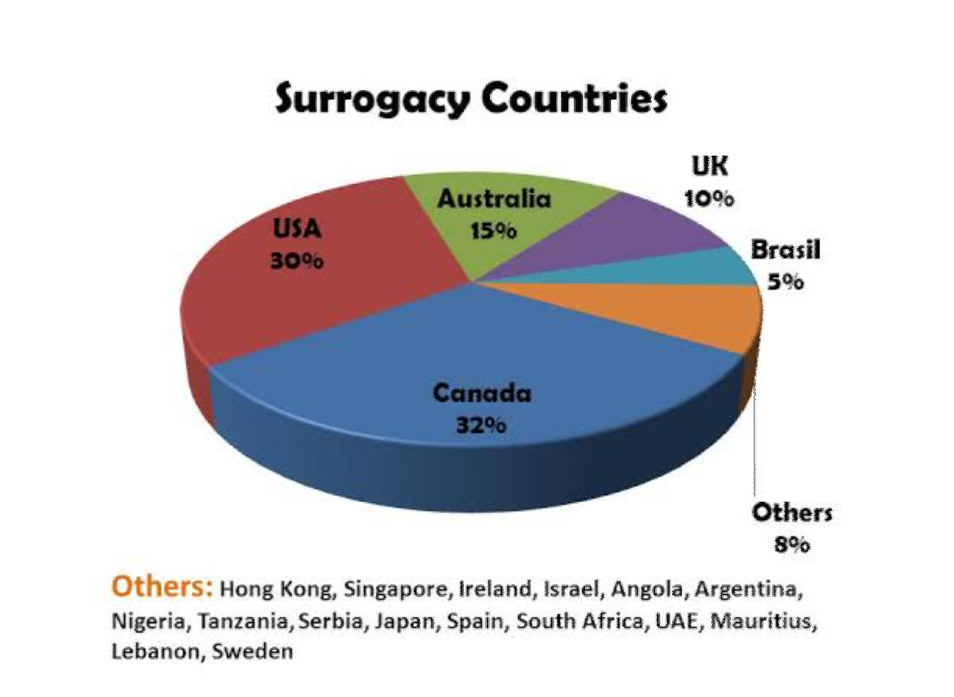
Should commercial surrogacy be banned in India?

Commercial surrogacy is the process by which an individual or couple pays a fee to a woman in exchange for her carrying and delivering a baby. At birth the child, homo-sexual couples, and single people who wish to be parents are the most common types of people who seek surrogate mothers.

Commercial surrogacy has been legal in India from 2002 onwards but due to unethical practices, a bill has been approved by the Union Cabinet in August 2016. This one lapsed when Parliament adjourned without taking the measure for a vote.

The new proposal came in 2019 that is to ban commercial surrogacy. The Indian minister of health has called the 2019 bill a “need of the hour” citing a rough estimate that between 2000 to 3000 unregulated clinics currently operate in the country. Under the new law anyone who performs or promotes this would be punished with up to 10 year of imprisonment and a fine up to one million rupees. The surrogacy bill’s provision restricting surrogacy to married heterosexual couples within strict age ranges also discriminates against members of L G B T community, older couples and unmarried people who might seek to have a child. The bill goes against the principles of equality provided under Article 14 of the Indian constitution.

Regulation, not ban, is needed. The commercial surrogacy in India needs a regulation and stricter rules that could ensure good care and pay to the woman alone and not agents or others. Good clinical facilities for the surrogate mother and a healthy environment where she could stay safely before and after delivery could lessen exploitation. There is no provision in the law about the custody of the child if the couple later refuse to accept it if the child is mentally challenged or born with a defect. People who hire surrogates have a need to do so due to medical reasons. It is not their choice. Regulation on this practice is very much needed and must be done to close loopholes due to which exploitation of surrogate mothers is taking place.

Indian society is yet to progress so much as to accept surrogate motherhood. The woman who rents her womb even if for the cause of humanity towards an unfortunate couple will never be accepted in society when she goes back to her normal life. People will look down on her and she may probably not be able to find a husband, if she was unmarried at the time of surrogacy. We need to be broad-minded and accept these women and respect their choice of renting their wombs.

Giving women a safe and free environment for surrogacy can help in curbing the evils attached and the industry could do well along with giving good money to such poor women so that they can make their lives better as well as give prosperity to their families.

Thank you for reading. Have a nice day!

Yoga : Morning breakfast and Evening supper to the Body and the Soul

Article by – Shishir Tripathi

Intern at Hariyali Foundation
In collaboration with
Educational News

In the present times, everyone is just running all the time. Whether the person works in an office, or he or she is a home maker or a student too, everyone is so busy in their daily schedule that hardly few people extract time for their physical and mental self. Along with advancements in the field of technology, there are advancements in the diseases too. New diseases are taking birth and troubling the humans.


Individuals post on social media and say ‘Back to Basics’, without even knowing its true meaning. People think that being back to basics means that living a life in a remote area and eating the forest products. But returning to basics in true sense means living in the same surroundings and adopting the good techniques in life to make it disease free and simple too.


For the Indian people, from the ancient times ‘Yoga’ was a very good way to explore the inner self and finding peace of mind. But, the mentality of the people is just going to an air conditioned gym and spending huge amount of money on gym and the protein supplements. Whereas, Yoga is such a simpler exercise that anyone can do it at their place just with a mat beneath them and some time.


Yoga evolves from the Yoga Sutras which were written by Patanjali. Patanjali was a sage in India who is the author of many Sanskrit works including the most important, The Yoga Sutras. The Yoga Sutras of Patanjali are a collection of 196 Sanskrit sutras (aphorisms) on the theory and practice of Yoga. The Yoga Sutras were compiled sometime between 500 BCE and 400 CE by Patanjali in India who synthesized and organized knowledge about yoga from much older traditions.


Swami Vivekananda was the first person to promote and encourage Yoga at the global level. He published a book called ‘Raja Yoga’ in America in 1985 where he wrote about the productivity and the benefits of yoga for an individual. He took references from the Patanjali Yoga Sutras and told the world about the physical, mental and spiritual influence of Yoga in an individual’s life.


Doing Yoga practices early in the morning at the time of sunrise or after it and in the evening too is so beneficial for the body. Asanas in Yoga helps to cure Vata, Pitta and Kapha defects of the Human body. In the physical body, Vata is the subtle energy of movement, Pitta the energy of digestion and metabolism, and Kapha the energy that forms the body’s structure.
The most beneficial Yoga Asana is the Surya Namaskar (Sun Salutation). Under this asana, different other asanas like Pranamasana, Hasta Uttanasana, Hasta Padasana, Ashwa Sanchalanasa, Chaturanga Dandasana, Ashtanga Namaskara, and Bhujangasana. Various other Asana in yoga like Kapaalbhati, Anulom-Vilom, Brahmari,etc which are so helpful for the body.


There are various videos of Yoga teachers teaching Yoga Asanas on Youtube and there are students too pursuing graduation and post graduation in yoga who teach it to others around them. Practicing Yoga and doing it daily afterwards all by self will help an individual to get rid of different types of physical and mental disorders. There is OM chanting too in which the Yogi (person doing Yoga) chants OM, in which there is a practice of breathing along with acquiring spiritual peace at the same time.


At present, the most influential promoter and the best instructor of Yoga is Swami Ramdev. Swami Ramdev is instructing people Yoga in India and all across the globe since 2002. He is the co-founder of the Patanjali brand producing different Ayurvedic products that are useful for the Human body.


Yoga is being practiced by children right from the age of 3, and also by the elderly people of age 65-70 and even more. It is a symbol of Indian culture as it evolved from India. Indians should necessarily know that what Yoga is and how it is performed. It is the reason behind the sharp mind and a healthy body. Not only children, middle aged people and elderly people but the younger generation which is contributing each day a lot in the economy, should practice Yoga each day so that they can tell this precious art to the future generations.

For a sound body, sound mind and a sound nation, Yoga is the only solution”

It’s Alzheimer’s Month

Dementia is an umbrella term for several diseases affecting memory, other cognitive abilities, and behavior that interfere significantly with someone’s ability to maintain their activities of daily living. These functions include memory, language skills, visual perception, problem-solving, self-management, and the ability to focus and pay attention. Some people with dementia cannot control their emotions, and their personalities may change. Dementia ranges in severity from the mildest stage, when it is just beginning to affect a person’s functioning, to the most severe stage, when the person must depend completely on others for basic activities of living. Although age is the most known risk factor for dementia, it is not a normal part of aging.

Fifty million people worldwide currently live with dementia, a condition that causes significant psychological burden as well as social and financial distress to those living with it, their carers, and families. There are nearly 10 million new cases every year. Two in three people with dementia live in low- and middle-income countries.

There is often a lack of awareness and understanding of dementia, resulting in stigmatization and barriers to diagnosis and care. The impact of dementia on carers, family, and society at large can be physical, psychological, social, and economical.

There are many different forms of dementia. Alzheimer’s disease is the most common form and may contribute to 60–70% of cases. Other major forms include vascular dementia, dementia with Lewy bodies (abnormal aggregates of protein that develop inside nerve cells), and a group of diseases that contribute to frontotemporal dementia (degeneration of the frontal lobe of the brain). The boundaries between different forms of dementia are indistinct and mixed forms often co-exist.

There is no treatment currently available to cure dementia or to alter its progressive course. Numerous new treatments are being investigated in various stages of clinical trials. The principal goals for dementia care are:

1.Early diagnosis to promote early and optimal management

The early stage of dementia is often overlooked, because the onset is gradual. Common symptoms include: forgetfulness, losing track of the time and becoming lost in familiar places.

2.Optimizing physical health, cognition, activity and well-being

As dementia progresses to the middle stage, the signs and symptoms become clearer and more restricting. These include:

  • becoming forgetful of recent events and people’s names
  • becoming lost at home
  • having increasing difficulty with communication
  • needing help with personal care
  • experiencing behaviour changes, including wandering and repeated questioning.

3.Identifying and treating accompanying physical illness

The late stage of dementia is one of near total dependence and inactivity. Memory disturbances are serious and the physical signs and symptoms become more obvious. Symptoms include:

  • becoming unaware of the time and place
  • having difficulty recognizing relatives and friends
  • having an increasing need for assisted self-care
  • having difficulty walking
  • experiencing behaviour changes that may escalate and include aggression.

4.Detecting and treating challenging behavioural and psychological symptoms

The following are used to temporarily improve dementia symptoms.

  • Cholinesterase inhibitors. These medications — including donepezil (Aricept), rivastigmine (Exelon) and galantamine (Razadyne) — work by boosting levels of a chemical messenger involved in memory and judgment.
  • Side effects can include nausea, vomiting and diarrhea. Other possible side effects include slowed heart rate, fainting and sleep disturbances.
  • Memantine. Memantine (Namenda) works by regulating the activity of glutamate, another chemical messenger involved in brain functions, such as learning and memory. In some cases, memantine is prescribed with a cholinesterase inhibitor.
  • A common side effect of memantine is dizziness.
  • Other medications. Your doctor might prescribe medications to treat other symptoms or conditions, such as depression, sleep disturbances, hallucinations, parkinsonism or agitation.

Several dementia symptoms and behavior problems might be treated initially using non drug approaches, such as:

  • Occupational therapy. An occupational therapist can show you how to make your home safer and teach coping behaviors. The purpose is to prevent accidents, such as falls; manage behavior; and prepare you for the dementia progression.
  • Modifying the environment. Reducing clutter and noise can make it easier for someone with dementia to focus and function. You might need to hide objects that can threaten safety, such as knives and car keys. Monitoring systems can alert you if the person with dementia wanders.
  • Simplifying tasks. Break tasks into easier steps and focus on success, not failure. Structure and routine also help reduce confusion in people with dementia.

5.Providing information and long-term support to carers.

Dementia symptoms and behavior problems will progress over time. Caregivers might try the following suggestions:

· Enhance communication

· Encourage exercise

· Engage in activity

· Establish a nighttime ritual

· Keep a calendar

· Plan for the future

· Learn as much as you can about memory loss and dementia.

World Alzheimer’s Month is the international campaign to raise awareness about dementia. September 2020 will mark the 9th World Alzheimer’s Month.

Plastic – The slow poison.

Lately plastic has taken over the world. People often believe that all of this has happened in the recent few years, but the truth is everything takes time to happen and gradually makes its impact, and the same is with plastic.

Commercial (fully synthetic) plastic was first introduced in the year 1907 when Belgian-American chemist Leo Baekeland created Bakelite, the first real synthetic, mass-produced plastic. This breakthrough made people think, that it was going to be a great positive change for the industrial years ahead. The creation which was believed to be a boon for the world now appears to be a curse. A curse that is not only harming human life but every other life form on the planet.

Though there are many movements and initiatives taken by several organizations and governments of various countries going on, the effect of plastic is now on the verge where, either in some years it’ll be irreversible or we would have completely eradicated it.

From Mount Everest to the bottom of the sea, plastics are found to be persistent polluters of many environmental niches. Whether being mistaken for food by animals, flooding low-lying areas by clogging drainage systems, or simply causing significant aesthetic blight, plastics have attracted increasing attention as a large-scale pollutant.

The latest reports from the UN show how the consumption and demand for plastic have increased over the years. From the 1950s to the 70s, only a small amount of plastic was produced, so plastic waste was relatively manageable. By the 1990s, the plastic waste generation had more than tripled in two decades, following a similar rise in plastic production. In the early 2000s, the output of plastic waste rose more in a single decade than it had in the previous 40 years. Today, about 300 million tonnes of plastic waste is produced every year. That’s nearly equivalent to the weight of the entire human population.

Around the world, one million plastic drinking bottles are purchased every minute, while up to 5 trillion single-use plastic bags are used worldwide every year. In total, half of all plastic produced is designed to be used only once and then thrown away.

Researchers estimate that more than 8.3 billion tonnes of plastic have been produced since the early 1950s. About 60% of that plastic has ended up in either a landfill or the natural environment.

Since the 1950s, the rate of plastic production has grown faster than that of any other material. A shift away from the production of durable plastic, and towards plastics that are meant to be thrown away after a single use has also been seen. More than 99% of plastics are produced from chemicals derived from oil, natural gas, and coal, all of which are dirty, non-renewable resources. If current trends continue, by 2050 the plastic industry could account for 20% of the world’s total oil consumption. Scientists have also claimed that if the use of plastic is not reduced, then by the year 2050 oceans would contain more plastic than fish.

Single-use plastic products are everywhere For many of us, they’ve become integral to our daily lives.

The use of plastic needs to be reduced, and the improvement of plastic waste management is now a necessity. Only 9% of all plastic waste ever produced has been recycled. About 12% has been incinerated, while the rest 79% has accumulated in landfills, dumps, or the natural environment.

The government and various organizations are doing their work by introducing various rules to regulate the use of plastic and organizing events to make people aware of the impacts plastic is making on this planet. But this is not enough, we need more to prevent our environment from going into a state, from where it’s revival won’t be possible. Each and every individual needs to take charge. It is often asked that “How can an individual make an impact globally by just reducing their consumption of plastic”, the answer is if each and every individual decides to take up their responsibility then we won’t need a bigger change, these small changes would eventually make a bigger impact than any other move can.

But the questions are, are we willing to make a change? are we ready to start working instead of just speaking? are we ready to pledge that we are going to make this world a better place to live in for our future generations, or are going to make it worse enough for them to struggle to survive? The answers to all these questions lie inside us, we just need to bring them out.

” It is us who has to decide, whether we protect what we have, or we and every other thing we cherish is going to be history”

See yaa..

Covid-19 Pandemic Impact on the Mental Health of People

As the coronnavirus pandemic rapidly sweeps across the world ,it is inducing the considerable degree of fear,stress, worry, depression and concern in the people of the society .According to the survey, sixty-one per cent Indians are experiencing mental health-related issues because of the uncertainty and looming financial crisis during the lockdown.

In public mental health terms, the main psychological impact to date is elevated rates of stress or anxiety. But as new measures and impacts are introduced – especially quarantine and its effects on many people’s usual activities, routines or livelihoods – levels of loneliness, depression, harmful alcohol and drug use, and self-harm or suicidal behaviour are also expected to rise.

Therefore the present survey was intended to assess the mental health impact of the current lockdown on the population of New Delhi, India, a week after its imposition to assist the government agencies and healthcare professionals in safeguarding the mental health wellbeing of the community.Financial hardships are often experienced by individuals during quarantine. Lockdown majorly affected the work and income of 63.4 % of the population that was positively related to people aged 35–50 years, followed by 50–65 years, impacting their financial status. Even though 49.7 % of the study population claimed to have sufficient funds to manage the lockdown situation, remaining were either uncertain about it or did not have the resources to sustain it. Monetary loss is a stress during and post isolation because people are unable to work and professional activities are interrupted unprecedentedly; the effects appear to be long lasting. Financial loss due to quarantine created severe socio-economic distress and was established to be a contributing factor for symptoms of mental health disorders, anger and anxiety .

Few studies have explored this aspect of the lockdown in the Indian context, and most of the existing research fails to be inclusive in scope.The current study is meant to unravel the links between social factors like sexual orientation, type of family relationship, and residence in areas that have a high infection rate, and adverse mental health outcomes.The investigators also examined the processes that determine how and when sleeping and eating habits are intertwined with anxiety and depressive symptoms. Individual resilience and coping strategies were also explored. Finally, they looked into the possibility of empathic changes in the way people view the world, which could be a valuable mental resource helping to increase overall wellbeing and quality of life.

Yoga: Physical and Mental fitness.

Benefits of yoga

Yoga is a complete combination of spiritual, mental and physical practices which was originated in ancient India. It is followed by many people all around the world. It is adapted by the people in their lifestyles on daily basis  Yoga is a type of work out that involves both mind and body, it is much more than just burning calories and strengthening muscles.

Among with them their are some other major health benefits of yoga.

Improves overall health.

Yoga is combined of cardio, functional and strength training which effects the overall health physically and mentally. Yoga helps in developing core strength, improving immunity, improving mental health, improves heart health, increases immunity, decreases stress, etc. A few minutes of yoga everyday can bring some good changes in your everyday lifestyle.

Develops strength.

Yoga poses requires balancing of the body, and it takes a lot of strength to hold your body in balanced posture. Regular yoga helps you to strengthen the muscles of your arms, legs, back and core. It works as a full body workout. 

Boosts metabolism.

Yoga can be a very good way to increase your metabolism. As it helps in improving digestion, circulation and increasing lean muscle mass. And by boosting the metabolism, yoga can also help in loosing weight as it helps in burning calories.

Improves flexiblility and posture

Yoga poses works by stretching your body muscles. Regular yoga is a great way to improve your flexibility and posture. Few weeks of daily yoga can help you to feel less stiff and you will be able to move your body better. It also serves the purpose of keelping your body toned.

Improves mental health and concentration.

Everyday yoga helps a person to relax mentally and concentrate better. Yoga and meditation requires you to concentrate on your breathing, it helps you to calm your mind and be more relaxed mentally. As a result few minutes of yoga in the morning can result in better concentration throughout the day.

Impact of Insurance Bill

Insurance is a means of protection from financial loss. It is a form of risk management, primarily used to hedge against the risk of a contingent or uncertain loss.

An entity which provides insurance is known as an insurer, insurance company, insurance carrier or underwriter. A person or entity who buys insurance is known as an insured or as a policyholder. The insurance transaction involves the insured assuming a guaranteed and known relatively small loss in the form of payment to the insurer in exchange for the insurer’s promise to compensate the insured in the event of a covered loss. The loss may or may not be financial, but it must be reducible to financial terms, and usually involves something in which the insured has an insurable interest established by ownership, possession, or pre-existing relationship.

The insured receives a contract, called the insurance policy, which details the conditions and circumstances under which the insurer will compensate the insured. The amount of money charged by the insurer to the policyholder for the coverage set forth in the insurance policy is called the premium. If the insured experiences a loss which is potentially covered by the insurance policy, the insured submits a claim to the insurer for processing by a claims adjuster. The insurer may hegde its own risk by taking out reinsurance, whereby another insurance company agrees to carry some of the risks, especially if the primary insurer deems the risk too large for it to carry.

Insurance sector in India has seen instrumental change since the last two decades when there was only one player namely Life Insurance Cooperation (LIC) before it was opened up for the private and foreign players. Currently, there are 28 players in the non life insurance business and 24 players in life insurance thus infusing the competition in the sector. The Insurance Regulatory and Development Authority (IRDA), headquartered at Hyderabad, being the regulatory authority of the insurance sector in India is the sole authority which frames regulations for the sector, ranging from registration of insurance players to protection of policy holders’ interest, thus aiming to regulate and promote the growth of the insurance sector. 

The Insurance Laws (Amendment) Bill, 2015, which intended to increase the FDI limit in the insurance sector from 26% to 49% apart from introducing several other changes, got the nod of the parliament on March 12, 2015 after much deliberations. The bill is expected to provide a major fillip to growth of the sector. Some major changes introduced by the bill are as under –

Capital Infusion


Apart from increasing the foreign holding, the bill also provided various other avenues and flexibility in raising the capital for the cash strapped sector. The current insurance penetration is just 3.9% in India. The capital infusion would not only increase the penetration of insurance which is need of hour, but would also augment the product diversification.


Consumer Interests


In order to curb the miss-selling, heavy penalties have been imposed on intermediaries and insurance companies for misconduct. The penalty is increased to up to INR1.0 crore for the insurance companies and up to INR10,000 for agents depending upon the nature of violation. This would work as a deterrent to the companies and agents for any miss-selling. Further, if the policy is older than three years, no life insurance policy can now be rejected by the insurer on any ground. This will motivate insurers to strengthen their underwriting standards and increase faith amongst consumers and protect the policyholder’s interest. Ban is also imposed on multilevel marketing schemes.  

Commission and Pay Outs

The bill confers the power to determine the quantum of commission, pay outs and other expenses to the IRDA. From now onwards, IRDA would try to bring more transparency in the sector for the benefit of the end consumers. Meanwhile, agents and intermediaries have been banned from more than one company. 

Empowering IRDA

Empowering IRDA to frame operations related rules and regulations would provide it with the opportunity to adapt quickly with the changing environment while securing best interest of the policyholders. IRDAI is now empowered to regulate key aspects of operations including solvency, investments, expenses and commissions etc. It also empowers the Authority to regulate the functions, code of conduct, etc., of surveyors and loss assessors.

Changes in Health Insurance Sector

Under the revised regulations, minimum capital investment in health insurance sector has been increased to Rs 100 crore, to ensure that only serious players are present in the sector. The amendment Act has also expanded the definition of health insurance business by including travel and personal accident cover. This would result in further growth of the health sector, which is one of the most under-insured segments in India.

Thus the new amendments in the Insurance sector aims to bring a holistic improvement in the sector by augmenting competition, infusing capital, introducing product diversification as well as safeguarding the interests of the final consumer. In this way, insurance business can increase its depth and penetration in conformity to the developed world.

SLEEP

Sleep is the natural state of mind which is followed by reduce muscle activity and to react to stimuli. Sleep disorders are common nowadays due to increase of work stress and instability of mental health. It is said that a better way of living life is to maintain your sleep cycle. A person can not live without sleeping, it is an important process of life. Sleep helps your brain to detoxify and think calmly and clearly.

Most adults need 7-9 hours of sleep a night, but after age 60, nighttime sleep tends to be shorter, lighter, and interrupted by multiple awakenings.  Elderly people are also more likely to take medications that interfere with sleep. Research shows that a chronic lack of sleep, or getting poor quality sleep, increases the risk of disorders including high blood pressure, cardiovascular disease, diabetes, depression, and obesity.

Dreaming is the part of sleeping. It help you to recollect the happenings related to your life. It is said that when your brain is completely unconscious or you said it as a deep sleep you do not dream. Some people dream in color, while others only recall dreams in black and white, it is completely based on individual.

A self written poem relating to sleep-

Sleep does not come early nowadays, maybe because we are too much engaged. Drugs, alcohol had caught us, and we are just been caged. We even make tea and coffee our best friend these days, due to which we are getting more aged. Maybe it is due to earning more wage. At the end maybe because we are far away from beautiful morning gusty waves…

sleeping is an essential part of body and life. Sleep tight and stay healthy!

HEALTH AND COVID-19

“The human body has been designed to resist an infinite number of changes and attacks brought about by its environment. The secret of good health lies in successful adjustment to changing stresses on the body.” – Harry J. Johnson

Coronavirus has become a worldwide concern for everyone. The virus not only demands to stay indoors but also to take precautionary measures related to hygiene and sanitation.

Added to the fear of contracting the virus in a pandemic such as COVID-19 are the significant changes to our daily lives as our movements are restricted in support of efforts to contain and slow down the spread of the virus. Faced with new realities of working from home, temporary unemployment, home-schooling of children, and lack of physical contact with other family members, friends, and colleagues, we must look after our mental, as well as our physical, health.

But every coin has two faces, if we consider the positive aspects of this virus we will find out that people nowadays are more health-conscious. Many people by standing indoors had started doing exercises and yoga. Cycling also had become a good pass time for people.

Regardless of the precautions, we need to take it had made us develop some good and essential habits like washing hands-on regular intervals, washing vegetables and fruits before cooking, and much more which was not kept in mind precisely before.

COVID-19 had increased us to risk of getting infected and sick but at the same time had taught us important things to make our immune system much stronger than before. We are getting to understand the importance of good health which we had forgotten due to work stress and restless manpower.

This pandemic had made us stronger than before both mentally and physically we can appreciate the healthy homemade food and its importance now. Fast food is missed though but this time had told us that we can survive to live a healthy and peaceful lifestyle.

If considered this hard time had made us realize the essence of a healthy body and a subtle mind.

Russia is about to register world’s first coronavirus vaccine on August 12

Vaishali Singh

Russia is set to register world’s first coronavirus vaccine on August 12. The inoculation has been developed jointly by the Gamaleya Research Institute and the Russian Defence Ministry.

However, the clinical trial data and other documents of Russia’s COVID-19 vaccine are currently under expert review. The decision on registration will be made based on its results, according to the Russian health ministry.

“The documents that are needed to register the vaccine developed by the Gamaleya Research Institute of the Health Ministry, including clinical trial data, are under expert review. The decision on registration will be made based on the results of the review,” the ministry said.

Russia’s Deputy Health Minister Oleg Gridnev told state news agency, Sputnik news that the Phase-3 clinical trial of the COVID-19 vaccine was underway. He also said that senior citizens and medical professionals will be the first to get vaccinated.

The clinical trial of the Russian coronavirus vaccine is undergoing at two institutions: the Burdenko Main Military Clinical Hospital and the Sechenov First Moscow State Medical University. The clinical trials of the vaccine began on June 18 and included 38 volunteers. All of the participants developed immunity. The first group was discharged on July 15, and the secondon July 20.

How Russia’s coronavirus vaccine will work?

Alexander Gintsburg, director of the Gamaleya National Research Centre, said the vaccine used inanimate particles created on the basis of adenovirus. He added that the vaccine would cause no harm to a person’s health.

Chyawanprash market in India

Chyawanprash (CP) is an Ayurvedic health supplement which is made up of a super-concentrated blend of nutrient-rich herbs and minerals. It is meant to restore drained reserves of life force (ojas) and to preserve strength, stamina, and vitality, while stalling the course of aging. Chyawanprash is formulated by processing around 50 medicinal herbs and their extracts, including the prime ingredient, Amla (Indian gooseberry), which is the world’s richest source of vitamin C. Chyawanprash preparation involves preparing a decoction of herbs, followed by dried extract preparation, subsequent mixture with honey, and addition of aromatic herb powders (namely clove, cardamom, and cinnamon) as standard. The finished product has a fruit jam-like consistency, and a sweet, sour, and spicy flavor. Scientific exploration of CP is warranted to understand its therapeutic efficacy. Scattered information exploring the therapeutic potential of CP is available, and there is a need to assemble it. Thus, an effort was made to compile the scattered information from ancient Ayurvedic texts and treatises, along with ethnobotanical, ethnopharmacological, and scientifically validated literature, that highlight the role of CP in therapeutics. Citations relevant to the topic were screened.

Chyawanprash is not just consumed in India but also the rest of the world. It is a brown paste which contains herbs, spices, and other ingredients, prepared according to Ayurvedic traditions. The market size of chyawanprash is approximately Rs 500 crores.  Chyawanprash is not a product that emerged in the market in the 20th century. In fact, its existence can be dated back to Vedic times, 10,000 years ago, when this formulation was prepared for Chyawan Rishi at his ashram on Dhosi Hill near Narnaul. Since it was prepared for Chyawan Rishi, the formulation came to be known as Chyawanprash.   

Chyawanprash can be consumed directly or mixed with warm water and milk. The main ingredient in Chyawanprash is amla and it is rich in Vitamin C. There are many health benefits linked to the consumption of Chyawanprash.    Chyawanprash helps to relieve cough and fever, has anti-ageing benefits, improves memory, digestion, and complexion, and gives strength to all sense organs. As a result, many people in India consume Chyawanprash daily to prevent any ailments. There are many Chyawanprash brands in the Indian market such as Dabur, Emami Group, Himalaya, Bajaj, and Baidyanath; however, the leading brand is Dabur, with a market share of 70 percent. The price of Chyawanprash is approximately Rs 200 per kilogram.   

Today, there are a number of variants of Chyawanprash to cater to the differing tastes of individuals. With growing stress among individuals, especially among the urban folks, there is a demand for stress-relief medicines and potions.    To cater to this group of individuals, Dabur has come up with Chyawanshakti, a slight variation of Chyawanprash. Chyawanshakti is a unique mix of herbs to help individuals combat all pressures of life. Also, there are sugar-free Chyawanprash products for those who are diabetic. To entice children into consuming Chyawanprash, new flavors such as chocolate, orange and mango have been introduced into the market. Chyawanprash has made its way into every household because it has kept pace with the times and tweaked its marketing campaigns to connect well with the masses, especially the younger generation.   

Apart from introducing new and exciting variants of Chyawanprash, organizations have backed their marketing campaigns with well-known stars. To entice the younger generation, Dhoni has been featured in Dabur Chyawanprash advertisements. In Uttar Pradesh and Bihar, Ravi Kishan has been signed by Dabur for the promotional activities of the company. Emami, on the other hand, signed Shah Rukh Khan as the brand ambassador for its Chyawanprash products.   Today, even though there is an influx of foreign health supplements into the Indian market, Indians are still consuming ayurvedic products such as Chyawanprash because they do not have any side effects. More and more Indians are becoming health conscious and they are preferring ayurvedic and organic products to those manufactured using chemicals. So, there is a huge market that has been left untapped by the Chyawanprash industry. As the saying goes, “prevention is better than cure,” it is better to strengthen one’s immune system and stay healthy instead of relying on medicines for cure. And this is exactly what Chyawanprash communicates.