Honor killing


Honour killing is seen as a dirty behaviour by the member of the family thinking to bring purity to the family. It is an act of murder by the family on the family members to bring honour to the family to eradicate the shame and dishonour brought by the family member. The male member of the family kills the female member who has violated the wishes and honour of the family. This is a kind of pre-planned murder by the members of the family against the member who had bought shame to the family. Mostly these acts are caused due to trigger done by the relatives, society, neighbours by whom the accused feels dishonoured and gets provoked. Mostly these occur against the female who are assumed for sexual and marital offences. In situation where the members should be a support for the female are against them and brings a situation where they should not exist. India is a democratic country as every citizen has their rights and freedom to do acts which does not violate law. In a society where the citizens are equal without any discrimination, honour killing brings discrimination where the family member is considered to bring dishonour by choosing a person of a different caste.(Keane 2016) Caste and status are the main reasons for honour killing in the present world as the caste and status changes for a girl when she goes to her husband house.

HONOUR KILLING IN INDIA


Honour killing is an act of shame caused to the family for which it is otherwise called as shame killing. It is an act of killing when the person does not accept for arranged marriage, marrying a person disapproved by the family, doing inter-caste marriage which is against the wish and will of the family. In India, this type of killing is been carried over since many centuries. From the olden days this has become a practice. It has become a common practice for our country. Supreme Court had brought a decision based on honour killing that, „killing or physical assault being made over young men/women who marries against the wish of the family is illegal.‟(Ercan 2014) This type of killing is a brutal and barbaric activity made by the member of the family. However, in our country, honour killing has been made a separate provision having severe punishment. In India, mostly in places of Punjab, Uttar Pradesh, Haryana and Rajasthan practice of honour killing is more. Due to
the complex socio-cultural problems the crime of honour killing is divulging more and more. The prime factors of honour killing is the high caste members do not accept inter caste marriage to maintain their caste and in case if anything occurs to bring their status down, they would feel such thing need not exist and in that case if the female /male gets married to that person of low status they feel the person need not exist instead of leaving down their status. Even in case the status and gotra is the same, the parents do not accept if the victim wants to go for love marriage. This killing is done to restore their honour which would be reduced due to the act of the young male/woman. In India, honour killing is practiced due to merciful act also. The parties who had committed the act of honour killing ca plea on the circumstance of grave and sudden provocation. Such an idea was been indulged when the act was formed as the act of honour killing is prevailing since ages. Honour killing is a crime which has become predominantly equal to other rigorous crimes. Culture is important for a family but still the young male/female that had been brought up by the family since years are also to be considered by the family. The level of importance given to the culture and status is not given to the members of the family. They think about the society and neighbors and the allegations and news spreading about the victim and get triggered to commit honour killing but does not seek remedy to safeguard the victim. This has become a spreading crime in our country.


EFFECTS OF HONOUR KILLING


Honour killing is not constrained to one gender. Men are also brought as a victim of honour killing. It is inappropriate that the victim is a man or a woman, if they had violated or brought down the name of the family, they are subjected to be killed by the members of the family. However, honour killing are focused on the women, it is not restricted so. It extends to men too. When the men violate the customs, the family members of the women or the male family members tend to join hands to kill him. For the execution of honour killing, the role of male is more. In case to commit the crime, the male descendants of the family form a group to kill the victim and especially if the victim is a girl, the male members would kill the victim. It does not matter about how close and love they had on the victim, they kill the victim if they cross the limits of the family. In certain cases, women also play a part in commission of honour killing. They join hands with the male descendants in executing the crime. They play a role in ensuring the limits of sexual regulations and plan to kill the victim, if the victim is her daughter.

SPECIFIC TRIGGERS OF HONOUR KILLING


Following are the specific reasons for which honour killing is been made(Reddy 2014; Singh 2013):


● Refusal of an arranged marriage: The member of the family be it a male or female member of the family, if refuses to accept the marriage arranged by the family, they would be triggered to be killed for the welfare of the family. It is a kind of shame the family members feel when the person does not accept the marriage arranged by the family.


● Seeking a divorce: The victim of honor killing would be a married party and would have been divorced due to family issues in their marital life. Seeking divorce by the member would bring down the prestige of the family where they feel the victim would rather die than being alive and they themselves kill the person.


● Allegations and rumors about family members: The victim may be subjected to allegations or wrong talks by the neighbors or other members in the society. In that case knowing the true fact or not, the members of the family for their status and prestige would kill the member. Killing the victim according to them brings an additional prestige and status to the family.


● Homo-sexuality: It has become natural where love comes between the people of the same sex. When a couple of the same sex wants to live together the family or the society does not permit it and in turn creates more and more allegations and triggers the members of the family.


● Victims of rape: In a society where women should be protected, they are being raped. In that case it is the duty of the family to accept such victims but the family feels it as a shame and feels the life of the girl is gone and she is completely useless to the society and the family and thus she would be killed by them.


● Inter-caste marriage: Marriage done by the victim with another person of the different caste brings down the caste of the party who seek their caste as their soul and important than their member of the family. In such case, the member who is of higher caste would kill the victim than living by lowering their caste. In case where the victim is of lower caste, and the caste is the heart and soul of their prestige, they do not care about the victim and would kill them despite of the fact that they belong to their family. Not only their family members become the victim the other party with whom they want to live also becomes a victim.

Honor killing is definitely a serious and heinous crime.

The conflict of Kashmir…

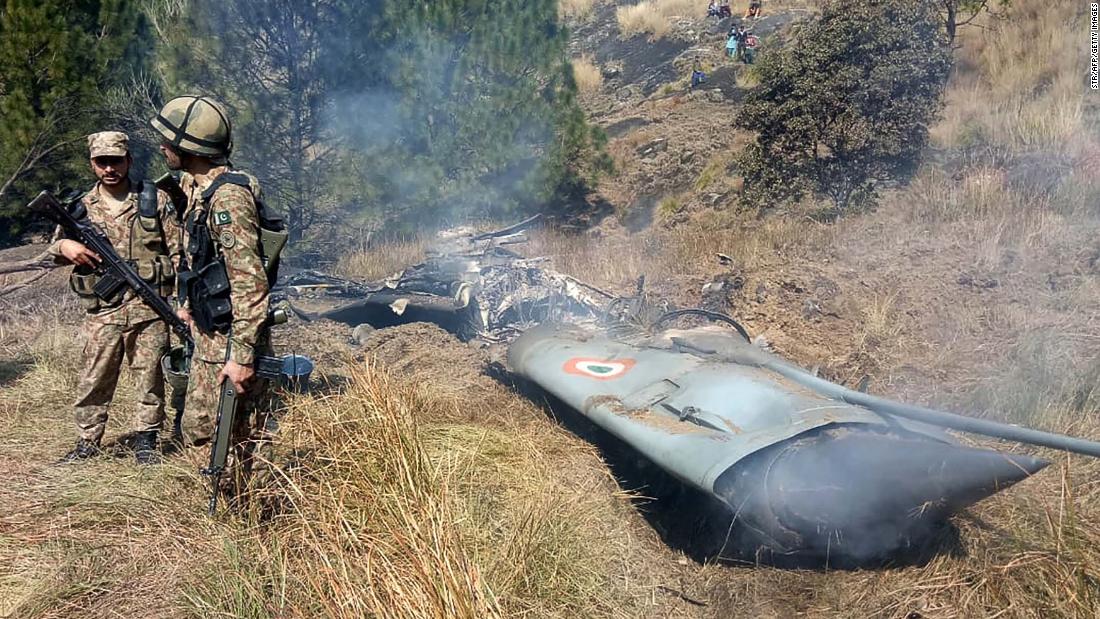
On February 14th 2019, a suicide bomber attacked a convoy of Indian security forces. “We’re getting reports of multiple casualties in a roadside…” He killed at least 40 Indian soldiers here in Kashmir. “The deadliest attack the region has seen this century.” The bomber was part of an Islamic militant group based in Pakistan. “Jaish-e-Mohammed claimed responsibility for that attack.” 12 days later, India carried out airstrikes in Northwestern Pakistan. Then Pakistan shot down at least one Indian aircraft around here. “The most serious escalation in years.” Kashmir is one of the most disputed places on Earth. Over the course of 70 years, it’s been at the center of three wars fought between two massive armies. It’s heavily occupied by more than half a million Indian troops and a deadly collection of militias and terrorist groups.

How Memory of Indian Partition Is Preserved Across Borders | Time
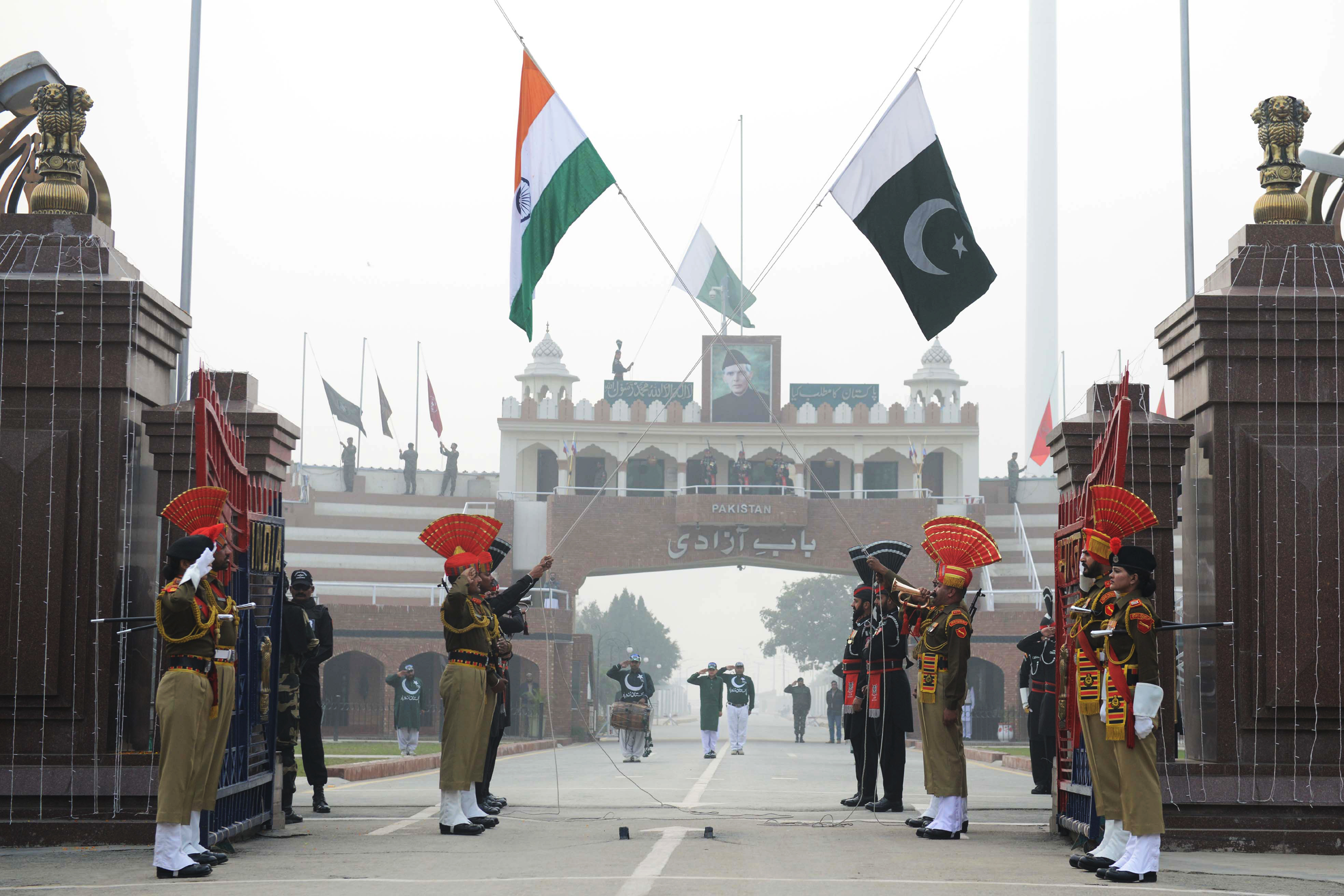
Kashmir is the stage for the relentless conflict between India and Pakistan. But focusing on the two countries can obscure what’s really at stake: The voice of Kashmiris who are caught in a vicious cycle of violence. Kashmir is one of the most strategic places in the world, where 3 powerful countries collide: India, Pakistan, and China. China invaded and took this slice of Kashmir from India. And was given this one by Pakistan. India and Pakistan control these parts, but lay claim to more. This region is at the center of a brutal conflict over these disputed borders. So it’s important to start when they were being drawn. In the mid-1800s, India was a patchwork of several hundred provinces and princely states under British rule. A century later, when British India won independence, the British left and hastily decided to split the region into two. These areas would be a new Muslim-majority country, Pakistan. And this would be the mostly Hindu, but secular, India. The partition was bloody. “Communal hatred flares up within the Punjab.” “1 million people become refugees overnight.” “They flee from savagery and butchery that has never been exceeded, even in India’s stormy history.” Amid the chaos, some princely states were given the choice to join either country. In most cases, the ruling monarchs followed the will of their people. But this state, called “Jammu & Kashmir” was different. It was right along this new border and had a Muslim-majority population, but was ruled by a Hindu monarch. When asked to pick a side, the ruler chose to stay neutral Fearing that the monarch would join India, the Kashmiri population rebelled here in 1947 Armed tribesmen from Pakistan soon joined the fight.

India and Pakistan in Kashmir border skirmish - BBC News
The monarch turned to India for military help and in exchange agreed to join them, which sparked the first Indo-Pakistan war in Kashmir. “Continuing thus increased the threat to world peace and brought the dispute to the eye of the United Nations . The UN Security Council brokered a ceasefire in 1949, which established this line with Pakistan controlling this side and India this one. It also asked Pakistani tribesmen to withdraw and Indian troops to follow, so that Kashmir could hold a direct vote to decide its own future. But neither held up their end of the deal. Pakistan argued that Kashmir’s Muslim-majority population rightfully belonged with them. While India insisted that Kashmir was handed over to them by the Hindu monarch. So they doubled down and added Kashmir to their constution. Both countries continued to tighten their grip around it for many years . “Kashmir. Fighting is going on and heavy casualties in men and equipment have been inflicted on the aggressor.”

India-Pakistan: Latest news on Kashmir crisis
In 1965, the second India-Pakistan war broke out in Kashmir. Thousands of people were killed between the huge armies on both sides. A ceasefire ended the war, but didn’t change this line. Kashmir was kept divided and occupied. And another war broke out in 1971. This time the focus wasn’t in Kashmir — it was in East Pakistan. Here, India helped rebels fight for independence and dealt Pakistan a devastating defeat. This region became a new country, Bangladesh, and Pakistan lost its eastern half. This made Kashmir more important than ever: It became one of the most militarized places on Earth, as India and Pakistan deployed planes, tanks, artillery, and soldiers along the Line of Control. On the political front, in ’87, India reportedly rigged an election, declaring a pro-India party as the winner. Now this was a big turning point for many Kashmiris, who felt they were again denied the chance to vote. Thousands took to the streets in Indian-controlled Kashmir to protest the occupation. But India met the movement for independence with harsh resistance. Which quickly escalated to more violence.
“In January security forces opened fire on demonstrating separatists, turning a two-year old struggling movement into a full-blown popular uprising.” “More than 600 people are killed in clashes between troops and separatists.” Kashmiri militias, just like the Jammu and Kashmir Liberation Front, started recruiting Muslim youth to fight for independence. And increasingly attacked the Indian military. Pakistan saw an opportunity in this insurgency. They helped introduce a new kind of militant group: Radical Islamic fighters who fought for a more pro-Pakistan Kashmir. By the mid ’90s, these groups dominated the insurgency. India responded with incredible military force, deploying 500,000 troops to Kashmir. And they cracked down on militants and protestors. Unarmed civilians were killed and many more were forced to flee the violence. And in ’98 the stakes were raised yet again. “Today India conducted three underground nuclear tests.” “Pakistan today successfully conducted five nuclear tests.” Kashmir became a battleground between two nuclear-armed nations and another war broke out in 1999. “More evidence of the attacks being launched on the Indian-controlled area of Kargil.” “The past two days have seen a number of the fiercest fighting thus far .” “Militant Muslim fighters have also crossed over into some parts of Indian-ruled Kashmir.” The 1999 war ended with another ceasefire, but that did not stop either country.

India-Pakistan cross-border shelling hits Kashmir | News | Al Jazeera

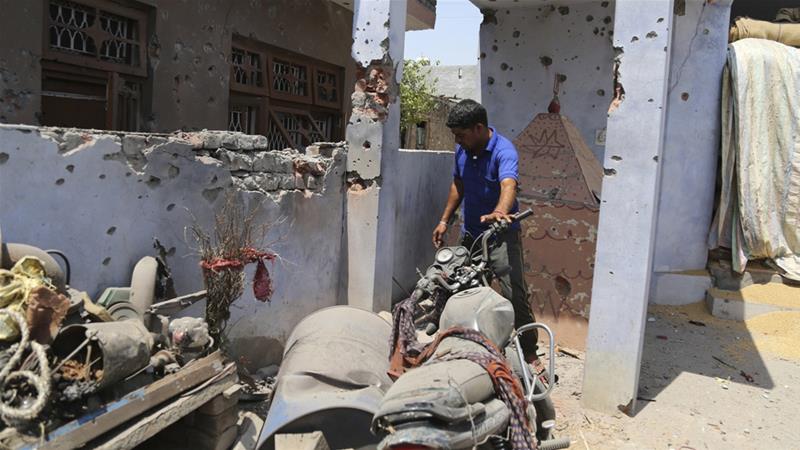
Over the years, Pakistan’s militant groups got bolder and launched terror attacks in Kashmir and outside of Kashmir. In 2001, members of Lashkar-e-Taiba bombed India’s parliament building in New Delhi killing 14 people. And in 2008, 10 militants from the same group killed 174 people and wounded 300 in Mumbai. Meanwhile, Indian military cracked down in Kashmir, firing bullets and pellets on unarmed protesters. Leaving hundreds wounded and blind. This is the vicious cycle of violence. The Indian Army’s crackdown drives some Kashmiris to join Pakistani-backed militant groups, who carry out violence against the Indian forces. It’s a cycle that Kashmiri civilians are stuck in the middle of. Which brings us back to 2019. The suicide bomber was 19-year old Adil Ahmed Dar from Pulwama, Kashmir. According to his parents, in 2016, Indian police officers stopped him and humiliated him by forcing his face into the ground. The same year he was shot in the leg at a protest. The next year, Dar left home with his brothers, to join Jaish-e-Mohammed, a Pakistani-supported militia that radicalized him and trained him to be a suicide bomber. A year later, he drove explosives into an Indian military convoy. For more than 70 years India and Pakistan have driven a cycle of violence, retaliation, and exploitation in Kashmir. But beneath it all is the Kashmiri’s wish to make a choice. A wish that continues to be suppressed, again and again, by violence.

Cyber Bullying is a serious problem!


Internet and mobile phones have become an inseparable part of our lives. When the internet was out, there were restrictions on its usage that were imposed on children by the parents almost everywhere. At least they would use it under an adult’s supervision. Now that the use of the internet has become inevitable because of the school requirements and its necessity in the making of assignments and projects, parents really can’t help but make it accessible for their children.

Since we all are aware of the risks and dangers of cell phones and the internet entail, we ensure that they don’t adversely impact our children and their vulnerable brains. Are the web restrictions like age gate, safe search and family filters enough to keep our kids protected from every kind of possible harm in the cyber world? Do we only need to worry about that inappropriate content on the internet or there are other things too?

“Cyber bullying is a term used for bullying kids using technology including digital or social media. It involves the use of harassment, threat, and provocation that leave a negative impact on the mind, mood and overall psychological position of the child. It occurs in kids and teens and normally young children of all age groups. In adults, the same acts constitute a legally punishable crime known as cyber-stalking or cyber-harassment.”

Misuse of your child’s photos, messages or any other thing on digital media, any messages or calls that tend to scare your child out of their wits, acts like calling names, causing embarrassment and insult, faking identities etc., all are acts of cyber bullying. Most victims of cyber bullying don’t share their grief with their parents or teachers. According to a recent study, 1 in every 4 children encounters cyber bullying.

The consequences of cyber bullying vary from child to child. Some children are not that seriously affected by it while others can develop conditions like depression, anxiety, and disorders involving high stress. In some rarely reported cases, some children have even committed suicides that were either provoked by cyber bullying or merely attempted to get rid of it.

It’s not really difficult to spot if a child is being bullied online if we’re smart enough and know our children. Cyber bullying can result in increased distress for the victims along with increased anger and frustration. They will vent this out on various occasions, and it might force them to get addicted to the virtual world where they can have several identities to hide their real one.

The victims will automatically have lower self-esteem since that is the sole purpose of bullying. Prolonged bullying will lead to severe withdrawal from their family and friends. They will begin favoring isolation most of the time and indulging in harmful activities like drugs and alcohol.

Cyber bullying is a serious issue, and it can be truly horrific to go through such a difficult period. Staying strong and fighting back is the only option against these bullies. It’s possible to get over it and live your life again. Seeing a counselor can help the victims handle the incident in a better and a safe way. Life does not get over if you are a victim of cyber bullying and it is possible to fight back.

Why economy of India is slowing down???

India is one among the world’s fasting growing economies. It had been touted as an economic and geopolitical counterweight to China. But recently its growth fell to its slowest pace in six years. Investment has weakened, and unemployment has risen. So what’s causing the slowdown, and how can it be reversed? Since the turn of the century, India’s economy has grown at a rapid rate, helping transform the country. Between 2006 and 2016, rising incomes lifted 271 million people out of poverty, meaning the proportion of Indians still living in poverty has fallen dramatically, from around 55% to twenty-eight . Access to electricity has also improved. In 2007 just 70% of the population had access to power. By 2017, that grew to nearly 93%.

India's economic growth likely to remain subdued in near future ...
More recently, the Indian government constructed around 110 million toilets — a huge step towards better sanitation designed to prevent the practice of open defecation. It’s a signature program of Prime Minister Narendra Modi, known as Swachh Bharat, or Clean India. All this development has been supported by a booming economy, but as lately , that expansion has begun to run out of steam. In the third quarter of 2019, India’s economic output grew by 4.5% – making it the primary time the country’s growth dipped below 5% since 2013. For context, 4.5% growth remains much above that of developed economies just like the U.S., But with 12 million Indians entering the workforce per annum , economists say the country needs annual growth rates to remain above nine percent to make sure there are enough jobs. So, what’s causing this recent slowdown? Well, officialdom argue turbulence in international financial markets is guilty.

Economy News, Latest economy news India, Indian Economy features ...
Political uncertainty and U.S.-China trade tensions mean confidence levels among investors and consumers everywhere have sunk. The United Nations has even warned that a global recession in 2020 is now a “clear and present danger”. But back to India – many economists say the country’s growth problems are literally self-inflicted. One obvious culprit is the shadow banking sector. During the 2000s, India saw an investment boom. It was fuelled by state banks dispensing a load of loans for giant infrastructure projects. But some of the companies taking advantage of these loans couldn’t keep up with the repayments. That meant the state banks weren’t getting paid back and therefore struggled to give out new loans. To keep business moving, shadow banks stepped in. These financial institutions, which operate like ordinary commercial banks but don’t follow traditional banking rules, eventually made up an estimated third of all new loans nationwide. The loans played a pivotal role for the millions of small businesses and consumers who would otherwise have no access to credit. But in 2018, shadow banking giant Infrastructure Leasing & Financial Services, defaulted on its debt repayments. Its collapse sent shockwaves through the economy and shook up more traditional banks that had supported the world.
It became harder for people to shop for expensive items like cars. That hurt India’s automotive industry, which is one among the country’s biggest. It employs about 35 million people and makes up about 7% of India’s GDP. Last summer, the industry suffered its worst sales performance in nearly 19 years, and reports suggest tens of thousands of workers are laid off. The agriculture and construction sectors have also been hurting, with small and medium businesses being hit the hardest. The country’s percentage has been on an overall upward trend since July 2017, rising several percentage points to 7.7%. Higher unemployment means consumers are buying less, resulting in the unfortunate cycle of slower manufacturing, production, investment and job creation.

Indian Economy Will Face Adverse Affects Of Coronavirus Gdp To ...
A survey from the Reserve Bank of India found consumer confidence has fallen to its lowest level in five years. But Indians still have a positive outlook for the longer term , with most consumers expecting to feel more optimistic during a year. However, if things don’t improve, debt could become another issue. Expecting better days ahead, many households have continued to spend, by taking out loans and dipping into savings. Household savings as a proportion of GDP has fallen from 23.6% to 17.2%. Meanwhile, household debt has surged to 10.9% during the same period. Critics say the govt in New Delhi has did not spot these risks and hasn’t done enough to urge the economy moving again. The Reserve Bank of India’s former governor Raghuram Rajan recently blamed the lack of significant reforms and a slowdown in investments since the global financial crisis. Even the country’s chief economic advisor recently admitted reforms are needed to form India more friendly to investors.
India has cut its corporate rate , but labor and land laws are still extremely strict. He also says the country must become pro-market, instead of just pro-business, to avoid costly government bailouts of failing sectors. But not all reforms have been good to the economy. In 2016, Prime Minister Modi tried to crack down on corruption, counterfeits and evasion by banning high value bank notes. In one night, the cash ban made 86% of all cash invalid. Three years later, many analysts say the policy disrupted the economy and did not achieve many of its original goals. In 2017, a replacement nuisance tax placed small businesses struggling and a few of them were forced to shut . In mid-2019, India’s government introduced a controversial new tax on foreign investors. Consequently, India’s stock exchange suffered its worst July performance in 17 years. Just one month later, the measure was scrapped.
The government has now refocused its efforts on international trade and investment, and thus the recent changes to the corporate rate could indeed help attract businesses and investors to India. But if the country wants to be a part of the world’s largest supply chains, it’ll need low and consistent tariff levels to encourage outsiders to take a position for the long term.

The country’s shifting export policy has harmed several of its largest industries, particularly clothing. India’s share of the worldwide apparel market has increased only slightly within the past 20 years. And though the Indian workforce is vast, both Bangladesh and Vietnam now export more. On top of that, the country’s import tariffs on the average are much above the world’s biggest economies. They’re also among the highest of the world’s emerging economies. Even U.S. President Donald Trump has called for the country to bring down its duties.

Has India’s growth actually slowed the maximum amount as we think? The government’s former chief economic advisor Arvind Subramanian caused a good little bit of controversy in June 2019, when he claimed the country’s official stats probably overstated GDP growth by 2.5% from 2011-2012 to 2016-2017. He says the bottom line is that India never recovered from the global financial crisis. The government denies this. But none of this has hurt Prime Minister Modi at the polls – he won by a landslide in the most recent election. So how will he keep his promise and double the dimensions of the economy by 2025? Many economists insist a well-explained economic vision would help. As would more long-term investment, better skilled workers and enhancements to infrastructure. It may not matter who or what’s responsible for India’s recent economic challenges, but bottom line – India’s economic process must recover , and fast.

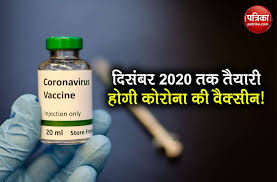
Covid-19 vaccine can be expected by end of 2020:Serum Institute of India.

Chief Executive Officer of the Pune-based Serum Institute Of India (SII) Adar Poonawalla on Monday said the company is expecting the vaccine for COVID-19 to be ready by the year-end.

The Institute has partnered with British-Swedish drugmaker AstraZeneca to manufacture and supply the vaccine being developed by the University of Oxford under which the SII will supply over a billion doses of vaccine in India, and to other developing and under-developed countries.

However, the approval for the vaccine from the Drug Controller General of India is still awaited.

The institute is expecting to get approval in next six months.The Oxford COVID-19 vaccine trial is currently in its Phase 3 or human trial stage, and will be administered to around 8,000 people in the U.K.

chief executive Poonawalla said while referring to another vaccine candidate from India ie Covaxin of Bharat Biotech, that the company is in no hurry to produce vaccine without proper actions and tests for safety and efficacy.Once they are confident about vaccine, they would launch the vaccine but that would be still 6 months away.

However Bharat Biotech is also confident about its candidate vaccine named Covaxin and has started phase-1 human trials enrolling about 375 patients for test. It is very unlikely that Corona vaccine to be out for masses before or on 15 August, despite the letter of ICMR since human trials may take up to 6-8 months to complete even after conducting only important tests and checks.

It is very positive for the country that we are seeing candidates for vaccine which are in human trials.The vaccine developed in country will be great opportunity for Indian institutes to once again lead the world in pandemic situation.

Kashmiri youth joining Rebel Ranks

It is heartbreaking how some of the Kashmiri youth are getting distracted into false and heinous crimes, where they are forced to be a part of terrorist groups and made to pick up guns and kill people. How sad it would be for a mother who loses her child, who joins a terrorist group and works against the country. Since Kashmir is facing many hardships beginning from Article 370 which includes communication blackout, internet services, people have to jail themselves at home and wait for the orders of reopening. This was one part of the story where Kashmir has become the highly militarised zone because of constant protest and fights, where Article 370 has separated the roots of Kashmir, where some of the young boys are forcefully made to join terrorist groups and fight for the evil things.

One such story is of Khurshad Ahmad a 23 year old young boy who went to a nearby valley with his herd and never came back. His family was worried for him and searched everywhere but couldn’t find a single clue of him. After few months the family was informed that Khurshad was shot dead in a gun fight in Sugg village. This news left his family, specially his mother helpless and heartbroken, where they couldn’t even fight for their child, where they couldn’t even ask the terrorists that why they did this to their son and why a 23 yr old lad was made to hold a gun instead of holding a book and working hard to take the responsibilities of his family.

There are many more stories which you and me don’t know because fortunately we are sitting safely at homes and taking care of ourselves, if we think about the people in Kashmir, we can’t even fathom the problems which they are suffering from, poverty, climatic changes, war, protest and now their children are joining rebel groups. This is not a choice for them, they are forced to do so, they are brain washed in a way that they just can’t ignore the facts to join the terrorist group and become one of them but what is left behind is their family, the mothers, who patiently wait for the child to return but little did she know that her child would never return, his mind and soul has been captured by the evils and they will never leave him until they eat him up.

My dear friends, we don’t know where our destiny will take us, but we should always think about others, pray for the people of Kashmir, pray that they get peace and they can also live normal lives like us.

Mysteries of Indian Architecture

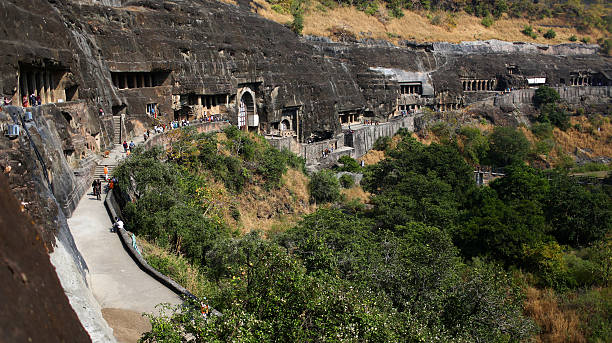
Ajanta caves

Ancient Ajanta caves

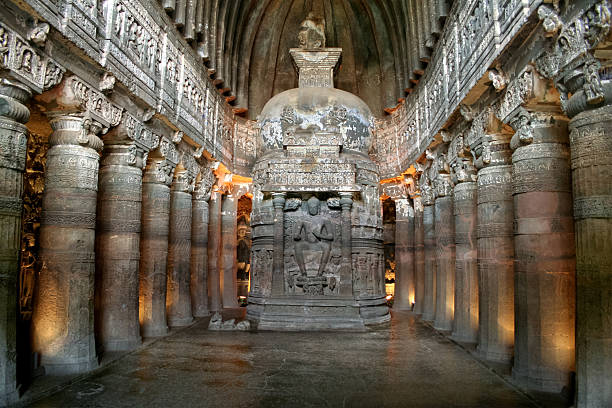
Carved over a period of several centuries, the mystery of Ajanta Caves might never have been uncovered had it not been for a chance pursuit of a tiger by the British Officer John Smith in the year 1819! As old as 200 BCE, the caves are located in Aurangabad district of Maharashtra. Over the multitude of years they fell into disuse and a forest grew over and around them. Carved over many many years by different artisans, they are believed to have been made a refuge for the Buddhist monks during the rains. Some go as far as to say that they were pathways to heaven.

With numerous carvings that describe the life and times of the eras, they are like a window that one can peek through into the glorious past of India. The caves run for a mind numbing length of 29 rock cut caves, all of which have both female and male representation, which is a rare sight! Examples of immense scientific calculations are evident too, as the sun lights up cave 19 on the winter solstice and cave 26 on the Summer solstice in a precision that has persisted over the years!

The monument to love that inspired the Taj Mahal-The Humayun Tomb

The Humayun’s Tomb

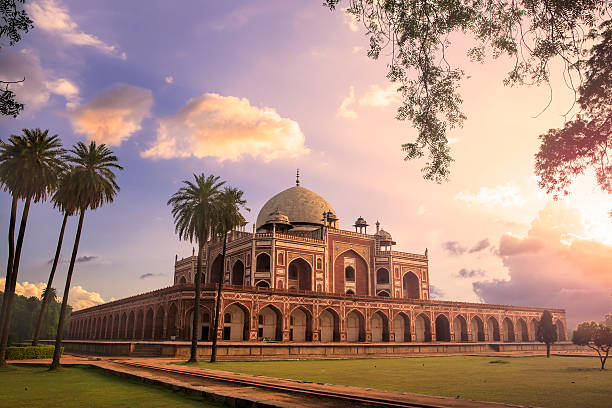
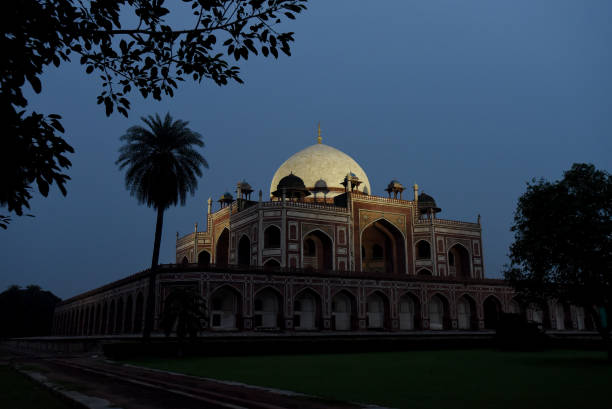
Pick up any form of literature and you will notice that ‘Taj Mahal’ has forever been cited as the all enduring monument of the love of a king for a queen. But, there was one tomb before that, that a grieving widow built for the love and devotion that she felt towards her husband; The Humayun Tomb. The pioneering example of Mughal architecture, its glorious combination of Persian and Indian architecture forms was to set a prelude to an era that was to be embellished by the grandeur of Mughal architecture. Bega Begum, spent her entire life overseeing the construction and design of this tomb that was commissioned to the great Persian architect Mirak Mirza Ghiyas.

One of its kind architecture, this garden tomb houses the graves of over 150 members of the Mughal family. The UNESCO cites it’s reasons for considering it as one of the greatest examples of architecture by saying, “This building tradition culminated in the Taj Mahal, constructed a century later. Despite being the first standardized example of this style, Humayun’s Tomb is an architectural achievement of the highest order.”

Konark Sun Temple

An ode to Sun God, where even stones speak up in prayer- Konark Temple

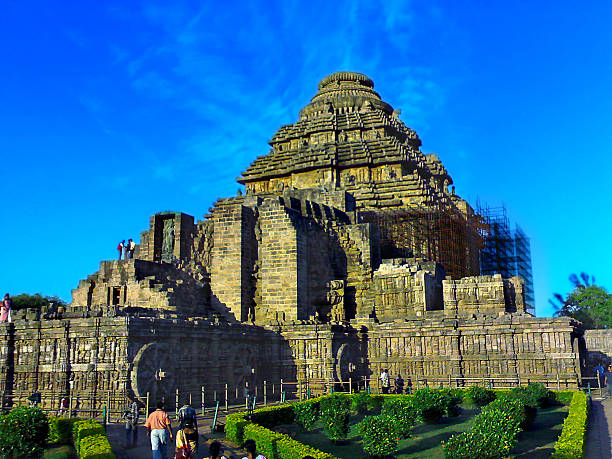
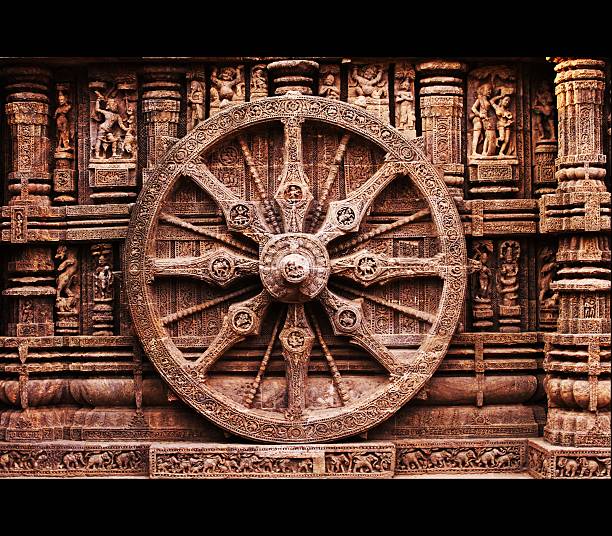
No text of architecture in India is complete without the mention of Sun Temple at Konark, the namesake of the city itself is an elegy to the Sun God, Kona (Corner) and Arka (Sun). On the sparkling coasts of Bay of Bengal rests this edifice that commemorates the work of the masters of ancient times. The temple has an elaborate and intricate mammoth structure that depicts the chariot of the Sun God replete with 24 carved wheels, each of them 3 m in diameter, pulled by seven horses and guarded by two lions at the entrance that bravely crush elephants.

An example of beautiful melee of science, architecture and devotions the sun dials on the temple can calculate time to the exact minute even to this day! There are also three statues of the sun god that catch the rays of the sun precisely at dawn, noon and sunset! Rabindranath Tagore has famously said about the temple “Here the language of stone surpasses the language of man.” The temple beckons to question the monotonous styles of architecture that India has regressed itself to!

A eulogy to undying love set in white marble- The Taj Mahal

Taj Mahal

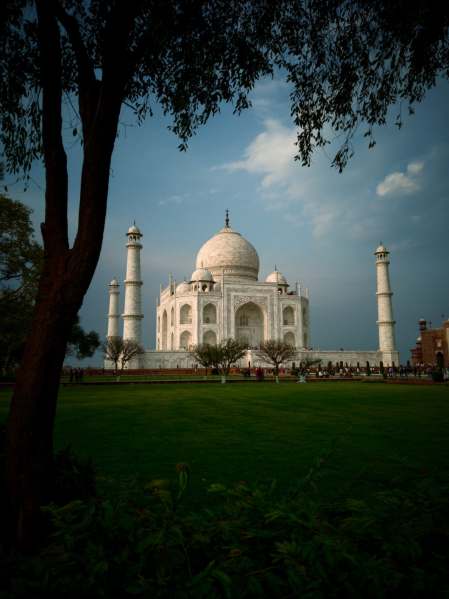
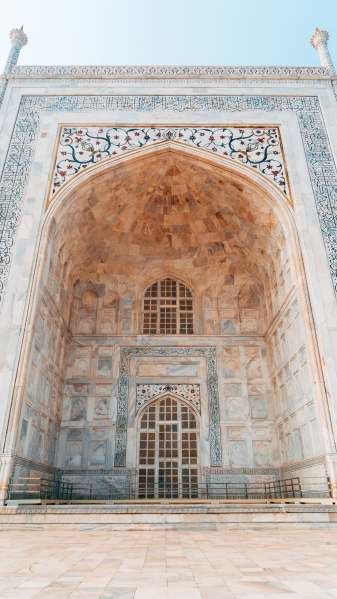
Ask anyone, any man or woman about the icon they associate with India, and their answers would most likely allude to the Taj Mahal. Built by the Mughal Emperor Shah Jahan, it is one of the most grandiose gestures of love to ever be materialized on the face of earth. As famously said by the greatest poet, Rabindranath Tagore, “The Taj Mahal rises above the banks of the river like a solitary tear suspended on the cheek of time.” Inspite of the multitude of tourists that visit it, the declarations of love that it has witnessed and countless examples that it has set, there is a sense of melancholy as one approaches the monument, a sense of pain of a lover separated from his wife by death.

The Taj Mahal was built in 1653 AD by over twenty thousand artisans who toiled over 22 years! The white marble was bought in from Makrana in Rajasthan and was transported by elephants. In its days of glory the Taj Mahal was adorned with no less than 28 types of precious stones, brought in from as far as Tibet and Persia.  Like the moods of his lady love, the exterior of the Taj also changes colors from a pinkish hue in the dawn to a dull gold at noon and finally, all enduring sparkling white under the moonlight. Legends say that as the emperor lay imprisoned by his own son in the Agra Fort, he derived solace from gazing at the tomb of his beloved wife, at whose side he was finally laid to rest.

The integral land of three beliefs, The Ellora Caves

Ellora caves

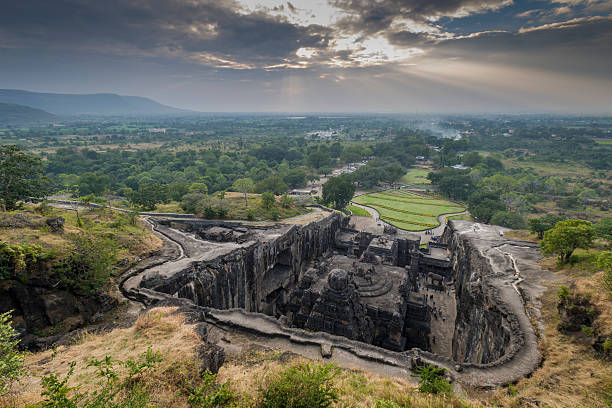
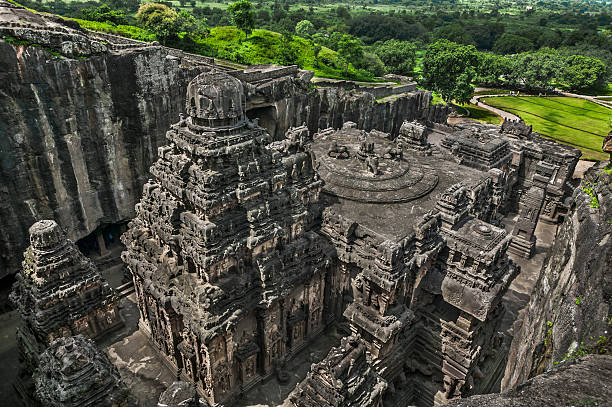
The Ellora caves is a sculpture’s beautiful blended expression of three major Indian regions: Buddhism, Brahmanism and Jainism. There is something beautiful about this place that takes you to a journey in the past where all these religions born and grew together. The 34 monasteries and temples are carved and dug all together on the wall of a huge basalt cliff in Maharashtra. These splendors of art is a beautiful combination of, when art meets religion

The twelve caves of the Buddhist group speaks about the benevolence of this calm religion, Buddhism. The ‘Cavern of the Ten Avatars’ is a majestic art piece constructed under the reign of Krishna I. The ethnicity of Jain group is well reflected by the sanctuaries carved by the Digambra sect of this pure religion. These gems of art are the immortal legends of the vast rock-cut architecture in India. The elegance of Dravidian Sikhara, which is a flat roofed madapa positioned over sixteen pillar, the gigantic Ravana figure reflecting the strength of this villainous legend as the sculpture here shows him lifting Mt Kailasha is an epitome of the ancient Indian art.

Where the walls sing and sculptures dance, the Chola temples

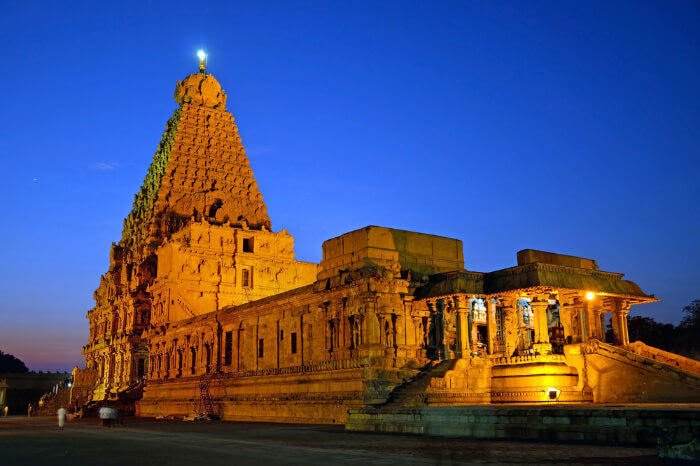
Brihadisvara Temple

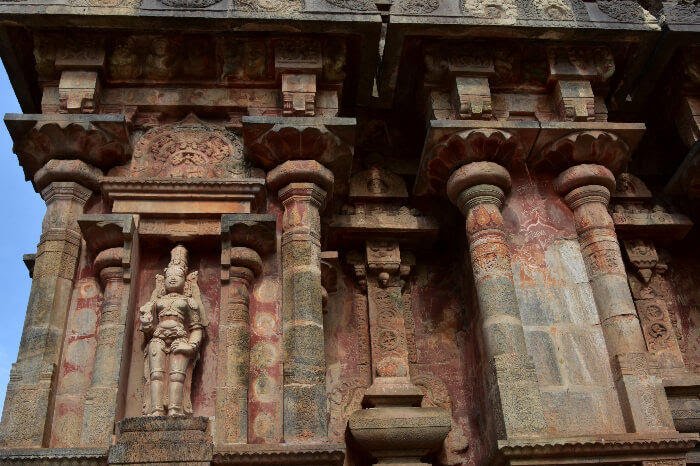
The beautiful Chola temples are living tales of the vast empire that Cholas established in Thanjavur. These magnificent temples built during the reign of Rajaraja were the epitome of the vast religious inclination of these rulers as the inscriptions and the chronicles on the wall sing about their opulent rule. This temple in the ancient time was note a mere religious center but a full functional business establishment which was served and maintained by a permanent staff of several hundred priests, 400 devadasi and 57 musicians.

Airavatesvara Temple At Darasuram

The temple was also used for lending money to ship-owners, craft guilds and villagers on a fixed interest rates. The entire temple carved in granite is believed to be inspired by the Pallava architecture. The beautifully adorned 108 poses of the Bharata- Natyam on the walls reflects the hours of torturous patience the sculptures went through. The beautiful series of carvings depicting the legend ruler Rajaraja conversing with his guru, Karuvir Devar is stunningly sculpted in rich colors which rewinds you to the beautiful ancient time of king and queens.

A rock cut sonnet to the great war of Mahabharata, Mahabalipuram

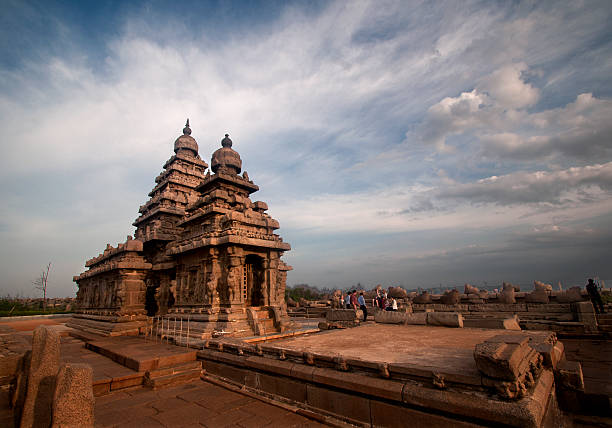
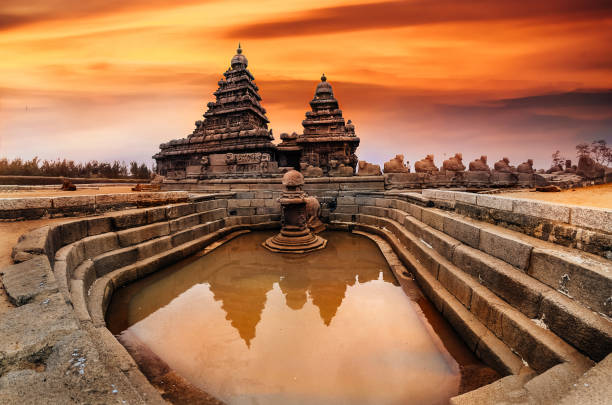
Shore temple Mahabalipuram

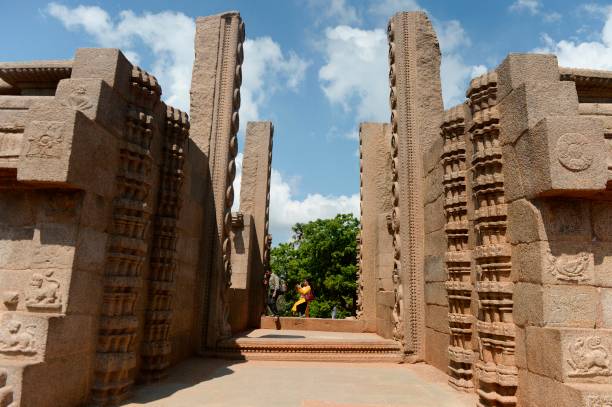
It is a widely accepted belief that the great war fought between the Kauravas and the Pandavas, at Kurukshetra, is instrumental in shaping the history and geography of the Indian subcontinent as we know today. The temples of Mahabalipuram demonstrate exactly that, in the rock cut carvings of the great temple architectures, one can clearly see the scenes from the great epic.

The architecture demonstrates a clear allusion to the sectarianism that had started during the period as different areas were assigned to different Gods. The travels of Marco Polo also describe the Seven Pagodas of Mahabalipuram that belonged to the original structure built in the time when the city was a thriving merchant port. Out of these seven only one has survived in the form of a beautiful shore temple!

Sunset reflection of shore temple

The architect represents neither a Dionysian nor an Apollinian condition: here it is the mighty act of will, the will which moves mountains, the intoxication of the strong will, which demands artistic expression. The most powerful men have always inspired the architects; the architect has always been influenced by power.

– Friedrich Nietzsche

Why Australia is least affected by recession!!!

America’s economy is approaching a big milestone. If it keeps humming until July 2019, it’ll be the longest expansion in U.S. history. It would be exactly one decade and one month old by then. But there’s another country with an even more impressive run It’s even called the ‘lucky country’ Three big lessons from Australia.

  1. Be smart.
  2. Be organized.
  3. Be lucky.

So, if I’ve got any advice for other countries, it’s try and be as lucky as Australia That luck has to do with Australia’s treasure trove of natural resources. You know Australia is on the other side of the world and sitting on tremendously valuable minerals right at the point where the Chinese economy is just around the corner and exploding. Australia and every one its natural resources were within the right geographic neighborhood even as the Chinese economy began to begin . And it just so happens that China did a big fiscal stimulus in 2008 and spent a great deal of money building new cities. So all of these resources were drawn from places like Australia. So that also served as a huge tailwind at a time when developed markets were in a whole lot of trouble.

What Currency Is Used In Australia | Australian Dollar : Compare ...

The year 2008 was a time of economic turmoil The Global Financial Crisis hit and markets crumbled around the world. But as it turns out this was also a year for Australia’s economic management to really show off At the time the government had a very helpful and very low level of debt. One reason? Pension reform in the 1990s. Australia set up a compulsory retirement system called the superannuation system. It requires employers put money into its employees’ retirement savings.

Since companies and citizens have to build up retirement savings, some of the financial burden to pay off pensions was taken off of Australia’s government As other economies reeled in the wake of the 2008 crisis, the Australian Government was then able to put money directly into people’s bank accounts This boosted consumer spending in order to stimulate growth In 2008, the Australian Government unlike some other developed market governments actually jumped in very quickly with fiscal stimulus, so that helped to kind of minimize the effect of the crisis The country’s numbers continued to look sluggish after the financial crisis. But they never quite dipped low enough or for long enough to satisfy the definition of a recession. It takes two quarters of negative growth to fall into a recession. Australia’s economy did post a couple of negative quarters since 2008, but no country’s perfect. Overall Australia’s economy has been managed pretty much in recent years partly due to a robust and stable financial institution.

Reserve Bank of Australia – Australia's LGBTQ Inclusive Employers

Australia has an independent financial institution and it is a very well-run financial institution . It also has a floating exchange rate and the exchange rate helped it adjust to international shocks. Australia’s economic reforms gave it flexibility in times of hardship. For example, floating the Australian dollar In 1983, Australia’s government moved the dollar onto a floating exchange rate This meant that the dollar would be valued by supply and demand instead of being subject to influence from its government or its central bank It allows the economy to react to shocks as well Typically when an economy is hit by some sort of negative shock. The currency will adjust. It will depreciate and that helps promote exports. Another reason behind Australia’s economic diary lies in its immigration policy. Since the late 1990s, Australia has seen growth in temporary migration, many arriving to the country on student or temporary work visas. The number of temporary migrants peaked in the year 2000. However a recent change to immigration law in 2018 gave visa applicants more hurdles to get through if they wanted to come to the country Even when our GDP per capital average incomes aren’t rising by much because the number of people continues to rise that means the total GDP continues to rise at even more rapid pace Part of that’s underpinned by much faster population growth Most experts think Australia’s economy remains strong in 2019, but it’s not without risks.

Australia’s suffering at the instant from pretty weak wage growth. That’s worrying a lot of people. There’s a lot of fear right now that China is hitting a wall. That will hit demand for Australian products. The good news is to the extent that the Chinese are buying commodities hopefully will find buyers from overseas for many of those commodities if the Chinese are not there The bad news is the rest of the world economy is not doing that well.

Australian economic growth slows, enters per capita recession ...

BJP new election campaign idea!

With its initial reception of advanced innovations and absence of asset requirements, BJP is the main ideological group heading into the Bihar get together races without agonizing a lot over contacting the electorate in the midst of the coronavirus alarm. So incredible has been BJP’s initial flood that a grip of resistance groups drove by RJD have contradicted its virtual meetings refering to the requirement for a level-playing field. The interest of the gatherings is probably not going to be acknowledged by the Election Commission as this is an experimental method of battling.

On the other hand, gatherings can spare themselves the expense of transportation and sorting out enormous physical meetings by receiving advancements like Zoom. Reports additionally show that BJP has moved to make a tremendous Whatsapp bunch framework down to the corner level to enhance its informing. It is even conceivable that this political race could see the BJP upstage boss clergyman Nitish Kumar and JD(U) with Nitish unfit to use his interface with voters through ground rallies.

BJP will likewise cheer up at the thunderings inside the restriction camp. Tejashwi Yadav has lost agreeableness among RJD’s partners and Congress seems, by all accounts, to be gauging the chance of testing political openings made by Lalu Prasad Yadav’s shroud. BJP’s definitive desire has been to shake off the partner stuff in Bihar, as it could in Maharashtra. While BJP has reaffirmed Nitish’s supremacy, nothing is changeless in governmental issues and it is altogether inside the domain of plausibility that innovation could rush the following huge disturbance in Bihar legislative issues.

How India’s massive Election System works?

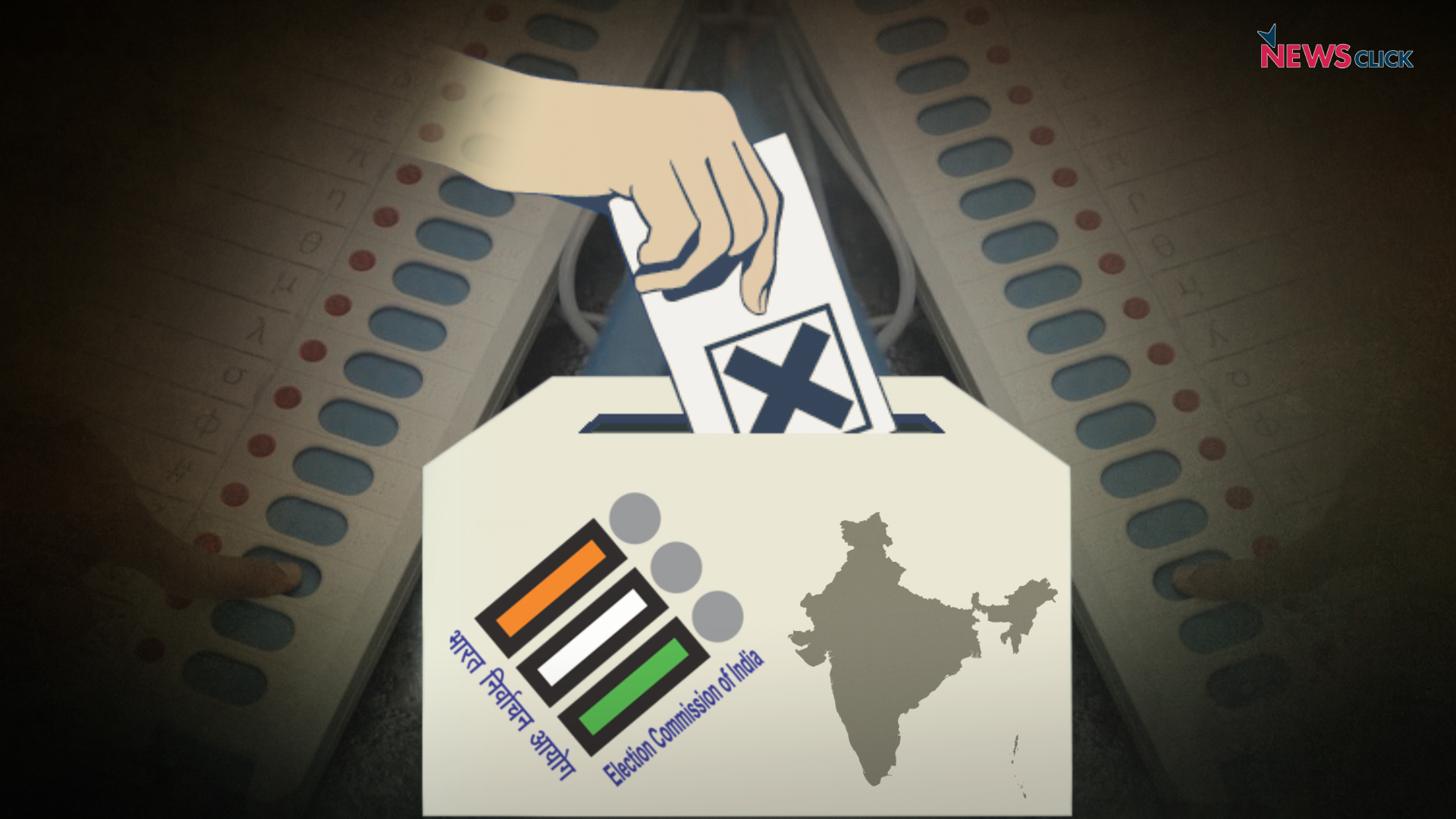
The world’s biggest democracy just had an election. The world’s biggest democratic election It’s a marathon election A mammoth undertaking It’s the world’s biggest exercise in democracy In India, voters picked its central government for the next five years. An eighth of the world’s population was eligible to vote in this election. In the year, 2019, there are 900 million eligible voters in India making this the largest Democratic exercise in the history of humanity.

A vote for reform: Election Commission collaborating with IIT-M on ...

In one of the largest and most populous countries in the world, that isn’t an easy task. India has to reach voters in coastal cities in the south, in the rural regions of the west, and jungles to the east and everywhere in between. And what’s more, they want every Indian citizen to be within 2 km of a voting station. That’s only about 25 city blocks no matter where you are in the country. It’s an incredibly ambitious goal and yet, somehow they’re able to do it. This is the biggest election in the world and I wanted to know how does it work. Every election a team of state officials and security forces, get on a ship within the east of India to require off towards this island. They travel about 100 km to get here, all to securely deliver these Electronic Voting Machines or EVMS, the instrument that logs India’s votes, the heart of this elaborate election process.

Election Commission's crackdown on poll-related monetary ...

India has 2.3 million voting machines for its 900 million voters. So, getting these machines on the brink of every voter may be a big logistical undertaking. That’s why India doesn’t have one polling day , instead, it’s closer to an election month with multiple phases that last weeks. This process takes more than 11 million election officials and security forces, who move from polling station to polling station to polling station from densely populated cities to the rural areas where the majority of Indians live. Once on the island with the EVMs, officials pile on to bike carts and head towards the polling station. Once they arrive, they start setting everything up for the vote.

On Election Day, voters line up, cast their vote, and get their fingers inked to prevent double voting. This is where the process ends for the voters, but for the election officials this is just the beginning. Driving a boat out to a remote island is just one of many ways that officials reach every voter. India’s vast and diverse terrain requires transportation methods of all kinds, like in the jungles of this northern state where elephants transport voting machines to reach a remote town or in the Himalayas where officials hike for hours to bring EVMS for election day. Helicopters, trains, they even use camels. But what makes India’s elections so impressive is not just how they reach everyone in such an enormous country, that’s just half the battle. It’s also the ways they try to include voters of all backgrounds into the process, a challenge that has been a part of India’s elections since the very beginning. India has 22 official languages and hundreds of dialects and when India became an independent nation, less than a quarter of the population could read and write.

Why EC Owes an Answer to the Country Over 'Phantom Votes' | NewsClick

The newly formed Election Commission of India created a range of symbols to correspond to each political party, like an elephant, a lotus, a hand or even an alarm clock so that from the beginning all people regardless of literacy level and language could vote with confidence. Since 1947, the literacy rate has increased significantly, but it’s still only 75 percent, so these symbols are still useful to many when casting a vote. But this is a massive sprawling operation and over the years it’s run into some pretty serious problems like allegations of election rigging and problems with a practice called booth capture, where gangs actually take over polling stations and tamper with the elections. It’s partly because of these problems that the Commission introduced these voting machines in the 1990s.

It also increased security around the elections. These efforts to include all voters and protect elections seem to be working. In 2019, India saw the highest voter turnout yet and for the firsttime women voted just as much as men. India’s elections are only getting bigger and more complicated. India has one among the fastest growing populations within the world. and in 2020, young people will make up more than a third of the country. This is the most important election within the world that takes many officials fanning out across a huge country to assist many millions vote.

Election Commission rejects Opposition demand to tweak VVPAT ...

celebrate not just a day but life full of yoga

Yoga: understanding fundamentals

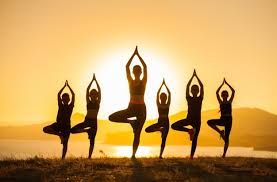
Yoga is a group of spiritual,mental and physical practices originated in ancient India. the modern yoga is seen as exercise to the body which mainly consists of postures or asanas. The practice of yoga has been thought to date back to pre-vedic Indian traditions; possibly in the Indus valley civilization around 3000 BCE. Yoga is mentioned in the Rigveda and also referenced in the Upanishads. Yoga gurus from India later introduced yoga to the West,[17] following the success of Swami Vivekananda in the late 19th and early 20th century with his adaptation of yoga tradition, excluding asanas. Outside India, it has developed into a posture-based physical fitness, stress-relief and relaxation technique. Yoga in Indian traditions, however, is more than physical exercise; it has a meditative and spiritual core.

why yoga ?

There are many reasons why one should keep habit of practicing yoga for at least half an hour a day even if they are busy all the day. yoga is an art whivh cures you from a disease before you get infected by it.

some of the benefits of yoga are:

  • increased flexibility.
  • increased muscle strength and tone.
  • improved respiration, energy and vitality.
  • maintaining a balanced metabolism.
  • weight reduction.
  • cardio and circulatory health.
  • improved athletic performance.
  • protection from injury.

Prominent personalities practicing yoga:

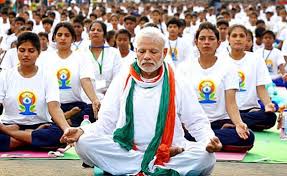
  1. Narendra modi:
If prime minister can do then we can too at least we are not as busy as him.

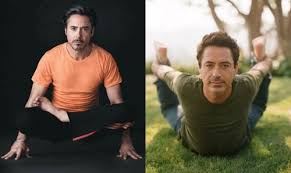
2. Robert downey ,jr.(Iron Man):

Shocked!! yes he also do yoga which has helped him in leaving the bad habit of drugs addiction.

3.Jennifer Aniston (Racheal green in Friends):

she is been practicing yoga since 2005 for at least 20-30 minutes a day regularly

admist her busy schedule.

The list goes on thus it is well known that yoga is key to healthy life. Practice it daily if you don’t know asanas search in google or refer you tube videos. Hope you start practicing Yoga.

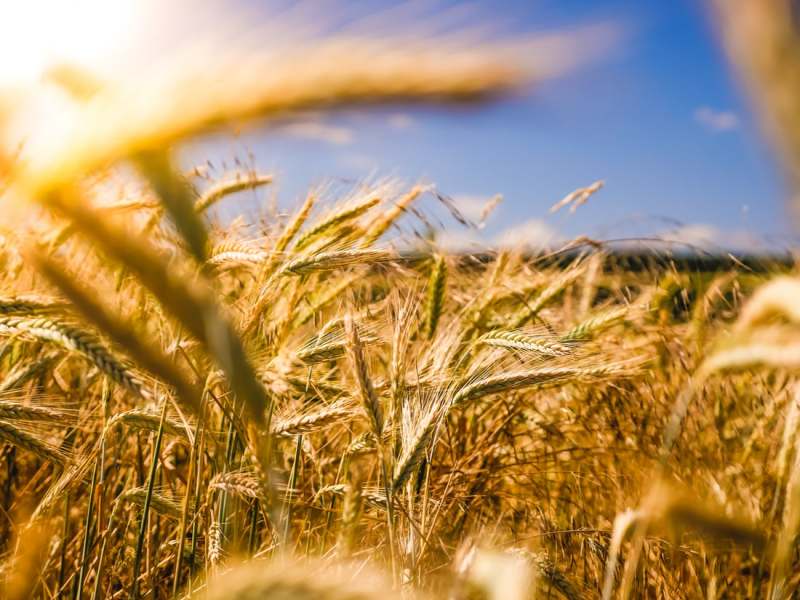
“Agriculture” is the most healthful, most useful and most noble Employment of man.

Agriculture is the foundation of manufactures, since the productions of nature are the materials of art. -Edward Gibbon

Agriculture plays a critical role in the entire life of a given economy. Agriculture is the backbone of the economic system of a given country. In addition to providing food and raw material, agriculture also provides employment opportunities to very large percentage of the population. 

The main source livelihood of many people is agriculture. Approximately 70 % of the people directly rely on agriculture as a mean of living. This high percentage in agriculture is as a result of none development of non-agricultural activities to absorb the fast-growing population. However, most people in developed countries do not engage in agriculture.

Contribution to National revenue
Agriculture is the main source of national income for most developing countries. However, for the developed countries, agriculture contributes a smaller per cent age to their national income.

Agriculture was the first occupation of man, and as it embraces the whole earth, it is the foundation of all other industries.
Edward W. Stewart

Significance to the International Trade Agricultural products like sugar, tea, rice, spices, tobacco, coffee etc. constitute the major items of exports of countries that rely on agriculture. If there is smooth development practice of agriculture, imports are reduced while export increases considerably. This helps to reduce countries unfavorable balance of payments as well as saving foreign exchange. This amount may be well used to import other essential inputs, machinery, raw-material, and other infrastructure that is helpful for the support of country’s economic development.

The agriculture we seek will act like an ecosystem, feature material recycling and run on the contemporary sunlight of our star.
-Wes Jackson


The growth of agricultural sector contributes to marketable surplus. Many people engage in manufacturing, mining as well as other non- agricultural sector as the nation develops. All these individuals rely on food production that they might meet from the nation’s marketable surplus. As agricultural sector development takes place, production increases and this leads to expansion of marketable surplus. This may be exported to other nations.
The main source of raw materials to major industries such as cotton and jute fabric, sugar, tobacco, edible as well as non-edible oils is agriculture. Moreover, many other industries such as processing of fruits as well as vegetables and rice husking get their raw material mainly from agriculture.

Agriculture is the great art of directing and aiding nature in the performance of those functions which were designed by Providence for the comfort and subsistence of man.
Lewis Cass

Since agriculture employs many people it contributes to economic development. As a result, the national income level as well as people’s standard of living is improved. The fast rate of development in agriculture sector offers progressive outlook as well as increased motivation for development. Hence, it aids to create good atmosphere for overall economic development of a country. Therefore, economic development relies on the agricultural growth rate.

An agricultural life is one eminently calculated for human happiness and human virtue.
C. L. ALLEN

From the twentieth century, intensive agriculture increased productivity. It substituted synthetic fertilizers and pesticides for labor, but caused increased water pollution, and often involved farm subsidies. In recent years there has been a backlash against the environmental effects of conventional agriculture, resulting in the organicregenerative, and sustainable agriculture movements.

Agriculture for an honorable and high-minded man, is the best of all occupations or arts by which men procure the means of living.
-Xenophon

In spite of many commercial options coming up, many rely on agriculture for their income. Agriculture is a nature-friendly and most peaceful method of livelihood. It is a very reliable source of livelihood for mankind and also one of the honest sources of incomes. Many people from developing nations rely on agriculture for livelihood. Some people involved in other business or jobs still have agriculture as a side business. Agriculture does not limit to cultivation and farming alone. It also extends to dairy, poultry, fisheries, sericulture, beekeeping (honey insects), etc.

These are also dependent on agriculture cultivation in some or other way. Farming becomes more profitable when combined with these alternative methods.

Agriculture, manufactures, commerce and navigation, the four pillars of our prosperity, are the most thriving when left most free to individual enterprise.     

Thomas Jefferson

SAROJ KHAN,popular Bollywood choreographer passes away

Three-time National Award winner, veteran Bollywood choreographer Of Iconic Bollywood Numbers, Saroj Khan, passed away due to cardiac arrest on early Friday morning at 71.

In a career spanning over four decades, Khan is credited with choreographing more than 2,000 songs, including ‘Dola Re Dola’ from Sanjay Leela Bhansali’s ‘Devdas’, ‘Ek Do Teen’ from Madhuri Dixit-starrer ‘Tezaab’ and ‘Ye Ishq Haaye’ from ‘Jab We Met’ in 2007.

Most of the songs choreographed by Khan had big names as lead actors. Khan has also trained a slew of choreographers who went on to make a big name for themselves in the ’90s, including Farah Khan. Khan was known for blending Indian classical dance with modern beats.

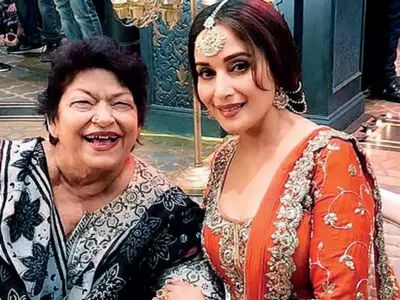
Actress Madhuri Dixit has often credited Khan for catapulting her to fame by choreographing several of her dance numbers. The song ‘Dhak Dhak’ starring Dixit from 1992 film ‘Beta’, was choreographed by Khan and went on to become a national rage.

Late Saroj khan with Madhuri Dixit

was one of the most prominent and leading Indian dance choreographers in Hindi cinema. She was born in Mumbai, India. With a career span of over forty years, she choreographed more than 2000 songs and is known as “The Mother of Dance/Choreography in India”.

Saroj Khan appeared on a number of reality dance shows which includes :

  • Nach Baliye,2005 as a member of the jury which aired on STAR One 
  • Ustaadon Ka Ustaad as a judge which is aired on Sony Entertainment Television (India)
  • Nachle Ve with Saroj Khan, 2008 which was aired on NDTV Imagine.
  • Boogie Woogie (TV series), 2008 as one of the judges, along with Javed Jaffrey, Naved Jaffrey and Ravi Behl.
  • Jhalak Dikhhla Jaa, 2009 which was aired on Sony Entertainment Television (India) alongside former Nach Baliye judge Vaibhavi Merchant and actress Juhi Chawla.

In 2012, The Saroj Khan Story, a documentary produced by PSBT and Films Division of India and directed by Nidhi Tuli was also released.

5 Best Food Places to visit in Hyderabad, in the Rainy Season

Hyderabad is not only famous for Charminar and Ramoji Film City, but it is also widely known for its food specialties like Biryani, Irani Chai, and Kheer. Hyderabadi Biryani is not only a popular delicacy in India but across the world. Tourists visit Hyderabad to taste the unique flavor of its Biryani. Apart from Hyderabadi Biryani, this city also has excellent South Indian Cuisine. Here is a list of five places best for serving delicious food, and you should try them out this Monsoon.

Top Restaurants in Hyderabad

If you are looking for some fantastic restaurants in Hyderabad, which serves you the Hyderabadi Special as well as the delicious South Indian Cuisine, this is the correct place for you. We all known Biryani is the most sought-after food in Hyderabad, and hence, it is also known as the Hyderabadi Special. Do you know, there are a few fantastic places which also offer excellent South Indian Cuisine? Let’s find out about the restaurants:

  • Paradise Circle, Hyderabad: One of the most renowned restaurants to serve the Hyderabadi Special Biryani is none other than Paradise Circle. They have their restaurants all around India. Their Biryani is the most authentic Hyderabadi Biryani present in India. They won multiple awards, such as the Times Food & Nightlife Award 2018, “Restaurant Serving the Best Biryani” award at the Asian Food Congress, 2019. Their name also got enlisted into the Limca Book of Records for achieving the “Most Biryani Servings Sold in a Year.”
  • Irani Chai, Hyderabad: Monsoon and Chai go hand in hand, and Irani Chai is one of the most popular Hyderabadi Specials. The place is quite famous for serving the best possible Irani chai and is also known to be affordable. Along with the unique tea, they also make samosa and other snacks.
  • Almond House, Hyderabad: The Almond House is a famous sweet shop in Hyderabad, for Kheer and other delicious delicacies. They also have a separate section for South Indian desserts such as Ariselu, Bobbatlu, Jangri, and many other sweets. They also serve individualized biscuits and have named them Bisticks.
  • Udipi’s Upahar, Hyderabad: The most authentic restaurant to serve South Indian Cuisine in Hyderabad, which has been established in 1996. Here, they serve vegetarian dishes like Idli, Dosa, Vada, and different varieties of them. The taste of the food served is unforgettable, and it would remain etched on your memory for a very long time. The restaurant is very hygienic, and they serve high-quality food.
  • Café Bahar, Hyderabad: Another renowned restaurant to serve Hyderabadi Special Biryani is Café Bahar. They serve varieties of Biryani, and the taste is to die for. The café was established in the year 1973 and has been going strong ever since. If you are in Hyderabad, you cannot miss the delicacies served here.

It would be best if you visited the places in the Monsoon season. No one ever returns home disappointed after tasting the food from these restaurants. Go, have some incredible experience and trust me, you won’t regret it.

A SLAP TO HUMANITY -13 years old raped by police officer

Sexual assault has become a flashpoint in a much deeper political dispute over the ways in which Indian culture is changing as the country becomes more urban and less traditional. A sort of culture war has emerged. One aspect of that war: sexual assault has at times become a weapon used to police Indian women’s adherence to traditional social rules and, by extension, society’s adherence to traditional values. That has come with disturbingly institutionalized victim-blaming that, along with impunity for perpetrators, allows a culture of sexual assault to flourish.

When we talk about rape culture, we’re discussing something more implicit than that. We’re talking about cultural practices (that, yes, we commonly engage in together as a society) that excuse or otherwise tolerate sexual violence.

Rape is one of the India’s most common crimes against women. It is reported that at every 20 min, a woman is raped in India. The majority of reports reveal that female youth are vulnerable group for rape victimization. According to experts, only 10% of rapes are reported, and the conviction rate for rape cases is 24.2%

In the recent past, gruesome cases of sexual assault have surfaced from all corners of the country, including the abduction, gang rape, and murder of a young lawyer in Jharkhand; the rape and murder of a 55-year-old cloth seller in Delhi’s Gulabi Bagh neighborhood; and a teenager in the state of Bihar who was gang raped and killed before being set ablaze.

Recently ,a teenager was raped by a police officer in Odisha’s Sundargarh district. A police inspector in Odisha’s tribal-dominated Sundargarh district was suspended on Friday over his alleged involvement in the gang rape and subsequent abortion of a 13-year-old girl over a period of two months.

Anand Chandra Majhi, the inspector-in-charge of Biramitrapur police station in Sundargarh district, was suspended a day after a case was lodged against him and five other people, including a doctor, for the alleged gang-rape and abortion attempt.

The girl had come to witness a fair at Biramitrapur area on March 25 but it was cancelled at the last moment due to the lockdown. The girl failed to return home and was roaming near the bus stand when a police patrolling team saw her and brought her to the police station.

Inspector Majhi allegedly raped her at the police station. She was dropped at her home the next day.

However, she was called to the police station regularly and raped by the inspector and other police officials. The girl later got pregnant following which Majhi tried to abort her foetus.

The matter came to light after the child, who was seen crying outside the police station last week, was rescued by a local NGO and handed over to the district child protection officer who lodged a complaint with Raiboga police station and Six persons, including the inspector, doctor and the girl’s stepfather, have been named as accused 

Humans by nature are not violent. They are social animals. It is the society that shapes their attitudes and beliefs that give rise to their aspirations. Centuries of patriarchy have conditioned men to believe in their superiority and to look down upon women as inferior beings. The cosmetic industry, media, entertainment even sports thrive on the objectification of women

A system that ensures that no accused can manipulate or manage to wriggle out of the clutches of law. A system that deals with rape cases expeditiously from arrest till the execution of sentence and no one is spared. The message should go out loud and clear that ‘no one is above the law’.  We need to prevent rapes from happening. Prevention and not punishment is the solution and that requires concerted efforts on part of all the stakeholders.