How Do I Choose Between Medication and Therapy?

In the last couple of weeks, there have been some big announcements from the medical and mental health communities about the wisdom of using drugs over behavioral methods for various disorders. The meds vs. therapy debate has been an active one for a number of years.But these days, some experts and organizations are questioning, more and more, whether popping pills should really be our go-to treatment, based on the literature. And it seems that for some that have historically used meds as the first line of treatment, the evidence for behavioral methods has mounted to the point where recommendations have shifted in their favor. At least for some things.

Photo by Anna Tarazevich on Pexels.com

Whether you’re leaning toward therapy, medication, or a combination, knowing that a reliable pharmacy partner is part of the care network can bring added reassurance. Many people now use online tools to locate a specialty pharmacy near me, ensuring they can quickly connect with professionals who understand their unique health needs. Therapy or medication? In both children and adults, evidence-based psychosocial therapies have been shown to work for a broad range of mental health disorders, as well as for many life problems. The same can be said for the effectiveness of some medications. The information below is intended to help parents/caregivers choose between treatment options for their child or adolescent, and to decide whether therapy and medication should be combined for the most effective treatment.Medications, psychotherapy and their combination have been shown to help people with emotional or behavioral problems. Different kinds of problems, however, will respond differently to various treatments; therefore, choosing the right treatment can be complicated. Your choice of treatment should be based on the best available scientific evidence, as well as your own willingness to try these treatments and to stick with them. Whatever the choice, these discussions should be reviewed with your physician, psychologist or mental health professional. Here are some things to consider:

Best Evidence

  • For depression, two kinds of psychotherapy called cognitive-behavioral therapy and interpersonal psychotherapy, as well as antidepressant medications, have been shown to be helpful. There is some evidence that combining psychotherapy and medications may be more effective than either treatment alone. People who are suicidal may need to be treated in a hospital.
  • For anxiety disorders, cognitive-behavioral therapy, antidepressant medications and anti-anxiety medications have all been shown to be helpful. Research generally shows that psychotherapy is more effective than medications, and that adding medications does not significantly improve outcomes from psychotherapy alone.
  • For alcohol and drug use disorders, cognitive-behavioral therapy and environment-based therapies, as well as 12-step support programs, have been shown to be helpful. People with severe substance use problems may also benefit from the addition of certain medications that reduce cravings or intoxication effects.
  • For eating disorders, medical management may be necessary to maintain physical safety. Cognitive-behavioral therapy, interpersonal psychotherapy and antidepressant medications have all been shown to be helpful, and some evidence suggests that combining psychotherapy and medications may be more effective than either treatment alone.
  • For schizophrenia or bipolar disorder, most people will require treatment with antipsychotic or mood-stabilizing medications. Research suggests that adding cognitive-behavioral or family psychotherapy to the treatment can improve functional outcomes.
  • For problems with parenting, marriage or adjustment, psychotherapy is usually the first recommendation. This treatment can help you build skills and respond more appropriately to stressors.

Personalizing Your Treatment

  • Different people respond to treatments differently. Therefore, if one treatment does not help, try adding the other. Research shows that psychotherapy can be helpful even for people who do not respond well to medications.
  • Psychotherapy and medications both require that you stick with the treatment. Results usually do not happen overnight. Therefore, only start a treatment if you are willing to continue it long enough for it to help you.
  • You will be most likely to stick with a treatment if it makes sense to you. Therefore, it’s important that you discuss the treatment thoroughly with your doctor, and that the treatment is explained in a way that you can understand.
  • When in doubt, ask your doctor. He/she can inform you of the best evidence and make a specific recommendation for your condition.

Psychological facts

In this blog, we are going to see some unknown psychological facts that every human must know.

Amazing psychological facts

  1. The word psychology has been derived from a Greek word called psyche meaning to study of.
  2. When we are crying from happiness the first tear will come out from right eye whereas, when we are crying from sadness the first tear will come out from left eye.
  3. Being alone from long time is bad for health as smoking 15 cigarettes per a day.
  4. According to a survey, people who live in blue room are more productive.
  5. People aged between 18 to 33, are the most stressed in this world, while the stress tend to decrease from 33.
  6. Your brain treats rejection as a physical pain.
  7. When you try to remember a past event, you’re actually remembering the last time you remember it.
  8. We’re the most imaginative at night and least creative at day.
  9. Closing your eyes help you to remember things
  10. 97 percent of the people write there own name when given a pen.
  11. If you don’t dream, then you must have a personality disorder.
  12. Babies born on May are much more heavier than other babies in other months.
  13. 70 percent of the dreams contains a secret message.
  14. Money can buy happiness, up to a certain extent.
  15. The strangers in your dreams, actually are the people you seen in your real life.
  16. People who give the best advice, are the one who has more problems.
  17. People are much more likely to return a missing wallet, if a picture of child found inside in it.
  18. Almost twice of serial killers are born in the month of November.
  19. Our brain size has been decreased from 10 percent, when we are hunters.
  20. Funny people are more depressed than normal people.
  21. Smart people tend to have fewer mates than a normal person.
  22. Travelling improves the well being of brain and decrease the chance of getting heart diseases.
  23. 80% of the people use music to escape from negative things.
  24. If you have plan A and plan B, then plan A is less likely to succeed.
  25. Food tastes better when someone less make it.
  26. Our brain tries to make boring things more interesting.
  27. Our brain want us to be lazy.
  28. The beginning and the ending are easier to remember than the middle.
  29. The cells in your body reacts to every thing your mind says.
  30. Good liars are good at detecting lies of others.
  31. It takes about 66 days to a normal person to make a daily habit.
  32. A average person mind wanders 30% of the time.
  33. You can remember 3 to 4 things at a time.
  34. People who swear a lot are tend to more loyal and honest with there friends.
  35. The fastest supercomputer in the world requires 24 million watts of power, whereas our brain requires just 20 watts to operate 100,000 times faster.
  36. People seems to be happy when they are kept busy.
  37. Chocolate discharges the chemical Oxytocin which is the same chemical your body produces when you are happy. 
  38. You can read faster with a long line but prefer to read short line.
  39. Blue and red together is hard for your eyes.
  40. Memories can be stored for both long term and short term at a same time.

That’s all from my side. I hope you like it.

Positive Psychology

Positive psychology is one of the newest branches of psychology to emerge. This particular area of psychology focuses on how to help human beings prosper and lead healthy, happy lives. While many other branches of psychology tend to focus on dysfunction and abnormal behaviour, positive psychology is centered on helping people become happier. Positive psychology is designed to “complement and extend the problem-focused psychology that has been dominant for decades,” explained the late Christopher Peterson, author of “A Primer in Positive Psychology” and professor at the University of Michigan, in a 2008 article published in Psychology Today. “Positive psychology is…a call for psychological science and practice to be as concerned with strength as with weakness; as interested in building the best things in life as in repairing the worst; and as concerned with making the lives of normal people fulfilling as with healing pathology,” Peterson wrote.

According to leading authorities in the field, Martin Seligman and Mihaly Csikszentmihalyi, positive psychology will help achieve “scientific understanding and effective interventions to build thriving in individuals, families, and communities.” In order to understand the field of positive psychology, it is essential to start by learning more about its major theories, applications, and history.

History of Positive Psychology

“Before World War II, psychology had three distinct missions: curing mental illness, making the lives of all people more productive and fulfilling, and identifying and nurturing high talent,” wrote Seligman and Mihaly Csikszenmihalyi in 2000. Shortly after WWII, the primary focus of psychology shifted to the first priority: treating abnormal behavior and mental illness. In the 1950s, humanist thinkers like Carl Rogers, Erich Formm and Abraham Maslow helped renew interest in the other two areas by developing theories that focused on happiness and the positive aspects of human nature.

General interest in positive psychology has grown tremendously since the concept was introduced. Today, more and more people are searching for information on how they can become more fulfilled and achieve their full potential.

Uses

Positive psychology can have a range of real-world applications in areas including eduction, therapy, self-help, stress management, and workplace issues. Some of the major topics of interest in positive psychology include: Character strengths and virtues, Flow, Gratifications, Gratitude, Happiness, Pleasure, Helplessness, Hope, Mindfulness, Optimism, Positive thinking, Resilience .

Impact of Positive Psychology

Some of the major findings of positive psychology include: Money doesn’t necessarily buy well-being, but spending money on other people can make individuals happier, People are generally happy, Some of the best ways to combat disappointments and setbacks include strong social relationships and character strengths, While happiness is influenced by genetics, people can learn to be happier by developing optimism, gratitude, and altruism, Work can be important to well-being, especially when people are able to engage in work that is purposeful and meaningful.

Potential Pitfalls

Positive psychology is often confused with positive thinking, and misconstrued as self-help tactics rather than research-backed theories. Positive thinking is a way of thinking ourselves into better behavior and greater resilience, rather than behaving our way into a different frame of mind. Positive psychology, on the other hand, is the scientific study of what makes people thrive. It focuses on behaviors that can lead to a more optimized frame of mind as well as on thought patterns that lead to more functional behaviors.

Myths about Counseling

Mental health challenges affect millions of people around the world. In any given year, unfortunately, misconceptions and myths around counselling and talk therapy often discourage people from seeking help and contribute to the stigma surrounding mental health issues. The truth is that counselling has the ability to help almost anyone with mental health concerns, social issues and personal development. But another truth is that every person is very unique – they will respond to and experience counselling differently and a method that works for one person is not necessarily going to work for someone else. If you have tried counselling before and didn’t find it helpful we encourage you to try again, with a different counsellor and/or different method.

Myth 1: Counselling is only for major issues or “crazy” people : Yes, counselling can help you through major life issues and traumas but those aren’t the only situations where counselling can work for you. Sometimes we just need someone unbiased to talk to about a situation or feelings we’re having – and that’s okay. It’s normal to seek help for problems large and small or simply when you’re not feeling quite yourself and you don’t know why. Counselling does not need to be used as a reactive measure when life gets hard. It can also be preventative and help provide you mental and emotional tools and strategies to use in future times of stress. We see physicians for prevention through annual check-ups – we can think of counselling in the same way.

Myth 2: Admitting that you need help and going for counselling means you’re weak: The concepts of weakness and vulnerability tend to get confused with each other. There is vulnerability in sharing what you’re going through and what you’re feeling, but that is not a sign of weakness. It is courageous to open up to someone. It’s an act of strength to take steps to better yourself when you’re not feeling your best. Vulnerability is not a weakness but rather a quality to take pride in, not be shameful of.

Myth 3: Counselling doesn’t help or will make the situation worse : Every person is different, and every person has different needs – the results from counselling are not going to be identical for everyone. But most of the time, counselling will provide you with support, new perspectives, and a plan to tackle your problems.

Myth 4: The counsellor doesn’t know me, so they can’t help me : When things aren’t going quite right and we want advice, we turn to our family and friends – people that know us and care about us. Having social connections is extremely important for maintaining mental wellness but our loved ones normally don’t have the skills or the objectivity needed. We’re not recommending that you turn away from loved ones or that their advice can’t be helpful, but counsellors are an excellent additional resource to guide you through difficult times. An unbiased, impartial trained professional can give insight into the situations and feelings that you’re having that you would not be able to get from people that are close to you. Professional counsellor’s training and experience can help beyond the well-intentioned advice of your loved ones.

Myth 5: Counselling takes a long time and costs a lot : The length of time, or number of sessions needed with a counsellor will greatly vary depending on many factors, such as:

  • How long you’ve been dealing with the issue
  • The severity of the problem
  • The time you need to make any necessary changes (i.e. Habits, copying mechanisms, etc.

Myth 6: Couples counselling is only for people that have problems in their relationship : Just like you need to water a plant to make it grow, or practice an instrument to master it, you also need to work on a relationship if you want it to thrive. Take the plant analogy – you wouldn’t just water your plant when its leaves are wilted and it’s near death. You would water it on a regular basis, even when it’s healthy looking and vibrant. Working on skills with your partner like communication, conflict resolution, and intimacy when your relationship is strong, is just as important as building on those skills when times are tough. Having the desire to improve your relationship with some help doesn’t mean your relationship isn’t good or that it won’ last – it means that you care enough about your partner to invest in the relationship.

Myth 7: They will blame my parents for everything : Every struggle you go through is unique. And the process to heal from those struggles is going to vary. Much of your work with your counsellor will be guided by you – the areas of your life you want to focus on: past, present and future. For some situations it can be helpful to analyze your past and see how your environment and the people around you shaped how you respond to things today. Some situations are best solved by looking at current behaviours. Regardless if you and your counsellor analyze your past or your present, the most important thing to keep in mind is that counselling is not about assigning blame, but learning how to have a healthy mental outlook and have healthy relationships with yourself and others.

Myth 8: All counsellors are the same – If you didn’t have success with one, counselling won’t work for you : You don’t “click” with every single person you meet and everyone doesn’t respond the same way to the same exact form of any kind of treatment. Counsellors and counselling treatments are no different and not every counsellor will be a perfect fit for you. That’s okay. We want you to see results from your counselling experience. When you request counselling from Calgary Counselling Centre, we ask many questions to make sure you are assigned to the type of counsellor you prefer and that you’ll receive the type of treatment that is most likely to achieve the best results. If after a few sessions the relationship with you and your counsellor doesn’t seem to be a match, you can request another counsellor. We promise, your counsellor will not be offended by this, on the contrary, they want the best for you.

Insecurity

Everyone feels a little unsure at times. As humans, we constantly think, and some of our thoughts can be filled with doubt. This can lead to thoughts of insecurity. Too much insecurity can lead to other problems — in relationships and in your everyday life. However, there are ways you can work through your insecure thoughts and live life more confidently.

What Is Insecurity?

Insecurity is a feeling of inadequacy (not being good enough) and uncertainty. It produces anxiety about your goals, relationships, and ability to handle certain situations. Everybody deals with insecurity from time to time. It can appear in all areas of life and come from a variety of causes. It might stem from a traumatic event, patterns of previous experience, social conditioning (learning rules by observing others), or local environments such as school, work, or home. It can also stem from general instability. People who experience unpredictable upsets in daily life are more likely to feel insecure about ordinary resources and routines.On the other hand, insecurity can have no definite, external cause. Instead, it can appear as a quirk of personality or brain chemistry. Understanding the nature of insecurities can help you manage your own and offer others the support they need.  

Types of Insecurity:

There are almost limitless areas of potential insecurity. Moreover, insecurity often bleeds over from one area of life into another. However, there are some types of insecurity that appear frequently.

Relationship Insecurity: One of the most common kinds of insecurity concerns relationships or “attachments.” Attachment theory originated out of a desire to connect the attachment patterns of early childhood to later relationship patterns and expectations. When a child’s “attachment figures”, often parents or guardians, aren’t reliably available and supportive, the child often feels insecure, forms a negative self-image and relationship models, and experiences greater emotional distress and maladjustment later in life. Relationship or attachment insecurities don’t need to begin in early childhood. They can arise wherever previous experience or personal insecurity undermines someone’s security in their closest relationships.

Job Insecurity: Job insecurity occurs when you are anxious about your continued employment or about the continuation of certain benefits attached to your employment. It can be triggered by anxiety over your own job performance or anxiety over factors beyond your control, such as the economy, industry trends, workplace conflict, or the danger of company restructuring or failure. High rates of unemployment and temporary work increase job insecurity on a national scale and contribute to widespread mental health problems.

Body Image Insecurity : A common source of insecurity is body image. Many people feel insecure about the way they look and question whether they measure up to an imposed ideal. There is no necessary connection between actual body health or appearance and body insecurity. People of all body types can experience this type of insecurity.

Social Insecurity/Anxiety : Another common type of insecurity surrounds the way we are perceived by our peers and the ease with which we interact with them. This insecurity can be a recurring, low-level problem or can blossom into full-blown social anxiety disorder or social phobia.

Signs of Insecurity:

Signs of insecurity are as variable as the condition itself, but there are some common tendencies you can look out for.

Low or Superficial Self-Esteem : One sign of insecurity is low self-esteem or negative self-image, particularly when that image seems to be inconsistent with external observation. Low self-esteem means you think badly about yourself or your abilities. It can lead to other problems, especially concerning mental health. Talk to a doctor if your self-esteem is very low.Because the measurement of self-esteem generally relies on self-report, insecurity can lead to superficial self-esteem. People with insecurity often want to appear secure, and their explicit comments may be at odds with their automatic responses to certain stimuli. Deliberate self-misrepresentation or false behavior/information on social media can also be a sign of social anxiety. The act of faking then reinforces the social insecurity.

Perfectionism : The inability to be satisfied with progress and need to control and refine projects until they’re perfect can be a sign of insecurity. It stems from the sensation that you or your performance is never enough. It can appear as a manifestation of insecurity in any area of life but is frequently found in cases of job insecurity and body insecurity. Eating disorders, for example, often appear along with both harmful perfectionism and attachment insecurities.

Self-Isolation : Social insecurity can lead people to avoid social interactions, isolating themselves. Sometimes these people prefer to interact virtually in internet situations they feel they can control.

Anxious or Avoidant Attachment Styles : Attachment insecurities often result in problematic attachment styles, or dysfunctional approaches to relationships. The two most common are anxious or avoidant attachments. Anxious attachment styles are characterized by emotional dependence (relying on someone else for your emotional well-being), a fear of being alone, and fantasies of perfect relationships that can never be fulfilled. Avoidant attachment styles also stem from insecurity but go in the other direction. People with this style tend to keep relationships superficial and disengage from more intimate connections.

Poor Job Performance : Job insecurity (not having a stable job) can work to motivate some people, but it more often results in poorer performances. It can lead to absenteeism (avoiding work), turnover intention (wanting to change jobs soon after starting), disengagement from colleagues and in group projects, and poor work attitudes.

Depression or Anxiety : All types of insecurity can lead to decreased mental wellness. Depressive or anxious behavior or thinking is often an effect of insecurity, particularly when that insecurity produces (or is accompanied by) erroneous beliefs and patterns of thought.

Dealing with Insecurity :

Occasional insecurity is a natural part of life. For deeper and more longer-lasting feelings of insecurity, however, professional therapists can help you sort through your emotions and develop strategies for everyday life. In dealing with insecurity, there are a couple of helpful tips to keep in mind.

Social Networks Matter : Broad and meaningful social networks — frinedships, relationships with coworkers, and more — help to lessen both insecurity and its negative effects. There’s an inverse correlation between healthy social networks and insecure attachment styles. Having a wide circle of friends and many close connections allows you to develop the tools and confidence to engage in deeper adult relationships.Developing good friendships both in and out of the workplace also has a proven record of success as a coping strategy that helps prevent job insecurity, depression, and general anxiety. People who disengage from colleagues in response to job insecurity more frequently suffer in their mental health and job performance.

Trust Takes Practice : While having an overly trusting behavior creates its own problems, ask yourself if you have any reason to distrust expressions of affection or liking from others. People with insecurities sometimes express doubt and perceive rejection in everything from partner relationships to new acquaintances. These expressions can be self-fulfilling. Practice taking displays of interest at face value, something that can be easier in more casual relationships. You can build up the confidence to accept deeper affection and intimacy.

Psychological facts that you don’t know?

What are some psychological facts that people don’t know?

Research shows we are more interested in learning about psychological facts that we can use to improve our understanding of our surroundings or can relate to our every day experience. So learning an intriguing psychological fact that I can’t connect to my life, can’t understand easily or explain to my friends is something I consider less important. So here go the facts that are no way something out of the universe and people don’t know. They are rather facts that we all know but we just need to be told once again to be amused!!!

1-you dream TOO MUCH about becoming something, you may lose the motivation. This is because dreaming too much makes the destination all too familiar and achievable.

2:If girls like you, they like you even when you see them staring.

3Talking with someone for a long time increases your chances of falling in love with him.

4If the friendship lasts more than 7 years, it has a high probability of lasting a lifetime.

5Our fashion and dressing understanding is directly related to our brain. Our confidence increases when we wear nice clothes.

6.People who eat a lot of vows are more honest and loyal with their friends.

7.According to many research, children born in the month of May are heavier in weight than children born in other months.

8.Money can give happiness to a person but only to a certain extent. Studies show that when our income increases to a certain point, we feel happier. After that point money does not matter that much.

9.Research shows that we are more satisfied when we spend money on experiences (such as travel, movies, sports, etc.) rather than buying property. Spending money on experiences makes us feel more sociable and stress-free.

10.You can only remember 3-4 things at a time.

.Being alone for a long time or smoking 15 cigarettes a day, both are equally dangerous.

.When you start missing a loved one, your mind suddenly starts to become depressed.

.People who react rapidly to Stupid questions or situations are more intelligent by nature.

.Online dating companies and online shopping companies use the same type of psychological pattern.Humans think the same when choosing objects and partners.

.People who get angry very fast are under deep stress at that time and they need love and belonging immediately.

.People who talk to themselves are smart by nature.People with sharp intelligence and high IQ levels are more likely to sleep late at night.

.When people talk in groups, 80% decide that they are complaining about someone’s evil or complaint.
.Our mind feels any kind of rejections (non-acceptance) as physical pain.
.According to an American study, about two serial killers are born in November more than any other month.
.People seem more attractive when they speak with full confidence and truth.


.When people want to leave a discussion or conversation, they repeatedly move their feet back and forth, or start moving their legs around.
.When you like someone wholeheartedly, it is almost impossible to lie in front of him.
.When we sleep too much, we start sleeping more.
.When we constantly think negative things, our body starts feeling like sick.
.We keep ourselves happy by keeping ourselves busy with work. The reason is because when we are busy, our brain prevents us from thinking about the negative things in our lives.


.The addiction of eating chocolate and shopping online is also dangerous than smoking, drugs and sex addiction.
.Restaurants use red, orange and yellow colors in their branding because these colors make us feel hungry.
.People who are adept at lying are also adept at detecting the lies of others.
.Our brain does not consider those works which are too long to be completed. Our brain gives priority to the works whose time limit is above the head.
.Most people speak the truth when talking late at night because being tired, the brain does not think much and respond honestly.
.We feel relaxed and refreshed when someone hugs. When someone hugs you for more than 20 seconds, we start trusting that person more.

.To laugh at a joke our brain has to work in five different parts.

.Marrying your best friend reduces the risk of divorce by up to 70% and increases the likelihood that this marriage will last a lifetime.

.When people who speak more than one language change their language from one language to another, their gestures also change with it.

When we see something as our right, then it is more likely that we buy it.Women whose friends have more number of men are more cool and in good mood.

.If you repeatedly talk about your goals, it reduces the chances of that goal being successful.This is because you lose motivation…….Sometimes we are more happy thinking about something than doing something………People who spontaneously criticize or criticize others lack self-respect.

.As soon as people get power or power in their hands, they start ignoring other people.

.Strengths teach any human being not to care about others.

.Our brain turns a boring job into a fun job in a moment. If we really want to do that work.

.About 68% of people suffer from Phantom Vibration Syndrome. In this we feel vibrating our phone while the phone is not actually vibrating.

.The person who keeps everyone happy is usually lonely and unhappy in himself.

.You cannot remember how your dream started after trying so much.Our mind cannot see unknown faces in dreams. We have directly or indirectly experienced all the faces seen in our dreams.

.When we are happy we get less sleep.Holding the hand of a loved one can reduce our stress and make us feel more calm and happy.If a person sleeps a lot, he may feel sad and lonely.

.The kind of music we listen to, the world starts to look the same to us.

.When we do not have full confidence in anything we say, we start defending it.

.A person who pretends not to care usually cares the most.Our brain always tries to find problems because it is designed to solve them. This is the main reason why we have to face problems again and again.It is very difficult to keep your mind or mind stable or calm in one place. Our mind wanders 30% of the time.

.People who have good ability to understand humor or satire. They are also adept at reading people’s minds.It has been observed that people quickly believe a rumor more than a true incident.

.Being optimistic about the future can reduce the likelihood of future anxiety and illness.

.The length of our tongue is directly related to our sexual curiosity or sexual curiosity.

.Negative Thinking can also be the result of a zene from your parents.

.The way people treat restaurant employees reveals a lot about their personality and character

.Men are not more funny than women. Men only make more jokes, they don’t care whether someone likes jokes or not.

.Our brains prefer information written in short and interesting ways instead of long boring articles. This is why articles like Top-10 Lists, Amazing Facts quickly go viral. This post is an example of this.
.70% of the time our brain keeps trying to create a good environment with the help of nostalgia.

.Some people fall in love in just 4 minutes. This thing has been proved psychologically.
.When people say that ‘you have changed’, they mean that you no longer do the work that you need. The rest has not changed anything else in you.
.People who laugh more have more ability to bear the pain.
.We can never make our mind 100% careless. Some part of the mind is always alert to itself.

.Love is an example of chemical reactions taking place in the brain.
.Comedians and satirists are more sad and lonely than ordinary people.
.We can easily express the things or events that make us uncomfortable, by writing them to speak.
.We can cry more easily at night than during daytime.
.People with high IQ levels have difficulty falling in love with someone.


.Many studies have shown that on average women cannot keep any secret talk for more than 47 hours and 15 minutes.
.We feel calm, relaxed, and happy by listening to loud tunes and fast music.
.If you make your favorite song your alarm then you start disliking it.


.Researchers found that Phobia (fear of a particular thing or condition) can be genetic. Phobia and fear may transfer from your parents to you.
.These interesting psychological facts are not necessarily true, different people may behave differently in different situations. Psychology is a complex thing and it changes with every human mind.

HOW TO READ SOMEONE EASILY

In today’s world it is very difficult to read people as we have skilled the ability to hide our emotions. Sometimes it gets difficult to either show emotions or draw them in our minds about others. Let it be helping someone you love or someone you are not so close with, learning to read people’s mind is such a boon!

Here are few tips that hep you to understand others easily.

1) BE UNBIASED

You have to be able to accept people for who you are. Being unbiased and non-judgmental will help the people around you to stay comfortable. That will lead you closer to understand them. You have to let other impressions about them to leave so that you can now who the person really is.

2) STAY TRUE TO YOUR GUT FEELINGS

Even though we might appear open minded it is very necessary that we stay true to our instincts and obey our gut feelings. Sometimes your first impressions can be true based on how the person acts, poses and presents themselves. Its better to keep first impressions.

3) NOTICE THEIR POSTURE

If they have their head held down they might have low self esteem. If they have their head held high or their chest puffed out then they are either confident or have immense amount of ego respectively. They could be trying to regain from the last day as well, therefore look out it they are actually tired or are struggling silently.

4) NOTICE THEIR OUTFITS

There could be times when people are trying to portray a different version of themselves. It could be that they are trying to be someone who they verbally explain the audience to, or it could be the real them! If they feel good in what they are wearing then it is true that they are being true to their personality. People sometimes do feel low when they are wearing something they don’t want.

5) PAY ATTENTION TO THEIR NORMAL PERSONALITY

People often behave a different way when they are in their normal behavior. There might be someone who is used to tapping their feet and it is their regular behavior. But there might be some who tap their only when they are anxious or are hiding something from you. Noticing the person’s behavior will solve most of the confusion and will help you to read them better.

6) NOTICE THEIR FACIAL EXPRESSIONS

We unconsciously work with our facial expressions when are feeling certain emotions. For example, we frown when we are upset, we purse out lips tight when we are angry, we have our eyebrows up when we are confused, we give a genuine smile when we feel happy, and we clench our jaw and have our eyebrows wrinkled when we are i tension or are thinking deeply. Noticing people’s facial expression will help us in detecting their moods and emotions and we will be of good use when we make ourselves available for them.

Don’t make it too obvious that you are reading the people. Try being normal ad play your laws in your mind.

Article by : Haniah MIrza

Attitude: Formation & Change

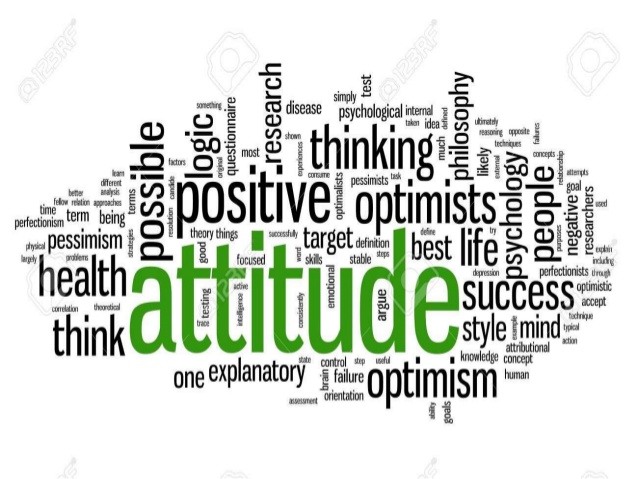
We all have our own opinions about people, situations, issues or life. These opinions are formed over time with experience and are an example of attitude. An attitude is basically a state of mind or a set of views regarding some topic. It is accompanied with a tendency to act in a particular way with regard to attitude object. Attitude are not a behaviour in itself but rather it represents the tendency to behave in a certain way.
Attitudes have an evaluative feature i.e. they are either positive or negative. Attitudes are formed through interaction and changes throughout our lives through experiences. Some attitudes however, remain fairly constant. Such attitudes get incorporated in our lives as a part of our belief system and moral values. Beliefs and values differ for every individual. For some they may change over time while for others they may never change.
In general, attitudes are learned. This learning can take place through association, observation, exposure, culture etc. In early age group, attitudes are learnt by being rewarded or punished. For example, praising(rewarding) a child every time he does his share of chores will lead to a positive attitude formation towards doing chores. Most of the attitudes are formed by modelling or observation. During pre teen years or even teenage in that matter, important attitudes about life and related matters are formed by observation of living environments. Social norms also shape our attitudes. Social norms are exclusive to their cultures and become a part of our social cognition.
Family and school environment especially during the early years play a significant role in shaping the attitude of an individual. Most of the attitudes are formed through direct personal experiences which bring about a drastic change in our opinions towards people and our own life. Over the years, media has become an important source and factor for attitude formation. It provides an exposure to vast amount of information, both positive and negative. Internet is also a very powerful factor for attitude formation.
Change in the attitude depends on it’s existing nature. Nature of attitude includes it’s positivity or negativity, simplicity or complexity and centrality. Generally speaking, positive attitudes are easier to change. Extreme attitudes and central attitudes are rather difficult to change. Attitude may change in the same direction as the existing one, or it may change in the opposite direction. It has been observed that attitude changes when message comes from a highly credible source. A message in the information that is presented to change the attitude. Whether the message contains a rational or emotional appeal also makes a difference. People who have a more open and flexible personality change more easily then those who are less open. People with low self esteem and low confidence also tend to change their attitudes more easily than those with high self esteem and confidence. People with strong prejudices do not easily change their attitudes. More intelligent people change their attitude less easily but sometimes they change it more willingly than others.

https://youtu.be/xxisEC4nF1A

https://youtu.be/tohd2AJ2bvI

Aggression

Aggression and violence are amongst the numerous issues our society is facing. Both of these terms are related and yet different from each other. Violence refers to behaviour which is forceful towards someone or something and may cause harm. Aggression refers to the behaviour towards someone or something which is intended to cause harm. The key difference between the two terms lies in the intent in which an act is done.
Aggression therefore is a more serious problem. It ranges from small actions like using harsh words, unnecessary criticism, having hostile feelings etc. to larger and more concerning actions like ragging, bullying, child abuse, murder etc. In some cases the act of aggression may be done to obtain something while in some other cases the aggressor does not wish to obtain anything from the victim. The former case is termed as instrumental aggression while the later is called hostile aggression.
There are several causes of aggressive behaviours. Some psychologists argue that aggression is an inborn tendency in humans just like it is in animals. It is a sort of defence mechanism. It gets triggered by physiological mechanisms. There are several factors that cause this arousal.
Childhood experiences also shape the tendency of aggression in individuals. It has been observed that those children who were brought up in a hostile environment like parents using physical punishment often tend to grow as aggressive individuals. It is not very clear why this happens though. Some say that children imitate their parents behaviours, others say that it is the anger and resentment they bottle up during childhood which comes out in the form of aggression.
Aggression is often caused by frustration. Frustration is marked by a sense of helplessness when we’re unable to achieve something. Aggression is in fact an expression of frustration. People in frustrated situations often show more aggression than others. This sort of aggression is often projected towards a weaker person who is less likely to retaliate. An example of this is bullying. However, it is not necessary that frustrated person is always aggressive. It largely depends on a person’s personality. Some people are inherently short tempered and show more aggression than others.
People mostly learn aggression by observing others displaying it. Some researchers say that exposing children to aggression shown on television or media causes them to learn aggressive behaviours. Sometimes people show aggression when unnecessarily provoked.

Aggression serves as a root cause for various social issues out there and therefore it needs to be curbed down. The most important step in ding so is preventing children to learn aggression. Aggressive behaviour of any form should be unappreciated amongst children. Using punishment as a tool for discipline should not be done. Portraying aggression as a heroic behaviour must be stopped as it make children model that behaviour. Television and media should be regulated for children. Another way is to reduce frustration. Having equality and justice is a key in doing so. Encouraging people to talk about their problems of frustration can significantly reduce the occurrence of aggression. Lastly, having a positive attitude toward peace and non violence should be taught to children.

Stress

Stress is the response of an individual towards an event which is beyond his/her ability to cope. When faced with a challenging or threatening situation, an individual undergoes stress. Stress is not necessarily bad, in fact term eustress is used to describe the stress that is good for an individual. This is the least level of stress which actually helps a person to achieve peak performance and managing problems. If however, this stress starts growing inside, it causes body’s wear and tear. It is called distress and it is this stress that is unhealthy for an individual.
Stress is caused by external events. These events are called stressors. Some examples of stressors are: crowding, examination pressure, bad relationships etc.
Individuals responses towards a stressor varies from one another. It largely depends on perceived events and how they are interpreted. Past experiences often help in dealing with stress. If an individual has handled a similar stressful situation well in the past, he/she is more likely to do the same in the present. The opposite also stands true. An individual who beliefs that he/she is in control of the situation, often experience less stress than those who have no such sense of personal control. Self confidence is a key in overcoming stress.
When faced with stress, our body produce a stress reaction. It can be physical, emotional or behavioural or a mixture of all. The first reaction is usually the physiological one, wherein adrenal glands release hormones responsible for fight or flight response. During stress, a hormone named cortisol is also released in our body which provides energy. Emotional reactions may include negative feelings like fear, anger, anxiety or depression. Behavioural reactions however depend on individuals that whether they choose flight response (forget everything and run) or fight response (face everything and rise).
How an individual responds to a stressor aslo depends on the nature of stress. The intensity and complexity of a stressor as well as whether it is predictable or not influences the nature of response it induces. It has been observed that stress which is intense, prolonged, complex and unpredictable have a more negative effect on people in comparison to the stress which is less intense, short lived and predictable.
There are various types of stress. Physical stress relates to the stress that is related to our body. It is much easier to deal with than the psychological stress which generates in our minds. This psychological stress is very subjective and unique to the person experiencing it. It includes frustration and internal conflicts. Social pressure, life events and daily hassles or experience of traumatic events also contribute to psychological stress.
Stress has various adverse effects on an individual. Emotional effects like mood swings, anxiety, depression, increasing tension, decreasing confidence are very common. Physiological effects include increased heart rate, slow digestion, hypertension etc. People may even suffer from mental overload and loose their ability to make sound decisions. Poor concentration, disrupted sleep patterns, reduced work performance are some other effects of stress.