Self-Defense

We’ve all heard about self-defense since we were young, and living in the terrible world of the twenty-first century, when no one is entirely safe, it’s a responsibility to recognize that we are the only ones who can protect ourselves.
If we look at the most fundamental definition, it is the act of defending oneself from external danger.

Photo by cottonbro on Pexels.com

The “right to self-defense” is a legal term that refers to the use of self-defense in legal jurisdictions. It is critical to know how to defend yourself in today’s environment.

According to statistics, one out of every three women will be the victim of a violent attack at some point in her life. It is taught in training to block an assault, but it is much better if one can escape it!

As a result, the training should also cover how to avoid an attack in the first place. Which form of karate do you want to learn to defend yourself?

Knowing something as powerful as Karate gives you the confidence and strength to believe that you are not weak and that you have the ability to achieve your goals.

Self-defense techniques


1)Jujutsu\sTaekwondo

2)Krav Maga is a martial art that was developed in Israel.

3)Aikido

4)Wing Chun is a martial art that originated in China.

5)Brazilian Jiu-Jitsu is a martial art that originated in Brazil.

6)Muay Thai is a type of Thai boxing.

You may wish to learn self-defense for a variety of reasons. The most obvious reason is that you want to be able to protect yourself or your family if you ever find yourself in a dangerous situation. It is extremely rare to come across someone who wishes to hurt you. You are extremely vulnerable if you have no preparation for dealing with such issue.

According to the Department of Justice and the Centers for Disease Control and Prevention, one out of every six women has been sexually assaulted or attempted sexually assaulted.

The odds were 1 in 33 for men. No attack is ever the fault of the victim, and not all attacks can be prevented. However, we do know that mastering self-defense can assist victims in stopping or escaping their abusers. Self-defense training is required in a variety of situations, including rape.

A mugging or a house invasion are both circumstances in which self-defense training may help you better deal with the threat, defend yourself and your family, and find strategies to limit the harm the criminal can cause. It’s all about how to protect oneself and think effectively in high-pressure situations. It’s all about developing the confidence to better control situations that would otherwise be utterly out of your control.

Slowly, over time, the corporation became aware of the problem and began holding workshops for women working in the same industry. In fact, we now believe that every parent should include self-defense lessons in their child’s education. Self-defense has become a need for every growing child and individual today, alongside school, art programmed, and swimming sessions.

  1. Suitable for children
    It instils discipline in youngsters, provides a pleasurable pastime, and aids in the development of confidence. Children who acquire self-defense skills are more alert of their surroundings and are taught how to defend themselves against assailants of all ages, including adults and children. It teaches students how to deal with regular bully scenarios without turning become bullies.

2. Women will love it.
Self-defense can be beneficial to women and young girls for a variety of reasons. It boosts self-assurance. It also aids them in levelling the playing field with an assailant who may be far larger than they are. It’s also beneficial for any lady looking for a physical, hands-on workout.

3. Men will love it.
For the same reasons as women, males can benefit from this training. The training plan is a wonderful all-around workout that complements any other sports activity.

4. Excellent for the Elderly
We all know that age has little to do with learning new things. Older people can learn new practices, which will help them improve their health.

Photo by Anton Belitskiy on Pexels.com

Advantages of Self-Defense

Self-defense provides you the tools and abilities you need to analyze a dangerous situation with confidence and manage it successfully. Nothing could be more powerful than that. It aids in the development of confidence and control over your anxieties, and confidence is a superpower in and of itself.

Self-defense enhances your concentration and focus. As a result, you will learn to concentrate under stressful situations.

It allows you to learn simple maneuvers as well as more complex skills to defend oneself during an attack. Knowing how to defend oneself can make you feel less worried in public or afraid when you’re out late at night alone.


Self-defense is a fun and effective method to strengthen your body, burn calories, and enhance your overall health. Exercise also improves your mood, which is beneficial to persons who are suffering from depression.

One must be both physically and emotionally prepared for an attack. By learning self-defense, you will maintain your muscle and endurance through practicing along with other exercise activities. Thus improving your overall fitness will improve.

Your awareness of your surroundings will improve as a result of self-defense. You never know when you’ll be attacked; no one anticipates being attacked, so we must always be aware of our surroundings.

Improving balance not only includes the physical balance of your core muscles but also a mental balance for improving your focus. Self-defense teaches you how to focus on your target while you control your body. Not having balance, it is almost impossible to fight. Body control and balance help in protecting ourselves mentally and physically.

If you get into a battle, movement is crucial. You can’t just stand there and wait for your adversary to strike again; you have to move and react instinctively. It will aid in the development of your reflexes and the acquisition of a fighter’s reflex, allowing you to move fast and strategically in a situation like this.

.

WHAT DOES ADOLESCENCE NEED?

Need for independence

With the growing physical and mental development an adolescent wants to express his opinion independently, to take part in different social activities and to become self-dependent like any adult member of the society. On attaining adolescence, the child who earlier used to depend on his elders, finds himself full of life and energy and cannot help but to take part in the diverse activities of the society. Thus, he defies the dominance of his elders and wants to proceed in life independently

Need for self-recognition

The adolescents not only want to take part in different social activities but also want self-recognition. They want to attract attention of other people by showing their abilities. The children in adolescence want to project themselves before the society in such a way so that people can appreciate their qualities and give them due respect and recognition.

Need for self-expression

There is a great desire among the children in adolescence to express their feelings, thoughts and ideas. At this age, every child wants to express himself in his area of proficiency like sports, dramatics, studies, music, literature, art or any other medium.

Need for social life

One of the important needs of adolescents is to take part in the greater social environment. Before entering into the age of adolescence, children do not get much scope to mix with people outside their family. But as they attain adolescence children want to experience the greater social-life and want to get involved closely in different social activities. This need for social life gets an outlet when the adolescents involve themselves in the activities of different social institutions like club, social welfare committee, community service etc.

Need for self-reliance

Another important need of children in adolescence is the need for self-reliance. There is a great desire among the children of this age to become self-reliant as soon as they attain puberty. And they start dreaming about their future professions and the ways to establish themselves in their respective fields. The children of this age are also very eager to acquire professional qualifications according to their choice.

Need for Philosophy of life, morality and need to know the unknown

The children in adolescence want to have a philosophy of life, a clear concept of morality and want to know all the things which are unknown to them. They have a lot of inquiries regarding the basic purpose of life. They want to know how human life can be goal-directed and what is the main aim of life. When the children attain puberty, they also indulge in a great deal of thinking over the concept of right and wrong, good and bad. They want to evaluate all the activities of themselves and people around them in accordance with the concept of right and wrong. There is always a tendency among them to do whatever is morally right. And if they do something morally wrong, they go through terrible mental agony. At adolescence, there is also a great desire among the children to know what is unknown to them. The new discoveries of science have a great influence on the minds of adolescents.

Need to satisfy sex-related curiosity

As the children attain puberty they develop a deep sex-related curiosity. This curiosity greatly perturbs them as the result of natural outcome of their sexual development. First, they try to satisfy this curiosity by natural means. But later, by being ignored or scolded by the elders, they try to satisfy this curiosity through abnormal ways. Adolescence is one of the important stages of growth and development of the child. At this stage a unique disturbance develops in the mind of the child. According to modern Psychologists, this disturbance in the mind of the child is not an essential outcome of his physical development, rather it occurs in the mind of adolescents because of unfavourable environment.

Body Positivity

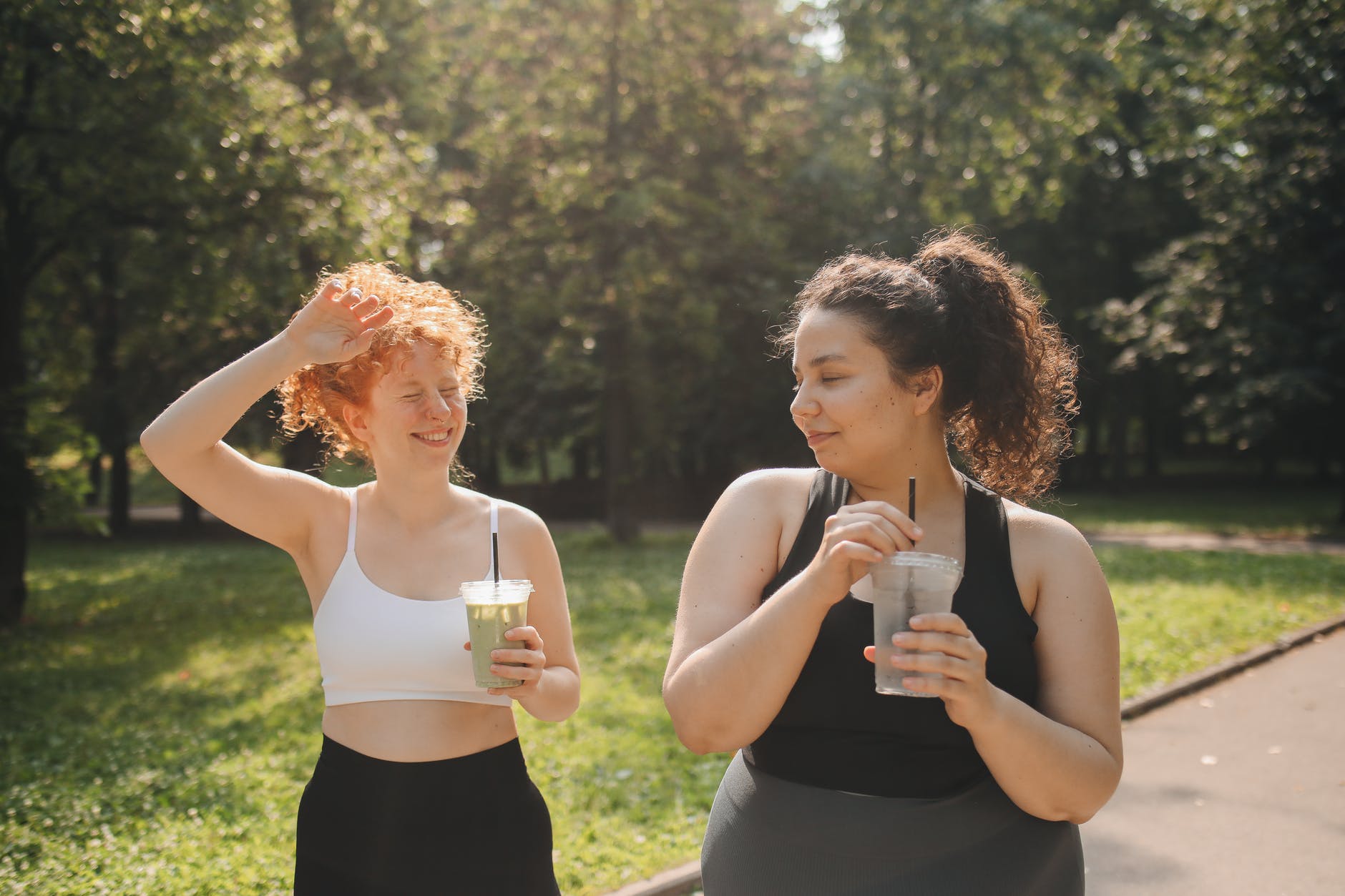
Body positivity is the belief that everyone deserves a good body image, regardless of how society and popular culture define ideal shape, size, or appearance.

Photo by Polina Tankilevitch on Pexels.com

The following are some of the goals of the body positivity movement:

1)Questioning society’s perceptions about the body

2)Advocating acceptance of all people’s bodies

3)Assisting people in developing self-esteem and acceptance of their own bodies

4)Confronting unattainable physical standards

Body positivity, on the other hand, is about more than just questioning how society views people based on their physical size and shape. It also acknowledges that race, gender, sexuality, and disability are frequently used to make judgments.

Body positivity also tries to educate people on how popular media themes influence people’s attitudes toward their bodies, including how they feel about food, exercise, clothing, health, identity, and self-care. People may be able to create a healthier and more realistic relationship with their bodies by better comprehending the impact of such forces.

HISTORY OF BODY POSITIVITY

Body positivity has its origins in the late 1960s fat acceptance movement. Fat acceptance aims to put an end to the culture of fat shaming and prejudice against those who are overweight or obese. The National Association to Advance Fat Acceptance was founded in 1969 and is still working to change the way people talk about their weight.

When a psychologist and an individual who had undergone eating disorder treatment launched the website thebodypositive.org in 1996, the phrase “body positive” was coined. The site provides information and instructional materials to help people feel good about their bodies by shifting the focus away from dieting and exercising in unhealthy ways.

In its current form, the body positivity movement emerged around 2012, primarily focusing on opposing unrealistic feminine beauty standards. As the movement gained traction, the emphasis shifted from weight acceptance to the idea that “all bodies are beautiful.”

Despite the fact that body positivity is becoming more mainstream, many individuals are still unsure what it entails. One of the reasons why body positivity is so misunderstood is that there are so many diverse interpretations of what the movement entails.

REASON BEHIND BODY POSITIVITY

One of the main goals of body positivity is to address how body image affects mental health and well-being. People’s feelings about their appearance and even how they assess their self-worth are influenced by their body image. According to research, having a bad body image is linked to an increased risk of mental illnesses such as depression and eating disorders.

A person’s subjective perception of their own body—which may differ from how their body actually appears—is referred to as body image. Body image feelings, emotions, and actions can have a significant impact on your mental health and how you treat yourself.

The creation of one’s body image begins at a young age. Even small infants, however, can experience body dissatisfaction. More than half of girls and nearly a third of boys between the ages of 6 and 8 believed their ideal body weight was smaller than their present weight, according to a research published by Common Sense Media. The findings also found that 25% of children had tried some form of dieting activity.

While the concept of body positivity is meant to make people feel better about themselves, it is not without flaws and criticism.

One issue is the notion that body positivity entails people doing whatever they think they need to do in order to feel good about their appearance. Unfortunately, people are constantly assaulted with messaging implying that smaller, fitter people are happier, healthier, and more attractive.

Body positivity is meant to promote acceptance and love of one’s own body, yet it can be a struggle that adds to the pressure and unrealistic expectations. The idea of body positivity is that you should modify how you feel about yourself, yet it can also be seen as yet another demand.

SELF CARE IN IMPORTANT

Self-care can sometimes be misconstrued as a means of altering or controlling one’s looks, but it should instead focus on activities that make you feel good about the body you have now.

Respect yourself and your body. Consume nutritious foods to keep your mind and body in good shape. You should exercise because it makes you feel strong and energized, not to change or control your physique.

Remove profiles from your social media feeds that make you feel bad about yourself. You’re less likely to feel good about yourself if you’re continually comparing yourself to others.

Follow accounts that pique your curiosity and leave you feeling uplifted. Many Instagram accounts, in example, are solely dedicated to showcasing perfection or an idealized view of the body.

While it may be difficult, improving the portrayal of all body types in popular media may aid in the fight against poor body image.

SECRET OF NATURE’S PEACE IS PATIENCE!

Forget hard work , Patience is the key to success .

You know what is lacking in today’s generation ? It’s not hark work guys , it’s patience rather. Patience (or forbearance) is the ability to endure difficult circumstances. Patience may involve perseverance in the face of delay; tolerance of provocation without responding in disrespect/anger; or forbearance when under strain, especially when faced with longer-term difficulties. Having the ability to be patient and continue on the journey towards achieving your goals can help you understand that consistent hard work and reflection will generate successful outcomes in your life. If your just expecting everything to come to you within a short period of time, you will end up sadly disappointed and frustrated when a setback or challenge comes your way. Having Impatience can lead you down a road of disappointment and you will eventually give up on achieving that goal or starting up that business. If you are patient enough then whatever the problem is , you will pass it with flying colors. Being impatient leads to greater problems & greater problems leads to stress & then & there stress leads to health issues . Your whole life depends on how patient you are , & it is your patience only which decide how efficient you are in solving a particular problem

It is very sad to know that today’s generation is lacking patience , when they want a particular item then they want , irrespective of the their age group or their understanding of that item , this is what lacking patience means . If they are trying their hand at some new place , there also they lack patience , they want the result early & this urge of getting every thing at first leads to hurdles in their way.

The skill of patience is not only important in life but also in forming strong personal relationships with your friends, partner, employees, family, and other important people who are in your life. Expressing patience towards them shows how caring and supportive you are towards them. Being impatient brings frustration in your life & hampers you inner peace. Bring inner peace into your life and stress less by being patient. Your mind and body will thank you for it in the long run. The skill of patience can be hard to master but developing that skill overtime can really help you out in your life. Being patient will help you taking better decision in you life. So here we can conclude that being patient enough will lead to better mental health .

Let’s end this article with a beautiful quote , ” PATIENCE IS NOT THE ABILITY TO WAIT , BUT THE ABILITY TO KEEP GOOD ATTITUDE WHILE WAITING”.

How To Practice Mindfulness In Your Everyday Life

The word “mindfulness” is talked about a lot lately, but really what exactly does it necessarily imply? Its origins may be traced back to Buddhist and Hindu beliefs, and it arose from the concepts of enlightenment and nirvana. It is defined as the practise of mindfulness and health of the body, mind, and soul. It is wellness in the sense that it extends beyond eating well and exercising; mental wellbeing, inner peace, sexual health, and so forth.

Everything seems to be quicker, noisier, and ruder nowadays. Everyone around us appears anxious and distracted, their eyes locked to their phones. In this fast-paced world, adopting mindfulness techniques on a regular basis may appear to be a difficult job, but it isn’t as far-fetched as it may appear.

Merely checking in with yourself for 10 seconds may educate us to gain clarity of body and mind, increase productivity all through the day, and empower us to take some responsibility for our mental health. Life might be difficult, but there is never too much happening on to treating yourself as a buddy to keep in touch with during the day.

Here are some ways to practice mindfulness in your everyday life:

Self-care is crucial

Self-care is a means of caring for oneself in the most fundamental ways: allowing yourself to recharge and loving yourself as you would a loved one. Everybody’s experience with mindfulness and mental clarity will differ. It could be meditation, exercising, getting a massage, writing, tidying, or something else.

This idea can also change depending on whether you are an introvert or extrovert. Knowing yourself, your tastes and preferences, and from where you draw your energy is a good first step in treating yourself as a friend.

Spend time with people who are driven and goal-oriented

Whenever it comes to becoming more conscious of your own emotional magnitude, aligning yourself with individuals who value similar habits is a wonderful place to start. Whether that’s around friends, family, or coworkers, the individuals you spend your time with have a greater effect on your everyday routines than you think. Trying to make mental check-ins a goal begins with you, but it can be a tough goal to achieve on your own.

Living mindfully benefits people near you as well as your loved ones. People can gain from exposure to this attitude if you regard yourself with care. Your good energy will wear off on them, regardless of whether they like it or not, and supply them with the compassion, love, and understanding they need.

Improve your work-life balance

When attempting to enhance your job performance, it is natural to get overly focused on your work and ignore your personal life. It is important to understand that you can seldom do better on the job if the other side is in disarray. You will feel anxious, and it will be difficult to concentrate on your task. A healthy work-life balance reduces stress and contributes to the development of a well-rounded individual.

Remember to include your personal hobbies and interests. Maintain a social life so that you have someone to share your trip with. In addition, expand or start a pastime. Taking care of plants, for example, is a fantastic way of spending time off from work. Being surrounded by nature is beneficial because it soothes the mind and stimulates creativity.

At Least 10 Minutes Every Day, Take a breath, Relax, and Repeat

Setting an alarm, pausing whatever I’m working on, closing my eyes, taking calm breaths, and using this time to really think about three things I’m thankful for on that particular day has been useful beginner-level mindfulness practices that I’ve done (and liked) in the past. It helps me to check in with myself, promotes clarity of mind, and generates a pleasant environment.

Regardless of what your views are, prayer may be a powerful technique for centering yourself, reducing stress, and assisting you in relinquishing control over things you can’t influence. It is comparable to meditation in that it demands a similar state of mind.

A Discussion About Our Mobile Phones

A mobile phone, also known as a cell phone, is something that all of us are familiar with and own. When the mobile phone was initially introduced, it was used primarily for phone calls and messaging. Today, phones have a computing speed greater than even some larger technological devices like a computer or television, and are so technologically advanced that we do not have to bother with most physical actions that take up time and effort. All of it can be done through the phone and the internet available on it, whether it be banking, paying bills, ordering something, etc. Furthermore, we can stay connected through phones with friends and family on the other side of the globe, through means such as video calling and multimedia messaging. A world of social media has opened through the phone that helps us connect with people all over the planet. However, like every other device, the mobile phone also has its own disadvantages.

The Good and the Bad

Possibly the biggest advantage of the mobile phone is that it has helped us stay connected to the people in our lives. This has occurred not only in the form of voice calling, but now also through video calling and social media contacts. It makes day-to-day life so easy and efficient, and has a range of tools that are accessible to us. For example, we can check the weather, the route to our destination, and use a calculator; all on our phones. Furthermore, it is perhaps the biggest source of entertainment in today’s day and age, with a multitude of games and mass media all available on it. Apart from these, the access of internet through our phones has meant that we can perform all our functions and meet all our life’s requirements through this simple device. It acts as a source of a large amount of information about the world, access to things like YouTube and Twitter, and allows to conduct monetary transactions all through the touch of a finger. In this sense, it is an amazing multipurpose, all-in-one device which is a necessary in our lives.

However, the mobile phone can also be the source of distress and disadvantage in one’s life. People are prone to addiction to their mobile phones, and end up using them for hours on end. This means that there is a lack of real-life communication and interaction, as people get sucked into the online world of their phones. Perhaps the most pressing concern today, especially among teenagers, is social media addiction. People get addicted to social media which has wide-ranging effects on their personal health, both mental and physical. Mobile phones also may cause health hazards, as they emit blue light and radiation which can damage brain cells. Furthermore, the mobile phone has also been the primary cause for lack of privacy in today’s world, as all our personal information is available for everyone to see. It is easy to get pulled into the world inside our phones and waste countless hours of our time on it. The phones almost become our lives, and this means that losing our phones is almost equal to losing our lives.

Conclusion

The mobile phone is a fantastic and necessary invention, but we must keep in mind that it comes with its own curses. How the mobile phone affects our lives depends on how much importance we give to it and how much we use it. It is all about finding a middle-ground in such a case, where you are not addicted or living in in your phone, but also not completely neglecting it and how it can enrich your life and make it more convenient. Regardless of its shortcomings, it is impressive to see how far our society has come through the invention of the mobile phone. Now we have everything within the reach of our hands, and the mobile phone has brought about a revolution in the lives of people in this century.

Living Life Intentionally

People, especially those in young adulthood or in their middle ages, often find themselves questioning their life and purpose. You might find yourself wondering, what am I doing? Or, what should I do? The answer to these questions differs from person to person, and what it means to live intentionally also varies depending on the person. In case an individual is not able to find an answer to these, there can be a certain discomfort or disappointment as they feel lost and without purpose. However, there is a basic framework that can be adhered to which helps everyone one of us live intentionally.

Some important qualities

Firstly, we must learn to nurture wisdom in ourselves. Wisdom means that we are able to recognise what is good for us, what is bad for us, and what we are indifferent to. It is easy to understand what is good for you, like honesty, kindness, empathy, and what is bad for you like, dishonesty, greed, jealousy. In the indifferent category come the things that are not completely good or bad, like money, success, possessions, etc. You should not be too worried about whether you have a lot of these things or not, as they do not define your life’s worth.

Next there is temperance, which includes things like self-restraint, self-discipline and self-control. It is about balancing the short-term gains with the things that are good for us in the long-term. It also means that there should be moderation in all things, whether that be eating, watching TV or even working. Learning to exhibit self-control in your life and work towards things that provide long-term rewards rather than instant gratification will work wonders in your life. The classic example of this is exercise, which does not have any immediate results unless we are disciplined and stick to it, and after a while the hard work will show.

Following this is courage, which is not the elimination of fear or anxiety, but rather feeling the fear and anxiety and still acting in the right way. Courage is perhaps one of the most important qualities in life in general. When we are afraid of something, we should try to deal with that fear directly by leaning into it rather than running away from it. This is a display of courage. For example, if someone is scared of jumping in the water, the best way to overcome this fear is to simply jump without thinking about it too much. It is the same in case we have to make a difficult decision in life, but we are afraid of making it. Being courageous means we make the decision despite the fear behind it.

Lastly there is the virtue of justice. This is not to mean justice like in our legal system or jurisprudence. Rather it means our duty to the society and to our fellow man. So, if we want to live intentionally, we also have to live in ways that are beneficial to other people. This implies being caring and considerate of people around us. Justice also means doing the right things whenever we can, which is called being righteous. Righteousness helps us in living fulfilling and happy lives, free from feelings of greed or anger. An example for this could be if you see someone drop money, would you act in service of yourself and be greedy (pick it up and take it) or be righteous and just (pick it up and return it). The latter should be the one to aim for.

Conclusion

Hence, it can be concluded that living life intentionally may mean different things to different people, but there are certain qualities we can follow to help in our search for meaning. It is important to highlight here that there is a difference between happiness and meaning. Happiness occurs at points in our life for short periods, while meaning enlightens our whole life and gives us direction. Every person’s meaning in life may be different, but it serves the same purpose, which is to give us purpose. So, finding meaning in our lives will help us to live intentionally, and will also help us to become overall better people.

WHY DO WE NEED TO BE PUNCTUAL?

Know the true value of time; snatch, seize, and enjoy every moment of it——-Lord Chesterfield

ITS MEANING

Punctuality means doing a work at the proper time. To account an engagement at 10 o’ clock in the morning and to arrive at the place to keep it at 10-30 does not become a gentleman. It annoys the other party and it harms the future of the caller. No one who is unpunctual in attendance to work can be depended on or trusted in. On the other hand, a punctual man is one who knows the value of time. Such a man is a perfect gentleman and everybody has faith in his efficiency and character.

IT GIVES A MEANING TO YOUR LIFE

Punctuality is important in every sphere of life. it is rightly said that punctuality is the crown of a king. It is the most precious jewel to the character of a man. A student has to be punctual at school or college. The manager of a big firm or its common clerk has to be punctual in his office. Equally it is necessary for a factory worker, a politician, or a statesman. The greatest value of punctuality is that it is a great time-saver. An unpunctual man is always worried about time. A student who is unpunctual in his class lags behind others in his studies, he creates confusion both for himself and for others in the class. He is considered a disturbing element and is looked down upon by his teachers as well as his classmates.

MISS IT AND WELCOME YOUR HARM

Many battles have been lost on account of unpunctuality. Many Cases in Courts of Law have been lost, because one of the parties did not come in time; many a train has been missed and business lost to unpunctuality. So, unpunctuality leads to dangerous consequences. Relation of free people knows the value of punctuality. Indians are now a free people and they should cultivate punctuality in everywhere. Unpunctuality is a vice and out of it are born other vices like dishonesty, falsehood, idleness and shirking of one’s duty.

So, we observe how punctuality plays a foremost role in anyone’s life. being unpunctual is a curse, we cannot be as winner as others. Besides, this rhythmic world demands punctuality so that all of us can be successful in life.

The Imposter Syndrome

What is Imposter Syndrome?

Imposter syndrome basically refers to internal feelings of insecurity or inadequacy that make you believe you are not as competent as people perceive you to be. Basically, it is when we feel like we are frauds, and that anything we have achieved in our lives has been because of pure luck or chance. While in some cases such feelings may cause people to start working harder and meet their own standards of competency, most often they serve as a constant source of anxiety. You may start overworking yourself and spending countless hours trying to get better to make sure no one ‘finds out’ about you.

Especially people who are highly skilled or who have achieved a lot and become successful in a particular field may begin to garner feelings of insecurity and feel that other people are just as skilled, if not even more skilled than them. They start to feel as if they don’t deserve their achievements and success, and that someone more qualified should have got them. Even some of the great people in history like Albert Einstein suffered from this syndrome. He believed himself to be an ‘involuntary swindler’ who did not deserve the recognition his work got. This shows how pervasive and powerful imposter syndrome is, where even a man like Albert Einstein who we now revere as a great scientist that contributed so much to the world, thought of himself as mediocre and undeserving of recognition or praise. This also shows there is no threshold of achievement that puts feelings of inadequacy at rest.

However, it is important to highlight feelings of imposterism are not only felt by highly skilled individuals. Everyone is susceptible to a phenomenon known as ‘Pluralistic Ignorance’ where we each doubt ourselves privately, but think we are alone in thinking that way because no one openly voices their self-doubt. Imposter syndrome is not necessarily a disease or an abnormality, and neither is it always tied to any mental illness like depression or anxiety. Every single person is prone to imposter syndrome, regardless of their race, gender, occupation or mental/physical health. The base cause of this is that we know ourselves from the inside, but we know others only from the outside, so we do not realise that everyone is flawed in some way, not only us. We know all our own shortcomings and weaknesses, but all we know about others is what they tell us, which is far narrower and edited. So we make the mistake of concluding that we have a lot more flaws than others do.

How to deal with Imposter Syndrome?

Perhaps the easiest and most common way to deal with imposter syndrome is to simply talk about it more. We slowly learn that many people around us suffer from the same problem, and become comforted by the fact that we are not alone in such ways of thinking. Once we have this awareness of the syndrome, we can combat it by collecting and revisiting positive feedback and reassuring ourselves of our competence. It also helps us understand that it is simply a negative way of thinking and is not always true.

Apart from this, we must also look inwards and start dealing with it on an internal level as well. This includes things like separating fact from fiction, where we must recognize that even though we have these feelings, they are not objectively true and that we are unreasonably doubting ourselves. We must also stop comparing ourselves with others and try to focus on our own standards of success, not everyone else’s. This is especially important in today’s age of social media, which is the primary cause nowadays for imposter syndrome. We must learn that social media is not real life and that we shouldn’t compare ourselves to what we see on it.

Still, it may be hard to completely eradicate these feelings, but having open conversations about it and self-reflecting and introspection definitely helps us in keeping them controlled. It highlights to us how common these experiences are and that we should not burden ourselves with them. This process of humanizing the world makes us understand that everyone is like us, with their own flaws and problems, and that we all deserve success and fulfilment.   

HOW MUCH ‘INSPIRATION’ DO WE NEED?

“THE PESSIMIST SEES DIFFICULTY IN EVERY OPPORTUNITY. THE OPTIMIST SEES OPPORTUNITY IN EVERY DIFFICULTY.” – Winston Churchill

EFFECTS OF INSPIRATION

The word “Inspiration” rings out many bells in one’s mind. It suggests many feelings such as promise and self-confidence which further charges up the other emotions to move forward in whatever domain one want to. Inspiration is a highly effective dose to bring out all the hidden personalities and characters in one’s disposition, which helps him or her to comprehend the potential and attain the set goals.

IT IS OMNIPRESENT

All the renowned and celebrated people who have made a mark in their life have been inspired and motivated at some or the other point of their life. We can take examples of people in the field of Art, Music and Medicine’ or in the field of Technology. Even politicians and great saints cannot be ruled out. One can get inspired in countless ways, it can be verbal, written or may be through some of the work done or an example set by the person they kind of became role models. When you carry a deep feeling for a person, you start trusting and have a blind faith in his thinking and philosophy and just start following the tracks without even being sure of that.

WE ALL NEED A MENTOR

The person you are impressed with or whom you ae following becomes your counsellor and you have to consider him like your ‘leader’. Only then, benefits can be gained and dreams can be appreciated. If we turn the pages of history Arjuna got so inspired after Lord Krishna’s sermons and he realized that if he did not listen to Lord Krishna at that time, then he will not be able to fight and protect Dharma’, as by that time he was totally influenced.

A TRUE LEADER ENKINDLES OUR FAITH IN THE ACTION

There are many saints who have earned name and fame in people’ s heart by simply following their ‘expert’ for an inspiration in life. So, an inspiration coming from the right person helps us to internalize our goals and we attain our mission Sometimes when we are depressed and are literally down in the junkyards, at that time a Comforting sentence or a gentle hand on the head gives us much required and desirable confidence and assurance. Such motivation goes a long way.

SUPPORT INSPIRATION

Therefore, one can work hard only if there is moral support and inspiration. As the saying goes that there can be perspiration only if there is an inspiration.

SELF-CARE

Self-care is the practice of taking care of our mental, emotional and, physical health. We must take care of ourselves and our well-being. We often don’t give time to ourselves because we are too busy or are occupied with technology.

People who prioritise self-care practices in their lives are often more likely to be happy, confident and, successful. It also shows people that you value yourself and your life. You instantly feel more productive and are in a state of peace with yourself.  

Here are a few things which you can do daily for self-care. These things don’t consume a lot of time and can easily be added to your daily routine.

Getting adequate sleep: It is a no-brainer that our body needs an adequate amount of sleep to function well. Sleeping for a good amount of time not only helps prevent health problems but also increases our productivity during the day. It also keeps us in a better mood and we are less likely to feel annoyed when things go wrong.

Doing mornings right: Every day is a new day and our day starts in the morning. So, we must do our morning right. Let’s start with waking up a little early than usual so we don’t have to rush to our work.

 The next thing is to not go on our devices, going on social media or thinking about work is not the best thing to do the moment you wake up. We wake up every morning with a positive thought and we need to maintain that so our day goes well.

We need to add an activity that allows us to give time to ourselves. Adding this activity will make us feel better because we are not just waking up to work but we have things that we do for ourselves in the morning.

The activity can be as simple as making your morning tea and drinking it while reading a newspaper, magazine, or book. You can also simply meditate or do yoga for 15 min. Giving yourself a peaceful time in the morning is important.

Giving your body nutrients: An important part of self-care is to take care of our health. Our body needs various vitamins and nutrients. So, make sure you eat food rich in vitamins. Eating healthy will fulfil your body’s needs and will also make you feel good about yourself. A healthy body leads to a healthy mind.

Get your body moving: Doing something physical every day is important. You can choose any activity of your choice. It can vary from an hour of the gym to a walk for 20 minutes. Anything that gets your body moving is considered a physical activity even dancing to your favourite songs.

Getting organized: You will never feel like good working or living in a cluttered environment. So, make sure that your things are organized and are kept properly. A lot of people also consider organizing things therapeutic as it helps them clear their thoughts. If you are someone who procrastinates a lot before cleaning or organizing there is a tip for you too. Every day set a timer for 10 minutes to organize things. This way you won’t feel pressured to work and you will feel accomplished after completing your tasks.

Me time: Giving time to yourself is the most important part of self-care. Me time will allow your brain to connect with yourself. It will help reduce stress and will instantly brighten your mood up. A few things you can do in your me-time are:

  • Cook something fun
  • Sing or dance
  • Create an art piece
  • Journal
  • Take a bubble bath
  • Paint your nails
  • Treat yourself

These things will allow you to enjoy time with yourself and, it will also make you appreciate yourself. Me-time is important because, before we enjoy and spend time with others we need to be happy in our own company.