Agriculture In India

Agriculture is the most important sector of India and largest contributor to India’s GDP and overall growth of socio-economic sector. It has played a significant role in providing livelihood to two-thirds of the population
India has been greatly dependent on agriculture for food production and imports. Green Revolution took place to improve Indian agriculture in 1960’s due to food crisis. This revolution involved adopting new irrigation facilities, high-yielding variety of seeds, better technologies, proper fertilizer and pesticide usage. This initiative steadily increased wheat and rice production in India. According to the recent survey, total food production during 2020-2021 year was approximately 296 million tones. India is among the 15 leading countries in the world to export agriculture products. Year 2020 has marked a high investment in the agricultural sector. Major companies like Nestle and Haldiram had made major investment in food industry.

Government initiatives to improve agriculture


Pradhan Mantri Mandhan Yojana was launched for small farmers. Under this initiative, farmers between the age of 18 to 40 will have to contribute Rs 55 to Rs 200 and by the time they reach their retirement age i.e., 60 years they will receive Rs3000 per month as pension.


Pradhan Mantri Kisan Samman Nidhi Yojana was launched to provide Rs 60,000 to those farmers who own less than two hectares of land in three installments.


On 1st July, 2015, Pradhan Mantri Krishi Sinchai Yojana was launched to provide better irrigation supply solutions to farmers. As per the budget of 2021-2022, Rs 4000 crore was enforced towards this this initiative.


To promote organic cultivation among a group of farmers in India, Paramparagat Krishi Vikas Yojana was launched. This inititiave is believed to increase domestic production.


National Animal Disease Control Programme was launched by Prime Minister Narendra Modi to work toward animal diseases related to foot, mouth in livestock.


Animal husbandry industry development was vital. Funds have been announced to improve this industry.
Electronic National Agriculture Market (e-NAM) launched in 2016 enabled e-marketing that provides a combined market for all the food products at a national level.


These initiatives have been helpful to farmers. Such programmes have given big relief to farmers and are continuing to support during this global pandemic.


Covid-19 impact on agriculture


Coronavirus has an adverse impact on many sectors, however growth in agriculture had been unpredictable due to distinction in essential and non-essential goods. During lockdown, many farmers had to throw out their yield to lack of transportation services and restrictions imposed on inter-city travel. Uncertainties in market was observed because of scarcity of money. Initially, certain productions could not make it to the market due to inability to sell it during lockdown. This resulted in increase in overall prices. Consumers had lost their jobs or went through salary cuts, which forced them to prioritize their need according their ability to pay. Demand for non-essential products had reduced has it did not fit in the priority list. Hoarding patterns were adopted by consumers due to uncontrollable demand for essential goods. Despite higher prices of essential goods, people consumed it by shortening demand for non-essential. Pulses, wheat flour, rice and had about 5%- rise in prices post-lockdown. Edible oil prices lowered with removal of restrictions and free distribution of food grains.


Covid has ruined overall food production and food imports. It has damaged Indian and global agricultural system. Farmers have been severely impacted by Coronavirus. Agriculture has not completely recovered but seems to gradually improve post-lockdown.

The Book I Have Recently Seen

 People call me voracious reader. In sooth, I read books extensively. Very recently I have read Charles Dickens’ ‘David Copperfield’. 

David is a posthumous child. Just after his birth, his grandmother Pegotti left the house in rage because she expected a female child rather than a male one. David’s stepfather Mr. Murdstone is a hard-hearted fellow. He sends David to a Boarding School where David suffers inhumane torture in the hand of the Headmaster Creakle. By the by he meets Uriah Heep, a villain, who involves David into troubles and misleads him. By turn of fortune, David finds a job in a farm house and meets Agnes. She is an angel in David’s life. But David can not marry her as destiny prevents their union. Eventually David marries a doll wife Dora. She also can not last long in his life as Plague takes her away. By turn David meets Pegotti and gets her blessings. But she also departs him forever soon. Once again David has to go out in search of fortune and Agnes remains his good concell though they never come closer to each other by bond of wedding. 

In characterization and depiction of contemporary society, Dickens occupaies a distinct place in English literature. 

I have greatly enjoyed reading the novel. The episodes in the novel will remain ever vivid in my memory for many years to come. 

Online Classes is Mental Exhaustion for the Students Rather than Knowledge

In this pandemic who is not familiar with the word online classes which really helped in balancing the education system properly. Corona Virus is a real outbreak and had devastated almost every field but the only ground which remains unshakable was our education system and the credit goes to our expertise technology which helped us in coping up. Online classes are course conducted with the help of teach management system through which students can gets all the details of their studies. With the arrival of such hazardous virus made us all familiar with Zoom Meetings, Microsoft, and Google Meet, etc. arrival of online classes have enhanced our creativity level as well as made us all very much used to with our gadgets. These classes are very much self-paced and provide a great flexibility to the students in the journey of learning the courses. But as we all know every coin has two sides same goes in the case of these online classes too. If it has numerous positive aspects it too has many negative points which could be very dangerous for the students.

The students become very exhausted due to excessive use of mobile phones and laptops. Taking classes from bedroom or drawing hall sounds very cool but reality is something different students become extremely fatigue and exhausted from watching the screens consecutively. On 2020 it was officially announced that students will continue their studies via online mode but who thought that attending lectures are so boring. People think that latest mode of online teaching is very fashionable but then again the knowledge a person acquire is almost null. Staring the screen for long and long hours in a day seems very lethargic plus watching prerecorded lectures didn’t enhanced the knowledge of the students rather than produce the feeling of exhaustion in the mind of the students and as a result degrees and marks are more but knowledge is very less in this contemporary world. These additional assignments have increased burden and stress among the students very much. Online mode of teaching needs a lot of self-discipline but with the course of time decorum of the classes as well as motivation among the students are gradually decreasing. Classroom gives an environment which helps in effective learning but due to lack of proper environment students are struggling to achieve their goals. Arrival of corona virus has already affected our physical system and these online burdens have added an addition weight and increased physical problems like eye strain, excessive headache, fatigue, lack of interest and so on. Thus, the students are less interested in studies and more in passing the time. Another problem is network issue during these classes. Everyone has faced this network issue while attending the online classes and due to this problem students are less concentrated in studying and more in settling the network issues. Summing up that these online classes have balanced the education system a lot but in addition it has failed to provide as much as knowledge offline classes provide.

Colonisation of Asia(South East Asia)

South East Asia

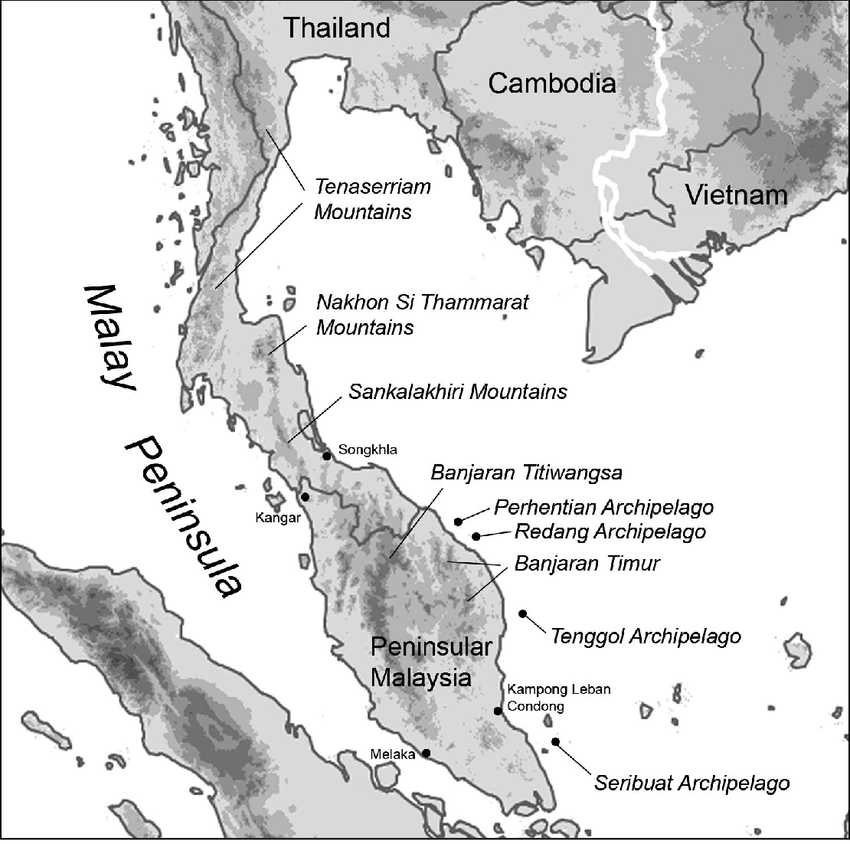
The term “south East Asia” has only been used since the world war. It denotes the area that originally covered Malaya, Dutch East Indies, Burma, Siam, French Indo-China and the Philippines. With the exception of Siam(Thailand), which remained independent,the area was divided between the Dutch, the British and the French.

Malaya Peninsula

When European traders crossed the Indian Ocean at the close of the 15th century, they came for the spices of South-east Asia. When the Portuguese conquered the great international emporium of Malacca for the king of Portugal, the empires of Sri Vijaya and Majapahit had split into many small states. Albuquerque,the Portuguese soldier who conquered Goa and Malacca, and his successors were interested in the spice trade. Towards this end they built a chain of fortified trading stations linked by naval power. Initially they did not interfere with the native rulers. After the arrival of the Dutch and the English there was a challenge to the presence of Portuguese and the rivalry of these three European powers dominated the seventeenth century.
               The Dutch began their conquest of the Portuguese settlements by capturing Malacca in 1641. After establishing a base at Batavia(now Djakarta) in 1619, they interfered in succession disputes among the neighbouring Sultans.Gradually they extended their control over Java, expelling the British from Bantam in 1682. They had already driven them out of the Spice islands after the Massacre of Amboina(1623) and by the seizure of Macassar (1667), thereby forcing the English East India company to turn to the China trade. The Spanish established themselves, begining from their conquest of Manila, which expanded into a larger territory of Spanish East Indies.

Anglo – Dutch Rivalry

Penang Island had been brought to the attention of the East India company by Francis Light. In 1786, the settlement of George Town was founded at the north eastern tip of Penang Island; this marked the beginning of British expansion into the Malay Peninsula. In 1819, Stamford Raffles established Singapore as a key trading post for Britain in their rivalry with the Dutch. However, their rivalry cooled in 1824 when an Anglo – Dutch treaty demarcated their respective interests in Southeast Asia. By 1826 Singapore and Malacca had been linked with Penang to form the strait settlements.

Between 1874 and 1895 to there was a civil war between the remaining five Malay states. The British intervened and signed an agreement with each of the Sultans. British Residents were appointed to the courts of Sultan’s,who had to act in accordance with the advice given by the Residents. In 1896 four of the states were formed into the Federated Malay States. In 1900 there were the Straits settlements,the four Federated Malay States and Johore. The population was about a million, of whom,half were Malay and the merchants, planters and workers in the ports and big plantations were Chinese.Economically Malaya was prosperous

Indonesia

The Dutch had occupied and Sumatra (Indonesia) as early as 1640. But they conquered the other outer islands of East India only in the second half of the nineteenth century,excepting the British possession of North Borneo, Brunei and Sarawak. Initially the Dutch were not interested in politics. But from the beginning of the twentieth century they adopted measures for the social and economic advance of the people they governed. Most Indonesians were fishermen and smell peasents and worked on European sugar, tobacco ,tea, coffee plantations. Heavy investments in these plantations and other concerns, and the discovery of oil in 1900 made Indonesia a valuable colony for the Dutch.

Burma

The British conquered Burma after fighting three wars. Burma remained part of India from 1886 to 1937. Burma was administered by a Lieutenant Governor with the assistance of a nominated Legislative Council. Burma with its fertility of soil became a big exporter of rice and most of South India was depended on Burmese rice. During World war II when Burma fell to the Japanese, south India experienced acute scarcity of rice leading to a famine.

Indo – China

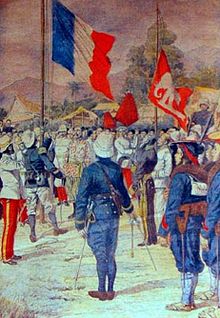
The French conquered Indo-China after strong resistance from the people. Starting in 1858, they brought the Indo- Chinese Union under their control by 1887. Indo-China consisted of Annam, Tongking ,Cambodia and Cochin-China. Laos was added six years later. Of them only Cochin-China was directly under French control, i.e., as a French colony. The remaining four were protectorates. Under this system,the local rulers remained, but they governed under the instructions of French Residents. Hanoi was the capital of the French government. Rice, rubber and wheat were the main exports. Laos reamained undeveloped.

French in Indo-China

The Philippines

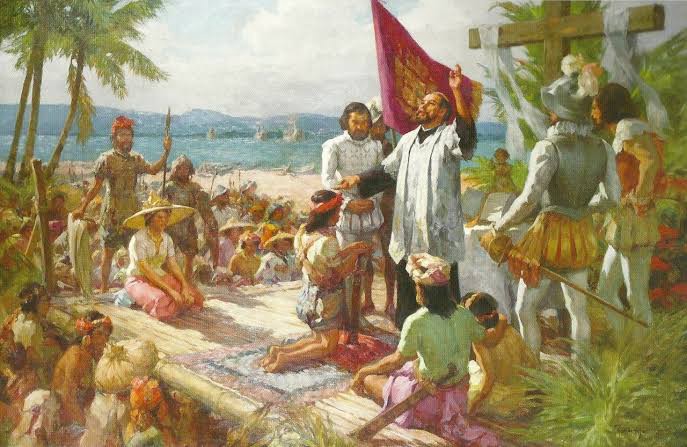
Spanish in philippines

Spain ruled the Philippines for over 300 years, imposing its language, culture and religion.Consequently the population became predominantly Roman Catholic. Nationalism developed among the Filipinos during the latter part of the nineteenth century. There were the serious revolts in 1872 and 1896, which were crushed by the Spanish colonial government. In 1898, however,spain was defeated by the United States in a war over Cuba, and as a result Phillipines became an American colony.

Siam (Thailand)

Thailand was spread the experience of foreign rule, though it too was greatly affected by the power politics of the Western powers. The administrative reforms of the late 19th century, continuing up till around 1910, imposed a Westernised form of government on the country’s partially independent cities called ‘Mueang’. Western powers, however, continued to interfere in its internal and external affairs.

Positive Psychology

Positive psychology is one of the newest branches of psychology to emerge. This particular area of psychology focuses on how to help human beings prosper and lead healthy, happy lives. While many other branches of psychology tend to focus on dysfunction and abnormal behaviour, positive psychology is centered on helping people become happier. Positive psychology is designed to “complement and extend the problem-focused psychology that has been dominant for decades,” explained the late Christopher Peterson, author of “A Primer in Positive Psychology” and professor at the University of Michigan, in a 2008 article published in Psychology Today. “Positive psychology is…a call for psychological science and practice to be as concerned with strength as with weakness; as interested in building the best things in life as in repairing the worst; and as concerned with making the lives of normal people fulfilling as with healing pathology,” Peterson wrote.

According to leading authorities in the field, Martin Seligman and Mihaly Csikszentmihalyi, positive psychology will help achieve “scientific understanding and effective interventions to build thriving in individuals, families, and communities.” In order to understand the field of positive psychology, it is essential to start by learning more about its major theories, applications, and history.

History of Positive Psychology

“Before World War II, psychology had three distinct missions: curing mental illness, making the lives of all people more productive and fulfilling, and identifying and nurturing high talent,” wrote Seligman and Mihaly Csikszenmihalyi in 2000. Shortly after WWII, the primary focus of psychology shifted to the first priority: treating abnormal behavior and mental illness. In the 1950s, humanist thinkers like Carl Rogers, Erich Formm and Abraham Maslow helped renew interest in the other two areas by developing theories that focused on happiness and the positive aspects of human nature.

General interest in positive psychology has grown tremendously since the concept was introduced. Today, more and more people are searching for information on how they can become more fulfilled and achieve their full potential.

Uses

Positive psychology can have a range of real-world applications in areas including eduction, therapy, self-help, stress management, and workplace issues. Some of the major topics of interest in positive psychology include: Character strengths and virtues, Flow, Gratifications, Gratitude, Happiness, Pleasure, Helplessness, Hope, Mindfulness, Optimism, Positive thinking, Resilience .

Impact of Positive Psychology

Some of the major findings of positive psychology include: Money doesn’t necessarily buy well-being, but spending money on other people can make individuals happier, People are generally happy, Some of the best ways to combat disappointments and setbacks include strong social relationships and character strengths, While happiness is influenced by genetics, people can learn to be happier by developing optimism, gratitude, and altruism, Work can be important to well-being, especially when people are able to engage in work that is purposeful and meaningful.

Potential Pitfalls

Positive psychology is often confused with positive thinking, and misconstrued as self-help tactics rather than research-backed theories. Positive thinking is a way of thinking ourselves into better behavior and greater resilience, rather than behaving our way into a different frame of mind. Positive psychology, on the other hand, is the scientific study of what makes people thrive. It focuses on behaviors that can lead to a more optimized frame of mind as well as on thought patterns that lead to more functional behaviors.

Welcome to your Space Opera

“May the force be with you”. This statement alone is enough to tell you how popular and impactful space operas are. Whether it’s Star Trek or Star Wars ( yes they’re both different) or Battlestar Galactica franchise and Robert A. Heinlein’s 1959 novel Starship Troopers, sci fi has always fascinated people.

Space operas, considered as sub genre of science fiction emphasizes fictional space warfare driven by technology and science fictional devices.

Art of Ayan - Grand Space Opera: Light Age - Keyframe Design

What’s even more fascinating , is that these fictional tales are no longer just part of the books or movies but have started to interlink with the present and probably the future.

 Ronald Reagan proposed the a plan of strategic defense initiative – a system of lasers and missiles and the critics and newspapers named it as Stars Wars.  This gained further resonance when Reagan described the Soviet Union as an “evil empire”.

Star trek , was etched with liberal themes that were dominating American society in the 1960’s  like racism, the nuclear arms race, the struggle between democracy and totalitarianism -all part of Star Trek.

This all mirrored the post Second world war scenario in the world.

.Kingpins , in these sci fi , in quest of more power, battle for higher political ground , which is a reflection of the current conflicts in the world.

Handmaid’s Tale, by Margaret Atwood, is set in a dystopian future, wherein women are forced to live as concubine under a fundamentalist and theocratic dictatorship. Wherein the women , are not even called out by their own names, but are named after their ” masters”. Women being forced to be subservient to men …Sounds familiar right ? This book is not exactly a space opera, but for sure classifies as sci fi and a thriller with jarring similarities to the past, present and a possible future.

Whether it’s shows like Black Mirror, West World, or movies like The Walking Dead, World War Z- they all hold testament to the horrifying yet reality we all are living in.

Increasing  political distress in the world, racial stratification and on top of that the armed powerful countries; this sounds like a plot of a space opera , sadly , we are all living it today .Launch of Space force by the Donald Trump; China and Russia also preparing to enter the competition; Business moguls having the access to space , this all is the beginning of something, – maybe of a new space opera- but this time it’s for real.

today news

 BREAKING NEWS

ईमेल से हुआ Raj Kundra के डर्टी पिक्चर प्रोजेक्ट ‘ख्वाब’ का खुलासा, दे…

BREAKING NEWS

ईमेल से हुआ Raj Kundra के डर्टी पिक्चर प्रोजेक्ट ‘ख्वाब’ का खुलासा, दे…

Viral News: 5 साल की बच्ची ने पांच मिनट में सुनाए 30 श्लोक, India Book of Records में दर्ज हुआ नाम

India Book Of Records: माहिका की मां ने बताया कि उनकी बेटी हर सुबह पूजा में श्रीमद्भगवद्गीता के श्लोक पढ़ती है. बेटी का नाम इंडिया बुक ऑफ रिकॉर्ड्स में दर्ज होने से वो बहुत खुश हैं.

Punjab: क्या Navjot Singh Sidhu और Amarinder Singh के बीच सब हो गया ठीक? मुलाकात की तस्वीर आई सामने

नवजोत सिंह सिद्धू (Navjot Singh Sidhu) की ताजपोशी से पहले पंजाब के मुख्यमंत्री कैप्टन अमरिंदर सिंह (Captain Amarinder Singh) से मुलाकात की तस्वीरें सामने आई हैं. इसके बाद राजनीतिक हलकों में यह चर्चा तेज हो गई है कि क्‍या अब कैप्‍टन और सिद्धू के बीच तल्‍खी खत्‍म हो गई है.

सीएम कैप्टन अमरिंदर सिंह ने चाय पार्टी रखी थीचाय पार्टी में सिद्धू-अमरिंदर सिंह की मुलाकात हुईसिद्धू की ताजपोशी में भी अमरिंदर सिंह शामिल होंगे

चंडीगढ़: नवजोत सिंह सिद्धू (Navjot Singh Sidhu) आज (23 जुलाई) पंजाब कांग्रेस के नए अध्‍यक्ष का पदभार ग्रहण करने जा रहे हैं और उनकी ताजपोशी में शामिल होने के लिए पंजाब के मुख्यमंत्री कैप्टन अमरिंदर सिंह (Captain Amarinder Singh) राजी हो गए हैं. सिद्धू की ताजपोशी से पहले उन्होंने अमरिंदर सिंह से मुलाकात की, जिसके बाद राजनीतिक हलकों में यह चर्चा तेज हो गई है कि क्‍या अब कैप्‍टन और सिद्धू के बीच तल्‍खी खत्‍म हो गई है.


कैप्टन-सिद्धू के मुलाकात की तस्वीरें आईं सामने

नवजोत सिंह सिद्धू (Navjot Singh Sidhu) के पदभार ग्रहण करने के पहले मुख्यमंत्री कैप्टन अमरिंदर सिंह (Captain Amarinder Singh) ने चाय पार्टी रखी थी, जिसमें सिद्धू शामिल हुए और अमरिंदर सिंह से मुलाकात की. इस दौरान पंजाब कांग्रेस के प्रभारी हरीश रावत (Harish Rawat) भी मौजूद थे. अमरिंदर सिंह और नवजोत सिंह सिद्धू के मुलाकात की तस्वीरें मुख्यमंत्री मीडिया सलाहकार रवीन ठुकराल (Raveen Thukral) ने शेयर

कैप्टन के विरोध के बाद सिद्धू चुने गए अध्यक्ष

मुख्यमंत्री अमरिंदर सिंह (Amarinder Singh) के कड़े विरोध के बावजूद कांग्रेस अध्यक्ष सोनिया गांधी (Sonia Gandhi) ने रविवार को नवजोत सिंह सिद्धू (Navjot Singh Sidhu) को पार्टी की पंजाब इकाई का नया अध्यक्ष नियुक्त किया था. कांग्रेस अध्यक्ष ने अगले साल राज्य में विधान सभा चुनाव की तैयारी को लेकर सिद्धू की सहायता के लिए संगत सिंह गिलजियान, सुखविंदर सिंह डैनी, पवन गोयल और कुलजीत सिंह नागरा को प्रदेश कार्यकारी अध्यक्ष नियुक्त किया था.

प्रियंका गांधी के एक कॉल से नरम पड़े अमरिंदर

अमरिंदर सिंह (Amarinder Singh) नवजोत सिंह सिद्धू (Navjot Singh Sidhu) को पंजाब कांग्रेस का अध्यक्ष बनाए जाने से नाराज चल रहे थे. हालांकि अब कांग्रेस की राष्ट्रीय महासचिव प्रियंका गांधी (Priyanka Gandhi) ने अमरिंदर सिंह से बात की और इसके बाद वह नरम पड़ गए. प्रियंका गांधी से फोन पर बातचीत के बाद अमरिंदर सिंह सिद्धू की ताजपोशी पर जाने को राजी हो गए.

नवजोत सिंह सिद्धू ने भेजा था आमंत्रण

अमरिंदर सिंह (Amarinder Singh) लगातार नवजोत सिंह सिद्धू (Navjot Singh Sidhu) से माफी की मांग कर रहे थे, लेकिन उन्होंने माफीनामा की बजाय कैप्टन अमरिंदर सिंह को कल (22 जुलाई) आमंत्रण पत्र भेजा था, जिसमें करीब 60 विधायकों के साइन थे.

BREAKING NEWS

सोपोर में सुरक्षाबलों ने ढेर किए 2 आतंकी, मारा गया लश्कर-ए-तैयबा का टॉ…

Maharashtra Rain Live: मुंबई के गोवंडी इलाके में बिल्डिंग गिरी, तीन लोगों की मौत, 12 घायल

महाराष्ट्र में लगातार हो रही भारी बारिश की वजह से नदियां उफान पर हैं और कई जिलों में बाढ़ जैसे हालात हो गए हैं. भारी बारिश की वजह से मुंबई सहित राज्य के कई अन्य हिस्सों में रेल और सड़क यातायात प्रभावित हुआ है. इसकी वजह से अधिकारियों को बचाव कार्य में प्रशासन की मदद के लिए भारतीय सेना और राष्ट्रीय आपदा मोचन बल (NDRF) को बुलाना पड़ा है. रायगढ़, रत्नागिरी और कोल्हापुर जिलों में कई नदियां खतरे के निशान से ऊपर बह रही हैं और संभावित बाढ़ की स्थिति को देखते हुए सतारा, सांगली और कोल्हापुर जिलों में भी एनडीआरएफ की इकाइयों को तैनात किया गया है. महाराष्ट्र में बाढ़ की खबरों पर लगातार अपडेट के लिए हमारे Live Blog के साथ बने रहें…


Viral News: 5 साल की बच्ची ने पांच मिनट में सुनाए 30 श्लोक, India Book of Records में दर्ज हुआ नाम

India Book Of Records: माहिका की मां ने बताया कि उनकी बेटी हर सुबह पूजा में श्रीमद्भगवद्गीता के श्लोक पढ़ती है. बेटी का नाम इंडिया बुक ऑफ रिकॉर्ड्स में दर्ज होने से वो बहुत खुश हैं.

Punjab: क्या Navjot Singh Sidhu और Amarinder Singh के बीच सब हो गया ठीक? मुलाकात की तस्वीर आई सामने

नवजोत सिंह सिद्धू (Navjot Singh Sidhu) की ताजपोशी से पहले पंजाब के मुख्यमंत्री कैप्टन अमरिंदर सिंह (Captain Amarinder Singh) से मुलाकात की तस्वीरें सामने आई हैं. इसके बाद राजनीतिक हलकों में यह चर्चा तेज हो गई है कि क्‍या अब कैप्‍टन और सिद्धू के बीच तल्‍खी खत्‍म हो गई है.

सीएम कैप्टन अमरिंदर सिंह ने चाय पार्टी रखी थीचाय पार्टी में सिद्धू-अमरिंदर सिंह की मुलाकात हुईसिद्धू की ताजपोशी में भी अमरिंदर सिंह शामिल होंगे

चंडीगढ़: नवजोत सिंह सिद्धू (Navjot Singh Sidhu) आज (23 जुलाई) पंजाब कांग्रेस के नए अध्‍यक्ष का पदभार ग्रहण करने जा रहे हैं और उनकी ताजपोशी में शामिल होने के लिए पंजाब के मुख्यमंत्री कैप्टन अमरिंदर सिंह (Captain Amarinder Singh) राजी हो गए हैं. सिद्धू की ताजपोशी से पहले उन्होंने अमरिंदर सिंह से मुलाकात की, जिसके बाद राजनीतिक हलकों में यह चर्चा तेज हो गई है कि क्‍या अब कैप्‍टन और सिद्धू के बीच तल्‍खी खत्‍म हो गई है.


कैप्टन-सिद्धू के मुलाकात की तस्वीरें आईं सामने

नवजोत सिंह सिद्धू (Navjot Singh Sidhu) के पदभार ग्रहण करने के पहले मुख्यमंत्री कैप्टन अमरिंदर सिंह (Captain Amarinder Singh) ने चाय पार्टी रखी थी, जिसमें सिद्धू शामिल हुए और अमरिंदर सिंह से मुलाकात की. इस दौरान पंजाब कांग्रेस के प्रभारी हरीश रावत (Harish Rawat) भी मौजूद थे. अमरिंदर सिंह और नवजोत सिंह सिद्धू के मुलाकात की तस्वीरें मुख्यमंत्री मीडिया सलाहकार रवीन ठुकराल (Raveen Thukral) ने शेयर

कैप्टन के विरोध के बाद सिद्धू चुने गए अध्यक्ष

मुख्यमंत्री अमरिंदर सिंह (Amarinder Singh) के कड़े विरोध के बावजूद कांग्रेस अध्यक्ष सोनिया गांधी (Sonia Gandhi) ने रविवार को नवजोत सिंह सिद्धू (Navjot Singh Sidhu) को पार्टी की पंजाब इकाई का नया अध्यक्ष नियुक्त किया था. कांग्रेस अध्यक्ष ने अगले साल राज्य में विधान सभा चुनाव की तैयारी को लेकर सिद्धू की सहायता के लिए संगत सिंह गिलजियान, सुखविंदर सिंह डैनी, पवन गोयल और कुलजीत सिंह नागरा को प्रदेश कार्यकारी अध्यक्ष नियुक्त किया था.

प्रियंका गांधी के एक कॉल से नरम पड़े अमरिंदर

अमरिंदर सिंह (Amarinder Singh) नवजोत सिंह सिद्धू (Navjot Singh Sidhu) को पंजाब कांग्रेस का अध्यक्ष बनाए जाने से नाराज चल रहे थे. हालांकि अब कांग्रेस की राष्ट्रीय महासचिव प्रियंका गांधी (Priyanka Gandhi) ने अमरिंदर सिंह से बात की और इसके बाद वह नरम पड़ गए. प्रियंका गांधी से फोन पर बातचीत के बाद अमरिंदर सिंह सिद्धू की ताजपोशी पर जाने को राजी हो गए.

नवजोत सिंह सिद्धू ने भेजा था आमंत्रण

अमरिंदर सिंह (Amarinder Singh) लगातार नवजोत सिंह सिद्धू (Navjot Singh Sidhu) से माफी की मांग कर रहे थे, लेकिन उन्होंने माफीनामा की बजाय कैप्टन अमरिंदर सिंह को कल (22 जुलाई) आमंत्रण पत्र भेजा था, जिसमें करीब 60 विधायकों के साइन थे.

BREAKING NEWS

सोपोर में सुरक्षाबलों ने ढेर किए 2 आतंकी, मारा गया लश्कर-ए-तैयबा का टॉ…

Maharashtra Rain Live: मुंबई के गोवंडी इलाके में बिल्डिंग गिरी, तीन लोगों की मौत, 12 घायल

महाराष्ट्र में लगातार हो रही भारी बारिश की वजह से नदियां उफान पर हैं और कई जिलों में बाढ़ जैसे हालात हो गए हैं. भारी बारिश की वजह से मुंबई सहित राज्य के कई अन्य हिस्सों में रेल और सड़क यातायात प्रभावित हुआ है. इसकी वजह से अधिकारियों को बचाव कार्य में प्रशासन की मदद के लिए भारतीय सेना और राष्ट्रीय आपदा मोचन बल (NDRF) को बुलाना पड़ा है. रायगढ़, रत्नागिरी और कोल्हापुर जिलों में कई नदियां खतरे के निशान से ऊपर बह रही हैं और संभावित बाढ़ की स्थिति को देखते हुए सतारा, सांगली और कोल्हापुर जिलों में भी एनडीआरएफ की इकाइयों को तैनात किया गया है. महाराष्ट्र में बाढ़ की खबरों पर लगातार अपडेट के लिए हमारे Live Blog के साथ बने रहें…

Software Verification Methods

Software Verification : Verification is the process of manually examining / reviewing a document. The document may be SRS, SDD, the program itself or any document prepared during any phase of software development.

The objective of any verification method is to review the documents with the purpose of finding faults. Many methods are commonly used in practice like peer reviews, walkthroughs, inspections, etc. Verification helps in prevention of potential faults, which may lead to failure of software. Verification and validation activities may be performed after the implementation phase. However, only verification is possible in the phases prior to implementation like the
requirement phase, the design phase and even most of the implementation phase.

1) Peer Reviews

Any type of testing (verification or validation), even adhoc and undisciplined, is better than no testing if it is carried out by person(s) other than the developers / writers of the document with the purpose of finding faults. We give the document(s) / program(s) to someone else and ask to review the document(s) / program(s). We expect views about
the quality of the document(s) and also expect to find faults. This type of informal activity may give very good results without spending any significant resources.

Many studies have shown the importance of peer review due to its efficiency and significance. Our thrust should be to find faults in the document(s) / program(s) and not in the persons who have developed them. The activities involved may be SRS document verification, SDD verification and program verification. The reviewer may prepare a report
of observations and findings or may inform verbally during discussions.

2) Walkthroughs

Walkthroughs are more formal and systematic than peer reviews. In a walkthrough, the author of the document presents the document to a small group of two to seven persons. Participants are not expected to prepare anything. Only the presenter, who is the author, prepares for the meeting. The document(s) is / are distributed to all participants. During the meeting, the author introduces the material in order to make them familiar with it. All
participants may write their observations on any display mechanism like boards, sheets, projection systems, etc. so that every one may see and give views. After the review, the author writes a report about findings and any faults pointed out in the meeting.

The disadvantages of this system are the non-preparation of participants and incompleteness of the document(s) presented by the author(s). The author may hide some critical areas and unnecessarily emphasize on some specific areas of his / her interest. Walkthroughs may help us to find potential faults and may also be used for sharing the documents with others.

3) Inspection

Many names are used for this verification method like formal reviews, technical reviews, inspections, formal technical reviews, etc. This is the most structured and most formal type of verification method and is commonly known as inspections. The presenter is not the author but some other person who prepares and understands the document being
presented. This forces that person to learn and review that document prior to the meeting. The document(s) is / are distributed to all participants in advance in order to give them sufficient time for preparation.

Important points are displayed by some display mechanism so that everyone can see them. The moderator, preferably a senior person, conducts such meetings and respects everyone’s views. The idea is not to criticize anyone but to understand their views in order to improve the quality of the document being presented. Sometimes a checklist is also
used to review the document. After the meeting, a report is prepared by the moderator and circulated to all participants. They may give their views again, if any, or discuss with the moderator. A final report is prepared after incorporating necessary suggestions by the moderator. Inspections are very effective to find potential faults and problems in the document like SRS, SDD, source code, etc.

The Pegasus Spyware

Spyware is a software with malicious behaviour with an objective to accumulate the details about an individual or organization and send it to the another entity (whether individual or org) that intend to harms the user. It violates the privacy of a person or firm and endangered their devices. One such spyware is Pegasus.

Pegasus, originally an Israeli spyware, named after the mythical winged horse Pegasus, can be transmit flying through the air to infect phones. It has potential to read the messages, tracking calls, stealing passwords, location tracking, accessing target mobile’s microphone and camera. It is created by NSO group, an Israeli technology firm.
Back in August 2018, it is for the first time discovered in India, that led to the investigation and revealed its existence. And now become the ‘most sophisticated smartphone attack’ ever.

Current scenerio in India-

2019, Facebook initiated a suit against NSO, asserting that Pegasus has been used to seize the whatsapp communication of atleast 300 individuals in India including Journalists, bureaucrats, activists and even ministers too. It has now become a topic for debate in parliament since the allegations are made against the government spying on its own citizens and invading into their private life. The NSO’s claim that only governments are their customers and not the private entities has made these proclaimation strong. According to NSO, Pegasus and other spyware are exclusively exported to government entities for the purpose of preventing and scrutinize crimes and to counter terrorism.  Pegasus has now snooping into people’s lives illegitimately due to its nature to obtain information outside the boundaries of law.

Two acts, in this regard are made i.e.  Information Technology Act of 2000 and Telegraph Act 1885 and these both acts  criminalise hacking. Telegraph Act 1885, deals with the interception of calls allowing government to intercept calls only in certain conditions. Similarly, IT Act of 2000 enacted to intercept all the electronic transmission. To use Pegasus like spyware, government would have to invoke both the Acts and the government has claimed that all interception in India takes place lawfully.


Constitution of India guarantees the freedom of thought, speech and expression (Article 19) and Right to privacy. These are the fundamental rights of an individual protected by Supreme court and significant for a nation to identify itself as a democracy.

“STARTUP INDIA SEED FUND SCHEME” an initiative by govt for startups

SISFS , was launched by shri Piyush Goyal minister of Commerce & Industry, Consumer Affairs & Food & Public Distribution and Textiles

We all are know to India’s journey of giving opportunity to startups . Though we have may startups firms in India , but they don’t survive in long run , one of the main reason behind this is Indian startup ecosystem suffers from capital inadequacy in the seed and ‘Proof of Concept’ development stage. The capital required at this stage often presents a make or break situation for startups with good business ideas. Many innovative business ideas fail to take off due to the absence of this critical capital required at an early stage. The problem starts with seed funding , here is a short note on what is seed funding :

Seed funding : For growing a tree we need seed , so as to grow our business we need capital , and that is too at an early stage , Seed funding, or seed capital, is a relatively small amount of money that is used to start a business, fund research, or develop a product. The term’s reference to a “seed” is quite fitting. A tiny seed can someday grow into a lush forest. A tiny investment can help a struggling startup grow into a successful enterprise.

About the SISF Scheme: The Startup India Seed Fund Scheme aims to provide financial assistance to startups for proof of concept, prototype development, product trials, market entry and commercialization. On February 5, 2021, the Government of India made an official announcement about the approval of SISFS. It has been approved for a period of four years and was implemented with effect from April 1, 2021. Under the guidance of our honorable prime minister , Shri Narender Modi ji & Shri Piyush Goyal , minister of commerce & industry , this scheme was launched.

  • The Scheme aims to provide financial assistance to startups at the very initial stage of their project
  • It has been approved for a time period of four years, starting from 2021-22
  • Rs. 945 Crore corpus will be divided over the next 4 years for providing seed funding to eligible startups through eligible incubators across India
  • It is expected that the Startup India Seed Fund Scheme shall help over 3600 startups in the country
  • This scheme is in line with the Atmanirbhar Bharat Campaign launched in May 2020
  • Seed Fund to an eligible startup by the incubator shall be disbursed as follows:
    • Up to Rs. 20 Lakhs as a grant for validation of Proof of Concept, or prototype development, or product trials
    • Up to Rs. 50 Lakhs of investment for market entry, commercialization, or scaling up through convertible debentures or debt or debt-linked instruments

Who are eligible for SISFS ?

The eligibility criteria for a startup to apply under the Startup India Seed Fund Scheme shall be as follows:

  • The startup must be recognised by the Department for Promotion of Industry and Internal Trade (DPIIT)
  • It must have incorporated not more than 2 years ago at the time of application
  • Preference would be given to startups creating innovative solutions in sectors such as social impact, waste management, water management, financial inclusion, education, agriculture, food processing, biotechnology, healthcare, energy, mobility, defense, space, railways, oil and gas, textiles, etc.
  • The startup should not have received more than Rs 10 lakh of monetary support under any other Central or State Government scheme
  • Shareholding by Indian promoters in the startup should be at least 51% at the time of application to the incubator for the scheme

How will SISFS work ?

1. Department for Promotion of Industry and Internal Trade

The Seed Fund will be disbursed to eligible startups through eligible incubators across India DPIIT

Nodal Department EAC

2. Experts Advisory Committee

Government Representatives & Industry Experts Incubators

3. Govt assisted/Not-Govt assisted Incubators

Operational for at least 2-3 years Startups

4. DPIIT-recognized Startups

Incorporated less than 2 years ago

Political agenda of education.

Book review

Introduction

  1. Title: Political Agenda of Education                 
  2. Author: krishan kumar
  3. Fiction or Nonfiction: Non fiction                              

The book is divided into two parts.

  • Part i- knowledge

This part focused on true and valid knowledge. The writer said we are following the colonial education system in current time which causes the lack of moral education among the learners. Colonial education just needs quantity of education not quality of education. But nowadays we need a quality of education which is based on true and valid knowledge. 

  • Partii- the three quest

In this part of the book the writer discusses the curriculum and pedagogy. They focused more on the curriculum which was set after the colonial period in India.

In the introduction we see a zoo where all the students perform different activities and their teacher reacts to their actions. While reading the book I found the same situation when I was on any educational field trip. The children were harassing the animals, writing their name on the walls and other museum material. The teachers were only focused over their own duties which were assigned to them during the trip. The writer felt so bad when he observed the behavior of school children towards the animals as they were hitting the animal with stones. Some students were interested in what’s going on in their surroundings. They just follow their teacher’s instructions.

What is worth teaching?  One of the key processes involved in educational change concerns the question because was there a wide gap between an Indian child’s life at school and that at home . The school’s daily curriculum had no reference to the children’s life outside the school. The teachers were  free to make such a reference, and they occasionally do. Whereas curriculum policy permits  the teacher to teach all the school subjects without establishing any link between the child’s life and social life  and the knowledge content of the syllabus . 

In the indigenous tradition, the teacher was remunerated by the community he served but under the new system, he became a paid servant of the colonial government.  

State control over schools had significant implications for curriculum and teachers.  The points of ‘inconsistency’ Arnold noticed between the Indian and the English concepts of education can be placed in two categories. The first included his observations concerning language and reading or literacy, and in the second   placed his observations concerning science, including geography and mathematics. 

In the context of language education, Arnold made two basic points. One is that pupils were  capable of reading but unable to derive any meaning out of what they read. The other point was that education in a ‘common vernacular’ like Urdu—which his office decided to introduce in schools in place of Persian—was ‘utterly inconsistent’ with people’s idea of ‘erudition and learning’. 

Both these points relate to the perception of literacy and that of its functions in a culture. 

1857,  Persian School, where is more number of students are Hindu and Muslim. In this school that taught about writing, but with less energy and success. a student learns how to read without understanding the meaning of those words, and the shocking thing is it satisfies both teacher and parents. Reading aloud from it was a source of pleasure and satisfaction, even its meaning could not be comprehended. why did we just discard all the old Persian books? I mostly don’t know the meaning of new books.  it is very unwise and worse. Language has a great role in education as well as religion and morality. We have to include this domain in education.

 Facts and rule

We know how subjects are interrelated to each other but we found people ignorant of the geography of their province, Ignorant that there was Science as geography. in Victorian-era geography and natural history had begun to find places in the curriculum of some  English public schools. Rugby student 1840s, Arnold Exposed to the new interest shown in a study of nature and earth. he was irritated with arithmetic, where arithmetic was divided into two main classes-   the Khattries trained by long and diligent practice, But at a loss when directly they got beyond their habituated problems because they are unknown with the scientific method.  In his first report, Arnold Had described a style of account keeping.  for better school education he suggested for rules of arithmetic-  the rule of three methods through the medium of legible character-  more profitable to the scholar than the cumbrous Process and illegible Handwriting of Banias Bookkeeping.  Where are I supposed to teach the former, in hopes one day effecting a change in the latter? Arnolds Director of public instructions,  Punjab. Gratifying result of new curriculum policy. In  report boys  Hindu and Muslim,  four rules of arithmetic pass a good exam in the geography of India. But teachers Resisted the new curriculum. But training for the same.  The training was seen as a solution to the problem posed by teachers.

Teacher training was seen as a solution to the problem of incompetency of teachers for the new curriculum. According to Arnold, having basic knowledge of arithmetic, history & geography will be enough to teach efficiently. Thus teacher training was really a re-education of teachers.

 In the old system, a teacher decides his\her pedagogy of teaching but in the new system, teachers were perceived as a source of resistance to curricular change. 

The colonial policy led to the suspicion of Englishman’s education & the subtle resistance to his pedagogy. The Englishman’s religion & education system became a matter of concern in Indian society as the Indian parents who enrolled their children in English schools were worried about religious conflict that can come between them and their child. Walsh also discussed in her study that the greatest fear of Indian parents in the 19th century was that their children would convert to Christianity. 

Parents blame education for the views & behavior of their children. As caste system is prevalent in Indian society drinking water from a Muslim by a child is considered as outraging caste rules and the child was told that all this came through his reading English. 

In case of girls, the perception of remaining uneducated was common till early 20th century but the scenario improved after revivalist movements such as Arya Samaj etc. 

Mishra identifies in his studies that educated men are set apart from all others because they are considered as Christian.  In response to this belief Chaturvedi quoted ‘Learn English and you lose your humanity’. The educated men served as a scapegoat in this respect. 

On the other side, the colonizer’s design in teaching English language & literature to the natives was to influence their morality. The East India Company administrators had been under pressure from missionaries, traders, as well as members of parliament, to take steps to improve India morally by teaching religion in one form or another. Some Indian administrators oppose religion-education as it can cause backlash. The question of teaching religion directly and morality remained uncertain throughout the 19th century and even later. 

Out of this conflict arose the fluctuation that the government’s relationship with missionaries went through.From its early policy of discouraging missionaries, the Company had been pushed towards a sympathetic view of missionary work around the time its own educational role had crystallized.

Although teaching a lesson inevitably involved getting chil-dren to memorize the ‘maxims’ given in the textbook, mission teach-ers were concerned that the boys understood what they had learnt by rote.

Once the child saw how little the accounts of gods and goddesses have to do with the ‘facts’ of history and geography, it was expected that he would turn to the ‘rational’ belief system that Christianity had to offer. 

Children everywhere protect themselves in classrooms with the help of memorized re-production when they are faced with concepts or material that they cannot grasp or find meaningless.

The tradition now acquired a new validity and focus under the auspices of a textbook-centred curricu-lum and examination. To the English administration, examina-tions—like textbooks—were a means of norm maintenance.

 All he could do was to prepare them to the hilt, which meant giving them the opportunity to rehearse endlessly the skills of reproducing the text from memory, summarizing, and essay-type writing on any ques- tion based on the textbook.

Although I understand that a good teacher  needs to give opportunity to each and every student to explore their own environment and under the basic concept of theme. 

How can you be a Good Investor?

People like you who want to achieve success by reaching their financial purposes like paying for your academy, owning a house, or is it your retirement plan you want.

The question comes to your mind: What single out the most profitable investors from the rest? If we talk about this it’s a pure practical game, and in that, a standard investor uses his money and invests the rest of his income, whereas a good investor invests his existing money and uses the rest.

Here we want to show you some directions that will take you to the path of being a “Good Investor”.

Don’t try to be an expert, be ” Habitual” about it.

How much are you earning? It doesn’t matter anymore, the most important thing is that you’ve started earning, and if you’re earning then you should make sure that whatever your earnings are, you should save a safe amount of money. 

When we think about savings, we think about how much money we should save? Let’s just give it several 15 to 30% of your income you should , and do you want to save that much or not it’s just up to you and up to your expenses. But one thing you should keep in mind is that if your savings are in higher numbers the better you can invest and grow. In India, finance is kind of a subject that people used to talk less about with each other and when it comes to investing, the topic becomes more intimidating for us, but just keep in mind that we are experiencing these things and we’re not professionals.

3 things that you should be confident about.

– I will make a serious and effective habit to save and invest. I will deal with it very patiently when it comes to financial things.

– Where and How much I am investing my money, I know that it will grow.

– Now, You are having a clear and crisp vision about investing that you’ve discussed with your colleagues, friends, or financial experts.

What can you do with your money?

Although it is your money, your expenses and it is your choice where you can invest, well let us show you the best options where you can try to invest.

Low risk will give you low returns. If you want to play very safe and stay low in investing then investments like Public provident funds (PPF), Fixed deposits, and RBI Bonds will be good for you.

Middle-class people’s valuable investments in mutual funds and systematic investment plans (SIP). However investing in mutual funds holds a little bit of risk, where we all know that it is the best way to provide better returns than most fixed-return investments.

Higher risks meant for ‘Billionaire Minds’ capitalizing in some start-up investments, cryptocurrencies, stocks, and real estate can give you a huge amount of money but, you have a high risk to lose everything.

How to “divide” your money?

So while you’re young, you should try to play more high-risk, high-reward-paying games that will give you higher returns.

But it’s completely up to you whether you want to invest there or not, you should keep one thing in mind that you can only be able to take big financial risks before you get married and settle down.

Try to save more amount of money from your salary and while investing in high-risk investments, start to continue investing in low-risk options and that will ensure you’ll get low returns throughout your life.

Physical assets matters forever.

Money which you’re getting it isn’t real, your savings account is not real, why? Because it is not in your hands, it’s just an illusion that you’re having money but that illusion can buy you a Real thing and that is called “Physical assets”

Nothing will remain with you throughout your life but if you’ve somewhere invested in gold and silver it will stay with you throughout your life. 

You never know what will happen in the future, so it will be your physical assets that you will need.

So from early on, make sure that a fraction of your savings should be invested in gold and silver. 

Being social will make you grow.

We live in India and we are very lucky to have so many diverse communities, various character qualities, so identify those communities admire them, and learn that how they are good with their wealth.

Keeping good behavior with the communities like Gujaratis, baniyaas, marwadis, Sindhis, Parsis will make you realize and learn how to play with your money. For money,

 advice asks elders from these communities and more than that, creates a sweet bond between you and these communities.

Try to be with the young and successful people, because if you create good contact with them and if you ask them right and questions, they’ll share their knowledge with you. And it  is an advantage to know about tried and tested techniques in investing.

Conclusive suggestions.

The savings account will not accumulate for your bright future, keep in mind. It is nice that you need to make your money safe and it is good to have ‘liquid cash’ because it will help you to deal with quick expenses but, this is not the proper way to multiply your money and it will not achieve your financial goals which you except in your life.

For now, use your parent’s network, and your network to learn more about finance, and try to receive good advice from the people who’ve done it before you.

For the future, how to figure out all this by knowing the downside that you need a huge amount of money to be working with the reputed finance professionals out there.

Start listening to the financial podcasts and that will be your greatest weapon, If you wish to multiply your money, invest your energy in the correct learning sources. Reading Books are great but Podcasts are fast and great.

Myths about Counseling

Mental health challenges affect millions of people around the world. In any given year, unfortunately, misconceptions and myths around counselling and talk therapy often discourage people from seeking help and contribute to the stigma surrounding mental health issues. The truth is that counselling has the ability to help almost anyone with mental health concerns, social issues and personal development. But another truth is that every person is very unique – they will respond to and experience counselling differently and a method that works for one person is not necessarily going to work for someone else. If you have tried counselling before and didn’t find it helpful we encourage you to try again, with a different counsellor and/or different method.

Myth 1: Counselling is only for major issues or “crazy” people : Yes, counselling can help you through major life issues and traumas but those aren’t the only situations where counselling can work for you. Sometimes we just need someone unbiased to talk to about a situation or feelings we’re having – and that’s okay. It’s normal to seek help for problems large and small or simply when you’re not feeling quite yourself and you don’t know why. Counselling does not need to be used as a reactive measure when life gets hard. It can also be preventative and help provide you mental and emotional tools and strategies to use in future times of stress. We see physicians for prevention through annual check-ups – we can think of counselling in the same way.

Myth 2: Admitting that you need help and going for counselling means you’re weak: The concepts of weakness and vulnerability tend to get confused with each other. There is vulnerability in sharing what you’re going through and what you’re feeling, but that is not a sign of weakness. It is courageous to open up to someone. It’s an act of strength to take steps to better yourself when you’re not feeling your best. Vulnerability is not a weakness but rather a quality to take pride in, not be shameful of.

Myth 3: Counselling doesn’t help or will make the situation worse : Every person is different, and every person has different needs – the results from counselling are not going to be identical for everyone. But most of the time, counselling will provide you with support, new perspectives, and a plan to tackle your problems.

Myth 4: The counsellor doesn’t know me, so they can’t help me : When things aren’t going quite right and we want advice, we turn to our family and friends – people that know us and care about us. Having social connections is extremely important for maintaining mental wellness but our loved ones normally don’t have the skills or the objectivity needed. We’re not recommending that you turn away from loved ones or that their advice can’t be helpful, but counsellors are an excellent additional resource to guide you through difficult times. An unbiased, impartial trained professional can give insight into the situations and feelings that you’re having that you would not be able to get from people that are close to you. Professional counsellor’s training and experience can help beyond the well-intentioned advice of your loved ones.

Myth 5: Counselling takes a long time and costs a lot : The length of time, or number of sessions needed with a counsellor will greatly vary depending on many factors, such as:

  • How long you’ve been dealing with the issue
  • The severity of the problem
  • The time you need to make any necessary changes (i.e. Habits, copying mechanisms, etc.

Myth 6: Couples counselling is only for people that have problems in their relationship : Just like you need to water a plant to make it grow, or practice an instrument to master it, you also need to work on a relationship if you want it to thrive. Take the plant analogy – you wouldn’t just water your plant when its leaves are wilted and it’s near death. You would water it on a regular basis, even when it’s healthy looking and vibrant. Working on skills with your partner like communication, conflict resolution, and intimacy when your relationship is strong, is just as important as building on those skills when times are tough. Having the desire to improve your relationship with some help doesn’t mean your relationship isn’t good or that it won’ last – it means that you care enough about your partner to invest in the relationship.

Myth 7: They will blame my parents for everything : Every struggle you go through is unique. And the process to heal from those struggles is going to vary. Much of your work with your counsellor will be guided by you – the areas of your life you want to focus on: past, present and future. For some situations it can be helpful to analyze your past and see how your environment and the people around you shaped how you respond to things today. Some situations are best solved by looking at current behaviours. Regardless if you and your counsellor analyze your past or your present, the most important thing to keep in mind is that counselling is not about assigning blame, but learning how to have a healthy mental outlook and have healthy relationships with yourself and others.

Myth 8: All counsellors are the same – If you didn’t have success with one, counselling won’t work for you : You don’t “click” with every single person you meet and everyone doesn’t respond the same way to the same exact form of any kind of treatment. Counsellors and counselling treatments are no different and not every counsellor will be a perfect fit for you. That’s okay. We want you to see results from your counselling experience. When you request counselling from Calgary Counselling Centre, we ask many questions to make sure you are assigned to the type of counsellor you prefer and that you’ll receive the type of treatment that is most likely to achieve the best results. If after a few sessions the relationship with you and your counsellor doesn’t seem to be a match, you can request another counsellor. We promise, your counsellor will not be offended by this, on the contrary, they want the best for you.

Artificial Intelligence

Artificial intelligence (AI) refers to the simulation of human intelligence in machines that are programmed to think like humans and mimic their actions. The term may also be applied to any machine that exhibits traits associated with a human mind such as learning and problem-solving.

Artificial intelligence (AI) is intelligence demonstrated by machines, as opposed to the natural intelligence displayed by humans or animals. Leading AI textbooks define the field as the study of “intelligent agents”: any system that perceives its environment and takes actions that maximize its chance of achieving its goals. Some popular accounts use the term “artificial intelligence” to describe machines that mimic “cognitive” functions that humans associate with the human mind, such as “learning” and “problem solving”.

AI applications include advanced web search engines, recommendation systems (used by YouTube, Amazon and Netflix), understanding human speech (such as Siri or Alexa), self-driving cars (e.g. Tesla), and competing at the highest level in strategic game systems (such as chess and Go), As machines become increasingly capable, tasks considered to require “intelligence” are often removed from the definition of AI, a phenomenon known as the AI effect. For instance, optical character recognition is frequently excluded from things considered to be AI, having become a routine technology.

Artificial intelligence was founded as an academic discipline in 1956, and in the years since has experienced several waves of optimism, followed by disappointment and the loss of funding (known as an “AI winter”), followed by new approaches, success and renewed funding. AI research has tried and discarded many different approaches during its lifetime, including simulating the brain, modeling human problem solving, formal logic, large databases of knowledge and imitating animal behavior. In the first decades of the 21st century, highly mathematical statistical machine learning has dominated the field, and this technique has proved highly successful, helping to solve many challenging problems throughout industry and academia.

The various sub-fields of AI research are centered around particular goals and the use of particular tools. The traditional goals of AI research include reasoning, knowledge representation, planning, learning, natural language processing, perception and the ability to move and manipulate objects. General intelligence (the ability to solve an arbitrary problem) is among the field’s long-term goals. To solve these problems, AI researchers use versions of search and mathematical optimization, formal logic, artificial neural networks, and methods based on statistics, probability and economics. AI also draws upon computer science, psychology, linguistics, philosophy, and many other fields.

The field was founded on the assumption that human intelligence “can be so precisely described that a machine can be made to simulate it”. This raises philosophical arguments about the mind and the ethics of creating artificial beings endowed with human-like intelligence. These issues have been explored by myth, fiction and philosophy since antiquity. Some people also consider AI to be a danger to humanity if it progresses unabated. Others believe that AI, unlike previous technological revolutions, will create a risk of mass unemployment.

Artificial Intelligence Characteristics

  • Deep Learning. Deep learning is a machine learning technique that teaches computers to do what comes naturally to humans, to learn by example.
  • Facial Recognition
  • Automate Simple and Repetitive Tasks
  • Data Ingestion
  • Chatbots
  • Quantum Computing
  • Cloud Computing

Following are some sectors which have the application of Artificial Intelligence:

  • AI in Astronomy. Artificial Intelligence can be very useful to solve complex universe problems
  • AI in Healthcare
  • AI in Gaming
  • AI in Finance
  • AI in Data Security
  • AI in Social Media
  • AI in Travel & Transport
  • AI in Automotive Industry

National Parent’s Day

Every Year on the fourth Sunday of July National parent’s Day is celebrated to recognize the role of parents in children’s life. In 2021 it falls on 25 July.

Parent’s are the gift of God on Earth. Nobody can take their place in the life. They are the precious gift of nature. They play an important role in the children’s life. National Parent’s Day is celebrated to promote the responsible parenting and to recognize positive parental role models. No doubt this day also observe the special bond of love and care between parents and their children.