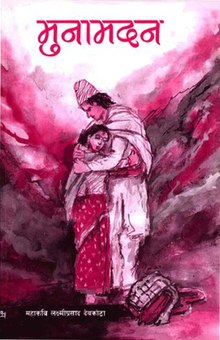
Almost no one hasn’t heard of Devkota’s most well-known creation, the Muna Madan. This short epic about Muna and Madan is well-known in Nepali, but its English translation is equally well-known. Madan, a hopeless rancher, decides to go to Tibet as a vendor in order to get money, leaving behind his elderly mother and lovebird wife, Muna. Muna begs her husband to stay, but Madan withdraws in the hopes of accumulating wealth for the family. The hardships Muna and Madan have while trying to reunite with one another are depicted in a horrible way in sonnet. Muna Madan, while being a short epic, has become a commercial success and is regarded as a model of Nepali writing.
Plot
Muna Madan is a Nepalese epic that tells the heartbreaking story of Muna and Madan. It was written in a melodious version in 1935 by Nepalese writer Laxmi Prasad Devkota. It is one of the most well-known works of Nepali literature. Not long before his death in 1959, Devkota observed, “It would be fine if every one of my works were singed, except for Muna Madan.” In terms of deals, it is the best Nepali book ever written. It’s not a Jhaurey song in the traditional sense. The plot revolves around a man (Madan) who abandons his significant other (Muna) and travels to Lhasa in order to bring in money. Madan represents all Nepalese young people who migrate abroad to make ends meet.
Muna, Madan’s wife, is the queen of sacrifice and love. She adores her Madan and is devastated that she must send him to Lahsa, a dangerous and difficult region. However, she accepts the challenge and decides to remain in the country with her elderly and weak mother-in-law. On his way back to his residence, Madan becomes unwell. His friends abandon him on the road and come home to tell him he has died. Finally, a Nepalese man from a lower caste comes to his aid. That is why a guy is said to be magnificent because of his heart, which is full of love and humanity, rather than his caste or ethnicity.
Madan returns to Kathmandu after regaining his health only to discover that both his mother and beloved wife had died. Madan ultimately comes to the realization that money has no meaning at the time. The story also recounts the life of a poor widow who suffered greatly without her husband and died in sorrow. In this poem, Devkota addresses the most important challenges plaguing Nepalese society at the moment. Through the story of Muna and Madan, Laxmi Prasad Devkota hopes to stabilize the truths of archaic societies, unscientific notions, and the negative impacts of unemployment and poverty in Nepalese society. The poet has brilliantly characterized love by writing about Muna and Madan’s connection.
Emma Blair was a pen name for Scottish actor and author Iain Blair, who began writing in his spare time and whose first novel, Where No Man Cries, was published in 1982. During a writing career spanning three decades he produced some thirty novels, but his true identity remained a secret until 1998 when his novel Flower of Scotland was nominated for the RNA Romantic Novel of the Year award. He was one of Britain’s most popular authors and his books among the most borrowed from libraries. Iain Blair died in July 2011.
ABOUT THE BOOK:
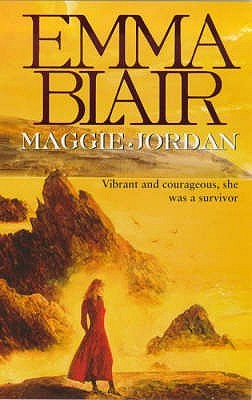
The book Maggie Jordan by Emma Blair is about a vibrant and courageous woman Maggie Jordan named after the book. The book was originally published in 1990. Set in the 1930s and 1940s, “Maggie Jordan” traces the life of a young Scottish woman from the carpet mills of Glasgow to the battlefields of the Spanish Civil War. Maggie Jordan. Praise for Emma Blair:’An engaging novel and the characters are endearing – a good holiday read’ Historical Novels. All the tragedy and passion you could hope for .Romantic fiction pure and simple and the best sort – direct, warm and hugely readable. Women’s fiction at an excellent level. ‘Emma Blair explores the complex and difficult nature of human emotions in this passionately written novel’.
THE PLOT:
Seventeen year old Emma Blair was living with her beautiful family and also working in The Haven Hotel in the village of Heymouth. The time when most of Maggie Jordan’s family are killed in the freak flood in the small coastal village of Heymouth. Now her only living family is her elder sister Laura and her husband John McNair with their twins. In the middle of all the unfortunes in Heymouth, Maggie Jordan encountered Howard Taft, the journalist who is one the persons, going to be the reason for her happiness. After the loss of her family Maggi Jordan moved along with her elder sister Laura and John to Glasgow. There she managed to find herself a job in Glasgow carpet mills. But her poor fate also followed her there in the form of John who tried to rape her. In between she met Nevil Sanderson in Glasgow carpet mills where she is working, with whom she got engaged.
Nevil Sanderson suddenly decides he must go to Spain and join the Republicans in their fight against Franco. Although she struggles on without him, Maggie eventually realises her place is by his side and journeys to Spain to join him. But the newly promoted Nevil has become distant and ruthless, and is fiercely jealous of her new friendship with American journalist Howard Taft. Years later, married and with an eight-year-old daughter, Maggie has returned to Glasgow. Astonished when Howard reappears, bringing light and laughter back into her life, she is forced to take decisions – decisions which threaten to destroy even the vibrant and courageous Maggie Jordan.
FAVOURITE LINES:
‘But all the middle of the valley was a place to rest in, to sit and think that troubles were not if we would not make them. To know the sea outside the hill, but never to behold it”
“Every time he looked at the line and wizened face it was as though he’d been punched hard in the stomach”.
“That was a job which never got any easier, particularly where children were concerned. Just her luck to be in charge of the ward that morning. Just her rotten luck!”
The author was trying to tell us the struggles and how much pain a woman can bear. But he dragged a little extreme by playing with a woman’s pain. After all she is a human.
A story within a story is referred to as an embedded narrative. The embedded narrative is a literary device in which a character within a story becomes the narrator of a second story within the first one. Multiple layers of stories within stories are sometimes called Nested Stories. These stories mostly exist in a book to enlighten people. Sometimes the author himself wrote some short stories which are really motivating and alluring, then he might include them in his novels. In the other case, the author pushes himself to write short stories which will be suitable within his/her novels.
We all love stories, especially short stories. So, we will look at some stories within stories or stories within novels or dramas one by one as parts of segments.
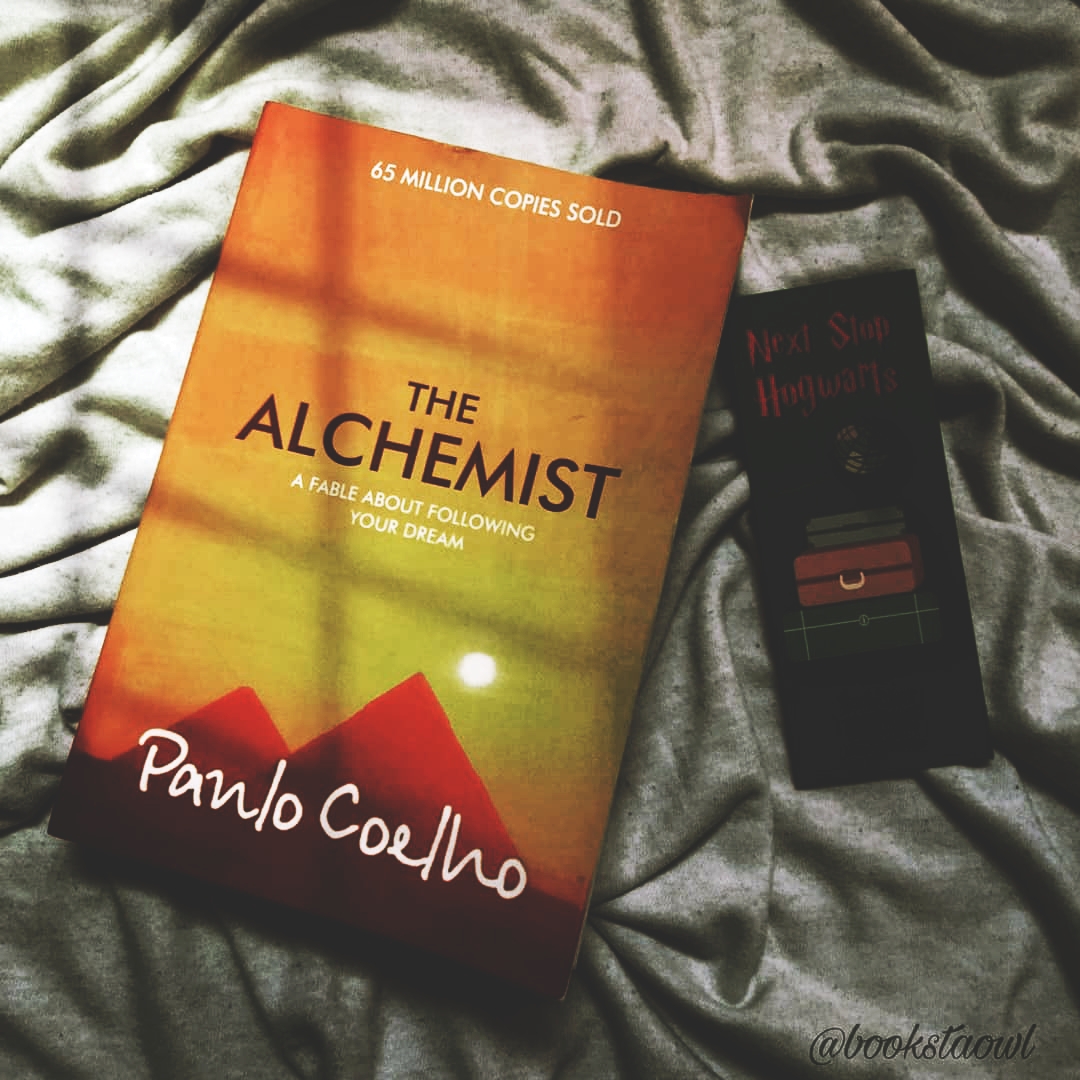
THE ALCHEMIST: BY PAULO COELHO
The shopkeeper sent his son to learn about the secret of happiness from the wisest man in the world. The lad wandered through the desert for forty days, and finally came upon a beautiful castle, high atop a mountain. It was there that the wise man lived.
“Rather than finding a saintly man, though, our hero, on entering the main room of the castle, saw a hive of activity: tradesmen came and went, people were conversing in the corners, a small orchestra was playing soft music, and there was a table covered with platters of the most delicious food in that part of the world. The wise man conversed with everyone, and the boy had to wait for two hours before it was his turn to be given the man’s attention.
“The wise man listened attentively to the boy’s explanation of why he had come, but told him that he didn’t have time just then to explain the secret of happiness. He suggested that the boy look around the palace and return in two hours.
“‘Meanwhile, I want to ask you to do something,’ said the wise man, handing the boy a teaspoon that held two drops of oil. ‘As you wander around, carry this spoon with you without allowing the oil to spill.’
“The boy began climbing and descending the many stairways of the palace, keeping his eyes fixed on the spoon. After two hours, he returned to the room where the wise man was.
“‘Well,’ asked the wise man, ‘did you see the Persian tapestries that are hanging in my dining hall? Did you see the garden that it took the master gardener ten years to create? Did you notice the beautiful parchments in my library?’
“The boy was embarrassed and confessed that he had observed nothing. His only concern had been not to spill the oil that the wise man had entrusted to him.
“‘Then go back and observe the marvels of my world,’ said the wise man. ‘You cannot trust a man if you don’t know his house.’
“Relieved, the boy picked up the spoon and returned to his exploration of the palace, this time observing all of the works of art on the ceilings and the walls. He saw the gardens, the mountains all around him, the beauty of the flowers, and the taste with which everything had been selected. Upon returning to the wise man, he related in detail everything he had seen.
“‘But where are the drops of oil I entrusted to you?’ asked the wise man.
“Looking down at the spoon he held, the boy saw that the oil was gone.
“‘Well, there is only one piece of advice I can give you,’ said the wisest of wise men. ‘The secret of happiness is to see all the marvels of the world, and never to forget the drops of oil on the spoon.’”
Through this story author express, that one should follow his dreams and must take care of his responsibilities also. That’s the secret of happiness.
Paulo Coelho wrote many best-selling books most of which are popular all around the world. And translated in various languages. One of his masterpieces is Alchemist. All of his works are related to self-help and motivational genres.
Book: Veronica Decides To Die
Veronica is a young woman who commits suicide due to being full of emptiness in her life. While she waiting for death after taking a lot of sleeping pills she fainted and found herself in an asylum alive. But Doctor said that she has only a few days to live due to a heart condition caused by the overdose. Her presence there affects all of the mental hospital’s patients, especially Zedka, who has clinical depression; Mari, who has panic attacks; and Eduard, who has schizophrenia, and with whom Veronika falls in love. At least she wants to live or not is the key base of this novel.
Why you should read this book:
This one is not a boring plot, book content moves slow still does not let you drop the idea to read it. And this contains good vocabulary which is worth recommending to every reader. If you ever tried or at least thought once to end your life read this one it will make you believe in Miracle.
Book Quotes:
People never learn anything by being told, they have to find out for themselves.
You are someone who is different, but who wants to be the same as everyone else.
You have two choices, to control your mind or to let your mind control you.
Note: This book is also adapted as a film by Emily Young in 2009.
Book: The Spy
Mata Hari, the beautiful woman, the dancer, the courtesan, and the spy. She was the center of attraction wherever she goes… As a dancer she delighted her audiences, as a courtesan, she bewitched the richest and powerful men of the era. But is she really a spy?
Why you should read this one:
This book is based on real events. Mata Hari is a real person who is accused of espionage and executed.
On the back cover, it says, “Fiction.” But, I would rather love to say it’s a historical work.
When a man sleeps with many women, do we care to say any terms? So, I can’t criticize Mata Hari for being a courtesan.
In this work, I can visualize how men treated women as an object during those time. They gave preference for outer appearance. They wanted their wife to be loyal. But, those rules aren’t for them. And those things made my heart shrunk.
Book Quotes:
I decided to be who I always dreamed of. And the price of a dream is always high.
When we don’t know where life is taking us, we are never lost.
At this moment, I look back at my life and realize that memory is a river, one that always runs backward.
Recommendations:
I don’t recommend both of these books to children especially if you are younger than sixteen. One book contains intimate scenes and another one contains sexual harassment scenes. Thus I would like to recommend these to elder readers who are more than sixteen.
He is an Indian spiritual leader. He was educated in theosophy by the British social reformer Annie Besant. His basic philosophy lies on observation. His works includes on mind and thoughts, nature, environment, relationship, living and dying, love, lowliness, fear and freedom.
Book name -The book of life- Daily mediation
Chapter -The book contains 12 chapters within itself.
Publisher’s name – HyperCollins Publishers (Australia) Pty.Ltd.
Publishing year-Sep/2019
ISBN-9780141004969
About the book
The book is written by Jiddu Krishnamurti at the basics of daily routine. The book is based on the observations and experiences of the author. The book is about finding the truth of life through living. This book presents the 365 days of the year. The writer was meditating and trying to find the truth of life. His experiences are interconnected with others. He started writing from January to December.
The story of man of mankind is in you, the vast experiences, the deep-rooted fears, anxieties, sorrow, pleasure and all the beliefs that man has accommodated throughout the millennia.
The book is about the listening process, learning, authority and self-knowledge. The author said, ask yourself why do we follow a leader or authority and later on we criticize them and insist on carving ourselves. Self-awareness is a process of knowing one self. It is not about isolation or withdrawal from the relationships mentioned by the author. He said self-knowledge can help to bring change in society.
The author described the sense of becoming, beliefs, action and good and evil. The author said everyone wants to become something. Becoming something is a will. A will is led by self-projections and a conflict is about struggling to reach our wills. All wills and conflicts are becoming integrated. The author mentioned the love and self, role and hinders of beliefs. He focused on the observations, action and ideas. He said goodness has no motive whereas evil things can’t be justified at any cost.
Dependence, attachment, relationship and fear are in sync. We all depend on something, be it beliefs, religion or a person. The dependence leads to attachment. The attachment develops the relationship when the relationship starts having conflicts and a fear of detachment. The root of fear, anger and loneliness is you and I. we have to learn the tricks to deal with our fear.
The author discussed intimacy, love, lust, marriage and profession. Here also he asked the individual to leave the ego and accept the reality of life. He also discussed the intelligences, thoughts, knowledge, brain, transformation. He said aloneness is not loneliness. Mediation is the way by which we can achieve that peace and truth of life.
To choose this book for the review is my first option because the book is related to the life experiences of the author. The book consists of all aspects of life. The author discussed every topic briefly with causes and results. The book has a religious aspect of life. It is a daily life experience. How meditation helps a person to attain inner peace, the importance of self-knowledge, self- reliance and the truth of life- all the things are core essence of this book.
But I feel the book is in accidental order. The author is just assuming the things. The topic discussed by the author in this book is very common. I think he could work on some other topics too.
Conclusion:
We are just busy in our lives. We all are lost in the darkness of sorrow, greed, anger and love. We stopped to think about the truth of life. We are just focusing on the material world. We all are ignoring our truth of life. We just have to spend our life handling some emotions like sorrow, anger and ego. The cause of the problem is only the sense of supremacy. We are just working for I and degrading you. We are not happy with what we have. We are not satisfied with what we achieved. We all are having an unnecessary race. The book gives us idea how we can deal with ourselves. Knowing yourselves, listening, hearing and what is the true knowledge we are not even don’t care about all of these things. The book focuses on this value. The attainment of true knowledge is only possible through mediation. The mediation helps to awaken your inner desire of knowing truth, learning about the real meaning of peace and maintaining the meaning of self-knowledge. The book supports love not lust. The difference between love and desire, willing and integration, loneliness and loneliness are clearly mentioned in the book. Aloneness is the essence of achieving the truth whereas loneliness is about withdrawal of your feelings. Relationship is the mirror- the lines really give a different idea about the relationship. Here the meaning of relationship is considered as knowing yourself from another point of view. I learnt the value of self-knowledge and I felt that self- knowledge is the only key to unlocking life. Controlling and managing your emotions is really important because it reflects your knowledge which could be only possible by mediation.
Shakespeare wrote eleven tragedies such as Hamlet, Othello, Macbeth, King Lear, Julius Caesar, Antony and Cleopatra, Romeo and Juliet, etc… But, there are some chiefly Characters in Shakespearean tragedies. That’s what we are going to draught down one by one.
Shakespeare’s tragedies are based on stories and incidents taken from history or legends. Some of the stories are borrowed from previous playwrights. He has recreated these stories giving them a sense of unity and ordering them into closely-knit plots. The essence of a Shakespearean tragedy is that action issues from character and plot. Generally, two groups of people and ideas are brought face to face leading to conflict. In a Shakespearean tragedy, the plot is composed of several parts like Exposition, Conflict, Crisis, Denouement, and Catastrophe. He did not observe the unities always.
In a Shakespearean tragedy, the suffering of the hero is exceptional. A hero is a man of a high estates like Hamlet or King Lear. The hero identifies himself with a dominant passion from which he cannot deliver himself and which finally works out his destruction.
Every tragic hero suffers from a ‘tragic flaw’ that leads him to the tragic end. Like, Othello
The essence of a Shakespearean tragedy is conflict. The catastrophe rises out of the unsolved conflict. The conflict releases energy in the form of uncontrollable spiritual forces causing a violent disturbance in the moral order of the world. Thus, a Shakespearean tragedy in its final analysis is highly spiritual.
There is a kind of fatality and inevitability in Shakespearean tragedy. All calamities come from a character in action. We feel helpless of man before the force he release. the tragic hero striking at himself. The hero’s character involves his fate.
Shakespearean tragedy is not pessimistic. It gives us an insight into the possibilities of the human soul.
Shakespeare presents abnormal states of mind like insanity, hallucination, and somnambulism in some of his tragedies like King Lear and Macbeth. Eg, supernatural agents like King Lear and Macbeth. Ghost’s in Macbeth.
Shakespeare introduces accidents, chances, and prophecies in his tragedies. The most well-known among these are the incidents of the handkerchief in Othello and the witches in Macbeth.
Shakespeare presents a moral world order in his tragedies. His concern was with the conflict causes a commotion in the moral world. Shakespeare’s tragedies show the successful emergence of good is destroyed but it survives. Thus, the tragedy is a presentation of ‘morality in emergence’. As Dowden says it is true that good can survive only at the expense of so much of the virtuous force of the world still it is well to be assured that evil, even at the expense of good can be subdued, such an assurance buoys us above despair.
There is no poetic Justice in Shakespearean tragedies. But evil characters do not prosper. Iago goes away with a stern warning. Shakespeare was concerned with a stern warning. Shakespeare was concerned with the moral and spiritual order of the world and so his art refuses to recognize individual punishment or reward.
The book thief is a historical fiction novel written by Australian author Markus Zusak . It was published on 2005 and soon after became an international bestseller
It is one the most heartbreaking story I have ever read. Markus Zusak has dine amazing job of presenting the sorrows of Germans especially Jews during the Nazi rule. The story follows a young girl Liesal Meminger , who is a thief . Well , don’t get me wrong, she is a book thief. Well this nothing , the story is unique in its own way because the story is told by the death itself . “When death has a story to tell , you listen”.
This book is a whole journey of laughter , love, pain , sorrow and friendship.
With the rapid development of science and technology, science fiction has became popular in the modern times. The essence of fiction is the presentation of conflict in the human drama. Science fiction deals with conflict that arises out of the impact of scientific discoveries on the future life of humanity.
The writer of science fiction must be well-versed in the modern scientific knowledge to enable him to create a credible science story. Through in science fiction the element of fantasy dominates, the science fiction writers do not commit errors regarding scientific discoveries, facts and possibilities.
Types of science fiction:
There are two types of science fiction.
The first type is based on known facts of science leading to the development of new possiblities as in Arthur C. Clarke’s ‘The Sands of Mars’ which deals with the conditions encountered by the explorers on Mars.
The second type is science fantasy which is very popular today. It introduces any kind of assumptions, realistic or imaginary, which are necessary for the story. The strongest element in science fiction is imagination which often goes beyond credibility or rational understanding as in Bradbury’s ‘Martian Chronicles’.
Modern science fiction combines elements of scientific facts with fantasy. Most common themes in modern science fiction are the following:
Space Travel, journey to other worlds and encounter with extra-terrestrial beings.
Travelling in time past or future.
Biological and psychological changes brought about by the appreciation of science in human beings and other species of life.
Extraordinary powers acquired by man through the use of technology or abnormal mental powers possessed by some persons.
Science fiction began to acquire importance in the latter part of the 19th century with the fictional writings of Jules Verne and H.G Wells. Some of the stories of Edgar Allen Poe and Mary Shelley’s novel ‘Frankenstein’ had anticipated the coming of science fiction. However, it was Jules Verne’s novels such as ‘Journey to the Centre of the Earth’ and ‘Around the World in Eighty Days’ that set the trend. Science fiction achieved greater popularity with the writings of H.G Wells who wrote such classics as ‘The War of the Worlds’ and ‘The Time Machine’.
Modern science fiction presents most of the important technological achievements of the age — radar, rockets, medicines and robots, electronic brain, space vehicle, satellites, medicines and drugs with fantastic effects etc. Such materials are used with great imagination to create an exotic and weird effect.
The most outstanding science fiction writers since the sixties have been Isaac Asimov and Arthur C. Clarke. Asimov was a prolific writer of science fiction. His novels of the Foundation Saga and the series of ‘Robot’ novels have become classics. Two other outstanding novels of Asimov are ‘Extra-Terrastrials’ and ‘The Gods Themselves’.
The science fiction presents not only a fantastic world of wonders but, also a world more or less scientifically accurate. Most science fiction writings conform to the general principles of novel writing. They stimulate our imagination, satisfy our curiosity and lift us to a world of intense make-believe.
Introduction: In this article, I’ll be exploring the themes of Hybridity and completeness. One of the most recurring themes in Hayavadana is the theme of incompleteness and Hybridity. Through this incompleteness, we learn that no matter how much one yearns or desires completeness, it is unattainable. In this play by Girish Karnad, we see three expressions of hybridity. One is in the opening act where the narrator speaks about lord Ganesha, the embodiment of imperfection, of incompleteness, the second concerns Hayavadana and the third is the story about two men whose head were swapped due to an incident.
The play opens with Bhagavatha performing a puja to Ganesha and asking him to bless the performance. He then moves on to introduce the characters when he hears a scream off stage and notices nata, an actor who is causing the ruckus. He then proceeds to question him as to why he is screaming and nata tells the story of how he heard a voice but when he looked up, there was no one but a horse. Bhagavata is unable to believe this and doubts nata but a few moments later, he himself witnesses Hayavadana. Hayavadana proceeds to explain his story and Bhagavatha suggests he visit the Kali temple to fulfill his wish/dream of being complete. He then proceeds with the story where two men fell in love with a woman and lost themselves.
In the beginning of the play when Bhagavatha was praying to Ganesha, he mentions how even though Ganesha is a form of different being, he is still considered complete and perfect. He also says that this might not be something a mere mortal can comprehend. At the end of the play, no other mortal is able to achieve this completeness or perfection.
As the play progresses, we see Hayavadana who longs for completeness. Hayavadana is a creature with a man’s body and a horse’s head, the offspring of a deity in horse form and a woman. He tries very hard to get rid of his horse head but fails every time and when he leave to go to the Kali temple, he requests Kali to turn him into a complete being and she fulfills his request by turning him into a complete horse. Even though, he loses his body of a man, his voice remains the same and worries about if he will ever find completeness but towards the end of the play, he magically achieves completeness with the help of a little boy. As they sing and laugh together, he loses his human voice and starts neighing.
The primary story line is about two friends Devadatta and Kapila who fall in love with the same woman, Padmini. Even though Padmini marries Devadatta, notices that she has feelings for Kapila and is in despair. This drives him to cut off his own head the Kali temple. Seeing his best friend in that state, Kpaila decides to cut off his head too. Padmini found them lifeless and begs goddess Kali to help her. She then swaps the heads, that is, Devadatta’s head is on top of Kapila’s body and vice versa. When this happens, one might think that Padmini has gotten the best of two worlds as she was physically attracted to Kapila’s body while being married to Devadatta. This isn’t true as at one point, she realizes that both of those men cannot go on and live like that their whole life. She realizes that this would end only with bloodshed as it did. The incompleteness of the two men becomes the main conflict between all three characters. Their inability to find a sense of wholeness drives them to kill each other/themselves at the end of the play.
Conclusion: Karnad tries to make us realize that completeness is not something every or any human being can achieve. It must be left to the divine beings.
Positive psychology is one of the newest branches of psychology to emerge. This particular area of psychology focuses on how to help human beings prosper and lead healthy, happy lives. While many other branches of psychology tend to focus on dysfunction and abnormal behaviour, positive psychology is centered on helping people become happier. Positive psychology is designed to “complement and extend the problem-focused psychology that has been dominant for decades,” explained the late Christopher Peterson, author of “A Primer in Positive Psychology” and professor at the University of Michigan, in a 2008 article published in Psychology Today. “Positive psychology is…a call for psychological science and practice to be as concerned with strength as with weakness; as interested in building the best things in life as in repairing the worst; and as concerned with making the lives of normal people fulfilling as with healing pathology,” Peterson wrote.
According to leading authorities in the field, Martin Seligman and Mihaly Csikszentmihalyi, positive psychology will help achieve “scientific understanding and effective interventions to build thriving in individuals, families, and communities.” In order to understand the field of positive psychology, it is essential to start by learning more about its major theories, applications, and history.
History of Positive Psychology
“Before World War II, psychology had three distinct missions: curing mental illness, making the lives of all people more productive and fulfilling, and identifying and nurturing high talent,” wrote Seligman and Mihaly Csikszenmihalyi in 2000. Shortly after WWII, the primary focus of psychology shifted to the first priority: treating abnormal behavior and mental illness. In the 1950s, humanist thinkers like Carl Rogers, Erich Formm and Abraham Maslow helped renew interest in the other two areas by developing theories that focused on happiness and the positive aspects of human nature.
General interest in positive psychology has grown tremendously since the concept was introduced. Today, more and more people are searching for information on how they can become more fulfilled and achieve their full potential.
Uses
Positive psychology can have a range of real-world applications in areas including eduction, therapy, self-help, stress management, and workplace issues. Some of the major topics of interest in positive psychology include: Character strengths and virtues, Flow, Gratifications, Gratitude, Happiness, Pleasure, Helplessness, Hope, Mindfulness, Optimism, Positive thinking, Resilience .
Impact of Positive Psychology
Some of the major findings of positive psychology include: Money doesn’t necessarily buy well-being, but spending money on other people can make individuals happier, People are generally happy, Some of the best ways to combat disappointments and setbacks include strong social relationships and character strengths, While happiness is influenced by genetics, people can learn to be happier by developing optimism, gratitude, and altruism, Work can be important to well-being, especially when people are able to engage in work that is purposeful and meaningful.
Potential Pitfalls
Positive psychology is often confused with positive thinking, and misconstrued as self-help tactics rather than research-backed theories. Positive thinking is a way of thinking ourselves into better behavior and greater resilience, rather than behaving our way into a different frame of mind. Positive psychology, on the other hand, is the scientific study of what makes people thrive. It focuses on behaviors that can lead to a more optimized frame of mind as well as on thought patterns that lead to more functional behaviors.
This part focused on true and valid knowledge. The writer said we are following the colonial education system in current time which causes the lack of moral education among the learners. Colonial education just needs quantity of education not quality of education. But nowadays we need a quality of education which is based on true and valid knowledge.
Partii- the three quest
In this part of the book the writer discusses the curriculum and pedagogy. They focused more on the curriculum which was set after the colonial period in India.
In the introduction we see a zoo where all the students perform different activities and their teacher reacts to their actions. While reading the book I found the same situation when I was on any educational field trip. The children were harassing the animals, writing their name on the walls and other museum material. The teachers were only focused over their own duties which were assigned to them during the trip. The writer felt so bad when he observed the behavior of school children towards the animals as they were hitting the animal with stones. Some students were interested in what’s going on in their surroundings. They just follow their teacher’s instructions.
What is worth teaching? One of the key processes involved in educational change concerns the question because was there a wide gap between an Indian child’s life at school and that at home . The school’s daily curriculum had no reference to the children’s life outside the school. The teachers were free to make such a reference, and they occasionally do. Whereas curriculum policy permits the teacher to teach all the school subjects without establishing any link between the child’s life and social life and the knowledge content of the syllabus .
In the indigenous tradition, the teacher was remunerated by the community he served but under the new system, he became a paid servant of the colonial government.
State control over schools had significant implications for curriculum and teachers. The points of ‘inconsistency’ Arnold noticed between the Indian and the English concepts of education can be placed in two categories. The first included his observations concerning language and reading or literacy, and in the second placed his observations concerning science, including geography and mathematics.
In the context of language education, Arnold made two basic points. One is that pupils were capable of reading but unable to derive any meaning out of what they read. The other point was that education in a ‘common vernacular’ like Urdu—which his office decided to introduce in schools in place of Persian—was ‘utterly inconsistent’ with people’s idea of ‘erudition and learning’.
Both these points relate to the perception of literacy and that of its functions in a culture.
1857, Persian School, where is more number of students are Hindu and Muslim. In this school that taught about writing, but with less energy and success. a student learns how to read without understanding the meaning of those words, and the shocking thing is it satisfies both teacher and parents. Reading aloud from it was a source of pleasure and satisfaction, even its meaning could not be comprehended. why did we just discard all the old Persian books? I mostly don’t know the meaning of new books. it is very unwise and worse. Language has a great role in education as well as religion and morality. We have to include this domain in education.
Facts and rule
We know how subjects are interrelated to each other but we found people ignorant of the geography of their province, Ignorant that there was Science as geography. in Victorian-era geography and natural history had begun to find places in the curriculum of some English public schools. Rugby student 1840s, Arnold Exposed to the new interest shown in a study of nature and earth. he was irritated with arithmetic, where arithmetic was divided into two main classes- the Khattries trained by long and diligent practice, But at a loss when directly they got beyond their habituated problems because they are unknown with the scientific method. In his first report, Arnold Had described a style of account keeping. for better school education he suggested for rules of arithmetic- the rule of three methods through the medium of legible character- more profitable to the scholar than the cumbrous Process and illegible Handwriting of Banias Bookkeeping. Where are I supposed to teach the former, in hopes one day effecting a change in the latter? Arnolds Director of public instructions, Punjab. Gratifying result of new curriculum policy. In report boys Hindu and Muslim, four rules of arithmetic pass a good exam in the geography of India. But teachers Resisted the new curriculum. But training for the same. The training was seen as a solution to the problem posed by teachers.
Teacher training was seen as a solution to the problem of incompetency of teachers for the new curriculum. According to Arnold, having basic knowledge of arithmetic, history & geography will be enough to teach efficiently. Thus teacher training was really a re-education of teachers.
In the old system, a teacher decides his\her pedagogy of teaching but in the new system, teachers were perceived as a source of resistance to curricular change.
The colonial policy led to the suspicion of Englishman’s education & the subtle resistance to his pedagogy. The Englishman’s religion & education system became a matter of concern in Indian society as the Indian parents who enrolled their children in English schools were worried about religious conflict that can come between them and their child. Walsh also discussed in her study that the greatest fear of Indian parents in the 19th century was that their children would convert to Christianity.
Parents blame education for the views & behavior of their children. As caste system is prevalent in Indian society drinking water from a Muslim by a child is considered as outraging caste rules and the child was told that all this came through his reading English.
In case of girls, the perception of remaining uneducated was common till early 20th century but the scenario improved after revivalist movements such as Arya Samaj etc.
Mishra identifies in his studies that educated men are set apart from all others because they are considered as Christian. In response to this belief Chaturvedi quoted ‘Learn English and you lose your humanity’. The educated men served as a scapegoat in this respect.
On the other side, the colonizer’s design in teaching English language & literature to the natives was to influence their morality. The East India Company administrators had been under pressure from missionaries, traders, as well as members of parliament, to take steps to improve India morally by teaching religion in one form or another. Some Indian administrators oppose religion-education as it can cause backlash. The question of teaching religion directly and morality remained uncertain throughout the 19th century and even later.
Out of this conflict arose the fluctuation that the government’s relationship with missionaries went through.From its early policy of discouraging missionaries, the Company had been pushed towards a sympathetic view of missionary work around the time its own educational role had crystallized.
Although teaching a lesson inevitably involved getting chil-dren to memorize the ‘maxims’ given in the textbook, mission teach-ers were concerned that the boys understood what they had learnt by rote.
Once the child saw how little the accounts of gods and goddesses have to do with the ‘facts’ of history and geography, it was expected that he would turn to the ‘rational’ belief system that Christianity had to offer.
Children everywhere protect themselves in classrooms with the help of memorized re-production when they are faced with concepts or material that they cannot grasp or find meaningless.
The tradition now acquired a new validity and focus under the auspices of a textbook-centred curricu-lum and examination. To the English administration, examina-tions—like textbooks—were a means of norm maintenance.
All he could do was to prepare them to the hilt, which meant giving them the opportunity to rehearse endlessly the skills of reproducing the text from memory, summarizing, and essay-type writing on any ques- tion based on the textbook.
Although I understand that a good teacher needs to give opportunity to each and every student to explore their own environment and under the basic concept of theme.
Haruki Murakami is a Japanese writer whose novels and short stories have been translated and admired all over the world. Murakami’s works are a true testament to the genre of Magic Realism wherein seemingly unnatural things and incidents happens in the natural world. His stories revolve around inner conflicts, the dilemmas of human existence and a spectrum of psychological topics that makes us question the working of the world. His most notable works include Norwegian Wood, Sputnik Sweetheart, Tsukuru Tazaki and his Years of Pilgrimage etc. Through this unique method of narration, Murakami explores the warped realities of the human world.
“And once the storm is over, you won’t remember how you made it through, how you managed to survive. You won’t even be sure, whether the storm is really over. But one thing is certain. When you come out of the storm, you won’t be the same person who walked in. That’s what this storm’s all about.”
Murakami’s Kafka on the Shore is a Japanese novel that was published in the year 2002. Its 2005 English translation was among “The 10 Best Books of 2005” from The New York Times and received the World Fantasy Award for 2006. The novel alternates between two different stories that are happening simultaneously. One story revolves around a teenager a teenager who is on the run from home to escape his tyrannical father and a horrendous oedipal prophecy concerning his sister and mother. He renames himself Kafka Tamura after his favourite author. The other follows the story of an elderly man named Satoru Nakata, who as a child, goes into a coma after an unknown wartime affliction during the second world war. Despite being an academically bright child, after waking up from the coma, Nakata discovers that he can no longer read, write or do any of the normal mundane activities that humans indulge in. But he gains the special ability to talk to cats. Through a series of astonishing mystical events, the two are finally forced to cross paths resulting in a few exhilarating surrealist events.
“Sometimes fate is like a small sandstorm that keeps changing directions. You change direction but the sandstorm chases you. You turn again, but the storm adjusts. Over and over you play this out, like some ominous dance with death just before dawn. Why? Because this storm isn’t something that blew in from far away, something that has nothing to do with you. This storm is you. Something inside of you.
Like any other Murakami novel, Kafka on the Shore is filled with symbolism, surrealist imageries, and mind-numbing parallels. With hints of time travel, hidden histories, conspiracy theories and magical underworld, the novel takes us through a rollercoaster of emotions in a world, where talking to cats, fictional characters, ghosts of a living person, raining of fishes and leeches, and opening up portals to different dimensions are all perceived into the rigid lines of reality. Through his grand narrating powers, Murakami fantastically combines elements of personal experiences, seemingly real supernatural experiences and Japanese folklore together. In most of Murakami’s works, the characters are influenced by the terrors of a post-war era all the while enthralling in the globalised community where Led Zeppelin and other global musical artists has an effect on everyday life. Music of both classical and contemporary nature plays a major role in most of his works. In this work, Murakami explores the inner turmoil and unexplored journeys existing within our minds as the two characters set out on a journey to find themselves.
Suzanna Arundhati Roy’s first novel ‘The God of Small Things’, published in the year 1997 has won the Man Booker Prize for fiction in 1997. It is also the best-selling fiction by a non expatriate Indian author. The novel is said to have certain autobiographical elements with the author. The book speaks about the politics in Kerala, the relationships, family and social obligations. The year in which the incidents happened, 1969, becomes the social and political development in the story. The story is told in the background of Ayemanam, a place in Kottayam district of Kerala with an explicit detail of a Syrian Christian Ipe family. Every of the incidents in the novel is beautifully scripted through non sequential narrative, that it is a mixture of past and present sequences.
‘The God of Small Things’ says the story of a Syrian Christian family whose life is led by the love laws, that is ‘who should be loved, how much. And how much’. It shows the innocent childhood life of fraternal twins, Rahel and Esthappen, from whose view point the story is told. The book starts with the funeral of Sophie mol, the cousin, who returned from England to Ayemanam. All the incidents that happened after the return of Sophie mol becomes the story. The novel explicitly speaks about the innocence in childhood days by showing the candid emotions of the twins and how a divorcee mother, Ammu, suffered under certain love laws kept by her family. Beneath all the drama in the family, the book opens about the untouchability existed, the history and the local politics quoting, ‘communist pacha which flourished like communism’. The book is quite interesting as it stood close to the tradition and culture of Kerala. Probably this will be the greatest work to have an international reputation for using the normal Malayalam words and rhymes. Also, she kind of revolted against the untouchability and the unfair political system existed during 1960’s by openly revealing all those in her novel. Every matter that mattered the people were beautifully constructed and told but still there are criticisms which says that she has drawn much of the demerits of State. However, all her justifications can be justified since her words and story attracted people from all over the world and even some says Kerala is Arundhati Roy’s country!
The novel starts with the famous opening line “May in Ayemanam is a hot brooding month”, and that makes The Booker Prize Citation true “The book keeps all the promises that it makes”. It was an eye opener to every of the social and cultural life of Kerala which actually made every reader to think how much the present society has evolved and developed. The book has kept a goal of unleashing every of the illogical culture and traditions of Kerala, that no book could ever do as it is the only one. There are a lot of images and themes used in the novel apart from the family laws which left no scope of pointing out any flaws. Also, it gives us an opportunity to analyse the incidents and expressions she had written in the raw form. The book ‘The God of Small Things’ has personally inspired me that it makes me think about writing a novel. Like every other Indian, British and American reviews told, the story is ‘a masterpiece, utterly exceptional.’
Introduction: In this article, I’ll be focusing my writing on the concept of middle class morality. Middle class morality is the way a person is expected to behave and think when they are a part of the middle-class. this was because the poor and the rich weren’t compelled to follow rules but the middle class had to.
~ Firstly, with the rise of industrialization and trade, there was a great inflow of Wealth in England. Thus we are aware that the Victorian society was a very successful one. The ‘Victorian Morality’ included a class structure, focus on work ethics and economy, and charity. It shows us the immorality and sentimentality of the values and norms of the British society which consisted of hypocrisy, corruption, and injustice of the British social system infects everyone affiliated with it. It was hypocritical as respect was only received by those who held high places in society and everyone else were treated like dirt, charity was just a social responsibility and not a willing done act in order to help the less fortunate. Victorian era also discriminated between men and women which played a major role in the legacy of Victorian morality.
~ Industrialization saw the middle class of the society making their way up the social ladder. They worked hard towards wanting a better life and wanted to live life like the upper class society. They aspired for new goals and were desperate to improve their working condition. Even though they couldn’t enjoy all the luxuries of the upper class, they still could get a taste of how the upper class society led their life. If one was a part of the middle class society, their thoughts, opinions were dictated. Even though they worked hard, only some of them enjoyed all the privileges while some were suffering to make ends meet. These morals were applied to middle and high class society but honestly, most of the Victorian era were not moral at all.
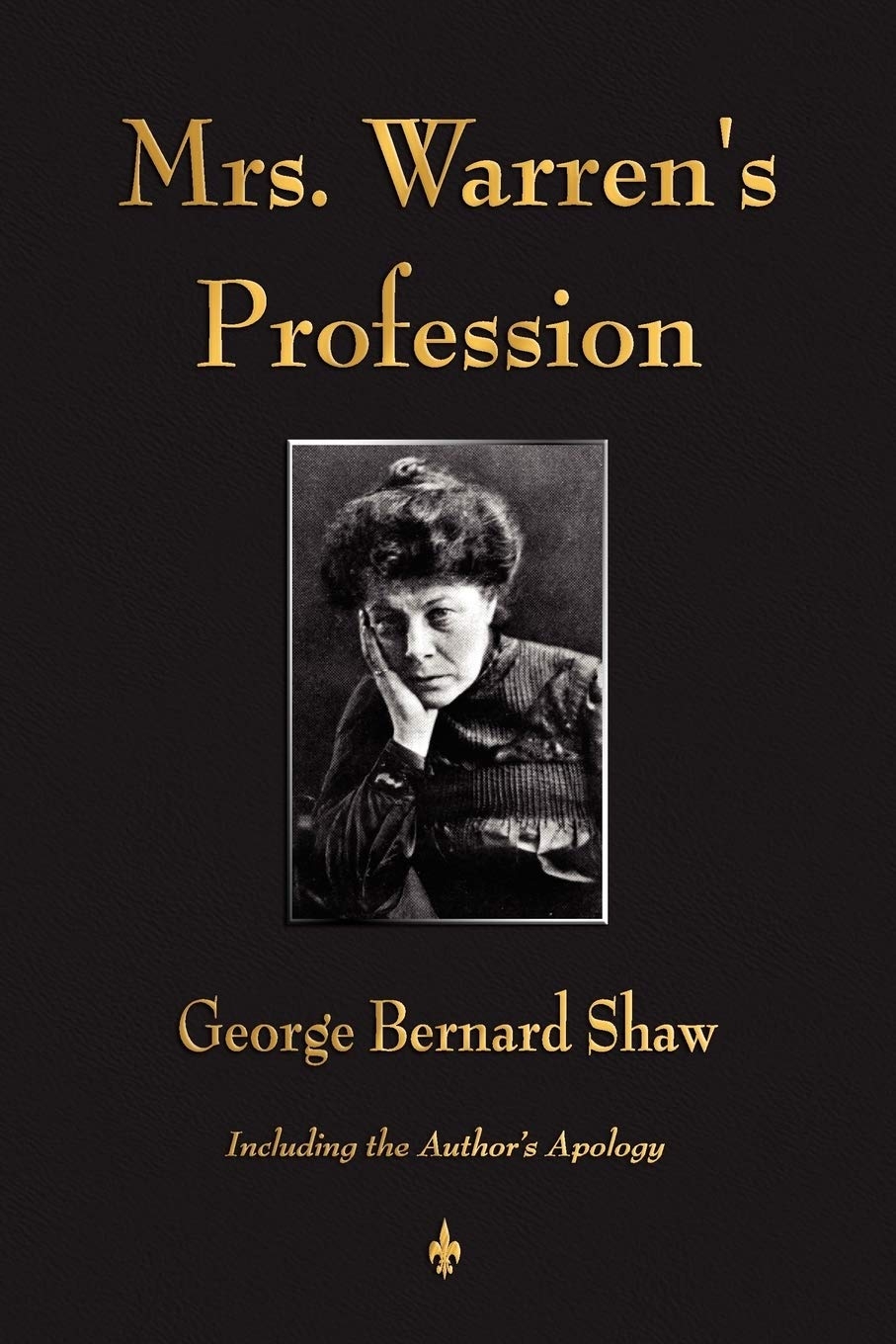
~ In this play, Shaw throws light on how Mrs Warrens has defied social expectations by working as a prostitute and has no problem with owning or accepting reality. Why is it that when the rich baron, Mr. Croft who runs a prostitution ring which is considered highly immoral but is always treated with respect? This is because of the discrimination which happens between men and women. If there was a woman in the place of Mr. Croft, then nobody would true a blind eye. It is also because he belongs to the higher class society. We can see the luxuries the higher class society members enjoy through this example.
~ Women who wanted to express their emotions through prostitute were considered “morally incorrect” as in the Victorian era, people would encourage one to starve rather than prostitute their own bodies to make a living. People who belonged to the Victorian era consideration prostitution to be a huge threat to the society. The society had the audacity to judge women when they weren’t even provided with stable jobs/ good opportunities for women. They always thought that the women were weak and always had to be dependent on men. They forgot that women were their own people and were not existing to satisfy the needs of men.
~ In the Victorian society, respect was earned not by working hard or achievements but it was from how much income one earns. Monetary worth is given utmost importance. Shaw brings out the skepticism by showing us different means of earnings money by Mr. Croft and Mrs Warrens. Even though Mr. Croft is respected, Mrs Warren’s profession is considered as vulgar and completely inappropriate. They make comments about how Mrs Warrens is going against the society’s values like feminity and oppression.
~ Being aquatinted with Victorian society, we know that they were quick to blame Mrs Warrens for choosing the profession of prostitution even though that wasn’t her first choice. Shaw uses this opportunity to point out the hypocrisy and unjustness actions of the society where women weren’t given enough opportunities to be independent.
~ Shaw portrays most of his major female characters as unconventional. Women were highly objectified and considered as creatures of oppression, dependency and passiveness. They thought that women weren’t worthy of education and therefore Vivie was not considered to be feminine. She is strong, realistic and a rational thinker, independent and ambitious and refuses to think that marriage is her end goal. Mrs Warrens expects Vivie to listen to her as she is her mother and wants her daughter to follow these Victorian society Norms but Mrs Warrens break these Norms when they tend to benefit her. She refuses to accept Vivie and her bold outlook but enters the field of prostitution when it’s beneficial.
~ We can see the inequality between men and women. Even though, the era was thriving under a female monarch, even though there was abundant growth in art, culture and wealth, it was very unjust towards women. Even though it had it benefits, it failed to uphold the rights of women which would’ve led them to lead better and happy lives.
The Kite Runner is the first novel by Afghan-American author Khaled Hosseini. Published in 2003 by Riverhead Books.
It tells the story of Amir, a young boy from the Wazir Akbar Khan district of Kabul, whose closest friend is Hassan. The story is set against a backdrop of tumultuous events, from the fall of Afghanistan’s monarchy through the Soviet military intervention, the mass transfer of refugees to Pakistan and the United States, and the rise of the Taliban regime.The heartbreaking story of the friendship between a wealthy boy and the son of his father’s servant, The Kite Runner is a beautifully written novel set in a country that is in the process of being destroyed. It is about the power of reading, the price of betrayal, and the possibility of being saved from the sin; and an exploration of the power of fathers over sons, their love, their sacrifices, their lies. The Kite Runner is an unusual and powerful novel that has become a beloved, one of a kind classic.
THE PLOT:
Moving back and forth between Afghanistan and California, and spending almost 40 years, the story begins in Afghanistan in the peaceful 1960s. Our protagonist Amir is a child in Kabul. The most important people in his life are Baba and Hassan. Father Baba is a wealthy indegenous merchant, who is worried about his son who always spend time in writing, he love to do (the mother died giving birth); Hassan is his sweet-natured playmate, son of their servant Ali and a Hazara (Persian speaking ethnic group). Native people have always dominated and kind of degraded Hazaras, so Amir can’t help teasing Hassan, even though the Hazara strongly defends him against neighborhood bullies like the “sociopath” Assef. The day, in 1975, when 12-year-old Amir wins the annual kite-fighting tournament is the best and worst of his young life. He bonds with Baba at last but Hassan when the latter is raped by Assef. And it gets worse. With the still-loyal Hassan a constant reminder of his guilt, Amir makes life impossible for him and Ali, ultimately forcing them to leave town. Amir becomes a writer and marries a beautiful Afghan. Baba dies of cancer. Then, in 2001, the past comes roaring back. Rahim, Baba’s old business partner who knows all about Amir’s being taken down for an offence , calls from Pakistan. Hassan has been executed by the Taliban; his son, Sohrab, must be rescued. Will Amir wipe the slate clean? So he returns to the hell of Taliban-ruled Afghanistan and recover Sohrab from a Taliban leader (none other than Assef) after a terrifying showdown. What is Amir going to do with Sohrab? Will he recover from his guilt after all what he did to Hassan and be able to go through all his traumatic past?
FAVOURITE LINES:
”When you kill a man, you steal a life. You steal his wife’s right to a husband, rob his children of a father. When you tell a lie, you steal someone’s right to the truth. When you cheat, you steal the right to fairness. There is no act more wretched than stealing.”
“It may be unfair, but what happens in a few days, sometimes even a single day, can change the course of a whole lifetime.”
“And that’s the thing about people who mean everything they say. They think everyone else does too.”
It is the first time i felt more frustated about the protagonist. Personally, his actions are not likely at first but nearing the climax the development of the character Amir is so amazing. Although the story is more than emotional, sometimes so relaxing and felt warm.



















 Eduindex
You must be logged in to post a comment.