Software Verification Methods

Software Verification : Verification is the process of manually examining / reviewing a document. The document may be SRS, SDD, the program itself or any document prepared during any phase of software development.

The objective of any verification method is to review the documents with the purpose of finding faults. Many methods are commonly used in practice like peer reviews, walkthroughs, inspections, etc. Verification helps in prevention of potential faults, which may lead to failure of software. Verification and validation activities may be performed after the implementation phase. However, only verification is possible in the phases prior to implementation like the
requirement phase, the design phase and even most of the implementation phase.

1) Peer Reviews

Any type of testing (verification or validation), even adhoc and undisciplined, is better than no testing if it is carried out by person(s) other than the developers / writers of the document with the purpose of finding faults. We give the document(s) / program(s) to someone else and ask to review the document(s) / program(s). We expect views about
the quality of the document(s) and also expect to find faults. This type of informal activity may give very good results without spending any significant resources.

Many studies have shown the importance of peer review due to its efficiency and significance. Our thrust should be to find faults in the document(s) / program(s) and not in the persons who have developed them. The activities involved may be SRS document verification, SDD verification and program verification. The reviewer may prepare a report
of observations and findings or may inform verbally during discussions.

2) Walkthroughs

Walkthroughs are more formal and systematic than peer reviews. In a walkthrough, the author of the document presents the document to a small group of two to seven persons. Participants are not expected to prepare anything. Only the presenter, who is the author, prepares for the meeting. The document(s) is / are distributed to all participants. During the meeting, the author introduces the material in order to make them familiar with it. All
participants may write their observations on any display mechanism like boards, sheets, projection systems, etc. so that every one may see and give views. After the review, the author writes a report about findings and any faults pointed out in the meeting.

The disadvantages of this system are the non-preparation of participants and incompleteness of the document(s) presented by the author(s). The author may hide some critical areas and unnecessarily emphasize on some specific areas of his / her interest. Walkthroughs may help us to find potential faults and may also be used for sharing the documents with others.

3) Inspection

Many names are used for this verification method like formal reviews, technical reviews, inspections, formal technical reviews, etc. This is the most structured and most formal type of verification method and is commonly known as inspections. The presenter is not the author but some other person who prepares and understands the document being
presented. This forces that person to learn and review that document prior to the meeting. The document(s) is / are distributed to all participants in advance in order to give them sufficient time for preparation.

Important points are displayed by some display mechanism so that everyone can see them. The moderator, preferably a senior person, conducts such meetings and respects everyone’s views. The idea is not to criticize anyone but to understand their views in order to improve the quality of the document being presented. Sometimes a checklist is also
used to review the document. After the meeting, a report is prepared by the moderator and circulated to all participants. They may give their views again, if any, or discuss with the moderator. A final report is prepared after incorporating necessary suggestions by the moderator. Inspections are very effective to find potential faults and problems in the document like SRS, SDD, source code, etc.


“STARTUP INDIA SEED FUND SCHEME” an initiative by govt for startups

SISFS , was launched by shri Piyush Goyal minister of Commerce & Industry, Consumer Affairs & Food & Public Distribution and Textiles

We all are know to India’s journey of giving opportunity to startups . Though we have may startups firms in India , but they don’t survive in long run , one of the main reason behind this is Indian startup ecosystem suffers from capital inadequacy in the seed and ‘Proof of Concept’ development stage. The capital required at this stage often presents a make or break situation for startups with good business ideas. Many innovative business ideas fail to take off due to the absence of this critical capital required at an early stage. The problem starts with seed funding , here is a short note on what is seed funding :

Seed funding : For growing a tree we need seed , so as to grow our business we need capital , and that is too at an early stage , Seed funding, or seed capital, is a relatively small amount of money that is used to start a business, fund research, or develop a product. The term’s reference to a “seed” is quite fitting. A tiny seed can someday grow into a lush forest. A tiny investment can help a struggling startup grow into a successful enterprise.

About the SISF Scheme: The Startup India Seed Fund Scheme aims to provide financial assistance to startups for proof of concept, prototype development, product trials, market entry and commercialization. On February 5, 2021, the Government of India made an official announcement about the approval of SISFS. It has been approved for a period of four years and was implemented with effect from April 1, 2021. Under the guidance of our honorable prime minister , Shri Narender Modi ji & Shri Piyush Goyal , minister of commerce & industry , this scheme was launched.

  • The Scheme aims to provide financial assistance to startups at the very initial stage of their project
  • It has been approved for a time period of four years, starting from 2021-22
  • Rs. 945 Crore corpus will be divided over the next 4 years for providing seed funding to eligible startups through eligible incubators across India
  • It is expected that the Startup India Seed Fund Scheme shall help over 3600 startups in the country
  • This scheme is in line with the Atmanirbhar Bharat Campaign launched in May 2020
  • Seed Fund to an eligible startup by the incubator shall be disbursed as follows:
    • Up to Rs. 20 Lakhs as a grant for validation of Proof of Concept, or prototype development, or product trials
    • Up to Rs. 50 Lakhs of investment for market entry, commercialization, or scaling up through convertible debentures or debt or debt-linked instruments

Who are eligible for SISFS ?

The eligibility criteria for a startup to apply under the Startup India Seed Fund Scheme shall be as follows:

  • The startup must be recognised by the Department for Promotion of Industry and Internal Trade (DPIIT)
  • It must have incorporated not more than 2 years ago at the time of application
  • Preference would be given to startups creating innovative solutions in sectors such as social impact, waste management, water management, financial inclusion, education, agriculture, food processing, biotechnology, healthcare, energy, mobility, defense, space, railways, oil and gas, textiles, etc.
  • The startup should not have received more than Rs 10 lakh of monetary support under any other Central or State Government scheme
  • Shareholding by Indian promoters in the startup should be at least 51% at the time of application to the incubator for the scheme

How will SISFS work ?

1. Department for Promotion of Industry and Internal Trade

The Seed Fund will be disbursed to eligible startups through eligible incubators across India DPIIT

Nodal Department EAC

2. Experts Advisory Committee

Government Representatives & Industry Experts Incubators

3. Govt assisted/Not-Govt assisted Incubators

Operational for at least 2-3 years Startups

4. DPIIT-recognized Startups

Incorporated less than 2 years ago

How can you be a Good Investor?

People like you who want to achieve success by reaching their financial purposes like paying for your academy, owning a house, or is it your retirement plan you want.

The question comes to your mind: What single out the most profitable investors from the rest? If we talk about this it’s a pure practical game, and in that, a standard investor uses his money and invests the rest of his income, whereas a good investor invests his existing money and uses the rest.

Here we want to show you some directions that will take you to the path of being a “Good Investor”.

Don’t try to be an expert, be ” Habitual” about it.

How much are you earning? It doesn’t matter anymore, the most important thing is that you’ve started earning, and if you’re earning then you should make sure that whatever your earnings are, you should save a safe amount of money. 

When we think about savings, we think about how much money we should save? Let’s just give it several 15 to 30% of your income you should , and do you want to save that much or not it’s just up to you and up to your expenses. But one thing you should keep in mind is that if your savings are in higher numbers the better you can invest and grow. In India, finance is kind of a subject that people used to talk less about with each other and when it comes to investing, the topic becomes more intimidating for us, but just keep in mind that we are experiencing these things and we’re not professionals.

3 things that you should be confident about.

– I will make a serious and effective habit to save and invest. I will deal with it very patiently when it comes to financial things.

– Where and How much I am investing my money, I know that it will grow.

– Now, You are having a clear and crisp vision about investing that you’ve discussed with your colleagues, friends, or financial experts.

What can you do with your money?

Although it is your money, your expenses and it is your choice where you can invest, well let us show you the best options where you can try to invest.

Low risk will give you low returns. If you want to play very safe and stay low in investing then investments like Public provident funds (PPF), Fixed deposits, and RBI Bonds will be good for you.

Middle-class people’s valuable investments in mutual funds and systematic investment plans (SIP). However investing in mutual funds holds a little bit of risk, where we all know that it is the best way to provide better returns than most fixed-return investments.

Higher risks meant for ‘Billionaire Minds’ capitalizing in some start-up investments, cryptocurrencies, stocks, and real estate can give you a huge amount of money but, you have a high risk to lose everything.

How to “divide” your money?

So while you’re young, you should try to play more high-risk, high-reward-paying games that will give you higher returns.

But it’s completely up to you whether you want to invest there or not, you should keep one thing in mind that you can only be able to take big financial risks before you get married and settle down.

Try to save more amount of money from your salary and while investing in high-risk investments, start to continue investing in low-risk options and that will ensure you’ll get low returns throughout your life.

Physical assets matters forever.

Money which you’re getting it isn’t real, your savings account is not real, why? Because it is not in your hands, it’s just an illusion that you’re having money but that illusion can buy you a Real thing and that is called “Physical assets”

Nothing will remain with you throughout your life but if you’ve somewhere invested in gold and silver it will stay with you throughout your life. 

You never know what will happen in the future, so it will be your physical assets that you will need.

So from early on, make sure that a fraction of your savings should be invested in gold and silver. 

Being social will make you grow.

We live in India and we are very lucky to have so many diverse communities, various character qualities, so identify those communities admire them, and learn that how they are good with their wealth.

Keeping good behavior with the communities like Gujaratis, baniyaas, marwadis, Sindhis, Parsis will make you realize and learn how to play with your money. For money,

 advice asks elders from these communities and more than that, creates a sweet bond between you and these communities.

Try to be with the young and successful people, because if you create good contact with them and if you ask them right and questions, they’ll share their knowledge with you. And it  is an advantage to know about tried and tested techniques in investing.

Conclusive suggestions.

The savings account will not accumulate for your bright future, keep in mind. It is nice that you need to make your money safe and it is good to have ‘liquid cash’ because it will help you to deal with quick expenses but, this is not the proper way to multiply your money and it will not achieve your financial goals which you except in your life.

For now, use your parent’s network, and your network to learn more about finance, and try to receive good advice from the people who’ve done it before you.

For the future, how to figure out all this by knowing the downside that you need a huge amount of money to be working with the reputed finance professionals out there.

Start listening to the financial podcasts and that will be your greatest weapon, If you wish to multiply your money, invest your energy in the correct learning sources. Reading Books are great but Podcasts are fast and great.

Myths about Counseling

Mental health challenges affect millions of people around the world. In any given year, unfortunately, misconceptions and myths around counselling and talk therapy often discourage people from seeking help and contribute to the stigma surrounding mental health issues. The truth is that counselling has the ability to help almost anyone with mental health concerns, social issues and personal development. But another truth is that every person is very unique – they will respond to and experience counselling differently and a method that works for one person is not necessarily going to work for someone else. If you have tried counselling before and didn’t find it helpful we encourage you to try again, with a different counsellor and/or different method.

Myth 1: Counselling is only for major issues or “crazy” people : Yes, counselling can help you through major life issues and traumas but those aren’t the only situations where counselling can work for you. Sometimes we just need someone unbiased to talk to about a situation or feelings we’re having – and that’s okay. It’s normal to seek help for problems large and small or simply when you’re not feeling quite yourself and you don’t know why. Counselling does not need to be used as a reactive measure when life gets hard. It can also be preventative and help provide you mental and emotional tools and strategies to use in future times of stress. We see physicians for prevention through annual check-ups – we can think of counselling in the same way.

Myth 2: Admitting that you need help and going for counselling means you’re weak: The concepts of weakness and vulnerability tend to get confused with each other. There is vulnerability in sharing what you’re going through and what you’re feeling, but that is not a sign of weakness. It is courageous to open up to someone. It’s an act of strength to take steps to better yourself when you’re not feeling your best. Vulnerability is not a weakness but rather a quality to take pride in, not be shameful of.

Myth 3: Counselling doesn’t help or will make the situation worse : Every person is different, and every person has different needs – the results from counselling are not going to be identical for everyone. But most of the time, counselling will provide you with support, new perspectives, and a plan to tackle your problems.

Myth 4: The counsellor doesn’t know me, so they can’t help me : When things aren’t going quite right and we want advice, we turn to our family and friends – people that know us and care about us. Having social connections is extremely important for maintaining mental wellness but our loved ones normally don’t have the skills or the objectivity needed. We’re not recommending that you turn away from loved ones or that their advice can’t be helpful, but counsellors are an excellent additional resource to guide you through difficult times. An unbiased, impartial trained professional can give insight into the situations and feelings that you’re having that you would not be able to get from people that are close to you. Professional counsellor’s training and experience can help beyond the well-intentioned advice of your loved ones.

Myth 5: Counselling takes a long time and costs a lot : The length of time, or number of sessions needed with a counsellor will greatly vary depending on many factors, such as:

  • How long you’ve been dealing with the issue
  • The severity of the problem
  • The time you need to make any necessary changes (i.e. Habits, copying mechanisms, etc.

Myth 6: Couples counselling is only for people that have problems in their relationship : Just like you need to water a plant to make it grow, or practice an instrument to master it, you also need to work on a relationship if you want it to thrive. Take the plant analogy – you wouldn’t just water your plant when its leaves are wilted and it’s near death. You would water it on a regular basis, even when it’s healthy looking and vibrant. Working on skills with your partner like communication, conflict resolution, and intimacy when your relationship is strong, is just as important as building on those skills when times are tough. Having the desire to improve your relationship with some help doesn’t mean your relationship isn’t good or that it won’ last – it means that you care enough about your partner to invest in the relationship.

Myth 7: They will blame my parents for everything : Every struggle you go through is unique. And the process to heal from those struggles is going to vary. Much of your work with your counsellor will be guided by you – the areas of your life you want to focus on: past, present and future. For some situations it can be helpful to analyze your past and see how your environment and the people around you shaped how you respond to things today. Some situations are best solved by looking at current behaviours. Regardless if you and your counsellor analyze your past or your present, the most important thing to keep in mind is that counselling is not about assigning blame, but learning how to have a healthy mental outlook and have healthy relationships with yourself and others.

Myth 8: All counsellors are the same – If you didn’t have success with one, counselling won’t work for you : You don’t “click” with every single person you meet and everyone doesn’t respond the same way to the same exact form of any kind of treatment. Counsellors and counselling treatments are no different and not every counsellor will be a perfect fit for you. That’s okay. We want you to see results from your counselling experience. When you request counselling from Calgary Counselling Centre, we ask many questions to make sure you are assigned to the type of counsellor you prefer and that you’ll receive the type of treatment that is most likely to achieve the best results. If after a few sessions the relationship with you and your counsellor doesn’t seem to be a match, you can request another counsellor. We promise, your counsellor will not be offended by this, on the contrary, they want the best for you.

Artificial Intelligence

Artificial intelligence (AI) refers to the simulation of human intelligence in machines that are programmed to think like humans and mimic their actions. The term may also be applied to any machine that exhibits traits associated with a human mind such as learning and problem-solving.

Artificial intelligence (AI) is intelligence demonstrated by machines, as opposed to the natural intelligence displayed by humans or animals. Leading AI textbooks define the field as the study of “intelligent agents”: any system that perceives its environment and takes actions that maximize its chance of achieving its goals. Some popular accounts use the term “artificial intelligence” to describe machines that mimic “cognitive” functions that humans associate with the human mind, such as “learning” and “problem solving”.

AI applications include advanced web search engines, recommendation systems (used by YouTube, Amazon and Netflix), understanding human speech (such as Siri or Alexa), self-driving cars (e.g. Tesla), and competing at the highest level in strategic game systems (such as chess and Go), As machines become increasingly capable, tasks considered to require “intelligence” are often removed from the definition of AI, a phenomenon known as the AI effect. For instance, optical character recognition is frequently excluded from things considered to be AI, having become a routine technology.

Artificial intelligence was founded as an academic discipline in 1956, and in the years since has experienced several waves of optimism, followed by disappointment and the loss of funding (known as an “AI winter”), followed by new approaches, success and renewed funding. AI research has tried and discarded many different approaches during its lifetime, including simulating the brain, modeling human problem solving, formal logic, large databases of knowledge and imitating animal behavior. In the first decades of the 21st century, highly mathematical statistical machine learning has dominated the field, and this technique has proved highly successful, helping to solve many challenging problems throughout industry and academia.

The various sub-fields of AI research are centered around particular goals and the use of particular tools. The traditional goals of AI research include reasoning, knowledge representation, planning, learning, natural language processing, perception and the ability to move and manipulate objects. General intelligence (the ability to solve an arbitrary problem) is among the field’s long-term goals. To solve these problems, AI researchers use versions of search and mathematical optimization, formal logic, artificial neural networks, and methods based on statistics, probability and economics. AI also draws upon computer science, psychology, linguistics, philosophy, and many other fields.

The field was founded on the assumption that human intelligence “can be so precisely described that a machine can be made to simulate it”. This raises philosophical arguments about the mind and the ethics of creating artificial beings endowed with human-like intelligence. These issues have been explored by myth, fiction and philosophy since antiquity. Some people also consider AI to be a danger to humanity if it progresses unabated. Others believe that AI, unlike previous technological revolutions, will create a risk of mass unemployment.

Artificial Intelligence Characteristics

  • Deep Learning. Deep learning is a machine learning technique that teaches computers to do what comes naturally to humans, to learn by example.
  • Facial Recognition
  • Automate Simple and Repetitive Tasks
  • Data Ingestion
  • Chatbots
  • Quantum Computing
  • Cloud Computing

Following are some sectors which have the application of Artificial Intelligence:

  • AI in Astronomy. Artificial Intelligence can be very useful to solve complex universe problems
  • AI in Healthcare
  • AI in Gaming
  • AI in Finance
  • AI in Data Security
  • AI in Social Media
  • AI in Travel & Transport
  • AI in Automotive Industry

Climate Change

Climate change is basically known as a change in the structure of the climate, which has been running for many decades and centuries. Various natural factors that change the nature of the Earth’s atmosphere are also known as ecosystems which are pressurized on the environment.These special external systems, which put pressure on the environment, may be natural, such as variation in Earth’s orbit, inequality in solar radiation, volcanic eruptions, plate tectonics, etc. and various human activities such as greenhouse gas, carbon emissions etc.

Various activities of human beings, such as deforestation, excessive use of land have also been included in this particular external system to bring about change in the environment, the formation of different conditions has been made naturally as it involves ocean activity. It includes-environmental variability and the presence of life on Earth.

Photo by Markus Spiske on Pexels.com

Climate change refers to the change in the environmental conditions of the earth. This happens due to many internal and external factors. The climatic change has become a global concern over the last few decades. Besides, these climatic changes affect life on the earth in various ways. These climatic changes are having various impacts on the ecosystem and ecology. Due to these changes, a number of species of plants and animals have gone extinct.

When Did it Start?

The climate started changing a long time ago due to human activities but we came to know about it in the last century. During the last century, we started noticing the climatic change and its effect on human life. We started researching on climate change and came to know that the earth temperature is rising due to a phenomenon called the greenhouse effect. The warming up of earth surface causes many ozone depletion, affect our agriculture, water supply, transportation, and several other problems.

Reason Of Climate Change

Although there are hundreds of reason for the climatic change we are only going to discuss the natural and manmade (human) reasons.

Natural Reasons These include volcanic eruption, solar radiation, tectonic plate movement, orbital variations. Due to these activities, the geographical condition of an area become quite harmful for life to survive. Also, these activities raise the temperature of the earth to a great extent causing an imbalance in nature.Human ReasonsMan due to his need and greed has done many activities that not only harm the environment but himself too. Many plant and animal species go extinct due to human activity. Human activities that harm the climate include deforestation, using fossil fuel, industrial waste, a different type of pollution and many more. All these things damage the climate and ecosystem very badly. And many species of animals and birds got extinct or on a verge of extinction due to hunting.Effects Of Climatic ChangeThese climatic changes have a negative impact on the environment. The ocean level is rising, glaciers are melting, CO2 in the air is increasing, forest and wildlife are declining, and water life is also getting disturbed due to climatic changes. Apart from that, it is calculated that if this change keeps on going then many species of plants and animals will get extinct. And there will be a heavy loss to the environment.What will be Future?If we do not do anything and things continue to go on like right now then a day in future will come when humans will become extinct from the surface of the earth. But instead of neglecting these problems we start acting on then we can save the earth and our future.

Although humans mistake has caused great damage to the climate and ecosystem. But, it is not late to start again and try to undo what we have done until now to damage the environment. And if every human start contributing to the environment then we can be sure of our existence in the future.

Jeff Bezos


Jeff Bezos ,(born January 12, 1964) Albuquerque, New Mexico, U.S., entrepreneur who played a key role in the growth of e-commerce as the founder and chief executive officer of Amazon an online merchant of books and later of a wide variety of products. Under his guidance, Amazon became the largest retailer on the world wide Web and the model for Internet sales.

Jeff Bezos, the founder of Amazon.com, was born in Albuquerque, New Mexico in 1964. His mother, Jackie, was in her teens when he was born and she was only married to his biological father for about a year. She married Mike Bezos when Jeff was four years old. Mike was a Cuban who escaped to the United States when he was fifteen. He put himself through college in New Mexico and eventually became an engineer at Exxon.Jeff went to Princeton and studied electrical engineering and computer science. He graduated summa cum laude in 1986 with a GPA of 4.3 on a 4.0 scale.After he graduated from Princeton, Jeff joined a high-tech startup in New York called FITEL. After two years at FITEL, he joined Bankers Trust Company.

At Bankers Trust, he setup…show more content…He helped the company build the most technically advanced hedge funds on Wall Street. In 1994, Jeff read a statistic that said the Internet was growing at a rate of 2300% per year. He decided to leave D.E. Shaw and Company to form Amazon.com, which he named after the seemingly endless South American River.He and his wife, MacKenzie, drove to Seattle to be close to a book wholesaler called Ingram. Jeff, a programmer named Shel Kaphan, and a contractor named Paul Barton-Davis built the prototype for Amazon.com in Jeff’s garage in Seattle.

They spent a year developing database programs and creating the website.Jeff raised a million dollars to finance the company through twenty-two angel investors, whom consisted of family, friends, and former colleagues. On July 16, 1995, Amazon.com went live to the world and Jeff told the testers to spread the word that it was open. Within 30 days, the company had sold books to all fifty states and forty-five foreign counties. By September, the site had sales of $20,000 a week. Jeff has a unique management style. He invokes loyalty from his employees and most of them see him as a colleague. He has a distinctive, loud laugh that he uses to “charm and disarm” people. He is known as a fun person to work with, but his employees and investors know that he is serious about his company.

When Jeff Bezos first started his virtual venture, he wanted to call the company Cadabra, as in abracadabra. He phoned his Seattle lawyer to try out the name, but the attorney misheard Bezos and replied, “Cadaver! Why would you want to call your company that?” Bezos quickly reconsidered and adopted the name Amazon.com, after the world’s second-largest river.Despite Amazon’s stunning revenue numbers—the company’s gross profit in 2019 neared $115 billion—it hardly ever declares a major profit, as Bezos’ strategy has always been to reinvest profits into the company’s growth. But that doesn’t bother Jeff Bezos. “To be profitable [now] would be would be a bad decision,” he told PC Week. “This is a critical formative time if you believe in investing in the future.” By expanding the site’s offerings far beyond it’s initial book inventory, Bezos has turned Amazon into the largest online retailer in the world. “There are always three or four brands that matter,” Bezos told PC Week. “With the lead we have today, we should be the No. 1 player.”Amazon’s runaway growth has made Jeff Bezos the richest man in the world. By owning 12 percent of the company, Bezos’ net worth is estimated to be $116 billion. He maintains the world’s richest man status despite going through a divorce in with wife MacKenzie, who received 4% of Amazon in the settlement (valued at $38 billion). But you wouldn’t know how rich Bezos is from his pay stub. He has collected the same $81,840 salary from the company for over two decades.

INTER-RELIGIOUS HARMONY

Hindu and Muslim residents of Sendhwa town in Barwani district of Madhya Pradesh came together to cremate 75-old-year Sitaram who had no family member left behind. People from both the communities attended his funeral ceremony and cremated him with full honour. This instance depicts inter religious harmony. Religious harmony in India is a concept that indicates that there is love, affection in between different religions. 

The Indian constitution supports and encourages religious harmony. In India, every citizen has a right to choose and practice any religion. Maintaining peace and harmony in a multi-religious and multi-lingual society like India becomes an important administrative responsibility.

Communal harmony is of paramount component for the social, economic and cultural development of any country. Swami Vivekananda has rightly said “Different religions are like the streams which lead to the same ocean”

The factors that breed harmony can be found both in history as well as have to be part of conscious government strategy to maintain tranquillity and an atmosphere of tolerance:

  • Nationalism as feeling of adherence to nation’s ideals helps citizens rise over differences. 
  • Humanity, respect for human life and liberty should be inculcated in every citizen of India.
  • An impartial administration, above all, which all sections especially minorities can bank upon is a must.  

National Foundation for Communal Harmony was constituted in 1992. The vision of the National Foundation for Communal Harmony (NFCH) is to have India free from communal and all other forms of violence, where all citizens especially children & youth live together in peace & harmony.

It provides financial assistance to the child victims of societal violence for their care, education & training, aimed at their effective rehabilitation. It promotes communal harmony and national integration by organizing variety of activities either independently or in association with State Governments, NGOs & other organizations. 

Ways to promote inter religious harmony:

  • Promoting the spirit of the Preamble of Indian Constitution: This reflects the spirit of national integration of our national leaders who fought against British empire, culminating in India becoming free in 1947.
  • Political & Administrative measures: Each ethnic, tribal, religious and linguistic group should have freedom to protect their own culture and freedom, as also envisaged by the Constitution.
  • Set up an Interfaith Dialogue Committee: This will help promote understanding between different religions.
  • Promote Moral Education in Education institutions: This should include the basic teachings of all religions.
  • There is a need to ban all communal parties and communal organisations by which the danger of communalism can be made less serious.

Hence, teachings of different religions should be compiled and distributed among the people of the country, including teachings of Saint Vivekananda and other saints who propagated religious harmony and respect for all religions. Such teachings also need to be integrated in the curriculum of schools and colleges.

ORIGIN OF CASTE SYSTEM

Caste system is an integral part of the Indian social system. It is the arrangement of people in a hierarchy of status where there is negligible mobility up and down the social ladder.

Origin of the caste system:

Caste system is very complex and complicated that is why a number of theories have been given explaining the origin of the caste system. Some of the theories are: 

Racial theory- One very old and important theory about the origin of the caste system is the racial theory. Herbert Risley and D N Majumdar are supporters of this theory. According to Risley before Aryans came to India they were divided into 4 classes which came to be regarded as from different races after their settlement. Majumdar believes that after the Aryans established themselves as superior in India they became a separate race and  called the defeated as the dasas and thus the Aryans the Dasas  became two separate races. This was the beginning of the caste system and once this distinction started it became difficult to narrow down the gap and it still continues.

Political Theory- Some of the thinkers believe that not race but the political convenience and manipulation by those who wanted to retain authority is the basis of the caste system in India. It is said that the Brahmin who wanted to hold authority devised this system. In the words of Dr.Ghurye, “Caste is a brahmanic child of Indo-Aryan culture, cradled In the land of Ganges and hence transferred to other parts of India by brahmanic prospectors.” How the Brahmins, however manipulated is not very clear. Thus, according to the supporters of this theory it has nothing to do with religion, it is a man-made institution and creation of few for the perpetuation of authority. 

Occupational theory-  Nesfield is of the view that occupation is the basis of the caste system. In his view “function and function alone is responsible for the origin of caste structure in India”. Thus, he and his supporters also do not believe that the system has any religious background. According to them occupation was the basis of the caste system. In the beginning when there was no rigidity each individual was free to have occupation of his choice. But gradually with the rigidity in the system changing of occupation became difficult and caste began to come into existence on the basis of his occupation. Those who were doing noble occupations like those of educating the people, fighting on the battlefield, or traders became noble and began to be considered superior caste people and others began to be treated as those belonging to the inferior caste ,example the shudras. The former then began to enjoy social respect which was denied to the latter. The system was continued because that suited the former.

Traditional theory- Exponents of this theory believe that the caste system is not of human but of divine origin. They argue that the main four castes were created by god Brahma whereas the sub-castes came into existence subsequently as a result of inter-caste marriages, etc. Since the purpose of creation of each caste, according to them, is to perform a specific function as such because of human will these castes cannot be changed. They also believe that any change in the system could be brought about only at the cost of winning the displeasure of God. 

The origin of Month July

July is the seventh month of the year. It was originally the fifth month of the Roman calendar, which consists of 31 days. This month was named for a Roman general, Julius Ceaser. Quintils is the roman name of July month. It means fifth. The albeit ruler , Julius was born in this month.its in his honour that month name changed to July.

July belongs to the Zodiac sign cancer and Leo.Those who born between 21June to July 22have the zodiac sign Leo whereas for those who born between July 23 to August 22 have Leo as a Zodiac sign.

July is warmest month in Northern Hemisphere and coolest in Southern Hemisphere.July’s birth flower is water lily and birth stone is Ruby.Ruby is symbol of contentment.The full moon of July month is known as Buck moon.It is also called Thunder moon and Wort moon.

Crowdfunding and How it works?

Crowd Funding dates back to 1713 when Alexander Pope united his subscribers to find the translation of Homer’s Iliad into English. He had promised to include the 750 donors’ names in the book in exchange for two gold guineas.

The Internet has modernized crowdfunding by connecting people in search of funds with the general public. Crowd funding is generally defined as the collective – ‘Crowd pooling funds’ to support a specific project or an organization. Crowd fund serves as an alternative source of capital to support a wide range of ideas and ventures. Crowd funding can also be a great way to fund ideas and it can also be a great way for new businesses to get some funding in the initial stages.

An entity or individual raising funds through crowd funding typically seeks small individual contributions from a large number of people. Crowdfunding campaigns have a specified target amount to be raised. It can also be a goal and an identified use of those goals.

The entrepreneur of the company usually offers donors non monetary goods in return for their donation. The reward is personal satisfaction. This makes crowd funding a very efficient and cost effective method to raise money. Some of the most popular platforms for crowdfunding are Kickstarter and Indiegogo.

But we also have to realize that not all the companies or entrepreneurs are successful in funding their campaign. The majority of the campaigns fail. They usually fail to hit their financial targets. Kickstarter’s success rate sits around 38%.

The ways to Endure a successful campaign

One of the ways to ensure a successful crowdfunding is when the entrepreneur defines the objective of their campaign. They also need to factor in how much money is being spent, thus consideration of the costs is also very critical. The entrepreneur also has to be content creator and talk with experts to improve upon the product or the idea. Wise use Networking is also very important to increase the reach of the campaign.

The different types of crowdfunding are:

Donation based crowdfunding

Donation based crowdfunding involves amassing high amounts of donations without needing to provide the investors with anything in return. It is usually used for charities and NGOs.

Rewards based crowdfunding

Rewards-based might seem similar to Donation based crowdfunding but there are key differences that make it one of the most popular forms of crowdfunding. This form of crowd funding is also the most feasible to startups to utilize. One of the main differences is that investors are provided with different tiers of rewards which directly correspond with the numerous wage pledges.

Equity based crowdfunding

This form of crowd funding is increasingly getting very popular among startups. One of the primary reasons is that startups are usually short of money and by providing investors with shares in their company can be a great way to raise funds rapidly.

Royalty based crowdfunding

It is a type of crowd funding that gives its backers a smaller percentage of the revenue that’s gained once the venture or project becomes successful and starts to generate money. One big difference between Equity based funding and this one is that backers will only get royalties based on sales that are made from the product they invested in.

Loan or debt based crowdfunding

This form of crowd funding is beneficial for the owners of the company because they do not need to give shares and royalty. Instead this is more similar to a typical loan where the project initiator has to repay the amount within a certain period of time. It can also be used to raise a comparatively large amount of money.

References:

Effects of air pollution

Effects of air pollution

  • Human health
  • Animals
  • Plants
  • Material
  • Stratosphere
  • Environment

Impact on plants

  • Reduced plant growth
  • Damage to leaves of crops plant
  • Susceptible to disease, pest, Frost

Impact on materials

  • Cars
  • Homes
  • Monument, sites

Impact on health

  • By VOCs, suspended particles
  • Lung cancer
  • Headache, dizziness
  • Respiratory diseases
    • Asthma – By SO2, smoking
    • Bronchitis – NO2
    • Influenza, cold- NO2

Effect on human health

  • Irritation of eye, nose and throat.
  • In severe cases, there may be headache, nausea and loss of coordination and concentration.
  • It lowers our resistance to cold and pneumonia.
  • CO has affinity towards hemoglobin which cause disturbance in
    • transportation of oxygen
    • impairing our concentration
    • slow our reflexes
    • make us confused and sleepy
    • feel suffocation.
  • SO2 in the air lead to disease of lung and other lung disorders such as wheezing and shortness of breath.
  • Chronic respiratory disease- lung cancer, heart disease, damage to the brain liver or kidney.
  • Effect of arsenic, Asbestos, Mercury and Benzene can cause mutation, reproduction problems or even cancer.

Effects on plant

  • Pollutant enters through stomata.
  • Pollutant Erode waxy coating of the leaves called cuticle
    • Cuticle prevent excessive water loss and damage from disease pest, drought and Frost.
  • Destroy chlorophyll
  • Affect photosynthesis
  • Damage of leaf structure causes :-
    1. Necrosis – damage to leaf structure.
    2. Chlorosis- loss /reduction of chlorophyll causing yellowing of leaves.
    3. Abscission – Dropping of leave.
    4. Epinasty – Downward curling of leaves.
    5. Death of plants.

Effect on aquatic life

  • Precipitation in the form of acid rain cause high acidity in freshwater lake.
  • Acid rain affect aquatic life especially fish.
  • Some of freshwater lake have experienced total fish death.

Effect on material

  • Due to corrosiveness, particulates can cause damage to exposed surfaces.
  • Ozone causes crackling of rubber.
  • SO2 and water form H2S – corrosion as well as disfigurement of Statue made up of limestone or marble.
  • Oxides of Nitrogen can cause fading of cotton and Rayon fibres.

Effect on environment

  • Visibility
  • Pollutants in the presence of Sunlight produce photochemical smog.
  • Emission of greenhouse gases tends to global warming.
  • Chlorofluorocarbons carbons also cause Ozone layer depletion.

The phenomenon of trapping and reradiating heat by greenhouse gases in the atmosphere is referred to Greenhouse effect.

  • Natural greenhouse effect keep Earth warm .
  • Global mean temperature of earth is + 15 degree Celsius.
  • Water vapour, CO2, H2O, CH4, ozone and cfcs present in minute quantities but maintain the temperature of Earth.
  • In the absence of greenhouse gases, the temperature of earth would be much lower than – 20 degree Celsius.

Enhanced greenhouse effect means global warming.

Unpopular UNESCO World Heritage sites in India

What is a word heritage site?

A World Heritage Site is a landmark or area of cultural, historical, scientific or any other significance which is given legal protection by an International Convention administered by the UNESCO(United Nations Educational, Scientific and Cultural Organisation). Such sites are specially marked as well as protected to preserve and maintain the heritage of the places which are unique, rare and of outstanding value to the humanity . These sites are conserved to protect them from trespassing which will end up in destroying the beauty of the place. These sites can include ancient or historical sites, buildings, lakes , mountains, forests, cities , monuments or wild areas which maintain the above criteria.

There are a total of 1121 sites recognized as World heritage sites across 165 countries by the UNESCO. India is the fifth position in the list of countries holding largest number of World Heritage sites with a total of 38 sites spreaded across the country.

Here is the list of 10 most unpopular World Heritage Sites that are rarely known

Unpopular World Heritage Sites in India

  1. ELLORA CAVES

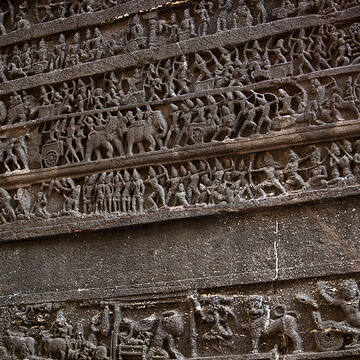
A perfect blend of historical religion and architectural significance is the Ellora caves situated in Verul, Maharashtra. It is one of the world’s largest rock-cut Hindu Temple cave complexes enclosing within the walls of the cave beautifully carved artefacts of Hinduism, Buddhism and Jainism’s religious artefacts.

2. GROUP OF MONUMENTS , MAHABALIPURAM

The Group of Monuments is a collection of 7th- and 8th-century CE religious monuments in the coastal resort town of Mahabalipuram, Tamil Nadu, situated on the coast of Bay of Bengal. It is known especially for its rathas (temples in the form of chariots), mandapas (cave sanctuaries), giant open-air reliefs such as the famous ‘Descent of the Ganges’, and the temple of Rivage, with thousands of sculptures to the glory of Shiva carved out of stones.

3. KEOLADEO GHANA NATIONAL PARK

Situated in the state of rich history and heritage is the Keoladeo National park in Bharatpur, Rajasthan which was in earlier times a duck hunting reserve for the Maharajas that ruled various kingdoms in India before. Now, it is the major wintering areas for large numbers of aquatic birds from Afghanistan, Turkmenistan, China and Siberia. Some 364 species of birds, including the rare Siberian crane, have been recorded in the park. The other wildlife of the sanctuary include, Nilgai, Chital , Sambar, Indian Porcupine, Indian Gray Mangoose, Jungle Cat, fishing Cat, civet, Jackals and striped hyenas. The park has well defined treks which can be explored either on foot or on rickshaws provided there. Infact, the national park provides rickshaw pullers for the bird watching who are also the fabulous guides to the area.

4. MOUNTAIN RAILWAYS

What better than an experience of travelling in rumbling train apartments amidst the majestic mountains. The Darjeeling Himalayan railway, Nilgiri Toy Train and the Kalka Shimla train which offers the experience of travelling in the train over the steepest heights surrounded by nature all around was declared as the world heritage site as it explores that hidden part of the country which is still saved from encroachment . The toy train on Nilgiri line takes passengers from a height of 1,069 ft to 7,228 ft. This rail network is one of the steepest in Asia. 

5. THE CHURCHES AND CONVENTS OF GOA

This coastal southern state of India on the coast of Arabian sea which is famous for its party life and beaches also has many monuments and churches of historical significance. Goa was the capita lof the Portugeese traders that came to India in around 16th century and therefore consists many victorian style buildings.

The main buildings that are included, are:

  • St. Catherine’s Chapel
  • Church and Convent of Francis of Assisi
  • Sé Cathedral
  • Basilica of Bom Jesus
  • Church of Saint Cajetan including the seminary
  • Church of Our Lady of the Rosary
  • St. Augustine Tower

The Basilica of Bom Jesus holds the mortal remains of St. Francis Xavier, a missionary across Asia (India, Japan, China) who died in 1552. He is regarded as the patron saint of Goa. Once every decade on December 3, the body is taken down for veneration and for public viewing.

Feminism: A Myth

All over the world people are misguided about the word feminism. According to you what does feminism mean? Is it to put men down and rule the world or is it to enjoy everything a man can? Let’s discuss about various myths and the actual meaning of feminism and the significance of it in a women’s life.

According to the Oxford dictionary feminism means “the belief that women should have the same rights and opportunities as men“. In more simpler words feminism is all about the equality between men and women and have the freedom of everything that they wish to do. Some people argue that they believe in ‘equality’ but they have no belief in feminism. Feminism has been made critical despite of it being a very simple concept.

From ancient times women are pointed out for the way they dress and for their aspirations. They have been constantly told to dress in a certain way and to live their life according to the norms of the society. Women are fighting for their equal rights from centuries for there right to vote, right to speech and freedom. People in the society have framed a woman according to their needs and expect them to fulfill their expectations. A married woman taking care of her husband, her in-laws and looking after their children is considered to be the ideal one whereas if she wants to work and be dependent, she is criticised and often being questioned on her motherhood. Similar type of Criticism she faces at her work place. These are the basic yet essential inequality that a women regularly faces.

Women-Women Conflict regarding feminism

Sometimes women also take feminism in a wrong way. They think that being a feminist means to humiliate men and they often misuse their power of being a women by falsely accusing a men in a crime. This is basically pseudo feminism. Women around the world debates for the real meaning of feminism which sometimes leads to conflicts. Some women of old generation are also against feminism and consider it as uncultural.

Myths

  • Feminists hate men.
  • Feminists are angry.
  • Feminists are unattractive and not feminine.
  • All feminists are lesbians.
  • Feminists are all pro-choice.
  • If you are a feminist, you cannot be religious.
  • All feminists are career women and do not support stay-at-home moms.
  • Feminists are Bra- Burners who hate sex.
  • Feminists can only be women.
  • Feminists don’t believe in marriage.

If you have ever found yourself saying “I’m not a feminist, but I am for equality,” then ask yourself why you do not claim the title? If it is because of the misconceptions of what a feminist truly is then empower yourself to raise awareness about what feminism is really all about. 

Feminists are all about equality between genders– which means feminists don’t want women to be more powerful than men any more than we want men more powerful than women. What may seem like a discriminatory act against men is actually an attempt to level the playing field between men and women.

While huge strides have been made towards complete gender equality, a great deal of work remains to be done, both in India and abroad, including the gender pay gap, access to reproductive healthcare, protection against sexual assault and violence and gender representation in media, among other issues.

How a Guy Can Be a Feminist?

Basically feminism is not only committed to changing negative stereotypes about being a woman. A large facet of feminism is understanding streotypes about masculinity and its effects on society and what it means to be a man. If you care about equality for your mother, daughter, grandmother, girlfriend, a friend, who is female then feminism should be important to you. Additionally, feminism is about equality for all marginalized groups- equality for those who are LGBTQIA, disabled, and ethnic and racial minorities. Caring about feminism means caring about people who fit into these categories.

Being a feminist is not something to be ashamed of. It is the right of every person who believes in equality for all.

Thank you for reading!

WHAT DOES ADOLESCENCE NEED?

Need for independence

With the growing physical and mental development an adolescent wants to express his opinion independently, to take part in different social activities and to become self-dependent like any adult member of the society. On attaining adolescence, the child who earlier used to depend on his elders, finds himself full of life and energy and cannot help but to take part in the diverse activities of the society. Thus, he defies the dominance of his elders and wants to proceed in life independently

Need for self-recognition

The adolescents not only want to take part in different social activities but also want self-recognition. They want to attract attention of other people by showing their abilities. The children in adolescence want to project themselves before the society in such a way so that people can appreciate their qualities and give them due respect and recognition.

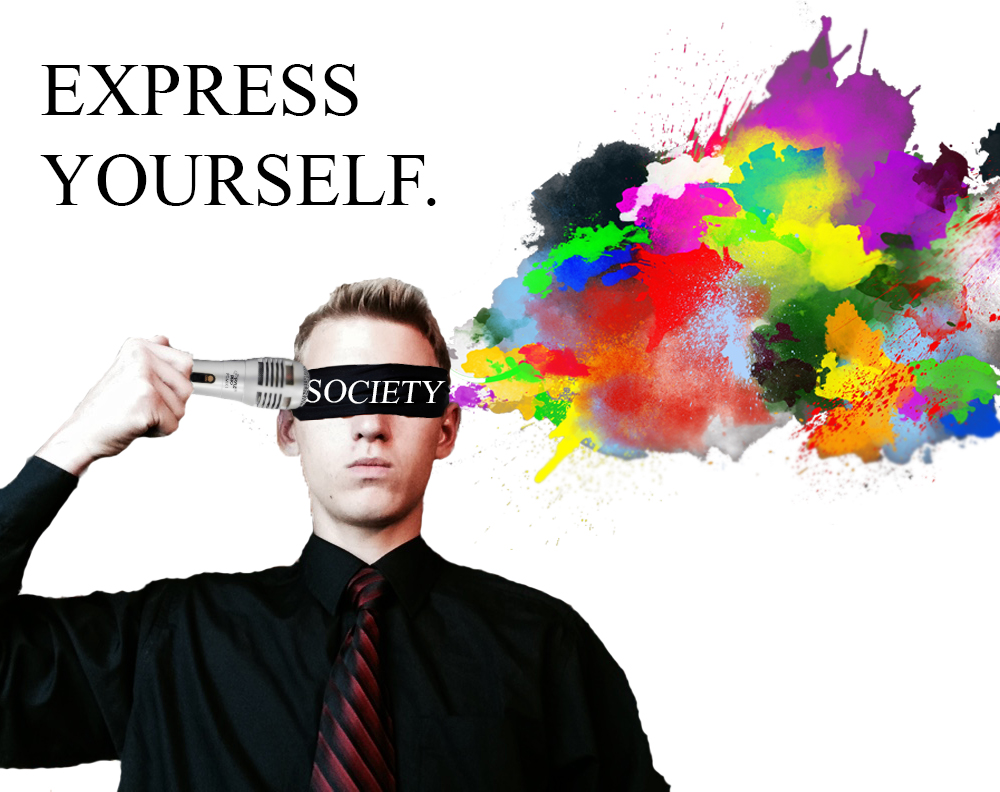
Need for self-expression

There is a great desire among the children in adolescence to express their feelings, thoughts and ideas. At this age, every child wants to express himself in his area of proficiency like sports, dramatics, studies, music, literature, art or any other medium.

Need for social life

One of the important needs of adolescents is to take part in the greater social environment. Before entering into the age of adolescence, children do not get much scope to mix with people outside their family. But as they attain adolescence children want to experience the greater social-life and want to get involved closely in different social activities. This need for social life gets an outlet when the adolescents involve themselves in the activities of different social institutions like club, social welfare committee, community service etc.

Need for self-reliance

Another important need of children in adolescence is the need for self-reliance. There is a great desire among the children of this age to become self-reliant as soon as they attain puberty. And they start dreaming about their future professions and the ways to establish themselves in their respective fields. The children of this age are also very eager to acquire professional qualifications according to their choice.

Need for Philosophy of life, morality and need to know the unknown

The children in adolescence want to have a philosophy of life, a clear concept of morality and want to know all the things which are unknown to them. They have a lot of inquiries regarding the basic purpose of life. They want to know how human life can be goal-directed and what is the main aim of life. When the children attain puberty, they also indulge in a great deal of thinking over the concept of right and wrong, good and bad. They want to evaluate all the activities of themselves and people around them in accordance with the concept of right and wrong. There is always a tendency among them to do whatever is morally right. And if they do something morally wrong, they go through terrible mental agony. At adolescence, there is also a great desire among the children to know what is unknown to them. The new discoveries of science have a great influence on the minds of adolescents.

Need to satisfy sex-related curiosity

As the children attain puberty they develop a deep sex-related curiosity. This curiosity greatly perturbs them as the result of natural outcome of their sexual development. First, they try to satisfy this curiosity by natural means. But later, by being ignored or scolded by the elders, they try to satisfy this curiosity through abnormal ways. Adolescence is one of the important stages of growth and development of the child. At this stage a unique disturbance develops in the mind of the child. According to modern Psychologists, this disturbance in the mind of the child is not an essential outcome of his physical development, rather it occurs in the mind of adolescents because of unfavourable environment.