5 Tips to manage your time

You wake up with the mindset to be productive the whole day, but after thirty minutes you find yourself mindlessly scrolling through your social media? Or maybe always end up getting distracted while working hence missing deadlines. You also might find yourself saying – ‘I don’t have time for this.’ If you find yourself in these situations quite often, it might be important for you to start managing your time. Time management is simple terms is planning the usage of time and conscious control over it to increase productivity and efficiency. We need to remember that everyone has 24 hours at their disposal and those who manage their time end up finding time to do everything they need, limiting the wastage of time and accomplishing their goals. Tips to keep in mind while looking to manage your time are-

Make a to-do list – Start by making a to-do list of all the things you need to complete for a particular day. This can also be done the night before so that you’re aware beforehand. This helps you keep all the tasks mentioned in one single place so you would not forget anything important. Creating and following a to-do list helps you start the day right rather than frittering away time getting started.

Prioritise your tasks – The next step is to prioritise the tasks in order of importance. This should be done in descending order, with the task having the highest priority put first. This would help you with putting your attention and focus on the task requiring urgency, improving the quality of work, and proper utilisation of time. 

Set time slots – You might feel overwhelmed with several tasks to be completed on a particular day – which would either make you stressed. To overcome this, try setting time slots for the tasks listed in the to-do list. This is like training your mind to follow a routine – which helps you twofold – firstly you know when you need to do a specified task and also the estimated time within which you need to complete that task. This helps you manage time as well as increases productivity. 

Free yourself from distractions – So you have a list, you’ve prioritised the task, and set time slots. But all of these wouldn’t be fruitful if you get distracted while you are working. The next important step is thus to free yourself from distraction while working. For example, work alone in a room free from the sound of the television. Try keeping your phone away from your workspace if you’re tempted to scroll through your social media. These small actions if taken care of can help you not get distracted and finish your work on time.

Focus on one task at a time – After choosing the task from the specific time slot, sit through it till the end till you finish it. Avoid switching to multiple talks or multitasking like working on a project, replying to emails, and checking your messages at the same time. This hampers your productivity and quality of work as well. Focus on one task at a time to help you avoid being all over the place and off-track from your routine.

Science — A Curse

Science lies at the root of progress. In spite of great achievements of science, thinking people have begun to question if it is really a blessing or a curse.

People all know how power of science is being used for evil purpose also. It is the superior scientific knowledge that makes one nation stronger than the other and helps the former to oppress the latter. Not content with individual killings, aeroplanes bomb entire cities out of existence. The atom bomb, the hydrogen bomb, poison gas, chemical warfare—what a horrible application of science!

Evil effects of science are also manifested in various other ways. Computers and robots, are eating up employment opportunities. Satellites are now used extensively for espionage purpose also. Too much of industrialisation, propagation of automobiles— all lead to air pollution and health hazards.

Science has given material comforts no doubt, but it has taken mankind away from nature. But as the soul is infinitely more important then the body, right thinking men have begun to look upon science as a curse—a lure to hell.

Govt asks social media intermediaries for compliance details over new Information Technology Rules

Electronics and IT Ministry has asked social media intermediaries for compliance details over the new Information Technology (Intermediary Guidelines and Digital Ethics Code) Rules, 2021. The new rules were notified on 25th of February and came into effect yesterday.
 
The Ministry has also sought details of Chief Compliance Officer and Resident Grievance Officer appointed by digital platforms under the new IT rules. The Centre had given Significant Social Media Intermediaries, SSMI three months to comply with the request. Any social media platform with more than 50 lakh users will be designated as a Significant Social Media Intermediary. 

PM Narendra Modi speaks to French Prez Emmanuel Macron; Thanks for medical assistance in fight against Covid-19

Prime Minister Narendra Modi spoke to the French President Emmanuel Macron over telephone yesterday. Mr. Modi thanked President Macron for the assistance rendered by France to India’s COVID response. The leaders discussed bilateral, regional and global issues of mutual interest and expressed their satisfaction at the positive outcomes of the recently concluded India-EU Leaders’ Meeting.
 
Both the leaders agreed that the announcements regarding resumption of negotiations for balanced and comprehensive free trade and investment agreements and India-EU Connectivity Partnership were welcome steps.
 
The two leaders expressed satisfaction at the depth and strength that the India-France Strategic Partnership has acquired in recent years and agreed to continue working closely together in the post-COVID era. Mr. Modi also reiterated his invitation to President Macron to visit India as soon as conditions permit.

Relief and restoration operations underway as Cyclone Yaas leaves trail of destruction in Odisha, West Bengal

Odisha Government has ordered early restoration of normalcy in the area hit by the Cyclonic storm Yaas yesterday. After reviewing the extent of damage in the North Odisha districts last evening in capital Bhubaneswar, Chief Minister Naveen Patnaik ordered restoration of at least 80 per cent electricity supply and road communication in the cyclone hit areas within 24 hours. He has also declared seven days relief to the people of 128 villages marooned by flash floods in the coastal districts like Bhadrak and Balasore.

AIR correspondent reports that Cyclone Yaas after lashing north Odisha with downpour and devastating winds with a speed up to 140 kilometres per hour, rescue relief and restoration teams have swung into action for early resumption of power and road clearance. Though the oceanic disaster did not cause much of a harm to electricity supply lines and telecom network, its damaging potential is evident in extensive inundation of low lying areas and massive destruction of trees especially in Bhadrak, Baleshwar and Mayurbhanj districts.

While a whopping six lakh fifty thousand people had been evacuated to safe shelters, thereby saving precious lives, two deaths have been reported one each from Baleshwar and Keonjhar district. Meanwhile, the Biju Patnaik International Airport in capital Bhubaneswar has resumed service from last evening after being shut for less than 24 hours, as part of cyclone preparedness.

In West Bengal, Administration is making assessments of the damage caused by the impact of the severe cyclone Yaas which made landfall. Extremely high tidal waves and stormy wind along with heavy to very heavy rainfall flooded low lying and coastal areas and also submerged nearby villages and towns in several districts of Bengal.

At several places, disaster management teams rescued people who were stranded due to sudden rush of water, either by breaking the embankments or overflowing the guardwalls. Agricultural land has been extensively damaged due to inflow of saline water in the fields.

Chief Minister Mamata Banerjee told reporters in Kolkata that at least 1 crore people have been affected and three lakh houses damaged due to rough weather conditions arising out of the cyclone. 134 river embankments along the coastal districts have either broken or been damaged by its impact. The Chief Minister will visit the affected areas of North and South 24 Parganas and East Medinipur on 28th and 29th of May.

Severe Cyclone Yaas enters Jharkhand with gusty winds; Over 11,000 people shifted to safer places

The deep depression over south Jharkhand and adjoining north interior Odisha moved northwestwards with about seven kilometre per hour during past six hours and the cyclone Yass lay centred at 5.30 A.M. over south Jharkhand and neighbourhood. It is about 70 kilometres west-southwest of Jamshedpur and 70 kilometre south south-east of Ranchi. India Meteorological Department, IMD said, the system is very likely to move nearly northwards and weaken gradually into a depression during the next six hours.

Cyclone Yaas hit Jharkhand late last night. State Disaster Management Department, local District Administration and NDRF teams are on mode to handle any casualty. Vaccination drive has been put to halt for two days in Ranchi, East Singhbhum and Saraikela Kharsawan district. Seven districts have been put on Orange while four districts on Red by the Weather Department.

AIR correspondent reports that Cyclone Yaas has entered Jharkhand through East Singhbhum district. Announcements by the District Administration are being continuously made for people to stay indoors and not move out of their homes. Koylanchal area including Bokaro, Dhanbad, Koderma and Giridih districts will now be less affected by the Cyclone storm Yaas, while Ranchi, Khunti, Simdega, Gumla and other nearby districts of Jharkhand are witnessing the impact of Cyclonic storm Yaas with intermittent heavy rainfall and gusty winds blowing at a speed of 50-60 km per hour.

The Weather Department has predicted extremely heavy to heavy rainfall with thunderstorms for the next two days. Chief Minister Hemant Soren said that he has been closely monitoring the effects of the cyclone in the state and giving instructions to local administration and NDRF teams to safeguard people.

Many places are facing power cut since yesterday while many trees have been uprooted at several places of the state. More than 11,000 people have been shifted and rescued to safer places and makeshift shelter homes in Saraikela Kharsawan, East and West Singhbhum districts.

India-US a major relation in the world today, says Jaishankar

External Affairs minister Jaishankar on his first visit to U.S. after Biden said the importance of India-US relation: On his first visit to the United States after the end of Trump administration and beginning of the Biden administration, External Affairs Minister S Jaishankar called the relationship of India and US as one of the most important relationships in the world.

On wednesday S Jaishankar told H R McMaster the former national security advisor (during administration of Trump) that “I think our relationship has come a long way. It is, today, one of the major relationships in the world,” during a webcast discussion.

“My own sense is that I Washington today there is a real appreciation of the potential of this relationship … and it’s true of New Delhi as well,” he said. He also added that the challenge today is for the other countries to  learn to work with each other more effectively in this multipolar world.

He further added that “I see a big change in the American mindset in that regard, The United States has not only an enormous ability to reinvent itself, it also has a great ability to assess its situation and re-strategize, in a way. And I do think today that when it comes to the big issues of our day …we have fundamental convergences. Convergences which are societal convergences, which are geopolitical . And I think the challenge before us is how to translate those convergences into actionable policies” .

In July Mr. S Jaishankar gave an statement saying that America need to go “beyond alliance” and should learn how to work in a multipolar world with plurilateral arrangements. But since Biden administration came into power after Trump administration, the country has again started to recommit itself to the multilateralism as a pillar of its foreign policy. During Trump administration major policies were based on the idea of America First.

S Jaishankar also said that “I think there needs to be that realization that this could easily happen to us. In many cases, it has happened to us and the right response, therefore is to help each other out and I am glad to say we’ve [ India] seen a tremendous outpouring of international support and solidarity at this time,”. Mr. Jaishankar emphasised on the changing world after epidemic. Jaishankar also said to world that when you have a big problem the only way out is global cooperation.

Mr. Jaishankar also shared his views on increasing strategic anatomy. He said “I think …the conversations are beginning to change towards more resilience …how do you de-risk the world,“. He also said that world is going to change a lot due to pandemic. He said “We can’t have a world which is part vaccinated and part neglected, because that world is not going to be safe. ‘How do we get through the global challenges in a global way?’ I think that’s the big question,“. He also said regarding the countries pursuing their national interest at the cost of everything else and he said that it is going to cause problems for everyone.


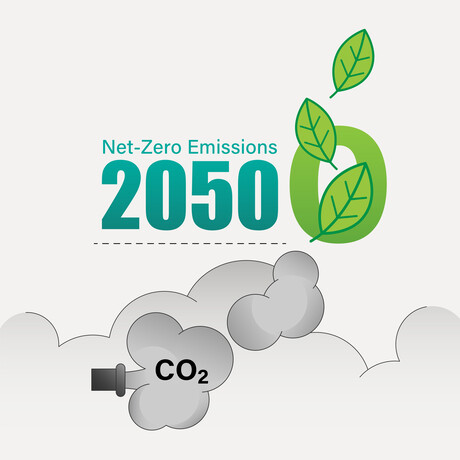
Explained: Net Zero and India’s stand on it

Lately, in April 2021, the US conducted a virtual summit on climate change with 40 world leaders to take bold pledges and chalk out prominent decisions on climate change. The summit has committed to achieving the Net-Zero target by 2050.

What is the Net Zero target?


Net Zero also referred to as carbon-neutrality is that situation where the entire man-made greenhouse gas from the atmosphere has been removed.

The summit held in April decided to achieve a balance on the emission of greenhouse gases and the removal of the same from the atmosphere.
Canada, South Korea, Japan, and Germany have committed to attaining a net-zero future.
India is the third-largest emitter of carbon after the US and China. And India plays a major role in global climate actions.

We all know that there has been a continuous rise in greenhouse gas emissions from industries, transportation, and livestock, resulting in global warming and prominent changes in climate patterns.
These harmful gases trap the heat and don’t allow them to escape the earth, causing temperature rise. The continuous change in climate patterns are causing severe floods, droughts, cyclones, and whatnot thereby leading to mass destruction of lives and property.

“The global temperature rose a total of 4 to 7 degrees Celsius over about 5,000 years. In the past century alone, the temperature has climbed 0.7 degrees Celsius, roughly ten times faster than the average rate of ice-age-recovery warming” as observed by NASA World Observatory.
“Models predict that Earth will warm between 2 and 6 degrees Celsius in the next century”.

If the global temperature rose at this pace, it would prove catastrophic. So in 2015, the 21st meeting of the United Nations Climate change conference took place to collectively agree to limit carbon emission by 1.5 degrees Celsius.

How to achieve Net Zero target?


Thus, the countries jointly agreed to become carbon-neutral or Net Zero carbon emitter by 2050. In achieving so the countries would have to balance their carbon emissions by removing the carbon from the atmosphere.

The countries have to develop renewable energy resources instead of burning fossil fuels, replacing fuel-based vehicles with electric vehicles, developing efficient technologies, etc. Also, the energy, transportation, and manufacturing sectors need to adopt net-zero targets.

Plants and water bodies are great carbon sinks as they absorb carbon from the air. Hence, expanding more forest cover would eliminate the carbon content from the atmosphere.
There are other technological techniques for containing atmospheric carbon.
Carbon sinks are a man-made reservoir where carbon-containing compounds are stored for an indefinite period for future usage, thereby decreasing the CO2 concentration from the atmosphere.

Measures adopted by countries:


Bhutan is the only country in the world that is “carbon negative” which means that it absorbs more carbon than it emits.
Countries like UK and France, have already enacted laws promising to achieve a net-zero emission by the middle of the century. China has promised to go net-zero by 2060.

India’s stand:


For India the scenario is different. India still has to reach the peak of emission, as for over next 2-3 decades the carbon emission would to grow because the country has to pull millions of people out of poverty.
Also, the carbon removal technologies are either unreliable or very expensive.
So, it’s not that India is straightaway striking out the carbon neutrality target by 2050, it’s that India at this point does not want to internationally announce any commitments.

Thus, the decision of attaining the Net Zero target is very arduous and challenging. The developed countries responsible for great carbon emission historically must take urgent steps and help developing nations with technology and capital to fulfill the cause.

‘THE LIPSTICK EFFECT’


As Covid-19 streaked the globe in March, many businesses soared or plummeted as the pandemic wrought sudden sweeping change on the market environment. While some businesses like medical suppliers, drugs and chemists, small scale mask manufacturers, online education platforms, digital gadget markets soared high while many other businesses like restaurants, bars, hotels, malls etc were forced to shut down. Imposing lockdowns led to panic buying wherein consumers started buying essential goods like monthly groceries and hoarding them. Some switched to selective and cheaper buying. Unemployment soared and consumer spending fell causing major global economies to slide into recession.


This shift in consumption pattern created an altogether different trend where less costly consumer goods dominated purchases. The stock market reached its highest level with Nifty crossing 15000 mark and Sensex soaring as high as 35000. All this seems contradictory to what the situation validates.   


Economists accredit these gains to  ” The Lipstick effect “.


What is ‘The lipstick effect’


The lipstick effect is a theory in economics propounded in 2001 by ‘Leonard A Lauder’ chairman of a cosmetic company ‘Estee Lauder’. It states that at times of economic crisis or in periods of recession consumers demand shifts from costly and expensive luxury goods to less costly luxury goods. Consumers buy luxury goods even if there is crisis. During times of such economic distress consumers confidence in economy falls and their demand shifts to such goods that doesn’t affect their income much. In other markets besides the cosmetic industry For eg: instead of going on a tour to some country or buying expensive fur coat or jacket consumers prefer to go to cinemas, restaurants or simply buy less costly gadgets.

 
During the great depression American economy saw 25% increase in cosmetic sales, while in 2008 when economies were under recession cosmetic company L’Oreal saw 5.3% increase in sale of its products. In 2001 during 9/11 attacks when the US economy was under pressure Lauder saw a significant increase in sale of lipsticks in his company. He, thus appraised that there was a negative effect between economic condition and lipstick sales. This is how ‘The lipstick effect’ came into existence. However, all these examples majorly focus on lipstick but the word ‘lipstick’ is used in generalized sense and includes all other luxury goods that consumers purchase even at the time of crisis.
 

What the lipstick effect has to say in Indian context ?

 
Pandemic has impinged economy leading to tremendous fall in GDP, employment, Investment and most important of all consumer’s demand. The lockdown and the period afterwards saw a mixed bag of varied demand patterns. Broadly three different demand patterns were working simultaneously – normal demand, pent-up demand and inventory build-up. In August 2020 Boston consulting group reported that while there has been a rise in consumption of essential goods like health products, and home entertainment, positive sentiments ware also noticed around other essential items like personal care products, packaged foods and discretionary segment like apparel, cosmetics, consumer electronics. In September 2020, Shopper stops reported 33% increase in eye-makeup sales. In quarter two of 2020-21, Godrej consumers’ business saw 5% increase in its sales. Share prices of many such brand rose for eg: share price of Cinthol soap rose to 36% from 33% before the pandemic.
  

Is the lipstick effect glimmer of hope for the brands in the new normal ?

 
The lipstick effect offers an interesting insight that even during slump, trusted brands find a place in consumer’s wallet and are purchased as usual. However, this can be observed only in the case of less expensive goods and doesn’t apply to all the categories. Ceding many of their activities and expenditures including eating out due to growing fear consumers seem reluctant to spend at costly restaurants. Due to travelling restrictions their outing trips have reduced leading them to save more money for their future expenditure. Apart from saving for future, consumers have adapted themselves to this new normal and started spending on things like refurbishing their homes, decorating rooms with less costly luxury goods maybe a vase or pot that they always wanted to spend on, buying things for their new hobbies and all those small acts that cheer and give hope to them. A new car purchase might have been postponed, or a foreign tour has been cancelled but small pleasures every now and then have taken a toll over other spending.  by small acts that keep them happy just like purchasing a lipstick is.
 
As J.K Rowling has rightly said “Happiness can be found even in the darkest of times; if only one remembers to turn on the light”. Even after the fatality of the pandemic demand by consumers will still be exceptionally characterized by irrationality and altogether opposite behavior. But what brings light to the overall situation is how well these branded businesses grab this opportunity and contribute their parts in comforting this economic crisis. Advertising can rekindle this hope. Using creative themes like togetherness, warmth, joy can help. Be kind, hopeful, positive and get the consumer to see more of your brand as a friend, supporter and a well-wisher.  


Signing off
Janhavi Thakre


Music Therapy – an aid to healing

Music heals, we all agree with that, don’t we? Not only does it uplift our mood and make us feel good, but also has proven health benefits. Music can boost the brain’s production of ‘dopamine’ – the hormone which helps us feel pleasure and ‘endorphins’ – the hormone that reduces stress and pain. Music eases anxiety, depression, reduces the feeling of pain, stimulates memories, and well – this list isn’t all-inclusive. These health benefits have given birth to ‘Music therapy’ – where music is used to address the physical, emotional/psychological; behavioural, cognitive, social, and spiritual needs of an individual or a group of people.

About music therapy and music therapists-

Music therapy is a burgeoning field and has grown a lot in the past few years playing a great role in all facets of healing. It is a clinical and evidence-based method of using music to accomplish individual goals carried on by a credentialed professional who helps the client form a therapeutic relationship with music. These music therapists are certified and trained in an approved music therapy program. They usually belong to the field of music and have the knowledge and skill to use music to heal people and stimulate or relax their feelings.

Types of Music Therapy –

The two broad types of music therapy are receptive and active (also called creative/expressive music therapy) music therapy. Receptive music therapy involves listening to music, which can be live or recorded. The feelings, thoughts, and ideas post listening to the music may then be discussed among the client and the therapist. Receptive music therapy helps majorly in inducing relaxation, reducing anxiety and pain. On the other hand, active music therapy is where the client, along with the music therapist, indulges in any kind of music-making. It can be composing a song, rapping, drumming, or song improvisation. This type of music therapy is associated with benefits like improving brain structure and function in infants.

Benefits of Music therapy –

Music therapy is extremely beneficial for people suffering from emotional health issues such as grief, anxiety, and depression. It also benefits people who address rehabilitative needs after a stroke, a traumatic head injury, or with chronic conditions like Parkinson’s or Alzheimer’s disease. Music therapy also helps in reducing the symptoms of psychological disorders like schizophrenia. Music therapy has no age bar, and you do not necessarily have to be sick to enjoy its benefits. This is because music therapy can also be used as a tool for self-improvement and personal growth, as it has also proven to improve self-expression and communication skills. It boosts immunity, enhances intelligence, IQ, and learning. It also helps control negative aspects of our personalities like worry, prejudice, and anger. It also has some amusing benefits like improving memory and focusing attention and also can enhance physical coordination and development. Overall, music therapy can increase positive feelings like calmness, confidence, emotional intimacy, and empowerment.

One important thing to note is that relying on only music therapy for the treatment of serious health conditions might not be enough. However, combining it with medications and other necessary tools in a treatment plan as guided by the health expert can help the patient manyfold.

The Internet

The internet has revolutionized the way people communicate with each other across the world. The internet is a world wide web of computers exchanging information with each other through telecommunication satellites and leased lines. Initially started as a defence project of the U. S. Government in 1968, the Internet’s usage has grown rapidly as a preferred medium of communication to the public at large.

It has three main uses—as a means of communication, as a mammoth storehouse of information of any kind, and as a new medium of commerce for buying and selling goods. Software applications like e-mail, chat, instant messaging and video conferencing have brought people living in far off places together in a virtual world where distances do not matter anymore. Numerous websites and search programmes can dig out any information at a click from a large variety of sources. Electronic commerce applications enable buying and selling of goods through virtual shopping centres and auctions.

It has become so popular because it provides information, communication and entertainment in an economical and attractive manner. People are rapidly opting for the internet in homes, offices and cyber cafes. The internet is changing lives in a way that telephone and television did long time ago. The world is truly becoming a global village.

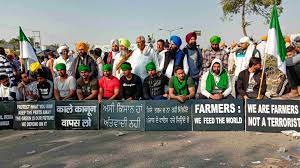
6 months to Farmers protest

Various farmer’s unions and opposition parties are observing ‘Black day’ on May 26th Wednesday marking 6 months of the farmers’ protest that started on 9 August 2020. A nationwide protest day has been organized with the support of various political parties.   

 The protest started against three ordinances that were passed by the parliament and signed by the President. They are (i) The Farmers Produce Trade & Commerce (Promotion & Facilitation) ordinance 2020 (ii)The farmers (Empowerment & Protection) Agreement on Price Assurance & Farm services ordinance 2020 (iii) The Essential Commodities( Amendment) ordinance 2020.The current provisions of law restrict farmers from selling their produce outside their notified APMC markets where the government set MSP will be given. Also, farmers are supposed to sell their produce only to registered licencees of the state government. The APMCs are maintained by the state government and they charge a percentage as tax. The new law relaxes these restrictions and allows farmers to sell their produce outside mandis and to all traders(including those without licenses) like corporates on a contract basis.  

The protest arises mainly on four aspects of the new laws; Trade area, trader, market fee, and dispute resolution. The majority of the Indian farmers are less educated and not well versed in the legalities of contracts. Farmers can be easily manipulated and tricked into contracts with corporates as most  farmers cannot afford legal advisors. Secondly farmers fear the system of Minimum Support Price (MSP) may end eventually as APMCs may decline. The corporates can provide high prices in the initial years diverting the whole market to themselves till a stage where APMCs decline and later they will be the sole body deciding prices in the market.  

The protest grew over the months with support from different parts of the country. Farmers from Punjab and Haryana marched to Delhi where they were blocked at the check posts. Many organizations came forward to help them. And several leaders have sent letters to the government asking them to repeal the laws. Amidst the strong protest, the government stayed the implementation of the laws for 18 months. But the farmers stayed adamant on their need and asked for a complete repeal of the laws.   

Peaceful protests in Hisar that led to the release of arrested farmers have further fuelled the protest and black flags were hoisted at various protesting sites as a symbol of their dissent. Due to COVID restrictions, the protest is now carried out at a slow pace. Almost 12 political parties have extended their support to the cause. They are Congress, TMC,NCP,DMK,Shiv Sena,Samajwadi Party,JMM,RJD,CPI,CPM and others.The farmers are determined to protest until they achieve their goal.


Twitter Facebook going to be banned! Why and from when?

It seems the two big social media giants, Facebook and Twitter are soon going to be banned: A group of news reports are estimating that the two big social media giants which are Facebook and Twitter may face a ban in India if they will be failed to comply with the new intermediary guidelines made for social media platforms.

The Ministry of Electronics and Information Technology gave a three-month deadline to the big organisations to accept the guidelines given to them by Ministry till May 25, but till now only Koo the Indian social media platform similar to Twitter, none have accepted them. As per an official of government ,if any of these social media platform will fail to accept these Guidelines they might risk losing status as social media platforms. The government can also take action against them as per the law of the land for not following the rules.

The rules will be effective from May 26. Although whatever happens, but Indian users will still be able to use these social media platforms. It is being estimated by some experts that it is not likely that government would strictly enforce all provisions unless it would be seriously required as social media platforms will always have an option to move to court and challenge the government. Also the government wouldn’t wish that social media platforms move to court as they might fear being embarrassed in court as the guidelines sound unconstitutional.

Besides, the Centre was also expected to issue a set of FAQs to explain about these guidelines that how they are being implemented. However, those have not been released till and there is also a huge possibility of the deadline being extended to give more time to the Ministry of Electronics and IT department to figure out the nuances. Also there are extremely low possibilities that government would impose a ban on these US companies because of the dominance of US government in world.

The government had also set 50 lakh registered users as the threshold for defining ”significant social media intermediary”, which means that large players like Twitter, Facebook and Google would have to comply with additional norms. When the government announced these guidelines in February it said that the rules will be implemented instantly, although the significant social media platforms(having large no. of users) will have an extra time of three months for complying these guidelines. These significant social media platforms will be also required to publish a monthly compliance report revealing the details of complaints received and action taken by them. They will also be required to have a physical contact address in India published on its website as well as on it’s mobile app.

Basically the new guidelines were meant to make social media platforms (Facebook, Twitter Instagram, Whatsapp) responsible for the content it is having. For example- Social media companies will have to remove posts related to nudity within 24 hours only. However they won’t be asked to disclose the content of any message. Also the users will be informed and explained the cause in case social media platforms remove any content of users on their own. They will be required to give a valid explanation behind that.

Problems of Dowry System

                      DOWRY SYSTEM

The giving of gifts or money (otherwise known as a dowry) to a groom on behalf of the bride’s family is common practice in India, a marital tradition which dates back centuries. The dowry buys into people’s pride and desire to “save face” and the system (and exactly what is given) has substantial consequences for families and women in general. The financial restraints a dowry can place on a girl’s family coupled with the increasing abuse of the tradition on the part of the groom or his family has seen public perception of dowry giving change, with the government now stepping in to regulate its practice.

What is Yellow Fungus? Know causes, effects, prevention and more.

The second tide of coronavirus is finally slowing down with daily cases in India dropping to below 2 lakhs. But new fungal infections are followed by its result. The most recently reported one is the deadly “yellow fungus”. After Black and White fungus, cases of yellow fungus appear in U.P. First case of yellow fungus was reported in Ghaziabad. The 45-year-old patient, who is undergoing treatment, is suffering from yellow fungus as well as black and white fungus. Yellow fungus is known to be more dangerous because it originates internally, which makes it more difficult to detect and treat. 

 Symptoms of yellow fungus 
• Weight loss 
• Sunken eyes 
• Failure of organs 
• Wound heal slowly 
• Permanent death of cells 
• Leakage of pus 
• Malnutrition 

 Causes of yellow fungus 
 Yellow fungus is mainly caused by a lack of hygiene. Poor hygienic people are more tend to be affected by this deadly infection. Humidity levels below 30-40 per cent can also stimulate the growth of fungus. Dull and old food can also lead to the growth of this virus. Remove old food and faecal matter in and around your house to help prevent the growth of bacteria and fungus. 

 Treatment of yellow fungus 
 The only known treatment till now for this infection is Amphotericin B injection, which is an antifungal drug. It is also used in the treatment of black fungus. Precautions to take 
• Keep your house and surroundings clean. 
• Do not consume dull and old food. 
• Check the humidity in the room often. Too much humidity promotes the growth of yellow fungus. Start to maintain cross ventilation. 

• To avoid complications of the yellow virus, covid-19 patients should begin their treatment as soon as possible.

Understanding black fungus

This disease is caused by a kind of mould called ‘micromycetes, present in our surroundings. The infection affects those who are highly immunocompromised and have diabetes. Another cause of its growth is that to deal with COVID-19 patients, steroids are used to lessen the inflammation in the respiratory tracts. Such patients have been detected to be more prone to get this infection. Moreover, people with pre-existing morbidity such as diabetes, impaired kidney function or cancer are at higher risk of getting infected and they need to be very carefull.


The onset of white fungus

White fungus or ‘aspergillosis’ affects people with low immunity and comorbidities such as diabetes. Over usage of steroids is yet a factor in the onset of this disease. Unlike yellow and black fungus, this variant affects numerous parts of the body such as the nail bed, skin, stomach, kidney, brain and reproductive organs.


So, stay informed and alert of health changes arising due to the Covid-19 infection and keep in touch with a doctor.Whether it is about symptoms or side-effects, it is crucial to be doubly sure, so that you don’t run into crisis in any way. The only thing one must do, while dealing with Covid-19 at home, is to be in continual touch with a trusted doctor. If there are any serious symptoms, including low oxygen concentration, chest pain, and more, then it’s necessary to take immediate action. As we know, prevention is better than cure anyway.