Lack of education (शिक्षा की कमी)

 शिक्षा का अभाव एक बहुत बड़ा वैश्विक मुद्दा है जो कई लोगों के जीवन को प्रभावित करता है।  शिक्षा की कमी कई मुद्दों का कारण बनती है और यह अपने आप में एक ऐसा मुद्दा है जिस पर हम अनदेखा नहीं कर सकते।  शिक्षा न होने की साधारण समस्या सी समुदाय के लिए लगती है लेकिन शिक्षा का अभाव से ही  एक असहिष्णु समाज जैसी समस्याओं का कारण बनती है और यह गरीबी का एक चक्र पैदा करेगी।  एक समुदाय में समस्याओं के लिए शिक्षा की कमी का बहुत बड़ा योगदान है।  यह न केवल समुदाय को प्रभावित करता है, बल्कि यह दुनिया भर की समस्याओं को नकारात्मक रूप से प्रभावित करता है।

शिक्षा की कमी हम ऐसे  रूप में परिभाषित किया जा सकता है जहां लोगों के पास उन बुनियादी चीजों के बारे में सामान्य ज्ञान का औसत स्तर से भी नीचे है, जिनकी उन्हें अपने दैनिक जीवन में तत्काल आवश्यकता होगी। उदाहरण के लिए, इसमें गणित, लेखन, वर्तनी आदि का बुनियादी ज्ञान शामिल हो सकता है। विशेष रूप से गरीब विकासशील देशों में, शैक्षिक असमानता काफी प्रचलित है। शिक्षा की कमी के गंभीर प्रतिकूल प्रभाव पड़ सकते हैं।  इस लेख में शिक्षा की कमी के कारणों, प्रभावों और समाधानों की विस्तार से चर्चा करेंगे।
गरीबी

गरीबी को शिक्षा की कमी और शैक्षिक असमानता का एक बड़ा कारण माना जा सकता है।  गरीब परिवारों के बच्चों को अक्सर उचित शिक्षा नहीं मिल पाती है क्योंकि उनके परिवारों के लिए उन्हें स्कूल भेजना बहुत महंगा होता है। इसके अलावा, इन बच्चों को अक्सर स्कूल जाने के बजाय काम करना पड़ता है क्योंकि उन्हें अपने परिवार के सदस्यों को आर्थिक रूप से समर्थन देने के लिए परिवार की आय में योगदान देना पड़ता है। कई अध्ययनों से पता चला है कि गरीबी और शिक्षा की कमी का सकारात्मक संबंध है।  चूंकि गरीब परिवार अपने बच्चों को स्कूल नहीं भेज सकते हैं, इसलिए ये बच्चे महत्वपूर्ण शैक्षिक असमानता से पीड़ित हो सकते हैं। हालांकि, गरीबी न केवल निम्न स्तर की शिक्षा का कारण है, यह अपर्याप्त शिक्षा का प्रभाव भी हो सकता है क्योंकि खराब शिक्षा अक्सर बेरोजगारी और कम वेतन की बढ़ती संभावना में तब्दील हो जाती है।
अनाथवाद

अनाथ बच्चों को “सामान्य” बच्चों की तुलना में शिक्षा की कमी से पीड़ित होने का अधिक खतरा होता है क्योंकि अक्सर उनकी देखभाल करने वाला कोई नहीं होता है।  यह वित्तीय परेशानी का कारण बन सकता है क्योंकि जब आप अभी भी बच्चे हैं तो अपने खर्चों को कवर करने के लिए पर्याप्त धन अर्जित करना काफी कठिन है।बदले में, इसका परिणाम ऐसी स्थिति में हो सकता है जहां इन बच्चों को जीवित रहने के लिए पर्याप्त धन कमाने के लिए काफी काम करना पड़ता है।  इस प्रकार, इन अनाथों के पास स्कूल जाने का समय नहीं होगा क्योंकि उन्हें काम करने के लिए अपना सारा समय चाहिए।
बेघर

यदि आप बेघर माता-पिता वाले परिवार में पले-बढ़े हैं, तो संभावना है कि आपको उचित शिक्षा नहीं मिलेगी क्योंकि आपके माता-पिता के पास आपको स्कूल भेजने के लिए पर्याप्त धन नहीं होगा और वे शायद बहुत अधिक परवाह भी नहीं करते हैं क्योंकि उन्हें अक्सर नशीली दवाओं की लत जैसी अन्य समस्याएं होती हैं।  और इसलिए आपको उपेक्षित किए जाने का बहुत बड़ा जोखिम हो सकता है।  इस प्रकार, बेघर माता-पिता वाले परिवार में बड़े होने से भी शैक्षिक असमानता में योगदान हो सकता है। बेघर होना भी शिक्षा की कमी का एक कारण हो सकता है।  अगर लोग अपनी नौकरी खो देते हैं और अब अपने किराए का भुगतान नहीं कर पा रहे हैं, तो उनके बेघर होने का खतरा हो सकता है।  चूंकि शिक्षा के निम्न स्तर के साथ बेरोजगारी की संभावना बढ़ जाती है, इसलिए बेघर होने की संभावना भी बढ़ जाती है।
सांस्कृतिक कारक

 कुछ संस्कृतियों में, यह भी काफी सामान्य है कि लोग अक्सर केवल काफी बुनियादी शिक्षा प्राप्त करते हैं।  ये संस्कृतियां अक्सर कुछ मान्यताओं पर भरोसा करती हैं और अपने बच्चों को विश्वविद्यालय या अन्य शैक्षणिक संस्थानों में भेजने के लिए उन्नत शिक्षा को पर्याप्त महत्व नहीं दे सकती हैं।
संघर्ष

 संघर्ष भी शिक्षा की कमी का एक बड़ा कारण हो सकता है।  उन क्षेत्रों में जहां संघर्ष आम हैं, लोग बस यह महसूस करते हैं कि उनके जीवन की सुरक्षा उनके बच्चों को स्कूल भेजने से ज्यादा महत्वपूर्ण है।इसके अलावा, संघर्षों के कारण, कई लोगों को अपनी जान बचाने के लिए अपना घर छोड़ना पड़ता है और दूसरे देशों में पलायन करना पड़ता है।  इस प्रकार, जो बच्चे इन प्रतिकूल परिस्थितियों से पीड़ित हैं, वे संघर्षों के कारण उचित शिक्षा प्राप्त करने में सक्षम नहीं हैं।
प्राकृतिक आपदाएं
 जब शिक्षा की कमी की बात आती है तो प्राकृतिक आपदाएं भी भूमिका निभा सकती हैं।  जब क्षेत्र प्राकृतिक आपदाओं जैसे सुनामी या अन्य आपदाओं की चपेट में आते हैं, तो इन क्षेत्रों में रहने वाले लोग सार्वजनिक बुनियादी ढांचे के व्यापक विनाश से पीड़ित होंगे। इन प्राकृतिक आपदाओं के कारण वे गंभीर स्वास्थ्य समस्याओं से भी पीड़ित हो सकते हैं।  इन भयानक परिस्थितियों में, बच्चों के लिए उचित शिक्षा प्राप्त करना काफी कठिन होगा क्योंकि स्कूल और अन्य शैक्षणिक सुविधाएं नष्ट हो सकती हैं।
अपर्याप्त शैक्षिक अवसंरचना

कुछ क्षेत्रों में, समग्र शैक्षिक बुनियादी ढांचा काफी खराब है।  यह ग्रामीण क्षेत्रों के लिए विशेष रूप से सच है।  इन क्षेत्रों में रहने वाले लोगों को अक्सर अपने बच्चों को अगले स्कूल में लाना पड़ता है। हालांकि, कई गरीब लोगों के पास कार तक नहीं है।  इससे उनके बच्चों के लिए शिक्षा की कमी होने की संभावना है क्योंकि ये बच्चे लंबी दूरी के कारण स्कूल नहीं जा सकते हैं।
शिक्षकों के निम्न योग्यता स्तर
 शिक्षा की कमी से जुड़ा एक और मुद्दा शिक्षकों की अपर्याप्त योग्यता हो सकता है।  यदि शिक्षकों के पास उच्च स्तर की शिक्षा नहीं है, तो संभावना है कि स्कूल खत्म होने पर स्कूली बच्चों की शिक्षा का स्तर भी निम्न होगा क्योंकि उनके शिक्षक उन्हें उच्च स्तर पर पढ़ाने में सक्षम नहीं हैं।
शिक्षा की कमी एक बड़ी वैश्विक समस्या है।  विशेष रूप से गरीब देशों में, कई बच्चे शैक्षिक असमानता से पीड़ित होते हैं, जो बदले में कई गंभीर मुद्दों को जन्म दे सकता है जब ये बच्चे बड़े हो जाते हैं।इसलिए, वैश्विक स्तर पर शिक्षा की कमी की समस्या से लड़ना महत्वपूर्ण है।  ऐसा करके, हम दुनिया भर में कई लोगों के लिए एक उज्जवल भविष्य सुनिश्चित कर सकते हैं।जिन लोगों के पास केवल निम्न स्तर की शिक्षा है, उन्हें भी कट्टरपंथी आंदोलनों के लिए भर्ती करना आसान हो सकता है।  यह इस तथ्य के कारण है कि ये लोग कट्टरपंथियों द्वारा दिए गए तर्कों को त्रुटिपूर्ण के रूप में पहचानने में सक्षम नहीं हो सकते हैं और इसलिए इन संगठनों में शामिल होने के इच्छुक हो सकते हैं, भले ही इन तर्कों का उद्देश्यपूर्ण दृष्टिकोण से कोई मतलब न हो।
इसलिए हमें  शिक्षा के महत्व पर जागरूकता बढ़ाना चाहिए 
बहुत से लोगों को शायद यह भी पता नहीं होगा कि उनके बच्चों के लिए शिक्षा की कमी वास्तव में क्या मायने रखती है।  माता-पिता यह मान सकते हैं कि घर पर सिखाई गई एक बुनियादी शिक्षा जीवन में सफल होने के लिए पर्याप्त है क्योंकि वे बेहतर नहीं जानते हैं। हालांकि, हमारी तकनीकी प्रगति के साथ, यह संभावना है कि हमारे आजकल के जॉब मार्केट में सफल होने के लिए शिक्षा पहले से कहीं अधिक महत्वपूर्ण होगी।

Unemployment Problem in India(भारत में बेरोजगारी की समस्या)

 बेरोजगारी भारत में ही नहीं बल्कि पूरी दुनिया में एक बहुत ही गंभीर मुद्दा है।  ऐसे सैकड़ों और हजारों लोग हैं जिनके पास रोजगार नहीं है।  इसके अलावा, बढ़ती आबादी और नौकरियों की मांग के कारण भारत में बेरोजगारी की समस्या बहुत गंभीर है।  इसके अलावा, अगर हम इस समस्या की उपेक्षा करते हैं तो यह राष्ट्र के विनाश का कारण बनने जा रहा है।नौकरी और पैसे के बिना सामान्य स्वस्थ जीवन जीना कठिन है।  लोगों के बेरोजगार होने के कई कारण हैं।  बेरोजगार होने के कारण व्यक्ति को वित्तीय, भावनात्मक और व्यक्तिगत समस्याओं  हो सकता है।

बेरोजगारी क्या है?

बेरोजगारी एक ऐसी स्थिति को संदर्भित करती है जिसमें एक कुशल और प्रतिभाशाली लोग नौकरी करना चाहते थे।  लेकिन कई कारणों से उचित नौकरी नहीं मिल पा रही है।
बेरोजगारी के प्रकार

अब हम जानते हैं कि बेरोजगारी क्या है लेकिन बेरोजगारी का मतलब केवल यह नहीं है कि व्यक्ति के पास नौकरी नहीं है।  इसी तरह, बेरोजगारी में अपनी विशेषज्ञता से बाहर क्षेत्रों में काम करने वाले लोग भी शामिल हैं।विभिन्न प्रकार की बेरोजगारी में प्रच्छन्न बेरोजगारी, मौसमी बेरोजगारी, खुली बेरोजगारी, तकनीकी बेरोजगारी, संरचनात्मक बेरोजगारी शामिल हैं।  इसके अलावा, कुछ अन्य बेरोजगारी चक्रीय बेरोजगारी, शिक्षित बेरोजगारी, अल्प रोजगार, घर्षण बेरोजगारी, पुरानी बेरोजगारी और आकस्मिक बेरोजगारी है। इन सबसे ऊपर, मौसमी बेरोजगारी, बेरोजगारी के तहत, और प्रच्छन्न बेरोजगारी भारत में पाई जाने वाली सबसे आम बेरोजगारी है।
बेरोजगारी के कारण

कुछ लोगों को काम पर नहीं रखा जा सकता क्योंकि उनके पास शिक्षा नहीं है और वे आवश्यक कार्य करने के लिए योग्य नहीं हैं।  अधिकांश कंपनियां किसी व्यक्ति के संदर्भों को बुलाती हैं और यदि उनके पास एक अच्छा कार्य रिकॉर्ड नहीं है, तो उन्हें काम पर रखने की संभावना नहीं है।  कर्मचारी हमेशा अपने रेज़्यूमे, या किसी की शिक्षा और पेशेवर अनुभव के संक्षिप्त विवरण के आधार पर सबसे योग्य व्यक्ति को काम पर रखेंगे।
भारत जैसे देश में जनसंख्या के एक बड़े वर्ग के बेरोजगार होने के बहुत से कारण हैं।  इनमें से कुछ कारक जनसंख्या वृद्धि, धीमी आर्थिक वृद्धि, मौसमी व्यवसाय, आर्थिक क्षेत्र की धीमी वृद्धि और कुटीर उद्योग में गिरावट हैं।
इसके अलावा, ये भारत में बेरोजगारी का प्रमुख कारण हैं।  साथ ही स्थिति इतनी विकट हो गई है कि उच्च शिक्षित लोग सफाईकर्मी का काम करने को तैयार हैं।  साथ ही सरकार उनके काम को गंभीरता से नहीं ले रही है।
 इन सबके अलावा, आबादी का एक बड़ा हिस्सा कृषि क्षेत्र में लगा हुआ है और यह क्षेत्र केवल फसल या वृक्षारोपण के समय ही रोजगार प्रदान करता है।
इसके अलावा, भारत में बेरोजगारी का सबसे बड़ा कारण इसकी विशाल आबादी है जो हर साल बड़ी संख्या में नौकरियों की मांग करती है जिसे सरकार और अधिकारी प्रदान करने में असमर्थ हैं।
जहां तक ​​इस समस्या का संबंध है, ऐसे कई कारण हैं जिन्हें नज़रअंदाज करना बहुत स्पष्ट है।  तेजी से बढ़ती जनसंख्या, दोषपूर्ण शिक्षा प्रणाली, उद्योगों की धीमी वृद्धि, कुटीर उद्योगों की उपेक्षा और हमारी कृषि का पिछड़ापन आदि समस्या के कुछ प्रमुख कारण हैं।  दोषपूर्ण दीर्घकालिक और अल्पकालिक जनशक्ति नियोजन इस समस्या को एक नया आयाम देने में मदद करने वाला एक अन्य कारक है।  कुछ अन्य कारक हैं, जिन्होंने स्थिति को खराब करने में योगदान दिया है, लेकिन वे उतने बड़े नहीं हैं जितने ऊपर बताए गए हैं।
 हमारी वर्तमान जरूरतों के अनुसार हमारी शिक्षा प्रणाली की समीक्षा की जानी चाहिए और उसमें बदलाव किया जाना चाहिए।  कारखानों की तरह, हमारे विश्वविद्यालय, कॉलेज और स्कूल अभी भी स्नातकों की एक समृद्ध फसल पैदा कर रहे हैं जो कार्यालयों में केवल सफेदपोश नौकरियों के लिए उपयुक्त हैं।  ये स्नातक केवल उन नौकरियों के लिए उपयुक्त हैं जो कार्यालयों में टेबल पर बैठे क्लर्क, सहायक, अधिकारी और नौकरशाह हैं।  ये मैट्रिक, स्नातक और स्नातकोत्तर बेरोजगारों की बढ़ती सूची में शामिल होते रहते हैं।  ये शिक्षित लेकिन बेरोजगार युवा, जिनकी संख्या लाखों में है, बड़ी चिंता और चिंता का विषय हैं।  हमारी शिक्षा कार्योन्मुखी होनी चाहिए।  यह ऐसा होना चाहिए कि यह किसी व्यक्ति को दूसरों पर निर्भर होने के बजाय अपने पैरों पर खड़ा होने में सक्षम बनाता हो।  यह वास्तव में विडंबना है कि हमारे उच्च शिक्षित और प्रशिक्षित कर्मचारी, जैसे इंजीनियर, डॉक्टर और वैज्ञानिक आदि सरकारी नौकरियों के पीछे भागते हैं।  वे अपनी कार्यशालाएं, प्रयोगशालाएं, कारखाने और व्यवसाय शुरू करने के इच्छुक नहीं हैं।
बेरोजगारी के परिणाम

अगर मौजूदा हालात की तरह ही चलता रहा तो बेरोजगारी एक बड़ा मुद्दा बन जाएगा।  इसके अलावा, अर्थव्यवस्था में निम्नलिखित चीजें होती हैं जो गरीबी में वृद्धि, अपराध दर में वृद्धि, श्रम का शोषण, राजनीतिक अस्थिरता, मानसिक स्वास्थ्य और कौशल की हानि है।  नतीजतन, यह सब अंततः राष्ट्र के पतन की ओर ले जाएगा।
एक निराश और बेरोजगार पुरुष या महिला एक बहुत ही खतरनाक व्यक्ति साबित हो सकता है।  वह दूसरों को कभी भी चैन से जीने नहीं देगा।  हमारी कई कानून-व्यवस्था की समस्याएं हमारे नौजवानों और महिलाओं में बेरोजगारी की इस समस्या से सीधे तौर पर जुड़ी हुई हैं।  वे ऊर्जा,  और निराशा से भरे हुए हैं।  यदि ठीक से उन्मुख नहीं किया गया, तो ये हानिकारक और असामाजिक गतिविधियों में विस्फोट करने के लिए बाध्य हैं।  इसलिए, यह समय की मांग है कि युवाओं को उपयुक्त रूप से नियोजित किया जाए और उनकी ऊर्जा, क्षमताओं और कौशल को उपयोगी और राष्ट्र-निर्माण गतिविधियों के लिए उपयोग किया जाए।  यदि यह समस्या हल हो जाती है, तो कई अन्य समस्याएं अपने आप हल हो जाएंगी।  हमारे जैसे लोकतांत्रिक देश और कल्याणकारी राज्य के लिए बेरोजगारी एक बड़ा अभिशाप है, जिसे उचित जनशक्ति नियोजन और बड़े पैमाने पर रोजगार के अवसरों के सृजन से काफी हद तक समाप्त किया जा सकता है।  यदि हमारी जनशक्ति की वृद्धि को कम नहीं किया जा सकता है, तो यह अनिवार्य हो जाता है कि सार्वजनिक और निजी दोनों क्षेत्रों में उचित अल्पकालिक और दीर्घकालिक योजना द्वारा इसकी मांग को पर्याप्त रूप से बढ़ाया जाए।
सरकार द्वारा पहल
 सरकार ने इस समस्या को बहुत गंभीरता से लिया है और बेरोजगारी को धीरे-धीरे कम करने के उपाय किए हैं।  इनमें से कुछ योजनाओं में आईआरडीपी (एकीकृत ग्रामीण विकास कार्यक्रम), डीपीएपी (सूखा प्रवण क्षेत्र कार्यक्रम), जवाहर रोजगार योजना, रोजगार आश्वासन योजना, एनआरवाई (नेहरू रोजगार योजना), स्वरोजगार के लिए प्रशिक्षण, पीएमआईयूपीईपी (प्रधानमंत्री एकीकृत शहरी गरीबी उन्मूलन) शामिल हैं।  कार्यक्रम), रोजगार विनिमय, रोजगार गारंटी योजना, संगठित क्षेत्र का विकास, लघु और कुटीर उद्योग, फोर्जिंग देशों में रोजगार, और जवाहर ग्राम समृद्धि योजना और कुछ और।इन योजनाओं के अलावा सरकार कुछ नियमों को लचीला भी बनाती है, ताकि निजी क्षेत्र में भी रोजगार सृजित किया जा सके।निष्कर्ष निकालने के लिए, हम कह सकते हैं कि भारत में बेरोजगारी की समस्या एक महत्वपूर्ण चरण में पहुंच गई है।  लेकिन, अब सरकार और स्थानीय अधिकारियों ने इस समस्या को गंभीरता से लिया है और बेरोजगारी कम करने के लिए इस पर काम कर रहे हैं।  साथ ही, बेरोजगारी के मुद्दे को पूरी तरह से हल करने के लिए हमें बेरोजगारी के मुख्य मुद्दे से निपटना होगा जो कि भारत की विशाल आबादी है।

Sunderlal Bahuguna – The Chipko leader

“The solution of present-day problems lie in the re-establishment of a harmonious relationship between man and nature.”- Sunderlal Bahuguna   


The renowned leader of the Chipko Movement, Sunderlal Bahuguna passed away on 21st May 2021 due to COVID complication at AIMS Hospital in Rishikesh. The legacy he has left for the eco-movement in India is priceless. It was him who proposed that an ecocentric economy must be of importance instead of an egocentric economy.He along with his wife Vimla Bahuguna has led numerous peaceful protests against government policies to protect the environment and its resources including the Chipko Movement and the protest against the construction of the Tehri dam.


 Sunderlal Bahuguna was born in 1927 in Uttarakhand. From a very early age, he was influenced by Gandhian principles and started off his social commitments through a protest against untouchability. Later being aware of the loss of forests in the Himalayas led him to start the revolutionary Chipko Movement. He understood that women and nature closely interrelated and he led his protests for the protection of nature through women and this more or less strengthened the eco-feminism movement in India.He firmly believed in the three Gandhian principles of Swaraj, Swadeshi and Satyagraha. He believed that each village should have the freedom to produce and to decide for their development.He became the voice for mother earth. As he said” Politicians have loudspeakers.But who will speak for the trees that will be cut? Who will come forward for the dying river? Who will protect the mountains? It is now time to hear the voice of the tree being cut, the voice of the river,the scream of the mountain that is sliding.”   

Though he primarily worked for the protection of the Himalayan ecosystem and the Ganga river system, He has led and strengthened environmental movements in different parts of the country as well as the world. This includes the Appiko movement in the Western Ghats and the protest to protect forests in Nairobi and many more. He walked from Kashmir to Kohima, almost 5000 kms on foot in the 1970s to spread awareness about the need to protect trees and forests. 

 He was awarded Padmasree in 1981 and Padma Vibhushan in 2009. Together with Vandhana Shiva and Medha Patkar he has authored different books on the environment including the famous ‘ India’s environment: Myths and Reality’. His life is an inspiration and a true role model for all environmental activists in the country. Not just environmental activism, he influenced and convinced women about their rights and the need for them to lead such movements.He has led several anti-liquor protests also in the Himalayas.His passion, determination and love for nature have helped in saving forests around the world. He was a true eco-warrior in the true sense.


Women claim she has been kidnapped 52 times by aliens

Women claim she has been kidnapped 52 times by aliens

Aliens have always been an interesting topic all over the world. Getting to know about other planets and the existence of weird-looking creatures having different appearances and capabilities. Many news has also reported that they have better technologies and that is the reason we don’t really can guess what are they? We have heard about 100’s of rumors about the existence of aliens. Some people say they have seen aliens, some say they met them and some explain that they have seen alien’s footprints. Well discussing all this and guessing how much are these rumors true is not our cup of tea but yes what if these rumors are true? Do we believe them?

For years this rumor remained doubtful and an interesting topic.

This is an article about Paula Smith from London who proved the existence of aliens and the story behind how she saw them, what was different in them from us and many such queries.

Who is Paula smith?

Paula is a 50-year-old woman from Bradford region London who was born in the year 1976. She claims that she had been kidnapped by aliens about 52 times. She was first kidnapped in 1982 when she was a 6-year-old little girl. She described how aliens used to take her through UFO and used to show Paula their technologies which are far more different from what we have presently. She told that their technologies and the devices they use are way more advanced than ours. Paula said that she has seen mobile phones which they use and which were invented before our technology didn’t even found. Paula presently a grandmother of two and now she finds the right time to tell everyone about it.

What do Paula’s parents say about aliens?

Paula’s parents agree to the fact that from childhood Paula remained missing for about 5-6 hours and it was all because aliens used to take her in UFO in that interval.

She said that during the interval of 5-6 hours, she remained in the UFO.

Does society believe Paula?

No, nobody believed her and even society started calling her that she has become mentally ill. To make them trust Paula made a sketch on paper of how aliens look, she showed a blackish sign present on her hand and explained to people that this bruise was made by aliens on her skin. Paula has faith that many people have experienced this and appealed to them to join her and share everything about it and make people trust that aliens do exist and she is not alone to experience all this. She says that people don’t come and tell about what happened to them out of fever which is weird and they should definitely come and share the world.

paula with her mark and picture she drew

Experience of Paula’s UFO journey

She described that she has been kidnapped 52 times and no alert or warning was given to her and was always kidnapped all of a sudden. She always took that in a common way or otherwise she would have gone mad. She was taken in the UFO where she was shown with their latest technologies which we still don’t have. She also told that aliens have the capability to change the color of the sky and the river which they showed to her. Aliens also showed her a slideshow that was more like a film described that how the earth is coming to end due to human temptations.

Scientists still keep on checking the signals of the areas of how UFO used to enter the earth’s space. We still have many doubts in our mind that where do they come from, which planet do they belong to? And it remains a big confusion for many.

Coronavirus Vaccines Highly Effective against B1.617.2 Variant

Coronovirus vaccine is highly effective against B1.617.2 variant, revealed by a Study in UK: A new study was conducted by some health officials in UK. It shocked everyone with its results. For the first time, it has revealed that the two doses of coronavirus vaccines are highly effective against the B1.617.2 variant i.e. the variant which was primarily reported in Maharashtra, India. It has also been referred as a double mutation variant throughout the world.

Coronavirus vaccine

Coronavirus Vaccines effectiveness against B1.617.2 Variant: 

As said by PHE (Public Health England) “The Pfizer or BioNTech vaccine was about 88 per cent effective against symptomatic COVID-19 from the B1.617.2 variant of concern (VOC) two weeks after the second dose, the Oxford/AstraZeneca vaccine was 60 per cent effective against symptomatic disease from the B1.617.2 VOC.”

However after a single dose of jab of vaccine, it was not much effective against VOC found in India. It’s effectiveness was 33% only.

As per Matt Hancock, the health secretary of UK, “This new evidence is groundbreaking – and proves just how valuable our COVID-19 vaccination programme is in protecting the people we love,”. 

He further said that “It’s clear how important the second dose is to secure the strongest possible protection against COVID-19 and its variants – and I urge everyone to book in their jab when offered, I’m increasingly confident we”re on track for the roadmap because this data shows the vaccine after two doses works just as effectively, and we all know that the vaccine is our way out of this”

As per the reports from analysis, the effectiveness of vaccine after two doses of jab is same in B1.617.2 variant as in the variant which is currenty present in UK. PHE (Public Health England) expects that the results will be more better in future and will be more effective against hospitalizations and deaths.

PHE also revealed that the difference in effectiveness between the vaccines after two doses could be explained by the fact that the second doses of AstraZeneca was rolled out a bit later than the Pfizer vaccine. The other data on antibody profiles showed that it usually takes longer to reach maximum effectiveness with the AstraZeneca vaccine.

A statement was also given by the vaccine deployment minister of UK, Nadhim Zahavi that “Today’s data is astounding and a true reflection of just how important it is to get both your jabs when offered. I encourage all those offered an appointment to get their jab booked in as soon as possible and take full advantage of the high levels of protection the vaccines bring”

PHE believes that since there are very less cases and insufficient follow up periods, it is taking longer for them to estimate the effectiveness of coronavirus vaccine against the B1.617.2 variant, but they  believe that they will definitely be able to evaluate this in the future. They estimate this not only in the case of variant primarily reported in India but also in the case of other variants which are being reported from different parts of world.

SOIL DEGRADATION


 The nation that destroys its soil, destroys itself

~ Franklin D. Roosevelt

What is soil degradation-

Soil degradation is the decline in soil condition caused by its improper use or poor management, usually for agricultural, industrial or urban purposes.

Causes of soil degradation-

The loss of farm land has been caused by a number of factors,

many or most of which are tied to human development. The primary causes are:

·         Deforestation

·         Overgrazing

·         Overexploitation for fuel wood

·         Agricultural activities

·         Increased flooding

·         Industrialization.


The following figure illustrates the relative sizes of the causal mechanism as a function of region


          On the global basis, the soil degradation is caused primarily by overgrazing (35%), agricultural activities (28%), deforestation (30%), over exploitation of land to produce fuel wood (7%), and industrialization (4%).


The main reasons for unproductiveness or degradation of soils are as follows:

1. Nutrient disorder

2. Water-logging

3. Salinity

4. Erosion

5. Biological degradation

6. Other causes

Impact of Soil Degradation:

The following are the impacts of soil degradation:


1. Degradation leads to reduction in crop yield in the affected lands and a possible decline in cropping intensity.

2. In extreme cases, soil becomes unfit for cultivation.

3. Silting of drainage, canals, rivers and reservoirs results in increased floods and droughts.

4. In some cases farmers use more fertilizer inputs to compensate reduced soil productivity while in other cases, they use excess fertilizers.

5. The rate of siltation in many water reservoirs are significantly high. According to Central Water Commission (1991), nearly 11 per cent of the total capacity of water reservoirs has been silted.

6. Soil degradation has several adverse impacts on the environment. It affects global climate through alterations in water cycle and energy balances and disruptions of carbon, nitrogen and sulfur cycles.

The estimated annual loss of different crops due to soil degradation ranges from Rs. 89 billion to 232 billion which represent a loss of 11 to 26 per cent yield.

Control of erosion-

(Adapted from ACS Distance Education 2009)

As erosion is caused by the effects of wind and water, control methods are generally aimed at modifying these effects. The following list describes some of the most common control methods:

·         Prevention of soil detachment by the use of cover materials such as plants.

·         Crop production techniques (e.g. fertilizing with organic fertilizer), to improve soil characteristics and promote plant growth and hence surface cover.

·         Ploughing to destroy rills and contour planting to create small dams across a field, to retard or impound water flow.

·         Filling small gullies with mechanical equipment or conversion into a protected or grassed waterway.

·         Terracing of slopes to reduce rates of runoff.

·         Prevention of erosion in the first place by careful selection of land use practices.

·         Conservation tillage methods.

·         Armoring of channels with rocks, tires, concrete and timber to prevent bank erosion.

·         The use of wind breaks to modify wind action.

·         Ploughing into clod sizes too big to be eroded, or ploughing into ridges.

Conclusion-

People can be a major asset in reversing a trend towards degradation. However, they need to be healthy and politically and economically motivated to care for the land as subsistence agriculture, poverty, and illiteracy can lead important causes of land and environmental degradation especially in Zambia which has inadequate laws and policies aimed directly at preventing land degradation.


The dignity of labour

All forms of work, manual or intellectual are called labour. Dignity of labour chiefly means respectability of manual labour.

Manual labour is very useful to us. The daily affairs of life cannot run without it. The food is the result of the sincere and tireless efforts of the manual work of the cultivators. The houses people live in, the automobile and other industries are the products of the manual labour of millions of workers. So, the dignity of their toil has to be appreciated.

Unfortunately, the educated youths are generally averse to manual labour under a false sense of dignity.They forget that respectability lies, not in whether work is done with the hand or with the intellect, but in how well it is done. A sweeper who does his work well is more honourable than a highplaced official who neglects his duties. The dignity of manual and mental workers is often erroneously judged. All manual works require a certain amount of mental work. The potters who make earthenware from a lump of clay have a considerable sensibility and imagination.

Manual labour is beneficial in other respects too. It keeps us physically fit and fosters a spirit of industry, self-help and manliness, and thereby helps moral growth.So, society must give due honour to manual labourers.

IJR Journal

Send papers for publication to ijr@ijrjournal.com table, th, td { border: 1px solid black; }

International Journal of Research

Note for Authors Indexing of IJR

Send papers for publication to ijr@ijrjournal.com 

Link to fill the copyright form 

Link to Download Certificate of Publication. 

Google Scholar Indexing

Google Search Indexing

Get Free DOI no for your published article. 

Zenodo Indexing

War

 War, in the popular sense, a conflict between political groups involving hostilities of considerable duration and magnitude. In the usage of social science, certain qualifications are added. Sociologists usually apply the term to such conflicts only if they are initiated and conducted in accordance with socially recognized forms. They treat war as an institution recognized in custom or in law. Military writers usually confine the term to hostilities in which the contending groups are sufficiently equal in power to render the outcome uncertain for a time. Armed conflicts of powerful states with isolated and powerless peoples are usually called pacifications, military expeditions, or explorations; with small states, they are called interventions or reprisals; and with internal groups, rebellions or insurrections. Such incidents, if the resistance is sufficiently strong or protracted, may achieve a magnitude that entitles them to the name “war.”

In all ages war has been an important topic of analysis. In the latter part of the 20th century, in the aftermath of two World Wars and in the shadow of nuclear, biological, and chemical holocaust, more was written on the subject than ever before. Endeavours to understand the nature of war, to formulate some theory of its causes, conduct, and prevention, are of great importance, for theory shapes human expectations and determines human behaviour. .

The analysis of war may be divided into several categories. Philosophical, political, economic, technological, legal, sociological, and psychological approaches are frequently distinguished. These distinctions indicate the varying focuses of interest and the different analytical categories employed by the theoretician, but most of the actual theories are mixed because war is an extremely complex social phenomenon that cannot be explained by any single factor or through any single approach.

Evolution of theories of war

Reflecting changes in the international system, theories of war have passed through several phases in the course of the past three centuries. After the ending of the wars of religion, about the middle of the 17th century, wars were fought for the interests of individual sovereigns and were limited both in their objectives and in their scope. The art of maneuver became decisive, and analysis of war was couched accordingly in terms of strategies. The situation changed fundamentally with the outbreak of the French Revolution, which increased the size of forces from small professional to large conscript armies and broadened the objectives of war to the ideals of the revolution, ideals that appealed to the masses who were subject to conscription. In the relative order of post-Napoleonic Europe, the mainstream of theory returned to the idea of war as a rational, limited instrument of national policy. This approach was best articulated by the Prussian military theorist Carl von Clausewitz in his famous classic On War (1832–37).

World War I, which was “total” in character because it resulted in the mobilization of entire populations and economies for a prolonged period of time, did not fit into the Clausewitzian pattern of limited conflict, and it led to a renewal of other theories. These no longer regarded war as a rational instrument of state policy. The theorists held that war, in its modern, total form, if still conceived as a national state instrument, should be undertaken only if the most vital interests of the state, touching upon its very survival, are concerned. Otherwise, warfare serves broad ideologies and not the more narrowly defined interests of a sovereign or a nation. Like the religious wars of the 17th century, war becomes part of “grand designs,” such as the rising of the proletariat in communist eschatology or the Nazi doctrine of a master race.

Some theoreticians have gone even further, denying war any rational character whatsoever. To them war is a calamity and a social disaster, whether it is afflicted by one nation upon another or conceived of as afflicting humanity as a whole. The idea is not new—in the aftermath of the Napoleonic Wars it was articulated, for example, by Tolstoy in the concluding chapter of War and Peace (1865–69). In the second half of the 20th century it gained new currency in peace research, a contemporary form of theorizing that combines analysis of the origins of warfare with a strong normative element aiming at its prevention. Peace research concentrates on two areas: the analysis of the international system and the empirical study of the phenomenon of war.


World War II and the subsequent evolution of weapons of mass destruction made the task of understanding the nature of war even more urgent. On the one hand, war had become an intractable social phenomenon, the elimination of which seemed to be an essential precondition for the survival of mankind. On the other hand, the use of war as an instrument of policy was calculated in an unprecedented manner by the nuclear superpowers, the United States and the Soviet Union. War also remained a stark but rational instrumentality in certain more limited conflicts, such as those between Israel and the Arab nations. Thinking about war, consequently, became increasingly more differentiated because it had to answer questions related to very different types of conflict.

Clausewitz cogently defines war as a rational instrument of foreign policy: “an act of violence intended to compel our opponent to fulfill our will.” Modern definitions of war, such as “armed conflict between political units,” generally disregard the narrow, legalistic definitions characteristic of the 19th century, which limited the concept to formally declared war between states. Such a definition includes civil wars but at the same time excludes such phenomena as insurrections, banditry, or piracy. Finally, war is generally understood to embrace only armed conflicts on a fairly large scale, usually excluding conflicts in which fewer than 50,000 combatants are involved.

The causes of war

Contemporary theories of the causes of war divide roughly into two major schools. One attributes war to certain innate biological and psychological factors or drives, the other attributes it to certain social relations and institutions. Both schools include optimists and pessimists concerning the preventability of war.

Biological theories

Theories centring upon man’s innate drives are developed by ethologists, who draw analogies from animal behaviour, and also by psychologists and psychoanalysts.


Ethology

Ethologists start with the persuasive argument that study of animal warfare may contribute toward an understanding of war as employed by man. The behaviour of monkeys and apes in captivity and the behaviour of young children, for example, show basic similarities. In both cases it is possible to observe that aggressive behaviour usually arises from several drives: rivalry for possession, the intrusion of a stranger, or frustration of an activity. The major conflict situations leading to aggression among animals, especially those concerning access of males to females and control of a territory for feeding and breeding, are usually associated with patterns of dominance.

The analogies of animal to human behaviour drawn by many ethologists, however, are severely questioned by their more restrained colleagues as well as by many social scientists. The term “aggression,” for example, is imprecisely and inconsistently used, often referring merely to the largely symbolic behaviour of animals involving such signals as grimaces.

Observed animal behaviour can be regarded as a possible important source of inspiration for hypotheses, but these must then be checked through the study of actual human behaviour. As this has not yet been adequately done, the hypotheses advanced have little foundation and are merely interesting ideas to be investigated. Further, human behaviour is not fixed to the extent that animal behaviour is, partly because man rapidly evolves different patterns of behaviour in response to environmental factors, such as geography, climate, and contact with other social groups. The variety of these behaviour patterns is such that they can be used on both sides of an argument concerning, for example, whether or not men have an innate tendency to be aggressive.

Two particularly interesting subjects studied by ethologists are the effects of overcrowding on animals and animal behaviour regarding territory. The study of overcrowding is incomplete, and the findings that normal behaviour patterns tend to break down in such conditions and that aggressive behaviour often becomes prominent are subject to the qualification that animal and human reactions to overcrowding may be different. Ethologists have also advanced plausible hypotheses concerning biological means of population control through reduced fertility that occurs when animal populations increase beyond the capacity of their environment. Whether such biological control mechanisms operate in human society, however, requires further investigation.


Psychology

One school of theorists has postulated that the major causes of war can be found in man’s psychological nature. Such psychological approaches range from very general, often merely intuitive assertions regarding human nature to complex analyses utilizing the concepts and techniques of modern psychology. The former category includes a wide range of ethical and philosophical teaching and insights, including the works of such figures as St. Augustine and the 17th-century Dutch philosopher Benedict de Spinoza.

Modern writers utilizing psychological approaches emphasize the significance of psychological maladjustments or complexes and of false, stereotyped images held by decision makers of other countries and their leaders. Some psychologists posit an innate aggressiveness in man. Others concentrate upon public opinion and its influence, particularly in times of tension. Others stress the importance of decision makers and the need for their careful selection and training. Most believe that an improved social adjustment of individuals would decrease frustration, insecurity, and fear and would reduce the likelihood of war. All of them believe in the importance of research and education. Still, the limitations of such approaches derive from their very generality. Also, whether the psychological premises are optimistic or pessimistic about the nature of man, one cannot ignore the impact upon human behaviour of social and political institutions that give man the opportunities to exercise his good or evil propensities and to impose restraints upon him.


Social theories

Whereas psychological explanations of war contain much that seems to be valid, they are insufficient because man behaves differently in different social contexts. Hence, many thinkers have sought their explanations in these contexts, focusing either on the internal organization of states or on the international system within which these operate. The most voluminous and influential theories attributing war to the nature of the state fall into two broad streams, which can be loosely called liberal and socialist.

Liberal analyses

The early or classical liberals of the 18th and 19th centuries distinguished three basic elements in their analysis—individuals, society, and the state—and regarded the state as the outcome of the interaction of the former two. They assumed that society is self-regulating and that the socioeconomic system is able to run smoothly with little interference from the government. Economy, decentralization, and freedom from governmental control were the classical liberal’s main concerns, as shown particularly clearly in the writings of John Stuart Mill. They accepted the necessity of maintaining defense but postulated the existence of a basic harmony of interests among states, which would minimize the incidence of wars. Economic cooperation based upon an international division of labour and upon free trade would be in the interests of everybody—commerce would be the great panacea, the rational substitute for war.

In explanation of wars that did occur, however, liberals emphasized a variety of factors. First, they focused on autocratic governments, which were presumed to wage war against the wishes of peacefully inclined people. It thus became a major tenet of liberal political philosophy that war could be eliminated by introducing universal suffrage because the people would surely vote out of office any belligerently inclined government. From the early American pamphleteer Thomas Paine onward, a major school of liberals supported republicanism and stressed the peaceful impact of public opinion. Although they could not agree about actual policies, they stressed certain general ideas concerning relations between states, paralleling their laissez-faire ideas of the internal organization of the state with ideas of a minimum amount of international organization, use of force strictly limited to repelling aggression, the importance of public opinion and of democratically elected governments, and rational resolution of conflicts and disputes. Later in the course of the 19th century, however, and especially after World War I, liberals began to accept the conclusion that an unregulated international society did not automatically tend toward peace and advocated international organization as a corrective.

Socialist analyses

Whereas liberals concentrated on political structures, regarding them as of primary importance in determining the propensity of states to engage in war, socialists turned to the socioeconomic system of states as the primary factor. Early in the 20th century the two streams did to some extent converge, as evidenced by the fact that the English radical liberal John Hobson explained wars in terms later adopted by Vladimir Lenin.

Karl Marx attributed war not to the behaviour of states but to the class structure of society. To him wars occurred not as an often voluntary instrument of state policy but as the result of a clash of social forces. To Marx the state was merely a political superstructure; the primary, determining factor lies in the capitalist mode of production, which leads to the development of two antagonistic classes: the bourgeoisie and the proletariat. The bourgeoisie controls governmental machinery in its own interests. In its international relations, the capitalist state engages in wars because it is driven by the dynamism of its system—the constantly growing need for raw materials, markets, and supplies of cheap labour. The only way to avoid war is to remove its basic cause, by replacing capitalism with socialism, thus abolishing both class struggle and states. The Marxist doctrine, however, gave no clear guidance about the interim period before the millennium is reached; and the international solidarity of the proletariat proved a myth when war broke out in 1914, facing the European Social Democratic parties with the problem of adopting an attitude to the outbreak of the war. The Second International of working-class parties had repeatedly passed resolutions urging the working classes to bring pressure upon their respective governments to prevent war, but, once war had broken out, each individual party chose to regard it as defensive for its own state and to participate in the war effort. This was explained by Lenin as being due to a split in the organization of the proletariat that could be overcome only through the activity of a rigidly organized revolutionary vanguard.

Socialists in the West turned increasingly, although in varying degrees, to revisionist interpretations of Marxism and returned to their attempts to revise socioeconomic structures through evolutionary constitutional processes, seeing this as the only possible means of preventing wars. In the Soviet Union the socialist theory of war changed as the new communist regime responded to changes in circumstances. Soviet theoreticians distinguished three major types of war: between capitalist states, between capitalist and socialist states, and colonial wars of liberation. The internecine wars among capitalist states were supposed to arise from capitalist competition and imperialist rivalries, such as those that led to the two World Wars. They were desirable, for they weakened the capitalist camp. A war between capitalist and socialist states was one that clearly expressed the basic principle of class struggle and was, therefore, one for which the socialist states must prepare. Finally, wars of colonial liberation could be expected between subjugated people and their colonial masters.

The weakness of the theory was that the two major expected types of war, the intracapitalist and the capitalist-socialist, did not materialize as frequently as Soviet theoreticians had predicted. Further, the theory failed to adequately analyze the situation in the Soviet Union and in the socialist camp. Even in communist countries, nationalism seems to have proved more powerful than socialism: “national liberation” movements appeared and had to be forcibly subdued in the Soviet Union, despite its communist regime. Also, war between socialist states was not unthinkable, as the doctrine indicated: only the colossal preponderance of Soviet forces prevented a full-scale war in 1956 against Hungary and in 1968 against Czechoslovakia; war between the Soviet Union and the People’s Republic of China was a serious possibility for two decades after the Sino-Soviet split in 1962; and armed conflict erupted between China and Vietnam after the latter country became the most powerful in Southeast Asia. Finally, the theory did not provide for wars of liberation against socialist states, such as that conducted by the Afghan mujahideen against the Soviet Union from 1979 to 1989.

Nationalism

Many theories claim or imply that wars result ultimately from the allegiance of men to nations and from the intimate connection between the nation and a state. This link between the nation and the state is firmly established by the doctrine of national self-determination, which has become in the eyes of many the major basis of the legitimacy of states and the major factor in their establishment and breakup. It was the principle on which the political boundaries of eastern Europe and the Balkans were arranged after World War I and became the principal slogan of the anticolonial movement of the 20th century, finding expression in Chapter I, article 1, of the Charter of the United Nations in the objective of “self-determination of peoples,” as well as in the more specific provisions of Chapters XI and XII. It is this intimate link between nationalism and statehood that renders them both so dangerous. The rulers of a state are ultimately governed in their behaviour by what is loosely summed up as the “national interest,” which occasionally clashes directly with the national interests of other states.

The ideal of the nation-state is never fully achieved. In no historical case does one find all members of a particular nation gathered within one state’s boundaries. Conversely, many states contain sizable national minorities. This lack of full correlation has frequently given rise to dangerous tensions that can ultimately lead to war. A government inspired by nationalism may conduct a policy aiming at the assimilation of national minorities, as was the general tendency of central and eastern European governments in the interwar period; it may also attempt to reunite the members of the nation living outside its boundaries, as Adolf Hitler did. National groups that are not in control of a state may feel dissatisfied with its regime and claim self-determination in a separate state, as demonstrated in the attempt to carve Biafra out of Nigeria and the separation of Bangladesh from Pakistan.

There is no rational basis for deciding on the extent to which the self-determination principle should be applied in allowing national minorities to break away. As a rule, the majority group violently opposes the breakaway movement. Violent conflicts can ensue and, through foreign involvement, turn into international wars. No suitable method has been found for divorcing nationalism from the state and for meeting national demands through adequate social and cultural provisions within a larger unit. Such an attempt in the Austro-Hungarian Empire before its dissolution in World War I failed. Even the Soviet Union was not permanently successful in containing its large proportion of national minorities.

Nationalism not only induces wars but, through the severity of its influence, makes compromise and acceptance of defeat more difficult. It thus tends to prolong the duration and increase the severity of wars. Possibly, however, this is the characteristic only of new, immature nationalisms, for nationalism has ceased to be a major cause of conflict and war among the nations of western Europe.

Nationalism is but one form of ideology: in all ages people seem to develop beliefs and try to proselytize others. Even within particular ideological groups, schisms result in conflicts as violent as those between totally opposed creeds, and heretics are often regarded as more dangerous and hostile than opponents. As long as individual states can identify themselves with explosive differences in beliefs, the probability of a war between states is increased, and its intensity is likely to be greater.

Special-interest groups

Whereas some theories of war regard the state as an undifferentiated whole and generalize about its behaviour, other theorists are more sociologically oriented and focus on the roles played within the state by various special-interest groups.

A distinction is made by these theorists between the great mass of people and those groupings directly involved or influential with government. The people, about whose attitudes adequate knowledge is lacking, are generally assumed to be taken up with their daily lives and to be in favour of peace. The influential groups, who are directly involved in external affairs and, hence, in wars, are the main subject of analysis. Warlike governments dragging peace-loving people into international conflict is a recurrent theme of both liberal and socialist analyses of war. Some writers have gone to the length of postulating a continuous conspiracy of the rulers against the ruled that can be traced to prehistoric times, when priests and warriors combined in the first state structures. Most writers, however, narrow the field and seek an answer to the question of why some governments are more prone to engage in war than others, and they generally find the answer in the influence of important interest groups that pursue particular and selfish ends.

The chief and most obvious of such groups is the military. Military prowess was a major qualification for political leadership in primitive societies; the search for military glory as well as for the spoils of victory seems to have been one of the major motivations for war. Once the military function became differentiated and separated from civilian ones, a tension between the two became one of the most important issues of politics. The plausible view has generally been held that the military strive for war, in which they attain greater resources and can satisfy their status seeking and, sometimes, also an aspiration for direct and full political power. In peacetime the military are obviously less important, are denied resources, and are less likely to influence or attain political power directly. At the same time, a second, although usually subsidiary, consideration of the military as a causal agent in war holds that an officer corps is directly responsible for any fighting and is thus more aware of its potential dangers for its members and for the state as well. Although intent on keeping the state in a high state of preparedness, the military may be more cautious than civilians about engaging in war. It is often held, however, that increased military preparedness may result in increased tensions and thus indirectly lead to the outbreak of war.

Finally, some scientists and technologists constitute a new, much smaller, but important group with special interests in war. To some extent one can generalize about them, although the group is heterogeneous, embracing as it does nuclear scientists, space researchers, biologists and geneticists, chemists, and engineers. If they are involved in defense work, they all share the interest of the military in securing more resources for their research: without their military applications, for example, neither nuclear nor space research would have gone ahead nearly as fast as it has. War, however, does not enhance the status and standing of scientists; on the contrary, they come under the close control of the military. They also usually have peaceful alternatives to military research, although these may not be very satisfactory or ample. Consequently, although modern war technology depends heavily upon scientists and although many of them are employed by governments in work directly or indirectly concerned with this technology, scientists as a group are far from being wedded to war. On the contrary, many of them are deeply concerned with the mass destruction made possible by science and participate in international pacifist movements.

The control of war

The international environment within which states and the people within them operate is regarded by many theorists as the major factor determining the occurrence and nature of wars. War remains possible as long as individual states seek to ensure self-preservation and promote their individual interests and—in the absence of a reliable international agency to control the actions of other states—rely on their own efforts. It is no accident that reforms of the international system figure prominently in many prescriptions for the prevention of war. Whereas the reform of human propensities or of the state is bound to be a long drawn-out affair if it is at all possible, relatively straightforward partial reforms of the international system may produce significant restraints upon resorting to war, and a thorough reform could make war impossible.

Some theorists, being more optimistic about the nature of states, concentrate upon the removal of the fear and suspicion of other states, which is characteristic of the present as well as of all historical political systems; others, being less optimistic, think mainly of possible controls and restraints upon the behaviour of states. The underlying reasoning of both parties is generally similar. If individual states in competitive situations are governed by a short-term conception of their interests, acute conflicts between them will occur and will show a strong tendency to escalate. Thus, one state erects a tariff barrier to protect its industry against the competition of a trade partner, and the partner retaliates, the retaliatory interaction being repeated until the two countries find themselves in a trade war. Armaments races show a similar tendency to escalate, particularly so in an age of rapid technological change. The economic and scientific efforts necessary to avoid falling behind rivals in the invention and development of rapidly improving weapons of mass destruction have already reached unprecedented heights. And yet, neither trade wars nor arms races necessarily end in violent conflict. There seem to be operating some restraining and inhibiting factors that prevent an automatic escalation. Much of the theory of war concerns itself with the identification, improvement, and development of these restraining factors.

Diplomacy

The outcome of starkly competitive behaviour leading to wars is clearly against the interests of states, and it is rational for them to seek more desirable outcomes. If competitive behaviour is dangerous, theorists seek for alternative methods of cooperative behaviour that would not jeopardize the interests of the state through exposing it to the possibly less cooperative behaviour of others. Some theorists concentrate upon improving the rationality of the decision making of individual states through a better understanding of the international environment, through eliminating misperceptions and irrational fears, and through making clear the full possible costs of engaging in war and the full destructiveness of an all-out war, possible in our age.

The relative paucity of wars and their limited nature throughout the century following the Napoleonic Wars (1815–1914) stirred great theoretical interest in the nature of the balance-of-power system of that period—that is, in the process by which the power of competing groups of states tended toward a condition of equilibrium. Contributing to the successful operation of the balance-of-power system of the 19th century were relatively slow technological change, great diversionary opportunities for industrial and colonial expansion, and the ideological and cultural homogeneity of Europe. Pursuit of a balance of power is a way of conducting foreign policy that is perhaps less prone to war than other types of policy because, instead of indiscriminately increasing their power, states increase it only moderately, so as not to provoke others; and instead of joining the strongest, they join the weaker side in order to ensure balance. States in a balance-of-power system must, however, be ready to abide by constraints upon their behaviour in order to ensure stability of the system.

The application to international relations of a branch of mathematics—game theory—that analyzes the strategy of conflict situations has provided a new tool of analysis. In state interaction, as in any game situation, one side’s strategy generally depends upon that side’s expectations of the other side’s strategy. If all sides in a game are to maximize their chances of a satisfactory outcome, it is necessary that some rational rules of behaviour be conceptualized and agreed upon, and this idea of a set of rational rules can be applied to competing states in the international system. Game theorists distinguish antagonistic situations called zero-sum games, in which one state’s gain can be only at the expense of another state because the “payoff” is fixed. Even then a mutually acceptable distribution of gains can be rationally reached on the basis of the “minimax” principle—the party in a position of advantage satisfies itself with the minimum acceptable gain because it realizes that the other party, in a position of disadvantage, would yield on the basis of its possible minimum loss but would violently oppose a distribution even more to its detriment. In other situations, called non-zero-sum games, the payoff is not constant but can be increased by a cooperative approach; the gain of one participant is not at the cost of another. The contestants, however, have to agree about the distribution of the gain, which is the product of their cooperation.

Regional integration

Because wars within states have been eliminated through the establishment of suitable political structures, such as central governments that hold a monopoly of coercive power, many theories concentrate upon the establishment of parallel structures within the international context. Regional integration (cooperation in economic, social, and political affairs, as, for example, within the European Union) and the establishment of security communities (such as the North Atlantic Treaty Organization) have made much greater advances than attempts at the reform of the entire global international system.

Because conflicts among neighbours tend to be frequent, regional integration is an important advance toward reducing the incidence of war. Even if it were to become generally successful, however, regional integration would simply shift the problem of war to a different level: there would be fewer possibilities of war because intraregional conflicts would be contained, but interregional conflicts could still give rise to wars of much greater scope and severity. The phenomenon of war must, therefore, be analyzed at the universal level.

International law

Some of the most influential thinking about war and the international system has come from specialists in international law. All of them postulate that there exists an international society of states that accepts the binding force of some norms of international behaviour. These norms are referred to as international law, although they differ fundamentally from municipal law because no sovereign exists who can enforce them. Most international lawyers realistically accept that international law is, consequently, among rather than above states. It is, according to legal doctrine, binding on states but unenforceable.

International law concerns itself largely with two aspects of war: its legality and its regulation. As far as the legality of war is concerned, there arose in the 20th century a general consensus among states, expressed in several international treaties, including the Covenant of the League of Nations, the Kellogg-Briand Pact of 1928, and the Charter of the United Nations, that resort to armed force, except in certain circumstances such as self-defense, is illegal. Such a legalistic approach to the prevention of war, however, remains futile in the absence of a means of enforcement. The enforcement provisions of the United Nations Charter, which entail the application of military and economic sanctions, have never been applied successfully, owing to political disagreement among the major powers. This underlines the fact that legal norms, to be effective, must reflect an underlying political reality.

The United Nations

The United Nations is charged with the maintenance of international peace and security. The several approaches to peace outlined in its Charter and developed in its practice are based upon and clearly reflect the cumulative development of the relevant theories of war.

Drawing heavily upon the experience of the League of Nations, the Charter develops three interrelated approaches: first, pacific settlement of disputes, which would leave nations with nothing to fight about; second, collective security, which would confront aggressors with too much to fight against; and third, disarmament, which would deprive them of anything substantial with which to fight.

Peaceful settlement of disputes

Pacific settlement of disputes is based upon the assumption that war is primarily a technique for settling disputes, although it can, of course, also serve other purposes, such as allaying fears and seeking status. Further assumptions are that war frequently comes about because of the unawareness of decision makers of the possibility of settling disputes peacefully to the mutual advantage of both sides—an unawareness due to mere ignorance, pride, lack of imagination, or selfish and cynical leadership. It is thus possible that international organizations can contribute to the prevention of wars by devising and institutionalizing alternative, peaceful techniques for the settlement of disputes and by persuading the states to use them.

The scope of this approach is limited, for states are notoriously reluctant to abide by impartial findings on matters they regard as being of vital importance. Hence, what the procedures really offer is a means of slowing down the progression of a dispute toward war, giving reason a chance to prevail.

Collective security

Collective security is an approach to peace involving an agreement by which states agree to take collective action against any state defined as an aggressor. Leaving aside the problems of settling disputes or enforcing law or satisfying justice, it concentrates upon forestalling violence by bringing to bear an overwhelmingly superior international force against any aggressor. Although collective security, in somewhat different form8s, played a prominent part in the League of Nations Covenant and is embodied in the United Nations Charter, it has completely failed in both cases. Failing an international government capable of ultimately determining the issues, nations have not managed to agree on an unequivocal definition of aggression, have not in practice accepted the principle that aggression must be acted against independently of the identity of the perpetrator, and, therefore, have not established the international collective security force envisaged in the Charter.


Cyclone Yaas to intensify into ‘very severe cyclonic storm’ : Report

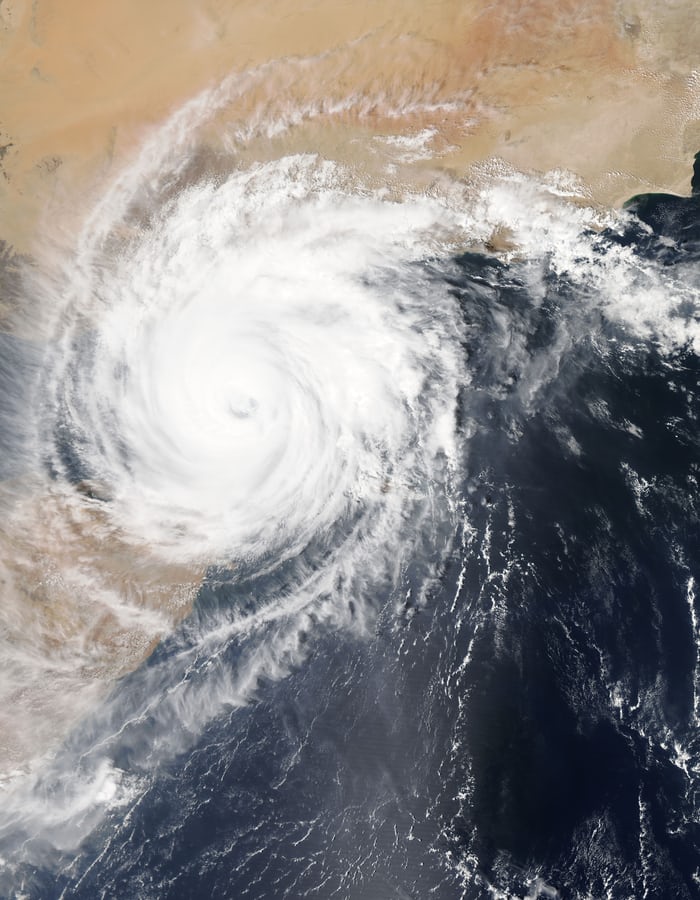
Cyclone Yaas cross Odisha, Bengal : It is supposed to intensify into very severe cyclonic storm. It is likely to move towards West Bengal, adjoining Odisha and coasts of Bangladesh. IMD’s Ranchi’s meteorological centre recently warns nearby states for heavy rainfall and also issued an alert in Jharkhand due to the cyclonic storm.

A low pressure area formed over the east central Bay of Bengal and adjoining sea today and this is supposed to turn into very severe cyclonic storm which will affect West Bengal and nearby areas on 26 May.


Cyclone Yaas as per meteorological reports:

“The low pressure area is very likely to concentrate into a depression over east central Bay of Bengal by tomorrow, the 23rd May morning. It is very likely to move north-northwestwards, intensify into a Cyclonic Storm by 24th May and further into a very severe cyclonic storm during the subsequent 24 hours. ” the IMD said.

cyclone yaas

As per the pictures taken from satellite and information by meteorological centre, it would move further towards north west. The Ranchi meteorological centre also issued an alert related to a moderate to high thunderstorm and stormy winds blowing around with speed of 50km/h which is likely to appear on 25 or 26 may. In the areas most prone to cyclone, it is estimated by IMD officials that wind speed around Odisha, West Bengal and coasts of Bengal would reach upto 100km/h and will even increase thereafter.

It has been only one week since the tauktae storm hit the coasts of Gujarat. It caused a huge destruction there and in neighbouring areas and also a minor effect in northern states.

The NDRF (National Disaster Response Force) teams and Indian Navy are already keeping eyes on this. They are ready to assist the people of areas which are expected to be affected majorly. Light or moderate rainfall on other areas and heavy rainfall on areas near West Bengal, Odisha is expected. Heavy rainfall is also expected on 27 may on some areas.

Fisherman are already informed before and were advised to stay away from sea areas since 23 May. Apart from that, the railways around this region i.e. south western railways are also cancelled. As per sources around a dozen of trains are cancelled for 24 May to 26 May keeping the yaas cyclone in concern. And it is estimated that if cyclone won’t stop after 26, then cancellation of these train will step ahead further.

The effect of this cyclone will start appearing since 24 May with rise in wind speeds in nearby areas. The wind’s speed will gradually increase from 40 km/hr to 50 km/hr and at the time of arrival of cyclone it will end up reaching 100km/hr.

Today there was also a meeting held related to this by our prime minister Mr. Narendra Modi. He held a meeting with several officials of government to review the preparations done in advance for this upcoming disaster. Many ministers were included in this meeting including our home minister Amit Shah and some representatives from National Disaster Management Authority (NDMA) and some other ministers to review the preparations.

Why are people so excited about the friends reunion

‘I will be there for you’ friends theme song plays on my head ever since I have watched the show. I can never get tired from listening to the masterpiece the song it gives a a whole vibe of positivity,and can you guys imagine the fact that if just the song makes me feel that way then what about the show? The show is simply the best comforting show ever period. The name friends has been kept to indicate the friendship between the character of the show and it shows it brilliantly with an addition laughter,fun,love,romance and suspense.

But the name friends is not only about the characters relationship for me ,for me it’s a show I can rely upon when I really need a funny friend who would make me feel happy and make me forget ally tensions and problems,its a show which never bores me and the fact that its last episode aired seventeen years back that is even before I was born the show aired , I can only imagine what changes it brought in the world. A show that has been running its old episodes successfully for these many years has surely got a lot of laughter and fun excitement, romance nad most importantly comforting vibes in it. As an audience what more can we ask for?

← Back

Thank you for your response. ✨

Me being a kid of the twenty first century can not ask for a better gift than the fact that I can witness the friends reunion. They are not recording any episodes it just an interview which shows us how the show has impacted their lives and how their lives have changed after the show ended. There is a huge time lap and saying so I mean the jokes my mum laughed at when she was my age is very different from the jokes I laugh at but this show certainly proves it wrong that you cant laugh along with your parents at some joke. The originality of each and every dialogue and the spark and passion of friendship between the characters makes us all want to have friends like that in real life as well.

The fact that those characters are real life friends makes me and the fans love the show so much more than ever.

Friends is simply a masterpiece not only the main characters the supporting characters have a weird , messy ,and creative charm in the way they speak ,dress and behave . The show is very well scripted undoubtedly.

And I cant be more excited to see  Jennifer Aniston as. Rachel Green ,Courteney Cox as. Monica Geller. Lisa Kudrow as. Phoebe Buffay. Matt LeBlanc as. Joey Tribbiani. Matthew Perry as. Chandler Bing. David Schwimmer as. Ross Geller, Back on the show even though it wont telecast in india we indian fans are more excited than ever and will certainly watch it later, the excitement that I have while writing about this piece is next level and I hope you guys are as excited as me for witnessing the reunion of a lifetime.

The Press—its uses and abuses in Democracy

No civilised society can live without the press. Taking into account its utility in modern life one can understand very well why it has become so important. Let us consider its influence on masses. A good press educates and helps in forming sound and healthy public opinion. It has direct communication with masses and so can influence them both for destructive and constructive work. Through newspaper, the press gives us information about our day to day political, social and commercial activities.

The press serves the great task of bringing about social reforms. Many social evils like untouchability, dowry system, smuggling activities, etc. are ruthlessly attacked and criticised by the press. Government servants as well as public high-speed are now more careful because of the fear of being exposed by the press.

In democratic system the press has many important roles to play. It can harass any stable government by poisoning public opinion. It can also bring them a big success favouring government action and taking public opinion with them The press gives information about the proceedings of the parliament and Assemblies and all the important political events in the country.

But because its potential power is in the hands of vested interest, the press is sometimes employed for harmful propaganda. In a democratic country, where the press is mostly run by private agencies and big industrial houses, the press safeguards their own interest first.

In fact, the press is a two way weapon. If used carefully, it can help in building up the nation forming the right public opinion. If misused, it can erode the very foundation of democracy.

The press should, therefore, abide by the principal of truthfulness. The primary duty of the press is to establish the truth and work in the interest of the public.

Covid 19 – A rollercoaster for Agriculture

The whole world is dealing with the vigorous impact of covid 19.Thecorona virus has a huge impact in all the sectors.It shattered the whole world. It also made a great impact on Agricultural sector.


The agricultural chain in India has been adversely affected by the Covid 19 crisis and the lockdown.

Farmers are the backbone of our nation. Agriculture remains a central pillar of our economy. It provides food need of our nation and also export agricultural products all over the world. It faced severe problem due to the restrictions on domestic and international travel. 


At the beginning of lockdown, it was the peak of Rabi seasonseason in India and crops like wheat, paddy, gram, lentil, mustard, etc. we’re at harvestable stage. It’s also the time when the farm harvests reach the market yards. So it became the most critical challenge for Government to ensure proper supply of agricultural products.


When the nationwide lockdown was announced, a mass exodus of migrant labour were back to their hometown. The harvesting process was totally off balance, resulting in major issues. The next season sowing process also interrupted due to this.


This situation can be dealt by using machinery for sowing process and harvesting which includes less man power. This helps to overcome the lack of labourers.


The sale of dairy products, fish, poultry, etc. has also been hit during the lockdown period as the uptake by the organized industry has been affected due to shortage of labourers and transport issues.

The impact on agricultural sector resulted in food shortage and increased prices of food commodities. It affected the consumption pattern. To strengthen the sector we can follow some measures. The strategies are

  1. Risk management
  2. Stakeholder partnerships
  3. Financial reforms
  4. Buffer stocks
  5. Investment
  6. Collective farming
  7. Family farming
  8. Secondary agriculture
  9. Social safety net
  10. Staggered procurement and pricing

People living on agriculture and allied activities, mostly those losing their income from informal employment at this lockdown period, have to be provided with alternative avenues (cash transfer) till the economy bounces back. To sustain the demand for agricultural commodities, investment in key logistics must be enhanced.


Black Fungus Crisis In India! Symptoms, Cause, Treatment

What is Mucormycosis or Black Fungus? What are it’s symptoms, causes and treatment? Why there is sudden rise in cases of it? And who is at most risk?


Black Fungus

From the past few days, many cases of black fungus are found in India. Black Fungus or Mucormycosis is a very rare and a dangerous fungal infection that could even lead to death. This disease was made notifiable to public by government of India on thursday after asking states to report detail of confirmed and suspected cases to Integrated Disease Surveillance Programme.

Black Fungus cases have been confirmed in 18 states including Karnataka, Maharashtra, Uttarakhand, Telangana, Madhya Pradesh, Bihar, Haryana, Delhi, Andhra Pradesh. Most of these have confirmed it as a notifiable disease. Some states have also declared it as an epidemic like Gujarat, Odisha, Tamil Nadu and union territory of Chandigarh.


Mucormycosis is a very rare and deadly infection caused by exposure to mucor mould. It is present everywhere including the surroundings like soil, plants, decaying fruits and vegetables and even in nose and mucous of healthy people as per Dr. Nair.

It affects brain, lungs, sinus, eyes and other parts and could be extremely dangerous, especially in the case of diabetic individuals or those with very low immunity such as patients of cancer or AIDS.

Basically the floating fungal spore is the cause of it. It can enter your body through any cut in your skin and cause infection. But it is more dangerous if it travel through nose or sinus.

The reported cases of this infection are usually those who were under treatment or were recovered recently. The overusage of steroids is triggering this fungal infection.

Those who are under treatment of Covid 19 are given steroids so that inflammation in their lungs could be reduced. But these steroids also result in reducing immunity and pushing up the sugar levels of infected whether he/she is diabetic or not. It is believed that reduction in immunity and a high increase in sugar level is the primary cause of it.

The disease is having a dangerous mortality rate of about 50%.And if not treated earlier, the doctors have to remove affected part by surgery to save the patient.


Black Fungus symptoms:

  • Sinus Pain
  • Nasal Blockage
  • One sided headache
  • Swelling or Numbness
  • Toothache
  • Loosening of teeth
  • Chest Pain
  • Blurry vision
  • Blackness in skin

Who are at most risk?

  • Recently recovered people from corona
  • Diabetic people
  • People with low immunity
  • People who intake lots of steroids
  • People suffering from Cancer or Aids

Prevention for Black Fungus

  • Use masks
  • Wear long sleeved clothes
  • Wear shoes
  • Maintain personal hygiene
  • Exercise
  • Control Diabetes
  • Maintain Blood Sugar Levels
  • Reduce steroids
  • Keep hydrating yourself
  • Discontinue immunomodulating drugs

There is no specific treatment of black fungus till now. The only option to cure it is by surgery which makes this disease more dangerous. As the infected people have to get their eyes, jaw or any part of body that is infected to cure it.Overall currently in this tough time, one need to stay at home, stay fit, have a healthy diet and exercise. Try to keep your immune system strong and keep patience in current situation.  


White fungus – Another deadly disease?


Following black fungus ( mucormycosis), another severe fungal infection has been reported in the country – white fungus. The first case was reported in Patna, Bihar and several other cases have been reported since then. The disease is caused by fungal molds called mucormycetes present naturally in the environment. Though not contagious it can be easily contracted by immuno-suppressant patients. 
  What are the symptoms?

  The infection is more deadly and lethal compared to black fungus according to experts in the field. Besides pulmonary infections, it affects skin, stomach, kidney, private parts, nails, and mouth. The symptoms are very similar to COVID including breathlessness, chest pain, cough, inflammation, swelling, and headaches. Usually, patients go for an antigen test or an RT PCR on seeing such symptoms but get a negative report. The white fungus can be detected by a CT scan or an X-Ray.   

 Who is the most affected?
The infection is primarily seen in COVID patients who have taken steroid medication as steroids reduce immune responses. Patients with low immunity like diabetes patients and cancer patients can be easily infected. Patients on oxygen support are more likely to be infected. The affected are treated with antifungal drugs and they have been showing improvement.   
   How to prevent it?
Both black fungus and white fungus can be prevented by boosting immunity. For non-COVID-affected people, staying healthy and having nutritious food is the key and for COVID-affected patients avoiding overuse of steroids is necessary. Steroids should be used only if the oxygen levels drop significantly.   
Though many reports of white fungus being four times more deadly than black fungus surfaced, India today reported that white fungus is just a common fungal infection called Candidiasis that usually affects humans. According to the report, there are many drugs available to treat this, fluconazole being the common one.  
The fungal mold causing white fungus is present abundantly in the environment therefore Immuno-suppressant patients can easily contact it through water or even from the oxygen cylinders. There have been 5 cases reported in Patna so far and one case is suspected in Uttar Pradesh. Officials have said that it can affect pregnant women and children too. We need to be cautious and boosting immunity must be our priority.