India is the one of best and largest place for education systems in the world.
India is the country with over 1,000 universities and 50,000 colleges and institutions. The impact of covid 19 is observed in every sector around the world. The education sectors of India as well as world are badly affected by this.
Due to this pandemic, around 32 crore learners stopped to move schools/ colleges, all educational institutions are halted in India. COVID-19 made all the institutions to grow and opt for platforms , techniques, that are not used before. All the classes suspended and all the examinations, entrance tests are postponed.
This pandemic completely destroyed all the schedules of every student. COVID-19 Impact on education is also leads a great damage on country economy at present and in future.
COVID-19 has created many opportunities and challenges for educational institutions to strengthen their technological knowledge and infrastructure.
The lockdown made the entire education online, the teachers are teaching and assigning works through online by using some apps like zoom, Google meet, teams, YouTube, Facebook, skype .,etc.
India is not fully equipped to make education reach every corner of the country through online process. The students those who are not having access to internet will suffer a lot due to the present choice of digital platforms.
Universities and the government of India are relentlessly trying to come up with a solution to this problem.
Windows XP is a line of proprietary operating system which was developed by Microsoft and is meant to be used for general purpose computers , such as home computers and business desktops , notebook computers and various types of media centres . Windows XP succeeds Windows 2000 and Windows ME , and is the first consumer – oriented operating system produced by Microsoft to be built on the Windows NT kernel and architecture . The most popular operating systems versions are Windows XP Home Edition , which is primarily meant for home users , and Windows XP Professional , which boasts additional features , such as support for Windows Server domains and dual processors , and is meant for professionals and other experts . Windows XP Media Centre Edition has additional multimedia features . Windows XP has an edge over the earlier versions of Microsoft Windows because of enhanced efficiency and better stability .
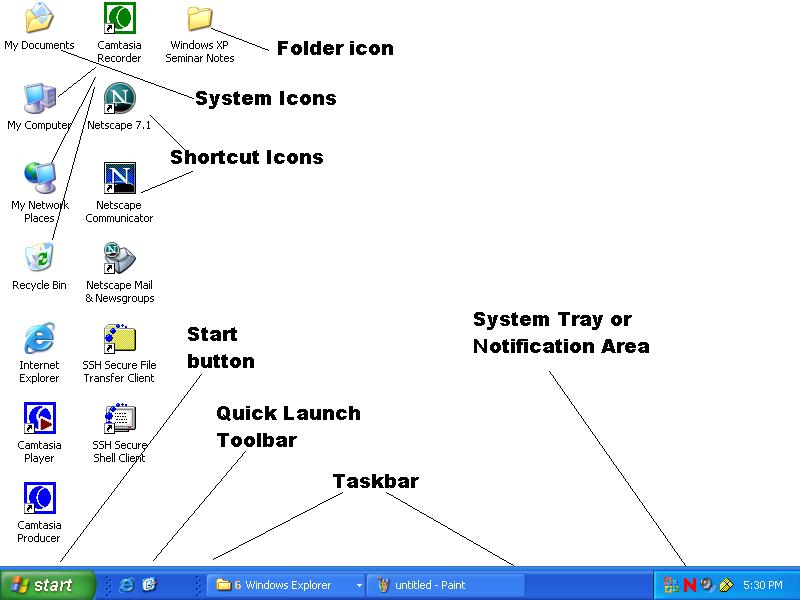
Windows XP helps you access and manage your files on the pc using a Graphical _User Interface GUI . All Programs and files stored on the PC are represented as pictures that are called icons . These icons are stored on the desktop .
Components of Windows XP
The Windows XP user interface consists of various components and concepts that help make Windows XP user friendly and intuitive . Some of the important components are :-
As a student of marketing we all believe that we are goanna be placed well and we are opportunistic but is that real ? . if u ask me its a big no things will not be standard untill we graduate. we all are being lied that we are gonna be placed in a good company but the truth is.
How do we prepare ourselves for the better future ?
Its simple for us to say work hard but that will be so funny when you cant find rightful resources when this internet is full of ads and paid E – Commerce sites to take our attention away.now let me say how you can prepare yourself best way to learn something is to learn yourself . set a proper goal and try to learn each and everything related to those thing not only learning will help us we have to implement practically.
How to learn digital marketing ?
Digital marketing is nothing new without knowing we are already in digital marketing for example YouTube , Twitter , Instagram , Facebook and so on are the important platform of digital marketing . So , try to create your own website lets a gaming channel or whatever you like and try to find a way to attract people with your contents and make sure you do learn something from it . Don’t make a large investment before you get something in return and try to monetize yourself.
Digital marketing a future
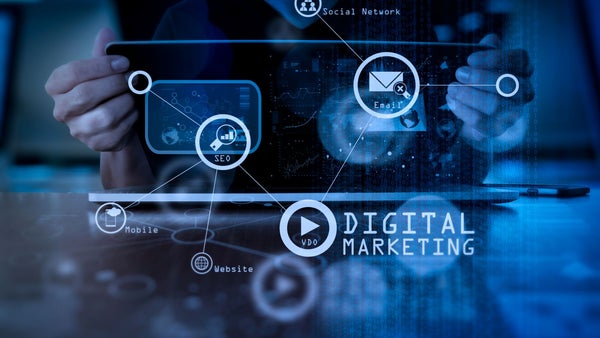
In 90’s people bought products based on what they say on advertisement but now people dont have time watch tv’s and most of them have changed to smart TV so marketing needed a change then came the digital marketing i wont say that advertisement will be total failure that’s for a different conversation . Now its about DM a survey says that Internet users across India spend nearly six and half hours online daily in the third quarter of 2020. by another 5 years it will be doubled so DM is the only way to make people see our product . so people who are planning to take marketing as a career should concentrate on his/her skills on digital marketing ( e- mail , YouTube , twitter , Facebook marketing )
Ever imagined reading someone’s mind? Well you can do that once you go through the wonderful experience of learning effective communication. Yes, a simple yet complicated study of human behaviour, attitude, personality can be very well assessed through communication. Maybe you feel it absurd talking about communication since it’s a very typical thing we all inhibit as we grow. But, Let me correct you. It’s an art to communicate EFFECTIVELY.
Communication not only means speaking and listening. It’s more about how you present yourself while speaking and how you behave while listening.
It creates an impact on the person you are communicating with. Suppose you have a business meeting going on and you are wearing your pyjamas while presenting your COMPANY. The clients will lose interest on first sight since your clothes are speaking about you . And what if you go to a night club wearing formals, all eyes will be on you. Not because you look attractive, but you went the wrong place, they will think. Of course clubs welcome party wears! Every place has its own demand, you see. It is essential to get into what the situation demands of you.
For an effective communicator, you have to be a good speaker as well as a good listener. You should be able to ADMINISTER one’s thoughts. We will soon return to this point after learning few basics.
Now, When you are in a formal set up, you should know what your business requires you to be like. In a textile business you should have knowledge of cloth materials while in a transport business you should be aware of the routes where your business is operative. The basic motive behind KNOWING YOUR BUSINESS is that it allows you to interact with your clients, employees, suppliers, in a better way. The basic know-how plays an important role in deciding investment plans, employee- pay, expansion and likewise for the company. Similarly if you are an employee/employer of the company, you should be aware of the current trends and evolutions that may bother your business. Actions are to be taken accordingly. Each and every person concerned should be active in terms of knowledge. When you will go for an interview with no idea of what the company offers, the rejection happens before the communication. It is like hitting hammer on your own legs. Not only it creates negative impact about you but also there are chances of you being tricked by people. They may hire you for irrelevant or undesirable work without you knowing an inch about it. Such cases do exist!
However, Being knowledgeable is not sufficient to interact. You should follow the basic etiquettes of a business.
After making a formal appearance, Your body language while presenting matters a lot.
Body language shows how confident you are and what determination you have to turn the world around. Your behaviour should be active and not like the one of a procrastinator. Organisations employ or contract with only those who have the stamina to do something for their welfare. No one recognises a lethargic and frustrated person. You should be a solution provider for their problems and not a problem yourself.
Good posture and attentive behaviour are the ideology to get attraction towards you.
A smile on the face, tight hand shakes, confident walk
These attributes relate to interviews but apply to all businesses where companies deal with the clients on a daily basis. A serious look is not advisable as much a happy face while dealing formally. Weak hand shakes signal the low confidence level of a person. Similar is the case of walking manner. Remember, you are being judged throughout. Nothing gets ignored when it comes to formal interactions.
There are more of such signals that show your nervousness. While shaking hands, if your hands are getting cold, the interviewer will know it and such observations may affect your selections for jobs having specific demands.
Another example can be your movements. If you are clicking a pen while waiting for your turn in the interview or you are changing your postures very often or clicking your fingers; all of these give a direct impression in the interviewers head. Here, your behaviour speaks about you.
On the contrary, if you are too loud while speaking or too frank/cheerful/excited while interacting with that person of authority, it shows your over confidence or other such attitude as may be undesirable for the post you are being interviewed for. Formal set ups admire moderate personality employees-neither too loud in their behaviour nor too lazy.
Having discussed the basics, we now come to the most important and the final stage of our discussion – Administering the thought process
Now that you know the dressing sense, body language and awareness (knowledge) required for effective communication in formal set ups, we now learn how to read the mind of the individual we are interacting with. It is quite a simple task which comes with experience. Ever imagined how such big organisations manage time to interview a number of applicants ? They are the mind readers. They excel at knowing your personality via your thought process. You are asked questions that reflect you. Your way of speech and your answers decide if you are suitable. This is why interviews are often quick as they read you through your words and expressions.
But what does this has for you? You also can read them up. As humans, we interact and communicate on a daily basis. What you need is work upon it. Make your every interaction effective by being attentive and presentable. You will come up with more ideas to communicate through practice. You should be clear in your speech and responsive to others‘. Give time to others’ complete their point and make place for your words on the same hand. This way you get better at understanding point of views.
Through more such assessments you will become able to grasp ideas before people speak up. You will know what the interviewer is going to ask about. Yes, it happens! You too will start to get an idea of the thought process of a person and analyse his personality. These signals are hard to trace in formal set ups, that is why it comes with experience…
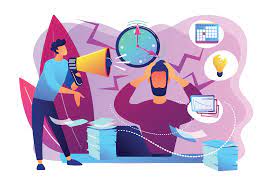
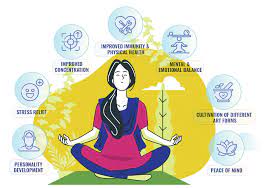
Stress is unavoidable in the current scenario, where the entire world is facing the Corona virus pandemic. With the toll of deaths and positive cases of Corona virus on rise, every person in this world is under stress and anxiety. Higher levels of stress adversely affect the physical as well as psychological health of the individuals concerned. Therefore, it becomes highly essential to manage stress at initial stages, so as to avoid severe consequences of high stress on health. The present article focuses on the management of stress through a unique form of meditation, i.e, ‘Sahaja Yoga’. Sahaja Yoga is a scientifically proven technique of meditation which involves the awakening of the dormant primordial energy- the Kundalini, and integrating it with the all-pervading cosmic energy. Regular practice of Sahaja Yoga meditation leads to the inner transformation of an individual, whereby one becomes more moral, integrated, balanced and healthy.
What is Stress?
Stress refers both to the circumstances that place physical or psychological demands on an individual and to the emotional reactions experienced in these situations. It leads to severe effects on the physical as well as psychological health of the individuals concerned such as frequent headaches, heart disease, myocardial infarction, cardiovascular disease, musculoskeletal disorders, diabetes, high anxiety, depression, post-traumatic stress disorder and so on. Since, stress is a psychological phenomenon, its management can be best realised by treatment focused at the mental level. Thus, the present article aims at spreading awareness about the stress management technique called ‘Sahaja Yoga’ and highlighting its significance in the improvement of overall health, especially, psychological health. Sahaja Yoga Meditation
What is Sahaja Yoga?
The word ‘Sahaja’ means ‘spontaneous’ and ‘Yoga’ means ‘union with the self’ Sahaja Yoga was founded in 1970 by Mrs. Nirmala Srivastava, more widely known as ‘Shri Mataji Nirmala Devi’. Shri Mataji was spiritually enlightened since birth and granted en-masse realisation to people free of any materialistic consideration. For 40 years since 1970, she travelled tirelessly across the globe to teach Sahaja Yoga meditation world-wide at her own expenses
Human Subtle System
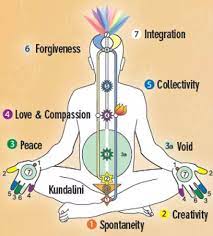
The process of Sahaja Yoga meditation works through the subtle system which comprises of three energy channels (nadis) and seven energy centres (chakras). At the root of this system lies a protective power – Kundalini. Amongst the three channels (Nadis), the left channel called Ida Nadi represents our desires (Ichha shakti); the right channel called Pingla Nadi represents our working ability (Kriya shakti); and the central channel called Sushumna Nadi represents our assent. The seven energy centres in the body correspond to the seven nerve plexuses: the pelvic plexus (Mooladhara Chakra), the aortic plexus (Swadhistana Chakra), the solar plexus (Nabhi Chakra), the cardiac plexus (Heart Chakra), the cervical plexus (Vishuddhi Chakra), the optic chiasma (Agnya Chakra) and the limbic area of the brain (Sahasrara Chakra). These energy centres are responsible for maintaining their surrounding physical organs in the body. When Kundalini rises it crosses all the six energy centres and emits from the seventh centre (Sahasrara Chakra) and unites the individual consciousness with universal consciousness. An individual rise above the three channels of the subtle system and reaches a timeless state beyond the past, present and future – a state of thoughtless awareness. This process is referred to as Self-realisation. As an evidence of self-realisation, an individual feels cool breeze of vibrations on the head and palms of hands .
How Sahaja Yoga Meditation Helps in Stress Management?
It is imperative to understand how stress arises and how is it managed through Sahaja Yoga meditation. The central channel (Sushumna Nadi) is the path of rising Kundalini and a channel of balance. An individual having too many desires and always thinking about the past deviates from the central channel and puts his left channel under pressure. On the other hand a workaholic person, always working and planning for the future puts his right channel under pressure. The left-sided individuals become highly emotional, conditioned and day dreamers while right-sided people become highly egoistic and harsh on others. Stress is the result of such an imbalance between the two energy channels and deviation from the central channel. Therefore, one should always keep his attention on the central channel and remain in the balanced state in order to be stress-free. Thus, Sahaja Yoga helps in managing stress effectively by attaining and maintaining the balanced state through regular meditation, since by focussing on the central channel one remains in present rather than thinking about past or future events.
Sahaja Yoga in the present Coronavirus Scenario
As many as 200,000 people across 60 countries have attended online meditation sessions since 16 March 2020 with the commencement of lockdown, according to the information published nation-wide from H.H. Shri Mataji Nirmala Devi Sahaja Yoga Trust (National Trust). The Youtube channel – Pratisthan, Pune of the Trust has seen around 2 million views with 7.31 lakh watch hours and over 13.2 million impressions in the lockdown period. Each viewer attended an average of 8.6 session and spent average of 23 minutes per visit, which is substantial as people look towards meditation to overcome anxiety during COVID19 lockdown.
Conclusion
Sahaja Yoga meditation activates and nourishes the parasympathetic nervous system which relaxes both body functions and the brain by reducing thinking functions Thus, regular meditation everyday cleanses the subtle system, relaxes body and mind, and gradually one starts experiencing physical, mental and emotional benefits also, apart from gaining stress relief Thus, the Indian government should focus on building resilient citizens which can adjust with the pressures of the present stressful scenario.
Want to write formal letter but don’t know how to write formal letter then this article is only for you and the learners who wants to learn letter writing. In today’s article we are sharing the steps, Tips or samples for writing formal letter.
Writing Formal letters are business like and get quickly to the point. Formal letters are different to personal letters. You do not write in a chatty manner or use slang. For example, you would write a different letter to your Principal inviting him to your class JCSP graduation as you would to your friend.
How to Write Formal Letter?
Formal letter writing is undoubtedly one of the most challenging types of letter format. When putting it together, often you are addressing a person or organization with whom you are not familiar and the quality of your content, including spelling and grammar will be strongly scrutinized.
Types of Formal Letter:
There are many types of latter :
Formal Request Letter
Formal Letter of Interest
Formal Apology Letter
Formal Complaint Letter
Formal Appeal Letter
Formal Reference Letter
Steps to Write All Formal Letter
Introducing oneself if it is the first time you are writing.
Referring to an earlier letter if you are responding to it.
Stating the purpose of the letter.
Stating action/information required from the addressee.
Explaining action taken/supplying information.
Urging action to be taken.
Offering assistance in future.
This is the basic structure of formal letter. It will have to be modified according to the purpose for which it is written and the person to whom it is addressed.
Typical Format of Formal letter
Business correspondence should get across the message in a direct, clear and natural way. In contrast to informal letter writing, one should avoid using slang and casual language, clichés, short forms and abbreviations.
The writer should avoid overly formal and rigid language too. The letter should be logically structured and organized. The layout of a formal letter follows basically the same order:
Sender’sAddress: The sender’s address usually is included in letterhead. If you are not using letterhead, include the sender’s address at the top of the letter one line above the date. Do not write the sender’s name or title, as it is included in the letter’s closing. Include only the street address, city, and zip code.
Date: The date line is used to indicate the date the letter was written. However, if your letter is completed over a number of days, use the date it was finished in the date line. Write out the month, day and year two inches from the top of the page. Depending which format you are using for your letter, either left justify the date or tab to the center point and type the date.
InsideAddress: The inside address is the recipient’s address. It is always best to write to a specific individual at the firm to which you are writing. If you do not have the person’s name, do some research by calling the company or speaking with employees from the company. Include a personal title such as Ms., Mrs., Mr., or Dr. Follow a woman’s preference in being addressed as Miss, Mrs., or Ms. If you are unsure of a woman’s preference in being addressed, use Ms.
Mr. – for a male
Mrs. – for a married female
Miss – for an unmarried female
Ms. – for a female whose status is unknown or would prefer to remain anonymous
Dr. – for a person with the status of a doctor
If there is a possibility that the person to whom you are writing is a Dr. or has some other title, use that title. Usually, people will not mind being addressed by a higher title than they actually possess. For international addresses, type the name of the country in all-capital letters on the last line. The inside address begins one line below the sender’s address or one inch below the date. It should be left justified, no matter which format you are using.
Salutation: “Use the same name as the inside address, including the personal title. If you know the person and typically address them by their first name, it is acceptable to use only the first name in the salutation (for example: Dear Tejas:). In all other cases, however, use the personal title and last/family name followed by a colon.
Leave one line blank after the salutation. If you don’t know a reader’s gender, use a nonsexist salutation, such as their job title followed by the receiver’s name. It is also acceptable to use the full name in a salutation if you cannot determine gender. For example, you might write Dear Chris Harmon: if you were unsure of Chris’s gender.
Body of Formal letter: For block and modified block formats, single space and left justify each paragraph within the body of the letter. Leave a blank line between each paragraph. When writing a business letter, be careful to remember that conciseness is very important. In the first paragraph, consider a friendly opening and then a statement of the main point. The next paragraph should begin justifying the importance of the main point. In the next few paragraphs, continue justification with background information and supporting details. The closing paragraph should restate the purpose of the letter and, in some cases, request some type of action.
Closing: The closing begins at the same vertical point as your date and one line after the last body paragraph. Capitalize the first word only (for example: Thank you) and leave four lines between the closing and the sender’s name for a signature. If a colon follows the salutation, a comma should follow the closing; otherwise, there is no punctuation after the closing.
Enclosures: If you have enclosed any documents along with the letter, such as a resume, you indicate this simply by typing Enclosures one line below the closing. As an option, you may list the name of each document you are including in the envelope. For instance, if you have included many documents and need to ensure that the recipient is aware of each document, it may be a good idea to list the names.
A Note about Format and Font of Formal Letter
BlockFormat: When writing business letters, you must pay special attention to the format and font used. The most common layout of a business letter is known as block format. Using this format, the entire letter is left justified and single spaced except for a double space between paragraphs.
Font : Another important factor in the readability of a letter is the font. The generally accepted font is Times New Roman, size 12, although other fonts such as Arial may be used. When choosing a font, always consider your audience. If you are writing to a conservative company, you may want to use Times New Roman. However, if you are writing to a more liberal company, you have a little more freedom when choosing fonts.
Punctuation: Punctuation after the salutation and closing – use a colon (:) after the salutation (never a comma) and a comma (,) after the closing. In some circumstances, you may also use a less common format, known as open punctuation. For this gyanlog style, punctuation is excluded after the salutation and the closing.
Important Points About Formal Letter Writing :
The date and signature are very important in letters.
Do not use commas after every line in the address.
Do not begin your letters with hackneyed expressions like, ‘With reference to your letter dated 10 January’. Instead, use personalised variations like, ‘I was glad to receive your letter of 10 January…’ or ‘We were happy to note from your letter that the goods have reached you safely…’
Never end your letters with hanging participles like ‘Thanking you’ or ‘Awaiting your reply’. Instead write, ‘Thank you’ or ‘We/I await/look forward to your reply’.
Web hosting is an online service that enables you to publish your website or web application on the Internet. When you sign up for a web hosting service, you basically rent some space on a physical server where you can store all the files and data necessary for your website to work properly.
A server is a physical computer that runs without any interruption so that your website is available all the time for anyone who wants to see it. Your web host is responsible for keeping that server up and running, protecting it from malicious attacks, and transferring your content — such as text, images, files, etc. — from the server to your visitors’ browsers.
Types of Web Hosting Packages
Shared Hosting
This type of hosting is the most common answer for most web hosting needs and it’s an excellent solution for most small businesses and personal blogs. With this type of hosting, you’re sharing one server with other clients. Websites hosted on the same server share all its resources, such as memory, computing power, disk space, and others.
Pros :
Low cost, excellent for small online business websites
No need for specific technical knowledge
Pre-configured server options
User-friendly control panel — hPanel
Maintenance and server administration is taken cared for you
Cons :
Little or no control over server configuration
Traffic surges on other websites can slow down your website
2. VPS Hosting
When you’re using a Virtual Private Server — or VPS for short — you’re still sharing a server with other users. However, your web host allocates an entirely separate partition for you on that server. This means you get a dedicated server space and a reserved amount of resources and memory. In fact, VPS hosting can be great for medium-sized businesses with a rapidly growing number of websites and traffic.
Pros :
Dedicated server space
Traffic surges on other websites have no effect on your performance
Root access to the server
Easy scalability and high customizability
Cons :
More expensive than other types of hosting
Technical and server management knowledge is a must
3. Cloud Hosting
Cloud hosting is currently the most reliable solution on the market. With cloud hosting, your host provides you with a cluster of servers — your files and resources are replicated on each server. When one of the cloud servers is busy or encounters a problem, your traffic is automatically routed to another server in the cluster. This results in little to no downtime, which is excellent if you own a very busy website.
Pros :
Little to no downtime
Server failures have no effect on your website
Allocates resources on demand
Pay-as-you-pricing strategy — you only pay for what you use
More scalable than other web hosting types
Cons :
Hard to estimate the actual costs
Root access is not always provided.
4. WordPress Hosting
WordPress hosting is a particular form of shared hosting, created for WordPress site owners. Your server is configured specifically for WordPress and your site comes with pre-installed plugins for crucial tasks, such as caching and security.
Pros :
Low cost and beginner-friendly
One-click WordPress installation
Good performance for WordPress sites
Customer support team trained in WordPress issues
Pre-installed WordPress plugins and themes
Cons :
Recommended only for WordPress sites, which can be a problem if you want to host more than one website on your server
5. Dedicated Hosting
Dedicated hosting means that you have your own physical server that’s dedicated solely to your website. Therefore, you’re given incredible flexibility over how you want to manage your website. You can configure your server as you wish, choose the operating system and software you want to use, and set up the whole hosting environment according to your own needs.
Pros :
Full control over server configuration
High reliability and security options
Root access to your server
Cons :
High cost, more oriented towards larger businesses
Technical and server management knowledge is a must
Excel is typically used to organize data and perform financial analysis. It is used across all business functions and at companies from small to large. The main uses of Excel include: Data entry.
Excel is a software program created by Microsoft that uses spreadsheets to organize numbers and data with formulas and functions. Excel analysis is ubiquitous around the world and used by businesses of all sizes to perform financial analysis.
The main uses of Excel include:
1 Data entry 2 Data management 3 Accounting 4 Financial analysis 5 Charting and graphing 6 Programming 7 Time management 8 Task management 9 Financial modeling 10 Customer relationship management (CRM) ** Almost anything that needs to be organized!
Excel is used extensively in finance and accounting functions. In fact, many organizations run their entire budgeting, forecasting, and accounting functions entirely out of Excel spreadsheets.
While Excel is defined as a “data” management tool, the data that is most commonly managed is financial. At CFI, we would define Excel as the ultimate financial software. While there are other pieces of financial software that are tailored toward performing specific tasks, the strongest point about Excel is its robustness and openness. Excel models are as powerful as the analyst wishes them to be.
Accountants, investment bankers, analysts, and people in all types of financial career paths rely on excel to perform their daily job functions.
And one should know how to use MS Excel. Its on of the most important skill in today’s corporate world.
Punctuality means doing a work at the proper time. To account an engagement at 10 o’ clock in the morning and to arrive at the place to keep it at 10-30 does not become a gentleman. It annoys the other party and it harms the future of the caller. No one who is unpunctual in attendance to work can be depended on or trusted in. On the other hand, a punctual man is one who knows the value of time. Such a man is a perfect gentleman and everybody has faith in his efficiency and character.
IT GIVES A MEANING TO YOUR LIFE
Punctuality is important in every sphere of life. it is rightly said that punctuality is the crown of a king. It is the most precious jewel to the character of a man. A student has to be punctual at school or college. The manager of a big firm or its common clerk has to be punctual in his office. Equally it is necessary for a factory worker, a politician, or a statesman. The greatest value of punctuality is that it is a great time-saver. An unpunctual man is always worried about time. A student who is unpunctual in his class lags behind others in his studies, he creates confusion both for himself and for others in the class. He is considered a disturbing element and is looked down upon by his teachers as well as his classmates.
MISS IT AND WELCOME YOUR HARM
Many battles have been lost on account of unpunctuality. Many Cases in Courts of Law have been lost, because one of the parties did not come in time; many a train has been missed and business lost to unpunctuality. So, unpunctuality leads to dangerous consequences. Relation of free people knows the value of punctuality. Indians are now a free people and they should cultivate punctuality in everywhere. Unpunctuality is a vice and out of it are born other vices like dishonesty, falsehood, idleness and shirking of one’s duty.
So, we observe how punctuality plays a foremost role in anyone’s life. being unpunctual is a curse, we cannot be as winner as others. Besides, this rhythmic world demands punctuality so that all of us can be successful in life.
For your convenience, we have organized the topics into different categories. It will also make it easier to find the type of research paper topics you’re looking for.
Simple research paper topics
How important is diversity within the team, and why?
What makes one sport more accepted than another?
How would the world be different without the discoveries of Albert Einstein?
Rise of anime; what made anime admired worldwide?
Is the traditional music of a country foremost than the international music that is popular around the world?
What causes people to change their leisure time activities as they get older?
What is the best way to deal with procrastination?
What are hobbies more favored with children and adults in your area?
Are there hobbies you can easily do in your own country but not so comfortable when you go to another country? Why?
What are stereotypes of people from your country, and how true are those?
1. How important is diversity within the team, and why?
Why We Need Diversity
When we hear the word “diversity” we think of race and maybe culture. Of course, when speaking about the diversity of ethnicity, race and culture are key aspects. But diversity is much broader. Diversity cuts across all facets of our lives and it plays an important role, as important as helping us to survive.
Nature can teach us a lot about the value of diversity.
Nature includes a broad variety of plant and animal life. Such variability among organisms builds strength and helps in survival. For example, planting all the same trees in a park means that when one gets a disease, they all get the disease. Planting different varieties ensures that some will thrive while others may have to fight off pests.
Diversity leads to better health.
Among plants and animals, diseases are less prevalent when there is greater diversity.2 Pathogens cannot easily find their ideal hosts among a variety of different plants and animals, leading to lower levels of disease. And the passing of diseases is lower when there are lots of different kinds of hosts, as some will not be as receptive as others making the reproduction of diseases less likely.
2. What makes one sport more accepted than another?
The Burden of Information: Why Some Sports Are More Popular than Others
Three sports have long dominated in the United States: football, basketball, and baseball. Why? It’s all in the numbers.
In the 21st century, we’ve reached a time when access to sport, while still not perfect, has expanded to the point where youth can choose to play a variety of different sports.
Television and the media have rapidly increased coverage of sports as a whole and the Olympic movement has provided a regular, global audience to emerging and niche sports, in addition to the traditional mainstays.
Yet, throughout society, and particularly at the professional level, it’s obvious that the popularity of individual sports is uneven. In the United States, three sports: football, basketball, and baseball have long dominated the landscape.
It’s a fact that goes relatively unquestioned. Although you will sometimes see hockey added to form a “Big 4” or talk of the growth of soccer, there is little doubt that football, basketball, and baseball drive the American sports machine. Some others show up during an important event, or when something amazing happens, while others seem to be shut out entirely.
Of course, it’s only natural for some sports to be more popular than others — to have more fans, participants, TV viewership, etc.
3. How would the world be different without the discoveries of Albert Einstein?
Without Albert Einstein, We’d All Be Lost
Do you like your GPS? Thank his general theory of relativity, an astonishing feat of the human mind.
One hundred years ago this week, on Nov. 4, 1915, Albert Einstein, working alone in wartime Berlin, submitted the first of four scientific papers that would change the course of physics and our view of the cosmos. His general theory of relativity is perhaps the greatest achievement of a single human mind. Although it made Einstein the most famous scientist in history, he did not live to see the full impact of his ideas.
Only now, a century later, are we gathering apples from the tree he planted: black holes that tear stars apart and produce the most violent explosions in the universe; cosmic gravitational lenses that distort images of faraway galaxies, as if seen through a funhouse mirror. And perhaps the biggest wonder of all: a comprehensive and detailed understanding of the evolution of the universe. Amazingly, in just 100 years, humankind has uncovered 13.8 billion years of cosmic history.
Only after Einstein’s death in 1955 did his theory become an active and respected scientific field. Fifty years ago the first physical evidence of the big bang was observed. This famous cosmic microwave background or “first light”—a signal produced a mere 380,000 years after the creation—you can actually observe in your home. Roughly 1% of the static on a blank television screen is caused by light particles dating from the beginning of time.
The past decade has brought a new cascade of discoveries. The most important is that we now know precisely what we don’t know. Einstein’s theory allows us to measure the weight of the universe and thereby its energy content. This has been a shocker.
4.Rise of anime; what made anime admired worldwide?
Wind blowing at the most dramatic moment, lethal injuries that do not kill, unrealistic body standards, and waking up in an alternate world surrounded by cute girls can only mean one thing: Anime. Sounds crazy, right? Anime is certainly a unique genre of entertainment but that is what makes it even more appealing. People today are delving into the world of anime, influenced by celebrity fans, like Michael B. Jordan, Keanu Reeves, and Megan Fox. With an increase in the availability of anime, the community is gaining newcomers.
With the rise of popular anime like Boku No Hero (My Hero Academia) and the childhood nostalgia of Pokémon, the majority of people can say that they have seen at least one of the more well-known shows. But why are more people watching anime? What makes this form of entertainment so appealing? Is it the bright colors, the colorful characters, the crazy fighting, or the over-the-top story line? Well, the short answer is yes, but there is more to it than just that. Personally, I have found that anime provides an escape from daily life into a fantastical and crazy world. One of the reasons why I believe it is so popular is because of how unrealistic it is. It allows the viewer to sit back and not take things too seriously.
5. Is the traditional music of a country foremost than the international music that is popular around the world?
Kinds of music people listen nowadays are of different tastes and types. For instance, modern international pop and rap music, as well as classical traditional country songs all, vary from each other and people listen to them with great interests. This is because music has been part of our daily lives even in the ancient times. In this essay, reasons on why music is necessary for every Filipino people and the importance of the Philippine traditional folk music over foreign songs that young Filipinos and Filipinas always hear will be discussed.
Music is a vital part of every Filipinos’ lives. Firstly, Philippine folks considered it to be one of the most popular and ancient modes of human expressions. It features largely in all histories and all cultures and indeed has been one of the main ways of passing on cultural traditions to new generations of the country. Secondly, because of this, many people view music as a positive influence for the societies. This influence on individuals is wholly beneficial as it is a long-established way of communicating and helping us understand the whole range of human emotion and experience in a more spiritual language than words can represent.
Imagine that life consisted of one long construction project of a house. And imagine that you were born with one tool attached to your hand. Let’s say you were born with a hammer.
Your primary skill is to slam nails into wood. But that’s not all you can do with a hammer. According to Wikipedia, a hammer is a versatile tool: “Hammers are used for a wide range of driving, shaping, and breaking applications.”
We need all those things if we’re building a house. It’s essential work. But let’s say you dislike those things. You prefer to draw like your neighbor, Jimbo, who was born with a pencil. He draws, designs, writes, and makes doodles. Since you can’t do any of that stuff with a hammer, you walk around frustrated and angry all the time.
Everybody tells you, “Look, buddy, you have this gift; use it!” And you say, “Screw that. This is a curse! I can only destroy things.” So you ignore people’s advice, and you try to draw…With a HAMMER.
There’s Nothing Wrong With Your Tool
In life, we often look at the strengths of others and try to do what they do. We ignore our own strengths and pursue things that are not the right fit.
I firmly believe that every person is born with a key skill or gift that you can put to work in life. But the problem is that we use our tool for the wrong purpose. We try to become designers or architects with a hammer. We try to plaster a wall with a soft brush.
Often, people say “I don’t know what my key skill is.” But the answer is always right in front of you.
Just like the example I shared at the beginning, you must stop looking at what Jimbo does, and start looking at what’s in your own hands. Look at yourself. Too often, we try to change ourselves so we can do something we “want” to do. And where do our wants come from? Not from within us. It comes from looking at others.
Look, I want to sing like the artist, The Weeknd. The guy has an amazing voice. He didn’t obtain that by training. He was born with those vocal cords. I wasn’t. So what? I’m not going to cry about it. Everyone is born with a unique strength.
Change Your Purpose
The legendary business thinker, Peter Drucker, always taught individuals and organizations to focus on their strengths. In Managing Oneself, you can learn more about that strategy. It’s a quick read that I recommend to every person who wants to improve their self-knowledge.
But one thing we need to keep in mind is that self-knowledge alone is not enough. If you understand your skills, you’re only halfway there. In the world of startups and venture capitalists, there’s a similar analogy.
On the “This Week in Startups” podcast, I heard Jason Calacanis and his guest, Mike Jones, talk about how some founders are trying to cut a wall with a butterknife.
You’ll make some progress, but you’ll never destroy the wall. Does that mean your butter knife is bad? Of course not. You might destroy a wall with a sledgehammer, but you can’t make a peanut butter sandwich with it.
In life, it’s all about figuring out what your tool is and where you can put it to work effectively.
A Self-Examination Exercise
But how do you figure out what your tool is? It can be frustrating going through life without having that self-knowledge. If you don’t know what your tool is, try the following exercise. Sit down with someone you’ve worked with—not your drinking buddy or book club friend. You want input from someone who has experienced your strengths and weaknesses firsthand.
Ask your friend to play a game with you. The objective is to figure out what you’re good at.
The idea behind this game is that you can bounce ideas off each other. Your friend can serve like a sounding board—someone who gives you a view from the outside. Play the game like this:
First, ask: ”What am I good at?”
Then, ask: “Do I enjoy it?”
If you answer “no” on the second question, you have to restart the game. Keep going until you find something you’re good at and enjoy doing.
You can also do this in your journal. But if you play it with someone else, you can feed off each other’s input. Sometimes we have a different idea about our own capabilities.
It takes time, introspection, and humility to figure out what you’re good at. The humility part is often overlooked. When we have an ego, we’re not open to other people’s views. If the guy from my example listened to the people who told him to use his hammer, he could have saved himself a lot of time and frustration.
Ultimately, this is the nature of life. If we keep on looking at all the Jimbo’s in the world, we waste our time on what we don’t have. Instead, look at what you do have, and think about how you can use that in a big way.
Up and down. That’s how you can describe real life in three words. But instead of accepting that life is cyclical, and that bad times are normal, we expect that we should always be on an upward cycle.
Almost everything we do involves other people. And because we’re emotional and inconsistent beings, outcomes are not consistent. Value investor and author of The Most Important Thing, Howard Marks explains this concept as follows:
“Mechanical things can go in a straight line. Time moves ahead continuously. So can a machine when it’s adequately powered. But processes in fields like history and economics involve people, and when people are involved, the results are variable and cyclical.”
We can extend that conclusion to life in general. I can’t think of a human process that’s not cyclical. Take personal energy. It would be great if our energy would be consistently high, wouldn’t it? But most of us have days we feel great, and we have days we feel like a bag of potatoes.
My aim with personal energy is to be as consistent as possible. I would rather be at 80% of my full energy potential every day instead of being 95% one day and 30% the next.
There is only so much within our control. And even if we work with things that are inside of our control, we still can’t control everything. Again, personal energy is a perfect example.
You can have a balanced lifestyle with enough sleep, nutritious food, and regular exercise, but still, you will have days you lack energy. Why is that? No one knows. The human body and mind are not like math. But this is something we don’t appreciate enough in life.
Measure the temperature
When Howard Marks talks about market cycles, he clearly states we can’t predict the future. Just because the market is going up for X years, it doesn’t mean that next year it will go down. You can’t extrapolate trends.
Understanding cycles will only help you to understand where you are now. When it comes to investing, Marks recommends to “figure out where we stand in terms of each cycle and what that implies for our actions.” Here’s what a market cycle looks like:
Let’s say that the market is currently in a Euphoria state. Does that mean it’s close to an Anxiety state? No one knows how long the current state will last. So we can’t make predictions.
But we must know where we are in the first place. When we’re aware of what’s going on around us, we won’t be battered around by our surroundings. That’s one of the key strategies value investors use. And I think we can apply it to life in general. Here are a few examples:
Businesses—How long have you been in business? How many people in your industry are aware of your business? What’s the state of your industry? Is your product/service widely accepted? Or is it still considered as an innovation that’s not for everyone? How mature is your market?
Energy—How do you feel? Do you have any big injuries? What does your lifestyle look like? Do you use drugs? Do you drink alcohol? What season is it? Do you feel tired in the winter?
Everything is cyclical. Some businesses grow fast and bust quickly. Other businesses grow slow and never experience any exponential growth. Most jobs become irrelevant at some point. Some days, weeks, or months, you might feel weak. Or you might feel strong for years in a row and never get injured or ill.
But nothing will remain the same forever. None of the above questions and implications means you can predict the future. If you’ve been feeling low on energy for the past four weeks, it doesn’t mean you will automatically feel better next week. It also doesn’t mean you’ll feel worse.
Use cycles to make your decisions
Understanding where we are in a cycle helps us to make better decisions. When you’re low on energy, you want to preserve it and avoid actions that drain you. When you’re spread too thin, you want to take a step back, you don’t want to start a new project. Because what happens if you do that? You might burn out.
I’ve been using cycles to make career decisions as well. When I started my blog, I tried a lot of different things. I created different types of content, changed the design of my site, covered all kinds of topics, used different media channels, and so forth.
In the beginning of the cycle, I said yes to everything. But 4,5 years later, I’m more focused on specific actions. I say no to more things. For now, that helps me to build something very specific. Later in the cycle, that might change again.
While there are a lot of ups and downs, understanding cycles will make you less susceptible to those changes. In fact, when you make good decisions, cycles will work in your favor.
That’s how value investors like Warren Buffett and Howard Marks weren’t affected in the financial crisis of 2008-2009. They realized where they were in the cycle and adjusted their actions.
If we do the same for every aspect of our lives, we can thrive when cycles go up and down.
In 1936, three years before WWII started, a Russian Orthodox family of four fled to the Siberian “snow forest” to escape religious persecution. The couple, Karp and Akulina Lykov, their 9-year-old son, and a 2-year-old daughter, only took a few possessions with them.
After a trek in the wilderness, they settled somewhere close to the Mongolian border, where they started building a succession of primitive huts. The Lykovs settled down there for good. They even had two more children, who were born in the wilderness.
The family spent their days hunting, trapping, and farming. The mother of the family, Akulina, died of hunger in 1961. She chose to feed her children.1 But the family remained in the wilderness until a geologist discovered them in 1978. The Lykovs lived there without any form of contact with the outside world for 42 years.
1981 was a tragic year. Two of the children suffered from kidney failure, and another member of the family died of pneumonia. Karp passed away in 1988 in his sleep. The only survivor, Agafia, still lives in the wilderness today. The Lykovs were featured in a 2013 episode of Far Out by Vice.
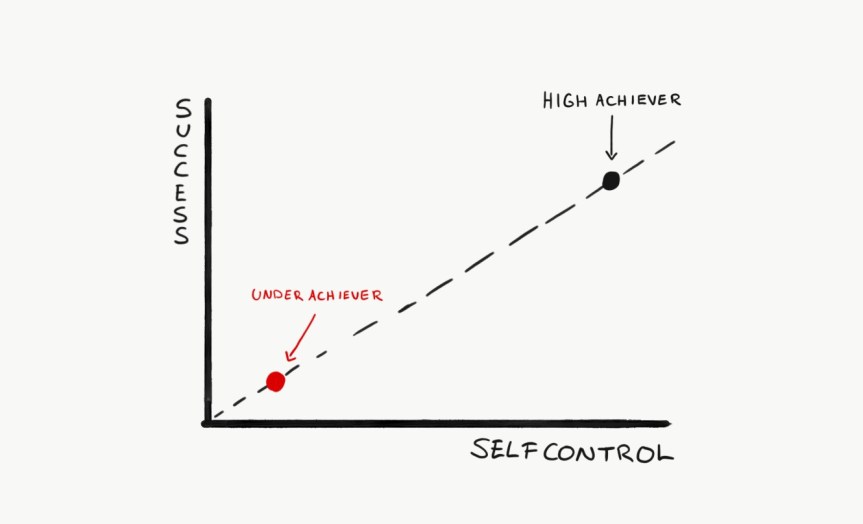
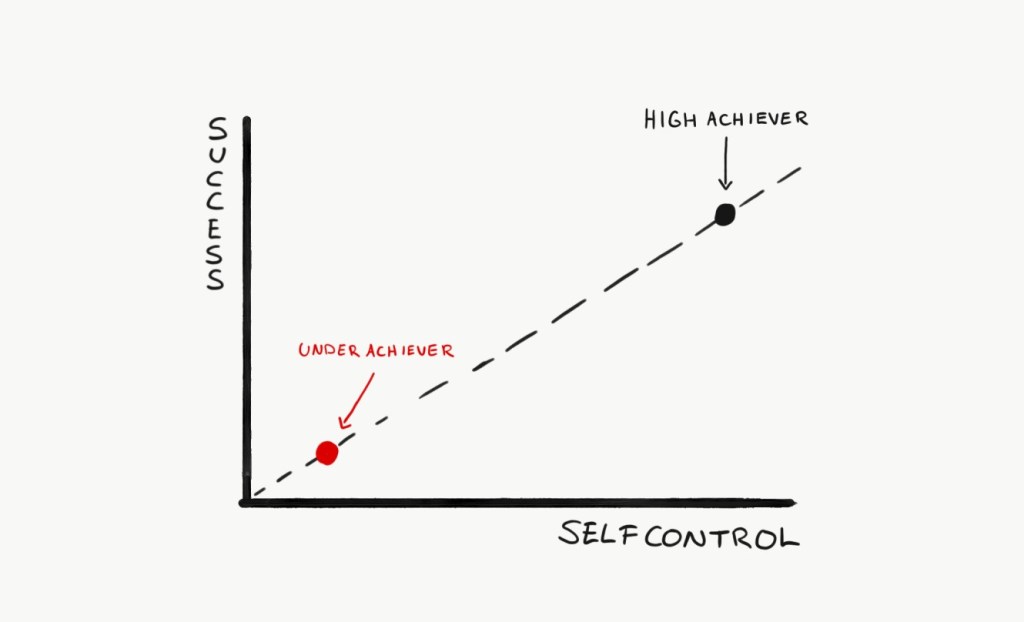
It’s a remarkable story of survival, teamwork, and self-control. Even after the family was discovered in 1978, and realized that there was no war, they decided to live in a harsh place you can only reach by helicopter most part of the year.
What is Self-Control and Why Does It Matter in Life?
Self-control consists of two components, namely, our ability to (1) resist temptations and (2) exercise control over our emotions and behavior.2
To me, self-control is one of the most important things in life. Without it, I wouldn’t even write this article. Let’s face it, when you share anything on the internet that gets enough views, you always get a bunch of hate. Every time that happens, I feel like quitting. But I also realize that there are people who find these articles useful.
Self-control is what keeps me level-headed. It makes me resist my temptation to get pissed off and walk away. There’s also scientific proof that self-control matters in life.
A 2020 study by Dr. Penny Spikins and James Green from the University of York, confirmed that self-control is one of the most important factors in human evolution:3
“We rely constantly on self-control in every aspect of our lives. Although it is not an ability unique to humans, our elevated levels of self-control may have played a key role in our evolution. Self-control is likely to have been key to many of the traits such as prosociality, that define modern humans.”
The study shows that self-control plays a role in important aspects like deliberate practice, forward planning, time and energy investment, and tolerating discomfort. Think of the Lykovs. Without those factors, they couldn’t survive longer than two weeks.
Self-Control in Daily Life
Most of us want to have a fulfilling career, vibrant social life, good relationships with our loved ones, and be in good physical shape. Here’s the thing: We need self-control to make those good things happen. Let me give you a few examples of what that looks like in daily life.
Eating Healthy
I stumbled upon this question on Quora: “Why is it hard to eat healthy?” The top answer bluntly says, “You lack self control.” That made me laugh because it’s the truth. But we all know that it’s not that simple.
Eating healthy is a problem for many reasons. For example, most of us see food as pleasure—not fuel. In developed countries, we don’t have to worry about getting access to food for our survival.
But your body still has the natural urge to take advantage of food when it’s available. On top of that, there are many biological processes going on that we’re not aware of.
A recent study done at the University of Leeds, using data from 27,334 individuals from 12 European countries, showed there’s a clear link between education and diet.4
In my experience, eating healthy has nothing to do with your ability to resist buying junk food or ordering a pizza—it has everything to do with how much you educate yourself about your body. That’s an important reason why eating healthy is difficult: We lack the self-control to learn about nutrition, longevity, and how our bodies function.
Running a Business
I started my first business in late 2010 with my father. Our business, a laundry technology company, will turn 10 years old this November. We’re glad to reach this milestone because we realize most businesses fail in their first few years.
Recent statistics show that 65% of businesses don’t make it until their 10 year anniversary.5 Why is that?
Again, this is just as complex as eating healthy food. But in my experience, it’s a business’s ability to adapt to changes. Our world is changing faster every year. In our business, we’ve kept adapting our products and services to stay relevant. We’re also driven by serving our clients.
Whenever I see businesses or experts use language like, “We’re the #1 provider of so and so,” or “I have 50 million views,” I cringe. Operating a business has nothing to do with you or your badges of honor. It’s about what you can do for your clients. It requires self-control to stay focused on what matters.
Self Improvement
Why is it so difficult to improve yourself? Every day, we have the choice to do something that pays off later instead of now. Going to the beach, binge-watching tv shows, reading gossip, drinking alcohol, smoking, or every other pleasurable activity in life always gives you an instant payoff.
You temporarily feel good. But in one year, two years, five years from now, you look back and you see no progress in your life. In life, we have to deal with a concept called “entropy.” Entropy is the Second Law of Thermodynamics and stands for the degree of disorder or uncertainty in a system. The basic idea is that everything inside a system moves towards disorder.
That’s why people often say, “Adapt or die.” If you don’t move forward, everything that’s related to you as a human will deteriorate. That’s a scary outlook. But here’s the problem: The degree of deterioration is so small that we don’t notice anything on a day-to-day basis.
You probably feel the same as yesterday, correct? Entropy in humans works over a longer period. That’s why we feel no urgency to improve ourselves today. We need self-control to invest in ourselves despite seeing a lack of daily improvement.
How to Develop More Self-Control
How can we get some? Based on everything you’ve read until now, let me share three things you can do.
1. Direct Your Energy Towards a Useful Pursuit
This is a common theme with every single person who demonstrates a high degree of self-control. There is always a higher pursuit or aim. The Lykovs survived in the wilderness to avoid prosecution and death.
Viktor Frankl famously survived the Holocaust because he was driven to see his wife again. Our lives might not have the same life and death stakes—we still need a pursuit.
And our pursuit must be useful to make it stick. Shallow pursuits that only fulfill your materialistic desires will not motivate you to control your urges. You need something that’s so important you’re willing to do whatever it takes.
When I started my blog, I was dedicated to sharing honest advice without hidden intentions. To me, that was a worthy pursuit. That drove me to write every single day. As of this writing, I’ve published 331 articles on my site.
2. Set Long-Term Goals
On a day to day basis, I rely on a system that keeps me productive. A system is a combination of productivity strategies that help you to stay consistent. Read more about systems here.6
But when it comes to long-term drive, I love to set goals because they will give you a clear sense of direction. In what direction do you want to take your life over the next three, five, ten, and twenty years? This is a very hard thought-experiment if you take it seriously.
Most people say, “I don’t know.” But you shouldn’t let yourself off the hook like that. Practice self-control by forcing yourself to pick a direction in life. You can always adjust. The long-term goals I set for myself five years ago have changed today. But at least they got me moving.
3. Minimize Stress
There’s some evidence that stress sabotages self-control.7 When you’ve had a stressful moment at work, it’s tempting to grab a candy bar (or two) to release the stress, right?
The same analogy is true for every other stress-related behavior. If you examine your life, you’ll find that you do a lot of things to simply manage stress. In fact, I believe that for most of us, that’s all that we do.
When I lived a stressful life years ago, I was only thinking about ways to get rid of that stress. But you’re only treating the symptoms that way. You can take as many vacations or buy as much crap you want from the internet, none of it will relieve your stress. If you truly want to minimize stress, you must design your life in a way that gives you a stress-level you can handle.
For me, that meant doing different work and leaving city life (I was living in London at the time). Some situations simply give us too much stress. A bad relationship is another common cause of stress. Unfortunately, there are no simple “step-by-step” tips for managing stress.
Sure, you can meditate, take long walks, read, or journal—all these things will lower stress—but there’s nothing better than designing a life that causes less excessive stress. But that doesn’t mean we should avoid all stress.
An optimal level of stress is actually great for us and it will slow down entropy. We need to find out what that level is for ourselves. Every person has a different stress tolerance. The key is to improve our self-awareness and understand what stresses us out. Then, we want to lower that to a level that we can handle without getting frustrated.
Conclusion
Let me repeat the definition of self-control again: Our ability to (1) resist temptations and (2) exercise control over our emotions and behavior.
These two aspects will increase the quality of our decisions and therefore, our lives. I hope that all of this inspires you to strengthen your self-control. Directing your energy towards a useful pursuit, setting long-term goals, and minimizing stress are all good ways to set yourself up for more self-control.
Strengthening self-control is one of those things that has no end goal. It’s a never-ending process that will only benefit us the more we master it. When’s the last time you heard, “That person has too much self-control?” Exactly. More is better.
This article is for people who overthink the fact that they overthink. Overthinking is thinking the same thought on repeat till it mentally drains us. We may fall into an endless trap of overthinking and overanalysing every single situation in our lives.
Overthinking makes even the smallest of things in our lives get complicated. for example: instead of going out with a friend and enjoying the moment we could end up overthinking every aspect of that day.
We tend to spend a lot of time thinking about our emotions. They may be the emotions of jealousy, hurt, anger, sadness, grief, etc. It is good to acknowledge our emotions but not get trapped in them.
Different people overthink different things. Some are stuck in their past, some worry about their future, some overthink about the people in their lives. Overthinking puts us in a dark place where we only keep thinking for hours and days without doing anything. We keep replaying questions like:
“what if people don’t like me”
“Do I even have friends”
“I should have done this in the past”
“will I ever be able to be successful”
“What if I fail in life”
“why can’t I do this”
What we don’t understand is how irrelevant these thoughts are and how they consume our time and energy. Our past is gone, even if we want to change it we cannot. What we can change is our present and that will happen by not entertaining these thoughts.
The future is yet to come and is determined by our actions in the present. For a small example: if I do an internship in my present, it will help me in the future.
So things are still in our control and we don’t have to overthink so much.
Did you know it is our thoughts that control our actions?
If before going to a job interview you think about things like
“what if they don’t like me”
“what if I mess it up”
“what if I say the wrong things”
Chances are they actually might not like you. The people conducting your interview would sense that you are not confident in yourself and would want to hire a person who believes in themselves.
Did you know many companies also give jobs based on confidence? Because every organization needs confident employees who believe in themselves.
Another thing a lot of people do is overthink even when they know the solution to it. Instead of thinking about why you keep getting bad marks in a subject may be giving the extra time, you spend thinking to study that subject could actually help you.
I used to overthink a lot of things in my life. It used to be about things that I wasn’t able to control. But, thinking about them did nothing but exhaust me mentally. Now I don’t entertain any negative thoughts which would cause me to overthink. I now try to work towards the things I want in my life instead of debating whether I will be able to do it or not. We need to stop saying things like “I can’t do it” and replace them with “I can”.
Human beings have the power to think. It is the brains of humans that made us reach the moon. Now, what I want you to understand is that every human being is as powerful as the person who came up with the smartest invention. But, it is on us what types of thoughts we entertain.
The more productive things a person thinks about the more successful and mentally strong they will be in their lives.



















 Eduindex
You must be logged in to post a comment.