Fashion industry is a fast growing industry offering great opportunities to fashion enthusiasts all over the world. It has evolved over time and now people wear clothes not only to cover themselves but to express as well. Now, clothes are more about styling and depicting one’s personality. In fact, people are divided on this basis. You can see variation in clothes of rich and poor, native and foreign, and many other categories all over the world. The clothing sense of countries also differ whether they are neighbouring or distant.
In earlier times, people would stitch together the threads just to make garments for their use but now they make it for others as well. It has now taken shape of a business where tailors sell ready-made as well ason-demand outfits to the public. There have been a variety of production when it comes to designs in clothes. Focusing mainly on Indian clothing styles, it initiated from kurta-pyjamas for men and women wore ghagra-choli(tops with long skirts) which evolved to jeans and tops/shirts in the modern era.
It is more about fashion now. The standard of a person is being decided by their clothes and sense of fashion determines how up-to-date a person is. Even if we observe the changes in school uniforms, you will see an improvement for the sake of becoming modern. There occurs a difference between the uniform of a govt. school and that of a private school. The more reputed schools(usually private schools with high fees) design their uniforms in a more formal and aesthetic way than a local one. This also marks the standard of a school.
In India, there is ‘unity in diversity’. The diversity here signals to the variability in culture too, among other differences. People of different regions follow their own culture and practices where the difference in clothing sense is not a big thing to notice. Every region, religion and tradition has its own look which is used to identify them. But, from a farther view, we all look same, following a similar trend. It is only the days of special occasion when people would merry on wearing ethnics and all, otherwise we all follow a common fashion expressing our united beliefs in modernity and comfort clothing.
Ongoing is the time of ripped jeans and extra-size t-shirts which is common in male and female dress code. Fashion gives the advantage of designing without differentiating. As much as can be a women’s apparel be unique and decorative, a men apparel too can be so. There are no limits to fashion. People prefer a new type every time it takes the lead. This indicates how alert and active people are, in relation to their dressing and looks. Some people would prefer more pockets in their lowers to make it useful while some would like tight-fitted, printed jeans even without pockets. The times are always changing and one or the other trend always catches the fire and is followed around in the market. However some people settle for a limited designs i.e. they don’t get attracted too often by these trends and stay in their selected apparel zone for long time.
Social media plays a significant role in business, so do in fashion. Fashion influencers around the globe get a large following which doesn’t need any explanation as to how updated people prefer to be. Gender, age or region doesn’t mark the boundaries for such people. It is all in the mind. Whoever has a passion or determination gets what they aspire and this is how the fashion industry also works. It is more about present and even more about the future forecasts. The upcoming trends are the ones created in the present moment and accepted wide across.
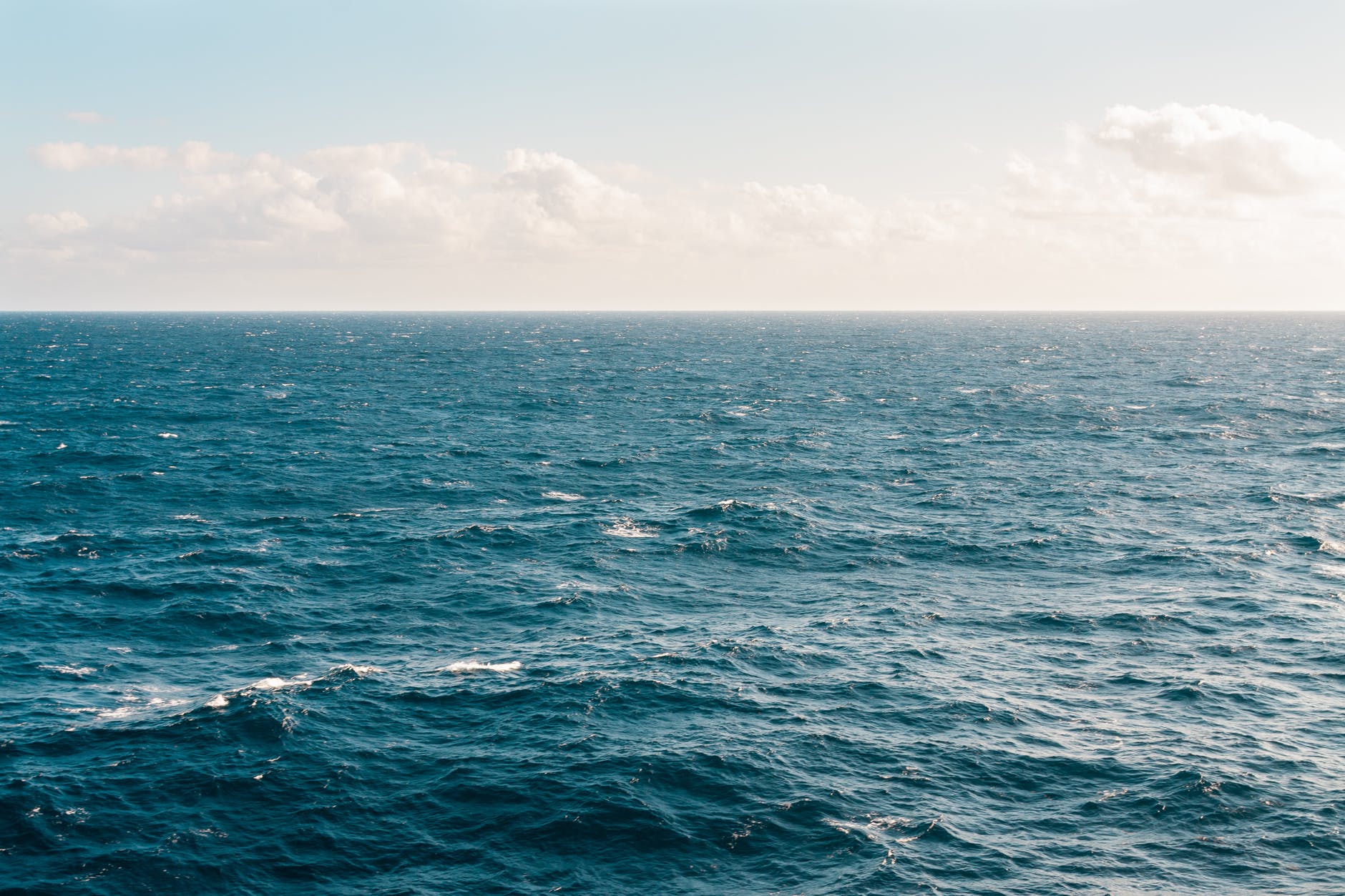
To paraphrase a line from Ron Burgundy, the ocean is a big thing. Big enough for scientists to point out that the term “Earth” is a misnomer. Water may be a more accurate name for a world that is nearly 3/4 covered in water, with marine plants contributing a whopping 50 percent or more of the oxygen we breathe. With all of that stated, it’s past time (high tide?) for us to band together to save the resource that has been depleted.
The bad news is that human activity is wreaking havoc on the environment. The good news is that there are several things we can do to help stop (and even reverse!) those detrimental behaviors, which is why this is a message about hope and empowerment rather than doom and gloom.
Plastic pollution is destroying the ocean
A non-profit that works to protect the ocean Every year, 17.6 billion pounds of plastic is estimated to escape into the ocean from land-based sources, according to Oceana. Every 60 seconds, a garbage truck full of plastic is dumped into our waterways. The world’s most renowned (and largest) rubbish dump is located in the ocean.
The Great Pacific Garbage Patch covers 1.6 million square kilometres and contains 1.8 trillion bits of plastic in an estimated 80,000 metric tonne landfill. Plastic garbage in the ocean is believed to kill over one million sea animals each year, including sea turtles, sharks, and coral reef (yes, coral reef is an animal!).
Plastics in the ocean will surpass fish in the ocean (!?) by 2050, according to research, and 99 percent of seabirds will have plastics in their GI tract. Plastic pollution is not only destructive to the ocean; there is also evidence that it is harmful to humans.
Acidification in the ocean
Carbon dioxide emissions absorbed by the oceans over decades have changed the underlying chemistry of our ocean, resulting in an increase in acidity. Acidification causes small decreases in shell density in small creatures, which support entire ecosystems despite their small size.
As the world’s seas warm, species are moving in large numbers to new locations, posing new challenges or simply failing to develop as they should, while millions of people rely on fish as their primary source of nutrition. It’s also causing the Great Barrier Reef to perish. Coral reefs require all of the protection we can provide, given the disastrous effects of climate change.
Because it has the potential to cause the most apparent and immediate human misery, sea-level rise may be the most well-known of these concerns. Low-lying areas such as Miami and the South Pacific islands are growing increasingly vulnerable; 10% of the world’s population lives on the low-lying coast.
Meanwhile, deoxygenation, which is most typically caused by algal blooms fed by nutrient-rich fertilizer run-off, is causing enormous dead zones and suffocating marine life.
Overfishing
Fishing techniques that are illegal, uncontrolled, and unreported are common. Humans have already brought the giant grouper, several skates and rays, and a dozen or more other sturgeon species to the brink of extinction through fishing.
Bluefin tuna is one of the fish species whose populations may never recover as a result of unsustainable fishing techniques. Other apex predators, such as sharks, are among the most endangered.
Places like Monterey Bay National Marine Sanctuary have shown how impactful policy changes can be in helping species rebound.
Ocean conservation isn’t just a hobby for those who enjoy the water. You might not be a scuba diver, a fisherman, or a seaside dweller. Perhaps you have a seafood allergy and despise surfers! Even so, chances are you still breathe air and enjoy life when there is less human suffering.
Plants and trees are oxygen-producing powerhouses. But wait till you see what oceanic greens can accomplish! (Hint: it’s not just trees.) More than half of the oxygen on the earth is produced by marine plants.
Thoughts famous people have about ocean
Jacques Cousteau: “The sea, once it casts its spell, holds one in its net of wonder forever.”
Beyoncé Knowles: “I’m always happy when I’m surrounded by water, I think I’m a mermaid or I was a mermaid. The ocean makes me feel really small and it makes me put my whole life into perspective… it humbles you and makes you feel almost like you’ve been baptized. I feel born again when I get out of the ocean.”
William Wordsworth: “The ocean is a mighty harmonist.”
John F. Kennedy: “We are tied to the ocean. And when we go back to the sea, whether it is to sail or to watch, we are going back from whence we came.”
Step 1: Land and sea are far more intertwined than most people think, and activities taken on land have substantial consequences in the ocean. The good news is that there are a plethora of tools available—Pinterest offers a plethora of ocean-saving categorieS.
2. Opt for Ocean and Earth-Friendly Products
Oceana’s #1 is to demand plastic-free alternatives to items such as plastic water bottles, straws, plastic cutlery, coffee cups, bags, balloons, plastic-wrapped produce, and take-out food containers.
Intermittent fasting is a type of eating regimen in which you alternate between fasting and eating on a regular basis. Intermittent fasting has been shown in studies to help people lose weight and prevent — or even reverse — disease.
Many diets emphasise what to eat, but intermittent fasting emphasises when to eat.
Intermittent fasting is when you only eat at certain times of the day. Fasting for a set number of hours each day or eating only one meal a couple of times a week can aid fat loss. Scientific data also suggests that there are certain health benefits.
Mark Mattson, Ph.D., a neuroscientist at Johns Hopkins University, has studied intermittent fasting for 25 years. He claims that our bodies have evolved to be able to survive without food for several hours, days, or even weeks.
Before humans learned to farm, they were hunters and gatherers who evolved to survive — and thrive — without eating for lengthy periods of time. They needed to: It required a lot of time and effort.
It was easy to maintain a healthy weight even 50 years ago. “There were no computers, and TV shows switched off at 11 p.m.; people stopped eating because they went to bed,” says Christie Williams, M.S., R.D.N., a nutritionist at Johns Hopkins. The portions were significantly smaller. More people worked and played outside, getting more exercise in general.”
Television, the internet, and other forms of entertainment are now available 24 hours a day, seven days a week. We stay up later to watch our favourite shows, play games, and communicate on the internet. We spend the entire day — and most of the night — sitting and snacking.” Obesity, type 2 diabetes, heart disease, and other ailments can all be exacerbated by eating too many calories and exercising too little. Intermittent fasting has been shown in scientific studies to have health benefits.
How does this work?
Intermittent fasting can be done in a variety of methods, but they all revolve around choosing regular eating and fasting times. For example, you could try eating only for eight hours a day and fasting for the rest of the day. Alternatively, you could choose to eat only one meal each day two days per week. There are a variety of intermittent fasting schedules to choose from.
According to Mattson, after a period of time without meals, the body’s sugar stores are depleted and it begins to burn fat. This is referred to as metabolic switching by him. “Most Americans eat throughout their waking hours, so intermittent fasting is in contrast to their regular eating pattern,” Mattson explains. “If someone eats three meals a day plus snacks and doesn’t exercise, they’re rumination every time they eat.”
Intermittent fasting works by extending the time between when your body burns off the calories from your last meal and starts burning fat.
Approaches of Intermittent fasting
Before beginning intermittent fasting, make sure to see your doctor. The actual technique is straightforward once you have his or her permission. You can choose a daily strategy, which limits daily meals to one six- to eight-hour period. For example, you could try 16/8 fasting, which involves eating for eight hours and fasting for sixteen. Williams is a proponent of the daily routine, claiming that “the majority of people” follow it.
Another method, known as the 5:2 technique, is eating five times a week. You only eat one 500–600 calorie meal on the remaining two days. For instance, suppose you decided to eat normally every day of the week except Mondays and Thursdays, which are your one-meal days.
Fasting for longer lengths of time, such as 24, 36, 48, and 72 hours, is not always beneficial and can be dangerous. Going too long without eating may cause your body to begin storing fat as a response to the lack of food.
According to Mattson’s studies, it takes two to four weeks for the body to adjust to intermittent fasting. While you’re getting adjusted to the new pattern, you can feel hungry or irritable. However, he notes that research subjects who make it through the adjustment stage are more likely to continue to the diet because they feel better.
Water and zero-calorie liquids like black coffee and tea are allowed at periods when you aren’t eating.
And “eating normally” during your periods does not imply “going insane.” If you fill your meals with high-calorie junk food, super-sized fried foods, and desserts, you’re not going to lose weight or get healthier.
But what Williams enjoys about intermittent fasting is that it allows him to eat — and enjoy — a wide variety of things. She explains, “We want people to be conscious and enjoy eating delicious, nutritious food.” Eating with others and sharing the mealtime experience, she continues, enhances satisfaction and promotes excellent health.
Whether you’re trying intermittent fasting or not, Williams, like other nutrition experts, considers the Mediterranean diet to be a solid pattern for what to consume. When you choose complex, unprocessed carbohydrates like whole grains, leafy greens, healthy fats, and lean protein, you can’t go wrong.
Benefits of Intermittent Fasting
Intermittent fasting does more than burn fat, according to research. “Changes in this metabolic switch affect the body and the brain,” Mattson explains. Mattson’s research was published in the New England Journal of Medicine, and it offered information on a variety of health benefits linked to the practice. Longer life, a slimmer body, and a sharper mind are among them.
“During intermittent fasting, numerous things happen that protect organs from chronic diseases including type 2 diabetes, heart disease, age-related neurological disorders, even inflammatory bowel disease and many cancers,” he explains.
Thinking and memory : Intermittent fasting improves working memory in animals and verbal memory in adults, according to research.
Heart health : Fasting for a short period of time improved blood pressure, resting heart rates, and other heart-related parameters.
Physical performance : Fasting for 16 hours resulted in fat loss while retaining muscular mass in young males. Mice that were fed on different days had superior running endurance.
Diabetes and obesity : Intermittent fasting has been shown to prevent obesity in animals. In six small studies, obese adult individuals lost weight by fasting intermittently.
Tissue health : Intermittent fasting in mice minimized tissue damage during surgery and improved outcomes.
Is Intermittent Fasting safe for everyone?
Some people use intermittent fasting to lose weight, while others use it to treat chronic illnesses including irritable bowel syndrome, high cholesterol, or arthritis. Intermittent fasting, on the other hand, isn’t for everyone.
Before attempting intermittent fasting (or any diet), Williams recommends consulting with your primary care physician. Some persons should avoid experimenting with intermittent fasting:
Children and teenagers under the age of 18 are considered minors.
Women who are expecting a child or who are breastfeeding.
People who have diabetes or other blood sugar issues.
Those who have had an eating disorder in the past.
People who aren’t in these groups, but who can safely undertake intermittent fasting, can continue the routine indefinitely, according to Williams. “It can be a lifestyle shift with advantages,” she explains.
Keep in mind that intermittent fasting can have a variety of impacts depending on the individual. If you start to experience unusual anxiety, headaches, nausea, or other symptoms after starting it, talk to your doctor.
More people need to make their own well being a priority.
To some people self care means face masks, bubble baths, and a glass of malbec. To others it means spending more quality time with your family, friends, or pets.
But one thing seems universal: the need to spend less time grinding and more time enjoying.
How do we do this when we are told to idolize “the hustle?” Told to follow the grind wherever it leads us? Told that we are only successful if we put everything we have into our work?
Over the last few years we have fallen victim to what is now being called “hustle culture.”
Hustle culture does not sleep. Hustle culture does not take lunch breaks. Hustle culture is waking up Saturday morning and making spreadsheets instead of pancakes.
Hustle culture does not take into account what your goals in life really are.
If you have a goal in mind, you need to put your foot on the gas and strategize how you’ll achieve it A S A P., Or else it’s just an idea and a waste of time.
The idea is that we find our value and sense of self in our output or how much work we can get done. So much so that we glamorize the idea of being a “workaholic” and are obsessed with Hyperproductivity.
The bottom line becomes, if you’re not constantly delivering something of perceived value, you’re doing it wrong.
People often admire the “hustle.” “Don’t knock on the hustle,” they say. True enough, in some instances having a hustle culture is a good thing, in a workplace environment the opposite is generally true. Especially in today’s highly competitive and fast-paced lifestyle, hustle culture is becoming the norm for more and more people in the workforce today.
Millennials in particular — especially fresh graduates and singles — are particularly keen on the kind of workaholism that hustle culture perpetuates. It’s all about how “busy” they are, how many million things they’re juggling at the same time. Hustle culture has become the standard for many to gauge things like productivity and performance.
The thing is, hustle culture isn’t really as great as it’s made out to be. It’s dangerous, both to individuals and to a workplace environment in general. It may seem like a good thing on paper, but in practice, there is a lot to at least be extremely cautious about.
In a nutshell, hustle culture (as the name also implies) means constant working. It means devoting as much of your day as possible working — hustling. There is no time out or time in at work. Work is done in the office, outside the office, at home, at coffee shops — anywhere. And in a world constantly on the go and equipped with the tools to achieve that, working constantly on the go is very possible.
Hustle culture is the societal standard that you can only succeed by exerting yourself at max capacity professionally. Everyday.
Hustle Culture pushes the idea that you are only valuable, worthy, or capable of success if you are performing at your maximum capacity at all times.
And it’s a mindset, a philosophy and a life embraced by many, both by individuals and even companies. When you talk of hustle culture, the more you work, the more celebrated you are. Never mind that you miss meals, sleep, and other important events. In hustle culture, taking a break is for the weak. Your brain becomes trained to always be active and always churning out idea after idea after idea.
We live in the age of the internet. Also, it has become an important part of our life that we can’t live without it. Besides, the internet is an invention of high-end science and modern technology. Apart from that, we are connected to internet 24×7. Also, we can send big and small messages and information faster than ever. In this essay on the Internet, we are going to discuss various things related to the internet.
Reach of Internet
It is very difficult to estimate the area that the internet cover. Also, every second million people remain connected to it with any problem or issue. Apart from that, just like all the things the internet also has some good and bad effect on the life of people. So the first thing which we have to do is learn about the good and bad effect of the internet.
Good effects of the internet mean all those things that the internet make possible. Also, these things make our life easier and safer.
Bad effects of the internet mean all those things that we can no longer do because of the internet. Also, these things cause trouble for oneself and others too.
You can access in any corner of the world. Also, it is very easy to use and manage. In today’s world, we cannot imagine our life without it.
Uses Of InternetFrom the time it first came into existence until now the internet has completed a long journey. Also, during this journey, the internet has adopted many things and became more user-friendly and interactive. Besides, every big and small things are available on internet and article or material that you require can be obtainable from internet.
Tim Berners-Lee can be called one of the main father of internet as he invented/discovered the WWW (World Wide Web) which is used on every website. Also, there are millions of pages and website on the internet that it will take you years to go through all of them.The Internet can be used to do different things like you can learn, teach, research, write, share, receive, e-mail, explore, and surf the internet.
Convenience Due To Internet
Because of internet, our lives have become more convenient as compared to the times when we don’t have internet. Earlier, we have to stand in queues to send mails (letters), for withdrawing or depositing money, to book tickets, etc. but after the dawn of the internet, all these things become quite easy. Also, we do not have to waste our precious time standing in queues.Also, the internet has contributed a lot to the environment as much of the offices (government and private), school and colleges have become digital that saves countless paper.Although, there is no doubt that the internet had made our life easier and convenient but we can’t leave the fact that it has caused many bigger problems in the past. And with the speed, we are becoming addict to it a day in will come when it will become our basic necessity.
The Sopranos is an American television drama series considered to be masterpiece by critics and audiences alike. Created and written by David Chase, The Sopranos aired for six seasons (1999–2007) on Home Box Office (HBO) and earned an international following as a result of its excellence. The Sopranos is said to have set the standard for what a crime drama series should be; full of suspense, thrill and excitement. It is impossible to overstate The Sopranos’ influence on television across the globe. Many famous and successful shows that followed The Sopranos in years to come like Breaking Bad and Peaky Blinders seem to have traces of inspiration and borrow certain elements from this legendary show.
Synopsis
Set in New Jersey, The Sopranos follows Mafia boss Tony Soprano (James Gandolfini) through regular sessions with a psychiatrist (Lorraine Bracco) to whom he goes for help after experiencing panic attacks that cause him to black out. His infidelity and the violent nature of a life in organized crime form the backdrop for the dysfunctional relationship he has with his own family. Beset by enemies and family difficulties, he struggles to come to terms with power, morality, and death.
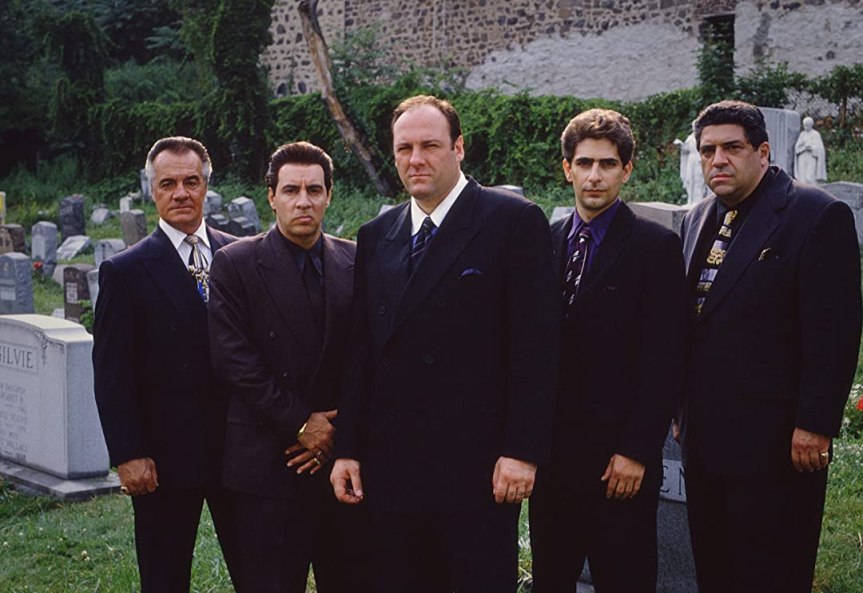
Christopher (Michael Imperioli), Paulie (Tony Sirico), and Silvio (Steve Van Zandt) form Tony’s most trusted inner circle, while many others enter and leave the circle as the series progresses. The themes of identity, guilt, and denial are highlighted by the selective acknowledgment of the harsh realities of Tony’s crime world by his wife, Carmela (Edie Falco), and the Sopranos children, Meadow (Jamie-Lynn Sigler) and Anthony Jr. (Robert Iler).
Popularity
The Sopranos is widely regarded as one of the greatest television series of all time. It won a multitude of awards, including Peabody Awards for its first two seasons, 21 Primetime Emmy Awards, and 5 Golden Globe Awards. It has been the subject of critical analysis, controversy, and parody, and it has spawned books, a video game, soundtrack albums, and assorted merchandise. Several members of the show’s cast and crew were largely unknown to the public but have since had successful careers. In 2013, the Writers Guild of America named The Sopranos the best-written TV series of all time, and many sites have ranked it the best television series of all time.
The main reason for the show’s success has to be James Gandolfini and his portrayal of Tony Soprano. The masterful complexity of Gandolfini’s portrayal of Tony Soprano and the uneasy juxtaposition of brutality and sensitivity on display challenge the viewer to step inside Tony’s world and examine his choices from an intimate and personal perspective. Gandolfini plays Tony as a rough and tough guy, but doesn’t neglect the gentle fragility guarded within him. Not good, not bad, just human. It was also so famous because of how it explored so many important themes that really reflected modern America’s existential preoccupations. The show highlights things like mental health, homosexuality, family relations, sexual harassment, etc. It was a raw and real show that didn’t pull any punches. Hence, it is not just a mob drama, but also a social satire, a domestic drama and a statement of the rise in Western consumerism. The Sopranos rightly got a lot of praise for nearly all of this, but one thing is often overlooked; it was also a really funny show. It was funny not because the script was full of jokes and punchlines, but because it created very funny situations and circumstances in a very natural manner. All of these aspects and elements made it not only a show well worth watching, but also one that set the benchmark and is revered to this day.
Conclusion
The influence of The Sopranos cannot be quantified, and it was the foundation upon which HBO became a cultural force. Sex and the City premiered on HBO six months before The Sopranos, breaking ground for women in television and comedy and becoming an influential trend factory. But while Sex and the City gave HBO glitz, The Sopranos gave it gravitas. Due to this show, the network became synonymous with quality drama, the great TV-making seal of approval.
Many contend that till today, The Sopranos remains the best TV series in the world. Though this is subjective, there seems to be overwhelming support from audiences and critics alike that this show is one of the best, if not best crime drama ever made. Regardless, if you have not seen it yet, you should definitely give it a try and you may notice how this show laid the groundwork for many other great shows in years to come.
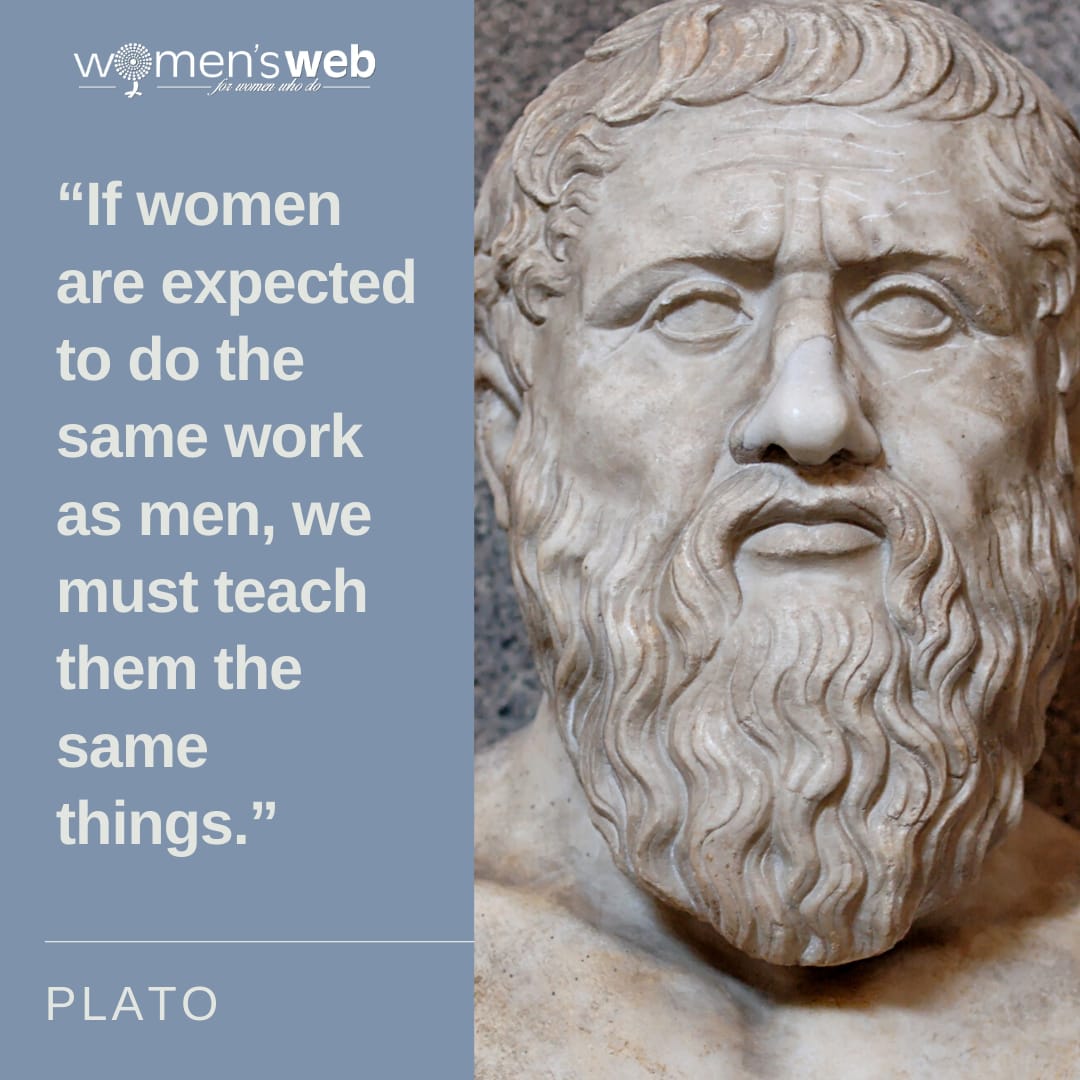
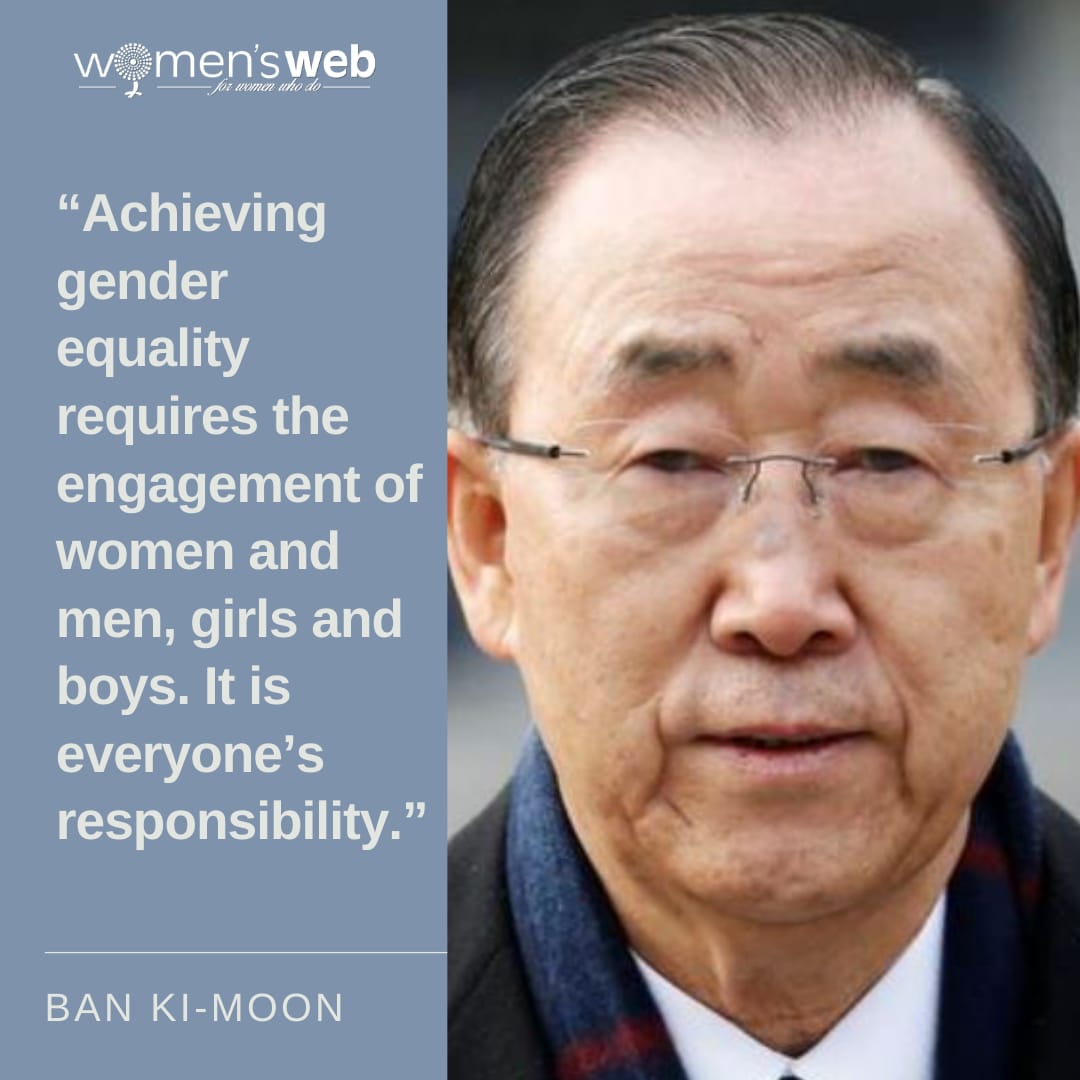
Gender inequality is the social process by which Mens, LGBTQ community and womens are not treated equally.
Gender equality is a human fight not a female fight.
Due to patriarchy many girls are hold back from striving for their dreams, receiving a quality education, medical facilities and overall awareness for their well being.
Everyday girls and boys see gender inequality in their homes, community, in textbooks, in media and among the adult.
Society assume an unequal responsibility for household work with mothers bearing the brunt of caregiving.
In schools, many girls receive less support than boys to pursue the studies they choose.
Rashida khatun says I realised the harm I would be causing myself if I agreed to get married. She in is enrolled in UNICEF supported program that provides out of school girls with basic numeracy, literacy and life skills.
Whenever we talk about gender inequality we always seems to focus on women but have anyone ever thought that what it’s like for men or LGBTQ community.
Gender equality, historically has been predominantly a women’s movement for women but I think the impact of gender inequality and how its affecting man hasn’t really been addressed.
– Emma Watson
Generally we see in our families that boys told to pursue maths in higher studies and girls were told to pursue Biology so that the male became engineer for female can be a doctor.
Whenever a boy wants to be a cook, singer, dancer he is being discouraged by society or his parent by saying that these are for girls.
It’s a perception in our patriarchal society that boys do not cry that the crime is only for girls.
Mens are stronger than women and they will never bow in front of anyone
That’s why mens will never admit their faults because they are meant to be dominant in this patriarchal society.
When a girl wanted to be an officer then she is being discouraged by the family by saying that this is the job for Boys.
The perception of our societies that the household works are made for womens .
If people see a girl with short hair, the peoples in society tends to point at her and think of her as a freak.
If a girl is not interested in cooking but she still has to do it and she is pressurized by the family and Society by saying that you have to go to someone’s home and you have to do it because it is made for you.
Let’s talk about LGBTQ community. It is is the second of three issues focused on social inequalities.
LGBTQ community faces gender inequality in their everyday life.
They face inequalities in employment, education, health, survival and political empowerment.
It is not the only way by which they faces social inequalities.
Lgbtq people faces housing discrimination and workplace discrimination.
They faces basic human right such as – marriage and family adoption.
They have been discarded from their homes at their birth. The only reason of this is that they are not a male or female.
Peoples doesn’t behave properly with them.
Is this what we called Gender Equality??
We blame society for gender inequalities and for everything but why we forget that society is because of us. we are the part of society and to change this society we have to change our own mentality.
Positive psychology is one of the newest branches of psychology to emerge. This particular area of psychology focuses on how to help human beings prosper and lead healthy, happy lives. While many other branches of psychology tend to focus on dysfunction and abnormal behaviour, positive psychology is centered on helping people become happier. Positive psychology is designed to “complement and extend the problem-focused psychology that has been dominant for decades,” explained the late Christopher Peterson, author of “A Primer in Positive Psychology” and professor at the University of Michigan, in a 2008 article published in Psychology Today. “Positive psychology is…a call for psychological science and practice to be as concerned with strength as with weakness; as interested in building the best things in life as in repairing the worst; and as concerned with making the lives of normal people fulfilling as with healing pathology,” Peterson wrote.
According to leading authorities in the field, Martin Seligman and Mihaly Csikszentmihalyi, positive psychology will help achieve “scientific understanding and effective interventions to build thriving in individuals, families, and communities.” In order to understand the field of positive psychology, it is essential to start by learning more about its major theories, applications, and history.
History of Positive Psychology
“Before World War II, psychology had three distinct missions: curing mental illness, making the lives of all people more productive and fulfilling, and identifying and nurturing high talent,” wrote Seligman and Mihaly Csikszenmihalyi in 2000. Shortly after WWII, the primary focus of psychology shifted to the first priority: treating abnormal behavior and mental illness. In the 1950s, humanist thinkers like Carl Rogers, Erich Formm and Abraham Maslow helped renew interest in the other two areas by developing theories that focused on happiness and the positive aspects of human nature.
General interest in positive psychology has grown tremendously since the concept was introduced. Today, more and more people are searching for information on how they can become more fulfilled and achieve their full potential.
Uses
Positive psychology can have a range of real-world applications in areas including eduction, therapy, self-help, stress management, and workplace issues. Some of the major topics of interest in positive psychology include: Character strengths and virtues, Flow, Gratifications, Gratitude, Happiness, Pleasure, Helplessness, Hope, Mindfulness, Optimism, Positive thinking, Resilience .
Impact of Positive Psychology
Some of the major findings of positive psychology include: Money doesn’t necessarily buy well-being, but spending money on other people can make individuals happier, People are generally happy, Some of the best ways to combat disappointments and setbacks include strong social relationships and character strengths, While happiness is influenced by genetics, people can learn to be happier by developing optimism, gratitude, and altruism, Work can be important to well-being, especially when people are able to engage in work that is purposeful and meaningful.
Potential Pitfalls
Positive psychology is often confused with positive thinking, and misconstrued as self-help tactics rather than research-backed theories. Positive thinking is a way of thinking ourselves into better behavior and greater resilience, rather than behaving our way into a different frame of mind. Positive psychology, on the other hand, is the scientific study of what makes people thrive. It focuses on behaviors that can lead to a more optimized frame of mind as well as on thought patterns that lead to more functional behaviors.
“May the force be with you”. This statement alone is enough to tell you how popular and impactful space operas are. Whether it’s Star Trek or Star Wars ( yes they’re both different) or Battlestar Galactica franchise and Robert A. Heinlein’s 1959 novel Starship Troopers, sci fi has always fascinated people.
Space operas, considered as sub genre of science fiction emphasizes fictional space warfare driven by technology and science fictional devices.
What’s even more fascinating , is that these fictional tales are no longer just part of the books or movies but have started to interlink with the present and probably the future.
Ronald Reagan proposed the a plan of strategic defense initiative – a system of lasers and missiles and the critics and newspapers named it as Stars Wars. This gained further resonance when Reagan described the Soviet Union as an “evil empire”.
Star trek , was etched with liberal themes that were dominating American society in the 1960’s like racism, the nuclear arms race, the struggle between democracy and totalitarianism -all part of Star Trek.
This all mirrored the post Second world war scenario in the world.
.Kingpins , in these sci fi , in quest of more power, battle for higher political ground , which is a reflection of the current conflicts in the world.
Handmaid’s Tale, by Margaret Atwood, is set in a dystopian future, wherein women are forced to live as concubine under a fundamentalist and theocratic dictatorship. Wherein the women , are not even called out by their own names, but are named after their ” masters”. Women being forced to be subservient to men …Sounds familiar right ? This book is not exactly a space opera, but for sure classifies as sci fi and a thriller with jarring similarities to the past, present and a possible future.
Whether it’s shows like Black Mirror, West World, or movies like The Walking Dead, World War Z- they all hold testament to the horrifying yet reality we all are living in.
Increasing political distress in the world, racial stratification and on top of that the armed powerful countries; this sounds like a plot of a space opera , sadly , we are all living it today .Launch of Space force by the Donald Trump; China and Russia also preparing to enter the competition; Business moguls having the access to space , this all is the beginning of something, – maybe of a new space opera- but this time it’s for real.
All over the world people are misguided about the word feminism. According to you what does feminism mean? Is it to put men down and rule the world or is it to enjoy everything a man can? Let’s discuss about various myths and the actual meaning of feminism and the significance of it in a women’s life.
According to the Oxford dictionary feminism means “the belief that women should have the same rights and opportunities as men“. In more simpler words feminism is all about the equality between men and women and have the freedom of everything that they wish to do. Some people argue that they believe in ‘equality’ but they have no belief in feminism. Feminism has been made critical despite of it being a very simple concept.
From ancient times women are pointed out for the way they dress and for their aspirations. They have been constantly told to dress in a certain way and to live their life according to the norms of the society. Women are fighting for their equal rights from centuries for there right to vote, right to speech and freedom. People in the society have framed a woman according to their needs and expect them to fulfill their expectations. A married woman taking care of her husband, her in-laws and looking after their children is considered to be the ideal one whereas if she wants to work and be dependent, she is criticised and often being questioned on her motherhood. Similar type of Criticism she faces at her work place. These are the basic yet essential inequality that a women regularly faces.
Women-Women Conflict regarding feminism
Sometimes women also take feminism in a wrong way. They think that being a feminist means to humiliate men and they often misuse their power of being a women by falsely accusing a men in a crime. This is basically pseudo feminism. Women around the world debates for the real meaning of feminism which sometimes leads to conflicts. Some women of old generation are also against feminism and consider it as uncultural.
Myths
Feminists hate men.
Feminists are angry.
Feminists are unattractive and not feminine.
All feminists are lesbians.
Feminists are all pro-choice.
If you are a feminist, you cannot be religious.
All feminists are career women and do not support stay-at-home moms.
Feminists are Bra- Burners who hate sex.
Feminists can only be women.
Feminists don’t believe in marriage.
If you have ever found yourself saying “I’m not a feminist, but I am for equality,” then ask yourself why you do not claim the title? If it is because of the misconceptions of what a feminist truly is then empower yourself to raise awareness about what feminism is really all about.
Feminists are all about equality between genders– which means feminists don’t want women to be more powerful than men any more than we want men more powerful than women. What may seem like a discriminatory act against men is actually an attempt to level the playing field between men and women.
While huge strides have been made towards complete gender equality, a great deal of work remains to be done, both in India and abroad, including the gender pay gap, access to reproductive healthcare, protection against sexual assault and violence and gender representation in media, among other issues.
How a Guy Can Be a Feminist?
Basically feminism is not only committed to changing negative stereotypes about being a woman. A large facet of feminism is understanding streotypes about masculinity and its effects on society and what it means to be a man. If you care about equality for your mother, daughter, grandmother, girlfriend, a friend, who is female then feminism should be important to you. Additionally, feminism is about equality for all marginalized groups- equality for those who are LGBTQIA, disabled, and ethnic and racial minorities. Caring about feminism means caring about people who fit into these categories.
Being a feminist is not something to be ashamed of. It is the right of every person who believes in equality for all.
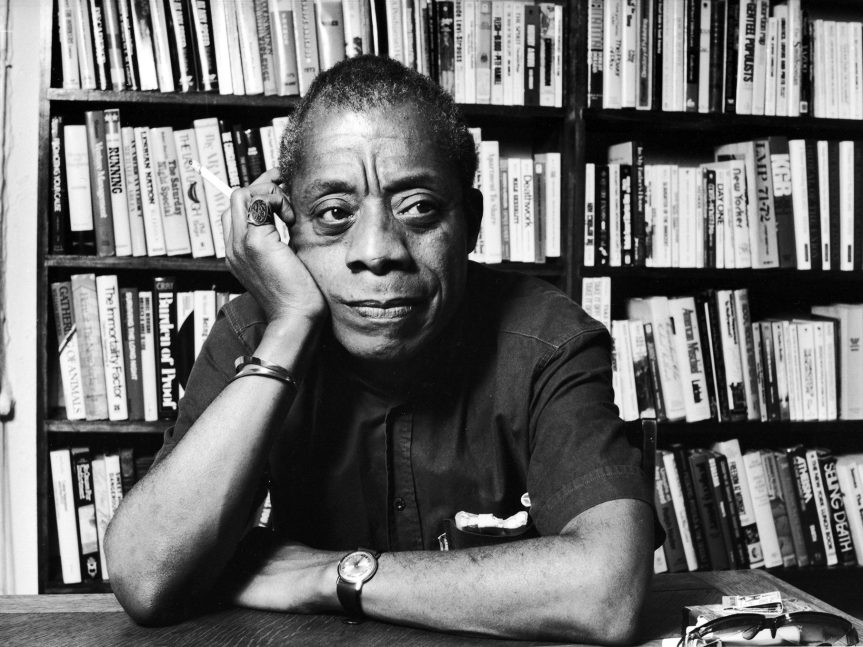
James Baldwin was an American essayist, novelist, and playwright whose eloquence and passion on the subject of race in America made him an important voice, particularly in the late 1950s and early 1960s, in the USA and throughout much of western Europe. One of the 20th century’s greatest writers, Baldwin broke new literary ground with the exploration of racial and social issues in his many works. He was especially known for his essays on the Black experience in America. In light of recent incidents in America, with the killing of George Floyd and all the violence against black people, James Baldwin’s literary works have resurfaced and remain relevant even today. Unfortunately, the violence seen in America decades ago is still in existence, and Baldwins works brings these matters to light.
Early Years
James Baldwin was born the illegitimate son of Emma Jones on August 2, 1924, in Harlem, New York. When he was three, his mother married the Reverend David Baldwin, a fire and brimstone lay preacher who legally adopted James. Despite their strained relationship, Baldwin followed in his stepfather’s footsteps and served as a youth minister in a Harlem Pentecostal church from the ages of 14 to 16. He developed a passion for reading at an early age and demonstrated a gift for writing during his school years. Baldwin published numerous poems, short stories and plays in the magazine, and his early work showed an understanding for sophisticated literary devices in a writer of such a young age. After graduating from high school in 1942, he had to put his plans for college on hold to help support his family, which included seven younger siblings. He took whatever work he could find, including laying railroad tracks for the U.S. Army in New Jersey.
During this time, Baldwin frequently encountered discrimination, being turned away from restaurants, bars and other establishments because he was an African-American. After being fired from the New Jersey job, Baldwin sought other work and struggled to make ends meet.
Aspiring Writer
James Baldwin started devoting his time to write a novel, trying to fulfil his dream of becoming a writer. Eventually he befriended writer Richard Wright, through whom he was able to land a fellowship in 1945 to cover his expenses. Baldwin started getting essays and short stories published in such national periodicals as The Nation, Partisan Review and Commentary.
Three years later, Baldwin made a dramatic change in his life and moved to Paris on another fellowship. The shift in location freed Baldwin to write more about his personal and racial background. He once told the New York Times; “Once I found myself on the other side of the ocean, I see where I came from very clearly…I am the grandson of a slave, and I am a writer. I must deal with both,” The move marked the beginning of his life as a “transatlantic commuter,” dividing his time between France and the United States.
Major Works
Baldwin had his first novel, Go Tell It on the Mountain, published in 1953. The loosely autobiographical tale focused on the life of a young man growing up in Harlem grappling with family issues and religion.
In 1954, Baldwin published his next novel, Giovanni’s Room. It told the story of an American living in Paris and broke new ground for its complex depiction of homosexuality, a then-taboo subject. Baldwin was open about his homosexuality and relationships with both men and women, and believed that human sexuality cannot be limited by rigid categories.
In 1957 he returned to the United States and became an active participant in the civil rights struggle that swept the nation. Delving into his own life, he provided an unflinching look at the Black experience in America through such works as Notes of a Native Son (1955) and Nobody Knows My Name: More Notes of a Native Son (1961), which explored Black-white relations in the United States. This theme was also central to his novel Another Country (1962), which examines sexual as well as racial issues.
Nobody Knows My Name hit the bestsellers list, selling more than a million copies. While not a marching or sit-in style activist, Baldwin emerged as one of the leading voices in the Civil Rights Movement for his compelling work on race.
Final Years
By the early 1970s, Baldwin seemed to despair over the racial situation. He had witnessed so much violence in the previous decade, especially the assassinations of Malcolm X and Martin Luther King Jr., caused by racial hatred. While his literary fame faded somewhat in his later years, Baldwin continued to produce new works in a variety of forms. He published a collection of poems, Jimmy’s Blues: Selected Poems, in 1983 as well as the 1987 novel Harlem Quartet. Baldwin died on December 1, 1987, at his home in St. Paul de Vence, France. Never wanting to be a spokesperson or a leader, Baldwin saw his personal mission as “bearing witness to the truth.” He accomplished this mission through his extensive and timeless literary legacy
The global yearly temperature has risen by a little more than 1 degree Celsius, or roughly 2 degrees Fahrenheit, during the Industrial Revolution. It increased by 0.07 degrees Celsius (0.13 degrees Fahrenheit) every ten years between 1880 and 1980, when accurate recordkeeping began. However, the pace of rise has more than doubled since 1981: The worldwide yearly temperature has risen by 0.18 degrees Celsius (0.32 degrees Fahrenheit) every decade during the previous 40 years.
The world has never been hotter. After 1880, nine of the ten warmest years have occurred since 2005, with the five warmest years on record all occurring since 2015. Climate change doubters claim that rising global temperatures have slowed or stopped, however multiple studies, including one published in the journal Environmental Research Letters in 2018, have refuted this claim
Climate scientists have now concluded that we must limit global warming to 1.5 degrees Celsius by 2040 if we are to avoid a future in which the worst, most devastating effects of climate change: extreme droughts, wildfires, floods, tropical storms, and other disasters that we collectively refer to as climate change, will be part of everyday life around the world.
These effects are felt by all people in one way or another but are experienced by the underprivileged, the economically marginalized, and people of color, for whom climate change is often a key driver of poverty, displacement, hunger, and social unrest.
When carbon dioxide (CO2) and other air pollutants accumulate in the atmosphere, they absorb sunlight and solar radiation that has bounced off the earth’s surface, causing global warming. Normally, this radiation would escape into space, but these contaminants, which may persist in the atmosphere for years to centuries, trap the heat and cause the earth to warm.
Greenhouse gases are heat-trapping pollutants such as carbon dioxide, methane, nitrous oxide, water vapor, and synthetic fluorinated gases, and their impact is known as the greenhouse effect.
Though natural cycles and fluctuations have caused the earth’s climate to change several times over the last 800,000 years, our current era of global warming is due to human activity—specifically, our burning of fossil fuels like coal, oil, gasoline, and natural gas, which results in the greenhouse effect.
Transportation accounts for 29% of greenhouse gas emissions in the United States, followed by power production (28%), and industrial activities (28%). (22 percent).
To avert disastrous climate change, drastic reductions in emissions are required, as well as the widespread usage of alternatives to fossil fuels. The good news is that, as part of the 2015 Paris Climate Agreement, governments around the world have publicly pledged to reduce their emissions by setting new targets and developing new policies to meet or even exceed those standards.
The bad news is that we aren’t working quickly enough. According to scientists, we need to cut global carbon emissions by up to 40% by 2030 to prevent the worst effects of climate change. To achieve this, the international community must take quick and tangible efforts to decarbonize electricity generation by fairly transitioning from fossil fuel to renewable energy production.
Warming temperatures are generating longer and hotter heat waves, more frequent droughts, more rains, and more intense hurricanes, according to scientists.
The earth’s ocean temperatures are also rising, allowing tropical storms to pick up more energy. To put it another way, global warming has the potential to transform a category 3 storm into a more dangerous category 4. In reality, scientists have discovered that the frequency of North Atlantic hurricanes, as well as the number of storms that reach classifications 4 and 5, has increased since the early 1980s.
Communities are suffering and death tolls are rising as heat waves, droughts, and floods linked to climate change grow more common and intense. Scientists think that if we don’t lower our emissions, climate change would kill over 250,000 people per year and push 100 million people into poverty by 2030.
Climate change affects everyone, yet not everyone is affected equally. Indigenous peoples, people of color, and those on the margins of society are often the hardest hit.
Even while these communities have done the least to contribute to climate change, inequities built into our housing, health-care, and labor systems render them more exposed to its worst effects.
As a major contributor to global warming, the US has a responsibility to assist the world in moving toward a cleaner, safer, and more equal future. Other countries care about our duty, and we should care about it as well.
I am beginner in reading books, and since I have not read thousand I can give you some recommendations from my prospective and from my reading style which is very really simple.
For begginers i would suggest read books that generate your interest in reading and you can read it without getting bore.
TIPS TO CHOOSE BOOKS/NOVEL :
Don’t judge any book by it’s cover, believe me guys I was same, just to buy books which look really attractive and caught my eye but that’s not really worth it, as you are judging a book by it’s cover but not by story, so please don’t do it
Find your interest, find what’s the one thing you are really interested in reading, it can be a romantic story, fictional books, non fictional , crime thriller etc.
Select book by reading about it’s multiple reviews, so that you dont regretit later.
For people, whop think investing in buying paperbacks books is costly, just go for Audiobooks, Audiobooks are easily available option for it and you dont have to carry it anywhere.
Some Recommended books –
World’s Best Boyfriend by Durjoy Datta (the language of book is really simple and storyline is interesting).
A Touch of Eternity by Durjoy Datta (this is latest books by him which is totally different from all stories written by Durjoy, I think you should give it a try).
We were lairs by E.Lockhart (story of cousin’s and their bonding’s, believe me it’s one such a read).
Fault in our stars by John Green(most loved story of all time).
The ‘Emu War’, also known widely as the Great Emu War, was a nuisance wildlife management military operation undertaken in Australia in the later part of 1932 to address public concern over the number of Emus that were said to be running amok in the Campion district of Western Australia. The unsuccessful attempts to curb the population of emus, employed soldiers armed with Lewis guns, a World War 1 era light machine gun, making the local media to adopt the name “Emu War” when referring to the incident.
While a number of emus were killed, the emu population persisted and continued to wreak havoc by crop destruction.
Background
Discharged Australian WW1 veterans were given lands to take up farming by the Australian government within Western Australia. The difficulties farmers were already facing increased by the arrival of as many as 20,000 emus. Emus regularly migrate after their breeding season, heading to the coast from the inland regions. With the lands cleared and additional water supplies being made available for the livestock by the Western Australian farmers, the Emus found that the cultivated lands were a good habitat for them, and began to intrude into farm territory. The veteran farmers began taking up arms against the birds.
The War
Military involvement was due to begin in October 1932. The “war” was conducted under the command of Major G. Meredith of the Seventh Heavy Battery of the Royal Australian Artillery. They moved in formation behind the birds, and the birds answered their organised assault with inspired chaos, scattering themselves in all directions to minimize the casualties. The army tried gunning them down in moving trucks, but found they could not aim properly at their speedy foes.
A second campaign was mounted by Major Meredith on 13 November 1932, killing 40 emus. Two days later, barely any, but about a month later its was reported that 100 emus were being killed every week. The commanding officer found that it took 10 bullets to bring down every one emu, which was a pretty dismal effort. He was recalled the Great Emu War had finally come to an end.
Aftermath
Despite the problems encountered with the culling of the emus, the farmers once again requested military assistance in 1934, 1943, and 1948, only to be turned down by the Australian government. Instead, the bounty system that had been initiated in 1923 was continued, which proved to be effective as 57,034 bounties were claimed over a six-month period in 1934 alone.
Either Stable burning in various states accrued the air pollution in Delhi and created a gas chamber around NCR ; SC came upon a committee to observe scenario , Or 4 industries inflicting stream pollution were shut down by Maharashtra pollution board . Everybody has responsive to environmental problems as higher than . The key solution for resilience to environmental issues are provided by government in various legislations , enactments and provisions on environment laws .
In republic of India environmental law is concern with the policy and law for protection of the environment . It aims for achieving carbon free economy through taking measures for reducing climate change. All the acts under this laws are safeguards in ensuring effective management of the environment and its multiple ecosystems . It provides for preventing environmental damage .
Natural resources in the earth were unscathed from millions of years. It were remain pure until the industrialized started . After the industrialization this resources have been exploited in Spain of 100 years only . From 19th century, the environment (air , water and land ) is directly exploited by rapidly growing population at alarming-rates.
environment includes water, air and land and the inter-relationship which exists among and between water, air and land, and human beings, other living creatures, plants, microorganisms and property , as mentioned in section 2 of environmental protection Act of 1986 . Environment is a wide sphere , it consists of social, economically , political , religious dimensions .
Addressed area of environmental laws in India :
1. Quality of water : For the prevention and control of water pollution and to maintain or restore wholesomeness of water in the country the water act of 1974 was enacted. It further provides for the establishment of Boards ( CPCB and SPCB ) for the prevention and control of water pollution with a view to carry out the aforesaid purposes. This act prohibits the discharge of pollutants into water bodies beyond a given standard, it also lays down fine and penalties for non-compliance.
2. Reduction of air pollution and maintaining air quality : The Air (Prevention and Control of Pollution) Act, 1981 (the “Air Act”) is an act to provide for the prevention , protection and abatement of air pollution .It provides for establishment of Boards at the Central and State levels with a view to carrying out the aforesaid purposes.
3. Hazardous Waste management : legislations that directly or indirectly deal with hazardous waste management are the Factories Act, 1948, the Public Liability Insurance Act, 1991, the National Environment Tribunal Act, 1995 and rules and notifications under the Environmental Act.
4. Containment cleanup, damage mitigation : preventing future damage to the environment is undeniably the primary objective of environmental law, mitigating and reducing existing damage is also important. This area most often deals with issues like toxic leaks and oil spills. The central objective of this branch of environmental law is deciding liability, planning an appropriate response, and also determining the best process of investigation and monitoring in the overall clean up process. This area also concerns itself with the study and assessment of risk in the long term, to better mitigate any future accidents and risks.
5. Sustainability of resources : United Nations has put great emphasis on ensuring the sustainability of resources. For this vision , it has advocated the formation of various legal principles and legislation. In this regards concept of environmental impact assessment introduced .
Noble legislations and enactments on environment law in India :
Laws on Forest and wild life protection: • The Indian Forest Act, 1927 ; The Wildlife Protection Act, 1972; The Forest (Conservation) Act, 1980 ; The Environment (Protection) Act, 1986; The National Green Tribunal Act, 2010.
Laws on Water pollution : • The Water (Prevention and Control of Pollution) Act, 1974.
Laws on air pollution : • The Air (Prevention and Control of Pollution) Act, 1981 (the “Air Act”)
Laws on hazardous waste management : • Biomedical Waste (Management and Handling) Rules, 1998 ; Municipal Solid Wastes (Management and Handling) Rules, 2000 ; Batteries (Management & Handling) Rules, 2001 ; Hazardous Wastes (Management, Handling and Transboundary) Rules, 2008 ; E – Waste (Management and Handling) Rules, 2011 . Laws on wetlands
•Ramsar convention (1971) : This convention was initiated to push for greater conservation and sustainable use of wetlands ; Wetlands (Conservation and Management) Rules, 2017. Constitutional provisions on environment laws
• Part IVA (Art 51A-Fundamental Duties) of the constitution casts a duty on every citizen of India to protect and improve the natural environment including forests, lakes, rivers and wildlife, and to have compassion for living creatures.
• the Constitution of India under Part IV (Art 48A-Directive Principles of State Policies) stipulates that the State shall endeavour to protect and improve the environment and to safeguard the forests and wildlife of the country.
environment makes human life possible, and our cultural environment helps define who we are. It is therefore essential that our population and economic growth are environmentally sustainable.


















 Eduindex
You must be logged in to post a comment.