FACT Devices; Statcom and it’s working

FACT is an abbreviation for Flexible AC transmission system. A system composed of static equipment used for the alternating current (AC) transmission of electrical energy. It is generally a power electronics based system.

Series compensation – In this we connect the fact devices in series with power system. Here, the line impedance is modified, that means net impedance is decreased and increasing the transmittable active power.

Shunt compensation – It is used to improve the power factor. In this we connect the fact devices in parallel with power system. It also works as a controllable for the current source. Eg- Statcom (Static synchronous Compensator) and SVC (Static VAR compensator). They are further classified into two types –

  1. Shunt capacitive compensation: This method is used to improve the power factor. Whenever an inductive load is connected to the transmission line, power factor lags because of lagging load current. To compensate, a shunt capacitor is connected, which draws the current leading to the source voltage. The net result is an improvement in power factor.
  2. Shunt inductive compensation: This method is used either when charging the transmission line, or when there is a very low load at the receiving end. Because of very low, or no load–very low current flows through the transmission line. Shunt capacitance in the transmission line causes voltage amplification (Ferranti effect). The receiving end voltage may become double the sending end voltage (generally in case of very long transmission lines). To compensate, shunt inductors are connected across the transmission line. 

A few advantages of FACT devices are:
• Helps in improving power transfer capability
• Used for transient and dynamic stability improvement.
• Used for damping of power system oscillations.
• For better voltage regulation.
• For flexible operation and control of the system.

What is a Statcom?

The STATCOM (or SSC) is a shunt-connected reactive-power compensation device that can generate and/ or absorbing reactive power and in which we can vary the output to control the specific parameters of an electric power system. It is a solid-state switching converter capable of generating or absorbing independently controllable real and reactive power at its output terminals when it is fed from an energy source or energy-storage device at its input terminals.Voltage-source converter that, from an input of the voltage, produces a set of 3-phase AC-output voltages, each in phase with and coupled to the corresponding AC system voltage through a relatively small reactance.

How does a statcom work?

Now suppose we have a load connected to the grid; the load takes the power as P + jQ, where P is active power and Q is reactive power. Now we have to make the Q= 0. So that the power factor is always unity (PF = 1). For that, we connect statcom at the load, so that the reactive power is supplied by the statcom and active power is given by the Grid. This is how a statcom works for reactive power compensation.

The different softwares in which we can simulate and analyze FACT devices are:
• MATLAB
• PSCAD
• ETAP

Global Warming and it’s effect.

Global warming is the long-term heating of Earth’s climate system observed due to human activities, primarily fossil fuel burning, which increases heat-trapping greenhouse gas levels in Earth’s atmosphere.

Humans are increasingly influencing the climate and the earth’s temperature by burning fossil fuels, cutting down forests and farming livestock. This adds enormous amounts of greenhouse gases to those naturally occurring in the atmosphere, increasing the greenhouse effect and global warming.

Global warming doesn’t just mean warming, which is why “climate change” has become the favored term among researchers and policymakers. While the globe is becoming hotter on average, this temperature increase can have paradoxical effects, such as more frequent and severe snowstorms. Climate change can and will affect the globe in several big ways: by melting ice, by drying out already-arid areas, by causing weather extremes and by disrupting the delicate balance of the oceans.

Canada, Nunavut Territory, Repulse Bay, Polar Bear (Ursus maritimus) swimming beside melting iceberg near Arctic Circle on Hudson Bay

The effects of global warming affect the humankind, plants and animals in numbers of ways. These effects, increase ocean levels, droughts and changed weather patterns.

Climate change can affect human health in two main ways: first, by changing the severity or frequency of health problems; and second, by creating unprecedented or unanticipated health problems or health threats in places where they have not previously occurred.

A reduction in yield and an increase in pests compromise food availability. This is aided by a loss of arable land and the need to implement irrigation systems when faced with a change in precipitation patterns. The long-term effects of global warming on this field can potentially cause famine.

Water scarcity is found in an increase magnitude around the world, affecting rich and specially poor countries. Nearly three billion people live in water scarce conditions, and this situation could worsen if current population growth trends continue.

Global warming affects us all. So, everyone must bring down his or her personal contribution.
Please spread the word about the effects of global warming, do your part and save the planet. 

Custody of Children to Grandparents

Custody is included within the notion of Guardianship, and it happens as a result of the parents’ divorce. Divorce may be harmful to both parents and children, and children are often subjected to significant emotional trauma as a result of their parents’ divorce. The question of custody comes after the divorce is finalised, and it is a pertinent subject that must be resolved by the court. Custody refers to the privilege granted by the court to either of the parents in favour of the kid who is under the age of eighteen. The parent who is given the custodial right has to look after the financial, emotional, medical, and all other necessary needs of the child.

Custody of Children to Grandparents

Types of Custody in India

Physical Custody-

The kid will be under the guardianship of one of the parents in this custody, and the other parent will have the ability to visit the child from time to time. This is the most common type of custody, and it ensures that the kid receives all of the advantages of the family as well as the finest possible upbringing. Both parents’ love and devotion are intended for the kid.

Joint Custody- 

In this custody, both parents are allowed the right to keep their kid with them, but only in turn. Joint custody is one of the greatest alternatives to the post-divorce custody struggle. No parent feels deprived under this custody arrangement since both parents have the opportunity to be with the kid and have a major role in their upbringing. The major advantage of this custody arrangement is that the kid receives the love, care, and attention of both parents equally, and both parents have the right to make decisions about the child’s future.

Third-Party Custody-

In this custody, neither of the parents gets the custodial right. This is because the court believes that both parents are incapable of parenting a child and that granting the child’s rights to any of them would be detrimental to the child. In such cases, a third party is appointed and the custody of the child is given in his favor for the benefit of the child. This is mainly done in cases when both the parents re-marry after divorce then the custody of the child is given to grandparents. 

Sole Custody-

In this case, the custody of the child is given to either mother or father and the other parent has no right over the child. This is usually done because of the abusive or immoral nature of the non-custodial parent. Under such cases, the court passes an order that non-custodian parents will not be granted the right to visit or meet the child once in a while.

Custody of Children to Grandparents

In some circumstances, the court may give grandparents custody of the kid. When giving custody of a child, the court takes various factors into account. The minor’s well-being takes precedence over a specific party’s legal rights. If the youngster is mature enough to choose who he wants to live with, the court will take it into account while deciding on final custody. The court must consider the following Acid test while determining custodial rights:

  • Education, health, and maintenance of the child are the relevant factors while determining the custody of the child.
  • The priority of the custody of the child is given to their biological parents. However, if they do not promote the welfare of the child, custody can be granted to the grandparents.
  • Financial stability cannot be the sole ground for deciding the custody of the child, the welfare of the child is of paramount consideration. 
  • The child’s moral and ethical well-being, as well as its bodily well-being, must be considered by the Court.
  • Love of the parents towards their children cannot be a ground for deciding the custody in their favor. 
  • The physical and mental conditions of the parents along with their professional life are taken into consideration while deciding the custody. In such cases in which both the parents are professionally working and are not able to look after the child properly, custody will be granted to the grandparents. 
  • The wish of the child with whom he/she wants to stay is of utmost importance while deciding the custody.
  • The ‘character’ of the proposed guardian is one of the issues that must be examined by a court of law.
  • When dealing with custody disputes, a court is not bound by legislation, rigorous standards of evidence or process, or precedents. When choosing a competent guardian for a minor, the most important factor should be the child’s welfare and well-being.
  • Custody disputes cannot be determined only based on papers, oral evidence, or precedents; the human touch is the most important factor for the minor’s wellbeing, since the other materials may be generated by the parties themselves or on the advice of counsel to fit their needs.

In Jai Prakash Khadria v. Shyan Sunder Agarwalla and Anr, the appellant was the child’s maternal grandfather, while the respondent was the child’s paternal grandparents. Because the kid’s school was close to their house, the court gave paternal grandparents custody of the youngster. The paternal grandpa became overly close to the youngster and gave all of his property to him. The court also argued that because the maternal grandfather was living alone and there was no one at his house to care for the kid, custody would be given to the paternal grandparents.

Conclusion 

Child custody is one of the most sensitive and difficult problems that arises following a parent’s divorce. Custody of the kid is always granted to the person considered by the court to be the best alternative for the child. The welfare of the children is the most important consideration when determining custody. Courts will award custody of the kid to the party who can demonstrate that the child’s best interests are served by them. In some instances, if the court deems it appropriate, custody of the children might be assigned to grandparents.

The Rock cycle

Photo by Anthony on Pexels.com

Look at all the rocks around you. They are a very important part of your existence, they form soils, are used in construction, for manufacturing substances, making medicines, cosmetics and soo much more. So you kinda get an idea, right?

Come, let us all today see the various kinds of rocks surrounding us and how they are formed.

There are 3 kinds of rocks-

  1. Igneous rocks- These are the most primary form of rocks and are formed when the molten lava cools and solidifies. They can be formed both inside the earth as well as the earth’s surface. When formed inside the surface of earth, they are known as intrusive igneous rocks (having a course structure with large mineral gains indicating they spent a large amount of time inside the earth’s crust) . Examples are granite and diorite. And when igneous rocks are formed on the earths crust they are known as extrusive igneous rocks. They have relatively small grains and very fine structure. Examples are rocks like basalt and obsidian.
  2. Sedimentary rocks- These rocks are formed from pieces of existing igneous or metamorphic rocks or biological material that undergo weathering and erosion and get deposited in the form of strata or layers. These are further sub-divided into three types- clastic, organic, and chemical . Clastic(eg.- sandstone) and organic rocks(eg.- coal) are formed due to weathering of rock into small fragments which are later transported to new places, or the biological materials like plants, shells, and bones that are compressed into rock. Chemical sedimentary rocks(eg- limestone) are the result of chemical precipitation. A chemical precipitate forms when the solution (usually water) evaporates and leaves the compound behind.
  3. Metamorphic rocks- When either the igneous or the sedimentary rocks are subjected to immense heat or pressure, metamorphic rocks are formed. They are of two types- foliated and non-foliated.  When the minerals line up in layers, they form foliated rock. (eg.- gneiss- made from granite). Non- foliated rocks follow the same procedure but they do not have the layered appearance of foliated rocks. Sedimentary rocks ( bituminous coal, for example) when provided enough heat and pressure, can turn into non-foliated metamorphic rocks (anthracite coal).

ROCK CYCLE

All the three types of rocks are inter-changeable into one another.

  1. The igneous rock can be subjected to intense heat and pressure and form metamorphic rock or be weathered and eroded to give rise to sedimentary rocks or it can even be subducted and melt to give way to magma and again form igneous rock .
  2. The sedimentary rocks can either be subjected to extreme conditions of temperature or pressure to form metamorphic rocks or subduct to form magma or even weather and erode to again from sedimentary rock.
  3. The metamorphic rocks can either erode to give rise to sedimentary rocks or subduct to form magma that can later form igneous rocks.

This is how the rock cycle in our surroundings work. Rocks are continuously weathered and eroded and subducted and exposed to high heat and pressure. Some of the forces that drive the rock cycle are-

  1. Plate tectonic
  2. Spreading ridges
  3. Subduction zone
  4. Continental collision
  5. Accelerated erosion

This is all in the article about rock process.

Book Review:The Fault In Our Stars


Written By John Green

“The marks humans leave are too often scars”

Summary-

When I saw this book my first impression was aaaah! another love story until I saw the movie “DIL BECHARA” by the late Sushant Singh Rajput then I was convinced I’ll buy this book and this was one of the best decisions I ever made

Plot-

The Story starts with a 17-year-old girl named Hazel Grace who is a cancer patient and uses an oxygen cylinder to breathe as she has thyroid cancer which has significantly spread to her lungs. She joins a cancer group for her moral support and shares their experience where she catches her eyes on a teenager named Augustus waters he was there to support their mutual friend Isaac who has a tumor in his one eye where Augustus invites her for a movie night and they share their cancer experience, Augustus reveals that he had cancer before Osteosarcoma which was removed after amputating his leg. And they share their favorite novel with each other Augustus gives her Princess of Dawn and Hazel recommends An imperial affiliation where she shares the story of the book with him it was about a girl who has cancer and she tells him it shares the same experience as the book explains with her, She speculates about the novel’s mysterious author, Peter Van Houten, who fled to Amsterdam after the novel was published and hasn’t been heard from since.

Augustus meets her and tells he found out the writer of the book and he is in Amsterdam and Hazel was happy and wanted to meet her but fate had another story, Hazel was admitted to the hospital because her lungs were filled with fluid, she was discharged after one week where she came to know Augustus was with her in the hospital for 8 days, Augustus gave her a letter by the writer where he invites her to Amsterdam, but it was nearly impossible as she wasn’t strong enough and her parents didn’t want to take any risk but one of the family friends told them to let her live her life, she flies to Amsterdam with her mom and Augustus and they finally went to meet the writer where they find the writer was nothing but drunkard which broke her hopes to know what really happened in the last of the book as the book was incomplete.

. At the end of the tour, Augustus and Hazel share a romantic kiss, to the applause of spectators. They head back to the hotel where they make love for the first and only time. The following day, Augustus confesses that while Hazel was in the ICU he had a body scan which revealed his cancer has returned and spread everywhere. They return to Indianapolis, and Hazel realizes Augustus is now the grenade. As his condition worsens he is less prone to his typical charm and confidence. He becomes vulnerable and scared but is still a beautiful boy in Hazel’s mind. As this change occurs, she ceases calling him Augustus and starts referring to him as just Gus, as his parents do. Hazel recognizes that she loves him now as much as ever. Augustus’s condition deteriorates quickly. In his final days, Augustus arranges a prefuneral for himself, and Isaac and Hazel give eulogies. Hazel steals a line from Van Houten about larger and smaller infinities. She says how much she loves Augustus, and that she would not trade their short time together for anything in the world.

Augustus dies eight days later.

The last pages of the book show that Augustus wanted the writer to write a book on Hazel and wanted him to disrespect Hazel when she meets him so he can write a sequel on her. Augustus was sending papers to him so he could write a story on her

The book ends with a quote by Augustus

“He says getting hurt in this world is inevitable, but we do get to choose who we allow to hurt us and that he is happy with his choice”


Co-operation is the Development of the Country

Co-operation 

The proverb “Unity is Propitious” is something we all know. Nehru said that “Co-operation” was the first step necessary for people to achieve equality. In this article we will look at the benefits of such a co-operation in detail.

Co-operation – Introduction

The purpose of the cooperative is to fully realize the “Single tree makes no forest”. The co-operative system was introduced in India by Frederick Nicholson Betts. He is also hailed as the “Father of the co-operative movement in India”. The law for these co-operative systems first came into force in India in 1940. It was in 1940 of the same year that the first co-operative movement was started in the village of Tirur in the Thiruvalluvar district.

The Movement and Purpose of the Co-operative

The work of the co-operative began to run with activities similar to those for towns and villages. They operate in the villages as the Primary Agricultural Cooperative Bank, the Central Cooperative Bank and its branches. Similarly in the cities Arbor Co-operative Bank and Labor Co-operative Bank are functioning. As such, there are more than 125 branches of the Co-operative Bank operating throughout Tamil Nadu. Similarly, there are about 4,600 start-up agricultural cooperative banks and about 23,000 co-operative banks.

The symbol, like the joining of the two hands of the co-operative societies, can be felt emphasizing their policy of uniting for the good of the people. 

Benefits of Co-operation

The truth is that “United we stand, divided we fall”. The benefits that people get from doing so are many. Poor farmers are able to benefit as start-up agricultural co-operative banks use a number of options, including five-year plans, to improve agriculture. Thus, the co-operation not only provides quality milk to all through dairy farms, but also benefits those who depend on cows. Similarly, the co-operative helps in earning a good income in the rural business of Kadar. The co-operative helps sugar mills, fertilizer companies and fishermen at various levels.

It is no exaggeration to say that the co-operative is a good friend of the people who helps to diversify the various industries including the farmers who have taken loans through the co-operative. If the town is pulled together, how many big chariots will come and get the beauty. The rise of the country is due to the co-operation that extends from the village to the town to help any poor simple people live upright. Let us rise and let our country rise! Long live the co-operation! Its missions to develop!

Why is it important to be all people educated in today’s time?

Whenever we think of education, it comes to our mind that education means acquiring knowledge. Education is something that makes a person strong with the mind. Education which imparts knowledge, skills, techniques, information to the people, Enables them to know their rights and duties towards their family, society and nation. It expands the vision and perspective to see the world. It develops the ability to fight against injustice, violence, corruption and many other evil elements in the society.

We have been getting education not from this age but from every age, the deities have also taken education to become capable of themselves. Education is that which does not look at caste, religion, or high and low. But in today’s time it is very important to be educated because today’s time has changed a lot from earlier times. Because in today’s time if we are not educated then it becomes difficult to face the world. If we are educated then we are intelligent and if we are not educated then we are not intelligent, not perfect, so the world thinks. Being educated is not just reading books. Education is what we get from our parents and teachers about our life and future. It is our right to give knowledge to every person, in today’s time, every person being educated enables them.

If we are not educated then we have to depend on someone and in today’s time it is very difficult to trust anyone. If we are educated then we ourselves will be intelligent. And knowledge is that which we can take at any age, we can ask anyone And if we have completed our studies, it does not mean that we have become knowledgeable, we know everything. Knowledge is that which no matter how much we read, it never diminishes, it keeps on increasing like wealth.

Education gives us knowledge of the world around us. It develops the attitude of looking at life in us. It is the most important element in the development of the nation. Without education, one would not discover new ideas. It means that one will not be able to develop the world because without ideas there is no creativity and without creativity the nation does not develop. Education is the most powerful weapon which we can use to change the perspective of the world. An educated person knows how to deal with different types of problems. Through the right education, a person can develop good moral values. It helps us to become a good human being.

Education helps a person to be able to read and write. Most of the information is communicated by writing. A man who has this ability to read is called a literate.

He can read books, newspapers, signs, and symbols. It also helps to read signboards in the street, at shops, bus, train and air stations. It also helps them in their day to day activities like banking, shopping, money transaction and many more.

Education is the best way for our country and society to move forward in the future. So that our society and country become self-dependent.

Clouds

All of us have looked at the clouds. Many of them appear white, sometimes fluffy, sometimes as thin as a wisp, sometimes black. Based on the color of clouds, we predict the weather for the day. But have you ever looked at all the clouds and wondered just how many different types of clouds we encounter everyday and we just categorize them as black and white.

Photo by paul voie on Pexels.com

So, today let us look at the categorization of various kinds of clouds that exist and see what they predict about our day.

Clouds are at the basic level subdivided into 3 categories-

  1. High clouds- They occur between 20,000-40,000 feet above the sea level. They mainly occur in a feathery form. (very high above the ground. Air has less molecules of water vapor as well as possible nuclei for cloud formation. Air molecules are scattered ). These clouds do not bring rainfall.
  2. Medium clouds- They occur in the range of 10,000-20,000 feet above the sea level. They occur as clusters of clouds and can bring rainfall and snow.
  3. Low clouds- Occur in the range of 6,500-10,000 feet. These clouds mainly block sunlight ans can cause light drizzle/mist. Ever seen clouds appear beneath you from a mountain top?

The high clouds have 3 kinds of cloud varieties-

  1. Cirrus- Thin, wispy, fibrous clouds that appear in bright blue sky are cirrus. They barely dim the sunlight though. They are made of tiny ice crystals that scatter the sunlight , thereby making the clouds appear orange or yellow, making for a beautiful sunrise or sunset.
Photo by Karolina Grabowska on Pexels.com

2. Cirrocumulus- Very high cumulus clouds that appear as white globular masses forming ripples.

Photo by Vinu00edcius Vieira ft on Pexels.com

3. Cirrostratus- A stratus cloud (horizontal layering with uniform base), it occurs in the from of a thin white sheet or veil and provides the sky a milky texture, making the sun/moon shine with a characteristic ‘halo’.

The ‘mid-level clouds have 3 varieties-

  1. Altocumulus- These are the wooly bumpy clouds that occur in layers. They look like waves in blue sky. Can cover the sky occasionally.
Photo by Lucas Pezeta on Pexels.com

2. Altostratus- These are denser grayish clouds and have a watery look.

3. Nimbostratus- ‘Nimbo’ means precipitating. These clouds are associated either with rain or snow and are dark-dull layered clouds.

Photo by Pixabay on Pexels.com

The low level clouds have 3 sub-types-

  1. Stratus- These are very low clouds. Uniformly grey, thick clouds, they cause light drizzle an dull weather. They also reduce aircraft visibility and are the cause of highland fog.
Photo by Andre Moura on Pexels.com

2. Cumulus-These are vertical clouds with rounded top and horizontal base and occur in humid tropical regions. Formed due to up-rising conventional currents. It ight appear grey against the sun but it is a fair weather cloud.

Photo by Pixabay on Pexels.com

3. Stratocumulus- These are rough, bumpy clouds and have waves more pronounced than Altocumulus cloud.

Photo by Lucas Pezeta on Pexels.com

There is one another type of cloud associated with cyclonic conditions, lightening and thunderstorm, known as cumulonimbus cloud. These are overgrown cumulus clouds that are formed between 2,000-30,000 feet high. Formed in tropical afternoons, these are black in color and usually seen in equators and in sub-tropical regions(during summers).

Photo by Flash Dantz on Pexels.com

This is all about clouds. The next time you are on your rooftop, you have something to keep you busy and you can’t disagree, looking at clouds is interesting.

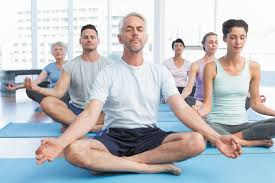
Importance of YOGA in Daily life

Over the last few decades, there has been an upsurge in the prevalence of yoga. Medical professionals and celebrities are also adopting and recommending the regular practice of yoga due its various benefits. While some regard yoga as simply one more prevailing fashion and associate it with the new age mysticism, others vouch for how astonishing this form of exercise feels. What they don’t understand is that what they see as simply just another form of exercise will profit them in ways they never envisioned.

Before we get into the benefits of Yoga, it is essential to understand what exactly Yoga really is. Yoga is not a religion, it’s a way of living that aims towards a healthy mind in a healthy body. Man is a physical, mental and spiritual being; Yoga helps in developing the balance between all the three as stated in Ayurveda in India. Other forms of exercise, like aerobics, only assure physical wellbeing. These exercises have very little to do with the improvement of spiritual or astral body.

Yoga is not just about bending or twisting the body and holding the breath. It is a technique to bring you into a state where you see and experience reality simply the way it is. If you enable your energies to become exuberant and ecstatic, your sensory body expands. This enables you to experience the whole universe as a part of yourself, making everything one, this is the union that yoga creates.

The founder of Yoga, Patanjali stated, “Sthiram sukham asanam.” It implies that a posture that appears to be firm and agreeable is your asana. You may be astounded to know that an asana is just a preliminary step into the act of yoga. It is a way that encourages you to achieve the greater good. Yoga focusses on idealizing concordance between your mind, body, and soul. When you adjust yourself so everything functions brilliantly within you, you will draw out the best of your capabilities.

Importance of Yoga

The perfect unison can be achieved through Hatha Yoga and its various branches (Ashtanga Yoga, Iyengar Yoga, Bikram Yoga, Yin Yoga, Kundalini Yoga), depending on what you like and the problems you are looking to tackle through the practice.

Some of the Advantages of Yoga are as follows:
Improves brain function
Lower stress levels
Alters gene expression
Increases flexibility
Lowers blood pressure
Improves lung capacity
Relieves anxiety
Relieves chronic back pain
Lowers blood sugar in diabetics
Improves sense of balance
Stronger bones
Healthy weight
Lowers risk of heart diseases
Yoga as a practice has innumerable benefits that positively affects an individual both physically and mentally. Whether it is reducing your blood pressure or raising your pain tolerance, listed below are a few things that yoga works on:

Enhanced Circulation:
Yoga improves your blood circulation. This means better transportation of oxygen and nutrients throughout the body. Improved blood flow also indicates healthier organs and glowing skin.
Improves Posture:
Yoga teaches how to control and how to balance. With regular practice, your body will automatically assume the right stance. You will look both confident and healthy.
Uplifts your mood:
Practicing yoga on regular basis uplifts your mood instantly as it leaves your body with refreshing energy.
Lowered Blood Pressure:
Practicing yoga on daily basis enhances the blood circulation in the body. This enables oxygenation in the body due to which there is a significant reduction in the blood pressure as the body calms down.
Keeps Premature Aging at Bay:
Why not age gracefully and not before time? Yes, yoga helps you detox and eliminate toxins and free radicals. This, apart from other benefits, helps delay aging too. Yoga also relives stress which is yet another factor that beats aging.
Reduces Stress:
When you are on your yoga mat, you focus on the practice. This means that all your focus is concentrated on the matter at hand, and your mind slowly drains out the stress and troubles that are plaguing it.
A Drop in The Pulse Rate:
Yoga eases the body by reducing the strain. When the body relaxes, the pulse rate decreases. A low pulse rate indicates that your heart is strong enough to pump more blood in a span of fewer beats.
Increases Strength:
You use the weight of your own body to increase your strength. This is a very bewildering method of strength training.
Anxiety Management:
A little twisting, bending and controlled breathing helps you overcome anxiety.
Better Cardiovascular Endurance:
Yoga improves oxygenation in the body and also lowers the heart rate. This results in higher cardiovascular endurance.
Lowered Respiratory Rate:
Yoga involves a whole lot of controlled breathing. It entails filling your lungs to their full capacity, thus allowing them to work more efficiently.
Fights Depression:
When you practice yoga, repressed feelings surface. While you may feel sad, the negative energy is released. This helps to combat depression.
Teaches Balance:
Yoga also focusses at improving balance and also allows you to gain control over your body. Regular practice of yoga will enhance your ability to balance the poses in the class and focus well outside the class.
Stimulation of Organs:
The internal organs are massaged when you practice yoga, thereby increasing your resistance to diseases. Also, once you are attuned to your body, after years of practice, you will be able to tell instantly if your body doesn’t function properly.
Increased Immunity:
Yoga and Immunity go hand in hand. As yoga works towards healing and enhancing every cell in the body, your body automatically becomes more immune. Thereby, increasing your immunity.
Instills Full Body Awareness:
Practicing yoga on regular basis will help you become aware of your own body. You will begin to make subtle movements in order to enhance your alignment. With time, yoga helps you to become comfortable in your own skin.
Improvement in Gastrointestinal Health:
Practicing yoga regularly activates the digestive system and the other stomach related diseases like indigestion and gas are eliminated. Therefore, gastrointestinal functions improve in both men and women. Read more about indigestion home remedies.
Increasing Core Strength:
It is essential to understand when your core is strong, your body is strong. Your core holds the weight of your body. It helps in increasing your resistance to injuries and also help you heal better. Yoga works on the core and makes it healthy, flexible and strong.
Higher Levels of pain Tolerance:
Yoga increases the level of pain tolerance and also works towards reducing chronic pain.
Increased Metabolism:
Yoga keeps the metabolism in check since a balanced metabolism is essential to achieve ideal weight.
Improved Sexuality:
Yoga increases your self-confidence and offers complete relaxation and more control. This gives your sexuality a much-needed boost.
Renewed Energy:
Yoga has the ability to make your mind and body feel rejuvenated. People who perform yoga on daily basis feel energized after a session of yoga.


Improves sleep:
Yoga helps you relax your mind completely. It helps you work on unnecessary tensions, thus facilitating better sleep.
Integrated Function of the Body:
Yoga means unison. When you practice yoga on regular basis, your mind starts to work in union with your body. This enhances movement and grace.
Allows- Self Acceptance:
Yoga enables self-awareness and betterment of health. Your self-esteem improves, and you become more confident.
Builds Self – Control:
The controlled movements of yoga teach you how to render that self-control to all the aspects of your life.
Brings about a Positive Outlook to Life:
Many hormones in the nervous system are stabilized when yoga is practiced on the regular basis. This helps you becomes more positive and you tend to look at life with refreshed and positive perspective.
Reducing Hostility:
When yoga is performed on the regular basis, the anger is greatly controlled. The breathing and meditation calm the nervous system, thereby decreasing anger and hostility. Reduction in hostility means reduction in blood pressure. This automatically enables a stress free and healthier approach towards life.
Better Concentration:
Performing yoga every day will eventually result in better concentration and in less than eight weeks of yoga practice, you will find yourself more motivated.
Tranquility and Calmness:
The breathing and meditation enables you disengage from your thoughts. This helps you calm down. With everyday yoga practice, you will notice how the calmness is no longer just a part of your practice – it becomes a way of life!
Yoga transforms your life and broadens your horizons in ways you can never imagine. It is absolutely worth trying!

BIOMIMICRY

Kira hunt is a landscape technologist working in Canada and specializing in park design, structural detailing, and heritage interpretation. Now, she works on biomimicry and learning strategies from nature that can improve our cities and bring us closer to the natural world.

WHAT IS BIOMIMICRY?

Biomimicry means to imitate life, i.e., design inspired by nature. This is a kind of approach that can be used in various forms of fields such as anthropology, architecture, etc.

The creation of Velcro

  • Velcro was inspired by the burrs of the Burdock plant. In 1941 a Swiss engineer named George de Mestral was hunting in the Jura mountains in Switzerland when he noticed small burrs from what was later identified as the Burdock plant stuck to his pant legs and covering his dog’s fur. Hence the hooks of the burr were replicated into the Velcro and hence a reusable fastener was created.
  • But this isn’t considered a biomimicry success as Velcro is harmful to nature because of its plastic content, so it could be better as it harms the environment. She calls it a shallow example of biomimicry.

The principle of circularity

Most Biomimicry practitioners follow life’s principle of circularity. They compound the resources and energy of nature. It is believed that energy is never exactly used up by a single product, only stored for a period of time. So recycling products can help the division of that energy and eventually lead it back to its source.

Similarly, if we protect the earth, care for the living systems, and green the society, the favor would be returned. We would get fresh and clean air, water, diverse food, and healthy places for people to live in. If we harm nature, by the principle of circularity we are harming ourselves. n life do to keep the earth life-sustainable?

To prevent this, what should humans do?

Mass manufacturing of short-termed usage products causes an increase in landfills. The circular economy works on this sector of designing products that have minimal to no wastage or pollution. Reusing the products will lead to healthy natural systems.

A good design always follows THE THREE Rs:

  • Reduce: Reduce purchasing and creating products that contain chemicals and particles that are harmful to the environment.
  • Reuse: try to reuse a product in multiple ways. Reusing natural resources leads to lesser consumption and a more sustainable way of living.

Recycle. Recycle a product to continue with existing materials.

How does life support life on earth?

The chemicals and combinations used by nature are friendly. The simplest elements are used the most. The human industry uses double the number of elements that are more toxic. Nature’s elements are biodegradable.

For example, the manufacturing industry uses plastic, foil, and paper and glues them together because of their different contributions for a cup. Individually, these components can be recycled, but when bonded together, they are impossible to be recycled. Whereas, a crab shell- retains moisture, is sturdy, and protects the crab. The only difference between the two products is that the crab shell is biodegradable and a single unit.

Do we really need to import products and resources from the other side of the world when we could make do with recycling waste materials itself?

We are at a unique point in time where we have the tools necessary to find the strategy of nature and to emulate the structures of the living world. Finding new materials to use would be a big sustainability win. 

  • Using products that can be made using biomass. This can help support regenerative and circulative economies. Using biomass for 3d printing can help us focus on different regions that can have their own niches. Coastal cities can take advantage of seafood waste, etc.

Conclusion

Kira Hunt advises engineers and designers to look for organisms that are solving problems that they want to solve and learn from them. We can bring in new ideas and reimagine the human activity with the living system that supports us!

Training and Internship

A young kid after his first encounter with a fictional world passionately years for more of it. Then, with the benefit of accessibility, voraciously consumes the stories be it books or cinema. This engagement not only feeds the young mind with new ideas, but also teaches it how to express. After umpteen fictional experiences, the mind learns the art of restrain and silence. Now the quietened mind begins to observe the aesthetics of a fictional world and the seeds of creation are sown in the mind. An artist is born.
This allegory in a way helps us to understand the role and importance of training and internship. A fledgling equipped only with knowledge and curiosity enters the place where it can fly. The opportunity to work in a practical setting teaches it the art of application and restrain. Here at this point, I believe l, it is important for it to experience a state called the ‘Flow’. The obligation of presenting the environment conducive to experience this state, a concept borrowed by me from Kalam’s autobiography, lies on the organization and the mentor.

The mentor’s role is to hold the hand of the intern so that his mind frees itself from fear and doubt and is in a better position to experience the Flow. Now the quietened mind learns the art of working in and observing an organizational setting. The observation results in creative output. The experience of the Flow builds the qualities of passion for work, commitment and effort. This ideal training benefits the organization through the performance of the intern and production of quality workforce. The person gains practical skills and builds his character through his experiences of working with others in an organizational setting. The fire is bestowed with the wings to fly.

Healthy Indian Snacks

It is so easy to pick junk – laden fried foods and sugar when hunger pangs and cravings take over. Here are some of healthy Indian snacks that are full of nutrients.

1. Makhana

Makhana is low-calorie option that is full of nutrients like protein, potassium, fiber, iron and zinc.

2. Oats

Oats is a whole grain food, which is again full of nutrients.

3. Gur Chana

Many Indians used to eat gur chana, it is full of nutrients like protein, iron, calcium etc. It helps in increasing Red Blood Cells.

4. Til Ladoos

Til ladoos is made up of sesame seeds and jaggery. This healthy Indian snacks can cure cancer, prevents degenerative diseases and treats anemia issue.

5. Bhel Puri

Bhel puri is made up of puffed rice, peanuts, vegetables sprinkled with mixed spices and herbs. It is tasty snacks loaded with nutrients.

Benefits of Travelling

The benefits of traveling are not just a one-time thing: traveling changes you physically and psychologically. Having little time or money isn’t a valid excuse.

Here are some of the main benefits of traveling, in case you need convincing. And I’m sure that once you get started, you’ll find some more yourself!

1. Traveling Improves Your Health!

From cutting down on stress, to lowering your chances of developing a heart disease, the health benefits of traveling are huge.

2.Traveling Makes You Smarter!

Even more than just languages, traveling helps you learn about yourself. You might run into challenging situations where you need to be resourceful and think differently.

3.Traveling Improves Your Understanding Of Other Cultures!

Travelling always develop empathy and a deeper understanding of other cultures.
Being more understanding and tolerant about a culture different than ours is part of being smarter.

4.Traveling Makes You More Interesting!

Mentioning something that most people aren’t familiar with or bring a new perspective is always a good way to shine in a social situation.

5.Travel Makes You Happier!

Sure, a travel experience easily makes you happier by getting you away from your daily grind.

6.Travel Lets You Disconnect & Recharge!

One of the best things you can do for your mental health every now and again

7.Travel Makes You Physically Healthier!

If you’re an active individual and asking why is travel important, there are some great benefits of traveling in store for you!

8.Traveling Can Boost Your Creativity!

Traveling can help! If you’re looking to reignite your creativity,

Heart of Man

The heart is a four chambered muscular pump located inside the chest .It is ‘heart’ of circulatory system. The heart is conical in shape. The heart is a mesodermal derivative. The adult human heart is roughly about the size of a closed fist. It is a myogenic heart. The heart is covered by a fibrous sac called pericardium. The wall of the heart is primarily made up of cardiac muscles called myocardium. The inner surface of the heart is lined with a thin layer of epithelial cells called endothelium. The heart is formed of four chambers, namely two auricles and two ventricles. The auricles are named as right and left auricles. The ventricles are named as right and left ventricles. The right and left auricles are separated by a fibrous partition called interatrial septum. Similarly, the two ventricles are separated by an interventricular septum. The auricles are separated from the ventricles by an auriculoventricular septum.

The right auricle opens into the right ventricle by a right auriculo ventricular aperture. Similarly, the left auricle opens into the left ventricle by a left auriculo ventricular aperture. The right auricle receives deoxygenated blood through three veins, namely inferior vena cava, superior vena cava and coronary vein. The left auricle receives oxygenated blood from the lungs through pulmonary veins. Two main blood vessels carry blood from the ventricles. One large aortic arch carries blood from the left ventricle to the various parts of the body except the lungs. The pulmonary aorta carries blood from the right ventricle to the lungs. The heart contains three types of valves. They are bicuspid valves , tricuspid valves and semilunar valves. The left auriculoventricular aperture is guarded by a valve called bicuspid valve . It has two flaps and hence the name ‘bicuspid’. The right auriculoventricular aperture is guarded by a tricuspid valve containing three flaps. Both bicuspid and tricuspid valves are fastened to small conical muscles called the papillary muscles on the ventricular wall through several tendinous strands, the chordae tendinae.