Jumping straight into the topic . Do you guys know how old the school you studied in ? Have you ever heard of an institution that might be established hundreds of years ago and present till know?
I asked that question because I recently got to know about an institution that is almost 479 years old and also is present till now . Fascinating isn’t it!
As the saying goes “Old is Gold” this 479 year old institution is also a “treasure”.
This 479 years old Educational Institution in India still continues the tradition of imparting knowledge
This institution is Raja Veda Kavya Patasala, established in 1542 AD. It is located in Kumbakonam,Tamilnadu,India.
Started by Govinda Dikshitar, the prime minister of Nayaka kings. The Veda Patasala still runs in Kumbakonam today .
Source:Unkown
This patasala is providing vedic education for almost 5 centuries without any interruption adds another feather to it’s cap.
This institution is established on the southern banks of the river cauvery with prime aim of imparting the knowledge of Vedas and sastric studies.
From:veda patashala
It’s speciality is students here don’t use pen and paper to mug up the answers later ,they don’t carry heavy bags here everything is taught vocally and people also should remember which inturn increase the memory capacity of the students.
These are the institutions that still carry on the legacy of our Indian Vedic culture to our future generations.
These type of institutions are the backbone of our country’s vedic knowledge. They are the torch bearers for future generations.
Action may not always bring happiness, but there is no happiness without action.
William James
Why is Motivation Important?
Why is it important to understand motivation? Why do we care about what people want and why they want it? How about because it can improve our lives.
Understanding motivation gives us many valuable insights into human nature. It explains why we set goals, strive for achievement and power, why we have desires for psychological intimacy and biological sex, why we experience emotions like fear, anger, and compassion.
Learning about motivation is valuable because it helps us understand where motivation comes from, why it changes, what increases and decreases it, what aspects of it can and cannot be changed, and helps us answer the question of why some types of motivation are more beneficial than others.
Motivation reflects something unique about each one of us and allows us to gain valued outcomes like improved performance, enhanced well-being, personal growth, or a sense of purpose. Motivation is a pathway to change our way of thinking, feeling, and behaving.
Benefits of Motivation
Finding ways to increase motivation is crucial because it allows us to change behavior, develop competencies, be creative, set goals, grow interests, make plans, develop talents, and boost engagement. Applying motivational science to everyday life helps us to motivate employees, coach athletes, raise children, counsel clients, and engage students.
The benefits of motivation are visible in how we live our lives. As we are constantly responding to changes in our environment, we need motivation to take corrective action in the face of fluctuating circumstances. Motivation is a vital resource that allows us to adapt, function productively, and maintain wellbeing in the face of a constantly changing stream of opportunities and threats.
I have learned from my mistakes, and I am sure I can repeat them exactly.
Peter Cook
There are many health benefits of increased motivation. Motivation as a psychological state is linked to our physiology. When our motivation is depleted, our functioning and wellbeing suffer.
Some studies show that when we feel helpless in exerting control for example, we tend to give up quickly when challenged (Peterson, Maier, & Seligman, 1993). Others have proven than when we find ourselves coerced, we lose access to our inner motivational resources (Deci, 1995).
High-quality motivation allows us to thrive, while its deficit causes us to flounder. Societal benefits of increased motivation are visible in greater student engagement, better job satisfaction in employees, flourishing relationships, and institutions.
But unhealthy fluctuations in motivation also explain addiction, gambling, risk-taking, and excessive internet usage. The motivation that underlies addictive behaviors shares the neurological underpinning associated with dopamine centric rewards system and tricky inner working of the pleasure cycle.
Sankranti is a harvest festival celebrated in India. Sankranti is derived from the word ‘Sankramana’, meaning a ‘change’. It is also called ‘Makara Sankranti’, as the Sun enters ‘Makara Rasi’ that day. It usually falls on 14th of January every year. The Sun starts its northward journey from the Tropic of Capricorn towards the Tropic of Cancer. This journey is called ‘Uttarayana’, meaning northward march. We, in India, are to the north of the equator. W rejoice on Sankranti Day, because the chilly cold winter comes to a close, and healthy sunny days are about to begin. Sankranti is called ‘Pongal’ in Tamilnadu and ‘Pedda’ or ‘Peddala’ Panduga in some parts of Andhra Pradesh. ‘Pedda’ means big and ‘Panduga’ means a festival. It is a festival, when prayers and offerings are made to ancestors. It is celebrated in different ways in different parts of the country, as it is a harvest festival. It is a festival to thank God for giving a good harvest. By January the paddy, the pulses, the sugarcane and all other cereals would have been harvested. The farmers would be full of joy and happiness. The Sankranti festival is a three day festival. The first day is ‘Bhogi’, the second day ‘Sankranti’ and the third day, ‘Kanumu’. On the first day ‘Bhogi’. people get up very early and bonfires are raised burning all old waste material to bid farewell to winter. The streets are swept clean and beautiful rangolis are drawn by women. Small cowdung cubes decorated with flowers are placed before each house, welcoming the Goddess of Wealth. In the evening, in some other parts ‘Bogipallu’ are poured on children for their health. In some other parts girls gather round and dance singing “Gobbiallo” in chorus. The next day is Sankranti or Pongal. It is a day of feast. Sweet food is prepared with new rice, new jaggery, new vegetables, and fresh milk in new pots. The prepared pongal (sweet food) is offered to Sun God. Then offerings are made to forefathers. There are some special dishes made for the occasion with pumpkins and greengram. All the people wear new clothes. Alms are given to the poor. It is a day of enjoyment. Cock fights, gambling etc., take place in the evening. In the north and even in Andhra Pradesh people take a dip in holy rivers and offer prayers. A dip in the Ganges on Makara Sankranti day is considered sacred. The third day Kanumu is a day meant for cattle. All cattle are given a bath. They are dressed and decorated with flowers. Horns are painted. Cattle are fed with cooked sweet rice. Some worship cows. In the evening races are conducted for bulls to draw carts and to draw big stones. Heavy prize amounts are awarded to the victorious. Bull fights by young men are in vogue in some part., of the country. Sankranti is a festival of joy and happiness for all.
Foreign Trade Policy is a set of guidelines for the import and export of goods and services of the country. In India, it is formulated by the Directorate General of Foreign Trade (DGFT) under the Ministry of Commerce and Industry. DGFT is a body formed for promotion and facilitation of exports and imports. The policy is formulated every five years for the next five years.
India’s first foreign trade policy was formulated in the year 1985 with the aim of boosting exports (by finding opportunities and encouraging exporters by making industry-friendly policies), generating employment and improving competitiveness of the local market and the quality of the products. With 2020 coming to an end, it was announced that the 2015-2020 policy has been extended till September 2021. Let’s take a look at the highlights of 2015-2020 policy and the new 2021-2026 policy.
2015-2020 Highlights
Policies were simplified and new export incentives were introduced for the following categories- Merchandise Export of India (MEIS) and Service Export of India (SEIS). Under these schemes, countries have been categorized into 3 groups and the rewards vary from 2-5% under MEIS and 3-5% under SEIS.
Main focus was on Skill Development and Make in India to increase value-addition.
It encouraged ‘ease of doing business’ by promoting E-documentation and Digitalisation.
It facilitated and encouraged exports.
Export Obligation has been reduced to 75% under Export Promotion Capital Goods scheme (EPCG).
It also focused on giving a boost to Defence Exports- Tanks, Helicopters, Aircraft etc.
New duty exemptions on certain items.
Addressal of quality complaints and improvement.
Manufacturers labelled as “status holders” (certified by DGFT for their major contribution leading to growth of India’s exports) to self-certify their goods as a product originated from India. This helps them qualify for preferential treatment under various bilateral and regional trade agreements.
Construction of three additional ports (to improve connectivity) which is still in progress. These ports are being constructed in Kerala, Gujarat and Andhra Pradesh.
Introduction of duty-free schemes for reduction in tariffs
Development of additional export excellence zones. Moreover, fast track clearance facility, permitting inter unit transfer of goods and services and permitting warehouses set ups near ports for businesses located in 100% EOU (Export Oriented Units)/EHTP (Export Hardware Technology Park)/STPI (Software Technology Parks of India).
2021-2026Highlights
Due to the ongoing pandemic, the new policy mainly revolves around ‘ease of doing business’ and digitalisation to promote and support export business in these tough times. It is an extension of 2015-2020 policy as it was extended till September 2021.
The main highlights of the 2021-2026 policy-
Digitalisation of business
Simplification of export-import procedures- Making documents accessible in digital form.
Ease of business by providing easy access to credit and self-certification.
Increasing Export awareness: Many exporters and manufacturers are not aware of the duty exemptions and schemes they can benefit from.
Help districts reach their potential as an Export Hub. Commerce department will ensure implementation with the help of the State Governments and Union Territories.
Improve infrastructure for domestic manufacturing sector to correct the trade imbalance.
In 2000 a Swiss foundation launched a campaign to determine the New Seven Wonders of the World. Given that the original Seven Wonders list was compiled in the 2nd century BCE—and that only one entrant is still standing (the Pyramids of Giza)—it seemed time for an update. And people around the world apparently agreed, as more than 100 million votes were cast on the Internet or by text messaging. The final results, which were announced in 2007.
T
Great Wall of China
One of the world’s largest building-construction projects, the Great Wall of China is widely thought to be about 5,500 miles (8,850 km) long; a disputed Chinese study, however, claims the length is 13,170 miles (21,200 km). Work began in the 7th century BCE and continued for two millennia. Although called a “wall,” the structure actually features two parallel walls for lengthy stretches
Chichén Itzá
Chichén Itzá is a Mayan city on the Yucatán Peninsula in Mexico, which flourished in the 9th and 10th centuries CE. Under the Mayan tribe Itzá—who were strongly influenced by the Toltecs—a number of important monuments and temples were built. Among the most notable is the stepped pyramid El Castillo (“The Castle”), which rises 79 feet (24 meters) above the Main Plaza.
Petra
The ancient city of Petra, Jordan, is located in a remote valley, nestled among sandstone mountains and cliffs. It was purported to be one of the places where Moses struck a rock and water gushed forth. Later the Nabataeans, an Arab tribe, made it their capital, and during this time it flourished, becoming an important trade center, especially for spices. Noted carvers, the Nabataeans chiseled dwellings, temples, and tombs into the sandstone, which changed color with the shifting sun. In addition, they constructed a water system that allowed for lush gardens and farming
Machu Picchu
This Incan site near Cuzco, Peru, was “discovered” in 1911 by Hiram Bingham, who believed it was Vilcabamba, a secret Incan stronghold used during the 16th-century rebellion against Spanish rule. Although that claim was later disproved, the purpose of Machu Picchu has confounded scholars. Bingham believed it was home to the “Virgins of the Sun,” women who lived in convents under a vow of chastity. Others think that it was likely a pilgrimage site, while some believe it was a royal retreat
Christ the Redeemer
Christ the Redeemer, a colossal statue of Jesus, stands atop Mount Corcovado in Rio de Janeiro. Its origins date to just after World War I, when some Brazilians feared a “tide of godlessness.” They proposed a statue, which was ultimately designed by Heitor da Silva Costa, Carlos Oswald, and Paul Landowski. Construction began in 1926 and was completed five years later. The resulting monument stands 98 feet (30 meters) tall—not including its base, which is about 26 feet (8 meters) high—and its outstretched arms span 92 feet (28 meters). It is the largest Art Deco sculpture in the world. Christ the Redeemer is made of reinforced concrete and is covered in approximately six million tiles. Somewhat disconcertingly, the statue has often been struck by lightning, and in 2014 the tip of Jesus’s right thumb was damaged during a storm.
Colosseum
The Colosseum in Rome was built in the first century by order of the Emperor Vespasian. A feat of engineering, the amphitheater measures 620 by 513 feet (189 by 156 meters) and features a complex system of vaults. It was capable of holding 50,000 spectators, who watched a variety of events. Perhaps most notable were gladiator fights, though men battling animals was also common. In addition, water was sometimes pumped into the Colosseum for mock naval engagements. However, the belief that Christians were martyred there—namely, by being thrown to lions—is debated. According to some estimates, about 500,000 people died in the Colosseum. Additionally, so many animals were captured and then killed there that certain species reportedly became extinct.
Taj Mahal
This mausoleum complex in Agra, India, is regarded as one of the world’s most iconic monuments and is perhaps the finest example of Mughal architecture. It was built by Emperor Shah Jahān (reigned 1628–58) to honor his wife Mumtāz Maḥal (“Chosen One of the Palace”), who died in 1631 giving birth to their 14th child. It took about 22 years and 20,000 workers to construct the complex, which includes an immense garden with a reflecting pool. The mausoleum is made of white marble that features semiprecious stones in geometric and floral patterns. Its majestic central dome is surrounded by four smaller domes. According to some reports, Shah Jahān wished to have his own mausoleum made out of black marble. However, he was deposed by one of his sons before any work began.
Despite the fast-developing chai scene in Hyderabad, some places stand the test of time; and Hotel Rumaan in Tolichowki is one of them, with its almost perfect formula for retaining patronage that spans generations. From streets away, you cannot miss the unmistakable smell of chai spices melded with hot butter. The unmissable signage beckons invitingly to loyal patrons. If you are a stranger to Rumaan’s helm, make sure you initiate yourself by having a couple of chais served in their cups stamped with Rumaan. Hotel Rumaan is a destination, not just a stop-along-the-way. The popular array of biryanis speak for themselves, constantly being well-received by consumers across the city, whether you are health-minded or indiscriminate towards it. Most importantly, the chai is not compromised upon; each cup is an excuse for a good old kick-back; the perfect balance of sweet, spicy and milky all holding the promise of Irani heritage. The unity of consumers across the city at Rumaan is something worth immersing yourself in; entrepreneurs, politicians, construction workers and artists — all under the same roof — engage in a fascinating interaction over the cups of chai and mountainous plates of food makes for an ideal story-telling setting. Dedicated hospitality and pocket-friendly prices formulate the secret to running an establishment that has kept Hyderabadis returning ever since it was established. In the battlefield of getting your chai and biryani, everyone is an equal; the notion of ‘special service’ is thrust aside. But keep in mind; Rumaan attracts a male-dominated customer base, so be sure to go there as a group. The pride of Rumaan is evident in the staff, conveyed through arduous workflows, as well as the joyous and defeaning ways they communicate with each other. Additionally in the overwhelming chaos of Tolichowki, Rumaan’s location could not be better, encouraging the bustling passers-by to slow down and indulge. Some explain that Rumaan is the crux of Tolichowki, retaining the flavours of old Hyderabad while being a window for the liveliness of the city.
Immunity is important for everyone, including you and me. Immunity is the body’s ability to prevent the invasion of pathogen. Pathogens are bacteria and viruses. In this pandemic situation immunity is must to fight against the Covid-19 pandemic. In this blog, I am going to tell some food items that will boost your immunity.
Citrus are not only delicious they are also rich in multiple nutrients such as Vitamin C, Fiber and Flavonoids. Almost all citrus fruits are high in Vitamin C. Vitamin C will increase the production of white blood cells which help to fight diseases. They help to prevent conditions like cancer and diabetes. These are some of the citrus fruits oranges, lemon, limes, tangerines, grapefruit.
2. GARLIC
Garlic is the important cuisine found everywhere in the world. Garlic is another food item that boost our immunity. Garlic is highly nutritious with very low calories. Our ancestors used garlic to prevent from various diseases. Garlic help to reduce clotting of blood. Garlic has many immune boosting properties like allicin. Garlic an antiseptic and antifungal agent. It help our body to resist and destroy viruses.
3. BROCCOLI
Broccoli is full of fibers and proteins, it contains iron, calcium, potassium and magnesium. It also contains Vitamin A, C, E, K. It is one of the healthiest vegetable in the world. A study shows that consuming broccoli reduces the risk of cardiovascular disease. Broccoli contains many antioxidants that protect you from viruses and other diseases. Consuming broccoli will help you to build strong bones.
4. SPINACH
Spinach contain vitamins A, C and K1. It has tons of nutrients in it with low calories. The benefits of eating spinach are it prevent from cancer, it provide good nutrients for eyes, reduce blood pressure levels. Like broccoli it is also one of the healthiest foods. It is very simple to cook spinach.
5. ALMONDS
Almonds have a massive amount of nutrients. They are high in antioxidants. They are high in Vitamin E, which fat soluble antioxidants these help to build membrane in our body which help our body protecting from oxidative damage. They increase the circulation of blood, strengthen our bones, and help in control of sugar levels. Almonds contain magnesium, which help to control our blood pressure levels. They will increase the immune system defense against viruses.
6. GINGER
Ginger is another food item that boost your immunity. Since early ages, ginger is used in Ayurvedic medicines and medical purposes. Ginger of anti-inflammable which reduce swelling. Ginger also decrease chronic pain. In 2016, a study found that ginger may help to reduce weight. Ginger contains gingerol which helps to prevent cancer. It also helps to cure nausea.
7. YOGURT
Yogurt contain Vitamin D, which helps to regulate our immune system and boost our body’s natural defense system against the infections and viruses. Yogurts are high in proteins, calcium, vitamins, and probiotics which can enhance the gut microbiota. It offers protection to bones and teeth. It also prevent digestive problems. Yogurt is best choice for you if you are in weight-loss diet. Probiotics will boost the immune system of our body.
All these will boost your immune system. If you like this article please like and rate it.
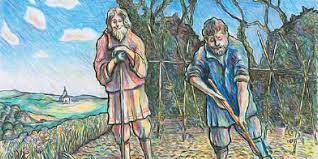
During ancient education, students live away from their parents, their education comprises of subjects like physical education, mental education, politics, economics, etc. They were shaped in a way that they can live in any condition considering how difficult the situation will be?
During the early period education was imparted by the teacher (Guru/Acharya) to the pupils who gathered around him and came to live in his house as members of his family. This was known as Gurukula system of eduation. The family of Guru functioned as a demostic school or an Ashram. During that period, the gurus and their shishyas (pupils) lived together helping each other in day-to-day life.
In ancient India, both formal and informal education existed. Indigenous education was imparted at home, in temples, patashalas, and gurukulas. Teaching was oral and students remembered and meditated upon what was taught in the Gurukulas. There were people in homes, villages and temples who guided young children in imbibing pious ways of life.
The medium of language during the Vedic system was Sanskrit. During those times the education was of Vedas, Brahmanas, Upnishads, and Dharmasutras. From the Rigveda onwards, our ancient education started with the objective of developing the students not only in the outer body but also on the inner body. The ancient education focused on imparting ethics like humility, truthfulness, discipline, self-reliance, and respecting all creations to the students. The education was mostly imparted in ashrams, gurukuls, temples, houses. Sometimes pujaris of the temples used to teach students. The education system of ancient India has some special features and uniqueness which was not found in any other ancient education system of the other countries. The education was mostly given in forests under the blue sky, which keeps the student’s mind fresh and alive.
The main objective of education was to equip the students with a good quality of education. The education mostly focused on the enrichment of culture, character, and personality, development, and cultivation of noble ideals. The objective was gaining the mental, physical, and intellectual personality of students, to make the students future-ready and survive in any situation.
In the Vedic system, a child started his education at the age of five. To mark this commencement, the Vidyarambhaceremony, which included worshiping GoddessSaraswati and learning alphabets for the first time, was conducted. Leaving home and starting to live with a teacher required the child to conduct another ceremony called Upanayana. Boys practiced this ceremony at different ages according to their castes (only children of the Brahmin, Kshatriya and Vaishya did so).
Education for women was quite important in ancient India. They were trained in housekeeping, as well as in dancing and music. Girls also had to conduct the Upanayana ceremony. Educated women were divided into two classes – Sadyodwahas, those who pursued their education just until they got married, and Brahmavadinis, those who never married and continued studying throughout their lives. Vedasand Vedangas were taught to women, too, but were limited to religious songs and poems necessary for rituals. Some notable Vedic and Upanishad women scholars were Apala, Indrani, Ghosha, Lopamudra, Gargi and Maitreyi.
Mastering one Veda took 12 years. Thus, depending on how many subjects the student wanted to learn, the study period varied accordingly. The education could go on for as long as 48 years.
In order to earn a livelihood, men needed to know an art form. As per the ancient Indian education system, there were about 64 art forms, including dance, music, jewel making, sculpture, agriculture, and medical sciences. To acquire vocational training in a particular art form, men were required to work as trainees under a master to gain expertise. They were taught without any cost, and food and boarding were also taken care of by the master.
Just as we have world renowned universities today, there were popular educational institutions here during the ancient times as well. Four of these institutions were quite prominent and known for different specializations. The University of Nalanda was famous for its Catholic and cosmopolitan character and its department of logic. Takshasila University, in an area what is now modern-day Pakistan, was well-known across the world for its medical school and was the chief learning centre in 6th century BC. What Nalanda University was to east India, Vallabhi was to west India. It was also a famous study center that specialized in subjects like law, medicine and economics, and had students attending from all parts of the country. Vikramshila was yet another esteemed institution, best known for Tantric Buddhism.
Jingoism is a term used to describe a political perspective that advocates the use of threats or military force in foreign relations, as opposed to finding a peaceful or diplomatic solution. Jingoism often contains strong elements of nationalism and moral superiority, and is often present in fiercely patriotic rhetoric. Modern day jingoism is often linked to chauvinism. In India jingoism as a concept has a long history, but it has taken a sudden rise in the recent years due to various factors, be it constant clash between Pakistan or china, whether it is the concept of ‘Hindutva’ or be it Kashmir. The feeling of jingoism is often attached with the notion of conquering and defeating other nations which leads to negative consequences. Every kid in an Indian household has at-least heard some stories about Pakistan or china being our enemy nation and how defeating them will be our victory. Nationalism is a feeling which is ascribed and built over with time, it is feeling that we learned and taught to have.
Jingoism in India has been a part of the history and is by far the concept of ‘Hindutva’ which is believed by some people. From discrimination in the choice of meat to forcing opinions into the larger mass, the whole situation has now taken an even uglier turn.
Terrorism is a byproduct of jingoism. “Get tough on terror” new mantra and getting tough means bringing tougher laws. India has already enacted many laws against terrorism. Now the question arises what makes the law tough or how ‘tougher’ laws might deter or prevent terrorism. The implementation of reforms within the police and intelligence agencies is guaranteed to improve security and strengthen the country’s capability to prevent terror strikes. Biggest problem is that this hysteria and hyper-nationalism are adding muscle to a narrative that is being built to gain political mileage ahead of national elections. As the world’s largest democracy, we need to be careful about our actions and words. The consistent fight to achieve the status of who the best is still continues even after ages. Some people still have these orthodox perceptions in their minds and still have jingoistic feelings for their religion to extreme levels. I fully agree that nationalistic ideals should be respected but this is not what jingoism stands for. Jingoism is a chauvinistic sentiment that needs to change.
The morning rays of Sunlight starts from you and my uncommon dark night ends with you!! You are my one and only constant with whom I spend time each and every day…
Thinking about you the whole day makes me stay awake… Dreaming about you keeps me asleep… But the time I spend with you makes me feel alive …
Yes… It is you who makes my happy day , happiest at the end. It is you who makes my sad day ,much better and make me get ready for the next day with a huge smile on my face.
There is never a best and a beautiful time in this world ,than the time I spend with you.” True lovers never hurt each other” , it is you who made me believe this because you never hurt me at any situation. I love you not only for what you have done to show you wonderful but for what you do to make me move on with a bright smile.
It is you with whom I share my happy nights by hugging you tightly… It is you with whom I share my sorrowful nights by letting my tears drop on you, you take then into you and never let it run, this shows your love towards me…
Yes … It is you my dear pillow…
” I’m sure I can’t love you more than I do at this moment,yet I know I will tomorrow”.
Some times I think who are you to me?
Are you my best friend? Because my dry eyes and your wetness tells the same story …
Are you my mom? Because when I rest on you ,I feel like I’m on my mother’s lap. I can feel the warmth of my mother only in you…
no matter who you are, to me, ” I need you ,like a heart needs a beat ” ,till the end…
Pituitary gland is one of the most important endocrine glands. It secretes a number of hormones which control a wide range of body functions. Pituitary gland is situated just below the mid brain behind the optical chiasma and lies in the cavity of sphenoid bones called Sella turcica. It is about 10mm in diameter and average weight is 0.5-0.6g in males and 0.6-0.7g in females.
It has two lobes. The anterior lobe called adenohypophysis and the posterior lobe is called neurohypophysis.
Hormones secreted by the anterior lobe or adenohypophysis are:
Somatotrophic hormone: It is also called as growth hormone. It stimulates the body growth by influencing protein synthesis. Mobilization of fat from the adipose tissue and the free acids in the blood is accelerated by this hormone.
It also increases the intestinal absorption of calcium as well as its excretion. As it stimulates the growth of long bones and also the soft tissues, maintains retention of other minerals such as potassium, phosphate, sodium, magnesium and chloride.
Deficiency of this hormone in childhood retards growth and leads to dwarfism and over secretion causes gigantism.
Thyroid stimulating hormone: It mainly controls the activity of the thyroid gland. These hormones speedup oxidative energy releasing process, thus controlling the rate of metabolic activities and growth.
It also influences the release of thyroxine from the thyroid gland.
Hypersecretion of TSH shows that person has hypothyroidism and thyroid gland is underactive. Less amount of TSH in blood shows thyroid gland is producing too much thyroid hormone, and the condition is called hyperthyroidism.
Adrenocorticotropic hormone: It regulates the normal functioning of adrenal cortex and release of glucocorticoids and mineralocorticoids. It helps in the increase of the total protein synthesis and also causes the synthesis of steroid hormone from cholesterol.
Increased secretion of this hormone results in Addison disease, Cushing syndrome etc.
Follicle stimulating hormone: In females this hormone stimulates the growth and maturation of graafian follicles and prepares them for ovulation and the action of Luteinizing hormone and enhances the release of estrogen. Hence, we can say that this hormone is very active during menstrual cycle.
In males, it stimulates growth of seminal tubule and testicular growth and early stages of spermatogenesis, the process of generation of sperms.
High FSH level shows low chances of getting pregnant. In males shows damaged testicles. It may also indication of Klinefelter syndrome.
Luteinizing hormone: This hormone continues the action of follicle stimulating hormone and helps in maturation of graafian follicle and ovulation. This also involves in the development of corpus luteum. This hormone also stimulates the secretion of estrogen and progesterone.
In males, this hormone stimulates the interstitial cells of the testes to secrete testosterone thereby maintains the spermatogenesis.
Increased LH secretion may cause irregularities in menstruation and troubles to get pregnant.
Prolactin or Lactogenic hormone: This hormone promotes the growth of mammary glands during pregnancy. This hormone also helps in milk secretion after delivery of the baby. Prolactin is secreted in high amount if a female is pregnant or a new mother.
Melanocyte stimulating hormone: It influences the melanin secretion and deposition on human skin by acting on melanocytes. Increased levels of the hormone mean increased melanin deposition.
Hormones secreted by posterior lobe or neurohypophysis are,
Oxytocin: This hormone controls the contraction of muscles of the uterus during labor. It also helps in stimulation of lactation after child-birth. This is also a chemical messenger to the brain and controls the reproductive system.
Vasopressin: this hormone has a major role in controlling the water balance of the body. This increases the reabsorption of water from the distal tubules of nephron. If there is failure in secretion of enough amount of this hormone, large amount of dilute urine which causes excess amount of thirst. This condition is called diabetes insipidus.
The above quotation has been very well depicted in the story Going Places by the author A.R Barton. Sophie, a teenager whose dreams and disappointments are all in her mind. Dreams are forte and integral part of her life due to which she thinks life to be bed of roses and is busy in concocting the stories, due to which she lands in thick soup one day. She is not ready to accept the reality of being embarked for biscuit factory.
Geoff, Sophie’s brother, was three years out of the school. His silence was his hallmark. Words have to be priced from his mouth alike stones or gravels from road. He is a realistic person, working as a mechanic and accepts what he is bestowed with.
Sophie and Geoff, both hero worship and idolize Danny Casey, an Irish prodigy and footballer, but Sophie takes the footballer in her dreams. She thinks of meeting him at arcade and dating him. On the other hand, Geoff is only restricted of sticking Danny Casey’s photograph on the wall and celebrate his victory with pomp and show.
Hence, Geoff and Sophie, though of the same family, had different approaches, where on one hand Sophie thinks of riding big cities, but Geoff is a realistic person.
Around 1 a.m. on Monday, the 3rd of December, 1984, In the city of Bhopal, Central India, a poisonous vapour burst from the tall stacks of the Union Carbide pesticide plant. This vapour was a highly toxic cloud of methyl isocyanate. 2,000 people died immediately, 300,000 were injured. 7,000 animals were injured, of which about one thousand were killed.
AFFECTED AREA
POSSIBLE CAUSES
A tank containing methyl isocyanate (MIC) leaked. MIC is an extremely reactive chemical and is used in production of the insecticide carbaryl. The scientific reason for the accident was that water entered the tank where about 40 cubic meters of MIC was stored. When water and MIC mixed, an exothermic chemical reaction started, producing a lot of heat. As a result, the safety valve of the tank burst because of the increase in pressure. It is presumed that between 20 and 30 tonnes of MIC were released during the hour that the leak took place. The gas leaked from a 30 m high chimney and this height was not enough to reduce the effects of the discharge.
The high moisture content (aerosol) in the discharge when evaporating, gave rise to a heavy gas which rapidly sank to the ground. A weak wind which frequently changed direction, which in turn helped the gas to cover more area in a shorter period of time (about one hour). The weak wind and the weak vertical turbulence caused a slow dilution of gas and thus allowed the poisonous gas to spread over considerable distances.
One of the main reasons for the tragedy was found to be a result of a combination of human factors and an incorrectly designed safety system. A portion of the safety equipment at the plant had been non-operational for four months and the rest failed.
LAPSES ON THE PART OF THE GOVERNMENT
The Madhya Pradesh State government had not mandated any safety standards. Union Carbide failed to implement its own safety rules. The Bhopal plant experienced six accidents between 1981 and 1984, at least three of which involved MIC or phosgene.
WHY DID THE PEOPLE STAY QUITE ??
The country needed pesticides to protect her agricultural production. MIC is used to produce pesticides that control insects which would in turn, help increase production of food as a part of India’s GREEN REVOLUTION. Initially, India imported the MIC from the United States. In an attempt to achieve industrial self-sufficiency, India invited Union Carbide to set up a plant in the state of Madhya Pradesh to produce methyl isocyanate. To the people of the city of Bhopal, Union Carbide was a highly respected , technically advanced Western company. This coupled with political power and scientific expertise worked together to changed the people’s perception of what was dangerous and more importantly what was safe.
Suggested Solution
Alpha Napthol on carbonyl group addition followed by reaction with methyl amine would eventually gives carbaryl. This process does not generate or require handling the of Phosgene. This process does not require storage of MIC. Inherently safe process.
Wormholes were first theorized in 1916, though that wasn’t what they were called at the time. While reviewing another physicist’s solution to the equations in Albert Einstein’s theory of general relativity, Austrian physicist Ludwig Flamm realized another solution was possible. He described a “white hole,” a theoretical time reversal of a black hole. Entrances to both black and white holes could be connected by a space-time conduit.
In 1935, Einstein and physicist Nathan Rosen used the theory of general relativity to elaborate on the idea, proposing the existence of “bridges” through space-time. These bridges connect two different points in space-time, theoretically creating a shortcut that could reduce travel time and distance. The shortcuts came to be called Einstein-Rosen bridges, or wormholes.
“The whole thing is very hypothetical at this point,” said Stephen Hsu, a professor of theoretical physics at the University of Oregon, told our sister site, LiveScience. “No one thinks we’re going to find a wormhole anytime soon.”
Wormholes contain two mouths, with a throat connecting the two. The mouths would most likely be spheroidal. The throat might be a straight stretch, but it could also wind around, taking a longer path than a more conventional route might require.
Einstein’s theory of general relativity mathematically predicts the existence of wormholes, but none have been discovered to date. A negative mass wormhole might be spotted by the way its gravity affects light that passes by.
Certain solutions of general relativity allow for the existence of wormholes where the mouth of each is a black hole. However, a naturally occurring black hole, formed by the collapse of a dying star, does not by itself create a wormhole.
Through the wormhole
Science fiction is filled with tales of traveling through wormholes. But the reality of such travel is more complicated, and not just because we’ve yet to spot one.
The first problem is size. Primordial wormholes are predicted to exist on microscopic levels, about 10–33 centimeters. However, as the universe expands, it is possible that some may have been stretched to larger sizes.
Another problem comes from stability. The predicted Einstein-Rosen wormholes would be useless for travel because they collapse quickly.
“You would need some very exotic type of matter in order to stabilize a wormhole,” said Hsu, “and it’s not clear whether such matter exists in the universe.”
But more recent research found that a wormhole containing “exotic” matter could stay open and unchanging for longer periods of time.
Exotic matter, which should not be confused with dark matter or antimatter, contains negative energy density and a large negative pressure. Such matter has only been seen in the behavior of certain vacuum states as part of quantum field theory.
If a wormhole contained sufficient exotic matter, whether naturally occurring or artificially added, it could theoretically be used as a method of sending information or travelers through space. Unfortunately, human journeys through the space tunnels may be challenging.
“The jury is not in, so we just don’t know,” physicist Kip Thorne, one of the world’s leading authorities on relativity, black holes and wormholes, told Space.com. “But there are very strong indications that wormholes that a human could travel through are forbidden by the laws of physics. That’s sad, that’s unfortunate, but that’s the direction in which things are pointing.”
Wormholes may not only connect two separate regions within the universe, they could also connect two different universes. Similarly, some scientists have conjectured that if one mouth of a wormhole is moved in a specific manner, it could allow for time travel.
“You can go into the future or into the past using traversable wormholes,” astrophysicist Eric Davis told LiveScience. But it won’t be easy: “It would take a Herculean effort to turn a wormhole into a time machine. It’s going to be tough enough to pull off a wormhole.”
“A wormhole is not really a means of going back in time, it’s a short cut, so that something that was far away is much closer,” NASA’s Eric Christian wrote.
Although adding exotic matter to a wormhole might stabilize it to the point that human passengers could travel safely through it, there is still the possibility that the addition of “regular” matter would be sufficient to destabilize the portal.
Today’s technology is insufficient to enlarge or stabilize wormholes, even if they could be found. However, scientists continue to explore the concept as a method of space travel with the hope that technology will eventually be able to utilize them.
“You would need some of super-super-advanced technology,” Hsu said. “Humans won’t be doing this any time in the near future.”
One of the recent controversies that has been part of 2020 was the recently passed farmers bill. Ever since the passing of the bill, many farmers have assembled in large number in Delhi to show their disagreement towards the passing of the bill. Farmers have been upfront with their protest showing solidarity together against the passing of the bill.
The following are the bills passed by the Government of India
The Farmers Trade and Commerce (Promotion and Facilitation) Bill 2020
This bill allows farmers to sell their produce to anyone another than the government. It gives farmers a choice on who sell their produce to, whether they want to sell to the government or third party. Earlier the government bought produce from the farmers under the Agricultural Product Market Committee (APMC).
The Farmers (Empowerment and Protection) Agreement on Price Assurance and Farm Services Bill 2020
This bill talks about setting up a framework for contract farming. In this a farmer and a buyer can make a contract even before the farmer makes the produce. The goods can be trades outside the premises of the APMC (Agricultural Produce Market Committee)
The Essential Commodities (Amendment) Bill 2020
This act allows inter-state and intra-state trade of farmers produce by eliminating the government in between. A third party can involve in the business.
These were the three new bills passed by the government. They stand as controversial because the farmers feel that it would eliminate the concept of MSP.
Concept of MSP
MSP stands for minimum support price. This price is offered by the government to the farmers on buying the produce. Government for ages have taken produce from the farmers under MSP and subsidised it and sold it to the people. This made it easy for both the people as well as the farmers. With the assurance of the MSP the farmers could rely on the government even in the times of a bad crop or drought situation. They were sure of the MSP but now this is not the case as seen by many farmers. With the introduction of the bill the farmers are scared that the government has withdrawn the MSP and instead bought in Contract farming.
Problems with the Bill as perceived by the Farmers
Farmers are afraid that they will be cheated with the coming of this bill. They feel that the government has withdrawn the MSP and put them in danger. Farmers have been gathering in Delhi ever since the passing of the bill. They have assembled in huge numbers trying to give it all they got and asking the government to take back the bill. The government has responded with saying that they have no intentions of withdrawing the MSP and all they hoped for were the welfare of the farming community and the people.
Like the two sides of a coin, this bills also have their flip side, the farmers believe that they can be easily tricked into any kind of traps with the contract farming by legal clauses. These powerful companies can easily manipulate and exploit the farmers as they wish. But the government says otherwise, they believe that with the coming of contract farming in India there will be a huge profit as well as private investments.
This act also allows the trade of produce to other states without MSP, this has caused problems too because this will enlarge the gap between the rich and the poor farmers. It will create a gap which cannot be closed and will only widen with the passage of time.
Protests across India
Farmers have been protesting about these bills ever since it was passed and the government has initiated talks with the farmers where they were assured of the fact that the MSP won’t be cut off.
This protest has turned into a massive one where farmers had even blocked roads to Delhi. They also observed a strike on December 8 as part of their dissent all across India. The idea of protesting without the usage of violence enshrines as a part of our Right to Freedom but there have been insights of violence too. As many as 31 organisations are said to be taking their stand against the bill, most of them are protesting against the first bill in fear of the removal of MSP. There have almost been 5 rounds of talks which had failed. Home Minister Amit Shah had called for a restructuring of the bill but the farmers have said no, they wanted to the full bill to be rolled back. Farmers have threatened to expand the protests by closing the Delhi –Jaipur Highway, capturing Reliance malls and capturing toll plazas.
There have been a series of misunderstandings that needs to be understood and changed for both the government and the farmers to put an end to this issue, only then the true essence of a democracy will prevail.
You must be logged in to post a comment.