Jack Finney through ‘The Third Level’ has highlighted the perspective of the people towards their stressful life. He, through the protagonist, Charley, has shown how Charley wanted to escape from his monotonous routine and find a peaceful place.
Charley, a common man, with anxiety, fear and stress wanted to find solace. In order to counter them, he used to collect stamps which made him stay connected with his past. His grandfather used to tell him about how peaceful the life used to be in Galesburg, Illinois. For escaping from his troublesome life he wanted to go to the Central Station’s Third Level which could help him to reach Galesburg, Illinois. His longing for comfortable and peaceful place, made Charley. hallucinate about the existence of the Third Level, a virtual place.
Thus, we can say that Third Level was indeed a medium of escape for Charley. It depicts the unfulfilled dream of his subconscious mind, which is full of anxiety and stress.
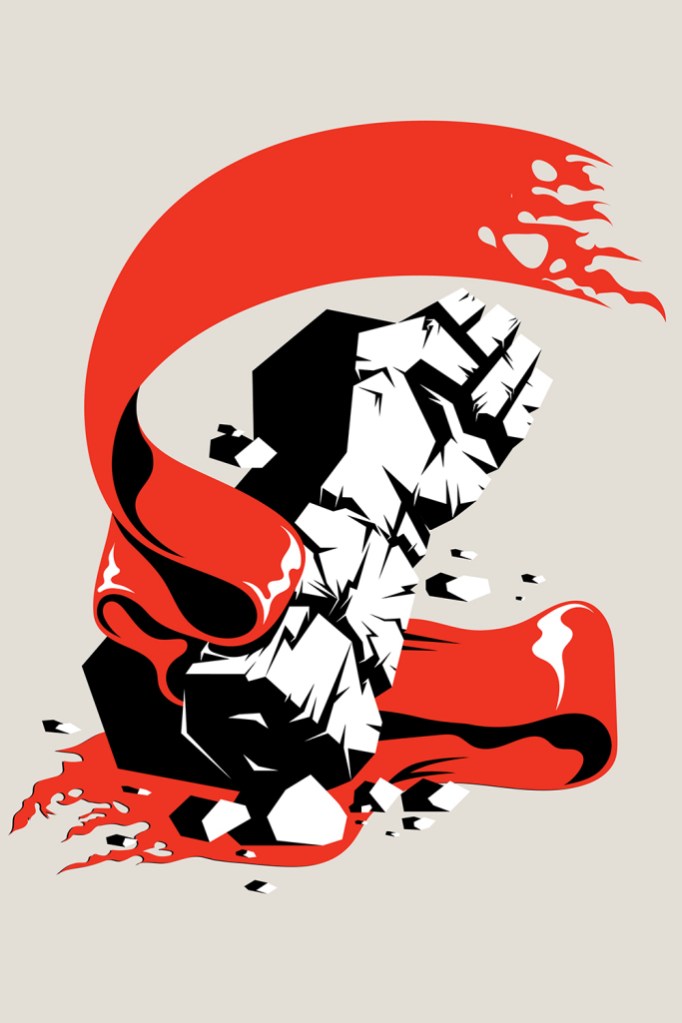
Socialism is both a political and an economic theory that was developed between 1750 1850 as a reaction and response to capitalism. It advocates for a system where the community as a whole owns and regulates the means of production, distribution and exchange.It aims to a build a new social order and remove the maladies of the capitalistic system. The chief proponents of socialism are Robert Owen, Sismondi, Saint-Simon and Charles Fourier.
Throughout history, there has always been a big gap between the rich and the poor due to monopolization of the means of production by a few people. The select few have constantly exploited the poor to amass wealth and to retain power. The poor barely meet the necessities of life and do not control any means of production. During the industrial stage, the gulf between the poor and the rich widened unlike before. Post the Industrial Revolution, the introduction of machines increased the divide and led to the concentration of the means of production in the hands of an even more select few. They took advantage of their position and churned out illegitimate profits. This exploitation was the reason the idea of socialism was developed.
Definitions:
Some definitions of socialism are:
Humphrey:
“ Socialism is a system of society in which means of life belong to the community as a whole, and are developed and operated by the community.”
Here, means of life refers to things like land, capital, implements and other such things which help humans to earn a living.
Hugham:
“Socialism is the political movement of class which aims to abolish exploitation by means of the collective ownership and democratic management of basic instruments of production and distribution.”
Socialism developed as a response to capitalism and its primary aim was to create a new social order that eliminates the drawbacks of capitalist system. According to the proponents of socialism, capitalism fosters competition among citizens, as a result making them egoistic and immoral. It also leads to needless expenditure. It encourages a certain few to monopolise means of production and allows them to exploit other people. So the proponents propose a certain way to eliminate the miseries caused by capitalism. They propose that the factors of production be controlled by the community as a whole and not allow individuals to control the means of production. This idea formed the crux of socialism.
There are certain general principles to this theory. According to C. E. M Joad, socialism is “like a hat which has lost its shape, because everybody wears it.” Socialism as an idea has gone through many changes and one exact definition cannot be agreed upon. Nevertheless, some general principles can be seen as its distinguishing features. Socialism opposes capitalism because it believes it to be the cause of exploitation of resources. It aims to protect the common population from the select few. It advocates for social ownership of material resources and that the community should own all the factors of production like land, other property industries, etc. The motive behind production should be social necessity and not profit making for the benefit of one. Its action should at the end benefit the society. Some proponents of socialism have advocated for absolute economic equality where everyone is given the same rewards and other proponents have advocated for proportionate economic equality where people are given rewards to fulfil their basic needs. It is completely opposed to laissez-faire economy and favours the establishment of a planned economy. It is for the abolition of the institution of private property to bring about social equality. It believes in the widening of democracy, and is of the view that socialism and not capitalism can help further this end.
Socialism has been subjected to criticism for certain of its aspects. The most important criticism of all about socialism is that it crushes the very spirit of the individual. Socialism establishes an order where there is no scope of incentive for people to work, as everyone is distributed the same or similar rewards and there is no scope for any additional incentive as a result of the individual’s hard work. Another major criticism of socialism is its impracticality. It cannot be implemented in a real world scenario as it does not provide people any incentive to work. Perfect socialism has not existed anywhere and even the countries that proclaim themselves as socialist are not completely socialist. In this theory, the State overburdened with too many functions like distribution of resources, controlling of production, distribution of rewards, etc. This will lead to inefficiency. One other major criticism is that the State interferes with everything. Socialism kills individual freedom.
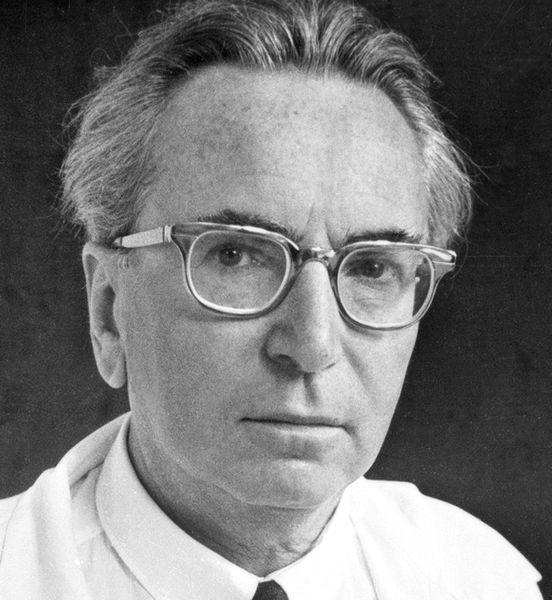
Man’s Search for Meaning by Viktor E. Frankl, originally written in German and translated to other languages, is a part memoir of the author’s experiences in concentration camps part non-fiction on psychology. It was first published in 1946 in its original language and English version was published in 1959. The book is divided into two parts – Experiences in a Concentration Camp and Logotherapy in a Nutshell – the first talks about his experiences in camps and explains the basis of his findings, and second part is completely about logotherapy(“meaning”). Viktor E. Frankl, an Austrian psychiatrist, was born on the 26th of March, 1905 in Vienna, Austria. He was a psychiatrist and psychotherapist and also a philosopher and Holocaust survivor. He developed “Logotherapy” – a psychological approach. His developments and findings are categorised as the third school of Viennese psychotherapy. The works of Sigmund Freud and Alfred Adler belong to first and second school of Viennese psychotherapy. His primary focusses in university, where he was a student of psychiatry and neurology, were the areas of sucide and depression. He received his MD and PhD from the University of Vienna. He based his works on his experiences in concentration camps. He breathed his last on 2nd September, 1997 in Vienna.
This work is based on Frankl’s own experiences and observations of other inmates in four different concentration camps(between 1942 and 1945). He lost his parents, brother and his pregnant wife in concentration camps.The book is written in a lucid manner and explains the concepts clearly. Based on his experiences and observations in the camp, Frankl argues that man by nature is not a pleasure seeking animal and his primary is motivation is to search for meaning in his circumstances. He states that only when man falls into a gulf devoid of meaning he resorts to seeking pleasure in immediate pleasure providing activities and needs.His concept logotherapy focusses on helping an individual find meaning in his circumstances. He quotes his experiences to show that man can find strength even in seemingly hopeless situations. His concept logotherapy focusses on helping an individual find meaning in his circumstances. Finding that meaning can help an individual bear suffering and find hope.
“Those who have a ‘why’ to live, can bear with almost any ‘how’.”
His work on logotherapy and his existential analysis is mostly based on finding meaning and free will. In this work, he also explains certain techniques to deal with life. He uses the concept ‘paradoxical intention’ – practising contrary and humorous thoughts – to deal with anxieties and other problems. He also introduces the concept of dereflection – diverting the concentration of a person from his symptoms to other things – as a technique of logotherapy. Another of his techniques is about questioning the patient in a way to help him find meaning.
“But there was no need to be ashamed of tears, for tears bore witness that a man had the greatest of courage, the courage to suffer.”
“Everything can be taken from a man but one thing: the last of the human freedoms—to choose one’s attitude in any given set of circumstances, to choose one’s own way.”
Throughout his book, the author emphasises on the human capability to deal with even the most challenging circumstances. He states that man can find courage and strength no matter what the circumstance. His views, in certain aspects, echoes the teachings of religions.
“Ultimately, man should not ask what the meaning of his life is, but rather must recognize that it is he who is asked. In a word, each man is questioned by life; and he can only answer to life by answering for his own life; to life he can only respond by being responsible.”
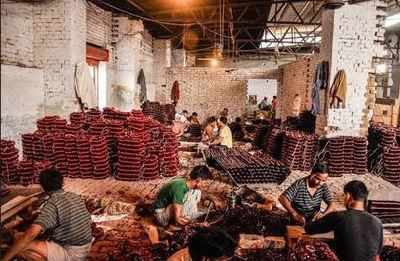
Labor force are the pillars of the economy. Every economy whether developed or under developed makes use of Labor intensive techniques of production. Therefore, it is pertinent to secure rights amended for labors by providing them due respect which they deserve rather than desolation or pain. It is rather shocking to see the plight of labors in India today, who have a lot of burden and despite of this they doesn’t get adequate salary or respect, which can be clearly seen from the people living in Firozabad, India’s glass blowing industry.
Years of mind numbing toil has killed their initiative to work, for they have to work in dingy cells, in extreme conditions, making them close their eyesight.
Labor force are not able to raise their voice, due to the middle men, sahukars and inspectors, due to which there is a vicious cycle of poverty, apathy, pain and suffering which make them desolated from the joys and tribulations of life. They have lead sky and no hopes for their future.
The need of the hour is to urge the development of these laborers by giving them food, shelter, income which can only curb the poverty prevailing in India.
On July 2nd 2021, the Russian ransomware-as-a-service group known as REvil launched an attack on the American software company Kaseya. The hackers targeted the Virtual Server Administrator (VSA) to distribute ransomware as the VSA is used to send out software updates to every computer on that server. 50 of Kaseya’s clients were affected and since they also sold IT services, more customers were prone to attack. This is known as a supply chain attack. It is reported that about 1500 businesses were hit. REvil is demanding $50 million to unlock their files.
The US government has been trying to put an end to cyber crimes like this for quite some time. It does not look like it has been disruptive but it still is being called the largest ransomware attack in history. The ransomware is so sophisticated that it avoids the systems that has the languages that came from the former USSR regions (Russian, Armenian, Romanian, Ukrainian etc.). It is known that criminal cyber groups are allowed to operate freely in Russia as long as they target The United States and other Western countries.
Joe Biden and his administration is actively trying to rally enough global support and pressure the Russian government to find and arrest cyber criminals like REvil. A month ago, at the Geneva summit with Vladimir Putin, Biden had talked to Putin about ransomware becoming a serious threat and that he will take action if Russia doesn’t stop allowing cyber criminals to operate without any consequences. White House officials are expected to deliberate over this problem and come up with a course of action. Biden will most likely tell Russia to live up to its obligations and prevent Russian land to be used for criminal acts like these. The least that they can do is hand over these criminals so they can stand trial for their actions. Russia has even signed an international agreement where it states that they will not allow criminal activity in their territory. The individuals behind this attack must be arrested and the files must be returned to all the businesses immediately.
Biden even said that if Russia continues to not bat an eye, the US would be forced to respond with an attack of their own. He added that the last thing Putin would want on his hands now is a new Cold War. This is not the first time an attack like this has occured. A Russian cyber group had previously attacked hospitals and food-processing plants. This is why the US has had enough and want swift justice.
There have been innumerous fantasy web series being launched since the 21st century dawned mainly because of the advancement of technology. With each year visual effects improved. Following are some of the most popular web series arranged according to the IMBD rating and are mainly released after 2010.
10. Chilling Adventures Of Sabrina (7.5)
Released in 2018 with 2 seasons and 36 episodes, it is a fantasy, horror, drama Netflix series. It is produced by Warner Bros Television. The leading role is played by a character named Sabrina Spellman Sabrina who is a half-human and half-witch who struggles to keep the balance between both sides.
9. The Vampire Diaries (7.7)
It was released in 2009 with 8 seasons and the 171st episode ended in 2017. With the genre of drama, supernatural, fantasy, horror it further has 2 more series interlined to some extent namely The Originals (8.2) and Legacies(7.4). It mainly consists of vampires werewolves and witches.
8. The Umbrella Academy (8)
With a perfect blend of action-adventure comedy and fantasy, it was released in 2019 has 2 seasons and 20 episodes. One peculiar 43 women gave birth at the same time and each child had a unique ability. Sir Reginald Hargreeves adopted 7 of them and formed a superhero squad named ‘The Umbrella Academy
7. Wanda Vision (8.1)
It is a recent web series launched in 2021 starred by 2 Marvel characters Wanda Maximoff and Vision. With the genre of action fantasy drama-comedy, the first few episodes are more towards comedy and with each episode, the series has more action.
6. Lucifer (8.1)
Released in 2016 with currently 5 seasons and 83 episodes, the story revolves around Lucifer Morningstar, lord of the hell who was cast out of heaven. With fantasy comedy, drama as its genre the series is set for another season.
5. The Witcher (8.2)
It is action, drama, fantasy series released in 2019 with 1 season and 8 episodes. It revolves around Geralt of Rivia, a monster hunter, who struggles to find his place in a world where humans are more wicked than beasts.
4.Supernaturals(8.4)
Released in 2005 with 15 seasons and 327 episodes the story is based on 2 brothers who hunt supernatural creatures. It is an action-adventure, drama, fantasy, horror series which finished in 2020.
3.Stranger Things (8.7)
The series premiered on Netflix on July 15, 2016, with 3 seasons and 25 episodes. It is a science fiction, horror, and drama web series. The story starts with the disappearance of a boy and the appearance of a strange girl Eleven with supernatural powers
2. Loki (8.9)
Recently premiered based on a Marvel character Loki, it has 1 season and 5 episodes so far. It is an action-adventure fantasy drama series. There are supposed to be a total of 6 episodes in the first season and the second season is in development.
1. Game of Thrones (9.3)
Released in 2011 with 8 seasons and 73 episodes, it is based on 9 families who try to control the land of Westeros. With fantasy, tragedy, drama as its genre, it is one of the most popular series up to date
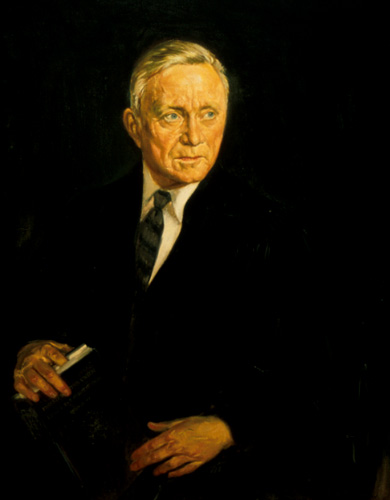
The words are well explained by William Douglas, who in his first narration tells his real life experience of over coming his childhood fear of water. From childhood, William Douglas had deep sighted fear of water and his fear got deeper when he was on the verge of dying by drowning at deep sight of YMCA pool. The incident left an etched mark on the mind of Douglas, due to which he was devoid of any watersports activity. Thereafter, he determined tp learn swimming and hire an instructor, who, build and integrated each piece to make Douglas, a swimmer as a whole.
There is no substitution for hard work. Success comes to those who try alike William Douglas, who tried despite of haunting fear of water. Many students face immense pressure, due to high competition and race, with pace. Besides learning swimming, William Douglas cleared his residual doubts. Every student should follow example of Douglas. Grit and determination always lead a student to the pinnacle of success.
Fear the fear itself should be the strategy of each student. A strong person only faces challenges, weak avoid them.
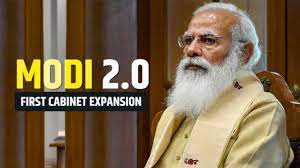
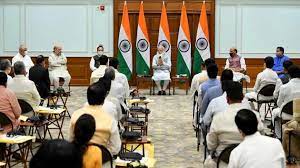
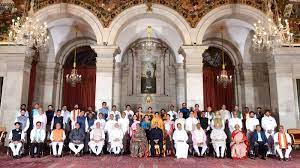
The Union Cabinet led by Prime Minister Narendra Modi yesterday expanded its council of ministers, the first such exercise in the third year of his second term. While the cabinet reshuffle was on the cards for a long time, the move comes at a time when the Modi government faces criticism over the alleged mishandling of the COVID-19 pandemic. The list of ministers also indicates that due attention has been given to upcoming assembly elections and the 2024 Lok Sabha elections. Day before yesterday, two major political developments took place which indicated that the BJP has started preparing for the polls besides appeasing its allies. In the first development, Thawar Chand Gehlot was appointed Governor of Karnataka to make more space for new ministers. Later in the day, a new ministry was created – the Ministry of Cooperation.
The focus has been on Uttar Pradesh, Madhya Pradesh, Odisha and West Bengal. Uttar Pradesh is the most crucial state for the BJP given the number of Lok Sabha seats. The inclusion of the allies like JD(U), Apna Dal etc. indicates that the Modi government is not willing to let go more of its allies since two of its major partners – Shiv Sena and Shiromani Akali Dal had already deserted the NDA over different issues. The move will boost the confidence of its allies and the same will prove beneficial for the saffron party in the coming polls.
Below is the full list of new ministers in Modi Cabinet:
Cabinet Ministers
Narayan Rane
Sarbananda Sonowal : Ports and Shipping, AYUSH Ministry.
Dr Virendra Kumar
Jyotiraditya Scindia : Civil Aviation.
Ramchandra Prasad Singh : Steel Ministry.
Ashwini Vaishnav : Railways, Communication & Electronics and Information Technology.
Pashu Pati Kumar Paras: Minister of Food Processing Industries.
Kiren Rijiju : Law and Justice Ministry.
Dharmendra Pradhan : Education Ministry.
Raj Kumar Singh : Power and Ministry of New and Renewable Energy.
Hardeep Singh Puri : Petroleum, Housing and Urban Development.
Mansukh Mandaviya : Chemicals and Fertilizers, Health Ministry.
Bhupender Yadav
Parshottam Rupala
G Kishen Reddy
Anurag Thakur : Information & Broadcasting and Sports.
India, being a growing nation is drastically effected by the pandemic. Not a single area is left untouched by its effect.
Starting from the most affected area which is the tourism sector. With the government imposing complete lockdown in the initial days of pandemic tourism industry almost collapsed. Small business owner were helpless. For all of us this was the first time experience of such a situation we only have read in the history textbooks about the world wars but hardly anyone knows how to face them we were such naïve. Talking about the tourism sector, everyone was very terrified of the pandemic so majority people just shut themselves into their cozy houses till everything was over but not every one have that big a house or the resources to stay home they were the daily wage workers who gets money only when they travel. So they were helpless many people have changed their professions they moved to their respective home town to work in the farms seeing no scope of employment the city.
Other area that was affected was the educational as their was a severe change in the method of teaching from traditional classroom teaching to completely online. It has effected the students mental health very badly.
The entrainment industry is also effected by the pandemic with the crew members starving to earn money as the industry was completely shut down.
Hope,we will learn from this and will save our planet from any such happening in near future.
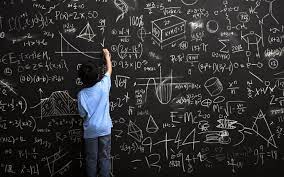
Today is math 2.0 day, but what exactly does that even mean?.With or without knowing we all use math several times every single day. The subject is also important for the advancement of technology. And thus, to celebrate the combination of maths and technology, Math 2.0 Day is celebrated on July 8. Read on to know other details.
Imagine the way the world used to be viewed! Math as known to be important but not thought to be something you could make a living at and the rising tide of technology was considered a fad! Math 2.0 Day reminds us that technology is here to stay!
Every year, Math 2.0 Day is celebrated on July 8. The day is observed to highlight the importance of the combination of maths and technology. The day was formed to celebrate the achievement made through the combination of maths and technology. Math 2.0 Day also helps to educate the masses about the benefits of maths and technology. Without maths and technology, it would have been impossible for us to achieve the various entertainment mediums we have now.
History of Math 2.0 Day
In 2009, the Math Interest Group formed Math 2.0 Day. Math is extremely important for the advancement of science, technology and education.Math 2.0 Day is a celebration of the blending of technology and mathematics. For a lot of us, math wasn’t a favorite subject, we’d spend the entire period staring at the equations and wondering what sort of livid madman designed these torture chambers on paper. Ultimately, however, we realized that math is utterly indispensable in our modern world. If you’ve ever wondered who uses math in their day to day careers, you aren’t alone and we have some answers for you.
Programmers deal with mathematics every day, as it’s the framework upon which all computer operations are formed. Everything from the order of operations to quadratic equations is necessary to make even the simplest program. Scientists are one of the biggest users of mathematics, whether they’re calculating the statistical variance of their data or figuring out how much to add to their chemistry experiment, it’s involved at every step.
One presumes you live in a house, drive a car, or operate a computer? The engineers responsible for designing those things so that they work, and especially in the case of the house, use math to ensure it doesn’t come crumbling down on your head. Math 2.0 day celebrates all these mathematical heroes and more.
How to celebrate Math 2.0 Day
If you’re like me, you probably have your old math books from college laying around. I suggest busting them open and studying them again. Who knows, in the intervening years you may have secretly developed a love for those dancing numbers. If not, make sure that you stop by those people who use math every day and thank them for doing the work so you don’ thave to.Mathematics is one of the most important fields in the world today, and just about everything we know and love is built on its back.
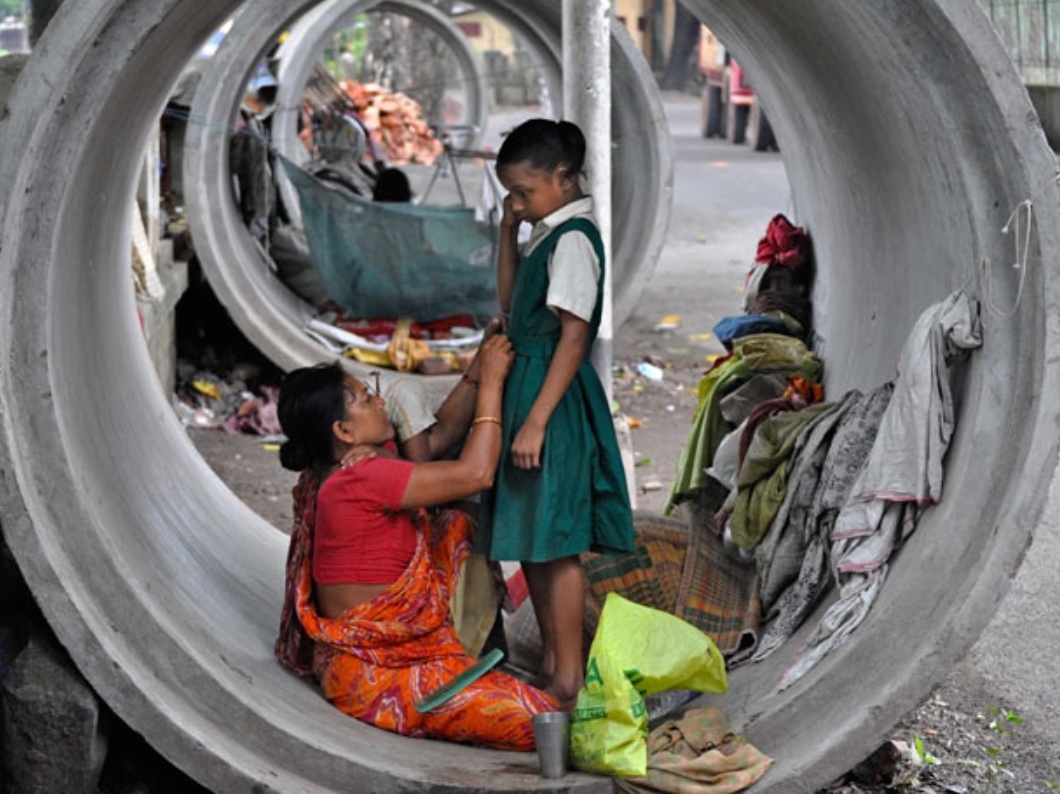
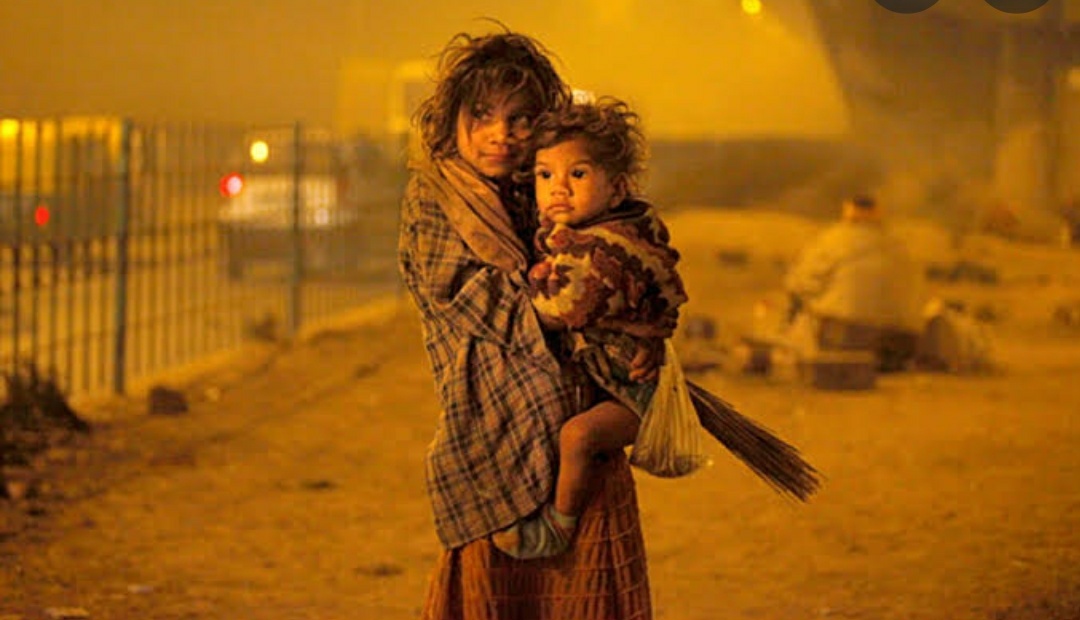
Can you sleep without a bed, pillow and a blanket? or Can you cook and eat on the streets while passersby stare at you? It’ll be so uncomfortable for you and for everyone of us. Just take a break and imagine the lives of people who live on streets. The amount of struggle they go through for the tiniest thing is nothing compared to our lives.
Sleeping on the benches of bustops or under a truck just to save themselves from cold breezes during winter ,to tie tarpaulin sheets in order to avoid getting wet during monsoons and to sleep without electricity during summers.
They earn little money by doing various jobs such as selling small items home to home. As their income is not fixed, the availability of food is not fixed too. Sometimes they might have to spend the night without having food. Due to income insecurity it is very difficult for them to save money.
Healthcare is very difficult for them to obtain due to irregular income and as they are living and eating on the streets, it is more likely for them to catch germs and fall sick frequently. Hygiene is the least thing that matters to them due to non availability of proper food, water, clothes, etc.
Life becomes hard for them each day and have to face new challenges everyday. It’ll be great job if you can offer them a little help by donating some clothes or giving them healthy food and water. Help them in every way you can because every tiny good deed matters.
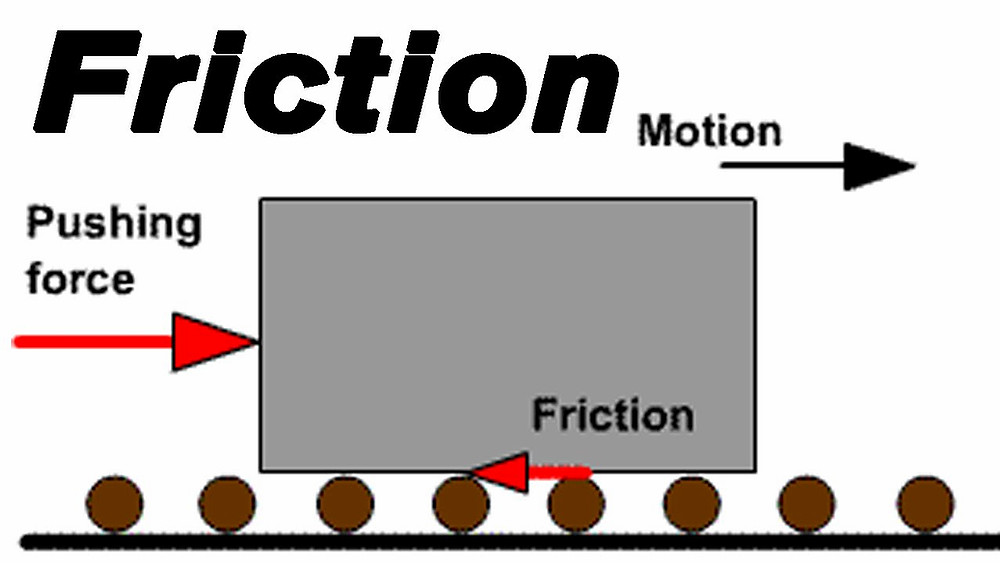
We walk on the roads without falling. But, we tend to fall when we walk on wet surfaces. Why? We walk on the roads safely because of the friction between the feet and the road. But, the friction is less when we walk on wet surface and so we tend to fall.
Frictional force on friction arises when two or more bodies in contact move or tend to move, relative to each other. It acts always in the opposite direction of the moving body. This force is produced due to the geometrical dissimilarities of the surface of the bodies, which are in relative motion. Friction can produce the following effects.
Friction opposes motion. It causes wear and tear of the surfaces in contact. It produces heat.
TYPES OF FRICTION Friction can be classified into two basic types: Static friction and Kinetic friction
STATIC FRICTION The friction experienced by the motion of bodies, which are at rest is called static friction.
Example: All the objects are rigidly placed to be at rest on the earth.
KINETIC FRICTION Friction existing during the motion of bodies is called kinetic friction.
Kinetic friction can be further classified into sliding friction and rolling friction.
When a body slides over the surface of another body, the friction acting between the surfaces in contact is called sliding friction. When a body rolls over another surface, the friction acting between the surfaces in contact is called rolling friction. Rolling friction is less than sliding friction. That is why wheels are provided in vehicles, trolleys, suitcases etc.
FACTORS AFFECTING FRICTION
Some of the factors which affect friction are given below.
NATURE OF A SURFACE Moving an object on a rough surface will be difficult, but we can easily move it on a smooth surface. It is because, friction varies between the surfaces.
WEIGHT OF THE BODY It is easy to pedal your cycle without any load on its carrier. With a load placed on its carrier, it is difficult to move it because the weight on the carrier increases the friction between the surface of the tyre and the road.
AREA OF CONTACT For a given weight, the friction is directly related to the area of contact between the two surfaces. If the area of contact is greater, then, the friction will be greater too. A road roller has a broad base, so it offers more friction on the road. But, a cycle has the least friction, since the area of contact of the tyre with the surface of the road is less.
ADVANTAGES OF FRICTION Friction is necessary for our day to day activities. It is desirable in most of the situations of our daily life.
We can hold objects in our hand due to friction. We can walk on the road because of friction. The friction between footwear and the ground help us to walk without slipping. Writing on the paper with a pen is easy due to friction. Automobiles can move safely due to friction between the tyres and the road. Brakes can be applied due to frictional resistance on brake shoes. We are able to light a matchstick, sew clothes, tie a knot or fix a nail on the wall because of friction. Through friction makes our life easy, it has some negative effects also. So, it is called as ‘necessary evil’.
DISADVANTAGES OF FRICTION Friction wears out the surfaces rubbing with each other, like screws and gears in machines or soles of shoes. An excess amount of effort has to be given to overcome the friction while operating a machine. This leads to wastage of energy. Friction produces heat, which causes physical damage to the machines.
INCREASING AND DECREASING FRICITION
AREA OF CONTACT Friction can be increased by increasing the area of the surfaces in contact. For example, brake shoes in a cycle have to be adjusted so that they are as close as possible to the rim of the wheel, in order to increase the friction.
USING LUBRICANTS A substance which reduces the frictional force is called a lubricant. Example, Grease, coconut oil, graphite, castor oil, etc. the lubricants fill up the gaps in the irregular surfaces between the bodies in contact. This provides a smooth layer thus preventing a direct contact between their rough surfaces.
USING BALL BEARING Since rolling friction is smaller than sliding friction, sliding is replaced by rolling with the usage of ball bearing. For the same reason, lead shots are used in the bearing of a cycle hub.
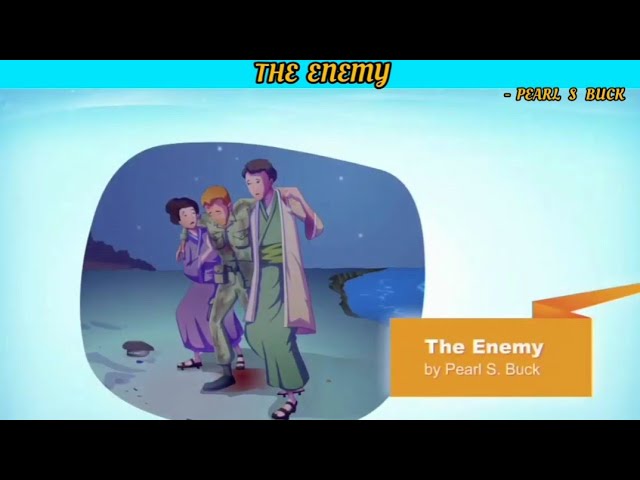
The title can be well explained by the famous fiction ‘The Enemy’by Pearl Sydenstricker Buck.
The protagonist, Sadao perfectly balanced patriotism and professionalism. Being a true Jap, he harbored an enemy, the American POW, Tom despite of thinking of the blot of traitor on his identity as a respectable citizen. Sadao. faced a mental and physical toil during the period in which he harbored American POW. He was taken aback, when he failed to receive any support from his servants, who have been with him since his childhood, for they were having old notion and superstition, as well as the fear of the catastrophic results of the presence of the POW within the house. They thought that the gun and sea, who tried to kill the enemy, would definitely take the revenge from them.
Among all this turmoil, Hana was the only person, who abreacted Sadao in his thick and thins, for she washed the American POW after Yumi’s refusal, fed him, nursed him and took care of his petty things and demands. Moreover, Hana, decided to stand with Sadao in any catastrophic situation, which provided a strong mental and emotional support to him.
General, was the another man, who desisted his duties and failed to send his assassins. He due to his illness, failed to depict the patriotism towards the country, and Sadao felt him in palm of his hands.
Despite, of all this turmoil, Sadao was a strong man and a true Jap, who overcame all hurdles in having his duties fairly with honesty and dare.
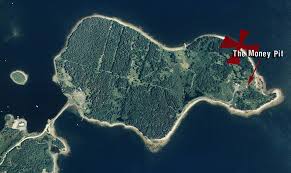
Oak Island located on the south shore of Nova Scotia, Canada has been an attraction for treasure Hunters since the late 1700s. It was rumoured that Captain Kidds treasure has been buried in the Oak Island.With a little evidence found in the early excavation peoples started to publish stories and documents in 1856. The original Searchers spot on the island which attracts the Treasure Hunters called ‘The Money pit’
Money pit
Theories about the artefact that are present on the island range from pirate treasure to Shakespearean manuscripts, to possibly the Holy Grail or the Ark of the Covenant, with the Grail and the Ark.The items found on the surface have been carbon dated and found to be hundreds of years old. However, no item such as treasure has been found in the excavation. ‘The curse’ said that 7 men will die in the search of the treasure and after their death the treasure will be found.Six men have died till now.
More than 50 books have been written on the hidden treasure but no confirmed treasure has been found still. A television series ‘Curse of the Oak Island ‘ is based on the treasure search .Humans are still in search of the treasure of the oak island.
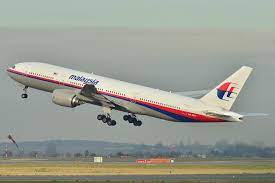
Disappearance of the Malaysian Flight 370
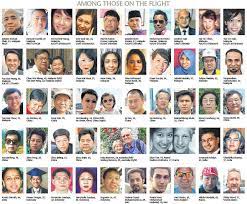
While flying from Malaysia to China on 8th March 2014 the Malaysian flight 370 carrying 239 passengers and crew members got lost into thin air. A multinational search was carried out which was the largest search in the history of aviation.A lot of conspiracy theories were developed .Nothing of the ship was found except some pieces of aircraft debris.
the passengers of the flight
The prime minister of Malaysia said nothing other than the disappearance of the flight over the Indian ocean.Theories includes hijacking,capture by the united nations or the crew suicide ,fire aboard the aircraft, alien abduction, meteor strike or entry into the sea.Almost after 6 years now and expenditures of millions of dollars in search of the flight, the disappearance of the flight and the 239 passengers still remains a mystery unsolved.
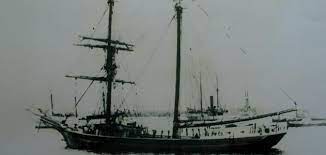
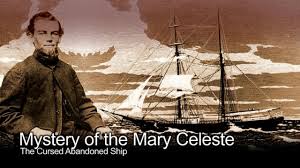
Mary Celeste ship
On 4th December 1872 the ship Mary Celeste was found deserted in the Atlantic ocean with no human onboard and a lifeboat missing. The ship had left New York on 7th November 1872 and when found was in proper sail worthy condition with everything intact.The belonging of the crew members was also undisturbed. None of the people who were on board were ever seen or heard again. The ship was captained by Benjamin briggs who went on board with his wife and a 2 year old daughter. Brigges chose his crew with great care. The last log written on the ship was 10 day before the ship was found by a Canadian brigantine Dei Gratia .
mary celeste
Mary Celeste was built in Spencer’s Island and launched under British administration as Amazon in 1861. She was transferred to American ownership and registration in 1868, when she acquired her new name. Thereafter she sailed eventually, until her 1872 voyage. At the hearings in Gibraltar following her recovery, the court’s officers considered various possibilities of foul play, including fraud by Mary Celeste’s crew, piracy by the Dei Gratia crew or others, and conspiracy to carry out insurance or fraud. However ,no convincing evidence supporting these theories were found.
Hypotheses include the effects on the crew of alcohol fumes rising from the cargo,submarineearthquake,watersports, attack by a giant squid or sea monsters, and paranormal intervention. A lot of false story about the ship were rumoured and films, plays and novels were written about the ship .After the hearing the ship was taken back to work under her new owner until 1885 when it was taken off coast.The mystery about the missing crew members and the ship being deserted is still unexplained.
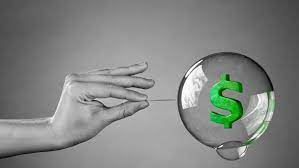
A bubble is an economic cycle that is characterized by the rapid escalation of market value, particularly in the price of assets. This fast inflation is followed by a quick decrease in value, or a contraction, that is sometimes referred to as a “crash” or a “bubble burst. Typically, a bubble is created by a surge in asset prices that is driven by exuberant market behavior. During a bubble, assets typically trade at a price, or within a price range, that greatly exceeds the asset’s intrinsic value (the price does not align with the fundamentals of the asset).The cause of bubbles is disputed by economists; some economists even disagree that bubbles occur at all (on the basis that asset prices frequently deviate from their intrinsic value). However, bubbles are usually only identified and studied in retrospect, after a massive drop in prices occurs.
How a Bubble Works
An economic bubble occurs any time that the price of a good rises far above the item’s real value. Bubbles are typically attributed to a change in investor behavior, although what causes this change in behavior is debated. Bubbles in equities markets and economies cause resources to be transferred to areas of rapid growth. At the end of a bubble, resources are moved again, causing prices to deflate.
The Japanese economy experienced a bubble in the 1980s after the country’s banks were partially deregulated. This caused a huge surge in the prices of real estate and stock prices. The dot-com boom, also called the dot-com bubble, was a stock market bubble in the late 1990s. It was characterized by excessive speculation in Internet-related companies. During the dot-com boom, people bought technology stocks at high prices—believing they could sell them at a higher price—until confidence was lost and a large market correction occurred.
The research of American economist Hyman P. Minsky helps to explain the development of financial instability and provides one explanation of the characteristics of financial crises. Through his research, Minsky identified five stages in a typical credit cycle. While his theories went largely under-the-radar for many decades, the subprime mortgage crisis of 2008 renewed interest in his formulations, which also help to explain some of the patterns of a bubble.
Displacement
This stage takes place when investors start to notice a new paradigm, like a new product or technology, or historically low interest rates. This can be basically anything that gets their attention.
Boom
Prices start to rise. Then, they get even more momentum as more investors enter the market. This sets up the stage for the boom. There is an overall sense of failing to jump in, causing even more people to start buying assets.
Euphoria
When euphoria hits and asset prices skyrocket, it could be said that caution on the part of investors is mostly thrown out the window.
Profit-Taking
Figuring out when the bubble will burst isn’t easy; once a bubble has burst, it will not inflate again. But anyone who can identify the early warning signs will make money by selling off positions.
Panic
Asset prices change course and drop (sometimes as rapidly as they rose). Investors want to liquidate them at any price. Asset prices decline as supply outshines demand.









 Eduindex
You must be logged in to post a comment.