TOP 9 Small Business & Start-Up Ideas for 2020 (ONLINE FROM HOME)

Today, we’re going to talk about TOP business ideas for 2020. They are not going to be those obvious ideas that you can think of yourself like starting a restaurant or a car wash; we are going to talk about ideas based on recent trends, recent growing markets.

How To Start A Business

A very important rule! If you decide to start your own business, your motivation shouldn’t be because someone said: “It’s going to be a great business!”. Your perfect business idea should consist of the following things: it should be something you like doing and it should be something you are really good at.

1. Coworking Space

Remote workers are spurring on a new revolution for white-collar professionals, as many roles traditionally set in the office space transition to working via the web. Since loneliness is an all-too-common affliction for remote workers and working from a coffee shop isn’t always the quietest choice, the appeal of shared coworking spaces grows each year.

2. Posture Corrector

Nowadays, people constantly hunch over their phones and laptops, it’s no surprise that there’s been a rise in back and neck pain. The keyword “posture corrector” gets about 74,000 monthly searches proving to be a great startup idea for new entrepreneurs.

3. Fitness Tech

Apps related to diet and fitness account for 3.31% of all app on the Apple Store. People are constantly on the move. Making it possible for consumers to fit daily workouts conveniently into their crazy schedules closes another barrier to a healthy lifestyle.

4. Men’s Cosmetics

Men’s cosmetics industry is worth approximately $3.4 billion. One of the most popular niche products targeting men is beard oil, a part of the male grooming industry that makes approximately $6 billion in annual sales. Approximately 39% of American men have beards.

5. Food truck

Food trucks represent all the benefits of a restaurant but without the initial investment of a brick and mortar business space. Only 10-20% of food trucks fail, whereas the failure rate for new restaurants can be as high as 90%.

6. Healthy Fast Food

Think about why people flock to their favorite fast-food chains. The price, speed, and convenience offer consumers a quick way to eat on the go and on a budget. With high demand and low competition, healthy fast food makes a great business idea for 2020.

7. Reusable Bags

As people become more conscious of the waste they produce in their homes, some are starting to use reusable bags to lower the amount of plastic waste. Business ideas centered around preserving the environment can help you build a socially conscious brand.

8. Smart Apparel

With smart apparel’s surging growth rates, this niched industry is looking to net over $4 billion by 2024. This subsector is still so new, making it fresh for innovative ideas from budding entrepreneur techies.

9.Travel Consulting

If traveling is your passion and you are always updated about things like best airplane ticket options and hotel deals, then you fit the bill. You can start by helping your family and friends, securing the best travel deals and selling rewards flights.

Hope these ideas are useful to young budding minds out there looking forward to being Entrepreneurs of tomorrow!

7 Online Business Anyone Can Start (No Scam No Investment)

Earning money has always been associated with and restricted to traditional ‘offline’ route. With the Internet taking over a large part of our lives, more people are looking to ways to earn money online to increase their financial inflows.

Photo by Andrea Piacquadio on Pexels.com

However, you should be careful of the platform that you opt for. While there are numerous ways to earn money online, some of these might be fake, thus taking you for a ride. Also, do not expect to earn a huge amount quickly when using online avenues.

1- TEESPRING

Teespring is a free platform that lets you create and sell over 50 kinds of products with no upfront cost or risk. We handle everything, from printing to shipping to customer service. Teespring is for everyone—from entrepreneurs looking to start their own online business, to Creators wanting to offer awesome merch to their fans, to charities looking for a hassle-free way to raise funds, and everyone in between.

Use Teespring tools like stores, promotion codes, buyer messaging, and more to maximize your sales! We can even list your products within the most powerful global marketplaces like Amazon, eBay, and more through Teespring’s Boosted Network.

How do I make money using Teespring?

You choose the selling price and profit for all of your products. When a product sells you get to keep the profit. For example, the base cost of a t-shirt is $10 and your selling price is $24; when you sell a shirt you will earn $14. Once the orders are processed your profit will be available for withdrawal in the Payouts section of your Teespring account. Don’t forget the more you sell the more profit you can earn per product per month.

2- Merch by Amazon

Basically, if you have 100 t-shirts in your account, you could expect to make about … This is a conservative estimate, about $150 a month. If you have 1,000 t-shirts in your account, you can expect to make maybe $1,500 a month. If you have 8,000 t-shirts in your account, you could expect to make about $12,000 a month.

Merch by Amazon is a very cool startup type program by Amazon. It is a pod program where you can sell tshirts, sweatshirts and hoodies in USA. Anyone can participate as long as you have payoneer. For Indians, there is a 15% tax on earnings. (No wonder taxation is theft as we have to pay tax on those earnings in India as well. But then IRS are a bunch of thieves)

3- REDBUBBLE

The designers earn royalties from the sale of their creations. They receive a percentage of the profit and the rest of the funds account for the fee paid to Redbubble and the manufacture of the merchandise. The site then handles the inventory and shipping transactions on your behalf.

The designers earn royalties from the sale of their creations. They receive a percentage of the profit and the rest of the funds account for the fee paid to Redbubble and the manufacture of the merchandise. The site then handles the inventory and shipping transactions on your behalf

4- UDEMY

One of the best features of selling classes on Udemy is the fact that it can become an excellent source of passive income. Once you create and post a course, it can earn you money for a long time without additional work. It just might take more work to market your course to potential students.

For example if a student purchases your course using an Instructor Coupon code, either from promotions to your own audience (e.g., your email list or YouTube subscribers) you can make 97% revenue share. Alternatively if the course is sold via an Affiliate, the split is 50% affiliate, 25% Instructor and 25% Udemy.

5- AFFILIATED MARKETING

Affiliate marketing is one of the oldest marketing practice which gains affiliates a commission in the case of sale based on the affiliate’s recommendation. It is one of the cheapest and easiest ways of marketing as you don’t need to create and sell a product. Just one thing you need to do is to enable a linked connection between buyer and seller and take your commission when the sale is made.

As you see, affiliate marketing is a passive income source. It is highly competitive it is true but still it may be so easy to make money online with affiliate marketing. To be successful, you need to learn what works and what doesn’t while promoting your products.

There are many affiliate marketing works. So, you need to be patient. You can feed your website with qualified content to get high ranking positions and raise awareness, attend affiliate marketing events, seminars or webinars and join a discussion forum or online communities to meet new people. All make a great contribution to develop you. Naturally after these contributions you will be more passionate to make money from affiliate programs. If you are patient enough you will make money with affiliate programs. 

6- YOUTUBE AFFILIATED MARKETING

You can make money on YouTube by doing affiliate marketing, which is including links to products you review and use in your videos that will track a purchase. If someone makes a purchase using your affiliate link, you receive a small commission for the sale.

Another thing about affiliate marketing is the payout percentages as well as how these people track your viewers who are clicking on these links. Every time someone clicks on one of your special tracking affiliate links, a little cookie is put onto that person’s computer to track what they purchase. The best part about the cookies is that if you link to a specific product, they don’t have to purchase that product. Anything they purchase on that website, you get commissions for. So they could click over with your affiliate link and that cookie and decide not to purchase that, but purchase a whole bunch of other things, and you get paid commission off it.

7- EBATES REFERRALS

You can still make money without a blog! In fact, you can make some major coin with the Rakuten Referral Program simply by inviting friends and family, using your social media networks to the fullest – including Pinterest – and even promoting in neighborhood groups and forums.

Have friends and family share your link. If you are saving for something special, and they feel like they can be a part of it, they will likely glady share the opportunity with their followers.

Of course, using the strategies above won’t hurt either. Pay special attention to numbers 3 through 5 and remember – have fun with it, but own it!

TOP 7 ‘WORK FROM HOME’ BUSINESS IDEAS IN LOCKDOWN 2020

the spread of Corona Virus and strict lockdown in the entire nation, everybody is looking for – Work from Home options. However due to the shutting down of businesses, Companies are not in hiring instead they are laying off employees due to recession. Many home-based businesses can be started with very little money and very little experience. How do I know? Because I’ve been there and I’ve done it.

You can begin small, even part-time. And then you can grow them at your own pace. You can make excellent profits even with a very small home-based business. And if you want you can grow it into a much larger enterprise. So even if you don’t have much experience or savings, you too can start your own home-based business and become highly successful.

The key behind a successful business is finding out the DEMAND in the market depending on the situation and customer needs. With Corona Virus being the topic of this year, the demand for related products like hand sanitisers and disinfectants have surged more than these manufacturing industries could ever imagine.

But what can I do sitting at home? It all starts with an idea, hence here are the Top 7 business ideas that can be executed from home during covid-19 pandemic:

  1. Tiffin / Lunchbox Service:

After the entire Nation shut down, many students who lived in hostels and bachelors who were dependent on outside food were left hungry and starving. At such times starting a Dabba Service will not only earn profits but also blessings from these people struggling to find home-cooked food.

In order to run Tiffin service successfully, you will require more than a passion for cooking. Furthermore, you will need good planning and management skills as well as flexibility to successfully handle any last-minute changes required by customers.

How successful your Tiffin service will be will depend mainly on having good reputation. For this business setup to succeed therefore, you must be able to meet the needs of your customers and have the ability to work well under pressure.

Things you require for a Successful Take-off:

  • Table cloths 
  • Kitchen facilities
  • Tables
  • Tiffin boxes
  • Serving equipment
  • Utensils – silverware, glassware
  • Simple but healthy home-cooked meals preparation
  • Online Tuitions & Tutoring:

Schools and Colleges have shut down leaving a big stress among everybody. Students are concerned with completing their portion without their teachers. At such times the need for online assistance for education is at a rise.

Online tutoring is a profitable business. This industry is developing rapidly with advent of innovations, technologies and wide spread usage of the internet. Parents and students are comfortable with online tutoring websites for their personalized learning requirements.

PRIVATE ONE-ON-ONE TUTORIALS (ONLINE) -

Things you require for a Successful Take-off:

  • Start a face-to-face video conferencing.
  • Speak to each other with high-quality and excellent voice.
  • Write, type, erase and draw in distinctive colours on digital advanced whiteboard.
  • Text chat via instant messaging.
  • Upload and share files.
  • Alter message progressively with other person seeing what you are doing. Access the session from all devices.
  • Mask Stitching and Selling:

The world has changed. Not only has the world economy shut down, but people are also on edge. This is likely because we can’t leave our homes, and this can lead to isolation. Nowadays you cannot spot a single person on the streets without a mask covering their face.

If one is good at stitching at home, then this is a golden opportunity to not only earn money but also get creative. People are bored of the old plain mask and hence are looking for designer and customised masks. One can use their own imagination and entice people with your unique masks.

MAP: 3 places to drop off homemade masks for Round Rock health ...

Things you require for a Successful Take-off:

  • Face Mask Cloth
  • Mask Inner Ear Loop threads
  • Paints, beads, needle works
  • Stitching machine or sewing machine
  • Needle and thread
  • Online Fitness and Yoga Coach:

The threat of coronavirus has left the fitness industry ailing and barely able to stand with smaller gyms on the verge of shutting down, larger chains contemplating huge losses and unemployment becoming a very real prospect for many thousands of trainers and support staff.

However, if you have a laptop and good functioning internet connection you can become a fitness coach for everybody missing the gym and looking for services from home. With people wanting to keep themselves fit and improving their immune system, Yoga trainers are high in demand.

WARNING! What they don't tell you about taking your yoga business ...

Things you require for a Successful Take-off:

  • Create a virtual workshop using online studio software
  • clean background
  • remove clutter and distracting objects
  • place select “yoga” objects in frame if desired
  • Use a tripod if you can
  • Test to make sure that the camera can capture you in all your poses
  • Use impeccable, clear language (don’t rely on video)
  • Embrace imperfections! Be human and carry on.
  • Cake Baking for Special Occasions:

Are you the one that makes killer cakes for every birthday? Do you churn out to-die-for donuts? If you’re ready to turn your talents into a profitable bakery, you’ve come to the right place.

No matter what the situation, the show must go on. Cakes have been the symbol of any kind of situation since centuries. But with all CAKE SHOPS and bakeries shut, one cannot access them for special occasions. If you are a good baker, then this is your time to shine. Homemade cakes will be a hit and people will be assured about its safety.

What To Do If Your Dog Eats Chocolate | My Dog Ate Chocolate Advice

Things you require for a Successful Take-off:

  • Mixers
  • Oven
  • Dough proofer
  • Bakeware
  • Tools for measurement
  • Ingredients as per flavour
  • Refrigerator
  • Bread slicer
  • Dough mix
  • Cardboard boxes
  • Piping bags
  • Dairy products
  • Display case
  • Gardening and selling Organic Fruits & Vegetables:

If you are interested in gardening at home and have enough space to grow more for everyone then organic farming is a great business idea. With today’s vegetables being produced with pesticides and chemicals

Growing a garden for profit is something that definitely needs to be kept simple. The reason is that if you try and do a whole bunch at once, then you won’t be great at any of it. If you pick a few simple and small things to start out with, then you can work to perfect those things and be much more successful.

I learned that the hard way because I wanted to sell EVERYTHING out of my garden. Well let me tell you, that is impossible without a team of employees. You just can’t do it well, so don’t try it.

Discover the joy of growing a kitchen garden – Green Station

Things you require for a Successful Take-off:

  • Put them in baskets
  • Order personalized boxes with your logo/brand name on them
  • Make signs that tell about your unique produce
  • Include a recipe card for how to cook with it
  • Organize the different colours in patterns
  • Put the containers on their sides so they appear to be “overflowing” with fruits or vegetables
  • Incorporate wheelbarrows, gardening tools, flowers, etc. into your display
  • Build your own shelves to sell from that stand out
  • Design a logo or picture to use for your new “business”
  • Take attractive pictures of your produce for your display
  • Use tablecloths or nice napkins that make it feel more high end and less dirty.
  • Customised T-shirts and Dresses Painting :

Whenever people think about starting a business, a t-shirt company is probably one of the first five ideas that come to their mind. Why? Well, t-shirt printing business looks like fun and cool. To some extent, they are right. Being your own boss, having own t-shirt designs, selling them with your brand label, having people supporting your work – that’s happiness. Isn’t it?

If you enjoy T-Shirt painting, then there is a whole lot of millennial generation ready to throw all their money at your unique art and designs.

Henry Li showing how to paint a T-shirt with liquid acrylic paints ...

Things you require for a Successful Take-off:

  • Plain t-shirts
  • Fabric paints
  • Tracing paper
  • Sunlight
  • Innovative and creative designs
  • Trendy drawings
  • All size t-shirts

So there you have it in a nutshell- First you need to decide where you are going to sell your produce. Then you can decide what you are going to sell.

Remember your business will grow if people are happy with what they buy from you. Make it look nice, and only sell the best you have.

Now you are all ready to go for it! Good luck!

The EXACT 10 Steps You Need- to become a BETTER Writer

I receive more than 50 E-mails a day from people all over the world asking me for “TIPS” on becoming a WRITER. Didn’t you just write me a mail ? That makes us all writers. But people think of writing as an ART which only few possess, WHY? Because they write everyday. However there are some who simply want to get better at writing just like you and me.

Here are some tried and tested steps on how to become a writer specifically a better one:

5 Steps To Becoming a Professional Writer | BKA Content

STEP 1:

Pick up a pen and a paper without thinking too much. Nowadays, I write on my mobile phone by typing whatever comes to my mind. So pick up the writing tools of your choice and sit in a comfortable place.

STEP 2:

There is no style of writing or rules to what not to write. You are your own rule-maker so instead be the rule-breaker. Write your own style.

STEP 3:

DO NOT start writing for the trend of it. Write what you feel connected to. Become the trend setter by pouring your heart into those words.

STEP 4:

If the purpose of your writing is to publish the work then write what you will read as an audience.

STEP 5:

It is okay to take inspiration from other Writer’s work. BUT don’t copy the entire content. Ideas can be shared but thoughts should be your own.

STEP 6:

There is no Language of Writing. My thoughts occur in my mother tongue-Tamil– and my regional language- Hindi/Marathi-; however, my education was in- English; hence I find comfort in it. Never feel embarrased about the language of your writing, it is your greatest super power.

STEP 7:

Write Everyday or at least every alternate day. Writing was an art in the past but today it is a skill which can be developed by practice and habitual scribbling of thoughts and opinions.

STEP 8:

Be relatable in your writing. Readers like to read articles which relate to them and hence they feel hostile and comfort in your words. I often portray myself as the character in my stories, the one who got to gain the experiences that life threw at me. Chances are all humans face similar challenges in life. Relatable AF!

STEP 9:

Let your writing be creative and free-flowing. You can always edit it later with but your initial draft should be fresh. To put it more easily- WRITE DRUNK BUT EDIT SOBER.

STEP 10:

Send your works to people who always motivate you – friends, family or even professional writers like me and many others. This will motivate you to write more regularly and also to feel validated and improve yourself in the process. Learn and grow fellow WRITERS!

Hope these tested steps qualify as practical tips to anybody in need. Do COMMENT your steps, to becoming a better writer in the comments below or leave a comment if you need more TIPS.

Till then – EAT- SLEEP- WRITE- REPEAT.

Will Oil Price go down???

America does rely on oil in many ways. It’s about 90 percent of the energy that we use in transportation. And it’s more than a third of the overall energy that we use. In fact, it’s probably going to stay that way for a lot, a lot longer. The Energy Information Agency administration predicts that going out to 2050 is still going to over a third of the energy that we’re going to use. So how was it possible for oil to reach a negative value and what does it mean for the American economy? To understand what happened, it’s important to know how a futures contract functions. So the futures market is a way to bet on the future price of a certain commodity.

Oil Price Fundamental Daily Forecast – Pressured by Renewed ...

Different types of oil from all across the world are traded by barrels in their individual market places. But two futures contracts serve as the major benchmark for oil price. Brent Crude trades oil from the North Sea in northern Europe, setting the standard for international oil prices. While the West Texas Intermediate, or WTI, trades a specific grade of oil traded in Cushing, Oklahoma, that serves as a domestic benchmark for oil prices. A refinery might have a contract with a producer and say, we will pay you that Brent price or we’ll pay you the Brent price minus the transportation costs. Or you know that it’s all subject to negotiation. And those two are well known. It’s a shorthand, if you will. And a lot of times other crudes are priced off of those crudes because they’re well, known the quality is high and has a long track record. Similar to most treated commodities, oil prices rely heavily on how much of it is available on the market. In other words, supply and demand. Oil like just about anything else in the world is determined that prices are determined by a willing buyer and a willing seller. And so that means that as demand goes up, more people are buying it.

The price will typically go up, supply stays the same and vice versa. If supply suddenly increases, then then typically the price will go down if the demand stays the same. The demand is determined by how much oil is needed at any given moment due to its crucial role in the economy. High demand has often been associated with a healthy economic growth. Historically, oil demand has moved with the economy of a country. It’s been very tightly tied because almost all transportation comes from burning oil and a lot of other industrial processes use oil. So when the economy is humming along strongly, the demand goes up. And when you have a recession, the demand goes down. On the other hand, supply is usually determined by the producers who have control over its output. Historically, the Organization of Petroleum Exporting Countries, otherwise known as OPEC, has played a crucial role in determining the supply. OPEC currently has 13 member countries, including Iran, Iraq, Kuwait, Saudi Arabia and Venezuela as founding members. However, a lot has changed in recent years as the U.S. surpassed both Russia and Saudi Arabia to become the world’s largest crude oil producer since 2018. Thanks to the rise in production from American shale fields. Essentially these countries and OPEC, everyone is competing for market share.

Oil prices inch higher on output cut support, but US coronavirus ...

Everyone wants to produce more for their country, but also the optionality to export it to another country and especially growth regions such as China, Asia. Being an investor or a producer in the oil industry means keeping an eye on this fine balance between supply and demand, as well as the geopolitical events that could threaten the industry. Never forget about geopolitics and the impact it can have on the oil price, because that can be that X factor of why oil may have a big premium or a big discount to fundamentals that you see supply and demand. It’s because geopolitics introduces other risk factors. A historic drop occurred on April 20th, 2020, with U.S. oil prices on WTI dropped by almost 300 percent. Trading around negative 37 dollars. What happened with oil in terms of the negative pricing in April with the futures contracts was rather unprecedented. We have seen negative prices before. For example, last year we were talking about negative natural gas prices and Waha in April 2019. But that’s more due to processing or field issues, not what is happened specifically this time with the COVID 19 and in the price war. Oil prices had been under pressure since January as China battled the spread of COVID 19.

When the pandemic finally reached the rest of the world, demand took a devastating hit. People started talking about the demand going down 2 or 3 percent instead of growing by 1 or 2 percent, as was had previously been expected. But then by the time it got to the United States and all over Western Europe, the forecasts were very different. And at the trough, we probably saw demand in April bottom out, down 30 percent. So we’ve never seen anything like this, certainly in the last 40 years since world oil markets have developed. To make matters worse, a price war erupted between Saudi Arabia and Russia in early March after OPEC and its allies failed to reach an agreement on deeper supply cuts. Oil saw its worst trading day in 20, 29 years. Yesterday, both WTI crude and Brent crude lost nearly a quarter of their value, and the S&P energy sector ended the day 50 percent off its 52 week closing high. Saudi Arabia launched a price war against other key producers. As supply remains steady while demand struck record breaking lows. The petroleum industry quickly began running out of storage space to put their oil. Cushing plays a very big role as one of the main hubs of that commercial storage. And Cushing at the time of the negative contract was around 70, 70 percent full, and what was left was perhaps already committed. So that was a huge issue because Cushing plays one of the main roles in pricing the WTI contracts. As the delivery date for WTI grew near. And investors had nowhere to put the oil. They soon began a massive sell off, prompting an unprecedented crash into the negative territory. WTI special in a way, because it’s so tightly connected to physical oil. And so if you’re holding a contract for WTI, you’re expected to take possession of oil.

Oil prices spike above $30 for first time in over a month | Fox ...

What was happening was the buyers who had bought a futures contract, which meant they had responsibility to take delivery of the oil, recognized that that storage was filling up and they had no place to put the oil and they didn’t want the oil. And so they wanted to get out of the contract. Usually they can get out of the contract by getting somebody else to take the oil instead at a positive price. Cause oil’s a valuable commodity. But there was nobody who wanted to take that oil, particularly because it was located in an area that was producing way more oil than they needed. And the pipelines to move oil out of that area were completely full. The historic drop quickly sent shockwaves through the U.S. financial market. The Dow plunged by over 1,200 points over the following two days, and brokerage firms like interactive brokers reported taking 109 million dollar hit to cover its customers losses. It was kind of like what happened in 2000 where we we’re wondering if the computers could roll over. Some of the traders computers couldn’t even handle the negative. They weren’t set up for a negative. So you can imagine the disarray and the surprise, you know, that some traders faced the next morning when they looked at their margin calls or what they owed based on the severity of this drop.

However, experts point out that although the event was unexpected, there was no need to panic. It was not unforeseen. The exchange itself saw it as a possibility ahead of time. They actually discussed what to do if that were to happen, reprogram their software and so forth. And at least one major media outlet reported on it a week ahead of time before it happened. Also, some other products have gone negative in the past. Things like natural gas. So I think it’s important to put it in perspective that while this had never happened with oil before, it was just on one particular instrument. The WTI was just for one day and it was seen as at least a remote possibility ahead of time that it happened. It was very few contracts. There was very little trading at those prices and the price very quickly rebounded into positive territory.

Indian economy to benefit from slump in international oil prices ...

Struggles of big dairy companies in India!!!

India is that the world’s biggest producer and consumer of dairy. In 2018 alone, India produced 186 million metric tonnes of milk — about 410 billion pounds and 22 percent of the milk produced globally. Almost all of that is consumed domestically thanks to India’s dairy-heavy diet — think creamy curries, yogurt drinks, and a popular type of butter called ghee. A quick note before we proceed: this includes milk from buffaloes, which are an important source of milk in many developing countries. the point is that India loves milk.

What is pushing India's small dairy farmers out of business?

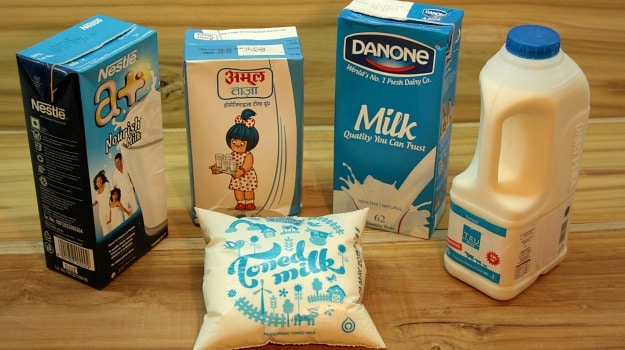
In 2011, the French dairy company Danone hoped to capitalize on this by opening a division in India. Danone opened its own processing plant in Haryana and tried to capture some of India’s 1.2 billion dairy lovers. But less than a decade later, Danone shuttered their dairy business in India. That same year, the corporate made 28 billion dollars worldwide and was within the top three global dairy companies. With all this success, elsewhere, why did Danone’s dairy business sour in India? Let’s start with some background on Danone. Their business is broken down into three categories:

  1. 1.specialized nutrition, like supplements and formula for babies;
  2. bottled waters and seltzers;
  3. dairy and plant-based alternatives.

That one makes up over half of their global sales, but it’s also the one that failed in India. Danone does still sell specialized nutrition products in the country, but they don’t break out those sales figures separately. This is the same company as Dannon in the U.S. The company decided to rebrand to make the spelling less confusing for American consumers. Anyway, now for some background on India’s dairy industry. There are about 75 million dairy farmers in India. Most of them are women who own one or two buffaloes or cows to supplement the family’s income. Nearly half of India’s milk is not sold, but consumed by the farmers household. This makes India’s dairy industry much more fractured and localized than other countries where Danone operates. Take the company’s native France and one of its biggest customers, the U.S. Each has far fewer dairy farms with herds that dwarf India’s one or two animal average. This was Danone’s first big problem in India: sourcing milk is difficult. Of the half not consumed by farmers’ households, only about 15 percent goes to big organized companies or government run cooperatives. The rest goes to hundreds of small, local milk processors.

Tainted milk: Branded dairy in India sees 5% increase in ...

The largest companies like Amul, Mother Dairy, and Nestlé have tiny percentages of the market, and they’ve been there for decades. Market research firms Mintel and Euromonitor declined to release specific market share numbers to CNBC. However, a 2016 piece in The Economic Times of India citing Euromonitor put the figures at about 7 percent for Amul, 3.7 percent for Mother Dairy, and 2.9 percent for Nestlé. In short, tapping into the existing dairy infrastructure is effective but time consuming. Imagine the effort of contacting dozens or hundreds of local and regional dairies, processors, or individual farmers. But establishing a separate supply chain altogether is very expensive — a lesson Danone learned the hard way. And when Danone did get milk, the company focused on the wrong products. Danone pushed plain yogurt and flavored yogurt drinks — popular in places like the U.S. and France with high profit margins to boot. But in India around the time when Danone arrived, yogurt comprised only 7 percent of the dairy consumed.

The real money was in ghee, a type of clarified butter, and plain old fluid milk, a product with razor-thin margins dominated by those hundreds of local small-scale producers. Analysts explained to CNBC the simple reason why Indian consumers shunned Danone’s prepackaged yogurt. And if Indian consumers did want to buy premade yogurt, they had a slew of cheaper options than Danone. Dairy never accounted for more than 10 percent of Danone’s sales in India, a far cry from its global 50 percent. Its specialized nutrition arm picks up the slack, and the company announced a renewed focus on that division when it shuttered its dairy operation. Meanwhile, two of their biggest competitors, Amul and Nestlé, made nearly five billion and 750 million from dairy, respectively. But not all hope is lost for Danone’s dairy in India.

Amul, Nestle, Mother Dairy, Tru & Danone: Which Milk Tastes the ...

In January 2018, the same time that Danone ended its dairy production there, the investment arm of the company announced its part in a 26.5 million dollar investment in Epigamia, an Indian yogurt startup. This could be a sustainable move for Danone in India’s dairy industry because Epigamia offers consumers products that add value onto the plain yogurt they will make cheaply reception . But perhaps most importantly is this: while much of the population still makes yogurt the old-fashioned way, analysts predict that a growing number of consumers will want to buy premade options as they move into corporate jobs in developing urban centers. Very large numbers indeed. If only 5 percent of India’s 1.35 billion people decides to buy prepackaged yogurt, that’s over 67 million consumers — more than the entire population of Danone’s native France.

Why Apple was not so popular in India???

Apple sells millions of iPhones every year. In the year 2018, the tech giant reported selling close to 47 million units worldwide. But not all markets are created equal. India has been one of the hardest countries to crack for the Cupertino giant. Although it’s been over a decade since Apple began selling iPhones in India, the company can’t seem to get a big bite of the world’s second-largest smartphone market. India is a very price-sensitive market, which means that people pay a lot of attention to what value they are getting out of the price that they are paying for a particular product.

In the case of Apple, there’s a lot of premium being paid for the brand itself, and that’s where the price-conscious Indian consumer thinks about that if they are getting the same kind of features or specs from another phone that they can get a lower price, that makes it tougher to sell something at a much higher premium. Apple is definitely feeling the pressure. Samsung and Xiaomi accounted for the majority of smartphone sales in India in quarter three of 2018, garnering 22 percent and 27 percent respectively of the smartphone market. In contrast, Apple made up only about 1 percent of India’s smartphone market share, trailing behind Chinese phone makers Vivo and Oppo. It’s also worth noting that the premium smartphone market in which Apple operates still makes up less than 5 percent of the overall smartphone market in India.

7 Key Strategies That You Must Learn from Apple's Marketing

Most of the smartphones in India that sell, they are below $200 and Apple does not have any play in that segment. This environment is one that competitors like Samsung have begun to adapt to. The South Korean powerhouse is launching its Galaxy M series budget smartphones to appeal to the Indian market. In contrast, Apple doesn’t seem too keen on changing up its India strategy. I got some ideas for you, OK? I talked to some people at Walmart yesterday. An arrangement with Walmart Flipkart to take over India with a budget phone rather than doing it piecemeal? For us, we’re about making the best product that enriches people’s lives. And so, we’re not about making the cheapest. For us, what we’ve seen is, there’s enough people in every country in the world that we play in that we can have a really good business by selling the best phones. Still, some tech investors see Apple as being out of touch with the India market. You think they are going to slash prices? I think they have to. How can you sell a $1,000 phone in a market like China where the GDP per person is $10,000? In India it’s $2,000. And if you go back to the September earnings release, they talked about the fact that India was way below where they thought.

Apple postpones launch of online store in India - The Economic Times

Well, if your average GDP person is $2,000 and you’re trying to sell a $1,000 phone, it’s gonna be probably pretty hard to sell it. They probably want to eat. Another issue for Apple: stiff tariffs. I think iPhones have a specific disadvantage in the India market because of the local regulation. There is a very high import duty on the phones that are not manufactured locally in India. So for most of the big players in the India market, they are manufacturing locally so they do not have to pay that high import duty. Samsung has been manufacturing phones in India since 2007 and just last year opened the world’s largest mobile phone factory on the outskirts of New Delhi. Chinese phone makers Xiaomi and Oppo have also invested millions of dollars to build manufacturing plants in the country. That’s not to say Apple has completely ignored India.

The tech giant already manufactures its lower-cost iPhone SE and iPhone 6s models locally, through a partnership with Taiwanese manufacturer Wistron. This year, Apple is also expected to move its production of the iPhone X series into Foxconn’s plant in southern India. If you look at how we’ve done over the years, we’ve gone from a $100-$200 million business to last year we had we exceeded $2 billion. That $2 billion was flat year over year after a rapid rapid growth. And so we have more work to do. We’d like to put stores there. We would like some of the duties and so forth that are put on the products to go away. But even with its local hardware production push, Apple still fails to provide Indians with a robust software experience.

Apple iOS 13 Release: Should You Upgrade?

Apple has introduced turn-by-turn navigation for the India market. Before that, that significant part was missing. And beyond that, there’s not a lot of customization that Apple has done for the India market. There are not a lot of apps that specifically cater to the India market. Past complaints for Apple Maps also included missing major landmarks and having very sparse data of cities and towns. But again, Apple is working on a solution. The company has hired thousands of engineers at its mapping facility in Hyderabad to improve its services. Apple Pay is also not an option in India, though similar payment services from Samsung and Google have already been rolled out. Finally, unlike in most other markets, Apple can’t rely so much on its brand recognition to sell devices in India. The other challenge for Apple in India is that it cannot have its own retail stores or own Apple stores because of some regulatory issues, which means it has to have partners on the retail side, whether it’s the Apple premium resellers, which you see in many other countries as well, or with the third-party resellers. In order to have a larger presence in the market.

Apple has to have partnerships with thousands of these resellers, which in a country as big as India, can be challenging. Apple is still a premium status symbol for many Indians, but one that is out of reach for the majority of the population. With phones from Chinese brands like OnePlus, which was India’s best selling premium smartphone brand for the second quarter in a row, offering similar features at a fraction of the cost, Apple may have a very tough time getting a bigger slice of the India market.

Apple - Localizing the Message - Global Marketing Professor

Why Australia is least affected by recession!!!

America’s economy is approaching a big milestone. If it keeps humming until July 2019, it’ll be the longest expansion in U.S. history. It would be exactly one decade and one month old by then. But there’s another country with an even more impressive run It’s even called the ‘lucky country’ Three big lessons from Australia.

  1. Be smart.
  2. Be organized.
  3. Be lucky.

So, if I’ve got any advice for other countries, it’s try and be as lucky as Australia That luck has to do with Australia’s treasure trove of natural resources. You know Australia is on the other side of the world and sitting on tremendously valuable minerals right at the point where the Chinese economy is just around the corner and exploding. Australia and every one its natural resources were within the right geographic neighborhood even as the Chinese economy began to begin . And it just so happens that China did a big fiscal stimulus in 2008 and spent a great deal of money building new cities. So all of these resources were drawn from places like Australia. So that also served as a huge tailwind at a time when developed markets were in a whole lot of trouble.

What Currency Is Used In Australia | Australian Dollar : Compare ...

The year 2008 was a time of economic turmoil The Global Financial Crisis hit and markets crumbled around the world. But as it turns out this was also a year for Australia’s economic management to really show off At the time the government had a very helpful and very low level of debt. One reason? Pension reform in the 1990s. Australia set up a compulsory retirement system called the superannuation system. It requires employers put money into its employees’ retirement savings.

Since companies and citizens have to build up retirement savings, some of the financial burden to pay off pensions was taken off of Australia’s government As other economies reeled in the wake of the 2008 crisis, the Australian Government was then able to put money directly into people’s bank accounts This boosted consumer spending in order to stimulate growth In 2008, the Australian Government unlike some other developed market governments actually jumped in very quickly with fiscal stimulus, so that helped to kind of minimize the effect of the crisis The country’s numbers continued to look sluggish after the financial crisis. But they never quite dipped low enough or for long enough to satisfy the definition of a recession. It takes two quarters of negative growth to fall into a recession. Australia’s economy did post a couple of negative quarters since 2008, but no country’s perfect. Overall Australia’s economy has been managed pretty much in recent years partly due to a robust and stable financial institution.

Reserve Bank of Australia – Australia's LGBTQ Inclusive Employers

Australia has an independent financial institution and it is a very well-run financial institution . It also has a floating exchange rate and the exchange rate helped it adjust to international shocks. Australia’s economic reforms gave it flexibility in times of hardship. For example, floating the Australian dollar In 1983, Australia’s government moved the dollar onto a floating exchange rate This meant that the dollar would be valued by supply and demand instead of being subject to influence from its government or its central bank It allows the economy to react to shocks as well Typically when an economy is hit by some sort of negative shock. The currency will adjust. It will depreciate and that helps promote exports. Another reason behind Australia’s economic diary lies in its immigration policy. Since the late 1990s, Australia has seen growth in temporary migration, many arriving to the country on student or temporary work visas. The number of temporary migrants peaked in the year 2000. However a recent change to immigration law in 2018 gave visa applicants more hurdles to get through if they wanted to come to the country Even when our GDP per capital average incomes aren’t rising by much because the number of people continues to rise that means the total GDP continues to rise at even more rapid pace Part of that’s underpinned by much faster population growth Most experts think Australia’s economy remains strong in 2019, but it’s not without risks.

Australia’s suffering at the instant from pretty weak wage growth. That’s worrying a lot of people. There’s a lot of fear right now that China is hitting a wall. That will hit demand for Australian products. The good news is to the extent that the Chinese are buying commodities hopefully will find buyers from overseas for many of those commodities if the Chinese are not there The bad news is the rest of the world economy is not doing that well.

Australian economic growth slows, enters per capita recession ...

Negotiating- The Art, a small story!!!

I think there is an art to it it’s a craft, the negotiating training this morning in the office and the reason, negotiating it be is because it’s the one area of the deal where people need me the most and they need me the most they think I have the most confidence and the confidence that I have going to the deal comes from experience and it comes from honestly – practice practice practice because no matter what you’re selling you’re selling. Two different people you’ve got a seller and a buyer and in every negotiation you’ve got price you’ve got pressure and you’ve got persistence those are the three P’s remember that is it can be a nice little instructional.

The negotiations between Disney and Lucasfilm - A negotiation case ...

An iPhone cost to make now you’re not going to negotiate the price of an iPhone because there’s too strong demand but let’s say there wasn’t strong demand then you can negotiate or you can find a retailer who’s going to sell it to you for cheaper because it doesn’t cost nearly as much to make that phone. As it does for you to buy it real estate is the same way a deal that’s listed from 10 8 down to 10 so 10 million bucks the offer originally came in at 8 million dollars okay that seems like it’s way too far apart. If I go to the seller he’s going to say you got to come up they’re going to say oh no this is my offer so what do you do what do you do you remember the price you want to try to get – which in this instance was around 8 and a half that’s where we thought we’d get a deal done and the legacy price what the seller paid seller paid six point five. So, even at our low terrible awful offer that sellers making money that’s a good thing to remember and to consistently remind each side and then you let time saturate the emotions of the deal and you use repetition you only paid six five even if this bullshit offer you’re making money.

The Art of Negotiation in Project Management

There are clients who are losing million and they use pressure right the fear of a falling market and the fear of missing out every seller fears they’re not going to get their price going forward because maybe the market could change every buyer has a little fear that they’re going to lose it a little fear they’re going to miss out and then you’re trying to find the price in the middle where both sides will say we came to that number because that’s the max or the minimum that I’m willing to go to get this deal done.

Can a Business Simulation Game help develop Negotiation and ...

How Jack Ma inspired me!!!

Jack Ma- every 5 years we have a review for our strategy now our strategy is always to look at the 30 years and 10 years every strategic decisions we make we have to ask one question this decision we make solve society problem because we believe the biggest social property you solved the most successful you are so if we do it this cannot solve any social problems we don’t do it second is this project is going to be successful in 10 years. If it’s it’s going to be successful in 10 years let’s do it if it’s going to be successful in one year or one month normally we forget about it because why you can be successful in one year or one month.

Alibaba billionaire Jack Ma: I know nothing about tech or marketing

We all have to put parham and 5 years ago we had a big debate about 10 years later 20 years what are the things this china society the world leave want so we say happiness and health strategy to happiness and health we believe Holly do you know the movie industry bring people happy because today nobody is happy rich people are happy poor people not happy you know at least when I watch movie after you’re happy but right. So, I think we should have partner with the Hollywood especially like a lot of you know we have a different way of living and in China the movie we have a lot of heroes but China movies heroes always dead the American me movie here will never die if all the heroes die who want to be the hero so my movie I want to make the hero live right so this is this is I think we should learn a lot and it’s all about two years so we have another eight years ago I want to make our company that it’s it’s not ecommerce it’s something that giving people inspirations given people.

Alibaba's co-founder Jack Ma to retire | The Passage

In the eBay model why about this model I told myself for is the gum set or a hat that will care about what the other people and the other thing Forrest Gump said nobody make money out of the catching whales people make money by catching shrimps so

 We serve small business or not if you want to win in business you have to think bigger than the service or product you

They also teach all the tricks all the turns all the dips all the tosses in the air did it matter as much as the experience we provided to students every person wants to feel loved every person wants to feel like they belong but they want to feel wanted appreciated validated and see and so we’ve always at our school thought bigger. We thought about they may come in for a service but they come back and they refer others because we enrich their lives we focus on the essential human needs like love like care like belonging that across cultures across demographics everybody wants to feel or experience.

Jack Ma and Jerry Yang talk about Yahoo's big Alibaba investment ...

I love Jack Ma’s message thinking five or 10 years from now because what people are worried about let’s say right now for the next six months it’s going to come and go but what stands the test of time are the deep down worries and fears that we all share so if you want to have a successful business you have to think bigger than the service or product you provide because people may come to your dance school people may come to your coffee shop by random chance but that’s not what’s going to keep them there and that’s not what’s going to make them refer clients to you now I’ve got a special bonus clip for you but before we get to it today’s question is how have you been thinking small in your business and what can you do to change that to really make an impact on your customers.

RECRUITMENT

The term Recruitment denoted that process by which the management locates the source of supply of manpower and then traps that source and it encourages outside manpower to apply for the jobs in the organization and search for the proper person for the right type of job at the right time is the basic function of the personnel department. The selection of wrong persons for the right job can ruin the process of work. A well-planned recruitment policy ensures increased productivity, decreased costs, increased employee morale and goodwill of the organization and thus recruitment is the process of searching for prospective employees and encouraging them to apply for the jobs in an organization and it aims at securing as many qualified applicants for the jobs as possible so as to decrease the hiring ratio and before searching for applicants, an organization should consider the most likely sources of the type of employees it needs. According to Edwin Flippo “Recruitment is the process of searching for prospective employees and stimulating and encouraging them to apply for jobs in an organization”. Recruitment also includes seeking and attracting a pool of people from which qualified candidates for job vacancies can be chosen. There are various sources of recruitment of workers and the personnel manager will select a source of recruitment, keeping in view the requirements of the departments concerned, the type of persons needed and the advantages of a source of recruitment and different sources of recruitment can be tapped on different occasions for different types of persons.

INTERNAL RECRUITMENT

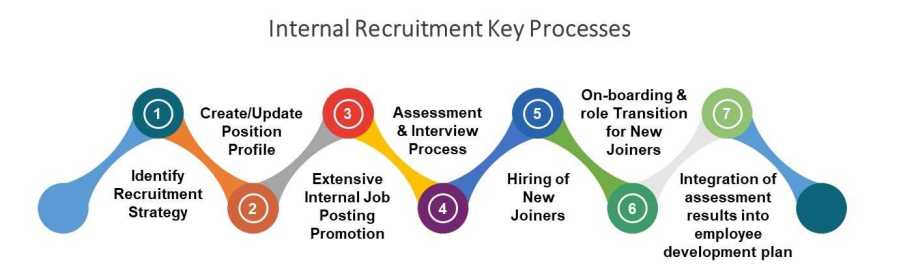
One important source of recruitment is a promotion from within and it is the best method for recruitment of high and the medium cadre of managers and many companies feel that the best practice is to fill jobs from within the organization and they feel that inside employees already know the company and its policies and presumably have proved their ability and loyalty. This keeps the employees happy contented and in good morale and they know that they will earn promotion to a higher position. A performance test is the best test to determine a person’s suitability for a job. Filling of a vacancy from an internal source is very economical and no time and money are required to spend on a new candidate and a person who is selected for a job from within an organization knowns the organizational relationships.

EXTERNAL RECRUITMENT

By the external sources of recruitment, a vast mass of skilled, semi-skilled, and unskilled people is recruited from outside the organization. By using external sources of recruitment the organization can expect to get talented candidates from outside and the selection process is characterized by competition and the prospects that the organization can pick up the best candidates and fresh talents for the job are high. External candidates are expected to be trained and be efficient in work as they join the organization they work with great vigor and put in their best efforts to achieve the objectives and this creates healthy competition and congenial work environment in the organization.

How Starbucks captured the coffee & the world…!!!

With nearly 30,000 cafes across the world , Starbucks has become over just a household name. From its iconic cups, often adorned with misspelled names, to the espresso inside them, Starbucks has catapulted from one coffee bean shop in Seattle to a sprawling $80 billion business over the last 47 years.

Starbucks has a 'void in innovation' and healthy beverages won't ...

Starbucks sales account for 57 percent of the total cafe market. Yes, 57 percent, nearly two-thirds of all coffee sold at cafes in the U.S. comes from a Starbucks. But this impressive expansion hasn’t come without growing pains. With more than 14,000 locations in the U.S. alone, Starbucks has spread itself too thin. Having too many stores has led to fewer transactions at individual stores. To compensate, the company has raised prices. But doing this too quickly or too often can drive customers away. So how did this happen? And what’s a coffee giant to do about it? The year is 1970.
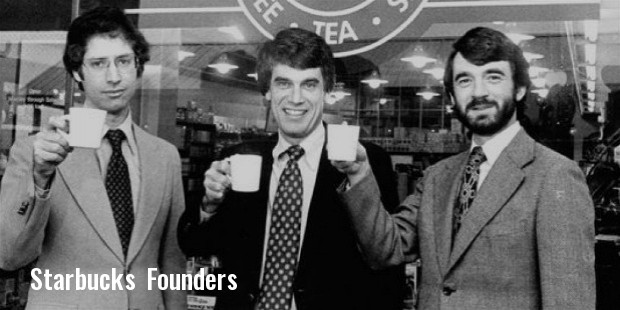
Three college friends, Zev Siegl, Jerry Baldwin and Gordon Bowker decide to get into the coffee business. They found a mentor in Alfred Peet, founder of Peet’s Coffee and the man responsible for bringing custom coffee roasting to the U.S. He knew the coffee industry inside and out, especially the gourmet end. He was the most educated coffee guy in the country at that time. So with Peet’s help, the three friends open Starbucks, a coffee bean shop and roastery at Seattle’s famous Pike Place Market in 1971. Peet provided the young entrepreneurs with roasted coffee beans and connected them with coffee brokers until they could set up their own roastery and source their own beans. For the first decade, the founders opened five more locations in Seattle. At this point, contemporary coffee consumers might have noticed a glaring absence: actual coffee drinks. But that’s the thing about the 70s coffee culture: it didn’t really exist outside the home. There were no coffee bars nor was there much of a requirement for espresso-based drinks. You purchased coffee beans and you either took them home as beans or we ground them for you in the store. Nobody expected to urge a beverage at a Starbucks coffee store until after 1980.

Starbucks Story - CEO, Founder, History | Coffee Company | Success ...
Starbucks’ initial focus was bringing high quality beans to consumers who were more accustomed to instant or canned coffee, but that changed with the addition of one man. The company hired its first really professional Director of Marketing and Sales, and that man was Howard Schultz. And he couldn’t figure out why we weren’t selling beverages. In 1983, Schultz travels to Italy and returns with an idea: turn the coffee bean stores into cafes. Starbucks served its first latte the next year. The experiment was a success, and four years later, Schultz partnered with investors and bought Starbucks for $3.8 million. He was only 34 at the time. Schultz pursued a strategy of aggressive expansion. By the time the company went public in 1992, it had 165 stores, in 1996 it had opened more than a thousand locations, including its first international cafes in Japan and Singapore.
Growth was so rapid that, just three years later, Starbucks opened its 2,000th location. Schultz switched from CEO to Executive Chairman in 2000, at which era Starbucks operated 3,500 stores in additional than a dozen countries. Between 2000 and 2007, the number of Starbucks cafes more than quadrupled, from 3,500 to over 15,000. During this era , the corporate opened a mean of 1,500 stores per annum , including 2,500 in 2007 alone. Sales shot up from $2 billion to $9.4 billion. Consumers were increasingly ditching their kitchen mugs for these iconic paper to-go cups. But then, Starbucks hit a wall: the 2007 financial crash. That year, its rapid growth screeched to a halt and its stock price plummeted by 50 percent as cash-strapped consumers backed away from pricey coffee habits. So, Starbucks brought back Howard Schultz. This news alone caused Starbucks stock to increase by 9 percent.

Xed Knowledge
Schultz halted growth and focused on customer experience. He shuttered cafes – more than 600 in 2008 and another 300 in 2009 – and laid off around 6,700 baristas. A month after his return, Schultz ordered Starbucks to shut all of its U.S. locations for one afternoon so he could retrain more than 135,000 baristas about how to make its signature espresso. Schultz’s goal was to remind customers what they loved about the brand by making the stores an experience, not just a place to get a quick coffee. They stopped selling breakfast sandwiches and brought back in-house grinding, infusing the cafes once again with that fresh coffee aroma. Schultz even mandated the removal of automatic espresso machines. These made service faster, but removed much of the romance and theatre of watching baristas craft each cup of coffee. Schultz’s makeover worked.

Starbucks | Description, History, & Facts | Britannica
The company’s stock soared more than 143 percent in 2009 and same-store sales rebounded. Starbucks has posted positive same-store sales ever since. During Schultz’s makeover of the cafes, Starbucks barely opened any new stores. But the pace picked up again in 2012. By 2017, Starbucks opened nearly 3,000 more locations, ending the year with 28,000 cafes round the world. However, this brings us back to the first problem: profit cannibalization. Over-saturation, particularly in urban locations, has spread sales thin. Because Starbucks has numerous locations, customers do not have to be loyal to only one. So albeit Starbucks overall sales are growing, its individual same-store sales won’t reflect it. Compounding this problem are changing consumer preferences. People are shying away from sugar-laden calorie bombs. which happens to be one of Starbucks’ staples. These signature Frappuccinos contain an average of 57 grams of sugar. That’s more than double the recommended daily limit of sugar. So, to combat these problems, Starbucks is changing once more . The company announced the closure of 150 stores in 2019. That may seem like a drop in the bucket for a sprawling company like Starbucks.

Starbucks App Users Now Drive 17 Pct Of Sales | PYMNTS.com

The company’s biggest undertaking is its new line of upscale stores: Starbucks Reserve Roasteries. These massive, 20,000-square foot stores are designed to be a tourist destination. Here, Starbucks baristas and bartenders’ experiment with different brewing methods and craft new, innovative beverages. These have proven popular. In the first weeks, the Shanghai Roastery made an average of $64,000 every day, which is double what a regular cafe makes in a week.

DECENTRALIZATION AND CENTRALISATION

DECENTRALIZATION

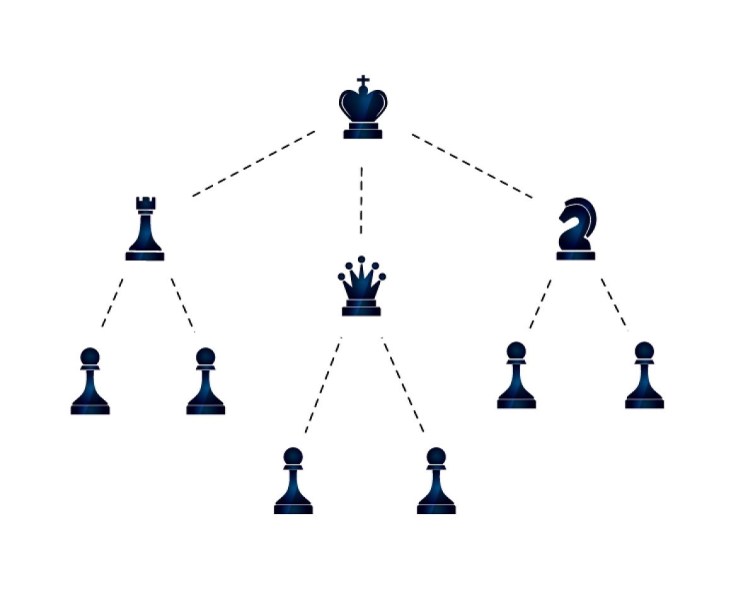
Decentralization is a systematic effort to delegate to the lowest levels of the authority except that which can be expected that can be exercised at central points. It is the pushing down of authority and power of the decision-making to the lower levels of the organization and the essence of decision making is dispersed throughout the organization. The essence of decentralization is the transference of authority from a higher level to a lower level. It is a fundamental principle of democratic management where each individual is respected for his inherent worth and constitution as Newman and Summer rightly said “Decentralization is simply a matter of dividing up the managerial work and assigning specific duties to the various executive skills”.

FEATURES OF DECENTALISATION

The following are the chief characteristics of decentralization:

  1. It is an extended form of delegation.
  2. It gives importance to the role of subordinates.
  3. It reduces the work-load of the managers in the top hierarchy.
  4. It is a process applied to the entire organization.
  5. Under it its decisions are taken by those employees who implement them; and
  6. Under it along with authority, responsibility is also transferred.

CENTRALIZATION

Centralization is the reservation or withholding of authority by individual managers within the organization and according to Henry Floyd “Everything that goes to increase the importance of the subordinate’s role in decentralization, everything which goes to reduce it is centralization”.

In centralization a little delegation of authority is the rule; power and discretion are concentrated in a few executives. Control and decision-making are in the hands of top-level management, however, absolute centralization is untenable because it would mean that the subordinates have no duties, power, or authority.

Centralization may be essential in a small organization to survive in a highly competitive world, but as an organization becomes more complex in terms of increasing size, the interdependence of work-flow, complexity of tasks and spatial physical barriers within and among groups, a requisite for efficiency is to move decision-making centres to the operating level. Thus, the larger the size of an organization, the more urgent is the need for decentralization and this does not mean that denaturalization is good and centralization is bad. According to Allen “ Centralization is the systematic and consistent reservation of authority at central points in the organization” and according to Fayol “Centralization is that organization where the role of subordinates is reduced”.


FEATURES OF CENTRALIZATION

          On the basis of the properties, the following are the characteristics of centralization:

  1. Right of decision is centralized and withhold with the top level of the management.
  2. The lower level of management executives only follows the decisions and necessary actions taken by top-level management.
  3. There is the least use of the process of delegating rights as it brings down the taken for making a decision and reduces the number of people involved as there is the direct involvement of the top-level management.
  4. There is reduction in the role of subordinates.
  5. There are a great distance work site and the decision-making place.

DELEGATION OF AUTHORITY

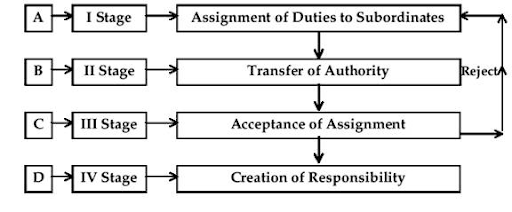
Just as no person alone in an enterprise can do all the tasks necessary for the accomplishment of goals, so also it is impossible, for one person to exercise all the authority for making decisions. There is a limit to the number of person managers can effectively supervise and for whom they can make decisions and once this limit is crossed, the authority must be delegated to the subordinates, who will make decisions within the area of their assigned duties. Then the question is how authority is delegated when decision-making power is vested in a subordinate by his superior and superiors cannot delegate all their authority without, in effect, transferring their position to their subordinates. The entire process of delegation involves four steps. They are:

  1. The determination of results expected from persons in a position;
  2. The assignment of tasks to persons;
  3. The delegation of authority for accomplishing these tasks; and
  4. The holding of people responsible for the accomplishment of these tasks.

Thus, delegation is the process that a manager follows in diving the work assigned to him so that he performs that part, which because of his position, can perform effectively. According to F.G.Moore “ Delegation means assigning work to others and giving them authority to do it”.

FEATURES OF DELEGATION OF AUTHORITY

The salient features of the delegation of authority that can be derived are:

  1. Delegation essentially means passing on authority.
  2. Only a part of the authority is delegated by a superior.
  3. Authority is delegated to a subordinate.
  4. A superior can delegate authority only when the superior possesses that.
  5. The limits within which a subordinate is expected to exercise delegated authority, have to be fixed.
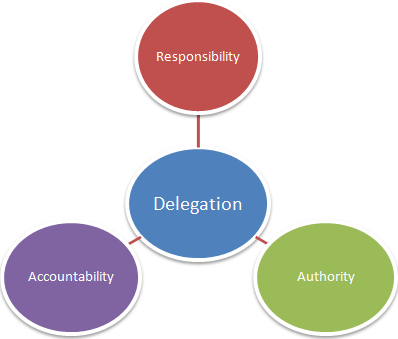
  6. Delegation of authority does not imply the abdication of responsibility on the part of the superior.
  7. Delegation of authority is for the discharge of some responsibility or duty assigned.
  8. It creates accountability or obligation on the part of the person who has been delegated authority, for proper use of authority and accomplishment of the task assigned.

A manager cannot delegate all his authority and for the purpose of the delegation, all authority of a manager can be divided into three broad categories:

  1. The authority which must be delegated as authority to take routine decisions for the accomplishment of tasks;
  2. The authority which can be delegated as the administration of policies; and
  3. The authority cannot be delegated at all as the authority to make policy decisions.

A successful manager is one who can delegate his authority successfully and he must delegate the authority to do work of routine and subsidiary nature. For instance, the marketing manager of a business enterprise is responsible for many operations like conducting marketing research, development of means of sales promotion, management of advertising, employment and training of sales forces, etc. The marketing manager cannot look after all these operations and he can entrust the responsibility of the performance of some of these operations to his subordinates.  

INFORMAL ORGANIZATION

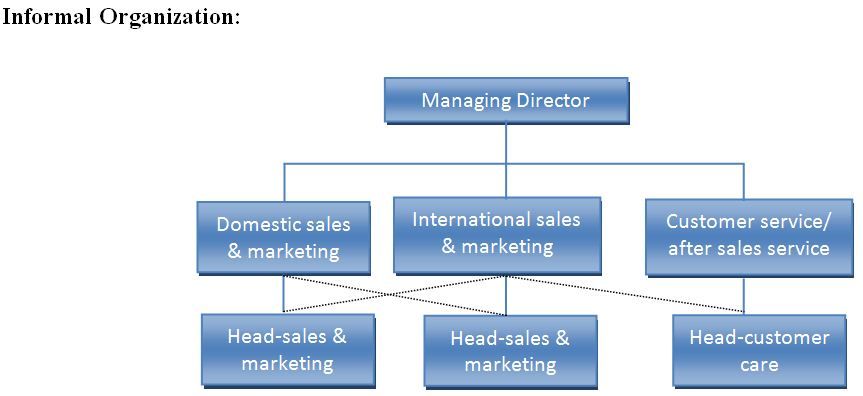
Informal organization refers to relationships between individuals in the organization based on interest, personal attitudes, emotions, prejudices, likes, dislikes, physical location, the similarity of work et. The informal organization comes into existence because of the limitations of the formal structure and it represents a natural grouping of people in working situations and the birth of small groups in an organization is a natural phenomenon. The informal group may overlap because an individual may be a member of more than one informal group. Informal groups come into being to support and supplement the formal organization. The formal and informal organization are inextricably interlinked. As Joseph L. Massie said, “Informal organization has been defined as any human interactions that occur spontaneously and naturally over long periods of time”.

CHARACTERISTICS OF INFORMAL ORGANIZATION

The main characteristics of informal organization are:

  1. It has no place in the formal chart.
  2. It is definite and has no structure.
  3. It is a network of personal and social relations.
  4. It has its own rules and traditions.
  5. It provides for social satisfaction to its members.
  6. An informal organization arises spontaneously.
  7. It is an integral part of a total organization and management cannot eliminate it.
  8. It is based on personal attitudes, emotions likes and dislikes etc.

  ADVANTAGES OF INFORMAL ORGANIZATION

The informal organization is a psycho-social system and the main advantages of an informal organization are:

  1. Informal organization evolve short cuts and eliminate various individuals and departments.
  2. Informal organizations help in solving work problems of members.
  3. Informal groups recognise talented workers as their leaders.
  4. A manager can build better relations with his subordinates through informal contacts.
  5. Informal groups do not allow managers to cross the limits of authority.
  6. Informal groups often fill up the communication gaps which might arise in the organization.
  7. The informal organization may fill in gaps, if any, in the abilities of managers.
  8. Informal groups develop certain norms of behaviour which differentiate between good and bad conduct and between legitimate and illegitimate activities.

LIMITATIONS OF INFORMAL ORGANIZATION

Informal groups have negative aspects too. They may create problems for the organization as mentioned below:

  1. Informal groups generally tend to resist change and change requires new skills but informal groups want to maintain the status quo and this creates obstructions in implementing new ideas and thus organization’s growth.
  2. An informal leader may turn out to be a troublemaker for the organisation and to increase his influence, he may work against the policies of management, and try to manipulate the behaviour of his followers.
  3. Every member of an informal group is also a member of the formal organization and sometimes role conflict may arise because the ideas, expectations and requirements of both the organizations may be opposite to each other.
  4. An informal group exerts strong pressure on its members for conformity and the members may become so loyal to their group that following the group norms may become a part of their life.
  5. Informal communications may give rise to rumours which may create conflict and misunderstanding among the people and rumours may prove dangerous for the organization.