Criminal Conspiracy

According to criminal law, an act of criminal conspiracy is said to to be committed when two or more people come together to form an agreement between them to carry out a criminal activity in foreseeable future. In some countries across the world, the act of criminal conspiracy is completed only when an explicit action is carried out. Only the commission of an explicit or overt action constitutes a crime, according to law prevalent in those countries. However, law does not place a cap on number of participants. Some countries do not even require any commission of overt act. It is counted as an attempt. For the sake of unanimity, the act is a continuing process and complete involvement or partial involvement at any stage makes the participants jointly liable. It can be charged even in the cases of acquittal. Repentance does not affect their liability. It may help in reduction of the sentence. Repentance before the commission of the act may help the participants. 

Criminal Conspiracy

The act of criminal conspiracy was seen as a civil offence in its nascent stages. The act of criminal conspiracy came under two sections of the law. These sections are – Abetment in any offence and conspiracy with criminal intent. Slowly, it came to be recognised as a criminal offence. The Criminal Law Amendment Act (8 of 1913) added Chapter V – A to the Indian Penal Code. 

Conspiracy Definition: The section 120 – A of Chapter V – A (Indian Penal Code, 1860) defines criminal conspiracy. When two or more persons decide to execute or cause an act, which is illegal, or a legal act by illegal means, such act is called as criminal conspiracy. Perpetrators of this act can be convicted for criminal conspiracy. They are culpable of criminal conspiracy. This is given in Section 120 – A. In other words, concurrence of minds for committing an illegal act, or legal act by illegal means is called as criminal conspiracy. Mere agreement is not sufficient to accuse one guilty of criminal conspiracy. Agreement of minds for commission of an illegal act, or legal act by illegal means is called criminal conspiracy.  Meeting of minds is an essential and important aspect of conspiracy. All the concerned persons part of the act should be aware of the nature and consequence of the act. They should understand the objective and motive behind the act and are ready to achieve the act. This constitutes as an important part of criminal conspiracy. The act is deemed as an offence of criminal conspiracy only when any act is committed to execute the agreement. As discussed above, actus reus and mens rea are two essential of a crime. According to the Indian Penal Code, ill motive and conduct are necessary constituents of a crime. There is an exception to this rule. Criminal conspiracy is punishable at the phase of mens rea. The act of criminal conspiracy in planned in secret and executed surreptitiously. This makes proving the act with evidence difficult.The explanation given under section 120 – A says clearly that the nature of the act committed in furtherance of the agreement is immaterial. Even if such act is accidental it is regarded as an offence of criminal conspiracy. In  Rajiv Kumar v. State of U.P, the judiciary interpreted Section 120-A as follows

“The essential ingredients of the offence of criminal conspiracy are: (i) an agreement between two or more persons; (ii) the agreement must relate to doing or causing to be done either (a) an illegal act; or (b) an act which is not illegal in itself but is done by illegal means. It is, therefore, plain that meeting of minds of two or more persons for doing or causing to be done an illegal act or an act by illegal means is sine qua non of criminal conspiracy.”

A bare discussion or awareness or possessing wrong intentions alone is not sufficient enough to constitute the crime or offence of conspiracy. Any act in pursuance of the things listed above is necessary to constitute the offence of conspiracy. Consensus ad idem is a necessary aspect of conspiracy. The explanation to the provision clearly explains that just an agreement between the concerned persons to act shall not require performance of an act as a part of the agreement. A legal act performed through illegal means, however, requires performance of an explicit act in pursuance of the agreement to constitute the crime of criminal conspiracy. The core of criminal conspiracy is an unlawful amalgamation or legal act by illegal means. The offence qualifies as a crime as soon as the combination is complete. This makes criminal conspiracy an incomplete offence. Illegal agreement to perform an illegal act makes it an offence of criminal conspiracy. The core is what the persons involved agree to perform and not the crime itself. Mere awareness or plain discussion to commit an act does not amount to conspiracy. The Supreme Court observed that-

“For a person to conspire with another, he must have knowledge of what the co-conspirators were wanting to achieve and thereafter having the intent to further the illegal act takes recourse to a course of conduct to achieve the illegal end or facilitate its accomplishment.” This explains that knowledge of the nature and consequence of the act is must for that act to be considered as criminal conspiracy.

The Supreme Court clarifies on the part played by each partner in conspiracy. “The agreement is the gist of the offence. In order to constitute a single general conspiracy there must be a common design and a common intention of all to work in furtherance of the common design. Each conspirator plays his separate part in one integrated and united effort to achieve the common purpose. Each one is aware that he has a part to play in a general conspiracy though he may not know all its secrets or the means by which the common purpose is to be accomplished. The evil scheme may be promoted by a few, some may drop put and some may join at a later stage, but conspiracy continues till it is broken up. The conspiracy may develop in successive stages. There may be a general plan to accomplish the common design by such means as may from time to time be found expedient. New technologies may be invented and new means may be devised for advancement of the common plan. A general conspiracy must be distinguished from a number of separate conspiracies having a similar, general purpose. Where different groups of persons cooperate towards their separate ends without any privity with each other, each combination constitutes a separate conspiracy. The common intention of the conspirators is then to work for the furtherance of the common design of his group only.”

References:

https://indiankanoon.org/

Not Just A Cool New Thing :How Technology Improves Education

Today, the internet dominates many aspects of our life. We’re so used to it that we don’t even think about all the areas it touches. It helps us communicate with our friends and family. It’s an invaluable tool in the kitchen as we look up recipes and ingredients. If we’re attempting DIY repairs on our car, we might look up a tutorial on YouTube. We access our entertainment online. Whenever we have any question, from the most mundane to the most complicated, we ask the internet.
There’s one facet of our life, however, where we might not often think about the effects of technology, and that’s the realm of education. Today, we want to spend some time examining how technology has found its way into the halls of schools across the country and around the globe, and all the ways technology has changed education.
Technology has improved education by using advanced techniques and tools for research and development. Technology has improved the speed of the learning process through the internet.
Technology helped to create new and updated educational material and syllabus. Data analysis and visualizations Technologies have improved the quality of education. Technology improved the student’s security and provided low cost, real-time platforms for communication.
Now there are thousands of fonts support different emotions and facts in the text. Now notes, eBooks, blogs, videos, apps, charts, smart arts, data visualizations, infographics are the part of educational materials. Today Corel Draw, Microsoft Word, Excel, PowerPoint, smart class apps, Adobe Photoshop, stock images and many other IT sources helping to create, design, and various types of educational materials and class syllabus.
This is a big change in education through technology. And I think the goal should be to store data/information/knowledge systematically in the brain of students. And this helps them to memorize it faster during the class and competitive exams. Even when they will in the jobs they can execute that knowledge to produce creativity in their works. Technology has changed, improved the quality of education. And I think we need to think on long-term problems and results while we plan and integrate the change in education by using Technologies.
Technology has improved the Teachers and students communication channels and methods. There was a time when students fear to ask a question from teachers. There was a time when student hesitates to communicate with the teacher about what they are feeling. If someone wants to learn more about the class topic from the same teacher then there were not the ways. There were no ways to keep connected with the teachers for years.
But technology has changed teachers and students communication methods and types. It is now much stronger, easy, high tech and possible to builds long-term connection with teachers and students with the help of technologies.
Now today’s teachers understand that technology is a part of our life. So they are trying to learn the use and methods of advanced technological tools that help them to explain the class topic.
Use of social media by teachers not only helps students to learn but also help society. If Physics teachers/lectures/professor have social media pages and groups then they can invite and target students especially college students to like and join the group. After that, they can create, post, like content that is related to physics (class wise/chapter wise). It builds a great connection and generates student’s interest to learn physics not only in the class but after class. And I think it’s the biggest and greatest use of social media in education.
Technology removed the communication gaps and it is above then political boundaries. And when we matter education and development of students above then politics then I am sure that we will become not only developed but wise citizens.
Now if students have the option to learn from teachers on their blog, they can follow them on twitter, they can join the communities and overall it helps to study the subject and it helps to create a positive environment.
This way, I think technologies speed up the learning process. Technologies created the platform for students to post questions and answers. Students from different cultures are connected with each other for the class topic.
The better use of technology in the classroom and education mostly depends on our teachers, professors, and management. When they adopt a positive attitude to enhance the capacity of students then it will improve and align the education in the right direction.
But we also need to careful that our students are not motivated to follow the wrong direction directed by trolls, politicians, companies for personal benefits.
To stop the negative impact of technology on students, teachers and professors have to lead students. And it will happen if the government, school, college, university, and management boards work on teacher’s development. So that they can feel safe, secure and inspired to lead students for a better future by developing expertise in students through technologies.
Technology has improved the transparency in the educational process and in the organization, improved the staff management methods, streamlined career development programs, faster and easier methods to conduct exams and test, students’ performance reporting, real-world problem-solving assignments, and projects.
But whatever the ways you choose to integrate technologies in the classroom, school or in the colleges. But always remember that don’t ignore the happiest and joyful environment and projects. If students not happy, everything you do will not be beneficial. So that it’s important to integrate technology around the happiness, interests, and motivations of students.

“Technology will not replace great teachers but technology in the hands of great teachers can be transformational”

TEACHERS DAY

Introduction

In India, every year Teacher’s day is celebrated on 5 September. On this day all the students decorate the schools and organise special programs in honour of the teachers all over the country. Along with students, teachers also participate in these programs with full enthusiasm. On this day we are discharged from our school activities so that we can participate in other programs.

Why is Teacher’s Day celebrated on 5 September ?


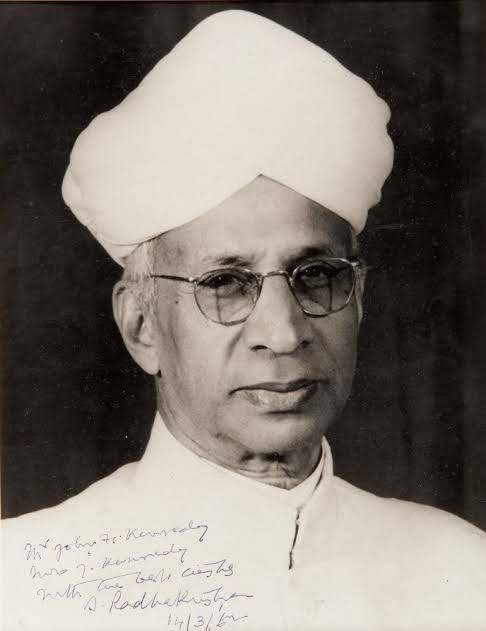
Dr. Sarvepalli Radhakrishnan was born on 5th September. He was the first Vice-President of independent India. He served the country as Vice-President from 1952 to 1962. He served as Second President of the country from 1962 to 1967. Worked as well.

Dr. Radhakrishnan greatly respected the teachers. Before joining politics, he taught in many institutes like Calcutta University, University of Mysore and Oxford University. He was highly appreciated for his work and was also loved by all his students. He believed in the fact that the teacher is the person who prepares the youth as the future of the country. This was the reason that he fulfilled this responsibility of the professor so diligently and always tried to give good values to his students.

When he became the President of our country, his students expressed their wish to celebrate his birthday every year. In response to this, Dr. Radhakrishnan said that he would be more happy if his students celebrated his birthday as Teachers ‘Day. From that day 5th September, his birthday is celebrated as Teachers’ Day.

Importance of teachers day

Teacher’s day is a very important day for both the students as well as the teacher’s life. On this day we celebrate the honour of all the teachers as a tribute to their efforts and works of theirs. Teaching is one of the most difficult tasks in the world because they have the responsibility of educating the youth. There are children in the whole class and because each student is different from the other and has his own ability, this task becomes even more difficult, some students are good in sports and some in mathematics. Some are interested in English. A good teacher always keeps the interest of his students in mind and recognizes their abilities. The teacher teaches them to hone their subject or work skills and also takes care so that their other activities or subjects are not affected.

That is why this day has been dedicated to show respect and gratitude to the teachers.

Teachers’ Day celebration in schools

Teacher’s day programs are celebrated with great enthusiasm in schools across India. On this day, the students wear the costumes of their favorite teachers and go to lower classes than themselves. On this day, senior students go to different junior classes and teach them. It is a very fun day for all of the students. During this, senior students take care that the discipline of the school is maintained and for this junior students support them.

In many schools, junior students also play their role as teachers. On this days students organise various programs for the teachers. They organise programs like singing show, dancing show, quiz competition, dance-drama, ramp walk etc. These programs are normally organized after break time i.e., in the second half of the day. In the first half the senior students take the classes till the lunch break . The teachers relax in the classes and enjoy all these activities.

On this special day, students bring greeting cards, flowers and all sorts of gifts for their teachers. Teachers also feel very happy after receiving all such gifts from their students and they also give treats to their students.

Conclusion

In India, Teachers’ Day is celebrated in honor of teachers, as they work hard throughout the year and want their students to do well in school and other activities. On this day different types of programs are organized in schools across the country. These types of programs strengthen the attitudes of students and teachers. In fact, it is a special day for both students and teachers.

https://en.m.wikipedia.org/wiki/Sarvepalli_Radhakrishnan

https://www.britannica.com/biography/Sarvepalli-Radhakrishnan

@track2traininginstitute @track2trainingseminar @edunewsnetwork @track2trainingservice

SELF-HELP IS THE BEST HELP

“Don’t start your day with the broken pieces of yesterday. Every day is a fresh start. Each day is a new beginning. Every morning we wake up is the first day of our new life.” …….. Self-Help Quotes

WHAT IS SELF-HELP?

Self-help asserts developing one’s competences or solving one’s own problems, fighting against social, physical, professional, and psychological complications, with or without the association with other individuals having similar interests. Self-help demands the use of one’s own efforts, resources, etc. to achieve things, without depending on others. It is a great virtue. It provides courage to meet the difficulties of life bravely. It is the secret of success in life.

SELF-HELP GENERATES SELF-CONFIDENCE WHICH LEADS TO SUCCESS

The life of man is very complex. He is always placed in adverse situations. Every dawn of man comes with a shining hope and a whole day’s gruelling work and crushing ups and downs, frustrate and betray many dreams he had stored for the future. If his dreams depend on others whims and wishes, then his success is questionable. If for every short decision he waits for other assertion then he/she certainly under the shadow of life long pain.  It is his strong will, determination and repeated attempt that help him to overcome difficult situations. His indomitable will power coupled with his irresistible effort for the liberation, help him to rise above all odds. Supports him every moment to beat dark clouds of devastation. Being self-confident he stands like rock and defeats all oppositions. He who depends on his own efforts and resources is the most successful man because the best kind of help comes from within.

GOD HELPS THOSE WHO HELP THEMSELVES.

God has sent us on this earth with many gifts like a body, mind and a soul. How we make use of these gifts is our own discretion. It is the way we use our faculties that makes all the difference. Some people share hard work and believe that whatever is in store for them, would be theirs ultimately. This blind faith in one’s destiny is in itself defeating and damaging. God helps those who help themselves. We have to make efforts: otherwise, all promising opportunity will vanish and will leave us mourn over our sluggish helplessness. One has to sow the seed, till the land and plough the fields, water them, nurture them carefully and only then can we expect good crop. God’s mercy is also important because for good crop, we must have rains at the right time, but if we have not sown the seeds, rain or no rain, we would not get any crop. So, destiny or luck, no doubt, plays an important part in our life but we can’t depend on that only. Destiny, along with right efforts in the right direction, will bless us with our desires fulfilled.

THE BEST KIND OF HELP COMING FROM WITHIN

The deer do not enter into the mouth of a sleeping lion. The lion has to run after it. The fan does not give air by itself. It has to be operated manually or electrically. A plate full of delicious meal doesn’t go automatically within the mouth, hands pick it up and take it to the mouth. A job doesn’t come to the job seeker, he or she has to put her effort to grab it. There are several examples of self-made men and countries. Though Vidyasagar was born poor, poverty could not dampen his spirit. His courage and determination helped him in every field of activity. Japan which was weakened in 1945 in the atomic bomb explosion has now become a superpower because of self-efforts.

So, leaving behind all weakness, closing all the doors of begging attitude and silly dependency, diminishing expectation and appreciating every little step of achievement, come, let us be winner by changing our views about the happening, rewarding world.

A wise man says……

“You can’t go back and change the beginning, but you can start where you are and change the ending.”

Thinking of education app : unacademy is answer

Photo by ShotPot on Pexels.com

Founded in 2015, the platform was initially introduced as a YouTube channel by Gaurav Manjal back in 2010. With its primary headquarters residing in Bengaluru, Unacademy is India’s biggest learning platform which brings together expert Educators for millions of students who are in the requirement of enhanced quality education. 

The Unacademy app is available not only for 10+2 students but also for college applicants who are qualifying for competitive exams like CAT, GATE, UPSC, etc.

Unacademy’s Progress 

Unacademy offers over 2,400 lessons, covering subjects from a variety of competitive examinations. The platform currently comprises thousands of online educators as well as over 250 million total views for their YouTube videos. As the online learning platforms rise in importance the platform will definitely only continue to grow.

INITIAL BEGINNING

Unacademy initially began as a YouTube channel that offered free education for whoever visited its channel. When some extent, its founders began considering the prospect of bit by bit monetizing their expedited services leading to the birth of Unacademy, an official learning platform that offered free classes.

COURSES ON UNACADEMY

Unacademy offers courses for all popular entrances such as UPSC, SSC and bank exams, railway exams, defence exams, JEE and NEET preparation, State PSC, NET exams,  GATE, ESE and IIT-JAM, NEET PG, TET exams, Management & Foreign Studies, CA, CS & Law exams, CBSE and Personal and Skill Development

Conclusion

Backed by major massive companies like FacebookAmazon, General Atlantic, and redwood Capital, Unacademy has been fending well for itself. At this stage, the platform holds associate degree optimum chance to require its business to larger heights, equipped with a team that’s driven to form the simplest out of its on market resources.

https://getinstartup.com/roman-saini-the-success-story-of-unacademy/

SEBI: Securities and Exchange Board of India

SEBI (LOGO)

The Securities and Exchange Board of India (SEBI) is the regulatory body for securities and commodity market in India under the jurisdiction of Ministry of Finance , Government of India. It was established on 12 April 1988 and given Statutory Powers on 30 January 1992 through the SEBI Act, 1992.

Securities and Exchange Board of India (SEBI) was first established in 1988 as a non-statutory body for regulating the securities market. It became an autonomous body on 30 January 1992 and was accorded statutory powers with the passing of the SEBI Act 1992 by the Indian Parliament. SEBI has its headquarters at the business district of Bandra Kurla Complex in Mumbai and has Northern, Eastern, Southern and Western Regional Offices in New Delhi, Kolkata, Chennai, and Ahmedabad respectively. It has opened local offices at Jaipur and Bangalore and has also opened offices at Guwahati, Bhubaneshwar, Patna, Kochi and Chandigarh in Financial Year 2013–2014.

The SEBI is managed by its members, which consists of the following:

*The chairman is nominated by the Union Government of India.
*Two members, i.e., Officers from the Union Finance Ministry.
*One member from the Reserve Bank of India.
*The remaining five members are nominated by the Union Government of India, out of them at least three shall be whole-time members.

SEBI has to be responsive to the needs of three groups, which constitute the market:

*issuers of securities
*investors
*market intermediaries

SEBI has three powers rolled into one body: quasi-legislative, quasi-judicial and quasi-executive. It drafts regulations in its legislative capacity, it conducts investigation and enforcement action in its executive function and it passes rulings and orders in its judicial capacity. Though this makes it very powerful, there is an appeal process to create accountability.

Mumbai HQ (Head Quarters)

Political Obligation and the Five Grounds for Political Obligation by D. D. Raphael

Political Obligation: Political obligation is a duty of citizens to obey the laws of the state for their own benefit and common welfare. It is also a moral requirement from the citizens to the obey the law of their nation.

These are the five grounds for political obligation by D D Raphael: 

State rests on social contract.

The State rests on consent.

The State represents the general will.

The state secures justice.

The state pursues the general interest or common good.   

The Theory of Social Contract: It tries to justify political obligation being based on implicit promise, like the obligation to obey the rules of a voluntary association. There are three kinds that imply promise: contract of citizenship, contract of community and contract of government. Citizenship has been compared to getting membership of a voluntary association. It is formed on the basis that state provides benefits to citizens and citizens therefore have to fulfill their obligations. Contract of community means man egoistic by nature tends to cause harm. In order to prevent this, he makes an agreement with community. This was done for the mutual benefit of all. Contract of government means men contract with the state and society. In the first contract, he agrees to form a society and in the following contract he agrees to obey laws.

The Theory of Consent: This means the authority of the state is based on the consent. That notion is a basis of political obligation is a principle of John Locke. The state is bound to ensure welfare, protection and fulfillment of promises of people. In return, people are to fulfill the obligations of the state. According to this theory, consent has to be understood and accepted. It is based on a mutual promise. This means that a form of consent is essential for the authority of a particular law.

The Theory of General Will: It is based on the belief that a collectively held will aims at the common good or common interest and collective welfare. It was criticized for being vague and obscure. This theory states that the state represents the collective will of all the citizens. Hence, citizens are expected to oblige. Collective interest of the society is given priority over individual interest. It is based on an assumption that general will is always right. Rousseau was of the opinion that the solution was direct democratic self legislation in which each citizen, as a member of the sovereign, makes laws that apply equally to all. His general will was confined to the limits of the state. It aims to show that state is a voluntary association.

The Theory of Justice: It is based on the belief that it is the duty of the state to ensure people’s obligation to the state. In principle, therefore, the theory of justice and general interest take the same sort of form. People are given both certain natural rights and duties. The state undertakes  the function of granting and protecting our natural rights and hence we are obliged to fulfill our duties. This is a ground of political obligation. It is based on morality and justice. It depends on our moral obligation to pursue justice

The Theory of General Interest or Common Good: It is of the view that it depends on our utility for promoting the general happiness or interest. The state is a necessary means to a moral end. The state forms rules that the citizens are bound to follow. This requires people to lead a crime free life by following the laws. The government, it it causes harm instead of promoting welfare, loses its right to obedience. Here, it is similar to the theory of justice. This helps the state to focus on the greater good rather than concentrating on individual interest. This theory of General Interest is held by Utilitarians. 

Banking ombudsman


APPOINTMENT & TENURE

(1) The Reserve Bank may appoint one or more of its officers in the rank of Chief General Manager or General Manager to be known as Banking Ombudsmen to carry out the functions entrusted to them by or under the Scheme.

(2) The appointment of Banking Ombudsman under the above Clause may be made for a period not exceeding three years at a time.

5. LOCATION OF OFFICE AND TEMPORARY HEADQUARTERS

(1) The office of the Banking Ombudsman shall be located at such places as may be specified by the Reserve Bank.

(2) In order to expedite disposal of complaints, the Banking Ombudsman may hold sittings at such places within his area of jurisdiction as may be considered necessary and proper by him in respect of a complaint or reference before him.

POWERS AND JURISDICTION

(1) The Reserve Bank shall specify the territorial limits to which the authority of each Banking Ombudsman appointed under Clause 4 of the Scheme shall extend.

1(2) The Banking Ombudsman shall receive and consider complaints relating to the deficiencies in banking or other services filed on the grounds mentioned in clause 8 irrespective of the pecuniary value of the deficiency in service complained and facilitate their satisfaction or settlement by agreement or through conciliation and mediation between the bank concerned and the aggrieved parties or by passing an Award as per the provisions of the Scheme.

(3) The Banking Ombudsman shall exercise general powers of superintendence and control over his Office and shall be responsible for the conduct of business thereat.

(4) The Office of the Banking Ombudsman shall draw up an annual budget for itself in consultation with Reserve Bank and shall exercise the powers of expenditure within the approved budget on the lines of Reserve Bank of India Expenditure Rules, 2005.

(5) The Banking Ombudsman shall send to the Governor, Reserve Bank, a report, as on 30th June every year, containing a general review of the activities of

his Office during the preceding financial year and shall furnish such other information as the Reserve Bank may direct and the Reserve Bank may, if it considers necessary in the public interest so to do, publish the report and the information received from the Banking Ombudsman in such consolidated form or otherwise as it deems fit.

PROCEDURE FOR REDRESSAL OF GRIEVANCE 

GROUNDSOFCOMPLAINT

(1) Any person may file a complaint with the Banking Ombudsman having jurisdiction on any one of the following grounds alleging deficiency in banking including internet banking or other services.

(a). non-payment or inordinate delay in the payment or collection of cheques, drafts, bills etc.;

(b). non-acceptance, without sufficient cause, of small denomination notes tendered for any purpose, and for charging of commission in respect thereof;

(c). non-acceptance, without sufficient cause, of coins tendered and for charging of commission in respect thereof;

(d). non-payment or delay in payment of inward remittances;

(e). failure to issue or delay in issue of drafts, pay orders or bankers’ cheques

(f). non-adherence to prescribed working hours;

(g). failure to provide or delay in providing a banking facility (other than loans

and advances) promised in writing by a bank or its direct selling agents;

(h). delays, non-credit of proceeds to parties’ accounts, non-payment of deposit or non-observance of the Reserve Bank directives, if any, applicable to rate of interest on deposits in any savings, current or other account maintained

with a bank;

(i). complaints from Non-Resident Indians having accounts in India in relation to

their remittances from abroad, deposits and other bank- related matters;

(j). refusal to open deposit accounts without any valid reason for refusal;

(k). levying of charges without adequate prior notice to the customer;

(l). non-adherence to the instructions of Reserve Bank on ATM /Debit Card and Prepaid Card operations in India by the bank or its subsidiaries on any of the following:

i. Account debited but cash not dispensed by ATMs

ii. Account debited more than once for one withdrawal in ATMs or

for POS transaction

iii. Less/Excess amount of cash dispensed by ATMs

iv. Debit in account without use of the card or details of the card

v. Use of stolen/cloned cards

vi. Others

(m). non-adherence by the bank or its subsidiaries to the instructions of Reserve Bank on credit card operations on any of the following:

i. Unsolicited calls for Add-on Cards, insurance for cards etc.

ii. Charging of Annual Fees on Cards issued free for life

iii. Wrong Billing/Wrong Debits

iv. Threatening calls/ inappropriate approach of recovery by

recovery agents including non-observance of Reserve Bank

guidelines on engagement of recovery agents

v. Wrong reporting of credit information to Credit Information

Bureau

vi. Delay or failure to review and correct the credit status on

account of wrongly reported credit information to Credit

Information Bureau.

vii. Others

(n). non-adherence to the instructions of Reserve Bank with regard to Mobile Banking / Electronic Banking service in India by the bank on any of the following:

i. delay or failure to effect online payment / Fund Transfer,

ii. unauthorized electronic payment / Fund Transfer,

(o). non-disbursement or delay in disbursement of pension (to the extent the grievance can be attributed to the action on the part of the bank concerned, but not with regard to its employees);

(p). refusal to accept or delay in accepting payment towards taxes, as required by Reserve Bank/Government;

(q). refusal to issue or delay in issuing, or failure to service or delay in servicing

or redemption of Government securities;

(r). forced closure of deposit accounts without due notice or without sufficient reason;

(s). refusal to close or delay in closing the accounts;

(t). non-adherence to the fair practices code as adopted by the bank;

(u). non-adherence to the provisions of the Code of Bank’s Commitments to Customers issued by Banking Codes and Standards Board of India and as adopted by the bank ;

(v). non-observance of Reserve Bank guidelines on engagement of recovery agents by banks;

(w). non-adherence to Reserve Bank guidelines on para-banking activities like sale of insurance /mutual fund /other third party investment products by banks with regard to following:

i. improper, unsuitable sale of third party financial products

ii. non-transparency /lack of adequate transparency in sale

iii. non-disclosure of grievance redressal mechanism available

iv. delay or refusal to facilitate after sales service by banks

(x). any other matter relating to the violation of the directives issued by the

Reserve Bank in relation to banking or other services.

(2) A complaint on any one of the following grounds alleging deficiency in banking service in respect of loans and advances may be filed with the Banking Ombudsman having jurisdiction:

(a) non-observance of Reserve Bank Directives on interest rates;

(b) delays in sanction, disbursement or non-observance of prescribed time schedule for disposal of loan applications;

(c) non-acceptance of application for loans without furnishing valid reasons to the applicant; and

(d) non-adherence to the provisions of the fair practices code for lenders as adopted by the bank or Code of Bank’s Commitment to Customers, as the case may be;

(e) non-observance of Reserve Bank guidelines on engagement of recovery agents by banks; and

(f) non-observance of any other direction or instruction of the Reserve Bank as may be specified by the Reserve Bank for this purpose from time to time.

(3) The Banking Ombudsman may also deal with such other matter as may be specified by the Reserve Bank from time to time in this behalf.

ONLINE VS OFFLINE CLASS – WHICH MAKES BETTER SENSE?

We all live in a society where education is taught in schools and colleges in the classroom environment. We have been following this method of teaching from a very old time. Suddenly we were forced to face a situation like a pandemic and were told to make ourselves ready for whatever is going to happen next. As a result of the lockdown schools, colleges and all other educational institutions were shut. The government advised the institutions to take up classes through online mode. When all the students and teachers heard this, it created a mere shock. But we had no other option to choose. So, we started to adapt ourselves to the situation. It has been almost more than a year by now since schools and colleges started to function online. Having a year of experience taking up classes online, I would like to describe the pros and cons of both online and offline classes that I have understood.

ONLINE CLASS 

Starting with the advantages we gained through online classes, all of us would have felt that we got more time for relaxing and engaging ourselves in doing our hobbies. When we had offline classes, we would spend time dressing up and traveling to school or college. But online, we don’t have to spend our time on all that and we could use it effectively. Also, the training or lectures can be conducted from anywhere in the world. Participants are just needed to log on to their internet from anywhere. Online learning is more flexible as it is offered through many platforms. Another advantage that I felt personally is that people who were reluctant to open up and speak in the classroom gained some confidence and interacted in the online mode. This would help introverts to come out of their cages. It would also help them to build their interpersonal skills and come out of their comfort zone. In online teaching, the lectures are taken through videos, presentations, or activities which is more interactive than the conservative classroom environment and encourages students to engage with interest. 

OFFLINE CLASS

Although we have considerable advantages in online learning, we always prefer offline classes as we are conditioned to listen to lectures in that way from our childhood. Maybe online classes would be comfortable for kids even after when they grow since they are practiced to that way of learning. If we ask ourselves a question, whether we are comfortable with online class, we would say no but yes, we got used to it by now. Not only this we have many advantages in offline learning. The concepts related to mathematics and algorithms were clearer when it was taught in the board-chalk method and it would be easier for us as students to clarify our doubts. The student-teacher relationship is developed better in offline classes than on virtual platforms. The subjects that needed laboratory training would be possible only through offline mode. In offline classes, we would be made to sit in one place to listen to the lessons and we are not allowed to move from there. This would make something go into our heads as we have to look at the teacher’s face and make eye contact frequently. So even if we are not in the mood to listen, we would end up listening in one way or the other. But in the online way of teaching, there is no one to monitor us and our activities. We can do whatever we wanted to whenever it’s a boring session. This would affect only us as the students during their exams and skill test. Another one is that we couldn’t spend time with our friends virtually as we do in our schools and colleges. Those moments that we share in between the classes and breaks are heavenly and nothing can replace the joy that we get through chitchatting and roaming around with our gang.

So, both offline and virtual learning have their advantages but the online mode cannot provide as much pleasure and enjoyment as the real meetings. Let us hope and pray to get things better and come back to our normal lives with a bang.

GENDER? No, we aren’t supposed to impose it at birth.

The above statement may appear intriguing to some, but that’s what we need to do, at least in 2021. Even today, majority of the world population is not aware about the distinction between ‘sex’ and ‘gender’.

Gender is something that is most often thrown and forced upon us according to the sex we received at birth. We are told to act, dress and behave in a certain way. In more simple words, ‘sex’ is what nature has given us at birth, for example, ‘female’ and ‘gender’ is something that we identify ourselves with as we grow up, for example, ‘woman’.

In this way, we can say that gender is a social construct, that is, gender is a human made concept while sex is a naturally grown system we have on our respective bodies since our birth.

It is also important to note that gender is variant and we would be doing injustice to the gender minorities like agender, non- binary and gender fluid people if we overlook them.

Moreover, we should also keep in mind that, lack of awareness regarding the difference between ‘sex’ and ‘gender’ is one of the main reasons of patriarchy. As mentioned above, since our birth we are expected to behave in a certain way. For example, when a male child is born, we expect them to be tough and physically strong and compare them with wild tigers and lions while when a female child is born we expect them to be soft and pleasant like an angel.

Another example could be, male toddlers are gifted guns and cars whereas female toddlers are gifted doll houses and ‘kitchen sets’, because from the beginning only we have this sexist notion ingrained in us that the male child will grow up and ‘earn’ the bread while the female child will ‘bake’ the bread.

‘Sex’ and ‘gender’ are most often used interchangeably and this also contributes to patriarchy, in fact it shows how patriarchy is deeply ingrained in us. Some of us indulge in patriarchy without even knowing it.

Patriarchy may favour males but it is beneficial to no genders in the world. In global context, gender expressions like ‘feminine’ stereotypically means one needs to be loving and
caring and ‘masculine’ stereotypically means one needs to be daring and challenging. Now here comes the problem- for example- a male who has ‘loving’ and ‘caring’ characteristics and identifies himself as a ‘man’ suffers due to these socially constructed ideas of being ‘masculine’. Similarly, a female who has ‘daring’ and ‘challenging’ characteristics and identifies herself as a ‘woman’ has to suffer due to the culturally made concepts of being ‘feminine’.

Another interesting thing is to note that if a man identifying male has some stereotypically feminine characteristics like caring, being soft and submissive, they are trolled and if a woman identifying female has some stereotypically masculine characteristics like daring, being loud and dominant, they are praised. This proves that the patriarchal world we live in hates femininity and just loves masculinity.

If a man celebrates his masculinity, he is praised but if a woman celebrates her femininity, then she becomes inauspicious for the society. It is important for us to note that femininity and masculinity is subjective and depends on person to person.

Hindu Succession Act

The Hindu Succession Act, 1956 is an act that codifies the laws relating to intestate succession. It is applicable to all people who are are Hindus, and also includes Jains, Sikhs, Buddhists and Sikhs. The Hindu Succession Act continues with the dual mode of devolution of property under the Mitakshara. The Hindu Succession Act is based on the principle of propinquity. It gives preference to the heirs on the basis of proximity of relationship. Heirs are categorised into Class I heirs (Immediate family members) and Class II heirs (In the absence of Class I heirs, the property goes to them). This act was amended in 2005. 

The Hindu Succession Act, 1956

Post independence, a significant change was introduced to Hindu succession laws. This was a revolutionary considering the position at that point of time. The Hindu Succession Act was enacted in 1956. This act granted right to inheritance to females. Section 6 gave women the right to inherit property like a son. It categorised people with right to inherit as class I heirs, class II heirs, agnates, cognates and others. This act was based on the principle of propinquity. That is, to grant a share of property to the nearest relatives. This act assumed a hypothetical situation of the way it would have been shared before the death of the coparcener. This act did not grant rights to people who had left the group of coparceners. Section 6 of this act talks about devolution of interest in joint Hindu family. It says that after the death of a Hindu male, the property will pass on by survivorship. This means the surviving heirs will get the share. In the presence of female heirs, the interest will devolve by succession. In such a scenario, the survivorship mode of devolution will not be followed. There is an exception to provision that states the property shall pass on by survivorship. If a coparcener dies, leaving behind female heirs the property shall pass on by intestate or testamentary succession. The survivorship mode of devolution will not followed in this case. The survivorship mode of devolution is applicable only to cases in which, the coparcener dies, without leaving behind female heirs. This is also applicable when the coparcener has not made any wills.


The most important section of this section talks about the devolution of interest and interest in coparenery property. This is done on the basis of notional partition. Every surviving member receives a share. It divides property as if the property had been divided before the death of the coparcener. The person who has left the coparcenery cannot claim his share of property. He loses his right to claim property the moment he quits coparcenery. In Shyama Devi v Manju Shukla, it was clearly explained that the share would be divided assuming the divison had happened during the life of the coparcener. After the death, the property devolves to surviving heirs. The sons get their share before others and then for others. One major drawback was the law did not deal with the exclusive rights of members of coparceners. This act codifies and forms uniform law for all who were practising different laws. This act applies to all Hindus. Hindu is defined in section 2 of the act. At that time, proposal to provide equal share for women received a lot of criticism and opposition. As a result, females were not included as coparceners. It denied admission of women to the group of coparceners. This meant that they did not have right to inherit ancestral property. Even after providing property rights to women, this act was still discriminatory.

This act introduced some major changes regarding intestate succession among Hindus. It was to improve the social status of a woman. This act governs all the people who previously followed Mitakshara and Dayabhaga schools and other schools in different parts of the country. This act governs all Hindus. This law is not applicable to people married under the Special Marriage Act 1954. Section 4 repeals all previously existing customs and laws related to interstate succession by force of law. This act abolished unbiased estate. The method of substituting unbiased estate was also abolished. According to this act, the land devolved through the husband’s descendants. The husband did not have any position. Rule of survivorship has little applicability in this act. This principle or rule can be applied if there are surviving coparceners. After the death of Mitakshara coparcener, the property will not devolve according to rule of survivorship.

The principle on which the law is based is called the doctrine/principle of propinquity. The nearest blood relation. As discussed above, there are four categories. Each category excludes the other. The heirs in Class I inherit simultaneously. They are preferential sharers. They share property along with each other. The second class heirs get property only in the absence of first category. Similarly, the other categories get property only in the absence of the preceding category. Hindu women’s restricted property was abolished by this act. This act is also known for granting women the right to dispose of their property in the way they desire. This act brought order to women’s succession of property. If she dies intestate, the property will pass on to her children and spouse. The parents and their heirs come later in the order. If her share is not issued the parent and their heirs will get the property on her death. This act introduces general rules for succession. It deals with things like preference of heirs of executors to half blood (only in the case where the nature of relationship is the same). It deals with case where two or more heirs succeed to land of the intestate. In this case, they are forbidden to receive their portion. This act dismissed exclusion on the basis of defects or deformity. Restriction of property to a widow of a late son who remarries, widow of a brother and widow of late son’s son is not touched upon by this act. There is no change regarding this. This act denies right to criminals. This act introduced a change in laws relating to converts. According to this law, convert who previously were denied share got rights to property. However, the heirs of the convert are not eligible to inherit property.

 The Hindu Succession (Amendment) Act, 2005

The need to bring amendment to the previous act was understood and this resulted in the amendment act. The Hindu Succession (Amendment) Act, 2005 was passed in 2005.  The main issue in the previous act was Section 6. The major drawback of this act was it did not include women as coparceners. It did not grant women the right to ancestral property. The amendment act introduced changes to this section. 

The second major change was omission of Section 23. The section 23 of the previous act did not allow women to claim right to partition of dwelling house. Other major changes introduced by this are Section 4(2). This section was omitted. This section was criticised as partial. This section did not permit the division of agricultural land. It forbade tenancy rights. The agricultural land was exempted from the scope of law. This did not allow women to claim a share in such property. Again this act was discriminatory in nature.  So, the amendment act omitted this section. This enables women to claim a share in agricultural land. 

The most important change was change in Section 6. The amendment act deleted the previous provisions in this act. This act included women to the group of members called coparceners. Making women coparcener allowed them to claim equal share to all kinds of property. Now women, by birth, acquired rights similar to that of a man. Until this point, a female was treated like an alien to the joint Hindu family property. This enabled her to claim interest in the undivided property. The right to property indicates the social status of a person. This amendment act by quashing this discriminatory section elevated the status of women. Right to property allows a woman to be independent. The kind of property she is allowed to inherit also matters. 

Prior to this act, women’s property was strictly restricted to donated property called Stridhan. When it came to other kinds of property, she was not allowed to get a share without the permission of the husband. She had limited or restricted rights when it came to other kinds of property. This restricted her to a limited owner. This was recognised in 1937 act. But this recognition was restricted to widows. This also forbade her to individually dispose of the property. She needed permission from other male members to transfer property. This act is considered as major leap towards equality. 

The changes or regulations introduced by the 1956 act wasn’t sufficient. Even after 1956, women were not treated as equals. The amendment act, by including women as coparceners, achieved what previous laws failed to achieve. The group of coparceners was no longer an exclusive group. This group lost its relevance as all could inherit now. The amendment act allowed women or granted her rights to seek partition. This allowed her to claim her due share of property. Now, she had a right in joint Hindu family property. This act is not applicable to testamentary succession. The next change introduced by this act was in Section 23. Section 23 of the previous act forbade women to claim a share in the dwelling house. Dwelling house is her birth house, to which she became an alien after her marriage. After her marriage, the dwelling house was occupied by male heirs. They were the exclusive owners of this property. The amended acted deleted this section. Women now were able to seek partition of the dwelling house. Married women could claim their share in the property. Another major change was in section 24. This section was omitted in the amendment act. This section was discriminatory towards widow of a predeceased son, widow of a predeceased son of a predeceased son and widow of a brother after another marriage. This was based on the reason that a widow ceases to to be a surviving partner after her marriage with another man. So, she was not granted right to property. This section was particularly discriminatory towards these women alone. When it came to the widow of the intestate, it took a different stance. Widow of an intestate was allowed to claim a share in the property. This right existed even after another marriage. This again manifested the partial and unequal nature of laws. This was contradictory to the spirit of the constitution. This fault was corrected in the amendment act of 2005. The first two types of widows, mentioned above, were included in class I heirs. The third type of widow was included as an agnate. They were invested with property rights immediately after the death of the intestate according to the amendment act. The amendment act makes her an absolute owner. This is mentioned in Section 15 of the Hindu Succession (Amendment) act, 2005. Section 25 of the Hindu Succession Act, 1956 was omitted in the amendment act. The next major change introduced in the amendment act was with regards to Section 30 of the Hindu Succession Act. The amendment act brought changes to the previous section that was discriminatory. This act replaced the words “disposed by him” with the words “disposed by him or by her”. The discriminatory nature of the previous law was changed. 

Other minor changes introduced by the amendment act was with regards to things like adding extras to the schedule of class I heir. This gave equal rights the descendants of daughters. The new version treated the descendants of the daughters equally like the descendants of the sons. This was major change. This changed the gender discriminatory nature of Hindu laws.

Video games and Education : How to bridge the two

Videos games have become a significant part of our culture for over half the century. They have also lead to many leading artistic and technical endeavors including many innovations in all these years. People have started to recognize the importance of these games as culturally important and the need to curate and store them properly. 

Education is one of the areas that have gone through a transformational change in 2020 and forward. The learning space has transitioned from a physical space to a space that has gone digital. The convergence of various technologies and modalities has given birth to a new space in the education system.

When it comes to Computer games, many used to scoff at them as a mere product for brief entertainment, but the increased proliferation of digital in every individual’s life means that Video games have a more significant role to play than ever before. The increased visual fidelity with better computing power has signified more immersion in the digital world. Online education has been given a push from governments around the globe. The majority of the higher institutions are teaching remotely with the help of different online tools. One of the major challenges that many educators face is the problem of engagement on par with the physical class.

Instead of just looking at online education as an alternative for the physical classes, we have to look at online education as a means of learning that can enhance the experience and engagement of the students than the physical classes as well. The technologies in 2021 clearly indicate that various tools and measures can be added into the experience of not just online learning and but also in the space of cultural heritage and digital tourism. Video games are an important tool that educators can leverage to fulfill these requirements.

Engagement and immersion can be the key factors that can drive the education system forward. There are many instances where students skip a certain subject even before attempting to learn it. This can be due to a poor and unfavorable experience with a certain instructor or wrong assumptions about the difficulty of that subject. Engaging interfaces in the form of creative games, virtual reality, augmented reality, mixed reality can help alleviate these types of issues.

Human-Computer-Interaction is an important field where the aspect of design and technology converge. This area not just deals with technological issues but also with the psychological and socio-cultural problems while designing/building a product or an interface. The interface is an important area that is often overlooked on many platforms. Many Educational platforms don’t offer the freedom that can help students, but they rather use the stingy design philosophy and force the users to a particular behavior while using it. Therefore the interface of games becomes equally important. Games can be used to create a more participatory environment for both the teachers and students alike while increasing the experimentation and systematic thinking in the class.

Video games are usually played to win or accomplish a level. Players are motivated by winning these challenges and this is the key to stay engaged. Games motivate through fun, which is part of the natural learning process in human development with instant and visual feedback.

We can conclude that the implementation of video games in the realm of education can make online learning more engaging and intuitive for learners. This is still a novel field of research and we have a long way to go but we cannot dismiss the numerous possibilities that games can provide us in this area.  

Stories of Start ups and business

One day your goal is better than your Dream….

Stories of Start ups and business

In the life of every human being have  thire dreams .

Every ones wants to become to thire dreams , many of students inspired  start up to a success business

Every successful business have passion to do  of startup and have good idea an planings

There were have many Stories of Start ups and business

Let some them are:

The  Greatest Entrepreneurs in the World .

  • Henry Ford.
  • Charles Merrill.
  • Sam Walton.
  • Charles Schwab.
  • Walt Disney.
  • Bill Gates.
  • Steve Jobs.
  • The Bottom Line.

Startup Success Stories That Will Inspire You

  • Flipkart. No one would be a stranger to this one! …
  • Zomato. Launched in 2008, Zomato hasn’t been anything less of a sensation. …
  • redBus. Started in 2006, redBus has grown phenomenally over the past few years. …
  • Housing.com. …
  • InMobi. …
  • FreeCharge. …
  • Ola Cabs. …
  • Teach For India.
  • AirBnB. This is a story of 3 guys and how they went from renting mattresses to a $10 billion company. …
  •  Instagram. This is a story of two guys who made an app in flat 8 weeks. …
  •  Pinterest. …
  •  Angry Birds. …
  •  Linkedin. …
  •  Uber. …
  • Snapchat. …
  • WhatsApp.

guide to launching your startup company.

  • Make a business plan.
  • Secure appropriate funding.
  • Surround yourself with the right people.
  • Find a location and build a website.
  • Become a marketing expert.
  • Build a customer base.
  • Prepare for anything.

Opportunities for Startups in India

  • India’s Population Has Opened New Gateways. …
  • Many IIT-ians and MBA Freshers Opt for Entrepreneurship. …
  • Talent Is Inclined To Work With Startups. …
  • Indian and Foreign Investors Making Huge Investments in Startups. …
  • Government Funds for Startup firms. …
  • Startup India Initiative.

Financial benefits

Startups will get an 80% rebate on patent costs. This means, that if and when a startup applies for a patent, the government will come to its aid by funding the defence of the patent. The company will thus get a rebate of 80% in the fees

the problems of startup to solving

Lack Of Finances. Cash flow is essential for startups to survive. One of the key challenges that small businesses face today relates to finances. As income increases, the expenditures also increase and to top it all, startups rely heavily on investors who provide them strong financial support.

Have  a strong mind to do you will be become your dream

Emerging Trends in Social Media

Image Source: Business Today

Over the past decade, social media has managed to secure a special position in our hearts.
Like every other evolutions in the world, the way we use social media platforms also evolves.
With the quick growth of social media, trends change every second day and thus brands and individuals are in a hurry to adopt them fast!

Major Trends…

1) Augmented Reality

Augmented reality (AR) is an interactive experience of a real-world environment where the objects that reside in the real world are enhanced by computer-generated perceptual information, sometimes across multiple sensory modalities, including visual and auditory.

How it is used in different ways in social media?

Now, during the pandemic times, it wasn’t easy for people to go out for shopping and try out the things they wanted to purchase.
So Augmented Reality became an important feature in social media apps so that consumers can try out the business products from their respective homes.

Popular furniture company IKEA using AR.

MORE COMMON EXAMPLES OF AR IN SOCIAL MEDIA

Mark Zuckerberg, founder of Facebook, recently said Augmented Reality has slowly become the company’s “topmost priority” .
We have already witnessed how social media apps like Snapchat and Instagram have become more AR oriented– all the face filters that we use on such social media apps are nothing but small facets of Augmented Reality.

Credit: The Verge

2)VIRTUAL REALITY

Virtual reality (VR) refers to a computer- generated simulation in which a person can interact within an artificial three-dimensional environment using electronic devices, such as special goggles with a screen or gloves fitted with sensors.
Users have a realistic feeling experience when it comes to Virtual Reality.

VIRTUAL REALITY IN SOCIAL MEDIA

A) VR CHAT
VRChat is a free-to- play massively multiplayer online virtual reality social media platform. It allows players to interact with others as 3D character models.
Users can interact via text chats and then play the games according to their needs.

Credits: Business Insider

B) FACEBBOOK SPACE
It allows an integration with Facebook, which makes it easy to invite our friends and acquaintances to the VR world.
Three people can actually interact using a VR device. This has however now been discontinued.

3)Shopping through Social Media

Many new brands and business firms deal with their consumers entirely though social media platforms like Facebook and Instagram.

Both these social media platforms provide services like a complete e- commerce portal and also allows business firms to show their products on the platforms while attaching a link to the firm’s official website. Customers can view products, see prices and can directly order products from these social media platforms.

Credits: Cosmetics Business

4) News Culture on Social Media

This is one of the most popular trends we tend to see these days on social media. People spent most of their times in social media and therefore many mainstream media channels maintain good interaction with their audiences on social media platforms like Instagram, Facebook and Twitter via video stories, pictorial presentations and like.

Many new media houses are completely based on social media. People mostly get to know about recent happenings through social media.
Twitter as compared to any other social media platform has distinctively been credited for instantaneous news.

Facebook page of ABP News

5) Hash-tag Culture

This is another form of social media trend that can be seen these days where interested groups make a hash-tag phrase (for example: #xyz) regarding their concerned matters.
This has widely been witnessed on Twitter and Instagram where users make their interested topics “trendy” on social media. This is especially done on Twitter to bring anything to public notice.

Credits: Elegant Themes.

Online Learning During the Pandemic

Online education is a flexible instructional delivery method that encompasses any learning that occurs through the internet. Online learning allows educators to communicate with students who may not be able to enrol in a regular classroom course, as well as students who need to work on their own time and pace.

Every subject is experiencing a rapid increase in the amount of distant learning and the awarding of online degrees. The number of schools and institutions that provide online education is likewise increasing. Students pursuing degrees online must be diligent in ensure that their curriculum is completed by a reputable and credentialed university.

Synergy is a well-known benefit of online education. The style used here allows for interactive contact between students and professors. Sources are shared through these exchanges, and an open-ended synergy emerges as a result of the learning process. It aids the student to learn better when each person bestows a view or opinion through conversations and comments on others’ work. This distinct benefit is exhibited in a virtual learning environment that is student-centered, something that the online learning format alone cannot provide.
We don’t have to travel to another location or commute large distances to take online lessons. We can stay where we are and keep our current job while we work toward improving our career with an online degree. Online education also helps digital nomads—someone who espouses a technology-enabled or location-independent lifestyle. We can watch lectures and complete our coursework wherever we are.

Whether we are full-time or part-time online students, we have a lot more reasonable schedule. Because of its low cost, online education has gained a lot of popularity. As a result, online courses are less expensive than those offered in schools or universities. While we may have to spend money on things like transportation, lodging, and meals while attending university, online education may not.
The enormous flexibility of online learning is one of its most appealing features; nevertheless, there is a catch: one must be exceptionally self-motivated. With the online platform, students devise a variety of strategies for keeping up with their studies. The simplest things like setting aside time every week to study and create a workspace with minimal distractions can help immensely.

Advantages of Online Learning:

Online education allows us to learn from a variety of mentors and teachers in a variety of fields, broadening our knowledge and expanding our horizons. It lessens student anxiety since many students are able to communicate more effectively through online education than in traditional classes. Anyone can learn from anywhere as long as they have access to the internet.
Because there is no rush with online education, we may study at our own pace. When compared to traditional classes, most online courses are frequently more fun and comfortable. It relieves you of the hassle of needing to travel to a specific location every day.

Online schooling is frequently less expensive. Furthermore, when compared to traditional educational methods, online education is less expensive. Students in typical university programmes must pay for transportation, textbooks, institutional facilities such as gyms, libraries, and swimming pools, as well as other expenses that drive up the cost of university education. Online education, on the other hand, solely costs for tuition and other necessary expenses. As a result, both the wealthy and the poor can benefit from virtual education.

It enables one to discover novel ways via the internet and therefore improve one’s skills. When compared to traditional education, if there are any changes in the syllabus, adjustments may be made promptly with online education.
Because one can learn at any time, even at midnight, online education is flexible and adaptive. When compared to traditional education, it can assist some people improve their grades. Some people benefit from online schooling more than others.

Disadvantages of online learning

The benefits of online education to students are numerous and undeniable. Taking an online course is a fantastic educational alternative, especially when traditional learning conditions provide many challenges, such as transportation or distance. However, like with everything, there are certain fundamental limitations to online schooling that can be uncomfortable.
Students who spend too much time on the computer are more likely to plagiarise. It can also create eyesight difficulties because we spend practically all of our time in front of the computer. Physical growth may be hampered by online education. Without someone to guide you through your online education, it might be difficult to be responsible for your own learning.

You are cut off from your classmates while you study online. In some circumstances, extra time may be required to comprehend the learning process. It’s easier to cheat on an online exam than it is in a classroom, thus it’s probably not a good idea to do so during exams. Online education also provides a great deal of autonomy, which is important for our learning. Advertisements on the internet can provide a multitude of distractions, which can disrupt our learning. Self-assessment is also substantially lower in online education.

Online education offers both benefits and drawbacks, but it is a wonderful technique of learning that can aid in the development of a student’s abilities. To be successful in online education, one must select the best institution and course to avoid enrolling in one of the many suspect universities that employers may reject. The other most important item is to ensure that communication with the school faculty and fellow pupils is maintained. The main element is proper time management, which allows us to manage our time and finish and submit assigned tasks on time.