Semantic Web: The Next Step of World Wide Web

In 1989 Tim-Berners-Lee invented the internet as we know it today and the fundamental building block for this framework is the hyperlink. With the use of hyperlinks, different documents are connected and any document on the web can be identified with that link. This is also known as Web 1.0 (Web of Documents) and its main goal was to exchange information between different machines together on an interconnected network.

The Semantic Web is a collaborative effort led by the World Wide Web Consortium (W3C). Semantic Web which is also called Web 3.0 or web of data links to a specific piece of information contained in that document or application. The semantic web is also modular and dynamic because if the information is ever updated, users can automatically take advantage of any updates. Scalability is an essential requirement of the semantic web as well. In the semantic web, we go beyond the documents and we go towards the lower (data) level.

Some of the main underpinnings of The Semantic Web are as follows:

  • Building models: the quest for describing the world in abstract terms to allow for an easier understanding of a complex reality.
  • Computing with knowledge: the endeavor of constructing reasoning machines that can draw meaningful conclusions from encoded knowledge.
  • Exchanging information: the transmission of complex information resources among computers that allows us to distribute, interlink, and reconcile knowledge on a global scale.

Linked Data is used to connect the web of data in the Semantic Web. Links are made so that a user or a computer can explore the web of data. Linked data is much more interactive, visibility, powerful and useful in retrieving, finding, and determining its relation with other data on the web.  So instead of having URLs (Links) between documents, in Semantic Web, we have URLs between facts. To present knowledge about the data in a much more organized manner. It also seamless data integration and it can bring intelligence to the system.  URIs consists of two entities: URL (Uniform Resource Locator) and URN (Uniform Resource Name).
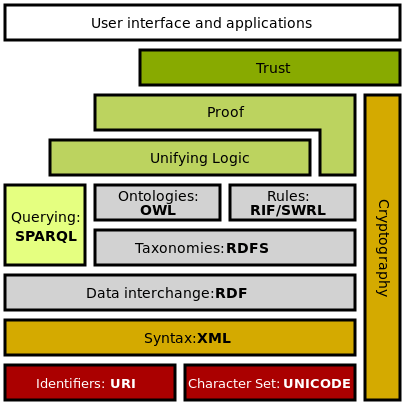
The Basic Structure of The Semantic Web

To implement these URIs we need Resource Description Frameworks (RDFs). RDF is a standard model for data interchange on the Web. It is a framework or a data model for describing resources. RDFs are the formal language to describe the information in the Semantic Web. The goal of RDF is to enable applications to exchange data on the Web while still preserving their original meaning. RDFs comprise  triples. A triple gives a unique identifier so that we can link the data and form a relation between various other data nodes. Multiple triples connected are called Graphs.

In metadata terms, RDF and expressed in (Triples). Triples comprise of three fundamental entities:

  • Object is the resource being described by the metadata record
  • Predicate is an element in that record
  • Subject is a value assigned to that element

SPARQL (SPARQL Protocol and RDF Query Language) and OWL (Web Ontology Language) are the other two technical standards used in the Semantic Web.

Semantic the web is an extension to the World Wide Web and it has made significant strides towards making the internet more seamless, efficient, and scalable. Linked Data is very critical in making this happen. But still, Semantic is not yet adopted and many corporations and organizations are unaware of it. So the focus should be to promote wider adoption of the Semantic Web with better availability of the learning resources.


Too Much Information- Source of your stress?

Input overloading. Information overload concept. Young woman running away from information stream. Concept of person overwhelmed by information. Colorful vector illustration in flat style

Too much information is harmful for us, yes you read that right. In this age of internet, we are surrounded by so much information on all sides, its actually adding onto our stress levels. With so many sources of information just at the palm of your hand be it work related, entertainment or political, we do not even realize how little of it is actually important for us.

“We are now so preoccupied with keeping up with the bombardment of new facts, new developments, and new points of view that we have no time to listen to the past, or reflect on even the most recent history, much less to make a judicious reckoning of its significance.”

-Regis McKenna, public relations specialist.

Due to information overload in workplace, the employees have to deal with tension between work colleagues and loss of job satisfaction. This amount of stress is affecting the health of the employees and even their personal relationships suffer.

Having too much information interferes people’s ability to make decisions and most of the time is wasted in collecting and searching information. Many people believe that internet is the prime cause of information overload over the years. Wherever you go on social media, be it a social networking site or even our e-mail accounts, it is all filled with so much content totally irrelevant, but we scroll through it anyway, reading and taking in most of it anyway even after knowing that it would be of no use to us.

We should be smart enough to decide how much information we actually need. The key is to ‘filter’ and be selective in our information intake. We know it very well that it’s impossible to gather and analyze all the information related to your work and doing so would leave us no time to complete our necessary task.

Most of the information we absorb on a daily basis is largely irrelevant, both to our business and to our personal lives. So much of it is either sensational or celebrity focused, earlier most of the people depended on it to kill their boredom, but now when we are already so busy, we don’t even have the time to be bored but yet continue to do so.

All we need to do is a social media detox and save some time by cutting low content media from our diet and make sure the content that we are following is beneficial to us in some way. Keeping only the useful and content of our interest will help us to keep our stress levels in control, after all we use the internet as way to release our stress so it should definitely not be a source of it.

TODAY’S SOCIAL MEDIA

Social media or the internet plays a vital role in our daily lives. Now with these online classes and work from home has proved it’ But there are always advantages and disadvantages.

Social media is a necessity:

Social media is more than a “trend.” It is a means of living. It gets various jobs executed at a time. It constitutes a precise and professional association and establishes you at the front of the profession you want to grow in. it is not a mere extravagance that can be afforded only by affluent people, it has become an essential requirement of life. Because of social media, businesses increase faster and the advertisements of labels and concepts are made for free. Artists and stars have more than one platform to choose from in order to stay connected with their fan base.

Social media builds connection in spite of geographic remoteness:

The Internet epoch has built long-distance interaction dramatically quicker, simpler, and more affordable than ever before. This, it has been claimed, has reduced the consequence of geographic contiguity in social communications, modifying our world from a “global village” into a “borderless society”. The potential lies in the palms of the user, because the person can, within a single click, publish their thoughts and beliefs with anyone in the world at any time through social media. Don’t apprehend the network: the internet is transforming the method we interact for the better.

Social media is informative:

Social media benefits one to access the world of information in one click. One obtains access to plenty of data, be it science, technology, or as simple as booking tickets for a movie. E-commerce has allowed us to deliver everything anywhere easily. Hence, social media is the digital version of people. It benefits us to join, participate, and discover. 

Social media helps in the improvement of entrepreneurs and brands:

The convenience of using social media in marketing is raising brand awareness. Social media can helps a business to grow its brand recognition by improving intercommunications with a business brand. Brand awareness means the total percentage of target people who know the company exists and what the company offers of products or services. When the brand awareness is developed, the probability of purchasing is improved. Thus, attempts should be made to make the brand a part of the mindfulness of consumers.

Social media causes addiction:

Social media is as bad as alcohol and drugs for millennials. The word “addiction” brings to mind alcohol and drugs. Yet, over the past 20 years, a different type of obsession has developed: addiction to social media. It has the potential to provoke long-term destruction to our emotions, habits, and relationships. 

Social media decreases face to face conversation:

Social media has caused people to lose the skill to communicate efficiently. Social media has led us to have fewer interactions with the people that they connect with. The majority of people have access to social media at any time they want via their smartphones, so this only worsens as larger people begin to obtain smartphones. Since it has become more common, social media has made people have a trend to want to communicate with people online rather than in person because it has made the means easier.

Social media spreads a lot of trick messages and rumors:

Rumors and fabrications have been there since the start of time but on social media, it just gets more dangerous because it reaches across millions of people. Rumors begin as one small action and before we understand it has become another huge issue. Rumors have done a lot of harm and always continue to create anxiety and suffering amongst people. Beware, don’t be an associate to promoting rumors.

Online mode of Education: Is it really advantageous to the Indian youth or there are any limitations too?

Article by – Shishir Tripathi

Intern at Hariyali Foundation
In collaboration with
Educational News

After the arrival of Corona Virus into the country after the months of February and March, educational institutions including schools and colleges were shut down and the normal teaching learning process was hampered. After, a certain time, the Teaching process again started through online mode and till now the same process is being followed.

Now, the question arises that the available mode of teaching is accessible to all the students across India or there are other students left who still are not connected with their respective educational institutions through the new mode of learning?

The normal classroom learning is not possible at present because of transmission of virus amongst the students and that will make the situation even worse than before. Therefore, lectures and notes to the students are given via the online mode with help of apps like Zoom, Google meet, Jio meet, Google Classroom and many more. These apps can only be accessed with the help of a Smartphone. Now, being a developing country, unequal distribution of wealth and resources is genuine in a country like India.

According to a survey by Central Board of Secondary Education (CBSE), at least 27% students do not have access to Smart phones, tablets or laptops for online classes. Such college and school students are facing a lot of problems in their studies

According to a real time progress tracker, 83% of households in India had electricity connection till 2018, and after some tome Modi government claimed that they have electrified India to 100% but everyone knows that laying wire lines, and transformers doesn’t mean that electricity reaches to the place.

Though the data is unavailable, there are villages still left waiting for electricity and hence in such remote areas it is so difficult for a student having a phone or any other electronic device and charging it properly for uninterrupted attendance in the online classes.

Now, there are sudden prolonged power cuts too which occur and can obstruct the power supply to electronic devices which can hamper the delivery of education through online mode from teachers and professors to the students and scholars. The all India average duration of power cuts was 5 hours and 28 minutes on May 2, 2019. And also, in villages sometimes the reason is all unknown to the people behind the sudden power cuts.

There is also a problem of slow speed in congested localities, small towns, villages and remote areas of the country. According to the Akamai Q1 2017 State of the Internet Report, the average internet connection speed in India is 6.5 Mbit/s and the average peak connection speed is 41.4 Mbit/s. Globally, India was ranked 89th out of 149 countries/regions by average internet connection speed and 97th by average peak connection speed. According to telecom industry experts, the slow bandwidth speed in India is due to the high cost of spectrum leading to Internet Service Providers (ISPs) not investing much into the spectrum. The growing number of telecom users and Smartphone users are also cited as one of the reasons for slow speed in the country.

Therefore, taking into consideration the present situation, the online mode of education is the best way possible to deliver knowledge to the students in these tough times of Corona. Also, the problems of unavailability of electronic devices and slow internet speed and proper supply of electricity to each and every household must be ensured so that the youth which is the future of the nation gets uninterrupted education and training through online mode.

Effects of internet

The internet is a global network of inter -linked networks that mainly provide wireless interactive communication. The internet was developed in 1969. It was only in the 1990s that it became available to the public.

The internet has also led to a complete transformation in communication, availability of knowledge as well as social interaction. However there are some positive and negative effects of the internet on the society. 

Postive effects of internet

Effective communication 
It provides effective communication using emailing, and instant messaging service to any part of the world.

A bundle of Information
Through internet we can access the latest news From any part of the world without depending on the TV or newspaper. We can gain wide information related to any topic without depending on the books.

It save time
It improves business interaction and transaction, saving on vital time. Banking and shopping online made life less complicated and it save time and energy.

Negative Effects of internet

Anxiety, depression and sadness
Teenagers and kids Who spends most of the their time in the virtual world gradually move away from the real world and start living in a world of fantasy. And when they are unable to access the internet service they start experiencing anxiety, depression and sadness.

Lack of social interaction
Those who spend a lot of time on the internet end up developing close relationship, friendship or intimate relationship with a lot of individuals. Internet addicts often end up isolating themselves from their families and peers.

Unable to keep schedules
Those who spend a lot of time on the internet they are unable to keep track of the time they spend most of the time in doing browsing, chatting, watching movies and playing video games. As a result, they are not able to keep up with Their schedules.

Conclusion

So, we can conclude that internet has both the negative as well as positive effects on the society. We should not totally depend upon it, we should use it for the limited time. 

7 Online Business Anyone Can Start (No Scam No Investment)

Earning money has always been associated with and restricted to traditional ‘offline’ route. With the Internet taking over a large part of our lives, more people are looking to ways to earn money online to increase their financial inflows.

Photo by Andrea Piacquadio on Pexels.com

However, you should be careful of the platform that you opt for. While there are numerous ways to earn money online, some of these might be fake, thus taking you for a ride. Also, do not expect to earn a huge amount quickly when using online avenues.

1- TEESPRING

Teespring is a free platform that lets you create and sell over 50 kinds of products with no upfront cost or risk. We handle everything, from printing to shipping to customer service. Teespring is for everyone—from entrepreneurs looking to start their own online business, to Creators wanting to offer awesome merch to their fans, to charities looking for a hassle-free way to raise funds, and everyone in between.

Use Teespring tools like stores, promotion codes, buyer messaging, and more to maximize your sales! We can even list your products within the most powerful global marketplaces like Amazon, eBay, and more through Teespring’s Boosted Network.

How do I make money using Teespring?

You choose the selling price and profit for all of your products. When a product sells you get to keep the profit. For example, the base cost of a t-shirt is $10 and your selling price is $24; when you sell a shirt you will earn $14. Once the orders are processed your profit will be available for withdrawal in the Payouts section of your Teespring account. Don’t forget the more you sell the more profit you can earn per product per month.

2- Merch by Amazon

Basically, if you have 100 t-shirts in your account, you could expect to make about … This is a conservative estimate, about $150 a month. If you have 1,000 t-shirts in your account, you can expect to make maybe $1,500 a month. If you have 8,000 t-shirts in your account, you could expect to make about $12,000 a month.

Merch by Amazon is a very cool startup type program by Amazon. It is a pod program where you can sell tshirts, sweatshirts and hoodies in USA. Anyone can participate as long as you have payoneer. For Indians, there is a 15% tax on earnings. (No wonder taxation is theft as we have to pay tax on those earnings in India as well. But then IRS are a bunch of thieves)

3- REDBUBBLE

The designers earn royalties from the sale of their creations. They receive a percentage of the profit and the rest of the funds account for the fee paid to Redbubble and the manufacture of the merchandise. The site then handles the inventory and shipping transactions on your behalf.

The designers earn royalties from the sale of their creations. They receive a percentage of the profit and the rest of the funds account for the fee paid to Redbubble and the manufacture of the merchandise. The site then handles the inventory and shipping transactions on your behalf

4- UDEMY

One of the best features of selling classes on Udemy is the fact that it can become an excellent source of passive income. Once you create and post a course, it can earn you money for a long time without additional work. It just might take more work to market your course to potential students.

For example if a student purchases your course using an Instructor Coupon code, either from promotions to your own audience (e.g., your email list or YouTube subscribers) you can make 97% revenue share. Alternatively if the course is sold via an Affiliate, the split is 50% affiliate, 25% Instructor and 25% Udemy.

5- AFFILIATED MARKETING

Affiliate marketing is one of the oldest marketing practice which gains affiliates a commission in the case of sale based on the affiliate’s recommendation. It is one of the cheapest and easiest ways of marketing as you don’t need to create and sell a product. Just one thing you need to do is to enable a linked connection between buyer and seller and take your commission when the sale is made.

As you see, affiliate marketing is a passive income source. It is highly competitive it is true but still it may be so easy to make money online with affiliate marketing. To be successful, you need to learn what works and what doesn’t while promoting your products.

There are many affiliate marketing works. So, you need to be patient. You can feed your website with qualified content to get high ranking positions and raise awareness, attend affiliate marketing events, seminars or webinars and join a discussion forum or online communities to meet new people. All make a great contribution to develop you. Naturally after these contributions you will be more passionate to make money from affiliate programs. If you are patient enough you will make money with affiliate programs. 

6- YOUTUBE AFFILIATED MARKETING

You can make money on YouTube by doing affiliate marketing, which is including links to products you review and use in your videos that will track a purchase. If someone makes a purchase using your affiliate link, you receive a small commission for the sale.

Another thing about affiliate marketing is the payout percentages as well as how these people track your viewers who are clicking on these links. Every time someone clicks on one of your special tracking affiliate links, a little cookie is put onto that person’s computer to track what they purchase. The best part about the cookies is that if you link to a specific product, they don’t have to purchase that product. Anything they purchase on that website, you get commissions for. So they could click over with your affiliate link and that cookie and decide not to purchase that, but purchase a whole bunch of other things, and you get paid commission off it.

7- EBATES REFERRALS

You can still make money without a blog! In fact, you can make some major coin with the Rakuten Referral Program simply by inviting friends and family, using your social media networks to the fullest – including Pinterest – and even promoting in neighborhood groups and forums.

Have friends and family share your link. If you are saving for something special, and they feel like they can be a part of it, they will likely glady share the opportunity with their followers.

Of course, using the strategies above won’t hurt either. Pay special attention to numbers 3 through 5 and remember – have fun with it, but own it!

MOST LOW-PRICE & AFFORDABLE INTERNET IN THE WORLD

Internet has become the most essential virtual commodity due to the Global Pandemic 2020. Its demand has reached a peak now more than ever. It has been declared as the basic necessity along with Food, Clothing, Shelter and Education.

In most Countries, schools and colleges are functioning through digitalized classrooms which require high speed data. 75% of office goers are working from home and the servers that connects the employers to the employees is kept alive on internet connections.

How can everybody afford the Internet? A recent report by Visual Capitalist reveals how much 1GB of mobile data costs in every country. Let’s have a look at what it costs to stay virtually connected in many Countries of the World:


1) India:

The Visual Capitalist report states that India has the most-affordable mobile data plans worldwide. India offers 1GB mobile data for just under Rs. 7, which is the cheapest in the world.

 Why is data so cheap in India? A significant factor is the country’s intense market competition, driven by Reliance Jio—a telecom company owned by Reliance Industries, one of the largest conglomerates in India. Reliance Jio launched in 2016, offering customers free trial periods and plans for less than a $1 a month. This forced other providers to drop their pricing, driving down the overall cost of data in the region.


2)  Sri Lanka:

Mobile internet in India’s southern neighbouring country, Sri Lanka, costs roughly Rs 38 per 1GB data. Some of the biggest Telcos in the country are Dialog, Airtel Lanka, SLT Mobitel, etc.


3)  Russian Federation:

1GB of mobile data plan in Russia costs roughly Rs 39. This makes Russia the ninth most-affordable country for cheap mobile data plans. Some of the biggest telecoms in the country, which is the fourth biggest smartphone market, are Mobile TeleSystems (MTS), Beeline, MegaFon, etc.


4)  Vietnam:

Mobile Internet in Vietnam costs roughly Rs 43, which according to the latest data, ranks 10th in the list of countries that offer the most affordable 1GB data plan. The biggest telecom operators in the Asian country are Viettel, MobiFone, Vinaphone.


5)  Italy:

Italy ranks fourth in the list of countries that offer the most affordable data plans worldwide. In Italy, 1GB of mobile data Rs.32.


6)  Israel:

 1GB of mobile data in Israel costs roughly Rs 8, making it the second most-affordable nation for internet usage.


7)  Ukraine:

Ukraine shares a similar per GB mobile data tariff cost as Kazakhstan, where 1GB mobile data costs Rs 34.


8)  Somalia:

1GB mobile data in Somalia costs roughly Rs 38, slightly cheaper than Sri Lanka’s per GB cost. The biggest telecom operators in the African country are Hormuud, Telecom Somalia, etc.


There has been a significant surge in the number of internet users over the last few years, which has led to telecom service providers competing against each other and lure consumers with the most value-for-money packs. the internet in India is quite affordable if you compare it with the rest of the world. 

Social media: a bane or boon

Vaishali Singh

Social media is creating a sense of competence in people’s mind, and this competition is making people ungrounded, it’s becoming the major reason of mental crisis these days, amidst this pandemic COVID- 19 outbreak people are not engaged in more productive tasks and in order to utilize their energy and satisfy the curiosity of exploring life they prefer to log in to the social media applications and wasting all their time scrolling their mobile phone’s screens endlessly, but have you thought of the consequences of using of these useless mobile applications which are distracting you from doing the necessary tasks and making you lazy and feel unproductive. The way social media is affecting your mindset is horrible, the moment you wake up, you take up your cell phone, and keep checking the notifications you’ve received overnight, which is highly unhealthy for your mental health, social media is making you more like a robot and your cell phones are becoming your masters, you just keep following the notifications you receive whole the day, the over usage of social media affects your sub conscious mind and your sub conscious plays the major role in shaping up your thoughts and mindset, which is directly proportional to the actions you take to acheive your dreams, but it’s over usage tires your brain and reduces your chances of executing the important work tasks. So, this is how your cell phones are becoming the reason behind your failure, but you’ve probably heard that every coin has two faces similarly it’s up to you that how you use something whether it’s your cell phone, the internet access you have or your social media account, if you use it to fulfil your purpose, to acknowledge yourself, to educate yourself, to fulfill your dreams then it can play the role of BOON in your life but if you use that same cell phone, that same social media just for passing the time, reading the memes, reacting on the posts endlessly, watching the comedy videos, in simple words, (seeking the temporary pleasure) instead of utilising your time in executing the important tasks, then it can become the BANE of your life. You won’t realise it today, you will notice the outcomes of your actions overtime and only then when you’ll notice your actions keenly. Now, while reading this blog post a question would definitely arise in your mind and that is, what can you do to prevent your life from getting controlled by the social media, the answer is very simple it’s impossible to change your life overnight, but the continuous efforts you put overtime can help you to change your life for better, now you have to make a proper schedule and would have to set a goal for yourself that will keep you motivated, just uninstall the unnecessary applications and data from your mobile phone, and start working on the path of your dreams right away.

https://www.pexels.com/photo/iphone-technology-iphone-6-plus-apple-17663/

Internet Theft: Can the government be considered as a white collar criminal?

With the constant rise in digitalization, the computer stores information in binary data form and deeply on the data form which is a way that the device tracks a lot of information in an effective way. Subsequently, with the invention of personal computers and microprocessors the idea of using computers for exclusive use of an individual rose. The process was not only affordable but also made management and storage of information easier. But this evolution has also led to increased interactions and sharing of private data using computer, ultimately leading to illegal activities known as cybercrimes. Identity theft is one such crime. Identity theft refers to a crime when a person fraudulently obtains information of another person and later uses it for economic or personal gain.  The theft happens in a two-step process. Firstly, the personal information gets stolen. Later, the information gets used to impersonate the victim and commit the fraud.  Identity theft has already made its place among the fastest growing sector in not only the developed countries but also the developing countries. The primary reason for US being affected stands firm to the fact that all the personal information is linked to a single social security number. The number allows an individual to avail all government schemes and records related to the individual whose social security number it is. This allows very little safeguarding to the individuals whose number gets leaked. Landing on Indian records, there has been an 11% increase in identity theft and ransom ware, followed by phishing attacks increase to 9%.  India also been ranked amongst top 5 countries to be affected by cybercrimes in 2013.  Problematically, there is a very low conviction rate despite the high levels of cybercrime.

There are provisions in Indian Penal Code, 1860 which governed the crimes of forgery and fraud but it was later amended by the Information technology Act, 2008 as it also included the electronic record, ultimately widening the ambit of such computer data related crimes. Provisions such as section 464 criminalizing forgery, Section 465 criminalizing making of false documents, section 468 criminalizing forgery for purpose of cheating, Section 469 criminalizing forgery for purpose of harming reputation, Section 469 criminalizing the use of a genuine document as forged and section 474 of having possession of a document with intention of using the genuine document as forged were coupled with IT Act. Section 420 could be used in circumstances when the Act requires including unique identification information of any individual. 

In the present scenario, the IT Act, 2000 is the main legislation governing cybercrimes in India. The objective of the Act, however, was to mainly recognize e-commerce and that’s why it did not define cybercrime. Before the 2008 amendment, the Act could impose civil liability for unauthorized access to computer or network which would have facilitated an illegal act under section 43 by way of compensation under the pecuniary limit of one crore. Also, Section 66 criminalized hacking which would result to destruction, deletion or alteration of any resource in the computer. 

The Amendment of 2008 introduced the term ‘Identity Theft’.  Section 66C of the Act governs the crime and provides punishment for the same.

The ‘sensitive personal data’ however required stronger laws to be formulated which could ensure the protection of private data. The ambit of the term has been defined by IT rules, 2011. It involves the data related to one’s password, financial information, sexual orientation, biometric information, medical records. Such a clause would be exceptional to the State or central government for monitoring, surveillance or interception. The same was provided under Section 69 of the Act. 


Data Protection Bill 2019 and Cyber-Crime are often used together these days. Not scholarly but indeed since the bill does come with serious implications for all technological and digital service provider companies and has already generated controversies. Despite India’s attempts to create a complex legal framework with the objective of protecting data but it comes with shortcomings which are inevitable. On a bare reading, there are three serious flaws with the current draft.

Firstly, the section of data localization requires data fiduciaries to store atleast one copy of personal data on a data centre or server which is located in India. However, the centre holds the upper hand to exempt categories falling under the personal data. Also the centre can declare certain datas as critical and require them to be stored in India. In the present, this would allow all the social sites also known as foreign internet services to physically able a user data in the country. This would allow law enforcement easy access to this data, which brings to the second issue.

The law enforcement access to data section would allow processing of data considered personal by an individual in the hands of centre and in the interest of security and public welfare, the state can utilize the information which would not be illegal as it would be according to procedure established by law. Now, this access stands as a threat to the right to privacy that exists in India. If combined with the section of data localization, the government shall have access to information about users in social media.

However, this legal framework for surveillance by the government is governed by the judgment in PUCL v Union of India in which the Apex Court stated rules to concentrate the power to order and review surveillance in the executive body which doesnot require court orders or supposedly, any third party review. The measure intended to act as a stopgap measure by the SC and if any subject falls short of international human rights then there will be very little to safeguard the citizens.

The last section is about the regulatory structure created. The Centre has control significantly over the controls. The bill further gives powers to data protection authority to appoint its members by merely the recommendation of an outside committee. For a person to be an effective regulator of an institution, one must have sufficient time to learn and the bill providing only five years of term seems ineffective.


The term white collar crime has grown to define the fraudulent crimes of business and government professionals over time. The characterization of such a crime is violation of trust, concealment of information, deceit through information and categorically not dependent on any kind of force or violence imposed. White collar crimes end up having huge impacts on the society. There have been various scams in the country like the Havala scam, 2g scam, fodder scam, banking scam and many more. This does not necessarily indicate towards the entire involvement to be criminal but it merely requires one financial fraud in greed of money or power to commit such an act. Cybercrime stands as one of the biggest causes to these types of crime in the country. It is the information that single handedly threatens a person’s security and financial status.

Since the actions of Government have direct impact on the society, it is easily identifiable that when a white-collar group is discussed, the Government is a part of it.

Now, bringing the recent proposed bill and the white-collar crime concept together, the question stands whether the bill in the name of data protection is actually for protection or is merely a tool of mass surveillance by the Government.

The SC in its judgment of right to privacy in K.S Puttuswamy case declared the right as a part of Article 21 guaranteed under the Constitution. The judgment clearly stated that the right is a natural right and is a measure to protect an individual from the scrutiny of the State. Thus, any action by the State would undoubtedly result in violation of such a right and would be subject to judicial review. But the right clarified to have reasonable restrictions which empower the State to impose restrictions in accordance with a law in the interest of State’s need and also the means should be in proportion to the objectives of law.

Even if not called the worst but if the bill is passed, it would bring in major implications especially in areas of national security, foreign investment as well as international trade.


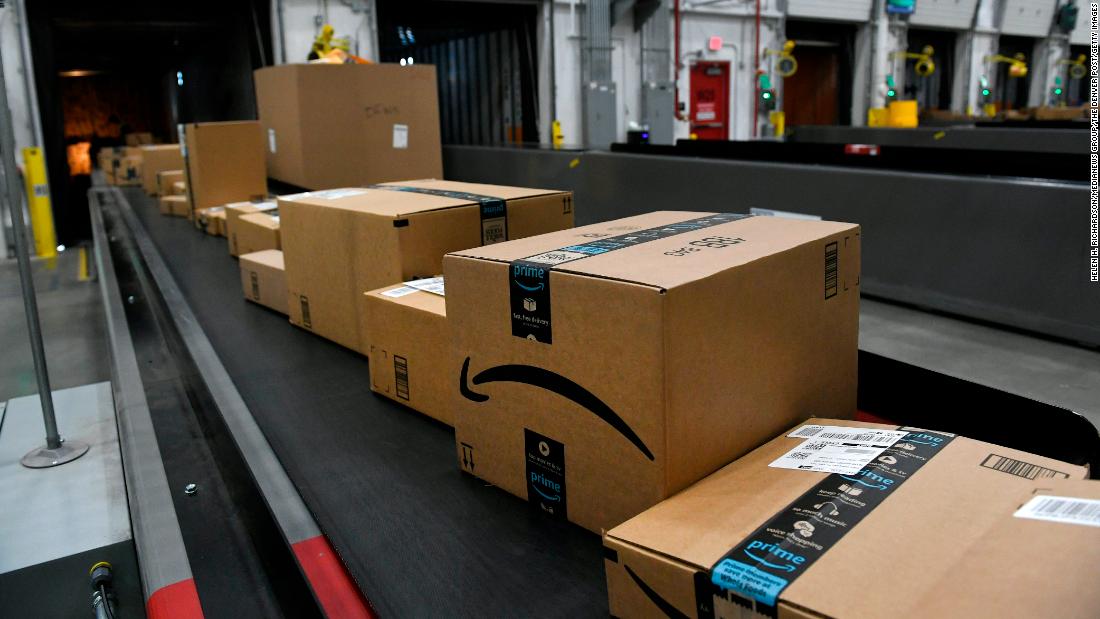
Who delivers the Amazon cardboard boxes???

Cardboard boxes that have been used for generations and thrived in the age of e-commerce continue to flourish or could the cardboard box be facing a new challenger? Cardboard boxes are a very big deal within the U.S. The United States is the Saudi Arabia of trees. Someone’s going to make the first box and that’s almost inevitably a mill generally in the Southeast United States. China certainly doesn’t have trees and India the extent they do have trees they’re not necessarily the right types of trees and shouldn’t be dedicated towards making boxes for us. The box business grew rapidly up through 1999 when the U.S. coordinated box market had its peak shipment. Starting in the early 2000s the U.S. corrugated box market faced multiple economic obstacles.

The great recession dragged on box demand and even after the recession demand continued to slow for commodity like soda and for the boxes that transport them. The move to digital devices also coincided with a drop in demand for copy paper and newsprint. But box makers found a grace in e-commerce sales and Amazon sale specifically which were growing at mostly integer rates within the recession and post-recession years. Those e-commerce sales have become a significant market for the containerboard industry. In 2018 told a U.S. e-commerce sales were estimated to be $512 billion almost 50 percent higher than in 2015. Amazon captured 48 percent of those sales. Most estimates are that e-commerce accounts for about 10 percent of the U.S. box market. Amazon accounts for close to 5 percent of U.S. box demand. By our estimates they are clearly the single largest box user in the US. International Paper with a third of the market I think does closer to 50 percent of all the amazon boxes evidently they got a bit more share than perhaps some of the smaller players.

Amazon's incredible, vanishing cardboard box - CNN

Amazon said they deal with most of the big box makers across the U.S. according to analysts. Those manufacturers include International Paper, WestRock, Packaging Corporation of America and Georgia-Pacific. Some investors were turning to these companies as a way to invest in the e-commerce giant without having to purchase Amazon’s pricey stock. People didn’t really start talking about buying International Paper or WestRock as a secondary investment in Amazon till about the last five years. Despite the boost from e-commerce sales the box business still isn’t growing all that much. And since 2018 their stocks have mostly underperformed the S&P 500. In 2018, 69 percent of International Papers total revenue came from the box business and that sales volume has been mostly flat for the past five years. Although the big producers sold less boxes in 2018 than in 2000, industry consolidation has dramatically narrowed the fields.

The handful of big players remaining are based in Memphis, Tennessee, Atlanta, Georgia and Lake Forest, Illinois. Analysts have told CNBC that substantial industry mergers have made it easier to collectively hike prices and those price increases have helped drive revenue. There are portions of the business that are in indisputable secular decline but if you’re in the brown part of the business, making these boxes, that’s been some very welcome growth. But those extra boxes piling up on people’s doorsteps have led to a backlash from disgruntled customers who are sick of receiving golf ball sized products in supersized boxes. It used to be that you’d order a toothbrush and it would come in three giant boxes and you’d say to yourself, what is this? Well, Amazon is trying to rectify that by using fewer boxes and using other types of packaging where appropriate. With e-commerce packaging underfire Amazon decided to change the way they do shipping. In 2008, Amazon introduced the Frustration Free Packaging program. It aims to reduce the extra packaging created when retail packaged products are placed inside Amazon boxes to be shipped. Instead, products certified in the program that are roughly the size of a blender or larger need to be packaged in their own ready to ship boxes. And those boxes also need to be made of 100 percent recyclable materials. For customers that means that the packaging is easy to recycle and the box is easy to open without all the excess packaging materials.

Use That Pile of Empty Amazon Boxes to Do Something Wonderful ...

Amazon offered vendors an incentive of a dollar per shipment to modify their packaging. And starting August 1st 2019 Amazon is charging a $1.99 penalty for each product shipped that needs to be reboxed. And basically the point of this deadline is for Amazon to get out of the business of packaging. They want their vendors to send them boxes that Amazon doesn’t have to touch or rebox. Over the last two years we have invented two different kinds of flexible mailers. One is the blue and white all plastic mailer. We’ve recently launched in the last six, eight months a paper padded mailer that’s actually fully recyclable with the paper stream. Amazon said they made about 10 million shipments using the paper padded mailer and depending on the month the plastic mailer is used about 20 to 30 percent of the time. So really when we come down to deciding if the product is of the size it can go on a mailer, it’s not likely to be damaged by going in the mailer, the mailer is always the better fitting option and frankly is easier for the customer to choose to recycle than breaking down a corrugate box. We’re driving in that direction for many different reasons. But those plastic mailers generally are not accepted in municipal recycling programs and you’ll need to bring them to a store that accepts plastic bags. The latest stats from the EPA show that corrugated boxes were recycled at a rate of 92 percent in 2015 while plastic bags, sacks and wraps were recycled at a rate of 13 percent in 2015.

AMAZON E-COMMERCE SELLERS, IT'S TIME TO REVIEW YOUR ADVERTISING ...

When you think about what is the greatest pain point for the consumer after having it get there safely arrive on time people are concerned about receiving something that is plastic or made a poly because of the environmental concerns. Some waste management companies say plastic packaging also causes problems for the recycling systems. Plastic mailers get caught in the recycling machinery slowing down the process and raising the costs for recyclers and sometimes contaminating entire bundles. Until Scotty on the Enterprise can beam the products from the warehouse to your living room I think Amazon’s going to be good for the corrugated business. I think there’s going to be noise I think you’re going to have challenges from time to time where people say, “Should we try and the plastic pouch?”, in the long run plastic is going to be on the wrong side of history. Because Amazon is a market leader in the U.S. e-commerce sector any move away from cardboard to plastic mailers could signal a shift for the entire industry. The corrugated box could be about to undergo a major facelift. We’re seeing some major trends among consumers and what they’re expecting from e-commerce and the first one is actually this desire for increased engagement with the package. In 2015, Amazon partnered with Universal Pictures and Illumination Entertainment to ship orders in bright yellow delivery boxes featuring cartoon characters from the movie Minions. The boxes promoting the movie and a special Amazon U.R.L. dedicated to shopping for merchandise from the film.

The conflict of Kashmir…

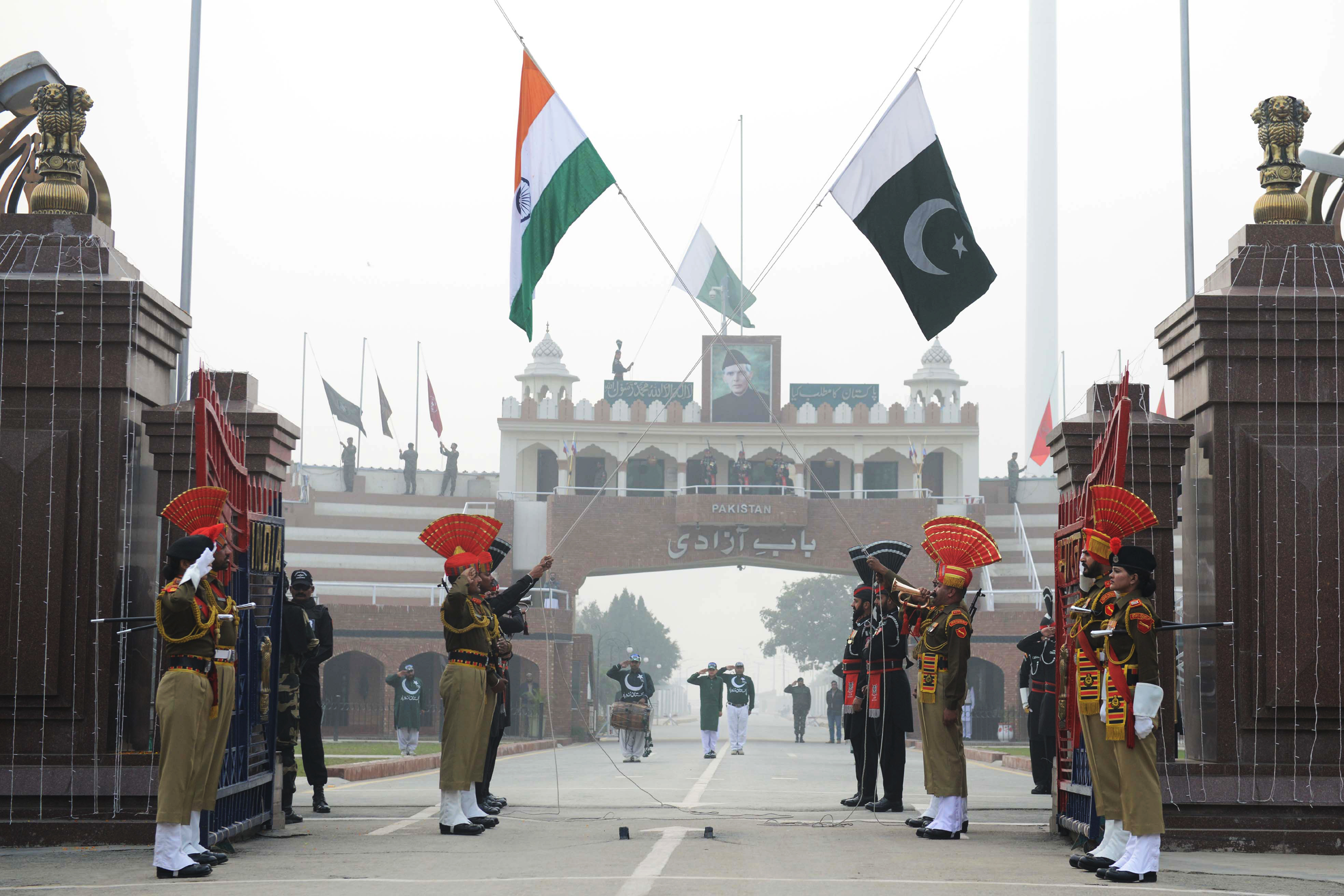
On February 14th 2019, a suicide bomber attacked a convoy of Indian security forces. “We’re getting reports of multiple casualties in a roadside…” He killed at least 40 Indian soldiers here in Kashmir. “The deadliest attack the region has seen this century.” The bomber was part of an Islamic militant group based in Pakistan. “Jaish-e-Mohammed claimed responsibility for that attack.” 12 days later, India carried out airstrikes in Northwestern Pakistan. Then Pakistan shot down at least one Indian aircraft around here. “The most serious escalation in years.” Kashmir is one of the most disputed places on Earth. Over the course of 70 years, it’s been at the center of three wars fought between two massive armies. It’s heavily occupied by more than half a million Indian troops and a deadly collection of militias and terrorist groups.

How Memory of Indian Partition Is Preserved Across Borders | Time
Kashmir is the stage for the relentless conflict between India and Pakistan. But focusing on the two countries can obscure what’s really at stake: The voice of Kashmiris who are caught in a vicious cycle of violence. Kashmir is one of the most strategic places in the world, where 3 powerful countries collide: India, Pakistan, and China. China invaded and took this slice of Kashmir from India. And was given this one by Pakistan. India and Pakistan control these parts, but lay claim to more. This region is at the center of a brutal conflict over these disputed borders. So it’s important to start when they were being drawn. In the mid-1800s, India was a patchwork of several hundred provinces and princely states under British rule. A century later, when British India won independence, the British left and hastily decided to split the region into two. These areas would be a new Muslim-majority country, Pakistan. And this would be the mostly Hindu, but secular, India. The partition was bloody. “Communal hatred flares up within the Punjab.” “1 million people become refugees overnight.” “They flee from savagery and butchery that has never been exceeded, even in India’s stormy history.” Amid the chaos, some princely states were given the choice to join either country. In most cases, the ruling monarchs followed the will of their people. But this state, called “Jammu & Kashmir” was different. It was right along this new border and had a Muslim-majority population, but was ruled by a Hindu monarch. When asked to pick a side, the ruler chose to stay neutral Fearing that the monarch would join India, the Kashmiri population rebelled here in 1947 Armed tribesmen from Pakistan soon joined the fight.

India and Pakistan in Kashmir border skirmish - BBC News
The monarch turned to India for military help and in exchange agreed to join them, which sparked the first Indo-Pakistan war in Kashmir. “Continuing thus increased the threat to world peace and brought the dispute to the eye of the United Nations . The UN Security Council brokered a ceasefire in 1949, which established this line with Pakistan controlling this side and India this one. It also asked Pakistani tribesmen to withdraw and Indian troops to follow, so that Kashmir could hold a direct vote to decide its own future. But neither held up their end of the deal. Pakistan argued that Kashmir’s Muslim-majority population rightfully belonged with them. While India insisted that Kashmir was handed over to them by the Hindu monarch. So they doubled down and added Kashmir to their constution. Both countries continued to tighten their grip around it for many years . “Kashmir. Fighting is going on and heavy casualties in men and equipment have been inflicted on the aggressor.”

India-Pakistan: Latest news on Kashmir crisis
In 1965, the second India-Pakistan war broke out in Kashmir. Thousands of people were killed between the huge armies on both sides. A ceasefire ended the war, but didn’t change this line. Kashmir was kept divided and occupied. And another war broke out in 1971. This time the focus wasn’t in Kashmir — it was in East Pakistan. Here, India helped rebels fight for independence and dealt Pakistan a devastating defeat. This region became a new country, Bangladesh, and Pakistan lost its eastern half. This made Kashmir more important than ever: It became one of the most militarized places on Earth, as India and Pakistan deployed planes, tanks, artillery, and soldiers along the Line of Control. On the political front, in ’87, India reportedly rigged an election, declaring a pro-India party as the winner. Now this was a big turning point for many Kashmiris, who felt they were again denied the chance to vote. Thousands took to the streets in Indian-controlled Kashmir to protest the occupation. But India met the movement for independence with harsh resistance. Which quickly escalated to more violence.
“In January security forces opened fire on demonstrating separatists, turning a two-year old struggling movement into a full-blown popular uprising.” “More than 600 people are killed in clashes between troops and separatists.” Kashmiri militias, just like the Jammu and Kashmir Liberation Front, started recruiting Muslim youth to fight for independence. And increasingly attacked the Indian military. Pakistan saw an opportunity in this insurgency. They helped introduce a new kind of militant group: Radical Islamic fighters who fought for a more pro-Pakistan Kashmir. By the mid ’90s, these groups dominated the insurgency. India responded with incredible military force, deploying 500,000 troops to Kashmir. And they cracked down on militants and protestors. Unarmed civilians were killed and many more were forced to flee the violence. And in ’98 the stakes were raised yet again. “Today India conducted three underground nuclear tests.” “Pakistan today successfully conducted five nuclear tests.” Kashmir became a battleground between two nuclear-armed nations and another war broke out in 1999. “More evidence of the attacks being launched on the Indian-controlled area of Kargil.” “The past two days have seen a number of the fiercest fighting thus far .” “Militant Muslim fighters have also crossed over into some parts of Indian-ruled Kashmir.” The 1999 war ended with another ceasefire, but that did not stop either country.

India-Pakistan cross-border shelling hits Kashmir | News | Al Jazeera

Over the years, Pakistan’s militant groups got bolder and launched terror attacks in Kashmir and outside of Kashmir. In 2001, members of Lashkar-e-Taiba bombed India’s parliament building in New Delhi killing 14 people. And in 2008, 10 militants from the same group killed 174 people and wounded 300 in Mumbai. Meanwhile, Indian military cracked down in Kashmir, firing bullets and pellets on unarmed protesters. Leaving hundreds wounded and blind. This is the vicious cycle of violence. The Indian Army’s crackdown drives some Kashmiris to join Pakistani-backed militant groups, who carry out violence against the Indian forces. It’s a cycle that Kashmiri civilians are stuck in the middle of. Which brings us back to 2019. The suicide bomber was 19-year old Adil Ahmed Dar from Pulwama, Kashmir. According to his parents, in 2016, Indian police officers stopped him and humiliated him by forcing his face into the ground. The same year he was shot in the leg at a protest. The next year, Dar left home with his brothers, to join Jaish-e-Mohammed, a Pakistani-supported militia that radicalized him and trained him to be a suicide bomber. A year later, he drove explosives into an Indian military convoy. For more than 70 years India and Pakistan have driven a cycle of violence, retaliation, and exploitation in Kashmir. But beneath it all is the Kashmiri’s wish to make a choice. A wish that continues to be suppressed, again and again, by violence.

Why economy of India is slowing down???

India is one among the world’s fasting growing economies. It had been touted as an economic and geopolitical counterweight to China. But recently its growth fell to its slowest pace in six years. Investment has weakened, and unemployment has risen. So what’s causing the slowdown, and how can it be reversed? Since the turn of the century, India’s economy has grown at a rapid rate, helping transform the country. Between 2006 and 2016, rising incomes lifted 271 million people out of poverty, meaning the proportion of Indians still living in poverty has fallen dramatically, from around 55% to twenty-eight . Access to electricity has also improved. In 2007 just 70% of the population had access to power. By 2017, that grew to nearly 93%.

India's economic growth likely to remain subdued in near future ...
More recently, the Indian government constructed around 110 million toilets — a huge step towards better sanitation designed to prevent the practice of open defecation. It’s a signature program of Prime Minister Narendra Modi, known as Swachh Bharat, or Clean India. All this development has been supported by a booming economy, but as lately , that expansion has begun to run out of steam. In the third quarter of 2019, India’s economic output grew by 4.5% – making it the primary time the country’s growth dipped below 5% since 2013. For context, 4.5% growth remains much above that of developed economies just like the U.S., But with 12 million Indians entering the workforce per annum , economists say the country needs annual growth rates to remain above nine percent to make sure there are enough jobs. So, what’s causing this recent slowdown? Well, officialdom argue turbulence in international financial markets is guilty.

Economy News, Latest economy news India, Indian Economy features ...
Political uncertainty and U.S.-China trade tensions mean confidence levels among investors and consumers everywhere have sunk. The United Nations has even warned that a global recession in 2020 is now a “clear and present danger”. But back to India – many economists say the country’s growth problems are literally self-inflicted. One obvious culprit is the shadow banking sector. During the 2000s, India saw an investment boom. It was fuelled by state banks dispensing a load of loans for giant infrastructure projects. But some of the companies taking advantage of these loans couldn’t keep up with the repayments. That meant the state banks weren’t getting paid back and therefore struggled to give out new loans. To keep business moving, shadow banks stepped in. These financial institutions, which operate like ordinary commercial banks but don’t follow traditional banking rules, eventually made up an estimated third of all new loans nationwide. The loans played a pivotal role for the millions of small businesses and consumers who would otherwise have no access to credit. But in 2018, shadow banking giant Infrastructure Leasing & Financial Services, defaulted on its debt repayments. Its collapse sent shockwaves through the economy and shook up more traditional banks that had supported the world.
It became harder for people to shop for expensive items like cars. That hurt India’s automotive industry, which is one among the country’s biggest. It employs about 35 million people and makes up about 7% of India’s GDP. Last summer, the industry suffered its worst sales performance in nearly 19 years, and reports suggest tens of thousands of workers are laid off. The agriculture and construction sectors have also been hurting, with small and medium businesses being hit the hardest. The country’s percentage has been on an overall upward trend since July 2017, rising several percentage points to 7.7%. Higher unemployment means consumers are buying less, resulting in the unfortunate cycle of slower manufacturing, production, investment and job creation.

Indian Economy Will Face Adverse Affects Of Coronavirus Gdp To ...
A survey from the Reserve Bank of India found consumer confidence has fallen to its lowest level in five years. But Indians still have a positive outlook for the longer term , with most consumers expecting to feel more optimistic during a year. However, if things don’t improve, debt could become another issue. Expecting better days ahead, many households have continued to spend, by taking out loans and dipping into savings. Household savings as a proportion of GDP has fallen from 23.6% to 17.2%. Meanwhile, household debt has surged to 10.9% during the same period. Critics say the govt in New Delhi has did not spot these risks and hasn’t done enough to urge the economy moving again. The Reserve Bank of India’s former governor Raghuram Rajan recently blamed the lack of significant reforms and a slowdown in investments since the global financial crisis. Even the country’s chief economic advisor recently admitted reforms are needed to form India more friendly to investors.
India has cut its corporate rate , but labor and land laws are still extremely strict. He also says the country must become pro-market, instead of just pro-business, to avoid costly government bailouts of failing sectors. But not all reforms have been good to the economy. In 2016, Prime Minister Modi tried to crack down on corruption, counterfeits and evasion by banning high value bank notes. In one night, the cash ban made 86% of all cash invalid. Three years later, many analysts say the policy disrupted the economy and did not achieve many of its original goals. In 2017, a replacement nuisance tax placed small businesses struggling and a few of them were forced to shut . In mid-2019, India’s government introduced a controversial new tax on foreign investors. Consequently, India’s stock exchange suffered its worst July performance in 17 years. Just one month later, the measure was scrapped.
The government has now refocused its efforts on international trade and investment, and thus the recent changes to the corporate rate could indeed help attract businesses and investors to India. But if the country wants to be a part of the world’s largest supply chains, it’ll need low and consistent tariff levels to encourage outsiders to take a position for the long term.

The country’s shifting export policy has harmed several of its largest industries, particularly clothing. India’s share of the worldwide apparel market has increased only slightly within the past 20 years. And though the Indian workforce is vast, both Bangladesh and Vietnam now export more. On top of that, the country’s import tariffs on the average are much above the world’s biggest economies. They’re also among the highest of the world’s emerging economies. Even U.S. President Donald Trump has called for the country to bring down its duties.

Has India’s growth actually slowed the maximum amount as we think? The government’s former chief economic advisor Arvind Subramanian caused a good little bit of controversy in June 2019, when he claimed the country’s official stats probably overstated GDP growth by 2.5% from 2011-2012 to 2016-2017. He says the bottom line is that India never recovered from the global financial crisis. The government denies this. But none of this has hurt Prime Minister Modi at the polls – he won by a landslide in the most recent election. So how will he keep his promise and double the dimensions of the economy by 2025? Many economists insist a well-explained economic vision would help. As would more long-term investment, better skilled workers and enhancements to infrastructure. It may not matter who or what’s responsible for India’s recent economic challenges, but bottom line – India’s economic process must recover , and fast.

Kabaddi- The new World Sports!!!

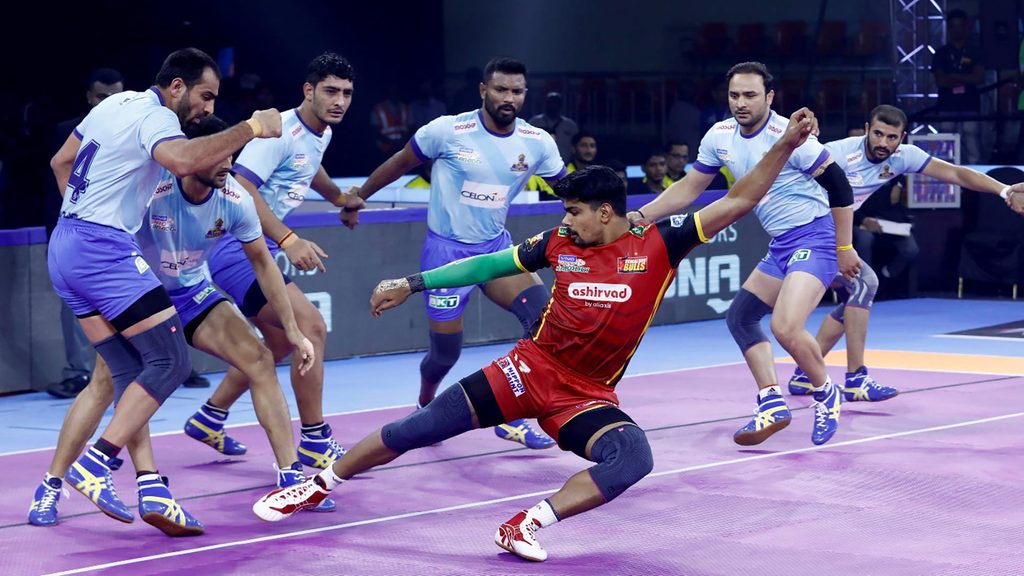
Kabaddi is played on a 13×10 meter court and is separated into two halves by a midline. The game is played between two teams made up of seven players each. The teams alternate between raiding and defending. The raider’s objective is to go to the other half of the court, tap one or more of the defenders and return safely within 30 seconds. However, the raider must start repeatedly saying “kabaddi” before he crosses the midline and can’t stop repeating this word until he crosses back over to his team’s side. If he stops saying “kabaddi” on the opponent’s side of the court, even for a split second, he is out. He picks up one point for each defender he touches, but he must also avoid being tackled to keep the points.

Five raiders who set the vivo Pro Kabaddi Season 7 stage ablaze

This is difficult as he can face between one and seven defenders at the same time. The defenders have to work together as a unit, avoid the raider’s tap and failing that, stop him from returning. Defenders get one point for a successful tackle. Any player that steps or is forced out of the court is then eliminated. UP Yoddha represents the northern state Uttar Pradesh. The team is in its second season in the Pro Kabaddi League and Rishank Devadiga is the team’s captain. So, kabaddi is all about a body contact game. It’s basically like a rugby game. You have to be strong, you have to be fit, mentally fit and also agile on the mat. In one of interview they were asked when, what’s the atmosphere like? How much pressure was there on him as captain?… He replied, Pro Kabaddi started they were told to face the camera, the audience, and everything. It was a bit nervous at the start, but then they enjoy the atmosphere, enjoy the matches.

10 Things You Need to Know About Rishank Devadiga

Kabaddi as a professional sport is a relatively new thing. Until recently, it’s been seen as more of a hobby only played outside the cities. Kabaddi was looked as a rural, rustic sport. It was a sport that was not embraced by urban India, completely overlooked the sport. The settings of the sport was such that it used to be played on dusty bowls. Kabaddi on television? Completely unheard of, “Why would somebody watch it? How are they going to present it?” And that was what aggregated people to come and sample the sport. In other sports, in cricket, for example, you have to wait for a four, or a six, or when a wicket falls. That is the high point. In soccer or football, it’s a goal, similarly in hockey. In kabaddi, every 30 seconds is a high point. It has got the potential of either being a successful raid or being a successful tackle.

PKL 7 Pro Kabaddi League (PKL) 2019: Full Schedule, Fixtures ...

The idea behind the Pro Kabaddi League or PKL started back in 1994. However, it wasn’t until 2014, 20 years later, that a broadcaster, Star Sports, came on board. The Pro League, now in its fifth year has seen considerable growth in both investment and audience numbers. From 2016 to 2017, the PKL increased its viewership in India by almost 100 million. And while it’s still second to India’s premier T20 cricket competition, the Indian Premier League, domestically, the Pro Kabaddi League is more popular than the Fifa World Cup, one of the world’s most- watched sporting events. Investment in the league has also increased. In 2017, Star Sports signed the biggest sponsorship deal in India for a non-cricket sport, worth more than $40 million. As a result player salaries have also increased. Following the 2016 player auction, the highest paid player was on just under $130,000 This year it’s $210,000. For team owners and stakeholders in the sport, more investment will help attract more young players to the game. What ultimately a sport stands on is, what does it do for its players? So, what we have been able to do is to make kabaddi athletes aspirational for sports lovers in India. Player salaries have gone up and they definitely see themselves in the front line of the committee of sports persons in India. Which means that increasingly being a kabaddi athlete will become a viable career. That is at the heart of any sport. There are also signs of the sport growing outside India. At this year’s Asia Games neither the men or women’s India kabaddi teams won gold, and the men’s team didn’t even make it to the final. Something that caught the world’s attention. Of course, we are the country who lost, which is bad for a fan, but then for our game of kabaddi, it’s an ultimate manifestation of how the game is growing.

Asian Games 2018: Men's Kabaddi Team Fails To Reach Final For ...

Cyber Crime: How to tackle it?

INTRODUCTION

The past two decades have witnessed an invasion of technology in almost all the spheres of human life. This has led to an increased dependency on technology. Thanks to information technology,the world has made paradigm shifts from the offline to online domain. Everything,from banking,stock exchange,healthcare, education can be controlled and monitored using technology. But as there are two sides of a coin, technology has also two sides of it i.e. pros and cons. One of the major cons of technology is cyber Crime.

What is cyber Crime?

Cyber Crime is a crime in which the computer is the object of the crime such as hacking, phishing and spamming or is used as a tool to commit an offence such as child pornography,hate crime etc. Cyber criminals may use technology to access personal information, business trade secrets or use the internet for malicious activities such as online monitoring of another person’s activities, unauthorized users who can access their personal and sensitive information.

A person who gains unauthorized access to the system is known as a hacker. Theft involves the download of copyrighted material by violating the copyrights. In the case of electronic funds transfer crime , a person illegally gains access to another person’s bank details and this may lead to financial losses. E- mail bombing involves sending a large number of mails over the network in order to crash th server. A very common cyber Crime act is sending the virus as an attachment via mails. This virus can be used to extract the data from the system and jeopardize it in some cases.

Victims of cyber Crime

National and international financial institutions , banks and security agencies fall victim to the cyber criminals. In many cases,they have to pay a lot of money to the criminals in order to prevent the misuse of their data .The social media is driving the world crazy. But,at the same time,it has become a breeding ground and platform for cyber Crime. Thanks to the sharing culture of social media ,people tend to share a lot over the social media platforms. This information is used by cyber criminals personal and sensitive information of other which can be late later misused on. The impostors create fake social media platforms and post misleading information about the concerned person. This commonly happens with public figures and is an intention to malign and harm the image of the person.

Necessary steps to secure one’s own account

  • People need to be very careful about their acquaintances and the degree to which they divulge in their personal information on social media. It is best to stay away and not accept invites,as well as requests from unknown people.
  • One should avoid sharing personal information such as passwords with anyone. The password needs to be strong enough so that the hacker cannot crack them. In order to increase the strength of password, one can make use of alpha- numeric values and special symbols. In fact,one needs to make sure that there is never a common password for all accounts.
  • It is best to refrain from clicking on the pop ups and unknown website links. One needs to make sure that all the transaction that happen online needs to take place through a secured gateway. One must abstain from saving the bank account details on the websites. The mails which make claims about winning a prize money are malicious and must be ignored. A good – quality antivirus software must be installed on the device.
  • E- mail service provides as well as many other online platforms ,have started multi- step verification process in order to secure the user’s account.

Law against this crime is not strong enough

The biggest concern with regards to cyber Crime is that it gets tough to uncover the identitybof the criminal. A skill law enforcing agency is required to deal with this crime. The Information Technology Act,2000 passed by Indian government deals with the domain of cyber crime. But this act has certain loopholes that need to be plugged in order to strengthen the cyber security. Besides,it is important for the government to create awareness among the people about the exponentially rising cyber crime and ways to deal with it.

How IPL is making millions & billions of dollors in every single match!!!

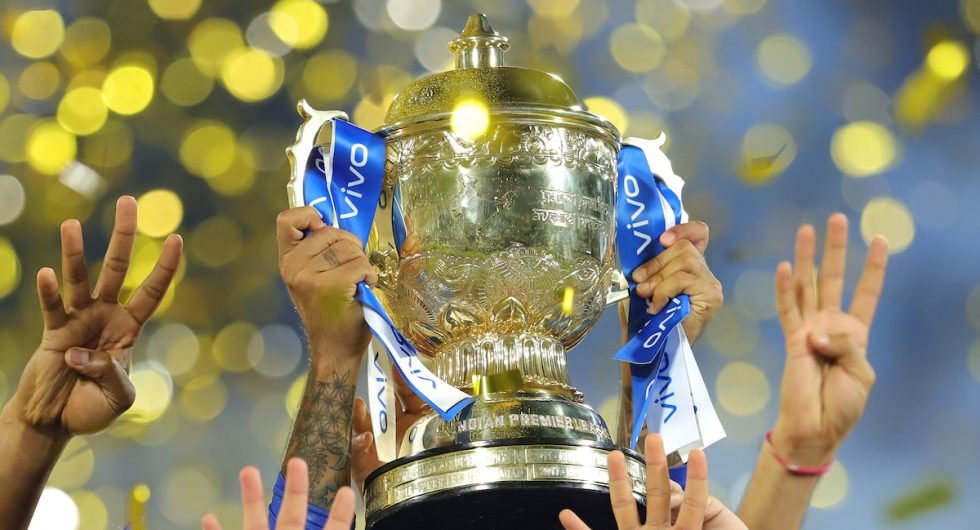
Cricket it’s a sport that dates back over 400 years. And as of 2019 is officially played in 104 countries around the world. Cricket’s worldwide fan base is comprised of roughly one billion people in the Indian subcontinent alone makes up 90 percent of those fans. In India, the country adopted a brand new shorter format of the game has drastically cut down on playing time from days to hours. The Indian Premier League or the IPL has only been around for twelve years but it’s fast become one of the most popular and valuable cricket leagues on the planet. The IPL is brand value has nearly doubled in the last five years. In 2018 the league was valued at 6.3 billion dollars. It rakes in and 510 million dollars each year from its broadcasting rights deal making it to only cricket league in the world to crack the top 20 most valuable media rights deals in all of professional sports joining the ranks of the NFL the NBA and MLB.

Future of India vs Pakistan cricket matches - CoA chief Vinod Rai ...

So how did the IPL become one the most lucrative cricket leagues on the planet. In India. Cricket is huge. It’s been a staple in Indian sports since the seventeen hundreds. It’s currently the most popular sport in the country. The IPL is one of the richest sports properties in the world. And while the IPL isn’t the only cricket league in India it is the most successful league in the country. The 48 day annual tournament was created in 2007 with the help of the Board of Control for Cricket in India and Indian businessmen Lalit Modi. Even though cricket already had a few pro cricket leagues they wanted to capitalize on the commercial success of 2020. So they modeled the IPL in a similar nature to pro sports in the US.

The IPL was specifically modeled after the likes of the NFL. Which has a decentralized league. meaning that all teams are owned and operated independently. Also similar to the NFL model the IPL is its own league with its own unique structure. There is a separate T20 World Cup where India competes. But that’s different from the IPL. even though matches are all held in India. Team rosters are chock full of top international talent. In 2018, teams spent 94 million dollars to buy 169 players in an auction. up from its 40 million dollars for 66 players in 2017. But what you’ve actually got in the IPL franchises who represent a city a place an industrial heartland and you’ve got the full support of some major entrepreneurs. So rather than let’s say Delhi again. So, you’ve got your IPL franchises based around the cities. I’m not as actually have a massive impact. in terms of global cricket. To make sure the stands are filled with as many IPL fans as possible and to maximize TV viewership. Matches are typically played in the evening and on weekends.

The IPL is a huge moneymaker in India since 2014. The IPL brand valuation has doubled to six point three billion dollars. The reason the IPL has won the largest fan base is for a single sports league in the world. During its opening week of the 2013 season the IPL broke records when 371 million viewers tuned in to watch and by the last week of the tournament a total of 769 million fans watched the 2013 IPL season. The ad revenue generated for that season was over 276 million dollars according to Star India’s managing director. High ratings and ad dollars were a big part of why a major U.S. media companies had their eyes on IPL broadcasting rights. When the IPL launched in 2008. The league issued being your rights to Singapore based sports marketing agency World Sport group. They broadcast an IPO matches on India’s Sony Max TV channel. Under the terms of the 10 year contract World Sport group paid the IPL approximately 1 million dollars per match in its first year for the exclusive broadcasting rights. The overall value of that broadcasting deal was 918 million dollars when the broadcasting deal expired in 2017.

IPL 2020 Team Previews | Indian Premier League | Wisden Cricket

There was a global bidding war for exclusive rights for the IPL. Fox and Sony put in competing bids while Facebook also put its hat in the ring for the 2018-2022 digital rights of the IPL making a 600 million dollar offer. Those TV and digital rights eventually went to Fox the American broadcasters struck a five year 2.5 five billion dollar deal for the global media rights of the IPL. The price per match jumped from 1 million dollars to about 8.47 million dollars per game. For comparison the NFL cost per game is around 22.5 million dollars. The English Premier League is around 13.2 million dollars. The NBA is close to 2 million dollars and the MLB is just 630 thousand dollars per game. Just two years after the ink dried on the Fox IPL deal Disney completed a 71 billion dollar deal for Fox entertainment assets one of the assets that Disney now owns is hot star. The Indian video streaming company in 2019. Streaming service at a global record for the number of people tuning into a life streaming event.

There are 18.6 concurrent viewers watching the IPL final match on the hot star’s website in app. And with that kind of viewership naming rights for the IPL are also huge for the league. Since 2008 the IPO naming rights have changed hands three times from brands DLF to PepsiCo India and finally to Vivo a mobile handset manufacturer in China. Vivo first took over title sponsorship in 2015 and in 2017 Vivo signed a fresh five year deal with the IPL worth approximately 341 million dollars in 2018. The average salary of cricket players in the IPL jumped nearly 30 percent from the year before. All thanks to the massive TV deal signed with Fox in 2017. Before the deal, players across the league had an average salary of 3.9 million dollars but in 2018 the average salary was just over 5 million dollars. And unlike other major sports leagues the IPL season is so short that players have a chance to bank even more cash in the off season.

iplt20.com | UserLogos.org

The IPL takes place in the spring starting at the end of March or early April and continuing through May. That means cricketers have the flexibility to play for other clubs around the world. Take the Mumbai Indians player Kieran Pollard. In 2017 he and more than one million dollars for two months. They play for the Mumbai Indians and IPL in that same year. Pollard had multiple revenue streams from playing for cricket leagues in Australia Bangladesh and South Africa. But just as cricket first spread across the world in the 18th century cricket’s latest form of 2020. Similarly. Taking root across the globe. There’s even a record breaking investment for 2020 league in a country where cricket is even remotely popular, the U.S. In May, 2019, USA Cricket received a 1 billion dollar investment from American cricket enterprises to develop a 2020 league in America. It’s one of the biggest deals for development of domestic cricket in the US and the launch of the league is set to take off in 2021 since the 2020 cricket format was introduced in 2003 and has taken the cricket world by storm. And it doesn’t seem to be slowing down anytime soon.

Coronavirus Scare: No spectators in stadiums for IPL 2020 matches ...