Covid-19: let’s see what’s going to be.

Some experts are also with the opinion that it could become the dominant strain in most of the parts of the world.

Okay, let’s keep this aside but do you think that this unlock would give us the better results, I’m neutral here as, the economy of the India is important I know it’s important but the lives of our Indians is the most important thing. Giving it a basic trail if you’ve have heard about those individuals and who were so happily living their lives who used to sing, dance, cook and etc etc. But after a few days they were no more you might heard it from your parents from your relatives from your friends that, that particular guy isn’t here with us he/she died due to covid and even when they were treated with the best medicines, from our best doctors but we all know from where does it started so let me tell you being careless about this pandemic would make you sit on the bed, so let me tell you my experience around 5-6 days ago me and my friend we were going for a morning walk and he removed his mask saying that he’s strong he won’t be having covid. I mean guys we have to be honest with ourselves that are we giving our best ladies and gentlemen please take care of yourselves:

Make sure you are wearing a proper mask.

Make sure you are washing your hands.

Make sure you are done with your doses (vaccination)

Make sure you are not going outside without any need.

Make sure you and your family are safe. And our nation is your family too.

Take care of yourselves covid is not gone yet.

Cultural Relativism

Human is a social animal. He cannot survive without a society. Society gives birth to culture. The ideas, customs, practices, beliefs of a society forms it’s culture. This culture incorporates with the lives of the people belonging to a society. Cultural transmission starts from right when we are born and continues till we live. Our culture is given to us as our legacy which must be practiced and preserved. Therefore it is a given that different societies have different culture and cultural practices, some more different than others.

Generally, it has been seen that there is this notion among people that our culture is superior or that a particular culture is inferior to our culture. An “Us vs them” mentality is created which leads to perception bias in our favour. This leads to cultural misinterpretations and generalisations about other cultures. Sometimes these beliefs are so strong that they take forms of prejudices, disparity, bullying, intolerance, wars, genocide etc.
A well-known instance of this is the Nazi Germany and the holocaust of Jews.

It’s not our differences that divide us, but our own inability to accept those differences.

This is where ‘Cultural Relativism’ comes into light. Cultural relativism refers to the ability of a person to understand a culture on it’s own terms and not being judgemental towards it. It simply means that we should try to understand cultural practices of other groups in their own cultural context. This term was first used philosopher Alain Locke. It lays emphasis on the fact that people from different cultures can have relationships with respect and acknowledgement of each other’s diverse lives.

The basic goal of cultural relativism is to promote a sense of unity and to demolish the views pertaining to superiority of a particular culture over others. It also argues that there is no particular standard of judging what is good or evil and every decision is individually decided in each society. The bottom-line is that there no right or wrong in an ethical system and it is our own perception which tints our sense of morality.

Cultural relativism has two broad categories, absolute and critical.
The former argues that whatever happens within a culture has nothing to do with outsiders and therefore should not be questioned. The later forms questions about the practices in terms of who is accepting them and why.

We need to understand that there exists absolutely no culture that can be called Perfect. Cultural relativism has it’s flaws of course. Sometimes in the name of culture, we violate Human Rights but inspite of that, it is very important because it gives us objective insight, cross cultural empathy and makes us realise similarity among human cultures. It enables us to leave behind our biased mind sets and to see things in new light. It can also help to put a check on discriminatory practices and prejudiced behaviour which originates as a by-product of cultural misinterpretation. Cultural relativism important in studying and understanding other and different cultures because first and foremost we have to realise that our perception can be prejudiced while we are studying another culture. In a nutshell, cultural relativism is what we need to create a world which is equally hospitable and welcoming for everyone irrespective to their culture.

Financial Crimes in India

Financial crime is a crime committed against property, involving the unlawful conversion of the ownership of property (belonging to one person) to one’s own personal use and benefit. Financial crimes may involve fraud (cheque fraud, credit card fraud, mortgage fraud, medical fraud, corporate fraud, securities fraud (including insider trading), bank fraud, insurance fraud, market manipulation, payment (point of sale) fraud, health care fraud); theft; scams or confidence tricks; tax evasion; bribery; sedition; embezzlement; identity theft; money laundering; and forgery and counterfeiting, including the production of Counterfeit money and consumer goods. Financial crimes may involve additional criminal acts, such as computer crime and elder abuse, even violent crimes such as robbery, armed robbery or murder. Financial crimes may be carried out by individuals, corporations, or by organized crime groups. Victims may include individuals, corporations, governments, and entire economies.

The main types of financial crimes in India include : bank fraud, electronic crime, money laundering, bribery and corruption, market abuse and insider dealing, information security, market manipulation, tax evasion.

Bank Fraud:

Bank fraud is the use of potentially illegal means to obtain money, assets, or other property owned or held by a financial institution, or to obtain money from depositors by fraudulently posing as a bank or other financial institution. In many instances, bank fraud is a criminal offence. While the specific elements of particular banking fraud laws vary depending on jurisdictions, the term bank fraud applies to actions that employ a scheme or artifice, as opposed to bank robbery or theft. For this reason, bank fraud is sometimes considered a white-collar crime. In order to hide serious financial problems, some businesses have been known to use fraudulent bookkeeping to overstate sales and income, inflate the worth of the company’s assets, or state a profit when the company is operating at a loss. These tampered records are then used to seek investment in the company’s bond or security issues or to make fraudulent loan applications in a final attempt to obtain more money to delay the inevitable collapse of an unprofitable or mismanaged firm.

Electronic Crime:

Computer fraud is any dishonest misrepresentation of fact intended to let another to do or refrain from doing something which causes loss. In this context, the fraud will result in obtaining a benefit by: Altering in an unauthorized way. This requires little technical expertise and is a common form of theft by employees altering the data before entry or entering false data, or by entering unauthorized instructions or using unauthorized processes; Altering, destroying, suppressing, or stealing output, usually to conceal unauthorized transactions. This is difficult to detect Altering or deleting stored data. Other forms of fraud may be facilitated using computer systems, including bank fraud, carding, identity theft, extortion, and theft of classified information. These types of crime often result in the loss of private information or monetary information.

Money Laundering:

Money laundering is the illegal process of concealing the origins of money obtained illegally by passing it through a complex sequence of banking transfers or commercial transactions. The overall scheme of this process returns the “clean” money to the launderer in an obscure and indirect way. One problem of criminal activities is accounting for the proceeds without raising the suspicion of law enforcement agencies. Considerable time and effort may be put into strategies that enable the safe use of those proceeds without raising unwanted suspicion. Implementing such strategies is generally called money laundering. After money has been laundered, it can be used for legitimate purposes.

Bribery and Corruption:

A bribe is an illegal or unethical gift or lobbying effort bestowed to influence the recipient’s conduct. It may be money, goods, rights in action, property, preferment, privilege, emolument, objects of value, advantage, or merely a promise to induce or influence the action, vote, or influence of a person in an official or public capacity.

Many types of payments or favors may be fairly or unfairly labeled as bribes: tip, gift, sop, perk, skim, favor, discount, waived fee/ticket, free food, free ad, free trip, free tickets, sweetheart deal, kickback/payback, funding, inflated sale of an object or property, lucrative contract, donation, campaign contribution, fundraiser, sponsorship/backing, higher paying job, stock options, secret commission, or promotion (rise of position/rank).

Corruption is a form of dishonesty or criminal offense undertaken by a person or organization entrusted with a position of authority, to acquire illicit benefit or abuse power for one’s private gain. Corruption may include many activities including bribery and embezzlement, though it may also involve practices that are legal in many countries. Political corruption occurs when an office-holder or other governmental employee acts in an official capacity for personal gain.

Corruption can occur on different scales, corruption ranges from small favors between a small number of people (petty corruption), to corruption that affects the government on a large scale (grand corruption), and corruption that is so prevalent that it is part of the everyday structure of society, including corruption as one of the symptoms of organized crime. Corruption and crime are endemic sociological occurrences which appear with regular frequency in virtually all countries on a global scale in varying degree and proportion. Individual nations each allocate domestic resources for the control and regulation of corruption and crime. Strategies to counter corruption are often summarized under the umbrella term anti-corruption.

Market Abuse:

Market abuse may arise in circumstances where financial market investors have been unreasonably disadvantaged, directly or indirectly, by others who:

  • have used information which is not publicly available (insider dealing)
  • have distorted the price-setting mechanism of financial instruments
  • have disseminated false or misleading information

Market Abuse is split into two different aspects (under EU definitions):

  • Insider dealing: where a person who has information not available to other investors (for example, a director with knowledge of a takeover bid) makes use of that information for personal gain
  • Market manipulation: where a person knowingly gives out false or misleading information (for instance, about a company’s financial circumstances) in order to influence the price of a share for personal gain

Phishing (Information security scams):

Phishing is the fraudulent attempt to obtain sensitive information or data, such as usernames, passwords and credit card details, by disguising oneself as a trustworthy entity in an electronic communication. Typically carried out by email spoofing, instant messaging, and text messaging, phishing often directs users to enter personal information at a fake website which matches the look and feel of the legitimate site.

Phishing is an example of social engineering techniques used to deceive users. Users are lured by communications purporting to be from trusted parties such as social web sites, auction sites, banks, colleagues/executives, online payment processors or IT administrators.

Market Manipulation:

Market manipulation is a type of market abuse where there is a deliberate attempt to interfere with the free and fair operation of the market and create artificial, false or misleading appearances with respect to the price of, or market for, a product, security, commodity or currency. A type of manipulation possible when financial instruments are settled based on benchmarks set by the trading of physical commodities, for example in United States Natural Gas Markets. The manipulator takes a large long (short) financial position that will benefit from the benchmark settling at a higher (lower) price, then trades in the physical commodity markets at such a large volume as to influence the benchmark price in the direction that will benefit their financial position.

Tax Evasion:

Tax evasion is the illegal evasion of taxes by individuals, corporations, and trusts. Tax evasion often entails taxpayers deliberately misrepresenting the true state of their affairs to the tax authorities to reduce their tax liability and includes dishonest tax reporting, such as declaring less income, profits or gains than the amounts actually earned, or overstating deductions.

Tax evasion is an activity commonly associated with the informal economy. One measure of the extent of tax evasion (the “tax gap”) is the amount of unreported income, which is the difference between the amount of income that should be reported to the tax authorities and the actual amount reported.

In contrast, tax avoidance is the legal use of tax laws to reduce one’s tax burden. Both tax evasion and avoidance can be viewed as forms of tax noncompliance, as they describe a range of activities that intend to subvert a state’s tax system, although such classification of tax avoidance is not indisputable, given that avoidance is lawful, within self-creating systems.


The pressure of being extraordinary and it’s affect.

3 idiot was not only an iconic movie on a very good content but it has many dialogue that hit or felt by everyone. And one of the most famous dialogue goes “Life is a race, agar tezz nhi bhago ge to koi kuchal ke aage chala jayega”. Let’s talk about that.

I want to be a very a good writer, singer, actor, or anything else. We use to say this when we were a kid, yeah! we were a kid. Because now it’s not like ” I want to be very good” it is like, I want to be the only good. And that perfectly explain,we are now grown up. There’s nothing bad in it, but, we lost that touch of goodness inside us.

No matter how good you do your work, there is someone who does better then you. Like there’s an axe for every tree. You can’t be the only one among the crowd. There will be someone better then you. And it is not like you Don’t know that, still you are not able to accept that. That’s the main problem. And you are a part of this society. What you think is what this society get build.

Becoming an extraordinary among ordinary. This is the final goal of every single one. But, you know what, you personally never dreamed of this. It is what society gives you. It is what only society praise. This is what happens when you live in a society which sucks.

Being an excellent version in your field is not wrong, but, asking every one to be that is. We all know that every human has a same ear, eyes , brain, and other body parts. Still, there are some who are born or living there live without them. Same way it is not right to ask two brain to perform in the same manner because they can’t.

Just like asking elephant to swim because a fish can. We live in a society which runs behind those things which is already done and try to improvise it every time. Like a sheep in a crowd and still hate to call themself a sheep.

If only a person get appreciated for there work without comparing from others. Then this society will improve. When there is a comparison in self rather then doing it with others. Then only this society is going to improvise. Actually this society want to be perfect society. And there can’t be any perfection if you can’t accept the flaws. Because flaws are part of you. They exist in you.

So, tell me what do you think about this in the comment section bellow.

See yaa..

Should commercial surrogacy be banned in India?

Commercial surrogacy is the process by which an individual or couple pays a fee to a woman in exchange for her carrying and delivering a baby. At birth the child, homo-sexual couples, and single people who wish to be parents are the most common types of people who seek surrogate mothers.

Commercial surrogacy has been legal in India from 2002 onwards but due to unethical practices, a bill has been approved by the Union Cabinet in August 2016. This one lapsed when Parliament adjourned without taking the measure for a vote.

The new proposal came in 2019 that is to ban commercial surrogacy. The Indian minister of health has called the 2019 bill a “need of the hour” citing a rough estimate that between 2000 to 3000 unregulated clinics currently operate in the country. Under the new law anyone who performs or promotes this would be punished with up to 10 year of imprisonment and a fine up to one million rupees. The surrogacy bill’s provision restricting surrogacy to married heterosexual couples within strict age ranges also discriminates against members of L G B T community, older couples and unmarried people who might seek to have a child. The bill goes against the principles of equality provided under Article 14 of the Indian constitution.

Regulation, not ban, is needed. The commercial surrogacy in India needs a regulation and stricter rules that could ensure good care and pay to the woman alone and not agents or others. Good clinical facilities for the surrogate mother and a healthy environment where she could stay safely before and after delivery could lessen exploitation. There is no provision in the law about the custody of the child if the couple later refuse to accept it if the child is mentally challenged or born with a defect. People who hire surrogates have a need to do so due to medical reasons. It is not their choice. Regulation on this practice is very much needed and must be done to close loopholes due to which exploitation of surrogate mothers is taking place.

Indian society is yet to progress so much as to accept surrogate motherhood. The woman who rents her womb even if for the cause of humanity towards an unfortunate couple will never be accepted in society when she goes back to her normal life. People will look down on her and she may probably not be able to find a husband, if she was unmarried at the time of surrogacy. We need to be broad-minded and accept these women and respect their choice of renting their wombs.

Giving women a safe and free environment for surrogacy can help in curbing the evils attached and the industry could do well along with giving good money to such poor women so that they can make their lives better as well as give prosperity to their families.

Thank you for reading. Have a nice day!

What does it take for a boy to come in lime light??

I personally think hashtags were made for a boy and by a boy.. I mean, ComeOn if you are a girl, and your account is not private.. instagram will automatically put it on a explore section..

But, for a boy to get to explore section, he needs six pack, or a very good content and lots of effective hashtags

I don’t know about girls, but pretty sure on Instagram there’s no periods for them to come into  lime light.
No offense. But being a boy it looks cliche to see someone using same body to get followers and also pointing fingers on others in real world for that same body..
I mean, wtf man!!

If the world is male dominant, then social world is all about women.

One thing I would like to answer, I know girls have got so many problems in real life that a man can’t even understand, or women don’t want them to understand. And if there two gender, then how can you think that only one gender has got problems. Man have also got many problems, and we are dealing it not transferring it on other gender.
If a  girl is not getting freedom as a boy get, then how come It’s only a problem of a girl who is not getting any freedom, it’s simple, like if you got a work to do, you will get a responsibility to and tension or pressure regarding that responsibility which you can’t even discuss because you are a man, and man don’t discuss it in front of other men and also with Women because somewhere she will be  like, I got a man who is complaining. Huh!!

I don’t know if you are actually getting it or not but there’s some reality which men are not looking and women are keeping there face on different side.

Tell me what you think about it and don’t be offended.

See yaa.

Generation Gap.

From “Meri sapno ki raani kab aayegi tu” to “Akela hai mister khiladi, miss khiladi chahiye” and then stopping at “chale jab tu latak matak, londo ke dill patak patak” we all felt the gap between these trends. This is what a generation gap is. It is an ongoing topic, like when there’s nothing to talk about, you start taking about the difference between you and your father’s generation have. And also it’s a story of every house. Both the generation are only good in there own explanation but neither of them can console each other. So, let us try to understand them first.

Every generation has got it’s particular name according to the year they were born such as Boomers or Gen X, Millennials or Gen Y and Gen z. But, let’s talk practically, the only difference between these generation are of perception and there mentality.

Since, the Gen X or the generation our parents belong to, was a complicated generation. Gen X includes post independence period which was developing period for india. For them, all that matters was to prove yourself and also about the upbringing which should be strong both physically, mentally and financially. They belongs to an era of freedom fighters, not of fairytale stories. There strugglers were real. They were the official “work hard, not smarter” type of generation. They use to get inspired or judged by the image of  freedom fighters, that’s why there was no chance of understanding among them. So, depression and mental breakdown were not for them to be understood, and also we can’t just blame them for this because for a generation, it’s type of  environment matters a lot. They were the one who were introduced by the indian culture and also wasn’t allowed to have discussion on it. So, are they Worthy for our hate?

Now, let’s talk about Mellennials or Gen Y, which belongs to your older brothe, rs and sisters. The one who is actually working in the society. This generation was blamed to be the destroyer of our culture or “Sanskriti”. But, what they actually did was, they brought change in the society. Like, this generation has only heard about the freedom fighters, but, was not inspired by them. They had there own sight, a sight of a better place. We can’t say that their struggles were not real, but they also didn’t have to start anything. All they have to do was to show a better way of development. They changed the society thinking about the third gender, regarding LGBTQ+ community, Racism, environmental crisis, crimes against womens, etc.. Actually, this generation has not destroy the following culture but it has improvised it for the betterment of the society and also made each other aware about the physical and mental health. It is only because of this generation the coming generation will be seeing an ongoing development throughout there life, but, also has introduced many types of problem to the society. As every work has it’s side effects. So, what’s wrong with that??

Now, we will talk about Gen Z or our generation. This generation is very much aware about the past and the present condition and also has habit of changing everything. Till now this generation has also done some kind of development in making things easy and handy to the society. And also working on bringing equality in the society. This generation is the most developed one’s among others with morden gadgets and a lot more. But, still there’s a lot left to prove for this generation infront of there fellow generation, which they are already dreaming of. For that we also can’t blame this to them cause they are the ones who is going through the climatic problem and scarcity of resources. So, they don’t only have to overcome it but also come up with a long lasting solution. Let’s hope and leave the rest on them.

Since, we have already discussed about all the three types of generation which is presently existing in this society.  So, whom do you think has won? Boomers or Mellennials. Actually, we don’t know because even if Mellennials won today, someday Gen Z will prove them wrong and Boomers are already an outdated version in the society. That’s why I said it’s always an ongoing topic because the debate will continue in every generation. And one more thing is clear that every generation has it’s own struggle to overcome and we shall not compare them.

At last always remember that:
“There’s no generation
     actually happy for or from
             upcoming generation”

So, drop down your views on this topic and Let’s discuss more about it. Man! It’s a long debate.
See yaa.

The Joys of Volunteering

Volunteering is a voluntary act of an individual of doing some work for the society as community service. It may include different forms of work. Some volunteers are specially trained in a particular field while some offer to help and join hands for a good cause freely. Volunteering has different sectors like medical, disaster management, education and upliftment of community. There are several NGOs and organisations which offer volunteering opportunities.

Photo by Abel Tan Jun Yang on Pexels.com

It can help you to make new friends, advance your career, and feel better. Taking some time out of our busy schedules and finding time for volunteering can be difficult for some of us. But you can start small for the sake of trying it out. Volunteering lets you help and reach out to people from different backgrounds and create social change in your own little way. It provides vital help to individuals and gives you a chance to make lives better. Surely it makes people’s lives better but it gives you greater benefits. Give a little time to volunteering and you will get a lot in return!

Photo by Pixabay on Pexels.com

It helps you feel happier and healthier. Once you start volunteering, you will meet a lot of new people from different communities. Working with underprivileged communities makes us more aware of our surroundings and feel grateful about our own lives. Also, when you start doing something new it gives you a fresh start and brightens your mood. Most of us love doing new things. Volunteering will also help you spend some quality time outside of work. It will bring both fun and fulfillment to your life. It will help you combat better with issues of mental health like depression and anxiety. It will also improve your mood and give you immense joy. Seeing the smile on the face of a child will surely brighten your day.

You will meet a lot of new people. Your fellow volunteers will either be from similar fields as yours, which will definitely be a positive side or they will be from completely different walks of life giving you a chance to know about a lot of new things. If you are a person who struggles with making new friends, it is a great opportunity for you to start new friendships. Once you start working as a team with others, you will share your ideas and share responsibilities for carrying out a task. While working and planning together it is most likely that you will become great friends. This will also make you a more social person and increase your communication skills. Volunteering helps you to network with a lot of people. Especially if your career path values societal issues, it will be really helpful for you to meet important people and make connections.

Lastly it will help you enhance your career prospects. Almost all companies or educational institutions value a volunteering experience. They will be glad to know that you have been a part of something so meaningful. Volunteering increases your chances of getting selected and helps you improve your resume. It will also give you experience of working with a team and make you a more empathetic and responsible person.

Caste & South Asian Diaspora

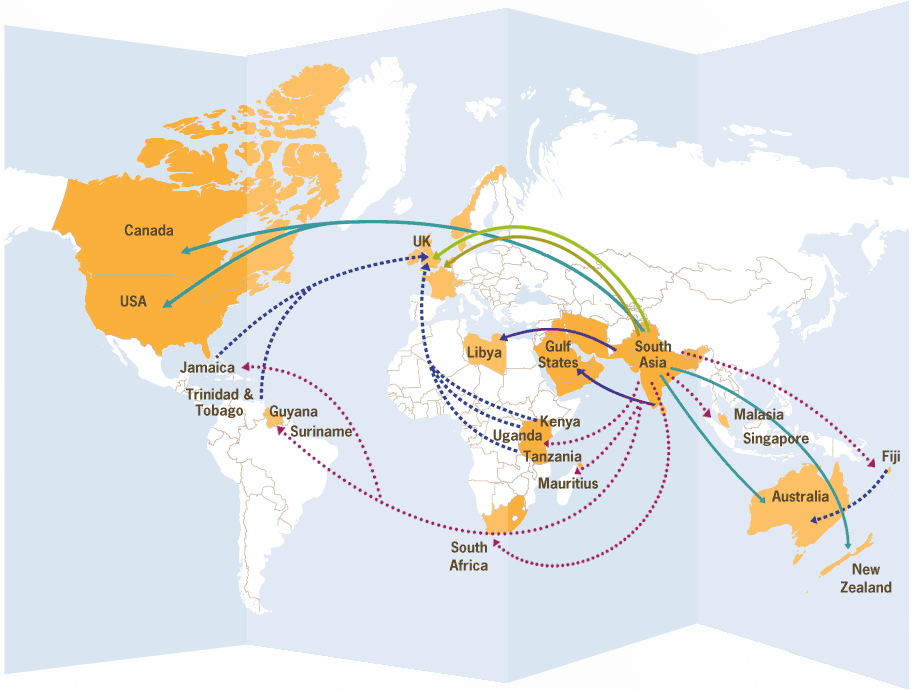
Caste has migrated with the South Asian diaspora to firmly take root in East and South Africa, Mauritius, Fiji, Suriname, the Middle East, Malaysia, the Caribbean, the United Kingdom, North America, and other regions.

Spearheading a Survey of Caste in South Asian Diasporas | by ...

Among migrant communities in North America and Europe, caste ideologies are perpetuated by families returning to India to seek out marriage partners within their own caste. U.S.-based matrimonial services, including regional conventions, are burgeoning alongside a growing population of Indian origin. Families openly advertise their caste preference in the matrimonial sections of Indian community papers in North America and Europe (a practice quite common within India as well), as well as on Internet matchmaking sites.

In the United States, a rising number of caste-based groups-each with chapters throughout many major cities-also points to the importance of caste as an identifier for migrant Indian communities. Such caste-based associations in the United States are providing funds and political support for a resurgence of caste fundamentalism in South Asia as well.

In Britain emigrant Dalits must also worship in segregated temples and have thus formed an umbrella group for low-caste temples-Guru Ravidass UK. Twenty-two of these temples withheld (and ultimately redirected) funds raised for earthquake victims in Gujarat due to incidents of caste discrimination in the distribution of earthquake relief.

Also in Britain caste tensions frequently erupt between high-caste Punjabis (Jats) and low-caste Punjabis (Chamars). Physical violence has also been known to erupt following intermarriage between the two communities. Caste consciousness becomes especially problematic given the sizable population of both Jats and Chamars in the United Kingdom. According Sat Pal Muman, a presenter at the September 2000 International Dalit Human Rights Conference in London, inquiries about one’s caste background are often made in privately run or Jat-run educational institutions and places of employment. In the city of Wolverhampton incidents of upper-caste Jats refusing to share water taps or make any physical contact with lower-caste persons have also been reported. At a sports competition in Birmingham in 1999 Jats reportedly refused to eat food that came from the Chamar community.

In Suriname, Indians of Dalit-descent continue to be largely distinguished by their various caste-based occupations.123 Chamars traditionally worked as drum beaters, beggars, hawkers, and shoemakers; Pallen as landless laborers; Dhobis as washers; Collies as porters; and Dasis as house servants. A higher-caste group includes Kurmis as cultivators, Ahir as cow herders, and Chettyar as weavers, barbers, shopkeepers, and moneylenders. The third and highest caste category consists of priests, scribes, and schoolmasters.

In Mauritius, with its large concentration of people of Indian origin, social organization is based on family, kinship networks, and “to a not negligible extent, caste-based organization.” Caste-based considerations have also been reported in the political and employment sector.

Caste distinctions play a role in both private life and political organization within Malaysia‘s minority “Indian” community although the extent of its influence on Malaysian Indian society is the subject of considerable debate. Caste considerations are most obvious in the private sphere, particularly in the community’s attitudes towards intermarriage. Many families seeking to arrange marriages place matrimonial ads that include caste requirements, and marriage brokers may be expected to take caste into account when finding suitable matches. As one researcher observed, “Caste has, indeed, such a strong hold in marriage matters that intercaste marriages between different categories of higher caste status sometimes do not take place with parents’ approval, much less between higher and lower caste members. Abolition of caste discrimination in this area remains a distant dream.” Though interactions outside the home seem to take place without much emphasis on caste, within the home contact with castes thought to be polluting may be quite limited. Some families, for example, refuse to dine with or accept food and drinks from people they suspect of being lower caste.

Mass migration of higher and lower-caste Indians to BahrainKuwait, the United Arab Emirates, and other Gulf states has brought with it vestiges of the caste system as well.

Business of NGO’s

India, a country of 1.5 billion people has a long tradition of social service, social reform and voluntary agencies. This tradition was further cultivated with the emergence of NGOs that cropped up soon after independence when Mahatma Gandhi made a plea for dissolving the Indian National Congress (the political party which came into power upon Independence), and transforming it into a Lok Sevak Sangh (Public Service Organization). The plea however, rejected did not halt the formation of NGO’s in India. Many followers of Gandhi established voluntary agencies to work closely with the governmental programs on social and economical issues. These agencies organized handicrafts and village industries, rural development programs, credit cooperatives, educational institutions, etc.

But in 1960, the NGO’s went through a second phase of transformation when governmental programs seemed to be inadequate to deal with the deprived sections of India. These grass roots organizations worked at the micro-level with limited resources and lack of coordination to deal with issues such as bonded labourers, landless farmers, poverty etc. With the coming of economic reforms and introduction of the Sixth Five Year Plan (1980-1985), the government identified new areas in which NGOs as new participants could participate in the developmental process of country.

These areas included:

  • Optimal utilization and development of renewable source of energy, including forestry through the formation of renewable energy association at the block level.
  • Family welfare, health and nutrition, education and relevant community programs in the field.
  • Health for all programs
  • Water management and soil conservation
  • Social welfare programs for weaker sections
  • Implementation of minimum needs program
  • Disaster preparedness and management (i.e. for floods, cyclones, etc)
  • Promotion of ecology and tribal development, and
  • Environmental protection and education.

With the opening of avenues in the job sector today NGO is considered as a viable option for many to take it up as a profession.

An NGO stands for Non-government organization. The term originated from the United Nations and is normally used to refer to organizations which are established for some specific purpose but do not form part of the government and are not conventional for-profit business. In the cases in which NGOs are funded totally or partially by governments, the NGO maintains its non-governmental status by excluding government representatives from membership in the organization. NGO’s pursue some wider social aim that has political aspects, but are not overtly political organizations such as political parties Today; India has a vigorous NGO sector. Although there has been no complete census of NGOs, it is estimated that about 25,000 to 30,000 are active in India.

A decade ago, NGOs were fairly peripheral in the global as well as national platform but now they participate actively in various political, economical and social matters. The involvement of NGOs in making decisions on the environment, sustainable development and human rights have increased the legitimacy and transparency of intergovernmental deliberations. NGOs come in all sizes, shapes, ideologies, nationalities, organizing structures and styles. Some focus on mere local issues while some address issues that span the entire globe. Their very diversity reflects the complexity of these organizations.

NGO may be a ubiquitous term, but it is used to describe an array of groups and organizations – from activist groups to development organizations delivering aid and providing essential public services. Few NGOs are research-driven policy organizations, looking to engage with decision-makers. Still others act as watchdogs, casting a critical eye over events like domestic violence or female infanticide. In a nutshell, NGOs encompass everything from charities and relief agencies to political parties; think tanks and academic centers to community organizations; cultural associations to continent wide farmers’ networks; women’s groups to environmental federations; social movements to human rights and religious groups.

Some of the noted NGOs organizations are the International Red Cross, Oxfam Care, Amnesty International, World Federation of United Nations Associations, etc. In India, Smile Foundation, Help Age India, Goonj, Udaan are some of the prominent ones. Many of us view NGOs as promoting socially responsible activities and engaging in philanthropic efforts. What is less known is that several are also partnering with major corporations around the globe to fund themselves ? With the retreat of the state from a number of public functions and regulatory activities, NGOs have begun to fix their sights on powerful corporations – many of which can rival entire nations in terms of their resources and influence.

On the surface, such partnerships may seem strange, since historically business and NGOs have had a somewhat traditional relationship (mostly instigated by the NGOs). But enlightened companies and a few business-friendly NGOs have realized that their interests are more often aligned than not, and they have much to gain from working with one another. With funding or aid becoming an important factor NGOs want to make a big impact so they choose their corporate partners carefully. They look for opportunities where they can participate in a partnership and make a transformative change.

NGOs are also seeking promotion and publicity for their efforts. They insist on being able to communicate the results from corporate projects in the hope that it will spur other companies and industries to adopt similar practices. But sometimes, NGOs often communicate in language that is not relevant for business. Many companies are also reluctant to engage with NGOs because they don’t know where to start, or they consider themselves to be too far behind, and fear they will be ostracized for it. Another concern is the cost of these “partnerships.” Both sides should also clearly spell out their objectives, and identify the outcomes they have in mind to define success, and avoid shocks down the road.

Some research has shown that many are still toddlers and only a few NGOs know how to communicate effectively with business. Businesses cannot relate to goals (however noble) related to climate change and oceans and making the world a better place. They need to know how an NGO can solve their business problems, in language that relates to their objectives and challenges. And with the coming of globalization now NGOs can also be more open to, and pro-active in forming, partnerships with business. NGOs have played a major role in pushing for sustainable development at the international level. Much of the credit for creating these trends can be taken by NGOs. But how should the business world react to NGOs in the future or should they hold out hope those NGOs can sometimes be helpful partners?

Public surveys reveal that NGOs often enjoy a high degree of public trust, which can make them a useful tool but not always sufficient for the concerns of society and stakeholders. Not all NGOs are comfortable to collaborate with the private sector. Some will prefer to remain at a distance, by monitoring, publicizing, and criticizing in cases where companies fail to take seriously their impacts upon the wider community. However, many are showing a willingness to devote some of their energy and resources to working alongside business, in order to address corporate social responsibility. But the paradoxical situation is that with the long-term aid people get aid for being poor. Poor people get extra food and other benefits. But those struggling out of poverty get little or no assistance.

While society by and large would agree that NGOs benefit the world from a social perspective, we suspect most of the business community would say that NGOs’ objectives are not aligned with their own. NGOs in general, and the activist ones in particular, need to do a better job of communicating their value proposition in language that business understands, and business needs to be more receptive to listening to, and working with NGOs.

NGOs want to be heard. Most have noble ideals and goals and want to make a difference. Even if business does not partner with them, it should listen when they come knocking the doors.

Patriarchy

It refers to the hierarchical relations between men and women whereby men dominates and control over women’s sexuality. 

Structures of patriarchy

According to Sylvia walby patriarchy as a system of social structure where men are in the dominant position to exploit and opress women.

She talks about six structures of patriarchy;

1. Patriarchal mode of production,

2. Patriarchal relations in paid work,

3. Patriarchal relations in the state,

4. Male Violence,

5. Patriarchal relations in sexuality,

6. Patriarchy relations in cultural      institutions. 

Now, let us study some of the institutions, practices and norms that maintain patriarchal set up of the society.

Family

Kate millets says “patriarchy’s chief institution is the family”. Family is the main agent of socialization where young boys and girls first encounter patriarchal power.generally, whatever is taught by the patriarchal ideology running in the family is accepted as natural and unchallengeable.

School 

Women need to go to the school to receive education, in order to achieve freedom in true sense. The patriarchal belief system rests on the assumption that there’s no need to enrich women with higher level of education as they just have to remain inside the four walls.patriarchy is able to make women ignorant of her capabilities and makes them highly dependent on the menfolk.

Marriage

Marriage is practiced and institutionalised in our society keeping in mind tha patriarchal ideology and it’s structure. Our society has put certain Norms and values that a man and woman have to follow to make their marriage acceptable by people at large for instance , in the marriage between a man and woman a man should be elder to woman.

Conclusion

Many forms of violence and Crimes against women take place in our society for the sake and defence of patriarchal. Structure and ideology. Other structures like that of caste , class and religion collaborate with patriarchy that leads to violence and oppression like honour killing, female foeticide, forced marriages, control over modes of contraception etc. As a result women and other weaker sections of the society get caught in a vicious circle that leads to never ending modes of domination and suppression. If women and other suffering group identify and acknowledge the source of domination, it would be a great achievement in its own way, this is because the invisibility and acceptability of patriarchy at large is the main reason behind its very existence. So, we may conclude by saying that patriarchy forms the governing ideology that device our experiences when we are born as a girl or as a boy. It directs our socialization and provides us position of submission and domination. 

Is this what we call a “Revolution”?

The world has been divided into groups, sub-groups in which the people are categorised by either caste or religion and now on the basis of colour also. All of this is a very abstract topic and we just can’t argue on this but can we at least not work like the society, can we just look everyone with the same mindset, treat them equally, respect them equally. Our society has been ruled and judged by the superiors and is still being judged by our so called politicians who have manipulated the minds of the people and have turned off the ‘Humanity’ mode in them.

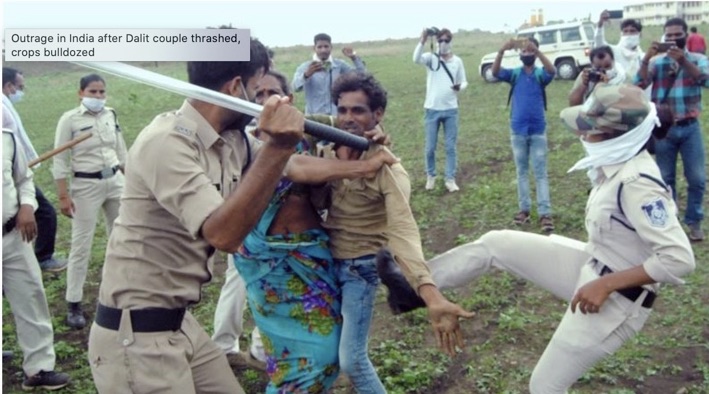
Things have turned really outrageous where people still haven’t learnt the real meaning of helping each other and treating everyone as equal. A recent example of “A Dalit couple” in Madhya Pradesh who have committed suicide because their crops were thrashed and they were being beaten up from the cops. This was a very brutal act against the marginalised sections of our society where those two were crying out for help and were begging to the police to stop and spare them, but nothing happened because it was an order from the government. This cruel and shameful act took place after the couple were seen growing crops on the land which was being inherited by the government. They were quickly rushed to the hospital after both of them consumed pesticides, and now they are in a normal condition.

Al Jazeera

“When our standing crop has been destroyed, we don’t have the option but to kill ourselves” Devi quoted.

All of this took place because the Government wants to build a college at the same spot where the couple had their farms and the government wanted them to leave everything and clear the land, but they didn’t accept their order because they were in debt and farming was the only source of living for their family. But in this also again the Political parties have started their war where they are blaming each other for this incident. This issue has come up weeks after that brutal and senseless incident where a son and a father were beaten up to death in Tamil Nadu by the cops.

What are we doing? where is the world going? On one hand where the policemen/policewomen are given the authority to serve for the country and work for the civilians, protect them, prevent all the evil things which are taking place in the society and on the other hand the police is beating up their people. Please stop, we are already having multiple issues in our society, people are dealing with numerous problems and above all Farmers are the fruit givers to the society, they feed us, how can we take their land and built something in place of a farm. This issue is something very serious and we have to fight against this, we have to fight against the rights of the farmers because they work for the Primary sector of the society. I hope this article will ring a bell of humanity in each one of us and will force us to make an initiative and stop the evil doings of this society, if not this at least we can pray for the farmers, for their health and well-being.

https://www.tribuneindia.com/news/nation/uproar-over-video-showing-madhya-pradesh-cops-beating-up-couple-mercilessly-for-resisting-land-eviction-113744

The good and The bad

We often judge or categorise people on the basis of there caste, colour, creed, gender and nowadays even on the basis of their region. Since the ancient times people have categorised the society into multiple categories and worked according to it, it’s 2020 and people are still not able to identify who are the good and the bad people. Let me be specific with this thing, I am talking about religion or caste, for instance: These days half of the society is against Muslims, because of some facts that I cannot mention, but why can’t they understand that a coin has two faces, and war always takes place between two people so this means that you cannot blame only one group, you can also be wrong, at least look at yourself before blaming someone else. Let me tell you some unknown facts in which Muslims have also set an example of humanity.

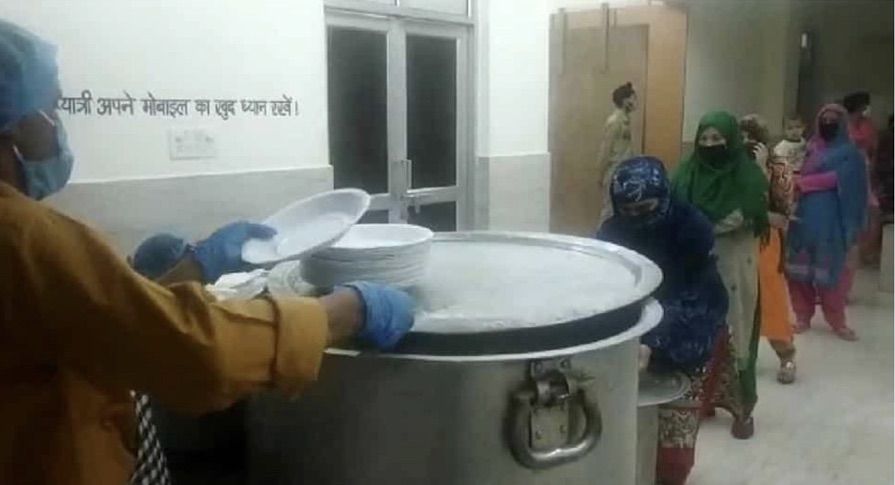
In Mumbai “Food- ek choti si asha” is a community led by Nikhat Mohamedy, who took an initiative to help the needy people in this pandemic and several others from different religion joined hands and came forward to help each other. Today the kitchen is serving 15,000 meals per day.

“This is about recognising the fact that we are all children of Adam and Eve, and feeding those brothers and sisters who are hungry and deprived is fundamental to expressing our humanity”, says Mohamedy.

Facebook.com

Another example of this is when Vaishno Devi Shrine Board served recipes to Muslims housed in quarantine centres on the occasion of Eid, March 25th. The Shrine Board said that they have been providing Sehri and Iftari meals to the Muslims after changing their schedule to meet the requirement of food for those fasting early morning and in the evening.

Hindustan times

Instances like these help me to understand that we should never judge people specially on the basis of religion or caste, we should always look upon them either as a good person or a bad person. If the world is good with you, be good to the world, if it is bad just turn your back, learn a lesson and focus on yourself, just don’t be like them. It is 2020 stop judging people, stop discriminating them, stop calling them with unwanted names, God has created people but it us who have separated ourselves into various divisions and factors. Just treat everyone equally and respect everyone. Smile and greet them be it a sweeper or a rich man. Play your part and leave the rest upon them. Change your sight of looking at the world, world will change itself automatically.

Why economy of India is slowing down???

India is one among the world’s fasting growing economies. It had been touted as an economic and geopolitical counterweight to China. But recently its growth fell to its slowest pace in six years. Investment has weakened, and unemployment has risen. So what’s causing the slowdown, and how can it be reversed? Since the turn of the century, India’s economy has grown at a rapid rate, helping transform the country. Between 2006 and 2016, rising incomes lifted 271 million people out of poverty, meaning the proportion of Indians still living in poverty has fallen dramatically, from around 55% to twenty-eight . Access to electricity has also improved. In 2007 just 70% of the population had access to power. By 2017, that grew to nearly 93%.

India's economic growth likely to remain subdued in near future ...
More recently, the Indian government constructed around 110 million toilets — a huge step towards better sanitation designed to prevent the practice of open defecation. It’s a signature program of Prime Minister Narendra Modi, known as Swachh Bharat, or Clean India. All this development has been supported by a booming economy, but as lately , that expansion has begun to run out of steam. In the third quarter of 2019, India’s economic output grew by 4.5% – making it the primary time the country’s growth dipped below 5% since 2013. For context, 4.5% growth remains much above that of developed economies just like the U.S., But with 12 million Indians entering the workforce per annum , economists say the country needs annual growth rates to remain above nine percent to make sure there are enough jobs. So, what’s causing this recent slowdown? Well, officialdom argue turbulence in international financial markets is guilty.

Economy News, Latest economy news India, Indian Economy features ...
Political uncertainty and U.S.-China trade tensions mean confidence levels among investors and consumers everywhere have sunk. The United Nations has even warned that a global recession in 2020 is now a “clear and present danger”. But back to India – many economists say the country’s growth problems are literally self-inflicted. One obvious culprit is the shadow banking sector. During the 2000s, India saw an investment boom. It was fuelled by state banks dispensing a load of loans for giant infrastructure projects. But some of the companies taking advantage of these loans couldn’t keep up with the repayments. That meant the state banks weren’t getting paid back and therefore struggled to give out new loans. To keep business moving, shadow banks stepped in. These financial institutions, which operate like ordinary commercial banks but don’t follow traditional banking rules, eventually made up an estimated third of all new loans nationwide. The loans played a pivotal role for the millions of small businesses and consumers who would otherwise have no access to credit. But in 2018, shadow banking giant Infrastructure Leasing & Financial Services, defaulted on its debt repayments. Its collapse sent shockwaves through the economy and shook up more traditional banks that had supported the world.
It became harder for people to shop for expensive items like cars. That hurt India’s automotive industry, which is one among the country’s biggest. It employs about 35 million people and makes up about 7% of India’s GDP. Last summer, the industry suffered its worst sales performance in nearly 19 years, and reports suggest tens of thousands of workers are laid off. The agriculture and construction sectors have also been hurting, with small and medium businesses being hit the hardest. The country’s percentage has been on an overall upward trend since July 2017, rising several percentage points to 7.7%. Higher unemployment means consumers are buying less, resulting in the unfortunate cycle of slower manufacturing, production, investment and job creation.

Indian Economy Will Face Adverse Affects Of Coronavirus Gdp To ...
A survey from the Reserve Bank of India found consumer confidence has fallen to its lowest level in five years. But Indians still have a positive outlook for the longer term , with most consumers expecting to feel more optimistic during a year. However, if things don’t improve, debt could become another issue. Expecting better days ahead, many households have continued to spend, by taking out loans and dipping into savings. Household savings as a proportion of GDP has fallen from 23.6% to 17.2%. Meanwhile, household debt has surged to 10.9% during the same period. Critics say the govt in New Delhi has did not spot these risks and hasn’t done enough to urge the economy moving again. The Reserve Bank of India’s former governor Raghuram Rajan recently blamed the lack of significant reforms and a slowdown in investments since the global financial crisis. Even the country’s chief economic advisor recently admitted reforms are needed to form India more friendly to investors.
India has cut its corporate rate , but labor and land laws are still extremely strict. He also says the country must become pro-market, instead of just pro-business, to avoid costly government bailouts of failing sectors. But not all reforms have been good to the economy. In 2016, Prime Minister Modi tried to crack down on corruption, counterfeits and evasion by banning high value bank notes. In one night, the cash ban made 86% of all cash invalid. Three years later, many analysts say the policy disrupted the economy and did not achieve many of its original goals. In 2017, a replacement nuisance tax placed small businesses struggling and a few of them were forced to shut . In mid-2019, India’s government introduced a controversial new tax on foreign investors. Consequently, India’s stock exchange suffered its worst July performance in 17 years. Just one month later, the measure was scrapped.
The government has now refocused its efforts on international trade and investment, and thus the recent changes to the corporate rate could indeed help attract businesses and investors to India. But if the country wants to be a part of the world’s largest supply chains, it’ll need low and consistent tariff levels to encourage outsiders to take a position for the long term.

The country’s shifting export policy has harmed several of its largest industries, particularly clothing. India’s share of the worldwide apparel market has increased only slightly within the past 20 years. And though the Indian workforce is vast, both Bangladesh and Vietnam now export more. On top of that, the country’s import tariffs on the average are much above the world’s biggest economies. They’re also among the highest of the world’s emerging economies. Even U.S. President Donald Trump has called for the country to bring down its duties.

Has India’s growth actually slowed the maximum amount as we think? The government’s former chief economic advisor Arvind Subramanian caused a good little bit of controversy in June 2019, when he claimed the country’s official stats probably overstated GDP growth by 2.5% from 2011-2012 to 2016-2017. He says the bottom line is that India never recovered from the global financial crisis. The government denies this. But none of this has hurt Prime Minister Modi at the polls – he won by a landslide in the most recent election. So how will he keep his promise and double the dimensions of the economy by 2025? Many economists insist a well-explained economic vision would help. As would more long-term investment, better skilled workers and enhancements to infrastructure. It may not matter who or what’s responsible for India’s recent economic challenges, but bottom line – India’s economic process must recover , and fast.

Why Australia is least affected by recession!!!

America’s economy is approaching a big milestone. If it keeps humming until July 2019, it’ll be the longest expansion in U.S. history. It would be exactly one decade and one month old by then. But there’s another country with an even more impressive run It’s even called the ‘lucky country’ Three big lessons from Australia.

  1. Be smart.
  2. Be organized.
  3. Be lucky.

So, if I’ve got any advice for other countries, it’s try and be as lucky as Australia That luck has to do with Australia’s treasure trove of natural resources. You know Australia is on the other side of the world and sitting on tremendously valuable minerals right at the point where the Chinese economy is just around the corner and exploding. Australia and every one its natural resources were within the right geographic neighborhood even as the Chinese economy began to begin . And it just so happens that China did a big fiscal stimulus in 2008 and spent a great deal of money building new cities. So all of these resources were drawn from places like Australia. So that also served as a huge tailwind at a time when developed markets were in a whole lot of trouble.

What Currency Is Used In Australia | Australian Dollar : Compare ...

The year 2008 was a time of economic turmoil The Global Financial Crisis hit and markets crumbled around the world. But as it turns out this was also a year for Australia’s economic management to really show off At the time the government had a very helpful and very low level of debt. One reason? Pension reform in the 1990s. Australia set up a compulsory retirement system called the superannuation system. It requires employers put money into its employees’ retirement savings.

Since companies and citizens have to build up retirement savings, some of the financial burden to pay off pensions was taken off of Australia’s government As other economies reeled in the wake of the 2008 crisis, the Australian Government was then able to put money directly into people’s bank accounts This boosted consumer spending in order to stimulate growth In 2008, the Australian Government unlike some other developed market governments actually jumped in very quickly with fiscal stimulus, so that helped to kind of minimize the effect of the crisis The country’s numbers continued to look sluggish after the financial crisis. But they never quite dipped low enough or for long enough to satisfy the definition of a recession. It takes two quarters of negative growth to fall into a recession. Australia’s economy did post a couple of negative quarters since 2008, but no country’s perfect. Overall Australia’s economy has been managed pretty much in recent years partly due to a robust and stable financial institution.

Reserve Bank of Australia – Australia's LGBTQ Inclusive Employers

Australia has an independent financial institution and it is a very well-run financial institution . It also has a floating exchange rate and the exchange rate helped it adjust to international shocks. Australia’s economic reforms gave it flexibility in times of hardship. For example, floating the Australian dollar In 1983, Australia’s government moved the dollar onto a floating exchange rate This meant that the dollar would be valued by supply and demand instead of being subject to influence from its government or its central bank It allows the economy to react to shocks as well Typically when an economy is hit by some sort of negative shock. The currency will adjust. It will depreciate and that helps promote exports. Another reason behind Australia’s economic diary lies in its immigration policy. Since the late 1990s, Australia has seen growth in temporary migration, many arriving to the country on student or temporary work visas. The number of temporary migrants peaked in the year 2000. However a recent change to immigration law in 2018 gave visa applicants more hurdles to get through if they wanted to come to the country Even when our GDP per capital average incomes aren’t rising by much because the number of people continues to rise that means the total GDP continues to rise at even more rapid pace Part of that’s underpinned by much faster population growth Most experts think Australia’s economy remains strong in 2019, but it’s not without risks.

Australia’s suffering at the instant from pretty weak wage growth. That’s worrying a lot of people. There’s a lot of fear right now that China is hitting a wall. That will hit demand for Australian products. The good news is to the extent that the Chinese are buying commodities hopefully will find buyers from overseas for many of those commodities if the Chinese are not there The bad news is the rest of the world economy is not doing that well.

Australian economic growth slows, enters per capita recession ...