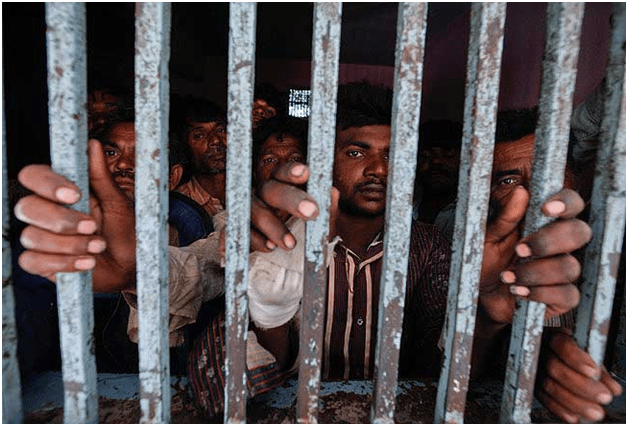
The Indian prisons are overcrowded with prisoners. But does that means the rate of crimes committed in India is also increasing? The answer is no. The crime rate is not yet a major concern in the country unlike India’s judicial system. The majority of the inmates who languish in Indian prisons are not convicted of any crime or offence by any judicial court. In fact they are yet to be convicted and are under trial. The population of undertrials exceed the number of convicted prisoners in Indian jails.
It is against the laws of the constitution to detain an individual for long periods of time without trial. Free legal aid and speedy delivery of justice are the fundamental rights of all the citizens of India. However, most of the undertrial prisoners in Indian jails are unaware of their fundamental rights as they are poor and illiterate. The reports by National Crime Record Bureau (NCRB) says that the majority of the undertrials are from socio-economic backward classes of the society. Most of them belong to the SC, ST and OBC categories. They are so poor that they could not even afford their bail fees.
The hiking number of undertrial prisoners depicts the flaws of the Indian judicial system. An accused spend years in judicial custodies before their cases are heard in any judicial court. Their case remains pending and goes on for a period which often exceeds their period of imprisonment when they are convicted by law. It also happens that an accused is proven innocent by a court after being kept in imprisonment for years before their hearing commences.
People coming from socio-economically weaker sections of the society had to suffer for the slow and lethargic justice delivery system of India because they could neither afford their bail fees nor a good lawyer. Most of them are also young and falls in the age group of 18-20 years. They ruin some valuable years of their life in prison for minor offences or sometime without committing any offence. The damage to their life, career and reputation are irrevocable. The Indian legal and judicial system should be accountable and compensate these unfortunate specimen of humankind who are mere victims of India’s slow justice delivery system.
On 7 February 2021 Uttarakhand’s Chamoli district experienced a disaster in the form of an avalanche when a small portion of the Nanda Devi glacier broke off. The sudden deluge caused considerable damage to NTPC’s Tapovan-Vishnugad hydel project and the Rishi Ganga Hydel Project. At least 72 people were confirmed to have been killed in the disaster. But this is not a new phenomenon and every year there are many reports of sudden deluge all across the Himalayan region.
The Himalayas has maintained the climate of the Indian subcontinent. Himalayas act as a barrier by diverting the monsoons to pour the rain in the fertile northern pains rather than to drift away to further north. Similarly, the mountain range also blocks the cold northern winds to reach the Indian subcontinent. The Himalayas all the way from Afghanistan to Myanmar with 110 peaks over 24,000 feet. They are also very rich in biodiversity and are the source of numerous perennial rivers and water bodies. Rivers like Indus, Ganges, and Brahmaputra that originate in the Himalayas are the lifelines of millions of people in the subcontinent.
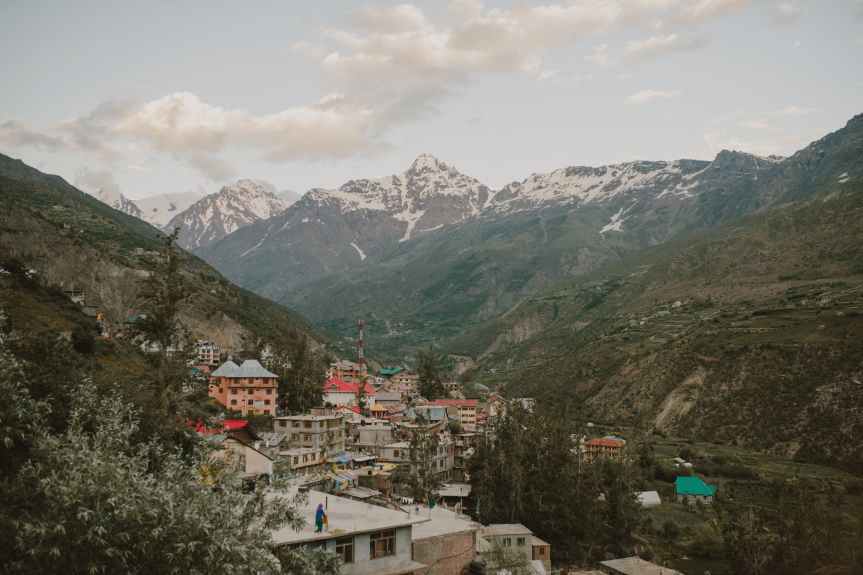
But in recent years, the Himalayan region has seen a drastic transformation with increasing population and deforestation. The Himalayas are still a very young mountain range and this means the region is not as stable as older mountain ranges. This is also the reason for the high number of earthquakes. There are many exploitative projects and resource extractions initiatives have are going throughout the region. The increasing influx of tourists in the Ladakh region which is increasing the pressure in the already sensitive region or the limestone extraction near Mussoorie which has transformed the surrounding lush mountain region barren and unstable are just some of the instances. The cities located in the periphery of the Himalayas have started are also facing the same degradation problems in the plain region. Due to ever-increasing population growth, the size of cities is also increasing and this means overflowing garbage and drains. Unplanned growth of new settlements and uncontrolled tourism has only exacerbated this issue.
There is a need for safeguards on a national level that would help in preserving the fragile ecology of this region. First, it needs to be ensured that there is sustainable urbanization in the mountain habitats by town planning and adoption of architectural norms. Due to the sensitivity in this region, it is imperative that we have to control the growth of new settlements in the region and the existing settlements should be developed with all the basic urban facilities. Solid waste management is another area that needs to be the focus. Plastic bags use should be banned in all the towns and villages in the Himalayan region. Some states like Himachal Pradesh and Sikkim have enforced this rule but there are still many other states that have not fully implemented this rule. Pilgrimage is an important part of the tourism sector in the Himalayan region. Sustainable pilgrimage needs to be promoted and the inflow of pilgrims has to be determined according to the ecological capacity of that site. Roads are an essential node for the connectivity and development of a region but the construction of the roads and highways needs to take into account the sensitivity and fragility of the region as well. Environmental impact assessment should be compulsory before the construction of roads. Finally, environmental awareness needs to be propagated so that every individual can be empathetic and mindful of the dangers of environmental degradation. A coordinated effort will be essential between local cultures, local people, unions, and state governments to make this happen.
Karsan bhai khodidas patel is an Indian industrialist who is the founder of a Rs.42,500 crore nirma group, a company which majorly deals with detergents, cements and cosmetics. Karsan bhai patel was born in 1945 into a farmer family from Ruppur village, Mehsana, Gujarat. Karsan bhai completed his B.Sc in chemistry and he initially joined in a cotten mill as a lab technician in Ahmedabad later served for the state government.
He has an abaundant knowledge on chemicals and in 1969, he started manufacturing phosphate free detergent for domestic usage in his backyard. He named that detergent powder as “NIRMA” . He dedicated his time after the office hours to prepare and market the detergent. At initial stage this business was purely one-man-company.
Karsan bhai used to sell his handmade detergent packets door to door using his cycle. The hand made detergent packets were sold at Rs.3 per kg, which was one third of least priced compared to popular detergents at that time. This least price making strategy gave him instant success. At that time domestic detergent market was limited and mostly controlled by the top most MNC companies only but with entry of karsan bhai’s market strategy, nirma created a revolution in domestic detergent sector.
It made the best and environment friendly detergent than other brands and occupied the top most shares in the market with its innovative methods. With in a short span of time Nirma became the largest selling detergent company in India. Since, the industry was labour intensive nirma also builded a large scale of employment.
Now, the company was recognized as the 9th among the top FMCG brands in India as per the year 2002. In the year of 2010 Karshan bhai received “PADMA SRI AWARD” and in 2019 karsan bhai ranked with #30 by forbes magazine for the list of Indias richest persons.
CONCLUSION:
Finally, we can understand karsan bhai’s success story as a good source for marketing strategy because he understood the need and demand of the domestic detergents perfectly and he applied his innovative marketing formula strictly in his business and also he focused on the new technologies to develop his business as well and worked consistently to bag the success.
” SUCCESSFULL PEOPLE ARE NOT GIFTED BUT THEY DO HARD WORK TO ACHIEVE SUCCESS ON A PURPOSE “
India is a land of different cultures where over 1.5 billion people belonging to different communities live together . Many years back when India was called the GOLDEN BIRD , which was then brutally plundered by the foreign invaders, was not only because of the monetary wealth but also due to the rich culture and art form which the land once inhabited. Today centuries later, when we are still reeling from the affect of past attacks and with modernization reigning over, it has become extremely difficult and also important to preserve the dying art forms to save a remainder of our rich heritage . Also these art forms have been a source of income for lakhs of people .
While the term ART includes dance, singing and the paintings , in this blog we will have a glimpse on the five lesser known and underrated art forms which are desperately needed to be saved.
Madhubani Paintings
Originated in Madhubani district of Mithila region of Bihar, these paintings are said to have been made on the walls of every house of all the villages to celebrate the wedding of Lord Ram and Goddess Sita. The paintings are made using fingers, twigs, nib pens , brushes and matchsticks as tools. The color in the original Madhubani painting is given using natural dyes and pigments. Originally done on a freshly plastered mud wall , now for the commercial purposes the paintings are being made on a canvas or cloth. The paintings generally represents mythological Hindu deities, court scenes , traditional weddings and social gatherings. The All India Handicrafts Board and the Government of India in order to promote these traditional art form have asked women from the non agricultural backgrounds to continue painting on canvas or cloth and this has also become a source of income for many families.
Miniature Paintings
The origin of these paintings darts back to 7th century under the patronage of the Palas of Bengal. It is a kaleidoscope of history, scriptures and lives of people through ages made by the use of delicate brushwork, mixture of different colors and graceful forms. The paintings are so delicately made that even today in this world of modernization the brushes used for these paintings are made from Squirrel’s hairs. This intense labor of love illustrating the ancient mythology is created on palm leaves, paper, wood , ivory panel and cloth using natural colors such as stone dust, silver dust and real gold
Chambal Rumaal
This art form is an embroidered handicraft promoted under the patronage of the rulers of Chamba and was a common gift item exchanged during the marriages in ancient times. It is said that the earliest reported form of this art was made by Bebe Nanaki , the sister of Guru Nanak in 16th century and is still preserved in the Hoshiarpur Gurudwara. The art form is now continued in various parts of Himachal Pradesh and is made on a square or rectangle shaped cut muslin or khaddar material. Embroider Lalita Vakil got the NARI SHAKTI AWARD by the President of India Mr. Ram Nath Kovind for promoting this art form and giving employment to many women.
Gond Art
This art form is the tribal art of the Gond tribe which is one of the largest tribes of Madhya Pradesh. The art form preserves and communicate the culture of the Gond Tribal Community. The paintings constitute of two main designs called DIGNA and BHITTICHIBA . While the DIGNA designs constitutes of traditional geometric patterns which were originally made on the floors and walls of the house , the BHITTICHIBA designs constitutes the animals , plants and trees which were made on the walls of the houses.
Pattachitra Art
The art form includes the ancient artworks of Odisha which were generally used for ritual purposes and as a souvenir for the pilgrims of Puri and other temples. The cloth based scroll painting captures mythological narratives and folktales which are inscribed on the cloth with intricate details. The painting is made on a traditional canvas which is made by coating a gauze like fine cotton cloth with white stone powder and gum made of tamarind seeds which makes the canvas ready to accept the paints made by natural means. it is basically a dominant icon painting and almost all the chitarakars of this community hails from Puri , a small village in the heart of Odisha . It is also the only village in the entire country where everyone is engaged in one art form or the other such as patta painting, wooden toys making and stone crafting.
The rich ancient heritage of Indian art forms cannot be contained anywhere. This blog was just a means to let people know of the beautiful things which we are missing on.
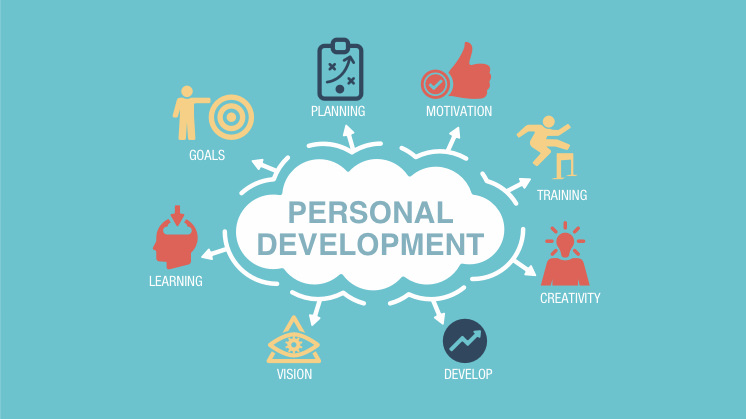
Self help and personality development is a weapon for us
The spirit of self help creates many good qualities in a person. … These people work more harder than a person who is reliable on others for their work. This leads to help them obtain strong will- power and determination.
Self-help or self-improvement is a self-guided improvement—economically, intellectually, or emotionally—often with a substantial psychological basis. … Many different self-help group programs exist, each with its own focus, techniques, associated beliefs, proponents and in some cases, leaders
The following are common examples of self-improvement.
Self-Awareness. A process of introspection to understand your own character, behavior, fears and ambitions.
Awareness. A process of extrospection to understand the world around you.
Health. …
Physical Fitness. …
Time Management. …
Productivity. …
Performance. …
Know-How
Here’s a look at some ways to build self-improvement into your daily routine and let go of negative thoughts about yourself.
Cultivate gratitude. …
Greet everyone you meet. …
Try a digital detox. …
Use positive self-talk. …
Practice random acts of kindness. …
Eat at least one meal mindfully. …
Get enough sleep. …
Breathe consciously.
Personality development refers to how the organized patterns of behavior that make up each person’s unique personality emerge over time. Many factors go into influencing personality, including genetics, environment, parenting, and societal variables.
Personality development helps you gain recognition and acceptance from the society as well as people around. Personality development plays an essential role not only in an individual’s professional but also personal lives. It makes an individual disciplined, punctual and an asset for his/her organization.
Here are great ways to improve your personality:
Be a better listener. …
Read more and expand your interests. …
Be a good conversationalist. …
Have an Opinion. …
Meet New People. …
Be yourself. …
Have a positive outlook and attitude. …
Be fun and see the humorous side of life.
The four personality types are: Driver, Expressive, Amiable, and Analytical. There are two variables to identify any personality: Are they better at facts & data or relationships? And are they introverted or extroverted. Note: Most people will have major and minor type.
It is always considered that the people always acknowledge “ what is actual and reasonable” and in this instance often the imaginative world is denied by them!
“Literature is not only a branch of academia which people are fond of for centuries but it has further become into a subject of the matter when it comes to fiction”. It is often unvalued by the fact that literature provides an absurd approach to the other branches of the world that believes in science and not in magical elements.
Thefact thatone should always remember is that the essence of literature is never gone even in spite of so many prejudices against it. Great writers Like John Donne, William Shakespeare, Rabindranath Tagore have upheld the pride of literature by their beautiful works.
Literature – A Backbone of the Inner society!
A very famous quote of all, which we have known for ages; “Literature is a mirror of society”, yet we forget this quote because non- Literature people are not very fond of poetry, essays, and novels. But one must know that Literature is not only a place for fictional lovers but also provides a reality of the real world.
Taking back to Chaucer’s age when writing was not so popular, yet “Canterbury Tales” was written and unexpectedly it turned out to be the legendary piece that literature holds to date. Being one of the best pieces of all, Canterbury tales was the background of the 14th-century society of England where people believe in god and considered god above humans.
When the English renaissance came people started to believe among themselves and considered humans and humanists as the great topic and wrote about them and their lives.
The whole background history is found in those classical works in the form of so called “Literature works”.
Now when people talk about the history and the consequences of the wars, it is literature that has preserved the whole history in several kinds of books that are cherished and protected by them who understood the purity of literature.
Every drop of works is poured into the petals of history and preserved by these eminent writers who contributed their emotions and portrayed the society of that era through their writings and contributed to the ocean of literature.
For some it’s a “Myth” :
There are several ideologies and theories are done in the matter of literature and they proved that literature is a myth as it doesn’t belong any place in the real world! So the question that arrives here is , what do literarians, bibliophiles and the readers think about?
This is a very controversial concern, as for some “Literature is an emotion which should be presevered for the coming eras, It is something to be conserved so that the coming generation would know the aesthetics of emotions, culture and people“.
As the days are going by, the essence of humanity is decreasing day after the other, but certain emotional norms are still alive holding up because of literature, it is because of Great works like “Romeo and Juliet”, “Pride and Prejudice”, “Wuthering Heights”, that people still believe in love and its pure existence between two people. Even in this era where people are having an ill-fated relationship and are doomed by their own actions still believe that there are certain emotions present In them.
The world is a better place if people love each other and live in harmony. It is literature that teaches that still we all are humans and we should accept the fact that not everywhere facts and logical explanations are approved, rather it is emotional evidence that is more prominent.
Its time to save literature!
Every branch of academia is relevant in some way or the other which provides us the reality check of various elements present in the world , among them literature is one of them which still is remembered and exists in our society due to the tremendous works done by the crafters of literature ( The writers, poets).
Hiding it or erasing it would never be a good thing to do, as aestheticism always protected these works and still popular among people who believe in fantasy and poetry. It is rather a sense a catharsis which each reader goes through which is written by these dead writers.
Though the artists die, the art remains forever! Likewise, The art of literature can never be faded because the artist’s art is immortal, all we have to respond that we as ardent readers should make this immortal art live for many centuries and should never let them fade away in spite of any circumstances which the worlds demand us to do.
“People pay the doctors for his trouble; for his kindness, they still remain in his debt.”
– Seneca
Introduction
1st July is known as National Doctor’s Day in India and it is organized by the Indian Medical Association. The theme for this year is “Save the Saviours”. The profession of a doctor is full of responsibility to serve the public, and they play a huge role in everyone’s life. We enter the world because of the successful delivery by a doctor, we are safe from the viruses because we get vaccinated by doctors, we recover from our sickness by the consultation of a doctor, doctors perform surgeries on us to keep us alive, and the most important, it is because of the research of these doctors that we now have a vaccine for SARS-CoV-2.
History of the Day
This day was declared as Doctor’s Day in 1991 by the Government of India in honor of Dr. Bidhan Chandra Roy’s birth and death anniversary. Dr. B.C. Roy is famously known for making good health services available to common people. He played a huge role in the creation of two very important medical institutions of the country; the Indian Medical Association in 1928 and the Medical Council of India in 1933. He is also known for helping in the creation of the Indian Institute of Mental Health. He was awarded the Bharat Ratna on February 4, 1961, a year before his demise.
A few facts about his life; he had to take 30 meetings with the dean of St Bartholomew’s Hospital in London to gain admission because the dean was not too inclined to admit him. He graduated in 1911, after which he became a member of the Royal College of Physicians and a fellow of the Royal College of Surgeons. He entered politics after returning from London and took part in the Civil Disobedience Movement. He was a friend of Mahatma Gandhi and took care of him during the 21-day fast. After Independence, he became the Governor of Uttar Pradesh and a year later, he was the second Chief Minister of West Bengal and he served till his death on 1st July 1962. And the B.C. Roy National Award was instituted in 1976, it is the highest Indian award in the medical category.
Mental Health of Doctors
The theme of “Save the Saviours” should not just be to save the doctors from violence but also from the mental health issues they face. An IMA survey claims that 80% of doctors in India are stressed because of their profession. This is not a new problem that arose because of the pandemic, it has been an issue from a long time without getting much attention. A survey conducted by IMA in 2017 shows that 56% of doctors do not get comfortable 7-hour sleep most days. Other studies from 2019 show that 30% of Indian doctors go through depression and 80% face the risk of burnout. It was studied that India’s doctor-patient ratio is very high which brings stress to the doctors related to extended working hours, verbal/emotional abuse by the patients and frequent negative patient outcomes. This stress can then result in prescription errors, loss of temper, being unable to give sufficient time to patients and poor communication skills. But the doctors tend to refuse to seek professional help as it might affect their prospects as a doctor. The doctors are also trained to mask their pain and deal with it themselves which is not healthy. The overtime and overexertion are just normalized and expected that people forget how it affects our doctors. As we focus on saving our saviours, we should also normalize mental health issues and accept and promote doctors seeking professional health, these saviours deserve to save themselves too.
Violence Against Doctors
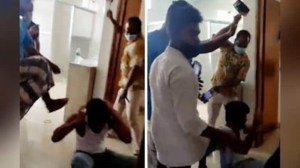
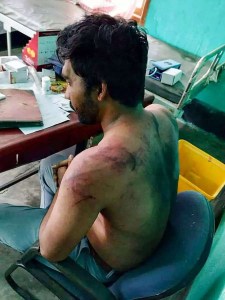
Violence against Doctors has been in existence from a long time but the pandemic has just brought more attention because of the role the doctors have been playing. The World Health Organization (WHO) guidelines of 2002 define workplace violence as incidents where the employees are abused, threatened, assaulted or subjected to offensive behaviour in circumstances related to their work. An IMA survey shows that 75% of doctors have faced some form of violence in their profession, which includes verbal, emotional, sexual, and cyber abuse. About 62.8% of doctors are unable to see patients without having a fear of violence, 13.7% of doctors fear criminal prosecution and 57.7% of the doctors have thought of hiring society. When the national lockdown was announced in March 2020, the common people were filled with panic and anxiety and they started acting out on the health care workers, they started discriminating against the doctors, not touching them, not letting them buy fruits from the stall, treating them as polluted, not just this but also physical abuse. Two female doctors were beaten by a fruit seller when he found out their profession. All this forced the Indian government to make an ordinance to protect the frontline workers, but even this could not protect them, in June 2020, a doctor at Hyderabad’s facility was assaulted by the relatives of the patient. Not just that, in June 2021, a doctor in Assam was punched, kicked and hit with metal trash cans by the relatives of a patient. This has become a common thing in India and a part of the reason is because of the lack of responsibility taken by the government in the health sector, so everything falls upon the doctors to deal with it. Till when do doctors have to suffer for protecting us? When will we realize that they are working for the public, they are trying to help us, they put themselves in danger every day to protect us and they get this treatment for it? This isn’t just an issue for existing doctors but also for the future doctors who keep worrying about being in situations where they are abused and the fear, in turn, changes the focus from saving the patient to saving themselves. Adding to that they start wondering if it is a country-based issue which then makes them consider further education abroad.
Conclusion
It is high time we start appreciating doctors for their service to the public and this Doctor’s Day is a good time to start if you haven’t already. Our saviours need to be saved.
Looking for a small trip in West Bengal ? then I can suggest you to visit Dooars. It’s an amazing place. Actually it is an alluvial floodplain which is located in eastern-northestern India that lies south of the outer foothills of the Himalayas and north of the Brahmaputra River basin.
In Bengali,Maithili, Bhojpuri and Assamese language ‘Dooars’ means ‘door’.The name of Dooars came from the word ‘duar’ meaning door in those languages. This area serves a purpose of a gateway between India and Bhutan with 18 passages connecting these two countries that’s why it is named Dooars.This region is 30 km wide and stretches over about 350 km from the Teesta River in West Bengalto the Dhansiri River in Assam.
This region is spread within the whole area of Jalpaiguri and Alipurduar dist. This region is spread within the whole area of Jalpaiguri and Alipurduar district and some areas of Cooch Behar in West Bengal and Dhubri, Goalpara, Kokrajhar, Bongaigaon, Barpeta district in Assam. There are two major rivers like Brahmaputra and Manas which continuously fertile the area. The other rivers also have a great contribution to the valley like, Teesta along with Torsa, Sankosh, Jaldhaka, Raidhak etc.
How is the Dooars – Winter is the best season for visiting Dooars, between September and May. One more interesting thing is the festivals in the Winter season. The festivals attracted more people to come at that time.The winter season is the witness of the colours, the enthusiasm, excitement and unity in the city celebrated in their unique ways. But for the offbeat travellers ,nature lovers and adventurers Monsoon is the most attractive season because it makes a paradise of a location for them. But Summer is not too perfect for travel.
Alipurduar
The places to visit- Dooars consists of many cities and towns. The largest cities in the region stretching from the Darjeeling foothills to the Arunachal Pradesh foothills are Siliguri and Jalpaiguri, which both partly lie in the Terai region rather than the Dooars, geographically. Actually, North Bengal’s cities are well connected with the rest of the country by air, road and rail. The other major cities are Kokrajhar, Bongaigaon, Goalpara, Barpeta and Dhubri in Assam. Cooch Behar, Alipurduar, Dhupguri, Malbazar, Mainaguri, Falakata and Birpara are the major cities of the Dooars in West Bengal, and Kishanganj in Bihar.
Buxa tiger reserve
Dooars is well known for its wildlife.There are herds of deer, one-horned rhinos, elephants, guard and reptiles and the bird population here is an ornithologist’s delight. One more attraction is the Tiger reserve besides white water rafting, trekking and jungle safaris .
Gorumara National Park- It is located on the banks of river Murti, it is famous for the great Indian one-horned rhinoceros and the King cobra. Other animals are elephants, bison, leopards and reptiles. Trees like Teak, Simul, Siris, Khair and Sal abound in the forests with numerous birds.
Chapamari wildlife park
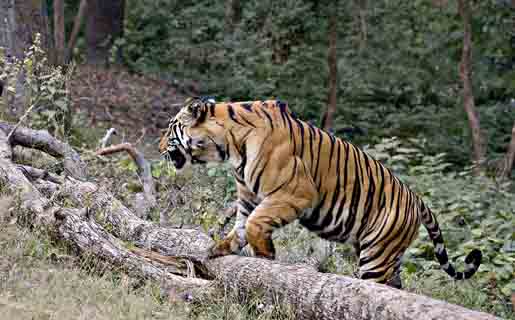
Buxa tiger reserve- It preserved the Royal Bengal Tiger and it is the crown gem of Dooars. There are 284 bird species inhabited in the reserve.Mammals present include Asian elephant, gaur, Sambar deer, clouded leopard, Indian leopard.
Alipurduar- It is the gateway to Bhutan and the north-eastern states of India. The Chota Sinchula,the highest peak of Jalpaiguri, is located in Alipurduar from where you can view both the Buxa Hills and Bhutan Valley.
Lava
Chapramari Wildlife Park- It is famous for elephants, gaur, spotted cheetah and sambar.there are also birds like green magpie, scarlet minivet, hill myna, Indian treepie and white-breasted kingfisher.
Samsing- It is famous for the orange orchards and cardamom plantations. It is a nice and cool shady place.
Phuntsholing
Jaldapara Wildlife Sanctuary- It has the largest population of the Indian one horned rhinoceros in the state.Another must watch is the Royal Bengal tiger. Reptiles like the Indian python, fresh-water turtles and geckos can also be found here. Elephant and jeep safaris inside the forest can be organised.
Lava- The climate of the town is usually very cold because of high altitude making it a perfect place for tourists during summer season.
Phuntsholing- It is the gateway to Bhutan from India.
Typically, in an Indian household when a child grows up, Indian parents expect them to be doctors or engineers. But do we respect and love the same children when they actually become our life savers?
July 1, every year, is celebrated as National Doctors Day in India as this date marks both birth and death anniversary of prominent Doctor Bidhan Chandra Roy who was also the Chief Minister of West Bengal in early years of post independent India.
In 1991, Government of India established National Doctor’s Day to recognise the contributions of Dr. Bidhan Chandra Roy and also honour the Doctors nationwide.
Currently, the doctor-patient ratio in India is 1:1445 which is lower than WHO’s prescribed ratio of 1:1000. Doctors work day and night for their patients’ well being and this even increased since March 2020 due to COVID-19. But how much we as citizens give them in return?
India has suffered because of acute shortage of Doctors since the beginning as they never got the remuneration they deserve. This has always led to brain-drain in India as Doctors shift to other developed countries for better career prospects as they receive better salary and opportunities there.
Since the beginning of COVID-19, the only hope to get out of this deadly pandemic were Doctors and health care workers. Whenever our loved ones contract the virus, we immediately look towards our doctors with a helpless eyes, and Doctors without caring about themselves tirelessly give their life and time for us.
Some incidents in the recent past haven’t been so fruitful though. Doctors and other healthcare workers were brutally assaulted during the entire first and second wave and this is another downfall our country has witnessed.
Even on eve of Doctors day, two doctors were assaulted in Delhi yesterday after having a heated argument with two fellows. From an assault in June 2020 in Hyderabad to several such incidents in all parts of the country like Madhya Pradesh, Maharashtra, Assam and many more shows that we as citizens have failed our doctors.
Citizens have to understand by doing such acts of violence, their loves ones whom they lost won’t return. Yes, if any citizen feels their loved ones faced hospital casualties, they’ve a right to protest and they can take the legal procedures but they must not come into emotions and act violently.
Indian Medical Association has held several protests to voice for the rights of doctors. Nearly, 3000 Doctors resigned last month in Madhya Pradesh after High Court declared their strike as “illegal”. Several more prominent as well as junior Doctors in the country have vowed to not serve India as they feel citizens do not treat them with dignity.
If this goes on, India would have a vast decline in doctors per thousand people ratio and all the lives of Indian citizens will be at stake because private hospitals charge a lot and most Indians won’t be able to afford them due to mediocre and low income.
India would face a dangerous phase just like it faced in the second wave of pandemic if things continue like this till the upcoming third wave which will probably hit India by the end of 2021 as predicted by health experts. Stricter parliamentary laws against anyone who assaults doctors and moral policing of citizens can improve the doctor-citizen relationships however.
She was just a 15 year old girl . A girl , full of life . But what happened to her .
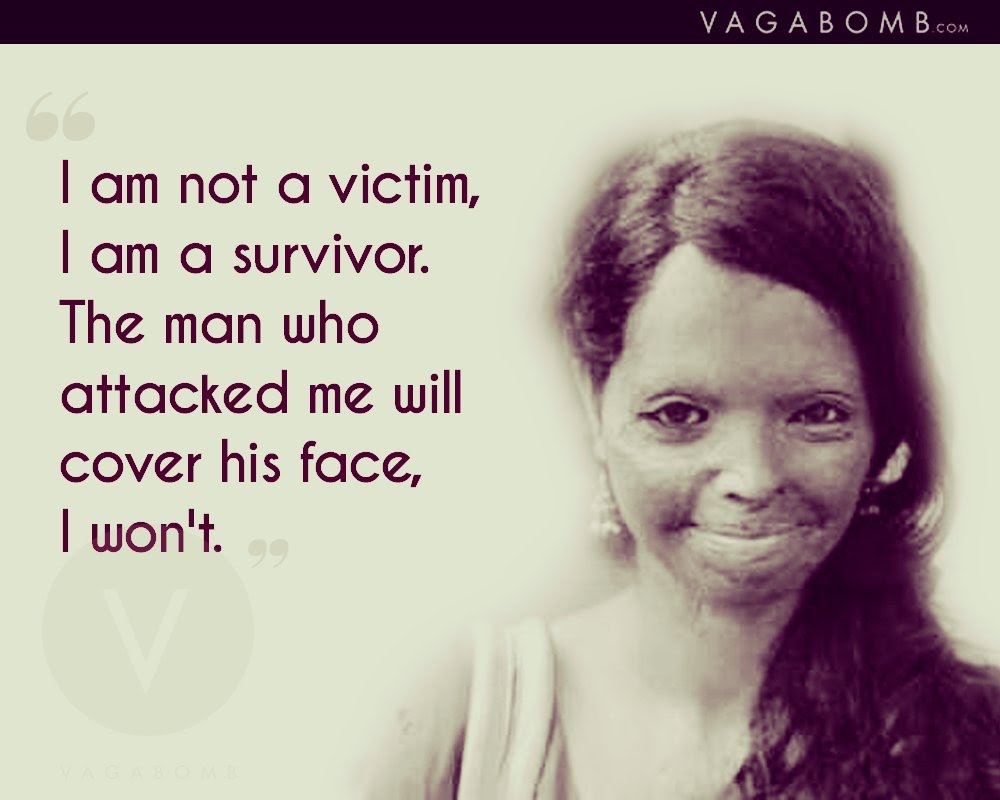
It’s her story . A story of a survivor.
She was powerful not because she wasn’t scared but because she went on so strongly, despite the fear.”
– Atticus
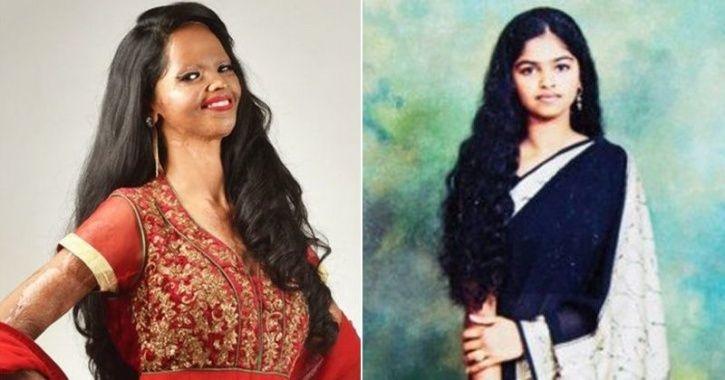
At the age of 15 , when a girl or a boy makes happy memories and learn about life . She was attacked in the market full of people . She was attacked because she rejected an old jerk of 32 years old.
A 32 year old proposed a marriage proposal to a 15 year old girl , who lives near the neighborhood. She ignored and rejected him and he planned an acid attack .
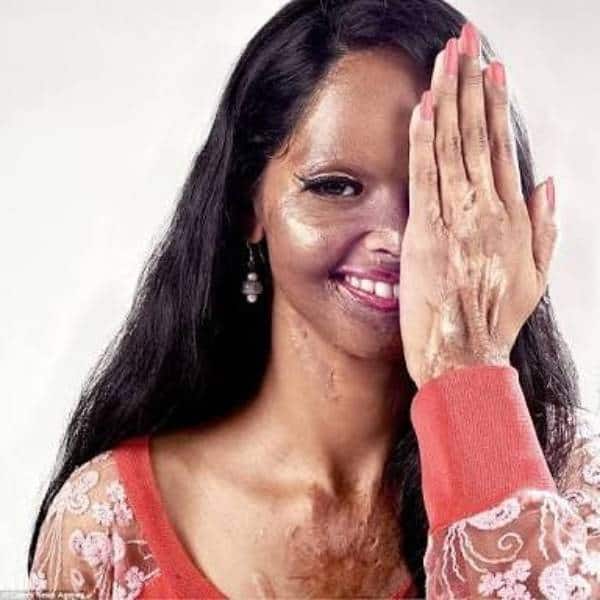
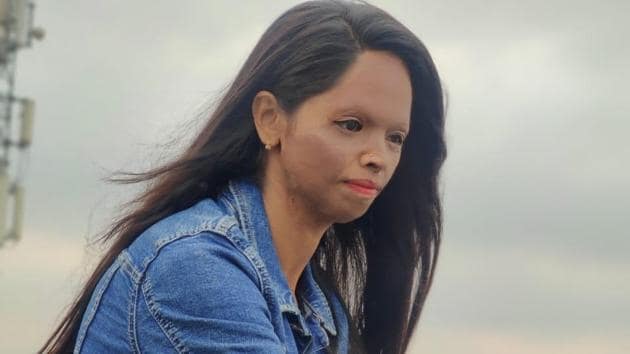
Her name is Lakshmi Agarwal , she was attacked at the age of 15 in 2005 in New Delhi after rejecting the romantic advances of Naeem Khan . She didn’t inform anyone about the scenario because she believed her parents and society would have blamed her and stopped her study .
After 10 months , Lakshmi was in the market and Naeem asked her again through message about the marriage proposal but she didn’t respond . And in no time , Kamran (Naeem’s older brother ) and his girlfriend attacked her with acid . He was in the motorcycle and his girlfriend Rakhi threw acid on Lakshmi , when Kamran called her name and she looked behind for response.
She fainted on the road and when she regain consciousness she went middle of the road asked for help and met with multiple accidents but no one stopped to help her . She was burning in fire and her skin was melting.
A man named Arun Singh called PCR and told police about the situation . Someone threw water to help her but it turned out opposite and the acid burnt her neck . Arun think it might be late , so he helped her on the backseat of his car , later the seat cover turned into black hole due to the acid .
Arun admitted her in the hospital , called police and her family . Lakshmi went through many surgeries and operations including eye surgery. Four days later Naeem Khan got arrested but was bailed after a month later .
Protests and media attention.
After many protests and media attention Naeem got life imprisonment .
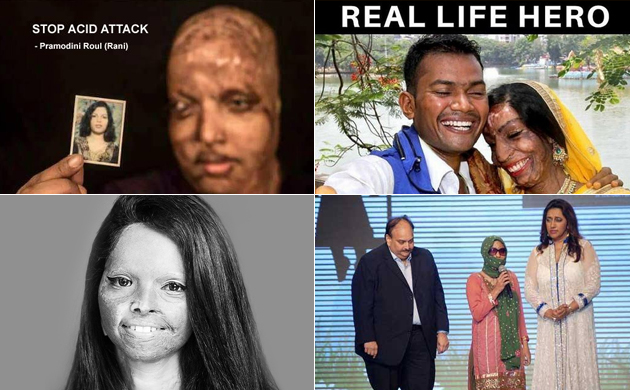
Lakshmi’s story was one of the series in the Hindustan Times. Lakshmi was scared after the attack because most of her face and body parts were not same as before . But she didn’t loose hope ,she fought for justice , asked for help for the victims of acid attacks and pleaded the law for the ban on sale of acid.
Meanwhile government failed to frame policies on acid sale and chemical attacks .
“ Seriousness is not seen on the part of the government in handling the issue,” the bench headed by Justice RM Lodha.
In 2013 , the plea of Agarwal was heard and later claims that “ Acid is freely available in shops. Our own volunteers have gone and purchased acid easily. In fact, I have myself purchased acid,” she said. “We have launched a new initiative called ‘Shoot Acid’.
After , the law passed by Supreme court . Lakshmi founded NGO named Chhanv Foundation to help acid attack survivors in India.
In 2019, she was honored with the International Women Empowerment Award from the Ministry of Women and Child Development, the Ministry of Drinking Water and Sanitation and UNICEF for her campaign of Stop Acid Sale. In 2014, she received the International Women of Courage award at the hands of First Lady Michelle Obama.
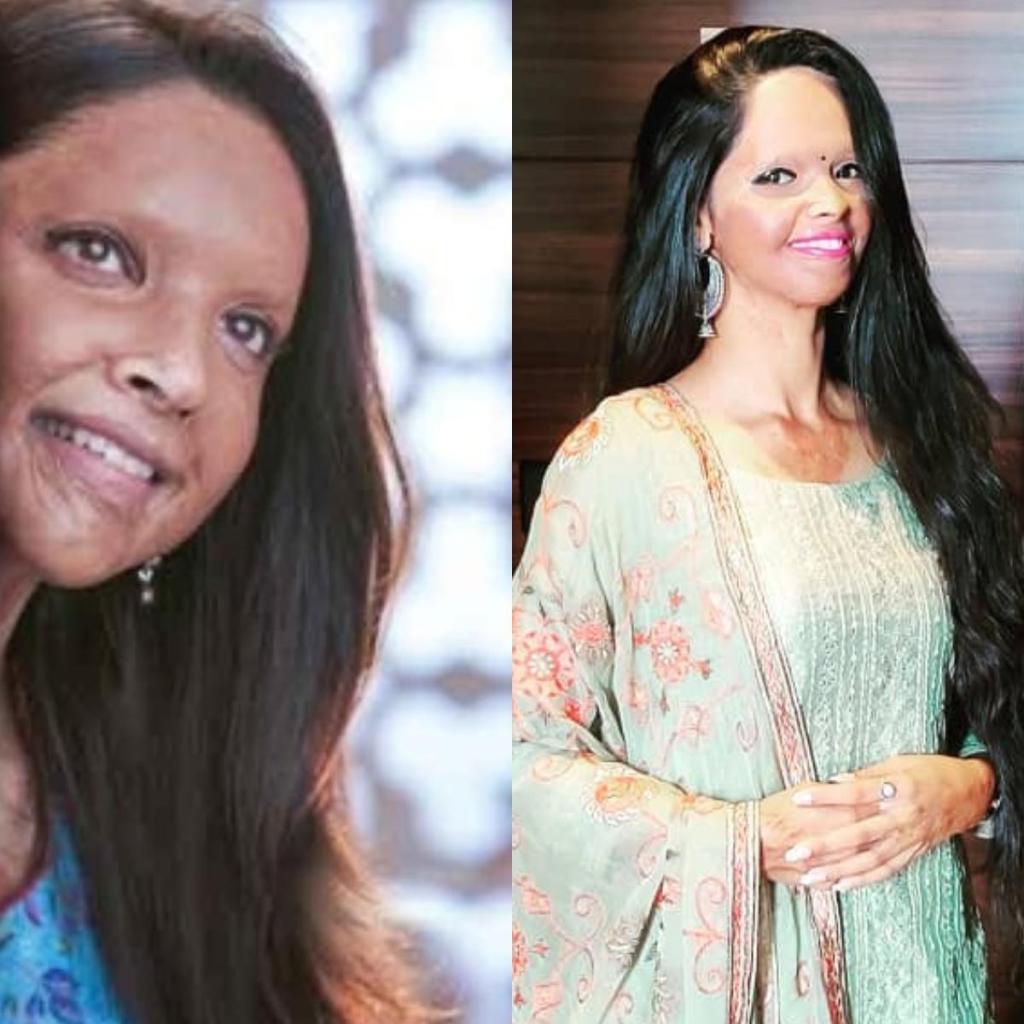
And the movie Chhapaak is based on her life and stars Deepika Padukone in her role.
“And one day she discovered that she was fierce, and strong, and full of fire, and that not even she could hold herself back because her passion burned brighter than her fears.”
National Doctors Day is celebrated nationwide, every year, on the 1st of July. But why? This is to express our gratitude towards doctors and physicians for their service towards our well-being. Legendary physician and the second Chief Minister of West Bengal, Dr Bidhan Chandra Roy was born on the 1st of July in Patna, Bihar in 1882 and coincidentally died on the very same date in the year 1962. In 1961, Dr Roy was conferred with the nation’s highest civilian award, Bharat Ratna. Doctors day in India was established in 1991 in honour of his birth and death anniversary.
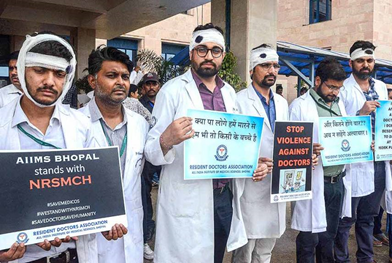
Well, Doctors day is celebrated every year on the 1st of July but this year another day was observed, by the doctors of IMA (Indian Medical Association) on 18th of June, NATIONAL PROTEST DAY. Doctors came together against the assaults on doctors in COVID wards. IMA observed nationwide protests demanding central law to protect doctors against violence.
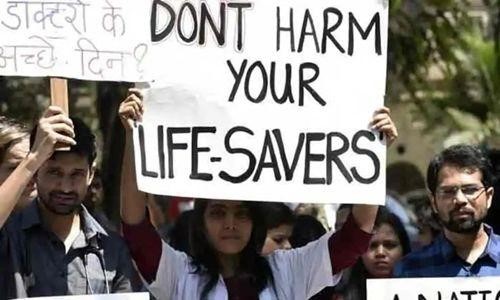
Doctors and healthcare workers held placards and raised slogans like doctors bachao desh bachao (save doctors, save nation) and save the saviour. Doctors and medical staff at the IMA office in Hyderabad protested wearing black badges. Doctors from AIIMS Delhi and IMA unit, Ludhiana also took part in the agitations. Various state-level protests were taking place for a long time.
Why are these protests taking place?
Let me brief you here
Bhopal: A local politician was seen screaming at a Bhopal doctor who couldn’t save the life of a patient who was bought to the hospital at an oxygen level of 30. This left the doctor in tears and he was demoralised to the extent that he wanted to resign.
Guwahati: A doctor at a coronavirus facility in Assam was punched, kicked, and pounded with metal trash cans and bricks, by the relatives of a Covid patient who had died, allegedly due to oxygen shortage. Locals also assaulted the doctor who was then hospitalised.
Kerala: A police official allegedly attacked a doctor in the Alappuzha district. The official is accused of slapping Dr Rahul Mathew, who was working the night shift at the Mavelikkara district hospital, after the former’s mother, a COVID-19 patient, was brought dead to the hospitals. Doctors protest for the non-arrest.
And many more such cases went viral on social media. Assaults on doctors might not make it to the news daily, but take place every day.
What exactly did they do to get such treatment?
Grinded in high school, cracked NEET, spent 7-8 years working hard and studying in college, paid a hefty amount of fees to medical colleges or even took loans for their studies.
Who does that? Their fault, right?
Image source: Google | Image by: BusinessToday.In
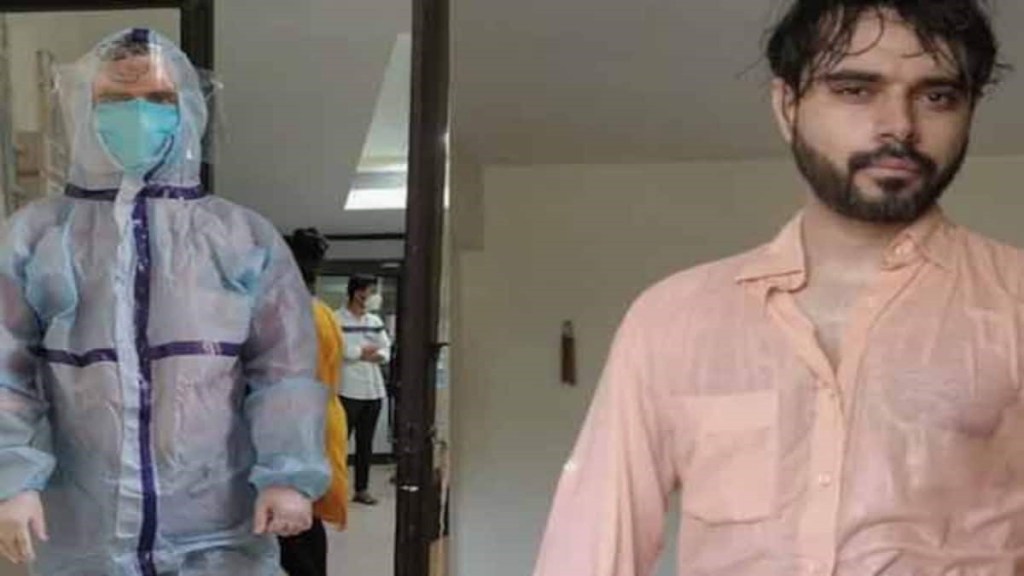
During COVID lockdown when most of us were busy making dalgona coffee and baking cakes, they were out there in scorching heat, wearing PPE kits dealing with patients. Burning the candle at both ends, forgetting they have a life of their own, forgetting they have a family waiting for them, isolating themselves from their own family members, in their own houses to protect their families from contracting the virus, more than 500 doctors died during COVID, trying to save our lives. But why, just to save us. Imagine how demoralising it is for them to get beaten up by the ones they’re working for.
What is the probable reason?
Lack of infrastructure
Manpower
Laws in place
Security arrangements
Lack of infrastructure
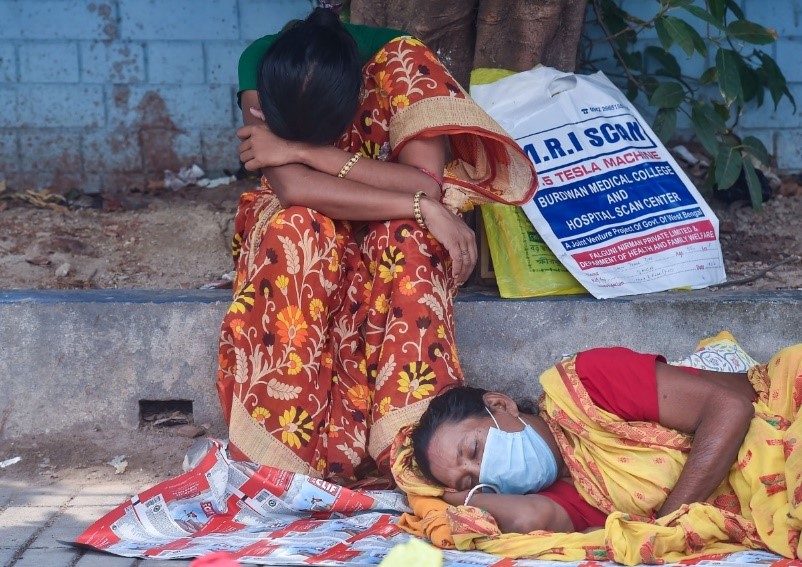
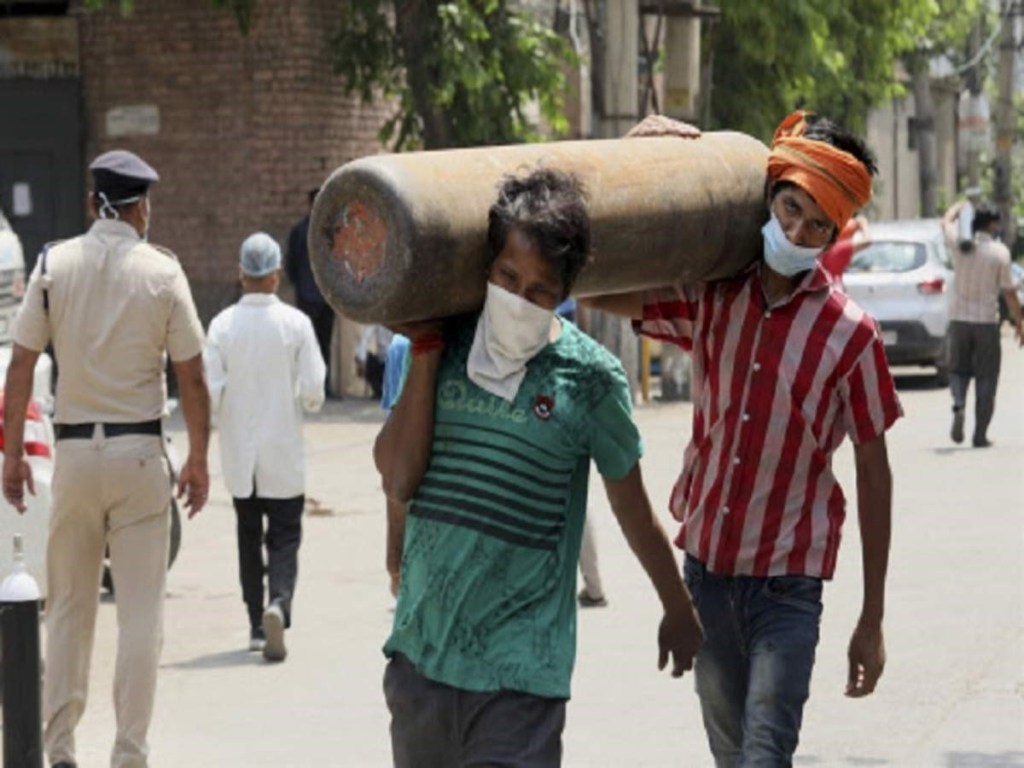
The shortfall of ICUs, no beds for patients, dearth of oxygen support, the inadequacy of medicines, caretakers bound to wait in long queues for medicines at dispensaries, patients gasping outside hospitals, black marketing of almost everything required for a person to recover, our health infrastructure was crippling.
Image source: Google | Image by: The Times Of India
Manpower
Along with the tools used to help fight COVID, there is a paucity of our warriors too. There should be at least one doctor per 1000 patients according to WHO, whereas in India there is one doctor who attends more than 1445 patients. Not just doctors, the suggested number of nurses per 1000 patients is at least 3, there are just 1.7 in India (43% less than WHO standards). This leads to overworking of doctors and medical staff ignoring their basic requirements like sleep and a proper diet.
Laws in place
Medicare Service Persons and Medicare Service Institutions (Prevention of Violence and Damage to Property) Act, also known as the Medical protection act is there in at least 19 states, which when breached can lead to an imprisonment of up to 3 years and a fine of INR 50,000. Damage to any medical devices and equipment is a punishable offence and offenders are liable to pay twice the amount of the damaged equipment’s cost.
The Act, however, fails to really protect doctors because it features neither in the Indian Penal Code (IPC) nor in the Code of Criminal Procedure (CrPC). This makes it difficult for victims to approach the police for help or the latter to file a complaint against suspects.
Security arrangements
Doctors are not politicians with scores of gunmen and bouncers around them, who will assure their safety? Due to lack of security at hospitals and clinics, doctors and other staff are the soft targets for unhappy relatives and agitated patients.
Stepping into doctor’s shoes
Imagine yourself as a teacher who fears being beaten up to death by parents for their child’s poor performance at a test, will you even be willing to teach anymore with the same zest. I don’t think so. Hospitals are understaffed, doctors are overworked, patients are overwhelmed.
But this isn’t the fault of our doctors. They are going an extra mile in order to save as many patients as they can, making 3 patients share a bed or switching oxygen support among patients, they have our best interest at heart.
Doctors are not supposed to be accountable for the paralyzed infrastructure, that is where the leaders we vote for come into play. They’re made to work for 15+ hours at a stretch that too in a harsh environment, in a place they no longer feel safe or comfortable in.
What do doctors want?
All they want is for the government to sit with them and consider their problems.
For a law to protect their lives so that they can continue with their duties towards the nation. The implementation of existing laws.
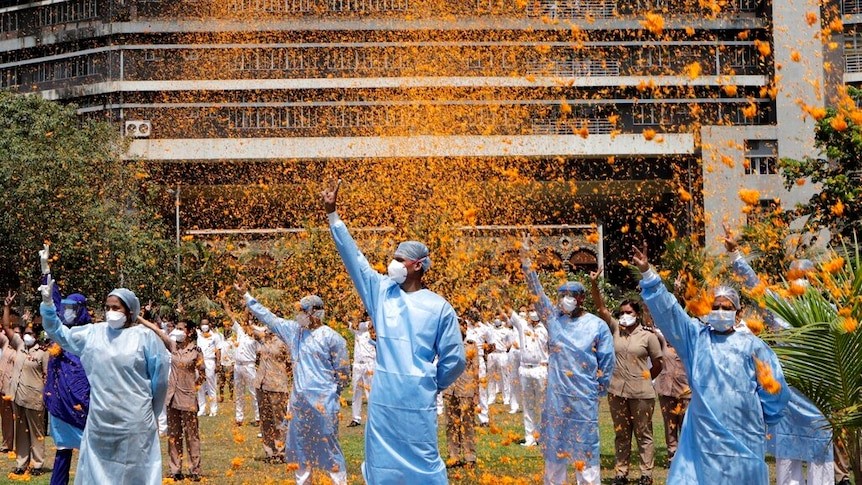
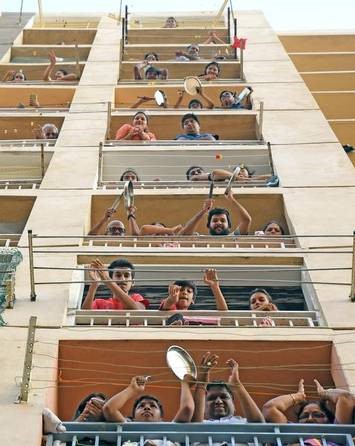
They don’t demand banging of thalis from our balconies or something like that in order to pay our respect, they didn’t ask for showering of flowers upon them for their service, all they’re asking for is to be able to practice in a safe environment where they’re worried for patients’ life, not scared of getting beaten up by sticks.
Image source: Google | Image by: Anjana Pasricha ( VoA)
We were always raised to believe doctors are God on land. Saving our life, giving us a new one at times, while risking their own. What they now want is not godly, but at least a humanly manner.
How can we help?
First and foremost, don’t be someone they need protection from. i.e. don’t be an assaulter.
Secondly, don’t ignore if you see someone being unfair toward them. Raise your voice, report if you see something like this.
A simple realisation that we can trust our doctors can do wonders.
Lastly, don’t forget they’re humans too. Thank them, pay your respect, or at least, just don’t be a jerk.
This Doctors day, I bet Dr Bidhan Chandra wouldn’t be proud of our country treating its doctors and medical staff like this.
Let’s all come together and promise that we’ll make the world a better place to live for our selfless human beings. We owe them.
Ending here with a salute to any doctor or an aspiring doctor reading this, and a sincere tribute to the warriors that lost their lives.
Permaculture is a fusion of the words ‘Permanent’ and ‘culture’. The term was devised by Bill Mollison and David Holmgren in 1978. In Mollison’s words, permaculture can be defined as the “conscious design and maintenance of agriculturally productive ecosystems which have the diversity, stability, and resilience of natural ecosystems. All this is achieved with a harmonious integration of landscape and people sustainably. The farms are designed in such a way that it promotes the coexistence of competing plants species. Currently, more than 3 million people practice permaculture across 140 countries.
Permaculture benefits claims
The practitioners of permaculture claim that as the population is increasing, there is increasing pressure to produce more food. The modern method of monoculture is not a sustainable method of growing food where a large area of land is used for only one crop and lots of chemical fertilizers are required to sustain the crop production. This also puts immense pressure on the topsoil and the soil loses its fertility and more fertilizers are required to maintain the productivity and output. Monoculture is discouraged by permaculturists because it promotes farming with a commercial-driven mindset and only selected varieties of crops and plants are grown that are commercially viable. Sometimes wild and uncultivated foods like tubers and millets are sidelined from the people’s diet even though when they are just if not more nutritious than any other food. Practicing permaculture can help small farmers to be more self-sufficient in producing their food and not rely on external input. Farmers also get the opportunity to grow large varieties of fruits, grain, and vegetables under a single roof. But it’s more than just self-sufficiency and the farm itself generates manure and this helps in saving the fertilizer costs. There is even more, as perennial plants are a structural part of the permaculture, this means that plants don’t require regular tending. This reduces the labor expenses as well. It also allows the plants to endure harsh weather conditions like the heavy downpour in monsoons or winters.
Challenges and future
Modern conventional agriculture science has been a boon in terms of production quantity as a whole but still, there are lots of problems that we are facing right now due to the use this form of farming. The focus should also be on the quality first and then quantity. What modern agriculture science has done is that it has separated the farmer from the soil. The focus and research are on the yields and nutritive properties of plants. Food has to come from the soil and most of the solutions are available in nature itself. Permaculture provides a pragmatic and efficient way for our subsistence farmers to produce food. In India where small farmers are the majority and they will also face immense pressure from the dangers of climate change and the increasing constraints on resources, epically water. Then there is the monetary issue as well. Permaculture helps in this case as the food is closer to the producer and there is less wastage of food. This makes food production economical and sustainable in a long run. Still replacing permaculture with traditional agriculture will not be easy and practical, but with small steps, it can emerge as a viable way to produce food and maintaining the ecology of the planet.
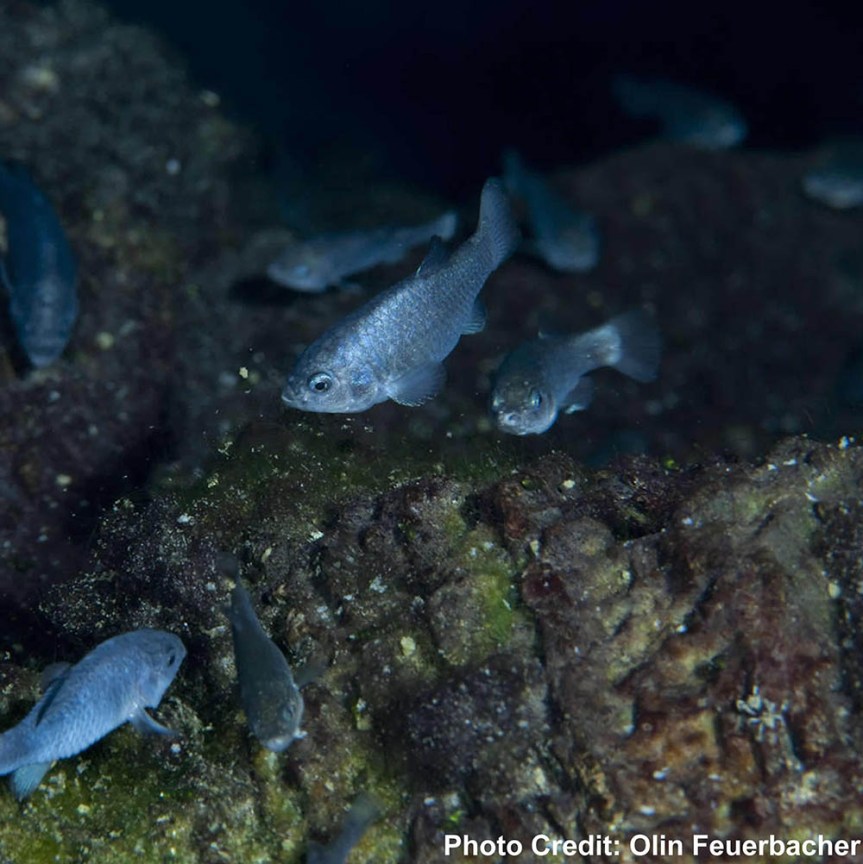
The pupfish, also known as the rarest fish in the world, are a group of killifish with striking coloration. They are mostly found in the extreme and isolated environment. These rare species of fish lives in a single pool in the Mojave Desert. They went almost extinct with their only canyon pool being pumped.
The description of Pupfish
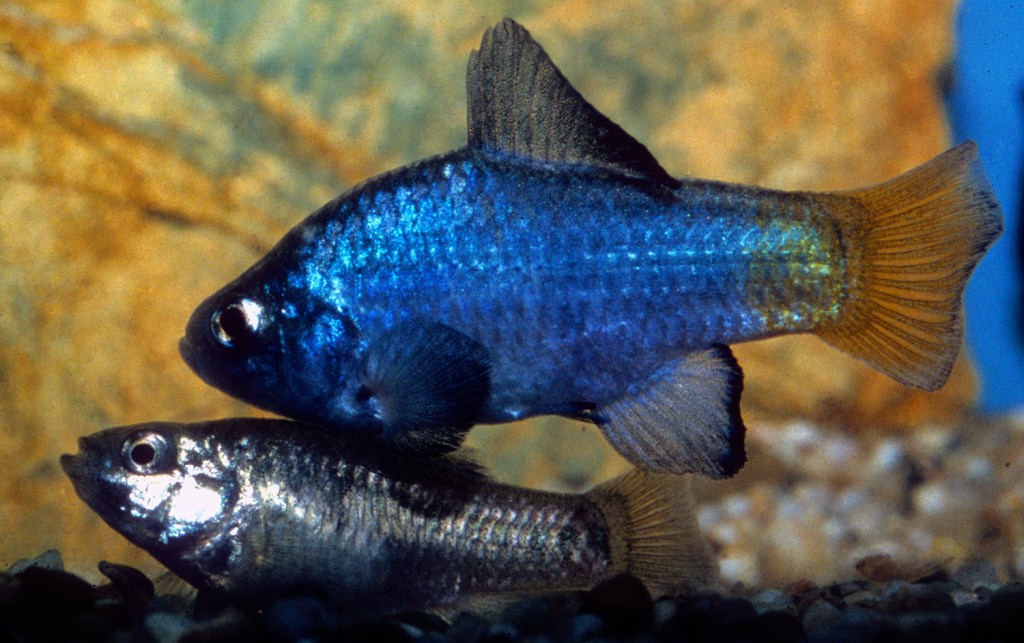
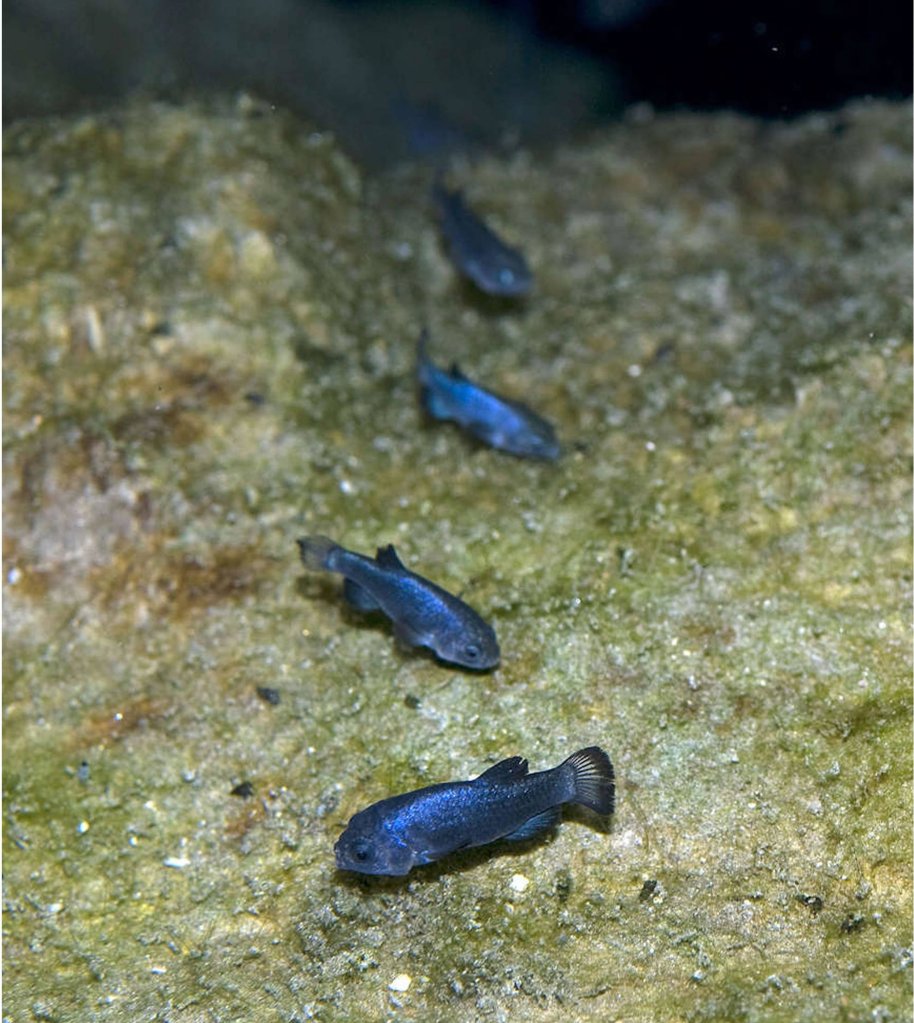
Pupfish are small, colorful, knuckle-sized and ray-finned fishes. The most famous amongst them are the Devil’s Hole pupfish. The Devil’s Hole pupfish are bright blue with purple accents whereas, the white sands pupfish has yellow and orange fins. Most of the pupfish are very tiny, some even less than an inch in length.
The diet of these pupfish includes variety of things, consisting of algae, plants, aquatic invertebrates and some insects.
About the devils hole pupfish
The fascinating and playful pupfish with bright, silvery-blue and lustrous body are found in an oasis within the Death Valley called as- The Devils Hole. These mighty goldfish-like fishes survive in the 92 degrees water of the Devil’s Hole. They withstand harsh conditions that would kill most other fish. Another fact about this fish is that it acts as an indicator of seismic activity around the globe.
The Death Valley as the name sounds is a land of the most extreme conditions. You can expect a scorching heat of 110 F to 120 F +. Even though this land experiences droughts and record summer heat, in the winters the peaks of the mountains are snow-laden. This land welcomes rainstorms rarely. Lush oases harbor tiny fishes and refuge for wildlife and humans. The name might sound very morbid but it is home to a great diversity of life.
What threatened their existence?
In the late 1960’s and early 1970’s, groundwater was pumped out extensively for the agricultural purposes. This activity led to a major downfall of the water level in Devil’s Hole. These invasions were a threat to the very existence of this fascinating species.
So, a group of academics, government employees and private citizens met in 1969 to speak about the protections needed for the fauna in Devil’s Hole.
The desert pupfish has been classified as endangered by IUCN. Due to the pumping of the aquifer since 1960’s, the fish never recovered. Later, it was decided that a back-up population was needed. A replica was created where one part of the population resides in the fake canyon, and the other in the natural canyon.
How many Devils Hole pupfish are left in 2020?
The observable population of the Devil’s Hole pupfish has reached 136. In the years 2006, 2007, and 2013 their population was less than 40. In the 1970s, 1980s, and 1990s, scientists counted near about 200 Devils Hole pupfish. And in the late 1990s there was startling decline in their numbers.
“Despite these extremes, Devils Hole pupfish continue to display their resiliency that have allowed them to survive for thousands of years”, said Brandon Senger, Supervising Fisheries Biologist for the Nevada Department of Wildlife (NDOW).
Pens don’t win battles, and swords don’t Write Poetry.
Mighty is the Hand that knows when to pick the pen and
When to pick the sword!”
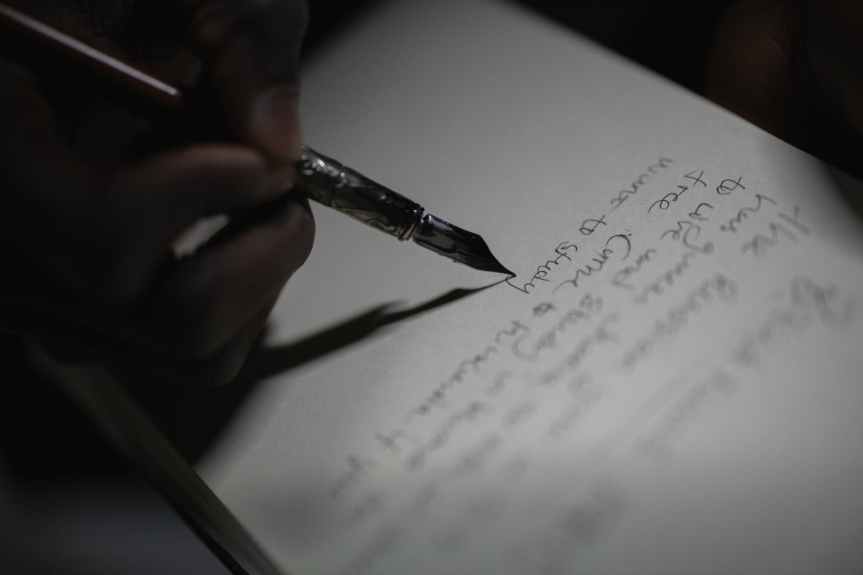
Thousands of stories, incidents, events are flourished beautifully with some splashes of ink. Indeed, a pen holds up a power which humans will never have. Everyone wants to be powerful in some way or the other. It can be physically, financially, politically, etc but we all need powerbecause we are convicted to the clichéd topic of “When a man is in power, he is the strongest of all”. It’s our fault that we have created a world where a lion is considered to be the king of the jungle. We have made the world believe that power plays a major role. But have we ever thought that power can lie in the hands of humans?
Power is in our hands!
The strongest are those vintage philosophers and poets, who have a pen with them. Yes, a pen is all we need to be powerful. But how can a tiny pen be so powerful in this whole universe? Ever pondered about those passionate writers of the 18th century, of Victorian-era who still captivate us by telling the class condition and women suppression in that time.
Ever thought about how those writers like Sadat Hasan Manto, Khushwant shah, Ismat Chugtai taught us the value of freedom and sufferings. What made Shakespeare mend to write about the most legend love story of Romeo and Juliet, when he knew it was a time of class distinction. All these eminent writings, poetry which we read now is the power of a pen which amazed the readers of all time.
Pen is a medium
Ink has always been the best media to convey the real scenario of society. The writers have effortlessly portrayed to us how a pen is always mightier than a sword. A pen will always show us the mirage of the real society, where we live. We as a reader forecast many experiences when we read the truth. The authority is with all of us but only some chose a way to remove the disputes and that is through writing. A spot of ink has the power to removes the gap of social norms and customs from our society.
It unites!
Wars, disputes, riots always bridge a gap among humans, but a pen always unites people and their thoughts and believes. Society is filled with humans who are more affected by the glimpse of writing. As people believe in the power of words. Those who know to play with words always win. We have created a society where we have made certain beliefs’ which are not accepted by all and we have been following an age-old system where power is everything. So, it’s time to break those barriers of conventions and realize the reality of words.
Pen and readers are bonded of each other!
The powerof the pen is so powerful that it can convey to the audience easily. The pen and the readers are 2 parts of a coin. The audience gets related because of the commendable expression which makes a reader and a pen get bound to each other. Immensely a pen and a reader are bounded emotional with those flickering words which string to their minds.
Media Bias is a term used to describe biases and personal prejudices of a journalist in the selection of events that will be reported and the manner in which they’ll be reported.
In earlier times, every media organisation had a political backing, that is, funded by any political party or group. It was only with late 19th century and early 20th century, journalists began to feel the need for a truth and unbiased reporting.
Types of Media Bias:
A) Bias by Omission
This is one of the methods in which journalists wipe out one side of the story or series of facts over a period of time.
B) Bias by Selection of Sources:
In this method, journalists usually approach those sources who will favour their own prejudices. Both sides of a story aren’t given any importance.
C) Bias by Story Selection.
This mostly happens when a media organisation is funded by a political party. In this, journalists only highlight those issues and stories that pertain to one political party. For example, only talking of achievements of a political party and ignoring its failures.
D) Bias by Placement.
This means where an editor places the story and how much they consider the story is important. For example, if a news organisation is supporting a certain political party and there’s a humanitarian crisis in any city because of that political party, in this case, news editor would place the story at the end so that it gets less importance.
E) Bias by Spin.
In this, reporters and journalists give their own “subjective comments” to a factual story and make it appear before the public their own way. These interpretations can be harmful as they divert the minds of public from actual facts.
Some examples of Media Bias:
A) Ethnic Bias:
This is the form of bias which includes racism, nationalism or xenophobia. For example, western media’s portrayal of India as a poverty stricken country with no toilets. Yes, India suffers with poverty but the western media made it look like it’s the only thing India is all about.
B) Corporate Bias:
Media is also extremely biased at times when reporting about corporate misconduct. This is because some media channels are funded by big industrialists and business people.
C) Class Bias
Media houses are extremely bias when it comes to class. Higher class cases are handled with dignity whereas oppressed classes are treated with lack of respect and humanity.
D) Religious Bias
Certain media houses favour one religion according to their own religious ideologies and thus even start supporting or give a biased reporting when their religious community is doing something wrong.
E) Political Bias
Probably the most famous form of bias in which a media house supports a political party right from the beginning of covering their political campaigns to trying to hide their political mismanagements.
Journalists must separate fact from opinions and do an unbiased reporting for a better transportation of news information to the public. This way it would also be able to hold the system responsible.













 Eduindex
You must be logged in to post a comment.