Data Protection

Recently got a chance to attend webinar where Former Justice B.N Srikrishna talking about data protection luckily got great insights and delighted to share with you guys hope it’s helps you to understand everything about Data Protection.

India is not a party to any convention on protection of personal data which is equivalent to the GDPR or the Data Protection Directive. However, India has adopted or is a party to other international declarations and conventions such as the Universal Declaration of Human Rights and the International Covenant on Civil and Political Rights, which recognise the right to privacy.

India has also not yet enacted specific legislation on data protection. However, the Indian legislature did amend the Information Technology Act (2000) (“IT Act”) to include Section 43A and Section 72A, which give a right to compensation for improper disclosure of personal information.

The Indian central government subsequently issued the Information Technology (Reasonable Security Practices and Procedures and Sensitive Personal Data or Information) Rules, 2011 (the “Rules”) under Section 43A of the IT Act. A clarification to the above Rules was issued on 24 August 2011 (the “Clarification”).

The Rules have imposed additional requirements on commercial and business entities in India relating to the collection and disclosure of sensitive personal data or information which have some similarities with the GDPR and the Data Protection Directive.India has introduced a biometric based unique identification number for residents called ‘Aadhaar’. Aadhaar is regulated by the Aadhaar (Targeted Delivery of Financial and Other Subsidies Act) 2016 (“Aadhaar Act”) and rules and regulations issued thereunder.

Entities in regulated sectors such as financial services and telecom sector are subject to obligations of confidentiality under sectoral laws which require them to keep customer personal information confidential and use them for prescribed purposes or only in the manner agreed with the customer.

To better balance privacy and innovation, India’s data protection legislation must be narrowly focused and designed to protect individuals and society against any injury resulting from data processing.In December 2019, the government introduced the Personal Data Protection Bill, 2019, in parliament, which would create the first cross-sectoral legal framework for data protection in India.

A framework for protecting personal data has to be designed on a more precise understanding of the role of privacy in society and of the harms that emanate from violations of individual privacy.The notion of informational privacy has become salient in the past decade.

India has privacy jurisprudence going back several decades. Most of it focuses on privacy in the context of harms caused due to a violation of privacy. This jurisprudence changed in 2017, when the Supreme Court in Justice K.S. Puttaswamy v. Union of India held that the Indian Constitution included a fundamental right to privacy. While deciding the case, though the court listed a long line of jurisprudence, the central deficiency in the existing jurisprudence in the court’s opinion was the lack of a “doctrinal formulation” that could help decide whether privacy is constitutionally protected.

The Personal Data Protection Bill, 2019, follows a long line of privacy jurisprudence in India that has been influenced by global developments as well as the country’s own constitutional jurisprudence.

Though the constitution does not explicitly mention a right to privacy, Indian courts have held that a right to privacy exists under the right to life guaranteed under Article 21.5 However, there was always some ambiguity regarding the exact nature of the constitutional protection of privacy due to the long-standing judgment of the Supreme Court in Kharak Singh v. State of Uttar Pradesh, where the court held that a right to privacy did not exist under the constitution.

The Bill governs the processing of personal data by:

(i) government,

(ii) companies incorporated in India,

(iii) foreign companies dealing with personal data of individuals in India.

Personal data is data which pertains to characteristics, traits or attributes of identity, which can be used to identify an individual. The Bill categorises certain personal data as sensitive personal data. This includes financial data, biometric data, caste, religious or political beliefs, or any other category of data specified by the government, in consultation with the Authority and the concerned sectoral regulator.

The Bill sets up a Data Protection Authority which may:

(i) take steps to protect interests of individuals,

(ii) prevent misuse of personal data,

(iii) ensure compliance with the Bill.

It will consist of a chairperson and six members, with at least 10 years’ expertise in the field of data protection and information technology. Orders of the Authority can be appealed to an Appellate Tribunal. Appeals from the Tribunal will go to the Supreme Court.

Offences under the Bill include:

(i) processing or transferring personal data in violation of the Bill, punishable with a fine of Rs 15 crore or 4% of the annual turnover of the fiduciary, whichever is higher,

(ii) failure to conduct a data audit, punishable with a fine of five crore rupees or 2% of the annual turnover of the fiduciary, whichever is higher. Re-identification and processing of de-identified personal data without consent is punishable with imprisonment of up to three years, or fine, or both.


Why Apple was not so popular in India???

Apple sells millions of iPhones every year. In the year 2018, the tech giant reported selling close to 47 million units worldwide. But not all markets are created equal. India has been one of the hardest countries to crack for the Cupertino giant. Although it’s been over a decade since Apple began selling iPhones in India, the company can’t seem to get a big bite of the world’s second-largest smartphone market. India is a very price-sensitive market, which means that people pay a lot of attention to what value they are getting out of the price that they are paying for a particular product.

In the case of Apple, there’s a lot of premium being paid for the brand itself, and that’s where the price-conscious Indian consumer thinks about that if they are getting the same kind of features or specs from another phone that they can get a lower price, that makes it tougher to sell something at a much higher premium. Apple is definitely feeling the pressure. Samsung and Xiaomi accounted for the majority of smartphone sales in India in quarter three of 2018, garnering 22 percent and 27 percent respectively of the smartphone market. In contrast, Apple made up only about 1 percent of India’s smartphone market share, trailing behind Chinese phone makers Vivo and Oppo. It’s also worth noting that the premium smartphone market in which Apple operates still makes up less than 5 percent of the overall smartphone market in India.

7 Key Strategies That You Must Learn from Apple's Marketing

Most of the smartphones in India that sell, they are below $200 and Apple does not have any play in that segment. This environment is one that competitors like Samsung have begun to adapt to. The South Korean powerhouse is launching its Galaxy M series budget smartphones to appeal to the Indian market. In contrast, Apple doesn’t seem too keen on changing up its India strategy. I got some ideas for you, OK? I talked to some people at Walmart yesterday. An arrangement with Walmart Flipkart to take over India with a budget phone rather than doing it piecemeal? For us, we’re about making the best product that enriches people’s lives. And so, we’re not about making the cheapest. For us, what we’ve seen is, there’s enough people in every country in the world that we play in that we can have a really good business by selling the best phones. Still, some tech investors see Apple as being out of touch with the India market. You think they are going to slash prices? I think they have to. How can you sell a $1,000 phone in a market like China where the GDP per person is $10,000? In India it’s $2,000. And if you go back to the September earnings release, they talked about the fact that India was way below where they thought.

Apple postpones launch of online store in India - The Economic Times

Well, if your average GDP person is $2,000 and you’re trying to sell a $1,000 phone, it’s gonna be probably pretty hard to sell it. They probably want to eat. Another issue for Apple: stiff tariffs. I think iPhones have a specific disadvantage in the India market because of the local regulation. There is a very high import duty on the phones that are not manufactured locally in India. So for most of the big players in the India market, they are manufacturing locally so they do not have to pay that high import duty. Samsung has been manufacturing phones in India since 2007 and just last year opened the world’s largest mobile phone factory on the outskirts of New Delhi. Chinese phone makers Xiaomi and Oppo have also invested millions of dollars to build manufacturing plants in the country. That’s not to say Apple has completely ignored India.

The tech giant already manufactures its lower-cost iPhone SE and iPhone 6s models locally, through a partnership with Taiwanese manufacturer Wistron. This year, Apple is also expected to move its production of the iPhone X series into Foxconn’s plant in southern India. If you look at how we’ve done over the years, we’ve gone from a $100-$200 million business to last year we had we exceeded $2 billion. That $2 billion was flat year over year after a rapid rapid growth. And so we have more work to do. We’d like to put stores there. We would like some of the duties and so forth that are put on the products to go away. But even with its local hardware production push, Apple still fails to provide Indians with a robust software experience.

Apple iOS 13 Release: Should You Upgrade?

Apple has introduced turn-by-turn navigation for the India market. Before that, that significant part was missing. And beyond that, there’s not a lot of customization that Apple has done for the India market. There are not a lot of apps that specifically cater to the India market. Past complaints for Apple Maps also included missing major landmarks and having very sparse data of cities and towns. But again, Apple is working on a solution. The company has hired thousands of engineers at its mapping facility in Hyderabad to improve its services. Apple Pay is also not an option in India, though similar payment services from Samsung and Google have already been rolled out. Finally, unlike in most other markets, Apple can’t rely so much on its brand recognition to sell devices in India. The other challenge for Apple in India is that it cannot have its own retail stores or own Apple stores because of some regulatory issues, which means it has to have partners on the retail side, whether it’s the Apple premium resellers, which you see in many other countries as well, or with the third-party resellers. In order to have a larger presence in the market.

Apple has to have partnerships with thousands of these resellers, which in a country as big as India, can be challenging. Apple is still a premium status symbol for many Indians, but one that is out of reach for the majority of the population. With phones from Chinese brands like OnePlus, which was India’s best selling premium smartphone brand for the second quarter in a row, offering similar features at a fraction of the cost, Apple may have a very tough time getting a bigger slice of the India market.

Apple - Localizing the Message - Global Marketing Professor

Ukulele

It is a musical instrument, which can also be called as a miniature version of guitar but it is a bit different from it. It is a Hawaiian instrument  played from the nineteenth century. There are four types of Ukulele they are soprano , concert, tenor, and baritone out of which Soprano is the  standard Ukulele. This instrument has a carefree Jaunty music which pleases everyone. Though it is a small guitar but a guitar has 6 strings but Ukulele  has 4 strings and Ukulele is very much easier to learn than guitar as it has soft nylon strings which does not hurt the fingers and its frets are quite small which would actually make it easier to compose. A person can learn Ukulele, so as to learn guitar which would make guitar learning guitar faster.

let us learn firstly, how to play  ukulele so as to experience the pleasure of playing it..

  1. Handling Ukulele

    It is very necessary for beginners to learn how to handle Ukulele in proper position. A Ukulele has two parts one is the long thinner portion which is called the neck and other is the body. It is very important to orient it properly that means to hold it properly. The standard way is to hold the neck in the the left hand and you hod the body in the right hand. Hold the instrument a little below your chest and hold the neck of it in fifteen degrees angle. You can play the instrument by sitting , standing and also lying, But it is much easier if you play it while sitting. About your finger arrangement, you should always rest the thumb of your left hand on the first fret and then curl your remaining from the underneath of the instrument so as to hold other strings. Your hand should make a shape of C around the instrument.

  2. Strumming
    Curl your fingers over the strings in the side hole, then make a shape of a doughnut with your index finger and the thumb, you have to play from the side of your index finger. You always have to strum all the four strings together so as to play the music. You can Ukulele by a prick or by your fingers, But the tones become a bit harsh when you use a prick on the soft strings of the instrument so its better to use the fingers.
  3. Chords
    It is very important to learn the natural notes of every string in the instrument. You should always memorize the arrangement of the strings.In order,  A (1), E (2), C (3), and G (4) are the order of the strings in the bottom to top arrangement. Practice different chords make yourself familiar with all the chords and all major and minor chords. Use the chord diagram so as to master the instrument.
  4.  Songs
    Though the ultimate goal of learning an instrument is to compose your own music, to achieve that you have to  learn playing your favorite songs with the instrument. This helps in learning new chords and shifting between them. As you learn about different tunes and get familiarize with the instrument, you are now ready to compose your own song.

    Happy learning….


Why Australia is least affected by recession!!!

America’s economy is approaching a big milestone. If it keeps humming until July 2019, it’ll be the longest expansion in U.S. history. It would be exactly one decade and one month old by then. But there’s another country with an even more impressive run It’s even called the ‘lucky country’ Three big lessons from Australia.

  1. Be smart.
  2. Be organized.
  3. Be lucky.

So, if I’ve got any advice for other countries, it’s try and be as lucky as Australia That luck has to do with Australia’s treasure trove of natural resources. You know Australia is on the other side of the world and sitting on tremendously valuable minerals right at the point where the Chinese economy is just around the corner and exploding. Australia and every one its natural resources were within the right geographic neighborhood even as the Chinese economy began to begin . And it just so happens that China did a big fiscal stimulus in 2008 and spent a great deal of money building new cities. So all of these resources were drawn from places like Australia. So that also served as a huge tailwind at a time when developed markets were in a whole lot of trouble.

What Currency Is Used In Australia | Australian Dollar : Compare ...

The year 2008 was a time of economic turmoil The Global Financial Crisis hit and markets crumbled around the world. But as it turns out this was also a year for Australia’s economic management to really show off At the time the government had a very helpful and very low level of debt. One reason? Pension reform in the 1990s. Australia set up a compulsory retirement system called the superannuation system. It requires employers put money into its employees’ retirement savings.

Since companies and citizens have to build up retirement savings, some of the financial burden to pay off pensions was taken off of Australia’s government As other economies reeled in the wake of the 2008 crisis, the Australian Government was then able to put money directly into people’s bank accounts This boosted consumer spending in order to stimulate growth In 2008, the Australian Government unlike some other developed market governments actually jumped in very quickly with fiscal stimulus, so that helped to kind of minimize the effect of the crisis The country’s numbers continued to look sluggish after the financial crisis. But they never quite dipped low enough or for long enough to satisfy the definition of a recession. It takes two quarters of negative growth to fall into a recession. Australia’s economy did post a couple of negative quarters since 2008, but no country’s perfect. Overall Australia’s economy has been managed pretty much in recent years partly due to a robust and stable financial institution.

Reserve Bank of Australia – Australia's LGBTQ Inclusive Employers

Australia has an independent financial institution and it is a very well-run financial institution . It also has a floating exchange rate and the exchange rate helped it adjust to international shocks. Australia’s economic reforms gave it flexibility in times of hardship. For example, floating the Australian dollar In 1983, Australia’s government moved the dollar onto a floating exchange rate This meant that the dollar would be valued by supply and demand instead of being subject to influence from its government or its central bank It allows the economy to react to shocks as well Typically when an economy is hit by some sort of negative shock. The currency will adjust. It will depreciate and that helps promote exports. Another reason behind Australia’s economic diary lies in its immigration policy. Since the late 1990s, Australia has seen growth in temporary migration, many arriving to the country on student or temporary work visas. The number of temporary migrants peaked in the year 2000. However a recent change to immigration law in 2018 gave visa applicants more hurdles to get through if they wanted to come to the country Even when our GDP per capital average incomes aren’t rising by much because the number of people continues to rise that means the total GDP continues to rise at even more rapid pace Part of that’s underpinned by much faster population growth Most experts think Australia’s economy remains strong in 2019, but it’s not without risks.

Australia’s suffering at the instant from pretty weak wage growth. That’s worrying a lot of people. There’s a lot of fear right now that China is hitting a wall. That will hit demand for Australian products. The good news is to the extent that the Chinese are buying commodities hopefully will find buyers from overseas for many of those commodities if the Chinese are not there The bad news is the rest of the world economy is not doing that well.

Australian economic growth slows, enters per capita recession ...

How India’s massive Election System works?

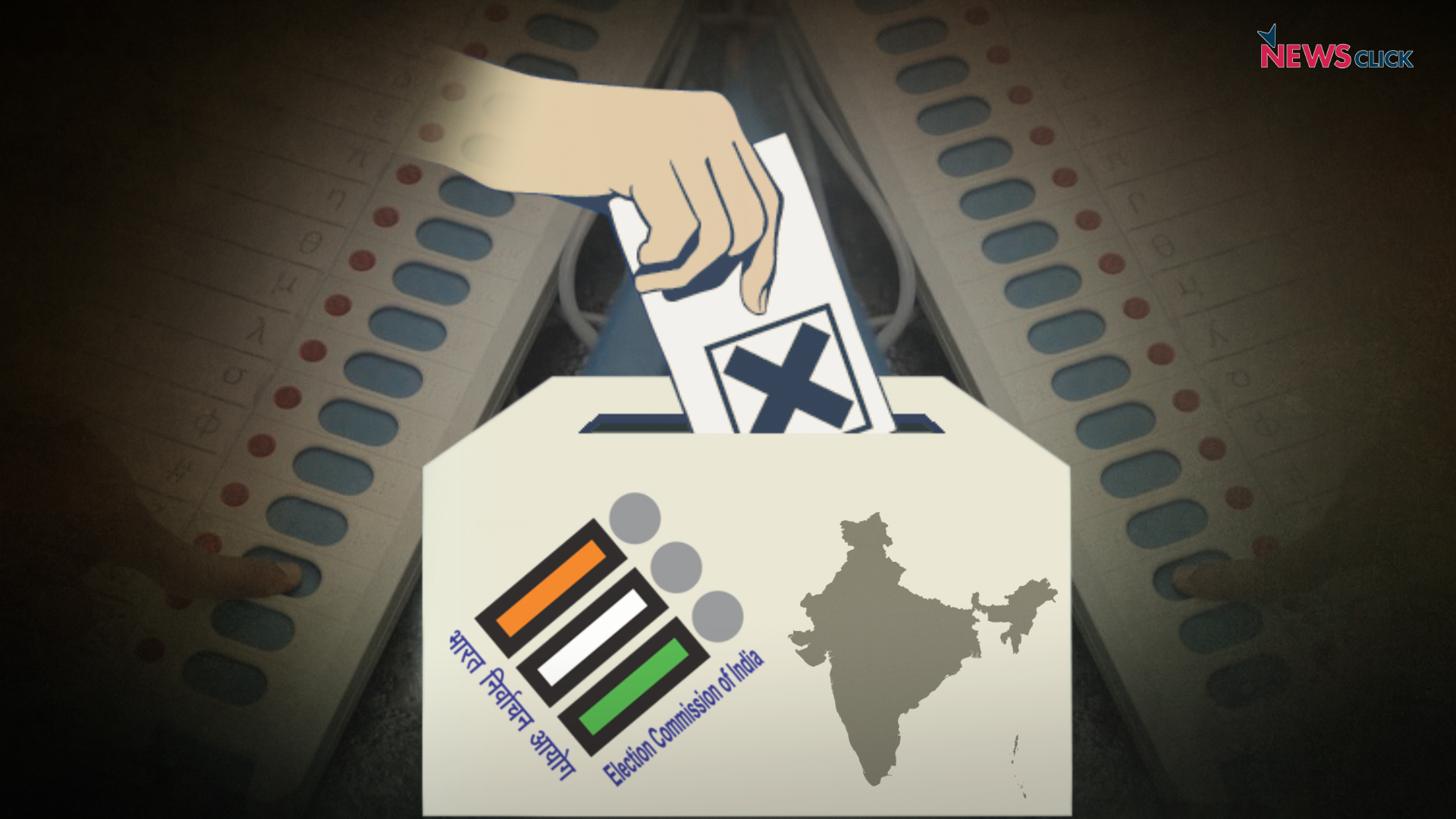
The world’s biggest democracy just had an election. The world’s biggest democratic election It’s a marathon election A mammoth undertaking It’s the world’s biggest exercise in democracy In India, voters picked its central government for the next five years. An eighth of the world’s population was eligible to vote in this election. In the year, 2019, there are 900 million eligible voters in India making this the largest Democratic exercise in the history of humanity.

A vote for reform: Election Commission collaborating with IIT-M on ...

In one of the largest and most populous countries in the world, that isn’t an easy task. India has to reach voters in coastal cities in the south, in the rural regions of the west, and jungles to the east and everywhere in between. And what’s more, they want every Indian citizen to be within 2 km of a voting station. That’s only about 25 city blocks no matter where you are in the country. It’s an incredibly ambitious goal and yet, somehow they’re able to do it. This is the biggest election in the world and I wanted to know how does it work. Every election a team of state officials and security forces, get on a ship within the east of India to require off towards this island. They travel about 100 km to get here, all to securely deliver these Electronic Voting Machines or EVMS, the instrument that logs India’s votes, the heart of this elaborate election process.

Election Commission's crackdown on poll-related monetary ...

India has 2.3 million voting machines for its 900 million voters. So, getting these machines on the brink of every voter may be a big logistical undertaking. That’s why India doesn’t have one polling day , instead, it’s closer to an election month with multiple phases that last weeks. This process takes more than 11 million election officials and security forces, who move from polling station to polling station to polling station from densely populated cities to the rural areas where the majority of Indians live. Once on the island with the EVMs, officials pile on to bike carts and head towards the polling station. Once they arrive, they start setting everything up for the vote.

On Election Day, voters line up, cast their vote, and get their fingers inked to prevent double voting. This is where the process ends for the voters, but for the election officials this is just the beginning. Driving a boat out to a remote island is just one of many ways that officials reach every voter. India’s vast and diverse terrain requires transportation methods of all kinds, like in the jungles of this northern state where elephants transport voting machines to reach a remote town or in the Himalayas where officials hike for hours to bring EVMS for election day. Helicopters, trains, they even use camels. But what makes India’s elections so impressive is not just how they reach everyone in such an enormous country, that’s just half the battle. It’s also the ways they try to include voters of all backgrounds into the process, a challenge that has been a part of India’s elections since the very beginning. India has 22 official languages and hundreds of dialects and when India became an independent nation, less than a quarter of the population could read and write.

Why EC Owes an Answer to the Country Over 'Phantom Votes' | NewsClick

The newly formed Election Commission of India created a range of symbols to correspond to each political party, like an elephant, a lotus, a hand or even an alarm clock so that from the beginning all people regardless of literacy level and language could vote with confidence. Since 1947, the literacy rate has increased significantly, but it’s still only 75 percent, so these symbols are still useful to many when casting a vote. But this is a massive sprawling operation and over the years it’s run into some pretty serious problems like allegations of election rigging and problems with a practice called booth capture, where gangs actually take over polling stations and tamper with the elections. It’s partly because of these problems that the Commission introduced these voting machines in the 1990s.

It also increased security around the elections. These efforts to include all voters and protect elections seem to be working. In 2019, India saw the highest voter turnout yet and for the firsttime women voted just as much as men. India’s elections are only getting bigger and more complicated. India has one among the fastest growing populations within the world. and in 2020, young people will make up more than a third of the country. This is the most important election within the world that takes many officials fanning out across a huge country to assist many millions vote.

Election Commission rejects Opposition demand to tweak VVPAT ...

Research proposals

To write a good and impressive research proposal is very important so as get in to the internship or job  you plan to pursue especially in the field of science. The proposal should be structured and should be such that it can convince the reader that you are really interested in the given subject. Do follow the guidelines like word limit and writing style, after ensuring all of this you can start making a draft of your research proposal. What is really important in this whole process is that you should be convinced that this can land you up to the internship or job you aspire.

So let us learn how to write in a detailed way so that you can succeed in the goal you have kept.

  1. Collect source material – It is really important to collect sources which are reliable for your studies. To implement the project it is very much required that you know the basic and pre- requisite knowledge about the research. The knowledge you gain will tend your mind to have an idea about your research and will also show the reader that you have good knowledge about the subject.
  2. Develop a plan- It is very much required that you plan how you are going to start your research idea, what is main is that you think how you are going to present it. There should not be any confusion in your mind , take as much time as you want to prepare it so that you  bring out the best in you.
  3.  Understand the problems- It is really important that you understand the problems that you have to introduce this research idea. What was that difficulty which your idea will remove and how it will not create any other difficulties so as make it look efficient way to opt for.
  4.  Write up –  Before writing it would be really good if you read an ample of research write ups that are the sample to get the way of writing and style to introduce the topics. As you start writing, follow the structure you have made so that there is no ambiguity. Do format your write up do not be in a hurry writing it, create concrete elements in your proposal. Be firm with the language avoid spelling mistakes always check for them in the internet. Use formal language never use informal languages , millennial symbols so as to convey any statements. Do not use confusing languages always make your theory and concept of the subject clear in your proposal.
  5. Evaluate- Do check recheck your draft a hundred times before sending. Do get it checked by your guide, take his or her opinions seriously. Try to rectify the mistakes and update your draft. Try to minimize the mistakes so that the chances of your selection increases.
  6. Originality- Access the internet to check if there are any research idea similar to that of yours. It is really important that your idea to be original because it would be checked thoroughly by the institution you are sending the research proposal.        The last step SEND IT.

    hope you follow all the instruction so as to make a successful research proposal writeup.

MHA allows colleges to hold final year exams.

MHA order says the final exams are to be compulsorily conducted according to UGC guidelines. UGC said it is upto colleges to decide how they want to conduct the exams.

New Delhi: Students in universities and colleges across India will have to now “compulsorily” take their final-year exams this year.

In a press statement issued late Monday evening, the Ministry of Home Affairs (MHA) said: “Ministry of Home Affairs, in a letter to the Union Higher Education Secretary, today permitted conduct of examinations by universities and institutions.”

The MHA statement, however, didn’t clarify the mode — online or offline — in which the exams would be conducted.

“The final term examinations are to be compulsorily conducted as per the UGC guidelines on examinations and academic calendar and as per the standard operating procedure approved by the MoHFW (Ministry of Health and Family Welfare),” it added.

UGC also in favour of holding final exams
Following the statement, senior officials in the University Grants Commission (UGC) confirmed to ThePrint the UGC is also in favour of holding final exams, and will ask all states and central universities to conduct the final exams.

The UGC will allow institutes to conduct exams in the mode most feasible to them, officials added.

“There was a meeting of the commission members today and there is a decision in favour of conducting exams. The MHA and MoHFW have also given the due permission now and the universities will be allowed to conduct exams keeping all the social distancing protocols put in place by the government,” a senior UGC official told ThePrint.

“In the interest of the students and academic credibility, exams cannot be bypassed and institutions must have final exams. How they want to do it and when they can conduct the exams is up to them, but they will have to conduct exams,” the official added.

According to the minutes of UGC meeting, accessed by ThePrint, the commission will give universities time until September to finish their final-year exams either in offline or online mode.

“The commission approved the recommendations of the expert committee regarding conduct of final-year examinations to be completed by the end of September 2020 in offline/online/blended mode,” according to the minutes.

States, which cancelled exams, have to reconsider
According to a resolution passed during the UGC meeting, states that have cancelled exams will have to reconsider their decision and they cannot opt for internal assessment.

Many states, including Maharashtra, Rajasthan, Madhya Pradesh and Kerala, have decided to cancel the final exams for university students, while Gujarat, Karnataka and Uttar Pradesh have been waiting for UGC directions.

The UGC had in May released an academic calendar based on suggestions from an expert committee headed by Haryana University Vice-Chancellor R.C. Kuhad.

The calendar had taken into account the pandemic situation during that time, and suggested that pen and paper exams can be conducted in July if local conditions are favourable.

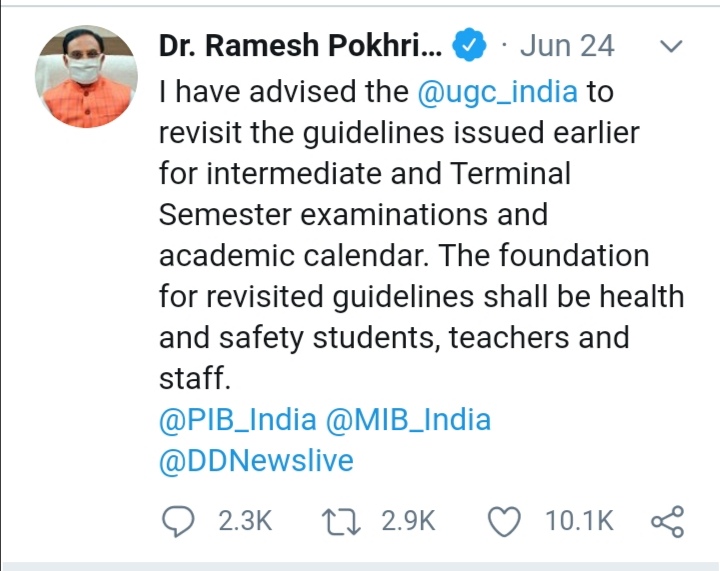
In June, however, looking at the rising number of Covid-19 cases across the country, Minister of Human Resource Development Ramesh Pokhriyal Nishank had asked the UGC to re-visit the guidelines.

New bubonic plague case suspected after covid-19 in China; Alert sounded.

In this hard times of corona virus pandemic , chine has reported another deadly bubonic plague case in the northern China’s inner Mongolia. The detection of the suspected case of bubonic plague has come to light in statement issued by a local health commission on its website.

As per a media report, a third-level warning alert was issued on Sunday. The warning period has been extended to the end of the year. On July 1, state-run Xinhua news agency said that two suspected cases of bubonic plague reported in Khovd province in western Mongolia have been confirmed by lab test results. The confirmed cases are a 27-year-old resident and his 17-year-old brother. The brothers ate marmot meat, the health official said.

The Yersinia pestis bacteria can be transmitted to humans from infected rats via fleas.  Though the highly-contagious plague is rare in China and can be treated, at least five people have died from it since 2014, according to China’s National Health Commission. 

Bubonic plague symptoms and precautions:

The health commission urged the people in city to take precautions to avoid infection. It is a bacterial disease spread by fleas living on wild rodents such as marmots.

According to World Health Organisation(WHO), the plague can kill an adult in less than 24 hours if not treated in time. Bubonic plague symptoms include headaches, fever and vomiting. Swollen and painful lymph nodes occur in the area close to where bacteria entered skin.

celebrate not just a day but life full of yoga

Yoga: understanding fundamentals

Yoga is a group of spiritual,mental and physical practices originated in ancient India. the modern yoga is seen as exercise to the body which mainly consists of postures or asanas. The practice of yoga has been thought to date back to pre-vedic Indian traditions; possibly in the Indus valley civilization around 3000 BCE. Yoga is mentioned in the Rigveda and also referenced in the Upanishads. Yoga gurus from India later introduced yoga to the West,[17] following the success of Swami Vivekananda in the late 19th and early 20th century with his adaptation of yoga tradition, excluding asanas. Outside India, it has developed into a posture-based physical fitness, stress-relief and relaxation technique. Yoga in Indian traditions, however, is more than physical exercise; it has a meditative and spiritual core.

why yoga ?

There are many reasons why one should keep habit of practicing yoga for at least half an hour a day even if they are busy all the day. yoga is an art whivh cures you from a disease before you get infected by it.

some of the benefits of yoga are:

  • increased flexibility.
  • increased muscle strength and tone.
  • improved respiration, energy and vitality.
  • maintaining a balanced metabolism.
  • weight reduction.
  • cardio and circulatory health.
  • improved athletic performance.
  • protection from injury.

Prominent personalities practicing yoga:

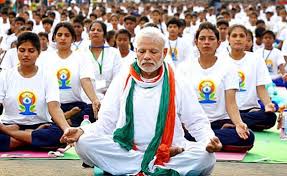
  1. Narendra modi:
If prime minister can do then we can too at least we are not as busy as him.

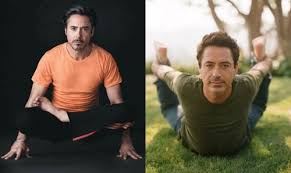
2. Robert downey ,jr.(Iron Man):

Shocked!! yes he also do yoga which has helped him in leaving the bad habit of drugs addiction.

3.Jennifer Aniston (Racheal green in Friends):

she is been practicing yoga since 2005 for at least 20-30 minutes a day regularly

admist her busy schedule.

The list goes on thus it is well known that yoga is key to healthy life. Practice it daily if you don’t know asanas search in google or refer you tube videos. Hope you start practicing Yoga.

8 Genuine ways to earn money from your home!!!

Here are some of the genuine ways to earn in your spare time without any investment.

  1. Transcriber: average earnings per month is hundred and fifty. All you need is actually to have a good pair of headphones and of course you need to get stored to type there now there is a few other sites so you can’t only rely of course on hundred and fifty dollars average earning per month but if you are good at this you can actually earn of course much more but what you can do is you can become a transcriber. rev.com is another site here as a transcriptionist you can anywhere from 24 to 90 cents per audio/video minute basically you can be a video captioner also which is pretty much the same here and you can earn anywhere from 45 cents up to 75 cents.
  2. Micro tasks you can do this on my.com in your spare time you get paid for completing simple tasks here so it can be anything from like tagging objects here helping companies select the best picture the audit user classifying you can see that there is tons of opportunities. Rapidworkers.com is another site where you can earn a decent amount just by doing some micro taskes.
  3. Data entry jobs on Amazon on rapid workers there is micro workers also but there is also assigned like a clickworkercalm.com. You just sign up for a free account and you work independently your schedule is flexible and all you need is a computer and of course and/or a mobile device with an internet connection and it’s totally up to you how much you want to work. You can do text creation, copy editing, research surveys, mystery visit, app testing and photo capturing a lot of opportunities that you can earn money from the comfort on clickworker.com.
  4. Virtual assistant one of my favorite sites is virtual assistant jobs calm and basically you can apply for data entry, call center whatever comes into your mind you can get started here and apply and search for it you might be available only to do this on part time so you can search for part-time flexible with contracts. Jobs.com helps us out there by providing all types of virtual assistance jobs.
  5. Online tutoring if you’re good at something math or English or something like that one side is a shag.com , VIP kid teachers.com which is basically they teach English here and you can earn up to twenty two dollars per hour teaching. There are many students who want to learn extra and out of their books so here comes opportunity by teaching them.
  6. Freelancer totally depends on your skills. There is other popular freelance sites like upwork.com there is freelancer.com there is people per hour so a lot of options actually that you can apply for here as a freelancer. Freelancing is one of the best option as you can work also on your niche and can enhance it for future use.
  7. Affiliate marketer and the good thing with affiliate marketing is that you don’t have to deal with shipping you don’t have to deal with anything at all. You need is just grab a link and promote that offer whatever it is and of course you earn a commission okay so one of the most popular platforms is Clickbank.com. They have thousands of products here probably one of the most popular niches will be health and fitness. You just grab a link here and what you do is you use this link to promote it you can use something like bitly to shorten this ugly link of course and then all you need to do is drive traffic to this offer. Amazon is another option that you can make money as an affiliate marketer they have millions of products here that you can promote ok you can earn a commission from anything you promote inside Amazon here so it works the same way it totally depends on your niche here how you can drive traffic to it.
  8. Sell stuff on eBay you have available that you don’t use at your home you can get stored there to sell this or you can actually use this platform to buy something and sell it much higher. So, you can be a sort of a middleman here so this is another option tons of ways and opportunities to make money eBay and you can of course do this from your home without any investment.


How to control your mind & thoughts through Vipassana Meditation


mind_control-01

A Non-Sectarian Technique

Vipassana meditation is for the purification of the mind. It is the highest form of awareness—the total perception of the mind-matter phenomena in its true nature. It is the choiceless observation of things as they are. Vipassana is the meditation the Buddha practiced after trying all other forms of bodily mortification and mind control, and finding them inadequate to free him from the seemingly endless round of birth and death, pain and sorrow. It is a technique so valuable that in Burma it was preserved in its pristine purity for more than 2,200 years.

Vipassana meditation has nothing to do with the development of supernormal, mystical, or special powers, even though they may be awakened. Nothing magical happens. The process of purification that occurs is simply an elimination of negativities, complexes, knots, and habits that have clouded pure consciousness and blocked the flow of mankind’s highest qualities—pure love (mettā), compassion (karuṇā), sympathetic joy (muditā), and equanimity (upekkhā).

There is no mysticism in Vipassana. It is a science of the mind that goes beyond psychology by not only understanding, but also purifying, the mental process. The practice is an art of living which manifests its profound practical value in our lives—lessening and then eliminating the greed, anger, and ignorance that corrupt all relationships, from the family level to international politics. Vipassana spells an end to daydreaming, illusion, fantasy—the mirage of the apparent truth. Like the sizzling explosion of cold water being thrown on a red-hot stove, the reactions after bringing the mind out of its hedonistic tendencies into the here and now are often dramatic and painful. Yet there is an equally profound feeling of release from tensions and complexes that have for so long, held sway in the depths of the unconscious mind. Through Vipassana anyone, irrespective of race, caste, or creed, can finally eliminate those tendencies that have woven so much anger, passion, and fear into our lives. During the training a student concentrates on only one task—the battle with his own ignorance. There is no guru worship or competition among students. The teacher is simply a well-wisher pointing the way he has charted through his own long practical experience. With continuity of practice, the meditation will quiet the mind, increase concentration, arouse acute mindfulness, and open the mind to the supramundane consciousness the “peace of nibbāna (freedom from all suffering) within.”

As in the Buddha’s enlightenment, a student simply goes deep inside himself, disintegrating the apparent reality until in the depths he can penetrate even beyond subatomic particles into the absolute. There is no dependence on books, theories, or intellectual games in Vipassana.

The truth of impermanence (anicca), suffering (dukkha), and egolessness (anattā) are grasped directly with all the enormous power of the mind rather than the crutch of the intellect. The illusion of a “self,” binding the mental and physical functions together, is gradually broken. The madness of cravings and aversions, the futile grasping of “I, me, mine,” the endless chatter and conditioned thinking, the reaction of blind impulse—these gradually lose their strength. By his own efforts, the student develops wisdom and purifies his mind.


The foundation of Vipassana meditation is sila—moral conduct. The practice is strengthened through samadhi—concentration of the mind. And the purification of the mental processes is achieved through panna—the wisdom of insight. We learn how to observe the interplay of the four physical elements within ourselves with perfect equanimity, and find how valuable this ability is in our daily lives. We smile in good times, and are equally unperturbed when difficulties arise all around us, in the certain knowledge that we, like our troubles, are nothing but a flux, waves of becoming arising with incredible speed, only to pass away with equal rapidity.

Although Vipassana meditation was developed by the Buddha, its practice is not limited to Buddhists. There is no question of conversion—the technique works on the simple basis that all human beings share the same problems, and a technique that can eradicate these problems will have a universal application. Hindus, Jains, Muslims, Sikhs, Jews, Roman Catholics, and other sects have all practised Vipassana meditation, and have reported a dramatic lessening of those tensions and complexes that affect all mankind. There is a feeling of gratefulness to Gotama, the historical Buddha, who showed the way to the cessation of suffering, but there is absolutely no blind devotion.   The Buddha repeatedly discouraged any excessive veneration paid to him personally. He said, “What will it profit you to see this impure body? Who sees the teaching—the Dhamma—sees me.”

Although Vipassana is a part of the Buddha’s teaching, it contains nothing of a sectarian nature, and can be accepted and applied by people of any background. The Buddha himself taught Dhamma (the way, the truth, the path). He did not call his followers “Buddhists”; he referred to them as “Dhammists” (those who follow the truth).

Vipassana courses are open to anyone sincerely wishing to learn the technique, irrespective of race, caste, faith or nationality. Hindus, Jains, Muslims, Sikhs, Buddhists, Christians, Jews as well as members of other religions have all successfully practiced Vipassana. The malady is universal; therefore, the remedy has to be universal. For example, when we experience anger, this anger is not Hindu anger or Christian anger, Chinese anger or American anger. Similarly, love and compassion are not the strict province of any community or creed: they are universal human qualities resulting from the purity of mind. People from all backgrounds who practice Vipassana find that they become better human beings.

The Present-day World Environment

Developments in the fields of science and technology, in transportation, communications, agriculture and medicine, have revolutionized human life at the material level. But, in actuality, this progress is only superficial: underneath, modern men and women are living in conditions of great mental and emotional stress, even in developed and affluent countries.

The problems and conflicts arising out of racial, ethnic, sectarian and caste prejudices affect the citizens of every country. Poverty, warfare, weapons of mass destruction, disease, drug addiction, the threat of terrorism, epidemics, environmental devastation and the general decline of moral values—all cast a dark shadow on the future of civilization. One need only glance at the front page of a daily newspaper to be reminded of the acute suffering and deep despair which afflict the inhabitants of our planet.

Is there a way out of these seemingly insolvable problems? The answer is unequivocally, yes. All over the world today, the winds of change are readily apparent. People everywhere are eager to find a method which can bring peace and harmony; restore confidence in the efficacy of wholesome human qualities; and create an environment of freedom and security from all types of exploitation—social, religious and economic. Vipassana can be such a method.

mind_control-01.jpgVipassana and Social Change

The technique of Vipassana is a path leading to freedom from all suffering; it eradicates craving, aversion and ignorance which are responsible for all our miseries. Those who practice it remove, little by little, the root causes of their suffering and steadily emerge from the darkness of former tensions to lead happy, healthy, productive lives. There are many examples bearing testimony to this fact.

Several experiments have been conducted at prisons in India. In 1975, Mr. S. N. Goenka conducted a historic course for 120 inmates at the Central Jail in Jaipur, the first such experiment in Indian penal history. This course was followed in 1976, by a course for senior police officers at the Government Police Academy in Jaipur. In 1977, a second course was held at the Jaipur Central Jail. These courses were the subject of several sociological studies conducted by the University of Rajasthan. In 1990, another course was organized in Jaipur Central Jail in which forty life-term convicts and ten jail officials participated with very positive results.

In 1991, a course for life-sentence prisoners was held at the Sabarmati Central Jail, Ahmedabad, and was the subject of a research project by the Department of Education, Gujarat Vidyapeeth.

The Rajasthan and Gujarat studies indicated definite positive changes of attitude and behaviour in the participants, and demonstrated Vipassana is a positive reform measure enabling criminals to become wholesome members of society.

In 1995, a massive course was organised for 1000 prisoners in Tihar jail with far-reaching effects. Vipassana was adopted as a prison reform technique in the largest jails of India. A detailed report of the scientific studies carried out to assess the impact of Vipassana meditation on the prisoner’s mental health proves that Vipassana is capable of transforming criminals into better human beings.

The civil service career of S. N. Goenka’s meditation teacher, Sayagyi U Ba Khin, is an example of the transformative effect of Vipassana on government administration. Sayagyi was the head of several government departments. He succeeded in instilling a heightened sense of duty, discipline and morality in the officials working under him by teaching them Vipassana meditation. As a result, efficiency dramatically increased, and corruption was eliminated. Similarly, in the Home Department of the Government of Rajasthan, after several key officials attended Vipassana courses, decision-making and the disposal of cases were accelerated, and staff relations improved.

The Vipassana Research Institute has documented other examples of the positive impact of Vipassana in such fields as health, education, drug addiction, government, prisons and business management.

These experiments underscore the point that societal change must start with the individual. Social change cannot be brought about by mere sermons; discipline and virtuous conduct cannot be instilled in students simply through textbook lectures. Criminals will not become good citizens out of fear of punishment; neither can caste and sectarian discord be eliminated by punitive measures. History is replete with the failures of such attempts.

The individual is the key: He or she must be treated with love and compassion; he must be trained to improve himself — not by exhortations to follow moral precepts, but by being instilled with the authentic desire to change. He must be taught to explore himself, to initiate a process which can bring about transformation and lead to purification of mind. This is the only change which will be enduring.

Vipassana has the capacity to transform the human mind and character. It is an opportunity awaiting all who sincerely wish to make the effort.

5 Tips for Good Photography

Picture Courtesy: Google

We can’t stop the flow of time, but we can freeze the moments by clicking some good pictures. Now many of us can think about how to make a good picture. Satisfaction in photography comes after long hard work. Now let’s know some tips to make good photography.

Lighting

Lighting and exploitation of lighting are very important for good photography. Backlighting always gives an amazing feel. But if you are doing backlighting in natural light, your photo might get overexposed. So, you can use a bouncer or can set you a subject where you can have a building or big field behind your subject. Off-camera flash can help a lot. Side lighting is an excellent factor in photography which presents a good balance between light and shadow.

Posing

You have to choose how your subject can pose to maintaining the atmosphere. Not all poses might not be done by your subject perfectly or candidly. So, it might felt them awkward and the natural outcome can be disturbed. The candid photo always admirable. So, try to suggest or give good poses. In wedding photography, you can exploit the window. Posing your bride against the window gives an elite effect in photography.

Time

Time is very important. Different rules get followed during night photography and day photography. It is wise to choose the golden hour. The time one hour after sunrise or one hour before sunset. Try to avoid the mid-day photoshoots when the sun at the top of your head it creates eye pockets and many overexposed photos.

Tools

Choose good tools. To collect with the minute details one can use microlenses. But in portrait photography, one can use mid lenses which is better. Carry reflectors to avoid underexposed or overexposed photographs. It also helps to fill the light. One must carry a spare camera so that you can continue your work even if one gets damaged. Carrying a tripod can give stability to your photography. Use diffuser, lens caps, etc. to control the light and atmosphere of the photograph.

Story

We know a photograph can tell a thousand stories. So, before you click a photo, you have to think that what message you are going to send or want to send. If you can’t tell a story people won’t like it because all we want to relate ourselves with each creative thing. We expect to know the story which the frame reflects. So, try to tell a story with your photos.
Not only on special occasions, we click photos for active participation in social media also. But most importantly we like to save our moments in the frame so that we can recall our times. If a photograph doesn’t look good you won’t feel the goodness of the time because the bad photography can distract you from taking the time out from your memory archive and nourish it. You might not be a photographer, but it is also not that tough to be one. If you have a good understanding of light, pose, and capability of telling stories, you can conquer the frame.

A brief history of Cannibalism

Cannibalism, a frowned upon act which society vehemently opposes or so we think. Cannibalism is the act of consuming another individual of the same species as food. Organisms from the animal kingdom practice cannibalism on a regular basis in fact more than 1,500 species alone practice it. Even as society frowns upon it, human cannibalism is well documented, both in ancient and in recent times. So how did this start? The word cannibal is dated back to the time of Christopher Columbus, which he may even have coined himself. It was first recorded in Columbus’s reports to the queen of Spain. He described the indigenous people as friendly and peace loving but sparked rumors about a group called Caribs, who apparently raided, plundered and ate their prisoners. The queen granted permission of capture and enslaving of anyone who ate flesh. However once Columbus found that he would not get gold from any of the locals, he began labeling any who resisted him as a Caribe. As the term reached Europe, somewhere along the way it had transformed from Carib to Canibe to Cannibal.

Photo by Renato Danyi on Pexels.com

It was first used by colonizers to dehumanize indigenous people; it has since been applied to anyone who eats flesh. The term comes from an account with no hard evidence but it does have a real and complex history. Throughout the course of history, it has taken diverse forms such as 15th century Europeans believed they had hit upon a miracle cure: a remedy for epilepsy, hemorrhage, bruising, nausea and virtually any other medical ailment. It was a brown powder known as “mumia,” and was made by grinding up mummified human flesh. It had a large demand in 15th century Europe so much so that the stolen mummies from Egypt used to keep up with the mumia craze started dwindling. This opened up avenues for opportunists to use stolen bodies from European cemeteries to keep up with the craze. The use of mumia was so widespread that it continued for hundreds of years. It was even listed in Merck index a popular medical encyclopedia into the 20th century. During various famines, sieges and wars there have been accounts of survival cannibalism as the only options were starving or eating the dead. But various cultures saw a normalization of consumption of human flesh even in ordinary circumstances. Blood in liquid or powdered form used to treat epilepsy, human liver, gall stones, oil from human brains and pulverized hearts were popular medical concoctions back in the day. In china the written record of socially accepted cannibalism goes back to 2000 years. One form of cannibalism was filial cannibalism where adult sons and daughters provided a piece of their flesh to their sick parents and often seen as a last-ditch effort to save them. Cannibalistic funerary rites were yet another form of culturally sanctioned cannibalism. The best-known example came from the Fore people of New guinea. Through the mid-20th century, members of the community would, make their funerary preferences known in advance, often requesting family members to consume their flesh after death, however even though this honored the dead it bore the spreading of a deadly disease known as Kuru throughout the community.

Between fictionalized stories, verified facts and big gaps that still exist in our knowledge, there is no one history of cannibalism, however one thing we can be sure of that humans throughout the course of history have eaten and volunteered to be eaten by their fellow man. As Michel de Montaigne wrote Everyone gives the title of barbarism to everything that is not in use in one’s own country”.

Electronic mail

We use electronic mails in our everyday lives, it has become a mode of an etiquette way of conveying messages if formality is required. Nevertheless we can use electronic mails to send our friends a message, it also serves the purpose for an informal yet important messages to be delivered. It is seen most of the people use it to transfer files from mobile to computer though there are other ways like Google drive and bluetooth but E-mail is a more convenient and efficient way to do this. It is said that over 3.9 million people all over the world use e-mail every day. Even after so many years of its Invention this method of exchanging messages is still prevalent.

Ray Tomlinson was the person who  invented it in 1971, he was an American computer programmer . He implemented the email such that it could be sent from one user to many different users in ARPANET. ARPANET was the basis of internet which was developed by the U.S advanced research process agency (ARPA). Its initial purpose was to serve as a medium to share and exchange messages but it required that users could only send to the receiver when he or she is online like the instant messaging. The first e mail was sent in 1973 which was very similar to that of the basic email sent today. What is obvious is many things are upgraded and yes there are many search engines being developed like Yahoo, google, hotmail to facilitate ourselves.

What is SMPT?

As you know that whenever we are using computer which understands binary language and internet which is a very complex thing, there are some specific rules to use them because these electronic items do not understand our language so we have to actually follow some rules so as to make our work done. So there are some set of protocols to be followed which are called the SMPT which is simple mail transfer protocol. SMPT sets up rule for the servers, it moves and forwards your mails to the servers. It can also send networks outside the internet. When we write our email with “@ ” symbol we are actually creating a definite address what is more interesting is that if you write a receivers address with the same symbol, it automatically connects you to the address if it exists, if it does not exist then is may not send your email at all.  SMPT takes care of all the process from sending the composed mail to the receiver and to the right address.

Now a days it is even simpler to send mails to different domains, you may ask what are domains? domains are used to identify one or more IP address that is internet protocol address. Not clear yet, in simpler terms @ gmail.com, @ yahoo.com and many more. they are used to identify different web pages or we call it search engines.

So E- mails have a long history which should be admired, it has made our lives so easier and simpler . So the next time you use the electronic mail , it should come to your mind that what minds were behind the invention of this great thing and we should be grateful for it