SUBHAS CHANDRA BOSE

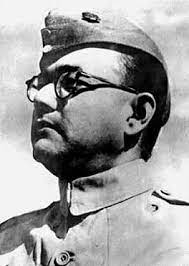
Subhas Chandra Bose, affectionately called as Netaji, was one of the most prominent leaders of Indian freedom struggle. Subhash Chandra Bose (23rd January 1897 – 18th August 1945) was a well-known freedom fighter of India whose non-compromising patriotic attitude made a national hero. His exceptional leadership qualities in gathering support for independence has earned him the honorific “Netaji” meaning “Respected Leader” in Hind He founded Indian National Army (Azad Hind Fauj) to overthrow British Empire from India and came to acquire legendary status among Indian masses.
Early Life and Childhood:

Subhash Chandra Bose was born in a Kayastha family on 23rd January 1897 at 12:10 P.M. His mother’s name was Prabhavati Dutt Bose and his father was Jankinath Bose, who was an advocate in Cuttack, Orissa, then under the Bengal Province.Prabhavati Devi was a pious and religious lady. Subhas Chandra Bose was the ninth child among fourteen siblings. Subhas Chandra Bose was a brilliant student right from the childhood. He topped the matriculation examination of Calcutta province and graduated with a First Class in Philosophy from the Scottish Churches College in Calcutta. He was strongly influenced by Swami Vivekananda’s teachings and was known for his patriotic zeal as a student. In January 1902 at the age of five, he was admitted into Stewart High School; Cuttack.Ravenshaw Collegiate School in Cuttack and Presidency College in Kolkata were some of the premier institutions where he joined in furtherance of his education.

Clearing the Indian Civil Services (ICS) :

To fulfill his parents wishes he went to England in 1919 to compete for Indian Civil Services. In England he appeared for the Indian Civil Service competitive examination in 1920, and came out fourth in order of merit. However, Subhas Chandra Bose was deeply disturbed by the Jallianwalla Bagh massacre, and left his Civil Services apprenticeship midway to return to India in 1921. Being born in a well to do family, Netaji studied in some of the prestigious schools and institutions of British India.

Subhash got selected in the Indian Civil services examination, yet resigned from his job on 23rd April 1921 and headed back towards India. The reason for his resignation from the ICS as he stated in a letter to his brother was that he was opposed to work under the British government. In the letter he further stated – “Only on the soil of sacrifice and suffering can we raise our national edifice”.

Political Life :

After returning to India Netaji Subhash Chandra Bose came under the influence of Mahatma Gandhi and joined the Indian National Congress. On Gandhiji’s instructions, he started working under Deshbandhu Chittaranjan Das, whom he later acknowledged his political guru. Soon he showed his leadership mettle and gained his way up in the Congress’ hierarchy. In 1928 the Motilal Nehru Committee appointed by the Congress declared in favour of Domination Status, but Subhas Chandra Bose along with Jawaharlal Nehru opposed it, and both asserted that they would be satisfied with nothing short of complete independence for India. Subhas also announced the formation of the Independence League. Subhas Chandra Bose was jailed during Civil Disobedience movement in 1930. He was released in 1931 after Gandhi-Irwin pact was signed. He protested against the Gandhi-Irwin pact and opposed the suspension of Civil Disobedience movement specially when Bhagat Singh and his associates were hanged.

Freedom Struggle –Falling-out with Gandhi :

After the General Elections of 1937, Congress came to power in seven states and Subash Chandra Bose was released. Shortly afterwards he was elected President of the Haripura Congress Session in 1938. During his term as Congress President, he talked of planning in concrete terms, and set up a National planning Committee in October that year. At the end of his first term, the presidential election to the Tripuri Congress session took place early 1939. Subhas Chandra Bose was re-elected, defeating Dr. Pattabhi Sitaramayya who had been backed by Mahatma Gandhi and the Congress Working Committee. Clouds of World War II were on the horizon and he brought a resolution to give the British six months to hand India over to the Indians, failing which there would be a revolt. There was much opposition to his rigid stand, and he resigned from the post of president and formed a progressive group known as the Forward Block. Netaji, respected Mahatma Gandhi but was doubtful of the latter’s methods and agendas for the independence of India.  Being a soldier at heart, he tried to organize Indian politicians for forcibly deporting British from the Indian soil. Unfortunately, he failed, as senior Indian leaders at that time were largely in support of peaceful protests and marches.

Subhash Chandra Bose Essay for Students & Children | 500 Words Essay

Escape to Germany :

Subhas Chandra Bose now started a mass movement against utilizing Indian resources and men for the great war. There was a tremendous response to his call and he was put under house arrest in Calcutta. In January 1941, Subhas Chandra Bose disappeared from his home in Calcutta and reached Germany via Afghanistan. Working on the maxim that “an enemy’s enemy is a friend”, he sought cooperation of Germany and Japan against British Empire. In January 1942, he began his regular broadcasts from Radio Berlin, which aroused tremendous enthusiasm in India. In July 1943, he arrived in Singapore from Germany.

Azad Hind Fauj :

 In Singapore he took over the reins of the Indian Independence Movement in East Asia from Rash Behari Bose and organised the Azad Hind Fauj (Indian National Army) comprising mainly of Indian prisoners of war. He was hailed as Netaji by the Army as well as by the Indian civilian population in East Asia. Azad Hind Fauj proceeded towards India to liberate it from British rule. Enroute it lliberated Andeman and Nicobar Islands. The I.N.A. Head quarters was shifted to Rangoon in January 1944. Azad Hind Fauj crossed the Burma Border, and stood on Indian soil on March 18 ,1944.
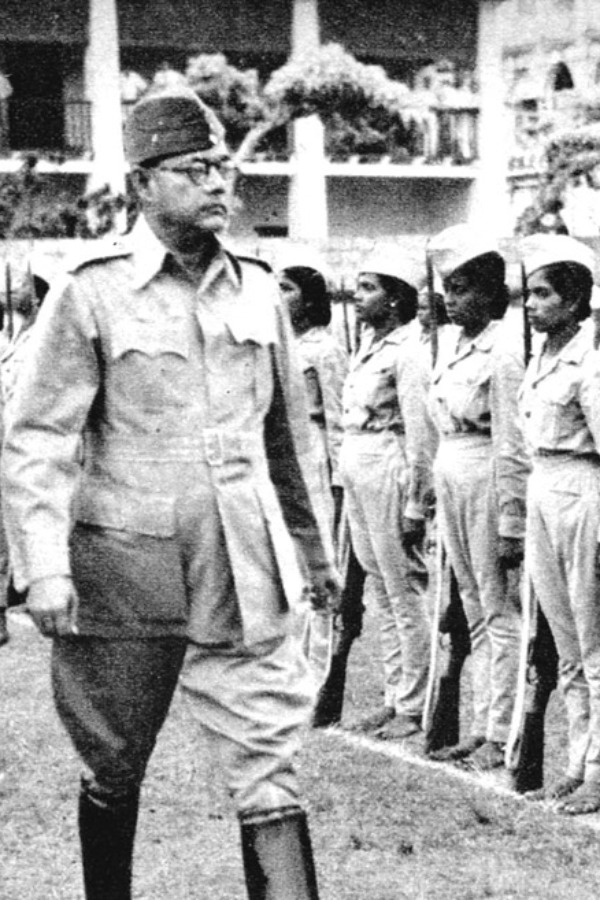
Looking Back 77 Years Ago When India Had An All-Female Rani Jhansi Regiment  In Bose's Azad Hind Fauj

Activity in exile :

A little more than a year after the japanese invasion of Southeast Asia, Bose left Germany, traveling by German and Japanese Submarines and by Plane, and arrived in May 1943 in Tokyo. On July 4 he assumed leadership of the Indian Independence Movement in East Asia and proceeded, with Japanese aid and influence, to form a trained army of about 40,000 troops in Japanese-occupied Southeast Asia. On October 21, 1943, Bose proclaimed the establishment of a provisional independent Indian government, and his so-called Indian National Army (Azad Hind Fauj), alongside Japanese troops, advanced to Rangoon and thence overland into India, reaching Indian soil on March 18, 1944, and moving into Kohima and the plains of Imphal. In a stubborn battle, the mixed Indian and Japanese forces, lacking Japanese air support, were defeated and forced to retreat; the Indian National Army nevertheless for some time succeeded in maintaining its identity as a liberation army, based in Burma and then Indochina.

Netaji’s Mysterious Demise:

The Government of India has decided to celebrate Netaji Subhas Chandra Bose’s birth anniversary every year on January 23 as Parakram Diwas. This was decided by the Central government to inspire people of the country, especially the youth, to follow on the path of Bose’s ideals. The legendary leader’s demise, however, still remains a mystery and theories come up almost until recently that Netaji had faked his death to work secretly in some other country. Today, we look at some of these death theories about the legendary legendary leader that have resurfaced over the years and been a topic of curiosity around the world.

The universally known story of his death was that he died in a plane crash on August 18, 1945 in Taihoku (Taiwan). However, his followers refused to believe this story and instead said that he survived the plane crash and lived in secret with a different identity until he grew old. One of the other bizarre theories about his death claimed that the plane crash was a decoy by the Japanese to help Bose escape to the former Soviet Union. This theory had been proposed by Retd Major Gen GD Bakshi in his book, Bose: The Indian Samurai – Netaji and the INA Military Assessment. In his book, the retired general stated that Netaji set up a Azad Hind Government embassy in Russia, he also successfully made three radio broadcasts from Siberia which gave away his location to the British. It is after this that the British interrogated Netaji and thus tortured him to death, alleges the retired general.

Netaji distinguished himself as a soldier in the history of Indian freedom struggle. His ability to gather the support of the world leaders for the cause of Indian freedom was commendable and hinted towards his diplomatic excellence. In the history of freedom struggle of India, there is no one who could replace Netaji Subhash Chandra Bose in popularity and respect.

Netaji didn't die in plane crash, he was killed: Bodyguard - Taazakhabar  News

THANK YOU !
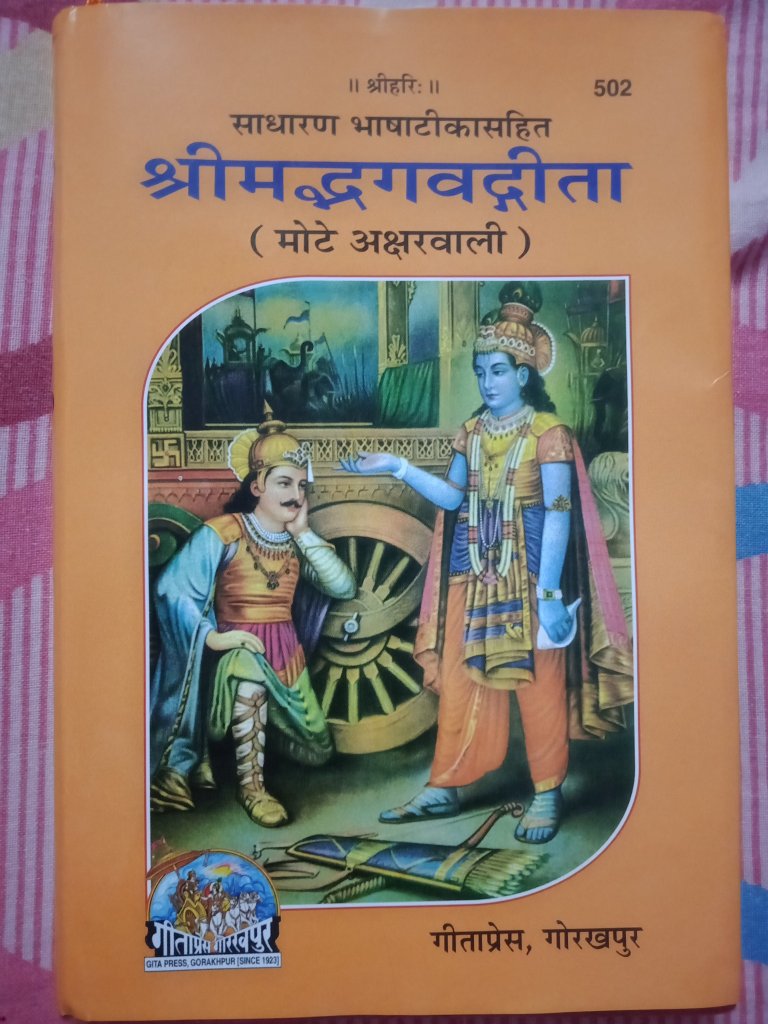
Bhagvad Gita

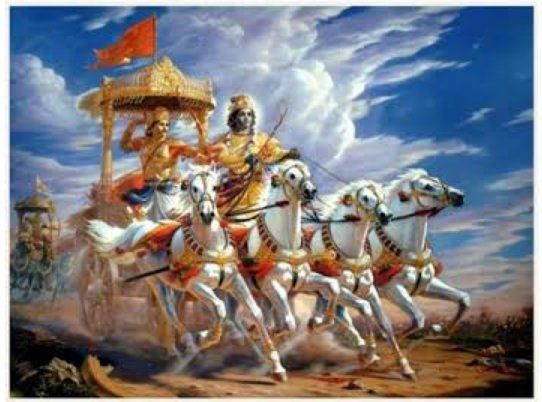
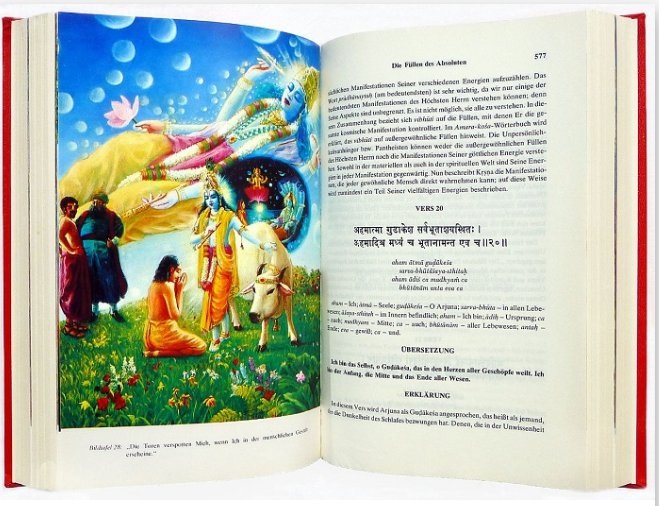
The Bhagavad Gita or the Song Celestial is one of the most sacred Scriptures in the world. It is a constant companion to men in every walk of life. It is a string of verses which were spoken by Bhagwan Krishna to Arjuna at the battlefield. It is a part of the epic Mahabharata.

The Bhagwad Gita is the most widely read and revered religious text of the world. The State of Haryana is proud of the fact that this legendary epic was orated by Lord Krishna at Jyotisar (Kurukshetra), which is located here.

Further, it was also compiled by Veda Vyasa on the bank of river Saraswati, which was once a perennial river of this State. Hence, the greatest philosophy of life is associated with Haryana because Lord Krishna had given the Supreme Sermon to Arjuna on this land.

This poem is long poem, which, in fact, describes the gist of life, karma and duties of an individual. Lord Krishna narrates to Arjuna how he should do his duty and become a part of the Ultimate Soul. This poem forms the sixteenth chapters (adhyayas) of the Mahabharata, written by Veda Vyasa. It is in the form of. Sanskrit hymns (Shlokas). Let us study, in brief, what The Bhagwad Gita tells every human form of the world.

People of modern generation are increasingly finding that in spite of the material comforts abundantly available, there is a void in their life which cries to be filled in. The crisis is psycho – spiritual and it exists whether we realize it if not. There is no other book like the holy Bhagavad Gita, which fills in the void. All the teachings are suited to the modern inquisitive mind.

I also Read Gita whenever I get time

The Bhagavad Gita teaches socially oriented positive action. The theme is Lok Sangraha, which means integration, regulation, protection, and preservation of the society.

Gita is among the three main scriptures of Hindu Dharma, others being The Upanishads and The Bhrahmasutras. These three are together known as Prashthayanas. There are 18 chapters in the Gita, and it contains 700 verses. The Mahabharata contains a canto titled as Bhishma Parva and chapters from 25 to 42 of this Parva constitute the Gita. Gita Jayanti falls in the month of December ( Mrigashirsha ) . The Gita was spoken by Lord Krishna to Arjuna in Dwapar Yuga. And in the Hindu calendar, the Kali Era, the present era, is dated with reference to the day of Gitopadesha.

Krishna, presented in the poem as Vishnu in the flesh, is the spiritual teacher who recited the Gita. Most of The Bhagwad Gita consists of a dialogue between Krishna and Arjuna on the battlefield on Kurukshetra.

That is where the armies of the royal cousins, the Pandavas and the Kauravas, face each other for the decisive battle to end their feud. The Bhagwad Gita debates the right and wrong of conflict. It also discusses a person’s duty to himself, or herself, his or her fellow human and God.

It explores God’s relationship with humans. It shows how people can begin to understand God and thus, free themselves from the burden of Karma (deeds done in previous lives and in this present life).

Krishna instructs Arjuna about three ways to have union with God. The first is Karma Yoga (the Way of Action). Every person should do his or her duty according to caste, without hope of personal benefit or ambition, but with faith in God. Those who go through the motions of performing rituals without care or interest, or do their work only for profit, will never be released from the cycle of birth, death and rebirth.

The Bhagavad Gita is the Crown-jewel of India’s spiritual wisdom.

The Bhagwad Gita provides a summary of the Hindu religious thought and practice; much of it is based on the Upanishads. These are part of the Vedas, the oldest sacred books of Hinduism. It gives a methodology for developing belief as well as for forging a personal relationship between the deity and his/her worshipper. It offers a new approach to the full perception of, and absorption in, Brahman.

The Bhagavad-gita is such an important scripture that it can help us to get out of the cycle of birth and death. Anyone who recites Bhagavad-gita with devotion will go to the spiritual world at the time of death. If one reads Bhagavad-gita sincerely the reaction of one’s past deeds will not act upon one.

According to me everyone should read Bhagvad Gita whenever you feel low and cannot find a reason to live. By reading Gita you will be able to see your life in a positive way. You’ll know about your soul needs and whatever situation you are facing today that is earned by your past life karma nobody else is responsible for that. If you focus on your karma and keep a check when you are creating negative karma it will save you from increasing your negative karma. By surrending to Bhagwan and focusing on your soul you can definately change your life for better.

Symbols in Absalom and Achitophel

Symbols Golden class as a symbol of misplaced veneration
In the biblical book of Exodus, the Israelite awaited Moses, their leader who had gone in search of enlightenment on Mount Sinai. During this time, without effective religious leadership, they made a golden idol in the shape of a graph and began to worship it. The golden calf was not an appropriate subject for the Israelites to worship. Dryden like in the English people’s veneration and an institution of government- a state that could be readily controlled by the people it governs- to the worship of golden calf, thereby indicating that such feeling of veneration was bad and inappropriate. The ideological notion that kings out to be constrained or limited by the government is represented as misguided.

Crown as a symbol of ruler Government and divinity appointed authorities
The text uses the word crown a decorative ornament associated with kings and rulers, to represent the kings, the government, and the legitimate authority as appointed by God. The use of the same word is to represent all these concepts lies in inviting the readers to assign to a government and to a human being the same authority they associate with their deity.

A flock of sheep as a symbol of people
The use of sheep represents a community of people with the leader as a wise shepherd, generally associated with Jesus leading his flock. It is used ironically here to tell an Old Testament story that is intended as an allegory for political events occurring in England. The Sheep represent the common English people. It suggests that people are easily swayed and led because they do not think for themselves.

Allegories rape as an allegory for rebellion
Dryden set forth a premise sometimes people cannot admit to wanting something rather, they prefer to be forced into it. Therefore, by forcing such an individual into a situation, he or she secretly desires is the person doing the forcing is doing the “victim” unnecessary and pleasing favor acting as a satirist Dryden exaggerates the argument into something so shocking it ends up supporting the opposite conclusion.

Bible story as an allegory for the exclusion crisis
The entire poem, which tells the story of Absalom and Achitophel’s rebellion against King David of Israel, is an allegory of the events that occurred in England in the late 17th century. Dryden uses biblical characters and events to comment upon the exclusion crisis and its major players ultimately supporting King Charles II in his right to the throne.

The Golden Olden institution

Hello guys!
Jumping straight into the topic . Do you guys know how old the school you studied in ? Have you ever heard of an institution that might be established hundreds of years ago and present till know?

I asked that question because I recently got to know about an institution that is almost 479 years old and also is present till now . Fascinating isn’t it!

As the saying goes “Old is Gold” this 479 year old institution is also a “treasure”.

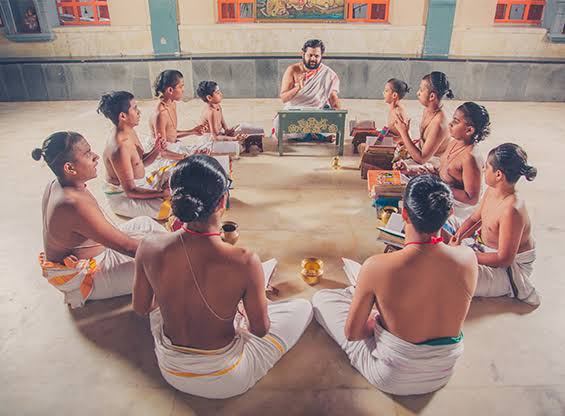
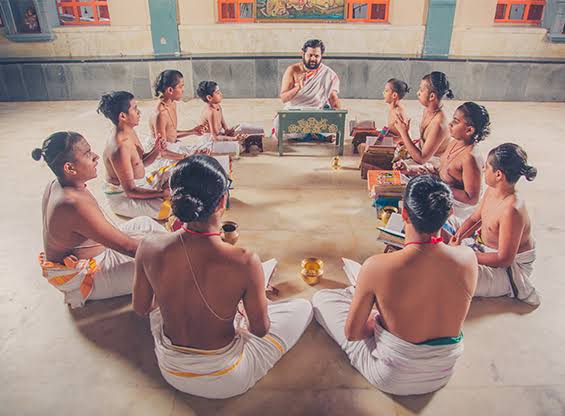
This 479 years old Educational Institution in India still continues the tradition of imparting knowledge

This institution is Raja Veda Kavya Patasala, established in 1542 AD. It is located in Kumbakonam,Tamilnadu,India.

Started by Govinda Dikshitar, the prime minister of Nayaka kings.
The Veda Patasala still runs in Kumbakonam today .

Source:Unkown

This patasala is providing vedic education for almost 5 centuries without any interruption adds another feather to it’s cap.

This institution is established on the southern banks of the river cauvery with prime aim of imparting the knowledge of Vedas and sastric studies.

From:veda patashala

It’s speciality is students here don’t use pen and paper to mug up the answers later ,they don’t carry heavy bags here everything is taught vocally and people also should remember which inturn increase the memory capacity of the students.

These are the institutions that still carry on the legacy of our Indian Vedic culture to our future generations.

These type of institutions are the backbone of our country’s vedic knowledge. They are the torch bearers for future generations.

Thankyou^^🙏

Being passive is not our default mode as human beings.

Action may not always bring happiness, but there is no happiness without action.

William James

Why is Motivation Important?

Why is it important to understand motivation? Why do we care about what people want and why they want it? How about because it can improve our lives.

Understanding motivation gives us many valuable insights into human nature. It explains why we set goals, strive for achievement and power, why we have desires for psychological intimacy and biological sex, why we experience emotions like fear, anger, and compassion.

Learning about motivation is valuable because it helps us understand where motivation comes from, why it changes, what increases and decreases it, what aspects of it can and cannot be changed, and helps us answer the question of why some types of motivation are more beneficial than others.

Motivation reflects something unique about each one of us and allows us to gain valued outcomes like improved performance, enhanced well-being, personal growth, or a sense of purpose. Motivation is a pathway to change our way of thinking, feeling, and behaving.

Benefits of Motivation

Finding ways to increase motivation is crucial because it allows us to change behavior, develop competencies, be creative, set goals, grow interests, make plans, develop talents, and boost engagement. Applying motivational science to everyday life helps us to motivate employees, coach athletes, raise children, counsel clients, and engage students.

The benefits of motivation are visible in how we live our lives. As we are constantly responding to changes in our environment, we need motivation to take corrective action in the face of fluctuating circumstances. Motivation is a vital resource that allows us to adapt, function productively, and maintain wellbeing in the face of a constantly changing stream of opportunities and threats.

I have learned from my mistakes, and I am sure I can repeat them exactly.

Peter Cook

There are many health benefits of increased motivation. Motivation as a psychological state is linked to our physiology. When our motivation is depleted, our functioning and wellbeing suffer.

Some studies show that when we feel helpless in exerting control for example, we tend to give up quickly when challenged (Peterson, Maier, & Seligman, 1993). Others have proven than when we find ourselves coerced, we lose access to our inner motivational resources (Deci, 1995).

High-quality motivation allows us to thrive, while its deficit causes us to flounder. Societal benefits of increased motivation are visible in greater student engagement, better job satisfaction in employees, flourishing relationships, and institutions.

But unhealthy fluctuations in motivation also explain addiction, gambling, risk-taking, and excessive internet usage. The motivation that underlies addictive behaviors shares the neurological underpinning associated with dopamine centric rewards system and tricky inner working of the pleasure cycle.

Sankranti festival

Sankranti is a harvest festival celebrated in India. Sankranti is derived from the word ‘Sankramana’, meaning a ‘change’. It is also called ‘Makara Sankranti’, as the Sun enters ‘Makara Rasi’ that day. It usually falls on 14th of January every year. The Sun starts its northward journey from the Tropic of Capricorn towards the Tropic of Cancer. This journey is called ‘Uttarayana’, meaning northward march. We, in India, are to the north of the equator. W rejoice on Sankranti Day, because the chilly cold winter comes to a close, and healthy sunny days are about to begin.
Sankranti is called ‘Pongal’ in Tamilnadu and ‘Pedda’ or ‘Peddala’ Panduga in some parts of Andhra Pradesh. ‘Pedda’ means big and ‘Panduga’ means a festival. It is a festival, when prayers and offerings are made to ancestors. It is celebrated in different ways in different parts of the country, as it is a harvest festival. It is a festival to thank God for giving a good harvest. By January the paddy, the pulses, the sugarcane and all other cereals would have been harvested. The farmers would be full of joy and happiness.
The Sankranti festival is a three day festival. The first day is ‘Bhogi’, the second day ‘Sankranti’ and the third day, ‘Kanumu’. On the first day ‘Bhogi’. people get up very early and bonfires are raised burning all old waste material to bid farewell to winter. The streets are swept clean and beautiful rangolis are drawn by women. Small cowdung cubes decorated with flowers are placed before each house, welcoming the Goddess of Wealth. In the evening, in some other parts ‘Bogipallu’ are poured on children for their health. In some other parts girls gather round and dance singing “Gobbiallo” in chorus.
The next day is Sankranti or Pongal. It is a day of feast. Sweet food is prepared with new rice, new jaggery, new vegetables, and fresh milk in new pots. The prepared pongal (sweet food) is offered to Sun God. Then offerings are made to forefathers. There are some special dishes
made for the occasion with pumpkins and greengram. All the people wear new clothes. Alms are given to the poor. It is a day of enjoyment. Cock fights, gambling etc., take place in the evening. In the north and even in Andhra Pradesh people take a dip in holy rivers and offer prayers. A dip in the Ganges on Makara Sankranti day is considered sacred.
The third day Kanumu is a day meant for cattle. All cattle are given a bath. They are dressed and decorated with flowers. Horns are painted. Cattle are fed with cooked sweet rice. Some worship cows. In the evening races are conducted for bulls to draw carts and to draw big stones. Heavy prize amounts are awarded to the victorious. Bull fights by young men are in vogue in some part., of the country. Sankranti is a festival of joy and happiness for all.

360 Wander Writer

WELCOME TO WONDERS OF THE WORLD

Seven Wonders of the Ancient World

  • Great Pyramid of Giza, Egypt.
  • Hanging Gardens of Babylon.
  • Statue of Zeus at Olympia.
  • Temple of Artemis at Ephesus.
  • Mausoleum at Halicarnassus.
  • Colossus of Rhodes.
  • Lighthouse of Alexandria.

New Seven Wonders of the World

  • THE NAZCA LINES, PERU.
  • GREAT WILDEBEEST MIGRATION, TANZANIA AND KENYA.
  • ARCHES NATIONAL PARK, UTAH.
  • MOUNT FUJI, JAPAN.
  • LARGE HADRON COLLIDER, Switzerland.
  • AMAZON RAINFOREST, BRAZIL.
  • CALLANISH STONES, SCOTLAND.
  • MOSQUITO BAY, PUERTO RICO.

In 2000 a Swiss foundation launched a campaign to determine the New Seven Wonders of the World. Given that the original Seven Wonders list was compiled in the 2nd century BCE—and that only one entrant is still standing (the Pyramids of Giza)—it seemed time for an update. And people around the world apparently agreed, as more than 100 million votes were cast on the Internet or by text messaging. The final results, which were announced in 2007.

T

Great Wall of China

One of the world’s largest building-construction projects, the Great Wall of China is widely thought to be about 5,500 miles (8,850 km) long; a disputed Chinese study, however, claims the length is 13,170 miles (21,200 km). Work began in the 7th century BCE and continued for two millennia. Although called a “wall,” the structure actually features two parallel walls for lengthy stretches

Chichén Itzá

Chichén Itzá is a Mayan city on the Yucatán Peninsula in Mexico, which flourished in the 9th and 10th centuries CE. Under the Mayan tribe Itzá—who were strongly influenced by the Toltecs—a number of important monuments and temples were built. Among the most notable is the stepped pyramid El Castillo (“The Castle”), which rises 79 feet (24 meters) above the Main Plaza.

Petra

The ancient city of Petra, Jordan, is located in a remote valley, nestled among sandstone mountains and cliffs. It was purported to be one of the places where Moses struck a rock and water gushed forth. Later the Nabataeans, an Arab tribe, made it their capital, and during this time it flourished, becoming an important trade center, especially for spices. Noted carvers, the Nabataeans chiseled dwellings, temples, and tombs into the sandstone, which changed color with the shifting sun. In addition, they constructed a water system that allowed for lush gardens and farming

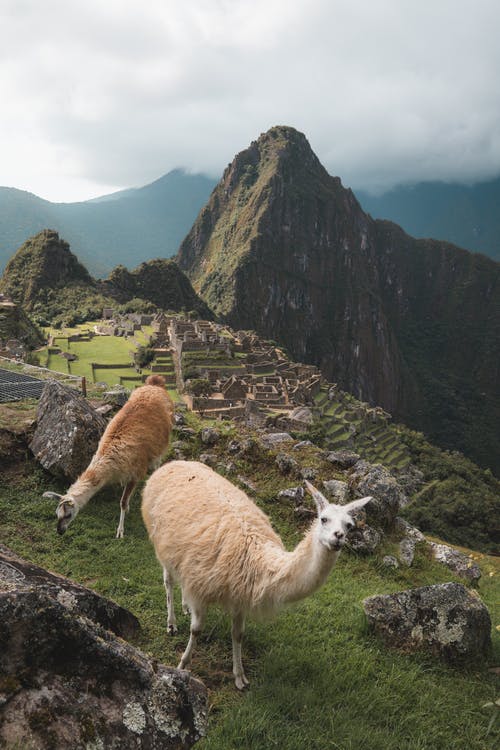
Machu Picchu

This Incan site near Cuzco, Peru, was “discovered” in 1911 by Hiram Bingham, who believed it was Vilcabamba, a secret Incan stronghold used during the 16th-century rebellion against Spanish rule. Although that claim was later disproved, the purpose of Machu Picchu has confounded scholars. Bingham believed it was home to the “Virgins of the Sun,” women who lived in convents under a vow of chastity. Others think that it was likely a pilgrimage site, while some believe it was a royal retreat

Christ the Redeemer

Christ the Redeemer, a colossal statue of Jesus, stands atop Mount Corcovado in Rio de Janeiro. Its origins date to just after World War I, when some Brazilians feared a “tide of godlessness.” They proposed a statue, which was ultimately designed by Heitor da Silva Costa, Carlos Oswald, and Paul Landowski. Construction began in 1926 and was completed five years later. The resulting monument stands 98 feet (30 meters) tall—not including its base, which is about 26 feet (8 meters) high—and its outstretched arms span 92 feet (28 meters). It is the largest Art Deco sculpture in the world. Christ the Redeemer is made of reinforced concrete and is covered in approximately six million tiles. Somewhat disconcertingly, the statue has often been struck by lightning, and in 2014 the tip of Jesus’s right thumb was damaged during a storm.

Colosseum

The Colosseum in Rome was built in the first century by order of the Emperor Vespasian. A feat of engineering, the amphitheater measures 620 by 513 feet (189 by 156 meters) and features a complex system of vaults. It was capable of holding 50,000 spectators, who watched a variety of events. Perhaps most notable were gladiator fights, though men battling animals was also common. In addition, water was sometimes pumped into the Colosseum for mock naval engagements. However, the belief that Christians were martyred there—namely, by being thrown to lions—is debated. According to some estimates, about 500,000 people died in the Colosseum. Additionally, so many animals were captured and then killed there that certain species reportedly became extinct.

Taj Mahal

This mausoleum complex in Agra, India, is regarded as one of the world’s most iconic monuments and is perhaps the finest example of Mughal architecture. It was built by Emperor Shah Jahān (reigned 1628–58) to honor his wife Mumtāz Maḥal (“Chosen One of the Palace”), who died in 1631 giving birth to their 14th child. It took about 22 years and 20,000 workers to construct the complex, which includes an immense garden with a reflecting pool. The mausoleum is made of white marble that features semiprecious stones in geometric and floral patterns. Its majestic central dome is surrounded by four smaller domes. According to some reports, Shah Jahān wished to have his own mausoleum made out of black marble. However, he was deposed by one of his sons before any work began.

Food Items that boost your Immunity

Immunity is important for everyone, including you and me. Immunity is the body’s ability to prevent the invasion of pathogen. Pathogens are bacteria and viruses. In this pandemic situation immunity is must to fight against the Covid-19 pandemic. In this blog, I am going to tell some food items that will boost your immunity.

Image Credit: The Image is Credited to https://www.favorece.net/ 

FOOD ITEMS THAT BOOST YOUR IMMUNITY

  1. Citrus Fruit

Citrus are not only delicious they are also rich in multiple nutrients such as Vitamin C, Fiber and Flavonoids. Almost all citrus fruits are high in Vitamin C. Vitamin C will increase the production of white blood cells which help to fight diseases. They help to prevent conditions like cancer and diabetes. These are some of the citrus fruits oranges, lemon, limes, tangerines, grapefruit.

2. GARLIC

Garlic is the important cuisine found everywhere in the world. Garlic is another food item that boost our immunity. Garlic is highly nutritious with very low calories. Our ancestors used garlic to prevent from various diseases. Garlic help to reduce clotting of blood. Garlic has many immune boosting properties like allicin. Garlic an antiseptic and antifungal agent. It help our body to resist and destroy viruses.

3. BROCCOLI

Broccoli is full of fibers and proteins, it contains iron, calcium, potassium and magnesium. It also contains Vitamin A, C, E, K. It is one of the healthiest vegetable in the world. A study shows that consuming broccoli reduces the risk of cardiovascular disease. Broccoli contains many antioxidants that protect you from viruses and other diseases. Consuming broccoli will help you to build strong bones.

4. SPINACH

Spinach contain vitamins A, C and K1. It has tons of nutrients in it with low calories. The benefits of eating spinach are it prevent from cancer, it provide good nutrients for eyes, reduce blood pressure levels. Like broccoli it is also one of the healthiest foods. It is very simple to cook spinach.

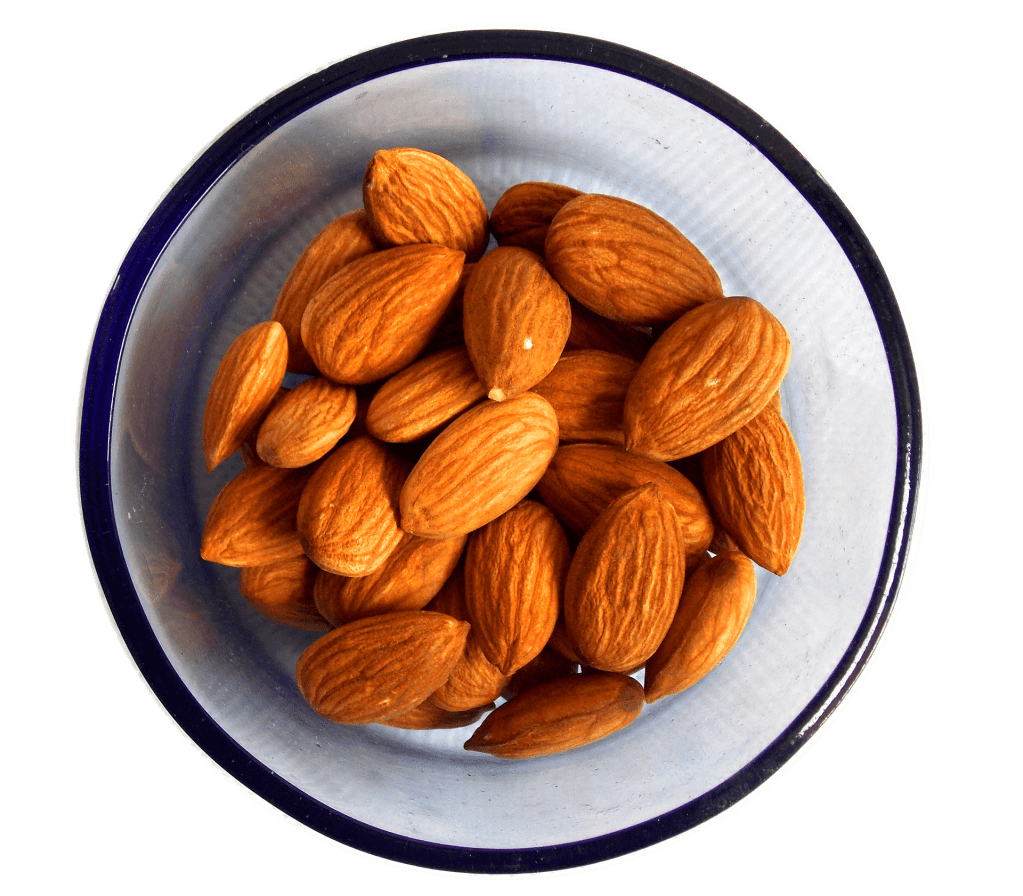
5. ALMONDS

Almonds have a massive amount of nutrients. They are high in antioxidants. They are high in Vitamin E, which fat soluble antioxidants these help to build membrane in our body which help our body protecting from oxidative damage. They increase the circulation of blood, strengthen our bones, and help in control of sugar levels. Almonds contain magnesium, which help to control our blood pressure levels. They will increase the immune system defense against viruses.

6. GINGER

Ginger is another food item that boost your immunity. Since early ages, ginger is used in Ayurvedic medicines and medical purposes. Ginger of anti-inflammable which reduce swelling. Ginger also decrease chronic pain. In 2016, a study found that ginger may help to reduce weight. Ginger contains gingerol which helps to prevent cancer. It also helps to cure nausea.

7. YOGURT

Yogurt contain Vitamin D, which helps to regulate our immune system and boost our body’s natural defense system against the infections and viruses. Yogurts are high in proteins, calcium, vitamins, and probiotics which can enhance the gut microbiota. It offers protection to bones and teeth. It also prevent digestive problems. Yogurt is best choice for you if you are in weight-loss diet. Probiotics will boost the immune system of our body.

All these will boost your immune system. If you like this article please like and rate it.

Ancient Education System In India

During ancient education, students live away from their parents, their education comprises of subjects like physical education, mental education, politics, economics, etc. They were shaped in a way that they can live in any condition considering how difficult the situation will be? 

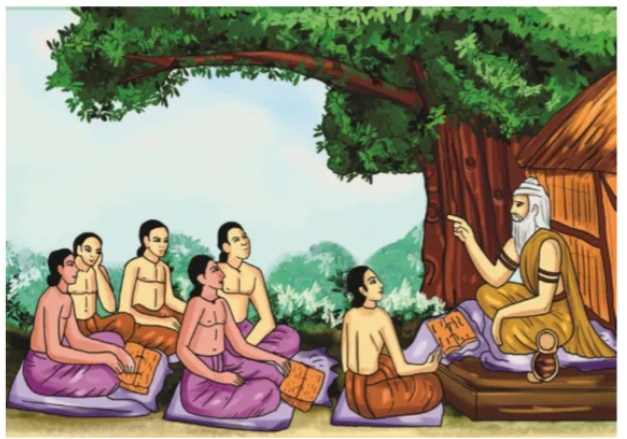
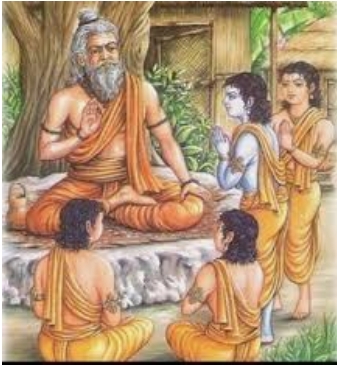
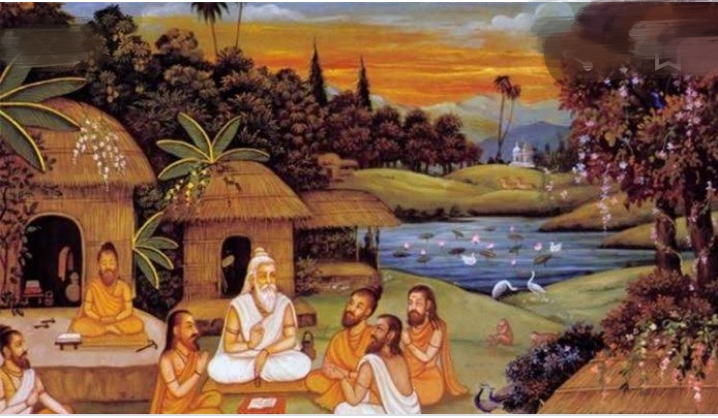
During the early period education was imparted by the teacher (Guru/Acharya) to the pupils who gathered around him and came to live in his house as members of his family. This was known as Gurukula system of eduation. The family of Guru functioned as a demostic school or an Ashram. During that period, the gurus and their shishyas (pupils) lived together helping each other in day-to-day life.

In ancient India, both formal and informal education existed. Indigenous education was imparted at home, in temples, patashalas, and gurukulas. Teaching was oral and students remembered and meditated upon what was taught in the Gurukulas. There were people in homes, villages and temples who guided young children in imbibing pious ways of life.

The medium of language during the Vedic system was Sanskrit. During those times the education was of Vedas, Brahmanas, Upnishads, and Dharmasutras. From the Rigveda onwards, our ancient education started with the objective of developing the students not only in the outer body but also on the inner body. The ancient education focused on imparting ethics like humility, truthfulness, discipline, self-reliance, and respecting all creations to the students. The education was mostly imparted in ashrams, gurukuls, temples, houses. Sometimes pujaris of the temples used to teach students. The education system of ancient India has some special features and uniqueness which was not found in any other ancient education system of the other countries. The education was mostly given in forests under the blue sky, which keeps the student’s mind fresh and alive.

The main objective of education was to equip the students with a good quality of education. The education mostly focused on the enrichment of culture, character, and personality, development, and cultivation of noble ideals. The objective was gaining the mental, physical, and intellectual personality of students, to make the students future-ready and survive in any situation.

In the Vedic system, a child started his education at the age of five. To mark this commencement, the Vidyarambhaceremony, which included worshiping Goddess Saraswati and learning alphabets for the first time, was conducted. Leaving home and starting to live with a teacher required the child to conduct another ceremony called Upanayana. Boys practiced this ceremony at different ages according to their castes (only children of the Brahmin, Kshatriya and Vaishya did so).

Education for women was quite important in ancient India. They were trained in housekeeping, as well as in dancing and music. Girls also had to conduct the Upanayana ceremony. Educated women were divided into two classes – Sadyodwahas, those who pursued their education just until they got married, and Brahmavadinis, those who never married and continued studying throughout their lives. Vedasand Vedangas were taught to women, too, but were limited to religious songs and poems necessary for rituals. Some notable Vedic and Upanishad women scholars were Apala, Indrani, Ghosha, Lopamudra, Gargi and Maitreyi.

Mastering one Veda took 12 years. Thus, depending on how many subjects the student wanted to learn, the study period varied accordingly. The education could go on for as long as 48 years.

In order to earn a livelihood, men needed to know an art form. As per the ancient Indian education system, there were about 64 art forms, including dance, music, jewel making, sculpture, agriculture, and medical sciences. To acquire vocational training in a particular art form, men were required to work as trainees under a master to gain expertise. They were taught without any cost, and food and boarding were also taken care of by the master.

Just as we have world renowned universities today, there were popular educational institutions here during the ancient times as well. Four of these institutions were quite prominent and known for different specializations. The University of Nalanda was famous for its Catholic and cosmopolitan character and its department of logic. Takshasila University, in an area what is now modern-day Pakistan, was well-known across the world for its medical school and was the chief learning centre in 6th century BC. What Nalanda University was to east India, Vallabhi was to west India. It was also a famous study center that specialized in subjects like law, medicine and economics, and had students attending from all parts of the country. Vikramshila was yet another esteemed institution, best known for Tantric Buddhism.

IT IS YOU…

The morning rays of Sunlight starts from you and my uncommon dark night ends with you!! You are my one and only constant with whom I spend time each and every day…

Thinking about you the whole day makes me stay awake… Dreaming about you keeps me asleep… But the time I spend with you makes me feel alive …

Yes… It is you who makes my happy day , happiest at the end. It is you who makes my sad day ,much better and make me get ready for the next day with a huge smile on my face.

There is never a best and a beautiful time in this world ,than the time I spend with you.” True lovers never hurt each other” , it is you who made me believe this because you never hurt me at any situation. I love you not only for what you have done to show you wonderful but for what you do to make me move on with a bright smile.

It is you with whom I share my happy nights by hugging you tightly… It is you with whom I share my sorrowful nights by letting my tears drop on you, you take then into you and never let it run, this shows your love towards me…

Yes … It is you my dear pillow…

” I’m sure I can’t love you more than I do at this moment,yet I know I will tomorrow”.

Some times I think who are you to me?

Are you my best friend? Because my dry eyes and your wetness tells the same story …

Are you my mom? Because when I rest on you ,I feel like I’m on my mother’s lap. I can feel the warmth of my mother only in you…

no matter who you are, to me, ” I need you ,like a heart needs a beat ” ,till the end…

.

If Dreams Were Horses….

If dreams were horses, beggars would ride.

The above quotation has been very well depicted in the story Going Places by the author A.R Barton. Sophie, a teenager whose dreams and disappointments are all in her mind. Dreams are forte and integral part of her life due to which she thinks life to be bed of roses and is busy in concocting the stories, due to which she lands in thick soup one day. She is not ready to accept the reality of being embarked for biscuit factory.

A. R. H. Barton - Wikipedia

Geoff, Sophie’s brother, was three years out of the school. His silence was his hallmark. Words have to be priced from his mouth alike stones or gravels from road. He is a realistic person, working as a mechanic and accepts what he is bestowed with.

Sophie and Geoff, both hero worship and idolize Danny Casey, an Irish prodigy and footballer, but Sophie takes the footballer in her dreams. She thinks of meeting him at arcade and dating him. On the other hand, Geoff is only restricted of sticking Danny Casey’s photograph on the wall and celebrate his victory with pomp and show.

Hence, Geoff and Sophie, though of the same family, had different approaches, where on one hand Sophie thinks of riding big cities, but Geoff is a realistic person.

Summary of Chapter 8 Going Places NCERT Class 12 English

WORMHOLE-That helps you to teleport

Wormhole theory

Wormholes were first theorized in 1916, though that wasn’t what they were called at the time. While reviewing another physicist’s solution to the equations in Albert Einstein’s theory of general relativity, Austrian physicist Ludwig Flamm realized another solution was possible. He described a “white hole,” a theoretical time reversal of a black hole. Entrances to both black and white holes could be connected by a space-time conduit.

In 1935, Einstein and physicist Nathan Rosen used the theory of general relativity to elaborate on the idea, proposing the existence of “bridges” through space-time. These bridges connect two different points in space-time, theoretically creating a shortcut that could reduce travel time and distance. The shortcuts came to be called Einstein-Rosen bridges, or wormholes.

“The whole thing is very hypothetical at this point,” said Stephen Hsu, a professor of theoretical physics at the University of Oregon, told our sister site, LiveScience. “No one thinks we’re going to find a wormhole anytime soon.”

Wormholes contain two mouths, with a throat connecting the two. The mouths would most likely be spheroidal. The throat might be a straight stretch, but it could also wind around, taking a longer path than a more conventional route might require.

Einstein’s theory of general relativity mathematically predicts the existence of wormholes, but none have been discovered to date. A negative mass wormhole might be spotted by the way its gravity affects light that passes by.

Certain solutions of general relativity allow for the existence of wormholes where the mouth of each is a black hole. However, a naturally occurring black hole, formed by the collapse of a dying star, does not by itself create a wormhole.

Wormhole

Through the wormhole

Science fiction is filled with tales of traveling through wormholes. But the reality of such travel is more complicated, and not just because we’ve yet to spot one.

The first problem is size. Primordial wormholes are predicted to exist on microscopic levels, about 10–33 centimeters. However, as the universe expands, it is possible that some may have been stretched to larger sizes.

Another problem comes from stability. The predicted Einstein-Rosen wormholes would be useless for travel because they collapse quickly. 

“You would need some very exotic type of matter in order to stabilize a wormhole,” said Hsu, “and it’s not clear whether such matter exists in the universe.”

But more recent research found that a wormhole containing “exotic” matter could stay open and unchanging for longer periods of time.

Exotic matter, which should not be confused with dark matter or antimatter, contains negative energy density and a large negative pressure. Such matter has only been seen in the behavior of certain vacuum states as part of quantum field theory.

If a wormhole contained sufficient exotic matter, whether naturally occurring or artificially added, it could theoretically be used as a method of sending information or travelers through space. Unfortunately, human journeys through the space tunnels may be challenging.

“The jury is not in, so we just don’t know,” physicist Kip Thorne, one of the world’s leading authorities on relativity, black holes and wormholes, told Space.com. “But there are very strong indications that wormholes that a human could travel through are forbidden by the laws of physics. That’s sad, that’s unfortunate, but that’s the direction in which things are pointing.”

Wormholes may not only connect two separate regions within the universe, they could also connect two different universes. Similarly, some scientists have conjectured that if one mouth of a wormhole is moved in a specific manner, it could allow for time travel. 

“You can go into the future or into the past using traversable wormholes,” astrophysicist Eric Davis told LiveScience. But it won’t be easy: “It would take a Herculean effort to turn a wormhole into a time machine. It’s going to be tough enough to pull off a wormhole.”

However, British cosmologist Stephen Hawking has argued that such use is not possible. [Weird Science: Wormholes Make the Best Time Machines]

“A wormhole is not really a means of going back in time, it’s a short cut, so that something that was far away is much closer,” NASA’s Eric Christian wrote.

Although adding exotic matter to a wormhole might stabilize it to the point that human passengers could travel safely through it, there is still the possibility that the addition of “regular” matter would be sufficient to destabilize the portal.

Today’s technology is insufficient to enlarge or stabilize wormholes, even if they could be found. However, scientists continue to explore the concept as a method of space travel with the hope that technology will eventually be able to utilize them.

“You would need some of super-super-advanced technology,” Hsu said. “Humans won’t be doing this any time in the near future.”

Additional resources:

FARMER’S PROTEST IN PRECISE

One of the recent controversies that has been part of 2020 was the recently passed farmers bill. Ever since the passing of the bill, many farmers have assembled in large number in Delhi to show their disagreement towards the passing of the bill. Farmers have been upfront with their protest showing solidarity together against the passing of the bill.

The following are the bills passed by the Government of India


The Farmers Trade and Commerce (Promotion and Facilitation) Bill 2020


This bill allows farmers to sell their produce to anyone another than the government. It gives farmers a choice on who sell their produce to, whether they want to sell to the government or third party. Earlier the government bought produce from the farmers under the Agricultural Product Market Committee (APMC).


The Farmers (Empowerment and Protection) Agreement on Price Assurance and Farm Services Bill 2020

This bill talks about setting up a framework for contract farming. In this a farmer and a buyer can make a contract even before the farmer makes the produce. The goods can be trades outside the premises of the APMC (Agricultural Produce Market Committee)

The Essential Commodities (Amendment) Bill 2020

This act allows inter-state and intra-state trade of farmers produce by eliminating the government in between. A third party can involve in the business.

These were the three new bills passed by the government. They stand as controversial because the farmers feel that it would eliminate the concept of MSP.

Concept of MSP

MSP stands for minimum support price. This price is offered by the government to the farmers on buying the produce. Government for ages have taken produce from the farmers under MSP and subsidised it and sold it to the people. This made it easy for both the people as well as the farmers. With the assurance of the MSP the farmers could rely on the government even in the times of a bad crop or drought situation. They were sure of the MSP but now this is not the case as seen by many farmers. With the introduction of the bill the farmers are scared that the government has withdrawn the MSP and instead bought in Contract farming.   

Problems with the Bill as perceived by the Farmers 

Farmers are afraid that they will be cheated with the coming of this bill. They feel that the government has withdrawn the MSP and put them in danger. Farmers have been gathering in Delhi ever since the passing of the bill. They have assembled in huge numbers trying to give it all they got and asking the government to take back the bill. The government has responded with saying that they have no intentions of withdrawing the MSP and all they hoped for were the welfare of the farming community and the people. 

Like the two sides of a coin, this bills also have their flip side, the farmers believe that they can be easily tricked into any kind of traps with the contract farming by legal clauses. These powerful companies can easily manipulate and exploit the farmers as they wish. But the government says otherwise, they believe that with the coming of contract farming in India there will be a huge profit as well as private investments. 

This act also allows the trade of produce to other states without MSP, this has caused problems too because this will enlarge the gap between the rich and the poor farmers. It will create a gap which cannot be closed and will only widen with the passage of time.

Protests across India

Farmers have been protesting about these bills ever since it was passed and the government has initiated talks with the farmers where they were assured of the fact that the MSP won’t be cut off.

This protest has turned into a massive one where farmers had even blocked roads to Delhi. They also observed a strike on December 8 as part of their dissent all across India. The idea of protesting without the usage of violence enshrines as a part of our Right to Freedom but there have been insights of violence too.  As many as 31 organisations are said to be taking their stand against the bill, most of them are protesting against the first bill in fear of the removal of MSP. There have almost been 5 rounds of talks which had failed. Home Minister Amit Shah had called for a restructuring of the bill but the farmers have said no, they wanted to the full bill to be rolled back. Farmers have threatened to expand the protests by closing the Delhi –Jaipur Highway, capturing Reliance malls and capturing toll plazas.

There have been a series of misunderstandings that needs to be understood and changed for both the government and the farmers to put an end to this issue, only then the true essence of a democracy will prevail.

Majuli, The heavenly island

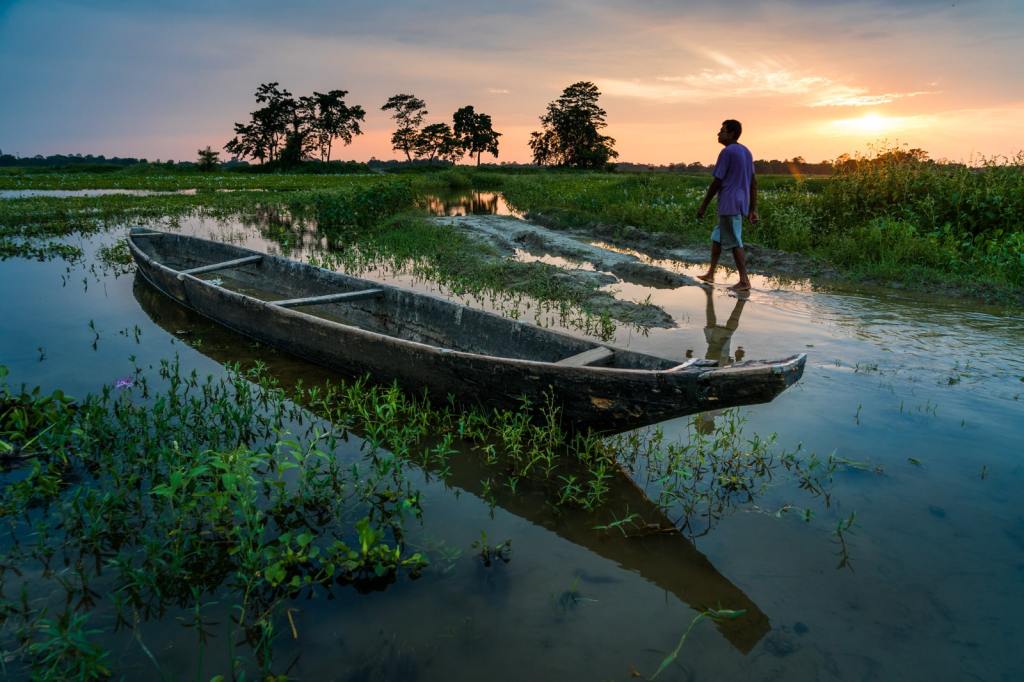
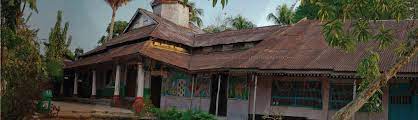
The land between two parallel rivers surrounds by the divine Brahmaputra river, summed up with rich culture , varied heritage . The first largest river island of world been the first island district of country covering a 553 km2 area .It is the center point of  Neo-Vaishnavite culture, under the efforts of Srimanta Sankaradeva, Neo- Vaishnavite is a small part of Hinduism, brought by the reformation movement in old Hinduism, spreading the religion among the people through songs and folklore.

Majuli has been the capital of culture for the Assamese civilization from 16 th century. The main reason for its rich and colourful culture is its ethnic tribes, such as Brahmins, Kalitas, Kochs, Naths, Koibartas, Mishings, Deori, Sonowol Kacharis, Ahoms. Chutiyas, Suts.

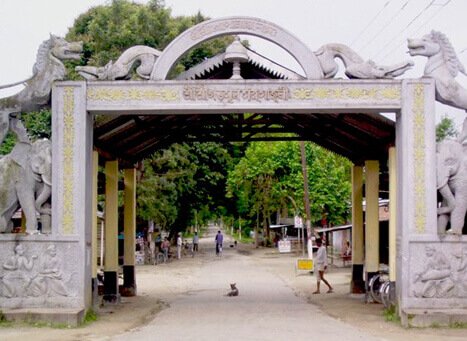
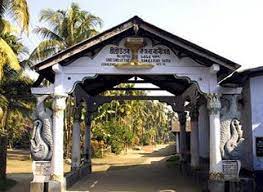
it known for the creation of the Neo-Vaishnavism, such as satras or monasteries, the holy corer of the Ekasarana dharma, Satras been the center point of neo- vaishnavite culture, under the efforts of Srimanta Sankaradeva, followed up with opening of  64  satras, each having its own significance with unique history, but due to consequences of flood and erosion, Majuli left with 31 satras of worth watching or some shifted to safer places.

the Satras for once a visit are:

Samuguri Satra:

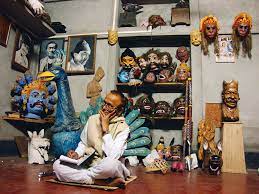
The satra is renowned for its fascinating mask-making culture or Mukha Samskriti.

Dakhinapat satra:

The center of art and culture exhibiting various forms of sculptures, paintings, and dances and it was patronized by the kings of the Ahom dynasty.

Garmur Satra:

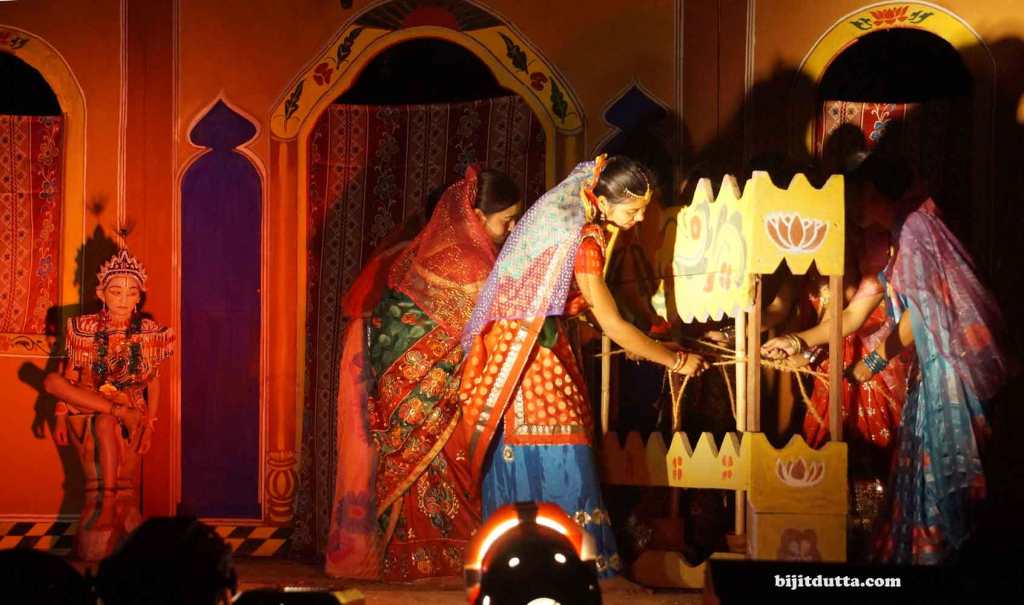
Garmur Satra has been the divine venue for the organizing of cultural activities such like Raas Utsav or the Raas festival.

Kamalabari Satra :

It’s the center of culture, art, literature studies.

Raas Utsav:

The grand occasion of Majuli is the Raas Utsav, a celebration of 4 to 5 days in month of November every year , presenting the life of lord Krishan in rich artistic and cultural form by many experienced women and men artists.

Food culture :

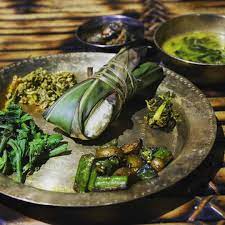
Majuli food culture includes mixed authentic dishes of different tribes, such as Porag aapin (rice cooked in a leaf), vegetables, and Pamnam fish and chicken baked in banana leaf, or pork, chicken, or fish cooked in bamboo pipes.

Routes for arrival to Majuli:

• Take the ferry from the Neemati ghat, Jorhat to the kamalabari ghat, Majuli. Duration of 57 to 60 minutes.

•  By Air, Jorhat Airport is the nearest airport to Majuli, then take a ferry to reach Majuli, book a taxi from Jorhat to Neemati ghat, The last ferry depart at 3:00 pm everyday.

•By bus, there are many buses available from Guwahati to Majuli route of 13 to 14 hours.

Gandhiji And Freedom

Freedom from fear is more important than legal justice.

How did Gandhiji commit suicide?' Guj school exam shocker

Gandhiji in 1917, led the Civil Disobedience Movement spark in Champaran against the British rule, for the cause of poor peasants, who were crushed under the might and power of Britishers. Hence, he wanted to build a self-reliant, united and independent army of the peasants, emerging from their weakness, despair and suppression. Gandhiji led a protest march and rallies to usher in the independence and liberty from British rule. Hence, this politics was not intervened with complicated socio-economic problems but was of the day to day problems like education and healthcare.

Salt March - Wikipedia
Civil Disobedience Movement.

A true politician is like a scientist, who collects all the facts related to the problem, interconnects them and then arrive at a result. The politics of today, is fickle and hollow. The present situation of society lacks both, to be in law and order, a nation should have a good law followers as well as makers for fear to fade. Instead, today’s politics is intervened with corruption, blames games and agitate people to do wrong things and follow evil practices so as to gain utmost support. Truth and devotion for nation lacks within the politics followed today.

The law of today, indeed creates fear in the minds of the people and forces them to break the law and not abide it.

Therefore, good and visionary people are need of the hour today, to make countrymen free from fear.