Indian Olympic medal Contender: Proud Of Our Girls

Shooting
India’s 15-member shooting contingent is the favourite to bring back a big haul of medals.

The country’s biggest hopes are pinned on Manu Bhaker and Saurabh Chaudhary.

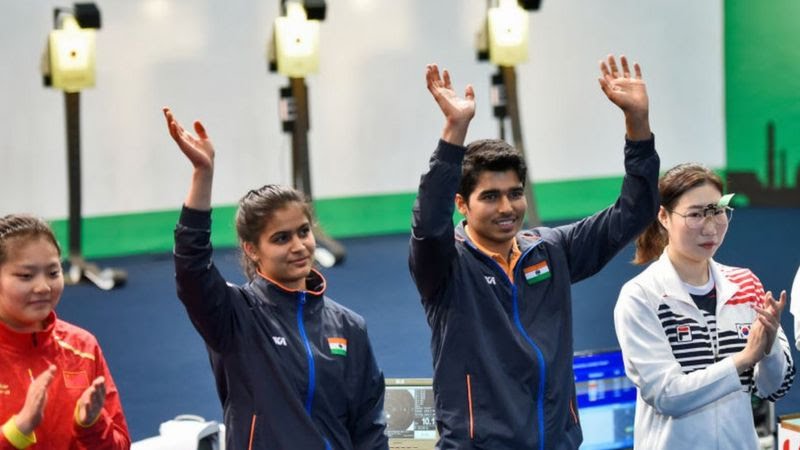
Indian shooters Manu Bhaker and Saurabh Chaudhary won the gold in the final of mixed 10m Air Pistol at ISSF World Cup, at Karni Singh Shooting Ranges on 27 February 2019 in New Delhi, India


Nineteen-year-old Bhaker, one of the top contenders in the 10m Women’s Air Pistol event, has in the past won it all from World Cup gold medals to the Commonwealth medal and Youth Olympics.

Shooter Saurabh Chaudhary, world number two and Youth Olympics champion, became the youngest Indian shooter to win a gold at the Asian Games in 2018 when he was just 16.

Both Bhaker and Chaudhary are top contenders for a medal finish when they pair up for the 10m Air pistol mixed event. The duo won five successive golds at international shooting events and a silver at the World Cup in Croatia in June.
Badminton

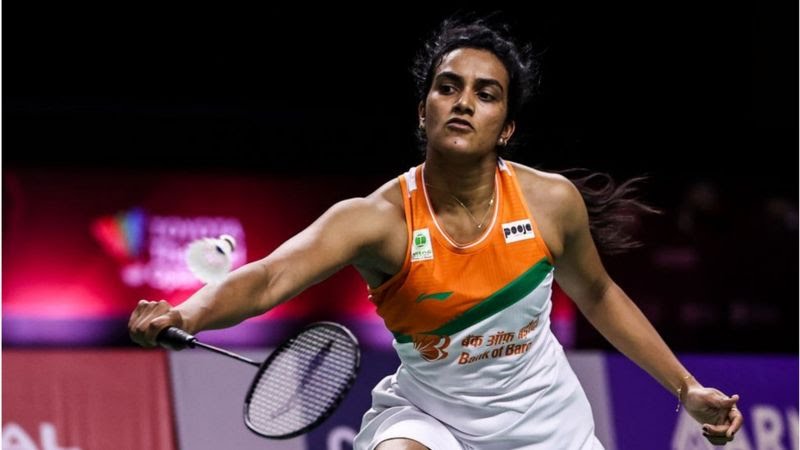
At the Rio Olympics, 21-year-old PV Sindhu bagged a silver – and won a billion hearts. Not everyone had expected a medal back then from the young shuttler. But five years on, expectations are high.

“I was just a participant back then, but now everyone says Sindhu has to get a medal,” she told the BBC recently.


Despite inconsistencies in her performance since 2019, Sindhu remains India’s top medal hope

Last year, the ace shuttler won the inaugural BBC Indian Sportswoman of the Year award.

In 2019, she was crowned the World Badminton Champion but her form has had inconsistencies since then. However, she remains India’s top medal prospect.
Boxing

Boxing
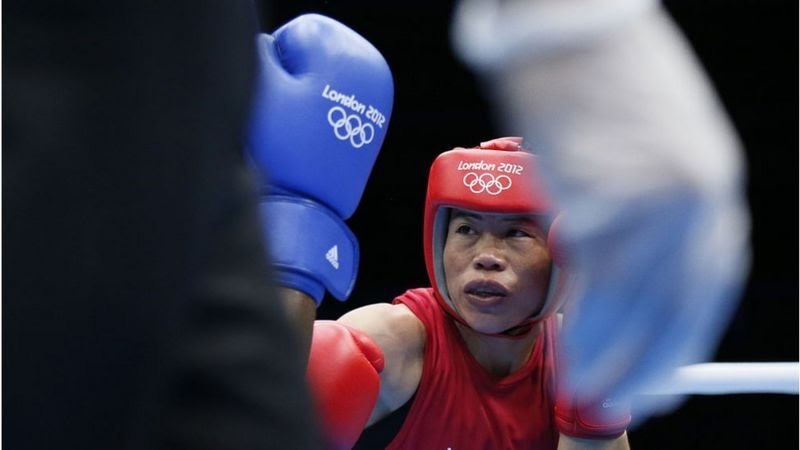
Mary Kom, also known as Magnificent Mary, the Iron Lady and many other nicknames, is a medal favourite for India.

She won a bronze at the 2012 London Olympics and will be looking to change the colour of her medal this time when she participates in the Flyweight section (51kg).


This could be the last Olympic Games for the boxing star

In May, she picked up a silver when she lost the final to Kazakhstan’s Nazym Kyzaibay during the Asian Boxing Championships in Dubai.

At 38, Kom may well be taking part in her last Olympics, and India will be rooting for her to increase her tally before she takes off her gloves.
Archery
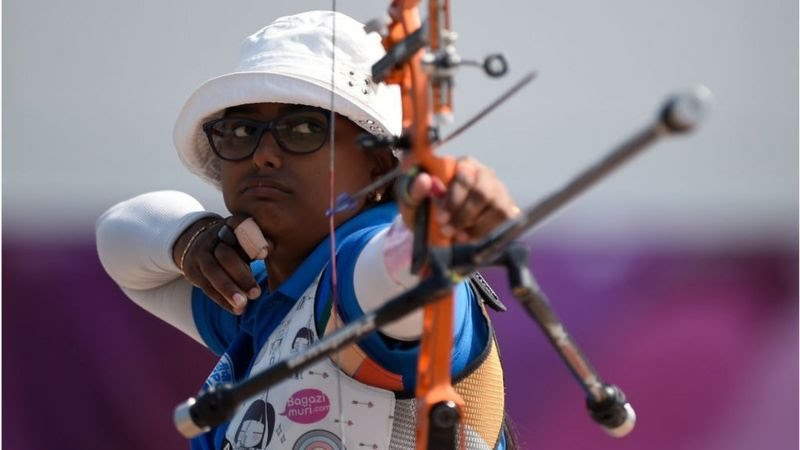
Only last month, archer Deepika Kumari won three golds at the Archery World Cup in Paris.


Deepika Kumari is the number one ranked recurve woman in the world

She is now the world number one in the women’s recurve category and a strong candidate for a medal in Tokyo.

Kumari has won nine gold, 12 silver and seven bronze medals at various World Cups and will be looking to add the Olympic medal to her tally now.
Wrestling
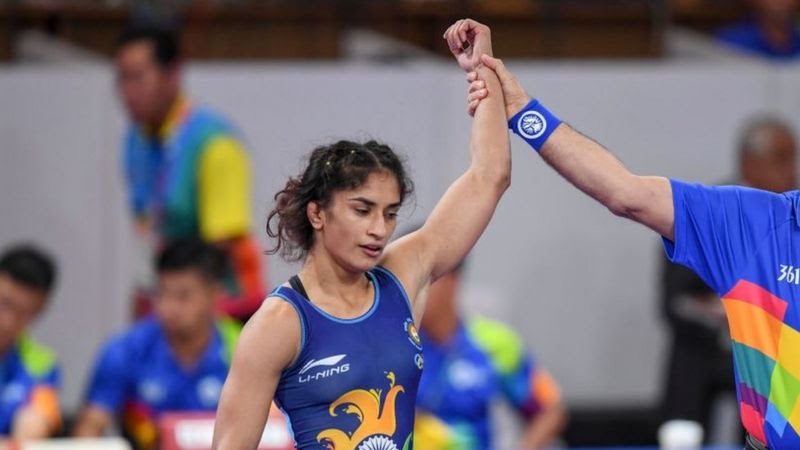
India had a decent run at the Rio Olympics in 2016, with Sakshi Malik earning a bronze medal. In Tokyo, Vinesh Phogat leads the women’s wrestling team.

Having suffered a freak injury during the Rio Olympics, Phogat returned to India in a wheelchair and underwent surgery.

The 26-year-old is now roaring to go in the 53kg category with some great wins in the last couple of months, as well as reclaiming the number one ranking.
How Much Does India Invest In Olympic Athletes?

Postponed by a year due to the pandemic, the Tokyo Olympics is now less than a month away. Last week, the Union Sports Minister Kiren Rijiju urged the people to extend their support to India’s Olympic-bound athletes, the same way they back India’s cricketers. However, India’s abysmal performances at the Olympics is in striking contrast to India’s immense success at cricket. The model of sports governance and financial irregularities are often blamed for the lack of competitive edge in sports other than cricket. So, the most obvious question that comes to our mind is, how much does India invest in the Olympics?

Money allocated for Sports

In the 2020-21 annual budget, the Government of India allocated Rs 2826.92 crore for sports, which meant an increase of mere ₹ 50 crore from the revised estimates of the financial year 2019-20. The Modi government’s flagship sports programme ‘Khelo India’ received a substantial hike of ₹ 312.42 crore and was allocated ₹ 890.42 crore compared to ₹578 crore in 2019-20. On the other hand, the National Sports Development Fund saw a reduction of ₹ 27.15 crore from ₹77.15 crore in 2019-20 to ₹ 50 crore in 2020-21. National Sports Federations saw the highest decrease after Finance Minister allocated ₹ 245 crore, ₹ 55 crore less than the previous financial year, according to The Wire. Even the budget for meritorious sportspersons saw a 40% reduction from the last financial year. It is important to note that the 2020-21 annual budget was presented in January 2020, when the government had no idea of the coming pandemic. It was also supposed to be the year of the Tokyo Olympics.

Target Olympic Podium Scheme

While these are the broad schemes under which Indian sportspersons are funded, the Target Olympic Podium Scheme (TOPS) provides financial assistance to potential Olympic medal winners. Launched in 2014, TOPS is the flagship programme of the Sports Ministry of India. The top-up funding scheme considers the performance of Indian athletes in the past three years. They are provided with personal coaches and other staff fees, cost of travel during competitions, purchase of equipment, and pocket allowance.

Looking Back At The Last Olympics

In the 2016 Rio Olympic, India spent ₹ 36.85 crore under TOPS, as per Financial Express. Nearly half of that amount was spent on shooting, which was India’s most successful Olympic sport in the previous three games. Shooting is also very expensive, which requires importing equipment from other countries. But shooting failed to bring any medal. Athletics received the second-highest funding of ₹ 7.80 crore in 2016, but India failed to make a mark in the sport. Unfortunately, out of the ₹ 36.85 crore, ₹30.49 crore had gone to disciplines that fell short of goals. Only 1.66 per cent of the total TOPS fund went to the fields that brought India two medals – PV Sindhu in Badminton and Sakshi Malik in wrestling.

Comparison With Other Countries

The United Kingdom allocated close to Rs 9000 crore on sports infrastructure and training in the annual sports budget, whereas India spent only one-third of the UK, Rs 3,200 crore, on youth affairs and sports, before 2016. The UK won 67 medals against India’s two at the Rio Games 2016. Abhinav Bindra had also tweeted back in 2016 that a medal cost UK 5.5 million pounds, and that is the kind of investment India needs to make. Otherwise, we cannot expect much. In the USA, a large number of athletes are privately funded. Individual athletes had started their own funding portal for donations from the general public. Therefore, only 10% of the US Olympic Committee’s finance was spent on athletes in Rio 2016, and the USA finished first. China, on the other hand, is known for its aggressive state-sponsored promotion of sports.

Private Investment In India

Before the 2016 Olympics, Indian Olympic Association (IOA) received donations from Reliance Jio, Amul, Tata Salt, Edelweiss Financial Services, Herbalife, Li Ning, and SBJ. Sakshi Malik had also thanked JSW Sport, a foundation funded by the OP Jindal group, after becoming India’s first medal winner in Rio Games, as reported by Hindustan Times.

However, unlike NSDF, where the contributions and sponsorships are open and documented, private funding to individual athletes is not. And most recently, the JSW Group has come on board to be the official sponsor of Team India in the Tokyo Olympics and has agreed to pledge sponsorship support of ₹ 1 crore to IOA. In 2018, the Sports Ministry earmarked ₹ 100 crore for funding of the athletes for the preparation of Tokyo Olympics 2020, which will take place this year. While the number of medals won cannot be equated to the investments made, since medals are not the only measure of success, India nonetheless needs to invest more and put in a new model of sports governance in action. A

Dhing Express – Hima Das

Born near the Dhing town ,Assam, Hima Das is nicknamed as Dhing express. This young sprinter is inspiration for many youth, she was born on 9 January 2000.

She is the first Indian athlete to secure gold medal at the IAAF World U20 championships. Her career as a sprinter began when she participated in the 2018 Commonwealth Games at Gold Coast, Australia, in the 400 metres and 4×400 metres relay. She is famous for securing 5 gold medals back to back in a single month. She obtained her first gold of the month at Pozhan Athletics Grand Pix, Poland, second medal at Keetno Athletics Meet, Poland, third medal at Kladno Athletics Meets, Czech Republic, fourth gold at Tabor Athletics Meets, Czech Republic and fifth gold at Atlecticky Mitink, Czech Republic.

She is also appointed as a civil servant post of Deputy Superintendent of Police of Assam Service , without giving any competitive exam but through direct entry. She also currently holds the Indian National, recorded in 400 metres with a timing of 50.79s that she clocked at the 2018 Asian Games in Jakarta, Indonesia. She is also conferred with Arjuna Award .

As a kid she was always interested in playing football . She also played football with the boys at her JNV school . She wanted to carry on football as her career but did not see any prospects for herself in women’s football scene in India. Later on , she was advised by physical education teacher at JNV to opt for sprint running.

“All’s well that end’s well” this proverb suits so well in the case of this 21 year old sprinter. We don’t know what would have happened if she had taken football as her career but as a sprinter ,she is pride of India

It is very saddening and disheartening to know that she did not qualify for Tokyo Olympics 2020. It should be noted that she suffered with hamstring injury before giving her qualification test.

Born in the family of farmers Hima Das was never a privileged kid , but through her firm will she stated clearly that achievement comes only through pure hard work and dedication.

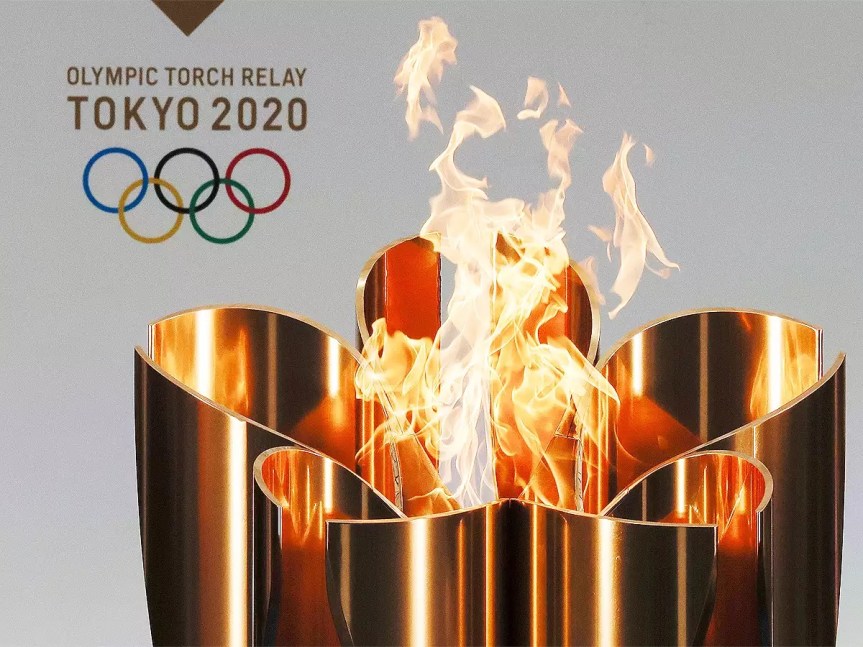
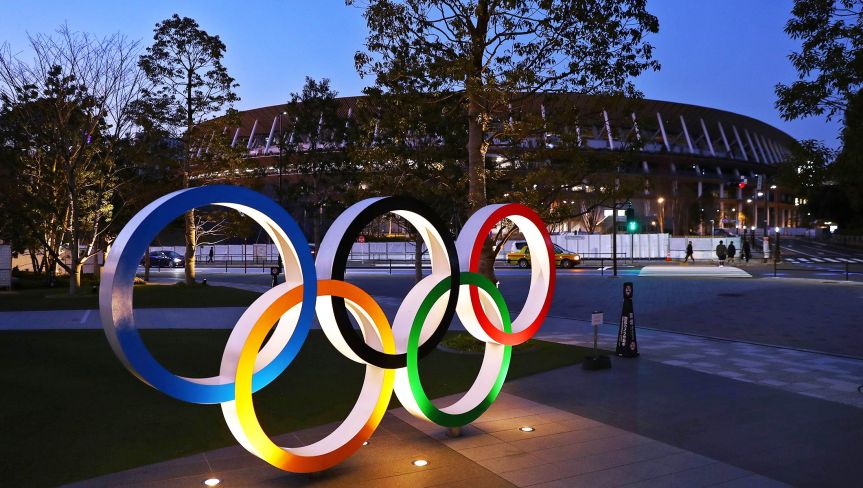
The Olympic flame in Tokyo is the first to be fueled by hydrogen.

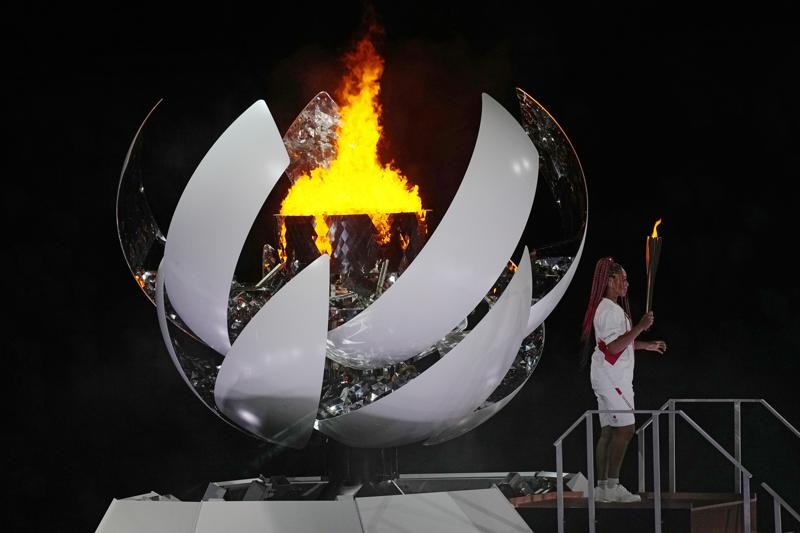
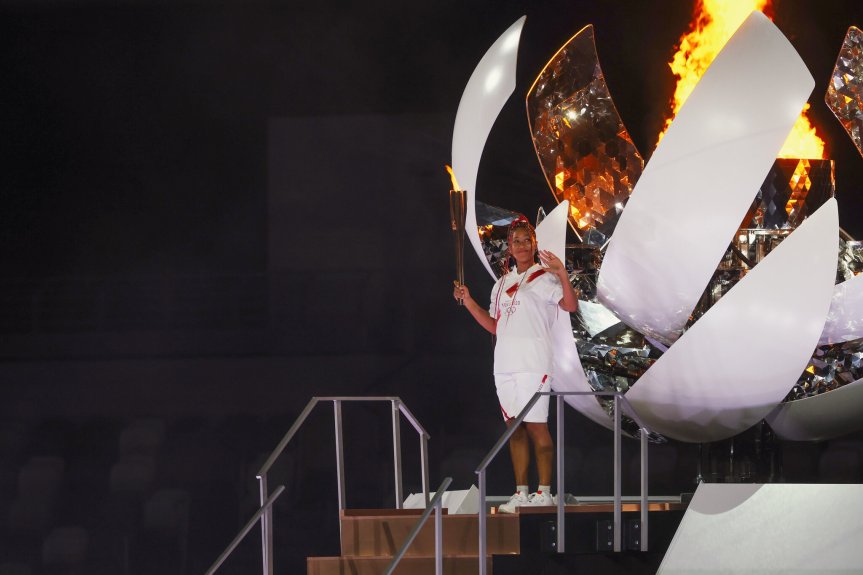
Naomi Osaka stands near the Olympic torch after igniting it during the opening ceremony of the 2020 Summer Olympics in Tokyo, Japan, on Friday, July 23, 2021. (David J. Phillip/AP Photo)

TOKYO (AP) — The Tokyo Olympic cauldron was inspired by the sun and is built to be more eco-friendly.

Throughout the games, the flame at Tokyo’s National Stadium and another cauldron blazing along the waterfront at Tokyo Bay will be fueled in part by hydrogen, marking the first time the fuel source has been utilized to light an Olympic fire.

Since the first contemporary cauldron was ignited at the Amsterdam Games in 1928, propane has been the most common fuel, but magnesium, gunpowder, resin, and olive oil have all been used. Eight years later, for Berlin, the torch relay was inaugurated.

When hydrogen is burned, unlike propane, it does not create carbon dioxide. The Tokyo cauldron is fueled by hydrogen produced by a renewable-energy-powered facility in Fukushima Prefecture. During the torch relay, both propane and hydrogen were utilized.

The London 2012 Olympic Games organizers boasted about their intentions for a low-carbon torch, but they couldn’t get the design perfect in time. Instead, they utilized a propane-butane mixture. In 2016, Brazilian officials ordered a smaller cauldron for Rio de Janeiro to minimize the quantity of fuel required.

Oki Sato, a Canadian architect, created the Tokyo cauldron. His sun-inspired sphere opens like petals from a flower, evoking “vitality and hope,” according to the organizers.

At 11:48 p.m., tennis player Naomi Osaka ignited the torch, with performers throughout the night clutching sunflowers, which are known for blossoming toward the sun.

The first torch for these games was lighted 16 months ago at Olympia, Greece, however owing to the pandemic, the relay was put on hold for much of 2020. Until the relay was formally begun in Fukushima on March 25, 2021, officials displayed the torch across prefectures impacted by the earthquake and tsunami that destroyed the region in 2011.

Before the torch arrived at the National Stadium in Tokyo’s Shinjuku City, several parts of the relay were halted owing to concerns about the spread of the coronavirus.

Mirabai Chanu : The Girl with silver wings

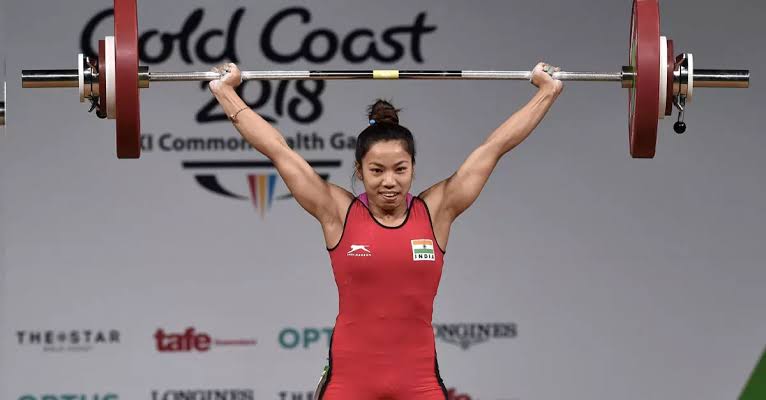
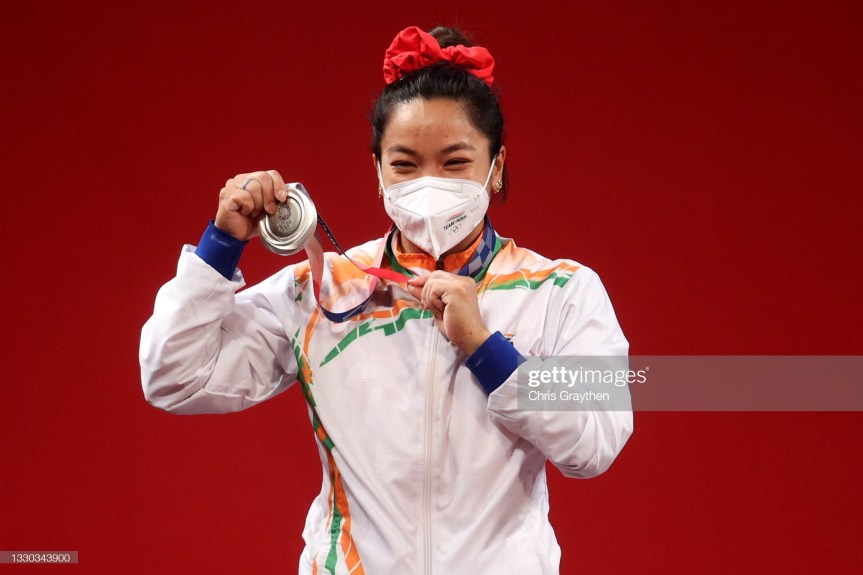
Saikhom Mirabai Chanu (born 8 August 1994) is an Indian weightlifter.She won Silver medal at the 2020 Tokyo Olympics in Women’s 49 kg, helping to secure India its 1st medal of the games.A regular presence in international events since 2014 in the 48 kg category, Mirabai Chanu has won the World Championships and multiple medals at the Commonwealth Games. She was awarded the Padma Shri by the Government of India for her contributions to the sport. First lifter to win a silver at the Olympics and second to win a medal after Karnam Malleswari‘s bronze in Sydney 2000.She was awarded Rajiv Gandhi Khel Ratna award by the Government of India in 2018.Chanu had won the silver medal in the women’s 48 kg weight class at the 2014 Commonwealth Games, Glasgow; she went on to break the games record en route to the gold medal at the 2018 edition of the event held in Gold Coast. Her biggest achievement came in 2017, when she won the gold medal at World Weightlifting Championships held in Anaheim, California

Career stats

Chanu’s first major breakthrough came at the Glasgow edition of the Commonwealth Games; she won the silver medal in the 48 kg weight category.

Chanu qualified for the 2016 Rio Olympics in the women’s 48 kg category. However, she failed to finish the event, owing to no successful lifts in any of her three attempts in the clean & jerk section.In 2017, she won the Gold medal in the Women’s 48 kg category by lifting a competition record 194 kg in total (85 kg snatch and 109 kg clean & jerk) in the 2017 World Weightlifting Championships held at Anaheim, CA, United States.

In 2021, Mirabai Chanu became the 1st and only woman Indian weightlifter to qualify for the 2021 Summer Games by securing the 2nd position in the 49kg category. The 27 year old, lifted 86 kg in snatch and then created the world record by lifting a massive 119 kg in the clean and jerk, for a total of 205 kg, which won her a Bronze medal and a ticket for Tokyo Olympics.

Chanu lifted a total of 196 kg, 86 kg in Snatch and 110 kg in Clean and Jerk to win the first gold medal for India in the Commonwealth Games 2018. En route to the medal, she broke the games record for the weight category; the effort also marked her personal best performance.She won Bronze in Clean and Jerk at 49 kg Category in 2019 Asian Weightlifting Championships. The total weight of 199 kg was her best ever and she just missed out on a bronze medal as her Snatch weight was lower than the third place athlete, both of whom had an identical total. At the 2019 World Weightlifting Championships, Mirabai lifted a total of 201kgs (87kgs Snatch and 114kgs Clean & Jerk) to finish 4th. This personal best total also created a new national record in the 49kg category. She broke her personal record again four months later when she lifted 203kgs (88kgs in Snatch and 115kg in Clean & Jerk,) in the 49kg category to win the gold medal at the 2020 Senior National Weightlifting Championships.

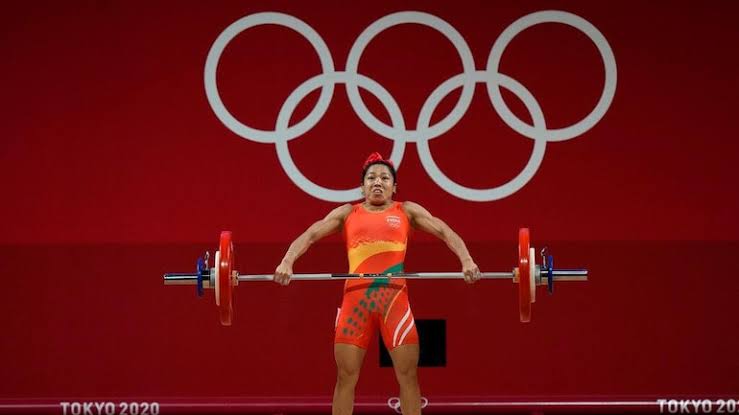
Chanu won the silver medal at the 2020 Summer Olympics in Tokyo, becoming the 1st Indian weightlifter to win silver in Olympics, winning a silver medal in 49kg weightlifting with a total lift of 202 kg. Chanu managed to lift a total of 202 kg in the women’s 49kg category to become the second Indian weightlifter after Karnam Malleswari to win an Olympic medal. A new Olympic record was registered by Mirabai Chanu with a successful lift of 115kg in clean and jerk.

She was awarded USD $1,400,000 from a private donor in India for successfully winning an Olympic medal.

Olympic ❤️

Award

₹20 lakh (US$28,000) from the Government of Manipur for the gold medal in the 2017 World Weightlifting Championships.
For winning the silver medal at the 2020 Tokyo Summer Olympics
₹50 lakh (US$70,000) from the Government of India.
₹1 crore (US$140,000) from the Government of Manipur.

Tokyo Olympics 2021

Olympics 2021 is finally here! After almost a year delay and many reschedules the Olympics have officially begin. This time the host is Tokyo, and this is the 32nd edition of Olympics game. On Friday night, that is 23 July the opening ceremony was held, and a great sports event had a grand opening ceremony.


This is for the first time that Olympics are taking place on an odd year, with no spectators and very limited number of athletes. The schedule is all prepared and its day one, which is very crucial for every country and its athlete. The key highlights are-
• Naomi Osaka renowned tennis player from Japan light up the cauldron.
She tweeted about the same as she felt grateful and honoured to be a part of opening ceremony calling it her greatest athletic achievement till date.
• The opening ceremony filled the night sky with firework and the use of drone display system. However, the ceremony took place in the absence of audience.
• The Olympic flame was passed to from Paralympic athlete Wakako Tasuchida to children from disaster hit region of Naomi, Osaka to Japanese medical workers and other athlete before it went to Naomi Osaka.
• The Opening declaration was done by Japanese Emperor Naruhito.
• In the opening ceremony parade 19 people represented India including six times world champion Boxer Marry kom and men’s Hockey captain Manpreet Singh.
• Indian Prime minister Narendra Modi cheered all the Athletes through video conference on representing India at Tokyo Olympics 2021 and wishing all the best to PM Suga and Japan on hosting the Olympics.
• In total there are 127 participants from India who are participating in 18 different sports including two team. The Indian athletes are participating in hockey, shooting, archery, rowing, judo, table tennis, badminton, weightlifting, rowing etc.

On day one Indian weightlifter Mirabai Chanu bagged a silver medal in weightlifting 49 kg category. With this achievement she becomes the second Indian women to win a silver after PV Sindhu and first athlete to win a medal at 2021 Tokyo Olympics. She belongs to Manipur situated in Northeast and have faced quite a lot of struggles on her way to win a medal today, Mirabai’s achievement has not only made all the Indians proud but, made the first day remarkable for everyone.
Indians have been actively participating in Olympic events and other sports evet from past three to four years in different category of sports and like every year the aim is to win “Gold”, represent the country at an international level and add the charm to the nation. Representing your country at such level is already counted as an achievement, representation brings responsibility and performance pressure which may affect the performance specially for the newcomers. Thus, it is important to keep the balance throughout the event and feel confident about the preparation and hard work an athlete has been doing for past many years. The competitive spirit should be high, and the goal is to be fulfilled.

India win’s its first medal at Tokyo 2020 Olympics

The Olympic flame was lit on 23 July’ 2021 in Tokyo, Japan and the competition for medals and glory is fierce and intense. Mirabai Chanu ended India’s 21-year wait for a weightlifting medal at the Olympics by clinching a silver medal in the 49kg category and opened the country’s account on Saturday. The 26-year-old lifted a total of 202kg (87kg+115kg) to better Karnam Malleswari’s bronze in the 2000 Sydney Olympics.

Who is Mirabai Chanu?

Saikhom Mirabai Chanu was born on 8 August 1994 in Nongpok Kakching, Imphal, Manipur, to a Meitei family. Her family identified her strength from an early age when she was just 12. She could easily carry a huge bundle of firewood home when her elder brother found it hard to even pick it up.

Chanu’s first major breakthrough came at the Glasgow edition of the Commonwealth Games; she won the silver medal in the 48 kg weight category.

Chanu was felicitated by the Chief Minister of Manipur, N. Biren Singh, who presented her with a cash prize of ₹2 million. She received India’s highest civilian sports honour Rajiv Gandhi Khel Ratna for 2018. In 2018, Chanu was awarded with the Padma Shri by the Government of India. In 2019, she won Gold at Qatar International Cup, after lifting 194kg

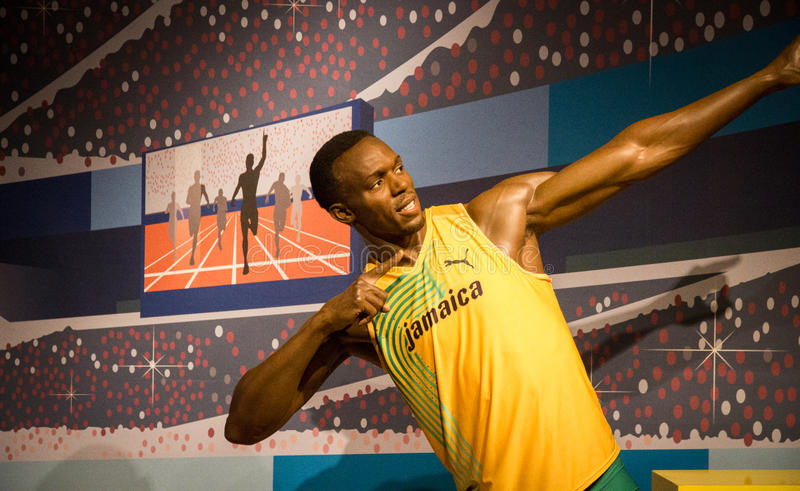
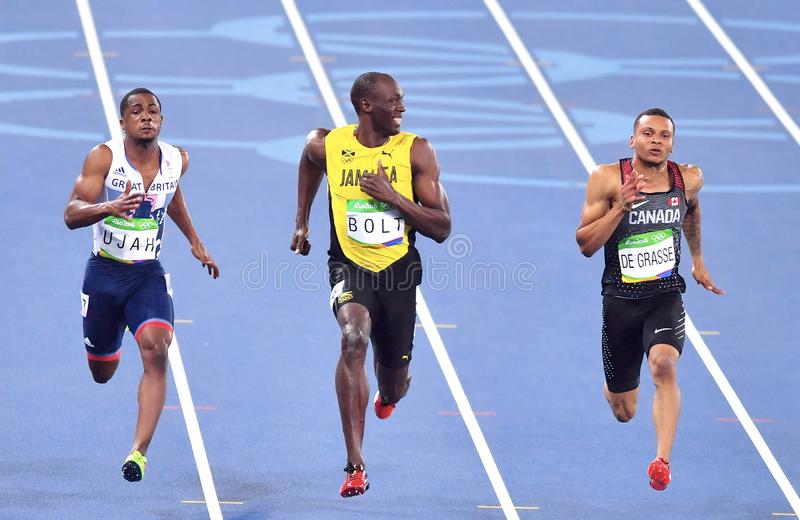
USAIN “The Lightning” BOLT.

Full name – Usain St Leo Bolt
Nickname(s)- Lightning Bolt
Nationality – Jamaican
Born – 21 August 1986 (age 34),Sherwood Content, Jamaica
Height – 1.95 m (6 ft 5 in)
Weight – 94 kg (207 lb)
Sport – Track and field
Event(s) – Sprints
Club – Racers Track Club
Coached by – Glen Mills
Retired – 2017
Awards And Honors: Olympic Games.

About Usain Bolt:

The world’s fastest man has adopted the world’s fastest animal. As part of an effort to help protect this ‘endangered species’ in Kenya, Bolt formally adopted a three-month-old cheetah cub in Nairobi. Bolt bestowed one of his own nicknames upon the cub, naming him ‘Lightning Bolt’. Symbolic indeed!

One cheetah at a Cincinnati Zoo ran the 100 metres in just over 6 seconds, about 3.5 seconds faster than Bolt’s human world record of 9.58 seconds. Some scientists are trying to apply the physics of a cheetah’s running style in order to maximize the ability of human runners. Well, do not be surprised if Bolt does land another ‘bolt from the blue’ by equalling the cheetah’s feat.

Sportsmen like Bolt are like the Halley’s Comet, they come once in 76 years, nay, a hundred years. Bolt, a three-time Olympic gold medalist, distinguished himself with a 200 metres gold medal at the 2002 World Junior Championships, making him the competition’s youngest ever gold medalist. In 2004, at the CARIFTA Games, he became the first junior sprinter to run the 200 metre in under 20 seconds with a time of 19.93 seconds, breaking Roy Martin’s world junior record by two-tenths of a second.

He turned professional in 2004, missing most of his first two seasons due to injuries. But he competed at the 2004 Summer Olympics.In his childhood, he loved to play Cricket and Football in the streets of Jamaica with his brother. In his school, he was the fastest runner in the 100-meter race. His primary coach, McNeil was sometimes got frustrated by his penchant jokes. At the 2001 IAAF World Youth Championships in Hungary, he made his first appearance at an international event. Bolt is one of only nine athletes in the world to win World Championships at the youth, junior, and senior levels.Bolt’s first sports choice was Cricket. He is a big fan of Football.

About his Life:

In 2007, he beat Don Quarrie’s 200 metres Jamaican national record with a run of 19.75 seconds. In May 2008, Bolt set his first 100 metres world record with a timing of 9.72 seconds. He set world records in both the 100 metres and 200 metres events at the Beijing Summer Olympics, recording 9.69 seconds in the former event. With a timing of 19.30 seconds in the 200 metres, he broke the previous record of 19.32 seconds by Michael Johnson at the 1996 Summer Olympics at Atlanta. A year after the Beijing Olympics, he lowered his 100 metres and 200 metres world records to 9.58 seconds and 19.19 seconds respectively at the 2009 World Championships. His record-breaking margin in the 100 metres is the highest since the start of digital time instruments. As a result of Bolt’s success in athletics, he was named the Laurens World Sportsman of the Year for 2009.

• He is an 11-time World Champion.– In Track and Field, he is considered the highest-paid athlete ever. – He has been with a number of honors and awards, including Track and Field Athlete of the Year, World Athlete of the Year, and Laureus World Sportsman of the Year (3 times). – He has collaborated with the Soul Electronics and has launched 2-types of Bolt edition in-ear headphones- Run-Free.

Bolt loves dancing and is a great admirer of Indian batsman Sachin Tendulkar, West Indian Opener Chris Gayle, and Australian opener Mathew Hayden. He is a football fan too, and supports Manchester United. What we can learn from a man like Bolt is the level to which one can reach if one works hard. Hours of hard and laborious training have gone into the making of this rare legend on the track, and countries with a billion strong population which cannot produce a single sensation on the track can do well to learn certain lessons from him.

India’s Medal Count Starts From Todayy!!

Mirabai Chanu marked history today by securing India’s first medal at Tokyo Summer Olympics 2021. She bagged silver medal in weightlifting under Women’s 49 kg. It is more remarkable day for India as it won the medal in weightlifting after 21 years of wait and struggle.

Saikhom Mirabai Chanu was born on 8 August 1994 in Imphal ,Manipur. She was in the field of weightlifting from the age of 12 years. She was also awarded with Padma Shri by Indian Government for her contributions to the sport . She has won several medals in Common Wealth Games and World Championship.

For her win, Prime Minister Narendra Modi personally congratulated her on phone. She took twitter to express her joy , she wrote ,”thank you my coach Vijay Sharma sir”. Many popular figures like Shikhar Dhawan , Gautam Gambhir , Mahesh Babu , Virender Sehwag, Kiren Rijiju also congratulated on her success.

Tokyo Olympics Hockey India vs New Zealand

MATCH REPORT

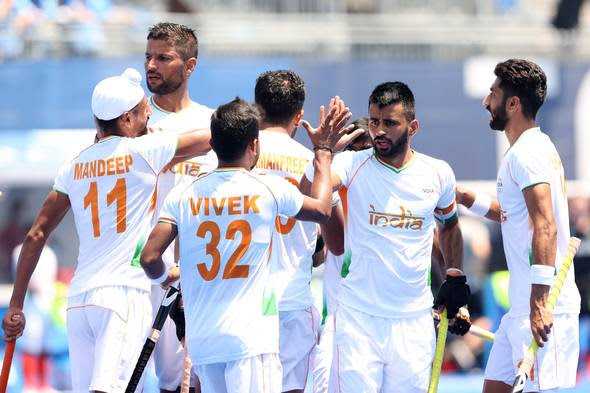
A brace from Harmanpreet Singh, both off penalty corners, and a Rupinder Pal Singh penalty-stroke conversion cancelled out Kane Russell’s opening goal for New Zealand as India took a 3-1 lead in the 33rd minute.

MATCH HIGHLIGHTS:

AND THE GAME IS OVER! INDIA BEATS NEW ZEALAND 3-2!!!

60′ PC FOR NEW ZEALAND! A brilliant run from Hugo Inglis gives NZL a chance to make it 3-3. But the Indian defence stands strong to keep the score 3-2 in their favour.

59′ NZL REFERRAL! This one is just out of pure desperation. The New Zealand players think they can win a penalty corner here. However, they end up empty handed.

58′ SREEJESH YOU BEAUTY! Kane Russell hit a stunning shot towards the top left corner of the post off a penalty corner. Indian goalie PR Sreejesh executed a full-stretch dive to his right to deny New Zealand the equaliser. Moments later, he pulled off another remarkable save in open play.

57′ BACK-TO-BACK PCs FOR NEW ZEALAND! After a long referral, NZL is eventually given the penalty corner. And, surprise, surprise! the team has won one more.

55′ Harmanpreet Singh has been the standout player on the field here. He’s put in a very good defensive shift and has converted two penalty corners. The substitute Birendra Lakra has been excellent since coming on as well.

52′ New Zealand has a slight edge when it comes to possession (52-48) today. However, the team has been a bit wasteful up front (1/5 PCs with a shooting efficiency of 25%), and that’s why India has the lead.

49′ After three consecutive successful referrals, India has a failed one in an attempt to win a penalty corner. New Zealand regains possession.

47′ Amit Rohidas and Lalit Upadhyay come up with a decent move on the left flank for India. The New Zealand defence stays compact to avert the danger.

THE FOURTH QUARTER BEGINS!

We are heading towards a thrilling final 15 minutes as India leads New Zealand 3-2 in men’s hockey on day two of the Tokyo Olympics.

THE THIRD QUARTER IS DONE AND DUSTED!

43′ GOOOOAAAAALLLLL!!!!!!! NEW ZEALAND PULLS A GOAL BACK!!!! A major lapse in concentration for the Indian defence and NZL capitalises on it. Nick Wilson receives a pass on the right flank, dribbles past Birendra Lakra and sets up Stephen Jenness, who scores past Sreejesh with ease.

40′ UPDATE: Australia beats Japan 5-3 to register the first points in Hockey at the Tokyo Olympics. The Aussies are in the same group (Pool A) as India and New Zealand.

38′ The Indian forwards are pressurising the New Zealand defence big time here. Sreejesh has had absolutely nothing to deal with at the other end this quarter.

36′ ANOTHER INDIAN PENALTY CORNER! Harmanpreet almost completed his hat-trick with the shot on target. But NZL keeper Hayward made a good save.

33′ GOAAALLLLLLLL!!!!! INDIA TAKE A 3-1 LEAD NOW!!! Another Indian penalty corner, another Harmanpreet goal. New Zealand looks extremely rusty in the middle since conceding the second goal.

32′ EARLY CHANCES FOR INDIA! Mandeep Singh has been a menace up front. He’s been supported well by Dilpreet Singh on the right. Another Indian goal looks likely.

THE THIRD QUARTER IS UNDERWAY!

Indian athletes are also in action in various other sports at the Tokyo 2020 Olympics today. Follow them through the links provided below.

SHOOTING BLOG | Read more

ARCHERY BLOG | Read more

THE SECOND QUARTER IS OVER!

29′ New Zealand enjoyed a long period of dominance in this quarter but India scored against the run of play. Nick Wilson’s missed chance could come back to haunt NZL.

26′ GOOOOAAAALLLL!!!!! INDIA TAKES THE 2-1 LEAD!! A penalty-corner innovation from the Indians and Harmanpreet Singh finds the back of the net. Rupinder Pal, the usual PC converter, slipped the ball towards Harmanpreet on his left to trick the New Zealand players.

24′ VERY CLOSE! Vivek Sagar Prasad had a wonderful chance to score. But the New Zealand defence gets the better of him close to goal.

22′ JAPAN 3 – 3 AUSTRALIA! In the other Olympic men’s hockey game happening now, the host nation and the 2004 gold medalist from Athens are involved in an exciting clash, which is in the third quarter.

19′ WHAT A CHANCE FOR INDIA! The captain Manpreet received a long pass from substitute Lalit. He was one-on-one with the NZL goalie. However, his lob attempt was saved by Hayward.

17′ New Zealand is dominating possession against India right now. The Indians are losing the ball cheaply in midfield quite too often.

THE SECOND QUARTER BEGINS!

A penalty-stroke goal from Rupinder Pal Singh cancelled out a penalty-corner strike from Kane Russell as India and New Zealand are tied 1-1 after the opening 15 minutes.

THE FIRST QUARTER COMES TO AN END!

15′ INDIAN COUNTER-ATTACK! The substitute Gurjant Singh rushes forward with the ball. But the New Zealand defence tracks back in time to avert the danger.

13′ FOUR CONSECUTIVE PCS FOR NEW ZEALAND! The Indian defence is struggling to get the ball away here. Sreejesh pulled off a brilliant save for India just moments ago. NZL messes up another penalty corner.

10′ GOOOOAAAAALLLL!!!!!! INDIA EQUALISES!!! Rupinder Pal won a penalty stroke from a penalty corner and he sent NZL keeper Leon Hayward the wrong way from close range.

9′ The experienced duo of Birendra Lakra and Lalit Upadhyay haven’t started in the first quarter. The youngster Vivek Sagar Prasad is also on the bench.

6′ GOOOOAAAALLLL!!!! NEW ZEALAND TAKES THE 1-0 LEAD!! NZL won its first penalty corner and Kane Russell converts it with precision.

5′ FOUL! Indian skipper Manpreet Singh hits New Zealand defender Nic Woods on the face with his stick, unintentionally. Woods is being treated on the field.

3′ PENALTY CORNER FOR INDIA! Mandeep Singh won this one after receiving a pass from Nilakanta Sharma. HITS THE POST! Rupinder Pal Singh misses the target by a whisker.

1′ Good early pressure from India here. Dilpreet Singh moves forward with pace on the right flank but isn’t able to create a clear-cut chance.

AND THE MATCH BEGINS!


The team lineups are out!

INDIA XI: PR Sreejesh (GK), Rupinder Pal Singh, Surender Kumar, Harmanpreet Singh, Amit Rohidas, Manpreet Singh (C), Hardik Singh, Nilakanta Sharma, Dilpreet Singh, Mandeep Singh, Shamser Singh.

COACH – Graham Reid.

NEW ZEALAND XI: Leon Hayward (G), Dane Lett, Nic Woods, Kane Russell, Blair Tarrant (C), Shea McAleese, Nick Ross, Hugo Inglis, Sam Lane, Stephen Jenness, Nick Wilson.

COACH – Darren Smith.


The world’s best coaches and scientific training have given Indian hockey a refreshingly new identity, Moscow Olympics gold medallist MM Somaya writes ahead of the country’s hockey teams’ opening games at the Tokyo Olympics.

READ MORE | Read more

He was marked out for greatness as a player and a leader even before he became a constant in the national side. Having led the Indian team at the Junior World Cup, Manpreet Singh has always had confidence in abundance but it has been tempered with a sense of responsibility as captain.

Ahead of his third Olympics, the Indian skipper shared his plans, disappointments and determination to succeed at Tokyo.

FULL STORY | Read more

MATCH PREVIEW:

It has been over 40 years since the Indian men claimed the most recent of their incredible eight Olympic hockey gold medals, which arrived at Moscow 1980.

However, their superb form in recent times makes them serious contenders to claim a ninth title at the upcoming event in Tokyo.

The team has claimed victories against nearly all the top teams in world hockey over the past few years, with Australia-born head coach Graham Reid, a former international with the Kookaburras, getting the best out of a talented and exceptionally fit collection of athletes.

India had booked its ticket to Tokyo with two victories over Russia in the 2019 FIH Hockey Olympic Qualifiers, winning 4-2 and 7-1 in Bhubaneswar.

“It has not been an easy process to make the final selection of 16 players as there is a lot of quality and ambition in this group of players,” Reid said ahead of the 2021 Tokyo Olympic Games.

RELATED | Read more

“The performance levels of all athletes are at an optimum level and more importantly they work well together. They know what it means to represent the country at the Olympics. We’re now focused on training with the same intensity and our goal is to put forward our best performance as a collective unit in Tokyo,” he added.

Meanwhile, coached by former Black Sticks midfielder Darren Smith, New Zealand – which shocked the world by becoming Olympic champion at Montreal 1976 – is renowned for its tireless work ethic as a team but is also blessed with some exceptional individuals.

Stephen Jenness and Hugo Inglis are both wonderful attacking talents, while veteran defender Shea McAleese and penalty corner expert Kane Russell are consistently excellent performers.

New Zealand reached Tokyo with two victories over Korea in the 2019 FIH Hockey Olympic Qualifiers, winning 3-2 and 3-0 in Stratford.

“It’s a pretty experienced group but it’s also the first pinnacle event for players like Sam Lane who have previously missed out through injury or Jacob Smith and Nick Ross who have been rewarded for their perseverance. They’ve shown they’re really determined to be there,” said coach Smith.

THE SQUADS:

India – P.R. Sreejesh, Manpreet Singh, Harmanpreet Singh, Rupinder Pal Singh, Surender Kumar, Amit Rohidas, Birendra Lakra, Hardik Singh, Vivek Sagar Prasad, Nilakanta Sharma, Sumit, Shamsher Singh, Dilpreet Singh, Gurjant Singh, Lalit Kumar Upadhyay, Mandeep Singh.

New Zealand – Leon Hayward, Blair Tarrant, Hugo Inglis, Steve Edwards, Sean Findlay, Stephen Jenness, Sam Lane, Dane Lett, Shea McAleese, Jared Panchia, Nick Ross, Kane Russell, Jacob Smith, Dylan Thomas, Nick Wilson, Nic Woods.


Sony TEN 3 HD/SD will telecast India events with Hindi commentary while Sony TEN 1 HD/SD and Sony TEN 2 HD/SD will have English commentary.

Live streaming of the events will be available on the SonyLIV and JioTV apps.


TOKYO OLYMPICS 2020 – INDIA

Japanese tennis star Naomi Osaka on Friday lit the Olympic cauldron to mark the formal start of Tokyo 2020, in an opening celebrated as a moment of global hope. Organisers also paid tribute to medical workers as athletes from across the world paraded into an almost empty stadium. Normally a star-studded display teeming with celebrities is now a  low-key celebration, with fewer than 1,000 people in attendance.

The Japanese Emperor Naruhito, French President Emmanuel Macron and Switzerland President Guy Parmelin were among the many world leaders and dignitaries to attend the breath-taking opening ceremony on Friday.

Six-time world champion Mary Kom and men’s hockey captain Manpreet Singh led the way as India made its way at the Parade of Nations during the Opening Ceremony of Tokyo Olympics on Friday at the Japan National Stadium. India’s Olympic contingent for Tokyo includes 127 participants from 18 sports.

We have many athletes from india who will be participating in the sports which lacked Indian representation for years, like Fouaad Mirza who is the first Indian equestrian to qualify the game in 20 years, Bhavani Devi became the first Indian fencer to qualify, Pranati Nayak is only the second Indian woman gymnast to qualify for the Olympics, Sushila Devi Likmabam will be India’s only participant in Judo  and Mirabai Chanu will be India’s only representative in weightlifting

 So let’s keep our spirits high and support our pride “Team India” to win medals and ever-lasting glory for the nation.

Kayaking🛶

Hello guys! Today’s topic is about a sport related to water.

Kayaking it’s name is taken after what they use to move over the water that is “kayak”.

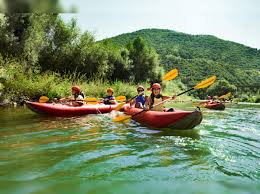
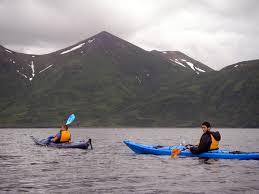
A kayak is a low-to-the-water, canoe-like boat in which the paddler sits facing forward, legs in front, using a double-bladed paddle to pull front-to-back on one side and then the other in rotation.

It’s different from canoeing:

  • It’s sitting position from the paddler.
  • Number of blades on the paddle.

Kayaking is gaining popularity over the years

From:timesof india.indiatimes.com

But kayaks were created thousands of years ago by Eskimos of North Antarctic region .

The main purpose for creating the kayak, which literally translates to “hunter’s boat” was for hunting and fishing in ancient times.

The kayak’s stealth capabilities taht is the capability to make once hide in the environment made it easy for the hunter to sneak up behind animals on the shoreline and successfully catch their prey which became their source of food.

More than 10 white water kayaking events are featured in the Olympics.

Kayaking represents a key international watersport!

From:Wikipedia. com

Their design and the material kayaks use is what distinguishes themselves from each other that is they are classified into each on the basis of the materials such as metal, plastic,fiberglass wood .

The advantages of different design are increase in performance, mobility, stability and paddling style.

On basis of material they have certain advantages and they are strength, durability, portability, flexibility, resistance to ultraviolet and storage requirements.

Many watersport lovers to prefer white water kayaking and diving,fishing and ecotourism is mainly impacted positively by this recreational activity .

Thankyou^^.

Self-Defense

We’ve all heard about self-defense since we were young, and living in the terrible world of the twenty-first century, when no one is entirely safe, it’s a responsibility to recognize that we are the only ones who can protect ourselves.
If we look at the most fundamental definition, it is the act of defending oneself from external danger.

Photo by cottonbro on Pexels.com

The “right to self-defense” is a legal term that refers to the use of self-defense in legal jurisdictions. It is critical to know how to defend yourself in today’s environment.

According to statistics, one out of every three women will be the victim of a violent attack at some point in her life. It is taught in training to block an assault, but it is much better if one can escape it!

As a result, the training should also cover how to avoid an attack in the first place. Which form of karate do you want to learn to defend yourself?

Knowing something as powerful as Karate gives you the confidence and strength to believe that you are not weak and that you have the ability to achieve your goals.

Self-defense techniques


1)Jujutsu\sTaekwondo

2)Krav Maga is a martial art that was developed in Israel.

3)Aikido

4)Wing Chun is a martial art that originated in China.

5)Brazilian Jiu-Jitsu is a martial art that originated in Brazil.

6)Muay Thai is a type of Thai boxing.

You may wish to learn self-defense for a variety of reasons. The most obvious reason is that you want to be able to protect yourself or your family if you ever find yourself in a dangerous situation. It is extremely rare to come across someone who wishes to hurt you. You are extremely vulnerable if you have no preparation for dealing with such issue.

According to the Department of Justice and the Centers for Disease Control and Prevention, one out of every six women has been sexually assaulted or attempted sexually assaulted.

The odds were 1 in 33 for men. No attack is ever the fault of the victim, and not all attacks can be prevented. However, we do know that mastering self-defense can assist victims in stopping or escaping their abusers. Self-defense training is required in a variety of situations, including rape.

A mugging or a house invasion are both circumstances in which self-defense training may help you better deal with the threat, defend yourself and your family, and find strategies to limit the harm the criminal can cause. It’s all about how to protect oneself and think effectively in high-pressure situations. It’s all about developing the confidence to better control situations that would otherwise be utterly out of your control.

Slowly, over time, the corporation became aware of the problem and began holding workshops for women working in the same industry. In fact, we now believe that every parent should include self-defense lessons in their child’s education. Self-defense has become a need for every growing child and individual today, alongside school, art programmed, and swimming sessions.

  1. Suitable for children
    It instils discipline in youngsters, provides a pleasurable pastime, and aids in the development of confidence. Children who acquire self-defense skills are more alert of their surroundings and are taught how to defend themselves against assailants of all ages, including adults and children. It teaches students how to deal with regular bully scenarios without turning become bullies.

2. Women will love it.
Self-defense can be beneficial to women and young girls for a variety of reasons. It boosts self-assurance. It also aids them in levelling the playing field with an assailant who may be far larger than they are. It’s also beneficial for any lady looking for a physical, hands-on workout.

3. Men will love it.
For the same reasons as women, males can benefit from this training. The training plan is a wonderful all-around workout that complements any other sports activity.

4. Excellent for the Elderly
We all know that age has little to do with learning new things. Older people can learn new practices, which will help them improve their health.

Photo by Anton Belitskiy on Pexels.com

Advantages of Self-Defense

Self-defense provides you the tools and abilities you need to analyze a dangerous situation with confidence and manage it successfully. Nothing could be more powerful than that. It aids in the development of confidence and control over your anxieties, and confidence is a superpower in and of itself.

Self-defense enhances your concentration and focus. As a result, you will learn to concentrate under stressful situations.

It allows you to learn simple maneuvers as well as more complex skills to defend oneself during an attack. Knowing how to defend oneself can make you feel less worried in public or afraid when you’re out late at night alone.


Self-defense is a fun and effective method to strengthen your body, burn calories, and enhance your overall health. Exercise also improves your mood, which is beneficial to persons who are suffering from depression.

One must be both physically and emotionally prepared for an attack. By learning self-defense, you will maintain your muscle and endurance through practicing along with other exercise activities. Thus improving your overall fitness will improve.

Your awareness of your surroundings will improve as a result of self-defense. You never know when you’ll be attacked; no one anticipates being attacked, so we must always be aware of our surroundings.

Improving balance not only includes the physical balance of your core muscles but also a mental balance for improving your focus. Self-defense teaches you how to focus on your target while you control your body. Not having balance, it is almost impossible to fight. Body control and balance help in protecting ourselves mentally and physically.

If you get into a battle, movement is crucial. You can’t just stand there and wait for your adversary to strike again; you have to move and react instinctively. It will aid in the development of your reflexes and the acquisition of a fighter’s reflex, allowing you to move fast and strategically in a situation like this.

.

Positive Psychology

Positive psychology is one of the newest branches of psychology to emerge. This particular area of psychology focuses on how to help human beings prosper and lead healthy, happy lives. While many other branches of psychology tend to focus on dysfunction and abnormal behaviour, positive psychology is centered on helping people become happier. Positive psychology is designed to “complement and extend the problem-focused psychology that has been dominant for decades,” explained the late Christopher Peterson, author of “A Primer in Positive Psychology” and professor at the University of Michigan, in a 2008 article published in Psychology Today. “Positive psychology is…a call for psychological science and practice to be as concerned with strength as with weakness; as interested in building the best things in life as in repairing the worst; and as concerned with making the lives of normal people fulfilling as with healing pathology,” Peterson wrote.

According to leading authorities in the field, Martin Seligman and Mihaly Csikszentmihalyi, positive psychology will help achieve “scientific understanding and effective interventions to build thriving in individuals, families, and communities.” In order to understand the field of positive psychology, it is essential to start by learning more about its major theories, applications, and history.

History of Positive Psychology

“Before World War II, psychology had three distinct missions: curing mental illness, making the lives of all people more productive and fulfilling, and identifying and nurturing high talent,” wrote Seligman and Mihaly Csikszenmihalyi in 2000. Shortly after WWII, the primary focus of psychology shifted to the first priority: treating abnormal behavior and mental illness. In the 1950s, humanist thinkers like Carl Rogers, Erich Formm and Abraham Maslow helped renew interest in the other two areas by developing theories that focused on happiness and the positive aspects of human nature.

General interest in positive psychology has grown tremendously since the concept was introduced. Today, more and more people are searching for information on how they can become more fulfilled and achieve their full potential.

Uses

Positive psychology can have a range of real-world applications in areas including eduction, therapy, self-help, stress management, and workplace issues. Some of the major topics of interest in positive psychology include: Character strengths and virtues, Flow, Gratifications, Gratitude, Happiness, Pleasure, Helplessness, Hope, Mindfulness, Optimism, Positive thinking, Resilience .

Impact of Positive Psychology

Some of the major findings of positive psychology include: Money doesn’t necessarily buy well-being, but spending money on other people can make individuals happier, People are generally happy, Some of the best ways to combat disappointments and setbacks include strong social relationships and character strengths, While happiness is influenced by genetics, people can learn to be happier by developing optimism, gratitude, and altruism, Work can be important to well-being, especially when people are able to engage in work that is purposeful and meaningful.

Potential Pitfalls

Positive psychology is often confused with positive thinking, and misconstrued as self-help tactics rather than research-backed theories. Positive thinking is a way of thinking ourselves into better behavior and greater resilience, rather than behaving our way into a different frame of mind. Positive psychology, on the other hand, is the scientific study of what makes people thrive. It focuses on behaviors that can lead to a more optimized frame of mind as well as on thought patterns that lead to more functional behaviors.

Australia To Host The Olympics in 2032 After Brisbane Wins Its Bid

The international Olympic Committee announced that Australia will host the Summer Olympic games for the third time It was announced on  Wednesday in Tokyo during the 138th IOC Session at Hotel Okura.

Brisbane, Australia the world’s largest sporting event will host the Olympic Games.

Adrian Schrinner, the lord mayor of Brisbane, said that the effort to make Brisbane a host city began six years ago under his predecessor.

“Our purpose was to seek an amazing, once in a lifetime opportunity for our region and for our city,” Schrinner said in a message shared on Twitter celebrating the announcement.

The IOC member nations had an easy choice to make Wednesday. Brisbane was the only option still in the running to be a host city.

Whether Olympic host cities actually gain economically from holding the event is unclear, according to some reports.

The Associated Press reports the IOC essentially gave Brisbane exclusive negotiating rights in February, leaving officials from Qatar, Hungary and Germany who has also attempted a run at the 2032 hosting effort, out in the cold.

Australia previously hosted the Olympic Games in Melbourne in 1956 and Sydney in 2020. Paris is all set to host the 2024 Olympics; Milan and Cortina d’Ampezzo in Italy will host in 2028. Beijing is hosting the 2022 Winter Olympics.