World Sports Journalist Day: a tribute to those who make Sports beautiful!

Sports be it soccer, cricket or baseball or any other has some or the other time played a role in some of our lives. But sometimes we just overlook those who make our sports look more spicy and enthusiastic before us.

Significance:

In 1994, International Sports Press Association established July 2 as “World Sports Journalist Day” as the organisation was found on July 2, 1924 and this was an effort made to honour sports journalists all over the world.

Sports Journalists do a lot of work before, dyeing and after sports matches, all of which are often overlooked. They’ve always played an integral part in transferring the information pertaining to sports to their ever loving audiences.

History of Sports Journalism.

Sports Journalism started in early 1800s when sports was beginning to get itself presented as a separate section in Western Newspapers. In early 1800s only elites could afford newspapers and as a result information relating to sports were restricted to horse riding or boxing , that is, the sports that were typically meant for elites.

In 20th century, New York Herald and New York World were two of the world’s first newspapers to cover sports journalism separately and have a complete full time sports department.

Slowly, the need and love for sports started to increase among the masses and that is why there was the demand for all together separate sports channels in television like ESPN and sports magazines like Sports Illustrated.

Digital Era and Sports Journalism.

Online Sports Journalism started when ESPN created its first ever sports website in the world in 1995. During initial years, only broad topics relating to sports were covered in Digital Sports but as internet expanded all over the world, many big and small bloggers, internet channels, web portals began covering all single and minutest topics relating to sports.

A majority of big and small websites are completely dedicated to sports and they also at times charge subscription fee from their readers. Search Engines like Google or Bing also provide information relating to sports during those days which are important for a particular sport.

Issues faced by Sports Journalists.

1) Deadline Pressures:

Sports journalists face deadline pressures than any other beat reporters as sports matches generally happen in late noon or in the evening and as a result reporters who’re covering sports or writers who’re into sports have to manage completion of work in shortest time possible.

2) Political Pressures

There has been an interlinking of sports and politics in the past. And if this is so, how can the media be kept away? Sports Journalists face lots of threats by certain sports associations that expect the journalists to cover sport matches in their own way and they also expect journalists to shape the public opinion.

3) Accusations of low objectivity:

Sports Journalists have also been accused of favouring or promoting their own favourite teams or players in the past. Some have also been accused of giving more preference to their home teams and this is one more challenge they face in the sports world.

In any way, Sports Journalists do a lot for their audiences to make the sport matches more interesting and entertainment their viewers or readers throughout and even after the matches. It’s important for us to celebrate them and honour them genuinely.


Understanding your Mental state during the Pandemic

Introduction

The second wave of COVID-19 started from the middle of March 2021 and peaked in April with a shortage of oxygen cylinders and hospital beds. Now when the numbers have gone down again, people will start venturing outside and the reason for this eagerness is understandable because of the impact this pandemic has had on all of us, we just need ways to cope with it. Although mental health has been discussed a lot since the beginning of the pandemic and the lockdown, it is important to understand what changes we have been experiencing and how we can cope with them.

Impact on Mental Health

As we know, this pandemic created an economic crisis but along with that it also negatively impacted the mental health of people all across the world. People have been facing trouble with sleeping, eating, and alcohol consumption also went up. But the major mental health issues that are identified are stress, anxiety, depressive symptoms, insomnia, denial, anger, and fear. And the people with existing mental disorders became more sensitive to their symptoms. The rate of suicide also increased, a suspected Covid-19 patient committed suicide in fear of the result of his test, and later it was found that he tested negative. Adding to that the level of concentration has drastically gone down.

On a normal day if you search for symptoms, you might be experiencing during the pandemic, it would lead to the diagnosis of depression but don’t get confused between depression and the COVID-19 blues. The symptoms of COVID-19 blues include:

  • Feeling of sadness, emptiness, and hopelessness
  • Restlessness
  • Guilt
  • More than normal anger and irritability
  • Withdrawal from things you normally enjoy
  • Avoiding talking to friends and family
  • Change in sleep pattern
  • Change in appetite.

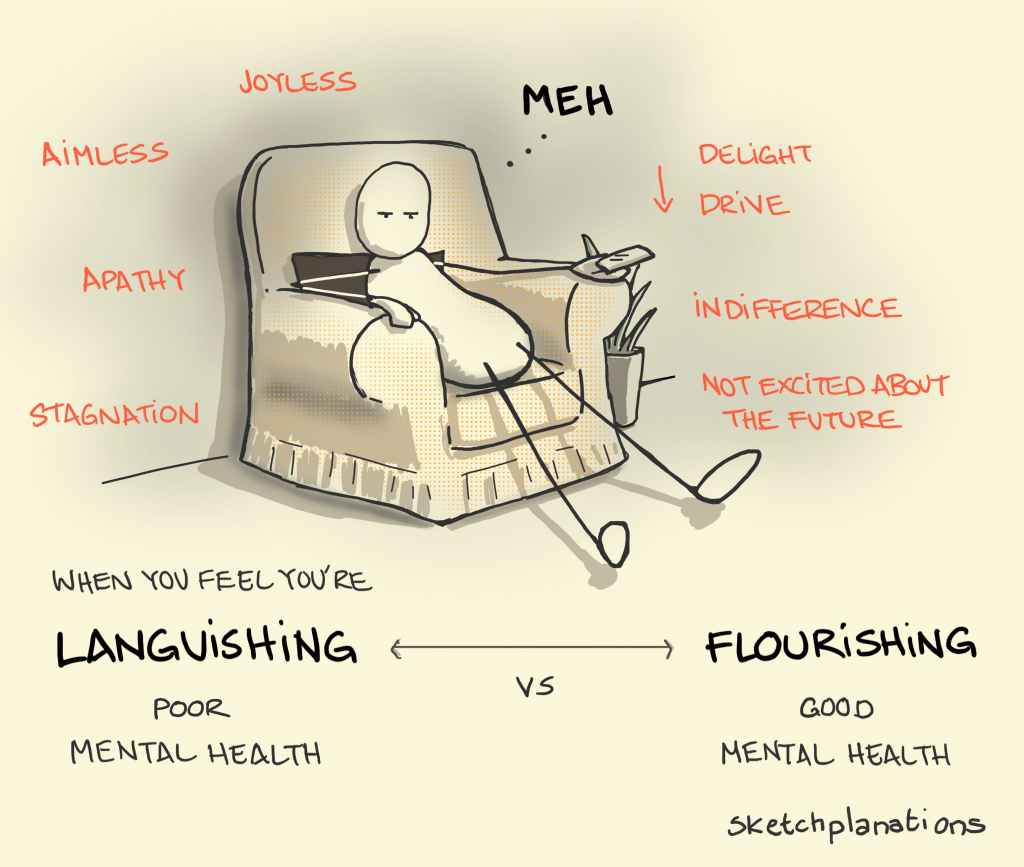
This is not the only thing, the feeling of eternal aimlessness that has started ever since the pandemic is known as languishing, and remember that you are not alone in this, even the practiced psychologists feel the same way. Languishing can be defined as a state of stagnation when you feel like the days are just passing by but you are not doing anything, you are just living through it. Not being able to focus on things is also a symptom of this.

Issues with Online

While most of the things have been shifted to the online forum and the work is being done in this new way, there are still side-effects of this change. The college students who started the online semesters with motivation have lost all of it as they can no longer focus or pay attention to the lectures, it all feels like background noise to them at this point. They cannot connect with their peers in the same way anymore. The distinction between personal and work time has disappeared, this isn’t just for college students but also adults working from home, everyone is working at any time and the expectation to get work done has increased using the reason “you are at home, you have time”. No one feels any kind of connection with their colleagues which brings troubles in the workflow. Moreover, people have lost any sense of time.

Solution

Here are some solutions to deal with this feeling:

  • Create a routine, divide your time for housework and job-related work. A routine will help you maintain a sense of normalcy. It will also help you from feeling lost because of too many things to do at the same time.
  • Try an at-home exercise routine to keep up with your physical health.
  • Declutter your home, it will help you in feeling productive and in control.
  • Set small daily goals, even small achievements count.

There is a concept of flow which means the state of absorption. The people who are immersed in some project avoid languishing, solutions for this are:

  • Even a Netflix binge helps as you connect with the characters of the show and your focus shifts to that.
  • Keep a goal of setting uninterrupted time for yourself, remove all kinds of distractions and focus on the one work you need to finish. There are applications that make sure you don’t use your phone for how much ever time you fill in.

Conclusion

This has been a very hard time for people all across the world, being scared for physical health was one thing but on the path to that our mental health is in danger and we need to take care of it. Remember to not blame yourself for feeling this way, take things slowly, do things that bring you peace. There is no need to hesitate from consulting a psychologist, if you think you are facing symptoms of depression, consult a psychologist to stay on top of your mental health.

References

CLIMATE CHANGE AND PLANT SCIENCE

When prevention of climate change is uncertain, preparation is necessary .

CLIMATE CHANGE

Climate change continues to cause unusual and unpredictable weather around the world.
Longer drought, flooding, major stroke, snowfall, temperature extreme will increase earth’s temp upto 3-4 ‘C.

Rising CO² level and warmer earth means plant will grow bigger (more surface area of leaves) and thus plant consume more water.
Thus, we face water scarcity.

Smog contain Ozone particles and causes various problems – asthma, heart disease, skin cancer etc.

Plant sciences is the study of plants in all their forms and interactions using a scientific approach.

California’s Almond Orchard:-

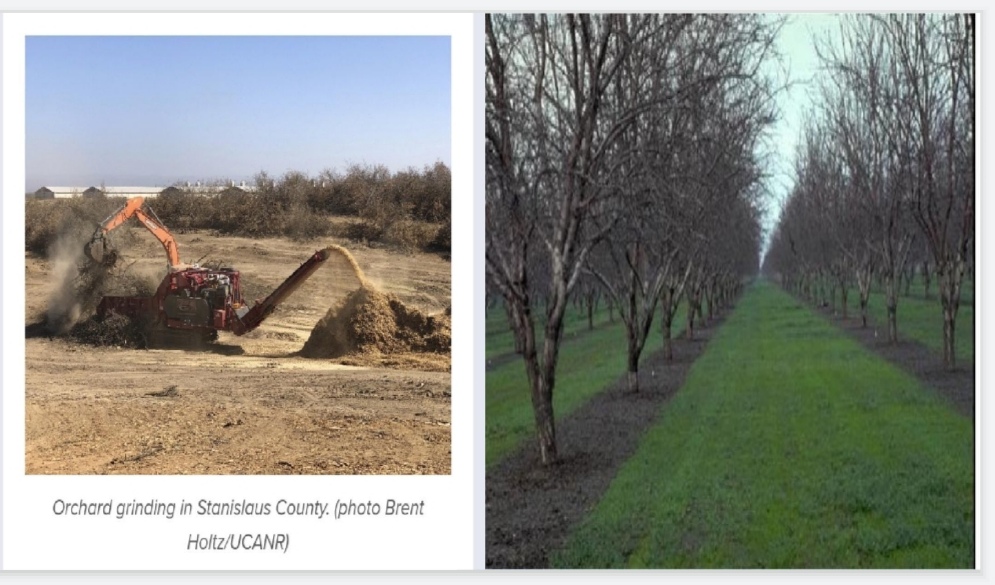
In the past, for removing and disposing of the old trees we burn them in the field. But now Old trees are ground, chipped and turned back into soil before New almond tress are planted.
It help almond orchard to be more sustainable and resilient to drought and also increasing carbon content in soil.

Whole orchard recycling result compare to burned treatment :
1) Sequester 5 tons of carbon per hectare.
2) Increase water-use efficiency by 20 percent.
3) Increase crop yields by 19 percent.

scientists from the BBSRC managed to breed a new fast-growing broccoli that no longer relies on a period of cold weather to flower, and goes from seed to harvest in only 8-10 weeks. This discovery is especially relevant for broccoli, as it is flower buds that we eat.

Many terrestrial, freshwater, and marine species have shifted their geographic ranges, seasonal activities, migration patterns, abundances, and species interactions in response to ongo­ing climate change.

Increased carbon dioxide tends to suppress photo-respiration in plants. 

  • C⁴ plant adapt better for high CO² Concentration and photorespiration. 
  • It make 4 C sugar (OAA) thus fix more CO² and produce high amount of energy. 
  • It suited for hot dry climate.
  • C4 plants include such low-latitude crops as maize, sorghum, sugar-cane, and millet, plus many pasture and forage grasses. 
  •  Better adapt for photo oxidation. Prevent photooxidation due to kranz anatomy.

THE CLIMATE CRISIS HAS ALREADY BEEN SOLVED. WE ALREADY HAVE A FACTS AND SOLUTIONS . ALL WE HAVE TO DO IS WAKE-UP AND CHANGE                     – Greta Thunburg

Land Reforms in India

Land reforms refer to the efforts made by the government to reform the ownership and regulation of land. Land reforms play a great role in the rural agrarian economy.
During the pre independence period, there were three types of land tenure systems in India.

  1. The Zamindari System– This system was created by the East India Company as a result of the permanent settlement between Lord Cornwallis and landlords. In this system revenue was collected from farmers by the zamindars or the landlords.
  2. The Mahalwari System– This system was introduced by William Bentinck in Oudh and Agra and was latter extended to Madhya Pradesh. In this system the revenue was collected by village headman on behalf of whole village and here whole village was treated as a unit.
  3. The Ryotwari System– This system was introduced in Tamil Nadu and was extended to Maharashtra, East Punjab, Assam, Coorg and Baar. In this system the land revenue was collected was paid directly by the farmers to the state.

In all three systems, there was exploitation and deprivation. Zamindari system created a class of zamindars who did not work and took away surplus from the cultivators. The lives of tenants and sub tenants was miserable. In the post independent India, land reforms were introduced to stop the exploitation that had been prevailing in the land tenure systems.
https://www.indiaagronet.com/indiaagronet/agri_economics/CONTENTS/Land%20Tenure.htm
The first and foremost step in doing so was abolition of intermediaries. The main reason of exploitation was zamindars. The Zamindari Abolition Act took four and a half years to become a law. Official documents state that zamindari has been abolished now and zamindars are now the big landowners. This has lead to a decline in the exploitation of tenants and the feudal rural structure has crumbled down.
Another step taken was the tenancy reforms. Under this, regulation of rent was done. Security of tenure was provided as well. This was done to protect tenants and grant them permanent rights in land. Ownership rights for tenants were also given.
Reorganisation of Agriculture was another land reform. Here ceilings on agricultural holdings were provided. Ceiling refers to the legal limit on the amount of land which an individual can hold. However, in rural India, implementing ceiling laws is rather difficult because of the balance of power is weighted against the landless.
Another land reform was the consolidation of holdings. This reform was done to solve the problem of fragmented land holdings. In this method one consolidated holding is provided equal to the total of scattered plots. The problem that arises in this reform is the fertility and location of the new land which is provided.
Cooperative farming is another land reform which has been advocated to solve the problems created by subdivision of holdings. In this method, farmers who have small land holdings work together for cultivation. It has many advantages. Expensive implements can be bought by clubbing money together. Market surplus of food grain can be obtained more easily. It also encourage the spirit of cooperation.
https://www.rauias.com/daily-current-affairs-for-upsc-ias/land-reforms-in-india-an-analysis-upsc/

Why China Wants To Choose The Next Dalai Lama

Tenzin Gyatso, the 14th Dalai Lama and Tibet’s spiritual leader, will turn 86 years old on July 6, 2021. As the Tibetan spiritual leader becomes older, doubts about his succession resurface. China recently released a white paper demanding that the next Dalai Lama be chosen with Chinese official permission, claiming historical practices.

The Dalai Lama, one of Buddhism’s most known faces, is a significant aspect in disseminating Buddhist teachings to the international population. Senior monastic disciples have historically recognised the Dalai Lama’s successor, relying on spiritual indications and visions. However, the Chinese foreign ministry announced in 2011 that only the Chinese government can choose the next Dalai Lama, and that no other candidate ought to be acknowledged.

CHINESE OPPRESSION AND TIBETAN UNREST

Even after six decades of occupation in Tibet, the Chinese government has failed terribly in its attempts to win the hearts and minds of Tibetans. Tibetans have never used violence in the course of their resistance, no matter what they’ve done.  The selection procedure for the next Dalai Lama is now in limbo. China’s communist regime annexed Tibet in 1950, claiming that it has always belonged to China. The Dalai Lama escaped in 1959 and established an exile administration.

Presently, the Central Tibetan Administration (CTA) is one of the world’s most well-established democratic exile governments. Many refer to it as a “bonsai democracy.” In reality, such an exile setup isn’t really a low-hanging fruit. It was envisaged by Tibet’s Dalai Lama and yielded fruition after six decades.

When he was six years old, the Chinese government arrested the Dalai Lama’s candidate for the 10th Panchen Lama’s successor, Gendun Choeki Nyima, in the year 1995. China has remained tight-lipped regarding his location since then. When the freshly elected 11th Panchen Lama was arrested, the Tibetan people revolted. In response, the Chinese government appointed its own Panchen Lama, the son of a Chinese security officer. Historically, the panchen lamas and dalai lamas have played important roles in identifying each other’s upcoming incarnations.

OPTIONS FOR THE FUTURE

Because of the Chinese threat, the 14th Dalai Lama has made a series of remarks that would make a Chinese-appointed 15th Dalai Lama difficult to regard as genuine.

For instance, he has said that the institution of the Dalai Lama may no longer be required. However, he has also stated that it is up to the people to preserve this part of Tibetan Buddhism and the Dalai Lama lineage. Another possibility offered by the Dalai Lama is to announce his future reincarnation before he dies. In this situation, the Dalai Lama will pass on his spiritual enlightenment to the next Dalai Lama.

Tenzin Gyatso has also stated that if he dies outside of Tibet and the Panchen Lama remains absent, his reincarnation would be found elsewhere, probably in India.Lastly, he has suggested the idea of reincarnating as a woman — although he added in 2015 and 2019 interviews that he’d have to be an extremely attractive lady. After this remark drew considerable criticism in 2019, his staff issued an apology and expression of remorse for the harm he had caused.

The Dalai Lama is certain that no one would accept the Chinese government’s choice. As he has stated, the Tibetan population will never recognize a Chinese-appointed Dalai Lama.

INDIA’S STAKES IN TIBET

The Tibetan elite tended to view the  world through the lens of India, and thousands of Tibetans fled to India as refugees in 1959. Today, India is home to the world’s biggest Tibetan community, with over 75,000 individuals.

Today, India’s land boundaries with China are largely those which exist between India and Tibet. China’s views on India are impacted in many ways by its Tibet policy. If a puppet Dalai Lama emerges from China, India could face significant geopolitical issues. Not only India, but also the entire Himalayan area. It is very likely that China would utilise the ‘Dalai Lama Institution’ as a political tool to encroach on these areas. China is skilled at fabricating tales that even history cannot follow. 

To discourage China’s politicisation of the Dalai Lama and leadership in Buddhism, New Delhi must give the  Dalai Lama more realistic attention, similar to US legislation on Tibet, which explicitly says that China must not intervene in the selection of the next Dalai Lama. So far, India has opted not to intervene in the matter.

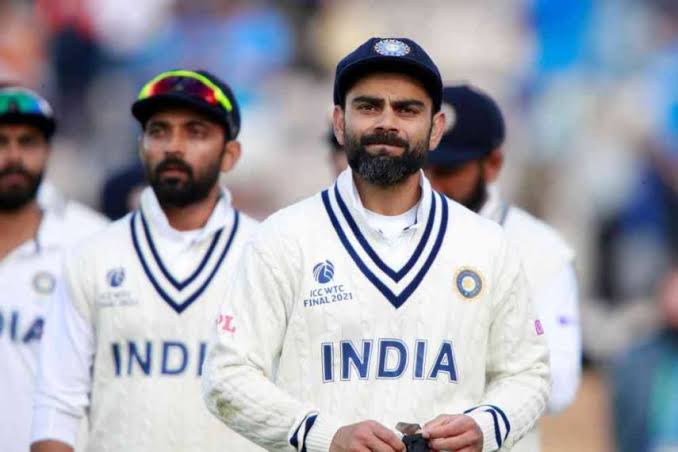
Is the defeat in wtc acceptable? Questions arises over virat’s captaincy.

The final of the WTC(2019-2021) was played from 18 to 23 June 2021 at the Rose Bowl Southampton, England, between India and New Zealand. It was initially scheduled for five days, but time lost during the game to rain interruptions so there was a sixth day reserved for outcome of results. And as expected  the planned reserve day was used .New Zealand won the match by eight wickets to be crowned as the winners of the ICC World Test Championship                                           

After the defeat of the Indian team, the captain comes first on target . The news about the outraged  Indian fans , annoyed cricket expert and WhatsApp memes start circulating over the internet. The netizens and twitterati starts demanding that the captain should leave the capticancy. But the question arises that is it right time to take back his captaincy? Or if he is removed from the captaincy then do we have any good option for his replacement? But before making any conclusions , let’s have a look over virat’s captaincy record.

Virat has captained 61 test with a winning percentage of 59.01% , which includes 36 wins ,15 losses and 10draws . He is having second best winning percentage as a captain among all current playing captains. When talked about oneday cricked , virat has a win percentage of about 70% , which includes 65 wins. His win percentage in T20 cricket is 65.1% which includes 27 wins. It’s just unfortunate that virat has lost couple of icc trophies even with sach a fantastic record in mordern day cricket .

What’s the experts view?

“The decision of making and removing someone from captaincy cannot be taken emotionally. If someone asks to remove virat from captaincy then can we remove him on the basis of single match? When talked about the record, virat has won 36 matches . I personally feel that just because of loosing single match we should not overreact. There was our mistakes, batting mistake , team management mistake . If we actually talk about the captaincy debate then it is quite clear that it will happen in T20 cricket. But even it’s not right time to discuss over T20 cricket now because world cup commencing and if we continue these debate then cricket would be harmed the most. I feel that virat is captain and the world cup plan is designed with him . If the india looses the World cup then it’s sure that Rohit would be made captain of T20 format.” Said the cricketing expert Vikrant Gupta.

“Do we have any alternative for captaincy? Is there any better option for virat’s replacement? Is there anyone who can score runs consistently and can do captiancy like him in a pressure situation. I don’t think that it’s right time to remove him from his captiancy.” Said the indian sport journalist vijay Lokapally.

☝️Visit these link to know about other cricketing expert view on wtc final.

Mars- The Red Planet

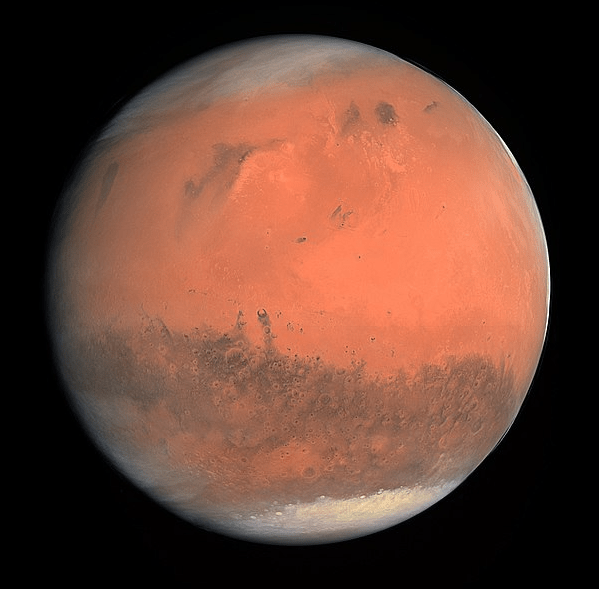
Mars is the fourth planet from the Sun and the second-smallest planet in the Solar System, being larger than only Mercury. Mars is often referred to as the “Red Planet ”, which refers to the effect of the iron oxide prevalent on Mars’s surface, which gives it a reddish appearance distinctive among the objects visible to the naked eye.Its apparent magnitude reaches −2.94, which is surpassed only by Venus, the Moon and the Sun.

Some facts about Mars

Diameter-  6,780km

Orbital period-  1.88yrs

Length of a Day-   24hr, 37min

Axis tilt-  25 degrees

Distance from the Sun- 228 million kilometer ( 1.52AU )

Moons- Phobos and deimos

Special features

 Mars is a terrestrial planet with a thin atmosphere, with surface features reminiscent of the impact craters of the Moon and the valleys, deserts and polar ice caps of Earth. The days and seasons are comparable to those of Earth, because the rotational period as well as the tilt of the rotational axis relative to the ecliptic plane are similar. Mars is the site of Olympus Mons, the largest volcano and highest known mountain on any planet in the Solar System, and of Valles Marineris, one of the largest canyons in the Solar System. The smooth Borealis basin in the Northern Hemisphere covers 40% of the planet and may be a giant impact feature. Mars has two moons, Phobos and Deimos, which are small and irregularly shaped. 

Exploration

Mars has been explored by several uncrewed spacecraft. Mariner 4 was the first spacecraft to visit Mars; launched by NASA on 28 November 1964, it made its closest approach to the planet on 15 July 1965. The Soviet Mars 3 mission included a lander, which achieved a soft landing in December 1971; however, contact was lost seconds after touchdown. On 20 July 1976, Viking 1 performed the first successful landing on the Martian surface. On 4 July 1997, the Mars Pathfinder spacecraft landed on Mars and on 5 July released its rover, Sojourner, the first robotic rover to operate on Mars. The Mars Express orbiter, the first European Space Agency (ESA) spacecraft to visit Mars, arrived in orbit on 25 December 2003. In January 2004, NASA’s Mars Exploration Rovers, named Spirit and Opportunity, both landed on Mars. NASA landed its Curiosity rover on August 6, 2012, as a part of its Mars Science Laboratory (MSL) mission to investigate Martian climate and geology. On 24 September 2014, the Indian Space Research Organisation (ISRO) became the fourth space agency to visit Mars when its maiden interplanetary mission, the Mars Orbiter Mission spacecraft, arrived in orbit.  China National Space Administration (CNSA)’s Tianwen-1 spacecraft arrived in Martian orbit on 10 February 2021. NASA’s Perseverance rover and Ingenuity helicopter successfully landed on Mars on 18 February 2021. On 14 May 2021, CNSA’s Tianwen-1 lander and Zhurong rover successfully landed on Mars. The Zhurong rover was successfully deployed on 22 May 2021, which makes China the second country to successfully deploy a rover on Mars, after the United States. 

Phobos and Deimos

Phobos has a diameter of 22.2 km (13.8 mi) and a mass of 1.08×10¹⁶ kg, while Deimos measures 12.6 km (7.8 mi) across, with a mass of 2.0×10¹⁵ kg. Phobos orbits closer to Mars, with a semi-major axis of 9,377 km (5,827 mi) and an orbital period of 7.66 hours; the semi-major axis of Deimos’s orbit is 23,460 km (14,580 mi), with an orbital period of 30.35 hours.

Atmosphere

Mars lost its magnetosphere 4 billion years ago, possibly because of numerous asteroid strikes, so the solar wind interacts directly with the Martian ionosphere, lowering the atmospheric density by stripping away atoms from the outer layer. The atmosphere of Mars consists of about 96% carbon dioxide, 1.93% argon and 1.89% nitrogen along with traces of oxygen and water. The atmosphere is quite dusty, containing particulates about 1.5 µm in diameter which give the Martian sky a tawny color when seen from the surface. It may take on a pink hue due to iron oxide particles suspended in it.

See the source image

Structure

Mars has a dense core at its center between 930 and 1,300 miles (1,500 to 2,100 kilometers) in radius. It’s made of iron, nickel, and sulfur. Surrounding the core is a rocky mantle between 770 and 1,170 miles (1,240 to 1,880 kilometers) thick, and above that, a crust made of iron, magnesium, aluminum, calcium, and potassium.

Mars – Wikipedia
In Depth | Mars – NASA Solar System Exploration

DOCTOR’S DAY

See the source image

The shield to our Health, the protector of our families, we grandly celebrate  Doctors Day in India to honor every doctor’s relentless hard work in securing our nation in every possible way. We graciously thank all the doctors, physicians for their dedicated hours in contributing to our country. The difficult times amid COVID-19 have once again reminded us about the contributions and sacrifices made by doctors and the healthcare staff around the globe daily. In honor of this noble profession, Doctor’s Day is celebrated on different dates across the world. This year is once again dedicated to all those doctors and healthcare professionals who are serving in these trying times by risking their lives either in primary as well as secondary care setups or in dedicated COVID care facilities.

Doctor’s Day in India

Doctors Day in India is celebrated on July 1st every year.  The aim of observing National Doctor’s Day is to draw attention to the role and duties of medical professionals in saving lives. The purpose of the day is to recognize their roles and responsibilities. During the Covid-19 outbreak, when the number of cases rose tremendously, doctors have been working around the clock, risking their lives in order to save as many lives as possible. Instead of worrying about their own and their families safety, they decided to serve the country. They worked tirelessly in the hour of crisis.

History

National Doctors’ Day is celebrated on July 1, in India, to mark the birth and honor the contributions of renowned physician and former West Bengal chief minister Dr Bidhan Chandra Roy. The first National Doctors’ Day was celebrated in the year 1991. He was instrumental in establishing institutions like Chittaranjan Cancer Hospital, Chittaranjan Seva Sadan, among others. He was awarded with the Bharat Ratna on February 4, 1961.

Doctor’s Day 2021

The Doctors Day 2021 will be all about the critical role of health care professionals in combating pandemics together. We are looking to celebrate this venerable day with zeal and embrace the success in fighting the COVID-19 till now. In his ‘Mann ki Baat’ address on the last Sunday of June 27th, Prime Minister Narendra Modi reminded the nation of the contributions made by doctors and corona warriors during the Coronavirus pandemic. He said that the nation “must pay its tributes to the the doctors who ensured that India did not succumb to the challenges posed by Covid-19.”Prime Minister Narendra Modi tweeted, “On Doctors Day, my greetings to all doctors. India’s strides in the world of medicine are commendable and have contributed to making our planet healthier.” PM Modi, in his Mann Ki Baat address on Sunday, remembered Dr BC Roy and said, “We must pay tribute to our doctors who ensured that India did not succumb to the challenges posed by Covid-19.”

For all of us, the current pandemic that the world is undergoing is perhaps the most difficult time we are ever facing in our lives. It is even more difficult for the doctors who are working tirelessly to ensure that all those that are infected are provided with proper medical facilities. Their contributions and hard work deserve our gratitude each and every day and not only on any particular day. Their contribution to the healthcare industry is incomparable.

IMPACT OF COVID-19 ON CARBON EMISSIONS

The unprecedented global disruption caused by the coronavirus pandemic is likely causing a sharp, brief drop in carbon emissions. 

  • Due to global lockdown ‘s impact on transport, demand for oil has fallen at an unprecedented scale. 
  • Gas demand falls less than oil or coal. 
  • The country’s CO² emission fell down by 15% during March and fell 30%in April. 
  • According to Daily data from the national grid. Coal – fired power generation fell 15% in March and 31% in April. 
  • Renewable energy generation increased by 6.4% in March. 
  • Due to reduced power generation, Industrial activity and transport volume. Thus, it has reduced fossil – related and cement – induced CO² emission. 

China is  the first country where the virus’s impact on carbon emissions  became visible

Carbon dioxide emission in China

According to China Emissions Accounts and Datasets(CEADs) :

  • Reduction of 257.7 Mt. (11%) over Q1 2019
  • Secondary industry contributed 186.8Mt.(72.5%) CO² to the total reduction (largely due to lower coal consumption and cement production). 
  • Hubei contributed 40.6Mt. reduction (due to decrease of 48.2%in secondary industry).
  • Transportation significantly contributes 65.1Mt. With a change of – 22.3% in freight transport and – 59.1% in passenger transport compared with Q1 2019.

      Globally :

  • Aviation decreased by 75%.
  • Surface Transport by 50%.
  • Power generation by 15%.
  • Industry – uncertain but~35%.
  • Small increase in residential buildings of 5%.

     Fossil Fuel:

  • Drop 8% in 3 month and peak drop 17% unprecedented 
  • Emissions in individual countries decreased by ~27%.
  • Emission from surface transport accounted for 43% of decrease, industry and power together accounted 43% and aviation. 
  • Drop in CO² Emissions had no detectable impact on atmospheric CO² or Climate change 
  • It is extremely small compared to the emission accumulated. 

Carbon dioxide emissions in India 

  • As lower power demand growth and competition from renewables weakened the demand for thermal power generation through the last 1 year. 
  • CO² emission fell by an estimated 15% during March and 30% in April. 
  • The fiscal year ending March, coal sales by main coal producer Coal India Ltd. Fell by 4.3%.

Coal import increased by3.2%

Total coal delivery fell by 2%

  • In March, coal output increased 6.5%. 

     Oil Demand :

  • Oil consumption slow down since early 2019.
  • During national lockdown, oil consumption fell 18% on March 2020.
  • Crude oil production in India decrease 5.9% compared to last financial year.

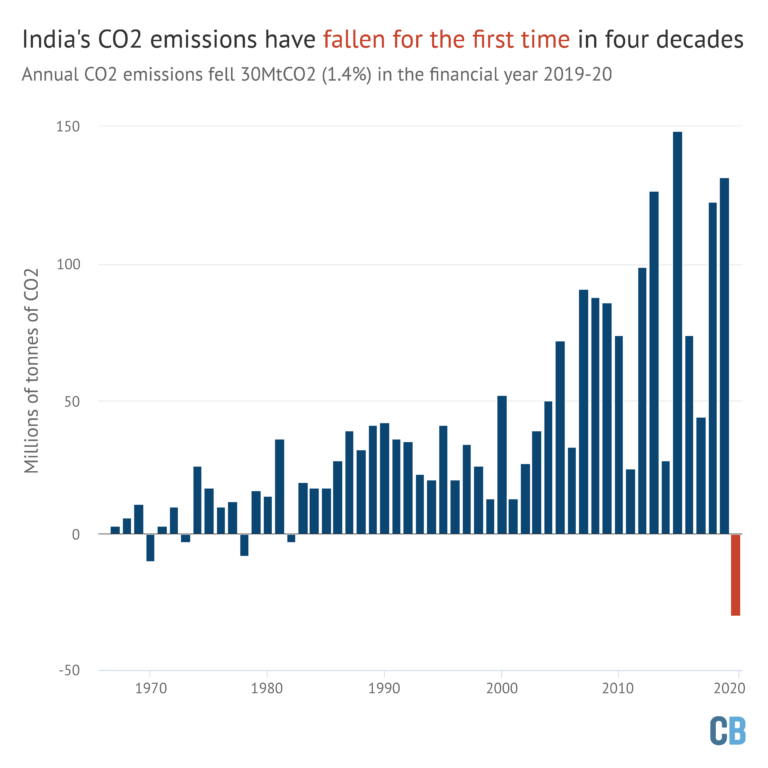
Thus, CO² emissions fell by 30mt.(1.4%) in fiscal year ending March. 

Environmental health due to Carbon Emission during Global lockdown

  • The positive effect of lockdown is to decrease the CO2 emission by −17% (−11 to −25%) by 7th April 2020 with respect to the mean level of emission in 2019.
  •  Air quality index (AQI) is the assessment of air quality. The lower the AQI value, the better is the air. The normal air quality index range is (100−200) and presently it is in the satisfactory range (50–100) category as reported by Gurfam being a scientist at SAFAR. 
  • Zambrano-Monserrate et al. (2020) reported that the air quality index (AQI) has decreased by 44%, 33%, 29%, 15% and 32% in north, south, east, central and western India respectively. 
  • The same study also shows that from March 16th to April 14th, 2020, 22 cities of India show the reduction of PM10 (Particulate matter), PM2.5, CO, NO2, by 43, 31, 10 and 18%. During the quarantine period in COVID-19, the amount of NO2 was decreased by 22.8 μg/m3 and 12.9 μg/m3 in Wuhan and China respectively. 
  • In 367 cities, the PM2.5 fell by 18.9 μg/m3. As per the report of CAMS 2020 reduction of 20–30% of PM2.5 is observed in a wide area of China.
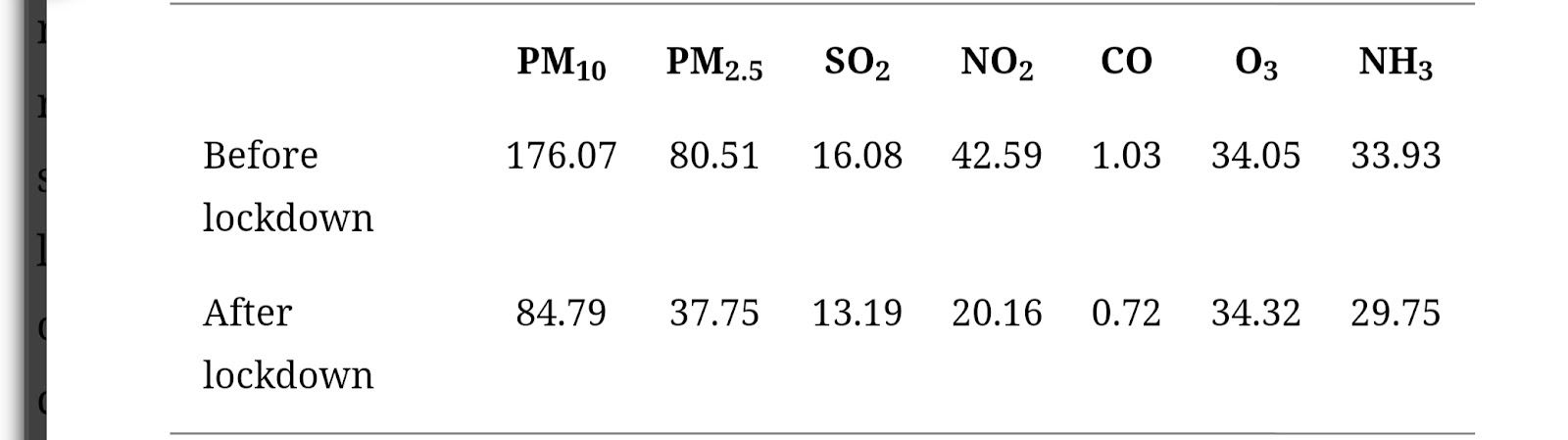
  •  Mahato et al.investigated that after three weeks of lockdown period from 24th March 2020, pollution of the Delhi, India, has experienced a noticeable reduction of different air pollution causing materials in the following Table

Comparison between different pollutants present in air before and after lockdown.

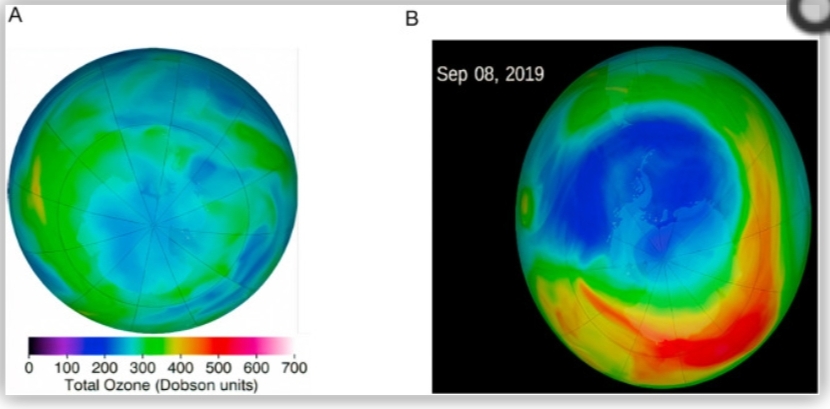
Reduction in carbon emission also lead to Ozone layer recovery over Antarctica:

  • The ozone layer is found in the upper atmosphere called the stratosphere between 10 and 50 km from the earth. 
  • The ozone layer acts as a natural sunscreen and plays a very important function by absorbing the harmful U—V rays from the sun. 
  • Ozone-depleting substances (ODS) are gases such as chlorine and/or bromine which breaks the ozone layer in the stratosphere. Various ODS are present in the environment are chlorofluorocarbon (CFCs), hydrochlorofluorocarbon (HCFCs), Methyl chloride and various halones.
  •  By the reaction with UV sunlight, these gases form chlorine and bromine and they are responsible for the depletion of the ozone layer. 
  • The international community signed the Montreal Protocol on substances about the depletion of the ozone layer, 30 years ago.
    •  According to the protocol, the consumption and production of ozone-depleting compounds should be regulated.
    •  By banning chlorine-containing synthetic compounds the rate of depletion declined and scientists expect to recover back to the 1980 level up to 2070.
    •  As per the scientific data of 2018, the stratosphere recovered at the rate of 1–3% per decade since 2000.
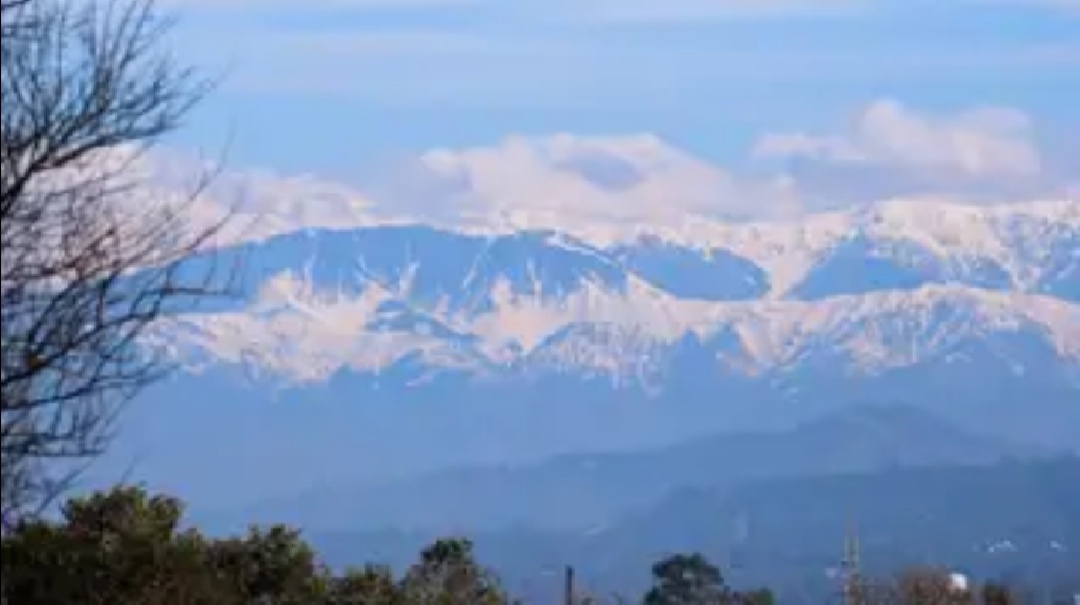
  •  After the lockdown began on Jan 23, the particulate matter pollution decreased by an average of 35% and NO2 decreased by an average of 60%. 
  • At the same period, scientists found the average surface ozone concentration increased by a factor of 1.5–2. 
  • Emission of ozone-depleting substances is also natural or man-made.
  •  All man-made emission is controlled because of lockdown during COVID-19. 
  • Production and consumption of ODS are also reduced. The World meteorological Organization (WMO) states that economic activity has been limited during COVID-19 which results in a decline in CO2 emission.
  •  In 2019, As per NASA and NOAA reported that the south pole region of Antarctica has warm temperature in the upper atmosphere which caused a small ozone hole since it was first seen in 1982 . 
  • On 23rd April 2020 Copernicus, atmospheric monitoring services (CAMS) announced that the largest hole was ever seen in the ozone layer over the arctic has been closed.
  •  Although lockdown is surely showing the prominent sign of nature, balance restoration of the ozone layer .
The map of holes in the ozone layer over Antarctica (a) 23rd May, 2020  (b) September 08, 2019

Impact of COVID 19 on Energy resources

The breakout of the Coronavirus Disease (COVID-19) toward the end of 2019 and its culminating transformation into a global pandemic sent shockwaves across the nations. Not only people lost their lives to it, but also numerous industries and governments as a whole succumbed to its impacts. To prevent the spread of the disease, many countries have resorted to observing country-wide lockdowns, damaging the normalcy of their economy. The world economy has seen new lows by trillions of dollars during this period, giving rise to times of constant anxiety about the future. The renewable energy sector, which has always been one of the leading areas to promote sustainability in terms of the environment, too is not spared from being affected by the pandemic. An amalgamation of the effects of the pandemic on the global economy and fluctuating oil prices resulting from country-wide lockdowns across the world further triggered its impact on the renewable energy industry. This work highlights the extensive impacts of COVID-19 on the renewable energy sector of India, a country that has proved itself to be proactive and progressive when it comes to solutions toward sustainable development. It showcases the present impacts of the pandemic on the sector and highlights future projections of the way it may continue to affect this sector as the world continues to struggle with the pandemic. The authors have brought up a set of their opined regulations that the administration and policymakers of the renewable energy sector of India can adopt to avert or reduce the extensivity of the impact of COVID-19 on their sector.
SHIVA TRILOGY BY AMISH TRIPATHI

“WHOLE UNIVERSE BOWS TO LORD SHIVA, I BOWS TO LORD SHIVA”

BOOK 1: THE IMMORTALS OF MELUHA- One of the most fascinating book when it comes to read through mythological genre. The dream to see Shiva as a human comes into reality. A mixture of thriller, romance, action, and comedy. An complete package to know deeply the cultural roots of India. Exploring and defining the minute details to paint the most imaginative of landscapes, structures and people gives him the upper hand over the contemporary writings in India. he language used makes certain that the story could reach to the average Indian and besides a few instances, there is very little that you’ll have to concentrate hard on to understand. It proves to be the best starting of journey closer to Lord Shiva.

BOOK 2: THE SECRETS OF NAGAS- It reveals many mystries still some are left, the entry of Ganesh and Kali, the real faces of nagas are discovered. The journey of Kartik growing up, much secrets of pasts everything seems to fit as a perfect piece on the puzzle. The secrets of secrets is exposed! Many thrillers and suspense are beautifully presented. More curiosity had risen in minds of people. The book will definitely fulfill your expectations of the sequel book. It’s also the acceptance of the books, which nonetheless invades the privacy of religious monotone scriptures, but at the same time, shines a torch on it, proves the plot strength of our religious books and shows the readiness of people to help grow the literary scene of our country.

BOOK 3: THE OATH OF VAYUPUTRAS- Amish had done a great sum up of the story. The evil is exposed and many hidden secrets had come into light. Shiva takes it upon himself to fight against the fiercest of warriors, thereby leading the people away from what they believed to be good. And then, well, you can guess how it all ends! The journey is well depicted even at the end. Ending is not marked as great as one expect but it shows the real life destiny of one’s life. Indeed the book proved to be a nice conclusive one. It also brings to light certain key topics like loyalty, companionship and the battle to banish evil from our minds.

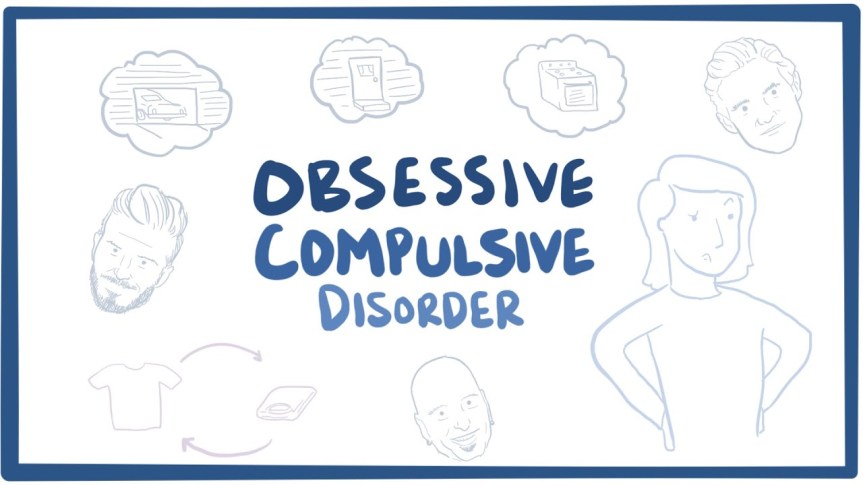
OBSESSIVE COMPULSIVE DISORDER(OCD)

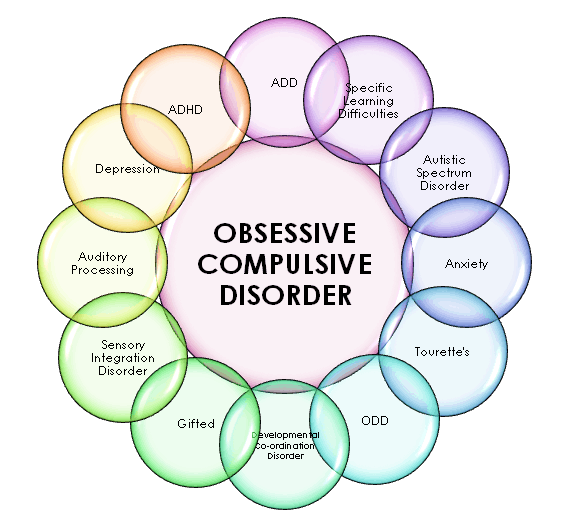
Diagram chart of Obsessive Compulsive Disorder .

Obsessive compulsive disorder is a mental health disorder that affects people of all ages and walks of life . It occurs when an individual gets caught in a cycle of obsessions and compulsions . It can be said that person with OCD are plagued by constant thoughts of fears that cause them to perform rituals or routines . The disturbing thoughts are called obsessions and rituals are called compulsions .

In simple words , OCD is a type of mental of disorder that causes repeated unwanted thoughts . To get rid of the unwanted thoughts , he/she performs the same task/activity again and again . For example, a person may fear that everything he/she touches has germs on it . So , to get rid of that fear he/she washes his/her hands again and again . Persons suffering from OCD might understand that their obsessions are unreasonable , but trying to stop or ignore them causes anxiety and stress . There are some symptoms of OCD , which may range from mild to severe . Some of the obsession and compulsions are mentioned below.

Main obsessions

  • A fear of harm to yourself or loved one .
  • A fear of contamination by germs .
  • A forceful or driving need to perform things perfectly or correctly .
  • Having excessive doubt on any individual .
  • A fear of being embarrassed .
  • A fear of getting dirty .
  • A fear of making mistakes.

Main compulsions

  • Repeating things or always moving items to keep them in exact order .
  • Bathing or washing hands several times.
  • Checking things over and over again.
  • Repeating specific words.
  • Hoarding .
  • Constant praying.

Causes of OCD

The exact cause of obsessive compulsive disorder is still unknown . Research studies suggest that there may be a problem with the way one part of the brain sends information to another part . Serotonin is the chemical in the brain that sends messages from one part to another . Insufficiency of serotonin may help in causing OCD . Stress and anxiety do not cause OCD but they may worsen the symptoms of OCD.

Recent studies have indicated that there may be considerable genetic basis for OCD. Depression is also thought to be the cause of OCD but the experts’ opinion is split .

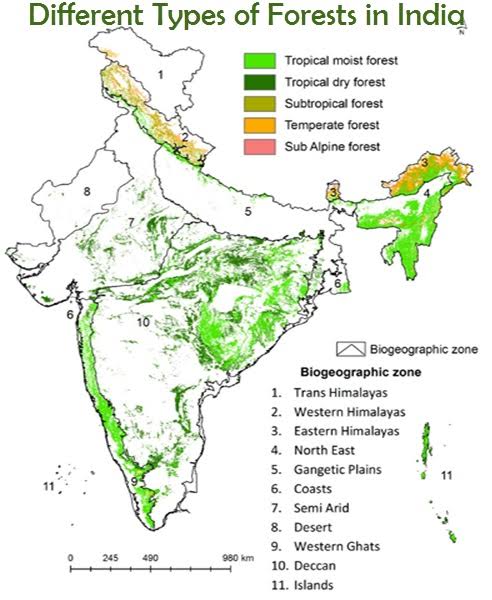
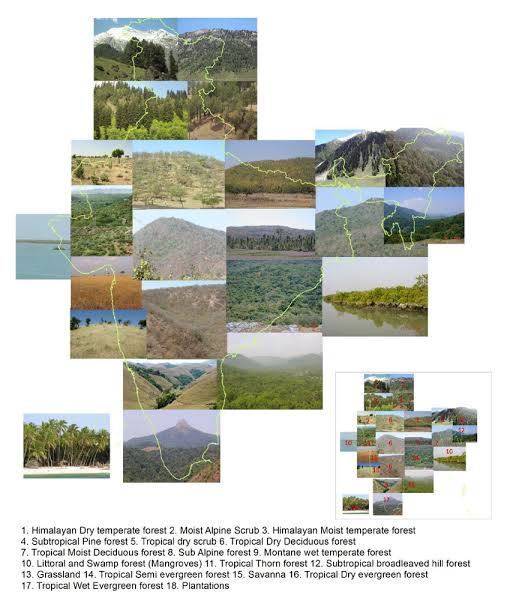
🌳Forests of India🌳:

Natural Evergreen Forest🌳:

Natural vegetation refers to a plant community un affected by man either directly or indirectly.

Topic Evergreen Forest 🌳:

🌟These Forests are found in areas with 200 cm or more annual rainfall.
🌟The annual temperature is more than 22°C and the advantage annual humidity exceeds 70 percent.
🌟Western Ghats in Maharashtra, Karnataka Kerala,Andhaman-Nicobar Islands, Assam, West Bengal,Nagaland, Tripura, Mizoram, Manipur and Meghalaya states have this type of Forest.
🌟The most important tress are rubber, mahogany, ebony rosewood etc.,

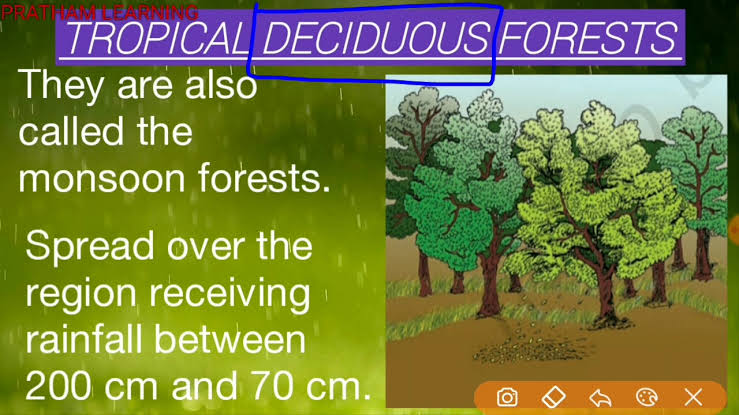
Tropical Deciduous Forest🌳 :

🌟These are found in the areas with 100 to 200 cm annual rainfall. These are called “Monsoon Forests “.
🌟The meann annual temperature of this region is about 27°C and the average annual relative humidity is 60 to 70 percent.
🌟Teak and sal are the most important tress.
🌟Sandalwood, rosewood, Kasum etc ., are trees of economic importance.
🌟They provide fragrant oil vanish,sandal oil and perfumes.

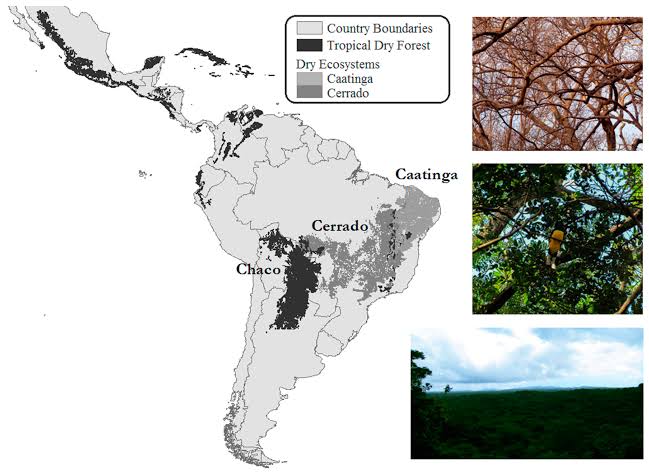
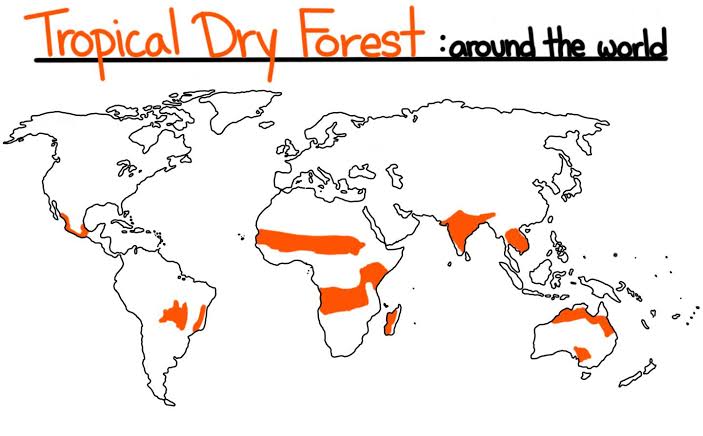
Tropical Dry Forest🌳 :

🌟These are found in the areas with 50 to 100 cm annual rainfall.
🌟Mahua, banyan ,amaltas,palas,haldu,kikar,bamboo, babool,khair etc., are the important species.
🌟These are also called as “Tropical thron forests”. These are found in the areas having annual rainfall of less than 50 cm.
🌟They have low humidity and high temperature.

Mountain or Motane Forest🌳 :

These Forests are classified on the basic of altitude and amount of rainfall. Accordingly two different type of Forests namely
i. Eastern Himalayas Forest
ii. Western Himalayas Forest.

i. Eastern Himalayas Forests🌳:

🌟 These are found on the slopes of mountains in north-east states.
🌟These Forests receive rainfall of more than 200 cm.
🌟The vegetation is of Evergreen type.
🌟The Altitude between 1200-2400m found in this type of Forest.
🌟Sal ,oak , Laura, amura, chestnut,cinnamon are the main areas.

ii. Western Himalayas Forest🌳:

🌟These Forests are found in the states of jammed and Kashmir, Himachal Pradesh and Uttarakhand.
🌟Upto 900 m Altitude semi desert vegetation is found and it is known for bushes and small tress.
🌟 In Altitude from 900 to 1800 m, chir tree is the most common tree.

Alpine Forest 🌳:

🌟 It occurs all along the Himalayas with above 2400m Altitude.
🌟These are purely having coniferous trees.
🌟Oak,silver fir,pine and juniper are the main trees of these Forests.
🌟The Eastern parts of Himalayas has large extent of these Forests.

Tital Forest 🌳:

🌟These Forests occur in and around the deltas ,estuaries and creeks prone to tidal influence and as such are also known as delta or swamp Forests.
🌟The delta of the Ganga – Brahmaputra has the largest tidal Forest.
🌟The deltas of Mahanadi ,Godavari and Krishna rivers are also known for tidal Forests.
🌟These are also known as mangrove Forest.

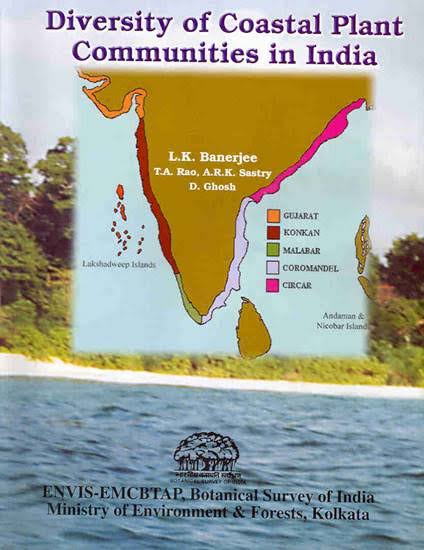
Coastal Forests 🌳:

🌟There are littoral Forests.
🌟Causing,palm and coconut are the dominant trees.
🌟Both the Eastern and western coasts have this type of Forests.
🌟The coast of Kerala and Goa are known for this type.

Riverine Forest 🌳:

🌟These Forests are found along the rivers on Khadar areas.
🌟These are known for tamarisk and tamarind trees.
🌟The Rivers of Great plains are more prominent for this type of natural vegetation

Internship, Skill Development and training related

Internship

InTRODUCTION:-

The internship program is designed to provide students engaged in a field experience with an opportunity to share their insights, to explore the links between students’ academic preparation and their field work, and to assist participants in developing and carrying out the major research project which will serve to culminate their internship experience. Internships are individualized and tailored to the needs and interests of each student in the program. As part of the internship experience, students are expected to take an active role in finding an appropriate internship for themselves. Many students pursue their own contacts, however, information is available on Locating Internship Sites.
There is something in internships that is all the more inescapable than the sweet fragrance of a rose flower – Learning. An adage suggests, “Learning is not preparation for life; Learning is life itself.” Learning in every point of life is cardinal in its own way. When students experience a continuous learning environment, they get an opportunity to explore diverse and unexplored territorial domains. What thus follows is a phantasmagoria of constructive and highly rewarding events. This eventually leads to new ideas. Internships are cherished by students and multiple internships are mandated in a few reputed organizations.

Here is a curated list of reasons why internships are important

1. Employers’ Perspective − In this ultra-competitive world where getting a job is an achievement in itself, the perspectives of potential employers and recruiters cannot be undermined. In a survey conducted by National Association of Colleges and Employers (NACE), an overwhelming 95% of employers opined that ‘candidate experience’ is ‘necessary’ and ‘desirable.’ In other words, when it comes to hiring candidates, candidates who have interned with startups or corporates get an edge over other inexperienced candidates.
2. Hiring Decisions and Hiring Avenues − ‘Hiring from the interns’ program has become the latest corporate fad. During their gig as interns in various corporates, interns acquaint themselves with several industry best practices. They get accustomed to the corporate environment. Internships improve the quality of candidates as they are delegated with a few responsibilities and monitored constantly. Thanks to the responsibilities entrusted to interns, creativity kicks in and candidates start giving their very best. Interns who have surpassed the expectations of their employers will be offered jobs.
3. Building Critical Professional Contacts − College students clamoring for profound change should solicit advice from experienced professionals and build a rich professional network. Students should therefore create a dedicated profile and stay in touch with others. This helps them while searching for new jobs.
4. Career Path and Career Goals − Students are generally lost in the vagaries of the so-called ‘Student life’ and hence, they begin to abandon a precise and a thorough understanding of ‘Career Path’ and ‘Career Goals.’ Once students start interning with startups or corporates, they start taking matured decisions. The concepts of ‘Career Path’ and ‘Career Goals’ no longer seem abstract.
5. Theory vs Implementation − In colleges, students seldom get an opportunity to implement and put into practice what they had learnt. On the contrary, interns gain a valuable hands-on experience by implementing what they had learnt. Internships thus helps interns to apply academic knowledge to solve industry problems.
6. Monetary Value − John Maynard Keynes, the celebrated British economist once said, “The importance of money flows from it being a link between the present and the future.” Internship is undoubtedly a voyeuristic invasion of one’s full-fledged salaried life. In other words, students get an opportunity to take a glimpse into their full-time professional lives. As interns, students are generally paid a decent amount. As full-fledged employees, they are paid even better. Moreover, ‘Earn while you learn’ becomes an actuality rather than an abstraction.
7. Intangible Benefits − There is no gainsaying that students begin to exude the joy of life by enjoying the inherent thrills of internship. They master the ability to take calculated risks. Warren Buffet, the celebrated multi-billionaire owes his wealth to his ability of taking calculated risks. On an optimistic note, students can become the next Warren Buffet. As much clichéd as it sounds confidence matters. The fantastic learning experiences as interns will bolster the confidence levels of students. Commitment to work and dedication to job automatically follow the suit. Self-confidence and self-esteem are welcome additions.
8. Resume − Internships make a student’s resume impactful and impressive. They provide the necessary momentum and fillip and eventually make their resumes all the more effective. During the hiring process, companies generally ask for references. After duly taking the permission of the Line Manager and Project Manager under whom you have interned as XXX (designation), students can mention their names and contact details preferably email-ids and mobile phone numbers in the reference section of their resume. As an alternative, students can obtain reference letters one each from their Project Manager and Line Manager. Remember, there are no better testimonies other than the reference letters drafted by the officials concerned. All in all, internships serve as resume builders.
9. Multi-faceted Traits − College students are multi-talented and multi-faceted individuals. They are extremely versatile and brilliant. By participating in various internships that are in no way related to their majors, students get an opportunity to fine-tune their extra-curricular skills. For example, a student who may be a brilliant programmer can also be an excellent content writer. He can opt for content writing internships and draft quality content.

NOTE:-The benefits of an internship are endless and enormous. Today an intern, tomorrow a top-notch professional!

Skill Development

INTRODUCTION:-

Skill development is a process of identifying your skill gap and ensuring you develop these skills. Your skills determine your ability to execute plans and achieve your goals. Skill development and training is an integral part of an employee’s life.Skill development is a vital tool to empower people, to safeguard their future and for the overall development of an individual. It is an important aspect that enhances employability in today’s globalisation. Skills are as essential as one’s academic status. Education and skills should now go hand in hand.
Escort Skill Development- CSR Projects India
* It identifies the gaps and develops the skills which enable the person to achieve their goals.
* An ability and capacity acquired through deliberate, systematic, and sustained effort to smoothly and adaptively carryout complex activities or job functions involving ideas (cognitive skills), things (technical skills), and/or people (interpersonal skills).

* The recognition, practice, and internalization of skills towards improved execution of skills.
* Skill development is the method of detecting skill gaps and improving these skills.

FEW Ways To Improve Your Personal Development Skills:-

Key takeaways:

  • Personal development skills can be soft or technical skills.
  • Select which skills to develop by performing a self-analysis on your areas for improvement and necessary skills to advance in your career or industry.
  • Focus on transferable skills that make you a competitive candidate in any job.

What are personal development skills?

Personal development skills are qualities and abilities that help you grow both personally and professionally. In other words, they are skills that help you nurture your personal development. Understanding and improving these skills can help you maximize your potential. This process is also known as self-development or personal growth.

Why are personal development skills important?

Personal development skills are important because they allow you to create strategic and tactical plans for personal and professional growth towards your goals. It can be helpful to hone personal development skills so that you can naturally work them into your daily routines and use them to:
  • Achieve personal and career goals
  • Advance in your career
  • Improve your strengths and talents
  • Better yourself
  • Find fulfillment and satisfaction

Examples of personal development skills:-

Personal development skills can be traits or qualities you already have or ones you can gain through education and training. Individuals will value different personal development skills depending on their goals, but here are some examples of skills people commonly practice to facilitate personal growth :
  • Communication
  • Interpersonal
  • Organization
  • Problem-solving
  • Self-confidence
  • Adaptability
  • Integrity
  • Work ethic
  • Leadership

Communication:-

Communication includes your ability to speak, write and listen. With these skills, you can understand what others are saying and feeling and also convey your own ideas and feelings. Good communicators can speak clearly and confidently, using a tone that is positive and appropriate for the situation.

Interpersonal:-

Also called people skills or social skills, interpersonal skills are the verbal and nonverbal behaviors and reactions to interactions with other people. They affect your ability to build relationships and make impressions on others in social situations.

Organization:-

Organization skills include the tidiness of your physical and digital spaces as well as your ability to plan, schedule and prioritize. Good organization can help save time, prevent miscommunications and improve efficiency.

Problem-solving:-

Problem-solving is your ability to handle challenging or surprising situations. Good problem-solvers can stay calm when they encounter obstacles and assess all their options to find the best solution.

Self-confidence:-

Self-confidence is the belief in your abilities, actions and decisions. If you have confidence in yourself, you might be more likely to pursue ambitious goals, try new things and believe you can succeed.

Adaptability:-

Adaptability is your ability to adjust quickly and easily to new things. People who handle change well often get along with a variety of personalities and thrive in any environment. They can also remain calm in surprising situations.

Integrity:-

People tend to trust those who are honest and stand by their values. Integrity means doing what is right and telling the truth, even if doing so presents challenges. Having integrity can lead to a good reputation and opportunities for advancement.

Work ethic:-

Work ethic includes not only hard work but also reliability, responsibility, quality, determination and discipline. People with good work ethic tend to be productive and have a positive attitude.

training

INTRODUCTION:-

Training refers to the teaching and learning activities carried on for the primary purpose of helping members of an organization acquire and apply the knowledge, skills, abilities, and attitudes needed by a particular job and organization.Training constitutes a basic concept in human resource development. It is concerned with developing a particular skill to a desired standard by instruction and practice. Training is a highly useful tool that can bring an employee into a position where they can do their job correctly, effectively, and conscientiously. Training is the act of increasing the knowledge and skill of an employee for doing a particular job.

Definition of Training:

Dale S. Beach defines training as ‘the organized procedure by which people learn knowledge and/or skill for a definite purpose’. Training refers to the teaching and learning activities carried on for the primary purpose of helping members of an organization acquire and apply the knowledge, skills, abilities, and attitudes needed by a particular job and organization.
According to Edwin Flippo, ‘training is the act of increasing the skills of an employee for doing a particular job’.

Need for Training:

Every organization should provide training to all the employees irrespective of their qualifications and skills.

Specifically the need for training arises because of following reasons:

1. Environmental changes:

Mechanization, computerization, and automation have resulted in many changes that require trained staff possessing enough skills. The organization should train the employees to enrich them with the latest technology and knowledge.

2. Organizational complexity:

With modern inventions, technological upgradation, and diver­sification most of the organizations have become very complex. This has aggravated the problems of coordination. So, in order to cope up with the complexities, training has become mandatory.

3. Human relations:

Every management has to maintain very good human relations, and this has made training as one of the basic conditions to deal with human problems.

4. To match employee specifications with the job requirements and organizational needs:

An employee’s specification may not exactly suit to the requirements of the job and the organization, irrespective of past experience and skills. There is always a gap between an employee’s present specifications and the organization’s requirements. For filling this gap training is required.

5. Change in the job assignment:

Training is also necessary when the existing employee is pro­moted to the higher level or transferred to another department. Training is also required to equip the old employees with new techniques and technologies.

Reference Links:-

https://www.tutorialspoint.com/importance-of-internships-to-college-students
https://www.igi-global.com/dictionary/skill-development/27090
https://www.yourarticlelibrary.com/human-resource-development/training-meaning-definition-and-types-of-training/32374

Tea – The most overwhelming drink of everyday

Tea is an aromatic beverage prepared by pouring hot or boiling water over cured or fresh leaves of Camellia sinensis, an evergreen shrub native to China and East Asia.The tea plant originated in the region encompassing today’s Southwest China, Tibet, north Myanmar and Northeast India, where it was used as a medicinal drink by various ethnic groups.After water, it is the most widely consumed drink in the world.

Tea has a stimulating effect in humans primarily due to its caffeine content.Portuguese priests and merchants introduced it to Europe during the 16th century.During the 17th century, drinking tea became fashionable among the English, who started to plant tea on a large scale in India.

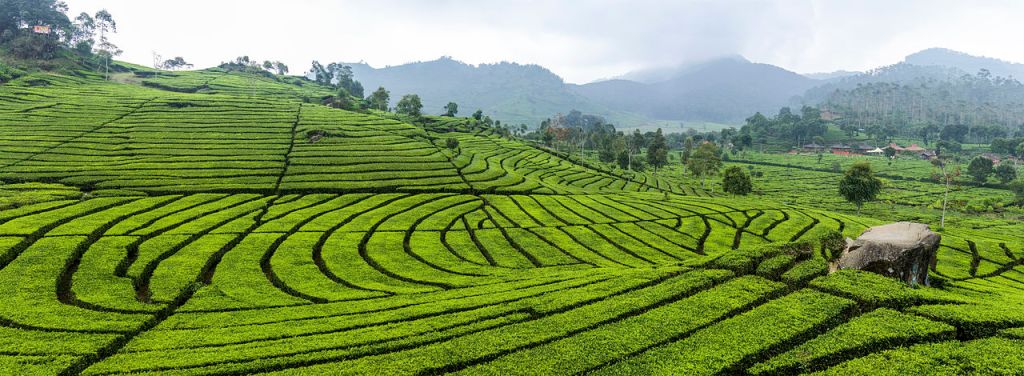
Tea Garden

Origin and history of tea :-

Tea plants are native to East Asia and probably originated in the borderlands of southwestern China and north Burma. Besides that, Chinese (small-leaf) type tea may have originated in southern China possibly with hybridization of unknown wild tea relatives. However, since there are no known wild populations of this tea, its origin is speculative.

Given their genetic differences forming distinct clades, Chinese Assam-type tea may have two different parentages – one being found in southern Yunnan and the other in western Yunnan. Western Yunnan Assam tea and Indian Assam tea both may have originated from the same parent plant in the area where southwestern China, Indo-Burma, and Tibet meet.Tea was first introduced to Western priests and merchants in China during the 16th century, at which time it was termed cha.The earliest European reference to tea, written as chiai, came from Delle navigationi e viaggi written by Venetian Giambattista Ramusio in 1545.

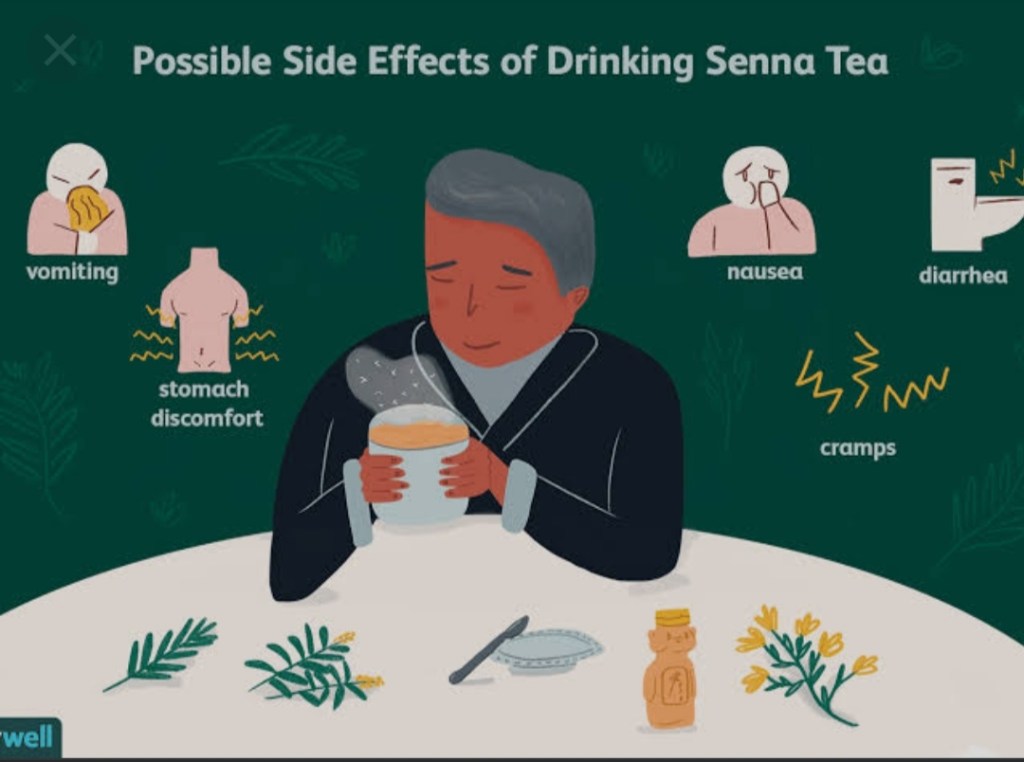
5 Good effects of having tea :-

1. Boosts energy. 2. Protects heart health. 3. Supports mental health. 4. May regulate blood sugar. 5. Aids Digestion.

Different kind of tea

5 Bad effects of having massive amount of tea :-

1. Increased anxiety, stress, and restlessness. 2. Reduced iron absorption. 3. Nausea. 4. Poor sleep. 5. Caffeine dependence.

Different kind of tea :-

Tea is one of the most ancient beverages on the planet, and it’s made by soaking dried leaves in water.Some of the most common tea varieties include black tea, green tea, white tea, oolong tea, herbal tea, and rooibos tea.The tea flavor can change greatly depending on temperature, humidity, and other air conditions. Heat treatments, like pan-firing or steaming, will stop the oxidation process.

1. Black Tea :-

Black tea or red tea is one of the most popular tea flavors and is fully oxidized. The leaves of the Camellia sinensis plant are withered. Assam, Darjeeling, Nilgiri, and Sri Lanka are a few well-known black tea producing regions, and the flavor will vary based on the region and type of black tea.

Black Tea

2. Milk Tea :-

Milk tea refers to several forms of beverage found in many cultures, containing some combination of tea and milk. Beverages vary based on the amount of each of these key ingredients, the method of preparation, and the inclusion of other ingredients (varying from sugar or honey to salt or cardamom).

Milk Tea

3. Green Tea :-

Green tea is the most popular tea globally, is unoxidized, and has less caffeine than black tea. Camellia sinensis leaves are picked, dried, and heat-treated to prevent oxidation. Chinese people often pan-fire leaves, which creates a duller green color, while Japanese people will typically steam them and achieve a brighter green shade. Matcha, Sencha, Gunpowder Green tea, Dragonwell (Longjing) green tea are some different kind of green tea.

Green Tea

4. Herbal Tea :-

Herbal tea doesn’t come from tea leaves like other varieties. It’s made from dried herbs, fruits, and flowers, which can create a wide range of delicate flavors. These tea types are caffeine free, making them ideal for customers with dietary restrictions.hibiscus, chamomile, peppermint, Yerba Mate are some kind of herbal tea.

Herbal Tea

5.Rooibos Tea :-

Rooibos tea, or African Red Tea, is an herbal tea that comes from the South African Red Bush, and the leaves are ground and bruised before they’re fermented and dried. Green rooibos tea doesn’t go through an oxidation / fermentation process and has a lighter flavor.

Rooibos Tea

GAME CHANGER IN PLAYSTATION – SONY PS 6


PS6 Latest Update:
There’s been a talk for years that we’ll reach an end of traditional game console. Could we see Sony downsize to a flash drive-like device that plugs into your TV, like stadia, perhaps? Possibly.Let’s assume that the PS6 is actually in the pipeline for now.
Expected price:
The price might be between $400-$600.
The PS6 is likely to be a long way off.


In an interview with Game informer, Sony’s Executive VP of Hardware Engineering Masayasu Ito confirmed that the PS5 life cycle is expected to last about six or seven years, meaning we won’t see the PS6 until at least 2026.
Features of Sony PS6:
• A smaller console
• More affordable expandable internal storage
• Built in Bluetooth audio support- so we don’t need a dongle for the official headset
• Wireless charging for controllers/headset- can just be placed on top when off
• Wire free and zero latency connection to the TV
• Improve the UI
• VR integration (Virtual reality)
• Smaller design
• Modular upgrades
• Digital only console


The PS6 will surely improve in more ways that the features listed above, but since we’re several years out from launch. The PS6 fashion’s as rugged and dark, with elements presumably taken from various versions of the Xbox, starkly different from the PS5.
Pre orders:
PS6 pre orders will start sometimes after the consoles official announcement from Sony.