Life Advice Looking Through A Window

Power of chair

We all want to see ourselves strong. Often there comes a time when we think that I wish we could do this, I wish we had this power. One such power is the strength of the chair but it is the most special. Getting it can change the fate of generations, but somewhere we are all afraid of it, all the battles of the world have been done for it. All the freedom struggles have happened just to bring the power of the chair to the people.

Often the power of the chair is considered to be the power of the politicians, but it’s the strength of every person who has any position. A H.R. have the power of the H.R.s chair. Simply we can put it as, every person who has any position or responsibility has that chair of power.

There is a famous quote “With great power comes great responsibility”. Once everyone start treating it as responsibility rather than as a power world will have no fights.

Application of DNA Recombinant Technology in cloning

a. Background:
From the inception and evolution of mankind we have been able to make groundbreaking progress in the field of medicine but still some inborn genetic diseases like cystic fibrosis, hemophilia and familial hypercholesterolemia had no proper cure till a few decades ago. The field of Recombinant DNA technology opened a new world of possibilities.


b. Rationale of the study; Why is this study important?
Genes are a section of DNA which determine almost everything about our body. They determine things from our appearance , survival , health and behavior . Any malfunctioning or bad genes inherited or mutated can cause life hampering illness Using Recombinant DNA technology most recent and powerful tool CRISPR which has revolutionized and making gene editing possible and most importantly affordable and carried out in a simpler way treatment of these diseases by altering the disease causing gene sequence has been made possible.

c. Results & Conclusion of the research
Gene therapy is the referred to the process of introducing genes into existing target cells to prevent or cure a variety of diseases .For achieving the goal of delivering these genes effectively is accomplished by 2 methods:

i. Gene Delivery Vectors: For purpose of gene cloning at scale nothing is better than
viruses since they have machinery to replicate exponentially and deliver to cells .
Retroviral vectors are made by converting RNA genome to DNA in infected cell so they
are able to integrate host genome . By manipulating the viral genome viral


ii. CRISPR: In 1987 while investigating a particular gene in e coli scientists noticed a pattern in DNA surrounding it 5 identical sequences each composed of 29 bases separated from each other by 32 base block of DNA called spacers with unique sequence These repeating patterns were found in many different microbes and was coined the term Clustered Regularly Interspaced Short Palindromic Repeats (CRISPR).


iii. They were found next to enzyme producing genes known as CRISPR Associated Genes (Cas Genes) which can cut DNA .
iv. Later found that these were a technique used by Bacteria to protect against viral invasions by saving part
of viral DNA in CRISPR sequence and spacers contains history of all infection. Upon attack of
virus again CRISPR sequence is transcribed in crRNA molecules which binds with
matching viral DNA which is then cut out by CAS9 enzyme.


v. Later it figured that CRISPR /CAS9 system is programable and can be used for gene
editing by synthesizing guide RNA molecule which match the sequence of the gene
which needs to be edited then the CAS9 enzyme cuts the matching DNA sequence on
both ends .


vi. In 2015 it was used to cut HIV virus out of living cells in lab and later on rats infected
with HIV were successfully treated .


vii. In 2019 a patient named Victoria Gray suffering from sickle cell disease caused due to
sickle shaped deformed hemoglobin was the first patient cured using CRISPR editing

Using CRISPR is a new breakthrough achievement which can provide a better life to
many others like Victoria Gray who suffer from these life threatening diseases as in US alone there
are 100,000 people who suffer from this disease as it can be inherited.

How satellite data can make companies rich

“Data is the new Fuel” Every company needs data, but now they are no longer dependant on digital resources, now they can get actual real world data, you can never ask your costumer what are they going to purchase after purchasing your product or why they prefer your competitors product over your’s, but now you can know and multiply your profit heavily. 

For a long time satellite data was on military’s hold but now things are changing, with advances of AI and ML now everyone can utilize satellite imagery for themselves and in there own unique way and governments are supporting the same. 

Here’s some facts from allied market research

“Satellite Data Services Market to Reach $19.36 Bn, Globally, by 2027 at 19.1% CAGR: Allied Market Research”

Now how you can utilize

Data- the biggest profit is data, the more data you have the more profit you get. Companies are using techniques like web scraping to get data, know their market, and competitor; and you can use it as same but it’s real world data, how much customers are coming in your or your competitors firm or even how much they are earning. 

Surveillance-  you can have an eye on product delivery and management so you always know on-ground data, except for softwares products it works everywhere. 

Security- you can ensure the safety of products way ahead of CCTV era.

Here are some well known Indian firms to have you start

Dimension IGIS

Geokno

Geoinfosys

Names doesn’t stop here as it’s a growing industry, they will analyze and refine the data as per your need. 

Here’s link of some free isro courses to give more grasp. 

https://elearning.iirs.gov.in/edusatregistration/student

Always remember that in business, or anywhere one with the most data wins. In these era of competition you must always be equipped with latest tech to give your customer best, and satellite data is just what you need to have an edge. 

Research


From allied market research

https://www.prnewswire.com/news-releases/satellite-data-services-market-to-reach-19-36-bn-globally-by-2027-at-19-1-cagr-allied-market-research-301206045.html

Download Report Sample (252 Pages PDF with Insights, Charts, Tables, Figures) at https://www.alliedmarketresearch.com/request-sample/6793

Was Gandhi wrong

Ok, so let me make it clear, I’m writing it because I know his autobiography and some other literature of that time.

Many say Gandhi was Racist about Africans and didn’t fight for black people.
When he reached Africa Indian merchants had a far better life there(compared to native Africans) and in that colonial time it was nearly impossible to make govt give some good rights, so he had to play small first. He fought for little rights of Indians couse there they have education and money to make pressure and start changes many others were fighting like him so it was a good start and solving in pieces is how he gave freedom to India(it’s not like India got freedom from one movement it was succession of events, movements, rights that made Britishers slowly give rights to Indian).
And for all the documentation and stuff of that time sorry but all wise guy knows about propaganda, narratives that time every resource of information was controlled by whites even if they try acting well you know deep down they are just harshly judging(I know this point will be hard to clear for some.).

Treated women and low cast badly.
He had done lots of good things to remove discrimination(this is more hard topic then second one) when you are between people who have lots of discrimination in mind and you want to correct them you have to start small not like give education and abuse your wife but he respected his wife from whole heart but for others, he made like educate them later treat with respect too.
Also even if he seems great like Budha or written characters like Optimus, superman(where I believe his morals are far stronger than our most moral fictional characters even now. He has given all his life rechecking his ideas improving himself morally so it’s really hard our fictional characters can reach that height.)

I’m not saying to worship him or idealize him just be as hard critique as you can but remember that all info was recorded by those who were deep inside biased or willing to spread propaganda.

Serverless does it have servers?

Serverless does it have servers?

Or it has something more exciting.

For those who know about cloud or are interested about it must have heard this word once “serverless”. As confusing as it sounds it has created a lots of myths around this like

Is serverless actually server less?

Is serverless and FaaS really same?

If you are curious about this or just wanna know serverless let’s find out together. Also we will be taking some important questions like why you should learn/know serverless, does your enterprise actually need serverless? Let’s find out together.

The first thing is what is serverless-

According to cloudflare- serverless computing is a method of providing back-end services on an as-used basis.¹

Also serverless framework is free opensource framework build for developing lambda a serverless computing platform of amazon. So what serverless basically means is rather than managing your server together with application you let the server provider manage it. This way you can focus more on application you are writing. You give them the code and they will imply this on server and will charge you based on traffic and services. so serverless doesn’t means having no server but means having no hussle of servers.

Many times FaaS and serverless are taken as replaceable words but are they same? 

While serverless is a broad term Serverless computing can be divided in two types

BaaS(back-end as a service)

FaaS(function as a service)

so FaaS is a type of serverless computing.

Now why should you learn/know serverless? It’s simple as it’s a growing field if you want to use it in firm, in your career or if you just want to feed your curiosity you should learn/know it.

Does you enterprise or you need it?

The big part of you decision depends on

Time- if you have time to manage back-end issue or you love doing it you can leave serverless

Money- It also depends on how well you can manage finances.

Knowledge- Also you should know you or the  human resource you hold how well they have knowledge about back-end or functions or will it be better leaving on serverless.

Hope this feeds your queries.

10 best place to learn serverless

1 . Serverless cloud development by qwicklabs

Qwicklabs is always my #1 resource for learning something cloud, for these article too. Its bitesize lessons makes it easy to grasp or remember concept even if you are taking quest or not.

Remember you must sign in to read it’s content

https://www.qwiklabs.com/quests/152

2 . Serverless full stack application on aws- serverless.com

It’s a tutorial or a course by serverless.com to teach about serverless and its implications for full stack development and various tricks to utilise it financially 

https://www.serverless.com/learn/courses/full-stack-application-development-on-aws/

3. Microsoft learn

It has bite-size lessons, quizzes, some exercises, cute badges, you can always look how much you learnt or can take a quiz to refurbish your knowledge but most importantly a community to help with they want to try the stuff as the content progress for better grasping.

https://docs.microsoft.com/en-us/learn/paths/create-serverless-applications/

4 . 7- best serverless courses and aws lambda courses to learn in 2021-      medium

It’s a article by medium in which it explains what is serverless and why it’s important but also connects to lots of important resources to further proceed.

https://medium.com/javarevisited/7-best-serverless-and-aws-lambda-courses-to-learn-in-2021-de1820111c85

5 . Serverless- free code camp.org

 A collection of 73 posts on code camp. You can read them to understand serverless and what’s going on latest in it. 

https://www.freecodecamp.org/news/tag/serverless/

6. Serverless computing solutions Google cloud

It’s Google cloud explaining what’s serverless and why you should use there serverless products. This article is nice for those who are new and want to get start, it has a video, some links to documentation, some other sources like there trusted partners and some examples.

https://cloud.google.com/serverless

7. What is serverless computing?- IBM cloud education

It’s IBM C.E. explaining serverless, it’s nice but as it’s from IBM C.E. it’s more of clearing concepts and confusions and getting little learner insight instead of promotion of service like in above article, it’s worth reading for students looking for serverless or wants to clear there basics.

https://www.ibm.com/cloud/learn/serverless

8. What is serverless- gitlab

It’s a nice article by gitlab giving Idea of what is serverless and several open-source and big firm products you can get.

https://about.gitlab.com/topics/serverless/

9. Serverless- the new stack

It’s a short 1 minute article discussing what big brains think about serverless, what it is, it’s profits and challenges.

https://thenewstack.io/category/serverless/

10. What is serverless- cloudflare

It’s language is comparatively simple to above articles and it provides detail insights of serverless, if you’re jumbling in tough tech words can give this article a try.

https://www.cloudflare.com/en-in/learning/serverless/what-is-serverless/

5 reasons why working in startup is good idea


If you are confused whom to choose MNC or startup here’s my 5 reason why it should be a startup.

Learning
While you can learn and get help from your nice colleagues in MNC, at startup you can learn a lot other interesting things.

Pushing the limits
As a startup they need everyone to push there limits to find there new strength as this may not be available on established MNCs, you might wanna start at a startup.

Community
You might get some friends in MNC but while it comes to startup most of them wants to start, needs help and are willing to help, making it a nice community.

No boss
Startup too have bosses but as they are in early phase  they are more of a friend, helper and mentor, so if you are new in office work you might wanna choose startup first.

Future
If your startup grows you too will get credit of it unlike in MNCs you can use it in CV and show how much it has grown and what are the role you played in its growth.

This are not the only reasons sometimes they can give you lifelong friends, experience and if you are dedicated to work, journey in startup is lot more fun.

A.P.J. Abdul Kalam biography

 
By: Astha Raghav 

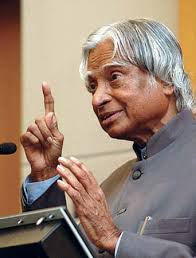
A.P.J. Abdul Kalam , in full Avul Pakir Jainulabdeen Abdul Kalam, (born October 15, 1931, Rameswaram, India—died July 27, 2015, Shillong), Indian scientist and politician who played a leading role in the development of India’s missile and nuclear weapons programs. He was president  of India from 2002 to 2007.

Kalam earned a degree in aeronautical engineering  from the Madras Institute of Technology and in 1958 joined the Defence Research and Development Organisation (DRDO). In 1969 he moved to the Indian Space Research Organization, where he was project director of the SLV-III, the first satellite launch vehicle that was both designed and produced in India. Rejoining DRDO in 1982, Kalam planned the program that produced a number of successful missiles, which helped earn him the nickname “Missile Man.” Among those successes was Agni, India’s first intermediate-range ballistic missile, which incorporated aspects of the SLV-III and was launched in 1989.

From 1992 to 1997 Kalam was scientific adviser to the defense minister, and he later served as principal scientific adviser (1999–2001) to the government with the rank of cabinet minister. His prominent role in the country’s 1998 nuclear weapons tests solidified India as a nuclear power  and established Kalam as a national hero, although the tests caused great concern in the international community . In 1998 Kalam put forward a countrywide plan called Technology Vision 2020, which he described as a road map for transforming India from a less-developed to a developed society in 20 years. The plan called for, among other measures, increasing agricultural productivity, emphasizing technology as a vehicle for economic growth , and widening access to health care and education.

Thank You!

Goods and Services Tax


By: Astha Raghav 

The goods and services tax (GST) is a value-added tax levied on most goods and services sold for domestic consumption. The GST is paid by consumers, but it is remitted to the government by the businesses selling the goods and services.

The goods and services tax (GST) is an indirect federal sales tax that is applied to the cost of certain goods and services. The business adds the GST to the price of the product, and a customer who buys the product pays the sales price inclusive of the GST. The GST portion is collected by the business or seller and forwarded to the government. It is also referred to as Value Added Tax( VAT) in some countries.

Most countries with a GST have a single unified GST system, which means that a single tax rate is applied throughout the country. A country with a unified GST platform merges central taxes (e.g., sales tax, excise duty tax, and service tax) with state-level taxes (e.g., entertainment tax, entry tax, transfer tax, sin tax, and luxury tax) and collects them as one single tax. These countries tax virtually everything at a single rate.

Only a handful of countries, such as Canada and Brazil, have a dual GST structure. Compared to a unified GST economy where tax is collected by the federal government and then distributed to the states, in a dual system, the federal GST is applied in addition to the state sales tax. In Canada, for example, the federal government levies a 5% tax and some provinces/states also levy a provincial state tax (PST), which varies from 7% to 10%. In this case, a consumer’s receipt will clearly have the GST and PST rate that was applied to their purchase value.

More recently, the GST and PST have been combined in some provinces into a single tax known as the Harmonized Sales Tax(HST). Prince Edward Island was the first to adopt the HST in 2013, combining its federal and provincial sales taxes into a single tax. Since then, several other provinces have followed suit, including New Brunswick, Newfoundland and Labrador, Nova Scotia, and Ontario. 

France was the first country to implement the GST in 1954; since then, an estimated 160 countries have adopted this tax system in some form or another. Some of the countries with a GST include Canada, Vietnam, Australia, Singapore, United Kingdom, Monaco, Spain, Italy, Nigeria, Brazil, South Korea, and India.

India established a dual GST structure in 2017, which was the biggest reform in the country’s tax structure in decades. The main objective of incorporating the GST was to eliminate tax on tax, or double taxation, which cascades from the manufacturing level to the consumption level.

For example, a manufacturer that makes notebooks obtains the raw materials  for, say, Rs. 10, which includes a 10% tax. This means that they pay Rs. 1 in tax for Rs. 9 worth of materials. In the process of manufacturing the notebook, the manufacturer adds value to the original materials of Rs. 5, for a total value of Rs. 10 + Rs. 5 = Rs. 15. The 10% tax due on the finished good will be Rs. 1.50. Under a GST system, the previous tax paid can be applied against this additional tax to bring the effective tax rate to Rs. 1.50 – Rs. 1.00 = Rs. 0.50.

In turn, the wholesaler purchases the notebook for Rs. 15 and sells it to the retailer at a Rs. 2.50 markup value for Rs. 17.50. The 10% tax on the gross value of the good will be Rs. 1.75, which the wholesaler can apply against the tax on the original cost price from the manufacturer (i.e., Rs. 15). The wholesaler’s effective tax rate will, thus, be Rs. 1.75 – Rs. 1.50 = Rs. 0.25.

Similarly, if the retailer’s margin is Rs. 1.50, his effective tax rate will be (10% x Rs. 19) – Rs. 1.75 = Rs. 0.15. Total tax that cascades from manufacturer to retailer will be Rs. 1 + Rs. 0.50 + Rs. 0.25 + Rs. 0.15 = Rs. 1.90.

India has, since launching the GST on July 1, 2017, implemented the following tax rates: 

  • A 0% tax rate applied to certain foods, books, newspapers, homespun cotton cloth, and hotel services.
  • A rate of 0.25% applied to cut and semi-polished stones.
  • A 5% tax on household necessities such as sugar, spices, tea, and coffee.
  • A 12% tax on computers and processed food.
  • An 18% tax on hair oil, toothpaste, soap, and industrial intermediaries.
  • The final bracket, taxing goods at 28%, applies to luxury products, including refrigerators, ceramic tiles, cigarettes, cars, and motorcycles.                                                          Thank You!                                                        

Say No To Crackers


By: Astha Raghav 

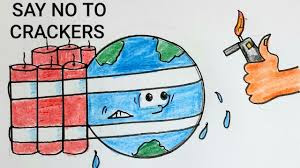
DIWALI and one can hear the sounds of firecrackers exploding from all directions. People of all age groups are fascinated with firecrackers, which form a prominent part of the Diwali celebrations. Firecrackers are known to cause air pollution as well as noise pollution and are extremely harmful for senior citizens and small children.   Pets such as dogs and cats also suffer on account of firecrackers as animals have a more sensitive sense of hearing than humans. 

Firecrackers can cause hearing loss, high blood pressure, sleeping disturbances and sudden exposure to loud noise can cause temporary or permanent deafness or even result in heart attack. 

Diwali is the biggest festival of India and its sanctity should not be blown away in smoke. This festival of goodwill can be celebrated in a number of ways other than bursting firecrackers.

Let each one of us take a pledge THIS DIWALI to “SAY NO TO CRACKERS” and invest in a safer and greener future. Diwali is the festival of lights and we must enlighten our lives with the sparkle of joy and goodwill, forget past grievances and look ahead towards a brighter and happier future.

Over the years several Bollywood celebrities have vowed against bursting crackers during Diwali and some have made good use of social media to raise awareness regarding the ills they cause not just to the environment but also humans and animals. In 2017, actress Alia Bhatt started the #PoochOverPataka campaign as she couldn’t bear to see her pet suffer due to the noise pollution. Anushka Sharma followed it with #PAWsitive. Each year, several artists speak of their concerns over health, pollution and the amount of waste bursting crackers causes.

“I remember as a boy I used to love firecrackers and I’m not going to be ashamed of that. But now I believe the time of crackers is over,” actor Boman Irani told MAIL TODAY. “One should understand that. Environmentally, for older people, for dogs, for your own lungs, for all the money that could have been put to better use Even the noise I can’t stand anymore. I find it tough to find a positive, except for the sparkling colours they give.”

Actress Isha Koppikar agreed and said celebrating a “green” Diwali is an excellent idea. “Instead donate your old stuff to the needy people, avoid plastic for gifts packaging, make rangoli with flowers, flour or rice products, gift herbal products or a plant. Buy earthen lamps or diyas and avoid using decorative electric lights. This Diwali let the Earth breathe,” she said.

But as they say charity begins at home and The Family Man actor Sunny Hinduja makes sure he doesn’t burst crackers and encourages his nephew and niece not to do it either.

“I was in Indore one Diwali with my brother and bhabhi, and I came home from the hostel to celebrate with them. I remember we were trying to burst what was known as the Laxmi Bomb’ but it wouldn’t light and we were scared because we had heard horror stories of it suddenly bursting when you went near it. So we waited for a long time and when I did go to check, it literally burst in my face,” recalled Hinduja. “If you don’t burst crackers on Diwali, it doesn’t mean you are breaking tradition. Traditions are made by us and it’s time we evolve, considering pollution, cutting down trees global warming, so much is happening. So even if it’s not such a big contribution from our side, we shouldn’t burst crackers and tell others not to do it either. That’s our responsibility as good citizens.”

Thank You!

Take Care of Stray Animals


By: Astha Raghav 

Every year, millions of animals end up in shelters all across the globe. These animals are either rescued from the streets or dropped off at the shelter. Though a lot of these shelters provide outstanding care and attention, there are still limitations to what they can do.

As an individual, you can contribute to these efforts in a lot of different ways. Running a shelter involves a ton of work and they will need all the help they can get. Offering even a small donation or volunteering a short amount of your time can make a huge difference.

Animals, whether we are aware or not, play a huge role in our lives and in the environment. Therefore, it’s in our best interest to help them however we can.

Altruism aside, there are quite a few key reasons we should care for them. One reason is to prevent the spread of disease.

Diseases, such as rabies, pose a huge threat to humans. The disease is fatal to humans, as well as to the animals who carry it. Infected animals become aggressive and bite without provocation.

Rescuing animals helps prevent the spread of rabies by reducing the population of potential carriers in the wild. This reduces the chance of infected animals harming other people and animals in the community.

The best and most effective way to help homeless animals is to raise awareness in the community.

Talking to people in the community can bring about the changes that will dramatically improve the welfare of these animals.

Spay and neuter your own pets, if you have them, and tell your friends to spay and neuter their pets. Spaying and neutering help control the population of strays in the community.

Advocate for adopting pets instead of shopping. There are a lot of pets in shelters today that are eager to find their forever homes. Adopting helps improve their lives and allows shelters to accommodate more pets that need their help. Some shelters even give you a starter kit of blankets, toys, and other things you may need to care for your new pet.

You can also consider donating your time and skills to your local centers. Volunteering to help out in the shelter for a few hours a week will surely be appreciated by the staff. If you have other skills such as carpentry, accounting, or graphic design, you can offer your services to the shelter. You can help build things for the animals, balance the shelter’s books, or design advertisements and print ads for the shelter.

If you see a stray dog in your area, you can help them, but you should do so with caution.

Never approach stray dogs, especially if they look scared. You may have the best intentions, but they don’t know that and could bite if you get too close. Instead, call your local animal control or animal rescue center for assistance.

Stray dogs are easily spooked and can become aggressive when cornered. It is best to let the experts handle the situation for the safety of the dog and everyone involved. Once in custody, the dogs will be tested for various diseases and their overall health is checked.

Just like dogs, stray and feral cats can be very aggressive when approached.

For you and the cat’s safety, it is best to call for professionals to deal with the situation. Until proper testing is done, one can’t be sure if the animal is free from diseases like rabies which pose a serious threat to humans.

Once in custody, you can help the cat by visiting them often once. Donating some supplies such as blankets and a litter box would be a great way to help as well.

Once fully recovered and tested for any diseases, fostering cats until they find a forever home is a possibility. Who knows, you might find a furry friend that you’d like to adopt yourself!

<

p style=”background-color: white;color: #444444;font-family: Roboto, sans-serif;font-size: 15px;margin: 0px 0px 20px;padding: 0px”>Thank You!

STRESS- CAUSES, EFFECTS,SYMPTOMS AND TREATMENT

BY DAKSHITA NAITHANI

INTRODUCTION

Stress is a human emotion that is natural and affects everyone at some point in their lives. The human body is built to recognise and respond to stress. An individual’s body creates physical and mental reactions in response to changes or difficulties (stressors). It is any sort of change that produces physical, emotional, or psychological pressure. It may be caused by a variety of conditions or life events. When we encounter anything new, unanticipated which challenges our sense of self, or when we believe we have little control over a situation, it is frequently activated.

Your body’s stress reactions assist it in adapting to new conditions. A stress reaction, for example, may help your body work harder and remain awake longer if you have an important test coming up. When stresses persist without release or times of relaxation, it becomes a problem.

To some extent, everyone is stressed. We all handle stress in various ways which also has a significant impact on your wellbeing .Genetics, early life events, personality, and social and economic conditions can all influence our capacity to cope.

TYPES OF STRESS

Not all types of stress are harmful or even negative. Some of the different types of stress that you might experience include:

Acute stress:  We face this type of stress in daily life it is short term and can be either positive or distressing.

 Chronic stress: Chronic stress is a type of stress that appears to be never-ending and unavoidable, such as the stress of a physically demanding profession; chronic stress can also result from catastrophic events and psychological trauma.

Episodic acute stress: Acute stress that appears to be rampant and becomes a way of life, resulting in a life of constant distress, is known as episodic acute stress.

Eustress: Eustress is a thrilling and enjoyable experience. It’s a type of positive stress that can help you stay energised. It’s linked to adrenaline rushes, as when you’re skiing or rushing to reach a target.

CAUSES OF STRESS

There are numerous factors that might generate stress in one’s life. Work, economics, partnerships, parenthood, and day-to-day hassles are all common causes of stress. Workplace stress may also be detrimental to your psychological health. Workplace stress causes people to miss an average of 24 days of work each year due to illness.

Even life changes that are positive in nature such as moving to a larger house, getting a work promotion, or going on vacation can lead to stress. If you’re anxious in certain situations, you could have a hard time understanding why, or you might be hesitant to express your thoughts with others.

The fight-or-flight response, which is usually triggered by stress, is the body’s reaction to a perceived threat or danger. The fight-or-flight response, which was called for its capacity to enable us to physically fight or flee when faced with danger when is triggered in situations where both the responses are not appropriate, such as in traffic or during a stressful day at work. The relaxation reaction does not occur frequently enough in instances of chronic stress, and being in a near-constant state of fight-or-flight might harm the body.

HOW CHRONIC STRESS AFFECTS YOUR HEALTH

When you consider the influence stress has on your life, you can see the link between your mind and body. Physical health problems might arise when you are worried out about a relationship, money, or your living circumstances. It’s also true in reverse. Wellness issues, whether you have high blood pressure or diabetes, will have an impact on your stress level and mental health.

Heart attacks, arrhythmias, and even sudden death can be triggered by severe acute stress, such as being involved in a natural disaster or getting into a verbal altercation. Stress has an emotional impact as well. While mild anxiety or frustration may result from some stress, prolonged stress can lead to burnout, anxiety disorders, and depression. When under a lot of stress, your autonomic nervous system becomes overactive, which can harm your body.

SIGNS AND SYMPTOMS

Continuous activation of the stress response creates wear and tear on the body. When a person is under stress for a long term symptoms manifest themselves in the form of physical, emotional, and behavioural manifestations.

Physical symptoms of stress include:

  • Aches and pains such as chest pain or a feeling like your heart is racing.
  • Feeling exhausted all the time or having trouble while sleeping.
  • Having Headaches, High blood pressure, dizziness or shaking.
  • Muscle tension or jaw clenching (Grinding teeth)
  • Having various digestive problems.
  • It also results in a weak immune system.
  • Clammy or sweaty palms

Stress can lead to emotional and mental symptoms such as:

  • Anxiety or irritability.
  • Depression.
  • Panic attacks.
  • Sadness.
  • Changes in mood

Identifying Stress

Having stress for long-terms has also been related to various gastrointestinal diseases including Irritable Bowel Syndrome (IBS) or stomach ulcers, as well as cardiovascular illness, according to certain studies.

Stress may originate from a variety of places, but even little everyday pressures from job, school, family, and friends can have a negative impact on your mind and body.

If you think it might be bothering you, there are a few things you can look for:

  • Difficulty concentrating, worrying, anxiety, and difficulties remembering are all psychological symptoms.
  • Anger, irritability, moodiness, and frustration are examples of emotional indicators.
  • High blood pressure, weight fluctuations, frequent colds or infections, and changes in the menstrual cycle and libido are among physical symptoms.
  • Poor self-care, not having time for the activities you like, or depending on drugs and alcohol to cope are all behavioural markers to look out for.

TREATMENT

There is no one particular therapy for stress because it is not a separate medical diagnosis. Change the environment, improve stress coping abilities, apply various relaxation techniques and treating conditions that may have been created by chronic stress are all part of stress treatment.

Psychotherapy, medication, and complementary and alternative medicine are some of the therapies that may be beneficial.

HOW TO COPE WITH STRESS

Stress is unavoidable, but can be managed. One can take control of their health and decrease the influence stress has on life once they understand the toll it takes and how to battle it. You can’t escape stress, but you can keep it from becoming overwhelming by using the following methods on a regular basis:

  1. Exercise

Regular exercise is one of the most effective methods to calm your body and mind. Plus it will also lift your spirits. Work up to 2 hours and 30 minutes of moderately intensive activity, such as brisk walks, or 75 minutes of rigorous exercise, such as swimming laps, running, or participating in other sports. Focus on creating realistic fitness goals so you don’t give up.

  • Relax Your Muscles

Your muscles stiffen up when you’re anxious. Stretching, getting a massage and other self-care activities can help loosen them up and rejuvenate your body. Taking a hot bath or shower is a great way to relax. Having a restful night’s sleep is also very important.

  • Deep Breathing

Stopping and taking a few deep breaths can immediately relieve stress. Once you get the hang of it, you’ll be amazed at how much better you feel. Simply take these five steps:

  • Sit with your hands in your lap and your feet on the floor in a comfortable posture.
  • Close your eyes for a moment.
  • Consider yourself in a soothing environment. It may be on the beach, in a lovely field of grass, anyplace else that helps you feel calm.
  • Slowly inhale and exhale deeply.
  • At a moment, do it for 5 to 10 minutes.
  • Eat Well

Eating a good well-balanced, regular diet will make you feel better overall. It may also aid with mood regulation. For energy, your meals should include plenty of vegetables, fruit, healthy grains, and lean protein and make sure you don’t forget any. 

  • Slow Down
  • 5 to 10 minutes ahead of time, set your watch. You’ll be able to arrive a bit earlier and avoid the worry of being late.
  • Switch to the slow lane if you’re travelling on the highway to prevent road rage.
  • Break down projects into manageable chunks. If you don’t have to, don’t try to respond to all 100 emails; instead, respond to a handful of them.
  • Take a Break

 To give your mind a break from stress, schedule some genuine leisure. It may be difficult for you at first if you are someone who enjoys setting objectives for the day. But if you stay with it, you’ll come to like these times. Meditation, Yoga, Tai chi, Prayer, Listening to music, and spending time in nature are all relaxing activities.

  • Make Time for Hobbies

You must schedule time for activities that you like. Every day, try to do something that makes you happy, it helps you to relax. It doesn’t have to take a long time; 15 to 20 minutes would suffice. Reading, knitting, doing an art project, playing golf, watching a movie, doing puzzles, and playing cards and board games are all relaxing activities.

  • Talk About Your Problems

If anything is troubling you, talking about it might help you relax. Family members, friends, a trustworthy priest, a doctor, or a therapist are all good places to start.

So, when you’re worried, pay attention to what you’re thinking or saying. Change the negative message you’re sending yourself to a positive one. Don’t tell yourself, “I can’t do this,” for example. Instead, tell yourself, “I can do this,” or “I’m doing the best I can.”

  • Go Easy On Yourself

Accept that no matter how hard you strive, you will never be able to achieve everything with perfection. So, do yourself a favour and quit being hard over yourself and stop overestimating your abilities. Also, remember to retain your sense of humour. Laughter is one of the most effective ways to relax.

  1. Eliminate Your Triggers

Determine the main sources of stress in your life. Is it your job, your commute, or your schooling that’s the problem? If you can figure out what they are you may get rid of them or at least decrease them in your life.

CHALLENGES ESTABLISHING PSYCHOLOGY AS A SCIENCE.

Wilhelm Wundt a German physician and philosopher in 19th century set up the first psychological laboratory at Leipzig University in 1879 to study human behaviour, through his rigorous experiment, work and efforts made psychology emerged as a science.

However, establishing psychology as a science was a challenge. People still didn’t knew how the mind work and functions. There was still a massive amount of data yet to be gathered. Thought it emerged as a science it was into many controversies and criticism; let see what were they.

1) PSYCHOLOGY IN PRE PARADIGMATIC STATE

According to American philosopher, Thomus Kuhn psychology has not succeeded in producing a cumulative body of knowledge that has a clear conceptual core. It contrasts with other sciences.

2) PROBLEM RELATED TO OBJECTIVITY AND VALIDITY

Methods such as introspection and psychoanalysis are inherently subjective, so in some extant psychology falls short on the criteria of objectivity and validity.

3) OBJECTIFYING HUMANS

Since many experiments on humans and their behaviour some of the scientist from the same field criticised the work. They said it treats human as an object, it sometimes portrayed as dehumanizing.

4) ISSUES RELATED TO PREDICTABILITY AND REPLICABILITY

In psychology making exact prediction is difficult and major goal of psychology is to predict human behaviour and humans respond in different way in different situations thus causing more difficult to understand human behaviour. Therefore causing the test results in psychology are more varied, harder to control and difficult to replicate.

Facts About Ladybugs🐞

“I would like to turn into a ladybug so that I can add to the beauty of nature.”

~Prachi Pandey

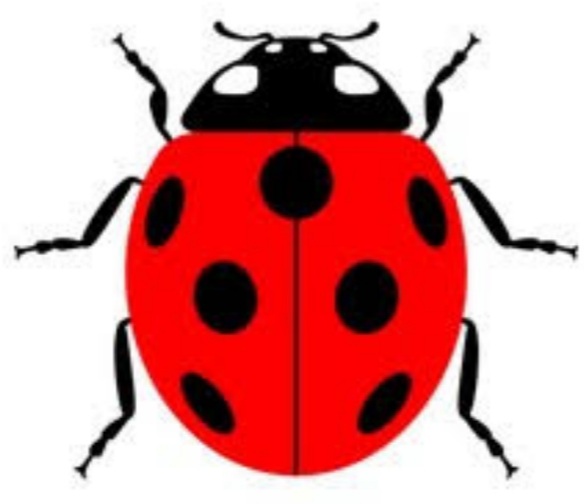
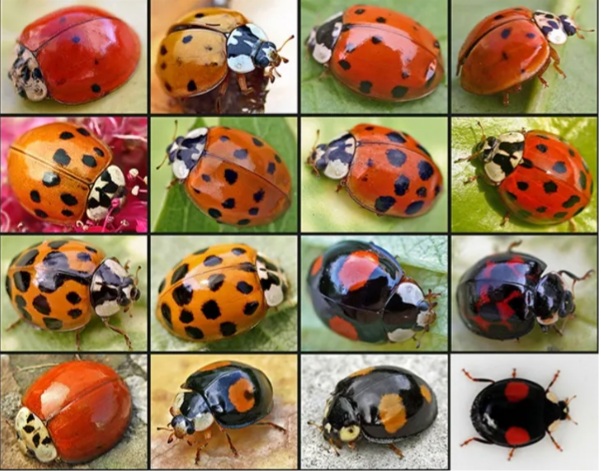
Ladybugs, or lady beetles, are insects in the beetle family. There are about 5,000 species of these tiny insects, and most of them are quite helpful. Although best known as a red insect with black spots, ladybugs come in a variety of colors, and some have stripes or no markings at all.

These little hard-shelled creatures are harmless to humans and helpful to gardeners. From their hidden wings to their talent for warding off predators, discover fascinating facts about the lovable ladybug.

1. Technically, They’re Lady Beetles, Not Ladybugs

These small insects are more accurately called lady beetles or ladybird beetles. Ladybug is the American name given to the Coccinellidae family of beetles. Bugs have needle-like mouthparts and a mostly liquid diet, while beetles have the ability to chew and enjoy munching on plants and insects.

Beetles also have hard wings, while bugs have softer wings or no wings at all. Beetles go through a complete metamorphosis, while bugs look about the same throughout their entire life cycle.

2. They Aren’t All Red With Black Spots

Yellow ladybug with stripes instead of spots

Though most people think of ladybugs as red with black spots, not all species of ladybugs look like that. There are about 5,000 species of ladybugs in the world, including 450 in North America. In addition to red, they can also be yellow, orange, brown, pink, or even all black. Their spots, which some ladybugs don’t have at all, can look more like stripes.

3. They Consume a Lot of Pests

Ladybugs earn their place as a desirable insect based on their preferred diet of plant-damaging insects, including aphids. Ladybugs lay hundreds of eggs in aphid colonies, and as soon as they hatch, the larvae immediately start feeding. An adult ladybug may eat as many as 5,000 aphids in its lifetime.

These beneficial insects also eat fruit flies, thrips, and mites. Different species of ladybugs have different food preferences. While many prey on garden pests, some, like the Mexican bean beetle and the squash beetle, feed on plants and are unwelcome pests themselves.

Red and black ladybug on a small branch eating aphids

4. They Hibernate in Winter

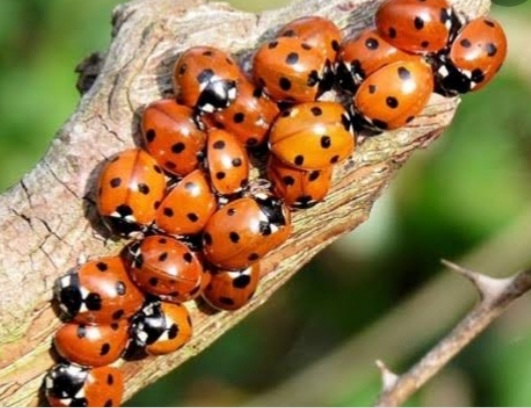
Instead of heading south for the winter, ladybugs living in colder climates enter diapause, a type of insect hibernation. When the aphids begin to disappear, ladybugs realize that winter is coming and flock together to reproduce right before entering hibernation. During this period, which can last as long as nine months, they live on their fat reserves, which hold them until spring when insects become plentiful again.

5. Their Spots Serve as a Warning

The spots and bright colors on ladybugs are not for looks alone. They are meant to warn would-be attackers that this beetle tastes terrible. Beyond their warning colors, ladybugs have another line of defense: They emit foul-smelling blood from their leg joints when they’re startled. This yellow liquid is toxic to many ladybug predators such as birds and small mammals.

When all else fails, ladybugs are known to play dead, giving them a third defense mechanism in a world of eat or be eaten. They aren’t often preyed upon thanks to all of this protection, but some insect species — assassin bugs, stink bugs, and spiders — eat ladybugs.

Red and black spotted ladybug on flower

6. Their Name Is Legendary

Legend has it that the “lady” in lady beetle dates back to the Middle Ages. The story is that farmers’ crops were being damaged by swarms of aphids. But after the farmers prayed to the Virgin Mary for help, the ladybugs arrived, ate all the aphids, and saved the day. The farmers were so grateful that from then on they referred to the insects as “Our Lady’s beetles.”

7. They May Eat Their Own Eggs

Female ladybugs lay as many as 1,000 tiny gold-colored eggs during a single season, but not all of the eggs make it to adulthood. While they prefer to lay their eggs on leaves covered with aphids, when prey is in short supply, the ladybugs may eat the eggs and larvae.

In fact, ladybugs plan ahead for supply shortages; when food is scarce, ladybugs lay infertile eggs to provide for their offspring.

ladybug on underside of leaf tending to its eggs

8. They Have Hidden Wings

Much like butterflies, ladybugs go through four stages before they complete their metamorphosis. They begin as tiny eggs that hatch into larvae that resemble tiny spiny alligators. Then they begin the pupal stage, which lasts around two weeks. In their final phase, they become adult ladybugs and their hidden wings appear.

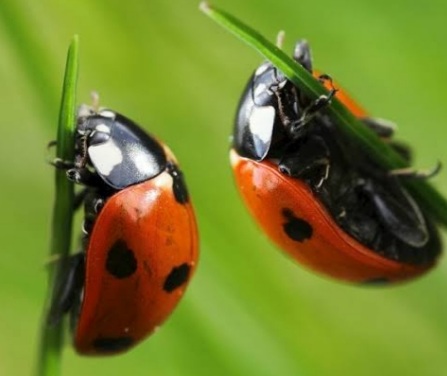
Adult ladybugs have a recognizable smooth dome shape, and their forewings are protected by an outer shell, or elytra. Underneath the outer shell is a pair of thin hind wings that unfold at a speed of 0.1 seconds and are significantly larger than the ladybug’s body.Once unfolded, ladybug wings move at a rate of 85 beats per second.

9. Ladybugs’ Numbers Are Declining

Researchers studying a decline in native ladybugs in the United States and Canada theorize that the population reduction may be due to the introduction of non-native species, climate change, land-use changes, disease, or shifts in the availability of prey. In an effort to track ladybug populations, entomologists at Cornell University created the lost Ladybug Project, a citizen-based effort to spot, photograph, and report on ladybugs across North America.

“I think people should maybe just go out into the garden and watch a ladybug crawl across a flower and relax their mind.”

~ Harland Williams