Hello everyone , Stay Home, Stay Safe. Today, everyone is advised to stay inside their homes if they want to be protected from the virus. But have you ever thought about the viruses inside your home? I’m talking about the pollution inside our homes. Whenever we talk about air pollution, we refer to the pollution outside in the city. But do you know that there are multiple sources of air pollution inside your home? Which are adversely affecting your health and immunity.
Why do we get acne?
Acne is a condition of skin when hair follicles become plugged with oil and dead skin cells. Acne can be blackheads, whiteheads, pimples or cysts. Teens are most affected by acne because of hormonal changes that comes with puberty. The hair follicles or pores in skin contains Sebaceous glands (oil glands). These glands generate Sebum, an oil that lubricates your hair and skin. Sebaceous glands make the right amount of sebum. As the body begin to mature and develop though hormones stimulate the sebaceous glands to make more sebum. Pores becomes clogged if there is much sebum. Then bacteria get trapped inside pores and multiply in number causing swelling and redness to skin.

Symptoms
- whiteheads ( closed plugged pores)
- Blackheads ( open plugged pores)
- Small red , tender pumps (papuls)
Tips to prevent pimples
- Properly wash from face.
- Stay hydrated.
- Use tea tree oil.
- use antibiotics.
- Good diet.
Why calisthenics is the “go-to”, if you dont have the time to hit the gym
calisthenics (American English) is a form of strength training consisting of a variety of movements that exercise large muscle groups (gross motor movements), such as standing, grasping, pushing, etc. These exercises are often performed rhythmically and with minimal equipment, as bodyweight exercises. They are intended to increase strength, fitness, and flexibility, through movements such as pulling, pushing, bending, jumping, or swinging, using one’s body weight for resistance. Calisthenics can provide the benefits of muscular and aerobic conditioning, in addition to improving psychomotor skills such as balance, agility, and coordination.

Urban calisthenics is a form of Street Workout; calisthenics groups perform exercise routines in urban areas. Individuals and groups train to perform advanced calisthenics skills such as muscle-ups, levers, and various freestyle moves such as spins and flips.
Sports teams and military units often perform leader-directed group calisthenics as a form of synchronized physical training (often including a customized “call and response” routine) to increase group cohesion and discipline. Calisthenics is also popular as a component of physical education in primary and secondary schools over much of the globe.
History
Catharine Esther Beecher (1800–1878), was an American educator and author who popularized and shaped a conservative ideological movement to both elevate and entrench women’s place in the domestic sphere of American culture. She introduced calisthenics in a course of physical education and promoted it. Disciples of Friedrich Ludwig Jahn brought their version of gymnastics to the United States, while Catharine Beecher and Dio Lewis set up physical education programs for women in the 19th century.Organized systems of calisthenics in America took a back seat to competitive sports after the Battle of the Systems, when the states mandated physical education systems. The Royal Canadian Air Force’s calisthenics program published in the 1960s helped to launch modern fitness culture.
Calisthenics is associated with the rapidly growing international sport called Street Workout. The street workout consists of athletes performing calisthenics routines in timed sessions in front of a panel of judges. The World Street Workout & Calisthenics Federation (WSWCF) based in Riga, Latvia orchestrates the annual National Championships and hosts the World Championships for all the national champions to compete at one competition. The World Calisthenics Organization (WCO) based in Los Angeles, CA. promotes a series of competitions known globally as the Battle of the Bars. The WCO created the first-ever set of rules for formal competitions, including weight classes, timed round system, original judging criteria and a 10-point must system—giving an increasing number of athletes worldwide an opportunity to compete in these global competitions. Street workout competitions have also popularised ‘Freestyle calisthenics’, which is a style of calisthenics where the athlete uses their power and momentum to perform dynamic skills and tricks on the bar, often as part of a routine where each trick is linked together in a consistent flow. Freestyle calisthenics requires great skill to control your momentum and understanding the mechanics of the body and the bar.
Can it give you the pump?
The lower intensities also allow athletes to focus on the muscles involved and to get a good squeeze and pump. Many muscle movements are pulled from appropriate strength movements. Many calisthenics movements involve static holds. Endurance movements train the athletes capability to hold the body various positions. This certainly gives you the pump, and by making small adjustment, u will be able to build muscle too.
Goa Mollem Protests- The Fight Against Coal
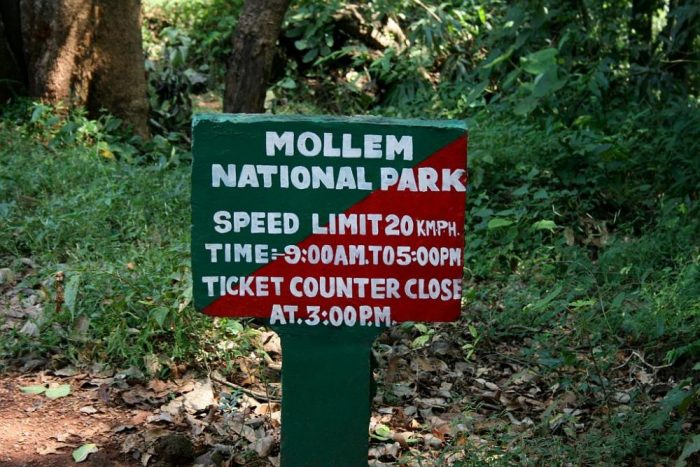
Hello everybody, Chances are that you don’t know about it because it is an issue that hasn’t been talked about much by our national media. For the last many months, thousands of people are protesting against a critical environmental issue, the Mollem National Park. 19th December is celebrated as the Goa Liberation Day because Indian government threw out Portuguese colonisers from Goa on this very day in 1961. So, on this occasion on 18th December, 2020, some protesters stood holding sign boards and wearing t-shirts that said “Save Mollem”.
Without any provocation, they did not even do anything…there even were some children there standing with their posters, Police detained them. So, let’s get to know why this entire protest is happening in the first place. In simple words, the government in the name of development wants to clear forests in an ecologically sensitive area without consulting the public. In this case, the ecologically sensitive area is the Bhagwan Mahavir Sanctuary and Mollem National Park, the pride of Goa. Spread across 240 sq kms, it is Goa’s largest protected area. It is one of the 8 hottest biodiversity hotspots in the world.
That means a high variety of plant and animal life is found here, the likes of which are found at very few places in the world. There are some great tourist attractions here as well such as the Dudhsagar Falls, Devil’s Canyon. There is a temple too so it is quite a popular destination for tourism as well. So, what is the development that the government wants to do here? There are three projects: one is a highway which the government wants to be four-lane, another one is a railway line and the third is a power transmission line. All these three projects are going through the middle of this wildlife sanctuary. Geographically, if you look at it on a map then these three projects will look this way.
A railway line is going from the lower region, highway is crossing from the middle and in the upper region is the power transmission line. So, for all the three projects, trees would be cut off. It has been estimated that about 20, 000 trees would be felled for the railway line, 40,000 for the highway and about 5,000 for the power transmission line In total, it is being estimated that 60,000-80,000 trees are to be felled. Now you will ask here, what’s the harm? Some trees will have to be felled for a little bit of development.
These are three main problems First problem is that prior to approving these projects, the government did not do any assessment, did not follow proper procedure and did not even consult the public. In fact, two of three projects were approved during lockdown due to Covid 19. In the month of March, the National Board of Wildlife approved these projects through video conferencing. When the central government was asked how this was approved then they said that the state panel approved it therefore we approved it as well.
News is that some 5-6 members of the state panel have alleged that they were not even consulted. In fact they did not even know that clearance had already been given. Omkaar Dharwaskar is naturalist who also attended the State Wildlife meeting has said that they have not given any approval in that meeting. This project was not approved. But the minutes of the meeting say exactly the opposite and the project was subsequently approved after being forwarded to the National Wildlife Board.
The second problem is that environmental activists and protesters believe that this is not only about a few trees but the entire Goa is being transformed into a coal hub. The extension of the railway line and the highway is not for the convenience of the public but rather for the convenience of big corporations. It is being done so that the transportation of coal is simpler. RTI activist and lawyer Savio Correia says that all three projects are part of the government’s Sagarmala project which was approved by the central government in 2016 for the development of Goa’s port. This project aims to develop Goa into a coal transportation corridor. Mormugao port is a port in South Goa and according to the projections of its trust, by 2030, they wish to import 51.6 million tonnes of coal for Adani group, JSW Group and Vedanta. The names of these groups have come up here although the Adani group denies it.
This is the reason, many protesters of Goa have pointed out Adani as well. If this railway will in fact be used to transport coal then remember one thing, the coal dust can travel up to 5-15 kms due to the wind and depending on the speed of the train. “-Coal is entering their houses, if you…-in what way? -You just have to ask them for tea and probably you will see that in the saucer and you see that in their kitchen … -There’s coal in their saucer? -Exactly! You see that in the kitchen, the living room. You can’t live in that house. Your children need nebulizers from morning to afternoon In the morning they start brooming, they collect coal in their house and by evening again… -black particles of dust… This coal dust is not only a threat to the environment but also for the fishing industry, agriculture, tourism as well as for the public.
If Goa really turns into a coal hub then think about it, would you want to go to Goa beaches as a tourist where you will find coal dust in the air? Perhaps this is the reason that in 2013 the then CM of Goa Manohar Parrikar rejected this railway line project in Goa. This is the reason friends that today the protesters stand with banners that say “Goyant Kollso Naka”. Forgive me if the pronunciation is not correct but it basically means that we don’t want coal in Goa.
The third problem is that if any railway line or highway goes through a wildlife sanctuary then it results in habitat fragmentation which can eventually lead to the extinction of many animal and bird species. Habitat fragmentation basically means that you split a big ecosystem in small pieces due to which animals are not able to interact from one piece to another. This usually happens whenever a highway goes through a wildlife sanctuary. Imagine, there is a squirrel species and it has only 50 members left because it is an endangered species. So, 50 squirrels live in a big forest but if a highway goes right through the middle of the forest then the forest will be divided into two.
Now, assume that 25 squirrels live on each side. Now animals living in each of these parts cannot go to the other part because of the highway. It is quite difficult for them to transfer from one side to another. The first problem arising out of this is that if the minimum number of any animal does not exist in any part then its entire species will become extinct due to inbreeding depression. You can search about inbreeding depression. It is quite an interesting thing. Secondly, any natural calamity or if any disease spreads that say results in the death of 23 out of 25 squirrels so it is not possible for that species to survive with so few animals.
This can happen in a big forest as well but if you start splitting the forest from the middle and making fragments of it, then the chances of it happening increase manifold. Overall, the highway and the railway line will split the wildlife sanctuary in three fragments This increases the chances of any animal extinction by three times. The public has expressed its protest through various means. There are different trends on social media on hand while there are protests on ground on the other hand. Even children have participated in these protests. More than 150 scientists have written letters to the government to tell them why this project should not go through.
The common public has even written emails to the government as to why this project must not be executed. If you want to see the latest updates on this protest on twitter then you can follow this account “Save Mollem campaign”. I will attach the link in the description below. Goa’s youth also wrote letters to their respective MLAs in order to pressurize the government. What was the government’s response regarding all of this? What would you expect? Think about it, what would be the government’s response in such cases? If you are thinking that the way the government responded to the farmers’ protest, they would respond the same way here as well then you are right. Because the government has said that all protests are funded by the opposition and all these protesters are misled.
The famous leaders of this protest have been booked under several FIRs, detained and like I mentioned in the beginning, even children have been detained by the government. But fortunately, the good news is that the High Court has stayed at least one of the three projects. On 8th December, the High Court stayed the power transmission line project. But for the rest of the two projects, the government can still execute. This is why it is important to raise a voice regarding this, whichever way you can do it. If you live in Goa, you can join the protesters.
If you are not living in Goa then you can raise your voice on social media by using #SaveMollem Share this video with as many people as you can so that the voice raised reaches the government and pressurizes them to stop these projects for the sake of climate and the public. The good news is that when the public raises a voice then it does create pressure on the government. Remember the Aarey forest case; the final end result has been a positive one. As soon as Uddhav Thackeray was made the CM, he took a decision in favour of Aarey forest by moving the metro rail project elsewhere and saving the Aarey forest.
RUSKIN BOND
In this living world there is so many authors and writers who are waiting numerous book a day but sill there is no one who had supressed the aptitudes of Ruskin Bond. His is a world class author whose book is going to be remember for centuries.
Ruskin Bond is an award winning Indian author of British descent, much renowned for his role in promoting children’s literature in India. A prolific writer, he has written over 500 short stories, essays and novels. His popular novel ‘The Blue Umbrella’ was made into a Hindi film of the same name which was awarded the National Film Award for Best Children’s Film, in 2007. He is also the author of more than 50 books for children and two volumes of autobiography.
Ruskin Bond was born on 19 May 1934 in Kasauli, Punjab State Agency, British India. His father, Aubery Alexander Bond, was an English teacher and had taught English to the princess of Jamnagar palace. His mother’s name was Edith Clarke and she was a homemaker. He had a sister named Ellen but unfortunately she was died in 2014. Ruskin Bond grew up with his family in Kasauli but in 1939 his father join Air Force so they need to live at Ruskin’s Maternal home in Dehradun.
At age of 8 Ruskin was sent to the boarding school and his mother separated from his father and married a Punjabi Hindu, name Hari. Thereafter his father took him to Delhi and that time his father was his everything. Although, unhappily his father died in 1944 due to malaria disease. After this he started living with his mother and step father in Dehradun.
Ruskin Bond started his elementary education at Bishop cotton school in Shimla. He was a very studious ant intelligent student in his school. He was extra talented in literature and writing. He wrote his first and very short story in 1951 and named Untouchability. He then moved to his aunts home in channel Island in 1951 following his high school education and stayed there for two years.
Ruskin Bond worked for a while in a photo studio while trying to find a publisher for his works. Once he started earning money from his writing, he moved back to India and settled in Dehradun. By this time he was a popular writer and his essays and articles were published in numerous magazines and newspapers, such as ‘The Pioneer’, ‘The Leader’, ‘The Tribune’, and ‘The Telegraph’. He also edited a magazine for four years.
In 1980, one of his most popular novels, ‘The Blue Umbrella’ was published. His increasing fame as a writer caught the attention of Penguin Books. The publishers approached Bond in the 1980s and asked him to write a few books. Two of his previous novels, ‘The Room on the Roof’ and its sequel ‘Vagrants in the Valley’ were published in one volume by Penguin India in 1993. Some of his works have been adapted for the television and films. Bollywood director Vishal Bhardwaj made a film based on his novel for children, ‘The Blue Umbrella’ in 2007. The movie won the National Award for Best Children’s film. The Hindi film ‘7 Khoon Maaf’, is based on Bond’s short story ‘Susanna’s Seven Husbands’.
Following his best contributions to Indian literature, he has been honoured with numerous awards. However, these awards are nothing against his works but could give an inspiration sign among peoples.
1957-John Llewellyn Rhys Prize
1992-Sahitya Akademie Award
1999-Padma Shri
2014-Padma Bhusan
2017-Lifetime Achievement Award
Ruskin Bond is the name among the authors which is going to be remembered in the whole world history. Not Only for India But all over the world. His books are read by every people from every country. Ruskin has such exclusive and unique writing skills that change the mood of readers. It will be very difficult for other coming writers to surpass his achievement and records.
Top 5 fitness influencers on Youtube
When you can’t head to the gym, you can head to YouTube. The YouTube community is growing every year with creators sharing their fitness journeys, tips, and tricks with their subscribers to inspire them to live healthier and happier lifestyles. All over the globe, viewers are going on YouTube to workout alongside their favorite YouTubers. With millions of viewers, fitness influencers are reaching audiences all over social media with personalized workouts and meal plans. Check out the top 5 fitness influencers on YouTubers who could double as your personal trainer:

1. Yoga with Adriene
- 6.11M subscribers
- 511M views
- Joined August 30, 2012
- As one of the most successful yoga channels, Yoga with Adriene aims to provide subscribers with free, high-quality yoga videos. If you’re brand new to yoga or a seasoned pro, you can find content on Adriene’s channel that is right for your level and body type. In her collection of videos, you can find numerous yoga practices to fit your mood and your goals. Adriene’s channel features different series such as Yoga for Beginners, Foundations of Yoga, Yoga for Weight Loss, and Total Body Yoga.
2. FitnessBlender
- 5.91M subscribers
- 1B views
- Joined January 19, 2010
With the fitness influencer husband and wife team, Daniel and Kelli, you can find more than 600 free full-length workout videos to help you improve your health, quality of life, and body. Their priority is to share unbiased workout, nutrition, and health information with their subscribers. FitnessBlender videos range in difficulty and experience, so there is always a workout for everyone. To track your workouts and progress, or to put together a home workout program, you can head to their website for more information.
3. ScottHermanFitness
- 2.34M subscribers
- 443M views
- Joined May 25, 2009
- Scott Herman posts new videos every Tuesday and Thursday to help his subscribers learn how to maximize their workouts and gains. On his channel, you can find videos on full-body workouts, building your arm and leg muscles, and chest growth. If you’re looking for a custom meal plan or a program geared toward fat loss, strength, or muscle gain – look no further. You can join Scott’s online community on his website or download his app to gain all the fitness guidance you need.
4. Bradley Martyn
- 2.33M subscribers
- 335M views
- Joined August 20, 2014
Bradley Martyn is here to help you create a better you. Bradley posts up to five new videos per week covering anything and everything from grocery store shopping essentials to the most effective shoulder workouts. He also features videos on his channel where he works out with popular Instagram and YouTube influencers. If you want to focus your fitness journey on strength training and muscle gains, this is the channel for you.
8. Kali Muscle
- 1.99M subscribers
- 389M views
- Joined April 10, 2008
If there was a contest for the biggest arms on YouTube, Kali Muscle would win. As an ex-convict from Compton, Kali Muscle found his purpose through fitness and has found his way to success through his bodybuilding channel. Like his YouTube bio says, Kali is here to motivate and inspire his subscribers. He uploads daily videos relating to fitness, gaming, cooking, and vlogs.
CRICKET

Cricket is a bat-and-ball game played between two teams of eleven players on a field at the centre of which is a 22-yard (20-metre) pitch with a wicket at each end, each comprising two bails balanced on three stumps. The batting side scores runs by striking the ball bowled at the wicket with the bat , while the bowling and fielding side tries to prevent this by preventing the ball from leaving the field, and getting the ball to either wicket) and dismiss each batter .
The earliest reference to cricket is in South East England in the mid-16th century. It spread globally with the expansion of the British Empire, with the first international matches in the second half of the 19th century. The game’s governing body is the International Cricket Council (ICC), which has over 100 members, twelve of which are full members who play Test matches. The game’s rules, the Laws of Cricket, are maintained by Marylebone Cricket Club (MCC) in London. The sport is followed primarily in the Indian subcontinent, Australasia, the United Kingdom, southern Africa and the West Indies.[1] Women’s cricket, which is organised and played separately, has also achieved international standard. The most successful side playing international cricket is Australia, which has won seven One Day International trophies, including five World Cups, more than any other country and has been the top-rated Test side more than any other country.
Cricket has had a broad impact on popular culture, both in the Commonwealth of Nations and elsewhere. It has, for example, influenced the lexicon of these nations, especially the English language, with various phrases such as “that’s not cricket” , “had a good innings” and “sticky wicket”. “On a sticky wicket” is a metaphor used to describe a difficult circumstance. It originated as a term for difficult batting conditions in cricket, caused by a damp and soft pitch.
How to manage time.

Time management is an art rather skill that is not easy for everyone. Often, we spend our entire time after college work or office work and it became difficult for us to take out time for our family. Time is very necessary for strengthening the bond that we often take for granted. Everyone is having a busy schedule these days especially because of online classes or work from home situations, but some manage time quite well and manages everything and have a balanced life, while others stay pretty engaged in their official work only that makes the situation stressful.

“Time management” refers to the way that you organize and plan how long you spend on specific activities. Failing to manage your time effectively can have some very undesirable consequences. Being conscious of time will result in self-improvement and goal achievement.
Here are some ways to manage time effectively.

- Have a to-do list : Having a list is always a time saver. If you have a list, you’ll never have to wonder what’s on the daily agenda or what to do next. Indeed, a list keeps you focused and motivated, focused on feeling that sweet satisfaction every time you tick off a task from your list. Lists also let you see – and monitor – your progress. Even if you’re surrounded by distractions, your list will keep you on the right track.
- Plan Ahead : Planning ahead is a critical part of time management. Ideally, you should plan ahead for the week or at least the day before. When you know exactly what needs to get done for the day or week, you’ll stay organised and focused. You can break tasks across days to see, in advance, how much time is needed to complete a project. Even spending just a few minutes planning ahead can transform how you work.
- Be Decisive : Decide each day what the goals are by order of importance and stick to them. If you work in a shared office, avoid unnecessary conversations until you’ve done your task. Don’t get stuck on long telephone calls when you have a deadline looming and write short, polite responses to emails to keep lines of communication open.
- Stay focused : Try not to let distraction get the better of you. Staying focussed on the particular job at hand is key to your success as a small business start-up. Try staying focused for short amounts of time, say 20 minutes at a go, and then have a short break before diving in again. Being mindful of how long you have to spend per task will help ensure you stay within your timeframe.
Evolutions in the medical domain
- Small pox was a deadly and contagious disease that nearly killed 35% of its victims, while leaving the rest blind or scarred. The last natural case of small pox according to WHO was in 1977 and it was completely eradicated in 1980 with no such cases now in India.
- Polio While the WHO continues with its efforts to eradicate the disease, it has been eliminated in India. India certified polio free in March 2014 from over 50000 cases in 1995 when it launched the campaign against polio.
- Yaws is a kind of chronic bacterial disease which mostly affects tribal population that inhabits remote, hilly and forest areas. It targets skin, bones and joints and was eliminated from India in 2006.
- Rinderpest caused the death of millions of cattle, buffalo, yak and wild animals leading to famine and starvation. It was declared eradicated in 2011 making it the first animal disease to be eliminated in the history of mankind.
With all the advancements in medicine and science the human race have managed to battle and have won against some of the deadliest diseases mentioned above with the evolution of vaccines and medications and there are also many emerging medical advancements which is very vital for the mankind and for the progression of the society and economy. The broader availability of technologies, digital platforms and aging global population are driving change in the health care industry faster than ever before. The technology over medicines is been growing seamlessly which we might have failed to perceive because of its abundance. Let us have a look at some of the tremendous advancements in the medical field.
Drug development – The development of covid 19 vaccines in less than a year is also one of the greater scientific accomplishments in human history. It is the process of bringing a new pharmaceutical drug to the market once a lead compound has been identified through the process of drug discovery. There has been a constant development in drugs against various diseases. The most important drugs are penicillin for the treatment of microbial diseases, insulin, morphine, aspirin, steroids etc.
Nano medicine– is the medical application of nanotechnology that uses the knowledge and tools of nanotechnology to the prevention and treatment of diseases. It has its applications in imaging, sensing, diagnosis, and delivery through medical devices. It has demonstrated great potential for enabling improved diagnosis and monitoring of many serious illness including cancer, cardiovascular and neurological disorders, HIV/AIDS.
AI & Machine learning are at their best when supplied with vast amounts of raw data, much as one would find flowing in and out of a medical facility. AI is increasingly being used in remote monitoring and telehealth applications. It makes it possible to analyze millions of CAT scans and from that detected patterns could be used to treat, prevent, or predict diseases.
Cancer immunotherapy– Immunotherapy is changing definitions in the medical world, primarily by curing previously un-curable diseases. The premise of immunotherapy is to genetically alter a patient’s cells to work in tandem with the body’s immune system to fight cancer. Unlike chemotherapy, immunotherapy detects and destroys more cancerous cells and reduce tumor growth.
Robotic surgery– Robotics has been making an impact on medical care since the 1980’s, but as the technology behind it has improved, the applications have increased exponentially. Nanobots in the bloodstream can diagnose and prevent disease. Image guided robots can now investigate lesions on the brain without damaging any if the surrounding tissue. Robotic surgery is minimally invasive, more precise, less prone to infection and quicker to heal.
Quantum computing – We still have our place in the initial stages of quantum computing, but this technology has already been used in combination with machine learning to quickly recognize medical tools and annotations during cataract surgery. It could enable a range of disruptive use cases for providers and health plans by accelerating diagnoses, personalizing medicine and optimizing pricing.
Vacuum-induced uterine tamponade device Childbirth should a joyous experience, but between 1% and 5% of women experience postpartum hemorrhage, which is a tragic complication. Vacuum induced uterine tamponade changed all that by creating negative pressure in the uterus to collapse the bleeding cavity and shut off leaking blood vessels. This low cost noninvasive procedure may prove useful with limited access to other treatment options.
Wireless brain sensors This medical device will aid doctors in measuring the temperature and pressure within the brain. Since the sensors are able to dissolve, they reduce the need for additional surgeries.
3-D Printing has quickly become one of the hottest technologies in the market. They can be used to create implants and even joints to be used during surgery. The use of printers can create both long lasting and soluble items. 3-D printing can be used to print pills that contain multiple drugs, which will help patients with the organization , timing and monitoring of multiple medications.
There are plentiful advancements that are flooding the medical industries. And these are the best examples on how technology and medicine go together and all these make it more accurate and more efficient diagnoses and treatments and could win the battle against many dreadful diseases like cancer etc.
Economic Impact of the Olympics
Many believe that the level of tourism and foreign investment that result from hosting the games can be an economic boon. However, hosting the Olympics actually tends to be more negative for the country’s economy than anticipated. Many countries bid tens of millions of dollars for the chance to host the Olympic games. Most cities have ended up falling massively in debt after hosting the games, cities without the necessary infrastructure may be better off not hosting the games. Submitting a bid to the International Olympic Committee (IOC) to host the Olympics itself costs millions of dollars. On top of that a small fortune is spent on consultation fees and event organization. For example, Tokyo lost approximately $150 million on its bid for the 2016 Olympics and spent approximately $75 million on its successful 2020 bid. When a city wins a bid for hosting the games, cities commonly add roads, build or renovate airports, and construct rail lines to accommodate the large influx of people. Housing and facilities for the thousands of athletes must be provided as well. All these costs add up to well over $5 billion.
There are certainly benefits to hosting the Olympics. Hundreds of new jobs are created for the building of infrastructure and its improvement. Additionally, thousands of sponsors, media, athletes, and spectators typically visit a host city for six months before and six months after the Olympics, which brings in additional revenue. In 2008, Beijing spent over $22.5 billion constructing roads, airports, subways, and rail lines, as well as almost $11.25 billion on environmental cleanup. This created a lot of jobs and did help the economy.
However, The boost in job creation for cities hosting the Olympics is not always as beneficial as initially perceived. Most of the jobs went to workers who were already employed, which does not help the number of unemployed workers. Moreover, many of the profits realized by construction companies and hotels go to international companies rather than better the city’s economy. The icome generated from the Olympics has often never covered the total expenses incurred. London brought in $5.2 billion and spent $18 billion on the 2012 Olympics. Actually, Los Angeles is the only host city that made a profit from the games. This was because the required infrastructure already existed. It is actually very difficult to ascertain exactly which benefits come from hosting the Olympics.
To summarize, hosting the Olympics tends to put the city in an economic defecit. Unless a city already has the existing infrastructure to support the surge of tourists and athletes, it would be best to hold off on hosting the games.
Third Wave of Coronavirus – Delta Plus Variant in India
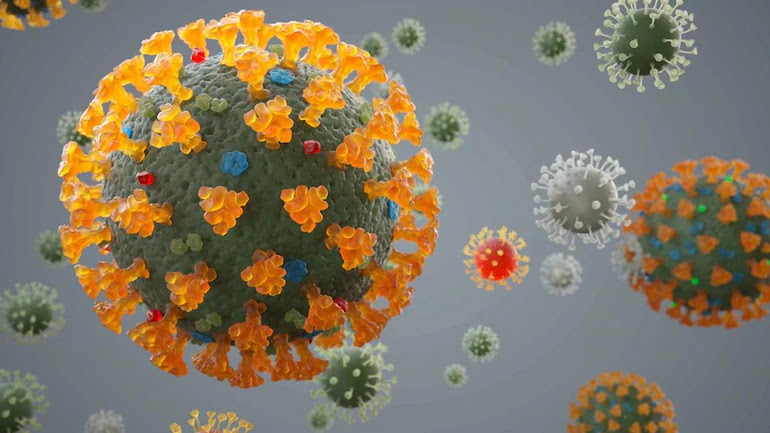
Hello everyone, Talking about Coronavirus, there is an uproar in the world because of the Delta variant. America and European countries are worried that the Delta variant will cause the next wave of Covid. On the other hand, people in India are worried that there might be a third wave because of the Delta Plus variant. What is this Delta Plus variant? And when can this third wave happen? Come, let’s try to find out in today’s video. Friends, what’s special about the mutations is that it happens in every living being. Whether it’s a human, animal, plant, tree, or even a virus.
Mutations accompany reproduction. A person’s DNA, when you have children, and the DNA is transferred, then from one generation to the next, on average there are 100-200 mutations in the DNA. Most of the mutations are harmless, can’t be seen and neither can their effects be felt. Same with viruses. Thousands of mutations take place in the Covid virus. Most of them do not bother us. But at times there are such mutations that make the virus more transmissible. So that the virus can spread easier. And at times there are such mutations that make the virus more deadly.
WHO or the World Health Organization keeps a track of the dangerous mutations of Coronavirus. WHO has classified these mutations into two categories. The first category is ‘Variants of Interest’. And the second category is ‘Variants of Concern’. Broadly speaking, Variants of Interest will include those coronavirus variants that have been detected in multiple countries. And which have high transmissibility. Meaning that they spread easily. As compared to the original virus. On the other hand, the variants of concern include those coronavirus variants that has not only high transmissibility not only do they spread more easily, but the disease caused by them is much more severe. And the effectiveness of the vaccines on these variants is lesser than compared to the original virus. Currently, WHO has put four variants in the Variant of Concern category. Alpha, Beta, Gamma and Delta. The Alpha variant was called the UK variant initially. Because it was first found in the UK. Similarly, the Beta variant was found in South Africa. Gamma in Brazil. And the Delta variant was first discovered in India. That’s why it was also called the Indian variant initially.
Later, people protested as to why they were named after countries. When the original virus came from China, we did not name it the Wuhan virus or the China virus. So why are the names of the variants based on the countries they’re found in? So WHO reacted to this. And then WHO decided to rename them to Alpha, Beta, Gamma and Delta. The strain of the Delta variant was first found in October 2020 in India. This was the cause of the second wave in India. Today, the Delta variant has spread to over 80 countries. Its transmissibility is extremely high. Meaning it spreads really easily. Before moving forward, I should clarify one thing. Discovering a variant in a country is merely a matter of chance. No country can be blamed for anything.
Because as I said, the virus is going through thousands of mutations. Which mutation will turn out to be more dangerous or more transmissible is all up to chance. Including where the mutation will be found. In extremely mathematical terms, studies have shown that the Delta variant is 60% more transmissible than the Alpha variant. And the Alpha variant was 50% more transmissible than the original strain found in Wuhan in 2019. So you can imagine how much more infectious it is than the original. Generally, when viruses mutate and become more transmissible, they become less deadly as well. I explained it in detail using this chart in a previous video. But there can be some rare cases where the virus becomes more transmissible and more deadly after the mutation.
But at the same time, I’d like to say that there has been no conclusive research yet that shows that the Delta variant is, for sure, more deadly or more dangerous. A study conducted in the UK has said that because of the Delta variant, the risk of hospitalization doubles. As compared to the Alpha variant. But does getting hospitalised mean that it is more deadly? It cannot be conclusively said yet. It may also happen that this variant is not more deadly. But because it is so highly transmissible, it spread among so many people in such little time. So the death rate peaked a lot in that short time.
As compared to the same number of deaths in a longer time period. Do you understand what I’m trying to say here? If transmissibility is so high, it becomes more difficult to ascertain if it is really more deadly or not. Many factors need to be considered here. Another interesting thing to know is that the symptoms of the Delta variant are a little different than the original Covid-19 symptoms. Originally, a runny nose was not made out to be one of the major symptoms. But recently, a study has been conducted in the UK when people self-reported their symptoms. It was found that among the symptoms of the Delta variant, runny nose features prominently in the list of symptoms. Headache, runny nose, cold, sore throat, were the top symptoms. So the symptoms of the Delta variant are very similar to the symptoms of the common cold. Loss of smell.
Not being able to smell things properly. Was a major symptom in the original strain of Covid-19. But for the Delta variant, it ranked 9th in the UK study. The good news regarding the vaccines is that according to the data available till now, almost all the vaccines are definitely effective against the Delta variant. Pfizer vaccine, AstraZeneca’s Covishield vaccine and the others have shown that they are more than 90% effective in preventing hospitalization and death. If you catch the Delta Variant after taking both doses. The only trouble here, though marginal, is that the effectiveness of the vaccines in preventing symptoms has reduced. Like AstraZeneca’s Covishield’s effectivity in preventing symptoms against the Delta variant remains at only 60% after taking both doses.
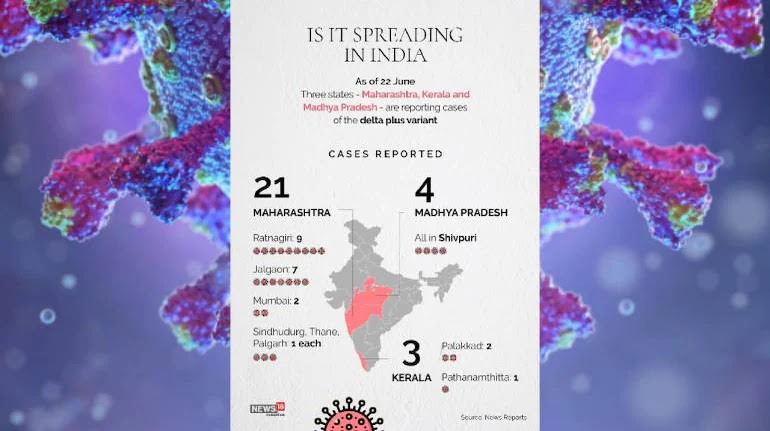
Though Pfizer’s vaccine is still showing an effectiveness of 88% in it too. Now, the Delta variant is no longer a major concern for India. But now we get to hear about a mutation named Delta Plus in the news. The Indian government has declared the Delta variant as a Variant of Concern. And some people believe that there will a third wave in India because of the Delta Plus variant. The limited research conducted till now regarding it has found that the Delta Plus variant is 60% more transmissible than the Delta variant. And it is highly resistant against some drugs. But the reality is that friends, we don’t honestly know much about it. It is important to note that the World Health Organization has not declared it a Variant of Concern yet.
Even though the Indian government has done so. Indian Council of Medical Research ICMR says that it is too soon to tell if there will be a third wave because of the Delta Plus variant. So it seems a bit unlikely that that there will be a third wave because of the Delta Plus variant. But still, the experts believe that there is a very high chance that there will be a third wave in India. The gap between two waves is said to be generally of 15-16 weeks in an epidemic.
A Reuters poll of 40 medical experts was conducted with the conclusion that the experts said that a third wave is inevitable. There will definitely be a third wave. And they believe that the third wave will come around October of this year. On the other hand, AIIMS Director Randeep Guleria says that the third wave may come in the next 6 to 8 weeks. If people stop wearing masks and stop following social distancing. But there are some experts like Dr N.K. Arora Dr N.K. Arora is the Chief of the Centre’s Covid-19 Working Group, he says that the third wave of Coronavirus will not happen before December of this year. So there are estimations from October to December by the doctors and experts.
This is just the time. But if we’re to talk about the severity, How dangerous can the third wave be? A report of the Tata Institute of Fundamental Research has stated that it is very likely that the third wave will not be as severe as the second wave was. It may be less disastrous than that. But does that mean that we can relax because there’s nothing to worry about? No, it doesn’t mean this. Because take an example of South Africa. The first wave in South Africa was because of the original Coronavirus. Look at this chart. And then the second wave happened because of the Beta variant that was found in South Africa. And now the third wave is happening because of the Delta variant. And the third and second waves seem equally dangerous. And they’ve spread so rapidly. Experts believe that their government is to be blamed for not planning things properly and because of the inefficient vaccine rollout.
As of today, less than 5% of people have been vaccinated in their country. Had more people been vaccinated, then the Delta variant wouldn’t have caused havoc. Take Israel’s example. 60% of its population has been vaccinated. When the Delta variant reached Israel, the government definitely took some measures. Some people were infected. But hospitalization and deaths are still negligible in Israel. Friends, the good news is that in recent times, the vaccination rate in India has increased very well. Recently, India broke the record of vaccinating more than 8 million people in a day.
That’s an amazing feat. The sooner the vaccinations are administered, the sooner people are vaccinated, we will have a better chance of beating the third wave. But the unfortunate thing is that this speed of vaccination may still not be enough. To completely avoid the third wave. The government aims that by the end of the year, the entire adult population of India will be vaccinated. But on this graph, you can see that we are, unfortunately, not on the track to achieve this. At an individual level, there is only one sure-shot, long-term solution of being protected from the third wave. And that is to get vaccinated as soon as you get the chance to.
Today, as a matter of fact, I got my vaccine. I got the chance to get it today. Because it’s possible that the Delta Plus variant does not cause the third wave. But remember, there are thousands of mutations in this virus every day. Someday, a mutation may crop up, that is more transmissible and more deadly and can bring forth the third wave. That’s why the vaccine is the best chance we have to be safe from it. I hope you found this video informative. Thank you very much.
BEAUTIFUL ROSE TUTORIAL…
TIPS FOR STUDYING EFFECTIVELY ONLINE
How many times have we opened our books to study, only to discover that even sitting for hours, we are still unable to grasp the material? Because of our sub-conscious mentality, we sometimes attend class yet don’t understand anything. We are physically there in class, but not psychologically.
Here are some study suggestions to help you get the most out of your time:
1.Select a study location that has reliable Internet access.

When studying, you will most likely need to refer to online lectures and notes. As a result, you’ll need a study location where your Internet connection won’t be disrupted. Internet access will be especially vital for things like class study sessions.
2.Make a schedule for studying.

In order to succeed in an online course, you must stick to a rigid timetable. You must keep up with the course material on your own time even if you are not expected to attend courses or lectures at specific times. As a result, self-discipline is critical. Make a weekly schedule for logging into the class and studying the information.
3. Be disciplined.

It can be hard to stick to a schedule for an online course. However, be strict with yourself about adhering to your schedule. Self-discipline is vital to your success in an online course.
It can be difficult to focus on your online course if you have a social media account open in another tab on your computer. When you’re doing classwork, avoid browsing the Internet, checking your email, and other distractions.
4.Actively learn

When the neurons in your brain are active, you can learn. You must engage your intellect in order to learn properly. Write notes in your own words, recollect knowledge, and speak about what you know about a subject without referring to notes.
5.Staying Motivate

To achieve your goals, employ motivational techniques. You may study while listening to music you enjoy, or imagine yourself finishing the assignment in an hour and taking a well-deserved vacation.
6.Any materials should be printed.
The internet or your computer can be a source of distraction at times. When you’re studying, it’s a good idea to switch your laptop off. You should also print out course materials such as the curriculum and timetable.
7.Test yourself

Even if you don’t have access to practice tests, you can still test yourself by writing down everything you remember after each new chapter or frequently asking yourself questions about what you’re learning.
What is Capitalism? – How does Money make Money
Hello everyone, The word ‘Capitalism’ comes from the word Capital which means Money. Or any type of wealth. Whether you have houses, cars on land, they are your capital. In the last video, I gave you the basic definition of Communism. It is a society where every person works according to his ability and receives according to his needs. If we have to define Capitalism similarly, Capitalism is a society where “from each according to his ability, To each according to his capital.”
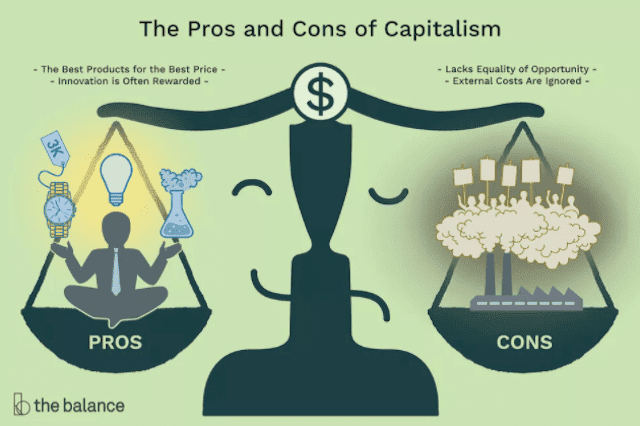
A society where every person works according to his ability but they get returns according to their capital. The person with the most capital will get the most profit. After knowing the definition you’d ask me: “What kind of a society is this?” “Where a person who has more money will get more money.” You heard it right, friends. I’ll talk about the exact workings later in the video. Basically, Capitalism is an ideology that promotes privatisation where the means of production like land, fields, factories, and industries, are owned by private individuals.
In Communism they were owned by the public, everyone owned these. Similar to Communism, Capitalism is a very broad term and ideology. Where there are many subsections of ideologies with differences among them. But if you look at it broadly, there are a few things that are common in all the types. First is the Privatisation. Second, minimal interference by the Government. Most Capitalists believe that the Government has no business to be in business. This dialogue has been used by our Government recently. The third is the Free Market and Competition. and Fourth is something that is easily seen in a capitalist society, “Money Begets Money.”
Money is earned through Money. I’ll explain this later. First, let’s talk about the history of Capitalism. The oldest example of Capitalism is Feudalism. This can be called the primitive form of capitalism. This was around the 10th century when landlords occupied land, and the farmers and labourers who worked on the land, worked tirelessly to grow crops. But all the profits from the land, was used to be taken by the landlords, and the farmers hardly earned enough to get by. You may wonder how this is an example of capitalism. The land was owned by an individual, the landlord. And to whom did most of the profit from the land go? The Landlord. Capitalism works similarly today.
Whatever you do at whichever company, suppose you’re an employee at Apple, you work the whole day and get a monthly salary in return. But the company earns profits. Where does the profit go? It doesn’t go to you It goes to the owner of the company. Obviously, there are differences. Today you get workers’ rights and minimum wages and are not exploited, in most of the cases Who is the owner of this Apple company? That person who holds the most number of shares of the company. Even you can become the owner of the company through the share market.
If you buy some shares Apple, any profits earned by it, you will get a part of. Because you are also an owner of a portion. We live in such a capitalist society today. An employee works in a company for a monthly salary and the profit earned by the company will be distributed among such people who don’t even know the day to day working of the company. You can earn the profit of the company by doing nothing if you invest in the company. And who can invest? Someone who already has the money. As I said, money makes money.
One with the most money in a capitalist world can make more money easily by investing in such companies and taking their profits. Modern Capitalism started in the 16th-17th century in Britain and Netherlands. The first stock exchange of the world was the Amsterdam Stock Exchange, and the first company to be listed was the Dutch East India Company in 1602. Like there’s Karl Marx for Communism, similarly there’s Adam Smith for Capitalism. Known as the Father of Capitalism. In 1776 he wrote the book The Wealth of Nations. In the book, he talked about a policy Laissez-Faire. It is a French word that literally means ‘leave alone.’ That government should leave the economy alone and should not interfere. From here Free Market Capitalism started. Suppose you want to open a pizzeria and so does your neighbour.
If a third person does not interfere between the two, there will be a very interesting and fair competition between you. About who can make the better pizza and sell it at a lower rate. Both of you will try to compete with each other and start experimenting. Trying to improve the quality of the pizza. Because of this competition, both of you will innovate and think of new ways. About how the pizza can be improved and sold at a lower price. In the opinion of Adam Smith, this competition was the invisible hand of the free market. Where no one is forcing you to make a better pizza, but the market situation is forcing you to innovate to make a better pizza. You are working only for your self-interest. You want your restaurant to grow and earn more profit and to perform better than your neighbour.
But your working in your self-interest is also benefiting others. It is also in the interest of society that you work for your self-interest. This is the philosophy of Adam Smith. To increase the efficiency of your pizzeria you’d eventually realise that doing everything yourself was not smart. If you start taking orders yourself and making the pizza, it’ll take a lot of time. It would be better to hire a few people. One to take the orders at the front desk. One who’ll make the pizza and buy ingredients for it. One who will put the toppings on the pizza and put it in the oven. And one whose work would be to deliver the pizza.
This is the Division of Labour. Every person is specialising in his work and because of the specialisation, productivity and efficiency increase rapidly. Adam Smith talked about this as well. This is one of the major reasons for the success of Capitalism across the world. Everyone realised that if they want to work in a better manner at a better speed, division of labour and specialization is necessary. Take Apple company, if a person wants to build an iPhone, it will take him years. but if there is an assembly line of workers to manufacture these iPhones, where the first person would fit the screen the second will fit the screws, then the assembly line will be able to manufacture numerous iPhones in a day.
By implementing these ideas Industrial Revolution began. Where large factories were established; but what happened then? I talked but that in the Communism video. The workers were forced to work for hours in terrible conditions. They were getting exploited and eventually communist ideologies started. After hearing this you’d think that Karl Marx and Adam Smith would be sworn Enemies. But this wasn’t so, in reality, Karl Marx has written a book Das Kapital, where he agreed on many viewpoints of Adam Smith. There were definite disagreements between them but it can be said that they were looking at the same situation from different perspectives.
On one hand, Adam Smith focuses on productivity and efficiency, On the other hand, Karl Marx agrees that productivity and efficiency would indeed increase but his focus is on an individual. He says that a worker would start feeling alienated if he works on repetitive tasks. To do the same for hours and years on end. The worker would not be proud of his work. He would question the purpose of his life. Seeing himself as only a small gear in a piece of large machinery. Karl Marx believed that specialisation would make workers more easily replaceable, and the capitalist would get more power to exploit the workers. The ideas of Karl Marx and Adam Smith are two perspectives of the same situation. Remember that both of them were born in different eras. Adam Smith died in 1790 and Karl Marx was born in 1818. 1790 was a time when the Industrial Revolution had just begun. And Karl Marx grew up seeing the workers being exploited in the factories.
Maybe if they lived in the same era, their opinions would have agreed. Moving ahead in history, we know that Communism was first implemented in the Soviet Union. When it comes to the implementation of capitalism, in 1902 a significant incident happened. Three large steel companies in the USA, Carnegie Steel, Federal Steel and National Steel, merged together to become The US Steel. This was the first billion-dollar corporation in the world. Elbert H Gary was the chairperson of the company. And in the first year, it manufactured 2/3rd of the total steel manufactured in the US. But there remained some competition in the steel industry.
So Garry invited all his competitors for a dinner and asked them why they were fighting amongst themselves while someone else was benefitting from their competition. He suggested that they work together and stop competitive pricing. This was how the first billion-dollar company in the world became a monopoly. According to the theory of Adam Smith, the Invisible hand of the free market was supposed to work and set things right. but in reality, this did not happen. Whenever there’s a monopoly for anything or a company, it is terrible for the consumers. Imagine you are stranded in a village late at night, waiting for a taxi. And the nearest city is 100-200 km away.
But there is only one taxi. You ask the taxi driver to take you to the city, While he charges ₹500 for the distance normally, but he tells you that he would charge you ₹50,000 for taking you. You will not have any option. The taxi driver will have a monopoly here. You are stuck in a situation where the only way out is to, either give in or remain stuck there. You are forced to pay that sum. This extra amount is known as profit in Capitalism. In Das Kapital, Karl Marx talks about this theory, the Theory of Surplus Value. If I run a company that manufactures a product, and you are an employee working in the company that actually makes the product, Suppose I earn a profit of ₹80,000 by selling that product, but I pay ₹8,000 to you as salary.
The ₹72,000 that we put call profit, Karl Marx called Surplus Value. All the surplus value and profits are taken away by me and you get only a salary. This is often seen in Capitalism. There can be many examples for this. A trader that buys products very cheap from the farmer and sells it at a much higher price The profit or surplus value is taken by the trader. A scientist discovers the formula for a vaccine, but in reality, the pharma companies selling that vaccine get the most profits. A singer that actually sings the song, but it is the music label that takes most of the profit.
According to Karl Marx, this is a system where everyone is trying to climb a ladder to stop being exploited, but as soon as they reach the top they would start exploiting others. A system where work is not rewarded but money is. If you have the money to establish a company and employ people, you can take away the maximum profits. But obviously, not every company is like this, not every company owner is like this that’d keep on exploiting the employees. In contrast to the companies owned by private individuals are Joint Cooperative Companies such as Amul. More than 36 lakh of farmers are joint owners of Amul Co-operative. This is not a company listed on the stock market. You and I cannot invest our capital in Amul company. The profit earned by Amul and its benefits is distributed among these farmers that have created this company together.
But obviously, to make such cooperative, one person has to take the lead. In the case of Amul, it was Tribhuvandas Patel who set up the Cooperative in 1946. Under the guidance of Sardar Vallabhbhai Patel. Regarding this there was a film as well called Manthan. It was the first crowd-funded film in India. More than 5 lakh farmers working in Amul contributed ₹2 each to make this film. Anyways, I got too diverted in the story. Coming back to the history of Capitalism, in 1929, capitalism received a huge shock when the stock market crashed terribly and a Great Depression started. The recession has been a very regular feature in Capitalism.
There were large scale unemployment and poverty in the USA because of this. At this point entered the revolutionary economist Keynes, who altered the history of Capitalism. He believed that the Invisible Hand of the free market does not actually exist. In reality, if the free market is left free, it will lead to depression, recession, monopolies. The theory of Keynes was that governments should interfere and regulate the companies. Small companies should be subsidized, and big companies should be prevented from getting monopolies, there should be strict rules and regulations in place.
In the decades that followed Keynes, countries all over the world took inspiration from him and implemented a model of Capitalism where rules and regulations existed. The next big shock to Capitalism was in the 1980s when Ronald Reagan in the USA and Margaret Thatcher in the UK reintroduced the free market of Adam Smith to the world. The capitalism implemented in these two countries is known as Neoliberalism.
The basic foundational idea is of Adam Smith that government should not interfere in the market and market share run itself, and there exists an invisible free hand of the market, The current status is that in the last 40 years, in many countries of the world, especially the USA, we have seen Neoliberalism being implemented. Because of this inequalities have been rising significantly in the US. The rich are getting richer and the poor are not able to improve their situation. The big companies are starting to become monopolies.
360 Wander Writer
Welcome to Toy World

Speaking about favorite toys Teddy bear always catches a special position in the hearts of the children. It was simultaneously developed by the toymakers Morris Michtom in U.S and Richard Steiff in Germany . It was named after the United States President Theodore Teddy Roosevelt, though he disliked it . It is always regarded as a token of love , affection, sympathy or as an congratulation.
Glimpses of the Past

The name was originated after a bear hunting trip in Mississippi who was invited there by the Mississippi Governor. Amidst a lot of hunting competition one of the Roosevelt’s attendant managed to catch a American Black bear. They called Roosevelt to the site and suggested that he should shoot it. He felt it to be unfair and refused to shoot it . He also asked one of his men to shot it in order to relieve it from misery. It became the political cartoon that was published in the Washington Post on November 1902. This cartoon became the inspiration to the toymakers to make a small stuffed teddy bear . It was kept as a showpiece in the window of the shop and one was sent to the President Roosevelt and received permission to use his name.
New Form

As expected the Teddy bear became a hit and very well reached the market. In most of the Japanese restaurants Teddy bear are seated as partners. Is this not something cute ? yes! if you are seated alone in the restaurant and don’t have a pair or companion to accompany you then the management itself places a Teddy Bear on the empty seat. In 90’s and even now Teddy Bears form has changed according to ones taste , favorite color and size but the preference and the fondness for it has not changed among people .


You must be logged in to post a comment.