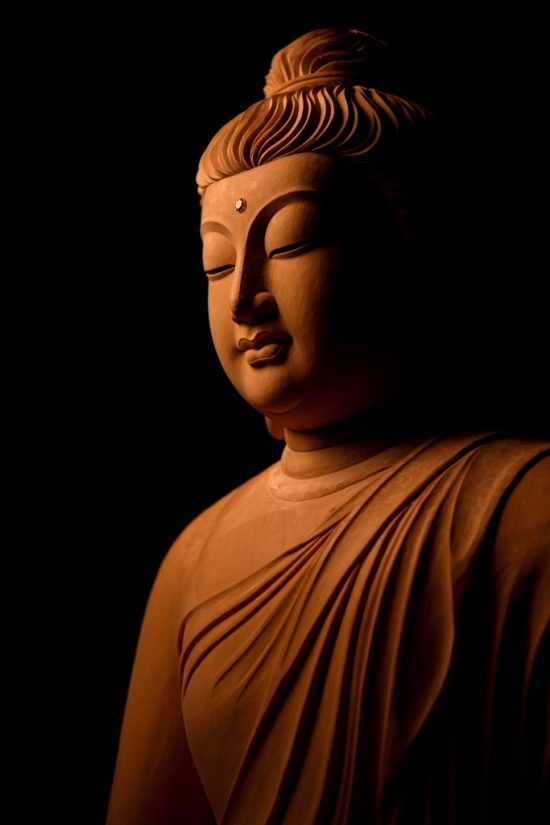
The Origin of Buddhism .

We are what we think. All that we are arises with our thoughts. With our thoughts, we make the world.
Peace comes from within. Do not seek it without.

Lord Buddha

Introduction.

He was a spiritual personality . An ancient teacher and enlightened many . A founder of world religion Buddhism . He was popularly known as Gautama Buddha (also known as Siddhattha Gotama or Siddhārtha Gautama or Buddha Shakyamuni ) .

The Enlightened One who rediscovered an ancient path to release clinging and craving and escape the cycle of birth and rebirth. He taught for around 45 years and built a large following, both monastic and lay. His teaching is based on his insight into the arising of duḥkha (the unsatisfactoriness of clinging to impermanent states and things) and the ending of duhkha—the state called Nibbāna or Nirvana (extinguishing of the three fires).
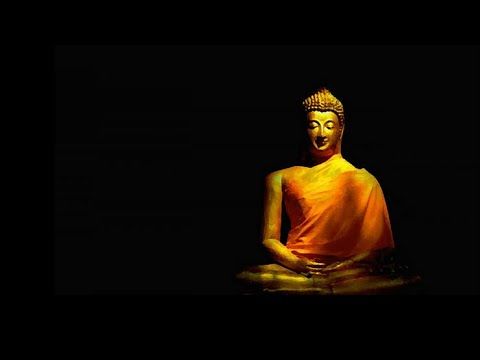
Buddhism

Buddhism, one of the major religions and philosophical systems of southern and eastern Asia and of the world. Buddha is one of the many epithets of a teacher who lived in northern India sometime between the 6th and the 4th century before the Common Era.

The title buddha was used by a number of religious groups in ancient India and had a range of meanings, but it came to be associated most strongly with the tradition of Buddhism and to mean an enlightened being, one who has awakened from the sleep of ignorance and achieved freedom from suffering.

According to the various traditions of Buddhism, there have been buddhas in the past and there will be buddhas in the future. Some forms of Buddhism hold that there is only one buddha for each historical age; others hold that all beings will eventually become buddhas because they possess the buddha nature (tathagatagarbha).
According to Buddhist doctrine, the universe is the product of karma, the law of the cause and effect of actions, according to which virtuous actions create pleasure in the future and nonvirtuous actions create pain.

Your work is to discover your world and then with all your heart give yourself to it.

Lord Buddha

History

Gautama Buddha ( born c. 6th–4th century BCE, Lumbini, near Kapilavastu, Shakya republic, Kosala kingdom [now in Nepal]—died, Kusinara, Malla republic, Magadha kingdom [now Kasia, India]).

Buddha is one of the many epithets of a teacher who lived in northern India sometime between the 6th and the 4th century before the Common Era.

Learnings from Gautama Buddha.

1. “Three things cannot be hidden: the sun, the moon and the truth.”

2. “You will not be punished for your anger; you will be punished by your anger.”

3. “You can search throughout the entire universe for someone who is more deserving of your love and affection than you are yourself, and that person is not to be found anywhere. You, yourself, as much as anybody in the entire universe, deserve your love and affection.”

4. “We are shaped by our thoughts; we become what we think. When the mind is pure, joy follows like a shadow that never leaves.”

5. “Believe nothing, no matter where you read it, or who said it, no matter if I have said it, unless it agrees with your own reason and your own common sense.”
Link
World Population Day: UP Population Bill Draft.

Today, July 11, is celebrated as World Population Day each year and this was established by United Nations Development Programme with an attempt to address the issues faced by global population.

Photo Credits: E Times.

This day is very important to India as our country is one of the few in the world to have a massive increase in population in the past few years. With growing population, demands and needs of the public also increases.

Uttar Pradesh, a state in India has a population of about 220 million, larger than that of many of the developed countries in the world. As increasing population is a growing concern, the Government of Uttar Pradesh has proposed a bill to control the population growth and any suggestions that would improve the bill are also welcomed and the last date for public opinion is July 19.

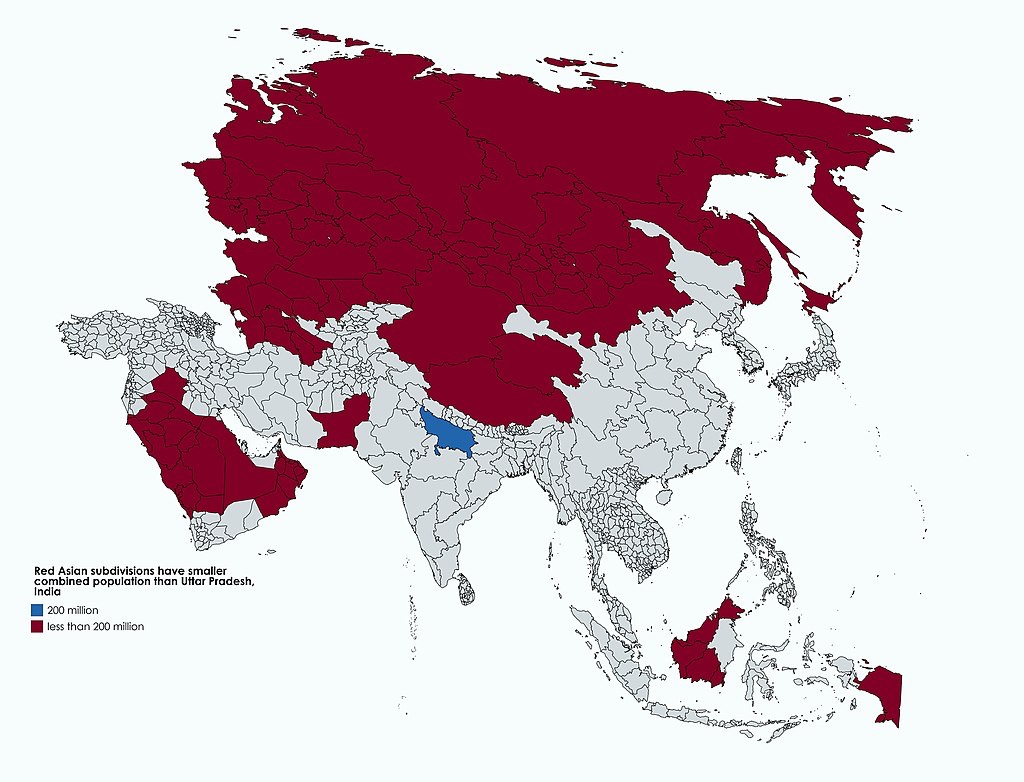
Blue Area: Uttar Pradesh.

The Blue Area, marked on the picture above is Uttar Pradesh and the blue area has more population than the entire red area combined. This shows the seriousness of the situation regarding the population in Uttar Pradesh.

Let us know some of the important facets from the Population Control Bill Draft of Uttar Pradesh which voices for a “two-child norm” in Uttar Pradesh.

The Government Duties:

1) A State Population Fund will be made for the purpose of implementation of the act.

2) Maternity Centres will be established at all primary health care centres. All centres and related NGOs will have to distribute contraceptive pills, condoms and like.

3) The Centres and NGOs will also have to educate people about proper family planning methods and record the information about pregnancies, deliveries, births and deaths.

4) The Government will also ensure that there’s a separate subject regarding population in all secondary schools.

5) The Government would also ensure to stabilise and provide welfare to the population of the state by implementing and promoting two child norm.

6) In the Bill it is also mentioned that public servant who adopt the two child norm would be entitled to several benefits such as increments throughout lifetime, maternity leaves and paternity leaves for 12 months (according to the case) with full salary and allowances and three percent increase in the Employer’s Contribution Fund under National Pension Scheme.

Citizen’s Responsibilities:

-The Bill has also made it clear that anyone violating the two child policy will be debarred from contesting local bodies elections, from applying or getting promoted in Government jobs, and receiving any kind of Government subsidy.

-As responsible citizens, the bill expects us to abide by the laws contained in the bill or suggest any improvements until July 19 and also encourages us to promote sustainable development with more equitable distribution.

Comparative Study b/w Parliamentary and Presidential System of Government

Parliamentary system is a democratic form of government in which the party with the greatest representation in parliament (legislature) forms the govt., its leader becoming prime minister or chancellor. Presidential form of govt. is a democratic and republican govt. in which a head of govt. leads an executive branch. The head of govt. is in almost cases also the head of the state, which is called the President. India follows a parliamentary form of govt. modelled on Britain’s.

Features

Features of Presidential system are that the executive can veto acts by the legislature, the President has a fixed tenure and cannot be removed by a vote of no confidence in legislature. The President has the power to pardon or commute judicial sentences awarded to criminals and the President is elected directly by the people or by the people or by an electoral college whereas features of parliamentary system are- close relationship b/w the legislature and the executive, executive is responsible to the legislature, there are two executive i.e. real executive and titular executive, bicameral legislature, no fixed tenure, leadership of Prime Minister.

Merits

Merits of Presidential system are- seperation of powers, expert govt., stability and less influence of the party system.

Merits of Parliamentary system are- better coordination b/w executive and legislature, prevents authoritarianism, responsible govt., represents diverse groups, flexibility in the system.

Demerits

Demerits of Presidential system are- less responsible executive, deadlocks b/w executive and legislature, rigid govt., spoils system as the system gives the President sweeping powers of patronage.

Demerits of Parliamentary system are- no seperation of powers, unqualified legislators, instability, failure to take prompt decision because there is no fixed tenure, party politics is more.

Conclusion

The Presidential system is better for one because of its seperation of powers, the role of judiciary and the govt. accountability to its people. We should ensure a system of govt. whose leaders can focus on governance rather than on staying in power. The present parliamentary system has been tried and tested for nearly 70 years. It can be reformed thoroughly to remove the challenges thrown up by it. Also, there is a need to reform the electoral processes to make democracy more robust.

Strengthening from the Grassroots – Ministry of Cooperation

A Ministry of Co-operation has been newly setup by the Central Government realizing the vision of ‘Sahkar se Samriddhi’ (Prosperity through Cooperation) and to give a new push and to strengthen the cooperative movement.

The Government has signaled its deep commitment to community based developmental partnership. It also fulfils the budget announcement made by the Finance Minister in 2021.

Ministry of Co-operation – The right step in the right time!

  • It will provide a separate administrative, legal and policy framework for strengthening the cooperative movement in the country.
  • It will work to streamline processes for ‘Ease of doing business’ for co-operatives and enable development of Multi-State Co-operatives (MSCS).
  • It will help deepen Co-operatives as a true people based movement reaching upto the grassroots.
  • Since the country is going through a deadly second wave of the pandemic, which has led to millions losing their means of food, this initiative comes as the right step to reform the co-operatives and help strengthen it from the grassroots.

What is a co-operative

  • According to the International Labour Organisation (ILO), a cooperative is an autonomous association of persons united voluntarily to meet their common economic, social and cultural needs and aspirations through a jointly owned and democratically controlled enterprise.
  • The cooperative society ensures benefit for its members and serves for the wider interest of the community as well .
  • In India, a Co-operative based economic development model is very relevant where each member works with a spirit of responsibility.
  • India is an agricultural country and laid the foundation of World’s biggest cooperative movement in the world.

Cooperatives and the Indian Constitution

  • The word “cooperatives” was added after “unions and associations” in Article 19(1)(c) under Part III of the Constitution. This enables all the citizens to form cooperatives by giving it the status of fundamental right of citizens.
  • A new Article 43B was added in the Directive Principles of State Policy (Part IV) regarding the “promotion of cooperative societies”.
  • The Constitution (97th Amendment) Act, 2011 added a new Part IXB right after Part IXA (Municipals) regarding the cooperatives working in India.

Cooperatives in India

Some examples of successful cooperatives in India

  • AMUL
  • Indian Coffee House
  • Indian Farmers Fertilizer Cooperative Limited (IFFCO)
  • Karnataka Milk Federation(KMF)
  • Kerala Co-operative Milk Marketing Federation (KCMMF)
  • Pratibha Mahila Sahakari Bank
  • Orissa State Cooperative Milk Producers’ Federation
  • Anyonya Co-operative Bank Limited

Significance of Cooperatives

  • Cooperatives provides credits and funds to its members and is also able to collect investment through voluntary contribution for the development of its members and the cooperative society.
  • Cooperatives creates a conducive environment for small and cottage industries.
  • Cooperatives provides strategic inputs for the cooperative societies.
  • Cooperatives may serve as an organisation for the poor who wish to solve their problems collectively.
  • Such an organisation softens the class conflicts and reduces the social cleavages.
  • Consumer cooperatives societies meet their consumption requirements at concessional rates.

Roadblocks in the path to Cooperatives

  • Lack of Awareness – The people are not aware about the cooperative societies.
  • Management issues – Since it does not have a trained personnel it may face management issues. Also A cooperative with a large membership turns out to be mismanaged unless some secure methods are employed to manage such co-operatives.
  • Manipulation – In the elections to the governing bodies, money became such a powerful tool that the top posts of chairman and vice-chairman usually went to the richest farmers who manipulated the organisation for their benefits

Way Forward

The pandemic has caused large scale disruptions in the economy, hence the network of cooperatives developed to help revive the economy.

The cooperatives have the ability to bring people with knowledge on the same line, together to make a stronger block and its potential can be used to develop our society. The cooperative society has the power to bring the people together and solving the problems as a community. Such stable and powerful blocks can be a powerful tool to achieve great heights.

Cabinet Reshuffle

With number of changes taking place in the country in recent times, one of a major change is taken place in the union cabinet. The Modi government had introduced new members in the council giving rise to a whole new cabinet of ministers for different departments on July,7th 2021. The total members counted as 43 among which 36 are new faces and 12 had been dropped out from the cabinet which includes, Health Minister Harsh Vardhan, IT and Law Minister Ravi Shankar Prasad and I&B Minister Prakash Javadekar, and brought Sarbananda Sonowal, Narayan Rane, Jyotiraditya Scindia and others. Many prime ministers all over the world have been known to have sacrificed this or that ministerial pawn in order to cover up their own leadership failure. Harsh Vardhan’s departure is as close an admission of governmental floundering as prime ministerial hubris would allow.

The new department of cooperation is granted to our home minister Amit Shah. New list is as follows-

Rajnath Singh: Defence Minister, Nitin Gadkari: Road Transport and Highways Minister, Nirmala Sitharaman: Finance Minister, Corporate Affairs Minister, Narendra Singh Tomar: Agriculture and Farmers’ Welfare Minister, S Jaishankar: External Affairs Minister, Arjun Munda: Tribal Affairs Minister, Smriti Irani: Women and Child Welfare Minister, Piyush Goyal: Commerce & Industry Minister, Consumer Affairs Minister, Food & Public Distribution Minister, Textiles Minister, Dharmendra Pradhan: Education Minister, Skill Development and Entrepreneurship Minister, Pralhad Joshi: Parliamentary Affairs Minister, Coal Minister, Mines Minister, Narayan Rane: Micro, Small and Medium Enterprises Minister, Sarbananda Sonowal: Ports, Shipping and Waterways Minister, AYUSH Minister, Mukhtar Abbas Naqvi: Minority Affairs Minister, Dr Virendra Kumar: Social Justice and Empowerment Minister, Giriraj Singh: Rural Development Minister, Panchayati Raj Minister, Jyotiraditya Scindia: Civil Aviation Minister, Ramchandra Prasad Singh: Steel Minister, Ashwini Vaishnaw: Railways Minister, Communication Minister, Electronics & IT Minister, Pashu Pati Kumar Paras: Food Processing Industries Minister, Gajendra Singh Shekhawat: Jal Shakti Minister, Kiren Rijiju: Law & Justice Minister, Raj Kumar Singh: Power Minister, New & Renewable Energy Minister, Hardeep Singh Puri: Petroleum & Natural Gas Minister, Housing & Urban Affairs Minister, Mansukh Mandaviya: Health and Family Welfare Minister, Chemicals & Fertilisers Minister, Bhupender Yadav: Environment, Forest & Climate Change Minister, Labour & Employment Minister, Mahendra Nath Pandey: Heavy Industries Minister, Parshottam Rupala: Fisheries, Animal Husbandry and Dairying Minister, G Kishan Reddy: Culture Minister, Tourism Minister, Minister for Development of Northeast, Anurag Thakur: Information & Broadcasting Minister, Sports & Youth Affairs Minister. Other 28 will hold the charge as Ministers of State.

This new cabinet marked a starting of new journey not only in terms of development but also along with growth with social equality as the members itself are chosen from different social backgrounds including, 12 ministers from Scheduled Caste communities from states such as Tamil Nadu, Rajasthan, Karnataka, Uttar Pradesh, Madhya Pradesh, West Bengal. Two of them are likely to be Cabinet ministers. From the Scheduled Tribe communities, eight representatives from Arunachal Pradesh, Jharkhand, Chhattisgarh, Odisha, Assam, and Madhya Pradesh are inducted. Three of these are Cabinet ministers. Also, 19 members from Other Backward Class (OBC) communities. 11 women members had aslo been accomodated giving rise to women empowerment.

According to people aware of the details, the selection of ministers has also been done with the intent of bringing on-board people with administrative experience as the government has faced criticism including over the state of the economy, job crisis, rising prices, and the response to the second Covid-19 wave.

What is UPSC civil services examination

UPSC- union public service commission

UPSC is India’s central agency.

CSE is widely known as ‘IAS EXAM’, even though it is conducted to recruit candidates to about 24 top government services like IAS, IPS, IRS, IFS ,etc.

UPSC conducts exams like Civil Services Exam (CSE) to recruit candidates into top government services like IAS, IPS, IFS etc. Civil services exam is one of the most popular examination conducted by upsc.

UPSC civil services exam mainly consists of three stages.

1. Preliminary. 2. Mains. 3. Interview

Educational requirements

Any graduate can attempt the UPSC civil services examination. The graduate can be in any stream, it may be a regular degree or distance education.

Age limit

To attend the UPSC civil services examination, a person should cross the 21 years by August of that specified year. This is the minimum age limit for UPSC CSE. The upper age limit is 32 for general category, 35 for other backward classes (OBC) , 37 for scheduled castes (SC) and scheduled Tribes (ST).

UPSC recruits candidates to both civil services as well as defence services.

.

Agriculture

When tillage begins, other arts follow. The farmers, therefore, are the founders of human civilization.”

— Daniel Webster

Introduction

It all started thousand of years ago , when the human civilization came into existence . Agriculture was a key to survival . People were farming for there domestic purpose , not for the others .

As the civilization started to grow accustomed of agriculture , they grew food in surplus that enabled people to live in cities. Plants were independently cultivated in at least 11 regions of the world.

The development of agriculture enabled the human population to grow many times larger than could be sustained by hunting and gathering.

It was the beginning of different civilization in different parts of the World. From those civilizations , one of them was our’s The Indus Valley Civilization . Vedic literature provides some of the earliest written record of agriculture in India. Rigveda hymns , describes plowing, fallowing, irrigation, fruit and vegetable cultivation.

Some of the ancient and historical evidence suggests rice and cotton were cultivated in the Indus Valley.

Agriculture : In India and World today .

India ranks second worldwide in farm outputs. As per 2018, agriculture employed Indian work force and contributed 17–18% to country’s GDP.

In 2016, agriculture and allied sectors like animal husbandry, forestry and fisheries accounted for 15.4% of the GDP (gross domestic product) with about 41.49% of the workforce in 2020.India ranks first in the world with highest net cropped area followed by US and China.The total agriculture commodities export was US $ 3.50 billion in March – June 2020.

Agriculture is the primary source of livelihood for about 58% of India’s population. Share of agriculture and allied sectors in gross value added (GVA) of India at current prices stood at 17.8 % in FY20.

During 2019-20 crop year, food grain production reached a record of 296.65 million tonnes. In 2020-21, Government of India is targeting food grain production of 298 million tonnes.

India is among the 15 leading exporters of agricultural products in the world. Agricultural export from India reached US$ 38.54 billion in FY19 and US$ 35.09 billion in FY20.

Agriculture is an important industry in the United States. The agriculture industry, which includes both crops and livestock, is responsible for producing most of the world’s foods and fabrics. Agriculture impacts so many things that it’s hard to imagine a world without this important industry.

Schemes and Initiatives

Due to the high requirement of agriculture . It is important for the government to take initiatives and provide better infrastructure to the farmers. However , the required level of investment for the development of marketing, storage and cold storage infrastructure is estimated to be huge.

The Indian Council of Agricultural Research (ICAR), established in 1905, was responsible for the search leading to the “Indian Green Revolution” of the 1970s. The Union Minister of Agriculture is the president of the ICAR. The Indian Agricultural Statistics Research Institute develops new techniques for the design of agricultural experiments, analyses data in agriculture, and specialises in statistical techniques for animal and plant breeding.

Schemes by government for Indian agriculture :

  • Dairy Entrepreneurship Development Scheme.
  • Rainfed Area Development Programme (RADP)
  • Paramparagat Krishi Vikas Yojana (PKVY)
  • Pradhan Mantri Krishi Sinchai Yojana (PMKSY)
  • National Agriculture Market (e-NAM)
  • Pradhan Mantri Kisan Maandhan yojana.
  • Pradhan Mantri Fasal Bima Yojana (PMFBY)
  • Kisan Credit Card (KCC) scheme.
  • Pashu Kisan Credit Card Scheme.
  • PM-Kisan Scheme.

Conclusion

Agriculture sector is one of the prominent sector in India as well as all over the world . India is becoming self – sufficient in pulses and other crops .

Gone are the days , when India was unable to provide sufficient amount of food to the citizens . Gone are the days , when people used to think agriculture was not as important as other sectors . Gone are the days , when people used to think less of farmers . And gone are the days , when people were less educated about agriculture.

Farming is a profession of hope.

— Brett Brian

Link

The World of Nepotism

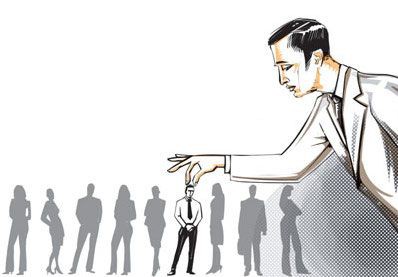
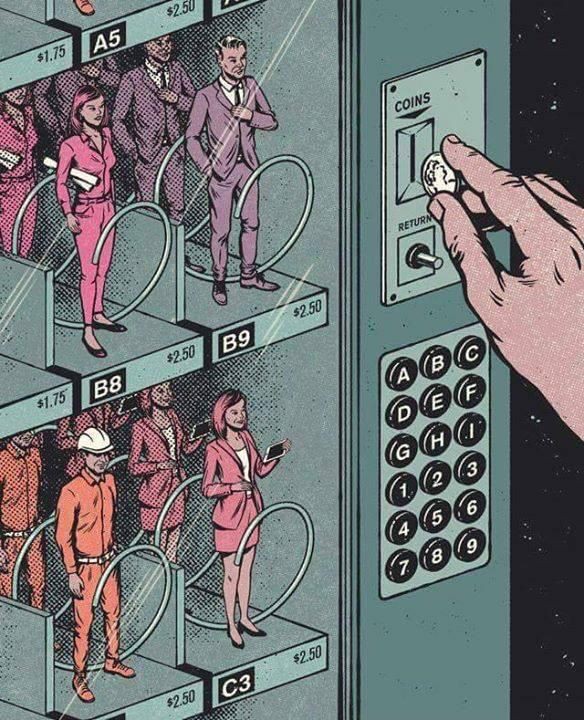
Welcome to the anti-meritocratic world, this world. What are you going to do about it? Will you stand back and watch while cronyism, nepotism, the old school tie, the private club, the right university, the right accent, the right background, the right secret society, the right religion, the right family, destroy merit so that their chosen ones can prosper at your expense. It’s time to smash the conspiracy. Break up all the mechanisms that allow privileged groups within society to rig the system in their favour and penalise anyone who doesn’t belong to their insidious cliques.

Michael Faust, The Meritocracy Party

Well , Its a very complicated questions . In the world, where one’s knowledge didn’t get recognition .

What would you do , when you get acknowledged not on the basis of your knowledge but on the basis of your relation with the owner ?

What would you do , if you don’t get promoted because you are not his /her relative ?

Do you ignore the fact that you are not the one , whom your boss approves?

Well , if you think it’s favouritism than you are absolutely correct . You may also come accross the word NEPOTISM and if you don’t than start reading the passage . (I did as well )

This 8 letter word is destroying everyone in today’s world. And who is responsible for creating such a hypocrite. We the people have to repose this curse and make sure to control it with our coming generations, else it will destroy the whole world. And there’ll be no humanity left in this world” –

Ikramul Hannah.

Introduction

Nepotism is a the practice among those with power or influence of favouring relatives or friends, especially by giving them jobs.

Nepotism is generally defined as “the bestowal of patronage by public officers in appointing others to positions because of blood or marital relationship”.

Nepotism is found in almost all the fields but it is practiced most in business, politics, sports and entertainment sectors. It has been in practice since time immemorial, but some special cases have made it to the limelight in the past few decades.

Nepotism in India :

India has it’s fair share in the field of NEPOTISM . Well , have you ever expected that . I say , YES . Because being one of the largest country , people might become more thirsty for power . “When constantly reaching out for more, you forget what you have” Christine Szymanski.

Nepotism can be characterized as ‘the demonstration of utilizing force or impact to get out of line preferences for individuals from one’s family’.

You must be conflicted , why does nepotism exist even today ? We are living in 21st century , than why we have such orthodox thinking ? Who says no one can define what is going on in one’s mind ( well I say , isn’t is obvious ) .

From the politics to the Entertainment , from the owner to the customer, from the Bollywood to the Judiciary ; Nepotism is everywhere .

Like in OJO -MOJO , After the submission of writing competition , OJO’s class teacher asked him who wrote better . Is it MOJO or OLLY , what do you think whom he would choose . MOJO thinks OJO will choose OLLY because he likes her . But when the result announced MOJO was astounded because OJO choose MOJO’s writing . So , what do you think is it nepotism or not . Think and you will know the answer .

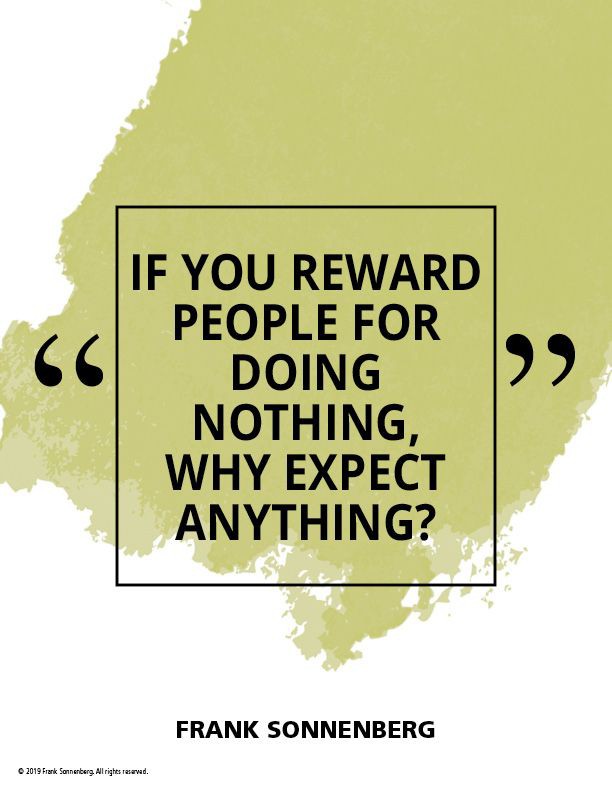
Bias has become the first qualification to join a party, and extreme bias the virtue to become a leader.

Link
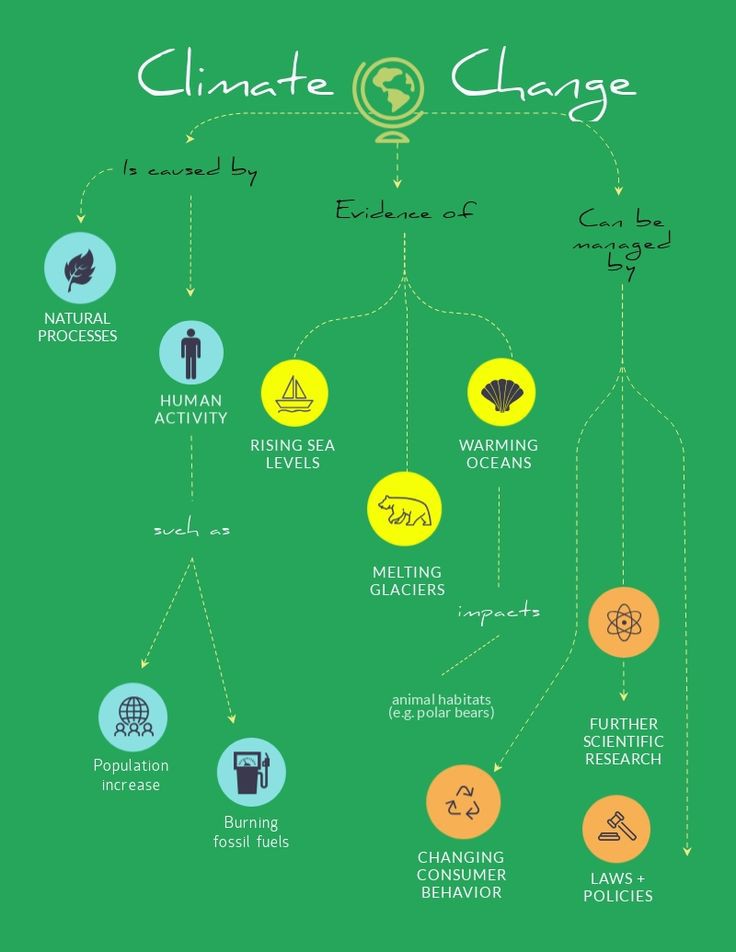
Climate change : In India and World today .

Let’s double down on solar energy, let’s be more energy-efficient, let’s weatherize our homes. We can build a better, healthier economy based on good-paying, clean energy jobs.”

Ian Somerhalder, Actor

Being one of the second largest country , climate change in India is having profound effect on India and all over the world . India is ranked fourth among the list of countries most affected by climate change in the period from 1996 to 2015 .

With 7% of global emissions , India emits about 3 gigatonnes (Gt) CO2eq of greenhouse gases each year; about two and a half tons per person, which is half the world average.

Due to the rise in temperature , the Tibetan plateau are causing problem to Himalayan glaciers . It directly effect in increasing the flow rate of the Ganges , Brahmaputra, Yamuna and other major rivers.

The Indira Gandhi Institute of Development Research has reported that, if the prediction of the Intergovernmental Panel on Climate Change is correct about Global warming than it may cause fall of GDP upto 9%.

In all over the world , climate change is drastically affecting the change in temperature of the globe 🌎 . Climate change includes both global warming driven by human-induced emissions of greenhouse gases and the resulting large-scale shifts in weather patterns.

Causes :

Human envision and green house gasses are two important causes in the climate change. Greenhouse gases affect Earth’s energy balance and climate .Human activities have added greenhouse gases to the atmosphere. Human activities are changing the climate.

Other causes :

  • Power Plants.
  • Farming .
  • Deforestation.
  • Fertilizers.
  • Oil drilling.
  • Natural gas drilling.
  • Permafrost.
  • Garbage .
  • Volcanic eruption.
  • Pollution.

Campaigns

There are many campaigns that are going on . One of them is The ActNow campaign . It was launched at the UN Climate Change Conference (COP 24) in December 2018, with a call from Sir David Attenborough in conjunction with the award-winning “People’s Seat” initiative.

It signifies individual action on climate change and sustainability. By changing our habits and making choices that have less harmful effects on the environment, we can tackle the climate emergency and build a more sustainable world.

It is also working with other campaigns like The Good life goals , Anatomy of action , 170 actions to combat climate change , lazy person guide to saving the world , connect4climate , climate neutral now , trash hack , stop the waste , Think. Eat. Save. , Clean seas , breathe life , glowing glowing gone . Their may be others as well .


Prevention :

Becoming more energy efficient is a great way to prevent pollution. It causes the power plants to expend less energy that can lead to the production of greenhouse gases. … Replace your light bulbs with energy-efficient light bulbs that help you save electricity too.

  • Speak up!
  • Power your home with renewable energy.
  • Weatherize, weatherize, weatherize.
  • Invest in energy-efficient appliances.
  • Reduce water waste.
  • Actually eat the food you buy—and make less of it meat.
  • Buy better bulbs.
  • Pull the plug(s).

Conclusion

In the times , where the world is changing and taking measurements for saving the globe . Many Environmentalist , Actors , Politicians , Countries are taking precautions and actions on the climate change . It is our duty to prevent our world from falling . Take Initiative To Save The World .

Climate change is real. It is happening right now, it is the most urgent threat facing our entire species and we need to work collectively together and stop procrastinating.

Leonardo Di Caprio, Actor & Environmentalist

Link
National Doctors Day: Are we doing enough to protect our life savers?

Typically, in an Indian household when a child grows up, Indian parents expect them to be doctors or engineers. But do we respect and love the same children when they actually become our life savers?

July 1, every year, is celebrated as National Doctors Day in India as this date marks both birth and death anniversary of prominent Doctor Bidhan Chandra Roy who was also the Chief Minister of West Bengal in early years of post independent India.

In 1991, Government of India established National Doctor’s Day to recognise the contributions of Dr. Bidhan Chandra Roy and also honour the Doctors nationwide.

Currently, the doctor-patient ratio in India is 1:1445 which is lower than WHO’s prescribed ratio of 1:1000. Doctors work day and night for their patients’ well being and this even increased since March 2020 due to COVID-19. But how much we as citizens give them in return?

India has suffered because of acute shortage of Doctors since the beginning as they never got the remuneration they deserve. This has always led to brain-drain in India as Doctors shift to other developed countries for better career prospects as they receive better salary and opportunities there.

Since the beginning of COVID-19, the only hope to get out of this deadly pandemic were Doctors and health care workers. Whenever our loved ones contract the virus, we immediately look towards our doctors with a helpless eyes, and Doctors without caring about themselves tirelessly give their life and time for us.

Some incidents in the recent past haven’t been so fruitful though. Doctors and other healthcare workers were brutally assaulted during the entire first and second wave and this is another downfall our country has witnessed.

Even on eve of Doctors day, two doctors were assaulted in Delhi yesterday after having a heated argument with two fellows. From an assault in June 2020 in Hyderabad to several such incidents in all parts of the country like Madhya Pradesh, Maharashtra, Assam and many more shows that we as citizens have failed our doctors.

Citizens have to understand by doing such acts of violence, their loves ones whom they lost won’t return. Yes, if any citizen feels their loved ones faced hospital casualties, they’ve a right to protest and they can take the legal procedures but they must not come into emotions and act violently.

Indian Medical Association has held several protests to voice for the rights of doctors. Nearly, 3000 Doctors resigned last month in Madhya Pradesh after High Court declared their strike as “illegal”. Several more prominent as well as junior Doctors in the country have vowed to not serve India as they feel citizens do not treat them with dignity.

If this goes on, India would have a vast decline in doctors per thousand people ratio and all the lives of Indian citizens will be at stake because private hospitals charge a lot and most Indians won’t be able to afford them due to mediocre and low income.

India would face a dangerous phase just like it faced in the second wave of pandemic if things continue like this till the upcoming third wave which will probably hit India by the end of 2021 as predicted by health experts. Stricter parliamentary laws against anyone who assaults doctors and moral policing of citizens can improve the doctor-citizen relationships however.

A Survivor : The Story of Lakshmi Agarwal

She was just a 15 year old girl . A girl , full of life . But what happened to her .

It’s her story . A story of a survivor.

She was powerful not because she wasn’t scared but because she went on so strongly, despite the fear.”

– Atticus

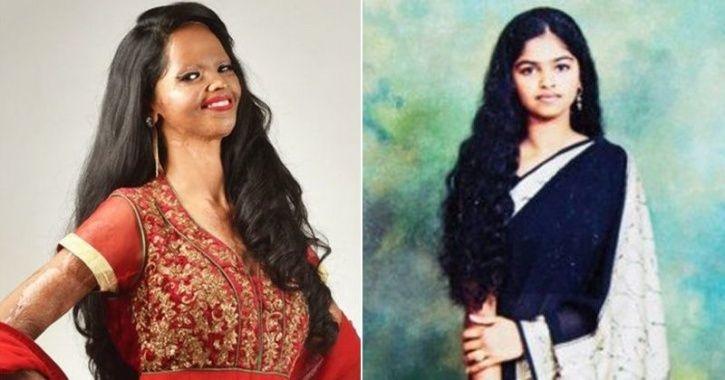
At the age of 15 , when a girl or a boy makes happy memories and learn about life . She was attacked in the market full of people . She was attacked because she rejected an old jerk of 32 years old.

A 32 year old proposed a marriage proposal to a 15 year old girl , who lives near the neighborhood. She ignored and rejected him and he planned an acid attack .

Her name is Lakshmi Agarwal , she was attacked at the age of 15 in 2005 in New Delhi after rejecting the romantic advances of Naeem Khan . She didn’t inform anyone about the scenario because she believed her parents and society would have blamed her and stopped her study .

After 10 months , Lakshmi was in the market and Naeem asked her again through message about the marriage proposal but she didn’t respond . And in no time , Kamran (Naeem’s older brother ) and his girlfriend attacked her with acid . He was in the motorcycle and his girlfriend Rakhi threw acid on Lakshmi , when Kamran called her name and she looked behind for response.

She fainted on the road and when she regain consciousness she went middle of the road asked for help and met with multiple accidents but no one stopped to help her . She was burning in fire and her skin was melting.

A man named Arun Singh called PCR and told police about the situation . Someone threw water to help her but it turned out opposite and the acid burnt her neck . Arun think it might be late , so he helped her on the backseat of his car , later the seat cover turned into black hole due to the acid .

Arun admitted her in the hospital , called police and her family . Lakshmi went through many surgeries and operations including eye surgery. Four days later Naeem Khan got arrested but was bailed after a month later .

Protests and media attention.

After many protests and media attention Naeem got life imprisonment .

Lakshmi’s story was one of the series in the Hindustan Times. Lakshmi was scared after the attack because most of her face and body parts were not same as before . But she didn’t loose hope ,she fought for justice , asked for help for the victims of acid attacks and pleaded the law for the ban on sale of acid.

Meanwhile government failed to frame policies on acid sale and chemical attacks .

Seriousness is not seen on the part of the government in handling the issue,” the bench headed by Justice RM Lodha.

In 2013 , the plea of Agarwal was heard and later claims that “ Acid is freely available in shops. Our own volunteers have gone and purchased acid easily. In fact, I have myself purchased acid,” she said. “We have launched a new initiative called ‘Shoot Acid’.

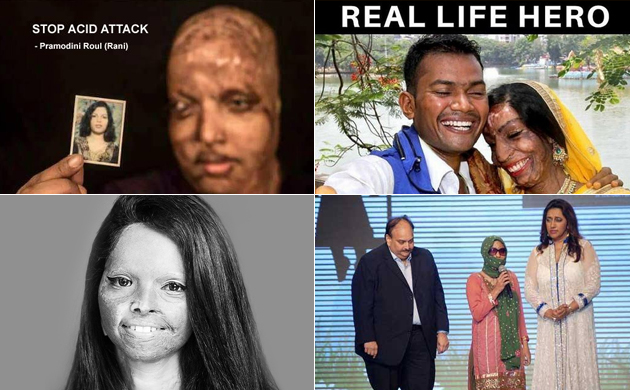
After , the law passed by Supreme court . Lakshmi founded NGO named Chhanv Foundation to help acid attack survivors in India.

In 2019, she was honored with the International Women Empowerment Award from the Ministry of Women and Child Development, the Ministry of Drinking Water and Sanitation and UNICEF for her campaign of Stop Acid Sale. In 2014, she received the International Women of Courage award at the hands of First Lady Michelle Obama.

And the movie Chhapaak is based on her life and stars Deepika Padukone in her role.

“And one day she discovered that she was fierce, and strong, and full of fire, and that not even she could hold herself back because her passion burned brighter than her fears.”

– Mark Anthony

Link

International day of Tropics

The serenity of the lulling ocean is a wondrous thing to behold..more precious than the gems coveted and covered in platinum or gold…

Oksana Rus

Introduction

International day of Tropics is observed every year on June 29th . This day is celebrated to highlight the different challenges and opportunities faced by the nation as well as by the people who lived in tropical areas .

Firstly , you want to know about things like :

What are tropics ?

Why we celebrate international day of Tropics ?

Or

Is it worth it to talk about these things and is it really important ?

Well hold your horses and try to calm .

What is tropic day and why we celebrate it ?

Well a tropic day is celebrated to highlight the importance of Tropics , it signifies extraordinary and astounding diversity of tropical nations .

The Tropic defined as a area /region between tropic of Cancer and tropic of Capricorn . The day aim at promoting tropical regions and awareness to the people about the diversity of these regions .

While these regions go through little seasonal changes on day to day basis because of some factors like tomography , climatic variation that causes changes in temperature and make these regions warm.

This day introduced to the world when in June 29th , 2014 twelve leading tropical research institutes come together and collaborate. The inaugural state of the Tropics report was launched . The report offers some unique perspective for the increasing the importance of these regions .

United Nations General Assembly adopted resolution A/RES/70/267 in 2016, which declared that 29 June of each year is to be observed as the International Day of the Tropics.

The International day of Tropics briefly explained the issues affecting the tropical zone’s all over the world. To raise awareness and important role the countries played to Sustainable goals .

International day of Tropics 2021

As per the state tropics report the theme of this year is “ THE DIGITAL DIVIDE IN THE TROPICS ”

With the record of sustainable development goals as well as developmental scope . The biodiversity of these regions are maximum and its loss is also greater there. Tropical regions comprise 98% world’s mangrove forests, and around 99% mangrove species.

Due to the subpolar zone the Sun is directly overhead which is one of the region of extinction of flora and fauna in the Tropics. The region is subjected to myriad and need immediate attention to ensure sustainable development.

More than 50% of renewable water resource could be founded their. But the threat lies which causes eviction of lives in the Tropics.

Importance :

Due to the problems it’s our duty as a human being to spread awareness about the implications in climate changes , deforestation , urbanization , global warming effect the biodiversity and lives in Tropics.

The International day of Tropics organize many events in which people share their stories , events and lives in these areas and formulate strategies to ensure the development of such regions .

You who sacrifice fortunes to see the luxuriance of the tropics or the polar lights of the arctic, must pay more dearly to see the One for whom the luxuriance of the tropics is poverty and the polar lights are a tallow candle.

Nikolaj Velimirović, Prayers by the Lake

Link:

SEBI: Securities and Exchange Board of India

SEBI (LOGO)

The Securities and Exchange Board of India (SEBI) is the regulatory body for securities and commodity market in India under the jurisdiction of Ministry of Finance , Government of India. It was established on 12 April 1988 and given Statutory Powers on 30 January 1992 through the SEBI Act, 1992.

Securities and Exchange Board of India (SEBI) was first established in 1988 as a non-statutory body for regulating the securities market. It became an autonomous body on 30 January 1992 and was accorded statutory powers with the passing of the SEBI Act 1992 by the Indian Parliament. SEBI has its headquarters at the business district of Bandra Kurla Complex in Mumbai and has Northern, Eastern, Southern and Western Regional Offices in New Delhi, Kolkata, Chennai, and Ahmedabad respectively. It has opened local offices at Jaipur and Bangalore and has also opened offices at Guwahati, Bhubaneshwar, Patna, Kochi and Chandigarh in Financial Year 2013–2014.

The SEBI is managed by its members, which consists of the following:

*The chairman is nominated by the Union Government of India.
*Two members, i.e., Officers from the Union Finance Ministry.
*One member from the Reserve Bank of India.
*The remaining five members are nominated by the Union Government of India, out of them at least three shall be whole-time members.

SEBI has to be responsive to the needs of three groups, which constitute the market:

*issuers of securities
*investors
*market intermediaries

SEBI has three powers rolled into one body: quasi-legislative, quasi-judicial and quasi-executive. It drafts regulations in its legislative capacity, it conducts investigation and enforcement action in its executive function and it passes rulings and orders in its judicial capacity. Though this makes it very powerful, there is an appeal process to create accountability.

Mumbai HQ (Head Quarters)

Central Bureau of Investigation (CBI)

Central Bureau of Investigation

• Origin as Special Police Establishment (SPE) – set up in 1941.

• Purpose: Investigate bribery and corruption in
transactions with the War & Supply Department of India during World War II.

Delhi Special Police Establishment (DPSE) Act,1946

• Transferred the superintendence of the SPE to the Home Department.

• Jurisdiction of the DPSE:
 Extended to all the Union Territories.
 Could be extended to the States with the
consent of the State Government.

• 1963 Home Ministry resolution: SPE became the
Central Bureau of Investigation (CBI)

• Purpose: To investigate
 Serious crimes related to Defence of India, corruption in high places, serious fraud etc.
 Hoarding, black marketing and profiteering in essential commodities.

• At present, employees of public sector undertakings come under CBI purview.

• 1969 nationalisation of the banks: employees of Public Sector Banks come under the ambit of the CBI.
• Superintendence of CBI:
 Central Vigilance Commission (CVC) – for
investigation of offences under the Prevention
of Corruption Act, 1988.
 Department of Personnel & Training (DOPT) in the Ministry of Personnel, Pension & Grievance -for all other matters.

Three divisions of CBI:

Anti-Corruption Division
 Investigates cases under the Prevention of Corruption Act, 1988.
 Against public officials and the employees of Central Govt, PSUs, Bodies controlled by the GoI etc.

• Economic Offences Division
 Investigates major financial scams and serious economic frauds.
 Crimes related to Fake Indian Currency Notes, Bank Frauds and Cyber Crime.

Special Crimes Division
 Investigates serious, sensational and organized crime under the IPC and other laws.
 Based on the requests of State Govts or on the orders of the SC and High Courts.
• CBI needs the prior consent of State to exercise of powers and jurisdiction in the State.
 SC and HCs can order investigation without the consent of the state.