Public Policy relevancy with Social welfare Programmes

Source: Shutterstock

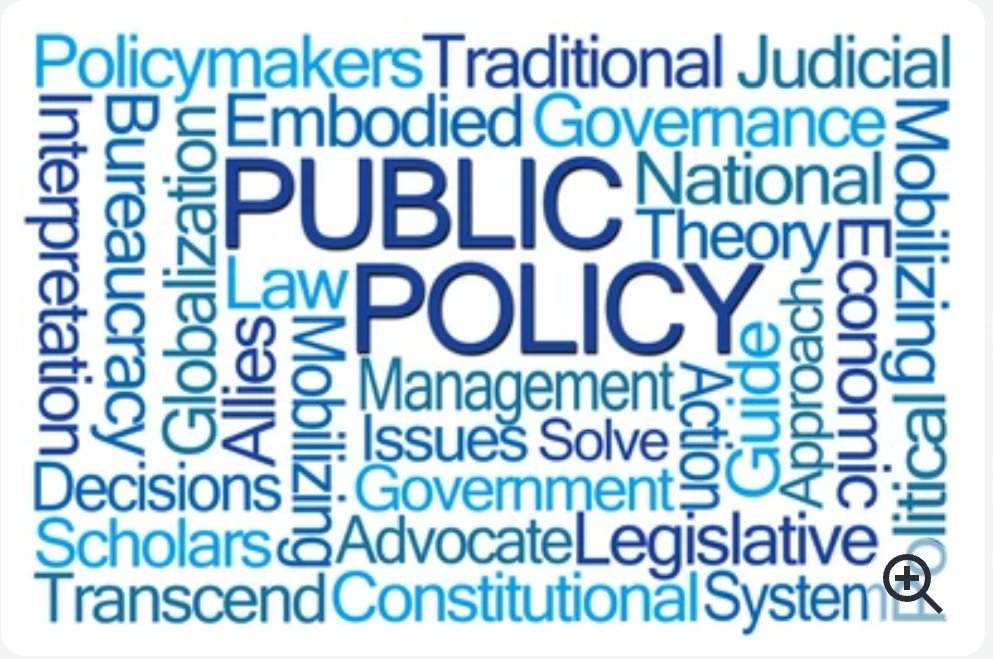
Public Policy is new tool of Government to solve socio economic problems through several policies such as Agriculture Policy, Labour Policy, Health Policy, Education Policy, Wage Policy, Industrial Policy and Foreign Policy etc. Government view public policy as a dependent variable and study as to how society is evolving and Political system shaping the nation.

The field of public policy has emerged comparatively in beginning as traced in early 1950s. The concept of public policy was originated in 1951 from the publication of Harold Lasswell. According to Thomas R Dye, Public Policy is what Government will choose to do or not to do. In indian context, public policy could be government rules and Programmes in the form of political system of laws, ordinance, court decision, executive orders, decisions or even unspoken understanding  of what is to be done.

Paul Appleby, the essence of public administrative decision policy defined as a purposed course of action of an individual a group, an Institution or government to realize a specific objective or purpose, within a given environment. The process of public policy flows both top to bottom and bottom to top or even simultaneously. The policy process is viewed from higher level as execution of Policy and viewing meta Policy meaning  progressive.

After independence, India did not carry a specific structural path for economic development. It was decided that economic development must be based on social, political growth that transmutes human advancements. India adopted the Socio – economic development model in which major areas were industries and agriculture. Planning commission (now NITI Aayog) for the purpose of development initiatives adopted in a five year plan as a major development plan. structure policies Public policy developed as academic pursuit in the 1950s. However, Public Policy was very much evident in 1940, stimulating Government activities and academic organizations. Study of government, policy, Social Science involves political Science, public administration, economics and management.

Dimock stated public policy as “deciding at any time or place what objectives and substantive measures should be chosen in order to deal with particular problems”. Public Policy process structure to maximize and utilize all resources to overcome the catastrophic events. Public Policy is a continuous process, furiously working towards  acquiring best outcomes. Righteous and accurate conditioning helps to bring desired aims. The process requires transparency, decentralization, and effective policy implementation. Public Policy Process is significant to change nation economic, social, and political representation especially in the Case of developing nations.

According to Chandler and Plano, treated public Policy as ” the strategic use of resources to alleviate national problems  or governmental concerns”. Freeman and Sherwoods stated that it is the Public answer to the interest in refining the circumstances. Robert linebewy  emphasized on “it is what governments do and fail to do for their citizens”. Anderson expresses it,” policy is being made as it is being administered as it is being made”.

 Understanding of Public Policy
Source: iass.potsdam.de

 The Public Policy process is a kind of Physics  equation that if finding a small error will cost the huge problem, also diffuses the whole processing mechanism. Public policy processes require pointed manifestation at each level. Hogwood and Gunn (Policy Analysis for the Real World, 1984) concluded nine vital Stages in the policy process: Agenda Setting, object screening issue defining , forecasting alternatives, objectives & priorities, policy implementation, monitoring and control, policy maintenance, succession and termination, these all required for successful policy. As we are aware, policy making is a complex and dynamic strategy, it requires certain tools to resolve the real world problem of economic, financial, economic, social problems. Public Policy enacted by the government or its executives with the help of civil Societies, media, and pressure groups.

 In the Context of public policy process Lindblom stressed on a highly relative and plasticity decision making system characterised by compromise, incrementalism and continual adjustment. Public policy process is conceptualized as in sequence or stages ( Benson, Jordan, 2015). There are (1) sequence follows as – i) Problem emergence 2) agenda setting 13) Consideration of policy options, &) Decision making 5) implementation 6) evaluation (Jordan and Adelle, 2012).

A policy can be simple or complex, explicit or implicit, discretionary or detailed, private or public qualitative and quantitative. Government does not set advisory principles;  it is the Supreme Court who decides and provides new interpretations of the articles of constitution to curve out the new Policy.

Nature of public policy covering wide portion of its activities such as socio- economic development, women empowerment, child labour, equality, education and so on. Nature of Public policy foremost needs Policy making closely related to decision-making. Decision making includes an identification of a problem, sharp analysis, and the ability to see alternatives. Policies have specific goals, It is absolute to expect a policy to indicate the direction towards. where actions are required. The choices of policies or its objectives are frequently mesmerized. Thus, goals and objectives depend on the values of the policy makers. Planning or formulation is a key component to move forward in the public policy process. Administrators must maintain a planner to know the portion of resources, investments because goals cannot be achieved without having proper planning. Policy Analysis is most significant to rectify any problem in process; it is a technique to use in Policy Process. Basically used for problem assessment and monitoring. Before the decisions, Similarly, Policy Management is also familiar with implementation. It deals with policy making and policy preparation process, it ensures it is producing good quality policies.

 Thus, goals and objectives depend on the values of the policy makers. Planning or formulation is a key component to move forward in the public policy process. Administrators must maintain a planner to know the portion of resources, investments because goals cannot be achieved without having proper planning. Policy Analysis is most significant to rectify any problem in process; it is a technique to use in Policy Process. Basically used for problem assessment and monitoring. Before the decisions, Similarly, Policy Management is also familiar with implementation. It deals with policy making and policy preparation process, it ensures it is producing good quality policies.

 Policy management should be considered as a loose point or giving no importance, it is an Icebreaker of Public Process, if you assess anything wrong at this stage, there will be high chance to “trash in” the policy. That is why policy analysis and policy management is interdependent. 
 

How Mental Health Counseling help Gender Based Violence Survivor

Source: Alignable

Gender-based violence enormously impacts the mental health of a person. In this case, mental health counseling has a significant role to determine support to gender based violence survivors. Post-violence survivors possibly suffer with depression, anxiety and post traumatic stress disorder. Accurate role of mental healthcare prevents the increasing number of GBV; to reduce negative thoughts. Countries having Gender Based violence prevention based on rigid public health models that do not carry mental health components, though GBV must require concepts, competencies and standards of mental health to interdict the GBV. Inequality of gender, gender stereotypes & prejudice, difference of femininity and masculinity capabilities,  Upbringing in patriarchal society or mindset aggression, male ego are several elements increasing insensitivity and hideousness and intricate to control the GBV.

Source: Forbes Health

1) Mental health professionals well aware of how to help and support the survivors,  what are their emotional & psychological requirements in case of physical,verbal, sexual violences, anxiety and depression mental health professional (MHP) capable to encounter accordingly.

2) Counseling is a faithful forum where anyone can be vulnerable, survivors can find it easy to open up & release themselves emotionally in front of mental health Counselors. MHP can maintain solidarity to survivors, value their experience, understand their needs, ensure faith of confidentiality that no word will go out in fact each word will be taken into consideration.

3) In gender-based violence, survivors evidently confront the issue of acceptance and believing. Professionals competent enough to provide acceptance and build confidence in them

4) Survivors need emotional Support as  Counselors understand it  entrusts  emotional assistance.

5) Mental health counseling significantly helps survivors to uplift their lives by feeling confident that helps them to know about themselves and find sustainability on a financial level. Health professionals may support the idea of a high level of self awareness for themselves for more influential results.

6) Different Mental health counseling Programs and survey research increase the  efficiency and credibility of Counseling for survivors. Research determines the effectiveness of orientation of work,  concluding the conceptual results that enhance the relevance and reliability of surveys.

7) Mental health professionals help survivors to overcome feelings of unwantedness just by listening and understanding their outputs, that give them  sufficient emotional support.

8) Mental health counseling must be provided 24×7 through E – Governance and from NGOs online portals. Government initiatives become extremely important regarding gender Based violence, their women empowerment Policies must confirm the positive results on society that ultimately helps women socially.

9) Determining mental health counseling in rural areas is crucial because women, especially in marginalized communities, find it far more difficult to come out and express their needs because of social structure & norms. Mostly do not know what to do in such situations. At this time, mental health counselors untapped them & make them aware of their legal, social and political rights; moreover their human rights. 

10) Gender based violence survivors do not know what to do now at first, self doubt engraved in them strongly. Mental health professional advisory assistance supports them to better their condition by doing counseling sessions and penetrating positivity.

11) Cognitive behavioral therapy helpful to reduce mental health issues

12) Psychological counseling for survivors

13) Therapeutic counseling addresses issues like self blame, guilt trauma and much more.

14) Empower survivors to adopt adequate strategies to handle violence and protect themselves.

15) Crisis intervention, free legal, shelter care, supportive groups and psychotherapy to both prevent social isolation and social support.

16) Require sensitive the staff; sensitivity to the person and the problem

17) Maintain privacy and safety for clients.

National human Rights commission Report protection the Rights of LGBTQ community in Covid 19

  • No discrimination at health centre, healthcare professionals should be sensitised about it.
  • Skill development programmes
  • Online classes, provision of education without discrimination 
  • All different schemes should take into account of gender diversity and vulnerabilities of LGBTQ in terms of eligibility requirements like ID proofs, ensure transgender and interested covered in schemes.
  • Medico – legal case for survivors of domestic and sexual violence along with timely treatment, psycho- social support.
  • Access to health services at primary health centers, community health and quarantine centers.
  • Mental health treatment/therapies and counseling through all district and local hospitals and medical health centers during pandemic.

 Listen to and believe survivors because the perpetrator is only responsible for actions. Teach in schools what is to be men and make them aware of their emotional side. Call for responses and services require a mandate for solution. Understanding human values is extremely vital as men have a hard time to evaluate those values, learn the signs of abuse and how we can help and talk extensively and exclusively of gender based violence.

Anything that’s human is mentionable, and anything that is mentionable can be more manageable. When we can talk about our feelings, they become less overwhelming, less upsetting, and less scary.” — Fred Rogers

Recommendations for Gender Based violence

Source: UN Women

Sex Education, Community, media, intervention, gender norms programmes helpful to tackle GBV. Several LGBTQ+ organizations and their programmes initiated in the USA (New York, Washington, California) we’ll discuss below all their activities.

  • Community intervention can address gender norms and attitudes. For example, the combination of microfinance schemes for women. IMAGE microfinance and gender equity initiated in South Africa and stepping stone programmes in Africa and Asia. Well trained facilitators and community ownership appear to boost the effectiveness of the programme.
  • Public awareness campaigns via television, radio, newspapers and other mass media can be effective in altering attitudes towards gender norms.
  • School based programmes consider considerable components to spread words regarding gender norms and attitudes before they become deeply ingrained in children & youth. Positive results have been reported in the US and Canada by Youth Relationship Project.

In Rawada, UNFPA introduced  “one stop centers” to fulfill the diverse physical, emotional and school needs of survivors.

  • Psycho – counseling, helplines and safe houses programmes on sexual reproduction health that should be treated as first place service.

Research – Build Gender sensitivity in male groups  

Men as partners programme from age 10 – 14 years, only all male groups must participate in changing attitude or mindset. Encourage boys to stop domestic and sexual violence towards gender and to become responsible but programme has yet to be in evaluation process.

Youth Relationship Project in Ontario is a community based intervention to help at-risk 14 – 16 year old boys; take a health promotion approach that develops healthy, no abusive relationships by providing education about gender related issues, conflict resolution, communication skills and social action activities. Randomized controlled trials showed that intervention was effective in reducing incidents of physical and emotional abuse.

Another programme in United States, Mentors in violence prevention, provide two hours educational sessions to male and female high school and college student in mixed or single sex groups. Here, students learn about different types of abuse, gender stereotypes and society’s acceptance of violence against women. Evaluation of the programme examined the knowledge and attitudes of participants  after two to five months of implementation. This study indicated that the programme improved participants’ attitudes towards violence against GBV.  

Organizations like GLSEN, Lambda legal, Advocates for youth, Gender spectrum, Centrelink,The Trevor Project are working exclusively for gender sensitivity and inclusive environment, suicide prevention services to young LGBTQ people under 25. Some of the main projects/steps of organizations are:- 

  • Through litigation, education and Policy advocacy protect the rights of LGBTQ people that seek health care and medical professional health and facilities understand their responsibility to treat LGBT patients fairly.

Sports projects as education & advocacy programme.

  • Solidarity week, No name calling week and day of silence are part of the project
  • Supportive educators, comprehensive policies and inclusive curriculum.
  • Train organize and support student survivor activists in challenging their educational institutions to address violence and discrimination.
  • Advocate for Policy change at the campus, state and federal levels to ensure meaningful systematic action to end gender violence.
  • Communities engagement including young people of color, black and Latino and trans color youth; members use social media campaigns, peer education, storytelling and media outreach to raise awareness of interconnection between HIV disparity, racism, homophobia and transphobia determinate for inclusion of youth most impacted by HIV in planning, implementation and evaluation of programs; policies that affect their health and well being.

GENDER BASED VIOLENCE AND MENTAL HEALTH COUNSELING

Source: Love Uganda Foundation

Gender-based violence impact the enormously on mental health of person. In this case, mental health counselling has significant role to eradicate gender based violence. Post-violence survivor possibly suffer with depression, anxiety and post traumatic stress disorder. Accurate role of mental healthcare prevent the increasing number of GBV; to reduce negative thoughts. Countries having Gender Based violence prevention based on rigid public health model that do not carry mental health component, though GBV must require concepts, competencies and standards of mental health to interdicte the GBV. Inequality of gender, gender stereotypes & prejudice, difference of feminity and masculinity capabilities,  Upbringing in patriarchal society or mindset aggression, male ego are several elements increasing insensitivity and hideousness and intricate to control the GBV.

Source: International Centre for Research on women

 Listen to and invest believe in survivors because prepetrator is only responsible for actions. Teach in schools what is to be men and make them aware of their emotional side. Call for responses and services require mandate for solution, Understand consent is extremely vital as men hard time to evaluate NO, learn the signs of abuse and how can we help and talk extensively and exclusively of gender based violence. In 2013 UNFPA and UN Women initiated Joint Global Programme on Essential Services giving to people who suffering with Gender based violence; providing access to services and quality of these particularly focus on health, Justice and social science ( such as psycho – counseling, helplines and safe house) and programmes on sexual & reproduction health because health services should be first place that survivors of abuse seek assistance.

Source: OSCE

 1) Mental health professionals well aware of how to help and support the survivors,  what are their emotional & psychological requirements in case of physical,verbal, sexual violences, anxiety and depression mental health professional (MHP) capable to encounter accordingly.

 2) Counselling is a faithful forum where anyone can be vulnerable, survivors can find easy to open up & release themselves emotionally in front of mental health Counselors. MHP can maintain solidarity to survivors, value their experience, understand their needs, ensure faith of confidentiality that no word will go out in fact each word will taken into consideration.

 3) In gender-based violence, survivor evidently confront the issue of acceptance and believing. Professionals competent enough to provide acceptance and build confidence in them

 4) Survivors needs emotional Support as  Counselors understand it  entrust  emotional assistance.5) Mental health counselling significantly help survivors to uplift their lives by feeling confident that help them to know about themselves and find sustainability on financial level. For it, Health professionals must support the idea of high level of self awareness for themselves for more influencial results.

5) Mental health counselling significantly help survivors to uplift their lives by feeling confident that help them to know about themselves and find sustainability on financial level. For it, Health professionals must support the idea of high level of self awareness for themselves for more influencial results.

6) Different Mental health counselling Programs and survey research increase the  efficiency and credibility of Counselling for survivors. Research determine the effectiveness of orientation of work,  conclude the conceptual results that enhance the relevancy and realiability of survey.

 7) Mental health professionals helps survivors to overcome of feeling of unwantedness just by listening and understanding their outputs, that give them  sufficient emotional support.

 8) Mental health counselling must provide 24×7 through E – Governance and from NGOs online portals. Government initiatives become extreme important regarding gender Based violence, their women empowerment Policies must confirm the positive results on society that ultimately helps women socially.

 9) Determining mental health counseling in rural areas is crucial because women especially in marginalized community found far more difficult to come out and express their needs because social structure & norms. Mostly do not aware of what to do in such situations. At this time, mental health counselors untapped them & make them aware of their legal, social and political rights; moreover their human rights.

 10) Gender based violence survivor do not know what to do now it at first, self doubt engraved in them strongly. Mental health professional advisory assistance support them to better their condition by doing counselling sessions and penetrate positivity.

 11) By community Awareness program, self employment, skill development program, self help group , support health care & group insurance support evidently proved to be helpful to the survivors.

Gender based violence anywhere is a threat to peace & security everywhere – John.F.kerry

GENDER BASED VIOLENCE AND MENTAL HEALTH COUNSELING

Source: Love Uganda Foundation

Gender-based violence impact the enormously on mental health of person. In this case, mental health counselling has significant role to eradicate gender based violence. Post-violence survivor possibly suffer with depression, anxiety and post traumatic stress disorder. Accurate role of mental healthcare prevent the increasing number of GBV; to reduce negative thoughts. Countries having Gender Based violence prevention based on rigid public health model that do not carry mental health component, though GBV must require concepts, competencies and standards of mental health to interdicte the GBV. Inequality of gender, gender stereotypes & prejudice, difference of feminity and masculinity capabilities,  Upbringing in patriarchal society or mindset aggression, male ego are several elements increasing insensitivity and hideousness and intricate to control the GBV.

Source: International Centre for Research on women

 Listen to and invest believe in survivors because prepetrator is only responsible for actions. Teach in schools what is to be men and make them aware of their emotional side. Call for responses and services require mandate for solution, Understand consent is extremely vital as men hard time to evaluate NO, learn the signs of abuse and how can we help and talk extensively and exclusively of gender based violence. In 2013 UNFPA and UN Women initiated Joint Global Programme on Essential Services giving to people who suffering with Gender based violence; providing access to services and quality of these particularly focus on health, Justice and social science ( such as psycho – counseling, helplines and safe house) and programmes on sexual & reproduction health because health services should be first place that survivors of abuse seek assistance.

Source: OSCE

 1) Mental health professionals well aware of how to help and support the survivors,  what are their emotional & psychological requirements in case of physical,verbal, sexual violences, anxiety and depression mental health professional (MHP) capable to encounter accordingly.

 2) Counselling is a faithful forum where anyone can be vulnerable, survivors can find easy to open up & release themselves emotionally in front of mental health Counselors. MHP can maintain solidarity to survivors, value their experience, understand their needs, ensure faith of confidentiality that no word will go out in fact each word will taken into consideration.

 3) In gender-based violence, survivor evidently confront the issue of acceptance and believing. Professionals competent enough to provide acceptance and build confidence in them

 4) Survivors needs emotional Support as  Counselors understand it  entrust  emotional assistance.5) Mental health counselling significantly help survivors to uplift their lives by feeling confident that help them to know about themselves and find sustainability on financial level. For it, Health professionals must support the idea of high level of self awareness for themselves for more influencial results.

5) Mental health counselling significantly help survivors to uplift their lives by feeling confident that help them to know about themselves and find sustainability on financial level. For it, Health professionals must support the idea of high level of self awareness for themselves for more influencial results.

6) Different Mental health counselling Programs and survey research increase the  efficiency and credibility of Counselling for survivors. Research determine the effectiveness of orientation of work,  conclude the conceptual results that enhance the relevancy and realiability of survey.

 7) Mental health professionals helps survivors to overcome of feeling of unwantedness just by listening and understanding their outputs, that give them  sufficient emotional support.

 8) Mental health counselling must provide 24×7 through E – Governance and from NGOs online portals. Government initiatives become extreme important regarding gender Based violence, their women empowerment Policies must confirm the positive results on society that ultimately helps women socially.

 9) Determining mental health counseling in rural areas is crucial because women especially in marginalized community found far more difficult to come out and express their needs because social structure & norms. Mostly do not aware of what to do in such situations. At this time, mental health counselors untapped them & make them aware of their legal, social and political rights; moreover their human rights.

 10) Gender based violence survivor do not know what to do now it at first, self doubt engraved in them strongly. Mental health professional advisory assistance support them to better their condition by doing counselling sessions and penetrate positivity.

 11) By community Awareness program, self employment, skill development program, self help group , support health care & group insurance support evidently proved to be helpful to the survivors.

Gender based violence anywhere is a threat to peace & security everywhere – John.F.kerry

Collapsing Indian Healthcare Governance

Public health is a core components of democracy. Contemporary Health policies are unenable to build coherence with SDGs. It reflected the major execution constraints. Health Policies of India always been a disappointment point; the indecisive nature of Governance dragged country on the dangerous edge. According to world bank, India spend in Public health 3.54% of their GDP on 136.64cr demographic capacity. It is the lowest budget in World. Comparing to countries like Nepal, Myanmar, Haiti, South Sudan, Algeria and Cuba invested more than India; all spend at least 6% of their GDP in public health. Other developed nations like UK, Germany, France spend more than 10% and USA give 16% of their GDP to health care sector.

Source: Commonwealth health hub

National health policy suggested that expenditure on health by states should be increased to up to 8% but none of the states ready to invest more than 5.4% of total budget in healthcare system. Spending less in health sector decrease our capacity to fight against the pandemic in most difficult times. We require to spend more, design appropriate Policy and most importantly implement and monitor those policies in structured manner for fruitful results.

National health mission was to provide health benefits in Rural(2005) & Urban (2013). Main functions of this programme are strengthening health system, prevention of communicable and non – communicable diseases, and create universal accessibility , affordable & quality healthcare service to all citizens in urban and rural areas. This programme was extended because of the tremendous outcome which only displayed on papers but still governance needs to played their proper role in designing and implementing accurate policy. India faces several challenges in the path of addressing health crisis; India lacks strategic Policy, constructive concepts, regulation and work ethics.

Source: ncbi.nih.gov.in

National health policy 1983 was the failure; cannot Considered to revive the healthcare crisis. Infact, liberalization opened the direction to move towards the public private partnership to achieve health services to all. To providing Healthcare services to urban poor is as essential as in rural areas. ORF mention in their report on URBAN HEALTH GOVERNANCE IN INDIA: A POLICY ROUNDTABLE addressing health as central component of urban planning and governance. Migration from rural to urban areas becoming extremely important aspect of urbanization, where people believes urban healthcare services are far more better than rural; but the urban system as crucially defected as the rural area, it raises question on the governance structure. Indian Health system cannot deal with diseases like tuberculosis, malaria, HIV+AIDS , deficiency of vitamins. Governance have to acknowledge the basic problem in health sector then only can able to build the health policy.

PUBLIC HEALTH ISSUES LEAD TO THE HEALTH CRISIS

National health policy 1983, 2002 and 2017 unleash to achieve an acceptable standard of good health system by upgrading infrastructure in existing public health; but it did not acquired the beneficial results out of these policies because Problem lying in Health Governance. Regulatory mechanism, Monitoring and evaluation of health policy aspects are not effectively pressuring for powerful outcomes. In India, 23% of sick population, 7% below poverty line population are not capable to afford Healthcare.

Source: Overview

According to spending in healthcare, India rank extremely low, estimation of spending Rs 3 per person on per day that count 1.02% of the GDP, meanwhile other countries average spending is 6%. WHO in Health financing profile 2017 depicted 67.78% of aggregate expenditure was paid out of pocket, on the other hand, the world average is 18.2%. let’s examine state – wise spending in public health.

Source: Overview

Bihar spend Rs 491 per capita on health (on 12.7cr population) less than half the Indian average spending 1.33. Madhya Pradesh spend Rs716 (on 86.8cr demography) and Uttar Pradesh Rs 733 (on 24.6cr population). On the contrary, we see complete different picture in Mizoram who spend Rs 5,862 of 4.2 % of it’s GDP (12.6cr population), Arunachal Pradesh Rs 5,177 (1.6% population) and Sikkim Rs 5126 (6.63 lakh). Two different spectrum in one country where few states neglect their public healthcare whereas others more inclined towards ensuring public health to their people.

Due to neglection of health sector, states who spend less suffering the most during Covid -19. These states had to faced the situation like lack of beds, hospital services, medical staff and medical equipments. This problem occurred because of years of neglection in health sector, health policy evaluation process was not used as weapon to counter the health crisis in India.

Lack of allocation to healthcare and lack of Governance capability caused the much bigger crisis. Covid -19 is global pandemic but it made Indian healthcare system came on it’s knees; when capital of country facing run out of beds, desperate hunt for oxygen cylinder, medical supplies it’s showed Indian healthcare system is rotten, toilsome and intricate.

Our Government and Governance is solemn enough to diminishing the health crisis. Capital of country not capable to fight against sudden health crisis then we can presuppose the conditions in rural areas. In this situation, Governance need to evaluate their mistakes that’s how Governance will play it’s sophisticated part, need some measures to ensure the public healthcare in entire country, should not resisted to only urban health centres.

Corruption in health sector, lowest quality health programme, poor cooperation between public & private sectors, lack of health awareness and no accessibility to medicines or testing machine services created cluster in health sector; which  reflected as more weakness during Covid -19. When India became epicenter of global pandemic during dangerous second wave; India made international headline. The scenes of families from hospital were horrified. It also depicted how Government failed us.

Government and bureaucrats have no capability to overturn the crisis and find relevant solution in serious conditions in country. Indian government lack leadership quality, Political will. Governance cannot work until top political leaders and bureaucrats show some credibility to disperse the crisis. India estimated 4.34 lakh death due to covid-19. Health crisis is not new in india, Government never capable to find dynamic Policy to eradicate diseases like Tuberculosis, Malaria, HIV+AIDS. Tuberculosis  caused 220,000 death every year. WHO estimated 2.64 million TB cases in 2020. KPMG report revealed that 74% doctors practice in urban areas this simply means rural area lack primary healthcare treatment facility. India has huge scarcity of doctors, nurses, paramedics and testing machines especially in rural areas. That’s how migration become prominent from rural to urban. WHO also suggested 1 doctor for 1000 people meaning 1:100 but India has 1:1445.

National TB Elimination Programme was not as effective as thought to obliterate the deadly disease from the country; where all other nation found the way to kill the health crisis. We need to revive the health policy structure and find new future oriented health policy to counter any sudden global health crisis. Let’s discuss few criteria to resist the health crisis in India.

RECOMMENDATIONS TO BUILD COLLAPSING HEALTH SYSTEM

PUBLIC PRIVATE PARTNERSHIP

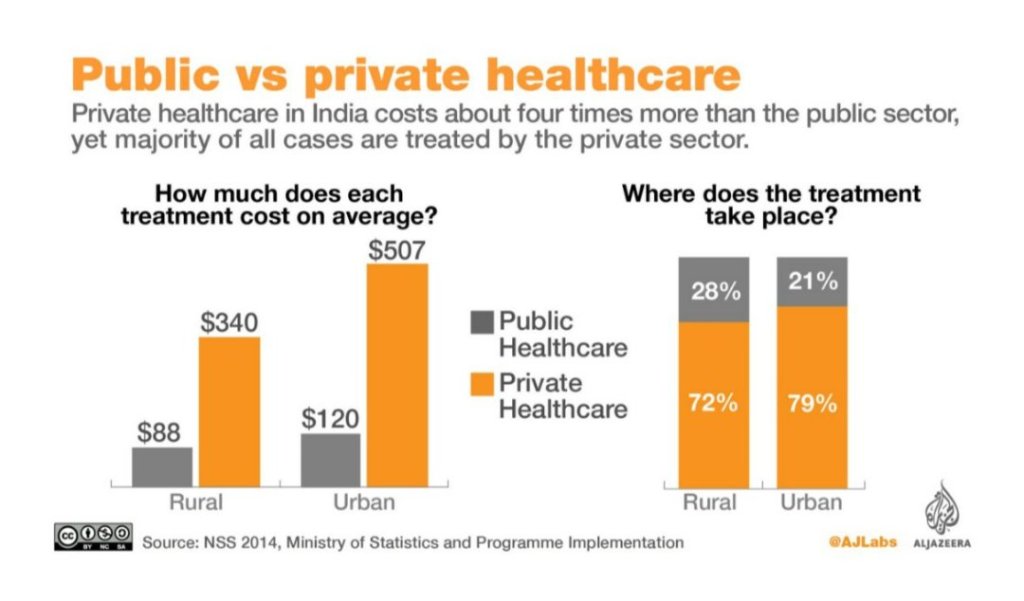
Last two years shook Indian healthcare system, demanded to take evident steps in healthcare sector. This is a accurate time to transform the ancient health policy and bring unique & innovative public health programme concerning the target population. Two main components of health crisis are affordability and accessibility which majority of population cannot reach to. Well governed PPP is the direction to improve the Indian healthcare system; through PPP India have seen success in the fields such as education, urban development and infrastructure.

Source: Alijazeera

• PPP provide resources to Government, which will bring experience and finances of the private sector. It will create a bridge between affordability and accessibility to all citizens.

• PPP ensures the expertise, finances, affordability, technology, specialist doctors.

• Now, one aspect need to consider that Public – Private sector will bring the resources but how, where, what to utilize at what place and in how much quantity for that Non – Government Organization can play the role of agent to fulfill the necessary requirements & provide research to private sector.

• Non – government organization can play essential role to ensure the PPP goals spread to all citizens. These organization overlook the formulation, Implementation and functioning of PPP. It can be great gap filler between affordability and accessibility.

• But, PPP should manage in control manner make sure by Governance it’s roles and functions otherwise PPP increase the burden of expenditure on common citizen. Governance needs to evaluate time to time the working mechanisms of PPP.

• Also, it is necessary to collaborate with non profit organization to maximize the result of PPP. Need to tackle down the any coming vagueness in PPP, maintain regulation.

INCREASE ALLOCATION TO HEALTHCARE

India must increase the spending on public healthcare. It should not differ state to state. Each state has to spend good  amount of their GDP in Public health. Centre Government construct one same Affordable healthcare Programme for all states. Through INTER – GOVERNMENTAL RELATION center Government ensure overlapping authority model to communicate. Govt should spend at least more than 6% of their GDP. It will provide huge access to necessary medical services in the country.

NATIONAL FREE MEDICATION AND COUNSELING

Center and state government incite medication facility including counseling and spread awareness regarding health issues of human body. Make citizens more conscious about their body. Now, this method has challenging step concerning in rural areas with help of NGOs, ASHA workers, door to door awareness is necessary to spread the words about the sanitation, coronavirus precautions, HIV+AIDS awareness and TB awareness programme. In digitalized world, Mobile clinic can play great  outlay of serving information of diseases to the people. Lunch effective powerful awareness programme in urban and rural areas Ensuring the awareness reaching to all citizens in country.  

Center and state government incite medication facility including counseling and spread awareness regarding health issues of human body. Make citizens more conscious about their body. Now, this method has challenging step concerning in rural areas with help of NGOs, ASHA workers, door to door awareness is necessary to spread the words about the sanitation, coronavirus precautions, HIV+AIDS awareness and TB awareness programme. In digitalized world, Mobile clinic can play great  outlay of serving information of diseases to the people. Lunch effective powerful awareness programme in urban and rural areas Ensuring the awareness reaching to all citizens in country.

CONCLUSION

Health Governance is one kind of Governance that we must deal with caution. Good Public Health Governance reflect the sincerety of Government ; it ensure the transparency, accountability and promote citizen centric Approach. Government determine universal Public healthcare no resistance to PAN areas. Providing Healthcare to citizens consider as enriching the immunity of country. Policy makers recite properly the Implementation part while performing the health policy; Keep the track of Monitoring then only we can decisively conclude the success of health policies.

Source: Twitter

Collapsing Indian Healthcare Governance

Public health is a core components of democracy. Contemporary Health policies are unenable to build coherence with SDGs. It reflected the major execution constraints. Health Policies of India always been a disappointment point; the indecisive nature of Governance dragged country on the dangerous edge. According to world bank, India spend in Public health 3.54% of their GDP on 136.64cr demographic capacity. It is the lowest budget in World. Comparing to countries like Nepal, Myanmar, Haiti, South Sudan, Algeria and Cuba invested more than India; all spend at least 6% of their GDP in public health. Other developed nations like UK, Germany, France spend more than 10% and USA give 16% of their GDP to health care sector.

Source: Commonwealth health hub

National health policy suggested that expenditure on health by states should be increased to up to 8% but none of the states ready to invest more than 5.4% of total budget in healthcare system. Spending less in health sector decrease our capacity to fight against the pandemic in most difficult times. We require to spend more, design appropriate Policy and most importantly implement and monitor those policies in structured manner for fruitful results.

National health mission was to provide health benefits in Rural(2005) & Urban (2013). Main functions of this programme are strengthening health system, prevention of communicable and non – communicable diseases, and create universal accessibility , affordable & quality healthcare service to all citizens in urban and rural areas. This programme was extended because of the tremendous outcome which only displayed on papers but still governance needs to played their proper role in designing and implementing accurate policy. India faces several challenges in the path of addressing health crisis; India lacks strategic Policy, constructive concepts, regulation and work ethics.

Source: ncbi.nih.gov.in

National health policy 1983 was the failure; cannot Considered to revive the healthcare crisis. Infact, liberalization opened the direction to move towards the public private partnership to achieve health services to all. To providing Healthcare services to urban poor is as essential as in rural areas. ORF mention in their report on URBAN HEALTH GOVERNANCE IN INDIA: A POLICY ROUNDTABLE addressing health as central component of urban planning and governance. Migration from rural to urban areas becoming extremely important aspect of urbanization, where people believes urban healthcare services are far more better than rural; but the urban system as crucially defected as the rural area, it raises question on the governance structure. Indian Health system cannot deal with diseases like tuberculosis, malaria, HIV+AIDS , deficiency of vitamins. Governance have to acknowledge the basic problem in health sector then only can able to build the health policy.

PUBLIC HEALTH ISSUES LEAD TO THE HEALTH CRISIS

National health policy 1983, 2002 and 2017 unleash to achieve an acceptable standard of good health system by upgrading infrastructure in existing public health; but it did not acquired the beneficial results out of these policies because Problem lying in Health Governance. Regulatory mechanism, Monitoring and evaluation of health policy aspects are not effectively pressuring for powerful outcomes. In India, 23% of sick population, 7% below poverty line population are not capable to afford Healthcare.

Source: Overview

According to spending in healthcare, India rank extremely low, estimation of spending Rs 3 per person on per day that count 1.02% of the GDP, meanwhile other countries average spending is 6%. WHO in Health financing profile 2017 depicted 67.78% of aggregate expenditure was paid out of pocket, on the other hand, the world average is 18.2%. let’s examine state – wise spending in public health.

Source: Overview

Bihar spend Rs 491 per capita on health (on 12.7cr population) less than half the Indian average spending 1.33. Madhya Pradesh spend Rs716 (on 86.8cr demography) and Uttar Pradesh Rs 733 (on 24.6cr population). On the contrary, we see complete different picture in Mizoram who spend Rs 5,862 of 4.2 % of it’s GDP (12.6cr population), Arunachal Pradesh Rs 5,177 (1.6% population) and Sikkim Rs 5126 (6.63 lakh). Two different spectrum in one country where few states neglect their public healthcare whereas others more inclined towards ensuring public health to their people.

Due to neglection of health sector, states who spend less suffering the most during Covid -19. These states had to faced the situation like lack of beds, hospital services, medical staff and medical equipments. This problem occurred because of years of neglection in health sector, health policy evaluation process was not used as weapon to counter the health crisis in India.

Lack of allocation to healthcare and lack of Governance capability caused the much bigger crisis. Covid -19 is global pandemic but it made Indian healthcare system came on it’s knees; when capital of country facing run out of beds, desperate hunt for oxygen cylinder, medical supplies it’s showed Indian healthcare system is rotten, toilsome and intricate.

Our Government and Governance is solemn enough to diminishing the health crisis. Capital of country not capable to fight against sudden health crisis then we can presuppose the conditions in rural areas. In this situation, Governance need to evaluate their mistakes that’s how Governance will play it’s sophisticated part, need some measures to ensure the public healthcare in entire country, should not resisted to only urban health centres.

Corruption in health sector, lowest quality health programme, poor cooperation between public & private sectors, lack of health awareness and no accessibility to medicines or testing machine services created cluster in health sector; which  reflected as more weakness during Covid -19. When India became epicenter of global pandemic during dangerous second wave; India made international headline. The scenes of families from hospital were horrified. It also depicted how Government failed us.

Government and bureaucrats have no capability to overturn the crisis and find relevant solution in serious conditions in country. Indian government lack leadership quality, Political will. Governance cannot work until top political leaders and bureaucrats show some credibility to disperse the crisis. India estimated 4.34 lakh death due to covid-19. Health crisis is not new in india, Government never capable to find dynamic Policy to eradicate diseases like Tuberculosis, Malaria, HIV+AIDS. Tuberculosis  caused 220,000 death every year. WHO estimated 2.64 million TB cases in 2020. KPMG report revealed that 74% doctors practice in urban areas this simply means rural area lack primary healthcare treatment facility. India has huge scarcity of doctors, nurses, paramedics and testing machines especially in rural areas. That’s how migration become prominent from rural to urban. WHO also suggested 1 doctor for 1000 people meaning 1:100 but India has 1:1445.

National TB Elimination Programme was not as effective as thought to obliterate the deadly disease from the country; where all other nation found the way to kill the health crisis. We need to revive the health policy structure and find new future oriented health policy to counter any sudden global health crisis. Let’s discuss few criteria to resist the health crisis in India.

RECOMMENDATIONS TO BUILD COLLAPSING HEALTH SYSTEM

PUBLIC PRIVATE PARTNERSHIP

Last two years shook Indian healthcare system, demanded to take evident steps in healthcare sector. This is a accurate time to transform the ancient health policy and bring unique & innovative public health programme concerning the target population. Two main components of health crisis are affordability and accessibility which majority of population cannot reach to. Well governed PPP is the direction to improve the Indian healthcare system; through PPP India have seen success in the fields such as education, urban development and infrastructure.

Source: Alijazeera

• PPP provide resources to Government, which will bring experience and finances of the private sector. It will create a bridge between affordability and accessibility to all citizens.

• PPP ensures the expertise, finances, affordability, technology, specialist doctors.

• Now, one aspect need to consider that Public – Private sector will bring the resources but how, where, what to utilize at what place and in how much quantity for that Non – Government Organization can play the role of agent to fulfill the necessary requirements & provide research to private sector.

• Non – government organization can play essential role to ensure the PPP goals spread to all citizens. These organization overlook the formulation, Implementation and functioning of PPP. It can be great gap filler between affordability and accessibility.

• But, PPP should manage in control manner make sure by Governance it’s roles and functions otherwise PPP increase the burden of expenditure on common citizen. Governance needs to evaluate time to time the working mechanisms of PPP.

• Also, it is necessary to collaborate with non profit organization to maximize the result of PPP. Need to tackle down the any coming vagueness in PPP, maintain regulation.

INCREASE ALLOCATION TO HEALTHCARE

India must increase the spending on public healthcare. It should not differ state to state. Each state has to spend good  amount of their GDP in Public health. Centre Government construct one same Affordable healthcare Programme for all states. Through INTER – GOVERNMENTAL RELATION center Government ensure overlapping authority model to communicate. Govt should spend at least more than 6% of their GDP. It will provide huge access to necessary medical services in the country.

NATIONAL FREE MEDICATION AND COUNSELING

Center and state government incite medication facility including counseling and spread awareness regarding health issues of human body. Make citizens more conscious about their body. Now, this method has challenging step concerning in rural areas with help of NGOs, ASHA workers, door to door awareness is necessary to spread the words about the sanitation, coronavirus precautions, HIV+AIDS awareness and TB awareness programme. In digitalized world, Mobile clinic can play great  outlay of serving information of diseases to the people. Lunch effective powerful awareness programme in urban and rural areas Ensuring the awareness reaching to all citizens in country.  

Center and state government incite medication facility including counseling and spread awareness regarding health issues of human body. Make citizens more conscious about their body. Now, this method has challenging step concerning in rural areas with help of NGOs, ASHA workers, door to door awareness is necessary to spread the words about the sanitation, coronavirus precautions, HIV+AIDS awareness and TB awareness programme. In digitalized world, Mobile clinic can play great  outlay of serving information of diseases to the people. Lunch effective powerful awareness programme in urban and rural areas Ensuring the awareness reaching to all citizens in country.

CONCLUSION

Health Governance is one kind of Governance that we must deal with caution. Good Public Health Governance reflect the sincerety of Government ; it ensure the transparency, accountability and promote citizen centric Approach. Government determine universal Public healthcare no resistance to PAN areas. Providing Healthcare to citizens consider as enriching the immunity of country. Policy makers recite properly the Implementation part while performing the health policy; Keep the track of Monitoring then only we can decisively conclude the success of health policies.

Source: Twitter

Tuberculosis in New self reliant India 2020

Source: World Health Organization

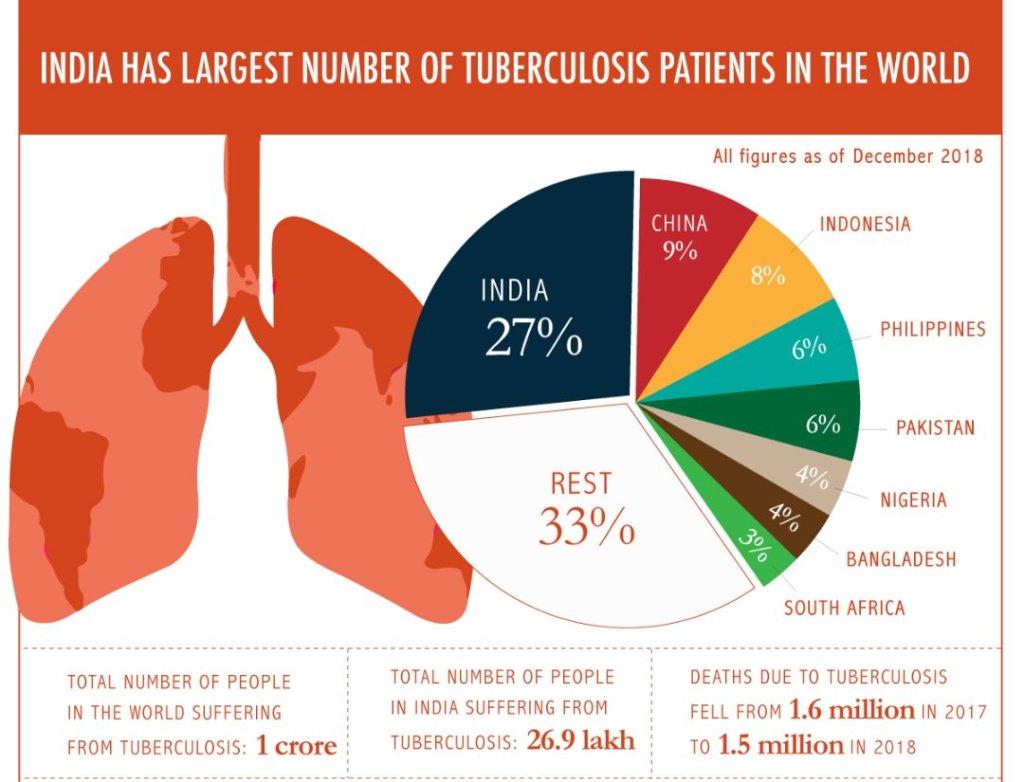
Tuberculosis is a pandemic globally become significant health threat in many countries. India top the list of having most tuberculosis patients. TB is airborne disease. Every year, India estimated TB patient is 28 lakhs, which is 27 per cent of the global total, almost 1200 TB patient die everyday, 10 every 3 minutes. In 2017, 204 TB cases per 1,00,000 encountered. India has the highest number of multi drug resistant TB (MDR-TB) cases in the world. Largest number of people living with multi resistance TB which normal dosage of Isoniziad and INH will not work on patient or first line drug of TB will not work on you.

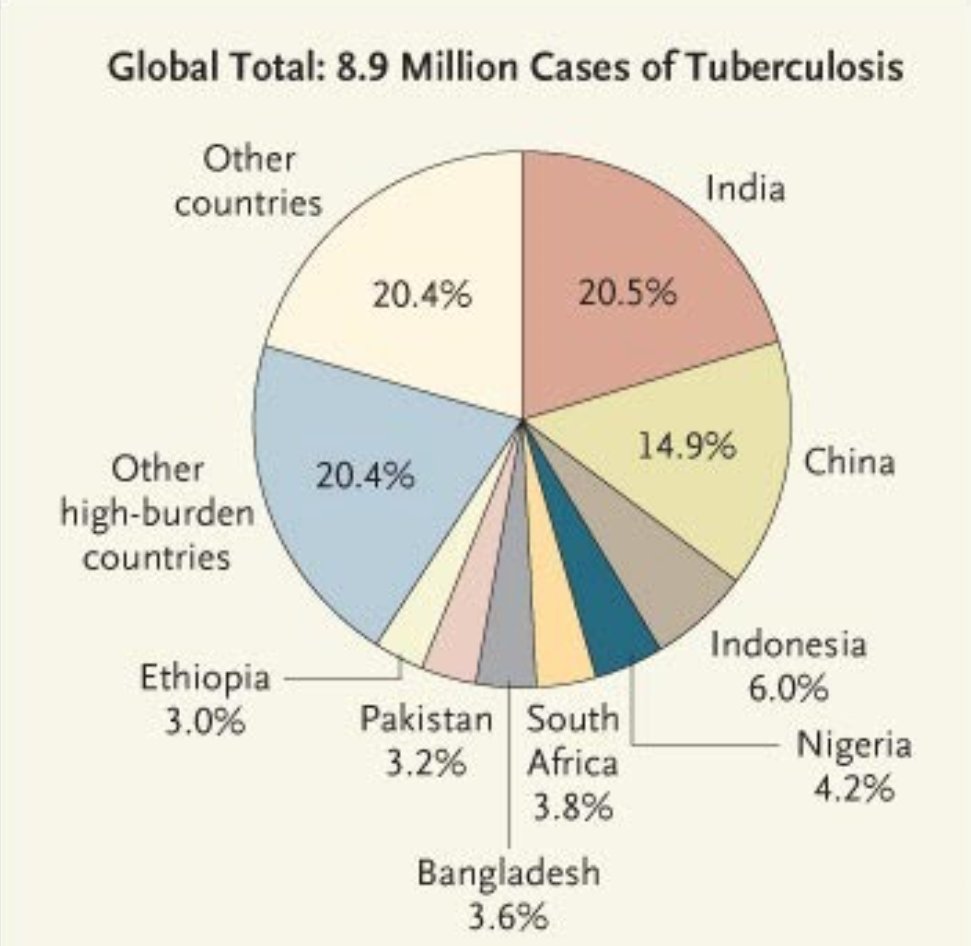
Source: The New England Journal of Medicine NEJM

According to Health Ministry & Welfare data explain, only 63 per cent of the patients infected with airborne disease and currently under treatment. Further, 1,47,000 patients are resistant to first and second line TB medicines. World Health Organization (WHO) reported India had 2.7 million new cases and 440,000 deaths due to TB in 2018 – the highest in the world. Despite such conditions India has not implemented goal measures effectively to control the spread of TB. Imagine if we are not capable to control TB then can we measure Coronavirus? when we have paucity of hospital, less number of health workers and doctors.

HISTORY OF TUBERCULOSIS IN INDIA

Credit: Mint (Tuberculosis Patients at a Govt hospital)

For TB patients first open air isolation institution and treatment of TB patients was started in Ajmer & almore 1906. The anti TB movement in the country gained momentum with TB association of India which was established in 1939.

The Bhore committee report issued in 1946 estimated that about 2.5 million patients required treatment in the country with 6,000 beds available. National Tuberculosis Control programme (NTP) was formulated in 1962. NTP was not implemented properly then revised into National TB Control Programme (RNTCP) was developed. Sir Joseph Bhore recommended re – modelling the health services integrate curative & preventive medicine at all levels. Bhore committee was not able to reach the plan , recognizing the lack of access to basic healthcare in rural areas, National Health Policy 1993 emphasized on primary care, commitment to provide “Health to all” by the year 2000. By 2000 India still not achieved most of the goals of the national health policy.

National Health Policy by 2010 & to increase public investment from 0.9% to between 20% which is 3% of GDP. National Rural Health Mission 2005 – 2012 was launched to provide Healthcare to rural population. Special focus on 18 states who has weak Healthcare system.

MEASURES TAKEN BY GOVERNMENT
Indian government launched the TB free India campaign, Target of elimination of TB in the country by 2025. DOTS – Directory observed Treatment ,it is a strategy to diagnose the TB through sputum testing.
CBNAAT – Catridge based Nuclei acid amplification test, this test help two ways to detect TB that whether person diagnose with TB, if it is TB is it MDR or the other one first line drug. First time central TB Division (CTD) introduced a quarterly ranking of TB elimination efforts by all the states and UTs. TB preventive Therepy (TPT) give financial expenditure which include in the assessment. Saksham project provide psycho – social counseling to TB patients.

Nikshay poshan yojana (NPY) scheme made to give financial support to TB patients for their nutritional diet. The Nikshay Ecosystem is the National TB information System which is one – stop solution to collected information of patients and manage program activity & evaluate through out the country.TB Harega Desh Jeetega – This strategy launched in September 2019 for fight against TB.

ARE GOVERNMENT MEASURES GOING WELL ON GROUND LEVEL

After implementing most of the best policies are not capable to eliminate TB. India known for the fact that “poor quality of Healthcare”. There is shortage of testing centres, DOT centres, and other facilities to identify and treatment of new TB patients. GOI has set a target of zero – tuberculosis deaths by the 2025 rather should focus on zero – tuberculosis patients till 2030.

Despite all the notable measures taken by the government still needs to robust efforts to improve the early diagnose for the appropriate treatment which is significant for ending of TB. We need to expand both laboratory network as well as diagnostic facilities to cover the whole nation under the umbrella of one program National TB Elimination Programme. Private sector plays crucial role in terms of providing mandatory tuberculosis treatment quality care.

The UN sustainable development Goals (SDGs) include ending the TB epidemic by 2030 under the Goal 3. India set target to eliminate TB by 2025 ( which is five years ahead of SDGs) appears ‘unrealistic’ , ‘unattainable’ as seeing today’s condition of India which requires high quality of care to each person. We need to increase TB services for those who are not able to reach the TB centres , increase the engagement of private sector facilities and support system of universal access to drug susceptibility testing and second line TB drugs.

GOI said that new tools resulting from greater tuberculosis research & development (R&D) which is important to prevent Economic losses. 30 per cent of Indian population infected with tuberculosis. Consequently, we need accurate level of care which helps for detecting tuberculosis infection. India need close coordination between Ministry of Science & Technology , Ministry of Health and Research oriented pharmaceutical companies together to reach target to fight against the Tuberculosis. India strictly implement the strategy of finding the TB cases rather waiting for patient with TB to reach to the hospital.Under the make in India program, development of a first line anti – TB drug was proposed in public sector.

Awareness about TB and its prevention among masses is important. Media campaigns must planned under the program to promote TB preventive measures swasth E – gurukul is one such initiative of WHO.

Union Health Minister , Harsh Vardhan said:

“we as a nation, need to come together to fight against tuberculosis and the stigma surrounding it so that every TB patient seek care with dignity and without discrimination. The community must act as a well spring of support and comfort for a patient”.

Union Health Minister Harshvardhan in press conference talking about social stigma around TB;

We must talk about the social stigma attach with Tuberculosis. Association of HIV with TB estimated 9 per cent of all HIV – TB deaths in the world, the second highest number globally 92,000 HIV – TB patients were accounted on annual basis.

If GOI implement all policies wisely and evaluate them in every 6 months we can reach to attain our goal to eliminate Tuberculosis from India. In rural areas, officers must help to detect TB before it become MDR by making reports of how many people each month diagnose with TB. If we do not take serious measures now it will be difficult to achieve the set target of “elimination of TB in 2025”.

Tuberculosis in New self reliant India 2020

Source: World Health Organization

Tuberculosis is a pandemic globally become significant health threat in many countries. India top the list of having most tuberculosis patients. TB is airborne disease. Every year, India estimated TB patient is 28 lakhs, which is 27 per cent of the global total, almost 1200 TB patient die everyday, 10 every 3 minutes. In 2017, 204 TB cases per 1,00,000 encountered. India has the highest number of multi drug resistant TB (MDR-TB) cases in the world. Largest number of people living with multi resistance TB which normal dosage of Isoniziad and INH will not work on patient or first line drug of TB will not work on you.

Source: The New England Journal of Medicine NEJM

According to Health Ministry & Welfare data explain, only 63 per cent of the patients infected with airborne disease and currently under treatment. Further, 1,47,000 patients are resistant to first and second line TB medicines. World Health Organization (WHO) reported India had 2.7 million new cases and 440,000 deaths due to TB in 2018 – the highest in the world. Despite such conditions India has not implemented goal measures effectively to control the spread of TB. Imagine if we are not capable to control TB then can we measure Coronavirus? when we have paucity of hospital, less number of health workers and doctors.

HISTORY OF TUBERCULOSIS IN INDIA

Credit: Mint (Tuberculosis Patients at a Govt hospital)

For TB patients first open air isolation institution and treatment of TB patients was started in Ajmer & almore 1906. The anti TB movement in the country gained momentum with TB association of India which was established in 1939.

The Bhore committee report issued in 1946 estimated that about 2.5 million patients required treatment in the country with 6,000 beds available. National Tuberculosis Control programme (NTP) was formulated in 1962. NTP was not implemented properly then revised into National TB Control Programme (RNTCP) was developed. Sir Joseph Bhore recommended re – modelling the health services integrate curative & preventive medicine at all levels. Bhore committee was not able to reach the plan , recognizing the lack of access to basic healthcare in rural areas, National Health Policy 1993 emphasized on primary care, commitment to provide “Health to all” by the year 2000. By 2000 India still not achieved most of the goals of the national health policy.

National Health Policy by 2010 & to increase public investment from 0.9% to between 20% which is 3% of GDP. National Rural Health Mission 2005 – 2012 was launched to provide Healthcare to rural population. Special focus on 18 states who has weak Healthcare system.

MEASURES TAKEN BY GOVERNMENT
Indian government launched the TB free India campaign, Target of elimination of TB in the country by 2025. DOTS – Directory observed Treatment ,it is a strategy to diagnose the TB through sputum testing.
CBNAAT – Catridge based Nuclei acid amplification test, this test help two ways to detect TB that whether person diagnose with TB, if it is TB is it MDR or the other one first line drug. First time central TB Division (CTD) introduced a quarterly ranking of TB elimination efforts by all the states and UTs. TB preventive Therepy (TPT) give financial expenditure which include in the assessment. Saksham project provide psycho – social counseling to TB patients.

Nikshay poshan yojana (NPY) scheme made to give financial support to TB patients for their nutritional diet. The Nikshay Ecosystem is the National TB information System which is one – stop solution to collected information of patients and manage program activity & evaluate through out the country.TB Harega Desh Jeetega – This strategy launched in September 2019 for fight against TB.

ARE GOVERNMENT MEASURES GOING WELL ON GROUND LEVEL

After implementing most of the best policies are not capable to eliminate TB. India known for the fact that “poor quality of Healthcare”. There is shortage of testing centres, DOT centres, and other facilities to identify and treatment of new TB patients. GOI has set a target of zero – tuberculosis deaths by the 2025 rather should focus on zero – tuberculosis patients till 2030.

Despite all the notable measures taken by the government still needs to robust efforts to improve the early diagnose for the appropriate treatment which is significant for ending of TB. We need to expand both laboratory network as well as diagnostic facilities to cover the whole nation under the umbrella of one program National TB Elimination Programme. Private sector plays crucial role in terms of providing mandatory tuberculosis treatment quality care.

The UN sustainable development Goals (SDGs) include ending the TB epidemic by 2030 under the Goal 3. India set target to eliminate TB by 2025 ( which is five years ahead of SDGs) appears ‘unrealistic’ , ‘unattainable’ as seeing today’s condition of India which requires high quality of care to each person. We need to increase TB services for those who are not able to reach the TB centres , increase the engagement of private sector facilities and support system of universal access to drug susceptibility testing and second line TB drugs.

GOI said that new tools resulting from greater tuberculosis research & development (R&D) which is important to prevent Economic losses. 30 per cent of Indian population infected with tuberculosis. Consequently, we need accurate level of care which helps for detecting tuberculosis infection. India need close coordination between Ministry of Science & Technology , Ministry of Health and Research oriented pharmaceutical companies together to reach target to fight against the Tuberculosis. India strictly implement the strategy of finding the TB cases rather waiting for patient with TB to reach to the hospital.Under the make in India program, development of a first line anti – TB drug was proposed in public sector.

Awareness about TB and its prevention among masses is important. Media campaigns must planned under the program to promote TB preventive measures swasth E – gurukul is one such initiative of WHO.

Union Health Minister , Harsh Vardhan said:

“we as a nation, need to come together to fight against tuberculosis and the stigma surrounding it so that every TB patient seek care with dignity and without discrimination. The community must act as a well spring of support and comfort for a patient”.

Union Health Minister Harshvardhan in press conference talking about social stigma around TB;

We must talk about the social stigma attach with Tuberculosis. Association of HIV with TB estimated 9 per cent of all HIV – TB deaths in the world, the second highest number globally 92,000 HIV – TB patients were accounted on annual basis.

If GOI implement all policies wisely and evaluate them in every 6 months we can reach to attain our goal to eliminate Tuberculosis from India. In rural areas, officers must help to detect TB before it become MDR by making reports of how many people each month diagnose with TB. If we do not take serious measures now it will be difficult to achieve the set target of “elimination of TB in 2025”.

TOP FIVE EXERCISE TO BUILD MUSCLES

There are so many people who are in skinny body so they fell low in confident, attraction. Here I came with few exercises to build muscle and attractiveness to yourself. But also it’s to done consistently for the optimistic results.

1) SQUATS

A squat is a strength exercise in which the trainee lowers their hips from a standing position and then stands back up. During the descent of a squat, the hip and knee joints flex while the ankle joint dorsiflexes; conversely the hip and knee joints extend and the ankle joint plantarflexes when standing up. https://en.m.wikipedia.org/wiki/Squat_(exercise)

Here are some advantages of squats: 1) Strengthens your core. 2) Reduces the risk of injury.
3) Crushes calories.
4) Strengthens the muscles of your lower body.
5) Boosts athletic ability and strength.

2) DEADLIFTS

The deadlift is a weight training exercise in which a loaded barbell or bar is lifted off the ground to the level of the hips, torso perpendicular to the floor, before being placed back on the ground. It is one of the three powerlifting exercises, along with the squat and bench press. https://en.m.wikipedia.org/wiki/DeadliftA barbell deadlift is a compound exercise and works the gluteus maximus with further work on the quadriceps femoris, hamstrings, trapezius, lats, and erector spinae. The quadriceps, hamstrings, adductor magnus, and soleus serve as synergists during the exercise.

Here are few advantages of DEADLIFTS:

  • Muscle building workout
  • Improves stamina
  • Good for heart
  • Helps in growth hormones

3) BENCH PRESS

The bench press, or chest press, is an upper-body weight training exercise in which the trainee presses a weight upwards while lying on a weight training bench. The exercise uses the pectoralis major, the anterior deltoids, and the triceps, among other stabilizing muscles. https://en.m.wikipedia.org/wiki/Bench_press A conventional bench press uses the pectoralis major, anterior deltoids, and Triceps brachii to horizontally adduct the shoulder. It also uses predominantly triceps and anconeus to extend the elbows.

Here are some advantages of beach press:

  1. Good for upper body.
  2. Enables confidence.
  3. Better feel than yesterday

4) LUNGE

A lunge can refer to any position of the human body where one leg is positioned forward with knee bent and foot flat on the ground while the other leg is positioned behind. https://en.m.wikipedia.org/wiki/Lunge_(exercise) Doing this exercise will promote your legs bigger and better. This lunge exercise will improve in legs and avoid leg injuries.

Here are some advantages of lunges:

  • Good for hamstrings
  • Relief pain from joints
  • Improve posture

5) CLEAN AND PRESS

The clean and press is a two-part weight training exercise whereby a loaded barbell is lifted from the floor to the shoulders and pushed overhead.https://en.m.wikipedia.org/wiki/Clean_and_press The main muscle worked in a clean and press is your shoulders, but the movement also works your traps, triceps, middle and lower back, abdominals, glutes, quadriceps, hamstrings, and calves. It is a full body exercise, which not only can be performed for hypertrophy, but also for strength.

Here are few advantages of clean and press:

  • Good for abs, triceps, biceps,
  • Promote stamina
  • Helps in good posture
  • Enables slow-aging
  • Fell better than yesterday

Effects of changing food habits on health

Right from the beginning of evolution till now humans went through lots of changes. Other organisms that thrive in the world adapts themselves to the surrounding whereas the humans on the other hand shapes and modulates the environment suitable for him. So through centuries our lifestyle and also the way we meet our daily needs has changed. For survival a person needs food and shelter, it’s mandatory for every living being. But humans over years evolved to neglect his requirements and has turned to go for false needs.

Nowadays in the fast moving world people forget to care for their health. They are ignorant towards the fact that they are spoiling themself by skipping food and taking improper diets. Its science that tells a person to consume the food that are available or grown native to the region they live, that’s how the system works and the availability varies place to place. Thus consuming foreign variety of food for a long time may be hazardous. Apart form these there is also the risk of growing fast food culture among the people. In search of tasty food, lack of time and ignorance, people end up having multiple health disorders. It affects both the physical and mental health of people, further there are also risk of bringing down our efficiency in our daily activities. Not only the adults but also the kids of this generation are addicted to unhealthy food habits, thus without acquiring necessary nutrients they suffer diseases at an young age. If this scenario persists it may result in the danger of affecting the upcoming generations which includes the factors such as redused life span. So rather than going behind false things one must realise the truth and must work towards changing his lifestyle to a normal form with all it’s regular aspects other than the modified one.

5 natural remedies to lower blood pressure

High blood pressure or hypertension is a dangerous condition that affects millions of people across the globe. It is a state in which the blood pressure against the wall of arteries rises to a dangerous level, which over time can damage the heart and give way to heart problems like stroke and heart attack.

1. Walk and exercise regularly
Regular exercise helps make your heart stronger and more efficient at pumping blood, which lowers the pressure in your arteries.

2.Reduce your sodium intake
Salt intake is high around the world. If you already have high blood pressure, it’s worth cutting back your sodium intake to see if it makes a difference.

3.Eat more potassium-rich foods
Potassium is an important mineral. It helps your body get rid of sodium and eases pressure on your blood vessels.

4.manage stress
Chronic stress can contribute to high blood pressure. Finding ways to manage stress can help.

5.Eat dark chocolate
Dark chocolate and cocoa powder contain plant compounds that help relax blood vessels, lowering blood pressure.

6.Eat berries
Berries are rich in polyphenols, which can help lower blood pressure and the overall risk of heart disease.

7.Eat foods rich in magnesium
Magnesium is an essential mineral that helps regulate blood pressure. Find it in whole foods, such as legumes and whole grains.

Importance of YOGA in Daily life

Over the last few decades, there has been an upsurge in the prevalence of yoga. Medical professionals and celebrities are also adopting and recommending the regular practice of yoga due its various benefits. While some regard yoga as simply one more prevailing fashion and associate it with the new age mysticism, others vouch for how astonishing this form of exercise feels. What they don’t understand is that what they see as simply just another form of exercise will profit them in ways they never envisioned.

Before we get into the benefits of Yoga, it is essential to understand what exactly Yoga really is. Yoga is not a religion, it’s a way of living that aims towards a healthy mind in a healthy body. Man is a physical, mental and spiritual being; Yoga helps in developing the balance between all the three as stated in Ayurveda in India. Other forms of exercise, like aerobics, only assure physical wellbeing. These exercises have very little to do with the improvement of spiritual or astral body.

Yoga is not just about bending or twisting the body and holding the breath. It is a technique to bring you into a state where you see and experience reality simply the way it is. If you enable your energies to become exuberant and ecstatic, your sensory body expands. This enables you to experience the whole universe as a part of yourself, making everything one, this is the union that yoga creates.

The founder of Yoga, Patanjali stated, “Sthiram sukham asanam.” It implies that a posture that appears to be firm and agreeable is your asana. You may be astounded to know that an asana is just a preliminary step into the act of yoga. It is a way that encourages you to achieve the greater good. Yoga focusses on idealizing concordance between your mind, body, and soul. When you adjust yourself so everything functions brilliantly within you, you will draw out the best of your capabilities.

Importance of Yoga

The perfect unison can be achieved through Hatha Yoga and its various branches (Ashtanga Yoga, Iyengar Yoga, Bikram Yoga, Yin Yoga, Kundalini Yoga), depending on what you like and the problems you are looking to tackle through the practice.

Some of the Advantages of Yoga are as follows:
Improves brain function
Lower stress levels
Alters gene expression
Increases flexibility
Lowers blood pressure
Improves lung capacity
Relieves anxiety
Relieves chronic back pain
Lowers blood sugar in diabetics
Improves sense of balance
Stronger bones
Healthy weight
Lowers risk of heart diseases
Yoga as a practice has innumerable benefits that positively affects an individual both physically and mentally. Whether it is reducing your blood pressure or raising your pain tolerance, listed below are a few things that yoga works on:

Enhanced Circulation:
Yoga improves your blood circulation. This means better transportation of oxygen and nutrients throughout the body. Improved blood flow also indicates healthier organs and glowing skin.
Improves Posture:
Yoga teaches how to control and how to balance. With regular practice, your body will automatically assume the right stance. You will look both confident and healthy.
Uplifts your mood:
Practicing yoga on regular basis uplifts your mood instantly as it leaves your body with refreshing energy.
Lowered Blood Pressure:
Practicing yoga on daily basis enhances the blood circulation in the body. This enables oxygenation in the body due to which there is a significant reduction in the blood pressure as the body calms down.
Keeps Premature Aging at Bay:
Why not age gracefully and not before time? Yes, yoga helps you detox and eliminate toxins and free radicals. This, apart from other benefits, helps delay aging too. Yoga also relives stress which is yet another factor that beats aging.
Reduces Stress:
When you are on your yoga mat, you focus on the practice. This means that all your focus is concentrated on the matter at hand, and your mind slowly drains out the stress and troubles that are plaguing it.
A Drop in The Pulse Rate:
Yoga eases the body by reducing the strain. When the body relaxes, the pulse rate decreases. A low pulse rate indicates that your heart is strong enough to pump more blood in a span of fewer beats.
Increases Strength:
You use the weight of your own body to increase your strength. This is a very bewildering method of strength training.
Anxiety Management:
A little twisting, bending and controlled breathing helps you overcome anxiety.
Better Cardiovascular Endurance:
Yoga improves oxygenation in the body and also lowers the heart rate. This results in higher cardiovascular endurance.
Lowered Respiratory Rate:
Yoga involves a whole lot of controlled breathing. It entails filling your lungs to their full capacity, thus allowing them to work more efficiently.
Fights Depression:
When you practice yoga, repressed feelings surface. While you may feel sad, the negative energy is released. This helps to combat depression.
Teaches Balance:
Yoga also focusses at improving balance and also allows you to gain control over your body. Regular practice of yoga will enhance your ability to balance the poses in the class and focus well outside the class.
Stimulation of Organs:
The internal organs are massaged when you practice yoga, thereby increasing your resistance to diseases. Also, once you are attuned to your body, after years of practice, you will be able to tell instantly if your body doesn’t function properly.
Increased Immunity:
Yoga and Immunity go hand in hand. As yoga works towards healing and enhancing every cell in the body, your body automatically becomes more immune. Thereby, increasing your immunity.
Instills Full Body Awareness:
Practicing yoga on regular basis will help you become aware of your own body. You will begin to make subtle movements in order to enhance your alignment. With time, yoga helps you to become comfortable in your own skin.
Improvement in Gastrointestinal Health:
Practicing yoga regularly activates the digestive system and the other stomach related diseases like indigestion and gas are eliminated. Therefore, gastrointestinal functions improve in both men and women. Read more about indigestion home remedies.
Increasing Core Strength:
It is essential to understand when your core is strong, your body is strong. Your core holds the weight of your body. It helps in increasing your resistance to injuries and also help you heal better. Yoga works on the core and makes it healthy, flexible and strong.
Higher Levels of pain Tolerance:
Yoga increases the level of pain tolerance and also works towards reducing chronic pain.
Increased Metabolism:
Yoga keeps the metabolism in check since a balanced metabolism is essential to achieve ideal weight.
Improved Sexuality:
Yoga increases your self-confidence and offers complete relaxation and more control. This gives your sexuality a much-needed boost.
Renewed Energy:
Yoga has the ability to make your mind and body feel rejuvenated. People who perform yoga on daily basis feel energized after a session of yoga.


Improves sleep:
Yoga helps you relax your mind completely. It helps you work on unnecessary tensions, thus facilitating better sleep.
Integrated Function of the Body:
Yoga means unison. When you practice yoga on regular basis, your mind starts to work in union with your body. This enhances movement and grace.
Allows- Self Acceptance:
Yoga enables self-awareness and betterment of health. Your self-esteem improves, and you become more confident.
Builds Self – Control:
The controlled movements of yoga teach you how to render that self-control to all the aspects of your life.
Brings about a Positive Outlook to Life:
Many hormones in the nervous system are stabilized when yoga is practiced on the regular basis. This helps you becomes more positive and you tend to look at life with refreshed and positive perspective.
Reducing Hostility:
When yoga is performed on the regular basis, the anger is greatly controlled. The breathing and meditation calm the nervous system, thereby decreasing anger and hostility. Reduction in hostility means reduction in blood pressure. This automatically enables a stress free and healthier approach towards life.
Better Concentration:
Performing yoga every day will eventually result in better concentration and in less than eight weeks of yoga practice, you will find yourself more motivated.
Tranquility and Calmness:
The breathing and meditation enables you disengage from your thoughts. This helps you calm down. With everyday yoga practice, you will notice how the calmness is no longer just a part of your practice – it becomes a way of life!
Yoga transforms your life and broadens your horizons in ways you can never imagine. It is absolutely worth trying!