5 Scientific benefits of dark chocolate consumption

To all the chocolate lovers out there, did you know that consumption of chocolate can be beneficial for your health too? Well, Dark chocolate i.e chocolate containing cocoa solids and cocoa butter sans the milk and butter generally found in milk chocolate has been scientifically proven to provide potential health benefits to humans.

Photo by Polina Tankilevitch on Pexels.com

Listed below are 5 benefits of dark Chocolates:

1) Good for skin

The cocoa in dark chocolate contains flavonoids which helps our body to function more effectively. It fights off toxins and stressers and acts as a natural source of anti oxidant that helps in slowing down the ageing process in humans!

2)It is good for heart

Some of the compounds in dark chocolate especially flavanols helps in fighting off high blood pressure and high cholestrol which are the two major risk factors in heart disease. Henceforth, regukar consumption if dark chocolate may lessen the likelihood of a person developing heart diseases.

3) Improves brain function

According to researchers, dark chocolate may improve brain functions and prevent neurodegenerative conditions such as Alzheimer’s disease and Parkinson’s disease. According to a small study held in 2018, reasearchers suggested that the flavanols present in dark chocolate may improve neuroplasticity which is the brain’s ability to reorganise itself in response to intrinsic or extrinsic stimuli.

4) Improves blood sugar levels

Regular consumption of dark chocolate has been found to be helpful in metabolisation of glucose. A study in 2017 in the journal Appetite showed that participants who rarely consumed dark chocolate had higher risks of developing diabetes five years down the road when compared to participants who consume dark chocolate at least once per week.

5) May help with weight loss

Researchers suggest that dark chocolate may play a role in controlling appetite which in turn could help with weight loss. In the books Eat Chocolate, Lose Weight written by neuroscientist Will Clower suggests how eating a bit of dark chocolate before or after meals triggers hormones that signal to the brain you are full. However, proper diet chart and regular exercising should be done to help in successful weight loss.

YOGA – ORIGIN AND BENEFITS

Yogasana has its roots in ancient India. The Rig Veda, a sacred book for the Indian Hindu community, mentioned the word Yoga, for the very first time, around 5,000 years ago. The word was coined from the Sanskrit word ‘Yuj’, which means to join or to unite. Yoga is among the six schools of philosophy of Hinduism and is also a major part of Buddhism. The practice of Yoga is considered as a subtle harmony between the mind and the body. This science was developed by the ancient sages to overcome all kinds of sufferings and attain Moksha (liberation). The Hindu God Shiva, is called as the ‘Adiyogi’ for being the first preacher of Yoga. He was the supreme one to spread the knowledge of the bodily art form among the saints, who later took it across various places and people. Later on, the Brahmanic scholars, documented these practices in the Upanishads (Indian Sacred Literature). The westerners believed Yoga to be postured based physical activity which helps relieve stress. Yoga is also classified by different religions, into different forms such as Classical Yoga, Advaita Vedanta, Buddhist Yoga, Jain Yoga, Tantric Yoga, Hatha Yoga, Laya Yoga, etc.

Practice Of Yogasanas is extremely beneficial in several ways :

  • Yoga does help in attaining a sufficient level of flexibility. In the beginning, one may feel a pull in their hamstrings or tendons. But gradually, over hours of dedicated practice, one can attain flexibility, which is essential for a good posture.
  • Yoga helps in maintaining a stable heart rate. Practice of yoga daily, improves cardiovascular functioning. People who are engaged into Pranayama (breathing exercise) on a regular basis are able to perform several activities even with a lesser amount of oxygen supply.
  • Yoga helps one to calm the mind and relax the senses. Thus, a calmness in mind, in turn helps in better concentration. This assists in improvement of the I.Q levels and helps maintain a steady focus.
  • Yoga along with breathing techniques such as Ocean Breathing can help cure Insomnia. It can help a person to fall asleep quicker than usual, sleep for a longer duration and feel relaxed after waking up.
  • Yoga is also beneficial for boosting one’s self esteem and confidence. It trains a person to be more patient, maintain perseverance and gives the strength to work tiredlessly towards one’s goal.
  • Yoga tends to make people happier. According to various reports, even a single class can begin to change your brain chemistry. The increased blood flow in the body, helps keep Cortisol (a stress hormone) at bay. Thus, all of this adds up to making a person happy.

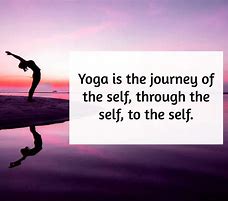
Yoga can be termed as a medicine that can cure nearly every human problem. Lifelong commitment to Yoga can improve mental and physical well being. The Bhagvad Gita states, “Yoga is the journey of the self, through the self, to the self.” Imparting knowledge about Yoga, shall begin from the foundation years of children, to inculcate lifelong values of discipline and endurance in them.

10 Foods That Help Reduce Joint Pain

Ben Franklin was right when he said: “An ounce of prevention is worth a pound of cure.” We agree, so our orthopedic specialists encourage patients to adopt dietary and exercise habits that support strong bones and joints.

1. Omega-3 Fatty Acids / Fish Oils

Cold-water fish are a terrific source of Omega-3s fatty acids, which are essential nutrients for human health. These important nutrients are also sometimes referred to as polyunsaturated fatty acids. Not only are they proven to reduce inflammatory proteins in the body, but they also improve brain function and lower risk of heart disease, diabetes and other illnesses.

Omega-3 can be found in cold-water fish such as tuna, salmon, trout, halibut and sardines. Taking a daily fish oil supplement is another way to absorb Omega-3s.

2. Nuts and Seeds

There’s good news for the vegans and vegetarians among us. Omega-3s can also be found in a variety of nuts and seeds. A small daily portion of walnuts, almonds, flax seeds, chia seeds or pine nuts can help reduce inflammation in the joints and connective tissue.

3. Brassica Vegetables

What are those, you might ask. Also known as cruciferous vegetables, brassicas are commonly associated with the mustard and cabbage family. Leafy greens like mustard greens, arugula, kale and purple cabbage are in the brassica family. Several other popular (and tasty!) vegetables make the list, including broccoli, cauliflower and Brussel sprouts.

This particular subset of the vegetable population has been known to block an enzyme that causes swelling in the joints. Plus, they’re chocked full of fiber, vitamins and nutrients for overall health and well-being.

4. Colorful Fruits

Fruits sometimes get a bad rap because of their high sugar content, but many are excellent antioxidants. Just like with vegetables, certain fruits are more effective than others in reducing inflammation in the body.

We’re particularly partial to blueberries, which are high in anthocyanins – one of the most powerful flavonoids. These help “turn off” inflammatory responses in the body.

Apples are another fiber-rich, anti-inflammatory fruit, and they deliver added benefits for gut health.

Pineapple is also on our short list for its bromelain content, a nutrient that has shown to reduce joint pain caused by osteoarthritis and rheumatoid arthritis. However, most of the bromelain is found in the stem and core of the pineapple, so blend the core into a smoothie to get the maximum benefit.

5. Olive Oil

Toss out your vegetable oil, sunflower oil and peanut oil – all of which can increase inflammation. Instead, opt for a few tablespoons of olive oil for cooking and making salad dressings. Better yet, go with the extra virgin variety that is less processed. Often associated with a Mediterranean diet, olive oil is an unsaturated “healthy” fat. And guess what … it’s another source of Omega-3!

6. Lentils and Beans

Beans and lentils are known for their health benefits. They’re an excellent source of protein, fiber and essential minerals. They also have antioxidant and anti-inflammatory properties. Black beans, lentils, chickpeas, pinto beans and soybeans are all great sources of anthocyanins – that magical flavonoid that reduces inflammation.

7. Garlic and Root Vegetables

Garlic, onions, ginger and turmeric have anti-inflammatory properties. Various studies have shown that these pungent root vegetables can be useful in treating symptoms of arthritis and other joint pain. Incorporate these vegetables into meals for added flavor. Plus, they’re all available in a supplement.

8. Whole Grains

Research suggests that proteins found in refined grains (such as white bread, white rice and regular pasta) may trigger an inflammatory response in the body. However, high-fiber whole grains help produce fatty acids that are thought to counteract inflammation. Therefore, stick with the whole grains.

9. Bone Broth

Glucosamine, chondroitin and amino acids are well documented to help maintain healthy joints, while calcium is essential for bone density. Bone broth contains all of these. The gelatin-like substance that comes from cooking bones mimics collagen that occurs naturally in our joints, tendons and ligaments. Whether or not bone broth can actually stimulate regrowth of cartilage is a fiercely debated topic in the medical filed. But taken regularly as an oral supplement, it has been known to reduce joint pain and increase function for people with arthritis.

10. Dark Chocolate

Now we’re talking! Indeed, chocolate has anti-inflammatory properties. Cocoa, the main ingredient in chocolate, contains antioxidants that can counteract genetic predisposition to insulin resistance and inflammation. The higher the percentage of cocoa in the chocolate, the higher its anti-inflammatory effect.

But remember, chocolate can be high in sugar and fat, so enjoy it in moderation. If you’re going to indulge, choose chocolate that is at least 70% cocoa.

Yoga at workplace: 5 exercises to de-stress at office and regain focus

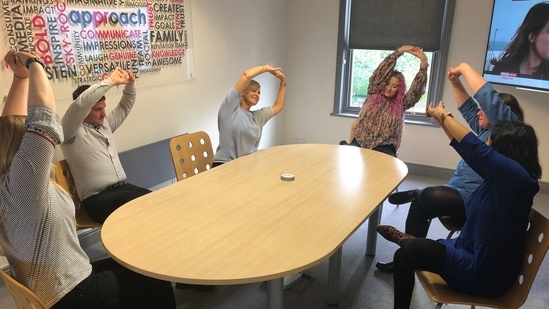
Yoga at workplace: 5 exercises to de-stress at office and regain focus(Twitter/Approach_pr)

Keep spinal pains, neck torment, muscle firmness and joint issues under control as you work extended periods. Attempt these 5 straightforward corporate Yoga asana that guarantee to lessen actual torment, work environment stress, decline non-attendance and increment usefulness alongside work inspiration.

We as a whole have utilized our office work areas to stick family pictures, our most loved munchies and heap heaps of work yet from now, it will observer a wellbeing turn as well, graciousness these corporate Yoga practices that are easy to perform and serve to de-stress at working environment and recapture center. Exactly when we Tuesday blues began to soak in, we went over some Yoga asanas that keep spinal pains, neck torment, muscle solidness and joint issues under control while we work extended periods of time.

Simply require out 10 minutes during work hours to rehearse these simple yoga stretches and breathing activities at your work area or out in the outside air and under the sun. This is on the grounds that these 5 basic Yoga asana guarantee to diminish actual torment, working environment stress, decline truancy and increment efficiency alongside work inspiration:

1.Siddhasana or Achieved pose

Method:: This is the most simple posture of Yoga where you sit leg over leg with eyes shut somewhere down in reflection and hands laying on your knees. Sit with your toes got into your thighs and set your feet next to each other while keeping your knees wide and eyes shut in a thoughtful posture to expert the situated asana.

Advantages: Siddhasana or Yoga’s Cultivated posture or Siddhi’s posture is ideal situation for contemplating. It is amazing for expanding adaptability in hips and crotch/internal thigh muscles.

It not just opens the expert’s hips, chest and shoulders yet in addition extends the spine, further develops pose, extends the front of the lower legs, reinforces lower leg muscles, initiates the chakras, keeps the brain alert, diminishes pressure and uneasiness and assists with adjusting the exercises of the conceptive organs.

  1. Situated Sickle Moon Posture

Method:: Situated in your work area seat, breathe in and lift your chest upstanding, taking your arms upwards, either corresponding to one another or palms joined. With each breathe out, twist further into the posture, squeezing your tailbone towards the floor.

On the off chance that conceivable, take your head back and turn upward. To emerge from the posture, return and rehash by inclining toward to the opposite side and hold this posture for a few breaths prior to exchanging sides once more.

Advantages: This asana further develops adaptability around your shoulders and neck. The posture gives a profound stretch to the hips, thighs and crotches.

It assists with extending and open the chest and shoulders, gives recuperation post-exercise and lifts energy while deliberately working to better the body pose. The asana additionally works on the equilibrium of the body.

3. Seated Backbend Pose

Method:: Like you perform Ustrasana or camel present, sit in your office seat with feet on the floor and back off the seat while the spine is kept straight and not bended. Incline forward, arrive at your arms back behind you, snatch the rear of the seat and keep your elbows straight

Watch your shoulders unwind into the posture as you pull your shoulder bones back and breathe in. Clutch this stance prior to delivering the posture and sitting upright.

Advantages: From extending to reinforcing the shoulders, this activity further develops breath by opening up the chest. It relaxes up the vertebrae, mitigates lower back torment and further develops pose and lessens fat on thighs.

4. Seated Figure Four Pose

Method:: Track down a steady seat where you can put the two feet on the floor and not a seat with wheels or with a ton of padding. Sit ahead on the edge of your seat, keep your back nonpartisan, roll your shoulders both clockwise and counter-clockwise and slacken your neck to further develop portability.

Cross your right leg by establishing your left foot firmly on the floor and lifting your right leg to twist it at the knee as you place your right lower leg to your left side thigh. Inhale profoundly, extend your stomach then, at that point, rehash similar developments with the other leg.

Advantages: This activity extends the exterior of the professional’s hips just as their butt as it explicitly focuses on the gluteus medius, the muscle that guides in hip development and hip portability. It soothes strain in the muscles encompassing the sacrum and decreases lower back torment.

5. Prasarita Padottanasana or Wide-Legged Forward Bend

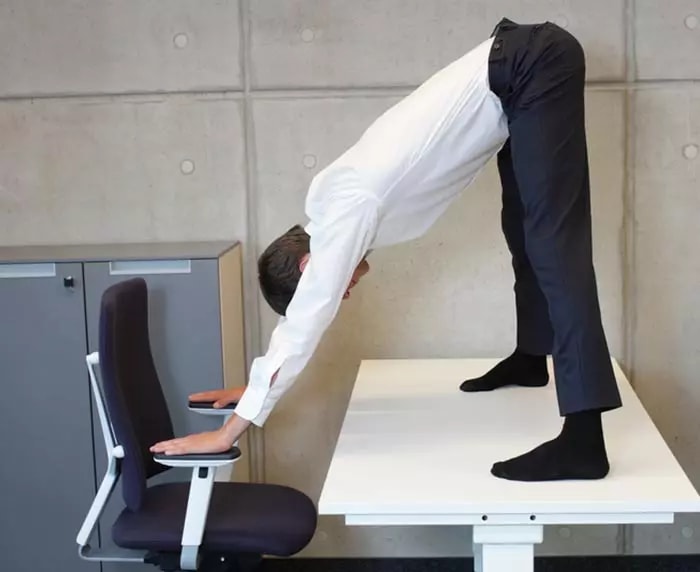
Prasarita Padottanasana or Wide-Legged Forward Bend(Twitter/Cian_Chaos)

Method: Keep an equal distance of around 3 to 4 feet between your legs and spot your hands on your hips. With your legs and spine seriously extended, breathe in, lift your chest up tall through your entire middle and crease gradually over your legs. Start to extend your middle forward by setting your hands level on the floor and keeping them shoulder-width separated. Crease further, bringing your head toward the floor.

Advantages: This wide-legged remaining forward twist is a decent get ready for other wide-position standing postures as it extends the backs of the legs and the inward crotches. It quiets the mind and facilitates exhaustion while further developing dissemination of blood and conditioning the stomach organs.

A Harvard research uncovered that “Yoga brings mental advantages like diminished nervousness and sadness. Might be seriously astounding that it really makes your cerebrum work better.” As per the examination done in Word related Medication, work environment yoga intercession can decrease apparent pressure and back torment and further develop mental prosperity.


Benefits of Running VS Benefits of Jumping Rope – Which Workout Style is More Effective For Weight Loss?

Benefits of Running VS Benefits of Jumping Rope – Which Workout Style is More Effective For Weight Loss?

As children, we all loved hopping rope. This has now transformed into an exceptionally keen and probably the best exercise for exercise. Running and bouncing rope are demonstrated valuable. With such countless choices accessible, you may be thinking which is better, running or bouncing rope. Fret not, we have you covered.Also Read – Advantages of Having Sattvic Food: How it Works Like an Insusceptibility Sponsor And as an Instrument For Successful Weight reduction

Weight reduction Exercise: Advantages of running

Running is viewed as a vigorous movement. It helps the lungs and the heart. Alongside this, runs will likewise help in working on cardiovascular perseverance. Be that as it may, a treadmill or an open region will be required. Running additionally helps in psychological well-being alongside actual wellbeing benefits. Likewise Read – Genuine Weight reduction Excursion: I Lost 32 Kilos, Switched my Diabetes by Eating Dull Chocolate And Appropriate Food

Advantages of running: Keeps a tab on mental just as actual wellbeing

Running aides in delivering synthetic substances like endorphins and serotonin in your cerebrum. These synthetic substances diminish feelings of anxiety and nervousness. Running aides in decreasing sensations of sorrow, dejection, and confinement. This additionally works on the nature of rest. Likewise Read – 5 Motivations behind Why Crash Diet Ought to be Totally Stayed away from For Weight reduction

Advantages of running: Helps in purifying lungs

Running aides in eliminating abundance carbon dioxide, decongesting bodily fluid, and even mucus. Running aides in building perseverance limit in respiratory muscles, productive breaths, and forestalls lung problems.

Euthymia-Tranquility

Euthymia is a term used in psychology to define a middle state which is neither too maniac nor depressive. Its commonly associated with bipolar disorder.

However, the history of the term goes back to ancient Greece. The term was coined by Democritus, a Greek philosopher. The term ‘ Euthymia’ can be roughly translated to tranquility, serenity and cheerfulness. According to Democritus, Euthymia referred to a state of calmness and steadiness of the soul in absence of fear and passion.

However, the famous Greek philosopher Seneca had later translated the term and defined it as “believing in yourself and trusting that you are on the right path, and not being in doubt by following the myriad footpaths of those wandering in every direction.

How is it useful in today’s generation?

We live in a ‘competitive world’ or maybe we perceive the world to be so. Competition cannot be eliminated but participating in it is upto you.
What is a race? It is a sport wherein every contestant runs for the same goal, on the same path. Life cannot be described through this metaphor, In simple words, we cannot run on the same path as someone else just to prove our superiority or ‘capability’. What worked for them, may not work for us and even if we achieve success on that path, we will never feel the satisfaction and contentment which we expected from it.

Euthymia is a concept which preaches of believing in one’s path. It describes life through a simple metaphor. You don’t compete with others but yourself. Euthymia is calmness over rush, confidence over self doubt and contentment over jealousy.

Some of the common distractions which we face are:

Social Media: Often, while we browse social media, we come across glittering pictures of people around us having fun, living lavishly, ‘enjoying lives’, celebrating their wins or a new job. To be honest, it does demotivate us and we develop feelings of envy. Sometimes, even observing a friend’s progress in life can make us envious towards them. We doubt our own present, our decisions, our path and we lock ourselves in stagnancy. We forget that every person has a different meaning of success and is walking on a different path. We scroll through the posts and with each hour of scrolling through social media, we drown deeper into the sea of self doubt.

If you ever drown in it, ask yourself , ‘What Is Important To Me?’. Knowing what you want assists you in having faith and focus on your path. When you know what you want you will spend your time working on it. Scrolling through others’ profiles will become least of your concerns.


Opportunities And Priorities: Euthymia is awareness about one’s path. About one’s purpose. Awareness of our path helps us in identifying our prioritize and eliminate the rest. It teaches us how to say ‘no’. A person who aims at seeking validation or lives on attention may try to grab many eye catchy opportunities at once and end up failing in them all. Life is filled with opportunities and it often tests our belief and dedication by throwing opportunities as hurdles in front of us. When a person knows what they are doing, they also know how to do it and select opportunities which they truly need to progress.

The foreign opinion: Your path may be unappealing to many. Not many will motivate you on your way. However, everyone has their own opinions but it is your belief, dedication and confidence which will help you walk steadily towards progress. When you walk on YOUR path, validation seems unnecessary.

Ego: Lastly, rushing into opportunities and new ways can be a product of ego. Ego cannot compromise. It wants you to be the best in every sphere which is impossible.
Purpose on the other hand demands compromise. A rather healthy and obvious compromise. You cannot master the world but yourself.

When one is content with their path…jealousy, insecurities,doubts,anxiety, and confusion does not pull his/her will down. Euthymia teaches us the basic principles of awareness,patience,hard work, self belief, faith, dedication and focus which are all virtues of true success.


8 Foods For Our Moods

Everything has a vibration. Whatever you do,say,eat and drink has an effect on you. It either builds you up or breaks you down without your knowledge. An unhealthy diet comprising of less vegetables and organic food can effect your mood drastically. Other than obesity, It also attracts sadness, frustration and negativity as a whole.

Having organic food and a balanced diet has a contrary effect.  It makes us feel energetic, refreshed, alive and happy. In simple words, it boosts our mood and lifts our vibes. It assists us in attracting what we desire . Good health and good mind are very closely related to each other. Let us look into some of these uplifting foods:


Green Leafy Vegetables: Leafy Vegetables are organic and the fresher they are, the better. Spinach, chard and other dark leafy vegetables contain magnesium which positively effects serotonin and boosts our mood. Lack of magnesium can cause a risk of anxiety and depression.

Beans: As protein packed foods, beans contribute to our mental health through the fibre present in them. Fibre helps regulate blood sugar which  in turn makes our mood better. Beans are also an excellent source of magnesium, iron, potassium and phosphorus.

Bananas: Bananas appear in every list of food concerning mood boosts. They are high in Vitamin B6 which synthesize feel good neurotransmitters like serotonin and dopamine. Bananas consist both sugar and fibre. Sugar, when paired with fibre, releases slowly into our bloodstream allowing for stable blood sugar levels which stabilizes our mood. Low blood sugar levels may lead to mood swings.

Bananas with a green coloured peel are a great source of probiotics which is a kind of fibre which helps feed healthy bacteria to our gut.

Berries: Berries are packed with a variety of antioxidants. Blueberries are rich in the antioxidant flavonoids which assist in activating brain pathways associated with reduced inflammation and risk of depression. Blueberries and strawberries contain a compound called polyphenolics which improves concentration, memory and attention span.


Salmon: Salmons are rich in omega-3, fatty acids. Especially DHA and EPA. Omega acids are anti inflammatory and are necessary for brain and nervous system development. EPA and DHA have shown to eliminate depression and they can effect our personality and impulse control. Salmons are also high in proteins, Vitamin B12 and D. Vitamin D is linked to better and stable mood. Vitamin B12 on the other hand works in cooperation with folate to help convert amino acids into neurotransmitters which are found in low levels among depression patients.

Almonds: Almonds are rich in protein  including tyrosine for neurotransmitter production It also contains Vitamin E, magnesium and fibre. As an antioxidant, Vitamin E can help fight radical damage in the brain and has shown to improve memory and cognition.Almonds and walnuts have calcium which can help offset hormonal imbalance in women and decrease the symptoms of depression, anxiety, irritability and impaired memory.

Cashews on the other hand, are rich in tryptophan, a neuro chemical which our body turns into serotonin. Vitamin B6 and magnesium present in cashews help to control mood swings. A handful of unsalted cashews are just enough to get the necessary nutrients.

However, not everytime one may feel like indulging in organic foods. In such cases, one may try chocolates! Dark chocolates, to be specific.  Rich in many mood boosting compounds, its sugar is a quick source of fuel to the brain which in return may improve our mood. It helps reducing anxiety and improves the conditions of clinical depression. Dark chocolates with large amounts of cacao can have positive effects on stress levels and even the immunity. It releases feel good compounds such as caffeine and N-acylethanolamine which is chemically similar to cannabinoids that is linked to an improved mood.

Coffee: For some of us, Coffee is a mood saver. Indeed it is. Its high level of caffeine and chlorogenic acid boosts our mood. The caffeine increases our attention by preventing adesnosine from attaching to the brain receptors that promote tiredness.The list of such food goes on. Some examples are oats,lentils,eggs,herbs,spices, fermented foods and tea.

The list of such food goes on. Some examples are oats,lentils,eggs,herbs,spices, fermented foods and tea.


There are  lists of healthy foods,habits,lifestyle,behaviour and practices . What makes them healthy is the vibes and energy which they carry. It is known amongst many that how a vegetarian diet can help to calm down a person. How exercises boosts our mood and how meditation helps us understand ourselves better.

All of these practices are healthy because they help to promote good vibes in us. When we come in contact with something which vibrates at a higher frequency, it improves our vibrations . When we inculcate activities with such  high frequency vibrations, we improve our own vibes. Thereby, attracting positivity.

Maladaptive Daydreaming

Daydreaming is our break from reality. We all have our own imaginary situations going on in our mind. Who doesn’t like to wander and take a break from reality. But, what If you were unable to live in the reality due to your daydreaming? What If your escape found no route back to the real world? That is what Maladaptive Daydreaming is all about.

What is Maladaptive Daydreaming?

Maladaptive Daydreaming is a condition where the person is unable to touch his feet to the ground(reality) due to his feet touching a consolidated and intense imaginary ground.
The common observable symptoms are as follows:

•Escaping the reality by making up an alternate world and living in it for hours.
•Well structured plots with defined storyline and settings
•Lasts for several minutes to several hours.
•Withdrawal from social activities and relationships due to the extensive and intense daydreaming.
•Trouble while focusing in everyday tasks.
•Trouble sleeping
•Daydreaming becomes an addiction where you no longer have control on it and feel empty If not engaging in it. It becomes the top priority of the day
•Talking to yourself and making faces.

What triggers the daydreams?

•Real life events
•conversation topic
•movie
•noise or smell

Why some people may resort to it unknowingly?

Intense daydreaming may act as a coping strategy. A person who is tired of his daily mundane lifestyle, traumatic past or present, may find daydreaming as a comfort zone rather than a mere temporary escape.
During Covid 19 lockdown many people experienced something similar due to the elimination of interactions and activities from their lives.

How Is it different from daydreaming?

•Daydreaming acts as an temporary escape. It is rather a pleasant experience whenever the reality goes harsh on us.
Maladaptive Daydreaming is rather creating one’s own comfort zone in an imaginative alternate reality and withdrawing from reality

• Daydreams are usually about pleasant scenarios or our imaginary future.
Maladaptive Daydreaming can be pleasant too. However, it also involves well defined plots about control,power,sex,rescue.

•Daydreams start and end in our minds. It just makes us feel happy.
Maladaptive Daydreaming may be accompanied by movements, talking to oneself and facial expressions. The person gets deeply involved in his alternate reality.

Is Maladaptive Daydreaming considered as a disorder?

Maladaptive Daydreaming was first defined in 2002 and is not yet recognized in the Diagnostic and Statistical Manual of Mental Disorders (DSM-5).

Does Maladaptive Daydreaming has a treatment?

There is no official treatment method for Maladaptive Daydreaming. There is no method to diagnose it either. However,Somer developed the Maladaptive Daydreaming Scale (MDS) which helps to determine if a person is experiencing Maladaptive Daydreaming.
Maladaptive Daydreaming is often diagnosed as Schizophrenia in which a person is unable to differentiate fantasy from reality.

What are the effects of Maladaptive Daydreaming?

Though a person indulges in extensive fantasizing to protect himself from anxiety, trauma, depression or obsessive compulsive disorder, however,it may lead to negative effects on one’s emotions, social life and mental well being. Some of the effects are as follows:

•Emotional Distress. After daydreaming so extensively one may feel emotionally worse due to their energy and concentration being highly invested in a reality which yields nothing and is above all, imaginary.

•It is common among people suffered from Attention Deficit Hyperactivity Disorder (ADHD) and may lead the person to suffer from anxiety, restlessness and attention deficiency.

•A person may spend 4.5 hours of his day engaging in intense daydreaming. Therefore, withdrawing from social activities, interactions and an active lifestyle.

• The person is unable to focus on what is going on and fails to grasp responsibilities,tasks,and studies. They may find it tiring and draining.

However,It can be managed through living an active lifestyle, engaging in interactions and meditating to keep the urge and the anxiety at bay. The human mind is indeed a world of its own. Sometimes,we alone cannot control it. Consulting a psychologist and talking about it may give us more insight into the condition.Withdrawal and Isolation may end up making the condition worse.

REGARDING CORRECT CERTIFICATE FROM EDUINDEX

From few days I am writing emails to give me certificate of date 16 june to 16 july. since month of july i am doing so but AGAIN and AGAIN I am rcieving wrong certificate. I need to prepare summer internship report. i cant attach wrong certificate. This is my last option to write here. I am in a complusion otherwise I would have not written here.

Its my humble request to everyone who is reading it please like . So that it can come in front of the team.

And if team you are reading this please prepare a certificate from the 16 june to 16 july. In my offer letter too you have mentioned same date. COMMENT ME IF YOU HAVE PREPARED. I WILL SEND U DETAILS.

I am quite depressed with such an unlawful behaviour.

Attention Deficit Hyperactivity Disorder (ADHD)

Talking about a mental disorder is like speaking about sexuality. Not that the latter is less important but the fact that both the subjects are hardly acknowledged is dangerous.
Attention Deficit Hyperactivity Disorder is a common disorder found amongst all age groups. Especially children and young adults. Most probably, half of the population having this disorder are not even aware of its existence and effects.

What is ADHD?

It is Attention Deficit Hyperactivity Disorder. The name itself reveals a lot about.

In children it is often quite visible. The symptoms range from doing too much activities, not being able to be still for a time span and lacking focus. With regard to this age group, the symptoms are clearly visible and may hamper the child’s education and causes many more distress in home and school. Many children outgrow ADHD but others may be effected in their adolescence and adulthood.
In such scenarios, the teachers and the school should look after the learning impairment by introducing the child new teaching techniques, learning skills and modified curriculum

In teens the Symptoms may get worse due to the hormonal changes of adolescence and the sudden increase of academic pressure on them
Symptoms include forgetting dates of assignments, may interrupt their classmates and teachers, rush in assignments. The teens may often do a number of tasks while forgetting the primary tasks to be completed. Their lack of focus extends to peer relationships. This may lead to the teen securing bad grades in the school.

ADHD in adults is common. However, many adults are unaware about it. Anxiety and panic attacks have become so common in the generation that differentiating them from ADHD,especially in absence of knowledge about mental health, is too long a process for the face paced world. .
A comprehensive evaluation including review of their past and present symptoms, medical history and examination. Medications and psychotherapy is given to adults diagnosed with ADHD. Behaviour management strategies involving minimization of disruption and increase structure and organization and involving family members can be helpful

The Three Types Of ADHD

ADHD, predominantly impulsive/hyperactive: The most least common type of ADHD. Symptoms include: Not being able to sit still, talking too much, always on the go as if driven by a motor, has difficulty waiting for his or her turn, Interrupts conversation

Inattentive Type: Doesn’t pay close attention to details and makes careless mistakes in schools or workplace, does not seem to listen when spoken to (lost in some other thoughts),lacks focus, has problem organizing tasks, avoids and dislikes tasks requiring mental efforts, looses things of daily use

ADHD Combined Type: The most common type of ADHD which is a combination of the above two types.

What Causes ADHD


ADHD is mostly hereditary.However,premature birth and the consumption of alcohol and cigarettes during pregnancy can also lead to ADHD developing in the child.

Can ADHD Be Cured?

ADHD has no permanent cure. However,it can be managed through a number of medications and therapies. In many cases medications alone is an effective treatment. However, in other cases therapies such as cognitive behavioral therapy, support groups, anger management and counselling psychology are effective.

Jealousy, Inferiority Complex & Insecurities – Different Words, Same Emotions

Jealousy is common nowadays but none admits it. People love flaunting anger which is as destructive as jealousy but the former isn’t related to self image always. Its just a product of either our emotional state or our pride. But why is jealousy hidden? And why is it more dangerous? Because if anger means killing one’s peace and calmness, jealousy slowly poisons one’s self image,slowly,until there is a sudden awareness of one losing his true identity.

Its not a fault. But

the society perceives it as one. Most of the times people can’t help it. Anger can be controlled but jealousy cannot be controlled if it ever generates in their mind. Yes, it is true that perceptions help us to maintain a positive mental health but not always one can nurture a positive perception. Jealousy is a mirror of our insecurities, self doubt and inferiority complex because when one is truly happy with what they are, they never find the need to compare themselves with some other individuals who are possessing some other different talents or possessions. Often at work or even in colleges and schools, people face the problem of dealing with their insecurities and doubts. People usually applaud the ones who have some visible, well known, unique talents which they successfully convert into skills but however, we all tend to ignore the ones who fail to convert their talents into skills and instead of motivating them, most of the times we find them being cornered, which results to low self esteem. Such people may or may not be compared by their colleagues or family but they start comparing themselves with others and tend to pin point flaws which they think they possess. Whereas in reality these assumptions are worse than hallucinations. Such thoughts and mental state has often lead to many cases of severe depression and suicides as these people loose the interest in their lives and due to continuous comparison, they forget their worth. Henceforth,people who are jealous of others are not always the enemies or haters. They are mostly people who find themselves cornered in the presence of the other people or a particular person, and often loose their confidence and self esteem while comparing their achievements and talents with the others who are applauded in the room


Jealousy is also a product of perfection. When one is considered to be the BEST in the room, their fear often pokes them to hold on to their position and even if someone is applauded, they don’t take it positively. Their mind perceives it as a COMPETITION where they have to win. This is when one starts either being aggressive or a bully. Sometimes even a demotivator. That’s when one stops being a leader and starts being a boss. One compliment to someone else and the mental peace remains broken. This is how fragile jealousy makes our mind.
However in such cases one should talk. If not to their friends or family members, they can talk with themselves. If self comparison is worse than the others comparing us, self appraisal and motivation is way better than the others motivating us. Spending time with ourselves and discovering what we are good at supports our self image. Unless we polish ourselves, we can’t shine.

When our mind accepts the fact that we are a separate individual and that we can’t be someone’s replica, we often free ourselves from one of the most deadliest manmade mental torture device, jealousy. If someone has something better to offer to the world, instead of torturing our peace and our basic personality, we can learn from them. And to do that, we can keep aside our ego and accept the fact that none is the best and there will always be people around us who maybe better or worse than us. The choice is in our hands. We can learn from the better and be our best or we can compare ourselves with the better and be the worse.

Four steps to increase self-confidence

We all standed in the situation where we are thought about whether we will succeed in the life or not. To overcome this situation we need the tool called self-confidence. Some people think self-confidence is an natural born talent, but in reality ‘self-confidence’ is one of the skill in the human life which can got by doing practice and consistently. Here are I came with four habits that will improve you in daily life to boost confidence.

1) PRACTICE AND REPEATION

In life, every human being is starting their life with zero knowledge. They even don’t know how to talk , how to eat, how to walk etc. In initial life we speak with unknown way and get practice so we speak in acceptable way. Even many legends are suggested in at first but they overcome this situation by doing “PRACTICE AND REPEATION”. In initial everybody make mistakes so you don’t be affair of mistakes and failures. By doing practice and consistently, it will become easy and make you confident. https://youtu.be/LiNdUXhGeX4

2) RECALL YOUR ACHIEVEMENTS

In world we have seen some people who always spread negativism and aslo they disagree for your optimistic growth. So don’t feel low to this negatives it will waste your time and wealth. At this time, you should remember some small achievements and note it down in the small notebook it will boost your brain and confidence. And aslo write even small achievements that will help you in daily activities and aslo for building new habits.

3) POSITIVE SELF TALKING

We all everyone speak ourself everyday however it’s a common habit for everyone. But how we speak ourself is matters whether we speaking positively or negatively. Because of matter, our self talk will target about our self-confidence. If we talk about negative we attached by negative. If we talk about positive we attached by positive. Speak yourself daily mirror like:

  • I am wealthy
  • I am rich
  • I am smart
  • I am confident

ALWAYS CULTIVATE GOOD THOUGHTS AND REMAIN POSITIVE

4) FOCUS ON POSITIVE THINGS

In the life we all have both positive and negative effects. As we running our life with happiness, sadness, relaxation , many of us always attached by the negatives. This negatives are attached by themselves in the way of thinking. So the importance of thinking is attracted when you’re thinking in positive.

← Back

Thank you for your response. ✨

Warning
Warning
Please rate our website(required)

Warning
Warning
Warning.

How To Manage Emotions

In my previous to previous article on thoughts and how it stimulates emotions I had put forward my view that no emotion exists without a reason. Its there because we think of a situation, a person or something in a particular way which kick starts our emotions accordingly.

I am a teenager and I suffer from unexplainable emotions sometimes. Thanks to the person who gave me the most brightest and the most practical solution to this issue. He is none other than Vex King.

Unlike thoughts, emotions CANNOT be controlled but are to understood. It is only after a thorough understanding of your feelings or emotions that you can conclude the root cause(the thoughts) which created it.

For example: Have you ever felt inferiority complex? The feeling which makes your confidence and belief shiver and which makes your mind the supreme critic of yourself.

How do you at all stop that kind of feeling? Its so common nowadays.


• The most important step to take before understanding why you feel the way you feel is to accept that you feel something negative crawling in you. Most of the people nowadays ignore their emotions by working and spending their time somehow. But that never ends the feelings. It just subjugates it and once the person is all by themselves before bed or even for a minute, those emotions swallow down his peace.

They say you cannot run from a truth and emotions are a truth. You cannot run from it. To fight it,you have to face it.

Question It. (Asking such questions is not just helping you understand tour emotions better but helps you get a closer insight about your thought process, assumptions, perspectives)

Why do you feel emotions of anxiousness and panic? Why do you feel jealous and insecure in someone else’s presence? Why are you questioning your worth?

Because, you THINK and FEEL you are not enough. Somewhere you are so lost looking for validation and praises that even the minute criticism to receive makes your heart stop.

Because you feel what the other person possesses is much better than what you have as they get praised for it and your mind continuously reminds you how foolish you are for not being like them.

Its okay to feel this way. Half of the population of our race feels the similar nowadays.

Because our mind has no achievement to hold on to which it can spoil with ego(not an achievement which our pride can utilize). On further questioning you will find the answer. Just like when you have ego you can’t see anyone else but you, similarly when it breaks you see everyone else but you.  So, its not them who seems too good to be true, its your thoughts and emotions which cloud your awareness from knowing your own capabilities.

Its not our fault. We are so accustomed to feel empty and disposable after our ego is broken, we do not know who we are.

But if you choose to remain this way, it is your fault.

•Are they worth your energy?analyse & question the answers!After questioning and finding the answers to your emotions and understanding the reasons behind their presence, question the validity of the answers. Question the thoughts which made you feel in a particular way about the situation. Why did you think in that way?

Some questions for the given example situation of inferiority complex are as follows:

Can you be the person who, according to you, is better than you? (a rather negative perspective of someone being better than you)

Can you live your life being someone else? Pleasing everyone but you? Living like a puppet?

To which feature of them are you comparing yourself with? Do you know enough about that feature of yours? Have you ever tested it?

The list can go on… which, after a certain time will question your thoughts and changes it with positivity. Self introspection does wonders

Realization:  This is the final step wherein the complete understanding of the emotions set in. Not only we become aware of the emotions but we have understood it by this stage and now its time to do the needful. With an understanding of your emotional state, now you can actually ‘move on’ in your life with a rather better understanding of yourself.

Emotions make us human. You can never be devoid of it but however, understanding your emotions cuts off the negative and self detoriating emotions and replaces them with calmness and a sense of freedom from the chaos.


Children and Sports


By: Astha Raghav. 

Sports help children develop physical skills, get exercise, make friends, have fun, learn teamwork, learn to play fair, and improve self-esteem. American sports culture has increasingly become a money-making business. The highly stressful, competitive, “win at all costs” attitude prevalent at colleges and with professional athletes affects the world of children’s sports and athletics, contributing to an unhealthy environment. It is important to remember that the attitudes and behavior taught to children in sports carry over to adult life. Parents should take an active role in helping their child develop good sportsmanship. To help your child get the most out of sports, you need to be actively involved. This includes:

  • providing emotional support and positive feedback
  • attending some games and talking about them afterward
  • having realistic expectations for your child
  • learning about the sport and supporting your child’s involvement
  • encouraging your child to talk with you about their experiences with the coach and other team members
  • teaching your child to handle disappointments about losing by praising their efforts to compete and improve athletic skills
  • modeling respectful spectator behavior

Although this involvement takes time and creates challenges for work schedules, it allows you to become more knowledgeable about the coaching, team values, behaviors, and attitudes. Your child’s behavior and attitude reflect a combination of the coaching and your discussions about good sportsmanship and fair play.

It is also important to talk about what your child observes in sports events. When bad sportsmanship occurs, discuss other ways the situation could be handled. While you might acknowledge that in the heat of competition it may be difficult to maintain control and respect for others, it is important to stress that disrespectful behavior is not acceptable. Remember, success is not the same thing as winning, and failure is not the same thing as losing.

If you are concerned about the behavior or attitude of your child’s coach, you may want to talk with the coach privately. As adults, you can talk together about what is most important for the child to learn. While you may not change a particular attitude or behavior of a coach, you can make it clear how you would like your child to be approached. If you find that the coach is not responsive, discuss the problem with the parents responsible for the school or league activities. If the problem continues, you may decide to withdraw your child.

As with most aspects of parenting, being actively involved and talking with your children about their life is very important. Being proud of accomplishments, sharing in wins and defeats, and talking to them about what has happened helps them develop skills and capacities for success in life. The lessons learned during children’s sports will shape values and behaviors for adult life.

<

p style=”background-color: white;color: #333333;font-family: proxima-nova, sans-serif;font-size: 1.125em;margin: 0px 0px 1em”>Thank you!

Neutraceuticals as an alternative of pharmaceuticals

 By: Astha Raghav 

Neutraceuticals is a broad umbrella term is used to describe any product derived for food sources with extra health benefit in addition to the basic nutritional value found in foods. 

Neutraceuticals are products, which other than nutrition are also used as medicine. A neutraceuticals products may be defined as a substance, which has physiological benefit or provides protection against chronic diseases. Neutraceuticals may be used to improve health, delay the aging process, prevent chronic diseases, increase life expectancy or support the structure or functions of the body. Nowadays, neutraceuticals have received considerable interest due to potential nutritional, safety and therapeutic effects. In recent studies have shown promising results for these compounds in various complications. The recently published papers about different aspects of neutraceuticals as alternative for pharmaceutics were searched using scientific sites such as Medline, PubMed and Google Scholar. It included neutraceuticals and allergy, Alzheimer, cardiovascular, cancer, diabetes, eye, immune, inflammatory or Parkinson. 

Thank You!