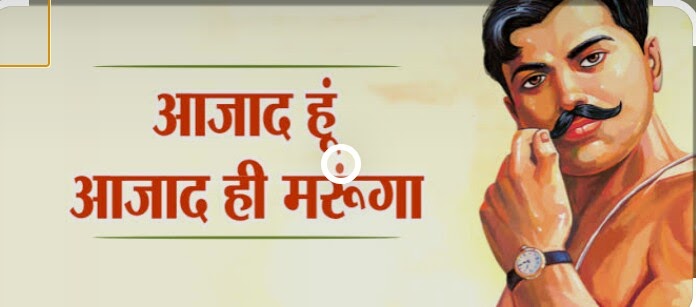
Why Chandra Shekhar Azad is know as “AZAD”, remembering him on his Jayanti

KNOWN FOR HIS BREAVERY & HIS DEVOTION TOWADS THE COUNTRY , AZAD WAS THE MAN OF HIS WORDS.

Every one calls him Chandra Shekhar Azad , but his original name was Chandra Shekhar Tiwari.

Azad was born as on 23 July 1906 in Bhabhra village , in the princely-state of Alirajpur. His forefathers were from Badarka village of Unnao District. His mother, Jagrani Devi, was the third wife of Sitaram Tiwari, whose previous wives had died young. After the birth of their first son, Sukhdev, in Badarka, the family moved to Alirajpur State.

His mother wanted her son to be a great Sanskrit scholar and persuaded his father to send him to Kashi Vidyapeeth, Banaras, to study. In 1921, when the Non-Cooperation Movement was at its height, Chandra Shekhar, then at a tender age of 15 , joined that movement . As a result, he was arrested on 20 December. On being presented before the district magistrate Justice Reverend Tomson Kregat a week later, he introduced himself as “Azad” (The Free), his father’s name as “Swatantrata” (Independence) and his residence as “Jail”. The angry magistrate ordered him to detained to jail for 23 weeks and ordered be punished with 15 lashes a day . his level of devotion towards the country can be measured by his actions , when he was getting lashes , with each lash he said “VANDE MATARAM” & “GANDHI JI KI JAI HO ” . After watching a boy of just 15 , getting lashes as punishment but still shouting VANDE MATARAM , people started recognizing him as “AZAD”

He learnt shooting at a very tender age , he was known for his shooting skills . After the suspension of the non-cooperation movement in 1922 by Gandhi, Azad was disappointed. He met a young revolutionary, Manmath Nath Gupta, who introduced him to Ram Prasad Bismil who had formed the Hindustan Republican Association (HRA), a revolutionary organization. He then became an active member of the HRA and started to collect funds for HRA. Most of the fund collection was through robberies of government property , they property which British govt snatched from Indians. British government was stunned by this behavior of Azad . He didn’t stop here , he was involved in shooting J.P Saunders , who was involved in killing Lala Lajpat Rai , Azad didn’t stop here , he pasted pamphlets on the walls of Lahore’s streets , that revenge of Lala Lajpat rai is taken.

On 27 February 1931, the CID head of the police at Allahabad, Sir J. R. H. Nott-Bower was tipped off by someone that Azad was at Alfred Park and was having a talk with his companion Sukhdev Raj. On receiving it, Bower called on the Allahabad police to accompany him to the park to arrest him. Azad’s old comrades Veer Bhadra Tiwari and Yashpal were also held responsible for tipping off two of the police constables. The police arrived at the park and surrounded it from all four sides. Some constables along with DSP Thakur Vishweshwar Singh entered the park armed with rifles and the shootout began. Sukhdev Raj escaped uninjured. Azad hid behind a tree to save himself and began to fire from behind it. The police fired back. After a long shootout, holding true to his pledge to always remain Azad (Free) and never be captured alive, he shot himself with his last bullet. In the shootout, Bower and DSP Singh were injured in the right palm and jaws respectively. The police recovered Azad’s body after the other officers arrived at the site.

The body was sent to Rasulabad Ghat for cremation without informing the general public. As it came to light, people surrounded the park where the incident had taken place. They chanted slogans against British rule and praised Azad. The park was later on named as Chandra Shekhar Azad park .

This level of love towards the country is hard to find in this era , & on the occasion of Chandra Shekhar Azad ‘s Jayanti we all should remember this great freedom fighter & should take pledge that we will also stand on our country’s side in every situation like Azad .


Positive Psychology

Positive psychology is one of the newest branches of psychology to emerge. This particular area of psychology focuses on how to help human beings prosper and lead healthy, happy lives. While many other branches of psychology tend to focus on dysfunction and abnormal behaviour, positive psychology is centered on helping people become happier. Positive psychology is designed to “complement and extend the problem-focused psychology that has been dominant for decades,” explained the late Christopher Peterson, author of “A Primer in Positive Psychology” and professor at the University of Michigan, in a 2008 article published in Psychology Today. “Positive psychology is…a call for psychological science and practice to be as concerned with strength as with weakness; as interested in building the best things in life as in repairing the worst; and as concerned with making the lives of normal people fulfilling as with healing pathology,” Peterson wrote.

According to leading authorities in the field, Martin Seligman and Mihaly Csikszentmihalyi, positive psychology will help achieve “scientific understanding and effective interventions to build thriving in individuals, families, and communities.” In order to understand the field of positive psychology, it is essential to start by learning more about its major theories, applications, and history.

History of Positive Psychology

“Before World War II, psychology had three distinct missions: curing mental illness, making the lives of all people more productive and fulfilling, and identifying and nurturing high talent,” wrote Seligman and Mihaly Csikszenmihalyi in 2000. Shortly after WWII, the primary focus of psychology shifted to the first priority: treating abnormal behavior and mental illness. In the 1950s, humanist thinkers like Carl Rogers, Erich Formm and Abraham Maslow helped renew interest in the other two areas by developing theories that focused on happiness and the positive aspects of human nature.

General interest in positive psychology has grown tremendously since the concept was introduced. Today, more and more people are searching for information on how they can become more fulfilled and achieve their full potential.

Uses

Positive psychology can have a range of real-world applications in areas including eduction, therapy, self-help, stress management, and workplace issues. Some of the major topics of interest in positive psychology include: Character strengths and virtues, Flow, Gratifications, Gratitude, Happiness, Pleasure, Helplessness, Hope, Mindfulness, Optimism, Positive thinking, Resilience .

Impact of Positive Psychology

Some of the major findings of positive psychology include: Money doesn’t necessarily buy well-being, but spending money on other people can make individuals happier, People are generally happy, Some of the best ways to combat disappointments and setbacks include strong social relationships and character strengths, While happiness is influenced by genetics, people can learn to be happier by developing optimism, gratitude, and altruism, Work can be important to well-being, especially when people are able to engage in work that is purposeful and meaningful.

Potential Pitfalls

Positive psychology is often confused with positive thinking, and misconstrued as self-help tactics rather than research-backed theories. Positive thinking is a way of thinking ourselves into better behavior and greater resilience, rather than behaving our way into a different frame of mind. Positive psychology, on the other hand, is the scientific study of what makes people thrive. It focuses on behaviors that can lead to a more optimized frame of mind as well as on thought patterns that lead to more functional behaviors.

Climate Change

Climate change is basically known as a change in the structure of the climate, which has been running for many decades and centuries. Various natural factors that change the nature of the Earth’s atmosphere are also known as ecosystems which are pressurized on the environment.These special external systems, which put pressure on the environment, may be natural, such as variation in Earth’s orbit, inequality in solar radiation, volcanic eruptions, plate tectonics, etc. and various human activities such as greenhouse gas, carbon emissions etc.

Various activities of human beings, such as deforestation, excessive use of land have also been included in this particular external system to bring about change in the environment, the formation of different conditions has been made naturally as it involves ocean activity. It includes-environmental variability and the presence of life on Earth.

Photo by Markus Spiske on Pexels.com

Climate change refers to the change in the environmental conditions of the earth. This happens due to many internal and external factors. The climatic change has become a global concern over the last few decades. Besides, these climatic changes affect life on the earth in various ways. These climatic changes are having various impacts on the ecosystem and ecology. Due to these changes, a number of species of plants and animals have gone extinct.

When Did it Start?

The climate started changing a long time ago due to human activities but we came to know about it in the last century. During the last century, we started noticing the climatic change and its effect on human life. We started researching on climate change and came to know that the earth temperature is rising due to a phenomenon called the greenhouse effect. The warming up of earth surface causes many ozone depletion, affect our agriculture, water supply, transportation, and several other problems.

Reason Of Climate Change

Although there are hundreds of reason for the climatic change we are only going to discuss the natural and manmade (human) reasons.

Natural Reasons These include volcanic eruption, solar radiation, tectonic plate movement, orbital variations. Due to these activities, the geographical condition of an area become quite harmful for life to survive. Also, these activities raise the temperature of the earth to a great extent causing an imbalance in nature.Human ReasonsMan due to his need and greed has done many activities that not only harm the environment but himself too. Many plant and animal species go extinct due to human activity. Human activities that harm the climate include deforestation, using fossil fuel, industrial waste, a different type of pollution and many more. All these things damage the climate and ecosystem very badly. And many species of animals and birds got extinct or on a verge of extinction due to hunting.Effects Of Climatic ChangeThese climatic changes have a negative impact on the environment. The ocean level is rising, glaciers are melting, CO2 in the air is increasing, forest and wildlife are declining, and water life is also getting disturbed due to climatic changes. Apart from that, it is calculated that if this change keeps on going then many species of plants and animals will get extinct. And there will be a heavy loss to the environment.What will be Future?If we do not do anything and things continue to go on like right now then a day in future will come when humans will become extinct from the surface of the earth. But instead of neglecting these problems we start acting on then we can save the earth and our future.

Although humans mistake has caused great damage to the climate and ecosystem. But, it is not late to start again and try to undo what we have done until now to damage the environment. And if every human start contributing to the environment then we can be sure of our existence in the future.

Jeff Bezos


Jeff Bezos ,(born January 12, 1964) Albuquerque, New Mexico, U.S., entrepreneur who played a key role in the growth of e-commerce as the founder and chief executive officer of Amazon an online merchant of books and later of a wide variety of products. Under his guidance, Amazon became the largest retailer on the world wide Web and the model for Internet sales.

Jeff Bezos, the founder of Amazon.com, was born in Albuquerque, New Mexico in 1964. His mother, Jackie, was in her teens when he was born and she was only married to his biological father for about a year. She married Mike Bezos when Jeff was four years old. Mike was a Cuban who escaped to the United States when he was fifteen. He put himself through college in New Mexico and eventually became an engineer at Exxon.Jeff went to Princeton and studied electrical engineering and computer science. He graduated summa cum laude in 1986 with a GPA of 4.3 on a 4.0 scale.After he graduated from Princeton, Jeff joined a high-tech startup in New York called FITEL. After two years at FITEL, he joined Bankers Trust Company.

At Bankers Trust, he setup…show more content…He helped the company build the most technically advanced hedge funds on Wall Street. In 1994, Jeff read a statistic that said the Internet was growing at a rate of 2300% per year. He decided to leave D.E. Shaw and Company to form Amazon.com, which he named after the seemingly endless South American River.He and his wife, MacKenzie, drove to Seattle to be close to a book wholesaler called Ingram. Jeff, a programmer named Shel Kaphan, and a contractor named Paul Barton-Davis built the prototype for Amazon.com in Jeff’s garage in Seattle.

They spent a year developing database programs and creating the website.Jeff raised a million dollars to finance the company through twenty-two angel investors, whom consisted of family, friends, and former colleagues. On July 16, 1995, Amazon.com went live to the world and Jeff told the testers to spread the word that it was open. Within 30 days, the company had sold books to all fifty states and forty-five foreign counties. By September, the site had sales of $20,000 a week. Jeff has a unique management style. He invokes loyalty from his employees and most of them see him as a colleague. He has a distinctive, loud laugh that he uses to “charm and disarm” people. He is known as a fun person to work with, but his employees and investors know that he is serious about his company.

When Jeff Bezos first started his virtual venture, he wanted to call the company Cadabra, as in abracadabra. He phoned his Seattle lawyer to try out the name, but the attorney misheard Bezos and replied, “Cadaver! Why would you want to call your company that?” Bezos quickly reconsidered and adopted the name Amazon.com, after the world’s second-largest river.Despite Amazon’s stunning revenue numbers—the company’s gross profit in 2019 neared $115 billion—it hardly ever declares a major profit, as Bezos’ strategy has always been to reinvest profits into the company’s growth. But that doesn’t bother Jeff Bezos. “To be profitable [now] would be would be a bad decision,” he told PC Week. “This is a critical formative time if you believe in investing in the future.” By expanding the site’s offerings far beyond it’s initial book inventory, Bezos has turned Amazon into the largest online retailer in the world. “There are always three or four brands that matter,” Bezos told PC Week. “With the lead we have today, we should be the No. 1 player.”Amazon’s runaway growth has made Jeff Bezos the richest man in the world. By owning 12 percent of the company, Bezos’ net worth is estimated to be $116 billion. He maintains the world’s richest man status despite going through a divorce in with wife MacKenzie, who received 4% of Amazon in the settlement (valued at $38 billion). But you wouldn’t know how rich Bezos is from his pay stub. He has collected the same $81,840 salary from the company for over two decades.

INTER-RELIGIOUS HARMONY

Hindu and Muslim residents of Sendhwa town in Barwani district of Madhya Pradesh came together to cremate 75-old-year Sitaram who had no family member left behind. People from both the communities attended his funeral ceremony and cremated him with full honour. This instance depicts inter religious harmony. Religious harmony in India is a concept that indicates that there is love, affection in between different religions. 

The Indian constitution supports and encourages religious harmony. In India, every citizen has a right to choose and practice any religion. Maintaining peace and harmony in a multi-religious and multi-lingual society like India becomes an important administrative responsibility.

Communal harmony is of paramount component for the social, economic and cultural development of any country. Swami Vivekananda has rightly said “Different religions are like the streams which lead to the same ocean”

The factors that breed harmony can be found both in history as well as have to be part of conscious government strategy to maintain tranquillity and an atmosphere of tolerance:

  • Nationalism as feeling of adherence to nation’s ideals helps citizens rise over differences. 
  • Humanity, respect for human life and liberty should be inculcated in every citizen of India.
  • An impartial administration, above all, which all sections especially minorities can bank upon is a must.  

National Foundation for Communal Harmony was constituted in 1992. The vision of the National Foundation for Communal Harmony (NFCH) is to have India free from communal and all other forms of violence, where all citizens especially children & youth live together in peace & harmony.

It provides financial assistance to the child victims of societal violence for their care, education & training, aimed at their effective rehabilitation. It promotes communal harmony and national integration by organizing variety of activities either independently or in association with State Governments, NGOs & other organizations. 

Ways to promote inter religious harmony:

  • Promoting the spirit of the Preamble of Indian Constitution: This reflects the spirit of national integration of our national leaders who fought against British empire, culminating in India becoming free in 1947.
  • Political & Administrative measures: Each ethnic, tribal, religious and linguistic group should have freedom to protect their own culture and freedom, as also envisaged by the Constitution.
  • Set up an Interfaith Dialogue Committee: This will help promote understanding between different religions.
  • Promote Moral Education in Education institutions: This should include the basic teachings of all religions.
  • There is a need to ban all communal parties and communal organisations by which the danger of communalism can be made less serious.

Hence, teachings of different religions should be compiled and distributed among the people of the country, including teachings of Saint Vivekananda and other saints who propagated religious harmony and respect for all religions. Such teachings also need to be integrated in the curriculum of schools and colleges.

Effects of air pollution

Effects of air pollution

  • Human health
  • Animals
  • Plants
  • Material
  • Stratosphere
  • Environment

Impact on plants

  • Reduced plant growth
  • Damage to leaves of crops plant
  • Susceptible to disease, pest, Frost

Impact on materials

  • Cars
  • Homes
  • Monument, sites

Impact on health

  • By VOCs, suspended particles
  • Lung cancer
  • Headache, dizziness
  • Respiratory diseases
    • Asthma – By SO2, smoking
    • Bronchitis – NO2
    • Influenza, cold- NO2

Effect on human health

  • Irritation of eye, nose and throat.
  • In severe cases, there may be headache, nausea and loss of coordination and concentration.
  • It lowers our resistance to cold and pneumonia.
  • CO has affinity towards hemoglobin which cause disturbance in
    • transportation of oxygen
    • impairing our concentration
    • slow our reflexes
    • make us confused and sleepy
    • feel suffocation.
  • SO2 in the air lead to disease of lung and other lung disorders such as wheezing and shortness of breath.
  • Chronic respiratory disease- lung cancer, heart disease, damage to the brain liver or kidney.
  • Effect of arsenic, Asbestos, Mercury and Benzene can cause mutation, reproduction problems or even cancer.

Effects on plant

  • Pollutant enters through stomata.
  • Pollutant Erode waxy coating of the leaves called cuticle
    • Cuticle prevent excessive water loss and damage from disease pest, drought and Frost.
  • Destroy chlorophyll
  • Affect photosynthesis
  • Damage of leaf structure causes :-
    1. Necrosis – damage to leaf structure.
    2. Chlorosis- loss /reduction of chlorophyll causing yellowing of leaves.
    3. Abscission – Dropping of leave.
    4. Epinasty – Downward curling of leaves.
    5. Death of plants.

Effect on aquatic life

  • Precipitation in the form of acid rain cause high acidity in freshwater lake.
  • Acid rain affect aquatic life especially fish.
  • Some of freshwater lake have experienced total fish death.

Effect on material

  • Due to corrosiveness, particulates can cause damage to exposed surfaces.
  • Ozone causes crackling of rubber.
  • SO2 and water form H2S – corrosion as well as disfigurement of Statue made up of limestone or marble.
  • Oxides of Nitrogen can cause fading of cotton and Rayon fibres.

Effect on environment

  • Visibility
  • Pollutants in the presence of Sunlight produce photochemical smog.
  • Emission of greenhouse gases tends to global warming.
  • Chlorofluorocarbons carbons also cause Ozone layer depletion.

The phenomenon of trapping and reradiating heat by greenhouse gases in the atmosphere is referred to Greenhouse effect.

  • Natural greenhouse effect keep Earth warm .
  • Global mean temperature of earth is + 15 degree Celsius.
  • Water vapour, CO2, H2O, CH4, ozone and cfcs present in minute quantities but maintain the temperature of Earth.
  • In the absence of greenhouse gases, the temperature of earth would be much lower than – 20 degree Celsius.

Enhanced greenhouse effect means global warming.

Unpopular UNESCO World Heritage sites in India

What is a word heritage site?

A World Heritage Site is a landmark or area of cultural, historical, scientific or any other significance which is given legal protection by an International Convention administered by the UNESCO(United Nations Educational, Scientific and Cultural Organisation). Such sites are specially marked as well as protected to preserve and maintain the heritage of the places which are unique, rare and of outstanding value to the humanity . These sites are conserved to protect them from trespassing which will end up in destroying the beauty of the place. These sites can include ancient or historical sites, buildings, lakes , mountains, forests, cities , monuments or wild areas which maintain the above criteria.

There are a total of 1121 sites recognized as World heritage sites across 165 countries by the UNESCO. India is the fifth position in the list of countries holding largest number of World Heritage sites with a total of 38 sites spreaded across the country.

Here is the list of 10 most unpopular World Heritage Sites that are rarely known

Unpopular World Heritage Sites in India

  1. ELLORA CAVES

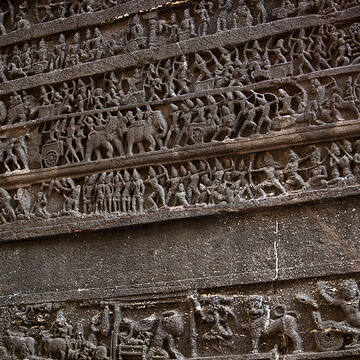
A perfect blend of historical religion and architectural significance is the Ellora caves situated in Verul, Maharashtra. It is one of the world’s largest rock-cut Hindu Temple cave complexes enclosing within the walls of the cave beautifully carved artefacts of Hinduism, Buddhism and Jainism’s religious artefacts.

2. GROUP OF MONUMENTS , MAHABALIPURAM

The Group of Monuments is a collection of 7th- and 8th-century CE religious monuments in the coastal resort town of Mahabalipuram, Tamil Nadu, situated on the coast of Bay of Bengal. It is known especially for its rathas (temples in the form of chariots), mandapas (cave sanctuaries), giant open-air reliefs such as the famous ‘Descent of the Ganges’, and the temple of Rivage, with thousands of sculptures to the glory of Shiva carved out of stones.

3. KEOLADEO GHANA NATIONAL PARK

Situated in the state of rich history and heritage is the Keoladeo National park in Bharatpur, Rajasthan which was in earlier times a duck hunting reserve for the Maharajas that ruled various kingdoms in India before. Now, it is the major wintering areas for large numbers of aquatic birds from Afghanistan, Turkmenistan, China and Siberia. Some 364 species of birds, including the rare Siberian crane, have been recorded in the park. The other wildlife of the sanctuary include, Nilgai, Chital , Sambar, Indian Porcupine, Indian Gray Mangoose, Jungle Cat, fishing Cat, civet, Jackals and striped hyenas. The park has well defined treks which can be explored either on foot or on rickshaws provided there. Infact, the national park provides rickshaw pullers for the bird watching who are also the fabulous guides to the area.

4. MOUNTAIN RAILWAYS

What better than an experience of travelling in rumbling train apartments amidst the majestic mountains. The Darjeeling Himalayan railway, Nilgiri Toy Train and the Kalka Shimla train which offers the experience of travelling in the train over the steepest heights surrounded by nature all around was declared as the world heritage site as it explores that hidden part of the country which is still saved from encroachment . The toy train on Nilgiri line takes passengers from a height of 1,069 ft to 7,228 ft. This rail network is one of the steepest in Asia. 

5. THE CHURCHES AND CONVENTS OF GOA

This coastal southern state of India on the coast of Arabian sea which is famous for its party life and beaches also has many monuments and churches of historical significance. Goa was the capita lof the Portugeese traders that came to India in around 16th century and therefore consists many victorian style buildings.

The main buildings that are included, are:

  • St. Catherine’s Chapel
  • Church and Convent of Francis of Assisi
  • Sé Cathedral
  • Basilica of Bom Jesus
  • Church of Saint Cajetan including the seminary
  • Church of Our Lady of the Rosary
  • St. Augustine Tower

The Basilica of Bom Jesus holds the mortal remains of St. Francis Xavier, a missionary across Asia (India, Japan, China) who died in 1552. He is regarded as the patron saint of Goa. Once every decade on December 3, the body is taken down for veneration and for public viewing.

Feminism: A Myth

All over the world people are misguided about the word feminism. According to you what does feminism mean? Is it to put men down and rule the world or is it to enjoy everything a man can? Let’s discuss about various myths and the actual meaning of feminism and the significance of it in a women’s life.

According to the Oxford dictionary feminism means “the belief that women should have the same rights and opportunities as men“. In more simpler words feminism is all about the equality between men and women and have the freedom of everything that they wish to do. Some people argue that they believe in ‘equality’ but they have no belief in feminism. Feminism has been made critical despite of it being a very simple concept.

From ancient times women are pointed out for the way they dress and for their aspirations. They have been constantly told to dress in a certain way and to live their life according to the norms of the society. Women are fighting for their equal rights from centuries for there right to vote, right to speech and freedom. People in the society have framed a woman according to their needs and expect them to fulfill their expectations. A married woman taking care of her husband, her in-laws and looking after their children is considered to be the ideal one whereas if she wants to work and be dependent, she is criticised and often being questioned on her motherhood. Similar type of Criticism she faces at her work place. These are the basic yet essential inequality that a women regularly faces.

Women-Women Conflict regarding feminism

Sometimes women also take feminism in a wrong way. They think that being a feminist means to humiliate men and they often misuse their power of being a women by falsely accusing a men in a crime. This is basically pseudo feminism. Women around the world debates for the real meaning of feminism which sometimes leads to conflicts. Some women of old generation are also against feminism and consider it as uncultural.

Myths

  • Feminists hate men.
  • Feminists are angry.
  • Feminists are unattractive and not feminine.
  • All feminists are lesbians.
  • Feminists are all pro-choice.
  • If you are a feminist, you cannot be religious.
  • All feminists are career women and do not support stay-at-home moms.
  • Feminists are Bra- Burners who hate sex.
  • Feminists can only be women.
  • Feminists don’t believe in marriage.

If you have ever found yourself saying “I’m not a feminist, but I am for equality,” then ask yourself why you do not claim the title? If it is because of the misconceptions of what a feminist truly is then empower yourself to raise awareness about what feminism is really all about. 

Feminists are all about equality between genders– which means feminists don’t want women to be more powerful than men any more than we want men more powerful than women. What may seem like a discriminatory act against men is actually an attempt to level the playing field between men and women.

While huge strides have been made towards complete gender equality, a great deal of work remains to be done, both in India and abroad, including the gender pay gap, access to reproductive healthcare, protection against sexual assault and violence and gender representation in media, among other issues.

How a Guy Can Be a Feminist?

Basically feminism is not only committed to changing negative stereotypes about being a woman. A large facet of feminism is understanding streotypes about masculinity and its effects on society and what it means to be a man. If you care about equality for your mother, daughter, grandmother, girlfriend, a friend, who is female then feminism should be important to you. Additionally, feminism is about equality for all marginalized groups- equality for those who are LGBTQIA, disabled, and ethnic and racial minorities. Caring about feminism means caring about people who fit into these categories.

Being a feminist is not something to be ashamed of. It is the right of every person who believes in equality for all.

Thank you for reading!

WHAT DOES ADOLESCENCE NEED?

Need for independence

With the growing physical and mental development an adolescent wants to express his opinion independently, to take part in different social activities and to become self-dependent like any adult member of the society. On attaining adolescence, the child who earlier used to depend on his elders, finds himself full of life and energy and cannot help but to take part in the diverse activities of the society. Thus, he defies the dominance of his elders and wants to proceed in life independently

Need for self-recognition

The adolescents not only want to take part in different social activities but also want self-recognition. They want to attract attention of other people by showing their abilities. The children in adolescence want to project themselves before the society in such a way so that people can appreciate their qualities and give them due respect and recognition.

Need for self-expression

There is a great desire among the children in adolescence to express their feelings, thoughts and ideas. At this age, every child wants to express himself in his area of proficiency like sports, dramatics, studies, music, literature, art or any other medium.

Need for social life

One of the important needs of adolescents is to take part in the greater social environment. Before entering into the age of adolescence, children do not get much scope to mix with people outside their family. But as they attain adolescence children want to experience the greater social-life and want to get involved closely in different social activities. This need for social life gets an outlet when the adolescents involve themselves in the activities of different social institutions like club, social welfare committee, community service etc.

Need for self-reliance

Another important need of children in adolescence is the need for self-reliance. There is a great desire among the children of this age to become self-reliant as soon as they attain puberty. And they start dreaming about their future professions and the ways to establish themselves in their respective fields. The children of this age are also very eager to acquire professional qualifications according to their choice.

Need for Philosophy of life, morality and need to know the unknown

The children in adolescence want to have a philosophy of life, a clear concept of morality and want to know all the things which are unknown to them. They have a lot of inquiries regarding the basic purpose of life. They want to know how human life can be goal-directed and what is the main aim of life. When the children attain puberty, they also indulge in a great deal of thinking over the concept of right and wrong, good and bad. They want to evaluate all the activities of themselves and people around them in accordance with the concept of right and wrong. There is always a tendency among them to do whatever is morally right. And if they do something morally wrong, they go through terrible mental agony. At adolescence, there is also a great desire among the children to know what is unknown to them. The new discoveries of science have a great influence on the minds of adolescents.

Need to satisfy sex-related curiosity

As the children attain puberty they develop a deep sex-related curiosity. This curiosity greatly perturbs them as the result of natural outcome of their sexual development. First, they try to satisfy this curiosity by natural means. But later, by being ignored or scolded by the elders, they try to satisfy this curiosity through abnormal ways. Adolescence is one of the important stages of growth and development of the child. At this stage a unique disturbance develops in the mind of the child. According to modern Psychologists, this disturbance in the mind of the child is not an essential outcome of his physical development, rather it occurs in the mind of adolescents because of unfavourable environment.

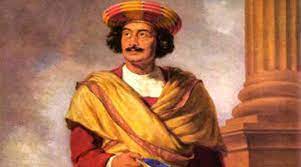
Raja Ram Mohan Roy

Raja Ram Mohan Roy, also the initiator in the Indian Renaissance ( a period in History that sees the transition in terms of Art and Literature) brought a revolution in society because of his positive approach towards life.  The title ‘Raja’ was bestowed upon him by the Mughal emperor Akbar II, in 1831. From his early childhood only he was outward and had a different perspective of seeing life. Raja Ram Mohan Roy was born on August 14, 1774, to Ramakanta Roy and Tarini Devi in Radhanagar village of Hoogly district, Bengal Presidency. He belonged to a wealthy Brahmin family but his father was orthodox. At the early age of 14 yrs only he wanted to become a monk but his mother simply denied it.

Personal life.

He married thrice and had two sons from his second wife. His first two wives died early but his third wife survived even after his death. He got his education in Bengali and Sanskrit from his village school. Later he was sent to Patna for higher education and to learn Persian and Arabic languages which were a part of the Mughal court. He was fond of studying and read Quran. Further, he went to Kashi to master Sanskrit and in no time he learnt it and started reading scriptures, Vedas and Upanishads. After attaining knowledge in these languages he started studying English. Euclid and Aristotle had a huge impact on his thinking. After attaining so much knowledge from various sources gave a new dimension to his life which even he was not aware of. He had never thought that because of him, society will change he will become the creator of the new modern society. After getting his education, he started working as a clerk under the service of East India Company. Later he was promoted to the position of Diwan. This was all due to his dedication to his work.

Abolition of Sati Pratha

While the society saw a lot of changes and barbarism, Raja Ram Mohan Roy thought of changing the society so he talked to Lord William Benedick who helped him after seeing his plea. He made a rule that Sati Pratha would not be followed anymore. Those who tried doing so would be prosecuted. It was very difficult to accept the new normal but it proved to be a blessing in disguise for the girls.

Pardah system

The time when wearing a mask in hot weather is so difficult, we can understand how difficult it must have been for women to cover themselves or to keep a veil around them, But it was done. The time when trying to change society was almost impossible, Raja Ram Mohan came up with the idea of changing the mentality. He opposed the idea, brought a revolution, and unveiled an era of freedom for women for which women are still thankful to him that he understood the problems of a woman in spite of being a man.

Child Marriage

These days it is very common not to be married even at the age of 30 yrs and during the Eighteenth century… children were married at an early age of 8-9 yrs. It was important for people to understand that a child does not have the mental capacity to understand relations till the time he/ she attains maturity and he/she needs to understand himself first. During that period Raja Ram Mohan Roy stopped this corruption in the society as he himself was a sufferer in the hands of fate due to his three marriages.

Brahmo Samaj

He founded the Brahmo Samaj in 1828, Its chief aim was the worship of the eternal God. It was against priesthood, rituals, and sacrifices. It focused on prayers, meditation, and reading of the scriptures. It was against idol worship and followed the British learnings. Today it exists in the name of Adi Dharma.

CONCLUSION

We learn from him that it is very important to raise our voice against misdeeds and injustice…we expect a change in society but we ourselves are not ready to change. It is mandatory as said by Gandhiji “ to be the change that you wish to see in the society .’’ 

Do You Remember This Leader?

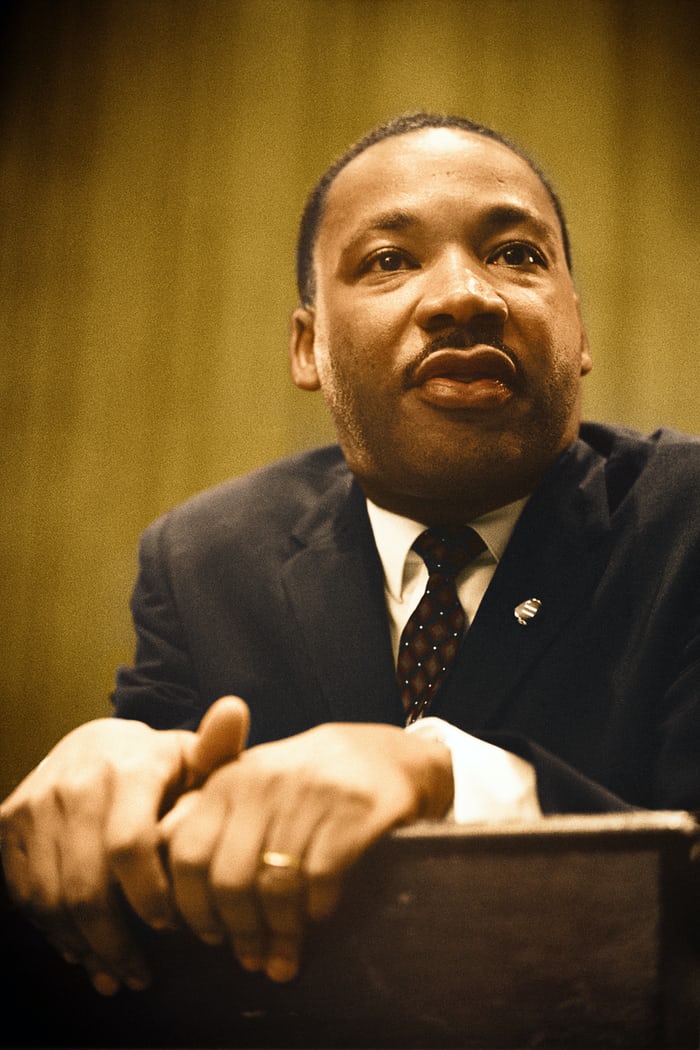
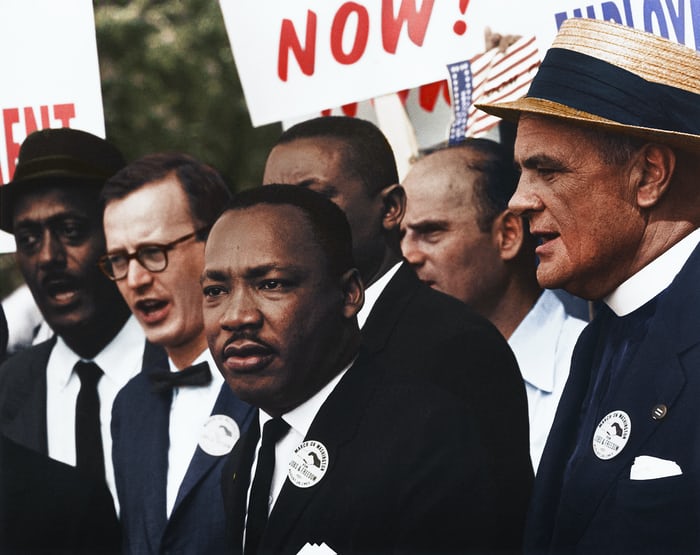
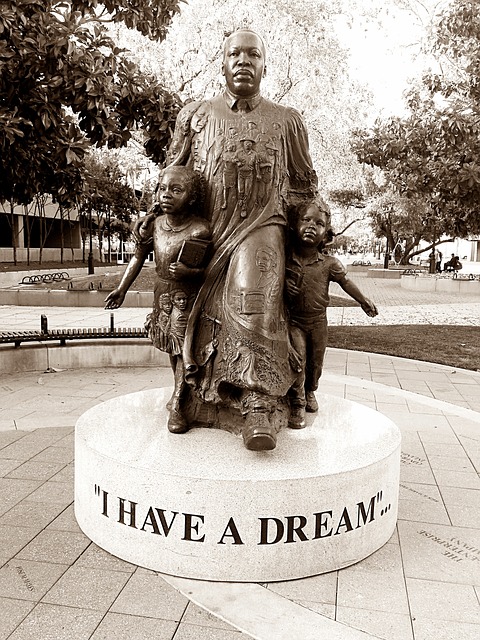
MARTIN LUTHER KING JR.

Also Known As:- MLK Jr. Michael Luther King, Jr.

Born: January 15, 1929 Atlanta Georgia

Died: April 4, 1968 Memphis Tennessee

Awards And Honors: Grammy Award (1970) Nobel Prize (1964)Notable Works: “I Have A Dream”

Occupation – Baptist, minister,activist

Known for – Civil rights movement, Peace movement

Awards – Nobel Peace Prize (1964)
Presidential Medal of Freedom (posthumously, 1977)
Congressional Gold Medal (posthumously, 2004)

About his Life:

There are people who are able to defeat the ravages of the eternal enemy-time and continue to live on in the minds of men, There are a select few who challenge the limitations of a system that fails to deliver justice. Men like Martin Luther King Jr are soldiers of God who do not care for the consequences when it comes to fighting for the truth. King was born on 15 January 1929, at Atlanta and died on 4 April 1968, at Memphis. Not a very long life, but what he achieved during this time is enviable. Few men reach such dazzling heights of spiritual success even in several lives.

King was a US civil rights leader. The son and grandson of Baptist teachers, King was deeply influenced by the idea of non-violence while in college. The influence of Mahatma Gandhi was obvious. Ordained a Baptist minister himself in 1954, he became pastor of a church in Montgomery. University. He was elected to head the Montgomery Improvement Association whose boycott efforts eventually ended the city’s policies of racial discrimination on public transportation. 1955, he received a doctorate from Boston University. He was elected to head the Montgomery improvement association whose boycott efforts eventually ended the city’s policies of racial discrimination on public transportation.

History:

In 1957, he formed the Southern Christian Leadership Conference and began lecturing nationwide, urging active non-violence to achieve civil rights for African Americans. In 1960, he was back in Atlanta to become co-pastor of Ebenezer Baptist Church with his father.

He was arrested and jailed for protesting segregation at a lunch counter. The case drew national attention and none other than the then presidential candidate, John F Kennedy, had to intercede to obtain his release. In 1963 King helped organise the March on Washington, an assembly of more than 200,000 protestors, at which he made his famous ‘I have a dream’ speech. This powerful and moving speech celebrates humanity as one big family where being human is more important than being black or white. The march influenced the passage of the Civil Rights Act of 1964. King was awarded the 1964 Nobel Prize for Peace.

In 1965, he was criticised from within the civil-rights movement for yielding to state troopers at a march in Selma and for failing in the effort to change Chicago’s housing segregation policies. Thereafter, he broadened his advocacy, addressing the plight of the poor of all races and opposing the Vietnam War. In 1968, he went to Memphis to support a strike by sanitation workers. There, on April 4, he was assassinated by James Earl Ray. A U.S. national holiday is celebrated in King’s honour on the third Monday of January in the USA. King, like Gandhi, was a gentle yet powerful prophet of a non- violent revolution who sacrificed his life for his principles. King lives through his work and words in the hearts of millions, and his untiring zeal to achieve justice motivates individuals to keep trying. The kind of following King has today undoubtedly makes us feel, ‘when one is willing, the Gods join in’. (Aeschylus).

MK day:After years of campaigning by activists, members of Congress and Coretta Scott King, among others, in 1983 President Ronald Reagan signed a bill creating a U.S. federal holiday in honor of King.Observed on the third Monday of January, Martin Luther King Day was first celebrated in 1986.

Assassination of Martin Luther King:

The events in Selma deepened a growing rift between Martin Luther King, Jr. and young radicals who repudiated his nonviolent methods and commitment to working within the established political framework.

As more militant Black leaders such as Stokely Carmichael rose to prominence, King broadened the scope of his activism to address issues such as the Vietnam War and poverty among Americans of all races. In 1967, King and the SCLC embarked on an ambitious program known as the Poor People’s Campaign, which was to include a massive march on the capital.

On the evening of April 4, 1968, Martin Luther King was assassinated. He was fatally shot while standing on the balcony of a motel in Memphis, where King had traveled to support a sanitation workers’ strike. In the wake of his death, a wave of riots swept major cities across the country, while President Johnson declared a national day of mourning.

James Earl Ray, an escaped convict and known racist, pleaded guilty to the murder and was sentenced to 99 years in prison. He later recanted his confession and gained some unlikely advocates, including members of the King family, before his death in 1998.

Martin Luther king Jr. Quotes:

“The ultimate measure of a man is not where he stands in moments of comfort and convenience, but where he stands at times of challenge and controversy.”

“Freedom is never voluntarily given by the oppressor; it must be demanded by the oppressed.”

“The time is always right to do what is right.”

“True peace is not merely the absence of tension; it is the presence of justice.”

“Our lives begin to end the day we become silent about things that matter.”

“Free at last, Free at last, Thank God almighty we are free at last.”

“Faith is taking the first step even when you don’t see the whole staircase.”

“In the end, we will remember not the words of our enemies, but the silence of our friends.”

“I believe that unarmed truth and unconditional love will have the final word in reality. This is why right, temporarily defeated, is stronger than evil triumphant.”

“I have decided to stick with love. Hate is too great a burden to bear.”

“Be a bush if you can’t be a tree. If you can’t be a highway, just be a trail. If you can’t be a sun, be a star. For it isn’t by size that you win or fail. Be the best of whatever you are.”

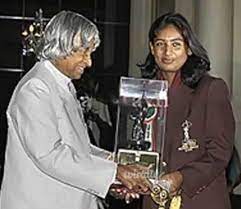
MITHALI RAJ!!!

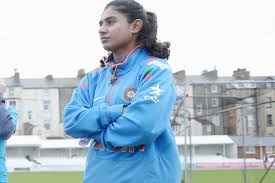
Playing games is one of the best way to make us fit, active and fresh. Yes, playing games teaches you to be a disciplined person and also the importance of brotherhood.Okay, let’s get to the point. Talk about the game we like. Let me ask you, Which game do you like very much? Most of us would answer, I love cricket. Yes, it is the most likable game in India. The sense of watching cricket gives us a pleasure. I hope you all know a little bit about cricket and I said so because I too know a little bit about cricket. Then, let me ask, do you like men’s cricket or women’s cricket? Have you ever watched women’s cricket? I am asking you this type of question because most of us like only men’s cricket. It’s becausethe crase for men players is higher than women players. Let me share my thoughts about a women cricketer named Mithali Raj. Have you ever heard this name? I hope you would have heard about her. Mithali Raj is the captain of Women’s ODI and Test cricket in India. She is the highest run scorer in Women’s International Cricket.

Has Mithali Raj Ever Had Issues Dealing With Media, Like Naomi Osaka?  Here's Her Answer
MITHALI RAJ

Mithali Dorai Raj was born on 3rd December 1982 at Jodhour, Rajasthan. Her father’s name is Dorai Raj and he was a Warrant Officer in Indian Air Force. Her mother’s name is Leela Raj. Now, she lives in Hyderabad, Telangana. She completed her high school studies in Keyes High School For Girls. She completed her intermediate studies in Secunderabad. Mithali Raj started to play cricket at her age 10. She used to play with her elder brother. She started her cricket coaching in school days. She used to play with Puurnima Rau, Anjum Chopra during her start of the career and played for Air India.

MITHALI RAJ’S CRICKET CAREER

  • She was named in probables in the 1997 Women’s Cricket WorldCup but she couldn’t make it in the final squad.
  • With her constant efforts she played her first one day debut in 1999 against Ireland and scored 114 runs.
  • At the age of 29, she broke the recored of one’s individual score by beating Karen Roltan in 2002. But in 2004, a pakistan player surpassed Mithali Raj’s record.
  • In 2005, she led the Indian team to the Women’s World Cup finals for the first time but they lost to Australia since they proved too strong.
  • In 2013, She ranked first at ODI chart in the World Cup held that year.
  • In February 2017, She scored 5500 runs in the WODI ans she was the second player to score 5500 runs.
  • Soon after that in July 2017, She became the first player to score 6000 runs in the WODI.
  • Also, in 2017 World Cup, she led the team to the finals and lost to England by 9 runs.
  • In order to make team India mark it’s place in ODI, She retired from T20 International Cricket in 2019. This statement was made by her in the BCCI press meet.
  • In 2019, she was marked as the Captain of Women’s ODI against England.
Interesting Facts About Mithali Raj, The Indian Women's Cricket Team Captain

AWARDS AND HONOURS FOR MITHALI RAJ

  • In 2003, she won the Arjuna Award which is given to person who excel in sports.
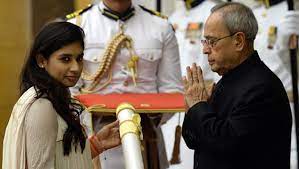
  • In 2015, She won Padma Shri which is the fourth highest Civilian honor of India.
  • In 2017, She was given Youth Sports Icon of Excellence Award.
  • In 2017, She was awarded as the Vougue Sportsperson of the Year.
  • In 2020, She was nominated for he Rachael Heyhoe-Flint Award for the award, ICC Female Cricketer of the Decade.

Other than being a right hand batsman, she is also a occasional bowler for India. These achievements prove how hardworking and confident she is!! Women in India are all very talented and high spirited. Yes, every woman is trying to be the best in her field. Mithali Raj is an example for the best women cricketer. Like her, you should try to prove yourself by your achievements rather than complaining or being feared for something. Everybody, come on let’s make India be filled with achievers.

Some reference links

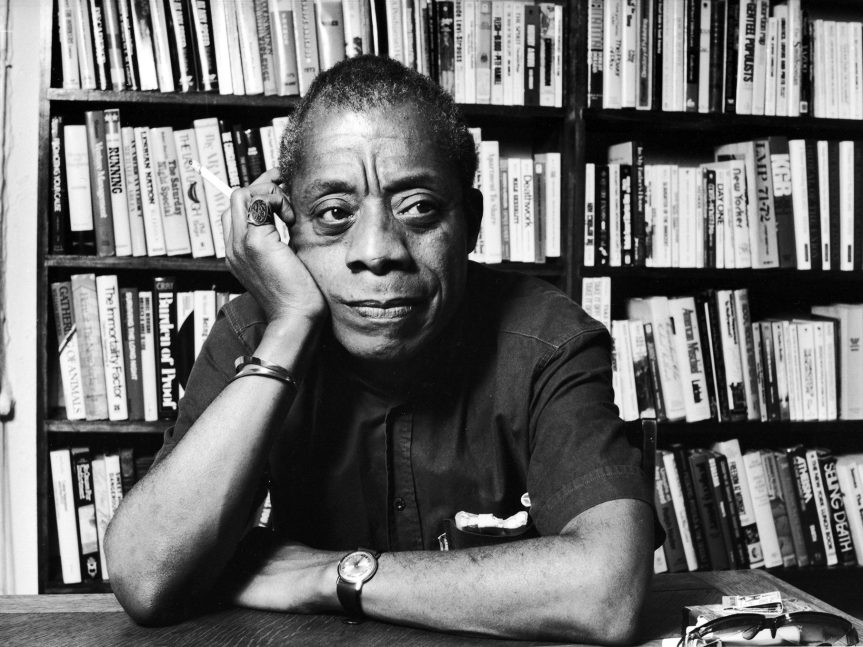
James Baldwin: Empowerment Through Words

James Baldwin was an American essayist, novelist, and playwright whose eloquence and passion on the subject of race in America made him an important voice, particularly in the late 1950s and early 1960s, in the USA and throughout much of western Europe. One of the 20th century’s greatest writers, Baldwin broke new literary ground with the exploration of racial and social issues in his many works. He was especially known for his essays on the Black experience in America. In light of recent incidents in America, with the killing of George Floyd and all the violence against black people, James Baldwin’s literary works have resurfaced and remain relevant even today. Unfortunately, the violence seen in America decades ago is still in existence, and Baldwins works brings these matters to light.

Early Years

James Baldwin was born the illegitimate son of Emma Jones on August 2, 1924, in Harlem, New York. When he was three, his mother married the Reverend David Baldwin, a fire and brimstone lay preacher who legally adopted James. Despite their strained relationship, Baldwin followed in his stepfather’s footsteps and served as a youth minister in a Harlem Pentecostal church from the ages of 14 to 16. He developed a passion for reading at an early age and demonstrated a gift for writing during his school years. Baldwin published numerous poems, short stories and plays in the magazine, and his early work showed an understanding for sophisticated literary devices in a writer of such a young age. After graduating from high school in 1942, he had to put his plans for college on hold to help support his family, which included seven younger siblings. He took whatever work he could find, including laying railroad tracks for the U.S. Army in New Jersey.

During this time, Baldwin frequently encountered discrimination, being turned away from restaurants, bars and other establishments because he was an African-American. After being fired from the New Jersey job, Baldwin sought other work and struggled to make ends meet.

Aspiring Writer

James Baldwin started devoting his time to write a novel, trying to fulfil his dream of becoming a writer. Eventually he befriended writer Richard Wright, through whom he was able to land a fellowship in 1945 to cover his expenses. Baldwin started getting essays and short stories published in such national periodicals as The Nation, Partisan Review and Commentary.

Three years later, Baldwin made a dramatic change in his life and moved to Paris on another fellowship. The shift in location freed Baldwin to write more about his personal and racial background. He once told the New York Times; “Once I found myself on the other side of the ocean, I see where I came from very clearly…I am the grandson of a slave, and I am a writer. I must deal with both,” The move marked the beginning of his life as a “transatlantic commuter,” dividing his time between France and the United States.

Major Works

Baldwin had his first novel, Go Tell It on the Mountain, published in 1953. The loosely autobiographical tale focused on the life of a young man growing up in Harlem grappling with family issues and religion.

In 1954, Baldwin published his next novel, Giovanni’s Room. It told the story of an American living in Paris and broke new ground for its complex depiction of homosexuality, a then-taboo subject. Baldwin was open about his homosexuality and relationships with both men and women, and believed that human sexuality cannot be limited by rigid categories.

In 1957 he returned to the United States and became an active participant in the civil rights struggle that swept the nation. Delving into his own life, he provided an unflinching look at the Black experience in America through such works as Notes of a Native Son (1955) and Nobody Knows My Name: More Notes of a Native Son (1961), which explored Black-white relations in the United States. This theme was also central to his novel Another Country (1962), which examines sexual as well as racial issues.

Nobody Knows My Name hit the bestsellers list, selling more than a million copies. While not a marching or sit-in style activist, Baldwin emerged as one of the leading voices in the Civil Rights Movement for his compelling work on race.

Final Years

By the early 1970s, Baldwin seemed to despair over the racial situation. He had witnessed so much violence in the previous decade, especially the assassinations of Malcolm X and Martin Luther King Jr., caused by racial hatred. While his literary fame faded somewhat in his later years, Baldwin continued to produce new works in a variety of forms. He published a collection of poems, Jimmy’s Blues: Selected Poems, in 1983 as well as the 1987 novel Harlem Quartet. Baldwin died on December 1, 1987, at his home in St. Paul de Vence, France. Never wanting to be a spokesperson or a leader, Baldwin saw his personal mission as “bearing witness to the truth.” He accomplished this mission through his extensive and timeless literary legacy

Social Media

A tool that has become extremely popular among all generations because of its user-friendly interface is social media. The most dominant user crowds of social media are the youth, which is both impressive and a daunting issue at the same time.

Photo by Tracy Le Blanc on Pexels.com

Our connections have widened thanks to social media, and almost the entire world is available at our fingertips. But amid all the fleeting but intriguing trends on social media that impact us, we must be careful not to lose our uniqueness.

The massive reach quality of social media is a powerful quality that makes me wonder about times when it is not be used for positive purposes. And it is no news that industries have also realized the power of social media on our lives and have started using it in their favor.

To sum up, social media has both good and bad aspects, which is a debatable topic, just like our opinions. It also gives rise to several online arguments and debates on social media.So use social media in limited way .

Social media is a tool that is becoming quite popular these days because of its user-friendly features. Social media platforms like Facebook, Instagram, Twitter and more are giving people a chance to connect with each other across distances. In other words, the whole world is at our fingertips all thanks to social media. The youth is especially one of the most dominant users of social media. All this makes you wonder that something so powerful and with such a massive reach cannot be all good. Like how there are always two sides to a coin, the same goes for social media. Subsequently, different people have different opinions on this debatable topic. So, in this essay on Social Media, we will see the advantages and disadvantages of social media.

Advantages of Social Media

When we look at the positive aspect of social media, we find numerous advantages. The most important being a great device for education. All the information one requires is just a click away. Students can educate themselves on various topics using social media.

Moreover, live lectures are now possible because of social media. You can attend a lecture happening in America while sitting in India.

Furthermore, as more and more people are distancing themselves from newspapers, they are depending on social media for news. You are always updated on the latest happenings of the world through it. A person becomes more socially aware of the issues of the world.

In addition, it strengthens bonds with your loved ones. Distance is not a barrier anymore because of social media. For instance, you can easily communicate with your friends and relatives overseas.

Most importantly, it also provides a great platform for young budding artists to showcase their talent for free. You can get great opportunities for employment through social media too.

Another advantage definitely benefits companies who wish to promote their brands. Social media has become a hub for advertising and offers you great opportunities for connecting with the customer.

Disadvantages of Social Media

Despite having such unique advantages, social media is considered to be one of the most harmful elements of society. If the use of social media is not monitored, it can lead to grave consequences.

It is harmful because it invades your privacy like never before. The oversharing happening on social media makes children a target for predators and hackers. It also leads to cyberbullying which affects any person significantly.

Thus, the sharing on social media especially by children must be monitored at all times. Next up is the addition of social media which is quite common amongst the youth.

This addiction hampers with the academic performance of a student as they waste their time on social media instead of studying. Social media also creates communal rifts. Fake news is spread with the use of it, which poisons the mind of peace-loving citizens.

In short, surely social media has both advantages and disadvantages. But, it all depends on the user at the end. The youth must particularly create a balance between their academic performances, physical activities, and social media. Excess use of anything is harmful and the same thing applies to social media. Therefore, we must strive to live a satisfying life with the right balance.

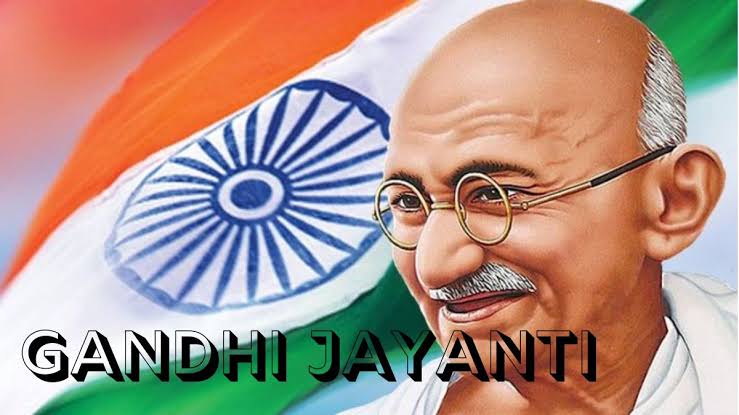
Gandhi jayanti

Gandhi jayanti is celebrated on 2nd October.The day signifies gandhiji birth anniversary. Gandhi ji was a freedom fighter. We celebrate this day in the memory of his sacrifices done for the country. He led various movements to drive out the British from India. Satyagrah was one of the famous movements. Quit India movements and the Swadeshi movement are other two famous and important movements that got us freedom in 1947.

On this day, many students perform plays sending people a message of non-violence. Many students sing patriotic songs on the day, to mark his birth anniversary. Many students paint on the theme of Gandhiji and his teachings. The day is soaked in patriotic fervor and we remember his wise teachings- “not to see bad, not to hear bad and not to speak badly”. On this day, many movies are broadcasted on television and radio channels centering around his life. Soonly we will Update Paragraph on Gandhi Jayanti in Hindi, Malayalam.

Gandhi Jayanti is a major national festival whose celebration occurs on 2nd October in India. Most noteworthy, this festival celebrates the birth anniversary of Mohandas Karamchand Gandhi. Furthermore, Gandhi Jayanti is one of the three national holidays of India. 2nd October has been declared as the International Day of Non-Violence by the United Nations. The festival is certainly a momentous occasion in India.

Significance of Gandhi Jayanti

Mahatma Gandhi was born in India under British rule. He was certainly the most prominent individual in the Indian Independence struggle. Mahatma Gandhi has the honour of the title of “father of the nation”. This was due to his persistent paramount efforts for India’s independence.
Gandhi had a family of the merchant class. This confident man went to South Africa at 24 years of age. He went there to pursue law. His return from South Africa came in 1915. Then he became a member of the Indian National Congress. Due to his relentless hard work, he soon became the president of Congress.

Mahatma Gandhi’s efforts were not restricted to Indian independence only. The man also fought various kinds of social evils. These social evils were untouchability, casteism, female subjugation, etc. Furthermore, he also made significant efforts to help the poor and needy.

Mahatma Gandhi had a great dislike for the British rule in India. However, he was not in favour of the path of violence. Gandhi strictly was a believer in the philosophy of Ahimsa (non-violence). Consequently, the man opposed British rule in a peaceful manner. Furthermore, Gandhi’s peaceful protests and movements were highly effective. His methods and plans were very efficient. Due to his incredible effectiveness, Gandhiji became an inspiration for other World leaders. Once again, Gandhi was bestowed with another title of Mahatma. The meaning of the word Mahatma is a great soul. His birthday was made into a day of magnificent remembrance and celebration.

Commemoration of Mahatma Gandhi

First of all, Gandhi Jayanti is nothing but a grand commemoration of Mahatma Gandhi. Gandhi Jayanti is certainly one of the national holidays of India. This patriotic occasion’s celebration is held in every State and Union territory.

Prayer services and tributes take place on the occasion of Gandhi Jayanti. These prayer services and tributes take place all over the country. Furthermore, various prayer meetings and commemorative ceremonies also occur on Gandhi Jayanti. These events take place in schools, colleges, government, and private institutions. Most noteworthy, people from all walks of life take part in such events.

Competitions of painting, essay, etc. take place everywhere. Furthermore, there is a distribution of awards for such competitions. Students in many schools and colleges also watch documentaries and performances on Mahatma Gandhi’s life. Consequently, there is a promotion of a non-violent way of life among the youth. There are also singing events of Gandhiji’s favourite Bhajan( Hindu devotional song). Another observance is the decoration of Gandhi statues with flowers and garlands. Finally, some individuals avoid eating meat or drinking alcohol on Gandhi Jayanti.

Gandhi Jayanti honors the great personality of Mahatma Gandhi. It’s an opportunity to reflect and cherish the life of this great personality. Furthermore, everyone must try to live like him on this day. Gandhi Jayanti is certainly a very patriotic day in India.