
Ethical Hacking and IT

Data Technology (IT) is one of the greatest and most mainstream businesses as far as building up a profession on the planet today. Industry 4.0 has invited various innovative headways because of which specific IT experts have discovered conspicuousness, in IT organizations as well as in different enterprises. Maybe, the most famous among them is a vocation in online protection.

More than 1 billion network safety experts are required to be sought after over the course of the following 2 years in this field, making it perhaps the most worthwhile profession ways on the planet today. Notwithstanding being a mammoth association, National Health Services couldn’t shield themselves from a huge scope hack. A main nourishment application, MyFitnessPal, likewise went through a monstrous security penetrate where the individual information of more than 150 million clients was taken. The recurrence of these assaults has expanded off-late, making network safety basic in each association.

Huge banks and gems stores regularly enlist proficient hoodlums to endeavor burglaries, to recognize provisos in their security frameworks. Through these preliminaries, these establishments can reliably redesign their security frameworks, to ultimately arrive at a phase of becoming invulnerable. Taking motivation from this interaction, the network protection space has likewise reversed the situation on hacking and made it a legitimized idea through moral hacking.

Moral hacking is a cycle through which experts are paid to hack into an association, to pinpoint weaknesses in the security framework that the association needs to fix. Ill-conceived programmers have likewise discovered lawful conspicuousness in the IT world today because of the developing significance of moral hacking as an idea.

Moral programmers are recruited and prepared to utilize a huge number of methods to attempt to penetrate various associations. They help in the identification of holes inside the security framework as well as during digital assaults.

Government associations wherein digital fighting holds extraordinary unmistakable quality, moral programmers are accustomed to balancing endeavors made by noxious programmers with the expectation of outmaneuvering them, and protecting the information. Another use of moral hacking is of supporting in the examination that follows a digital assault.

Law implementation offices frequently recruit moral programmers to follow the means of a programmer and distinguish the culprit.

Thinking about the incredibly specialized nature of the calling, a basic degree is for the most part insufficient to build up an effective vocation in the field a particular preparing is fundamental. Many driving IT organizations today offer affirmed courses in Ethical Hacking that involve the nuts and bolts of PC organizing as well as intricate methods and driving cycles for keeping up with digital protection.

Think inventively and out-of-the-box:

Aside from these specialized ideas, it is additionally fundamental for moral programmers to have the option to think imaginatively and out of the container. The explanation programmers are developing and can penetrate confounded security frameworks is that they are reliably attempting to concoct new ways and approaches for something very similar.

Another significant quality to have is critical thinking, as the expertise can be fortified after some time, and sharpened with experience and down to earth openness. In this manner, getting ready for a vocation in moral hacking needs to involve a decent blend of both, specialized and reasonable viewpoints.

Be that as it may, there is an exceptionally clear ability hole in the business today, and subsequently, an absence of qualified staff in the field. Attributable to the hole between the interest and supply of moral programmers, this vocation way has gotten very rewarding with monstrous extension later on.


Where To Invest Money?

Image result for where to invest money

Investing money has become very popular and more common nowadays since it sustains our future. There are innumerous ways through which we can invest money

Image result for where to invest money

Stock Market

Stock market is one of the most blooming field for investing money nowadays. You buy a number of shares of a company at a particular price at that time and if the company profits, the price of the shares rise and you can sell them and earn profit. There are risks involved in it since the company might go in loss. Therefore it becomes risky especially when you invest hefty amount.

Cryptocurrency

Cryptocurrencies are one of the newest forms of investing money. They are digital currencies that allow people to send and receive funds without using a third party. Although there are more than 2,000 different cryptocurrencies in existence, Bitcoin is the most well-known, and carries the largest value. Their values can change in a similar way the stock market works.

Gold

It is an older form of an investment which purely depends on the supply demand. Therefore if the demand is more, its price will go up whereas if there is less demand the prices fall. Therefore it is wise to invest in gold only when the prices steeps down.

Real Estate

This type of investment requires hefty amount of money which involves buying properties at lesser rates and when the housing market shoots up, sell at higher rates. It is one of the most safest long term investment.

Mutual Funds

mutual fund is a type of investment vehicle consisting of a portfolio of stocks, bonds, or other securities. Liquidity is high and tenor is open ended. You invest an amount into the mutual fund, and the fund will buy and sell stocks on your behalf. You’ll pay an annual fee for this.

Fixed Deposit

It is a traditional and safest form of investment that provides a relatively higher rate of interest as compared to savings account. It is very beneficial during long term investments.

Work From Home Ends For 2.6 Lakh Infosys Employees

Infosys Ltd told employees last week they could resume work from offices, according to a memo seen by Reuters that offers an early sign of the country’s $190 billion technology services sector moving to get back on track.

Many IT businesses are mass-vaccinating their personnel to ensure that they are protected from Covid, while also preparing them to return to work once the situation gets back to normal, or the pandemic’s impact is reduced.

Most MNC employees have already received their first round of vaccination, and some have also completed their second dosage.

Infosys Ltd Will Resume Work From Offices….!!

Large corporations have allowed their staff to work from home but small businesses and startups are finding it difficult to adapt the work from home due to a lack of resources and technology.

Many corporations planned to reopen offices in full force at the moment, but with the second wave striking and more lockdowns being announced, these plans had to be postponed for a long period.

Infosys said the country’s safety situation seems to be improving, with growing vaccination coverage. Infosys did not respond to Reuters’ request for comment on the memo.

“We have been getting requests from certain accounts to allow their team members to work from Infosys campuses. In addition, some of our employees have also been asking to come back and start working from the office, as a personal preference.”

Infosys had a total employees of 2.67 lakh at the end of the June quarter, as compared to 2.59 lakh in the March quarter.

After reporting results last week, Infosys executives told analysts that roughly 99% of its staff was working from home, and the company would make efforts to get “more and more people to come to office” over the next couple of weeks.

Mass Media

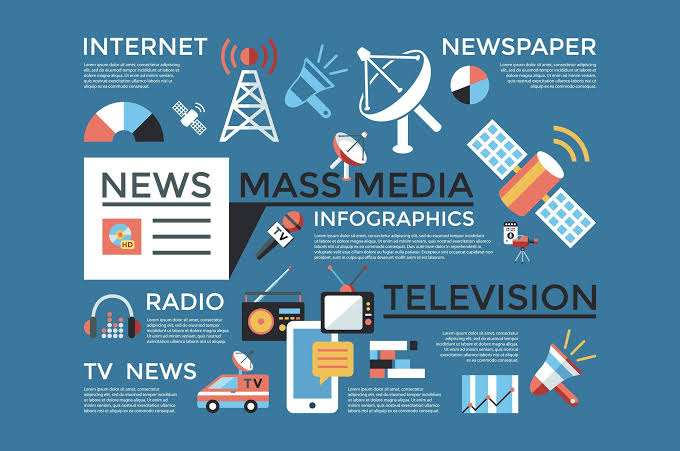
The present age is the age of information & Communication Technology. And mass media is the powerful and the most effective instrument of spreading or sharing information. With the advancement of digital technology, mass media have become a powerful and quick means of communication, broadcasting news and views, disseminating ideas and massages, and making information available anywhere in the world. The means of communicating news and views is termed as mass media. Mass media is classified into two categories print media and electronic media. Print media include newspapers, magazines, journals, and other printed materials. Electronic media includes radio, internet, television, satellite channels, cinema, etc.

In today’s world, mass media embraces internet, cell phones, electronic mail, computers, pagers and satellites. All these new additions function as transmitting information from a single source to multiple receivers.In other words, they are interactive and work on the person to person formula. Thus, it revolves around the masses i.e. the people. It is true that radio, television, press and cinema are in the spotlight when we talk about mass media.Nonetheless, the role of pamphlets, books, magazines, posters, billboards, and more also have equal importance if not less. Moreover, the reach of these tools extends to a huge amount of masses living all over the country.Television, cinema, radio and press are comparatively expensive forms of media which private financial institutions or the Government runs. These tools centre on the idea of mass production and mass distribution.Therefore, newspapers, television and radio cater to the needs of the mass audience and accommodates their taste. As a result, it will not always be refined or sophisticated. In other words, it displays popular culture.

The Function of Mass MediaThe main function of mass media is to reach out to the masses and provide them with information. In addition to that, it also operates to analyze and observe our surroundings and provide information in the form of news accordingly.As a result, the masses get constantly updated about not just their own surroundings but also around the world. This way mass media spreads and interprets information. For instance, weather forecasts equip people and farmers to plan ahead.Similarly, fishermen get updates about the tidal activities from the news. In addition to this, mass media also strives to keep the fabric of our social heritage intact which showcasing our customs, myths and civilization.Another major product of mass media is advertising. This way people learn about the goods and services in the market. It also spreads social awareness. For instance, anti-smoking campaign, women empowerment, green earth clean earth and more.Most importantly, with the numerous mediums available in multiple languages, the masses get entertainment in their own language easily. Millions of people get to access a cheap source of relaxation and pass their time. In fact, it also helps to transport momentarily from our ordinary lives to a dream world. Thus, it remains the undisputed leader in reaching out to the masses.Conclusion of Essay on Mass MediaAll in all, while it is an effective tool, we must also keep a check on its consumption. In other words, it has the power to create and destroy. Nonetheless, it is a medium which can bring about a change in the masses. Thus, everyone must utilize and consume it properly.

Brief steps for innovation in the era of E-commerce

As the Economist Joseph Schumpeter said Entrepreneurs can’t sit idle and try to innovate. They are the people who have an uncanny sense of using the resources from less productive use to more productive use. They are the ones who do Value creation, this is what we call innovation.

E-commerce belongs to this generation and Technology is irreversible; no one can hold it back and only curiosity won’t help us. Research activity is also needed. Scientific knowledge is essential (supported). Research is also supplemented by Developmental activities (R&D), closer to practical uses.

The Technological Innovation world involves product and process development activities (converted into manifestation forms). Then it transcends to the market/people with practical uses. Invention and discoveries constitute the technology world/innovation world- product process- market development activities (Administrative capabilities needed as well).

This all has to be assembled holistically and make the tech happen/forward driven with innovation. Business world needs tech entrepreneurship and administrative skills.

We have to question what value the tech will bring to our product. Simple innovation without value creation cannot create Blue Ocean/has no meaning.

Technological importance means the value that the technology brings to a product/potential product

We have to ensure not to bring value to other products in the competition. We need technological positioning. Frontier-ending R&D investment is needed to compete with the rival companies that are deeply entrenched in technology. Keep competitive parity is not an advantage.  

A technology portfolio consists of- Bet, Draw, Cash, and Fold

Regime of Appropriability

Is the effectiveness of legal mechanisms of protection of technology, Patents, copyrights, trade secrets, tacit knowledge, and codified knowledge.

Process innovation can’t be protected by patents.

Codified knowledge is very prone to industrial espionage, in other words, Hiring people from other companies. The regime of appropriability can be from high to low depending on the technology. E.g. KFC spice formula (easy to safeguard) or a new search algorithm (hard to seep safe).

Any innovation passes through two stages-

Pre Paradigm and Paradigm stage

Pre Paradigm is when a technology is in the process of innovation. Every innovation goes through this stage when it remains in the domain of the innovators and scientists.

In the Paradigm stage product designs are fluid and the manufacturing process is loosely organized whereas in the Paradigm stage less uncertainty for the design emerges and a final design emerges. The focus is now on process design.

Our objective is to transit from the pre paradigm stage to the paradigm stage as fast as possible. Successful transit of tech to practical use is called commercialization and has to be ensured with another set of capabilities called complementary assets.

The tinkering or invention needs to be followed by research and then a complimentary stage in development. Entrepreneurs have to ensure that complementary assets have to be built around innovation to be successful. Innovators need to have certain complementary assets which are not generic (highly specialized).

There is a third category of assets called Co specialized. These assets have a bilateral dependence. These assets have no other use other than their intended use. E.g.: A spacecraft manufacturing facility.

Many innovators fail and succumb and they don’t have the complementary assets. To counter that, entrepreneurs can do collaborative strategy by collaborating with partners with complementary assets. It should exclude the possibility of any other collaboration.  

Technology has to be adopted by people otherwise, it has no meaning. Early adopters need to leverage by patronizing the products. This gives way to the early majority who are more market-orientated. If they are satisfied they give way to the late majority. This transition will secure our position in the market.

But there is a catch, when technology falls between the transition space of early adopters and the early majority. This is known as ‘Chasm’. This change in emphasis poses a problem for innovating firms since incumbents are often much better equipped to meet the desire for complete products and low-risk purchases,and once you fall into this space. It gets really difficult to get out of it. A tornado (another group of people) is needed to take it out of the chasm and hit it into the mainstream.

E-commerce implementation can have two strategies:

Bottom-up approach and Top-down approach

Introduction of Ecommerce has complemented traditional business. This has also made traditional businesses more competitive.

Top-down approach implementation is preferred on a large scale and national level but when it comes to administrative (meeting the requirements of civil services), local trade and commerce services are suited to have a bottom-up approach.

Digital infrastructure is essential for making e-commerce successful. Cradle to grave digital identity is emerging as the new measure to the unique identification of people.

Common service center: Helps in providing e-Services to rural and remote locations where availability of computers and Internet is negligible or mostly absent. With the help of Interoperability and common information center data and information can be accessed at any location.

Mobile banking is another approach that is also increasing its proliferation.  But it’s still in its nascent stages.

Another concept that is emerging is Cashless transactions where all the POS and banking services can be attained remotely. Although the security issue remains which has to be taken care of by a central agency (Government).

One of the most important things to consider is Digital literacy. A certain amount of literacy is needed for availing all these digital infrastructure and access. For a widespread utilization of digital services, we have to ensure that more people are digitally literate.

We also have to keep in mind that common support ICT infrastructure and adequate private and public partnership will help to make these services more efficient and better.  With the help of aforementioned knowledge, an E-commerce can certainly endure in the realm of digital world.

References:

https://www.reed.edu/economics/parker/f10/201/cases/appropriability.html

https://smallbusiness.chron.com/stages-paradigm-shift-organization-78904.html

10 Reasons Why Agriculture Is Important

Civilization began with agriculture, and though humanity has changed significantly, agriculture still remains very important. In certain countries, its significance is more obvious, but the reality is that every country in the world depends on agriculture for one thing or another. Here are ten reasons why agriculture is important:#1. It’s the main source of raw materialsMany raw materials, whether it’s cotton, sugar, wood, or palm oil, come from agriculture. These materials are essential to major industries in ways many people aren’t even aware of, such as the manufacturing of pharmaceuticals, diesel fuel, plastic, and more. In fact, raw materials are so important in production that the economic health of a country strongly depends on how many raw materials it possesses.#2. It’s important to international tradeRaw materials from agriculture make up a huge portion of what’s traded internationally. Countries with plenty of those supplies export them and trade for materials they don’t have. If a country’s agriculture suffers for some reason, prices can go up and it disrupts the flow of trade. Currently, the EU is the first trader of agricultural products in the world, both for imports and exports.#3. It plays a big role in a nation’s revenueSpeaking of trade, developing countries still get most of their national income from agricultural exports. While developed countries don’t depend on agriculture as much as they used to, their economies would definitely take a hit if all exports suddenly stopped. . It provides employmentThe agricultural industry is still one of the biggest sources of employment and in many areas, it’s actually booming. Whether it’s working as a farmer, harvester, technician for farm equipment, scientist, and so on, there are plenty of jobs available in this field. In developing countries, agricultural jobs help reduce high rates of unemployment. When it comes to reducing poverty, evidence shows that focusing on agriculture is significantly more effective than investing in other areas.#5. It’s crucial to a country’s developmentEconomic development is tied to a country’s agriculture sector. When trade, national revenue, and employment are combined in a positive way, a country enjoys reduced poverty and boosted economic growth. Because strong agriculture results in benefits fairly quickly, focusing on it is one of the best ways to speed up development and improve a country’s standing in the world.#6. It can help heal the environment Agriculture possesses the power to harm or heal. When farmers prioritize biodiversity on their land, it benefits the earth. Having more biodiversity results in healthier soil, less erosion, better water conservation, and healthier pollinators. This is all good news for the environment as a whole, making agriculture an important part of the cycle of life. #7. It goes hand-in-hand with warAgriculture is such an important part of a country’s infrastructure, it makes sense it would impact conflicts and war. Throughout history, the need for land to grow food fueled many conflicts. In more modern times, specifically WWI, America’s farming industry boomed because they needed to supply Europe with agricultural products. For countries who don’t have assistance, war can break down the agricultural sector, affecting people for decades to come. When discussing agriculture, it’s impossible to not at least mention its connection to conflict.#8. It’s the source of our food supplyArguably the most important aspect of agriculture is that it’s the source of the world’s food supply. No matter where or what you are eating, the ingredients in your meals came from somewhere. All roads lead to agriculture. In countries dealing with food insecurity and severe malnourishment, it’s because their agriculture sectors are suffering. When agriculture thrives, fewer people go hungry.#9. It drives innovation in technologyBecause healthy agriculture is so essential to a country’s well-being, it’s been the setting of some of the most exciting innovations in technology. Through artificial intelligence, blockchain software, gene manipulation, and more, scientists and farmers have been figuring out ways to increase crop productivity, use less water, and reduce negative impacts on the environment. For scientists and tech companies, agribusiness is one of the most fascinating and productive fields to work in. #10. The state of agriculture reflects our futureWhen it comes to pollution and climate change, the environment and agriculture suffer the quickest and with the most clear consequences. If effective changes aren’t made, climate change’s impact on agriculture will decimate a country’s economy and eventually wipe out the food supply. To get a better idea about where humanity is going to end up, look at agriculture. What’s being done to adapt to a rapidly-changing climate? What will our food supply look like? The state of agriculture is a good litmus test of what we can expect the future to look like.

Global Warming

Global warming is the cumulative rise in average global temperatures on earth measured over a long period. It has been attributed to the large scale deforestation by man for different purposes. We consume a lot of fuel annually. With an increase in the human population, it has become impossible to meet people’s fuel requirements. Natural resources are limited, and we must use them judiciously. If we exploit natural resources like forests and water bodies, it will create an imbalance in the ecosystem. Global warming is not limited to the rise in temperature. It has other effects too.

Photo by Andrea Schettino on Pexels.com

Many parts of the world are witnessing natural disasters like hurricanes, floods, and avalanches. All these phenomena are a direct result of global warming. To prevent our environment from the harmful effects of global warming, we must restoring our ecosystem. Man has been exploiting natural resources without giving the environment anything in return. This needs to be stopped. We must all join forces to make this world a better place for our future generations who deserve this planet as much as we do. The basic step that we can follow to increase the overall health of our planet is planting trees. Afforestation should be our primary goal. The earth can become a better place if we pledge to plant as many trees as we can in our lifetime.

Global Warming is a term almost everyone is familiar with. But, its meaning is still not clear to most of us. So, Global warming refers to the gradual rise in the overall temperature of the atmosphere of the Earth. There are various activities taking place which have been increasing the temperature gradually. Global warming is melting our ice glaciers rapidly. This is extremely harmful to the earth as well as humans. It is quite challenging to control global warming; however, it is not unmanageable. The first step in solving any problem is identifying the cause of the problem. Therefore, we need to first understand the causes of global warming that will help us proceed further in solving it. In this essay on Global Warming, we will see the causes and solutions of Global Warming.

Causes of Global WarmingGlobal warming has become a grave problem which needs undivided attention. It is not happening because of a single cause but several causes. These causes are both natural as well as manmade. The natural causes include the release of greenhouses gases which are not able to escape from earth, causing the temperature to increase.Further, volcanic eruptions are also responsible for global warming. That is to say, these eruptions release tons of carbon dioxide which contributes to global warming. Similarly, methane is also one big issue responsible for global warming.

After that, the excessive use of automobiles and fossil fuels results in increased levels of carbon dioxide. In addition, activities like mining and cattle rearing are very harmful to the environment. One of the most common issues that are taking place rapidly is deforestation.

So, when one of the biggest sources of absorption of carbon dioxide will only disappear, there will be nothing left to regulate the gas. Thus, it will result in global warming. Steps must be taken immediately to stop global warming and make the earth better again.

Land Pollution: Causes, Effects, and Prevention

Many of us associate pollution with smoggy cities and litter-infested seas. There isn’t a single surface or place on Earth that hasn’t been touched by it in some manner in the twenty-first century. While trash and gasoline-powered automobiles are major sources of pollution, there are many additional factors to consider. To begin, it is beneficial to grasp the fundamentals of pollution. Pollution happens when hazardous compounds are introduced into the ecosystem, causing harm to the quality of land, water, and air. This essay will mostly address land contamination.

What is Land Pollution?

Land pollution is the degradation of the earth’s land surfaces, both above and below ground level. The buildup of solid and liquid waste items that pollute groundwater and soil is the reason. These waste products are commonly known as municipal solid waste (MSW), which comprises both hazardous and non-hazardous trash.

When trash is dumped on land, the permeability of the soil formations beneath the waste can either raise or decrease the danger of land contamination. The greater the permeability of the soil, the greater the likelihood of land contamination. That is why the Texas Disposal Systems Landfill, located just outside of Austin, Texas, was constructed in an optimal location. The danger of soil contamination has been considerably reduced by using the natural shale and clay in the ground.

Solid garbage was not collected with the environment in mind until the mid-twentieth century. Previously, garbage was generally dumped on the ground in “open dumps,” which led in rodents, mosquitoes, and other disease infestations, as well as terrible odours and windblown debris. Nonetheless, while there are now much better garbage disposal techniques, there are numerous additional variables contributing to and exacerbating the problem.

The Main Causes of Land Pollution

Litter:-

Littering, or inappropriate trash disposal, is sadly all too frequent. Every cigarette butt thrown on the ground or food wrapper thrown out a car window is a little contribution to a massive problem. 76 percent of litter discovered on highways comes from pedestrians and automobiles, according to Keep America Beautiful. However, not all litter is deliberate. Unsecured objects that fall off the back of cars or out of garbage containers also contribute significantly to the volume of litter. Litter, whether deliberate or unintentional, pollutes the environment by releasing chemicals and microparticles as it degrades.

Urbanization and Construction:-

While urbanisation does not in and of itself cause littering, the presence of a high number of people living, generating garbage, and littering in a densely populated region ultimately leads to land contamination. Construction operations are being carried out to accommodate this growing population, resulting in enormous amounts of waste materials such as metal, plastic, wood, and bricks. When these items are not disposed of correctly, they contribute to land contamination in that region.

It is critical to collaborate with partners who provide complete builder solutions to develop cost-effective construction recycling and trash disposal strategies in order to assist decrease the environmental impact of building sites.

Mining:-

Mining is the extraction of minerals and other geological elements from the earth for a variety of reasons, including but not limited to the production of fuel for vehicles, the generation of electricity, and the sale of commodities such as gold and silver. However, this extraction and the methods utilized deplete the earth’s natural resources while also causing harm and pollution. That is why discovering energy options (such as solar and wind power) that are not mined from the earth’s surface is critical in helping to decrease land pollution in the future.

Agriculture:-

Agriculture is essential to both daily living and the economy as a whole. It can, however, have far-reaching consequences for the environment. Agricultural pollution occurs when contaminants releases into the environment as a byproduct of raising animals and cultivating food crops, and the contamination is extensive.

Effects of Land Pollution

  1. Water that should not be consumed.
  2. Polluted soil, resulting in a loss of agriculturally productive land.
  3. Climate change is causing a slew of severe consequences, such as flash floods and erratic rains.
  4. Wildlife species peril and extinction.
  5. Habitat shifting, in which certain species are compelled to depart their natural habitats in order to survive.
  6. An rise in wildfires as a result of polluted regions being extremely dry.
  7. Increased air pollution as a result of trash burning.

How to Prevent Land Pollution

  1. Using Fewer Pesticides and Chemicals in Agriculture:-

Given that pesticides and chemicals used in farming and agriculture contribute significantly to land pollution, identifying alternatives will aid in reducing the environmental effect. Farmers, for example, might employ natural components by shifting away from bio-fertilizers and toward manure.

Individually, supporting environmentally aware, local farmers at your local farmer’s market or grocery shop can assist farmers with more sustainable agricultural techniques grow their businesses. Another alternative is to contribute to or volunteer in your neighborhood’s urban garden.

2. Reforestation:-

Reforestation is the process of replacing trees in an area. This may be required in places where there have been wildfires, or where trees have been cut down and milled. This procedure serves to bond the soil, which protects it from land contamination and helps to avoid soil erosion and floods.

3. Reduce, Reuse and Recycle:-

There are several things we can do as individuals to decrease our contribution to land contamination. One of the simplest ways to accomplish this is to reuse or recycle goods so that you are not producing trash from a substance or item that still has a purpose. Recycling has never been easier, thanks to more recycling containers in many places and greater knowledge about what may be recycled.

If you want to make a difference in your town, check out our blog post on how to be an environmental steward in your community.

WHY MEN ARE BUYERS AND WOMEN ARE SHOPPERS ?

Men and women differ from each other in many aspects…. They have different perspectives, motives, actions, thinking and rationales etc. and like everything has certain exceptions, similarly women and men also have exceptions in them. Based on such differences and similarities, the companies try to appeal their customers for buying their products and they design everything accordingly, like product design, advertisement, store design and layout etc. Everything id designed in such a way that the consumers are attracted to them. As per studies, it has been concluded that women only make more than 85% of the consumers and influence over 95% of total goods and services purchased. Women are considered to be more sophisticated when it comes to shopping and take longer time while purchasing anything.

MALE BUYERS

  • While purchasing anything, men try to analyze the use of products first. They try to understand how the products will be used, who will use it, time period of usage for products, which features are necessary and what is offered with different price ranges.
  • With the growth of e-commerce and technological advancements, it has been seen that in current days men’s are preferring to buy things online than in offline mode. It was also concluded through various researches that, men’s are more likely to compare and research about product online more than women.
  • Women generally shop considering the future needs but men tend to purchase things when the need is immediate and it has also been seen that men’s are less likely to compare or take advantage of discounts, deals and offers.

WOMEN SHOPPERS

Women shoppers can be categorized into 4 types:

  • Influencers: One third of the women try to influence by the society by highlighting different trends, varying fashion senses and ways of fashion. They tend to be planners, organizers and mostly spend money on quality products and products that belong to latest trends.
  • Equilibrium or Balanced: One-third of the total women consumers belong to this category and are the group of stable and balanced women’s who are in continual state of equilibrium. They know that everything has time and and amount to be spent. They tend to purchase classic things that are long lasting and may or may not be trendy.
  • Shopping as errand : Women belonging to this category mainly treat shopping as errand or chores, rather than fun experience or adventure. They tend to trustworthy and lifelong customers because of their loyalty. They like hassle free shopping experiences and like men, they are more practical, responsible and loyal customers.
  • Super Shoppers: Women belonging to this category are super shoppers, who constantly try different things, trends and fashion styles. These are the customers who are wanted by companies more while producing any new product.
  • Cultural Artists. Representing slightly more than 1 in 10, women in this group are considered the “super shoppers,” constantly trying different things and starting new trends. They are the group companies actively seek for new products.

Women are considered to be better shopper than men and they are more willing to invest their energy and time in necessary research and comparing products.

Agriculture In India

Agriculture is the most important sector of India and largest contributor to India’s GDP and overall growth of socio-economic sector. It has played a significant role in providing livelihood to two-thirds of the population
India has been greatly dependent on agriculture for food production and imports. Green Revolution took place to improve Indian agriculture in 1960’s due to food crisis. This revolution involved adopting new irrigation facilities, high-yielding variety of seeds, better technologies, proper fertilizer and pesticide usage. This initiative steadily increased wheat and rice production in India. According to the recent survey, total food production during 2020-2021 year was approximately 296 million tones. India is among the 15 leading countries in the world to export agriculture products. Year 2020 has marked a high investment in the agricultural sector. Major companies like Nestle and Haldiram had made major investment in food industry.

Government initiatives to improve agriculture


Pradhan Mantri Mandhan Yojana was launched for small farmers. Under this initiative, farmers between the age of 18 to 40 will have to contribute Rs 55 to Rs 200 and by the time they reach their retirement age i.e., 60 years they will receive Rs3000 per month as pension.


Pradhan Mantri Kisan Samman Nidhi Yojana was launched to provide Rs 60,000 to those farmers who own less than two hectares of land in three installments.


On 1st July, 2015, Pradhan Mantri Krishi Sinchai Yojana was launched to provide better irrigation supply solutions to farmers. As per the budget of 2021-2022, Rs 4000 crore was enforced towards this this initiative.


To promote organic cultivation among a group of farmers in India, Paramparagat Krishi Vikas Yojana was launched. This inititiave is believed to increase domestic production.


National Animal Disease Control Programme was launched by Prime Minister Narendra Modi to work toward animal diseases related to foot, mouth in livestock.


Animal husbandry industry development was vital. Funds have been announced to improve this industry.
Electronic National Agriculture Market (e-NAM) launched in 2016 enabled e-marketing that provides a combined market for all the food products at a national level.


These initiatives have been helpful to farmers. Such programmes have given big relief to farmers and are continuing to support during this global pandemic.


Covid-19 impact on agriculture


Coronavirus has an adverse impact on many sectors, however growth in agriculture had been unpredictable due to distinction in essential and non-essential goods. During lockdown, many farmers had to throw out their yield to lack of transportation services and restrictions imposed on inter-city travel. Uncertainties in market was observed because of scarcity of money. Initially, certain productions could not make it to the market due to inability to sell it during lockdown. This resulted in increase in overall prices. Consumers had lost their jobs or went through salary cuts, which forced them to prioritize their need according their ability to pay. Demand for non-essential products had reduced has it did not fit in the priority list. Hoarding patterns were adopted by consumers due to uncontrollable demand for essential goods. Despite higher prices of essential goods, people consumed it by shortening demand for non-essential. Pulses, wheat flour, rice and had about 5%- rise in prices post-lockdown. Edible oil prices lowered with removal of restrictions and free distribution of food grains.


Covid has ruined overall food production and food imports. It has damaged Indian and global agricultural system. Farmers have been severely impacted by Coronavirus. Agriculture has not completely recovered but seems to gradually improve post-lockdown.

Positive Psychology

Positive psychology is one of the newest branches of psychology to emerge. This particular area of psychology focuses on how to help human beings prosper and lead healthy, happy lives. While many other branches of psychology tend to focus on dysfunction and abnormal behaviour, positive psychology is centered on helping people become happier. Positive psychology is designed to “complement and extend the problem-focused psychology that has been dominant for decades,” explained the late Christopher Peterson, author of “A Primer in Positive Psychology” and professor at the University of Michigan, in a 2008 article published in Psychology Today. “Positive psychology is…a call for psychological science and practice to be as concerned with strength as with weakness; as interested in building the best things in life as in repairing the worst; and as concerned with making the lives of normal people fulfilling as with healing pathology,” Peterson wrote.

According to leading authorities in the field, Martin Seligman and Mihaly Csikszentmihalyi, positive psychology will help achieve “scientific understanding and effective interventions to build thriving in individuals, families, and communities.” In order to understand the field of positive psychology, it is essential to start by learning more about its major theories, applications, and history.

History of Positive Psychology

“Before World War II, psychology had three distinct missions: curing mental illness, making the lives of all people more productive and fulfilling, and identifying and nurturing high talent,” wrote Seligman and Mihaly Csikszenmihalyi in 2000. Shortly after WWII, the primary focus of psychology shifted to the first priority: treating abnormal behavior and mental illness. In the 1950s, humanist thinkers like Carl Rogers, Erich Formm and Abraham Maslow helped renew interest in the other two areas by developing theories that focused on happiness and the positive aspects of human nature.

General interest in positive psychology has grown tremendously since the concept was introduced. Today, more and more people are searching for information on how they can become more fulfilled and achieve their full potential.

Uses

Positive psychology can have a range of real-world applications in areas including eduction, therapy, self-help, stress management, and workplace issues. Some of the major topics of interest in positive psychology include: Character strengths and virtues, Flow, Gratifications, Gratitude, Happiness, Pleasure, Helplessness, Hope, Mindfulness, Optimism, Positive thinking, Resilience .

Impact of Positive Psychology

Some of the major findings of positive psychology include: Money doesn’t necessarily buy well-being, but spending money on other people can make individuals happier, People are generally happy, Some of the best ways to combat disappointments and setbacks include strong social relationships and character strengths, While happiness is influenced by genetics, people can learn to be happier by developing optimism, gratitude, and altruism, Work can be important to well-being, especially when people are able to engage in work that is purposeful and meaningful.

Potential Pitfalls

Positive psychology is often confused with positive thinking, and misconstrued as self-help tactics rather than research-backed theories. Positive thinking is a way of thinking ourselves into better behavior and greater resilience, rather than behaving our way into a different frame of mind. Positive psychology, on the other hand, is the scientific study of what makes people thrive. It focuses on behaviors that can lead to a more optimized frame of mind as well as on thought patterns that lead to more functional behaviors.

“STARTUP INDIA SEED FUND SCHEME” an initiative by govt for startups

SISFS , was launched by shri Piyush Goyal minister of Commerce & Industry, Consumer Affairs & Food & Public Distribution and Textiles

We all are know to India’s journey of giving opportunity to startups . Though we have may startups firms in India , but they don’t survive in long run , one of the main reason behind this is Indian startup ecosystem suffers from capital inadequacy in the seed and ‘Proof of Concept’ development stage. The capital required at this stage often presents a make or break situation for startups with good business ideas. Many innovative business ideas fail to take off due to the absence of this critical capital required at an early stage. The problem starts with seed funding , here is a short note on what is seed funding :

Seed funding : For growing a tree we need seed , so as to grow our business we need capital , and that is too at an early stage , Seed funding, or seed capital, is a relatively small amount of money that is used to start a business, fund research, or develop a product. The term’s reference to a “seed” is quite fitting. A tiny seed can someday grow into a lush forest. A tiny investment can help a struggling startup grow into a successful enterprise.

About the SISF Scheme: The Startup India Seed Fund Scheme aims to provide financial assistance to startups for proof of concept, prototype development, product trials, market entry and commercialization. On February 5, 2021, the Government of India made an official announcement about the approval of SISFS. It has been approved for a period of four years and was implemented with effect from April 1, 2021. Under the guidance of our honorable prime minister , Shri Narender Modi ji & Shri Piyush Goyal , minister of commerce & industry , this scheme was launched.

  • The Scheme aims to provide financial assistance to startups at the very initial stage of their project
  • It has been approved for a time period of four years, starting from 2021-22
  • Rs. 945 Crore corpus will be divided over the next 4 years for providing seed funding to eligible startups through eligible incubators across India
  • It is expected that the Startup India Seed Fund Scheme shall help over 3600 startups in the country
  • This scheme is in line with the Atmanirbhar Bharat Campaign launched in May 2020
  • Seed Fund to an eligible startup by the incubator shall be disbursed as follows:
    • Up to Rs. 20 Lakhs as a grant for validation of Proof of Concept, or prototype development, or product trials
    • Up to Rs. 50 Lakhs of investment for market entry, commercialization, or scaling up through convertible debentures or debt or debt-linked instruments

Who are eligible for SISFS ?

The eligibility criteria for a startup to apply under the Startup India Seed Fund Scheme shall be as follows:

  • The startup must be recognised by the Department for Promotion of Industry and Internal Trade (DPIIT)
  • It must have incorporated not more than 2 years ago at the time of application
  • Preference would be given to startups creating innovative solutions in sectors such as social impact, waste management, water management, financial inclusion, education, agriculture, food processing, biotechnology, healthcare, energy, mobility, defense, space, railways, oil and gas, textiles, etc.
  • The startup should not have received more than Rs 10 lakh of monetary support under any other Central or State Government scheme
  • Shareholding by Indian promoters in the startup should be at least 51% at the time of application to the incubator for the scheme

How will SISFS work ?

1. Department for Promotion of Industry and Internal Trade

The Seed Fund will be disbursed to eligible startups through eligible incubators across India DPIIT

Nodal Department EAC

2. Experts Advisory Committee

Government Representatives & Industry Experts Incubators

3. Govt assisted/Not-Govt assisted Incubators

Operational for at least 2-3 years Startups

4. DPIIT-recognized Startups

Incorporated less than 2 years ago

How can you be a Good Investor?

People like you who want to achieve success by reaching their financial purposes like paying for your academy, owning a house, or is it your retirement plan you want.

The question comes to your mind: What single out the most profitable investors from the rest? If we talk about this it’s a pure practical game, and in that, a standard investor uses his money and invests the rest of his income, whereas a good investor invests his existing money and uses the rest.

Here we want to show you some directions that will take you to the path of being a “Good Investor”.

Don’t try to be an expert, be ” Habitual” about it.

How much are you earning? It doesn’t matter anymore, the most important thing is that you’ve started earning, and if you’re earning then you should make sure that whatever your earnings are, you should save a safe amount of money. 

When we think about savings, we think about how much money we should save? Let’s just give it several 15 to 30% of your income you should , and do you want to save that much or not it’s just up to you and up to your expenses. But one thing you should keep in mind is that if your savings are in higher numbers the better you can invest and grow. In India, finance is kind of a subject that people used to talk less about with each other and when it comes to investing, the topic becomes more intimidating for us, but just keep in mind that we are experiencing these things and we’re not professionals.

3 things that you should be confident about.

– I will make a serious and effective habit to save and invest. I will deal with it very patiently when it comes to financial things.

– Where and How much I am investing my money, I know that it will grow.

– Now, You are having a clear and crisp vision about investing that you’ve discussed with your colleagues, friends, or financial experts.

What can you do with your money?

Although it is your money, your expenses and it is your choice where you can invest, well let us show you the best options where you can try to invest.

Low risk will give you low returns. If you want to play very safe and stay low in investing then investments like Public provident funds (PPF), Fixed deposits, and RBI Bonds will be good for you.

Middle-class people’s valuable investments in mutual funds and systematic investment plans (SIP). However investing in mutual funds holds a little bit of risk, where we all know that it is the best way to provide better returns than most fixed-return investments.

Higher risks meant for ‘Billionaire Minds’ capitalizing in some start-up investments, cryptocurrencies, stocks, and real estate can give you a huge amount of money but, you have a high risk to lose everything.

How to “divide” your money?

So while you’re young, you should try to play more high-risk, high-reward-paying games that will give you higher returns.

But it’s completely up to you whether you want to invest there or not, you should keep one thing in mind that you can only be able to take big financial risks before you get married and settle down.

Try to save more amount of money from your salary and while investing in high-risk investments, start to continue investing in low-risk options and that will ensure you’ll get low returns throughout your life.

Physical assets matters forever.

Money which you’re getting it isn’t real, your savings account is not real, why? Because it is not in your hands, it’s just an illusion that you’re having money but that illusion can buy you a Real thing and that is called “Physical assets”

Nothing will remain with you throughout your life but if you’ve somewhere invested in gold and silver it will stay with you throughout your life. 

You never know what will happen in the future, so it will be your physical assets that you will need.

So from early on, make sure that a fraction of your savings should be invested in gold and silver. 

Being social will make you grow.

We live in India and we are very lucky to have so many diverse communities, various character qualities, so identify those communities admire them, and learn that how they are good with their wealth.

Keeping good behavior with the communities like Gujaratis, baniyaas, marwadis, Sindhis, Parsis will make you realize and learn how to play with your money. For money,

 advice asks elders from these communities and more than that, creates a sweet bond between you and these communities.

Try to be with the young and successful people, because if you create good contact with them and if you ask them right and questions, they’ll share their knowledge with you. And it  is an advantage to know about tried and tested techniques in investing.

Conclusive suggestions.

The savings account will not accumulate for your bright future, keep in mind. It is nice that you need to make your money safe and it is good to have ‘liquid cash’ because it will help you to deal with quick expenses but, this is not the proper way to multiply your money and it will not achieve your financial goals which you except in your life.

For now, use your parent’s network, and your network to learn more about finance, and try to receive good advice from the people who’ve done it before you.

For the future, how to figure out all this by knowing the downside that you need a huge amount of money to be working with the reputed finance professionals out there.

Start listening to the financial podcasts and that will be your greatest weapon, If you wish to multiply your money, invest your energy in the correct learning sources. Reading Books are great but Podcasts are fast and great.

Artificial Intelligence

Artificial intelligence (AI) refers to the simulation of human intelligence in machines that are programmed to think like humans and mimic their actions. The term may also be applied to any machine that exhibits traits associated with a human mind such as learning and problem-solving.

Artificial intelligence (AI) is intelligence demonstrated by machines, as opposed to the natural intelligence displayed by humans or animals. Leading AI textbooks define the field as the study of “intelligent agents”: any system that perceives its environment and takes actions that maximize its chance of achieving its goals. Some popular accounts use the term “artificial intelligence” to describe machines that mimic “cognitive” functions that humans associate with the human mind, such as “learning” and “problem solving”.

AI applications include advanced web search engines, recommendation systems (used by YouTube, Amazon and Netflix), understanding human speech (such as Siri or Alexa), self-driving cars (e.g. Tesla), and competing at the highest level in strategic game systems (such as chess and Go), As machines become increasingly capable, tasks considered to require “intelligence” are often removed from the definition of AI, a phenomenon known as the AI effect. For instance, optical character recognition is frequently excluded from things considered to be AI, having become a routine technology.

Artificial intelligence was founded as an academic discipline in 1956, and in the years since has experienced several waves of optimism, followed by disappointment and the loss of funding (known as an “AI winter”), followed by new approaches, success and renewed funding. AI research has tried and discarded many different approaches during its lifetime, including simulating the brain, modeling human problem solving, formal logic, large databases of knowledge and imitating animal behavior. In the first decades of the 21st century, highly mathematical statistical machine learning has dominated the field, and this technique has proved highly successful, helping to solve many challenging problems throughout industry and academia.

The various sub-fields of AI research are centered around particular goals and the use of particular tools. The traditional goals of AI research include reasoning, knowledge representation, planning, learning, natural language processing, perception and the ability to move and manipulate objects. General intelligence (the ability to solve an arbitrary problem) is among the field’s long-term goals. To solve these problems, AI researchers use versions of search and mathematical optimization, formal logic, artificial neural networks, and methods based on statistics, probability and economics. AI also draws upon computer science, psychology, linguistics, philosophy, and many other fields.

The field was founded on the assumption that human intelligence “can be so precisely described that a machine can be made to simulate it”. This raises philosophical arguments about the mind and the ethics of creating artificial beings endowed with human-like intelligence. These issues have been explored by myth, fiction and philosophy since antiquity. Some people also consider AI to be a danger to humanity if it progresses unabated. Others believe that AI, unlike previous technological revolutions, will create a risk of mass unemployment.

Artificial Intelligence Characteristics

  • Deep Learning. Deep learning is a machine learning technique that teaches computers to do what comes naturally to humans, to learn by example.
  • Facial Recognition
  • Automate Simple and Repetitive Tasks
  • Data Ingestion
  • Chatbots
  • Quantum Computing
  • Cloud Computing

Following are some sectors which have the application of Artificial Intelligence:

  • AI in Astronomy. Artificial Intelligence can be very useful to solve complex universe problems
  • AI in Healthcare
  • AI in Gaming
  • AI in Finance
  • AI in Data Security
  • AI in Social Media
  • AI in Travel & Transport
  • AI in Automotive Industry

Climate Change

Climate change is basically known as a change in the structure of the climate, which has been running for many decades and centuries. Various natural factors that change the nature of the Earth’s atmosphere are also known as ecosystems which are pressurized on the environment.These special external systems, which put pressure on the environment, may be natural, such as variation in Earth’s orbit, inequality in solar radiation, volcanic eruptions, plate tectonics, etc. and various human activities such as greenhouse gas, carbon emissions etc.

Various activities of human beings, such as deforestation, excessive use of land have also been included in this particular external system to bring about change in the environment, the formation of different conditions has been made naturally as it involves ocean activity. It includes-environmental variability and the presence of life on Earth.

Photo by Markus Spiske on Pexels.com

Climate change refers to the change in the environmental conditions of the earth. This happens due to many internal and external factors. The climatic change has become a global concern over the last few decades. Besides, these climatic changes affect life on the earth in various ways. These climatic changes are having various impacts on the ecosystem and ecology. Due to these changes, a number of species of plants and animals have gone extinct.

When Did it Start?

The climate started changing a long time ago due to human activities but we came to know about it in the last century. During the last century, we started noticing the climatic change and its effect on human life. We started researching on climate change and came to know that the earth temperature is rising due to a phenomenon called the greenhouse effect. The warming up of earth surface causes many ozone depletion, affect our agriculture, water supply, transportation, and several other problems.

Reason Of Climate Change

Although there are hundreds of reason for the climatic change we are only going to discuss the natural and manmade (human) reasons.

Natural Reasons These include volcanic eruption, solar radiation, tectonic plate movement, orbital variations. Due to these activities, the geographical condition of an area become quite harmful for life to survive. Also, these activities raise the temperature of the earth to a great extent causing an imbalance in nature.Human ReasonsMan due to his need and greed has done many activities that not only harm the environment but himself too. Many plant and animal species go extinct due to human activity. Human activities that harm the climate include deforestation, using fossil fuel, industrial waste, a different type of pollution and many more. All these things damage the climate and ecosystem very badly. And many species of animals and birds got extinct or on a verge of extinction due to hunting.Effects Of Climatic ChangeThese climatic changes have a negative impact on the environment. The ocean level is rising, glaciers are melting, CO2 in the air is increasing, forest and wildlife are declining, and water life is also getting disturbed due to climatic changes. Apart from that, it is calculated that if this change keeps on going then many species of plants and animals will get extinct. And there will be a heavy loss to the environment.What will be Future?If we do not do anything and things continue to go on like right now then a day in future will come when humans will become extinct from the surface of the earth. But instead of neglecting these problems we start acting on then we can save the earth and our future.

Although humans mistake has caused great damage to the climate and ecosystem. But, it is not late to start again and try to undo what we have done until now to damage the environment. And if every human start contributing to the environment then we can be sure of our existence in the future.