DENTAL HEALTH PROBLEMS

In the past few decades, our lifestyle has witnessed a momentous change. This transformation has put a significant strain on our dental health.

Oral health is the most neglected area of our overall health. It is a common misconception that brushing twice a day would keep all dental problems at bay. That is why most people do not know about others ways of dental care.

Oral health directly affects our overall health and quality of life. Our mouth is the threshold of our inner body. Every germ or bacteria that enter our body comes through our oral space. Therefore, to keep our body as fit as a fiddle we must ensure that our oral health is at par.

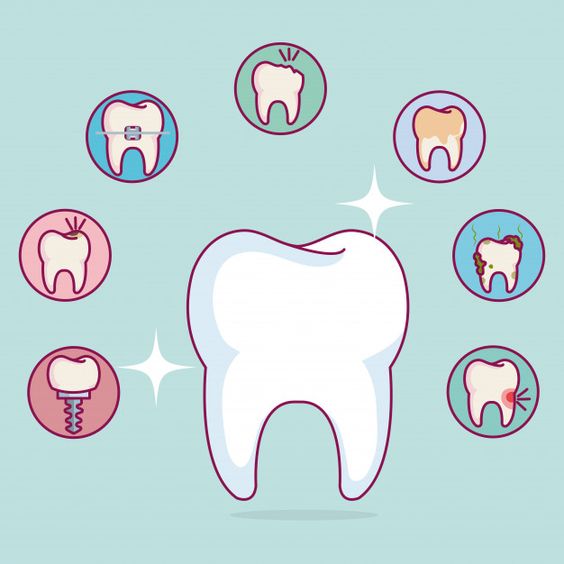
Most people consider tooth decay to be the only dental problem. However, there exist several dental problems that people must know.
The other dental health problems include:

SOURCE- PEXELS

TOOTHACHE DUE TO CAVITIES-


Tooth decay primarily happens due to unhealthy eating habits. Cavities or tooth decay are the areas in the tooth that have been decayed and have formed holes in them.
It happens when food, acids, or bacteria form a coating on your teeth called plaque. These acids start to eat away the enamel and the underlying tissue. If neglected it can permanently damage your teeth.

TEETH STAINING-


It is the most common problem people suffer all over the world. It is also caused by unhealthy eating habits. Consumption of tobacco, alcohol, or even smoking can lead to discoloration of the teeth.

GINGIVITIS-


Gingivitis is referred to as the inflammation of the gums. It occurs through the formation of plaque on one’s teeth due to poor dental hygiene.
Symptoms of Gingivitisincludes swollen and reddened gums. It also causes bleeding from the gums while brushing or flossing. If the disease is left untreated it leads to periodontitis, a more serious gum disease.

CHIPPED TOOTH-


Most of us have the habit of tearing and breaking things from our teeth. This sometimes causes the shedding of a part of the tooth.
A chipped tooth is categorized under the number 1 type of tooth injury. It is mainly caused by biting hard substances, or conditions like bruxism. It might also be caused due to accidents.

MISALIGNED TEETH-


This problem is also very common among people. Misaligned or crooked teeth cause jaw pain. This misalignment can also lead the food debris to get stuck in between the teeth and cause a dental problem.

So these were some other dental problems that need serious attention and treatment.

Is it the end or the begining of new era.

“Everything that has a beginning has an ending. Make your peace with that and all will be well.” ~

Jack Kornfield

Life is not always meant to fill with bliss and happiness . It also has its demon and darkness . And we are unable to understand the consequences that can be happen in future .

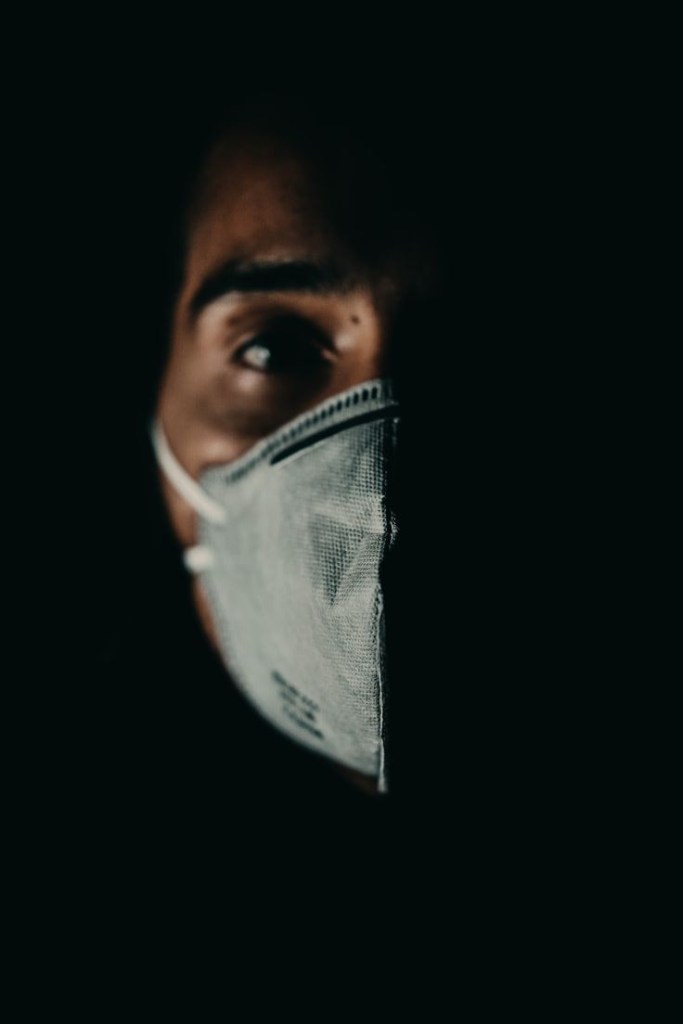
This is what we are facing now and it’s popularity is all over the world . Well well .. we all met the celebrity i.e., known as “ CORONA VIRUSE ”

Yes yes I know how much amazed we all were when we get to know about it . The excitement leads to the death of 1/4 of a population . Let’s move on from the gossip girls .

“But you are involved in the world, and your actions have consequences for other people, and if you don’t recognize that, then that’s the supreme kind of cruelty. Everyone shares someone else’s fate to some extent.” ~

Malcolm Bradbury

Like a gentle men he is . Malcolm has distracted us from the main theory that is “ Every action has equal and opposite reaction ”

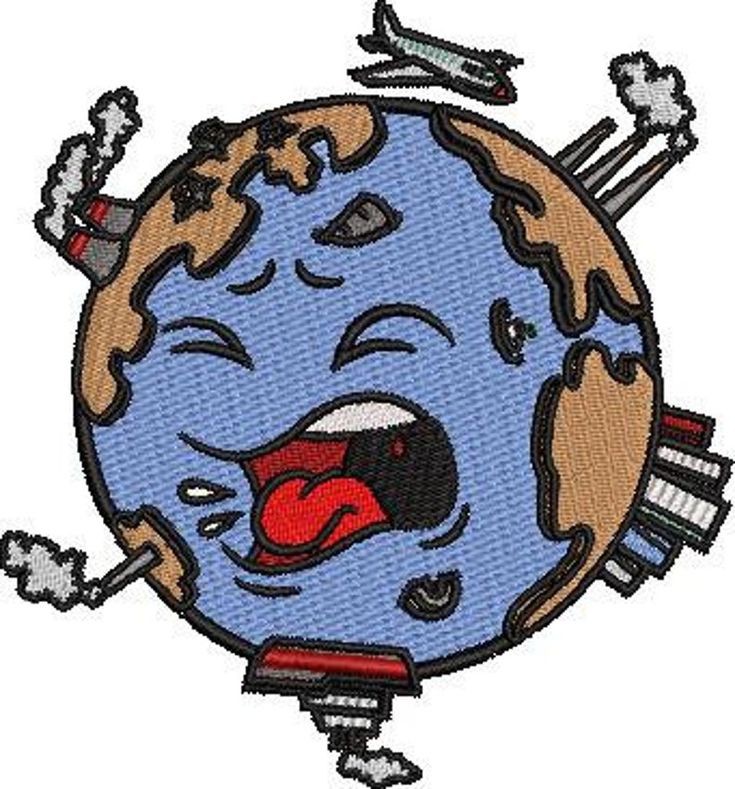
From the past decades , census has been directly pointing out the deterioration in Nature . It leads to the extinction of wild life . More than one million of species had been reportedly facing problem and extinct .

So what do you think . Is it a revenge that nature is taking in the form of corona virus ?

Or

Is it a lesson to the human kind for playing with the nature ?

Well in both questions we get one thing clearly that is human kind has to pay .

Based on the report by WHO more than 3.3 million people died due to COVID19 in January . Their are “excess death” of people which caused mass havoc in the mind of the people all over the world .

So where were we virus , death , human kind , extinction . Ohh yeah now I remember we were talking about the hate of nature for human beings . Ops , sorry . Don’t mind sometimes I just flow with sentiments .

Well , yeah we were talking about the devastation in the human world by nature .

I am not a socialist or a misanthrope . I loved nature as much as you do . But what we didn’t understand is that how much we hurt our environment . And when we come to the realisation .

It’s being like OJO run his lovely Siren on MOJO . What , who is Siren . Siren is OJO’s favourite truck . Yeah I know I am very funny .

Reality hits us with the truck in the form of COVID .

I really do talk about COVID in this editorial rather than I used in my daily life .

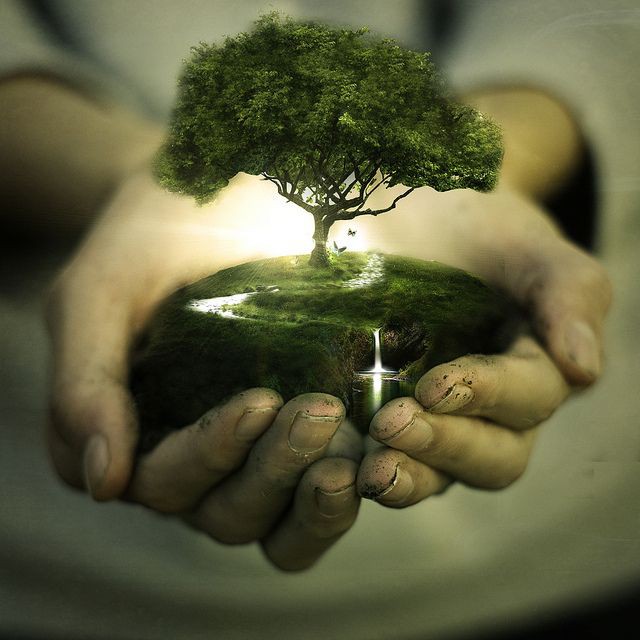
We need to recreate our life in the form that It will not harm the nature . I know it’s a tough time to speak about this but until we will not stop ourselves for our wrong doing . It will come back to us and hit it with the force that no human kind can protect themselves from the destruction.

Embrace a new perspective.

Let move together to the new world where we can live with nature

This given editorial is written under one’s perspective. I am not judging anyone’s decision . You have youern own perspective and i am standing with that .

CRYSTAL HEALING

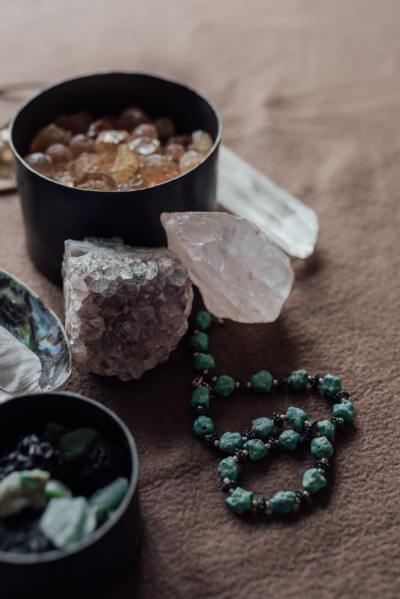
Crystal healing practices by humans are ancient. Crystals have been an important element for various healing and ritual processes. Crystal healing practices are not recent healing practice but rather has their emergence way back in time.
This technique of therapy is also tied to Indian culture and is more precisely mentioned in Vedic texts of Hinduism.

SOURCE- PEXELS

WHAT IS CRYSTAL HEALING?

Crystal healing is a practice in which various types of crystals and gemstones are used to cure an ailment. They are used as a technique where the crystal allows the positive healing energy to flow into the body and lets the negative, disease-causing energy flow out. However, crystal healing practice is a pseudoscientific process and is not supported by any scientific theories.
However, the adherents of this therapy are of the view that this therapy can help transform the aura of the body along with boosting low energy, preventing the bad energy, and releasing the blocked energy thus, giving a sense of relaxation to mind and body and providing a sense of tranquility.

“For serenity, it is best to use a combination of crystals in your environment and carry crystals with you.”
― Amy Leigh Mercree, The Mood Book: Crystals, Oils, and Rituals to Elevate Your Spirit

BENEFITS OF CRYSTAL THERAPY

Crystal Healing Therapy is a very natural and spiritual approach to cure a problem.
In terms of the physical level, the most profound effect of this therapy is that it gives deep relaxation during and after the process. This type of relaxation helps in giving mental peacefulness and serenity and helps to treat disorders like stress and anxiety.
The crystal therapy further treats painful muscle and the loosening of contacted veins and muscles and gives the body energy and a new vigor.
Spiritually and emotionally this therapy helps to give a sound and calm mind and a healthy heart. It enhances confidence and self-esteem.

Thus, in conclusion, Crystal Therapy has proved to be a great process in treating anxiety, body pain, depression, body unrest, and many more. Also, it is a non-medical process and thus has no side effects or unhealthy repercussions.

THE COVID-19 UPDATE;

Humans have been battling viruses since decades ago, even before the times when people barely had information of the fact that they are going through some kinds of virus / flu epidemic and from where did it originate, what possible medications could cure them and what probable preventions could save them. However, Even with advancing technologies which got us all the access to every bit of information of what’s happening around the globe nobody had been able to stop the spread of these viruses.

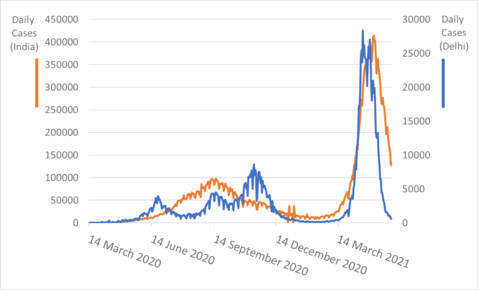
CORONAVIRUS, one of the most relentlessly hit virus in the history of mankind outshined every kind of pandemic there could have existed. It Originated initially from Wuhan, China in 2019 and got widely spread all over the world by March 2020. Since then till now the whole World had been through tremendous circumstances. After almost 1.5 years of struggle everything is gradually getting back to normal. While some countries/ places have declared themselves COVID-19 free Some are still struggling in coping up with it and one of these countries is INDIA.

Initially India was the first country to handle the first wave of Coronavirus in an uttermost precautious manner and thus the disease didn’t affect much in the first few months. Anyway later when people started thinking the situation is safe is when it started getting bad. Thereby, India started facing a rapid hike in cases each day. Millions were affected and thousands were dead. Lack of proper medication, oxygen cylinders, also beds in hosiptals, etc worsened the situations continuously and country had to face a major set back. It affected the country in every possible way be it socially, economically or politically. But along with time and after contrivance of vaccines everything has started getting under control execpt in very few states. According to a reliable source, India has recorded 51,667 new coronavirus cases and 1,329 deaths in the last 24 hours ending 9 am on Friday. With this the country’s total caseload has risen to over 3,01,34,445, while the death toll nears the 4-lakh mark. Meanwhile, the active caseload has dropped to 6.12 lakh.

THE PANDEMIC ISN’T OVER YET!

As more and more population is now getting vaccinated, it’s a safer situation outside but we all need to clear up our minds that the disease hasn’t been completely finished. The evolution of the Triple mutant of virus named as ‘DELTA PLUS’ .There is no exact indication yet of the severity of the disease due to the new variant. Around 48 cases of Delta plus classified as a Variant of concern had been detected across 10 states and one UT. NCDC Director Dr. S K Singh said Maharashtra has 20 cases followed by 9 in Tamil Nadu, 7 in Madhya Pradesh, 2 in Punjab and Gujarat, 3 in Kerala while Andhra pradesh, Rajasthan, Orisa, karnataka and Jammu has reported one case each. “There are speculations that this mutant is more contagious and it is 35-60 per cent more infectious compared to alpha variant. It could be potentially contagious,” Karmakar, Department of Biochemistry- AIIMS said. Among the 20 cases of the ‘Delta plus’ variant reported in Maharashtra the highest nine cases were reported in Ratnagiri, followed by seven in Jalgaon, two in Mumbai, and one case each in Palghar, Thane and Sindhudurg districts along with the hike in regular Covid cases today.

THE THIRD WAVE IS YET TO ARRIVE!

It is been reported by the officials that the third wave of COVID-19 is inevitable and would hit the country by September month that is., in the next 6 to 8 weeks. Thus AIIMS, Delhi has highly recommended states to be alerted and also that taking preventive measures is not only the responsibility of the government but also of every citizen of the country. Everyone should get acknowledged with the measures to be taken to protect the country from going back to the phase as of 2020. It is mandatory that everyone still curbs themselves from going to crowdy places and travelling currently and try to stay more at home, complete their vaccination procceses as soon as possible. Also it is adviced that using some home remedies like drinking warm water, Exercising or doing yoga to stay fit and having healthy eating habits which helps in building up immunity in our bodies should be considered acting upon.

Treatment of OCD

Obsessive compulsive disorder (OCD) is a debilitating neuropsychiatric disorder with a lifetime prevalence of 2 to 3 percent and is established to be 10th leading cause of disability in the world. Patients with OCD experience recurrent, intrusive thoughts (obsessions) and/or repetitive, stereotyped behaviors (compulsions) that last for at least one hour per day and significantly interfere with the individual’s normal level of functioning. 

OCD was once thought to be extremely rare, but recent epidemiological studies have shown it to be the fourth most common psychiatric disorder.

OCD is often a chronic disorder that produces significant morbidity when not properly diagnosed and treated.

OCD can be treated. The treatment recommended will depend on how much it’s affecting your life.

These treatments can be very effective, but it’s important to be aware that it can take several months before you notice the benefit. A short course of therapy is usually recommended for relatively mild OCD. If you have severe OCD, you may need a longer course of therapy and/or medicine. 

The most effective treatments for OCD are called Exposure and Response Prevention (ERP), which has the strongest evidence supporting its use in the treatment of OCD, and/or a class of medications called serotonin reuptake inhibitors, or SRIs.  During ERP, anxiety and obsession-inducing stimuli are systematically presented in a controlled environment and patients are prevented from engaging in their usual compulsions. Exposure and Response Prevention is typically done by a licensed mental health professional (such as a psychologist, social worker, or mental health counselor) in an outpatient setting. Taken together, ERP and medication are considered the “first-line” treatments for OCD. About 70% of people will benefit from ERP and/or medication for their OCD. 

What if Outpatient ERP Hasn’t Worked? Are There More Intensive Options?

  • Traditional Outpatient – Patients see a therapist for individual sessions as often as recommended by their therapist generally one or two times a week for 45-50 minutes. 
  • Intensive Outpatient – Patients may attend groups and one individual session per day several days per week. 
  • Day Program – Patients attend treatment during the day (typically group and individual therapy) at a mental health treatment center usually from 9am – 5pm up to five days a week. 
  • Partial Hospitalization – Same as the Day Program but patients attend the treatment at a mental health hospital. 
  • Residential – Patients are treated while living voluntarily in an unlocked mental health treatment center or hospital. 
  • Inpatient – This is the highest level of care for a mental health condition. Treatment is provided on a locked unit in a mental health hospital on a voluntary or sometimes involuntary basis. Patients are admitted into this level of care if they are unable to care for themselves or are a danger to themselves or others. The goals of inpatient treatment are to stabilize the patient, which generally takes several days to a week, and then transition the patient to a lower level of care.

Other recommendations from the APA Practice Guideline, cite research showing that ERP delivered in a group format, as well as ERP therapy delivered via videoconferencing (teletherapy), might be effective. Also, there is some promising new research showing that Acceptance and Commitment Therapy may be helpful for OCD. 

OCD is a chronic and severe psychiatric disorder that is often incapacitating when left untreated. Patients suffering from OCD often attempt to hide their symptoms due to the embarrassing or disturbing content of their thoughts. Many individuals isolate themselves as a consequence of their symptoms and avoid their exposure to potentially anxiety-provoking situations. Unfortunately, there is often a long delay between the time when an individual develops OCD symptoms and when they first obtain treatment. Early diagnosis and treatment minimizes symptom severity and level of disability.

How to judge people

Yes you got it right. We are often told  don’t judge people on the basis of any parameter.

And yet here I am suggesting to judge not just people but situations efficiently.

What kind of judgment are we talking about here? You should learn to do selective judgment. Judgment Done by you should be on an individual level and it should not affect adversely the second party in anyway.Like I said there is good in the world along with the bad so your judgment should be limited to warding off the bad people around you.

Your call should not become any sort of discrimination towards the people.Your hatred or your indifference should not become social or societal indifference.

Judgement of a person is only for cautious purposes.

Like it benefits girls the most.Seeing the number of rapes and hate crimes committed against women,a key of caution towards judgement of intention can be handy.

Similarly,mothers and sisters of culprits can judge their son’s behavior as to what tendencies he has.This can help in avoiding at least a few incidents of female cruelty.

I agree,In india parenting is different.But that’s what we need to learn as a country.Adopt the positive things from other countries.

It can help you be safe.Prevent accident,incidence of injury to both mind and body.

Another angle to judgement is we learn to analyse situations and can foresee our reaction to it.We constantly react to external stimuli in many ways.

It helps provide a presumption of a situation and hence we can bravely fave the wicked ones.

The fight between right and wrong even establishes itself at government level.

Whilst arguing that selective judgement is good and can be helpful to you there is yet another angle.To learn where to not judge.

Some wrongs we can avoid-

To judge people on the basis of their beauty.Bad.

Judging them on the basis of their money. Bad.

Doing friendships or relationships on the basis of pros and cons or advantages and disadvantage without having any emotions. Bad.

Judging someone on the basis of the language they speak,Fluency in English. Bad.

Judging someone on the basis of clothes to wear. Bad.

Judging someone on the basis of their religion/Caste. Bad.

Judging someone by the life choices they make ie being on married choosing a spouse etc.Bad. 

Considering Everyone who is not like you inferior and satisfying your pride.Bad.

&

Self analysis and helping others learn selective judgment to prevent or overcome possible future wrongs.Good.

MEDICAL TERMINATION OF PREGNANCY (AMENDMENT) BILL 2021

Context: Recently, the Rajya Sabha passed the Medical Termination Pregnancy (Amendment) Bill, 2021.

● The Bill seeks to amend the Medical Termination of Pregnancy Act, 1971.

● This Act covers abortions in India. It had been amended in 1975 and 2002.

●This is an important Bill that seeks to enhance the reproductive rights of women in india .

● Before the enactment of this legislation, abortion was prohibited under Section 312 of the Indian Penal Code.

According to this MTP Act, 1971, a pregnancy may be medically terminated by a registered medical practitioner:

Photo by Pavel Danilyuk on Pexels.com
  1. Where the length of the pregnancy does not exceed twelve weeks (for this, the opinion of one doctor was required).
  2. Where the length of the pregnancy has exceeded twelve weeks but does not exceed 20 weeks. In this case, for the abortion to take place, two doctors must be of the opinion that the continuation of the pregnancy would impair the mental and/or physical health of the mother, and/or that if the child were to be born, it would suffer from serious physical or mental abnormalities causing it to be handicapped.
  3. The law also required minor pregnant women to get written consent from the guardian for the abortion to be allowed.

Provisions:

Termination due to Failure of Contraceptive Method

Under the Act, a pregnancy may be terminated up to 20 weeks by a married woman in the case of failure of contraceptive method or device. The Bill allows unmarried women to also terminate a pregnancy for this reason.

Opinion Needed for Termination of Pregnancy:

• Opinion of one registered medical practitioner (instead of two or more) for termination of pregnancy up to 20 weeks of gestation.

• Opinion of two registered medical practitioners for termination of pregnancy of 20-24 weeks of gestation.

• Opinion of the State-level medical board is essential for a pregnancy to be terminated after 24 weeks in case of substantial foetal abnormalities.

Medical Boards:

Every state government is required to constitute a Medical board

These Medical Boards will consist of the 5 members:

(i) a gynaecologist

(ii) a paediatrician

(iii) a radiologist or sonologist

(iv) any other number of members, as may be notified by the state government.

Upper Gestation Limit for Special Categories:

It enhances the upper gestation limit from 20 to 24 weeks for special categories of women which will be defined in the amendments to the MTP Rules and would include survivors of rape, victims of incest and other vulnerable women (like differently-abled women, minors) etc.

Confidentiality:

The “name and other particulars of a woman whose pregnancy has been terminated shall not be revealed”, except to a person authorised in any law that is currently in force.

Benefits:

Termination in Case of Anomaly:

A number of foetus abnormalities are detected after the 20th week, often turning a wanted pregnancy into an unwanted one.

Helps Special Category Women:

The law will help the rape victims, ill and under-age women to nd unde terminate the unwanted pregnancy lawfully.

Beneficial for Unmarried Women:

The Bill also applies to unmarried women and therefore, relaxes one of the regressive clauses of the 1971 Act, i.e., single women couldn’t cite contraceptive failure as a reason for seeking an abortion.

Allowing unmarried women to medically terminate pregnancies and a provision to protect the privacy of the person seeking an abortion will bestow reproductive rights to the women.

Abortion laws across the world:

Abortion laws vary across the world. It is learnt that around 60 countries prescribe gestational limits.

• 52 % including France, the UK, Austria, Ethiopia, Italy, Spain, Iceland, Finland, Sweden, Norway, Switzerland and even Nepal, allow for termination beyond 20 weeks on the diagnosis of foetal abnormalities.

● Some countries go beyond even these limits with laws in 23 countries-Canada, Germany, Vietnam, Denmark, Ghana, and Zambia-allowing for abortion at any time during the pregnancy on the request of the mother.

●Recently, Argentina became both the largest Latin American country and the third South American country to legalize abortion.

Challenges:

Viability of the Foetus:

● A key aspect of the legality governing abortions has always been the ‘viability’ of the foetus.

● Viability implies the period from which a foetus is capable of living outside the womb.

● As technology improves, with infrastructure up-gradation, and with skilful professionals driving medical care, this ‘viability’ naturally improves.

• Currently, viability is usually placed at about seven months (28 weeks) but may occur earlier, even at 24 weeks.

Thus, late termination of pregnancy may get in conflict with the viability of the foetus.

Preference for a Male Child:

The preference for a male child keeps sex determination centres in bussiness in spite of their illegal status. There are concerns that a more liberal abortion law can aggravate this state-of-affairs.

Change of Choice:

The current Bill does not consider factors such as personal choice, a sudden change in circumstances (due to separation from or eath of a partner), and domestic violence

Medical Boards:

●The present healthcare budgetary allocation makes setting up a board across the country, both financially and practically impossible.

● Access to the board by pregnant women in remote areas of the state is a matter of concern.

●No time limit set to respond to the requests.

● The board will subject women to multiple examinations before allowing her to terminate her pregnancy. This is a violation of right to privacy and right to live with dignity.

Way Forward

●Though Medical Termination of Pregnancy (Amendment) bill 2021 is a step in the right direction, the government needs to ensure that all norms and standardised protocols in clinical practice to facilitate abortions are followed in health care institutions across the country.

●Along with that, the question of abortion needs to be decided on the basis of human rights, the principles of solid science, and in step with advancements in technology.

PSYCHOLOGY

Psychology is the study of mind and behavior. It encompasses the biological influences, social pressures, and environmental factors that affect how people think, act, and feel.

Psychology is the science of mind and behavior. Psychology includes the study of conscious and unconscious phenomena, as well as feelings and thought. It is an academic discipline of immense scope. Psychologists also seek an understanding of the emergent properties of brains, linking the discipline to neuroscience.

Psychology is the scientific study of how people behave, think and feel. Psychologists study everything about the human experience from the basic workings of the human brain to consciousness, memory, reasoning and language to personality and mental health.

There are different types of psychology, such as cognitive, forensic, social, and developmental psychology. In modern psychology, the varying viewpoints on human behavior have been split into eight different perspectives: biological, behavioral, cognitive, humanistic, psychodynamic, sociocultural, evolutionary, and biopsychosocial.

Psychology helps people in large part because it can explain why people act the way they do. With this kind of professional insight, a psychologist can help people improve their decision making, stress management and behavior based on understanding past behavior to better predict future behavior.

Psychology can also be a useful tool for improving your overall health. From ways to encourage exercise and better nutrition to new treatments for depression, the field of health psychology offers a wealth of beneficial strategies that can help you to be healthier and happier.

                    “If positive psychology teaches us anything, it is that all of us are a mixture of strengths and weaknesses. No one has it all, and no one lacks it all.”
                           
                                     — Chris Peterson

Animal abuse

Overview
Animal Cruelty also called animal abuse, cruelty to animals or animal neglect is a range of behaviors harmful to animals, from neglect to malicious killing. Intentional cruelty can run the gamut from knowingly depriving an animal of food, water, shelter, socialization, or veterinary care to maliciously torturing, maiming, mutilating, or killing an animal. They face a lot of mishappenings and still they fight for themselves. There is no humanity left within human beings. They act Insane. They do not pity the animals. The way animals are treated is just so pathetic and disturbing. For no reason, they are beaten up, they are being raped, and they are were killed then. Many suffer through this daily, and in the end, they give up and lose their lives.
The animals whose abuse is most often reported are dogs, cats, horses, and livestock. Undercover investigations have revealed that animal abuse abounds in the factory farm industry. But because of the weak protections afforded to livestock under state cruelty laws, only the most shocking cases are reported, and few are ever prosecuted.
What our role was, and what are we actually doing?
Instead of providing them love, care, and help we fail to even consider them living organisms. We disrespect them and make them feel that they are not part of society as living organisms.
In recent times, there has been a rise in the number of such cases. Cases have been reported from every part of India. There was a recent case from the streets of Ludhiana, where a dog was beaten to death by a security guard, the dog’s mistake was that he was less strong than human beings. He fought for his life for two days and he couldn’t survive after that. There is not just one case but a thousand no. Of cases, and some which we don’t even know. We see no action taken against the people who make animal abuse happen.
Statistics
Humans hurt, maimed, killed, and even raped almost 5 lakh animals between 2010 and 2020, according to the latest report on violence against animals in India.
The report, published by the Federation of Indian Animal Protection Organizations (FIAPO) and All Creatures Great and Small (ACGS), says that in the said period a total of 4,93,910 animals became victims of crimes committed by humans.
The report says these include over 2,300 gruesome and intentional acts of violence that led to the animal’s death or irreparable harm.
As per the report, out of the 1,000-assault cases recorded against the animals, 82 cases were of sexual abuse, 266 cases of cold-blooded murder, and over 400 cases were of violent attacks of beating, kicking, torturing, throwing acid or boiling water, maiming a part of the body, attacking with a knife or a blunt object.
According to the report, the year 2019 saw the highest number of cases of crimes against animals (700 cases). Additionally, almost 4,230 dogs were killed by mass culling drives across the country in the past five years alone.
“Because they are animals, people tend to underplay the violence by calling it cruelty. But it’s more than cruelty. It’s physical abuse; it’s psychological abuse; it’s rape; it’s murder. Severe crimes against animals must be treated as a felony,” Varda Mehrotra, executive director, FIAPO, said.

19 Lessons For Life During The COVID Era

BE POSITIVE!

We all thought this was a temporary thing. But here we are. People are already calling this the “COVID era” as if they are reading about it in a history book. But we’re still going through it. 

For most of my friends and family, the social distancing and handwashing aren’t that bad. We got used to that stuff quickly. The tough part about this era is that life has changed permanently for many folks. 

Rifts are created between people with different beliefs on wearing a mask. Complete industries are swept away and will probably never be the same. The world has truly changed. 

In this article, I’m sharing 19 lessons I’ve learned from observing all these changes. Hopefully, these short reminders will make life during this era easier for you. These things surely have helped me a lot.

  1. It’s hard on everybody
    I know your life is hard. But so is the life of your neighbor. That puts us all in the same boat. So go easy on yourself and others.
  2. Nothing is forever
    It seems like this will last forever. But everything dies. And so will pandemics.
  3. Accept it as if you chose this
    This is the only form of useful lying in the world. Trick yourself into believing you wanted a more tranquil and solitary life. This is a classic Stoic exercise. Simply accept everything that’s outside of your control as something you wanted. Life will be a lot rosier.
  4. Make the best of your time
    Accepting circumstances doesn’t mean we give up. Make the best of it. To be clear: Worrying and thinking about stuff that’s outside of your control is NOT a good use of your time.
  5. Take a breather
    Literally. Take a moment for yourself and breeeeath…. Aaaah. Yes, that’s the feeling.
  6. Exercise every day
    Stay in shape. If you’re not injured or ill, it’s your duty to take care of your body. Never take this lightly. 
  7. Get off social media
    It’s a waste of your time. “Always?” Pretty much.
  8. Read books
    This is a better use of your time. We all have reading lists with hundreds of books on them. And we’re not going to live 200 years. That means you need to make some tough choices. Which books will you read before you die?
  9. Learn new skills
    Technology is improving and changing so fast that we’re not aware what’s going on. We just learn it after the fact. But that’s too late. So stay on top of your field and keep learning new skills you need to do good work.
  10. Keep a daily journal
    This will probably be one of the weirdest times of our lives. Don’t you want to document this? Even if you never read it again, it’s still worth writing because it makes you a better thinker. 
  11. Inspiration comes from within
    “I need to go to Paris for inspiration.” Replace Paris with any city or place in the world. Why do we think inspiration comes from the outside? Look inside!
  12. Good food improves your mood
    One of the few pleasures that you never get used to. Research new recipes, be creative, and cook food that makes you go, “Hmmmmnn.”
  13. Objects will not make you happy
    STOP BUYING CRAP ONLINE! I had to tell myself that after a few too many useless purchases.
  14. More money is not the answer
    Look, I’m not going to lie. Having a little bit of money will lighten the load. So start that online business or side-gig you’ve been thinking about. But don’t expect that money will make you happy. It just solves your money problems. Nothing else.
  15. Do work you enjoy
    Just because you need to survive, don’t say yes to the first available job you encounter. And also don’t start some kind of soulless online business so you can make a few bucks. Find something you enjoy and pays the bills. 
  16. Appreciate what you have
    The grass is always greener. We tend to forget. So here’s a reminder: If you’re reading this on your smartphone in the comfort of your house, your life isn’t so bad. 
  17. Give back
    Do something altruistic. It’s fine to give money to charity. But I’m not talking about that. Talk to your elderly neighbors, hold the door for someone, share your hard-earned lessons with others. Small things that have a positive impact on people.
  18. Change is good
    This is a difficult period if your industry got swept away. But remember, change is a part of life. And in the long-term, it’s good. We just don’t see the sunshine when we’re going through a storm. 
  19. Stop consuming—Start creating

The world never changed for the better by doing nothing. Right now, our biggest challenge is paralysis by consumption. We’re over-consuming everything: News, food, clothes, entertainment, you name it.

To get through this era, we need more action. So stop sitting there and go create something. Without creation, there’s no progress.

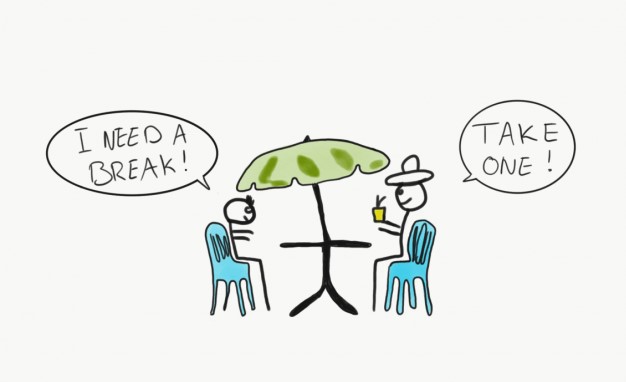
Give yourself a break

In todays’ fast-paced world we tend to overwork ourselves because the environment is so competitive that we forget that our body and mind need rest sometimes. You must have found yourself tired and felt helpless at some point of time in your life, right? When you do too much work and when you finally take a rest you are not able to rest your mind, it may be a sign that you need a break. Similarly, if you feel devoid of energy to continue your work or you can’t sleep at night you need to take a break.

Burnout is the state of mind when it is exhausted and you feel physically exhausted too. At that point in time, you must consider being generous to yourself and take a break from everything that is going on. Many people feel that a break would leave them behind others but that is not the case, because everybody has their growth path, they grow at their own pace. Racing against time, overworking yourself will not help you in succeeding instead it will leave you exhausted. Sometimes a break in life is very important for a better comeback. If you feel stressed or you feel like you have tried your best but still the universe is conspiring against you, that is the indication to take a break.

Taking a break could be different things for different persons, for some it may be going back to your hobbies, for some it may be to take rest for a few weeks and do nothing. All of this me-time is valid, you don’t need to do anything productive in the meanwhile, you should not feel any pressure to do a task during your break. Giving yourself a break means giving your mind rest from all the whirling emotions that you have been feeling for a while.

Some people might say that you have given up, but you should not care what they say, everybody deserves a break from time to time. If you do not give yourself a break your mind will get exhausted and you might lose interest in all the activities in life.

There are many ways to give yourself some me-time:

  1. Book yourself a spa appointment and enjoy the massage.
  2. Read a book you’ve been wanting to read for some time but you couldn’t get time to do it.
  3. Go out for a morning jog, the fresh air would feel great.
  4. Go out for a swim or go out to play your favorite sport.
  5. Do nothing get in your bed and get a sound sleep.
  6. Take a hot water bath and then cook something for yourself and eat it. Self-made food tastes great and it gives you a sense of accomplishment.
  7. Meditate and exercise or do yoga.
  8. Get away from your screen and talk to someone you like to talk to.
  9. Watch a feel-good movie or any of your favorite movies while eating your favorite snacks.

LIFE LESSONS FROM COVID-19

Everybody was stuck in shock when we all heard about CORONAVIRUS. But we didn’t think that it would have such a worst impact on our lives. In fact, we didn’t realize its seriousness at first. When the coronavirus slowly started to spread all over our country, we started to realize the seriousness. As we all know, due to the pandemic, the whole of India was kept shut for many days. Every company went through its worst phase. Gradually, we accepted the scenario and started doing the unthinkable. Schools started taking classes online, IT and other companies functioned through work from home and many others remained pathetic not knowing what to do. Many families couldn’t get enough money for daily necessities. Moreover, they had to spend more than normal for the pandemic made us spend more on medicines and sanitation. With all these, on one hand, we got to learn a lot of new things.

First, we learned to spend time with our family. Before the pandemic, we would live in our own way. We don’t spend time without family. We had our own reasons like returning home after tight schedules either from school, college, or work, and even after that, we had certain tasks to be accomplished. We would spend most of our time in the outside world and only had time to freshen up and relax ourselves to start off the next day. Due to this lockdown, we were not allowed to step out of our houses which made us spend quality time with our family. Also, by this, we realized the value of family and relationships. Not only this, we learned to value life. We realized that life is the biggest gift one has been bestowed with. After losing our loved ones, and seeing our near and dear losing their loved ones, we started being grateful for being alive at least. These were the biggest lessons life taught us through this pandemic.

Lockdown restricted us from using vehicles and this paved the way to reduce air pollution. Now, we see and hear that our EARTH is healing. Holes in the Ozone layer are disappearing. As a result, the environment changed in a good way. We are now released from breathing the poisoned air and the quality of the air has increased. 

Another one, we started believing in our natural Indian medicine. Although we have many allopathy medicines for boosting immunity, we all made decoctions using Tulsi leaves, turmeric, pepper, ginger, lemon, honey, and so on. These were the traditional medicines prescribed by our ancestors to prevent our bodies from a virus attack. Literally, every good thing which was ignored before was given place and priorities. As time went by, we started to know how to maintain a healthy lifestyle and good hygiene. We started eating healthy food to sustain this pandemic. We all realized the importance of regular exercises and yoga. They create such a beautiful impact on our bodies. We learned one main lifesaving thing which is very much essential no matter whatever the situation may be, positivity. Positivity plays a crucial role in our life behind the scenes. Researches show that positivity helps in increasing the chances of recovery from any disease. It makes us feel good, boosts our energy and confidence. It is said to enhance mental productivity and inner strength.

We explored the new side of ours. We got to know more about ourselves and self-love and care. Last but not the least, we all understood the pain and struggles of spending our whole life inside the house as faced by all the housewives and mothers only when we were forced to confine ourselves inside the four walls of the house. We started sharing household chores and other work equally with our family. This definitely gave our mothers some relaxation for which they earned for many days. 

Going by the quote, “Every evil has its good and every ill an antidote”, we also had many good things that happened in this pandemic. All I would say is be happy with all the goodness around us and stop complaining about the problems.

Saying No Can Lead To A Happier Life

START SAYING NO!

We believe that we always have to say yes to opportunities. We fear that saying no leads us to miss out on money, fun, and other experiences. But by always saying yes, we don’t value our time.

Blindly we say yes to everything that comes our way. We often don’t look at saying “no” as a skill. If we are at work and our manager asks you to hand in a report before the end of the day, we say, “sure thing.” It interrupts our work, and we often have to push other things aside.

There was never any fear for me, no fear of failure. If I miss a shot, so what?
– Michael Jordan

We say yes in our personal lives all the time. When friends ask us to go out while we have other things to do, we say yes. We friends or acquaintances a favor, without thinking about it. We even say yes to bigger things that we don’t want. We take jobs we don’t like. We start relationships with people who we are not in love with.

Why do we do this? We are afraid to say no, to let people down, to avoid confrontation. The stress of saying no often makes us say yes automatically. And then we complain or blame ourselves, “why couldn’t I just say no.” And with relationships, we are afraid that if we turn down an opportunity to settle down, another one maybe won’t show up.

I see this often with relationships at work. You spend time with a person at work so often and if you feel physically attracted to each other it easy to start a relationship. If you start a relationship, you cannot ‘kind of’ want it. No, you should be in love. Saying yes doesn’t always make you happy.

Other People’s Expectations

Learning to say no can save us a lot of time and stress. While we are afraid that we have to let people down, the opposite is true. People will start respecting you more when you start saying no. People perceive that as a strong character trait.

It’s time to stop doing things to live up to other people’s expectations. You don’t have to do things you don’t like. If you don’t start saying no, and keep doing things you don’t want to do, you begin to dislike the person you are trying to please. Saying no is not only for your benefit but actually by saying no, you are thinking about other people as well.

If you say yes to a night out with your spouse and you don’t feel like it, you probably won’t be in a great mood. It’s not fair for your spouse if you are not present mentally. If you rather go out the next day because you are tired tonight, say so. Your partner will respect you for that. If she doesn’t, we have to explain why we say no. And encourage them to say no when they don’t want to do something as well.

Conforming to other people expectations can impact your life’s outcome. When you say yes to one night out, when you don’t feel like it, doesn’t have huge life consequences. But sometimes it is about choices that will influence our life outcome. When parents expect their children to go to university, the children often give into that.

We are all unique and have things we want from life, asking people to do something they don’t like is not fair. If you don’t wish to go to university because of a good reason, then don’t. We have to follow our passion and make our own path.

Say No To Noise

We should say no to everything that is noise. Greg Mckeown, writes in his book Essentialism about how the ‘disciplined pursuit of less’ allows us to regain control over our choices. Mckeown says that many successful people in history were ‘essentialist’, people who can separate the essential from the non-essential in life. Saying no is a way of showing what you consider ‘essential’ by saying no to everything that is noise.

About the importance of saying no, Mckeown says, “ yet as hard as it can be to say no to someone, failing to do so can cause us to miss out on something far more important.” When we have a purpose in life, everything that doesn’t contribute to our purpose, becomes noise.

When we want to live a stress-free life, we have to choose “no”. Saying blindly yes to invitations from our colleagues, friends or family causes us stress. We often regret saying yes for days. We worry about damaging our relationships. We worry that we burn bridges. We worry about what people would think if we say no. We live in an abundant world. By saying no you don’t miss anything. The world is filled with opportunity and beauty.

We think we are not good friends or colleagues when we say no. You’re not a bad person when you say no. Once we start saying no, we lose the fear of disappointing people and find out that it wasn’t that hard. We find that we replace the noise with silence and clarity. We enjoy the things we do say yes to more. We become more present and happy.

What Idiots Can Teach You About Life

IDIOTS ARE NOT STUPID! BELIEVE OR NOT!

Have you ever met an idiot and thought “What an idiot?” Well, don’t be so quick to judge — idiots can teach you a lot about life.

A few years ago I went to Shangai. When I boarded the plane in Amsterdam, I met a first class idiot as soon as I stepped foot on the aircraft.

When I got to my seat, the overhead bin was already full, so I had to store my bag on the other side. But when I tried to do that, an idiot came from nowhere and started screaming at me. I didn’t understand him, but I got his message: “That’s my seat, and I want to store my bag there.”

I grabbed my bag, walked two rows down, asked the person who was sitting there if it was ok I placed my bag in his overhead bin; he said yes, I stored my bag, walked down to my seat, and sat down.

Was that difficult? No. Could the idiot have done that? Yes. He didn’t have to make a scene.

“People are surprised to find out that an awful lot of people think that they’re idiots.”
– Eric Schmidt

In my life, I’ve had many other encounters with people that had bad behavior — let’s call them idiots.

You know what I’m talking about, right? Idiot bosses, coworkers, strangers, friends. Idiots do things that are not cool. It’s not bad to be an idiot — I sometimes do idiotic things, everyone does.

Dealing With Idiots

Is it cool to call people idiots? Yes, I call myself an idiot sometimes. People think they should only learn from successful people — billionaires, entrepreneurs, athletes.

But that’s not the only way to learn. How many billionaires and athletes do you know? We all know idiots. From them, we can learn how we should not behave.

Maybe someone at work stabs you in the back. Maybe your girlfriend cheats on you with your best friend. Maybe someone wants to start a fight with you. Maybe someone bullies you.

Without a doubt, people in your life have, or will, let you down. There’s no escaping that. What’s more important is your response. Do you become bitter about people? Do you think that all people are bad?

If someone does something bad to you, don’t see it as a reason to justify that behavior. For example, when I first started working for a major corporation, I noticed quickly that people accept backstabbing. You screw someone over on one day, and get promoted the next day.

Is that good? Is that bad? It’s neither, as Shakespeare put it: “There is nothing either good or bad but thinking makes it so.”

However, it’s also not a ‘get out of jail free card’. We have to watch ourselves that we do not become what we despise. No one on this planet is born an idiot — we become one. So choose not to.

When people behave like idiots, don’t be offended, don’t take it personally, study them instead.

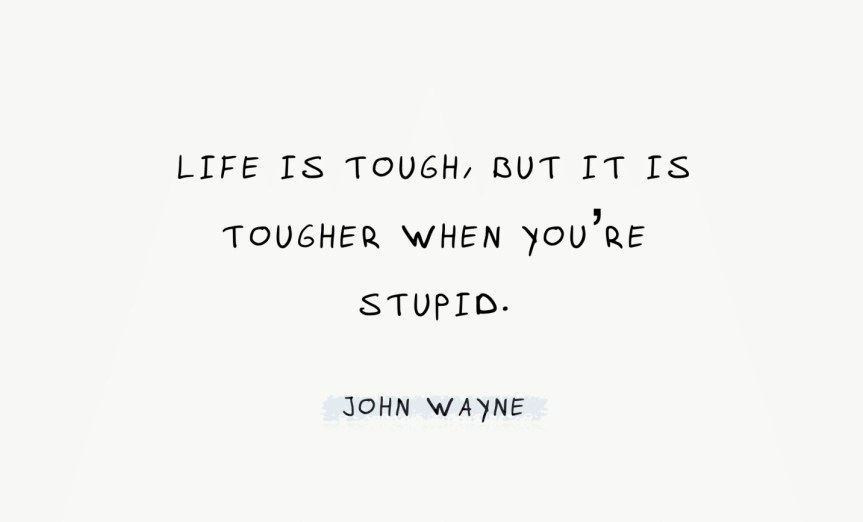
“Life is tough, but it’s tougher when you’re stupid.”
– John Wayne

I observe idiots doing bad stuff like cheat, lie, be aggressive, rude or anything else that is not ok to me. Then, I consciously decide to not be like them.

By observing behavior that you don’t want to associate yourself with, you will become clear on the type of person you do want to be.

Just answer to yourself: What is ok, and what isn’t? For example, stabbing people in the back for a promotion — not ok.

In the end, do whatever you think is right. Always make sure you do the right thing — but please, don’t be an idiot.

BALANCED DIET

“TO ENSURE GOOD HEALTH: EAT LIGHTLY, BREATHE DEEPLY, LIVE MODERATELY, CULTIVATE CHEERFULNESS AND MAINTAIN AN INTEREST IN LIFE.”                                           – WILLIAM LONDEN

A balanced diet is a diet that contains differing kinds of foods in certain quantities and proportions so that the requirement for calories, proteins, minerals, vitamins and alternative nutrients is adequate and a small provision is reserved for additional nutrients to endure the short length of leanness.

A well-balanced diet provides important vitamins, minerals, and nutrients to keep the body and mind strong and healthy. Eating well can also help ward off numerous diseases and health complications, as well as help maintain a healthy body weight, provide energy, allow better sleep, and improve brain function.

There are seven main classes of nutrients that the body needs. These are carbohydrates, proteins, fats, vitamins, minerals, fibre and water. It is important that everyone consumes these seven nutrients on a daily basis to help them build their bodies and maintain their health.

A healthy diet is essential for good health and nutrition. It protects you against many chronic noncommunicable diseases, such as heart disease, diabetes and cancer. Eating a variety of foods and consuming less salt, sugars and saturated and industrially-produced trans-fats, are essential for healthy diet.