Why Chandra Shekhar Azad is know as “AZAD”, remembering him on his Jayanti

KNOWN FOR HIS BREAVERY & HIS DEVOTION TOWADS THE COUNTRY , AZAD WAS THE MAN OF HIS WORDS.

Every one calls him Chandra Shekhar Azad , but his original name was Chandra Shekhar Tiwari.

Azad was born as on 23 July 1906 in Bhabhra village , in the princely-state of Alirajpur. His forefathers were from Badarka village of Unnao District. His mother, Jagrani Devi, was the third wife of Sitaram Tiwari, whose previous wives had died young. After the birth of their first son, Sukhdev, in Badarka, the family moved to Alirajpur State.

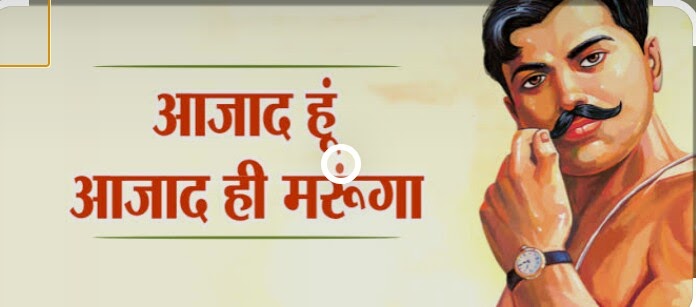
His mother wanted her son to be a great Sanskrit scholar and persuaded his father to send him to Kashi Vidyapeeth, Banaras, to study. In 1921, when the Non-Cooperation Movement was at its height, Chandra Shekhar, then at a tender age of 15 , joined that movement . As a result, he was arrested on 20 December. On being presented before the district magistrate Justice Reverend Tomson Kregat a week later, he introduced himself as “Azad” (The Free), his father’s name as “Swatantrata” (Independence) and his residence as “Jail”. The angry magistrate ordered him to detained to jail for 23 weeks and ordered be punished with 15 lashes a day . his level of devotion towards the country can be measured by his actions , when he was getting lashes , with each lash he said “VANDE MATARAM” & “GANDHI JI KI JAI HO ” . After watching a boy of just 15 , getting lashes as punishment but still shouting VANDE MATARAM , people started recognizing him as “AZAD”

He learnt shooting at a very tender age , he was known for his shooting skills . After the suspension of the non-cooperation movement in 1922 by Gandhi, Azad was disappointed. He met a young revolutionary, Manmath Nath Gupta, who introduced him to Ram Prasad Bismil who had formed the Hindustan Republican Association (HRA), a revolutionary organization. He then became an active member of the HRA and started to collect funds for HRA. Most of the fund collection was through robberies of government property , they property which British govt snatched from Indians. British government was stunned by this behavior of Azad . He didn’t stop here , he was involved in shooting J.P Saunders , who was involved in killing Lala Lajpat Rai , Azad didn’t stop here , he pasted pamphlets on the walls of Lahore’s streets , that revenge of Lala Lajpat rai is taken.

On 27 February 1931, the CID head of the police at Allahabad, Sir J. R. H. Nott-Bower was tipped off by someone that Azad was at Alfred Park and was having a talk with his companion Sukhdev Raj. On receiving it, Bower called on the Allahabad police to accompany him to the park to arrest him. Azad’s old comrades Veer Bhadra Tiwari and Yashpal were also held responsible for tipping off two of the police constables. The police arrived at the park and surrounded it from all four sides. Some constables along with DSP Thakur Vishweshwar Singh entered the park armed with rifles and the shootout began. Sukhdev Raj escaped uninjured. Azad hid behind a tree to save himself and began to fire from behind it. The police fired back. After a long shootout, holding true to his pledge to always remain Azad (Free) and never be captured alive, he shot himself with his last bullet. In the shootout, Bower and DSP Singh were injured in the right palm and jaws respectively. The police recovered Azad’s body after the other officers arrived at the site.

The body was sent to Rasulabad Ghat for cremation without informing the general public. As it came to light, people surrounded the park where the incident had taken place. They chanted slogans against British rule and praised Azad. The park was later on named as Chandra Shekhar Azad park .

This level of love towards the country is hard to find in this era , & on the occasion of Chandra Shekhar Azad ‘s Jayanti we all should remember this great freedom fighter & should take pledge that we will also stand on our country’s side in every situation like Azad .


WOMEN EMPOWERMENT

Women Empowerment is made up of two words women and empowerment. Empowerment means to give power or authority to someone. So, Women Empowerment means power in the hands of women. It signifies that women should be given equal opportunity in every field, irrespective of any discrimination. Our society comprises men and women. In earlier times, men were considered to be the leading members of a family. They were responsible for earning the livelihood and were the decision takers of the family. On the other hand, women were responsible for doing household work and upbringing of the children. So, the roles were mainly based on gender. There was no involvement of women in decision making. If we assess our entire sector, then research says that women’s issues are either focused on her reproductive role and her body or on her economic role as a worker. But none of them is focused on empowering the women.Women can be empowered in various ways. It can be done through government schemes as well as on an individual basis. At the individual level, we should start respecting women and start giving them opportunities equal to men. We should promote and encourage them to take up jobs, higher education, business activities, etc. The Government has come up with various schemes such as Beti Bachao Beti Padhao Yojana, Mahila-E-Haat, Mahila Shakti Kendra, Working Women Hostel, Sukanya Samriddhi Yojana, etc. to empower women. Apart from these schemes, we as individuals can also empower women by abolishing social evils like the dowry system, child marriage. These small steps will change the situation of women in society and make them feel empowered.

Women can be empowered in various ways. It can be done through government schemes as well as on an individual basis. At the individual level, we should start respecting women and start giving them opportunities equal to men. We should promote and encourage them to take up jobs, higher education, business activities, etc. The Government has come up with various schemes such as Beti Bachao Beti Padhao Yojana, Mahila-E-Haat, Mahila Shakti Kendra, Working Women Hostel, Sukanya Samriddhi Yojana, etc. to empower women. Apart from these schemes, we as individuals can also empower women by abolishing social evils like the dowry system, child marriage. These small steps will change the situation of women in society and make them feel empowered.

EACH TIME A WOMEN STAND UP FOR HERSELF, SHE IS STANDING FOR HERSELF.

Positive Psychology

Positive psychology is one of the newest branches of psychology to emerge. This particular area of psychology focuses on how to help human beings prosper and lead healthy, happy lives. While many other branches of psychology tend to focus on dysfunction and abnormal behaviour, positive psychology is centered on helping people become happier. Positive psychology is designed to “complement and extend the problem-focused psychology that has been dominant for decades,” explained the late Christopher Peterson, author of “A Primer in Positive Psychology” and professor at the University of Michigan, in a 2008 article published in Psychology Today. “Positive psychology is…a call for psychological science and practice to be as concerned with strength as with weakness; as interested in building the best things in life as in repairing the worst; and as concerned with making the lives of normal people fulfilling as with healing pathology,” Peterson wrote.

According to leading authorities in the field, Martin Seligman and Mihaly Csikszentmihalyi, positive psychology will help achieve “scientific understanding and effective interventions to build thriving in individuals, families, and communities.” In order to understand the field of positive psychology, it is essential to start by learning more about its major theories, applications, and history.

History of Positive Psychology

“Before World War II, psychology had three distinct missions: curing mental illness, making the lives of all people more productive and fulfilling, and identifying and nurturing high talent,” wrote Seligman and Mihaly Csikszenmihalyi in 2000. Shortly after WWII, the primary focus of psychology shifted to the first priority: treating abnormal behavior and mental illness. In the 1950s, humanist thinkers like Carl Rogers, Erich Formm and Abraham Maslow helped renew interest in the other two areas by developing theories that focused on happiness and the positive aspects of human nature.

General interest in positive psychology has grown tremendously since the concept was introduced. Today, more and more people are searching for information on how they can become more fulfilled and achieve their full potential.

Uses

Positive psychology can have a range of real-world applications in areas including eduction, therapy, self-help, stress management, and workplace issues. Some of the major topics of interest in positive psychology include: Character strengths and virtues, Flow, Gratifications, Gratitude, Happiness, Pleasure, Helplessness, Hope, Mindfulness, Optimism, Positive thinking, Resilience .

Impact of Positive Psychology

Some of the major findings of positive psychology include: Money doesn’t necessarily buy well-being, but spending money on other people can make individuals happier, People are generally happy, Some of the best ways to combat disappointments and setbacks include strong social relationships and character strengths, While happiness is influenced by genetics, people can learn to be happier by developing optimism, gratitude, and altruism, Work can be important to well-being, especially when people are able to engage in work that is purposeful and meaningful.

Potential Pitfalls

Positive psychology is often confused with positive thinking, and misconstrued as self-help tactics rather than research-backed theories. Positive thinking is a way of thinking ourselves into better behavior and greater resilience, rather than behaving our way into a different frame of mind. Positive psychology, on the other hand, is the scientific study of what makes people thrive. It focuses on behaviors that can lead to a more optimized frame of mind as well as on thought patterns that lead to more functional behaviors.

Effects of air pollution

Effects of air pollution

  • Human health
  • Animals
  • Plants
  • Material
  • Stratosphere
  • Environment

Impact on plants

  • Reduced plant growth
  • Damage to leaves of crops plant
  • Susceptible to disease, pest, Frost

Impact on materials

  • Cars
  • Homes
  • Monument, sites

Impact on health

  • By VOCs, suspended particles
  • Lung cancer
  • Headache, dizziness
  • Respiratory diseases
    • Asthma – By SO2, smoking
    • Bronchitis – NO2
    • Influenza, cold- NO2

Effect on human health

  • Irritation of eye, nose and throat.
  • In severe cases, there may be headache, nausea and loss of coordination and concentration.
  • It lowers our resistance to cold and pneumonia.
  • CO has affinity towards hemoglobin which cause disturbance in
    • transportation of oxygen
    • impairing our concentration
    • slow our reflexes
    • make us confused and sleepy
    • feel suffocation.
  • SO2 in the air lead to disease of lung and other lung disorders such as wheezing and shortness of breath.
  • Chronic respiratory disease- lung cancer, heart disease, damage to the brain liver or kidney.
  • Effect of arsenic, Asbestos, Mercury and Benzene can cause mutation, reproduction problems or even cancer.

Effects on plant

  • Pollutant enters through stomata.
  • Pollutant Erode waxy coating of the leaves called cuticle
    • Cuticle prevent excessive water loss and damage from disease pest, drought and Frost.
  • Destroy chlorophyll
  • Affect photosynthesis
  • Damage of leaf structure causes :-
    1. Necrosis – damage to leaf structure.
    2. Chlorosis- loss /reduction of chlorophyll causing yellowing of leaves.
    3. Abscission – Dropping of leave.
    4. Epinasty – Downward curling of leaves.
    5. Death of plants.

Effect on aquatic life

  • Precipitation in the form of acid rain cause high acidity in freshwater lake.
  • Acid rain affect aquatic life especially fish.
  • Some of freshwater lake have experienced total fish death.

Effect on material

  • Due to corrosiveness, particulates can cause damage to exposed surfaces.
  • Ozone causes crackling of rubber.
  • SO2 and water form H2S – corrosion as well as disfigurement of Statue made up of limestone or marble.
  • Oxides of Nitrogen can cause fading of cotton and Rayon fibres.

Effect on environment

  • Visibility
  • Pollutants in the presence of Sunlight produce photochemical smog.
  • Emission of greenhouse gases tends to global warming.
  • Chlorofluorocarbons carbons also cause Ozone layer depletion.

The phenomenon of trapping and reradiating heat by greenhouse gases in the atmosphere is referred to Greenhouse effect.

  • Natural greenhouse effect keep Earth warm .
  • Global mean temperature of earth is + 15 degree Celsius.
  • Water vapour, CO2, H2O, CH4, ozone and cfcs present in minute quantities but maintain the temperature of Earth.
  • In the absence of greenhouse gases, the temperature of earth would be much lower than – 20 degree Celsius.

Enhanced greenhouse effect means global warming.

Haruki Murakami’s ‘Kafka on the Shore’

Nobuyoshi Araki for The New York Times

Haruki Murakami is a Japanese writer whose novels and short stories have been translated and admired all over the world. Murakami’s works are a true testament to the genre of Magic Realism wherein seemingly unnatural things and incidents happens in the natural world. His stories revolve around inner conflicts, the dilemmas of human existence and a spectrum of psychological topics that makes us question the working of the world. His most notable works include Norwegian Wood, Sputnik Sweetheart, Tsukuru Tazaki and his Years of Pilgrimage etc. Through this unique method of narration, Murakami explores the warped realities of the human world.

“And once the storm is over, you won’t remember how you made it through, how you managed to survive. You won’t even be sure, whether the storm is really over. But one thing is certain. When you come out of the storm, you won’t be the same person who walked in. That’s what this storm’s all about.”

Murakami’s Kafka on the Shore is a Japanese novel that was published in the year 2002. Its 2005 English translation was among “The 10 Best Books of 2005” from The New York Times and received the World Fantasy Award for 2006. The novel alternates between two different stories that are happening simultaneously. One story revolves around a teenager a teenager who is on the run from home to escape his tyrannical father and a horrendous oedipal prophecy concerning his sister and mother. He renames himself Kafka Tamura after his favourite author. The other follows the story of an elderly man named Satoru Nakata, who as a child, goes into a coma after an unknown wartime affliction during the second world war. Despite being an academically bright child, after waking up from the coma, Nakata discovers that he can no longer read, write or do any of the normal mundane activities that humans indulge in. But he gains the special ability to talk to cats. Through a series of astonishing mystical events, the two are finally forced to cross paths resulting in a few exhilarating surrealist events.  

“Sometimes fate is like a small sandstorm that keeps changing directions. You change direction but the sandstorm chases you. You turn again, but the storm adjusts. Over and over you play this out, like some ominous dance with death just before dawn. Why? Because this storm isn’t something that blew in from far away, something that has nothing to do with you. This storm is you. Something inside of you.

Like any other Murakami novel, Kafka on the Shore is filled with symbolism, surrealist imageries, and mind-numbing parallels. With hints of time travel, hidden histories, conspiracy theories and magical underworld, the novel takes us through a rollercoaster of emotions in a world, where talking to cats, fictional characters, ghosts of a living person, raining of fishes and leeches, and opening up portals to different dimensions are all perceived into the rigid lines of reality. Through his grand narrating powers, Murakami fantastically combines elements of personal experiences, seemingly real supernatural experiences and Japanese folklore together. In most of Murakami’s works, the characters are influenced by the terrors of a post-war era all the while enthralling in the globalised community where Led Zeppelin and other global musical artists has an effect on everyday life. Music of both classical and contemporary nature plays a major role in most of his works. In this work, Murakami explores the inner turmoil and unexplored journeys existing within our minds as the two characters set out on a journey to find themselves.

Reference Links:

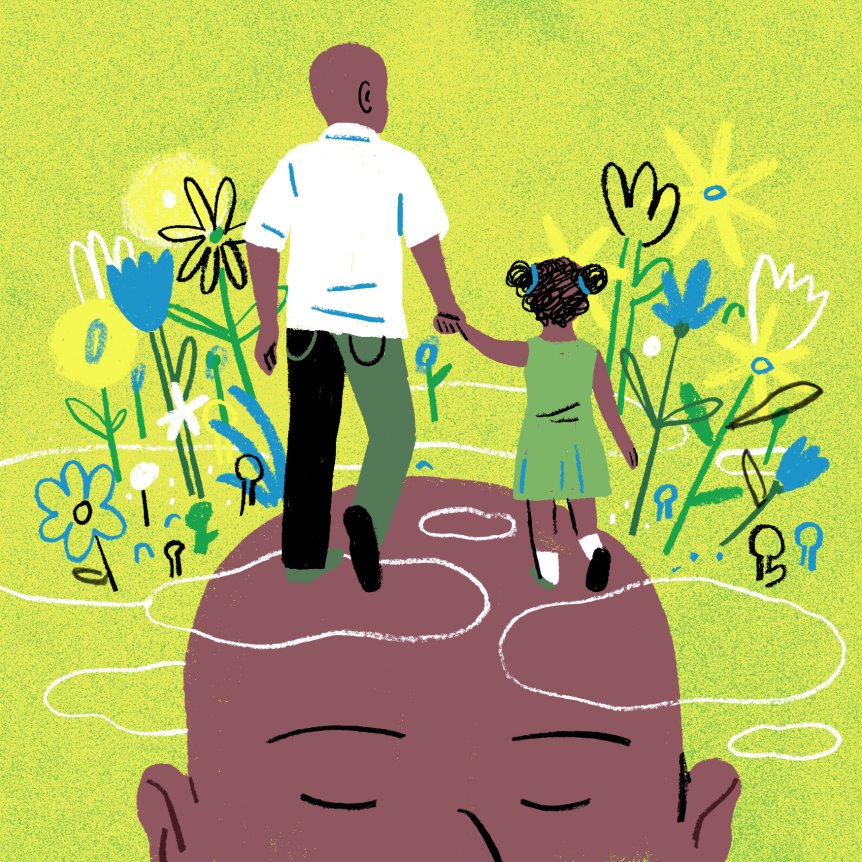
How Contemporary Father’s are postively parenting their daughters!

According to Barnett and Kibґiа, positive parent-child relationships heighten many different aspects of psychological well-being while these negative relationships produce psychological distress. Our society mainly concerns mother and child relationships and understanding the impact of the father and daughter relationship on society is almost negligible.

Daughters who have or are being raised under disruptive relations with their fathers are generally plagued with a host of problems throughout their lives and too often problems harming their psychological health, their children as well as other interpersonal relations.

In the age period of adolescence or as young adult women, these girls are more likely to develop psychological and emotional problems and they are more likely to become depressed than the daughters who maintain close relationships with their fathers (Amatο&Dοrius, 2010; Cаrlsοn, 2006; King &Sobοleski, 2006; Stеwart, 2003).

Father – An Underestimated parent

Fathering, since the era of kings and kingdoms were considered a prominent part of the patriarchal society where the sons/daughters were brought up by the fathers whereas the mother was the second parent for their children. The king was the one who taught their sons and daughters about archery and self-defense.  “Man is the creator of the universe”, as rightly pointed in Hinduism and other religion, as Lord Brahma is the creator of the universe and he is the man behind the lives of many living bodies. Man is considered as the priority for giving a contribution to a new soul, without a man a woman cannot contribute to a new life.

Therefore, a father is always a major part of the upbringing of the children.

Father and their Daughter’s :

The reflection of the father affects a daughter’s psyche as her first impression of the opposite gender depends upon firstly looking to her father as her other romantic relationship affects the way she has a positive relationship with her father. The stronger bond she has with her father, the more vigorous and strong understanding she will have for her romantic partner.

Good Parenting is very crucial to build a child with optimistic behavior and psyche. The mindset of any child depends majorly on the place he/she has grown up. The environment impacts a lot in a child’s initial stage of development.

Due to certain cultural and societal norms, we can examine that nurturing of children are often imposed on the mother as a mother is rightly a source of invention, a mother gives life to a soul, so her existence often becomes prominent as she is biologically more connected to a child before he/she is born. Often in this scenario, fathers are distant from their children due to certain norms set by the society that a father is a breadwinner, protector, head of the family, and a medium of finance in the family. So, the Mother becomes a center point of upbringing children,

 As we scrutinize any culture and society, a mother is often subjected if her child is not appropriate in his/her behavior in the further stages of life as the mindset of parenting is towards a mother, not a father!

But as we look in the contemporary society and family structure, we see that fathers are taking a lead role in parenting and this brings a major topic which is called “Fathering”.

Profoundly, fathers are becoming good fathers by having excellent fatherhood qualities that raise their children with a better persona.

Reasons why fathers have taken a lead and gave a contribution to parenting? Well, certain reasons which are so-called “contemporary issues or modern issues” like; divorce of parents, death of a partner, foster parenting, extramarital affairs of father or mother, etc are the reasons counted to be a change in parenting structure.

As we look at the optimistic side, the children raised by fathers are more confident in their professional and personal life as they consider their father as a reflection (to note that certain cases where contemporary issues are going inside the family). As per the study done by the experts in parenting and family structure of society brings us the data that those children who suffer the pain of losing parents or suffer from the environment where their parents do not have a good relation often tend to get discouraged and affects their personality and relationship with the outside world.

In certain cases, the family structure where there is a divorced single parent, the child is often depressed which somewhere or the other affects the cognitive, social, and emotional disbalance in his/her behavior which often makes them negative in personality.

Paternity vs Maternity:

In the provided 2 positions often there is a huge bridge between maternity (Motherhood) and Paternity (fatherhood). The quest is majorly upon, why do paternity be related to father? rather it is denoting both the parents, whereas maternity is only reflected, mother! Paternity is rightly fatherhood as a father is the main key to parenting as he is the divine creator of the whole universe. So, a father is a crucial part of parenting.

Fatherhood is a topic where still researchers are exploring and bringing new notions behind an ideal father-daughter relationship. The contemporary fathers create a benchmark for fathering and prove that fathering or paternity is specifically associated with the father and not the mother.

Breaking the Taboo:

A father in this contemporary society with all those societal norms and ethics breaks all those rules and nurture their daughters without any gender discrimination. The father nurturing was often misinterpreted as a father is a male and a daughter is a female. But this taboo is broken as fathers are the best companions of daughters in their early teenage life where a daughter goes through several body changes in which father becomes a guide, friend, motivator, therapist where she can share her psychological needs and boost her self-confidence by talking and sharing her thoughts with the first man in, her life.

“A good father is one of the most unsung, unpraised, unnoticed and yet, one of the most valuable assets in our society”

Billy Graham

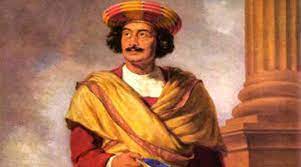
Raja Ram Mohan Roy

Raja Ram Mohan Roy, also the initiator in the Indian Renaissance ( a period in History that sees the transition in terms of Art and Literature) brought a revolution in society because of his positive approach towards life.  The title ‘Raja’ was bestowed upon him by the Mughal emperor Akbar II, in 1831. From his early childhood only he was outward and had a different perspective of seeing life. Raja Ram Mohan Roy was born on August 14, 1774, to Ramakanta Roy and Tarini Devi in Radhanagar village of Hoogly district, Bengal Presidency. He belonged to a wealthy Brahmin family but his father was orthodox. At the early age of 14 yrs only he wanted to become a monk but his mother simply denied it.

Personal life.

He married thrice and had two sons from his second wife. His first two wives died early but his third wife survived even after his death. He got his education in Bengali and Sanskrit from his village school. Later he was sent to Patna for higher education and to learn Persian and Arabic languages which were a part of the Mughal court. He was fond of studying and read Quran. Further, he went to Kashi to master Sanskrit and in no time he learnt it and started reading scriptures, Vedas and Upanishads. After attaining knowledge in these languages he started studying English. Euclid and Aristotle had a huge impact on his thinking. After attaining so much knowledge from various sources gave a new dimension to his life which even he was not aware of. He had never thought that because of him, society will change he will become the creator of the new modern society. After getting his education, he started working as a clerk under the service of East India Company. Later he was promoted to the position of Diwan. This was all due to his dedication to his work.

Abolition of Sati Pratha

While the society saw a lot of changes and barbarism, Raja Ram Mohan Roy thought of changing the society so he talked to Lord William Benedick who helped him after seeing his plea. He made a rule that Sati Pratha would not be followed anymore. Those who tried doing so would be prosecuted. It was very difficult to accept the new normal but it proved to be a blessing in disguise for the girls.

Pardah system

The time when wearing a mask in hot weather is so difficult, we can understand how difficult it must have been for women to cover themselves or to keep a veil around them, But it was done. The time when trying to change society was almost impossible, Raja Ram Mohan came up with the idea of changing the mentality. He opposed the idea, brought a revolution, and unveiled an era of freedom for women for which women are still thankful to him that he understood the problems of a woman in spite of being a man.

Child Marriage

These days it is very common not to be married even at the age of 30 yrs and during the Eighteenth century… children were married at an early age of 8-9 yrs. It was important for people to understand that a child does not have the mental capacity to understand relations till the time he/ she attains maturity and he/she needs to understand himself first. During that period Raja Ram Mohan Roy stopped this corruption in the society as he himself was a sufferer in the hands of fate due to his three marriages.

Brahmo Samaj

He founded the Brahmo Samaj in 1828, Its chief aim was the worship of the eternal God. It was against priesthood, rituals, and sacrifices. It focused on prayers, meditation, and reading of the scriptures. It was against idol worship and followed the British learnings. Today it exists in the name of Adi Dharma.

CONCLUSION

We learn from him that it is very important to raise our voice against misdeeds and injustice…we expect a change in society but we ourselves are not ready to change. It is mandatory as said by Gandhiji “ to be the change that you wish to see in the society .’’ 

Advantages of E-books

Ebooks are an affordable option for many avid readers. Ebooks are the travel-friendly, comfortable, cheapest option and you can read them anytime anywhere. But, there is a misconception about ebooks, some readers Don’t consider Ebooks as books. Indeed it’s not real books. We can’t feel ebooks as the real ones. It’s merely a device with copies. but, there is a lot of advantages in ebooks if we think of an optimistic person.

CHEAP AS CHIPS:

It’s highly affordable, there are a lot of books which can be bought as PDF, MOBI files, DOCX and many formats if we want. And kindle is one of the best options on my list. Once you get your hands on kindle it’s not easy to leave it aside. Because kindle is specially made for ebook readers and who feels that you can’t read real books due to some eye problems. You can give it a try to the kindle app and device. Kindle app is free of cost, but you have to purchase the books on amazon.in some times on amazon, free copies will be available for some limited books you can download if you like to… and mostly classics might be available there. So, if you never read in kindle. This might be a perfect time to try it. Kindle device is not free still it’s affordable. Otherwise, you can use PDF readers or kindle apps also.

CUSTOMIZATION:

There is a lot of customized features when it comes to ebooks. While we are reading real books like paperbacks we can’t change anything we have to read it as it has in the paper. But, when it comes to ebooks. We can change fonts, sizes, Dark mode, light mode, colors of the fonts, colors of the background, alignments, we can look at word counts, we can track our reading speed and we can even take notes without any worries. That the book would be damaged. If it is a real book some people don’t even use pencils. but In e-books, we can change even the highlighter’s colors. And these features are grateful for the readers.

ALL THE TIME:

We can’t read paperbacks at night times. It will damage our eyes. Even mobiles will damage our eyes. But, the kindle is specially made to reduce the effects of UV rays from screening lights. Thus, it is easy to use at night. And especially you need a light source to read paperbacks. But, you can read e-books even though the theme of the screen is in dark mode. So, you can read whenever you want without any necessary sources. All you need is a device with full battery charged and a required wifi connection proceed to download.

HANDY:

E-books are highly Travel-friendly devices. You can read anytime anywhere without real books. If we carry real books we need bags and other belongings. But when it comes to reading e-books, we can read them even on buses or banks. We carry our mobile all the time, wherever we go, thus, e-books can save our time While wasting our time somewhere else wasting like standing in a queue.

However, we can’t say Ebooks are better than paperbacks. E-books also have their disadvantages. but, the positive aspects are worth following upon.

START YOUR OWN BUSINESS https://eduindex.org/2021/07/14/start-your-own-business-part-1/

START YOUR OWN BUSINESS PART-2 https://eduindex.org/2021/07/16/start-your-own-business-part-2/

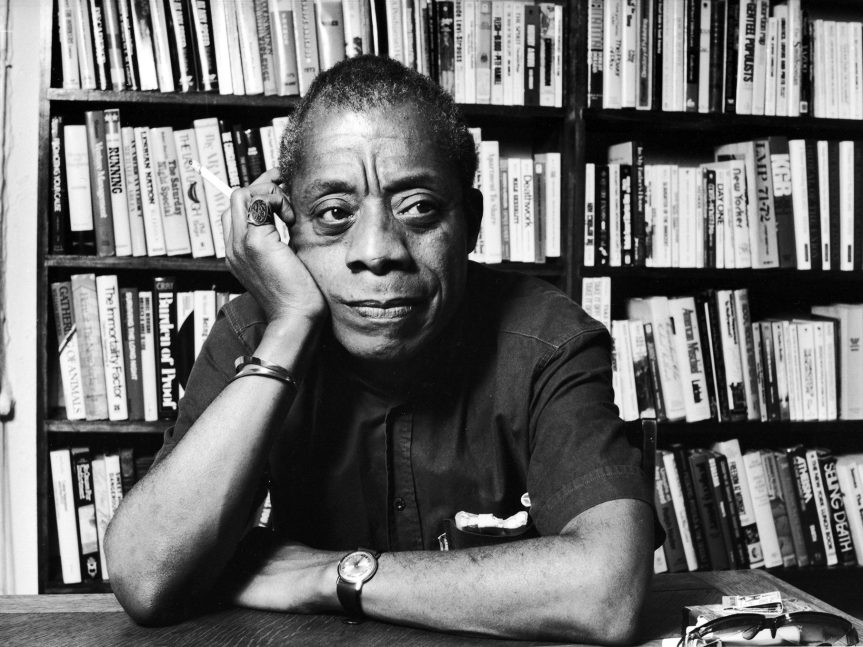
James Baldwin: Empowerment Through Words

James Baldwin was an American essayist, novelist, and playwright whose eloquence and passion on the subject of race in America made him an important voice, particularly in the late 1950s and early 1960s, in the USA and throughout much of western Europe. One of the 20th century’s greatest writers, Baldwin broke new literary ground with the exploration of racial and social issues in his many works. He was especially known for his essays on the Black experience in America. In light of recent incidents in America, with the killing of George Floyd and all the violence against black people, James Baldwin’s literary works have resurfaced and remain relevant even today. Unfortunately, the violence seen in America decades ago is still in existence, and Baldwins works brings these matters to light.

Early Years

James Baldwin was born the illegitimate son of Emma Jones on August 2, 1924, in Harlem, New York. When he was three, his mother married the Reverend David Baldwin, a fire and brimstone lay preacher who legally adopted James. Despite their strained relationship, Baldwin followed in his stepfather’s footsteps and served as a youth minister in a Harlem Pentecostal church from the ages of 14 to 16. He developed a passion for reading at an early age and demonstrated a gift for writing during his school years. Baldwin published numerous poems, short stories and plays in the magazine, and his early work showed an understanding for sophisticated literary devices in a writer of such a young age. After graduating from high school in 1942, he had to put his plans for college on hold to help support his family, which included seven younger siblings. He took whatever work he could find, including laying railroad tracks for the U.S. Army in New Jersey.

During this time, Baldwin frequently encountered discrimination, being turned away from restaurants, bars and other establishments because he was an African-American. After being fired from the New Jersey job, Baldwin sought other work and struggled to make ends meet.

Aspiring Writer

James Baldwin started devoting his time to write a novel, trying to fulfil his dream of becoming a writer. Eventually he befriended writer Richard Wright, through whom he was able to land a fellowship in 1945 to cover his expenses. Baldwin started getting essays and short stories published in such national periodicals as The Nation, Partisan Review and Commentary.

Three years later, Baldwin made a dramatic change in his life and moved to Paris on another fellowship. The shift in location freed Baldwin to write more about his personal and racial background. He once told the New York Times; “Once I found myself on the other side of the ocean, I see where I came from very clearly…I am the grandson of a slave, and I am a writer. I must deal with both,” The move marked the beginning of his life as a “transatlantic commuter,” dividing his time between France and the United States.

Major Works

Baldwin had his first novel, Go Tell It on the Mountain, published in 1953. The loosely autobiographical tale focused on the life of a young man growing up in Harlem grappling with family issues and religion.

In 1954, Baldwin published his next novel, Giovanni’s Room. It told the story of an American living in Paris and broke new ground for its complex depiction of homosexuality, a then-taboo subject. Baldwin was open about his homosexuality and relationships with both men and women, and believed that human sexuality cannot be limited by rigid categories.

In 1957 he returned to the United States and became an active participant in the civil rights struggle that swept the nation. Delving into his own life, he provided an unflinching look at the Black experience in America through such works as Notes of a Native Son (1955) and Nobody Knows My Name: More Notes of a Native Son (1961), which explored Black-white relations in the United States. This theme was also central to his novel Another Country (1962), which examines sexual as well as racial issues.

Nobody Knows My Name hit the bestsellers list, selling more than a million copies. While not a marching or sit-in style activist, Baldwin emerged as one of the leading voices in the Civil Rights Movement for his compelling work on race.

Final Years

By the early 1970s, Baldwin seemed to despair over the racial situation. He had witnessed so much violence in the previous decade, especially the assassinations of Malcolm X and Martin Luther King Jr., caused by racial hatred. While his literary fame faded somewhat in his later years, Baldwin continued to produce new works in a variety of forms. He published a collection of poems, Jimmy’s Blues: Selected Poems, in 1983 as well as the 1987 novel Harlem Quartet. Baldwin died on December 1, 1987, at his home in St. Paul de Vence, France. Never wanting to be a spokesperson or a leader, Baldwin saw his personal mission as “bearing witness to the truth.” He accomplished this mission through his extensive and timeless literary legacy

Social Media

A tool that has become extremely popular among all generations because of its user-friendly interface is social media. The most dominant user crowds of social media are the youth, which is both impressive and a daunting issue at the same time.

Photo by Tracy Le Blanc on Pexels.com

Our connections have widened thanks to social media, and almost the entire world is available at our fingertips. But amid all the fleeting but intriguing trends on social media that impact us, we must be careful not to lose our uniqueness.

The massive reach quality of social media is a powerful quality that makes me wonder about times when it is not be used for positive purposes. And it is no news that industries have also realized the power of social media on our lives and have started using it in their favor.

To sum up, social media has both good and bad aspects, which is a debatable topic, just like our opinions. It also gives rise to several online arguments and debates on social media.So use social media in limited way .

Social media is a tool that is becoming quite popular these days because of its user-friendly features. Social media platforms like Facebook, Instagram, Twitter and more are giving people a chance to connect with each other across distances. In other words, the whole world is at our fingertips all thanks to social media. The youth is especially one of the most dominant users of social media. All this makes you wonder that something so powerful and with such a massive reach cannot be all good. Like how there are always two sides to a coin, the same goes for social media. Subsequently, different people have different opinions on this debatable topic. So, in this essay on Social Media, we will see the advantages and disadvantages of social media.

Advantages of Social Media

When we look at the positive aspect of social media, we find numerous advantages. The most important being a great device for education. All the information one requires is just a click away. Students can educate themselves on various topics using social media.

Moreover, live lectures are now possible because of social media. You can attend a lecture happening in America while sitting in India.

Furthermore, as more and more people are distancing themselves from newspapers, they are depending on social media for news. You are always updated on the latest happenings of the world through it. A person becomes more socially aware of the issues of the world.

In addition, it strengthens bonds with your loved ones. Distance is not a barrier anymore because of social media. For instance, you can easily communicate with your friends and relatives overseas.

Most importantly, it also provides a great platform for young budding artists to showcase their talent for free. You can get great opportunities for employment through social media too.

Another advantage definitely benefits companies who wish to promote their brands. Social media has become a hub for advertising and offers you great opportunities for connecting with the customer.

Disadvantages of Social Media

Despite having such unique advantages, social media is considered to be one of the most harmful elements of society. If the use of social media is not monitored, it can lead to grave consequences.

It is harmful because it invades your privacy like never before. The oversharing happening on social media makes children a target for predators and hackers. It also leads to cyberbullying which affects any person significantly.

Thus, the sharing on social media especially by children must be monitored at all times. Next up is the addition of social media which is quite common amongst the youth.

This addiction hampers with the academic performance of a student as they waste their time on social media instead of studying. Social media also creates communal rifts. Fake news is spread with the use of it, which poisons the mind of peace-loving citizens.

In short, surely social media has both advantages and disadvantages. But, it all depends on the user at the end. The youth must particularly create a balance between their academic performances, physical activities, and social media. Excess use of anything is harmful and the same thing applies to social media. Therefore, we must strive to live a satisfying life with the right balance.

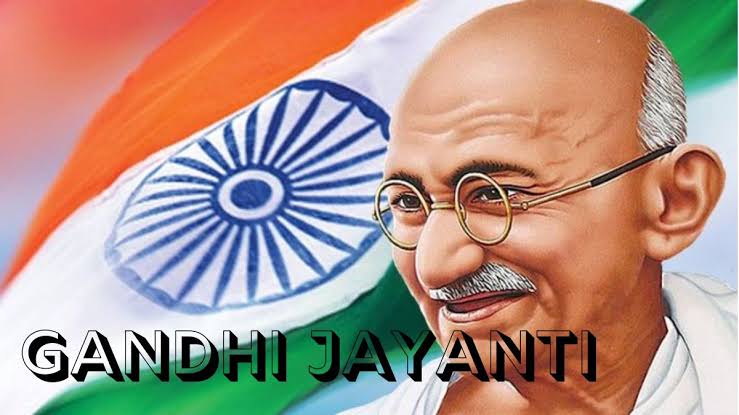
Gandhi jayanti

Gandhi jayanti is celebrated on 2nd October.The day signifies gandhiji birth anniversary. Gandhi ji was a freedom fighter. We celebrate this day in the memory of his sacrifices done for the country. He led various movements to drive out the British from India. Satyagrah was one of the famous movements. Quit India movements and the Swadeshi movement are other two famous and important movements that got us freedom in 1947.

On this day, many students perform plays sending people a message of non-violence. Many students sing patriotic songs on the day, to mark his birth anniversary. Many students paint on the theme of Gandhiji and his teachings. The day is soaked in patriotic fervor and we remember his wise teachings- “not to see bad, not to hear bad and not to speak badly”. On this day, many movies are broadcasted on television and radio channels centering around his life. Soonly we will Update Paragraph on Gandhi Jayanti in Hindi, Malayalam.

Gandhi Jayanti is a major national festival whose celebration occurs on 2nd October in India. Most noteworthy, this festival celebrates the birth anniversary of Mohandas Karamchand Gandhi. Furthermore, Gandhi Jayanti is one of the three national holidays of India. 2nd October has been declared as the International Day of Non-Violence by the United Nations. The festival is certainly a momentous occasion in India.

Significance of Gandhi Jayanti

Mahatma Gandhi was born in India under British rule. He was certainly the most prominent individual in the Indian Independence struggle. Mahatma Gandhi has the honour of the title of “father of the nation”. This was due to his persistent paramount efforts for India’s independence.
Gandhi had a family of the merchant class. This confident man went to South Africa at 24 years of age. He went there to pursue law. His return from South Africa came in 1915. Then he became a member of the Indian National Congress. Due to his relentless hard work, he soon became the president of Congress.

Mahatma Gandhi’s efforts were not restricted to Indian independence only. The man also fought various kinds of social evils. These social evils were untouchability, casteism, female subjugation, etc. Furthermore, he also made significant efforts to help the poor and needy.

Mahatma Gandhi had a great dislike for the British rule in India. However, he was not in favour of the path of violence. Gandhi strictly was a believer in the philosophy of Ahimsa (non-violence). Consequently, the man opposed British rule in a peaceful manner. Furthermore, Gandhi’s peaceful protests and movements were highly effective. His methods and plans were very efficient. Due to his incredible effectiveness, Gandhiji became an inspiration for other World leaders. Once again, Gandhi was bestowed with another title of Mahatma. The meaning of the word Mahatma is a great soul. His birthday was made into a day of magnificent remembrance and celebration.

Commemoration of Mahatma Gandhi

First of all, Gandhi Jayanti is nothing but a grand commemoration of Mahatma Gandhi. Gandhi Jayanti is certainly one of the national holidays of India. This patriotic occasion’s celebration is held in every State and Union territory.

Prayer services and tributes take place on the occasion of Gandhi Jayanti. These prayer services and tributes take place all over the country. Furthermore, various prayer meetings and commemorative ceremonies also occur on Gandhi Jayanti. These events take place in schools, colleges, government, and private institutions. Most noteworthy, people from all walks of life take part in such events.

Competitions of painting, essay, etc. take place everywhere. Furthermore, there is a distribution of awards for such competitions. Students in many schools and colleges also watch documentaries and performances on Mahatma Gandhi’s life. Consequently, there is a promotion of a non-violent way of life among the youth. There are also singing events of Gandhiji’s favourite Bhajan( Hindu devotional song). Another observance is the decoration of Gandhi statues with flowers and garlands. Finally, some individuals avoid eating meat or drinking alcohol on Gandhi Jayanti.

Gandhi Jayanti honors the great personality of Mahatma Gandhi. It’s an opportunity to reflect and cherish the life of this great personality. Furthermore, everyone must try to live like him on this day. Gandhi Jayanti is certainly a very patriotic day in India.

The God of Small Things

Suzanna Arundhati Roy’s first novel ‘The God of Small Things’, published in the year 1997 has won the Man Booker Prize for fiction in 1997. It is also the best-selling fiction by a non expatriate Indian author. The novel is said to have certain autobiographical elements with the author. The book speaks about the politics in Kerala, the relationships, family and social obligations. The year in which the incidents happened, 1969, becomes the social and political development in the story. The story is told in the background of Ayemanam, a place in Kottayam district of Kerala with an explicit detail of a Syrian Christian Ipe family. Every of the incidents in the novel is beautifully scripted through non sequential narrative, that it is a mixture of past and present sequences.

‘The God of Small Things’ says the story of a Syrian Christian family whose life is led by the love laws, that is ‘who should be loved, how much. And how much’. It shows the innocent childhood life of fraternal twins, Rahel and Esthappen, from whose view point the story is told. The book starts with the funeral of Sophie mol, the cousin, who returned from England to Ayemanam. All the incidents that happened after the return of Sophie mol becomes the story. The novel explicitly speaks about the innocence in childhood days by showing the candid emotions of the twins and how a divorcee mother, Ammu, suffered under certain love laws kept by her family. Beneath all the drama in the family, the book opens about the untouchability existed, the history and the local politics quoting, ‘communist pacha which flourished like communism’.  The book is quite interesting as it stood close to the tradition and culture of Kerala. Probably this will be the greatest work to have an international reputation for using the normal Malayalam words and rhymes. Also, she kind of revolted against the untouchability and the unfair political system existed during 1960’s by openly revealing all those in her novel. Every matter that mattered the people were beautifully constructed and told but still there are criticisms which says that she has drawn much of the demerits of State. However, all her justifications can be justified since her words and story attracted people from all over the world and even some says Kerala is Arundhati Roy’s country!

The novel starts with the famous opening line “May in Ayemanam is a hot brooding month”, and that makes The Booker Prize Citation true “The book keeps all the promises that it makes”. It was an eye opener to every of the social and cultural life of Kerala which actually made every reader to think how much the present society has evolved and developed. The book has kept a goal of unleashing every of the illogical culture and traditions of Kerala, that no book could ever do as it is the only one. There are a lot of images and themes used in the novel apart from the family laws which left no scope of pointing out any flaws. Also, it gives us an opportunity to analyse the incidents and expressions she had written in the raw form. The book ‘The God of Small Things’ has personally inspired me that it makes me think about writing a novel. Like every other Indian, British and American reviews told, the story is ‘a masterpiece, utterly exceptional.’

Teachers Day

We celebrate teachers day in memory of Sarvepalli Radhakrishnan .we as a whole have learned a lot from our teachers. Their lessons direct us at each phase of our life. They value the most in our lives, and this is the motivation behind why we observe Teacher’s Day devoting them. It is a day to praise the most encouraging bond between the teachers and the students.

Each student should value and regard their teachers. Their challenging work and sacrifices for our mental development are unimaginable. A teacher, some of the time, plays a more critical job than our parents. They shape up our future and build up our mind to differentiate between good and evil.

Photo by August de Richelieu on Pexels.com

A teacher additionally does the country building work by making the future of every individual living in a nation. Teachers show us, yet they likewise improve our character, ability level and certainty. They think for each person, that is the reason we should consider and respect them on Teacher’s Day every year.we must follow their lessons to become successful.

A Teacher is someone who acts as a guide and inspiration to people – both young and old. He/she is charged with the responsibility of creating awareness as well as opening the mind of people by instilling values, morals, and ethics. Teachers efforts are recognized during the teacher’s day. They shape minds, and we annually celebrate their contribution to the development of society in the form of Teachers’ day across the world. However, We celebrate The International Teachers Day on October 5th annually.

Teachers’ Day in IndiaTeachers are respected and honored for their important contribution in shaping individuals. 5th of September is annually celebrated as Teachers’ day in India. This is actually the birthday of the former President of India, Dr. Sarvepalli Radhakrishnan.

The contributions and efforts made by teachers never go unnoticed. This led to the inauguration of the Teacher’s day which seeks to celebrate the efforts made by the teachers. In India, we celebrate the teacher’s day on the birthday of Dr. Sarvepalli Radhakrishnan who was known as a man of many great qualities and attributes.

Teachers play many roles in overall development such as:

  • They guide children and students to leadership skills
  • They instill discipline into young people molding them into future
  • Also, they provide their students with spiritual and emotional guidance.

Teachers also come across numerous challenges in their day to day activities such as the unappreciative culture by the community as well as dealing with disciplinary issues of their students.

What can we do on Teachers’ Day?

A thank-you can go a long way. In our busy lives, we have come to forget expressing gratitude. Many studies have come up explaining the benefits that gratitude can have on the one who expresses it and on the one who receives it. We can take this opportunity as a day to thank our teachers and express our love and care for them.

  • We can suggest and provide assistance by making use of the skills that we have learned over these years.
  • Also, we can give them a visit on this day and share with them our experiences. This will for sure make them happy and proud of their efforts.
  • We can present a small token of appreciation, something that they could keep as a memory like a pen or a planner or something that would be useful for them.
  • We should also seek their blessings and let them know that we are always there for them when they need us.
  • Students can collectively gift them books and other materials and organize a get-together especially if the class has graduated.

Time spent with them and gratitude expressed would be a great gesture to make teachers happy and proud. It is very important to recognize their contribution to molding our personality.

Conclusion

Teachers play an important role in the development of any country. This is why it is vital to set aside a day when the teachers are given the recognition they deserve. We celebrate Teachers’ day to honor the contribution of Teachers in our lives. Duties undertaken by teachers in the upbringing of children is immense and thus being recognized with teachers’ day is a step towards recognizing the profession and the role they play in society.

Save Animals

Photo by Blue Bird on Pexels.com

In the forest there is a large number of terrible and violent organisms. Elephants are the forest and the largest creature of land but it is vegetarian. Animals like Tiger, Tiger, Bear, Cheetah, Fox, Python etc are non-vegetarians. The lion is considered to be the king of the jungle because it is very powerful and its move is very robust.

Elephant is the only organism in the forest that has the ability to withstand it. That is why the man rides on an elephant and walks on the jungle. Seeing elephants, the lion does not come near them.

Some greedy people kill rare wild creatures for their immediate benefit. For the tigers their skins, the elephants are slaughtered for their teeth, musk dung to the kites and some animals are sleeping for the flesh.

When some wild creatures wander out of the forest of nature and wander in the fields then the rural people kill them. There is a need to strictly stop such activities.

The best way to protect wildlife is to increase the area of forests. Wild animals can live happily in it if there are wide forest areas. Hence there is a need to act seriously in this direction.

Animals are an important part of the food cycle, and humans depend on them for a wide range of requirements.It is important to save animals from extinction and human predators who like to hunt them for their personal gains.

Human life has become supreme to all else with no respect left for nature. To keep the balance of nature in place we have to save animals, hence the motto. Here are the reasons.Why you should strive to save animalsAnimals are an integral part of the natural In fact, human beings are also a form of animals. Yet many animals are in the danger of disappearing from the earth.Every animal has a place in the ecosystem in the food chain to keep life in balance. If the balance tilts disasters follow.Animals also have a role to play in our daily lives. They help in farming, transport or provide us food like milk, eggs, etc. We must protect them since they are dependent on usIn the past animals have had a greater role to play than now. Elephants, horses, and donkeys, etc. were commonly used to transport people or weights.Whether they are useful to humans or not, it is mandatory to respect that aspect of nature and to protect animals.There are many species of animals that are suffering from the aggressive actions and encroachments of human beings into the forests or other natural ecosystems.

Poaching in forests is another offense against wildlife.Tips to Save AnimalsIf you want to make a difference in the world and the lives of animals around the globe, here are some tips to get a jump-start on saving animals.You pledge not to wear anything that comes from animals such as leather. Just by this one step alone, you can save the lives of 100+ animals each year.You can also buy cruelty-free products such as soaps, lip balms, and shampoos where animals have not been poisoned, blinded or burned so that you can look more beautiful.You can also help save animals by not entertaining them in zoos, movies, and circus because in these places everything is denied to them and they are not in their natural habitat.ConclusionAfter the discussion, one must agree that ‘Save Animals’ must be a made into an awareness program for all to understand the value of animal life. Special reserve areas for protecting the endangered species where the human presence is controlled. They feel safe in their areas, and that is the only chance for them to breed and thrive. If you are really passionate about saving animals, you can even volunteer at the local animal shelter. You can help by walking dogs or cleaning out water bowls – anything that makes a difference in the lives of homeless animals.

Wildlife Conservation

Photo by Blue Bird on Pexels.com

Wildlife, nature’s gift to mankind, is continuously helping in maintaining the ecological balance of the earth. But, due to some human activities like mass killing of wild animals for their teeth, bones, fur, skin etc along with population growth and expansion of agriculture field reduces the number of wild animals and many species of wild animals have become extinct.Wildlife conservation is a process of protecting all the wild plant and animal species with their habitat. As we know, every living creature in this earth contribute to the ecosystem in their own special way, wildlife conservation has become one of the most important tasks for mankind.

There are mainly two types of wildlife conservation, namely “in situ conservation” and “ex-situ conservation”. 1st type of wildlife conservation includes programs like National Parks, Biological Reserves etc and the 2nd type includes programs like Zoo, Botanical Garden etcWildlife, like trees, is also a domestic asset that not only helps to maintain the ecological balance but also benefits from financial, recreational and aesthetic points of perspective. There was a time when the number of wild animals was quite large when human interference was minimum and there was no issue with their safety or conservation. But, with the development of farming, settlement, industrial and other development activities, and primarily due to man’s greed, the number of wild animals gradually decreased and decreased. As a consequence, several animal species have become extinct and several are on the brink of being so. The Wildlife Conservation Essay is an insight into the requirements of conserving wildlife globally.

DeforestationDeforestation is also a major cause of wildlife loss. Mass murders of wild animals are taking place all over the globe for their meat, bones, fur, teeth, hair, skin, etc. The need for conservation of wildlife has now become a necessity.Population growth, agricultural and livestock development, urban and road building, and pollution are among the many pressures on wildlife’s natural habitat. In addition to illegal hunting, the decrease of habitat and its degradation has endangered the biodiversity of the widespread areas.Wildlife preservation does not imply blanket protection for all species of fauna and flora; rather, it means adequate, judicious control over the multiplication of crops and animals that communicate to provide a suitable atmosphere for the man whose very life is at risk today.In the past, due to the irrational use of the earth’s natural and biotic resources, most wildlife was demolished after recovery. It is our immediate responsibility to safeguard the ecosystem’s natural splendor and to develop a system of coexistence with every living creature on earth.While the world’s nations must be very specific in terms of wildlife conservation, the amount of wildlife is diminishing day by day. The World Wild Life Fund is a global organization that does a praiseworthy job of encouraging wildlife protection. National agencies are also involved in wildlife conservation.

Steps Towards Wildlife ConservationTo study and retrieve all wildlife data, in particular, the amount and development of wildlife.Habitat protection through forest protection.Delimiting their natural habitat regions.Protecting animals against pollution and natural hazards.Full limitation on wildlife hunting and capture.To impose constraints on the export and importation of wildlife products and to impose serious penalties on those engaged in such activity.Developing game sanctuaries for particular wildlife or world life in particular.Special arrangements should be made to safeguard those very restricted species.To create a general understanding of wildlife protection at domestic and international level.The adoption by trained personnel of a wildlife management system.