Struggles of big dairy companies in India!!!

India is that the world’s biggest producer and consumer of dairy. In 2018 alone, India produced 186 million metric tonnes of milk — about 410 billion pounds and 22 percent of the milk produced globally. Almost all of that is consumed domestically thanks to India’s dairy-heavy diet — think creamy curries, yogurt drinks, and a popular type of butter called ghee. A quick note before we proceed: this includes milk from buffaloes, which are an important source of milk in many developing countries. the point is that India loves milk.

What is pushing India's small dairy farmers out of business?

In 2011, the French dairy company Danone hoped to capitalize on this by opening a division in India. Danone opened its own processing plant in Haryana and tried to capture some of India’s 1.2 billion dairy lovers. But less than a decade later, Danone shuttered their dairy business in India. That same year, the corporate made 28 billion dollars worldwide and was within the top three global dairy companies. With all this success, elsewhere, why did Danone’s dairy business sour in India? Let’s start with some background on Danone. Their business is broken down into three categories:

  1. 1.specialized nutrition, like supplements and formula for babies;
  2. bottled waters and seltzers;
  3. dairy and plant-based alternatives.

That one makes up over half of their global sales, but it’s also the one that failed in India. Danone does still sell specialized nutrition products in the country, but they don’t break out those sales figures separately. This is the same company as Dannon in the U.S. The company decided to rebrand to make the spelling less confusing for American consumers. Anyway, now for some background on India’s dairy industry. There are about 75 million dairy farmers in India. Most of them are women who own one or two buffaloes or cows to supplement the family’s income. Nearly half of India’s milk is not sold, but consumed by the farmers household. This makes India’s dairy industry much more fractured and localized than other countries where Danone operates. Take the company’s native France and one of its biggest customers, the U.S. Each has far fewer dairy farms with herds that dwarf India’s one or two animal average. This was Danone’s first big problem in India: sourcing milk is difficult. Of the half not consumed by farmers’ households, only about 15 percent goes to big organized companies or government run cooperatives. The rest goes to hundreds of small, local milk processors.

Tainted milk: Branded dairy in India sees 5% increase in ...

The largest companies like Amul, Mother Dairy, and Nestlé have tiny percentages of the market, and they’ve been there for decades. Market research firms Mintel and Euromonitor declined to release specific market share numbers to CNBC. However, a 2016 piece in The Economic Times of India citing Euromonitor put the figures at about 7 percent for Amul, 3.7 percent for Mother Dairy, and 2.9 percent for Nestlé. In short, tapping into the existing dairy infrastructure is effective but time consuming. Imagine the effort of contacting dozens or hundreds of local and regional dairies, processors, or individual farmers. But establishing a separate supply chain altogether is very expensive — a lesson Danone learned the hard way. And when Danone did get milk, the company focused on the wrong products. Danone pushed plain yogurt and flavored yogurt drinks — popular in places like the U.S. and France with high profit margins to boot. But in India around the time when Danone arrived, yogurt comprised only 7 percent of the dairy consumed.

The real money was in ghee, a type of clarified butter, and plain old fluid milk, a product with razor-thin margins dominated by those hundreds of local small-scale producers. Analysts explained to CNBC the simple reason why Indian consumers shunned Danone’s prepackaged yogurt. And if Indian consumers did want to buy premade yogurt, they had a slew of cheaper options than Danone. Dairy never accounted for more than 10 percent of Danone’s sales in India, a far cry from its global 50 percent. Its specialized nutrition arm picks up the slack, and the company announced a renewed focus on that division when it shuttered its dairy operation. Meanwhile, two of their biggest competitors, Amul and Nestlé, made nearly five billion and 750 million from dairy, respectively. But not all hope is lost for Danone’s dairy in India.

Amul, Nestle, Mother Dairy, Tru & Danone: Which Milk Tastes the ...

In January 2018, the same time that Danone ended its dairy production there, the investment arm of the company announced its part in a 26.5 million dollar investment in Epigamia, an Indian yogurt startup. This could be a sustainable move for Danone in India’s dairy industry because Epigamia offers consumers products that add value onto the plain yogurt they will make cheaply reception . But perhaps most importantly is this: while much of the population still makes yogurt the old-fashioned way, analysts predict that a growing number of consumers will want to buy premade options as they move into corporate jobs in developing urban centers. Very large numbers indeed. If only 5 percent of India’s 1.35 billion people decides to buy prepackaged yogurt, that’s over 67 million consumers — more than the entire population of Danone’s native France.

The Rise of the Parallels – Feminism and Pseudo-Feminism

“The lesson here is you can’t expect users to learn. There’s too much fun going on out there on the Internet.”

Pete Lindstrom

The internet doesn’t spread misinformation, we the users do. We share anything and everything, without proofing it. We get our news from social media rather than the news media. We have everything at the touch of our fingertips, yet we are too torpid to go the extra mile. It’s that one action that spreads rumors. It all comes down to that one small action on this enormous space.

We are in the 20th year of the 21st Century yet we are too tied to convenience than authenticity. The internet gives us too much exposure but our minds take in very little knowledge. Even more rare is the initiative to catch sight of the truth. 

Being “woke” is the new ‘fad’. The internet is the medium through which you can let people know that you are part of (or against) each campaign. It’s more about proving your stand than supporting the cause. I wonder how many people blindly share posts showing their support to every social issue trending each week but hardly spend time educating themselves.

All these might very well be the reasons the difference between feminism and pseudo-feminism is foggy amongst many.

Feminism is a tale as old as time. Feminism might have gotten its name and recognition just a few hundred years ago but it started the day Patriarchy took charge. I would like to believe many were born way ahead of their time, fighting till their last breath trying to give the oppressed gender a voice.

Pseudo-Feminism, however, stems from the hatred and anger of those persecuted for the sex they were born as. Being born anything but a male in this heavily patriarchal world serves you a life-sentence of no freedom. Ironically, doesn’t the man’s sperm determine the sex of the offspring? I guess it’s the years of oppression and the eventual right to speech that have overwhelmed most to surpass feminism right into misandry. One such example is the Ruchika Girhotra Case. Nothing good ever comes out of these strong emotions though.

Whether you’ve accidentally stumbled on this or are here to get my two cents, I’d be happy to clear all misunderstandings and hopefully, by the end, I will have birthed a few feminists.

Pseudo-Feminism desires a world where women make the rules. Where men will be oppressed experiencing the same unjust women faced. A quick Google search will tell you that Misandry is, “dislike of, contempt for, or ingrained prejudice against men.”

While both seem to be the same, there’s a world of a difference. Misandrists dislike/despise men. Pseudo-Feminists believe that they are feminists who can quench their thirst equality by giving the tyrants a taste of their own vengeful medicine.

Feminism fights for equality. A world where both men, women, trans and queer people have every basic human right. It’s a misconception that Feminism fights only for women and their rights. While it may have started as a revolutionary movement just for women. (Real) Feminists all over now fight for every person exploited. Feminism doesn’t care for gender, sexual orientation, religion, or culture. It stands for equal opportunity to make a choice.

While it is easy to get wrapped up into the confusion and emerge out a Pseudo-Feminist, it is important to realize that patriarchy is a system. Men are human beings just like any other, and patriarchy has been instilled in each one of us. Most of us grew up in a patriarchal setting and are accustomed to it. As the oppressed, it was/is much easier for us to start questioning and fighting it. For men, the gender enjoying the comforts of monarchy, it would be a hard thing to lose control of.

Having said that, in this patriarchal world, if it weren’t for a few great men, we women would never have had a chance at education, knowledge and our fight to end this inequality. All we can do is educate ourselves and others properly and stand for what is right. Correct people when they are wrong, be kind, and take back control from men to make this world a safe place for all.

5 secrets of successful person

When we talk about successful persons nearly all of us think that there must be something secret behind their success. May be we think they work hard but don’t we too work hard if yes then why do most of us think or assume that they are not successful in their life. There are no as such secrets behind success but there are surely some values which if we follow regularly become secrets behind our success. Let us learn about some so called unknown secrets of success.

1.successful people have strong self beiief:

This is the most essential quality to be successful. Such persons do sometimes get caught in self doubt but they witty enough to encounter such things. Instead of over analysing of what things could go wrong they focus on their strenghts. Thus to become successful one must have confidence in themself.

2. To be successful you need not be great all time but must be consistently good:

Yes many times people think that to be successful they must be always great in their work but no it is consistently good performance that makes one successful over the time. If you are great in your work it’s totally ok but being consistently good is must.

3.He who conquers the mind conquers the world:

Mind control is the most important thing to be successful, one must be always focused towards their goal in order to achieve success. Mind is like stearing of the vehicle, in order to reach your destination you must take control of it and keep going in the right path. There will be many distractions in the way but to win you must show strong desire and faith with you controlling the mind not your mind controlling your body.

4.Don’t bother about others, If you are clear in your goal:

This fact is always misunderstood sometimes you have to listen to elders and other experts in your field, because geart people are good listeners. However if you think someone is intentionally teasing you or distracting you from your goal, don’t even bother to reply them.

5.Don’t be arrogant or think yourself superior than others and always have faith in god:

One who is arrogant or over-confident has always risk of being failed. Only the ones who know their limits and are aware of their surroundings succeed. Great people never show-off and always know the importance of god and grateful to others. Don’t forget humans are social beings thus one who gains faith of society becomes successful.
Hope this article can help readers to redefine success in a positive way.

A look at the history of witch hunts

Witch hunt, a phrase often used by politicians whenever accused has become very common these days. A witch hunt often means a persecution of someone through baseless facts and inconclusive evidence. But essentially it refers to the attempt to punish someone whose opinions are unpopular and said to be a danger to society. But the question arises as to how and when did the original witch hunts related to witchcraft started. Contrary to popular belief it wasn’t because of the uneducated masses started accusing those with odd behavior but rather belief in witches, in the sense of wicked people performing harmful magic, had existed in Europe since before the Greeks and Romans. In the early part of the Middle Ages, authorities were largely unconcerned about it. Things began to change in the 12th and 13th centuries, ironically because educated elites in Europe were becoming more sophisticated. Universities were being founded, and scholars in Western Europe began to pore over ancient texts as well as learned writings from the rest of the world, which often gave some sort of complex system of magics as an explanation for day to day phenomenon. Ordinary people – the kind who eventually got accused of being witches – didn’t perform elaborate rites from books. They gathered herbs, brewed potions, maybe said a short spell, as they had for generations. And they did so for all sorts of reasons, such practices were important in a world with only rudimentary forms of medical care.

Photo by Joy Marino on Pexels.com

Christian authorities had previously dismissed this kind of magic as empty superstition. Now they took all magic much more seriously. They began to believe simple spells worked by summoning demons, which meant anyone who performed them secretly worshiped demons. These ideas of common folk engaging in witchcraft really gained traction after the pope gave a friar and a professor of theology called Heinrich Kraemer permission to conduct inquisition in the search of witches in 1485. At first his ideas did not gain traction as the people disapproved of his harsh questioning of respectable citizens and shut down his trials. However undeterred in his supposed quest to rid the world of the devil’s influence Kraemer wrote a book called “Hammer of Witches”. He wrote a lot of ideas which would subsequently be seen practiced in various towns across Europe. His book spurned others to write their own books on the topic and give sermons on the “dangers of witchcraft”. Even though there was no evidence to support any of these claims belief in witchcraft became widespread. A witch hunt often began with a misfortune; a failed harvest, a sick cow, or a stillborn child. Many of the accused were people on the fringes of society, the elderly, the poor or social outcasts but it wasn’t just limited to them, any one could be targeted even children. While religious authorities sanctioned these hunts, it was the local secular government that carried out the detainment and punishment of the witches. Those suspected were tortured rather than questioned, and under these tortures thousands of people falsely confessed to witchcraft and implicated others to save their hides. This was a time where the way repentance rather than justice prevailed in the courts, so even with flimsy evidence a lot of people were persecuted. Punishments varied from a fine to burning at the state, for many of the poor it was always the later. While motivations of witch-hunters varied considerably from jealousy, anger and spite, many genuinely felt they were doing good by rooting out the evil in society. But like even in these troubled times, there were those of sound mind who dissented various scholars, jurists and physicians countered with logic and sense against the mob mentality of the masses and with a rise of strong central governments, witch hunting slowly declined until it disappeared altogether.

Both the onset and the demise of these atrocities came gradually and the potential for similar situations to arise is still there, where authorities use their power to mobilize against false threats, but with reasoned dissent to combat it we as a society can still move forward.

2030: What if Corona never went away

It’s the year 2030, half the population of the world has disappeared by the virus. There’s less humans on the street, nature is blooming at its best. The food pyramid has stabilized, surprisingly humans have changed. They have begun to value each other, they have realised the value of time and make the most of it. No form of discrimination is seen anywhere in the world. Everyone has become earthians, it’s a beautiful place. Everyone celebrates festivals by planting trees, feeding the hungry animals and no form of cruelty is visible. Maybe this corona was a blessing to earth, a chance to humans at humanity hope they remember this lesson and continue to love and cherish time.

Everything has a reason so does this pandemic virus too has a reason. We should treat the nature with at most care else it will make us see it’s Avatar. We shouldn’t neglect the nature. We shouldn’t pollute it because if it starts to take revenge, we can’t see the fate of earth. Let’s rebuilt the nature to built our lives.

Remember the Newton’s law.. For every destruction we make, the equal destruction. we get what we have. Do what you want because you will get it back. Do good to get good back. Nature is healing, let’s give sometime fot it. It needs time to get back that’s why it sent us corona. Giving a break to us is also giving a break to nature. Nurture the nature and you can live happily.

Corona is a blessing for nature because its trying to help us live afterlife. Nature is healing. That nature is for us. We had done the damage and can’t we wait for some more time to make nature heal itself. Everything will come to an end because something must start new.

Why Apple was not so popular in India???

Apple sells millions of iPhones every year. In the year 2018, the tech giant reported selling close to 47 million units worldwide. But not all markets are created equal. India has been one of the hardest countries to crack for the Cupertino giant. Although it’s been over a decade since Apple began selling iPhones in India, the company can’t seem to get a big bite of the world’s second-largest smartphone market. India is a very price-sensitive market, which means that people pay a lot of attention to what value they are getting out of the price that they are paying for a particular product.

In the case of Apple, there’s a lot of premium being paid for the brand itself, and that’s where the price-conscious Indian consumer thinks about that if they are getting the same kind of features or specs from another phone that they can get a lower price, that makes it tougher to sell something at a much higher premium. Apple is definitely feeling the pressure. Samsung and Xiaomi accounted for the majority of smartphone sales in India in quarter three of 2018, garnering 22 percent and 27 percent respectively of the smartphone market. In contrast, Apple made up only about 1 percent of India’s smartphone market share, trailing behind Chinese phone makers Vivo and Oppo. It’s also worth noting that the premium smartphone market in which Apple operates still makes up less than 5 percent of the overall smartphone market in India.

7 Key Strategies That You Must Learn from Apple's Marketing

Most of the smartphones in India that sell, they are below $200 and Apple does not have any play in that segment. This environment is one that competitors like Samsung have begun to adapt to. The South Korean powerhouse is launching its Galaxy M series budget smartphones to appeal to the Indian market. In contrast, Apple doesn’t seem too keen on changing up its India strategy. I got some ideas for you, OK? I talked to some people at Walmart yesterday. An arrangement with Walmart Flipkart to take over India with a budget phone rather than doing it piecemeal? For us, we’re about making the best product that enriches people’s lives. And so, we’re not about making the cheapest. For us, what we’ve seen is, there’s enough people in every country in the world that we play in that we can have a really good business by selling the best phones. Still, some tech investors see Apple as being out of touch with the India market. You think they are going to slash prices? I think they have to. How can you sell a $1,000 phone in a market like China where the GDP per person is $10,000? In India it’s $2,000. And if you go back to the September earnings release, they talked about the fact that India was way below where they thought.

Apple postpones launch of online store in India - The Economic Times

Well, if your average GDP person is $2,000 and you’re trying to sell a $1,000 phone, it’s gonna be probably pretty hard to sell it. They probably want to eat. Another issue for Apple: stiff tariffs. I think iPhones have a specific disadvantage in the India market because of the local regulation. There is a very high import duty on the phones that are not manufactured locally in India. So for most of the big players in the India market, they are manufacturing locally so they do not have to pay that high import duty. Samsung has been manufacturing phones in India since 2007 and just last year opened the world’s largest mobile phone factory on the outskirts of New Delhi. Chinese phone makers Xiaomi and Oppo have also invested millions of dollars to build manufacturing plants in the country. That’s not to say Apple has completely ignored India.

The tech giant already manufactures its lower-cost iPhone SE and iPhone 6s models locally, through a partnership with Taiwanese manufacturer Wistron. This year, Apple is also expected to move its production of the iPhone X series into Foxconn’s plant in southern India. If you look at how we’ve done over the years, we’ve gone from a $100-$200 million business to last year we had we exceeded $2 billion. That $2 billion was flat year over year after a rapid rapid growth. And so we have more work to do. We’d like to put stores there. We would like some of the duties and so forth that are put on the products to go away. But even with its local hardware production push, Apple still fails to provide Indians with a robust software experience.

Apple iOS 13 Release: Should You Upgrade?

Apple has introduced turn-by-turn navigation for the India market. Before that, that significant part was missing. And beyond that, there’s not a lot of customization that Apple has done for the India market. There are not a lot of apps that specifically cater to the India market. Past complaints for Apple Maps also included missing major landmarks and having very sparse data of cities and towns. But again, Apple is working on a solution. The company has hired thousands of engineers at its mapping facility in Hyderabad to improve its services. Apple Pay is also not an option in India, though similar payment services from Samsung and Google have already been rolled out. Finally, unlike in most other markets, Apple can’t rely so much on its brand recognition to sell devices in India. The other challenge for Apple in India is that it cannot have its own retail stores or own Apple stores because of some regulatory issues, which means it has to have partners on the retail side, whether it’s the Apple premium resellers, which you see in many other countries as well, or with the third-party resellers. In order to have a larger presence in the market.

Apple has to have partnerships with thousands of these resellers, which in a country as big as India, can be challenging. Apple is still a premium status symbol for many Indians, but one that is out of reach for the majority of the population. With phones from Chinese brands like OnePlus, which was India’s best selling premium smartphone brand for the second quarter in a row, offering similar features at a fraction of the cost, Apple may have a very tough time getting a bigger slice of the India market.

Apple - Localizing the Message - Global Marketing Professor

Why Australia is least affected by recession!!!

America’s economy is approaching a big milestone. If it keeps humming until July 2019, it’ll be the longest expansion in U.S. history. It would be exactly one decade and one month old by then. But there’s another country with an even more impressive run It’s even called the ‘lucky country’ Three big lessons from Australia.

  1. Be smart.
  2. Be organized.
  3. Be lucky.

So, if I’ve got any advice for other countries, it’s try and be as lucky as Australia That luck has to do with Australia’s treasure trove of natural resources. You know Australia is on the other side of the world and sitting on tremendously valuable minerals right at the point where the Chinese economy is just around the corner and exploding. Australia and every one its natural resources were within the right geographic neighborhood even as the Chinese economy began to begin . And it just so happens that China did a big fiscal stimulus in 2008 and spent a great deal of money building new cities. So all of these resources were drawn from places like Australia. So that also served as a huge tailwind at a time when developed markets were in a whole lot of trouble.

What Currency Is Used In Australia | Australian Dollar : Compare ...

The year 2008 was a time of economic turmoil The Global Financial Crisis hit and markets crumbled around the world. But as it turns out this was also a year for Australia’s economic management to really show off At the time the government had a very helpful and very low level of debt. One reason? Pension reform in the 1990s. Australia set up a compulsory retirement system called the superannuation system. It requires employers put money into its employees’ retirement savings.

Since companies and citizens have to build up retirement savings, some of the financial burden to pay off pensions was taken off of Australia’s government As other economies reeled in the wake of the 2008 crisis, the Australian Government was then able to put money directly into people’s bank accounts This boosted consumer spending in order to stimulate growth In 2008, the Australian Government unlike some other developed market governments actually jumped in very quickly with fiscal stimulus, so that helped to kind of minimize the effect of the crisis The country’s numbers continued to look sluggish after the financial crisis. But they never quite dipped low enough or for long enough to satisfy the definition of a recession. It takes two quarters of negative growth to fall into a recession. Australia’s economy did post a couple of negative quarters since 2008, but no country’s perfect. Overall Australia’s economy has been managed pretty much in recent years partly due to a robust and stable financial institution.

Reserve Bank of Australia – Australia's LGBTQ Inclusive Employers

Australia has an independent financial institution and it is a very well-run financial institution . It also has a floating exchange rate and the exchange rate helped it adjust to international shocks. Australia’s economic reforms gave it flexibility in times of hardship. For example, floating the Australian dollar In 1983, Australia’s government moved the dollar onto a floating exchange rate This meant that the dollar would be valued by supply and demand instead of being subject to influence from its government or its central bank It allows the economy to react to shocks as well Typically when an economy is hit by some sort of negative shock. The currency will adjust. It will depreciate and that helps promote exports. Another reason behind Australia’s economic diary lies in its immigration policy. Since the late 1990s, Australia has seen growth in temporary migration, many arriving to the country on student or temporary work visas. The number of temporary migrants peaked in the year 2000. However a recent change to immigration law in 2018 gave visa applicants more hurdles to get through if they wanted to come to the country Even when our GDP per capital average incomes aren’t rising by much because the number of people continues to rise that means the total GDP continues to rise at even more rapid pace Part of that’s underpinned by much faster population growth Most experts think Australia’s economy remains strong in 2019, but it’s not without risks.

Australia’s suffering at the instant from pretty weak wage growth. That’s worrying a lot of people. There’s a lot of fear right now that China is hitting a wall. That will hit demand for Australian products. The good news is to the extent that the Chinese are buying commodities hopefully will find buyers from overseas for many of those commodities if the Chinese are not there The bad news is the rest of the world economy is not doing that well.

Australian economic growth slows, enters per capita recession ...

How India’s massive Election System works?

The world’s biggest democracy just had an election. The world’s biggest democratic election It’s a marathon election A mammoth undertaking It’s the world’s biggest exercise in democracy In India, voters picked its central government for the next five years. An eighth of the world’s population was eligible to vote in this election. In the year, 2019, there are 900 million eligible voters in India making this the largest Democratic exercise in the history of humanity.

A vote for reform: Election Commission collaborating with IIT-M on ...

In one of the largest and most populous countries in the world, that isn’t an easy task. India has to reach voters in coastal cities in the south, in the rural regions of the west, and jungles to the east and everywhere in between. And what’s more, they want every Indian citizen to be within 2 km of a voting station. That’s only about 25 city blocks no matter where you are in the country. It’s an incredibly ambitious goal and yet, somehow they’re able to do it. This is the biggest election in the world and I wanted to know how does it work. Every election a team of state officials and security forces, get on a ship within the east of India to require off towards this island. They travel about 100 km to get here, all to securely deliver these Electronic Voting Machines or EVMS, the instrument that logs India’s votes, the heart of this elaborate election process.

Election Commission's crackdown on poll-related monetary ...

India has 2.3 million voting machines for its 900 million voters. So, getting these machines on the brink of every voter may be a big logistical undertaking. That’s why India doesn’t have one polling day , instead, it’s closer to an election month with multiple phases that last weeks. This process takes more than 11 million election officials and security forces, who move from polling station to polling station to polling station from densely populated cities to the rural areas where the majority of Indians live. Once on the island with the EVMs, officials pile on to bike carts and head towards the polling station. Once they arrive, they start setting everything up for the vote.

On Election Day, voters line up, cast their vote, and get their fingers inked to prevent double voting. This is where the process ends for the voters, but for the election officials this is just the beginning. Driving a boat out to a remote island is just one of many ways that officials reach every voter. India’s vast and diverse terrain requires transportation methods of all kinds, like in the jungles of this northern state where elephants transport voting machines to reach a remote town or in the Himalayas where officials hike for hours to bring EVMS for election day. Helicopters, trains, they even use camels. But what makes India’s elections so impressive is not just how they reach everyone in such an enormous country, that’s just half the battle. It’s also the ways they try to include voters of all backgrounds into the process, a challenge that has been a part of India’s elections since the very beginning. India has 22 official languages and hundreds of dialects and when India became an independent nation, less than a quarter of the population could read and write.

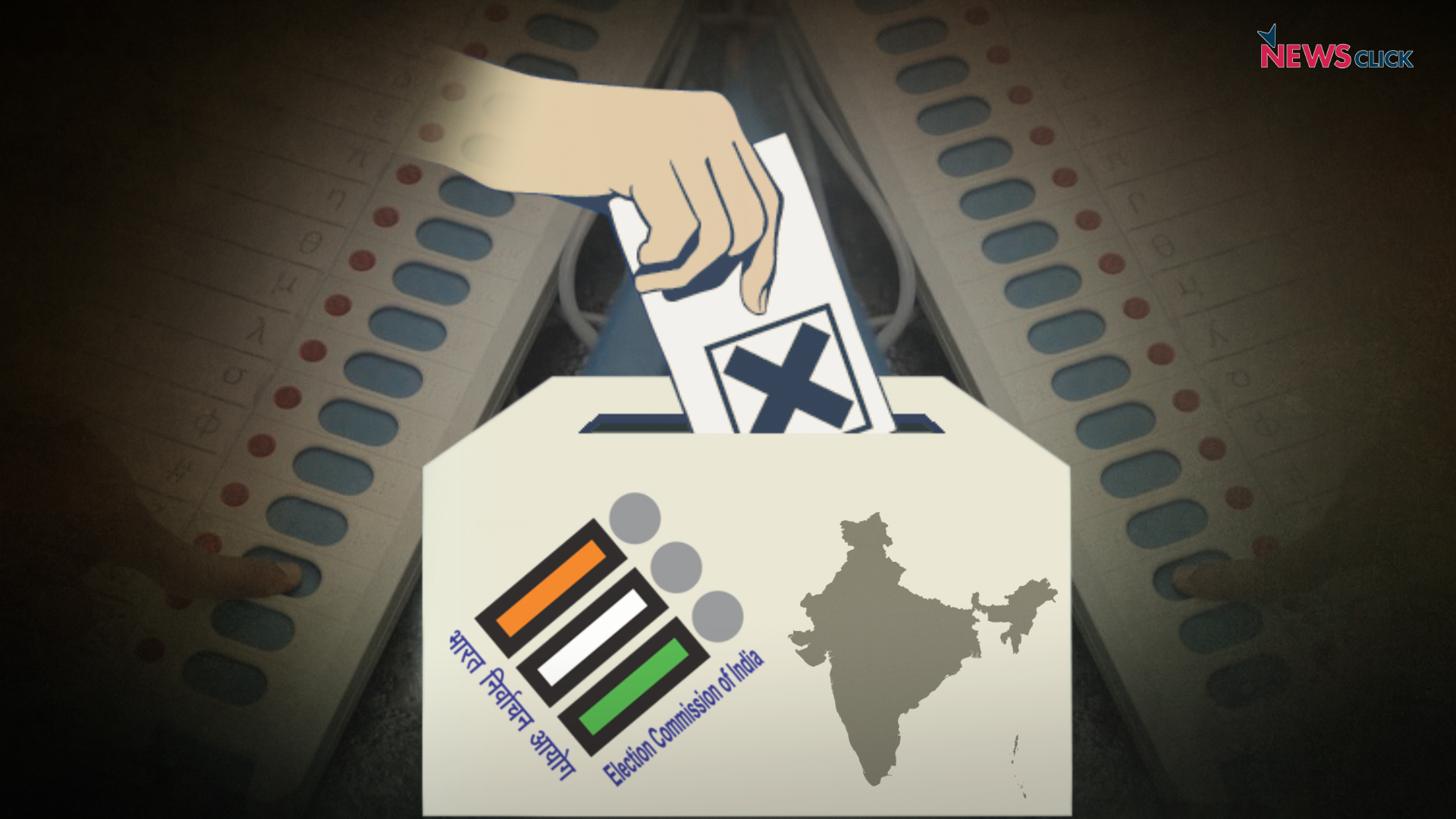
Why EC Owes an Answer to the Country Over 'Phantom Votes' | NewsClick

The newly formed Election Commission of India created a range of symbols to correspond to each political party, like an elephant, a lotus, a hand or even an alarm clock so that from the beginning all people regardless of literacy level and language could vote with confidence. Since 1947, the literacy rate has increased significantly, but it’s still only 75 percent, so these symbols are still useful to many when casting a vote. But this is a massive sprawling operation and over the years it’s run into some pretty serious problems like allegations of election rigging and problems with a practice called booth capture, where gangs actually take over polling stations and tamper with the elections. It’s partly because of these problems that the Commission introduced these voting machines in the 1990s.

It also increased security around the elections. These efforts to include all voters and protect elections seem to be working. In 2019, India saw the highest voter turnout yet and for the firsttime women voted just as much as men. India’s elections are only getting bigger and more complicated. India has one among the fastest growing populations within the world. and in 2020, young people will make up more than a third of the country. This is the most important election within the world that takes many officials fanning out across a huge country to assist many millions vote.

Election Commission rejects Opposition demand to tweak VVPAT ...

New bubonic plague case suspected after covid-19 in China; Alert sounded.

In this hard times of corona virus pandemic , chine has reported another deadly bubonic plague case in the northern China’s inner Mongolia. The detection of the suspected case of bubonic plague has come to light in statement issued by a local health commission on its website.

As per a media report, a third-level warning alert was issued on Sunday. The warning period has been extended to the end of the year. On July 1, state-run Xinhua news agency said that two suspected cases of bubonic plague reported in Khovd province in western Mongolia have been confirmed by lab test results. The confirmed cases are a 27-year-old resident and his 17-year-old brother. The brothers ate marmot meat, the health official said.

The Yersinia pestis bacteria can be transmitted to humans from infected rats via fleas.  Though the highly-contagious plague is rare in China and can be treated, at least five people have died from it since 2014, according to China’s National Health Commission. 

Bubonic plague symptoms and precautions:

The health commission urged the people in city to take precautions to avoid infection. It is a bacterial disease spread by fleas living on wild rodents such as marmots.

According to World Health Organisation(WHO), the plague can kill an adult in less than 24 hours if not treated in time. Bubonic plague symptoms include headaches, fever and vomiting. Swollen and painful lymph nodes occur in the area close to where bacteria entered skin.

celebrate not just a day but life full of yoga

Yoga: understanding fundamentals

Yoga is a group of spiritual,mental and physical practices originated in ancient India. the modern yoga is seen as exercise to the body which mainly consists of postures or asanas. The practice of yoga has been thought to date back to pre-vedic Indian traditions; possibly in the Indus valley civilization around 3000 BCE. Yoga is mentioned in the Rigveda and also referenced in the Upanishads. Yoga gurus from India later introduced yoga to the West,[17] following the success of Swami Vivekananda in the late 19th and early 20th century with his adaptation of yoga tradition, excluding asanas. Outside India, it has developed into a posture-based physical fitness, stress-relief and relaxation technique. Yoga in Indian traditions, however, is more than physical exercise; it has a meditative and spiritual core.

why yoga ?

There are many reasons why one should keep habit of practicing yoga for at least half an hour a day even if they are busy all the day. yoga is an art whivh cures you from a disease before you get infected by it.

some of the benefits of yoga are:

  • increased flexibility.
  • increased muscle strength and tone.
  • improved respiration, energy and vitality.
  • maintaining a balanced metabolism.
  • weight reduction.
  • cardio and circulatory health.
  • improved athletic performance.
  • protection from injury.

Prominent personalities practicing yoga:

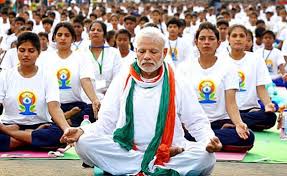
  1. Narendra modi:
If prime minister can do then we can too at least we are not as busy as him.

2. Robert downey ,jr.(Iron Man):

Shocked!! yes he also do yoga which has helped him in leaving the bad habit of drugs addiction.

3.Jennifer Aniston (Racheal green in Friends):

she is been practicing yoga since 2005 for at least 20-30 minutes a day regularly

admist her busy schedule.

The list goes on thus it is well known that yoga is key to healthy life. Practice it daily if you don’t know asanas search in google or refer you tube videos. Hope you start practicing Yoga.

8 Genuine ways to earn money from your home!!!

Here are some of the genuine ways to earn in your spare time without any investment.

  1. Transcriber: average earnings per month is hundred and fifty. All you need is actually to have a good pair of headphones and of course you need to get stored to type there now there is a few other sites so you can’t only rely of course on hundred and fifty dollars average earning per month but if you are good at this you can actually earn of course much more but what you can do is you can become a transcriber. rev.com is another site here as a transcriptionist you can anywhere from 24 to 90 cents per audio/video minute basically you can be a video captioner also which is pretty much the same here and you can earn anywhere from 45 cents up to 75 cents.
  2. Micro tasks you can do this on my.com in your spare time you get paid for completing simple tasks here so it can be anything from like tagging objects here helping companies select the best picture the audit user classifying you can see that there is tons of opportunities. Rapidworkers.com is another site where you can earn a decent amount just by doing some micro taskes.
  3. Data entry jobs on Amazon on rapid workers there is micro workers also but there is also assigned like a clickworkercalm.com. You just sign up for a free account and you work independently your schedule is flexible and all you need is a computer and of course and/or a mobile device with an internet connection and it’s totally up to you how much you want to work. You can do text creation, copy editing, research surveys, mystery visit, app testing and photo capturing a lot of opportunities that you can earn money from the comfort on clickworker.com.
  4. Virtual assistant one of my favorite sites is virtual assistant jobs calm and basically you can apply for data entry, call center whatever comes into your mind you can get started here and apply and search for it you might be available only to do this on part time so you can search for part-time flexible with contracts. Jobs.com helps us out there by providing all types of virtual assistance jobs.
  5. Online tutoring if you’re good at something math or English or something like that one side is a shag.com , VIP kid teachers.com which is basically they teach English here and you can earn up to twenty two dollars per hour teaching. There are many students who want to learn extra and out of their books so here comes opportunity by teaching them.
  6. Freelancer totally depends on your skills. There is other popular freelance sites like upwork.com there is freelancer.com there is people per hour so a lot of options actually that you can apply for here as a freelancer. Freelancing is one of the best option as you can work also on your niche and can enhance it for future use.
  7. Affiliate marketer and the good thing with affiliate marketing is that you don’t have to deal with shipping you don’t have to deal with anything at all. You need is just grab a link and promote that offer whatever it is and of course you earn a commission okay so one of the most popular platforms is Clickbank.com. They have thousands of products here probably one of the most popular niches will be health and fitness. You just grab a link here and what you do is you use this link to promote it you can use something like bitly to shorten this ugly link of course and then all you need to do is drive traffic to this offer. Amazon is another option that you can make money as an affiliate marketer they have millions of products here that you can promote ok you can earn a commission from anything you promote inside Amazon here so it works the same way it totally depends on your niche here how you can drive traffic to it.
  8. Sell stuff on eBay you have available that you don’t use at your home you can get stored there to sell this or you can actually use this platform to buy something and sell it much higher. So, you can be a sort of a middleman here so this is another option tons of ways and opportunities to make money eBay and you can of course do this from your home without any investment.


Pen pals

Have you ever thought of sharing your opinions and views to an unknown person. In this present world sharing any information with an unknown person is nothing less than inviting a trouble, but there was a time when people used to share their opinions, emotions or feelings to an unknown person. This was accomplished by writing letters. One used to write letters to those whose name, gender , age, caste etc were not known. The only thing they knew was address. This was the most exciting thing youths of those days used to do. By this they also made friends of their own choice. The friends made are called Pen friends or pen pals.

This practice started from the early 70s and prevailed as a trend for almost 2 decades. Those days there used to be a column in the newspaper, which had the addresses of those people who were interested in having a pen pal. From late 80s people started having pen friends from foreign countries too. Many people were really interested in reading different views and opinions so they had many pen friends. This practice also helped in gaining the knowledge of things happening in other places. Just imagine how different it is to know people like that, you know make friends with people you don’t know and it is your choice to carry it on or to end it.

In late 90s computers were made accessible and Electronic mail came in and started spreading its magic throughout the world. The ritual of handwritten letters were vanishing. Then mobiles made communication more efficient because of which writing letters to even the loved ones were stopped completely.

Pen pal are the purest form of friendship, why not start the trend once again. Lets once again start writing letters to our relatives and friends who are far. You know writing letters is something so personnel, one invests time in it thinks a hundred times what to write and how to write. After scrambling tons of thoughts and papers (does not mean you waste paper, please do not waste paper) the last draft is ready , the anxiety of posting it and then waiting for the reply is another feeling. In this world where everything is fake let us make friendships real. When you friend receives the letter, they would feel you in the letter. When the read it in their mind it would be as if your voice is reading it, which would definitely give a feeling though for just sometime that you are around them narrating your story.

Really how did this wonderful tradition come to an end!!

let us not end it, let us find new friends once again, make Pen friends and lets keep up the friendship for life. Lets share each others happiness and sorrows so that we don’t feel alone and always be feel happy of having a friend somewhere who is always there to listen to our thoughts , opinions and problems and to show that we care about them. May be by doing this we can make a much happier world to live in.

A brief history of Cannibalism

Cannibalism, a frowned upon act which society vehemently opposes or so we think. Cannibalism is the act of consuming another individual of the same species as food. Organisms from the animal kingdom practice cannibalism on a regular basis in fact more than 1,500 species alone practice it. Even as society frowns upon it, human cannibalism is well documented, both in ancient and in recent times. So how did this start? The word cannibal is dated back to the time of Christopher Columbus, which he may even have coined himself. It was first recorded in Columbus’s reports to the queen of Spain. He described the indigenous people as friendly and peace loving but sparked rumors about a group called Caribs, who apparently raided, plundered and ate their prisoners. The queen granted permission of capture and enslaving of anyone who ate flesh. However once Columbus found that he would not get gold from any of the locals, he began labeling any who resisted him as a Caribe. As the term reached Europe, somewhere along the way it had transformed from Carib to Canibe to Cannibal.

Photo by Renato Danyi on Pexels.com

It was first used by colonizers to dehumanize indigenous people; it has since been applied to anyone who eats flesh. The term comes from an account with no hard evidence but it does have a real and complex history. Throughout the course of history, it has taken diverse forms such as 15th century Europeans believed they had hit upon a miracle cure: a remedy for epilepsy, hemorrhage, bruising, nausea and virtually any other medical ailment. It was a brown powder known as “mumia,” and was made by grinding up mummified human flesh. It had a large demand in 15th century Europe so much so that the stolen mummies from Egypt used to keep up with the mumia craze started dwindling. This opened up avenues for opportunists to use stolen bodies from European cemeteries to keep up with the craze. The use of mumia was so widespread that it continued for hundreds of years. It was even listed in Merck index a popular medical encyclopedia into the 20th century. During various famines, sieges and wars there have been accounts of survival cannibalism as the only options were starving or eating the dead. But various cultures saw a normalization of consumption of human flesh even in ordinary circumstances. Blood in liquid or powdered form used to treat epilepsy, human liver, gall stones, oil from human brains and pulverized hearts were popular medical concoctions back in the day. In china the written record of socially accepted cannibalism goes back to 2000 years. One form of cannibalism was filial cannibalism where adult sons and daughters provided a piece of their flesh to their sick parents and often seen as a last-ditch effort to save them. Cannibalistic funerary rites were yet another form of culturally sanctioned cannibalism. The best-known example came from the Fore people of New guinea. Through the mid-20th century, members of the community would, make their funerary preferences known in advance, often requesting family members to consume their flesh after death, however even though this honored the dead it bore the spreading of a deadly disease known as Kuru throughout the community.

Between fictionalized stories, verified facts and big gaps that still exist in our knowledge, there is no one history of cannibalism, however one thing we can be sure of that humans throughout the course of history have eaten and volunteered to be eaten by their fellow man. As Michel de Montaigne wrote Everyone gives the title of barbarism to everything that is not in use in one’s own country”.

Day to Day Sings & Symptons…DAY 1 to 22

Day to Day Signs and Symptoms of Coronavirus DAY TO DAY SYMPTOMS OF COVID-19 Before proceeding, please note that this general overview is compiled for initial self-assessment only and should vary for each individual. If you are not feeling well, you ought to immediately consult a medical man to possess an accurate diagnosis and proper treatment of COVID-19. The typical daily symptoms are concluded from the study of 138 patients at Zhongnan Hospital of Wuhan University and another study involving 135 patients from Jinyintan Hospital and 56 patients from Wuhan Pulmonary Hospital.

Update: China reports 1,287 confirmed cases of new coronavirus ...

These symptoms are broken down into:

DAY 1 to DAY 2 the start symptoms are almost like the cold with a light pharyngitis and neither having a fever nor feeling tired. Patients can still consume food and drink as was common .

DAY 3 The patient’s throats start to feel a touch painful. Body temperature reads at around 36.5° celsius. Although it’s uncommon, other symptoms like mild nausea, vomiting or mild diarrhea are possible to set in.

DAY 4 Throat pain becomes more serious. Other symptoms like feeling weak and joint pain start to manifest. The patient may show a temperature reading between 36.5° to 37° celsius.

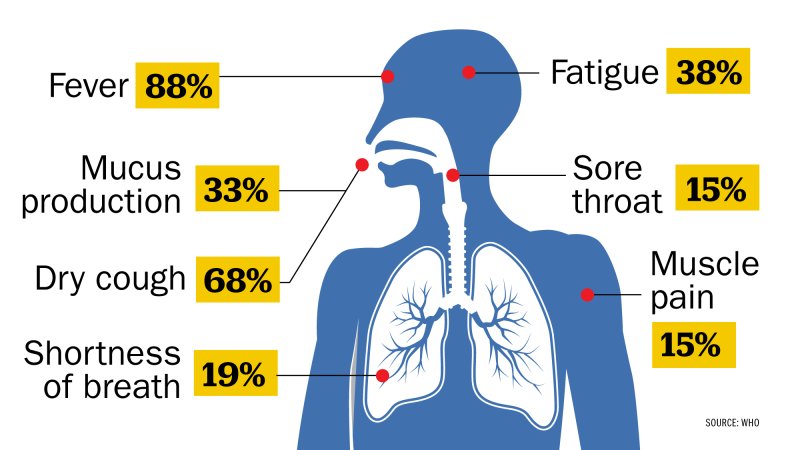
DAY 5 to DAY 6 Mild fever starts. The patients show a temperature reading above 37.2° celsius. The second most common symptom, dry cough, also appears. Dyspnea or breathing difficulty may occur occasionally. Most patients during this stage are easily feeling tired. Other symptoms remain about the same. These four symptoms are among the top five key indications of COVID-19 according to the final report of the initial outbreak conducted by the joint mission of China and WHO.

DAY 7 get more serious coughs and breathing difficulty. Fever can get higher up to 38° celsius. Patients may develop further headache and body pain or worsening diarrhea if there’s any. Many patients are admitted to the hospital at this stage.

DAY 8 to DAY 9 On the 8th day, the symptoms are likely to be worsened for the patient who has coexisting medical conditions. Severe shortness of breath becomes more frequent. Temperature reading goes well above 38°.

DAY 9 is that the average time when Sepsis starts to affect 40% of the patients.

DAY 10 to DAY 11 Doctors are ordering imaging tests like chest x-ray to capture the severity of respiratory distress in patients. Patients are having loss of appetite and should be facing abdominal pain. The condition also needs immediate treatment in ICU.

DAY 12 to DAY 14 For the survivors, the symptoms can be well-managed at this point. Fever tends to urge better and breathing difficulties may start to cease on day 13. But Some patients should be suffering from mild cough even after hospital discharge.

DAY 15 to DAY 16 Day 15 is the opposite condition for the rest of the minority patients. The fragile group must prepare for the possibility of acute cardiac injury or kidney injury.

DAY 17 to DAY 19 COVID-19 fatality cases happen at around day 18. Before the time, vulnerable patients may develop a secondary infection caused by a new pathogen in the lower respiratory tract. The severe condition may then lead to blood coagulation and ischemia.
DAY 20 to DAY 22 The surviving patients are recovered completely from the disease and are discharged from the hospital.

STAY HOME & STAY SAFE

Instagram Launches 'Stay Home' Story & Co-Watching Feature Amid ...