Self-Defense

We’ve all heard about self-defense since we were young, and living in the terrible world of the twenty-first century, when no one is entirely safe, it’s a responsibility to recognize that we are the only ones who can protect ourselves.
If we look at the most fundamental definition, it is the act of defending oneself from external danger.

Photo by cottonbro on Pexels.com

The “right to self-defense” is a legal term that refers to the use of self-defense in legal jurisdictions. It is critical to know how to defend yourself in today’s environment.

According to statistics, one out of every three women will be the victim of a violent attack at some point in her life. It is taught in training to block an assault, but it is much better if one can escape it!

As a result, the training should also cover how to avoid an attack in the first place. Which form of karate do you want to learn to defend yourself?

Knowing something as powerful as Karate gives you the confidence and strength to believe that you are not weak and that you have the ability to achieve your goals.

Self-defense techniques


1)Jujutsu\sTaekwondo

2)Krav Maga is a martial art that was developed in Israel.

3)Aikido

4)Wing Chun is a martial art that originated in China.

5)Brazilian Jiu-Jitsu is a martial art that originated in Brazil.

6)Muay Thai is a type of Thai boxing.

You may wish to learn self-defense for a variety of reasons. The most obvious reason is that you want to be able to protect yourself or your family if you ever find yourself in a dangerous situation. It is extremely rare to come across someone who wishes to hurt you. You are extremely vulnerable if you have no preparation for dealing with such issue.

According to the Department of Justice and the Centers for Disease Control and Prevention, one out of every six women has been sexually assaulted or attempted sexually assaulted.

The odds were 1 in 33 for men. No attack is ever the fault of the victim, and not all attacks can be prevented. However, we do know that mastering self-defense can assist victims in stopping or escaping their abusers. Self-defense training is required in a variety of situations, including rape.

A mugging or a house invasion are both circumstances in which self-defense training may help you better deal with the threat, defend yourself and your family, and find strategies to limit the harm the criminal can cause. It’s all about how to protect oneself and think effectively in high-pressure situations. It’s all about developing the confidence to better control situations that would otherwise be utterly out of your control.

Slowly, over time, the corporation became aware of the problem and began holding workshops for women working in the same industry. In fact, we now believe that every parent should include self-defense lessons in their child’s education. Self-defense has become a need for every growing child and individual today, alongside school, art programmed, and swimming sessions.

  1. Suitable for children
    It instils discipline in youngsters, provides a pleasurable pastime, and aids in the development of confidence. Children who acquire self-defense skills are more alert of their surroundings and are taught how to defend themselves against assailants of all ages, including adults and children. It teaches students how to deal with regular bully scenarios without turning become bullies.

2. Women will love it.
Self-defense can be beneficial to women and young girls for a variety of reasons. It boosts self-assurance. It also aids them in levelling the playing field with an assailant who may be far larger than they are. It’s also beneficial for any lady looking for a physical, hands-on workout.

3. Men will love it.
For the same reasons as women, males can benefit from this training. The training plan is a wonderful all-around workout that complements any other sports activity.

4. Excellent for the Elderly
We all know that age has little to do with learning new things. Older people can learn new practices, which will help them improve their health.

Photo by Anton Belitskiy on Pexels.com

Advantages of Self-Defense

Self-defense provides you the tools and abilities you need to analyze a dangerous situation with confidence and manage it successfully. Nothing could be more powerful than that. It aids in the development of confidence and control over your anxieties, and confidence is a superpower in and of itself.

Self-defense enhances your concentration and focus. As a result, you will learn to concentrate under stressful situations.

It allows you to learn simple maneuvers as well as more complex skills to defend oneself during an attack. Knowing how to defend oneself can make you feel less worried in public or afraid when you’re out late at night alone.


Self-defense is a fun and effective method to strengthen your body, burn calories, and enhance your overall health. Exercise also improves your mood, which is beneficial to persons who are suffering from depression.

One must be both physically and emotionally prepared for an attack. By learning self-defense, you will maintain your muscle and endurance through practicing along with other exercise activities. Thus improving your overall fitness will improve.

Your awareness of your surroundings will improve as a result of self-defense. You never know when you’ll be attacked; no one anticipates being attacked, so we must always be aware of our surroundings.

Improving balance not only includes the physical balance of your core muscles but also a mental balance for improving your focus. Self-defense teaches you how to focus on your target while you control your body. Not having balance, it is almost impossible to fight. Body control and balance help in protecting ourselves mentally and physically.

If you get into a battle, movement is crucial. You can’t just stand there and wait for your adversary to strike again; you have to move and react instinctively. It will aid in the development of your reflexes and the acquisition of a fighter’s reflex, allowing you to move fast and strategically in a situation like this.

.

Entrepreneur

The word entrepreneur has its origin in the French language. It refers to the organiser of musical or other entertainments. An entrepreneur is one who organises, manages, and assumes the risks of an enterprise. An entrepreneur visualises a business, takes bold steps to establish undertaking, coordinates the various factors of production and gives it a start.Entrepreneurs are the owners of the business Who Contribute the capital and bear the risk of uncertainties in business life. Entrepreneur is action – oriented and highly motivated. He has the ability to evaluate business opportunities, to gather the necessary resources to take advantage of them and to initiate appropriate action to ensure success. Entrepreneur is associated with innovations.He is the main factor of production. Entrepreneur takes decision regarding what to produce, how to produce, where to produce and for whom to produce. He mobilises other factors of production namely, land, labour, capital, organisation and initiates production process. He is responsible for both the profit or the loss. In India, Birla, Tata, Modi are big entrepreneurs.

Many people dream of becoming entrepreneurs someday. But it made me realize that there other factors that needs to be taken into consideration. We need to ask ourselves are we ready to take the challenge to the outside world. Not everyone have the vision, innovation and creativity to become an entrepreneur. The individual must have a positive attitude and accept the responsibility, have discipline to meet their goals, and take action when the opportunity presents itself. Many prefer a job security and rely on a weekly paycheck, while entrepreneurs will take risks and doesn ‘t have that luxury to know the amount of their income.

Starting your own business can be exciting and it can become a well- rewarded experience. Being your own business includes great benefits,
Businesses trying to survive the current economic crisis need to pursue competitive advantages and empower them. Competitive advantage results from matching core competencies to the opportunities. The entrepreneur that I interviewed uses her experience, quality, consistency and overall learned what the customers really need and demand. Jane’s skills and experience enable her to respond faster to market changes. Jane has remarkable negotiation and sales skills that make her a most competitive in the market. There are also questions that you need to ask yourself to determine if you are ready to take the next step. Are you able to think of new ideas? Can you imagine new ways of solving problems? Entrepreneurs should think creatively. If you have ideas learn how take advantage of new opportunities. Be your own boss also means that you are responsible for making difficult decisions. The business world involves uncertainty. Do you avoid the uncertainty in life at all costs? If so, owning your own business is not the best.

Nile River

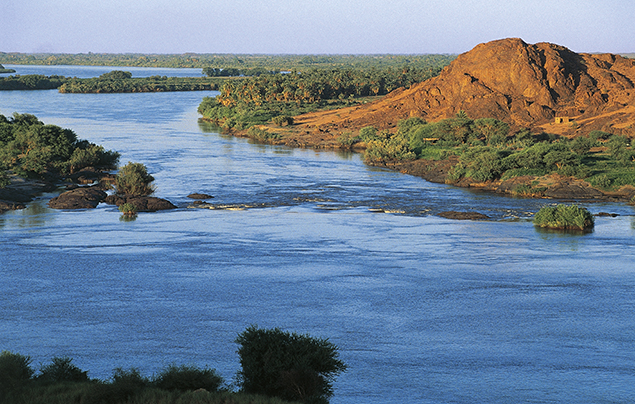
The Nile River flows from south to north through eastern Africa. It begins in the rivers that flow into Lake Victoria (located in modern-day Uganda, Tanzania, and Kenya), and empties into the Mediterranean Sea more than 6,600 kilometers (4,100 miles) to the north, making it one of the longest river in the world. The Nile River was critical to the development of ancient Egypt. In addition to Egypt, the Nile runs through or along the border of 10 other African countries, namely, Burundi, Tanzania, Rwanda, the Democratic Republic of the Congo, Kenya, Uganda, Sudan, Ethiopia, and South Sudan. Its three main tributaries are the White Nile, the Blue Nile, and the Atbara.

The soil of the Nile River delta between Cairo and the Mediterranean Sea is rich in nutrients, due to the large silt deposits the Nile leaves behind as it flows into the sea. The banks of the Nile all along its vast length contain rich soil as well, thanks to annual flooding that deposits silt. From space, the contrast between the Nile’s lush green river banks and the barren desert through which it flows is obvious.

For millennia, much of Egypt’s food has been cultivated in the Nile delta region. Ancient Egyptians developed irrigation methods to increase the amount of land they could use for crops and support a thriving population. Beans, cotton, wheat, and flax were important and abundant crops that could be easily stored and traded. 

The Nile River delta was also an ideal growing location for the papyrus plant. Ancient Egyptians used the papyrus plant in many ways, such as making cloth, boxes, and rope, but by far its most important use was in making paper. Besides using the river’s natural resources for themselves and trading them with others, early Egyptians also used the river for bathing, drinking, recreation, and transportation.

Today, 95 percent of Egyptians live within a few kilometers of the Nile. Canals bring water from the Nile to irrigate farms and support cities. The Nile supports agriculture and fishing. The Nile also has served as an important transportation route for thousands of years. Today, some residents of Cairo have begun using private speed boats, water taxis, or ferries to avoid crowded streets. Dams, such as the Aswân High Dam in Egypt, have been built to help to tame the river and provide a source of hydroelectric power.

However, the silt and sediment that used to flow north, enriching the soil and building the delta, is now building up behind the dam instead. Instead of growing in size through the soil deposits, the delta is now shrinking due to erosion along the Mediterranean Sea. In addition, routine annual flooding no longer occurs along parts of the Nile. These floods were necessary to flush and clean the water of human and agricultural waste. As a result, the water is becoming more polluted.

The Nile River also continues to be an important trade route, connecting Africa with markets in Europe and beyond.

The ‘holy grail’ of batteries: Scientists create a ‘iron-air’ battery that rusts and stores power for days at a tenth of the price of lithium-ion batteries.

In the United States, an ‘on-air battery has been created that can hold electricity generated by wind or solar power plants for days before gently discharging it to the grid.

Form Energy intends to stack thousands of its “iron-air” batteries together in massive warehouses, as seen in this illustration.

According to Form Energy, a technological firm based in Massachusetts, it will help combat climate change by eliminating the demand for fossil fuel power plants.

The Iron-Air battery is a ‘new kind of cost-effective, multi-day energy storage device,’ capable of supplying electricity for 100 hours at a fraction of the cost of lithium-Ion, the renewable energy technology’s “holy grail.”

It’s constructed of iron, one of the most abundant elements on the planet, and it operates by inhaling oxygen, changing iron to rust, and then converting rust back to iron.

It is charging and discharging the battery as it takes in oxygen and transforms iron back and forth, a process that allows the energy to be held for longer.

According to the company, the batteries are too hefty for use in electric automobiles since they are intended to handle the difficulty of maintaining a consistent power supply.

This will address one of the renewable energy’s most vexing problems: how to store vast amounts of electricity inexpensively and provide it to power networks when the sun isn’t shining for solar panels or the wind isn’t blowing for turbines.

Solar and wind resources are the cheapest sources of energy in much of the globe, but unlike fossil fuel power plants, they do not provide a consistent supply.

The electric grid now has to figure out how to deal with this supply unpredictability while maintaining electricity dependability and cost.

According to Form Energy, their innovative battery technology is the answer to this rising problem.

According to Mateo Jaramillo, CEO and Co-Founder of Form Energy, the company performed a thorough analysis of all existing technologies and ultimately redesigned the iron-air battery.

This was done to ‘optimize it for multi-day energy storage for the electric grid,’ according to the researchers.

According to the company, the battery they are creating would enable governments to retire thermal assets such as coal and natural gas power facilities completely.

‘We’re attacking the largest obstacle to deep decarbonization with this technology: making renewable energy accessible when and where it’s required, even over several days of harsh weather or grid disruptions,’ Jaramillo explained.

It will also be less expensive, according to the company. Nickel, cobalt, lithium, and manganese minerals are used in lithium-ion battery cells, which can cost up to $80 per kilowatt-hour of storage.

Form hopes to reduce mineral prices for each cell to less than $6 per kilowatt-hour by using iron and to maintain the cost of a whole battery system to less than $20 per kilowatt-hour of energy storage by cramming them into a full battery system.

Renewables will eventually be able to replace traditional fossil-fuel power facilities at this pricing range, according to experts.

Breakthrough Energy Ventures, a climate investment fund sponsored by Bill Gates, Jeff Bezos, and others, is one of the firm’s investors. They’ve also received investment from ArcelorMittal, the world’s largest iron-ore producer.

HOW DOES AN IRON-AIR BATTERY WORK?

According to the company, the primary concept of functioning is reversible rusting.

The battery takes in oxygen from the air during discharging and transforms ferrous metal into rust.

The introduction of an electrical current during charging transforms the rust to iron, and the battery exhales oxygen.

They collect energy from renewable sources, store it for up to 150 hours, and then discharge it to the grid when renewables are unavailable.

Each battery is just around the size of a washing machine.

Each of these modules is filled with a non-flammable, water-based electrolyte similar to that found in AA batteries.

Stacks of 10 to 20 meter-scale cells, which comprise iron electrodes and air electrodes, the elements of the battery that enable electrochemical processes to store and release electricity, are contained within the liquid electrolyte.

Thousands of battery modules are joined together in modular megawatt-scale power blocks, which are housed in an environmentally protected container.

Tens to hundreds of these power blocks will be linked to the energy grid, depending on the scale of the system.

A one-megawatt system, in its most compact form, takes roughly one acre of land.

3MW/acre can be achieved with higher density designs.

What is Eco-tourism

Definition

Ecotourism is now described as “responsible travel to natural regions that conserves the environment, supports local people’s well-being, and includes interpretation and education” (TIES, 2015).

Both staff and visitors are expected to participate in education.

Ecotourism has been hailed as a panacea around the world: a way to fund conservation and scientific research, benefit rural communities, promote development in poor countries, improve ecological and cultural sensitivity, instill environmental awareness and social conscience in the travel industry, satisfy and educate discriminating tourists, and some claim and bring world peace

Photo by Maria Orlova on Pexels.com

Ecotourism is a type of tourism that aims to have a low environmental impact, is environmentally friendly, and avoids the negative consequences of many large-scale tourism projects in previously undeveloped areas.

History of eco-tourism

Although the origins of the term “ecotourism” are unknown, Heizer (1965) appears to be one of the first to use it, identifying four “pillars” or principles of responsible tourism: minimizing environmental impacts, respecting host cultures, maximizing local benefits, and maximizing tourist satisfaction.

In the 1970s and 1980s, ecotourism grew out of the environmental movement’s womb. Growing environmental concerns, along with a growing discontent with mass tourism, resulted in a surge in demand for alternative outdoor experiences.

At the same time, developing countries came to recognize that nature-based tourism may be a source of foreign cash while also being a less resource-intensive alternative to forestry and agriculture.

Many Definitions of Eco-Tourism

Ecotourism, according to Ceballos-Lascurain, is “travelling to relatively undisturbed or uncontaminated natural areas with the specific goal of studying, admiring, and enjoying the scenery and its wild plants and animals, as well as any existing cultural manifestation (both past and present) found in these areas.”

Ecotourism is defined as “responsible travel to natural regions that conserves the environment and improves the well-being of local people,” according to the Ecotourism Society.

“Ecotourism is nature-based tourism that combines teaching and interpretation of the natural environment and is managed to be environmentally sustainable,” according to the Ecotourism Association of Australia.

This definition emphasises that the word “natural environment” encompasses cultural elements, and that “ecologically sustainable” refers to a fair return to the local people as well as long-term resource conservation.

Ecotourism, according to Tickell, is “travel to appreciate the world’s wonderful diversity of natural life and human culture without harming either.”

Ecotourism is a type of environmentally friendly tourism that promotes environmental and cultural awareness, appreciation, and conservation.

Photo by Mateusz Sau0142aciak on Pexels.com

Types of Eco-Tourism

We defined mass tourism as a more traditional kind of tourism development in which short-term, free-market principles predominate and profit maximization is the primary goal. Tourism development was once thought to be a desirable and generally “clean” business for nations and regions to pursue.

This was especially true in terms of gains in foreign exchange profits, job creation, and infrastructure development, such as transportation networks.

We are more prone these days to demonize or portray traditional mass tourism as a beast; a creature with few redeeming features for the destination place, its people, and its natural resource base.

This isn’t to say that “mass tourism” hasn’t generated issues; it has. There has been a legitimate need to establish an alternative way to tourism growth that mitigates the harmful effects of mass tourism.

As a result, the concept of “alternative tourism” has gained popularity. This alternate strategy has been referred to as a “competing paradigm” to mass tourism, but it may also be seen as a complimentary approach. That is, there is no such thing as “alternative tourism.”

As a result, the dispute devolves into a semantic one. It may be best to recognize that alternative tourism is a natural result of a growing awareness of tourist development and its strengths and weaknesses.

Alternative tourism is a broad phrase that refers to a variety of tourist tactics (e.g., suitable, eco, soft, responsible, people to people, and green tourism), all of which claim to provide a more environmentally friendly alternative to traditional mass tourism in specific areas.

However, as Weaver correctly points out, alternative tourism is not without its detractors. It is apparent that just because alternative tourism arose in response to mass tourism’s negative repercussions does not mean it is less destructive or better than its alternatives.

Nature of Ecotourism

Between 2008 and 2017, tourism is predicted to rise at a rate of 4.3 percent per year in real terms. Ecotourism, often known as nature-based tourism, is the fastest-growing segment of the tourism business, increasing three times faster than the overall industry.

There can be little doubt that rising environmental concerns, along with the historically common habit of travel as a means of escape to nature, are encouraging people to seek solitude with nature, resulting in an increase in the number of visitors to national parks and other protected places.

Nature-based tourism encompasses a variety of aspects. Although not all forms of travel to natural places are necessarily ecotourism, this is an important step in distinguishing nature-based tourism from ecotourism and provides us with a number of levels at which to differentiate the link between certain tourism activities and nature:

Those activities or experiences that rely on the natural world.
Those activities or experiences that are made better by the presence of nature.
Those activities or experiences that happen to take place in a natural context.
Nature-based tourism is divided into numerous categories, each of which employs a combination of these dimensions.

Camping, too, is an activity/experience that is frequently enhanced by nature. Most people would rather camp in a natural area than along the side of a busy highway.

As a result, while nature is an important aspect of these experiences, it is not the driving force behind them.

GURU PURNIMA

Guru Purnima symbolizes offering gratitude towards Gurus; it is celebrated on the day of full moon of Ashada. The teacher not only guides a student but also shapes his life by instilling true knowledge and by giving him direction. As full moon holds an attraction and magnetism that uplifts mind, similarly gurus have that aura which makes the disciple to acknowledge the true sign and inner light. Widely celebrated by the Hindus, Sikhs and Buddhist communities all over the world.

Image : Rkalert

 A true guru spread the light of knowledge and wisdom to his disciples. Like the shine of silvery moon gives joy to everyone, a guru is also like that; he blesses the entire world with auspiciousness.

A guru is one who guides us through the knowledge of eternal self. A disciple should be ready to take the knowledge, keen to learn, should have faith, reverence and devotion to guru every moment.

Beside that a true guru reside all of us, the need is to look into self. So, why do we need an external guru? For example, children who want to become a researcher have to study for years under the supervision of expert educators. If we desire for knowledge, we must need an expert masters.

Image: Bee bulletin

Like a dark room can be lit only when somebody enters with a light or candle, the disciple also needs a guru to realize its true self. A guru can remove darkness with the light of wisdom; the inner lamp needs to be lit with the guidance of a Guru. There is a mirror within us but due to the hustle bustle of life, we are unable to visualize our inner guru. The mirror can be cleaned when you realize the true self and open to take the light within to remove the darkness of ignorance.

We all need a true guru who can show us the way through the journey of our life.

ALL ABOUT CHEESE

When we say cheese everyone starts to have water in their month. Everyone in the world likes cheese and they have tasted it at least once in their whole lifetime and there is no denying it .I’m here to talk about the way more different types of cheese available around the world.

most expensive cheese in the world:

pule donkey cheese

Pule is made exclusively at Serbia’s Zasavica Special Nature Reserve located 30 miles outside of Belgrade. At roughly $576 a pound it is the world’s most expensive cheese and its extreme price tag is made all the more surprising when you discover it’s made using donkey milk.

worst cheese in the world : yuck!!!

Casu martzu:

Casu martzu literally rotten cheese .In Sardinian, is a traditional Sardinian sheep milk cheese that contains live insect larvae (maggots). A female P. casei is allowed inside the cheese and it can lay more than 500 eggs at one time. The eggs hatch and the larvae begin to eat through the cheese. The acid from the maggots’ digestive system breaks down the cheese’s fats, making the texture of the cheese very soft by the time it is ready for consumption, a typical Casu Martzu will contain thousands of these maggots. They eat the cheese with that transparent worms inside alive !!

best cheese in the world :

MADISON:

A gruyere from Switzerland has been named the world’s best cheese, chosen from a record number of entrants from 26 nations in the World Championship Cheese Contest in Wisconsin. The cheese from Bern, Switzerland made its maker, Michael Spycher of Mountain Dairy Fritzenhaus a two-time winner. It has a wide variety of cheeses .These cheeses are made from cow milk as well as goat milk.

cheapest cheese in the world :

Cheddar cheese Ireland

Irish cheddar is the most widely recognized type of cheese from Ireland. Irish cheddar is most often made from pasteurized milk. Irish cheddar cheese is made from milk that is curdled and kneaded with salt to drain the whey before the curds are packed into blocks for aging. Kneading the curds with salt is a process called cheddaring. 

softest cheese in the world :

Buffalo mozzarella :

mozzarella made from the milk of Italian Mediterranean buffalo. The term mozzarella derives from the procedure called mozzare which means “cutting by hand” is the process of separation of the curd into small balls and serving them in individual pieces . It is appreciated for its versatility and elastic texture and often called “the queen of the Mediterranean cuisine”, “white gold” or “the pearl of the table”.

hardest cheese in the world :

Nepal’s chHurpi:

chhurpi is often called the world’s hardest cheese, a single piece can last mountain folks hours in their mouth: biting, chewing, gnawing, and slowly dissolving into a delicious, and filling, creamy cheese. Traditionally, chhurpi is made out of chauri milk, a mix between a yak and a cow.

Bullying in School

It makes no difference whether you are a student, instructor, parent of a child or adolescent, or a member of the community.

Everyone plays a part in preventing school bullying, and the majority of individuals have either directly or indirectly participated in, watched, or experienced some type of bullying in schools.

There are multiple sorts of bullying to be aware of, as well as several approaches for educators, schools, and parents to assist in the prevention of bullying at school.

Bullying must meet specific criteria in order to be classified as such.

These include malice, power imbalances, repetition, anguish, and provocation. Bullying can occur in schools, on campus, or outside of school, but it is always the result of relationships formed in those contexts.

Photo by RODNAE Productions on Pexels.com

Types of Bullying

  1. Bullying can take two forms: direct and indirect.
    Direct bullying differs from indirect bullying in that it involves direct interaction with the person who is being bullied. It’s possible that indirect will not work. Throwing something at someone or yelling cruel comments at them is a form of direct bullying. An example of indirect bullying might be spreading rumors about a classmate.
  2. Cyberbullying Cyberbullying is any form of bullying that occurs through the internet. Harmful comments on a personal website or dishonest private messaging are examples.
  3. Physical bullying Bullying that involves physical contact with the other person is always considered physical bullying. This can include hand-to-hand combat, as well as throwing objects, tripping, or inciting others to attack a person physically.
  4. Emotional bullying Emotional bullying is defined as the intentional infliction of emotional distress on another individual. Saying or writing harsh things, getting others to band together against an individual, purposeful ignoring, or spreading rumors’ are all examples of this.
  5. Sexual bullying Sexual bullying refers to any sort of bullying, done in any manner, that is related to a person’s gender or sexuality. Examples can include forcing someone to commit intimate acts, making sexual comments, or unwanted touching.
  6. Verbal bullying Verbal bullying is defined as the use of any form of language to cause distress to another person. Using profanities, abusive language, making unfavorable comments about someone’s appearance, using insulting phrases, or teasing are all examples.
  7. Bullying in Higher School Many individuals mistakenly believe that bullying ends in high school, yet it continues throughout higher education. This can take numerous forms, and it often comes with unique obstacles because students are often living away from home and on their own.

Anti-bullying laws exist in all fifty states of the United States, albeit they differ from state to state. The majority of states have legislation requiring schools to report, document, and investigate occurrences of bullying in the classroom. Bullying prevention is also mandated by law for schools.

Some state laws may stipulate that bullies face sanctions and that bullied pupils receive appropriate counselling.

There are, however, a number of rules in place to assist pupils with learning or other problems. These pupils are guaranteed the right to a “free, adequate public education” under the Individuals with Disabilities Education Act.

It is against federal law to deny a student with an IEP (Individualized Education Plan) access to an appropriate public education.

EFFECTS OF BULLYING

  1. The Resultant Consequences

Bullying victims may suffer from low self-esteem, which can lead to depression. As a result of school bullying, some bully victims experience physical and/or emotional pain. Bullied adolescents are more prone to experience depression later in life.

  1. Victimhood for a Lifetime

Unfortunately, some children are subjected to persistent bullying that occurs on a weekly basis. This is more common in primary school, and it might result in lost days of school.

In order to prevent long-term injury, schools must step in and intervene in cases of chronic bullying.

Photo by Keira Burton on Pexels.com

There are a variety of reasons that can contribute to bullying. Bullying is likely to occur if there are pupils who have bully inclinations and the school climate permits it. Bullying can occur as a result of a challenging family environment, low self-esteem, or poor social skills.

It’s difficult for a parent to learn that their child is being bullied, but know that you can help.

To begin, establish a thorough record of the bullying incident, including as many information as possible.

You should also keep track of your child’s reactions to help the school understand how bullying is harming his or her schoolwork. Check to see if the bullying has broken any laws, and then file a complaint with your child’s school by email.

Bullies usually target students in their own grade, but they can sometimes target students who are older. A youngster with a big network of friends is less likely to be bullied, but a child who is physically weaker, smaller, and less forceful is more likely to be bullied.

Schools must have policies and procedures in place that are followed. Anti-bullying education should be included into all aspects of the curriculum. Language arts teachers, for example, can locate required novels that teach pupils empathy for others.

When it comes to bullying prevention, communication is crucial. When children feel comfortable talking to adults in their community, they are more likely to report bullying and to avoid bullying by verbally expressing their feelings.

Top 6 places in India where a traveler should visit.

When it comes to tourism, India always founded as an attractive place to visit. From different types of people to different types of culture and traditions, the country has everything that one is looking for. But why India? Because it costs very cheap and very little amount of money to travel the most beautiful places around the region. The Country has the most beautiful beaches, Mountains, deserts, Forests, Rivers and the old historical temples that one should visit.

Here are the TOP 6 tourist places in India that a traveler Should Visit.

Photo by Alok Uniyal on Pexels.com

6. Varanasi, Uttarpradesh

If one wants to travel every corner of the country, then they should start with this place and set it up at the of the priority list. Visiting the place where you can smell the Hindu culture everywhere. One should see the night near the river Ganga, where Hundreds and thousands of people come together and performs rituals and prayers. It is one of the most famous place in all over India. Starting a journey with the blessing of God is a best way to start. You can try a number of different food style around the street of Varanasi.

Photo by Shootcase Chronicles on Pexels.com

5. Taj Mahal, Agra

Taj Mahal is one of the examples of the most beautiful Monuments that one could ever visit. Taj Mahal is a wonder out of total 7 In the world. It was built around 1648 and was started in 1631 after the death of Mumtaj Mahal, the wife of Shah Jahan. It has a beautiful story of love and most famous in the world. It was decorated with diamonds, mother of pearls, Jade and was constructed with white marble.

Photo by Sam Kolder on Pexels.com

4. Shimla, Himachal Pradesh

Feel the cold wind at the top of the hill around the Himalayas, a relaxation to your eyes while watching the beauty of nature. One of the finest pieces of nature that one could ever see in Shimla. The place costs quite less than the others. There’s a town hall at the center of the town and number of hill stations around the place. If one loves to visit the nature, then this place needs to be visited.

Photo by Sanket Barik on Pexels.com

3. Jaipur, Rajasthan

One could experience the old rich culture in this place. From the old tradition of shopping to Visiting the finest pieces of architecture, this place brings everything you need. Jaipur is the capital city of Rajasthan State and also known as “Pink City”. There are most famous places around the city which needed to be visited and they are, Hawa Mahal, Jantar Mantar, Amber Fort, and City Palace.

Photo by Sagar Soneji on Pexels.com

2. Statue Of Unity, Gujarat

Recently, India had built the World’s Tallest State in the Name of One of the Country’s Freedom Fighter and also Known As an Iron Man of India, Shree ” Sardar Vallabhbhai Patel”, a former Deputy Prime Minister Of India. The statue is 180 meters Tall and Located near the Sardar Sarovar Dam. It serves the major tourist Attraction as well as it is a symbol of India’s integrity and resolve.

1. Rajmachi, Maharashtra

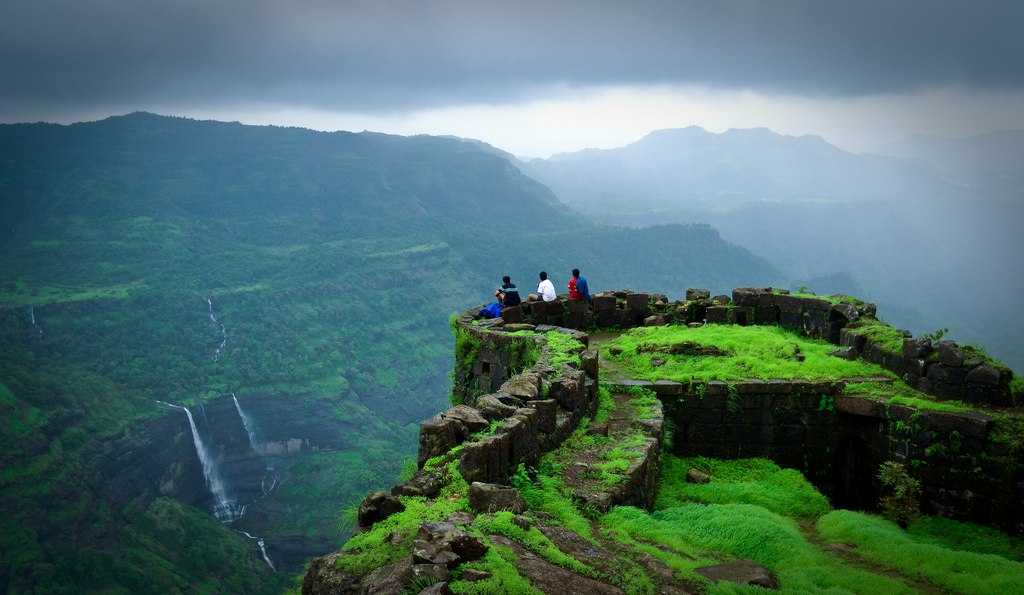
If one Love trekking then this place must needed to be visited. It is situated near a small village and has 2 two fortified peaks Shrivardhan and Manaranjan forts, located near two famous hills of Lonavala and Khandala. One can trek Upto 3 to 4 hours to reach the destination or one can easily drive to the other route and can trek for just 20 to 40 Minutes to reach the hill.

There are plenty of Places In India, which must be Visited by a traveler and above were one of those places.

Sources And Links

https://www.planetware.com/tourist-attractions/india-ind.htm

https://www.tourmyindia.com/blog/top-places-in-india-that-every-tourist-must-visit/

Friendship

One of the purest relationships is the relationship of friendship. A person without a friend lives a hard life. Everybody needs a companion to deal with our experience. It is dependent upon you that how you define friendship. It can be sharing your food, taking care of that person, supporting them in their thick and thin. You may not be loud about it, but if you care for a person silently, that is what friendship is. Friendship is about laughing together on small things, cherishing every moment you share, standing together for each other even when the world turns their backs towards them.

Photo by ELEVATE on Pexels.com

Friendships are sometimes more durable than the relationship of love. Even though the definition of friendship varies from person to person, the core meaning behind it is the same for everybody. Life is empty without a friend. So when you gain a true friend, make sure you cherish it with all your heart. The person with a real friend, with whom all the things can be shared, are the luckiest in the world. A friend will never judge you, and they will never stop scolding you if you are wrong. But whatever the situation be, they will always be there to support you.

Friendship is one of the greatest bonds anyone can ever wish for. Lucky are those who have friends they can trust. Friendship is a devoted relationship between two individuals. They both feel immense care and love for each other. Usually, a friendship is shared by two people who have similar interests and feelings.

You meet many along the way of life but only some stay with you forever. Those are your real friends who stay by your side through thick and thin. Friendship is the most beautiful gift you can present to anyone. It is one which stays with a person forever.True FriendshipA person is acquainted with many persons in their life. However, the closest ones become our friends. You may have a large friend circle in school or college, but you know you can only count on one or two people with whom you share true friendship.There are essentially two types of friends, one is good friends the other are true friends or best friends. They’re the ones with whom we have a special bond of love and affection. In other words, having a true friend makes our lives easier and full of happiness.

Most importantly, true friendship stands for a relationship free of any judgments. In a true friendship, a person can be themselves completely without the fear of being judged. It makes you feel loved and accepted. This kind of freedom is what every human strives to have in their lives.In short, true friendship is what gives us reason to stay strong in life. Having a loving family and all is okay but you also need true friendship to be completely happy. Some people don’t even have families but they have friends who’re like their family only. Thus, we see having true friends means a lot to everyone.

Importance of FriendshipFriendship is important in life because it teaches us a great deal about life. We learn so many lessons from friendship which we won’t find anywhere else. You learn to love someone other than your family. You know how to be yourself in front of friends.Friendship never leaves us in bad times. You learn how to understand people and trust others. Your real friends will always motivate you and cheer for you. They will take you on the right path and save you from any evil.Similarly, friendship also teaches you a lot about loyalty. It helps us to become loyal and get loyalty in return. There is no greater feeling in the world than having a friend who is loyal to you.Moreover, friendship makes us stronger. It tests us and helps us grow. For instance, we see how we fight with our friends yet come back together after setting aside our differences. This is what makes us strong and teaches us patience.Therefore, there is no doubt that best friends help us in our difficulties and bad times of life. They always try to save us in our dangers as well as offer timely advice. True friends are like the best assets of our life because they share our sorrow, sooth our pain and make us feel happy.

Global Warming

Global warming is the cumulative rise in average global temperatures on earth measured over a long period. It has been attributed to the large scale deforestation by man for different purposes. We consume a lot of fuel annually. With an increase in the human population, it has become impossible to meet people’s fuel requirements. Natural resources are limited, and we must use them judiciously. If we exploit natural resources like forests and water bodies, it will create an imbalance in the ecosystem. Global warming is not limited to the rise in temperature. It has other effects too.

Photo by Andrea Schettino on Pexels.com

Many parts of the world are witnessing natural disasters like hurricanes, floods, and avalanches. All these phenomena are a direct result of global warming. To prevent our environment from the harmful effects of global warming, we must restoring our ecosystem. Man has been exploiting natural resources without giving the environment anything in return. This needs to be stopped. We must all join forces to make this world a better place for our future generations who deserve this planet as much as we do. The basic step that we can follow to increase the overall health of our planet is planting trees. Afforestation should be our primary goal. The earth can become a better place if we pledge to plant as many trees as we can in our lifetime.

Global Warming is a term almost everyone is familiar with. But, its meaning is still not clear to most of us. So, Global warming refers to the gradual rise in the overall temperature of the atmosphere of the Earth. There are various activities taking place which have been increasing the temperature gradually. Global warming is melting our ice glaciers rapidly. This is extremely harmful to the earth as well as humans. It is quite challenging to control global warming; however, it is not unmanageable. The first step in solving any problem is identifying the cause of the problem. Therefore, we need to first understand the causes of global warming that will help us proceed further in solving it. In this essay on Global Warming, we will see the causes and solutions of Global Warming.

Causes of Global WarmingGlobal warming has become a grave problem which needs undivided attention. It is not happening because of a single cause but several causes. These causes are both natural as well as manmade. The natural causes include the release of greenhouses gases which are not able to escape from earth, causing the temperature to increase.Further, volcanic eruptions are also responsible for global warming. That is to say, these eruptions release tons of carbon dioxide which contributes to global warming. Similarly, methane is also one big issue responsible for global warming.

After that, the excessive use of automobiles and fossil fuels results in increased levels of carbon dioxide. In addition, activities like mining and cattle rearing are very harmful to the environment. One of the most common issues that are taking place rapidly is deforestation.

So, when one of the biggest sources of absorption of carbon dioxide will only disappear, there will be nothing left to regulate the gas. Thus, it will result in global warming. Steps must be taken immediately to stop global warming and make the earth better again.

Land Pollution: Causes, Effects, and Prevention

Many of us associate pollution with smoggy cities and litter-infested seas. There isn’t a single surface or place on Earth that hasn’t been touched by it in some manner in the twenty-first century. While trash and gasoline-powered automobiles are major sources of pollution, there are many additional factors to consider. To begin, it is beneficial to grasp the fundamentals of pollution. Pollution happens when hazardous compounds are introduced into the ecosystem, causing harm to the quality of land, water, and air. This essay will mostly address land contamination.

What is Land Pollution?

Land pollution is the degradation of the earth’s land surfaces, both above and below ground level. The buildup of solid and liquid waste items that pollute groundwater and soil is the reason. These waste products are commonly known as municipal solid waste (MSW), which comprises both hazardous and non-hazardous trash.

When trash is dumped on land, the permeability of the soil formations beneath the waste can either raise or decrease the danger of land contamination. The greater the permeability of the soil, the greater the likelihood of land contamination. That is why the Texas Disposal Systems Landfill, located just outside of Austin, Texas, was constructed in an optimal location. The danger of soil contamination has been considerably reduced by using the natural shale and clay in the ground.

Solid garbage was not collected with the environment in mind until the mid-twentieth century. Previously, garbage was generally dumped on the ground in “open dumps,” which led in rodents, mosquitoes, and other disease infestations, as well as terrible odours and windblown debris. Nonetheless, while there are now much better garbage disposal techniques, there are numerous additional variables contributing to and exacerbating the problem.

The Main Causes of Land Pollution

Litter:-

Littering, or inappropriate trash disposal, is sadly all too frequent. Every cigarette butt thrown on the ground or food wrapper thrown out a car window is a little contribution to a massive problem. 76 percent of litter discovered on highways comes from pedestrians and automobiles, according to Keep America Beautiful. However, not all litter is deliberate. Unsecured objects that fall off the back of cars or out of garbage containers also contribute significantly to the volume of litter. Litter, whether deliberate or unintentional, pollutes the environment by releasing chemicals and microparticles as it degrades.

Urbanization and Construction:-

While urbanisation does not in and of itself cause littering, the presence of a high number of people living, generating garbage, and littering in a densely populated region ultimately leads to land contamination. Construction operations are being carried out to accommodate this growing population, resulting in enormous amounts of waste materials such as metal, plastic, wood, and bricks. When these items are not disposed of correctly, they contribute to land contamination in that region.

It is critical to collaborate with partners who provide complete builder solutions to develop cost-effective construction recycling and trash disposal strategies in order to assist decrease the environmental impact of building sites.

Mining:-

Mining is the extraction of minerals and other geological elements from the earth for a variety of reasons, including but not limited to the production of fuel for vehicles, the generation of electricity, and the sale of commodities such as gold and silver. However, this extraction and the methods utilized deplete the earth’s natural resources while also causing harm and pollution. That is why discovering energy options (such as solar and wind power) that are not mined from the earth’s surface is critical in helping to decrease land pollution in the future.

Agriculture:-

Agriculture is essential to both daily living and the economy as a whole. It can, however, have far-reaching consequences for the environment. Agricultural pollution occurs when contaminants releases into the environment as a byproduct of raising animals and cultivating food crops, and the contamination is extensive.

Effects of Land Pollution

  1. Water that should not be consumed.
  2. Polluted soil, resulting in a loss of agriculturally productive land.
  3. Climate change is causing a slew of severe consequences, such as flash floods and erratic rains.
  4. Wildlife species peril and extinction.
  5. Habitat shifting, in which certain species are compelled to depart their natural habitats in order to survive.
  6. An rise in wildfires as a result of polluted regions being extremely dry.
  7. Increased air pollution as a result of trash burning.

How to Prevent Land Pollution

  1. Using Fewer Pesticides and Chemicals in Agriculture:-

Given that pesticides and chemicals used in farming and agriculture contribute significantly to land pollution, identifying alternatives will aid in reducing the environmental effect. Farmers, for example, might employ natural components by shifting away from bio-fertilizers and toward manure.

Individually, supporting environmentally aware, local farmers at your local farmer’s market or grocery shop can assist farmers with more sustainable agricultural techniques grow their businesses. Another alternative is to contribute to or volunteer in your neighborhood’s urban garden.

2. Reforestation:-

Reforestation is the process of replacing trees in an area. This may be required in places where there have been wildfires, or where trees have been cut down and milled. This procedure serves to bond the soil, which protects it from land contamination and helps to avoid soil erosion and floods.

3. Reduce, Reuse and Recycle:-

There are several things we can do as individuals to decrease our contribution to land contamination. One of the simplest ways to accomplish this is to reuse or recycle goods so that you are not producing trash from a substance or item that still has a purpose. Recycling has never been easier, thanks to more recycling containers in many places and greater knowledge about what may be recycled.

If you want to make a difference in your town, check out our blog post on how to be an environmental steward in your community.

WHY MEN ARE BUYERS AND WOMEN ARE SHOPPERS ?

Men and women differ from each other in many aspects…. They have different perspectives, motives, actions, thinking and rationales etc. and like everything has certain exceptions, similarly women and men also have exceptions in them. Based on such differences and similarities, the companies try to appeal their customers for buying their products and they design everything accordingly, like product design, advertisement, store design and layout etc. Everything id designed in such a way that the consumers are attracted to them. As per studies, it has been concluded that women only make more than 85% of the consumers and influence over 95% of total goods and services purchased. Women are considered to be more sophisticated when it comes to shopping and take longer time while purchasing anything.

MALE BUYERS

  • While purchasing anything, men try to analyze the use of products first. They try to understand how the products will be used, who will use it, time period of usage for products, which features are necessary and what is offered with different price ranges.
  • With the growth of e-commerce and technological advancements, it has been seen that in current days men’s are preferring to buy things online than in offline mode. It was also concluded through various researches that, men’s are more likely to compare and research about product online more than women.
  • Women generally shop considering the future needs but men tend to purchase things when the need is immediate and it has also been seen that men’s are less likely to compare or take advantage of discounts, deals and offers.

WOMEN SHOPPERS

Women shoppers can be categorized into 4 types:

  • Influencers: One third of the women try to influence by the society by highlighting different trends, varying fashion senses and ways of fashion. They tend to be planners, organizers and mostly spend money on quality products and products that belong to latest trends.
  • Equilibrium or Balanced: One-third of the total women consumers belong to this category and are the group of stable and balanced women’s who are in continual state of equilibrium. They know that everything has time and and amount to be spent. They tend to purchase classic things that are long lasting and may or may not be trendy.
  • Shopping as errand : Women belonging to this category mainly treat shopping as errand or chores, rather than fun experience or adventure. They tend to trustworthy and lifelong customers because of their loyalty. They like hassle free shopping experiences and like men, they are more practical, responsible and loyal customers.
  • Super Shoppers: Women belonging to this category are super shoppers, who constantly try different things, trends and fashion styles. These are the customers who are wanted by companies more while producing any new product.
  • Cultural Artists. Representing slightly more than 1 in 10, women in this group are considered the “super shoppers,” constantly trying different things and starting new trends. They are the group companies actively seek for new products.

Women are considered to be better shopper than men and they are more willing to invest their energy and time in necessary research and comparing products.

Positive Psychology

Positive psychology is one of the newest branches of psychology to emerge. This particular area of psychology focuses on how to help human beings prosper and lead healthy, happy lives. While many other branches of psychology tend to focus on dysfunction and abnormal behaviour, positive psychology is centered on helping people become happier. Positive psychology is designed to “complement and extend the problem-focused psychology that has been dominant for decades,” explained the late Christopher Peterson, author of “A Primer in Positive Psychology” and professor at the University of Michigan, in a 2008 article published in Psychology Today. “Positive psychology is…a call for psychological science and practice to be as concerned with strength as with weakness; as interested in building the best things in life as in repairing the worst; and as concerned with making the lives of normal people fulfilling as with healing pathology,” Peterson wrote.

According to leading authorities in the field, Martin Seligman and Mihaly Csikszentmihalyi, positive psychology will help achieve “scientific understanding and effective interventions to build thriving in individuals, families, and communities.” In order to understand the field of positive psychology, it is essential to start by learning more about its major theories, applications, and history.

History of Positive Psychology

“Before World War II, psychology had three distinct missions: curing mental illness, making the lives of all people more productive and fulfilling, and identifying and nurturing high talent,” wrote Seligman and Mihaly Csikszenmihalyi in 2000. Shortly after WWII, the primary focus of psychology shifted to the first priority: treating abnormal behavior and mental illness. In the 1950s, humanist thinkers like Carl Rogers, Erich Formm and Abraham Maslow helped renew interest in the other two areas by developing theories that focused on happiness and the positive aspects of human nature.

General interest in positive psychology has grown tremendously since the concept was introduced. Today, more and more people are searching for information on how they can become more fulfilled and achieve their full potential.

Uses

Positive psychology can have a range of real-world applications in areas including eduction, therapy, self-help, stress management, and workplace issues. Some of the major topics of interest in positive psychology include: Character strengths and virtues, Flow, Gratifications, Gratitude, Happiness, Pleasure, Helplessness, Hope, Mindfulness, Optimism, Positive thinking, Resilience .

Impact of Positive Psychology

Some of the major findings of positive psychology include: Money doesn’t necessarily buy well-being, but spending money on other people can make individuals happier, People are generally happy, Some of the best ways to combat disappointments and setbacks include strong social relationships and character strengths, While happiness is influenced by genetics, people can learn to be happier by developing optimism, gratitude, and altruism, Work can be important to well-being, especially when people are able to engage in work that is purposeful and meaningful.

Potential Pitfalls

Positive psychology is often confused with positive thinking, and misconstrued as self-help tactics rather than research-backed theories. Positive thinking is a way of thinking ourselves into better behavior and greater resilience, rather than behaving our way into a different frame of mind. Positive psychology, on the other hand, is the scientific study of what makes people thrive. It focuses on behaviors that can lead to a more optimized frame of mind as well as on thought patterns that lead to more functional behaviors.

Welcome to your Space Opera

“May the force be with you”. This statement alone is enough to tell you how popular and impactful space operas are. Whether it’s Star Trek or Star Wars ( yes they’re both different) or Battlestar Galactica franchise and Robert A. Heinlein’s 1959 novel Starship Troopers, sci fi has always fascinated people.

Space operas, considered as sub genre of science fiction emphasizes fictional space warfare driven by technology and science fictional devices.

Art of Ayan - Grand Space Opera: Light Age - Keyframe Design

What’s even more fascinating , is that these fictional tales are no longer just part of the books or movies but have started to interlink with the present and probably the future.

 Ronald Reagan proposed the a plan of strategic defense initiative – a system of lasers and missiles and the critics and newspapers named it as Stars Wars.  This gained further resonance when Reagan described the Soviet Union as an “evil empire”.

Star trek , was etched with liberal themes that were dominating American society in the 1960’s  like racism, the nuclear arms race, the struggle between democracy and totalitarianism -all part of Star Trek.

This all mirrored the post Second world war scenario in the world.

.Kingpins , in these sci fi , in quest of more power, battle for higher political ground , which is a reflection of the current conflicts in the world.

Handmaid’s Tale, by Margaret Atwood, is set in a dystopian future, wherein women are forced to live as concubine under a fundamentalist and theocratic dictatorship. Wherein the women , are not even called out by their own names, but are named after their ” masters”. Women being forced to be subservient to men …Sounds familiar right ? This book is not exactly a space opera, but for sure classifies as sci fi and a thriller with jarring similarities to the past, present and a possible future.

Whether it’s shows like Black Mirror, West World, or movies like The Walking Dead, World War Z- they all hold testament to the horrifying yet reality we all are living in.

Increasing  political distress in the world, racial stratification and on top of that the armed powerful countries; this sounds like a plot of a space opera , sadly , we are all living it today .Launch of Space force by the Donald Trump; China and Russia also preparing to enter the competition; Business moguls having the access to space , this all is the beginning of something, – maybe of a new space opera- but this time it’s for real.