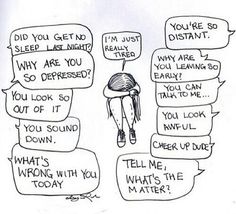
Depression and the ways for getting out of it

The silent killer that takes lives without warning, punishment, or any sympathy; depression is truly one of the most prominent mental illnesses in the world. Depression has been defined as a mental illness-inducing a severe and staunch feeling of sadness. The term depressed is coined in English as a temporary sadness that everyone experiences in their life. Despite that depression is more active in women, it is still one of the most common mental illnesses in the world. It affects anybody, regardless of sex, race, ethnicity, or socioeconomic standing. Nervous breakdowns are commonly associated with depression and are often identified due to the confusion and fear that depression brings. Depression heavily influences emotions and one’s outlook on life and more than often ends up changing a person’s life in a major way. People experiencing depression often feel sad every day and cry very often, making that too another daily routine. Even when participating in activities that used to bring joy, people begin to lose interest and begin secluding themselves from people and things they love. Depression still exists in the teen population and recently has begun increasing in numbers. Reports of depression in teenagers have shown different signs from those of adults. Physical complaints are very common in the younger crowd, including stomachaches and headaches. It also leads to or is in correlation with eating disorders or abnormality, social withdrawal, and of course, depressed mood. They may feel unenthusiastic about school and other activities. Their sleeping patterns become irregular and unhealthy, they may sleep more, but still, feel an extreme lack of energy or enthusiasm.

However, there are small steps you can take to help you feel more in control and improve your overall sense of well-being:-

  •  Meet yourself where you are

           Every day with this disorder is different. It’s important to take your mental health                  seriously and accept that where you are right now isn’t where you’ll always be.

  • Know that today isn’t indicative of tomorrow

          Today’s mood, emotions, or thoughts don’t belong to tomorrow. If you were                          unsuccessful at getting out of bed or accomplishing your goals today, remember that               you haven’t lost tomorrow’s opportunity to try again. Give yourself the grace to                     accept that while some days will be difficult, some days will also be great. Try to look            forward to tomorrow’s fresh start.

  •  Do the opposite of what the ‘depression voice’ suggests.

           The negative, irrational voice in your head may talk you out of self-help. However, if            you can learn to recognize it, you can learn to replace it. Use logic as a weapon.                     Address each thought individually as it occurs.

  •  Reward your efforts.

           All goals are worthy of recognition, and all successes are worthy of celebration.                    When you achieve a goal, do your best to recognize it. You may not feel like                          celebrating with a cake and confetti, but recognizing your own successes can be a                  very powerful weapon against depression’s negative weight.

Lastly, life will throw many hurdles at you, instead of running away from them or even failing to cross them, one should always believe in himself as people don’t know but they have the ability to achieve wonders. 

Psychological Disorders Part 7

Introduction

In Psychological Disorders Part 6, Disruptive Disorders were discussed. They are rare and chronic but can be controlled with the help of medication and therapy, so if you think you have any, you should consult a psychologist. This article will discuss Depressive and Substance-Related Disorders.

Depressive Disorders

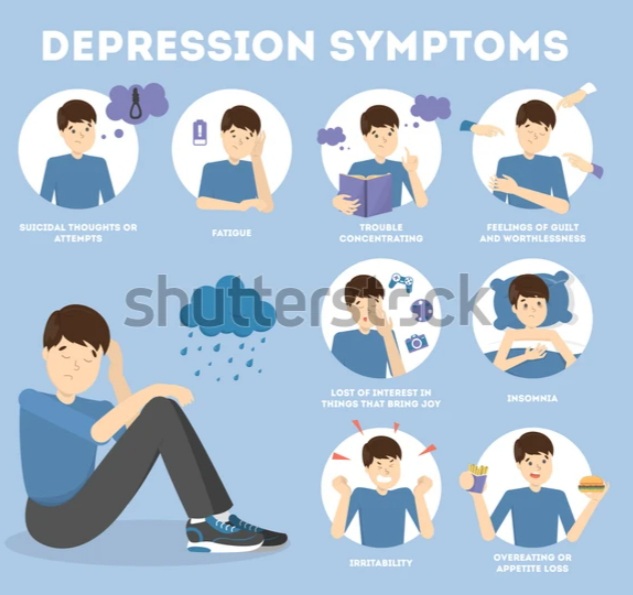
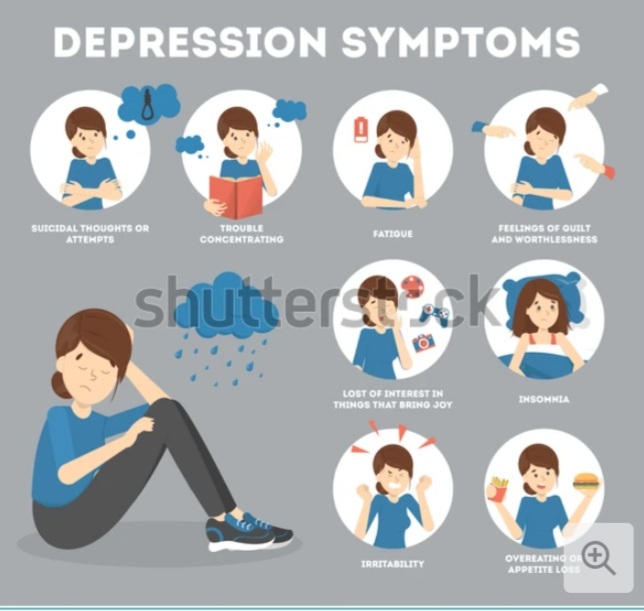
Depression is a mood disorder that involves a persistent feeling of sadness and a loss of interest. It is also called a major depressive disorder or clinical depression. This can cause trouble in doing daily activities. It is also important to remember that you cannot just snap out of it and it takes time but medication and therapy can help with it. Symptoms for depression are:

  • Feeling of sadness, hopelessness, or emptiness
  • Frustration and angry outbursts
  • Loss of interest in normal activities
  • Sleep disturbance like insomnia or hyposomnia
  • Reduced appetite or increased appetite
  • Lack of energy
  • Slowed thinking
  • Anxiety or restlessness
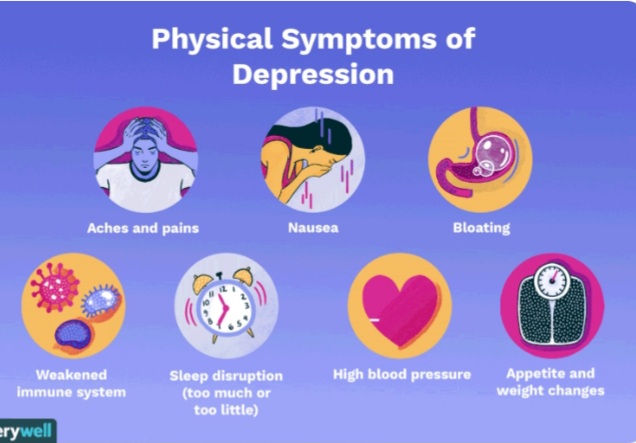
  • Unexplained physical problems like headache and backache
  • Trouble concentrating and remembering things
  • Suicidal thoughts
  • Feeling worthless

Although there are different types of depressive disorders based on the duration and timing:

Disruptive mood dysregulation disorder is a childhood condition in which the child has extreme anger and irritability.

Major depressive disorder is when the person feels a loss of interest in activities.

Persistent depressive disorder (dysthymia) is chronic depression.

Unspecified depressive disorder is when the case cannot be categorized into one particular category.

Premenstrual dysphoric disorder is a type of premenstrual syndrome (PMS) wherein the person feels depression, anxiety, and irritability before a week or two of the menstruation date.

Substance depressive disorder is when the person experiences the symptoms of depression while using alcohol or any other such substance.

Depressive disorder due to medical condition is when the person is going through depression because of another medical condition.

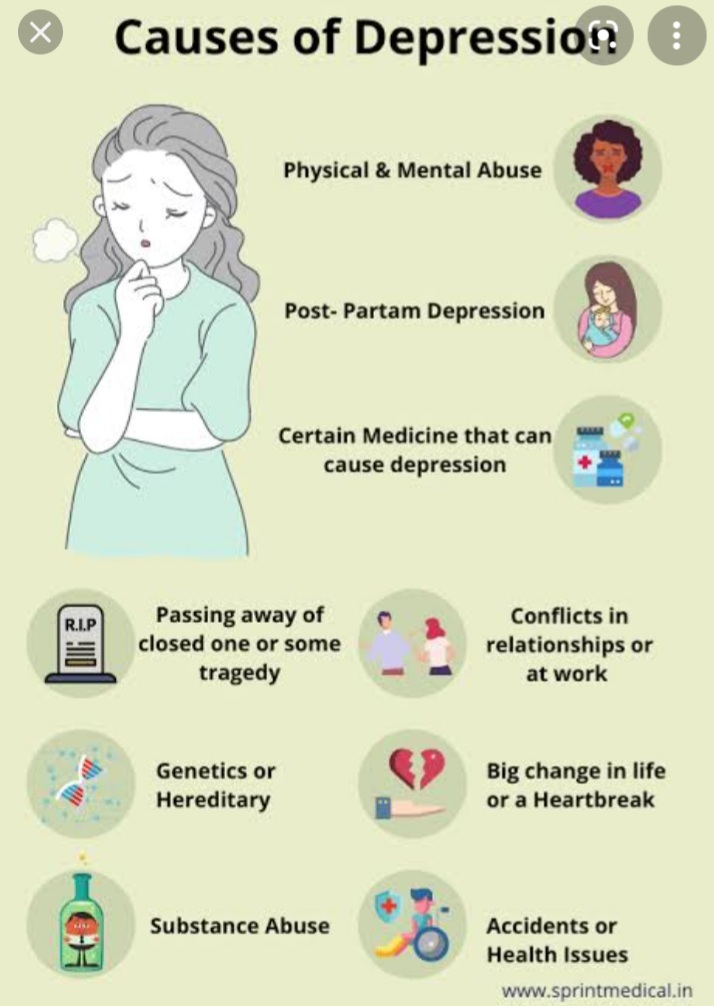
The cause for this is firstly, biological, people with depression have physical changes in their brains, secondly, brain chemistry, difference in the functioning of neurotransmitters, thirdly, hormones, change in the level of hormones can also cause depression like after delivery which is known as postpartum, and lastly, inherited traits, you are more likely to have depression if someone in your family has or had it.

Substance-Related Disorders

These are the disorders that involve the use of alcohol and drugs. Examples of this disorder are:

Alcohol-related disorders involve consuming alcohol wherein the person has a problem controlling the alcohol consumption. Symptoms include being unable to limit alcohol consumption, wanting to cut down the consumption but being unable to, spending a lot of time drinking or recovering from the use of it, craving alcohol, failing to fulfill major obligations because of the consumption, continuing to drink knowing the problem it is causing, giving up on work and hobbies, developing a tolerance for alcohol resulting into consuming more, experiencing withdrawal symptoms like nausea and using alcohol in unsafe situations like driving.

Drug-related disorders involve the inability to control the use of legal or illegal drugs or medication which affect the person’s brain and behaviour. Symptoms are the same as alcohol-related disorders, the only difference is of the substance being used.

It is important to note that substance-related disorders negatively affect the health and immunity of the person.

Conclusion

Depressive and Substance-related disorders are very common and serious. The way to deal with both of them is to approach psychologists and doctors. It is important to note that these two disorders can often be related, meaning that a person starts abusing alcohol because of depression and a person suffering from depression because of alcohol-related disorder. Depression is a very serious disorder, please consult a psychologist immediately if you think you are suffering from it.

References

Note: this is just Part 7 of the Psychological Disorders series.

ONLINE CLASS IS A MENTAL EXHAUSTION FOR STUDENTS

Education is taught in a classroom environment in schools all over the world. Students are conditioned from ages to this traditional form of teaching. With the onset of the Covid-19 pandemic throughout the world, the entire scenario has been changed. Although the decision of online classes was shocking to everyone, students were a bit happy as they don’t want to go to their schools and on the other hand, they were sad, as they will miss their friends. With the emergence of online classes, parents were forced to get mobile phones or other gadgets for their children even if they didn’t wish that from their hearts. Children went on cloud nine as they were given a separate pc or mobile in which they could play, chat, enter social media, etc. Nobody knows what they do with their smartphones. Even if the parent questions the children, they had a witty answer that they are listening to classes or doing their assignments. No matter how strict their parents are or how hard they try to spy, the children started breaking all these by using the term ‘privacy’. Let us see how this situation affects a child’s mental and physical state.

MENTAL HEALTH

As we know, students are more likely to get distracted even by small things. In that state, they have to sit inside their homes and listen to the monotonous classes online. The classroom environment can never be brought to home as they have to share space with the family members. In this case, they tend to lose concentration very often as everyone in the house is engaged with some tasks. This brings no difference however hard they try to focus rather makes the student stressed out. 

Kids start their social life only from school. They start to mingle with others only from that time. This important phase of life is missed out by them and they grow in a reserved manner. It becomes difficult for them to gel with society and others as they were homebound all these days. Again, this brings in mental stress for the introverts. However, Extroverts will cope with the situation better than introverts. 

Studies from experts also reveal that kids are prone to develop anxiety and depression from being confined in a single place. They come across many things that are irrelevant to their age in social media and begin to watch unnecessary bad things out of curiosity. This stimulates the child’s mental state to do the wrong. Moreover, they increased the video games playtime and got addicted to games such as PUBG and free fire which also affects the mental stability directly. 

PHYSICAL HEALTH

Apart from affecting mental well-being, online classes also affect physical health. Using mobile phones and PCs for a long time affects the eyesight and give rise to headache as well as fatigue. The rays from the gadgets cause eye pain and irritation. Children use the mobiles even after class time as they cannot go out and play with others. They use this technology as time pass. As a result, they lack physical activities like outdoor games. If they go to school, they had a separate hour for playtime during which they run and play on the ground. Also, when they return home from school, they enjoy playing games and cycling with their friends in the surroundings. This increases stamina and makes the physical body strong.  

Learning is not only about gaining knowledge but also about physical, mental, social, and emotional well-being. So, the emergence of online classes has created unwanted stress and irritation in budding lives. All these are not realized by the children as they lack enough maturity. Escaping from exams and other troublesome things, students continue to prefer online classes to get some lame advantages without knowing that they cannot escape from life exams. This would be realized one day or the other by everyone and that day they would regret the ‘lifeless life’ they led without spending time in the outside world.

College Life and pandemic.

College life is the most incredible phase of life where we gain innumerable experiences and make memories that last for a lifetime. It is the time we are exposed to the whole new world, the world out of the boundaries that schools build up to provide a safe environment. College life has different meanings for everyone. While some spend their time hanging out with friends having fun and party, others devote their focus towards study to pave the way to a brighter future. Be it a college rockstar or nerd, every individual wants to relive the memory lane of this beautiful arena.

Generally, college life is the time when an individual moves to another city to settle as a newbie as well as a freshman in college. Hence, is the time to learn from real-life experiences and learn to fit in the society as an individual. It is experiences that shapes the narrative of one’s mind and that’s how an individual’s growth is linked to directly to the environment we live in, which is why it is absolutely necessary to live these important years of life.

But unfortunately, batch of 2020 has no such experience and college students are stuck with an online system since March 2020, which is saddening and equally depressing. It is not only about classes that students are missing in this pandemic rather it’s the crucial period of life full of twists, turn and fun in being missed. While college life is shrunk and bottled up on the screen of the laptop and mobile phones, that is the worst possible scenario, life has become equally dull and bland. Attending everything from classes to workshops to fest virtually is a daunting task because it’s tiring to sit on the computer all day and is equally detrimental to health.

This online system is not online only affecting physical health but also provoking mental health issue particularly. In the provided system, fear of being missed out due to social isolation is overpowering young minds gradually, as a consequence of which anxiety and depression are entrapping the youths at a much faster rate in comparison to that of the adults. Like I said it’s the environment that shapes the narrative, and everyone is well aware of this chaotic and challenging online environment.

However, it is rightly said that something is at least better than nothing, so is this whole virtual life system that is allowing us to access education and work from our home.

So, in these trying times, it is necessary for everyone and for students as well to take care of themselves a little more than in the pre-pandemic world by connecting more with your family and developing habits of waking up early to have a moment of silence with yourself in the morning to introspect and meditate to generate the relaxing effect, and to remind the things to yourself that you’re still grateful for even in this pandemic.

To Grow Mentally and physically

Growing mentally and growing physically are two completely different things. Growing mentally refers to a person’s psychological growth the way we think and deal with different situations, and by what methods we develop and disseminate information. Growing up physically refers to a person’s physical growth like increased height, strength, and health. It can also refer to the development of your brain.
” The key to success is to keep growing in all areas of life mental emotional, spiritual as well as physical.” A healthy body can help your mind stay strong.when your body isn’t fit, it’s tougher to make challenging decisions.
Some of the tips will help you to improve both simultaneously.


ENRICH YOUR MIND :


keep challenging yourself to learn new things. By doing this, will gain more knowledge about things around you, and you will learn how to utilize things in a better way. Don’t let yourself get stuck in one place, either mentally or physically. Be proactive, curious, conscious and informed about the world.


Use your brain more often by doing brain exercises:


Exercising your brain means using it more. Generally the brain takes part in everything we do, but there are some types of activities which are specifically exercise our brains. Activities like doing puzzles, playing games like chess or scrabble, solving numerical problems, studying difficult topics and changing your dexterity, spatial reasoning and logic. Doing these mental exercises daily can sharpen your mind , and it can be an excellent way to strengthens neural links in your brain.


CONSUME NUTRIENTS THAT ARE GOOD FOR BRAIN:


Take in nutrients which are good for your brain. Foods that have antioxidants like vitamin c,e,b etc are good for the brain.consuming almonds and apple juice is also good for sharpening the brain.

THINK CRITICALLY :


when we hear, read or work on something, It is very important than we question everything and pay attention to details.such an approach can improve our thinking ability because it requires more brain work than mere observations.


DO PHYSICAL EXERCISES :


A healthy body means a healthy mind; regular exercise has a positive influence our brains function. The brain takes in nutrients from the blood, which makes the brain healthier. Physical exercise is essential for enhancing mental power .


EAT HEALTHY FOODS :


spend some time to examine which kinds of food bring you up and which foods bring down. Creating a diet plan can make you feel good, and gives you a sense of self-development. This will boost your sense of success.


GET BETTER SLEEP AND TAKE NAPS:


Get as much sleep as you need, around Seven or eight hours, every night. While sleeping well does not guarantee good health, it does help you to maintain many vital functions. Perhaps most importantly sleep helps you recover from the wear and tear of daily life. Major healing functions in the body such as tissue repair, music and mental growth occur almost exclusively during sleep.


SPEED TIME WITH PEOPLE :


Build a good support system with the people around you. Whether it’s your family, friends, or something else, find a group of people who are willing to support you in any circumstances. This increases flexibility and helps to provide perspective in the midst of stress and discomfort.


STAY AWAY FROM DRUGS AND ALCOHOL :
using cigarettes, alcohol, and illegal drugs damage your mental and physical health. Decreasing mental and physical stability produces” false” emotions.


FIND A GOOD LISTENER :


Find someone who is eager to listen to you, who you can talk to openly and freely. This can help you in relieving stress and anger and can heal you mentally, which ultimately has an impact on your physical health.


LAUGH MORE :


Laughter is the best medicine for human health. Human increases dopamine, and it improves memory and health.


GET RID OF BAD HABITS THAT HURT YOUR CONFIDENCE :


If you have a habit of smoking too much, drinking alcohol too much, spending too much time online, or a different habit that’s hurting your confidence, take steps to eradicate them. Study books, watch good films, play games, watch dances, and listen to songs; do the things that make you feel relaxed. Many studies suggest that watching TV and using a computer late at night is bad for your health.


STAR YOUR DAY BY THINKING ABOUT ONE GOOD THING YOU CAN DO :


Generally, it’s just a matter of deciding to do something good. Develop the habit of finding a good deed to do each day. Set aims and goals and follow through with them to attain them. By setting goals and gradually working to attain them , you will grow mentally.

Depression

Depression and anxiety are very common problem these days starting from teenager to elderly adults anyone and everyone can face this at any point in life and they equally affect us as any physical disease does, many people don’t take mental health seriously but it is outmost necessary to do so. Here are a few simple daily habits which will help you to deal with depression:

  1. Stay away from negative thoughts, and always try to focus on the filled part of the glass and try not to worry about the empty.
  2. Practice meditation regularly it helps to calm one’s mind and helps in relaxing the brain.
  3. Try to stay out from field where you feel irritated and also do try ignoring unnecessary mess.
  4. Physical exercising is a must for a healthy mind as it keeps the body fit and also helps keeping negativity away.
  5. The physical environment where one spends time and the company of people with which one spend time also plays a key role in determining the and dealing with depression issues.
  6. One must also take care of the diet, consuming fresh fruits and vegetables are highly recommended and one must take care that proper diet is consumed.

Depression symptoms :

Depression can be more than a constant state of sadness or feeling ” blue”. Major depression cane cause a variety of symptoms. Some affect your mood, and others afect your body. Symptoms may also be onging or come and go. The symptoms of depression can be experienced differently among men, women and children differently.

Men may experience symptoms related to their:

* Mood, such as anger, aggressive, irritability, anxiousness, restlessness.

* Emotional well- being such as feeling empty, sad, hopeless.

* Behavior, such as loss of interest, no longer finding pleasure in favorite activites feeling tired easily , thiughts of suicide, drinking- execessively , using drugs, engaging in high- risk activities.

* sexual interest, such as reduced sexual desire, lack of sexual performance

* cognitive abilities , such as inability to concentrate, difficulty completeing tasks, delayed responses during- conversations.

* sleep patterns, such as insomina, restless slepp, excessive sleepiness, not sleeping through the night.

* physical well- being, such as fatigue, pains, headache, digestive problems.

Women may experience symptoms related to their:

* mood, such as irritability

* emotional well- being, such as feeling sad or empty, anxious or hopless.

* congnitive abilities,such asthinking or talking more slowly

* behavior, such as loss of interest in activities, withdrawing from social engagements, thoughts of suicide

* sleep patterns, such as difficultu sleeping through the night, waling early, sleeping too much.

* physical well- being, such as decreases energy, greater fatigue, changes in appetite, weight changes, aches,pain, headaches, increased cramps.

Children may dxperiences symptoms related to their :

* mood such as irritability, anger, mood swings, crying.

* emotional well- being, such as feelings of incompetence or despair, crying, intense sadness

* behavior, such as gettkng into trouble at school or refusing to go to school, avoiding friends or siblings thoughts of death or suicide.

* cognitive abilities, such as difficulty concentrating, decline in school performance, changes in grades.

* sleep patterns, such as difficulty sleeping or sleeping too much

*physical well- being, such as loss of energy digestive problems, changes in appetite, weight loss or gain.

Depression causes :

There are several possible causes of depression. They can range from biological to circumstantial.

Common causes include ;

* Family history :

You’re at a higher risk for developing depression if you hace a family history of depression or another mood disorder.

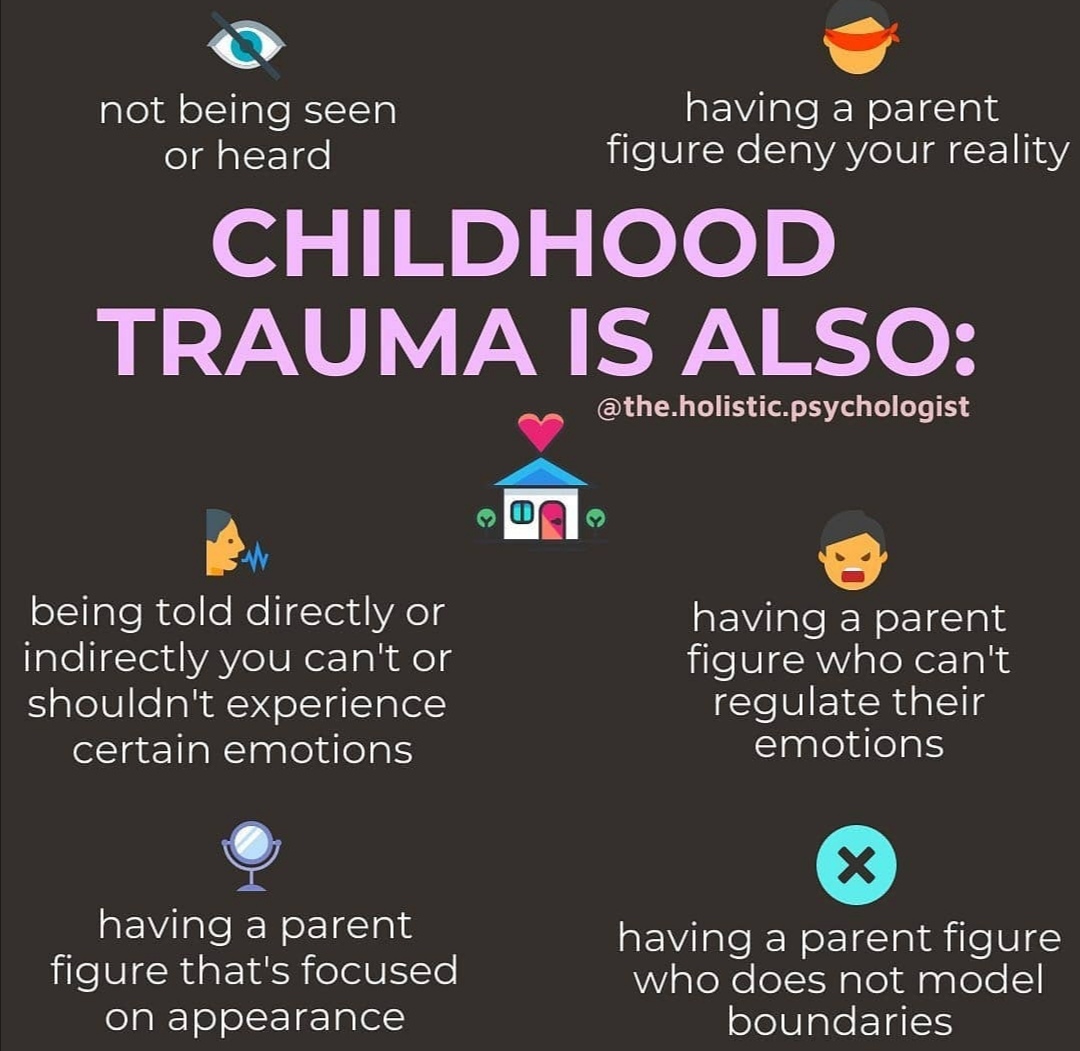
* Early childhood trauma :

Some events affect the way your body reacts to fear and stressful situations

* Brain structure :

There’s a greater risk for depression if her frontal lobe of your brain is less active.

* Medical conditions :

Certain conditions may put you at higher risk, such as chronic illness, insomia, chroinc pain or attention- deficit hyperactivity disorder

* Drug use :

A history of drug or alcohol misuse can affect your risk.

Many factors can influence feelings of depression, as well as who develops the condition . The causes of depression are often tied to other elements of your health. Depression can be linked with to other health problems, your healthcare provider may also conduct a physical examination and order blood work.

Types of depression :

Depression can be broken into categories depending on the severity of symptoms. Some people experience mild and temporary episodes, whike other experience severs and ongoing depressive episodes.

There are two main types. Major depressive disorder and persistent depressive disorder .

Major depressive disorder :

Major depressive disorder is the more severe form of depression. It’s characterized by persistant feelings of sadness, hoplessness and worthlessness that dont’t go away on their own.

Persistent depressive disorder :

Persistent depressive disorder ( pDD) used to be called dysthymia. It is a milder, but chronic, form of depression.

It’s common for people with PDD to

* lose interest in normal daily activites.

* feel hopless

* lack productivity

* haveclow self- esteem

Depression can be treated successfully, but it’s important to stick your treatment plan.

Treatment for depression :

Living with depression can be difficult, but treatment can help improve your quality of life. Talk to your health care provider about possible options. You may successfully manage symptoms with one form of treatment ,or may find that a combinations of treatment works best.

CHILD ABUSE

Child Abuse can be defined as harming (whether physically, emotionally, or sexually), ill-treatment, abuse, neglect or deprivation of any child.

Manipulation is when They blame you for your reaction to their Disrespect

If they are children it doesn’t mean, they can be ‘open to’ harm, injury, violence, and abuse.

As a society we are responsible to ensure that every child in our family, locality, community, region, state and nation is safe and feels safe.

Safe places for children are those where children feel secure and protected. They are nurtured, looked after and cared for.

As adults, it is our responsibility to observe child behaviour and encourage them to speak up.

Choose wisely who you defend

Because of ignorance and dependency on the abusers, children often are unable to express that they are abused.

Physical Abuse

Physical abuse can be caused from punching, beating, kicking, shaking, biting, burning or throwing the child.

Indicator in child

  • Unexplained bruises, welts, cuts, abrasions, Unexplained burns, Unexplained fractures
  • Injuries to areas of the body that is usually protected /covered.
  • Delay in seeking medical attention for a child
  • Is violent to animals or other children
  • Tries to hide bruises or other injuries
  • May be extremely withdrawn or extremely aggressive
  • Is wary of adults or of a particular individual
  • Cannot recall how the injuries occurred or gives inconsistent explanations

Emotional Abuse

It occurs when a child’s emotional, psychological or social well-being and sense of worth is continually battered. It can include a pattern of criticizing, rejecting, discriminating, degrading, ignoring, isolating, corrupting, exploiting and terrorizing a child.

Indicator in child

  • Bed-wetting or bed soiling that has no medical cause
  • Frequent Headaches, nausea, abdominal pains
  • Has not attained significant developmental milestones
  • Displays attention seeking behaviours or displays extreme inhibition in play
  • When at play, behaviour may model or copy negative behaviour and language used at home
  • Suffers from severe developmental gaps

Indicator in adults

  • Constantly labels the child or publicly humiliates the child
  • Continually threatens the child with physical harm or forces the child to witness physical harm inflicted on a loved one
  • Has unrealistic expectations of the child

Sexual Abuse

Sexual abuse includes acts where an adult uses a child for a sexual purpose. While it may involve a stranger.

Indicator in child

  • Torn, stained or bloody underclothing
  • Bruises, lacerations, redness, swelling or bleeding in genital, vaginal or anal area
  • Blood in urine or faeces
  • Unusual or excessive itching or pain in the genital or anal area
  • Difficulty in sitting and/or walking
  • Signs of sexually transmitted disease Indicators in a child’s behaviour
  • Outburst of anger
  • Self-harm (cutting, burning or other harmful activities)
  • Age-inappropriate sexual play with toys, self, others
  • Sophisticated or unusual sexual knowledge
  • Nightmares, sleeping problems
  • Becoming withdrawn or very clingy
  • Becoming unusually secretive
  • Sudden unexplained personality changes, mood swings and seeming insecure
  • Regressing to younger behaviours, e.g. bedwetting
  • Fear of certain places or persons e.g. bedroom or bathroom, friend-uncle

Indicators in adult behaviour

  • Insist on physical affection such as kissing, hugging or wrestling even when the child clearly does not want it.
  • Insist on time alone with a child with no interruptions.
  • Spend most of their spare time with children and have little interest in spending time with people their own age.
  • Frequently walk in on children/ teenagers in the bathroom.
  • Treat a particular child as a favourite, making them feel ‘special’ compared with others in the family.
  • Regularly offer to baby-sit children for free or take children on overnight outings alone.
  • Buy children expensive gifts or give them money for no apparent reason.

What to do??

  • Learn to recognize the signs
  • Provide a listening ear
  • Offer help
  • Give helpful information
  • Explain that violence is not OK
  • Look for community systemic support for the family
  • Can contact Childline (1098) to talk over your concerns confidentially with a trained social worker. 

Take following steps on Emergency

Step-1: Immediately contact parents if child is not abused by parents and if child can give information of his/her parents.


Step-2: Contact any one of the following agencies to provide required support to parents and child: DCPU, SJPU, Childline, CPCs, Police or CWC. You can also take help from credible NGOs working on Child Rights in your area.


Step-3: Provide emergency support such as medical aid, clothing, food and transportation to safe places. Make sure that you handover this child to responsible adults from above mentioned list only.

Step-4: Help authorities with whatever information and evidence you have as regards abuse of the child to make sure that the abuser is punished. If possible give written information.

Step-5: Maintain privacy to ensure that the name of the child is not disclosed to media or public in any ways.

Prevention

  • Create Safe places for children in community, neighbourhood and society.
  • Create Structures and Systems where children can express their feelings and emotions freely without any inhibitions.
  • Create Structures and Systems to ensure safety and to ensure that children are supervised.
  • Educate children about safety measures. Provide information about the emergency contact numbers.
  • Create awareness: About child protection systems and networks. Keep this information handy.
  • Build network of concern individuals and groups to help children. Develop support systems for children.

Depression And Self care

The term depression is quite common these days which is a serious matter of concern. To know the cure we must know what depression is .In simple words depression is mood disorder that causes a persistent feeling of sadness and loss of interest. It can range from mild depression to chronic depression.

According to data published in times of India — 43% of Indians are suffering from depression. Just to think that almost half of the nation is scary and terrifying. This rate is increasing ever since the Covid 19. The feeling of being trapped and difficulty to cope with the situation is pushing people to fall into the pit of depression. Not only this India also accounts for 36.6 % of suicides globally and suicide has surpassed maternal mortality as the leading cause of death is among women and teenage girls aged 15-19 years. It should be noted that depression may not always lead to suicide or suicidal thoughts.

Anyone can be a prey of depression , so it very important to know how to cope up with this overwhelmingly gloomy feeling. So here is certain tips—

1) Journaling – experts say that journaling and writing down your feeling can lift up your mood.

2) Set attainable goods – Instead of trying to do whole work altogether , your should divide your work into small chunks. This will save you from being overwhelmed by the work

3) Creating routine – Having routine set for the next day always helps to control the day you want. This way you will not feel as if everything is out of your hand

4) Listening to music – Research shows music can be a great way to boost your mood and improve symptoms of depression. It may also help to strengthen your reception of positive emotion

5) Being true to your feelings – Always be true to your feelings , never try to deny it. If you feel like seeking the help of expert , go for it, don’t hesitate.

ARE INTROVERTS MORE PRONE TO DEPRESSION THAN EXTROVERTS?

To begin with we first need to understand what exactly introversion and extroversion is. Introverts become exhausted when they are with other individuals, but when they are alone, they restore their vitality, whereas extroverts are the people who gets energetic when they are surrounded by people but when they are alone, they grow exhausted and gloomy. We must understand that there is nothing wrong with being either especially  the people who are introverts because they are the one’s  who are often looked down upon because of their personality traits of being diffident and timid. But they are the ones who have creative and original mind and are a great problem-solvers. 

However, a prominent symptom of depression is withdrawal from people which is also a personality trait of introverts who likes to be in solitude away from others. Thus, someone who doesn’t know the introvert well might believe that the person have depression or social anxiety based on these traits. But a closed one can motivate the introvert to seek professional help. 

REASONS WHY INTROVERTS ARE MORE PRONE TO DEPRESSION

1.BRAIN ACTIVITY IN INTROVERTS

Introverts don’t want or crave more stimulation from other people because they already have a lot on their minds. Because of which their brain activity is significantly higher than that of extroverts, according to neurological research. But this has a negative as well as positive aspect since such brain activity can be used as strength because introverts typically are brilliant thinkers and creators but but it can also be a disadvantage because they may overthink certain ideas and emotions especially overthinking negative emotions like guilt, embarrassment, and helplessness as a result of social isolation can cage their minds and make them more vulnerable to mental health disorders.

2. Traits of being a perfectionist and self-assertive 

There are many self-help books which claim that being a perfectionist will not help you in gaining power over others or do not exhibit self- confidence instead it develops negative emotions. Introverts do have this personality trait of being a perfectionist and are very self-assertive because of which they feel unsatisfied with themselves and with their lives of not doing good enough. And it leads to mental exhaustion and creates anxiety and they become more prone to depression. So, a gentle reminder to all the people who are being harder on themselves, to relax and be gentler and cautious of these traits.

3.Tendency of being alone

Being at ease with oneself and enjoying alone should be viewed as a strength but As we all know that excess of everything is dangerous. So, Excessive seclusion is a harmful habit that can lead to depression and other psychological problems and is the one thing the introverts should be mindful about.  

Many studies were conducted to see the linkage between introversion and depression, and it has been found out that introversion contribute to the onset of depression. A research was conducted in 2017 which suggests that people with lower extroversion tends to have more social anxiety and depressive thoughts such as suicide because they have higher levels of neuroticism which means experiencing negative feelings. 

So people with introversion are more likely to have a higher risk of depression and if someone is suffering from depression or other mental health condition should seek mental health professional help in order to correctly diagnose, treat, and analyze such diseases because recovery takes time and asking for help is a brave move.

Depression and it’s symptoms

Depression is a mood disorder that involves a persistent feeling of sadness and loss of interest. It is different from the mood fluctuations that people regularly experience as a part of life.

Major life events, such as bereavement or the loss of a job, can lead toTrusted Source depression. However, doctors only consider feelings of grief to be part of depression if they persist.

Depression is an ongoing problem, not a passing one. It consists of episodes during which the symptoms last for at least 2 weeks. Depression can last for several weeks, months, or years.

Signs and symptoms
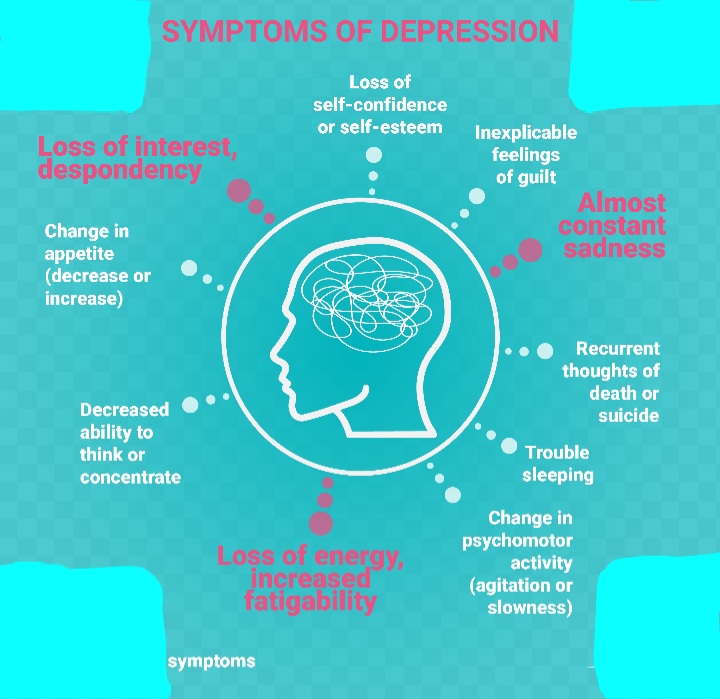
The symptoms of depression can include:

a depressed mood
reduced interest or pleasure in activities once enjoyed
a loss of sexual desire
changes in appetite
unintentional weight loss or gain
sleeping too much or too little
agitation, restlessness, and pacing up and down
slowed movement and speech
fatigue or loss of energy
feelings of worthlessness or guilt
difficulty thinking, concentrating, or making decisions
recurrent thoughts of death or suicide, or an attempt at suicide

Mental health and the social stigma around it

The Tabooed Ailment

Have you ever felt really happy? So happy that, it becomes impossible to imagine what normal feels like? Well, we all have such rare moments from which we can’t get back. A state of euphoric bliss experienced more in our childhood that depletes as we age. Do you know? Whenever you feel that joy, our body releases: dopamine that causes pleasure-seeking behavior, endorphin that reduces pain, Anandamide (derived from the Sanskrit word ‘Ananda’ meaning bliss) that maintains ecstasy and about a 100 more neurochemicals.

Happiness is wonderful! I know. Except, the dark side is – the same happens when one feels self-deflatingly depressed. One can’t get back to normal. One feels helpless; crushed; drained-out; anxious; and nihilistic. Such a person needs medicine, not philosophy.

I often find people using the word – ‘depressed’ casually whenever they feel dull, drunk, dumped, or drowsy. If you feel anything like that then you are just bummed out, ordinary- rather, a little extra-ordinary. These are all passive states of mind. Mental Illness is a negatively active state of mind. Symptoms of depression can have a wide range from trouble sleeping and eating, to persistent anxiety and sadness, recurring episodes of hopelessness, overeating, fatigue, a sudden switch from sadness to calmness, desperately pretending to be happy, taking risks, tying up loose ends, changing wills, and finally- death.

I once asked my brother about his friend who was diagnosed as clinically depressed, he recalled her sentences quite vividly – “It felt like I am living through the blank pages of my fate. Wish I had a way to erase it!”, she said. The most important thing that our society must be sensitive to is the fact that the cause of the behavior of a mentally ill person is rooted within him. Therefore, changing situations around him will not change anything significant.

Suicide is the leading cause of death in India among 15-29 years. This is not a mere statistic, but a statement to the world – “In our country, people kill themselves more than they get killed by others”, and we have the time to blame politicians. Yes, I know, we all want to do something about it, and that’s the extent of our concern. Here’s what I propose – How about being a little sensitive with people around? 1 in 7 people are mentally ill in our country. Well, it may not be your friend, but it might be you. Recognise mental health as an actual issue, instead of tossing it under the carpet, just because you are not ready to accept it. Don’t call someone lazy or unmotivated, they’re fighting their own battles that they can’t share. So, be kind to everyone, including yourself.

Depression : a myth or a serious problem ?

What is depression

Most of the time people feel sad or depressed. It’s normal reaction to loss or struggles in life. But when this sadness become intense – including feeling helpless, worthless , hopeless , lack of self esteem and lack of confidence – last for many days to weeks and keeps you from living your life happily, it may something more than sadness. You could have clinical depression – a treatable medical condition. 

Symptoms of depression 

Depression symptoms can vary from mild to severe and can conclude: 

1. You can’t sleep or sleep too much almost every day,

2.  You have almost no interest or pleasure in many activities nearly every day,

3.  You’ve lost or gained weight.

4.  You feel restless,

5.  You often think about suicide or death,

6. You feel tired or lack of energy,

7.  Loss pleasure in life,

8.  Have sad, anxious or empty feelings.

Physical signs of the depression

There are some physical sign of the condition they may include back pain, joint pain, digestive problems, sleep trouble and  breathing problems. At any one time it is estimated that more than 300 million people have depression – about 4% people of the world’s population when the figures were published by world health organization (WHO) in 2015 women are more likely to be depressed than man.

Treatment

The WHO estimates that Fewer than half of people with depression are receiving treatment. Many more will getting inadequate help, often focused on medication. 

The most common therapy is congnitive Behavioural therapy, which breaks down overwhelming promotion into Situations , thoughts, emotions, physical feelings And actions try to break a cycle of negative thoughts.

If you or you know someone who has symptoms of depression, talk to your doctor. he can evaluate you And offer you treatment or refer you to a mental health professional.

Conclusion

While there are more and more treatments for depression. The problem is rising not falling. 

According to a research , From 2005-15 , cases of Depressive illness increase by nearly a fifth. People born after 1945 are 10 times more likely To have depression this reflects both population growth and a proportional increase in the rate of depression. Among the most at- risk ages. the WHO said.

A key reason for the Continuing rise in depression cases Is that drug is that drug not necessarily “cure” the patient. And other therapies that can make the crucial difference are not in sufficient supply.

So we have conclude that we should openly talk about depression illness and it’s symptoms we should not take it lightly or as a myth. Mostly in Indian society when anyone is suffered by depression insted of helping the person, we considered that person as mentally disabled. We need to understand that depression is Simlar to cold and fever if anyone is needed is just the right treatment. 

Typhoid and low levels of Serotonin

Vaishali Singh

It’s the seventh time I got detected positive with typhoid, the first time my Widal test came out to be positive was when I was in 5th standard and today I am in the second year of my college it’s been more than 10 years but the problem is still there, the typhoid bacteria Salmonella typhi, activates in favourable condition, for 2 years I had no typhoid but still the problems related to intestine were there, I always suffer from stomach and digestion related problems and overtime these problems decreased the amount of serotonin in my body, my poor metabolism and digestive problems ultimately caused me low levels of serotonin which keeps me frustrated and unhappy for long period of time, most of the times I feel so empty, unhappy and lonely, for years I never understood that it was a clinical problem as I never gave it my attention but the research and deep analysis of 2 days made me understood that every mental health problem has connection to your physical health, the low levels of serotonin makes one feel depressed, broken, restless, emotional and unhappy, and overtime this problem can lead to severe problems which can destroy your mental peace so always take it seriously, you feel low most of the times because your feeling can may have a huge connection with your physical health, now the solution to my problem is to keep your body fit with regular Yoga, exercises and most importantly the healthy food, the another important thing is to do the meditation sessions to boost the serotonin, since this february my health condition is poor and I am struggling to make myself happy but today I understood the proper reason so now I can hope I’ll be better with continuos efforts.

Thank you for reading it, the purpose of putting it here was to aware you that if you’re suffering from Typhoid, or any other disease which affects your intestine or may be any other organ, can lead to decrease in your serotonin level and can cause you depression or severe anxiety but don’t be sad instead work for it, first of all just take time to get recover from that health condition then focus upon healthy food, workout and meditation overtime you will be healed.

What is Serotonin? Serotonin is a neurotransmitter, it’s involved in numerous core physical processes such as the regulation of sleep, appetite, and aggression. For more details read this link, https://www.integrativepsychiatry.net/product-category/neurotransmitters/serotonin/

How Depression Impacts the Immune system!!!

Major depression is a common and sometimes fatal disorder that has been identified by the World Health Organisation as a leading cause of disability worldwide. While antidepressants are undoubtedly effective treatments in about 70% of cases, a substantial proportion of patients remain partially or totally unresponsive to treatment. There is no simple explanation for treatment resistance but there is a possibility that the current antidepressants do not effectively target all of the pathological processes that are responsible for the major symptoms of depression. Thus there is an urgent need to broaden the targets upon which antidepressants are considered to act.

The concept of a disordered immune system playing a major role in the mental state can be traced back to antiquity. However, it is only in the past 30 years or so that clinical and experimental evidence has been obtained clearly demonstrating that aspects of both cellular and humoral immunity were dysfunctional in major depression. In the past 20 years, attention has been directed to the role of the immunomodulators and immunotransmitters, in particular the pro- and anti-inflammatory cytokines. Thus, Maes and coworkers reported that interleukin-6 (IL-6), a major proinflammatory cytokine, was increased in the blood of depressed patients.

It was also apparent that about 45% of patients being therapeutically treated with the proinflammatory cytokine interferon-alpha (IFN) developed major symptoms of depression that terminate when the cytokines was withdrawn. Recently a meta-analysis of 9 cytokines in major depression in which 24 studies were assessed concluded that only the basal levels of IL-6 and TNF were significantly raised. Such clinical observations suggest that proinflammatory cytokines contribute to the major symptoms of depression and now forms the basis of the inflammation, cytokine or inflammatory response hypothesis of depression.

When considering cause and effect, there are three possibilities that may explain the tie between depression and immune system:-

  1. Depression may weaken the immune system and cause increased susceptibility to illness.
  2. Major or long term illnesses may cause mood disorders such as depression.
  3. In some cases, illnesses or conditions may be caused by the same triggers as depression.

New research published has taken an exciting new approach, offering hope for those who currently don’t have effective treatments. It’s part of a growing evidence base that shows our immune system can directly affect our mood – and for some may even be a cause of their depression, rather than a consequence of it. Essentially, we are learning that our immune system can alter the workings of the brain. With around one-third of depressed patients showing consistently high levels of inflammation.

It comes down to the inflammation that is part of the immune’s system response to danger. It is a hugely complicated process that helps our body fight off hostile forces. But if the inflammation gets out of hand then it can cause damage to our body and brain.

Treating Depression and improving Health:-

  1. Get in a Routine:- If you are depressed, you are really in need to get in a routine. A routine will help to stay busy and keeping away the negative thoughts.
  2. Set goals:- When you’re depressed, you may feel like you can’t accomplish anything. That makes you feel worse about yourself. To push back, set daily goals for yourself.
  3. Exercise:- It temporarily boosts feel-good chemicals called endorphins. It may also have long-term benefits for people with depression.
  4. Eat Healthy:- There is no magic diet that fixes depression. It’s a good idea to watch what you eat, though. If depression tends to make you overeat, getting in control of your eating will help you feel better.
  5. Get Enough Sleep:- Depression can make it hard to get enough shut-eye and too little sleep can make depression worse.

These are the five things one need to give priority to, during depression. Other things a person could do to feel good is engaging in fun activities. They would do really good to the person who is depressed. Next thing we could do is to consult a psychologist.

Refrences:-

http://www.healthline.com

Motivational Tips for Depression – 6 Ways to Feel Better

Depression can strike anytime to anyone. It doesn’t spare its victims, and has no boundaries. Depression may be a serious illness and will never be taken lightly. Depression is sadness, hopelessness, a loss of interest in your daily living, crying, feelings of loss and thoughts of suicide are abundantly present.

There can be many causes for depression:

Life Changes
Worry
Chronic Pain
Drug and alcohol abuse
Holidays
A break-up
A death
When you start to feel depressed, or when things are beginning to compile , here are 6 ways for you to feel better and obtain yourself motivated and possibly slip away from the misery of depression.

  1. Get up and Move

Get out of bed no matter how demanding it is. Achieving physical activity when depressed is difficult. However once up, make yourself do minor things to elevate your energy. You can always go back to bed later for a nap.

Make your bed. Brush your teeth. Do the dishes. Get the mail. Read the newspaper. Feed your cat. Sit on the porch. Call people you know. Go on the computer. There are numerous minor things to settle on from. Do them all or just one or two. Of course, if you have to go to work or school then you are way ahead of the game.

  1. Get in the Shower

Taking a hot shower will wake you up and cause you to feel refreshed and clean.

Get out of your pajamas or night attire and into something you are not ashamed of wearing outside your home. When you look pleasantly, you feel worthwhile, and when you feel worthwhile, it is a self-esteem boost.

Someone once told me when you’re depressed, take a shower, and wash your troubles away. So I go with that. On many occasions, I even have hauled myself literally crying to the shower, trying to scrub away depression. There is something about crying your sadness away within the shower that creates you are feeling somewhat revived.

  1. Put On A Happy Face

Put on some make-up, fix your hair up, shave that stubble off. Sometimes, with depression, we don’t take beneficial care of ourselves as we normally would. When you feel clean, refreshed, and polished, it’s harder to think less of yourself.

By doing my hair, I add the gel and blow dry it for a moment , and that i am good to travel . My hair is wild usually. Which is fine. If it is clean, I feel better. So get going and placed on that happy face.

  1. Tidy Up

Clean up and organize you living area. When our surroundings are dark, dirty, or messy, you start to reflect that atmosphere, falling deeper into depression.

Keeping your work and lebensraum clean, well-lit, and maintained, causes you to feel good about accomplishing something.

Keep the curtains open, let the sunshine through. It’s a good way of getting your daily dose of vitamin D. I rarely shut my curtains. I have a glass slider and a bedroom window. So, whatever sun I can get i’m optimistic. So vacuum, dust, and start cleaning your house or apartment.

  1. Listen to Music

Crank up the radio, or put on a DVD and dance. Strut around the house footloose and fancy free. There are all kinds of music that will get you moving if you just motivate yourself. Irish, Latin, Salsa, Reggae and more. Find something that you can move to, something up-beat and cheerful. Something that gets you moving and motivated. Let the music guide you into a better place.

  1. No Procrastinating

Tackle something you’ve been putting off doing. Even small accomplishments start your day by giving your self-confidence the increase it needs. If you are a writer and you like to write an essay or paper, write.

Take pictures, knit, clean out the attic you’ve got been aiming to do. If I can get one article done each day , I even have accomplished something. I attempt to get a 4 page article finished a minimum of four days week. TRY being the main word. Accomplishing one activity, one day at a time.

Working Through Depression

These things are not going to work without a concentrated effort. For the steps to work you must take an active role in your depression.

Sleeping is one of the safest activities to do when you are depressed. And at times, that is all you can do. But at one point, you’re going to have to come out from under the covers and find the light. So next time you feel like you are moving into the darkness try to motivate yourself to do at least one activity to keep your mind from falling even further into the pit of darkness.