Diary of a final year student


Let me show you my Diary

16th March

Due to Corona pandamic I received a mail, that University will be closed for a month and asked us to pack our things from hostel. Our wardens told us to book tickets so that we can reach our homes as soon as possible. Whole hostel is celebrating this unexpected pandamic vacation while I was thinking when will be my final year farewell party. As I went into my room I saw my friends packing their stuffs. I took my keys to open my cupboard to pack my stuffs along with them.

The last supper of my university life with my friends. Tomorrow we all will be leaving to the our native places. We hugged tightly one last time and walked around our campus. This is my Online Diary

28th April

All the classes which we left half way are completed as online classes. Final year project reviews are also conducted on online. Basically all my classes and exams are over.

5th May

Those who are placed on campus placements are suddenly started getting mails like work as an intern or will call you after this pandamic over. Only few managed to stay placed. I planned to do higher studies in abroad and now I am left with no job in my hand.

1st June

My goals are changed. I am leading my life in a new path which I can’t even dream before this pandamic. I started preparing for civil services examination. I am a volunteering teacher in a village school. I am teaching online class to the underprivileged children.
Never in my all 21 years of life I taught I will have a goal to become a civil services officer, because my past goal is used to be. To study masters in a Ivy league college and to do further researches in my dream field.
But there is a saying,

“Once you replace negative thoughts with positive ones, you’ll start having positive results.”
            

— Willie Nelson

15th June

This pandamic made me realise that I am a person who is filled with lots of emotion and craving for satisfaction in all the things that I am doing. My frozen heart which always runs towards money is now running towards humanity. 

22nd June

Everything changed from what it used to before corona. There is still a chance to follow my past dreams or I can pursuit my new goals. Eventhough thousands of questions arises in my mind and everything is not hundred percent perfect I am confident in myself that I can overcome this.

30th June

I am finally graduated! No farewell… No graduation ceremony… No job fair… All these things are telling me situation is not normal yet. But I am proud of myself that I faced everything which I couldn’t even dare to imagine a year before.

“I always like to look on the optimistic side of life, but I am realistic enough to know that life is a complex matter.”     

-Walt Disney
The first step is to take a step first.

Personal Habits: Exercising

Everyone from India has heard the phrase, “ If you get up by 6 in the morning, everything will set in order.” It is a common phrase made for Millennials and Gen-Z. We hear it so often and tried a few times but it didn’t suit your routine. Did you ever wonder why you weren’t able to adopt it? After reading this, do let me know about your thoughts on this.

Exercising in the Morning

Of course, the most common habit among people. Exercising a few hours after you get up is beneficial to your health. It increases blood flow in you as well as trains your muscles. It increases alertness and also energizes you for the day. It’s common to do cardio in the morning with lifting weights before your first breakfast. This helps in burning fat as well as developing your muscle endurance. But why can’t you do it?

Jogging in the Morning increases blood flow and improves body endurance.

The most common reasons are:

  • Sleeping Late: You may have slept late. Even if you have slept around 11PM, if you need 8 hours of sleep then you will get up at 7AM. Your body needs sufficient sleep to get up or it will keep you tired the entire day. You have to plan your sleep schedule in a way you don’t compromise your sleep.
  • Exhausted: If you had a backbreaking day and you are completely exhausted of your energy, then you may not get up the next day at your set time. If this is your regular routine, you may want to change the time you want to get up.
  • Jam-packed daily routine: If your schedule is full on an everyday basis, you need to start prioritizing your work. It may be tough to change your routine but by doing this, you can improve the amount of time you can give to yourself and your new habits.
  • Feeling awkward where you exercise: Am I doing it well? Is my form right? Is my shirt torn? Am I sweating too much? Am I disturbing someone? Are they looking at how bad I am? Are they judging me? It is okay to feel these when you workout. Everyone goes through this and it’s okay. At the beginning it does feel weird to do a workout but we all started as beginners and we also have made mistakes. The only thing that you can do is ask a friend, family or trainer to help you. They may also point out other mistakes that you may have made which you can correct.
  • You don’t want to: Most of the time when you try to build a habit, there is a feeling that says, “This isn’t worth the trouble we are going through” but sometimes, you just don’t want to. You might want to do it to show others or of the stereotypical “healthy person”. If you think clearly by separating your external ideas/thoughts, you will understand why you want to do it.

How can you tackle these problems?

At first, these hurdles feel the hardest to jump over but unless you jump over them, you cannot reach your goal. There will be hurdles along the way and you are the solution to them. You will become better when you start crossing hurdles. Every hurdle you face is a step that you need to conquer and move forward.

  1. Set a Convenient time: 5 AM may be easy for others but it may be difficult for you. It may not agree with your sleep routine, or with your work routine so you quit. Rather, just change the time. If you get up around 7 AM and have to go to work by 10 AM. Make a slot of 1 hour for your workout and complete your morning routine! If you can’t make a slot of 1 hour, carry it to the evening when you come home. 1 hour before dinner, exercise to your heart’s content! 
  1. Change your workout: If you are the ‘No pain, No Gain’ person, sometimes, you may get too sore from your workout which leads to quitting. Rather than quitting, change your workout a bit. You don’t need to change weight, just change what you do. It is very helpful to have a 10-minute cardio session at the end. Not high intensity but something like walking on a treadmill or yoga, will help you recover efficiently.
  1. Get a workout partner: “Sometimes, the fruit tastes better when it’s shared” Get a partner! A friend who wants to workout or a family member who is bored of being alone in the gym, work together at the gym! When you have someone to look out for you, you get more confident and work better. It will also help in improving your form! If you workout with a partner you are comfortable with, you will be able to focus more on your workout than others.
  1. Take Pictures of yourself: When you take pictures of yourself after you workout, you can see the amount of progress that you are accomplishing over time. This way you get to see how far you have come. Every day that you work is a step forward. You and your partner could record each other’s workout and see where you could improve.
  1. 20% of the work gets you 80% of the way: Some days, you don’t feel like working out, you don’t feel like going to the gym but by showing up and doing 10% of your workout makes you feel happy that you came. Just by showing up and starting your workout sets the wheels in motion. By the time you take off your headset, you are halfway through.
  1. Take cheat days/rest days: When you exercise, it’s important to rest so your muscles recover and become stronger. By not taking rest, you are prone to burning out. If the gym is tiring you out way beyond it should, then you need a rest day. Hitting the gym after your rest day feels better because you will feel stronger and work more.

This article is my personal opinion that I have used when I workout and it has worked well for me. Experiment with your workout routines and I am sure you can find something that works well for you. To become better tomorrow, you have to work today. This way, you will become a better version of yourself. All the Best! 

IMPORTANCE OF SELF LOVE

Self love, which is the “consideration of one’s own happiness or advantage” is a basic human necessity. It is a kind of appreciation for oneself that results in the well being of one’s physical, psychological and spiritual self. It includes actions and thoughts which is for one’s own needs and not sacrificing one’s well being to please others. The habit of self love and self appreciation is considered as compulsory for the psyche of human. Because people who love themselves are less likely to suffer from anxiety, depression and such similar psychological conditions. It also lessens procrastination and increases the focus to work.

Loving oneself is a different task, but to develop the habit is easy. One of the practice to develop self love is to stop comparing oneself with others. This comparison is natural, but if it sometime leads to danger. There is no need for comparison because every individual is unique m Apart from this one needs to focus on his or her self energy and spirit. Neglecting other’s opinion is also an important habits with regard to self love. Constructive criticism is important for one’s personality development. But worrying about other’ opinion and thinking what the society thinks before doing anything is a bad practice. It is human to make mistakes. Nobody is perfect. With each mistakes one learn each lessons. So the freedom to do mistakes is an important factor in self love. Good decision making, forbidding how one’s body look, avoidance of toxic people, understanding and rejecting fears and finding beauty in simple things are some steps to develop the habit of self love.

Another important factor is the freedom to feel pain and happiness equally. Limitations in feelings like happiness, pain and fear are dangerous. It is human to experience every emotion in its fullest form. These experiences will make one to realize oneself. Giving priority to oneself is a good practice. Even though it is in every one, women is more accustomed to putting other’s first.

When a person practices self love, others will also start feeling love with himself or herself. As a result of this one’s confidence increases and it leads to success in professional and personal life. It helps to understand one’s passion and this habit attracts others. Thus self love is a necessary habit in one’s physical psychological and spiritual well being.

Building best habits!

Building habits

Our habits have the power to enable us, most of the time, to live a more organized life. However, we might find it quite challenging when it comes to establishing new habits, as they require time and strong will. 
We should start by taking small steps every day to get used to eventually taking big ones for long periods.

Set measurable targets as habits

When trying to build new habits, be specific by thinking about ways to measure the evolution of your action: set clear targets that can help you, when the deadline previously decided on approaches, to evaluate your progress.

The pros and cons of building new habits

When picking up a new habit, think it well through: take into account the possible inconveniences as well as the most attractive advantages. 
Remember that sometimes it might get harder to keep to the habit, but eventually, you are doing it for a good cause that is related directly to yourself.

Get used to planning

Whenever you plan on building a new habit, make sure that you have already planned thoroughly what to do when difficulties appear: how to handle the situations that make it harder to respect your new routine. 

Associate new habits with the old ones

If you feel like picking up a new habit, don’t start from scratch. It is easier when you associate a new habit with one that already exists. 
This way, it will seem less work and fewer changes. In the end, both notions tend to scare us, so why not better avoid them?

Ensure the means

When building a new habit, make sure you have all the means that would enable you to get to like it faster. 
Equipment is often what matters the most when trying to get used to a new routine.

Provide the proper reward

When considering a new habit, make sure you see its accomplishment as satisfying rather than tiring. Therefore, choosing the proper reward after the completion of the habit can make you feel more at ease when it comes to your new routine.

Reference

https://zapier.com/blog/effective-habit-change/

HOW CAN YOU MANAGE YOUR TIME ?

How To Improve Time Management While Working From Home (Tips + Tools)

You can manage your time wisely if you can control your sub-conscious mind. You need to concentrate so you don’t want to get diverted.

1.Clear your mind. Trust yourself

Bring positivity in yourself and remind yourself that you can do it. You can do this by doing some creative activities, it could be painting, reading books, playing any sports or singing whatever catches your interest.

2.Start your day by setting goals. Stick it to the nearest wall.

This will remind you of your goals even if you are distracted. Looking at those goals you will feel that you should not waste your precious time and work hard.

3.Follow your decision


If you ever feel like giving up remind yourself “Why I decided to make a schedule ?”, “What made me do that ?” and stick back to it. If you control your desire today you will be able to control your brain tomorrow without any distraction.

4.Make a note of your activity every night

Keep a track of your progress. It will motivate you to work even harder.

5.Stop saying negative things

Your mind doesn’t understand what’s wrong or right. If you keep saying that you can’t do it, then you won’t be able to do.

QUALITIES OF GOOD LEADER

Best characteristics of an effective leader | IronStrike

1.Good Communications skills

Communication can make or break your efforts to connect with your team, manage and coordinate initiatives, and build trust within your organization. Great pioneers speak with a worker first focal point. They communicate based on the needs and preferences of their team members and seek to listen to and understand the employee experience.

2.Have a dream for what’s to come/have a vision

Vision gives center, inspiration, and course to travel through change and snags. Great pioneers have a reasonable vision and can express the way ahead to their group. Leaders ought to have the option to interface the work on the ground to the master plan and give the explanation for all that they do.

3. Understanding what others want

For dealing with a group one should understand what sorts of jobs are reasonable for every single individual from the group. The pioneer ought to have the capacity to use every individuals potential to the most extreme. Each colleague ought to have singular objectives fell down from a solitary Goal and vision of the group. Colleagues accordingly feel that their commitments are significant in accomplishing the goal/Goal.

4.Consider themselves responsible

Great pioneers consider themselves responsible and are continually attempting to improve and advance. They are perpetually discontent with business as usual. Responsibility and consistent improvement require a guarantee to looking for and following up on criticism, gaining from errors, and course remedying.

5.Show appreciation

A grateful pioneer is an powerful pioneer. Appreciation brings positive collaborations and association, expands commitment, and fabricates flexibility. Grateful leaders comprehend that achievement is a collaboration and they make a point to perceive the work and commitments of their group.

RESOURCES:

  1. https://www.ccl.org/articles/leading-effectively-articles/characteristics-good-leader/

2. https://www.quantumworkplace.com/future-of-work/5-qualities-of-a-good-leader

Who Moved My Cheese

About  Book

Author :  spencer Johnson

Published on :  8 September 1998

Publisher :  G. P. Putnam’s sons

Genres : Fiction and self-help book

My rating : 4.3/5

PLOT

The author has illustrated the change via short story of two mice and two humans. Who moved my cheese has four characters, two mice are sniff and scurry and two humans are hem and haw. They live in a maze and find cheese frequently to survive, but their ways of searching and perception about finding cheese were different. The mice follow simple strategy. They test each path to find cheese, but humans don’t follow the same strategy.

One day they all find a ton of cheese in one place that looks like it’s enough to last them a lifetime. After this their life become more convenient because they don’t have to struggle to find cheese. Inspite of getting cheese in bulk, mice are always vigilant . They always ready to dispatch if cheese disappears. Human usually don’t want to step out of their comfort zone.

One day, cheese gets over. And their response of accepting  the reality varies . Mice quickly move on accepting the fact , but humans are not ready to move on. They believe that they were entitled to the cheese. They decide to stay in hope that cheese will appear again. But nothing happens as they expected.  Haw decides to explore the maze for more cheese and also convince hem. But he refuses to go with him. Eventually ,he meets with a tons of cheese and also with sniff and scurry.

REVIEW :

This book has emphasised on change which  is universal truth of life. Cheese is a metaphor that everyone wants in their life. It could be money, fame, reputation, happiness, success, achievements, or anything else.we can link cheese with our passion , goal , dream. Author has given deeply broad massage with this simple story. Human beings perspective towards any problems or changes differs from each other. Stories four characters react and act as per of their individual sense. We can learn from each character’s attitude and action towards changes.The sooner you accept change and move on, the sooner you will get your cheese (goal).

This book will really help you to move ahead in life if you are stuck anywhere. You can foresaw yourself if you follow the path one of those characters . In case of hem he gets used to of comfort life and easiness. He was not accepting  the change and move ahead. So at the end he did not get the cheese. There is a lot to learn from each characters . Always stay vigilant like sniff and scurry. Make yourself ready for changes that we have to encounter in life. Initially haw deny to admit the fact, but after not changing the situation for long. He decides to move on. It taught us even if we are late but decide to stand , eventually we will get success and will be proud of our decision later.

Put yourself in a different circumstances, make you strong to overcome difficulties and come out as an outstanding personality. Its human tendency he gets used to of old habits and expect different results with doing the same thing. Today each one struggle for getting  easy and convenient life.

About Author  :   Dr. Spencer Johnson is one of the most spectacular thinker and beloved author. His international bestseller books include three books: Who Moved My Cheese?, sold 25 million copies. The One Minute Manager, the most popular management method for over two decades, An A-Mazing Way to Deal with Change, the mostly read  book on change,  and his newest, The Present. Over 40 million copies of Dr. Johnson’s books are printed in 42 language.

Why make reading A habit?

“A person lives a single life, but a reader lives multiple lives”. A quote that inspired me to get into reading. How do you define reading? Well, Wikipedia defines it as “A process of taking in the sense or meaning of letters, symbols, etc., especially by sight or touch”. But is that all a habitual reader goes through? Obviously not. This is just a definition that describes the generalized view. If you call a bibliophile to describe reading, He or she may say ” Reading is a journey, an experience filled with all the emotions and knowledge”.

Reading is not only for experience, But there are many benefits of making reading a habit:

it empowers your brain

Many researches have shown that reading involves a complex process in your brain. There are complex networks in brain which strengthen through reading. It keeps you mentally stimulated. Reading is an exercise to your brain. And these exercises will make you smarter. Reading improves brains connectivity.

it gives new ideas

Reading helps in detecting patterns, solving puzzles and problems. You are actively thinking while reading. This will arise new ideas to the problems you were having trouble to solve or it may show a new approach to the same. You may get situations in life where references from the books you have read will guide you or solve your problem.

it helps you to write better

When you read a good book, which is well written and executed, brain absorbs that technique. reading multiple types will increase your skill. These skills you acquired while reading, that technique you appreciated when you noticed it will unknowingly show up in your writing. This will increase the quality of your writing.

it influences your world view

While reading you are thinking using the writers mind. He will provide a new view to a same situation. Good things that you accumulated during reading process will reflect in your opinions. They influence and improve the way you approach the world. It broadens your perspective and makes you question and reexamine your beliefs and judgements.

reading increases your knowledge

When you love a specific genre or a type of book, you effortlessly gain all the knowledge given within the book. This will make you smarter effortlessly. Books will have information about history, economics, science, culture, customs and what not. You will get all of these information without taking courses in colleges.

reading reduces stress

When you read a good book, it will help you reduce all your stress either from work or from personnel issues. Many researches have also proven the same. Reading can ease tension in your muscles. It is like a mini break but without taking a break!

reading improve vocabulary

Reading more and more will introduce you to more and more new words. Unknowingly these words make their way in your daily vocabulary improving your language skill. A person with good conversational skill is preferred everywhere and a good vocabulary will increase your confidence also. This will definitely help in having a good career.

If all these things are not motivating you to read, here is another fact. Bill gates, one of the worlds richest man takes a braked named “Think break” where he isolates from the other distractions of the world and just reads to have new ideas. He takes this break twice a year and you don’t need a proof to show how they end up.

Why committing to routines is the best way to success?

Photo by Karina Zhukovskaya on Pexels.com

You might have been told to maintain a routine in your daily life. But do we even enjoy it or does it make us more effective and productive? We often despise our routine and feel restrictive. But real routines are supposed to make us feel productive and useful and leave us with energy and peace of mind.

I have got a few hacks and wise words that will help you develop a better routine for yourself. Read on:

  1. Divide and invest your energy intentionally. You only have a fixed amount of energy each day. After that we retire to our sleep to fuel up for the next day. Dandapani, a spiritual and wisdom teacher advocates that where our attention goes, energy flows. If you spend time scrolling through your phone, your mental, emotional and physical energy is being spent there and as a result you are spending some of your energy there. However, if you had been reading a book your energy would have been spent somewhere else. It is not about negative or positive places, the universe only has energy. You can be a little bit more intentional with where you spend your energy. This is the first step, to become aware of how and where you are spending your energy.
  2. The next step is to curate a routine specific for you. You might have seen countless daily routine videos on the internet but we must realize that every person has different energy cycles and so we need to customize our own routines. Ideally, our routine must have some creating and consuming activities. This would help to create a balance of energy throughout the day. Jay Shetty, a former monk and now a viral influencer, says that is his past experience as a monk has revolved around routines. These routines he says are not to impose but to help train the minds of the monks. In his book, Think Like a Monk, he says that the monk philosophy can be put to use quite effectively in our lives as well. He also says that we do not need to wake up at 4 in the morning or chant prayers. We just need to have a well-intentioned start to the day. Build a routine that does not drain off our energy and make us feel clumsy at the end of the day. Even the simplest work we do like brushing our teeth can help us become aware of the importance it plays in our life.
  3. Lastly, habit formation is in vogue now. James Clear, a bestselling author attributes his success to his routines. He has a simple routine which has curated for himself. In his book, he gives simple ideas like making the habit obvious and rewarding for you. This will automate your habits and routines and make them easy yet effective for you. If we get even 1% better every day, then we will be 100% better at the end of the year. He says that our daily habits compound over time.

These were some habit tips that helped me build an efficient routine for me. I hope these best tips from some of the influential and successful people.

Change Your Habits, Change Your Life

We often complain about the current state of affairs while fantasizing about what could have been. In the end, our life becomes a giant culmination of things we could have done and the chances we missed. What we fail to realise is that if we never leap, the situation we are in would never change. We tend to look at events in isolation and miss out on the grand scheme of things. This tendency of ours prevents us from striving towards change, suspending us in the limbo of mediocrity. If we wish to turn our life over and start a new journey, we must begin by changing the individual habits that are keeping us firmly rooted in our discontented lives. Even if we are already happy with the way things are, there are always greener pastures we can move to by tweaking our habits a little.

Our attitude, which is a set of beliefs, inclinations or emotions, towards the happenings of our lives is a predominant determinant of our actions. To bring about change in our lives, we must believe that we are capable of it. Self-efficacy is a core competency without which a person can not sail through his or her life. Belief in ourselves is indispensable, and when we start losing it, we start losing the ability to steer our lives in the direction we want. Our upbringing greatly influences that way we see the problems in our lives. However, we should not think that the attitudes instilled in us in childhood are set in stone. We have control over our minds and bodies, and we mustn’t forget that. As long as we recognise and unlearn our problematic behaviour, we are on the path of progress.

We tend to complain about a lot of things in life. Before complaining, we should ask ourselves; Can we do something about it? If there is nothing that can be done, we can do nothing but pray to God, hoping that she hears our pleas. If we find that something can be done about the situation, we must get right to it without complaint, because it is our duty or dharma to do so. Once we take a proactive approach to the problems in our lives, we’ll find that there weren’t many, to begin with, and most could have been solved with a little effort on our part.

Meditating regularly, if only for ten minutes, also sets our mind at ease and makes it more receptive for positive changes in the future. This directly relates to self-efficacy, as only a strong and in-charge mind could attempt to bring about substantial change. 

Focus on our mind and soul would be wasted if we do not keep our bodies healthy. Eating healthy and exercising regularly is extremely important. But, this fact of life is often ignored by those who are under a lot of stress. This starts a vicious downward spiral towards worse habits and eventually culminates in substance abuse and dependence. Our body is a temple, and we must treat it with the same respect we do to holy places. If it helps, we can view our body as God’s creation which is not to be tampered with. Healthy physicality produces excellent results over some time. Besides, exercising instils a sense of routine and structure that helps in planning our lives.

It is important to keep in mind that habits take time to form. We can’t expect an overnight transformation. If we are planning to make big changes in our lives, we should start small. Adopting little changes along the way to a better lifestyle is the most effective method to bring about a sustainable change. We need to prevent relapse into our old habits, and for that, a gradual but concrete movement towards better choices is universally preferred. Above everything, we must sail through the difficulties with a set purpose. If we have the end goal in sight, we could even overturn habits that are very hard to shake. So, we must find purpose and meaning in life before setting stride.

8 Good Habits to Develop

Habits are a necessary part of our life. Most of us develop many habits throughout our lives. Although it may seem small or trivial habits can influence a person’s life in many ways. Some can lead to drastic changes in life over a period of many years while some can lead to changes in a month. Good habits can make one transform their lives with time and help to achieve new heights. While bad habits may slowly lead to reduction in the quality of one’s life. The following list features some of the habits you can develop in order to become a better person and achieve success in life.

Photo by Alina Vilchenko on Pexels.com
  • Maintaining a journal – Writing a diary or a journal is a very helpful practice for self-growth. It also helps you to improve your writing skills. Jotting down your thoughts or even writing about your daily life can be a simple yet helpful practice. It helps you to form the habit of gathering your thoughts and expressing yourself. Years after when you go through that journal it makes you realise how far you’ve come and also revisiting the past and engaging with memories is something which we all like to do once in a while.
  • Setting up a routine – Humans like to go about their day in an orderly manner. No matter what profession you take maintaining routine and order is something which is necessary for all. Setting a routine beforehand also helps you to have a look at your tasks and helps you complete them. You can also try and make a to-do list which is extremely effective for completing tasks.
  • Reduce procrastinating – Procrastination is a habit most of us have. Leaving our work for the last minute is a very common practice. Reducing procrastination can lead you to slowly move away from it and make you more punctual.
  • Reading habit – Reading a book everyday for even as little as half an hour can work wonders for your life. Books help you build vocabulary and helps you gain knowledge. It also makes you a better writer and story teller. People who have a habit of reading books from a very early age are found to have better memorisation capacity.
Photo by Andrea Piacquadio on Pexels.com
  • Exercise – Exercising often is a very healthy habit and helps to maintain a healthy mind and body. Doing simple exercises or yoga will also secrete hormones or endorphins which will boost your mental outlook and help you have a good mood. Exercises will result in a better posture too.
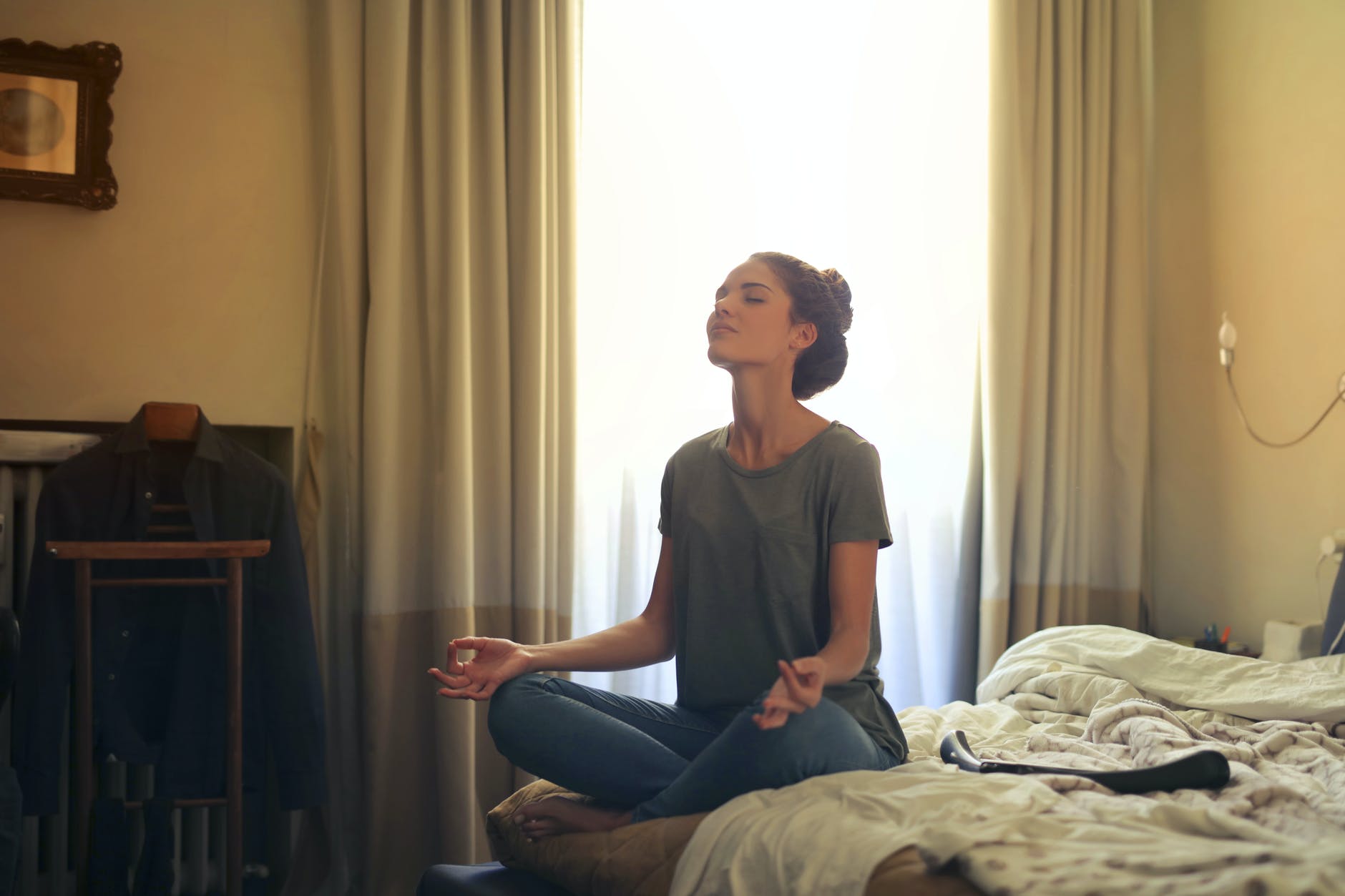
  • Meditate – Meditating for a while helps us to calm our minds. There is no fixed rule as to how one should meditate. One can just sit and close their eyes for some time or follow a meditation guideline. According to some studies, painting or colouring simple shapes and patterns can also act as a form of meditation.
Photo by Maggie My Photo Album on Pexels.com
  • Gardening – You need not know a lot about gardening. A small cactus near your desk or a simple flower plant can do magic. Watering them and taking care of them will help you make some time for yourself in a hectic or busy schedule. Plants can help you exercise the idea of effort. It helps you build patience and improves your life.
  • Smile – Having a positive outlook towards everything is a secret to having a happy and better life. A smile can help you brighten your day and maintain a positive relationship with people around you.

Dream big, but start small!

Why is it So Hard to Stick to Good Habits?

Have you ever set out with the goal of actually sticking to a new behavior … only to find yourself not doing it at all one week later?

I know I have.

Why is it so hard to form good habits? Why is it so difficult to make consistent change? How can we have the best intentions to become better, and yet still see so little progress?

And most importantly, is there anything we can do about it?

Your Life Goals are Not Your Habits

Your audacious life goals are fabulous. We’re proud of you for having them. But it’s possible that those goals are designed to distract you from the thing that’s really frightening you—the shift in daily habits that would mean a re–invention of how you see yourself.

We all have hopes and dreams.

And most of the time, we have at least a general sense of what those goals are: the way we want our bodies to look and the good health we want to enjoy, the respect we want to receive from our peers and the important work we want to create, the relationships we want with our family and friends and the love we want to share.

Overall, this is a good thing. It’s nice to know what you want and having goals gives you a sense of direction and purpose. However, there is one way that your hopes and dreams actually sabotage you from becoming better: your desires can easily lure you into biting off more than you can chew.

You know exactly what I mean…

  • You get inspired by The Biggest Loser, head to the gym, bust your butt to the point of exhaustion, and take the next three months off to recover.

.

  • You’re motivated by your friend’s stories of traveling to new countries, so you start to plan your own around–the–world trip, only to end up overwhelmed by all the details and stay at home.

Too often, we let our motivations and desires drive us into a frenzy as we try to solve our entire problem at once instead of starting a small, new routine..

So how do we balance our desire to make life–changing transformations with the need to build small, sustainable habits?.

Dream Big, But Start Small

If you’re serious about making real change — in other words, if you’re serious about doing things better than you are now — then you have to start small.

Imagine the typical habits, good or bad: Brushing your teeth. Putting your seatbelt on. Biting your nails.

These actions are small enough that you don’t even think about them. You simply do them automatically. They are tiny actions that become consistent patterns.

Wouldn’t it make sense that if we wanted to form new habits, the best way to start would be to make tiny changes that our brain could quickly learn and automatically repeat?

What if you started thinking of your life goals, not as big, audacious things that you can only achieve when the time is right or when you have better resources or when you finally catch your big break … but instead as tiny, daily behaviors that are repeated until success becomes inevitable?

What if losing 50 pounds wasn’t dependent on a researcher discovering the perfect diet or you finding a superhuman dose of willpower, but hinged on a series of tiny habits that you could always control? Habits like walking for 20 minutes per day, drinking 8 glasses of water per day, eating two meals instead of three.

I think the following quote, sums this idea up nicely.

If you plant the right seed in the right spot, it will grow without further coaxing.

I believe this is the best metaphor for creating habits.

The “right seed” is the tiny behavior that you choose. The “right spot” is the sequencing — what it comes after. The “coaxing” part is amping up motivation, which I think has nothing to do with creating habits. In fact, focusing on motivation as the key to habits is exactly wrong.

Let me be more explicit: If you pick the right small behavior and sequence it right, then you won’t have to motivate yourself to have it grow. It will just happen naturally, like a good seed planted in a good spot.

How great is that?

The typical approach is to dive into the deep end as soon as you get a dose of motivation, only to fail quickly and wish you had more willpower as your new habit drowns. The new approach is to wade into the shallow water, slowly going deeper until you reach the point where you can swim whether you’re motivated or not.

Focus on Lifestyle, Not Life–Changing

Too often we get obsessed with making life–changing transformations..

  • Running a marathon would be life–changing, running 3 days per week is a new type of lifestyle.
  • Squatting 100 more pounds would be life–changing, squatting 3 days per week is a new type of lifestyle.

Do you see the difference?

Life goals are good to have because they provide direction, but they can also trick you into taking on more than you can handle. Daily habits , tiny routines that are repeatable  are what make big dreams a reality.

.