Destructive Habits: Bias

There are many habits that destroy your mental peace, happiness and mostly you. Some of them are usually with different addictions or because of people but what destroys you as a person depends on how you view things and people around you. Your environment is what shapes you but to be different, you have to do it by yourself. 

The most common habits have become common because we are more focused elsewhere than ourselves. To be a better version of yourself, you need to view your flaws and work on them.

  1. Spotlight Effect: We overestimate how much attention people give to our words and appearance. Imagine you said something but it felt wrong after it came out. In reality, everyone only remembers it for the moment and immediately moves to the next topic. We ponder over it for days, forgetting that others don’t care as much as we do about it.

Example: “The red shoes don’t match the outfit at all! I guess the guys are laughing because of it”

*Red shoes matched the outfit better than you imagined*

Truth: No one cares about you as much as your loved ones do. Everyone is just a temporary traveler in your life and you have to be okay with it. Dress how you want and be how you want to be. 

  1. Status Quo Bias: We prefer for things to be the same; usually change is viewed as a negative aspect of life. If you adopt a new habit that cuts out something from your life, you immediately feel guilty of not being able to manage it, so you quit your new habit for the old one because it feels more comfortable.

Example: “I like to paint, but the classes are on Friday, I won’t be able to party! I can always paint later so let’s party now!”

*Proceeds to miss out on an amazing experience*

Truth: Change is hard. To adapt to a new routine and new place is always difficult and your mind is stuck on the old routine, but only then do you learn more about yourself. You may like to paint now, but when you explore it, you may not want to put the brush down! You need to explore that change for a while to know more about yourself.

  1. Zeigarnik Effect: We focus more on the incomplete tasks than the ones that have been completed. Sometimes, we forget to see that we have accomplished many things on the way, and we focus on the ones that we have not accomplished yet. It pushes you to feel bad that you are not able to do anything. 

Example: “Bro I lost the Table-Tennis Pan-India Semi-finals! I feel so like I can’t do it anymore”

*Came so far by winning championships and tournaments*

Truth: You have to see where you are today. Look behind you and see the different hurdles you had to come across. You didn’t cross them just to go back did you? It does feel bad to not achieve something the first time you try it, but when you achieve it, after toiling for some time, the fruit is incomparable.

  1. Pessimism Bias: We tend to overestimate the possibility of negative outcomes. We always have a small part of your mind that searches for a negative outcome. What you see and ask for, is what you get and have. You will increase the chance of losing the opportunity if all you see is losing it.

Example: “I feel like I will lose this chance to be head of department, there are so many others who are way more qualified.”

*Loses opportunity because it messed with your confidence and screwed your interview*

Truth: What energy you put out, is what you usually get. Sometimes, you lose opportunities, but don’t dwell on the wrong aspects. You may not have the necessary qualifications but the way you portray yourself is what gets you opportunities.

  1. Sunken-Cost Fallacy: We invest more in things that have cost us something, even if we have negative outcomes. We feel that if we invest more, the difference can be recovered with just a little gain.

Example: “My portfolio is down by 25%! I will invest 50% of it so with a 25% gain, I can recover the loss”

*Proceeds to lose more because the stock market is in a bear phase*

  1. Self-serving Bias: Our failures are situational but our success is our hardwork’s result. We view that our failures are determined by external factors and our success is because of us. It is also difficult to ascertain what caused success or failure on the spot so we divide it based on the result.

Example: “I lost the game because the opponent was too strong. I got the best player of the match because I practiced well”

*Opponent won because of your overconfidence in your practice*

“The eyes sees only what the mind is prepared to comprehend.”

~Robertson Davies

Sometimes, we see these habits recurring but we don’t want to change because we feel it will make others dislike us. By changing, you are not making your friends feel bad but giving them a chance to understand that it’s time to improve. It’s time to make yourself the person you always wanted to be. Everyday is a learning step and only then can you improve. These habits of biasing situations have a lot of effect on where you are and where  you want to be.

This post has been inspired by Ankur Warikoo. You can check his post on LinkedIn here!

This was a delight to write about. I hope you have found this article interesting and let me know about your thoughts on this. Keep on smiling!

Destructive Habits: Bias

There are many habits that destroy your mental peace, happiness and mostly you. Some of them are usually with different addictions or because of people but what destroys you as a person depends on how you view things and people around you. Your environment is what shapes you but to be different, you have to do it by yourself. 

The most common habits have become common because we are more focused elsewhere than ourselves. To be a better version of yourself, you need to view your flaws and work on them.

  1. Spotlight Effect: We overestimate how much attention people give to our words and appearance. Imagine you said something but it felt wrong after it came out. In reality, everyone only remembers it for the moment and immediately moves to the next topic. We ponder over it for days, forgetting that others don’t care as much as we do about it.

Example: “The red shoes don’t match the outfit at all! I guess the guys are laughing because of it”

*Red shoes matched the outfit better than you imagined*

Truth: No one cares about you as much as your loved ones do. Everyone is just a temporary traveler in your life and you have to be okay with it. Dress how you want and be how you want to be. 

  1. Status Quo Bias: We prefer for things to be the same; usually change is viewed as a negative aspect of life. If you adopt a new habit that cuts out something from your life, you immediately feel guilty of not being able to manage it, so you quit your new habit for the old one because it feels more comfortable.

Example: “I like to paint, but the classes are on Friday, I won’t be able to party! I can always paint later so let’s party now!”

*Proceeds to miss out on an amazing experience*

Truth: Change is hard. To adapt to a new routine and new place is always difficult and your mind is stuck on the old routine, but only then do you learn more about yourself. You may like to paint now, but when you explore it, you may not want to put the brush down! You need to explore that change for a while to know more about yourself.

  1. Zeigarnik Effect: We focus more on the incomplete tasks than the ones that have been completed. Sometimes, we forget to see that we have accomplished many things on the way, and we focus on the ones that we have not accomplished yet. It pushes you to feel bad that you are not able to do anything. 

Example: “Bro I lost the Table-Tennis Pan-India Semi-finals! I feel so like I can’t do it anymore”

*Came so far by winning championships and tournaments*

Truth: You have to see where you are today. Look behind you and see the different hurdles you had to come across. You didn’t cross them just to go back did you? It does feel bad to not achieve something the first time you try it, but when you achieve it, after toiling for some time, the fruit is incomparable.

  1. Pessimism Bias: We tend to overestimate the possibility of negative outcomes. We always have a small part of your mind that searches for a negative outcome. What you see and ask for, is what you get and have. You will increase the chance of losing the opportunity if all you see is losing it.

Example: “I feel like I will lose this chance to be head of department, there are so many others who are way more qualified.”

*Loses opportunity because it messed with your confidence and screwed your interview*

Truth: What energy you put out, is what you usually get. Sometimes, you lose opportunities, but don’t dwell on the wrong aspects. You may not have the necessary qualifications but the way you portray yourself is what gets you opportunities.

  1. Sunken-Cost Fallacy: We invest more in things that have cost us something, even if we have negative outcomes. We feel that if we invest more, the difference can be recovered with just a little gain.

Example: “My portfolio is down by 25%! I will invest 50% of it so with a 25% gain, I can recover the loss”

*Proceeds to lose more because the stock market is in a bear phase*

  1. Self-serving Bias: Our failures are situational but our success is our hardwork’s result. We view that our failures are determined by external factors and our success is because of us. It is also difficult to ascertain what caused success or failure on the spot so we divide it based on the result.

Example: “I lost the game because the opponent was too strong. I got the best player of the match because I practiced well”

*Opponent won because of your overconfidence in your practice*

“The eyes sees only what the mind is prepared to comprehend.”

~Robertson Davies

Sometimes, we see these habits recurring but we don’t want to change because we feel it will make others dislike us. By changing, you are not making your friends feel bad but giving them a chance to understand that it’s time to improve. It’s time to make yourself the person you always wanted to be. Everyday is a learning step and only then can you improve. These habits of biasing situations have a lot of effect on where you are and where  you want to be.

This post has been inspired by Ankur Warikoo. You can check his post on LinkedIn here!

This was a delight to write about. I hope you have found this article interesting and let me know about your thoughts on this. Keep on smiling!
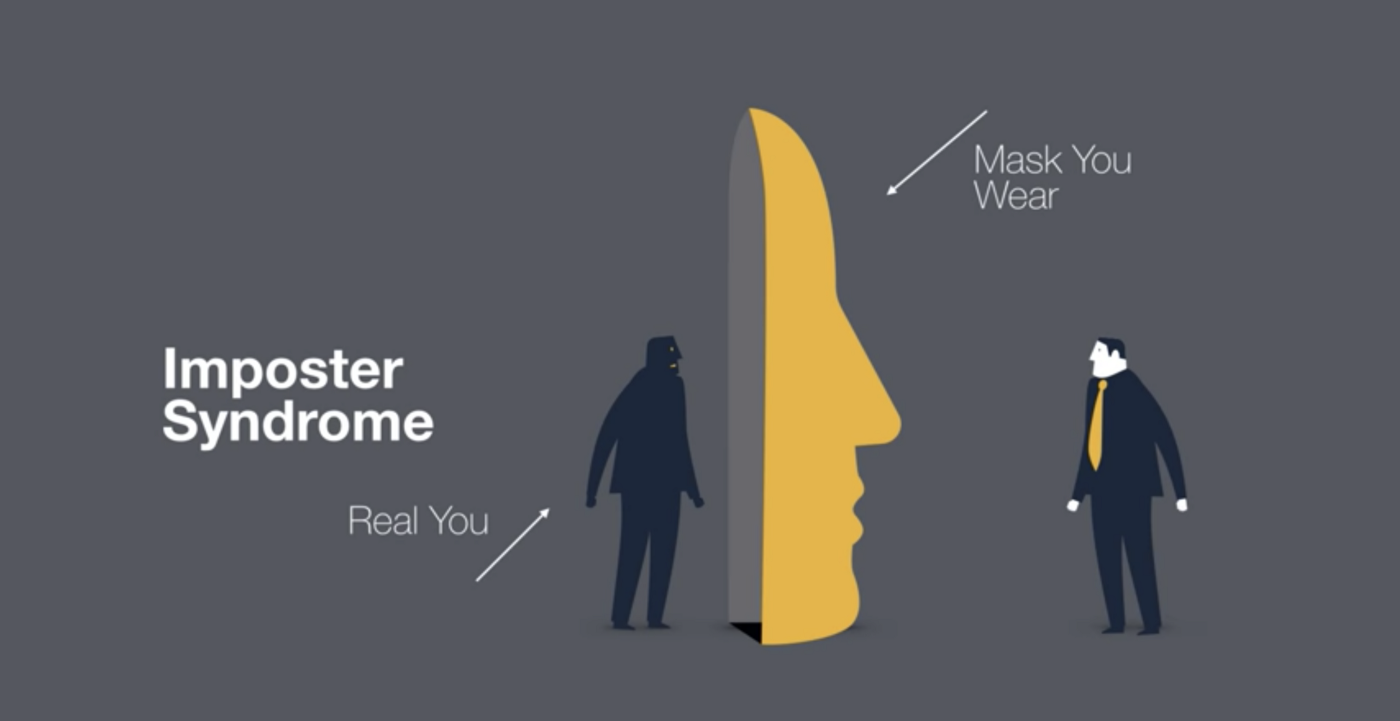
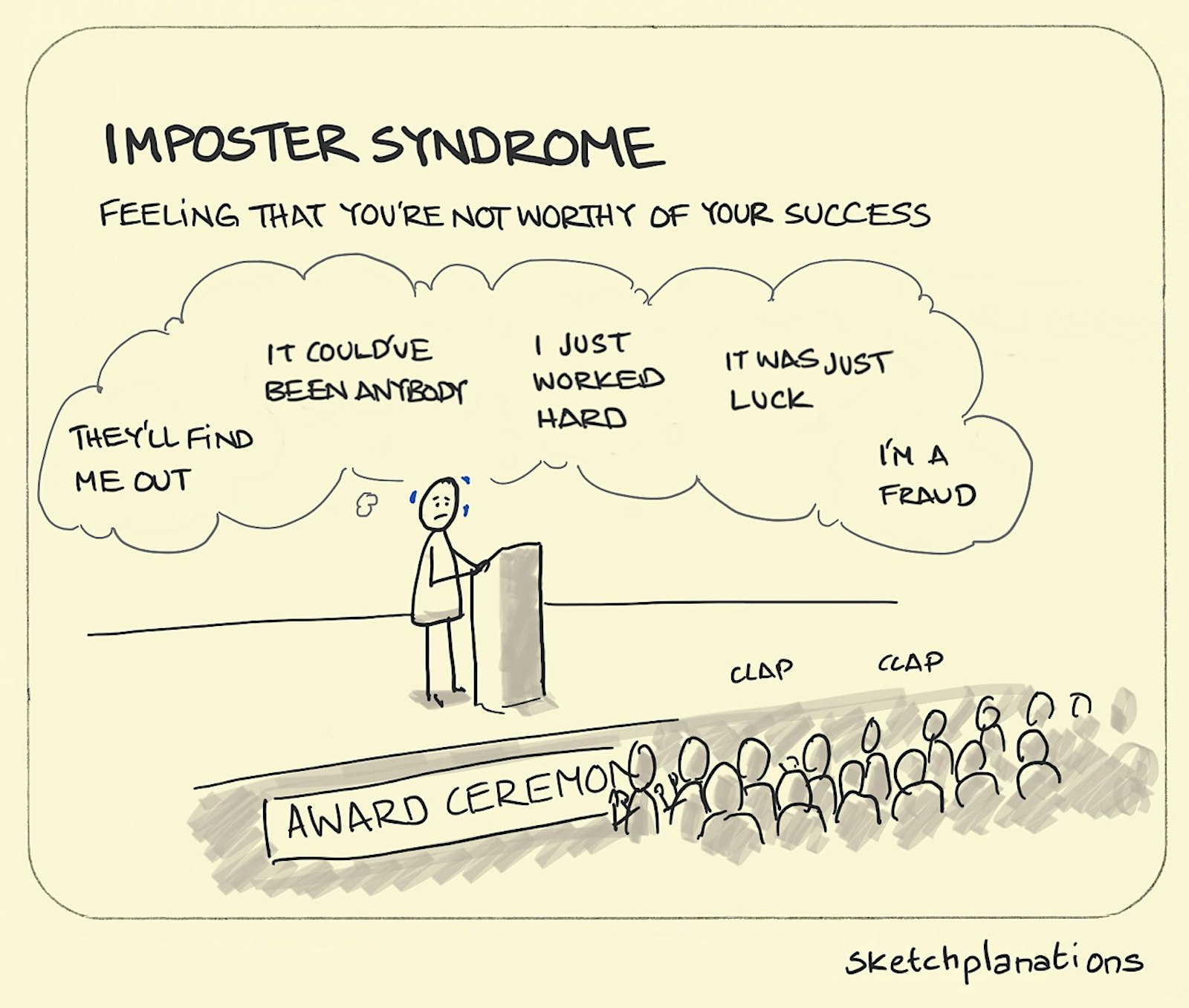
The Imposter syndrome is more common than you think.

Great minds like Maya Angelo and Albert Einstein accomplished and excelled at their field which is rare to come across , yet the shared something with the common people , the feeling of fraudulence . Impostor syndrome refers to an internal experience of believing that you are not as competent as others perceive you to be. While this definition is usually narrowly applied to intelligence and achievement, it has links to perfectionism and the social context. To put it simply, imposter syndrome is the experience of feeling like a phony—you feel as though at any moment you are going to be found out as a fraud—like you don’t belong where you are, and you only got there through dumb luck. It can affect anyone no matter their social status, work background, skill level, or degree of expertise.

When Clance and Imes first described the impostor phenomenon (sometimes called impostor syndrome), they thought it was unique to women. Since then, a variety of research on the topic has revealed that men, too, can have the unenviable experience of feeling like frauds, according to a recent research review .Many people who feel like impostors grew up in families that placed a big emphasis on achievement, says Imes. In particular, parents who send mixed messages — alternating between over-praise and criticism — can increase the risk of future fraudulent feelings. Societal pressures only add to the problem.”In our society there’s a huge pressure to achieve,” Imes says. “There can be a lot of confusion between approval and love and worthiness. Self-worth becomes contingent on achieving.”

Characteristics of Imposter Syndrome

Some of the common signs of imposter syndrome include:

  • An inability to realistically assess your competence and skills
  • Attributing your success to external factors
  • Berating your performance
  • Fear that you won’t live up to expectations
  • Overachieving
  • Sabotaging your own success
  • Self-doubt
  • Setting very challenging goals and feeling disappointed when you fall short

While for some people, impostor syndrome can fuel feelings of motivation to achieve, this usually comes at a cost in the form of constant anxiety. You might over-prepare or work much harder than necessary to “make sure” that nobody finds out you are a fraud.This sets up a vicious cycle, in which you think that the only reason you survived that class presentation was that you stayed up all night rehearsing. Or, you think the only reason you got through that party or family gathering was that you memorized details about all the guests so that you would always have ideas for small talk

There are many factors that may play a part in imposter syndrome including new roles, family upbringing, personality traits, and social anxiety.

Types of Imposter Syndrome

Imposter syndrome can appear in a number of different ways. A few different types of imposter syndrome may include:The perfectionist: Perfectionists are never satisfied and always feel that their work could be better. Rather than focus on their strengths, they tend to fixate on any flaws or mistakes. This often leads to a great deal of self-pressure and high amounts of anxiety.

The superhero: Because these individuals feel inadequate, they feel compelled to push themselves to work as hard as possible.

The expert: These individuals are always trying to learn more and are never satisfied with their level of understanding. Even though they are often highly skilled, they underrate their own expertise.

The natural genius: These individuals set excessively lofty goals for themselves, and then feel crushed when they don’t succeed on their first try.

The soloist: These people tend to be very individualistic and prefer to work alone. Self-worth often stems from their productivity, so they often reject offers of assistance. They tend to see asking for help as a sign of weakness or incompetence.

Strategies to cope with imposter feelings include talking about what you are experiencing, questioning your negative thoughts, and avoiding comparing yourself to others.For many people with impostor feelings, individual therapy can be extremely helpful. A psychologist or other therapist can give you tools to help you break the cycle of impostor thinking, says Imes.

The impostor phenomenon is still an experience that tends to fly under the radar. Somerville learned the phenomenon existed only after he’d successfully dealt with the feelings on his own. Often the people affected by impostor feelings don’t realize they could be living some other way. “They don’t have any idea it’s possible not to feel so anxious and fearful all the time,” Imes says.

Luckily, it is possible.

You have talent. You are capable. You belong

All Addictions are Dangerous

Whenever the word ‘addiction’ pops up, people often connect it immediately to drugs, smoking or alcohol and deny to think further more. But getting used to anything beyond a limit, be it a coffee, food or shopping is an addiction and is equally dangerous.

While some of these addictions might appear more harmless on the surface, but in reality all of them limit your life in some way or the other. It’s important to try and quit if you recognize that a habit is taking over your life.

First, start by acknowledging the problem and then believe in yourself that with proper work you can overcome this problem. I am not telling that this would be easy, but surely it would be worth the effort. Take it day at a time. It can be intimidating in the start, but take baby steps to reach goal and don’t quit.

One day at a time….

Be optimistic, reach the root of the problem and take some time to truly understand where this habit comes from and how it is ruining your life and health. Sometimes contemplating on your mistakes can help you get rid of them once and for all.

Stay committed and do not leave mid-way. I promise you that your transformation will help you live a much more enriching, creative, free and empowering life.

PHYSICAL FITNESS

Prioritize Your Health & Wellness: Learn The Importance Of Physical Fitness  | Shaw Academy

Different people have different points of view regarding fitness . For a common man to have a good physique is a symbol of physical fitness . For a doctor , the proper functioning of physiological systems is physical fitness . In fact , physical fitness is a simple term with a broad meaning . Physical fitness of a common person means the capacity to do the routine work without any fatigue or exertion and after doing his work he has power to do some more work with quick recovery . Physical fitness is more than the possession of strength and endurance . It means having the best possible health with the capacity to do one’s everyday task , engage in recreational pursuits and meet emergencies , when they arise . As a matter of fact , physical fitness is possessed by that individual , who remains enthusiast , works cheerfully and does the emergency work with vigour . Physical fitness implies a relation between the task to be performed and the individual’s capability to perform it .in fact , to understand the physical fitness in better way , it would be more beneficial to go through the following definitions of physical fitness .

  • According to Webster’s Encyclopaedia , “ It is the ability of a person to do daily routine work without fatigue ; moreover to participate in playful activities and still reserve enough capacity to meet any emergency .
  • According to Don Hoskins ,”The human body’s ability to move with the desired speed , balance , agility and strength gained through proper exercise and nutrition , “
  • According to Kroles , “Successful adaption to the stresses of one’s lifestyle.”
  • According to David R. Lamb , “Physical fitness is the capacity to meet the present and potential physical challenges of life with success .”

In fact , it can be said that physical fitness is the ability to function effectively and efficiently , enjoy leisure , be healthy , resist disease and cope with the emergency situations . Physical fitness varies according to the nature of work , individual’s size , shape of the body , age and sex . For physical fitness , we require an efficient motor mechanism , efficient organic mechanism and an efficient mental functioning .

Live Life, Don’t Just Exist!

To lead a life of adventure is certainly very exciting and amazing. It involves breaking free of certain social conditioning and challenging yourself to work upon your mental fears, which are mostly in your mind, and discovering unlimited freedom and opportunities. We, therefore, need to be willing to undertake adventure as it is a necessary part of happy existence. It is important to spend your limited time on earth doing some of those things that make a difference and give one enjoyment rather than simply sinking all the time playing the normal routine game of “delayed gratification”.

Taking action helps one to build a more enriching life and enables you to embrace life with more passion each day. The desire for sameness never contributors to anything exciting but makes our life and spirit dull. A variety of sports and recreation are adventurous to a lot of people today. Some people race cars, skydivers jump out of a 5 aeroplane, mountain-climbers scale peaks etc. This helps them to escape their daily stress and gives them a ‘high’. So it is important to live life to the fullest and it is also surely worth making the effort to ‘live’ with an adventurous spirit.

Actually this thought comes from inside…because everyone have their own perspective towards life and own ways to cherish it. But every time you will find people around you who are just a burden on Earth and dragging themselves. This is not correct and should not be done. We all are definitely mortal. So why just not live life fully and make the most out of it. Most of the people just live because they have got no other option left! People get stuck in situation and try to run away by blaming it. But just remember one little phrase “if there’s a problem there’s a solution.” Just keep this thought in mind and conquer the situation with all your heart. Learn a lesson from it and apply it in other situations of life. We all have a hidden talent in us just find it and use it help other people in society. Because this is the BEST WAY TO MAKE YOUR EXISTENCE WORTH. “The world wants what you got.” Be a helping hand , live yourself, explore every possible thing in this world and yet be kind to the society and be an Irony to the rest of the youth. At last I would like to say just one thing: life has no rules, except that once you have made…break all the old rules and create new rules that allow you to live happily and serve the mankind peacefully. If not at the end you will regret your own existence.

reference-https://www.healthylifestylesliving.com/liberate-the-mind/personal-development/dont-just-exist-live-a-life/

How to W.R.A.P decisions in Life

Every living being in this universe is subjected to make decisions for their survival – be it an ant and or a humpback whale. Fortunately, humans are the only beings gifted with the power of discrimination of understanding what is right or wrong for us and making a decision accordingly. Decisions can either be positive or otherwise but the quality of your decisions will determine how deeply they would impact your life.

It's A WRAP - Better Decision Making

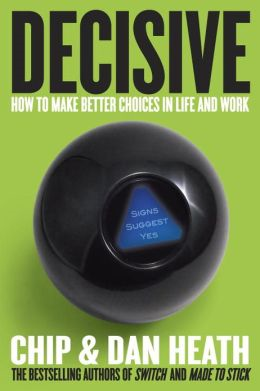
Chip and Dan Heath, in their book ‘ Decisive: How to Make Better Choices in Life and Work’, talk about a Framework called W.R.A.P for making better decisions
WRAP consists of four elements:
W- Widen your options
R- Reality test your assumptions
A- Attain distance before deciding
P- Prepare to be wrong

Widen your options

There is a misconception that having a lot of options can lead to confusion and is as same as seeing only the big picture. So, people narrow their frames of you and often lose possible options that could have worked better for them.
You can start finding more options by creating a mindset where none of the options you are considering is available. What else can you do? Think about it and be surprised about how many new options crop up!

Reality test your assumptions

While encountering a decision-making situation, we all tend to select the options that support our preconceived beliefs and actions. But that might not work all the time.
We can overcome this by seeking out relevant data that might redeem or discard the options at hand. Also, for example, if you have a piece of work or a product to be published you can sample your work ok for a response from a small group first instead of jumping right into the market. Reason out to yourself why you would want to make a particular choice.

Attain distance before deciding

We often let our short-term emotions cloud our rationality and take hasty decisions. It is imperative to have a well-settled mind before making an important life decision.
Try broadening your point of view. Ask yourself what a reliable third person would do in such circumstances- step into your friend’s shoes or think like someone who you look up to. This can give you a fresh perspective of the situation at hand and make you take a better decision.

Prepared to be wrong

Voice Blog: In Order To Be Original, Prepare to Be WRONG - Ben Francia

We predict a lot in our life. What if a decision that you made is based on such predictions and things actually don’t turn up the way you wanted? What then? You should be ready to acknowledge the decision’s flaw.
Think about working back from a possible future. For example, suppose your work has been published and was poorly received. Think about how the work could have been made better so that you really don’t have to face that situation. Come up with backup ideas that can act like your ‘insurance’ and protect you in case things go the other way.

The next time when you faced a situation, remember that the process is as important as the decision itself. You are the master of your life- so make sure that the decision you made don’t make your life different from what you wanted.
Trust the process!

The Choice Factor

That brisk strut with billowing robes behind. That almost sneering smirk under his hooked nose. That voice lashes out at people in the most subtle way possible. That is Severus Tobias Snape, Potion Master at Hogwarts School of Witchcraft and Wizarding, the dour ’bat’ of the dungeons. But my hero-worship for this misunderstood man has made me reflect on one of the important lessons for life-The Choice Factor.

Although Snape’s passion for the Dark Arts and the Dark Mark on his arm, along with his air of intimidation and sharp tongue attributes to his ‘villain’ aura, the choices that he made speak differently about his true character. The choices that he made say it all. It is not so surprising how similarly Snape and Voldemort are portrayed throughout the series. Both men had strikingly similar parentage; with muggle fathers and pureblood mothers and a miserable childhood. They also shared a common passion for the Dark Arts and even went on to pursue the same goals as adults, with Snape joining Voldemort’s Death Eaters in their ironic quest to establish a pureblood society.

Snape’s core differs immensely from his exterior. Real character is ultimately determined by one’s core traits, not by surface actions or attitudes. When Snape realized that the woman he loved was in danger, his alliance shifted for good and he became a spy for the Light. This was where he strayed from the path that Voldemort had taken and he had been tentatively travelling on; He chose Love over Power, Light over Dark, and Good over Evil. He thereon became one of the most critical parts of Dumbledore’s master plan to bring down Voldemort. His love for Lily Evans enabled him to see clearly through the dangerous path he was treading on, which gave the entire anti-Voldemort movement an edge over their enemies, even at the cost of his own life.

Thus we can say that Snape’s choices throughout his life redeem his character at the end of the series. The converse can also be true, as it takes a strong character and spirit to take such important decisions in life.

Choices define who we are as a person; it shows our character to the world. To enhance the probability of making better choices and surviving bad ones, personal character and inner spirit play important roles. Essentially, there is a thin line dividing any two paths or choices in life. We need to turn the thin line into a sturdy barrier. We need our consciousness and discriminating sense create these barriers to keep us centered on making better choices. Now, no one is perfect; we all make mistakes or bad choices. But how we handle the adversity, again lies in one’s willpower and character.

Choices define who we are as a person; it shows our character to the world.

Next time when you make a choice try asking these questions to yourselves:

1. What type of person do I want to be?

2. How can I be a better person by making a particular choice?

Below is a quote from a poem that has influenced me a lot. I leave you to ponder upon its meaning, at your own choice, Of course!

“Two roads diverged in a wood and I- I took the one less travelled by, and that has made all the difference.”

The Road Not Taken By Robert Frost


4 MAJOR LEARNING LESSONS FROM THE BOOK ‘THE ALCHEMIST’

1. NEVER GIVE UP

While pursuing your dream, you will come along many obstacles in your path, and they may make your moral down and you will think that you are not capable of achieving that thing, but don’t give up because god is testing you so give your best shot every time.

2. OVERCOME THE FEAR OF FAILURE

Fear of failure is worse than the failure itself and this the only thing that will hold you back from attaining your dream. So, the best way is to embrace this failures as learning and move ahead in your quest of finding your destiny.

3.TAKE ACTION

You will never learn how to do things unless you implement them , by taking actions because actions are the only ways of learning how to correctly do the things, and if you don’t take actions you will never learn.

4. ENJOY THE JOURNEY

Enjoy this journey of reaching towards your destiny, because this is the moment where you will learn many things ,you will meet many people, there will be ups and downs but these things only makes your journey memorable. So, enjoy every bit of these journey.

The Alchemist by Paulo Coelho