Cloud Computing

Cloud computing is the on-demand availability of computer system resources, especially data storage and computing power, without direct active management by the user. The term is generally used to describe data centers available to many users over the Internet. Large clouds, predominant today, often have functions distributed over multiple locations from central servers.

Cloud computing relies on sharing of resources to achieve coherence and economies of scale. Advocates of public and hybrid clouds note that cloud computing allows companies to avoid or minimize up-front IT infrastructure costs. Proponents also claim that cloud computing allows enterprises to get their applications up and running faster, with improved manageability and less maintenance, and that it enables IT teams to more rapidly adjust resources to meet fluctuating and unpredictable demand, providing the burst computing capability: high computing power at certain periods of peak demand.

Importance of Cloud Computing

Inexpensive

Cloud computing helps in reducing a considerable amount of CAPEX (Capital Expenditure) & OPEX (Operational Expenditures) an organization does not need to invest in expensive hardware’s, storage devices, & software’s etc. and you only have to pay for the resources you utilize.

Elasticity & flexibility

Cloud computing enables you to reduce and increase your resources demands as per your requirements. For e.g. if you have heavy traffic on your site you can increase your resources and vice versa. Cloud computing gives you the flexibility to work from wherever you want and whenever you want all you require is an internet connection.

Auto Updating

Software updates and upgrades can be a painful thing cloud computing simplifies it for you as all the software maintenance and upgrades are looked after and regulated by your cloud service provider.

Increased collaboration

Cloud computing enables employees to work in a more collaborative and coordinated manner as all the data and information about the organization, & ongoing projects is available to every employee and can be accessed from anywhere and anytime which helps in reducing delays and increase productivity.

Agility & Speed

Time is the most crucial factor when it comes to decision-making and execution.  Cloud computing services have a very prompt and customer-centric SLA’s (Service Level Agreements). Cloud Service providers offer up to 99.99% uptimes which ensure continuous flow of business operations and executions.

Self-Defense

We’ve all heard about self-defense since we were young, and living in the terrible world of the twenty-first century, when no one is entirely safe, it’s a responsibility to recognize that we are the only ones who can protect ourselves.
If we look at the most fundamental definition, it is the act of defending oneself from external danger.

Photo by cottonbro on Pexels.com

The “right to self-defense” is a legal term that refers to the use of self-defense in legal jurisdictions. It is critical to know how to defend yourself in today’s environment.

According to statistics, one out of every three women will be the victim of a violent attack at some point in her life. It is taught in training to block an assault, but it is much better if one can escape it!

As a result, the training should also cover how to avoid an attack in the first place. Which form of karate do you want to learn to defend yourself?

Knowing something as powerful as Karate gives you the confidence and strength to believe that you are not weak and that you have the ability to achieve your goals.

Self-defense techniques


1)Jujutsu\sTaekwondo

2)Krav Maga is a martial art that was developed in Israel.

3)Aikido

4)Wing Chun is a martial art that originated in China.

5)Brazilian Jiu-Jitsu is a martial art that originated in Brazil.

6)Muay Thai is a type of Thai boxing.

You may wish to learn self-defense for a variety of reasons. The most obvious reason is that you want to be able to protect yourself or your family if you ever find yourself in a dangerous situation. It is extremely rare to come across someone who wishes to hurt you. You are extremely vulnerable if you have no preparation for dealing with such issue.

According to the Department of Justice and the Centers for Disease Control and Prevention, one out of every six women has been sexually assaulted or attempted sexually assaulted.

The odds were 1 in 33 for men. No attack is ever the fault of the victim, and not all attacks can be prevented. However, we do know that mastering self-defense can assist victims in stopping or escaping their abusers. Self-defense training is required in a variety of situations, including rape.

A mugging or a house invasion are both circumstances in which self-defense training may help you better deal with the threat, defend yourself and your family, and find strategies to limit the harm the criminal can cause. It’s all about how to protect oneself and think effectively in high-pressure situations. It’s all about developing the confidence to better control situations that would otherwise be utterly out of your control.

Slowly, over time, the corporation became aware of the problem and began holding workshops for women working in the same industry. In fact, we now believe that every parent should include self-defense lessons in their child’s education. Self-defense has become a need for every growing child and individual today, alongside school, art programmed, and swimming sessions.

  1. Suitable for children
    It instils discipline in youngsters, provides a pleasurable pastime, and aids in the development of confidence. Children who acquire self-defense skills are more alert of their surroundings and are taught how to defend themselves against assailants of all ages, including adults and children. It teaches students how to deal with regular bully scenarios without turning become bullies.

2. Women will love it.
Self-defense can be beneficial to women and young girls for a variety of reasons. It boosts self-assurance. It also aids them in levelling the playing field with an assailant who may be far larger than they are. It’s also beneficial for any lady looking for a physical, hands-on workout.

3. Men will love it.
For the same reasons as women, males can benefit from this training. The training plan is a wonderful all-around workout that complements any other sports activity.

4. Excellent for the Elderly
We all know that age has little to do with learning new things. Older people can learn new practices, which will help them improve their health.

Photo by Anton Belitskiy on Pexels.com

Advantages of Self-Defense

Self-defense provides you the tools and abilities you need to analyze a dangerous situation with confidence and manage it successfully. Nothing could be more powerful than that. It aids in the development of confidence and control over your anxieties, and confidence is a superpower in and of itself.

Self-defense enhances your concentration and focus. As a result, you will learn to concentrate under stressful situations.

It allows you to learn simple maneuvers as well as more complex skills to defend oneself during an attack. Knowing how to defend oneself can make you feel less worried in public or afraid when you’re out late at night alone.


Self-defense is a fun and effective method to strengthen your body, burn calories, and enhance your overall health. Exercise also improves your mood, which is beneficial to persons who are suffering from depression.

One must be both physically and emotionally prepared for an attack. By learning self-defense, you will maintain your muscle and endurance through practicing along with other exercise activities. Thus improving your overall fitness will improve.

Your awareness of your surroundings will improve as a result of self-defense. You never know when you’ll be attacked; no one anticipates being attacked, so we must always be aware of our surroundings.

Improving balance not only includes the physical balance of your core muscles but also a mental balance for improving your focus. Self-defense teaches you how to focus on your target while you control your body. Not having balance, it is almost impossible to fight. Body control and balance help in protecting ourselves mentally and physically.

If you get into a battle, movement is crucial. You can’t just stand there and wait for your adversary to strike again; you have to move and react instinctively. It will aid in the development of your reflexes and the acquisition of a fighter’s reflex, allowing you to move fast and strategically in a situation like this.

.

Entrepreneur

The word entrepreneur has its origin in the French language. It refers to the organiser of musical or other entertainments. An entrepreneur is one who organises, manages, and assumes the risks of an enterprise. An entrepreneur visualises a business, takes bold steps to establish undertaking, coordinates the various factors of production and gives it a start.Entrepreneurs are the owners of the business Who Contribute the capital and bear the risk of uncertainties in business life. Entrepreneur is action – oriented and highly motivated. He has the ability to evaluate business opportunities, to gather the necessary resources to take advantage of them and to initiate appropriate action to ensure success. Entrepreneur is associated with innovations.He is the main factor of production. Entrepreneur takes decision regarding what to produce, how to produce, where to produce and for whom to produce. He mobilises other factors of production namely, land, labour, capital, organisation and initiates production process. He is responsible for both the profit or the loss. In India, Birla, Tata, Modi are big entrepreneurs.

Many people dream of becoming entrepreneurs someday. But it made me realize that there other factors that needs to be taken into consideration. We need to ask ourselves are we ready to take the challenge to the outside world. Not everyone have the vision, innovation and creativity to become an entrepreneur. The individual must have a positive attitude and accept the responsibility, have discipline to meet their goals, and take action when the opportunity presents itself. Many prefer a job security and rely on a weekly paycheck, while entrepreneurs will take risks and doesn ‘t have that luxury to know the amount of their income.

Starting your own business can be exciting and it can become a well- rewarded experience. Being your own business includes great benefits,
Businesses trying to survive the current economic crisis need to pursue competitive advantages and empower them. Competitive advantage results from matching core competencies to the opportunities. The entrepreneur that I interviewed uses her experience, quality, consistency and overall learned what the customers really need and demand. Jane’s skills and experience enable her to respond faster to market changes. Jane has remarkable negotiation and sales skills that make her a most competitive in the market. There are also questions that you need to ask yourself to determine if you are ready to take the next step. Are you able to think of new ideas? Can you imagine new ways of solving problems? Entrepreneurs should think creatively. If you have ideas learn how take advantage of new opportunities. Be your own boss also means that you are responsible for making difficult decisions. The business world involves uncertainty. Do you avoid the uncertainty in life at all costs? If so, owning your own business is not the best.

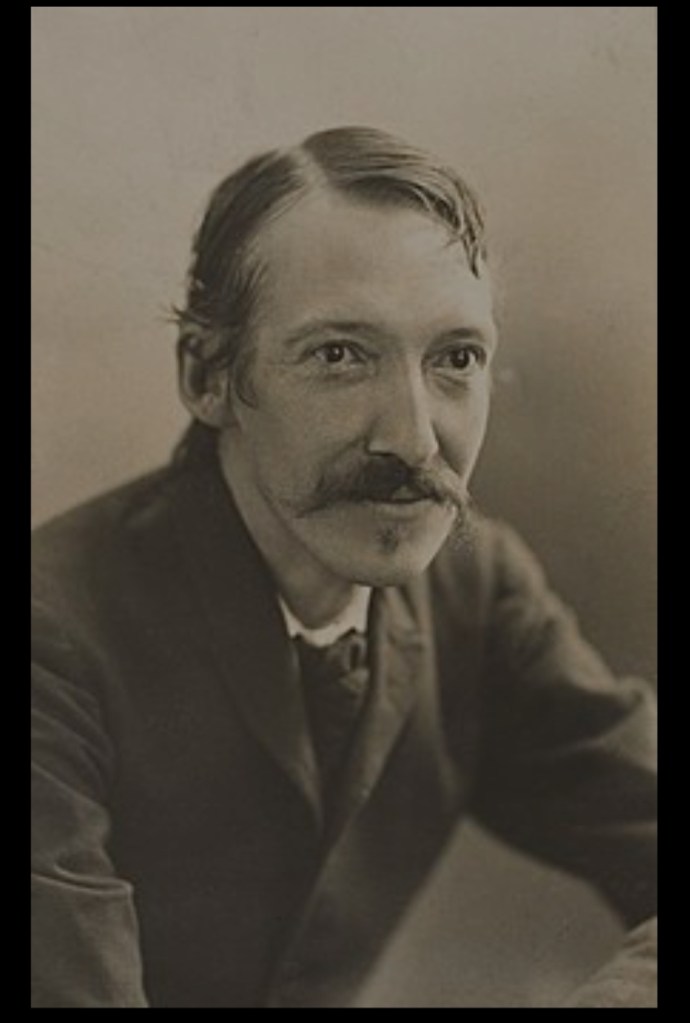
Essay explanation ” El Dorado “by Robert Louis Stevenson

It seems as if a great deal were attainable in a world where there are so many marriages and decisive battles ….” 

                                        – El Dorado by R.L Stevenson.

” El Dorado ” by Robert Louis Stevenson is one of the most famous and inspiring essays about the journey for the travellers .

El Dorado ”  means gilded one in Spanish .

It is a legendary city or historical region of the New World , often thought to be in South America that was fabled for its great wealth of gold and precious jewels and eagerly sought by 16th and 17th century explorers including Sir Walther Raleigh. 

This imaginary land of fabulous gold is a symbol of the unattainable

El Dorado essay by R.L Stevenson is about the journey of  travellers which is more pleasurable than arriving at the destination .

Stevenson, who was fond of traveling , expounds here his philosophy of traveling without ever resting . 

According to him

There is always a new horizon for onward looking men .”

He discovers the secrets of happiness in the fact that our hopes and aspirations striving goes on for life .

” Our hopes are inaccessible like stars and the term of hoping is prolonged until the end of life .”

Incessant striving and perpetual chase for something make life meaningful and fruitful rendering perennial pleasure to a man .

Stevenson says “An aspiration is a joy forever ” . 

Desire and curiosity are two eyes through which man sees the world in the most enchanted and captivating colours .

Desire and curiosity  needs to be satisfied and perpetually renewed to keep up the interest in one’s life .

Stevenson mentions a story of a young fellow who finished the works of Thomas Carlyle and weeped about no book of Carlyle left to read .

Alexander the Great wept because he has no countries to conquer .

He states that one who volume or measure his interest and desire has a fear to come to an end and be left with nothing to accompany his last stage of journey.

Desire and curiosity is what keeps man continuing to exist .

“Interests are only plucked up to sow themselves again ,like mustard “.

Stevenson further says ,

And when we discover a continent or cross a chain of mountains , it is only to find another ocean or another plain upon the further side . “

Life can be thrilling and exciting when we go forward led by desire and curiosity.

“Aspirations “ means desire to have more and more knowledge and experience in life .

Aspirations can keep us going, making our life worth living .

Stevenson points out that even a small corner of earth can offer us something new to start . Life and nature have infinite riches to be explored by curiosity and hence ,the journey of traveling continues life long .

He concludes by advising man to remain engaged in some noble pursuits.

He say, 

To travel hopefully is better than to arrive and the true success is to labour .”

About Robert Louis Stevenson 

Robert Louis ( Balfour) Stevenson was a Scottish novelist ,poet , essayist and travel writer .

He was born in Edinburgh on 13 November 1850 .

His fourth four year life was a nearly constant journey in search of adventure and relief from the agonies of tuberculosis ,with which he was afflicted from early childhood .

Stevenson attempted every species of writing but it is chiefly as an essayist that he continues to live .He was essentially an artist in words .He was an amazing storyteller ,an acute and sensitive critic , a genial and whole hearted lover of life .He was a master of rich , resilient prose style .

There is a kind of primitivism in his writing which wins over the reader by its message of courage and virility – the traits which characterize Stevenson’s own life.

Stevenson As an Essayist 

Stevenson is considered one of the greatest essayists of the Victorian Age .He was influenced by Wiliam Hazlitt .

He was a personal essayist and he himself became the subject matter of his essays .His essays are like mirrors which reflect his personality and show real aspects of his life .

Stevenson’s essays are filled with whimsical paradoxes , keen and witty as those of Bernal Shaw . His work is invariably ethical.

He wrote essays on different topics such as nature , philosophy , morality , children science etc. 

Few of his essays deal with human miseries and problems of human life .

Some of his essays and other works are , 

. Travels with a Donkey, Virginibus Puerisque ,Familiar Studies of Men and Books , New Arabian Nights , Treasure Island ,  Prince Otto,  A Child’s Garden of Verses ,More New Arabian Nights., The Dynamiter. StrangEnglish Case of Dr. Jekyll and Mr. Hyde , Kidnapped , El Dorado , Memories and Portraits etc.

His essays are highly  personal and autobiographical. He was a craftsman and artist who cared passionately about his writings.

Hence , we can say Stevenson was a versatile genius of his age .

___________________________________________

Referral link :- More about R.L Stevenson Read El Dorado online

GENDER EQUALITY

Gender equality: what is it and why do we need it?

We need gender equality urgently. Find out what gender equality means and why it’s important.

Gender equality is when people of all genders have equal rights, responsibilities and opportunities. Everyone is affected by gender inequality – women, men, trans and gender diverse people, children and families. It impacts people of all ages and backgrounds.

We need gender equality urgently. Gender equality prevents violence against women and girls. It’s essential for economic prosperity. Societies that value women and men as equal are safer and healthier. Gender equality is a human right. Everyone benefits from gender equality.  Gender equality is a fundamental human right. Yet despite progress, women and girls around the world do not fully experience equal rights and their potential as economic, social and sustainable development change-agents remains untapped.

Gender equality is a fundamental human right. Yet despite progress, women and girls around the world do not fully experience equal rights and their potential as economic, social and sustainable development change-agents remains untapped. Empowering women and girls helps expand economic growth, promote social development and establish more stable and just societies. Women’s economic empowerment benefits both women and children. It is pivotal to the health and social development of families, communities and nations. Further, the UN’s Sustainable Development Goals (SDGs) underscore women’s empowerment as an important development objective, in and of itself, and highlight the relevance of gender equality to addressing a wide range of global challenges.

A growing number of business leaders recognize the importance of women as leaders, consumers, entrepreneurs, workers and caretakers. They are adapting their policies, programme and initiatives to create environments where women and girls thrive

Positive Psychology

Positive psychology is one of the newest branches of psychology to emerge. This particular area of psychology focuses on how to help human beings prosper and lead healthy, happy lives. While many other branches of psychology tend to focus on dysfunction and abnormal behaviour, positive psychology is centered on helping people become happier. Positive psychology is designed to “complement and extend the problem-focused psychology that has been dominant for decades,” explained the late Christopher Peterson, author of “A Primer in Positive Psychology” and professor at the University of Michigan, in a 2008 article published in Psychology Today. “Positive psychology is…a call for psychological science and practice to be as concerned with strength as with weakness; as interested in building the best things in life as in repairing the worst; and as concerned with making the lives of normal people fulfilling as with healing pathology,” Peterson wrote.

According to leading authorities in the field, Martin Seligman and Mihaly Csikszentmihalyi, positive psychology will help achieve “scientific understanding and effective interventions to build thriving in individuals, families, and communities.” In order to understand the field of positive psychology, it is essential to start by learning more about its major theories, applications, and history.

History of Positive Psychology

“Before World War II, psychology had three distinct missions: curing mental illness, making the lives of all people more productive and fulfilling, and identifying and nurturing high talent,” wrote Seligman and Mihaly Csikszenmihalyi in 2000. Shortly after WWII, the primary focus of psychology shifted to the first priority: treating abnormal behavior and mental illness. In the 1950s, humanist thinkers like Carl Rogers, Erich Formm and Abraham Maslow helped renew interest in the other two areas by developing theories that focused on happiness and the positive aspects of human nature.

General interest in positive psychology has grown tremendously since the concept was introduced. Today, more and more people are searching for information on how they can become more fulfilled and achieve their full potential.

Uses

Positive psychology can have a range of real-world applications in areas including eduction, therapy, self-help, stress management, and workplace issues. Some of the major topics of interest in positive psychology include: Character strengths and virtues, Flow, Gratifications, Gratitude, Happiness, Pleasure, Helplessness, Hope, Mindfulness, Optimism, Positive thinking, Resilience .

Impact of Positive Psychology

Some of the major findings of positive psychology include: Money doesn’t necessarily buy well-being, but spending money on other people can make individuals happier, People are generally happy, Some of the best ways to combat disappointments and setbacks include strong social relationships and character strengths, While happiness is influenced by genetics, people can learn to be happier by developing optimism, gratitude, and altruism, Work can be important to well-being, especially when people are able to engage in work that is purposeful and meaningful.

Potential Pitfalls

Positive psychology is often confused with positive thinking, and misconstrued as self-help tactics rather than research-backed theories. Positive thinking is a way of thinking ourselves into better behavior and greater resilience, rather than behaving our way into a different frame of mind. Positive psychology, on the other hand, is the scientific study of what makes people thrive. It focuses on behaviors that can lead to a more optimized frame of mind as well as on thought patterns that lead to more functional behaviors.

Software Verification Methods

Software Verification : Verification is the process of manually examining / reviewing a document. The document may be SRS, SDD, the program itself or any document prepared during any phase of software development.

The objective of any verification method is to review the documents with the purpose of finding faults. Many methods are commonly used in practice like peer reviews, walkthroughs, inspections, etc. Verification helps in prevention of potential faults, which may lead to failure of software. Verification and validation activities may be performed after the implementation phase. However, only verification is possible in the phases prior to implementation like the
requirement phase, the design phase and even most of the implementation phase.

1) Peer Reviews

Any type of testing (verification or validation), even adhoc and undisciplined, is better than no testing if it is carried out by person(s) other than the developers / writers of the document with the purpose of finding faults. We give the document(s) / program(s) to someone else and ask to review the document(s) / program(s). We expect views about
the quality of the document(s) and also expect to find faults. This type of informal activity may give very good results without spending any significant resources.

Many studies have shown the importance of peer review due to its efficiency and significance. Our thrust should be to find faults in the document(s) / program(s) and not in the persons who have developed them. The activities involved may be SRS document verification, SDD verification and program verification. The reviewer may prepare a report
of observations and findings or may inform verbally during discussions.

2) Walkthroughs

Walkthroughs are more formal and systematic than peer reviews. In a walkthrough, the author of the document presents the document to a small group of two to seven persons. Participants are not expected to prepare anything. Only the presenter, who is the author, prepares for the meeting. The document(s) is / are distributed to all participants. During the meeting, the author introduces the material in order to make them familiar with it. All
participants may write their observations on any display mechanism like boards, sheets, projection systems, etc. so that every one may see and give views. After the review, the author writes a report about findings and any faults pointed out in the meeting.

The disadvantages of this system are the non-preparation of participants and incompleteness of the document(s) presented by the author(s). The author may hide some critical areas and unnecessarily emphasize on some specific areas of his / her interest. Walkthroughs may help us to find potential faults and may also be used for sharing the documents with others.

3) Inspection

Many names are used for this verification method like formal reviews, technical reviews, inspections, formal technical reviews, etc. This is the most structured and most formal type of verification method and is commonly known as inspections. The presenter is not the author but some other person who prepares and understands the document being
presented. This forces that person to learn and review that document prior to the meeting. The document(s) is / are distributed to all participants in advance in order to give them sufficient time for preparation.

Important points are displayed by some display mechanism so that everyone can see them. The moderator, preferably a senior person, conducts such meetings and respects everyone’s views. The idea is not to criticize anyone but to understand their views in order to improve the quality of the document being presented. Sometimes a checklist is also
used to review the document. After the meeting, a report is prepared by the moderator and circulated to all participants. They may give their views again, if any, or discuss with the moderator. A final report is prepared after incorporating necessary suggestions by the moderator. Inspections are very effective to find potential faults and problems in the document like SRS, SDD, source code, etc.

Artificial Intelligence

Artificial intelligence (AI) refers to the simulation of human intelligence in machines that are programmed to think like humans and mimic their actions. The term may also be applied to any machine that exhibits traits associated with a human mind such as learning and problem-solving.

Artificial intelligence (AI) is intelligence demonstrated by machines, as opposed to the natural intelligence displayed by humans or animals. Leading AI textbooks define the field as the study of “intelligent agents”: any system that perceives its environment and takes actions that maximize its chance of achieving its goals. Some popular accounts use the term “artificial intelligence” to describe machines that mimic “cognitive” functions that humans associate with the human mind, such as “learning” and “problem solving”.

AI applications include advanced web search engines, recommendation systems (used by YouTube, Amazon and Netflix), understanding human speech (such as Siri or Alexa), self-driving cars (e.g. Tesla), and competing at the highest level in strategic game systems (such as chess and Go), As machines become increasingly capable, tasks considered to require “intelligence” are often removed from the definition of AI, a phenomenon known as the AI effect. For instance, optical character recognition is frequently excluded from things considered to be AI, having become a routine technology.

Artificial intelligence was founded as an academic discipline in 1956, and in the years since has experienced several waves of optimism, followed by disappointment and the loss of funding (known as an “AI winter”), followed by new approaches, success and renewed funding. AI research has tried and discarded many different approaches during its lifetime, including simulating the brain, modeling human problem solving, formal logic, large databases of knowledge and imitating animal behavior. In the first decades of the 21st century, highly mathematical statistical machine learning has dominated the field, and this technique has proved highly successful, helping to solve many challenging problems throughout industry and academia.

The various sub-fields of AI research are centered around particular goals and the use of particular tools. The traditional goals of AI research include reasoning, knowledge representation, planning, learning, natural language processing, perception and the ability to move and manipulate objects. General intelligence (the ability to solve an arbitrary problem) is among the field’s long-term goals. To solve these problems, AI researchers use versions of search and mathematical optimization, formal logic, artificial neural networks, and methods based on statistics, probability and economics. AI also draws upon computer science, psychology, linguistics, philosophy, and many other fields.

The field was founded on the assumption that human intelligence “can be so precisely described that a machine can be made to simulate it”. This raises philosophical arguments about the mind and the ethics of creating artificial beings endowed with human-like intelligence. These issues have been explored by myth, fiction and philosophy since antiquity. Some people also consider AI to be a danger to humanity if it progresses unabated. Others believe that AI, unlike previous technological revolutions, will create a risk of mass unemployment.

Artificial Intelligence Characteristics

  • Deep Learning. Deep learning is a machine learning technique that teaches computers to do what comes naturally to humans, to learn by example.
  • Facial Recognition
  • Automate Simple and Repetitive Tasks
  • Data Ingestion
  • Chatbots
  • Quantum Computing
  • Cloud Computing

Following are some sectors which have the application of Artificial Intelligence:

  • AI in Astronomy. Artificial Intelligence can be very useful to solve complex universe problems
  • AI in Healthcare
  • AI in Gaming
  • AI in Finance
  • AI in Data Security
  • AI in Social Media
  • AI in Travel & Transport
  • AI in Automotive Industry

Effects of air pollution

Effects of air pollution

  • Human health
  • Animals
  • Plants
  • Material
  • Stratosphere
  • Environment

Impact on plants

  • Reduced plant growth
  • Damage to leaves of crops plant
  • Susceptible to disease, pest, Frost

Impact on materials

  • Cars
  • Homes
  • Monument, sites

Impact on health

  • By VOCs, suspended particles
  • Lung cancer
  • Headache, dizziness
  • Respiratory diseases
    • Asthma – By SO2, smoking
    • Bronchitis – NO2
    • Influenza, cold- NO2

Effect on human health

  • Irritation of eye, nose and throat.
  • In severe cases, there may be headache, nausea and loss of coordination and concentration.
  • It lowers our resistance to cold and pneumonia.
  • CO has affinity towards hemoglobin which cause disturbance in
    • transportation of oxygen
    • impairing our concentration
    • slow our reflexes
    • make us confused and sleepy
    • feel suffocation.
  • SO2 in the air lead to disease of lung and other lung disorders such as wheezing and shortness of breath.
  • Chronic respiratory disease- lung cancer, heart disease, damage to the brain liver or kidney.
  • Effect of arsenic, Asbestos, Mercury and Benzene can cause mutation, reproduction problems or even cancer.

Effects on plant

  • Pollutant enters through stomata.
  • Pollutant Erode waxy coating of the leaves called cuticle
    • Cuticle prevent excessive water loss and damage from disease pest, drought and Frost.
  • Destroy chlorophyll
  • Affect photosynthesis
  • Damage of leaf structure causes :-
    1. Necrosis – damage to leaf structure.
    2. Chlorosis- loss /reduction of chlorophyll causing yellowing of leaves.
    3. Abscission – Dropping of leave.
    4. Epinasty – Downward curling of leaves.
    5. Death of plants.

Effect on aquatic life

  • Precipitation in the form of acid rain cause high acidity in freshwater lake.
  • Acid rain affect aquatic life especially fish.
  • Some of freshwater lake have experienced total fish death.

Effect on material

  • Due to corrosiveness, particulates can cause damage to exposed surfaces.
  • Ozone causes crackling of rubber.
  • SO2 and water form H2S – corrosion as well as disfigurement of Statue made up of limestone or marble.
  • Oxides of Nitrogen can cause fading of cotton and Rayon fibres.

Effect on environment

  • Visibility
  • Pollutants in the presence of Sunlight produce photochemical smog.
  • Emission of greenhouse gases tends to global warming.
  • Chlorofluorocarbons carbons also cause Ozone layer depletion.

The phenomenon of trapping and reradiating heat by greenhouse gases in the atmosphere is referred to Greenhouse effect.

  • Natural greenhouse effect keep Earth warm .
  • Global mean temperature of earth is + 15 degree Celsius.
  • Water vapour, CO2, H2O, CH4, ozone and cfcs present in minute quantities but maintain the temperature of Earth.
  • In the absence of greenhouse gases, the temperature of earth would be much lower than – 20 degree Celsius.

Enhanced greenhouse effect means global warming.

Augmented reality

Augmented reality (AR) is an interactive experience of a real-world environment where the objects that reside in the real world are enhanced by computer-generated perceptual information.

sometimes across multiple sensory modalities, including visual, auditory, haptic, somatosensory and olfactory. AR can be defined as a system that incorporates three basic features: a combination of real and virtual worlds, real-time interaction, and accurate 3D registration of virtual and real objects. The overlaid sensory information can be constructive (i.e. additive to the natural environment), or destructive (i.e. masking of the natural environment). This experience is seamlessly interwoven with the physical world such that it is perceived as an immersive aspect of the real environment. In this way, augmented reality alters one’s ongoing perception of a real-world environment, whereas virtual reality completely replaces the user’s real-world environment with a simulated one. Augmented reality is related to two largely synonymous terms: mixed reality and computer-mediated reality.

The primary value of augmented reality is the manner in which components of the digital world blend into a person’s perception of the real world, not as a simple display of data, but through the integration of immersive sensations, which are perceived as natural parts of an environment. The earliest functional AR systems that provided immersive mixed reality experiences for users were invented in the early 1990s, starting with the Virtual Fixtures system developed at the U.S. Air Force’s Armstrong Laboratory in 1992. Commercial augmented reality experiences were first introduced in entertainment and gaming businesses. Subsequently, augmented reality applications have spanned commercial industries such as education, communications, medicine, and entertainment. In education, content may be accessed by scanning or viewing an image with a mobile device or by using markerless AR techniques.

Augmented reality is used to enhance natural environments or situations and offer perceptually enriched experiences. With the help of advanced AR technologies (e.g. adding computer vision, incorporating AR cameras into smartphone applications and object recognition) the information about the surrounding real world of the user becomes interactive and digitally manipulated. Information about the environment and its objects is overlaid on the real world. This information can be virtual. Augmented Reality is any experience which is artificial and which adds to the already existing reality or real, e.g. seeing other real sensed or measured information such as electromagnetic radio waves overlaid in exact alignment with where they actually are in space. Augmented reality also has a lot of potential in the gathering and sharing of tacit knowledge. Augmentation techniques are typically performed in real time and in semantic contexts with environmental elements. Immersive perceptual information is sometimes combined with supplemental information like scores over a live video feed of a sporting event. This combines the benefits of both augmented reality technology and heads up display technology (HUD).

Comparison with virtual reality

In virtual reality (VR), the users’ perception of reality is completely based on virtual information. In augmented reality (AR) the user is provided with additional computer generated information within the data collected from real life that enhances their perception of reality. For example, in architecture, VR can be used to create a walk-through simulation of the inside of a new building; and AR can be used to show a building’s structures and systems super-imposed on a real-life view. Another example is through the use of utility applications. Some AR applications, such as Augment, enable users to apply digital objects into real environments, allowing businesses to use augmented reality devices as a way to preview their products in the real world. Similarly, it can also be used to demo what products may look like in an environment for customers, as demonstrated by companies such as Mountain Equipment Co-op or Lowe’s who use augmented reality to allow customers to preview what their products might look like at home through the use of 3D models.

Augmented reality (AR) differs from virtual reality (VR) in the sense that in AR part of the surrounding environment is actually ‘real’ and just adding layers of virtual objects to the real environment. On the other hand, in VR the surrounding environment is completely virtual. A demonstration of how AR layers objects onto the real world can be seen with augmented reality games. WallaMe is an augmented reality game application that allows users to hide messages in real environments, utilizing geolocation technology in order to enable users to hide messages wherever they may wish in the world. Such applications have many uses in the world, including in activism and artistic expression.

Google Digital Unlocked -Explained

According to Wikipedia, Digital Unlocked is an initiative by Google in collaboration with the Indian School of Business and Ministry of Electronics and Information Technology to promote digital awareness and to help small-scale businesses and startups to go digital in India.

In this blog, We’ll try to build a good insight of Google Digital Unlocked and also about its Certification, which you might be planning to appear for.

What is Google Digital Unlocked?

Google has established a platform to assist Startups, business owners, students, and anybody who is willing to understand the process of conducting business online and the online marketing and growth strategies.
It is in cooperation with the Indian School of Business as well as the Ministry of Electronics and Information Technology. It is designed to aid small and medium businesses by teaching them the necessary digital knowledge which can be utilized to set up an online presence for companies.

What Courses are provided in Google Digital Unlocked?

It offers a spectrum of courses to choose from. There are 136  Google digital unlocked courses available, as of now. These courses can be grouped together in three categories which are as follows :-

  • Digital Marketing
  • Data and Technology
  • Career Development

Is Google Digital Unlocked Couse and its Certification Free?

Yes, the courses are offered free of cost and so are the certifications, if included.

The only condition applied is that you must finish all the lessons of a particular course in order to unlock the examination which is an evaluation for certificate eligibility. 

To get certified in a particular course, a candidate should obtain a score of 80 percent or more. There are 3 attempts provided, so make sure you make up in these attempts.

Why Google Digital Unlocked?

Image Source – Google

The key reason to go for Google Digital Unlocked is the brand value that Google has.

The certification provided will be of utmost value and will boost the individual’s CV.
Moreover, the majority of the courses are free, and are approved by industry experts, top entrepreneurs and some of the world’s leading employers.
So you can be sure that you’re learning an up-to-date, real-world skill that will help you reach your goal.

Key Features of Google Digital unlocked

  • Variety of Courses
  • Learn at your own pace
  • Flexible and personalized training
  • Learn at the comfort of your home
  • Anytime access
  • Get certified

Start Learning

Fundamentals of Digital Marketing, Basics of Code, Digital Wellbeing, Effective Networking, Business Communication and many more.

International MUN recruiting interns?

Gear up and apply now

Yes! You heard it right, international Model United Nations is offering an Official Campus Ambassador Internship at IMUN.

What is IMUN?

International MUN is recognized by the United Nations & has hosted MUN conferences in 5 different countries in the last 3 years i.e in Thailand, Vietnam, Egypt, China & Malaysia.

About IMUN internship?

5 weeks work from home internship with official internship certificate, letter of recommendation and many more. 5 weeks internship program that enables you to learn organisation management, International diplomacy and everything related to the world of United Nations. In this internship period every intern have to promote IMUN and IMUN Conferences through your social media accounts, through your friends.

This internship is a way to understand global issues, interacting with other culture and people.

Great performers receive best of IMUN certificate recognized by United Nations, letter of recommendation, appreciation, incentives, an opportunity to join IMUN team in different countries all sponsored and etc

What will you learn from this internship?

The main question comes in our mind is what new things we will learn from this internship.

Being an intern at IMUN you will learn leadership skills, social media marketing, digital marketing, communication skills, public speaking skills, networking and many more. Interns will also get an certificate after completing the internship, the international certificate from United Nations based on their performance. It will also prepare you for your career and help you to get a good job.

How can I apply?

You can apply through this link given below https://www.instagram.com/p/CGE5diCDSdT/?utm_medium=share_sheet

For more details you can check their official Instagram account @International_MUN

https://instagram.com/imunintern?utm_medium=copy_link

So hurry up, grab this golden opportunity and apply today…

International Model United Nations Conferences

Way towards success

IMUN conferences a way towards success. A platform where your voice matters. Before IMUN conference we have to know about IMUN first.

What is International MUN?

International MUN is recognized by the United Nations & has hosted MUN conferences in 5 different countries in the last 3 years i.e in Thailand, Vietnam, Egypt, China & Malaysia. 

About IMUN conferences.

IMUN conferences is a platform where students (or anyone) are tasked to solve global issues like women empowerment, gender equality through research drafting, lobbying and debate to pass a suitable ‘resolution’.
This conferences are held on sat-sun every week. After completing the whole registration process you will get a mail, in that mail they will give you the meeting link and the topics for the conference. You have to select one topic and have to research about that respective topic.
e.g. I completed my whole registration process, got a mail and selected a topic. Suppose my topic is women empowerment, so I have to research about that topic like what are the issues and how can we solve those issues?. So on a day of online conference I will represent india (if I get india) and the women empowerment in India. I have to discuss the problems and respective solutions about the topic with other members. If you don’t wants to talk it’s okay, you just have to interact with the members.

What is an International Model United Nations (IMUN) conference and Why should someone participate in it ?

International MUN online conference is a 2-day model UN conference where participants from around the world present solutions to global issues. They can choose topics of their choices in every conference. In a 2-day conference, they research about the topics, debate, network with other participants from different countries etc.

Participants also get study materials, free MUN training sessions, experts QnA and position paper submissions. At the end of the conference, all participants receive participation certificates recognised by the Australian embassy and the United Nations. The best participants receive two certificates, one is participation certificate and another is award certificate.

What are the benefits of attending IMUN conferences?

Participating in IMUN conferences helps students to develop leadership skills, communication skills, public speaking, writing, research and many more. You will get a international certificate of participation by United Nation which will help you to get a good job. Interesting with foreign students, discussing and solving global issues with them what would be more interesting than this!!

How can I register?
You can register through the link attached below

https://www.internationalmun.org/RegistrationForm.php?mark=YN4558

So hurry up and register today..

Problem Play – A Form of Drama .

The term “drama” comes from a Greek word meaning “action” .

Drama is the specific mode of fiction represented in performance: a play, opera, mime, ballet, etc., performed in a theatre, or on radio or television.


A problem play is a type of drama .
As the name suggests, problem play discusses problems openly in the form of play in theatre or stage.
It is a drama built around a specific problem. The problem is generally of a sociological nature.
Problems such as prostitution, inadequate housing, unemployment, labour unrest, etc. are mostly found as major subject matter of the play .
It examines a specific social or political problem with the aim of igniting public debate.

It was established in France in the 19th century to deal with controversial social issues in a realistic manner openly to the audience.
It flourished in England in the period between the last years of the nineteenth century and the middle of the twentieth.

It deals with the social problems or ills through debates between the characters on stage, exposing the conflicting points of view within a realistic social context.

According to Albert Guerated ,
” The problem play is the presentation of a contemporary question through realistic techniques”

The dramatists of the problem play were preoccupied with the vital problem of contemporary life and morality and the drama which was directly inspired by the society of the time could be effective only if it adopts a realistic form or medium.

___________________________________________

The beginning of the problem play was introduced into England towards the end of the nineteenth century by Henry Arthur Jones & and Sir A. W. Pinero .
Towards the end of the 19th century the English
society started feeling the need of something new and refreshing
on the stage and therefore the start of problem play began .

Pinero’s most popular play is The Second Mrs Tanqueray which deals with the marriage of “a woman with a past.

G. B. Shaw and Galsworthy took the problem play to its height in the twentieth century.

G.B Shaw plays ,
Widowers’
Houses, Mrs.Warren’s Profession ,Arms and the Man and many
other plays are concerned ,as the writer saw it, less with the
crimes of society, and more with its romantic follies and with the
struggles of the individuals against these follies.

Some other examples of problem play are :-

The earliest forms work of Alexandre Dumas, dealt with the subject of prostitution in The Lady of the Camellias.


Shakespeare ‘s All’s Well That Ends Well, Measure for Measure, and Troilus and Cresside written between the late 1590s and the first years of the seventeenth century:
These plays are difficult to classify because their sombre themes and cynical tones contrast oddly with their comedic elements, and the moral issues raised are not satisfactorily resolved.

Ibsen’s plays are mostly problem plays.
His works usually concentrated on the moral dilemmas of a central character which dealt with a social problem such as in A Doll’s House (1879), sexually-transmitted disease in Ghosts (1882) and provincial greed in An Enemy of the People (1882).

In America the problem play was associated with the emergence of debates over civil rights issues. Racial issues were tackled in plays such as Angelina Weld Grimké’s, Rachel

Shaw’s Mrs Warren’s Profession (1902), examining attitudes towards prostitution; and Galsworthy’s Justice (1910), exposing the cruelties of solitary confinement and the legal system.

Some plays by later writers such as A. Wesker, J. McGrath, Caryl Churchill, H. Brenton, and D. Hare also raises contemporary issues, in the form of problem play.

___________________________________________

The problem play is also termed as “thesis play,” or “discussion play “ .
As the play discusses the social ill and opens a room for discussion over certain important topics for the audience.
Using the serious subjects it brings to life some contemporary controversy of the public,by creating a somewhat simplistic, didactic thesis with the audience .

The problem play is sometimes called “the propaganda play,” for the obvious reason that its intent is overtly didactic and propagandist.

Problem play or a play of ideas deals with a particular social or
moral problem related to love, marriage, sex, war, peace, justice
or crime etc. and tries to suggest a solution to it. It profusely
takes the recourse of wit, intellect, materialism and realism. A
problem play finally opposes and rejects all types of narrowness,
confusion and falsehood, and adheres to the principles of
equality, freedom or justice .

Scoffing at the romantic
view of life the new genre of drama examined the social institutions and social ills .
Slum landlords, prostitution, marriage conventions ,social prejudices,
romanticized soldier, glamorous historical figure, medical
profession, critics, religion- these are but some of the people
and things which come under the major theme of problem plays during the 19th & 20 th century .

Many dramatists used problem play for the theme of socialist and socialism.

The problem play is supposed to have arisen out of sentimental drama of the nineteenth century and has often been identified with ‘serious drama ‘ ; a dramatic form distinctly serious but not tragic that aims at presenting the real life problems using fiction on a realistic level.

___________________________________________

Referral link :- Shakespeare’s problem plays. G.B Shaw ‘s Play

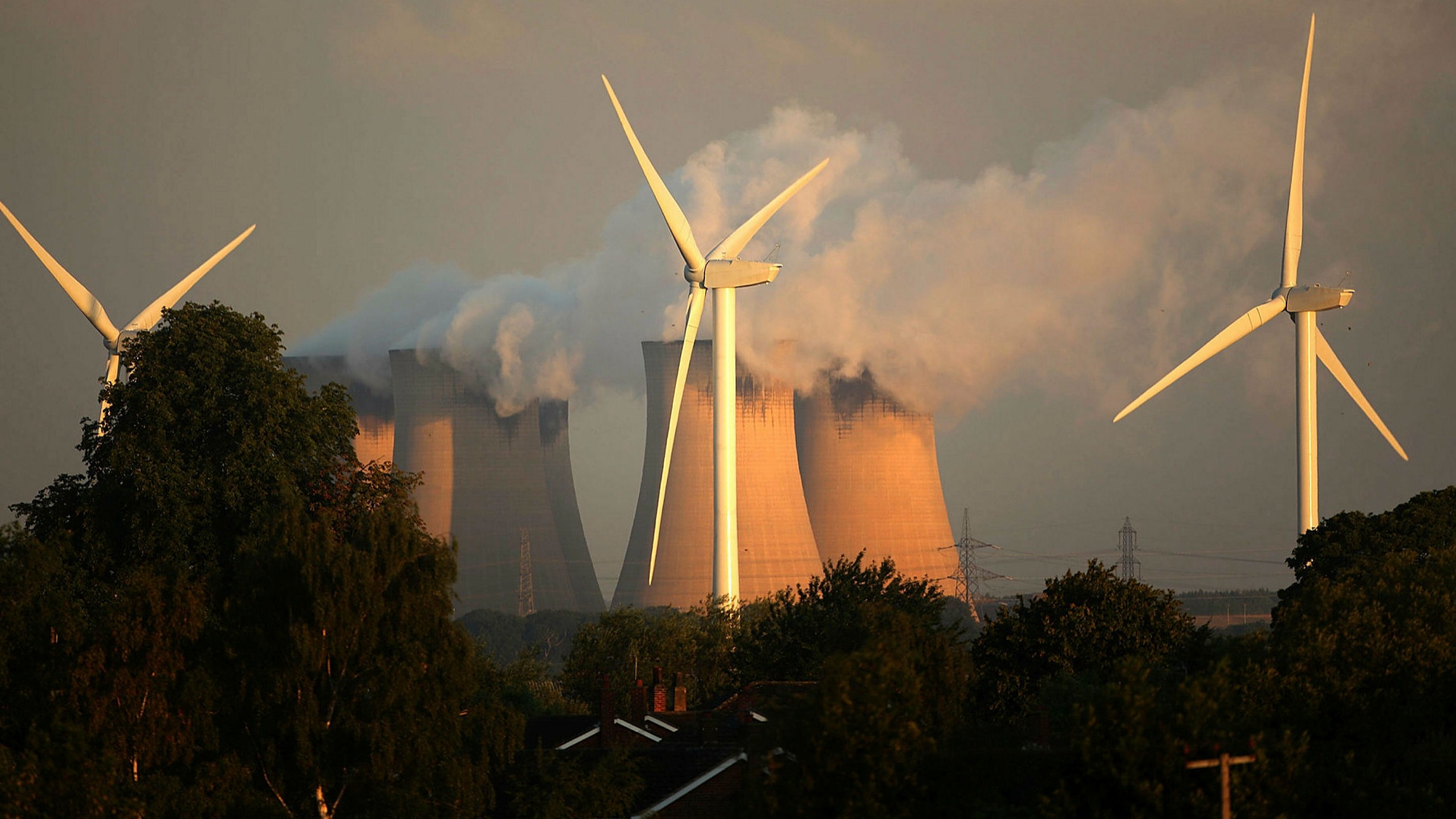
AIR POLLUTION

Pollution

Any undesirable changes in the physical, chemical or biological characteristics of any component of environment i.e. air, water and soil – which can cause harmful effects on various form of life or property are called environmental pollution.

Any favorable unpolluted environment has pertains a specific composition in their component i.e. air, water and soil.

The problem like pollution come into existence due to short-term economic gain over long-term ecological benefits for humanity.

During last few decades we have contaminated badly on air, water and land on which life itself depends with a variety of waste products.

Be the part of Solution , not the part of Pollution…

We can survive without food for a few days, without water for few hours but without air it is impossible to survive for few min.

An average human require about 12 Kg of their each day which is nearly 12 – 15 times greater than the amount of food we eat.

Types

  1. Air pollution
  2. Water pollution
  3. Soil pollution
  4. Marine pollution
  5. Noise pollution
  6. Thermal pollution
  7. Nuclear hazard

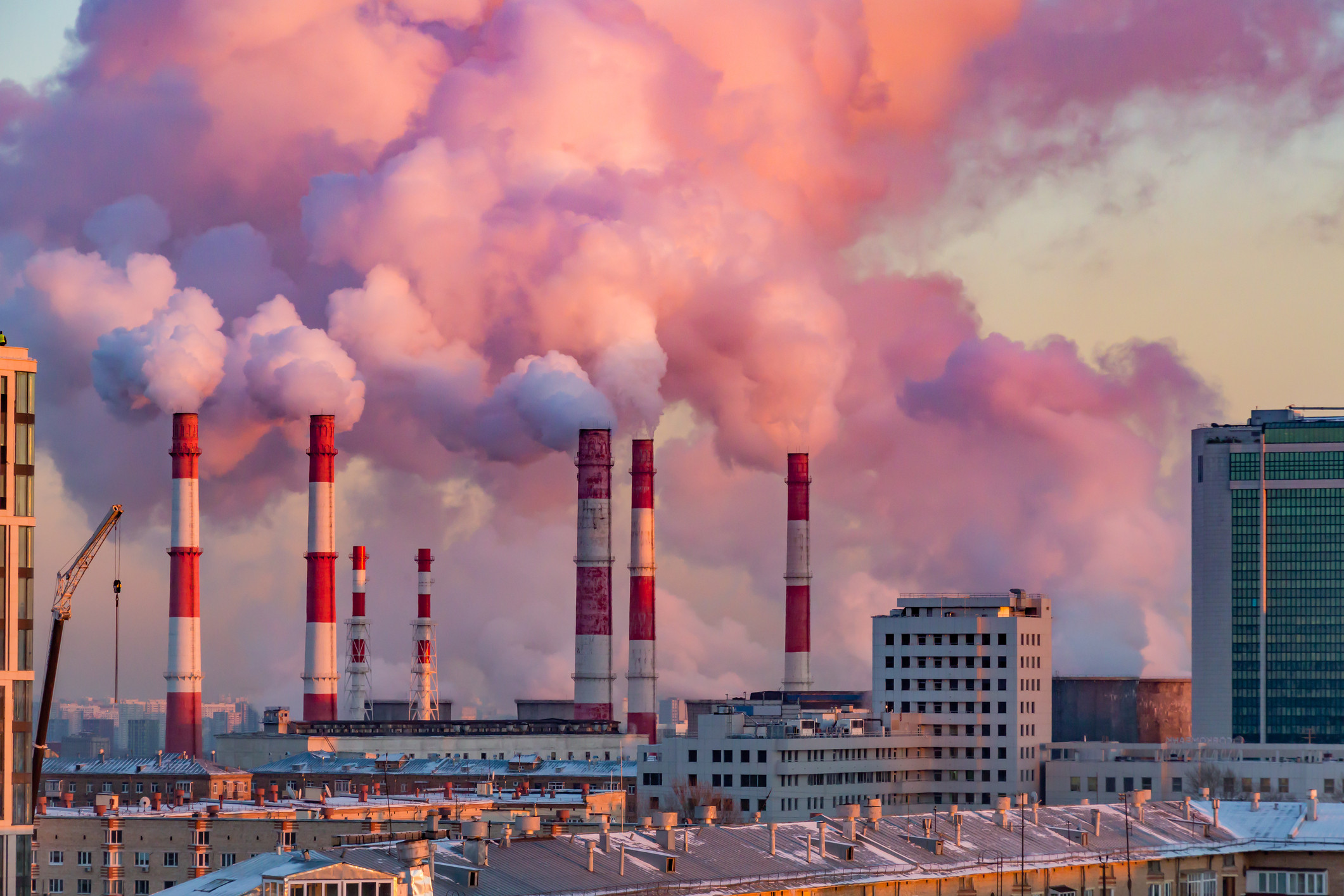
Air pollution

Air pollution started from very beginning of human evolution. Hippocrates had mentioned air pollution in 400 BC.

  • Any undesirable changes in physical, chemical or biological characteristics of any component of the in air which can cause harmful effect on living things is called Air pollution.
  • Earlier the air pollution is caused only by burning of fire word as a means of cooking and heating.
  • With the industrial revolution the problem become more serious due to cold burning in the industries and development of Transportation system leads to large amount of petrol and diesel was started utilising in the beginning of 20th century.
  • Severe air quality problem due to diesel and petrol engines were felt for the first time in Los Angeles in1943.
  • The gaseous pollutants include oxides of sulphur, oxides of Nitrogen, carbon monoxide, volatile organic compound, Ozone etc.
  • Particulate pollutants includes smoke, soot, fumes, aerosoles, liquid droplets, Pollen Grain etc.
  • Radioactive pollutants include Radon222 , Iodine 131, Strontium 19 plutonium 239 etc.

Greatest industrial disaster leading to serious air pollution took place in Bhopal were extremely poisonous methyl isocyanide gas was accidentally released from union carbide pesticides manufacturing plant on the night of 3rd December 1984, the effect of this disaster on human health and the soil are felt even today.

Now we know this tragedy as Bhopal gas tragedy.

The London smog was the major disasters were recorded in 1952 which cause more than 8000 deaths due to accumulation of air pollutants over the city for 5 days.

Primary pollutants – primary pollutants are emitted directly from the point source (natural or human activities).

  • Five primary pollutants together constitute 90% of the Global air pollution
    • Carbon dioxide
    • Carbon monoxide
    • Sulphur oxide
    • volatile organic compound mostly hydrocarbon
    • suspended particulate matter

Secondary pollutants – secondary pollutants formed by the interaction of primary pollutants. example – peroxyacetyl nitrate, smog, Ozone, sulfuric acid, nitric acid, carbonic acid etc.

Indoor air pollution

Many people spend large portion of their time in inside the homes as much as 80% of their life.

We work study, eat, drink, sleep in enclosed environment whereas circulation may be restricted.

  • Children and Womens are more exposed to rest in indoor air pollution
  • Burning of dung cake , wood, kerosene for fuel.
  • Cigarette smoke
  • Incomplete combustion produce carbon monoxide that are injurious to health.
  • Chemical fumes from paint and solvents
  • Chemicals released from Modern building and Furnishing material

Effects of air pollution

  • Human health
  • Animals
  • plants
  • material
  • stratosphere
  • environment

Control of air pollution

  • Reduce energy uses
  • Remove pollutant generating stuff
  • Check the generation of pollutant where burned
    • Putting catalytic converter in automobiles.
  • Protect the object from pollutants
    • Coat statues with protective material.
  • Constructing walking and bicycle lanes
  • Encourage mass transportation