300 high-profile Indians out of a list of 50,000 people worldwide have been subjected to targeted hacking and tapping of their phones using the ‘Pegasus spyware’. On the target list was Congress’ Rahul Gandhi, Political analyst Prashant Kishore, Mamata Banerjee’s nephew Abhishek Banerjee, former Election Commissioner Ashok Lavasa (that ruled that PM Modi had violated the MCC during the 2019 election commission). Also, there were 40 Journalists from various Media houses including Rohini Singh, Swati Chaturvedi (that criticize the ruling govt), Supreme Court Judge, and opposition leaders.
The French media Forbidden stories and Amnesty International shared the leaked list with ‘The Wire’ in India and 15 other news organizations across the world including The Guardian, The Washington Post, Le Monde, Suddeutsche Zeitung as part of the Pegasus project.
But what really is Pegasus? How does it operate? Who uses the software? And why has it earned the reputation of being behind the most sophisticated spyware attacks? According to The Citizen Lab, in this way, Pegasus can be used to gather a vast amount of victim information: “Passwords, contact lists, calendar events, text messages, and live voice calls from popular mobile messaging apps.” According to this report, “Pegasus could even listen to encrypted audio streams and read encrypted messages”. NSO does not openly name who buys its software. But its website does say that its products are used and bought exclusively “by government intelligence and law enforcement agencies to fight crime and terror”.
“Pegasus is modular malware. After scanning the target’s device, it installs the necessary modules to read the user’s messages and mail, listen to calls, capture screenshots, log pressed keys, exfiltrate browser history, contacts, and so on, and so forth. Basically, it can spy on every aspect of the target’s life,” cybersecurity company Kaspersky noted. Pegasus infections can also be achieved via so-called “zero-click” attacks that do not require any interaction from the phone’s owner. It means that your phone could still be hacked even if you’re careful not to click on those malicious links. Most of these attacks exploit vulnerabilities in an operating system that the phone’s manufacturer may not yet know about and so has not been able to fix. An example of such an attack was revealed by WhatsApp in May 2019 when the spyware targeted a vulnerability in its VoIP stack. Simply by placing a WhatsApp call to a target device, Pegasus could be installed on the phone, irrespective of whether the target answered the call or not.
In November 2019, Lok Sabha MP from the DMK, Dayanidhi Maran, asked on the floor of the House if the government taps WhatsApp calls and messages and whether the government uses Pegasus for this purpose. A written response provided by then Minister of State for Home Affairs, Kishan Reddy, did not directly address queries about tapping or Pegasus. “Section 69 of the Information Technology Act, 2000 empowers the Central Government or a State Government to intercept, monitor or decrypt…any information generated…or stored in any computer resource,” the response said, adding that it was for reasons including sovereignty and security of the country. “Section 5 of the Indian Telegraph Act, 1885 empowers lawful interception of messages on the occurrence of public emergency or in the interest of public safety,” the response added.
The response also listed the 10 agencies that can intercept messages under the law and a Standard Operating Procedure (SOP). Such agencies allowed to intercept messages include the Intelligence Bureau, Enforcement Directorate, Cabinet Secretariat (RAW), and Commissioner of Police, Delhi.
The Government of India responded that they are not spying on anyone illegally and they have got nothing to do with Pegasus. The response further said that “there is no blanket permission to any agency for interception or monitoring or decryption and that permission from competent authority is required, as per the due process of law and rules, in each case”. While, on the other hand, NSO claims that only governments can buy its software, private parties cannot buy the software.
This clearly points finger towards the Government and the names of those under surveillance have a definite pattern that threatens power.
Guru Purnima symbolizes offering gratitude towards Gurus; it is celebrated on the day of full moon of Ashada. The teacher not only guides a student but also shapes his life by instilling true knowledge and by giving him direction. As full moon holds an attraction and magnetism that uplifts mind, similarly gurus have that aura which makes the disciple to acknowledge the true sign and inner light. Widely celebrated by the Hindus, Sikhs and Buddhist communities all over the world.
Image : Rkalert
A true guru spread the light of knowledge and wisdom to his disciples. Like the shine of silvery moon gives joy to everyone, a guru is also like that; he blesses the entire world with auspiciousness.
A guru is one who guides us through the knowledge of eternal self. A disciple should be ready to take the knowledge, keen to learn, should have faith, reverence and devotion to guru every moment.
Beside that a true guru reside all of us, the need is to look into self. So, why do we need an external guru? For example, children who want to become a researcher have to study for years under the supervision of expert educators. If we desire for knowledge, we must need an expert masters.
Image: Bee bulletin
Like a dark room can be lit only when somebody enters with a light or candle, the disciple also needs a guru to realize its true self. A guru can remove darkness with the light of wisdom; the inner lamp needs to be lit with the guidance of a Guru. There is a mirror within us but due to the hustle bustle of life, we are unable to visualize our inner guru. The mirror can be cleaned when you realize the true self and open to take the light within to remove the darkness of ignorance.
We all need a true guru who can show us the way through the journey of our life.
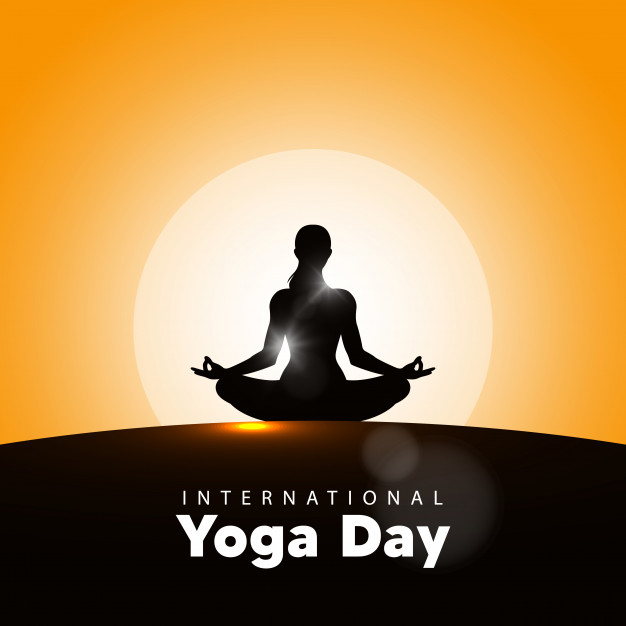
Yoga is basically a spiritual discipline which is based on an extremely subtle science that concentrates on bringing harmony between mind and body. It is a science and an art of healthy and sound living. The word ‘Yoga’ is derived from the Sanskrit word ‘Yuj’, signifying ‘to join’ or ‘to combine’ or ‘to unite’. Both Yoga and Ayurveda are historically closely related and have developed in tandem with each other since ancient times. According to Yogic sacred writings the act of Yoga prompts the union of individual consciousness with that of the Universal Consciousness, showing an ideal congruity between the mind and body, Man and Nature. Yoga is believed to balance the three doshas i.e Vata , Pitta & kapha. As indicated by modern scientists, everything in the universe is only an appearance of a similar quantum atmosphere. One who experiences this oneness of existence is said to be in yoga, and is named as a yogi, having achieved a state of freedom alluded to as Mukti, Nirvana or Moksha. Therefore, the prime objective of Yoga is Self-realization, to overcome all types of sufferings prompting ‘the state of salvation’ (Moksha) or ‘freedom’ (Kaivalya). Living with freedom in all aspects of life, health and harmony is the primary focus of yoga practice. “Yoga” likewise alludes to an inward science including an assortment of strategies through which people can understand this union and accomplish authority over their destiny.Yoga, being generally considered as an ‘Immortal cultural outcome’ of Indus Saraswati Valley civilization – going back to 2700 B.C., has substantiated itself taking into account both material and spiritual upliftment of humanity.Basic humane values are the very Identity of Yoga Sadhana.
20 ways yoga Improves health:
1. Builds muscle strength – Strong muscles do more than look good. They also protect us from conditions like arthritis and back pain, and help prevent falls in elderly people. And when you build strength through yoga, you balance it with flexibility. If you just went to the gym and lifted weights, you might build strength at the expense of flexibility.
2. Improves your flexibility – Improved flexibility is one of the first and most obvious benefits of yoga. During your first class, you probably won’t be able to touch your toes, never mind do a backbend. But if you stick with it, you’ll notice a gradual loosening, and eventually, seemingly impossible poses will become possible. You’ll also probably notice that aches and pains start to disappear. That’s no coincidence. Tight hips can strain the knee joint due to improper alignment of the thigh and shinbones. Tight hamstrings can lead to a flattening of the lumbar spine, which can cause back pain. And inflexibility in muscles and connective tissue, such as fascia and ligaments, can cause poor posture.
3. Perfects your posture – Your head is like a bowling ball—big, round, and heavy. When it’s balanced directly over an erect spine, it takes much less work for your neck and back muscles to support it. Move it several inches forward, however, and you start to strain those muscles. Hold up that forward-leaning bowling ball for eight or 12 hours a day and it’s no wonder you’re tired. And fatigue might not be your only problem. Poor posture can cause back, neck, and other muscle and joint problems. As you slump, your body may compensate by flattening the normal inward curves in your neck and lower back. This can cause pain and degenerative arthritis of the spine.
4. Prevents cartilage and joint breakdown – Each time you practice yoga, you take your joints through their full range of motion. This can help prevent degenerative arthritis or mitigate disability by “squeezing and soaking” areas of cartilage that normally aren’t used. Joint cartilage is like a sponge; it receives fresh nutrients only when its fluid is squeezed out and a new supply can be soaked up. Without proper sustenance, neglected areas of cartilage can eventually wear out, exposing the underlying bone like worn-out brake pads.
5. Protects your spine – Spinal disks—the shock absorbers between the vertebrae that can herniate and compress nerves—crave movement. That’s the only way they get their nutrients. If you’ve got a well-balanced asana practice with plenty of backbends, forward bends, and twists, you’ll help keep your disks supple. Long term flexibility is a known benefit of yoga, but one that remains especially relevant for spinal health.
6. Betters your bone health – It’s well documented that weight-bearing exercise strengthens bones and helps ward off osteoporosis. Many postures in yoga require that you lift your own weight. And some, like Downward- and Upward-Facing Dog, help strengthen the arm bones, which are particularly vulnerable to osteoporotic fractures. In an unpublished study conducted at California State University, Los Angeles, yoga practice increased bone density in the vertebrae. Yoga’s ability to lower levels of the stress hormone cortisol may help keep calcium in the bones.
7. Increases your blood flow – Yoga gets your blood flowing. More specifically, the relaxation exercises you learn in yoga can help your circulation, especially in your hands and feet. Yoga also gets more oxygen to your cells, which function better as a result. Twisting poses are thought to wring out venous blood from internal organs and allow oxygenated blood to flow in once the twist is released. Inverted poses, such as Headstand, Handstand, and Shoulderstand, encourage venous blood from the legs and pelvis to flow back to the heart, where it can be pumped to the lungs to be freshly oxygenated. This can help if you have swelling in your legs from heart or kidney problems. Yoga also boosts levels of hemoglobin and red blood cells, which carry oxygen to the tissues. And it thins the blood by making platelets less sticky and by cutting the level of clot-promoting proteins in the blood. This can lead to a decrease in heart attacks and strokes since blood clots are often the cause of these killers.
8. Drains your lymphs and boosts immunity – When you contract and stretch muscles, move organs around, and come in and out of yoga postures, you increase the drainage of lymph (a viscous fluid rich in immune cells). This helps the lymphatic system fight infection, destroy cancerous cells, and dispose of the toxic waste products of cellular functioning.
9. Ups your heart rate – When you regularly get your heart rate into the aerobic range, you lower your risk of heart attack and can relieve depression. While not all yoga is aerobic, if you do it vigorously or take flow or Ashtanga classes, it can boost your heart rate into the aerobic range. But even yoga exercises that don’t get your heart rate up that high can improve cardiovascular conditioning. Studies have found that yoga practice lowers the resting heart rate, increases endurance, and can improve your maximum uptake of oxygen during exercise—all reflections of improved aerobic conditioning. One study found that subjects who were taught only pranayama could do more exercise with less oxygen.
10. Drops your blood pressure – If you’ve got high blood pressure, you might benefit from yoga. Two studies of people with hypertension, published in the British medical journal The Lancet, compared the effects of Savasana (Corpse Pose) with simply lying on a couch. After three months, Savasana was associated with a 26-point drop in systolic blood pressure (the top number) and a 15-point drop in diastolic blood pressure (the bottom number—and the higher the initial blood pressure, the bigger the drop.
11. Regulates your adrenal glands – Yoga lowers cortisol levels. If that doesn’t sound like much, consider this. Normally, the adrenal glands secrete cortisol in response to an acute crisis, which temporarily boosts immune function. If your cortisol levels stay high even after the crisis, they can compromise the immune system. Temporary boosts of cortisol help with long-term memory, but chronically high levels undermine memory and may lead to permanent changes in the brain. Additionally, excessive cortisol has been linked with major depression, osteoporosis (it extracts calcium and other minerals from bones and interferes with the laying down of new bone), high blood pressure, and insulin resistance. In rats, high cortisol levels lead to what researchers call “food-seeking behavior” (the kind that drives you to eat when you’re upset, angry, or stressed). The body takes those extra calories and distributes them as fat in the abdomen, contributing to weight gain and the risk of diabetes and heart attack.
12. Makes you happier – Feeling sad? Sit in Lotus. Better yet, rise up into a backbend or soar royally into King Dancer Pose. While it’s not as simple as that, one study found that a consistent yoga practice improved depression and led to a significant increase in serotonin levels and a decrease in the levels of monoamine oxidase (an enzyme that breaks down neurotransmitters) and cortisol. At the University of Wisconsin, Richard Davidson, Ph.D., found that the left prefrontal cortex showed heightened activity in meditators, a finding that has been correlated with greater levels of happiness and better immune function. More dramatic left-sided activation was found in dedicated, long-term practitioners.
13. Founds a healthy lifestyle – Move more, eat less—that’s the adage of many a dieter. Yoga can help on both fronts. A regular practice gets you moving and burns calories and the spiritual and emotional dimensions of your practice may encourage you to address any eating and weight problems on a deeper level. Yoga may also inspire you to become a more conscious eater. One of the benefits of yoga is how the practices resonate through other areas of your life.
14. Lowers blood sugar – Yoga lowers blood sugar and LDL (“bad”) cholesterol and boosts HDL (“good”) cholesterol. In people with diabetes, yogahas been found to lower blood sugar in several ways: by lowering cortisol and adrenaline levels, encouraging weight loss, and improving sensitivity to the effects of insulin. Get your blood sugar levels down, and you decrease your risk of diabetic complications such as heart attack, kidney failure, and blindness.
15. Helps you focus – An important component of yoga is focusing on the present. Studies have found that regular yoga practice improves coordination, reaction time, memory, and even IQ scores. People who practice Transcendental Meditation demonstrate the ability to solve problems and acquire and recall information better—probably because they’re less distracted by their thoughts, which can play over and over like an endless tape loop.
16. Relaxes your system – Yoga encourages you to relax, slow your breath, and focus on the present, shifting the balance from the sympathetic nervous system (or the fight-or-flight response) to the parasympathetic nervous system. The latter is calming and restorative; it lowers breathing and heart rates, decreases blood pressure, and increases blood flow to the intestines and reproductive organs—comprising what Herbert Benson, M.D., calls the relaxation response.
17. Improves your balance – Regularly practicing yoga increases proprioception (the ability to feel what your body is doing and where it is in space) and improves balance. People with bad posture or dysfunctional movement patterns usually have poor proprioception, which has been linked to knee problems and back pain. Better balance could mean fewer falls. For the elderly, this translates into more independence and delayed admission to a nursing home or never entering one at all. For the rest of us, postures like Tree Pose can make us feel less wobbly on and off the mat.
18. Maintains your nervous system – Some advanced yogis can control their bodies in extraordinary ways, many of which are mediated by the nervous system. Scientists have monitored yogis who could induce unusual heart rhythms, generate specific brain-wave patterns, and, using a meditation technique, raise the temperature of their hands by 15 degrees Fahrenheit. If they can use yoga to do that, perhaps you could learn to improve blood flow to your pelvis if you’re trying to get pregnant or induce relaxation when you’re having trouble falling asleep.
19. Releases tension in your limbs – Do you ever notice yourself holding the telephone or a steering wheel with a death grip or scrunching your face when staring at a computer screen? These unconscious habits can lead to chronic tension, muscle fatigue, and soreness in the wrists, arms, shoulders, neck, and face, which can increase stress and worsen your mood. As you practice yoga, you begin to notice where you hold tension: It might be in your tongue, your eyes, or the muscles of your face and neck. If you simply tune in, you may be able to release some tension in the tongue and eyes. With bigger muscles like the quadriceps, trapezius, and buttocks, it may take years of practice to learn how to relax them.
20. Helps you sleep deeper – Stimulation is good, but too much of it taxes the nervous system. Yoga can provide relief from the hustle and bustle of modern life. Restorative asana, yoga nidra (a form of guided relaxation), Savasana, pranayama, and meditation encourage pratyahara, a turning inward of the senses, which provides downtime for the nervous system. Another by-product of a regular yoga practice, studies suggest, is better sleep—which means you’ll be less tired and stressed and less likely to have accidents. Sleep is one of the key benefits of yoga that nearly every practitioner can experience no matter what their skill level.
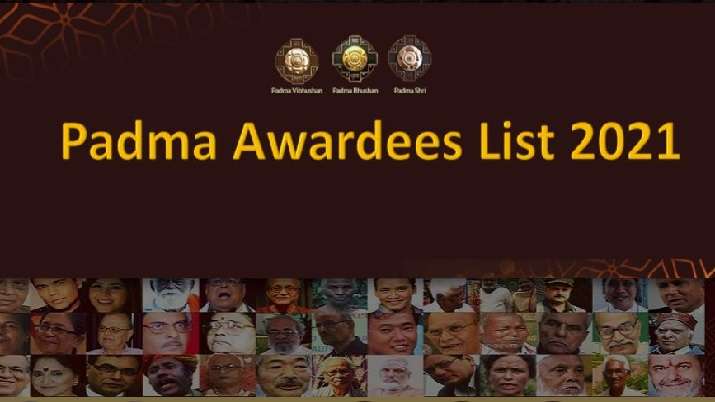
The Padma Awards are one of India’s highest civilian accolades, given out on the eve of Republic Day every year. The three categories of awards are as follows:-
Padma Vibhushan which is given for extraordinary and distinguished service
Padma Bhushan for distinguished service of higher level
Padma Shri for distinguished service in any field
The award is intended to reward accomplishments in all professions or disciplines where public service is a factor. The profession may include art, sports, trade, and industry etc. They are given out based on the recommendations of the Padma Awards Committee, which is formed every year by the Prime Minister. The public is invited to participate in the nomination process. Even one can nominate oneself. These honors are open to everyone, regardless of ethnicity, occupation, status, or gender. Government employees, including those who work for PSUs, are not eligible for these awards, with the exception of physicians and scientists.
The President has authorized the conferment of 119 Padma Awards this year, including one dual case in which the Award is considered as one. There are seven Padma Vibhushan awards, ten Padma Bhushan awards, and 102 Padma Shri awards on the list. There are 29 women among the honorees, as well as 10 foreigners, NRIs, PIOs, and OCIs, 16 posthumous awards, and one transgender awardee. The list is as follows:-
PADMA VIBUSHAN (7)
NAME
DISCIPLINE/FIELD
STATE/COUNTRY
1 Shri Shinzo Abe
Public affairs
Japan
2.Shri S P Balasubramanian(posthumous)
Art
Tamil Nadu
3.Dr. Belle Monapo Hedge
Medicine
Karnataka
4. Shri Narinder Singh Kapany (Posthumous)
Science and engineering
United states of America
5. Maulana Wahiduddin Khan
Others-spiritualism
Delhi
6. Shri B. B. Lal
Others-Archeology
Delhi
7. Shri Sudarshan Sahoo
Art
Odisha
PADMA BHUSHAN(10)
NAME
DISCIPLINE/FIELD
STATE/COUNTRY
1.Ms. Krishnan Nair Shantakumari Chithra
Art
Kerala
2.Shri Tarun Gogoi (Posthumous)
Public affairs
Assam
3.Shri Keshubhai Patel(Posthumous)
Public affairs
Gujrat
4.Shri Chandrashekhar Kambara
Literature and Education
Karnataka
5.Ms. Sumitra Mahajan
Public Affairs
Madhya Pradesh
6.Shri Nripendra Misra
Civil service
Uttar Pradesh
7.Shri Kalbe Sadiq (Posthumous)
Others-spiritualism
Uttar pradesh
8. Shri Tarlochan Singh
Public affairs
Haryana
9.Shri Rajnikant Devidas Shroff
Trade and industry
Maharashtra
10.Shri Ram Vilas Paswan (posthumous)
Public Affairs
Bihar
PADMA SHRI(102)
NAME
DISCIPLINE/FIELD
STATE/COUNTRY
Gulfam Ahmed
Art
Uttar Pradesh
P. Anitha
Sports
Tamil Nadu
Rama Swamy Annavarapu
Art
Andhra Pradesh
Subbu Arumugam
Art
Tamil Nadu
Prakasarao Asavadi
Literature and Education
Andhra Pradesh
Bhuri Bai
Art
Madhya Pradesh
Radhe Shyam Barle
Art
Chhattisgarh
Dharma Narayan Barma
Literature and Education
West Bengal
Lakhimi Baruah
Social Work
Assam
Biren Kumar Basak
Art
West Bengal
Rajni Bector
Trade and Industry
Punjab
Peter Brook
Art
United Kingdom
Sangkhumi Bualchhuak
Social Work
Mizoram
Gopiram Bargayn Burabhakat
Art
Assam
Bijoya Chakravarty
Public Affairs
Assam
Sujit Chattipadhyay
Literature and Education
West Bengal
Jagdish Chaudhary (Posthumous)
Social Work
Uttar Pradesh
Tsultrim Chonjor
Social Work
Ladakh
Mouma Das
Sports
West Bengal
Srikant Datar
Literature and Education
The U.S.A.
Narayan Debnath
Art
West Bengal
Chutni Devi
Social Work
Jharkhand
Dulari Devi
Art
Bihar
Radhe Devi
Art
Manipur
Shanti Devi
Social Work
Odisha
Wayan Dibia
Art
Indonesia
Dadudan Gadhavi
Literature and Education
Gujarat
Parshuram Atmaram Gangavane
Art
Maharashtra
Jai Bhagwan Goyal
Literature and Education
Haryana
Jagdish Chandra Halder
Literature and Education
West Bengal
Mangal Singh Hazowary
Literature and Education
Assam
Anshu Jamsenpa
Sports
Arunachal Pradesh
Purnamasi Jani
Art
Odisha
Matha B. Manjamma Jogati
Art
Karnataka
Damodaran Kaithapram
Art
Kerala
Namdeo C. Kamble
Literature and Education
Maharashtra
Maheshbhai and Nareshbhai Kanodia (Duo) (Posthumous)
Positive psychology is one of the newest branches of psychology to emerge. This particular area of psychology focuses on how to help human beings prosper and lead healthy, happy lives. While many other branches of psychology tend to focus on dysfunction and abnormal behaviour, positive psychology is centered on helping people become happier. Positive psychology is designed to “complement and extend the problem-focused psychology that has been dominant for decades,” explained the late Christopher Peterson, author of “A Primer in Positive Psychology” and professor at the University of Michigan, in a 2008 article published in Psychology Today. “Positive psychology is…a call for psychological science and practice to be as concerned with strength as with weakness; as interested in building the best things in life as in repairing the worst; and as concerned with making the lives of normal people fulfilling as with healing pathology,” Peterson wrote.
According to leading authorities in the field, Martin Seligman and Mihaly Csikszentmihalyi, positive psychology will help achieve “scientific understanding and effective interventions to build thriving in individuals, families, and communities.” In order to understand the field of positive psychology, it is essential to start by learning more about its major theories, applications, and history.
History of Positive Psychology
“Before World War II, psychology had three distinct missions: curing mental illness, making the lives of all people more productive and fulfilling, and identifying and nurturing high talent,” wrote Seligman and Mihaly Csikszenmihalyi in 2000. Shortly after WWII, the primary focus of psychology shifted to the first priority: treating abnormal behavior and mental illness. In the 1950s, humanist thinkers like Carl Rogers, Erich Formm and Abraham Maslow helped renew interest in the other two areas by developing theories that focused on happiness and the positive aspects of human nature.
General interest in positive psychology has grown tremendously since the concept was introduced. Today, more and more people are searching for information on how they can become more fulfilled and achieve their full potential.
Uses
Positive psychology can have a range of real-world applications in areas including eduction, therapy, self-help, stress management, and workplace issues. Some of the major topics of interest in positive psychology include: Character strengths and virtues, Flow, Gratifications, Gratitude, Happiness, Pleasure, Helplessness, Hope, Mindfulness, Optimism, Positive thinking, Resilience .
Impact of Positive Psychology
Some of the major findings of positive psychology include: Money doesn’t necessarily buy well-being, but spending money on other people can make individuals happier, People are generally happy, Some of the best ways to combat disappointments and setbacks include strong social relationships and character strengths, While happiness is influenced by genetics, people can learn to be happier by developing optimism, gratitude, and altruism, Work can be important to well-being, especially when people are able to engage in work that is purposeful and meaningful.
Potential Pitfalls
Positive psychology is often confused with positive thinking, and misconstrued as self-help tactics rather than research-backed theories. Positive thinking is a way of thinking ourselves into better behavior and greater resilience, rather than behaving our way into a different frame of mind. Positive psychology, on the other hand, is the scientific study of what makes people thrive. It focuses on behaviors that can lead to a more optimized frame of mind as well as on thought patterns that lead to more functional behaviors.
Artificial intelligence (AI) refers to the simulation of human intelligence in machines that are programmed to think like humans and mimic their actions. The term may also be applied to any machine that exhibits traits associated with a human mind such as learning and problem-solving.
Artificial intelligence (AI) is intelligence demonstrated by machines, as opposed to the natural intelligence displayed by humans or animals. Leading AI textbooks define the field as the study of “intelligent agents”: any system that perceives its environment and takes actions that maximize its chance of achieving its goals. Some popular accounts use the term “artificial intelligence” to describe machines that mimic “cognitive” functions that humans associate with the human mind, such as “learning” and “problem solving”.
AI applications include advanced web search engines, recommendation systems (used by YouTube, Amazon and Netflix), understanding human speech (such as Siri or Alexa), self-driving cars (e.g. Tesla), and competing at the highest level in strategic game systems (such as chess and Go), As machines become increasingly capable, tasks considered to require “intelligence” are often removed from the definition of AI, a phenomenon known as the AI effect. For instance, optical character recognition is frequently excluded from things considered to be AI, having become a routine technology.
Artificial intelligence was founded as an academic discipline in 1956, and in the years since has experienced several waves of optimism, followed by disappointment and the loss of funding (known as an “AI winter”), followed by new approaches, success and renewed funding. AI research has tried and discarded many different approaches during its lifetime, including simulating the brain, modeling human problem solving, formal logic, large databases of knowledge and imitating animal behavior. In the first decades of the 21st century, highly mathematical statistical machine learning has dominated the field, and this technique has proved highly successful, helping to solve many challenging problems throughout industry and academia.
The various sub-fields of AI research are centered around particular goals and the use of particular tools. The traditional goals of AI research include reasoning, knowledge representation, planning, learning, natural language processing, perception and the ability to move and manipulate objects. General intelligence (the ability to solve an arbitrary problem) is among the field’s long-term goals. To solve these problems, AI researchers use versions of search and mathematical optimization, formal logic, artificial neural networks, and methods based on statistics, probability and economics. AI also draws upon computer science, psychology, linguistics, philosophy, and many other fields.
The field was founded on the assumption that human intelligence “can be so precisely described that a machine can be made to simulate it”. This raises philosophical arguments about the mind and the ethics of creating artificial beings endowed with human-like intelligence. These issues have been explored by myth, fiction and philosophy since antiquity. Some people also consider AI to be a danger to humanity if it progresses unabated. Others believe that AI, unlike previous technological revolutions, will create a risk of mass unemployment.
Artificial Intelligence Characteristics
Deep Learning. Deep learning is a machine learning technique that teaches computers to do what comes naturally to humans, to learn by example.
Facial Recognition
Automate Simple and Repetitive Tasks
Data Ingestion
Chatbots
Quantum Computing
Cloud Computing
Following are some sectors which have the application of Artificial Intelligence:
AI in Astronomy. Artificial Intelligence can be very useful to solve complex universe problems
Destinations such as Maldives, Croatia, South Africa, Switzerland, Russia, Lebanon, Germany, Ukraine, UAE, Turkey and Iceland have started allowing non-essential travel, subject to vaccination or other conditions.
India’s biggest online travel portal, MakeMyTrip, has seen a 35% jump in searches for international leisure packages in July compared to that in the previous month, with the Maldives and Russia ranking high on the list of preferred destinations.
“As positivity rates drop, we hope it encourages more countries to open their borders to Indian travellers,” said Vinay Malhotra, regional group chief operating officer, South Asia, Middle East and North Africa and Americas at visa processing firm VFS Global.
Aloke Bajpai, group CEO at Ixigo, said search enquiries on the company’s platform for travel to overseas destinations have seen 80-85% increase in July as compared to last month. “With several countries easing travel restrictions, interest in leisure international travel to countries such as the Maldives, Switzerland, Germany, Qatar and Turkey is rising,” he said.
Some countries such as Qatar and Switzerland require a full vaccination certificate (Covishield) from Indian travellers. Iceland has given an option to travellers to either submit a full vaccination certificate or a Covid-19 recovery certificate. Unvaccinated travellers can travel to countries such as the Maldives, Russia, Germany, Turkey, Nepal and Ukraine by providing a negative RT-PCR report issued within 72 hours of departure.
To cash in on the increasing interest, SOTC Travel has introduced a range of offers such as ‘Buy One Get One Free – Get your Companion’s Holiday Free’ for overseas destinations. Daniel D’souza, country head for leisure at the company, said the most popular destinations in terms of enquiries include Dubai, the Maldives, Russia and Switzerland. The company has seen a 35-40% increase week-on-week in enquiries, he said.
Kanika TTekriwal, CEO, JetSetGo Aviation, said travellers are still conscious about the high likelihood of contracting the virus via regular flights. As a result, her private jet and helicopter services company has been seeing 10-12 booking queries each day since air travel suspension was lifted for the Maldives and some European countries.
No one ever knew that coronavirus would stay on this long, and a 21 days lockdown would extend to a year and half now. All the plans, the expectations of getting a normal grad-farewell, went nowhere but into an invisible bin in space. Day by day, breath by breath, I find it hard to live, to exist; sitting and wasting the last year of my graduation attending lectures online – what worse could happen. But no. The worse was yet to come an online farewell?! For real?
I get that this is not really as worse as the situation is out there. Millions of people have lost thier jobs and their only source of income. Many corners of the world has peoples starving to death. Here every passing second, I can hear the intensity of sirens increasing next street. My phone is buzzed with calls of my parents asking if I’m doing okay and also my relatives informing that they tested positive and we could do nothing but just be there emotionally, a thousand miles apart. Just like the cases, the number of deaths of knowns and unknowns are increasing and I’m so intimidated by the pain and anxiety this has left us with.
If we look back when everything was normal, when we could roam around with our friends and family, when we could have things we craved for at that instance, when we could watch skies changing colours while the sun setting down over chit chatting with our friends, when we could stay with them even if the sky turned dark. When there were no curfews, no restrictions, we could stay that way as long as we wished for. Only if we knew in March’20, maybe then, we could hold on to our closer ones a little longer, we would enjoy that last sunset together a little longer, we would enjoy that one last meal together a little longer. Only if we knew that time, we would appreciate those small little things more than we ever did. This pandemic taught us few lessons though; to reconnect with our loved ones; to appreciate and be grateful for every little joy of happinesses.
Ever since our births, we’re always taught to look at the brighter picture. This pandemic taught us few lessons though; to reconnect with our loved ones; to appreciate and be grateful for every little joy of happinesses. Even if we’re miles apart from our loved ones, we’re still connected to them by these screens; these megapixel screens act as a ray of hope to the darkness of despair around. In the end, all that I have now is just me and these megapixel screens. But, is it really an end if it’s not a happy one? Somewhere deep down in our hearts we still know we’re going to live that life before Covid again; where we would step out of our houses without masks & sanitizers. But this time hasn’t come yet. So, we still have to follow all the safety precautions as we know together we can get through this.
Awards And Honors: Grammy Award (1970) Nobel Prize (1964)Notable Works: “I Have A Dream”
Occupation – Baptist, minister,activist
Known for – Civil rights movement, Peace movement
Awards – Nobel Peace Prize (1964) Presidential Medal of Freedom (posthumously, 1977) Congressional Gold Medal (posthumously, 2004)
About his Life:
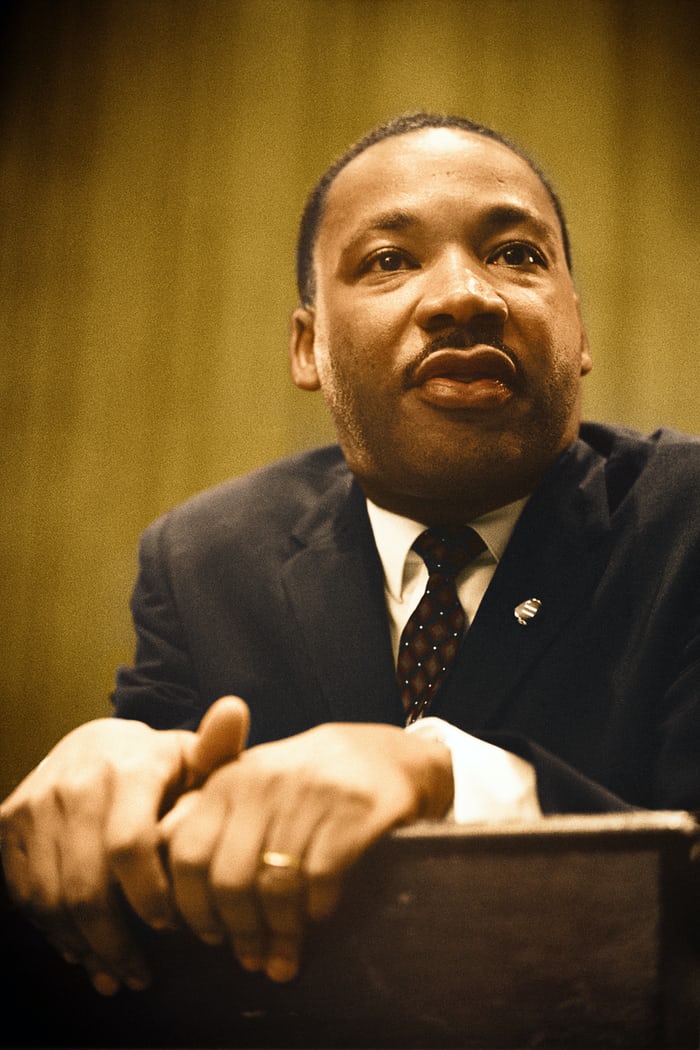
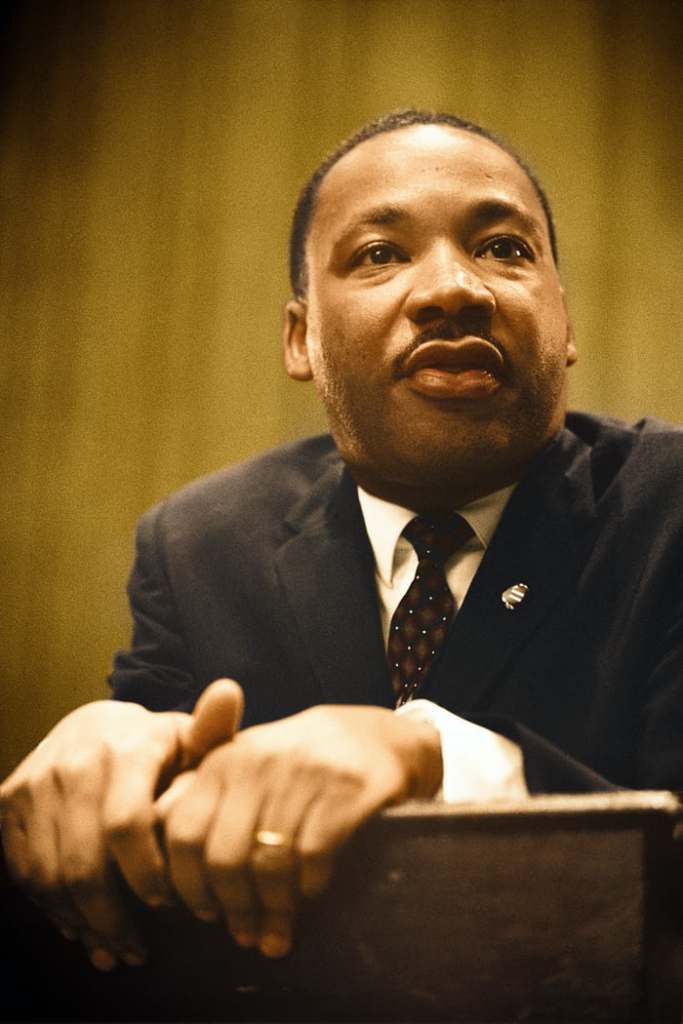
There are people who are able to defeat the ravages of the eternal enemy-time and continue to live on in the minds of men, There are a select few who challenge the limitations of a system that fails to deliver justice. Men like Martin Luther King Jr are soldiers of God who do not care for the consequences when it comes to fighting for the truth. King was born on 15 January 1929, at Atlanta and died on 4 April 1968, at Memphis. Not a very long life, but what he achieved during this time is enviable. Few men reach such dazzling heights of spiritual success even in several lives.
King was a US civil rights leader. The son and grandson of Baptist teachers, King was deeply influenced by the idea of non-violence while in college. The influence of Mahatma Gandhi was obvious. Ordained a Baptist minister himself in 1954, he became pastor of a church in Montgomery. University. He was elected to head the Montgomery Improvement Association whose boycott efforts eventually ended the city’s policies of racial discrimination on public transportation. 1955, he received a doctorate from Boston University. He was elected to head the Montgomery improvement association whose boycott efforts eventually ended the city’s policies of racial discrimination on public transportation.
History:
In 1957, he formed the Southern Christian Leadership Conference and began lecturing nationwide, urging active non-violence to achieve civil rights for African Americans. In 1960, he was back in Atlanta to become co-pastor of Ebenezer Baptist Church with his father.
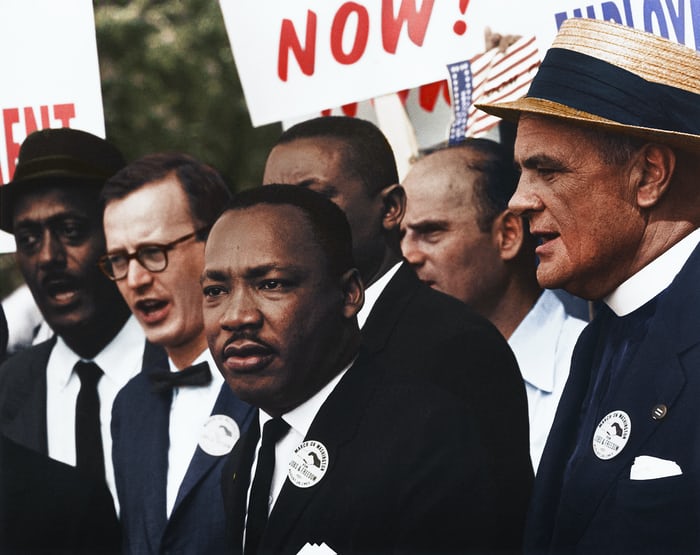
He was arrested and jailed for protesting segregation at a lunch counter. The case drew national attention and none other than the then presidential candidate, John F Kennedy, had to intercede to obtain his release. In 1963 King helped organise the March on Washington, an assembly of more than 200,000 protestors, at which he made his famous ‘I have a dream’ speech. This powerful and moving speech celebrates humanity as one big family where being human is more important than being black or white. The march influenced the passage of the Civil Rights Act of 1964. King was awarded the 1964 Nobel Prize for Peace.
In 1965, he was criticised from within the civil-rights movement for yielding to state troopers at a march in Selma and for failing in the effort to change Chicago’s housing segregation policies. Thereafter, he broadened his advocacy, addressing the plight of the poor of all races and opposing the Vietnam War. In 1968, he went to Memphis to support a strike by sanitation workers. There, on April 4, he was assassinated by James Earl Ray. A U.S. national holiday is celebrated in King’s honour on the third Monday of January in the USA. King, like Gandhi, was a gentle yet powerful prophet of a non- violent revolution who sacrificed his life for his principles. King lives through his work and words in the hearts of millions, and his untiring zeal to achieve justice motivates individuals to keep trying. The kind of following King has today undoubtedly makes us feel, ‘when one is willing, the Gods join in’. (Aeschylus).
MK day:After years of campaigning by activists, members of Congress and Coretta Scott King, among others, in 1983 President Ronald Reagan signed a bill creating a U.S. federal holiday in honor of King.Observed on the third Monday of January, Martin Luther King Day was first celebrated in 1986.
Assassination of Martin Luther King:
The events in Selma deepened a growing rift between Martin Luther King, Jr. and young radicals who repudiated his nonviolent methods and commitment to working within the established political framework.
As more militant Black leaders such as Stokely Carmichael rose to prominence, King broadened the scope of his activism to address issues such as the Vietnam War and poverty among Americans of all races. In 1967, King and the SCLC embarked on an ambitious program known as the Poor People’s Campaign, which was to include a massive march on the capital.
On the evening of April 4, 1968, Martin Luther King was assassinated. He was fatally shot while standing on the balcony of a motel in Memphis, where King had traveled to support a sanitation workers’ strike. In the wake of his death, a wave of riots swept major cities across the country, while President Johnson declared a national day of mourning.
James Earl Ray, an escaped convict and known racist, pleaded guilty to the murder and was sentenced to 99 years in prison. He later recanted his confession and gained some unlikely advocates, including members of the King family, before his death in 1998.
Martin Luther king Jr. Quotes:
“The ultimate measure of a man is not where he stands in moments of comfort and convenience, but where he stands at times of challenge and controversy.”
“Freedom is never voluntarily given by the oppressor; it must be demanded by the oppressed.”
“The time is always right to do what is right.”
“True peace is not merely the absence of tension; it is the presence of justice.”
“Our lives begin to end the day we become silent about things that matter.”
“Free at last, Free at last, Thank God almighty we are free at last.”
“Faith is taking the first step even when you don’t see the whole staircase.”
“In the end, we will remember not the words of our enemies, but the silence of our friends.”
“I believe that unarmed truth and unconditional love will have the final word in reality. This is why right, temporarily defeated, is stronger than evil triumphant.”
“I have decided to stick with love. Hate is too great a burden to bear.”
“Be a bush if you can’t be a tree. If you can’t be a highway, just be a trail. If you can’t be a sun, be a star. For it isn’t by size that you win or fail. Be the best of whatever you are.”
A tool that has become extremely popular among all generations because of its user-friendly interface is social media. The most dominant user crowds of social media are the youth, which is both impressive and a daunting issue at the same time.
Our connections have widened thanks to social media, and almost the entire world is available at our fingertips. But amid all the fleeting but intriguing trends on social media that impact us, we must be careful not to lose our uniqueness.
The massive reach quality of social media is a powerful quality that makes me wonder about times when it is not be used for positive purposes. And it is no news that industries have also realized the power of social media on our lives and have started using it in their favor.
To sum up, social media has both good and bad aspects, which is a debatable topic, just like our opinions. It also gives rise to several online arguments and debates on social media.So use social media in limited way .
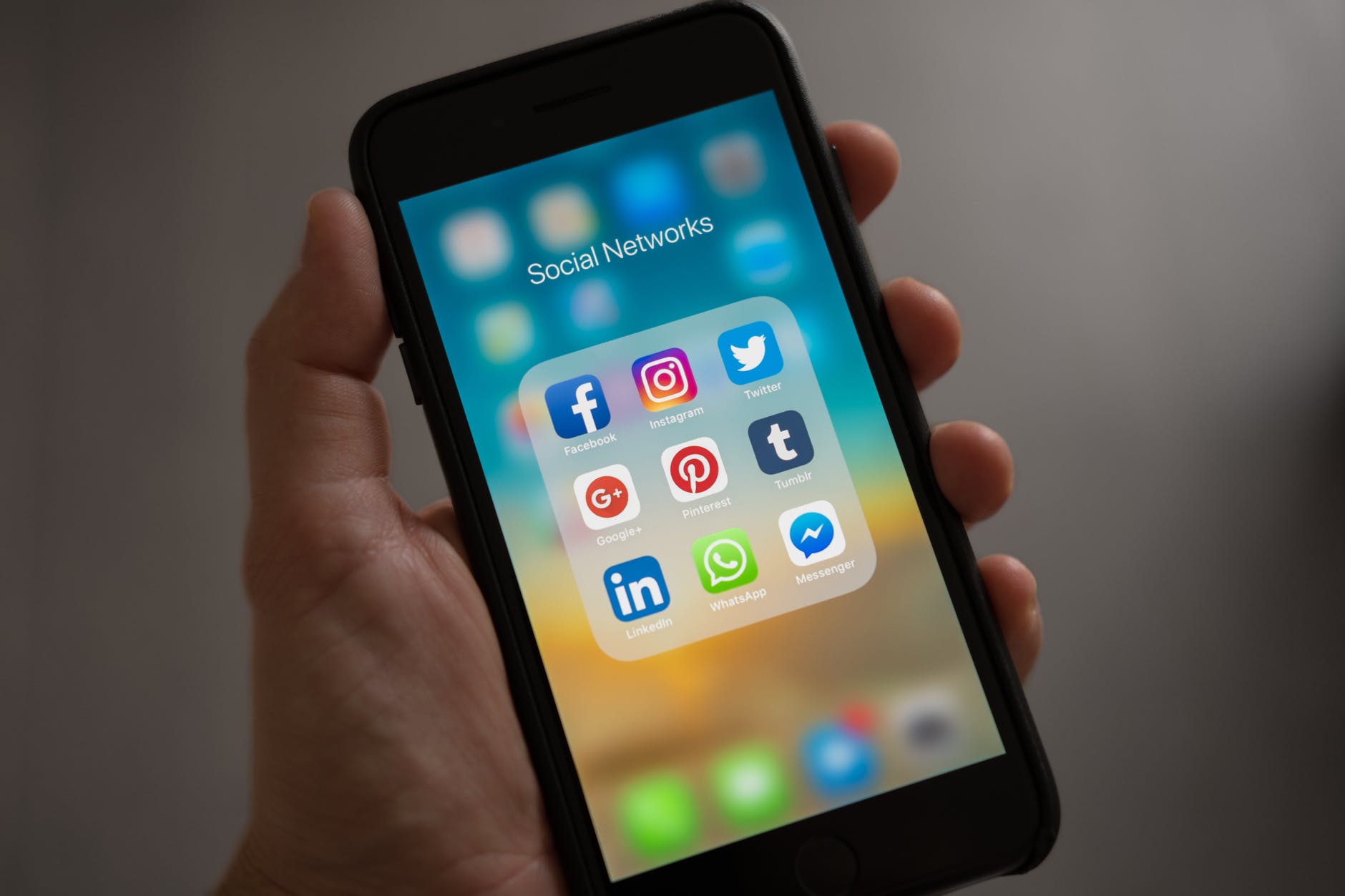
Social media is a tool that is becoming quite popular these days because of its user-friendly features. Social media platforms like Facebook, Instagram, Twitter and more are giving people a chance to connect with each other across distances. In other words, the whole world is at our fingertips all thanks to social media. The youth is especially one of the most dominant users of social media. All this makes you wonder that something so powerful and with such a massive reach cannot be all good. Like how there are always two sides to a coin, the same goes for social media. Subsequently, different people have different opinions on this debatable topic. So, in this essay on Social Media, we will see the advantages and disadvantages of social media.
Advantages of Social Media
When we look at the positive aspect of social media, we find numerous advantages. The most important being a great device for education. All the information one requires is just a click away. Students can educate themselves on various topics using social media.
Moreover, live lectures are now possible because of social media. You can attend a lecture happening in America while sitting in India.
Furthermore, as more and more people are distancing themselves from newspapers, they are depending on social media for news. You are always updated on the latest happenings of the world through it. A person becomes more socially aware of the issues of the world.
In addition, it strengthens bonds with your loved ones. Distance is not a barrier anymore because of social media. For instance, you can easily communicate with your friends and relatives overseas.
Most importantly, it also provides a great platform for young budding artists to showcase their talent for free. You can get great opportunities for employment through social media too.
Another advantage definitely benefits companies who wish to promote their brands. Social media has become a hub for advertising and offers you great opportunities for connecting with the customer.
Disadvantages of Social Media
Despite having such unique advantages, social media is considered to be one of the most harmful elements of society. If the use of social media is not monitored, it can lead to grave consequences.
It is harmful because it invades your privacy like never before. The oversharing happening on social media makes children a target for predators and hackers. It also leads to cyberbullying which affects any person significantly.
Thus, the sharing on social media especially by children must be monitored at all times. Next up is the addition of social media which is quite common amongst the youth.
This addiction hampers with the academic performance of a student as they waste their time on social media instead of studying. Social media also creates communal rifts. Fake news is spread with the use of it, which poisons the mind of peace-loving citizens.
In short, surely social media has both advantages and disadvantages. But, it all depends on the user at the end. The youth must particularly create a balance between their academic performances, physical activities, and social media. Excess use of anything is harmful and the same thing applies to social media. Therefore, we must strive to live a satisfying life with the right balance.
So what is so interesting about lake baikal that it is worth mentioning in an article?what is so special about it?
The above questions may rise in your mind cause these were the questions that raised in my mind when I heard of this lake Baikal.
Jumping straight in to the topic
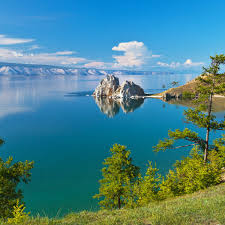
Lake Baikal is the deepest and oldest lakes in the world.Lake Baikal is located in mountainous Russian region of Siberia.
From: the conversation.com
This lake is so massive that it's often mistaken for a sea. It is known for its crystal clear water.It contains 20% of the world's total unfrozen freshwater reserve which adds another feather to it's cap.
Baikal is an abode to numerous species of Plants and animals native to that place.
From: beautifulworld.com
The Buryat tribes, who raise goats, camels, cattle, sheep, and horses on the eastern side of the lake Baikal .
Lake Baikal is home to more than one thousand of species of plants and more than more than 2,500 species of animals
A wide range of mammal’s can be found in the lake around the lake such as Eurasian brown bear,elk,siberian deer etc .
Baikal seal is famous as it is one of the only three entirely fresh water seals.
Rich in aquatic flora,fishes ,amiphods, aquatic worms snails,bivalves,sponges etc.
From: adventure.howstuffworks.com
Tourists visit this place from mid Jan to mid April also called the ice season as the thickness of the ice increases during this period allows safe driving enabling the mobility of tourists safely.
From:theatlantic.com
People who visit this enchanting lake are left spell bound. Its a beautiful destination for travelling and the especially the trails and picturesque places near the lake Baikal are something that you shouldn't miss when you visit there. It definitely should be added to once bucket list.
Augmented reality (AR) is an interactive experience of a real-world environment where the objects that reside in the real world are enhanced by computer-generated perceptual information.
sometimes across multiple sensory modalities, including visual, auditory, haptic, somatosensory and olfactory. AR can be defined as a system that incorporates three basic features: a combination of real and virtual worlds, real-time interaction, and accurate 3D registration of virtual and real objects. The overlaid sensory information can be constructive (i.e. additive to the natural environment), or destructive (i.e. masking of the natural environment). This experience is seamlessly interwoven with the physical world such that it is perceived as an immersive aspect of the real environment. In this way, augmented reality alters one’s ongoing perception of a real-world environment, whereas virtual reality completely replaces the user’s real-world environment with a simulated one. Augmented reality is related to two largely synonymous terms: mixed reality and computer-mediated reality.
The primary value of augmented reality is the manner in which components of the digital world blend into a person’s perception of the real world, not as a simple display of data, but through the integration of immersive sensations, which are perceived as natural parts of an environment. The earliest functional AR systems that provided immersive mixed reality experiences for users were invented in the early 1990s, starting with the Virtual Fixtures system developed at the U.S. Air Force’s Armstrong Laboratory in 1992. Commercial augmented reality experiences were first introduced in entertainment and gaming businesses. Subsequently, augmented reality applications have spanned commercial industries such as education, communications, medicine, and entertainment. In education, content may be accessed by scanning or viewing an image with a mobile device or by using markerless AR techniques.
Augmented reality is used to enhance natural environments or situations and offer perceptually enriched experiences. With the help of advanced AR technologies (e.g. adding computer vision, incorporating AR cameras into smartphone applications and object recognition) the information about the surrounding real world of the user becomes interactive and digitally manipulated. Information about the environment and its objects is overlaid on the real world. This information can be virtual. Augmented Reality is any experience which is artificial and which adds to the already existing reality or real, e.g. seeing other real sensed or measured information such as electromagnetic radio waves overlaid in exact alignment with where they actually are in space. Augmented reality also has a lot of potential in the gathering and sharing of tacit knowledge. Augmentation techniques are typically performed in real time and in semantic contexts with environmental elements. Immersive perceptual information is sometimes combined with supplemental information like scores over a live video feed of a sporting event. This combines the benefits of both augmented reality technology and heads up display technology (HUD).
Comparison with virtual reality
In virtual reality (VR), the users’ perception of reality is completely based on virtual information. In augmented reality (AR) the user is provided with additional computer generated information within the data collected from real life that enhances their perception of reality. For example, in architecture, VR can be used to create a walk-through simulation of the inside of a new building; and AR can be used to show a building’s structures and systems super-imposed on a real-life view. Another example is through the use of utility applications. Some AR applications, such as Augment, enable users to apply digital objects into real environments, allowing businesses to use augmented reality devices as a way to preview their products in the real world. Similarly, it can also be used to demo what products may look like in an environment for customers, as demonstrated by companies such as Mountain Equipment Co-op or Lowe’s who use augmented reality to allow customers to preview what their products might look like at home through the use of 3D models.
Augmented reality (AR) differs from virtual reality (VR) in the sense that in AR part of the surrounding environment is actually ‘real’ and just adding layers of virtual objects to the real environment. On the other hand, in VR the surrounding environment is completely virtual. A demonstration of how AR layers objects onto the real world can be seen with augmented reality games. WallaMe is an augmented reality game application that allows users to hide messages in real environments, utilizing geolocation technology in order to enable users to hide messages wherever they may wish in the world. Such applications have many uses in the world, including in activism and artistic expression.
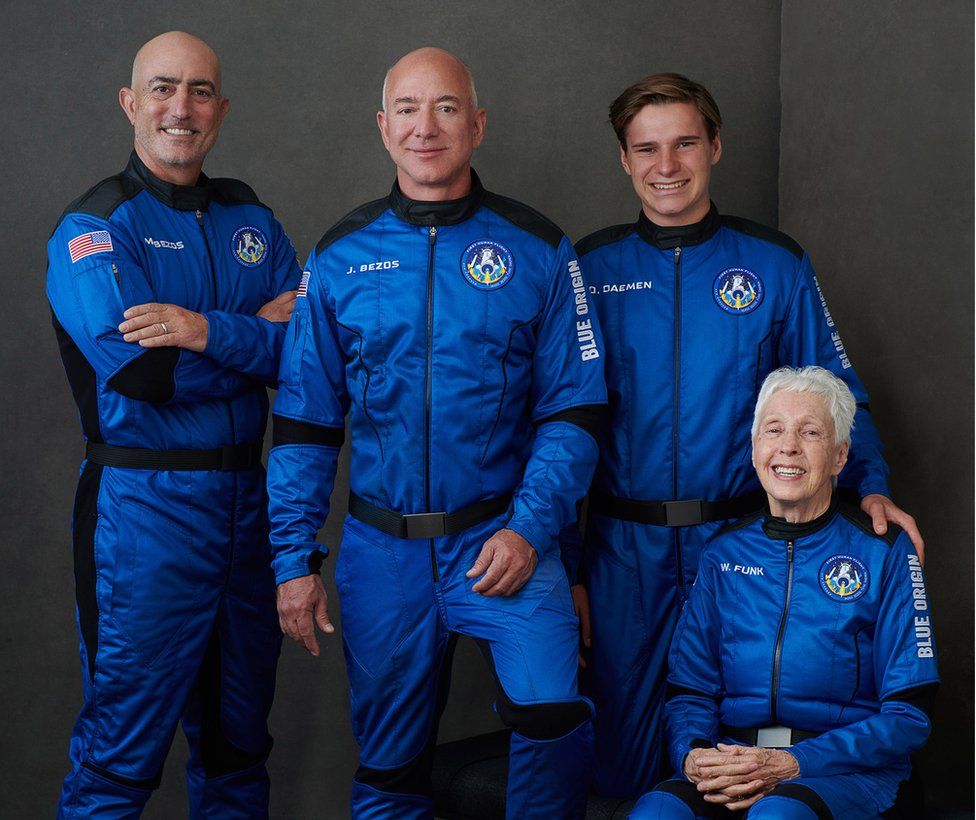
Jeff Bezos, the founder of Amazon and Blue Origin, the richest man on the planet and a lot many adjectives that are used for him – finally and quite successfully monetized space travel in the eyes of the Earthlings.
Commercial Astronaut Bezos in his maiden space voyage.
To begin with, he thanked and congratulated all earthlings for this success. He added that it was we, the people and all the employees of Amazon who had paid for it. Well, he isn’t exactly lying. And we could be thankful to him too, for he has successfully monetized space travel – something we all wanted to hear as kids – well maybe not the monetization part. But it will be this monetization that will fuel more companies to enter into the market. Elon Musk has already worked a lot on reusable space crafts, not to forget that many space agencies – the most prominent being ISRO in India are working to create cheaper means of launching cargo and satellites into space and there are many private space-based start-ups opening up too. Maybe in a decade, space travel will be accessible to at least the upper middle class across the planet.
But should we really thank Jeff Bezos? Opening space for travel opens space for greater amount of debris and maybe a push for institutions all around the world to find out ways to tackle an already existing problem. To add to that, Space travel and Musks’s goal of colonising Mars are but only more incentives to reduce budget on the environment in the long run. Sounds like a dystopian Science Fiction but history points out to the facts that when man was not bound by citizenship laws, forests and agrarian lands have gone barren only because they had options. It is this history that has pushed us towards all the environmental litigations we know of. Will we be as enthusiastic about them if Mars colonies were a reality? As Musk has himself repeatedly stressed that Earth might no longer be livable. Well, scientifically, it is livable upto another 4.5 billion years. But we, the people and the way in which we living beings influence the climate might not allow the planet to see more than 500 years from now. And we are not to be shamed about it. Our education, our governments and our media is more accountable than we are. These are the institutions that tell us what and how the world is. And unfortunately, we believe that is the way the world is.
So, should we or should we not support a scientific and technological advancement?
The answers don’t really lie with anyone. While Bezos travelled to space and Musk revolutionised reusability of the crafts, we still saw public demonstrations in South America against the change in fishing litigations, India against the allegedly anti-environment and corporate-friendly revisions in Environment Impact Assessment Law draft and in Brazil against the government’s decision to not do a lot about the Amazon fires. Humanity still loves this Earth and while in a distant future, capitalism can shame people for doing so, it is increasingly unsuccessful right now. And let us not only keep it that way, but also create ways to add to that love.
Who is Dr. Death? How did he come to be? How did he continue practicing medicine despite hurting a terrifying number of patients? This series unfolded politics with an operating room, hospitals, and law.
A real-life story about a doctor who maimed and killed his patient relentlessly and without guilt.
Plot:
The story revolves around Christopher Duntsch, a former neurosurgeon who “Intentionally” maimed and even killed his patients. His two fellow colleagues and a prosecutor Michelle Shughart’s journey to stop him and bring justice. The drama miniseries is based on the podcast(by Wondery), with the same name, which covered his heinous crime.
Release date: 15 July 2021
No. of episodes: 8
Network: Peacock
Genre: True Crime
Writer(s): Patrick Macmanus
Executive producers: Jason Blumthal, Marshall Lewy, Steve tisch and more.
Running time: 43-60 minutes.
Let’s start with introduction of characters and their stories!
Christopher Duntsch aka DR. Death or Dr. D.
From the start, it is very obvious that he is a very obnoxious, extremely narcissist with God complex ( someone who thinks they has been divinely blessed or has an exceptional talent compared to everyone else, that they can perform risks to save someone’s life because they can’t make mistakes. Even if they do make mistakes they can either miraculously correct them or it is the fault of people around them which they then discard to take action upon) and who is in denial of his abilities.
“I don’t have complications”, “The attending interrupted which distracted me”, “I can leave kindness and become a stone-cold killer, and the way he slammed every doctor’s procedure to prove his way of surgery screams an insane amount of sociopath vibes and terrifying negligence. These were some of the red flags
He has said to have performed 37 surgeries, out of which 33 have intense complications and some dead. A neurosurgeon who brags about educational accomplishment all the time, doesn’t accept the existence of human error
Roles Portrayed:
Each and every actor portrayed their roles excellently. You could feel their irritation and anger radiating through the screens. Patient’s nervousness, excitement, desperation makes you imagine yourself to be in their or their loved one’s situation. The nonchalance of Duntsch ( By Joshua Jackson), his ability to use charm and threats to remain a doctor and get selected in other hospitals infuriates you to the bone. Dr. Robert Henderson’s (Alex Baldwin) immeasurable patience and Dr. Randall Kirby’s (Christian Slater)relatable impatience and anger take you on a rollercoaster ride.
Review:
The show starts with his patients at Dallas Medical. 3 days, 3 patients. One dead, one woken with extreme pain and no mobility in legs, and one is said to be recovering. Dr. Robert Henderson had to perform a revision surgery on Madeleine Beyer, who woke up with extreme pain. During surgery he found out that there were many holes which were from the attempted attachment of screws, her fragments of bone dispersed and piercing main nerves. He wonders what did Duntsch do to her since her bones were completely shattered.
Through his course in Dallas, his circulating nurse, Josh Baker(Hobert Point-Du) consults and preps his OR. He is concerned about Duntsch as well as his patients. He questions and tries to protect patients. You get to see how nurses and everyone else except the doctor is treated with so little respect. Their voice of concern went not only unheard but also was looked upon as an interruption. Although one can understand that surgery is complex and doubts by people around us is effective, but in this scenario, the patients lost around 1700-2000 CC’s of blood and the nurses decided to voice their opinion. How can this be disregarded and the voices getting unheard? How can continuing to operate while a patient is hemorrhaging be ignored when these issues were brought to the Texas Medical Board? How is aggressively asking for a procedure like a craniotomy in a hospital where craniotomy is not performed (SO, they won’t have any instruments to do that and to counteract if it goes wrong isn’t there) okay when the situation could have been handled by simply transferring the patient to another hospital? It clearly shows that his intent was either to cover up his harm and to show doctorly care by performing a procedure
While writing the plot, I preferred to choose “Intentionally” since trained doesn’t just mean only that a superior/ attending is responsible for imparting knowledge. The learner/ resident has the equal responsibility to learn and practice what they have been taught. It also means that an attending, as well as a resident themselves, recognize what are they capable of and what are their limitations since it is someone’s life we are talking about. Just like Kayla Gibson said, he should have stuck to research.
Intentionally, because it is no wonder he knew he doesn’t know how to operate and yet he went on to shut everyone off and to continue operating the way he thought was right, i.e. recklessly treating his patients as mere Guinea pigs with little to no regard to human anatomy.
The series had me completely hooked till the end. Waiting for someone to listen to them, wanting to help them even it took place long back, feeling for each character since they seemed so genuine. I hated Duntsch and how calmly he dealt with everything. I hated how he easily went up the food chain and be unscathed. Joshua’s acting got me for real.
Well, let’s look at it objectively. Before, During and After. ( Spoilers ahead, if you haven’t seen the series completely)
He “compassionately” tells his patient about how not getting done a surgery could lead to what-nots, boats about degrees to nervous family members, wears the same scrubs with holes to operations. Then, during surgery, he erratically operates, slices through a vertebral artery takes a piece out of the esophagus, damaged vocal cords, intends to remove a disc but in the end, doesn’t even go near it, and perform surgery around the disc. Keeps asking for more follow-up to perform surgeries. But, would never check up on a patient, ignore their calls, and completely abandon them. He even operates on his best friend leaving him quadriplegia, blames others, and abandons him.
Dr. Kirby and his childlike behavior gets me since that’s how most of us would feel in the moment. The face of disbelief he carried all the way is remarkable.
To imagine that he would be still practicing medicine if his colleagues hadn’t reported and taken every measure to stop him, it is truly horrifying to imagine how many more lives he would have destroyed.
Note:
I applaud each and everyone who took a step against him and try to mend the system which is so broken. This series was so well made. The storyline was continuous, his behavioral relation between present and past, coldness, and the lives he affected out of surgery world; everything was so well thought and executed.
Seeing the series, might help you understand the world of surgery.
Although, the negativity of Dr. D is the main focus, we can always believe that there good doctors out there and we can ourselves support good ones and protect ourselves from Dr. D by asking questions regarding procedures and not being afraid to listen to our hesitation. Don’t let people like Duntsch affect other doctors whose only intention to save lives and help people. Do not get discouraged to reach out to medical care and do everything in our power to treat ourselves and our loved ones. Just remember to ask, have an open mind to all kinds of people, and be mentally prepped to go for treatments.
Earlier In china, one child policy was there which began in 1980 and was severely enforced until January 2016 when it was replaced by two-child policy.
China’s Communist Party Politburo meeting, headed by President Xi Jinping, declared on May 31,2021 that each couple in the nation will be allowed to have up to three children, a significant increase from the previous two-child restriction.
It was in response to the findings of the 2020 census, after Chinese mothers gave birth to just 12 million kids in 2020 and the global population increased to 1.412 billion in 2020 from 1.4 billion the previous year.
So therefore, As officials strive to resolve the country’s long-term demographic imbalances, Chinese couples will now be permitted to have up to three children. Supporting measures are also proposed which aims at easing the financial strain of raising children, including educational and housing expenditures. However, Existing exceptions to family planning, such as the lack of birth restrictions for some ethnic minority groups, remain in force. Couples that have more children than they are allowed risk significant fines, as well as unofficial consequences such as job loss, especially for those in the public sector.
Policymakers also stated that with addressing housing and school expenses they will also enhance maternity leave regulations, in order to reduce the costs of having children. But, administration made no specific promises on these topics, but did state that it would “protect the legitimate rights and interests of women in the workplace.”
The question now is why did the government modify the regulations in the first place. So, the government did so because its census shows long-standing demographic imbalances that might jeopardize the country’s economic viability, forcing Party officials to take action. Furthermore, unlike industrialized countries with low fertility rates, China remains a growing middle-income country with a limited social safety net. The fact that China does not accept large numbers of immigrants, domestic reproduction is even more important in maintaining the size of its workforce. Demographers predict that by 2050, the people over 60 years old will account for a quarter of the population because of which China’s economic growth and social services would be hampered by a declining working-age population and an increasing senior population. According to a research issued in 2019 by the Chinese Academy of Social Sciences, urban pension funds might run out by 2035 owing to demographic issues. Also, The one-child policy also resulted in selective sex-based abortions, resulting in a long-term sex imbalance with 723.34 million males and 688.44 million women in 2020.
The reaction of people are very important on such issues. So Therefore, An online poll was taken shortly after the modification was revealed which showed that 90% of those polled stated they “would not contemplate” having three kids. In response to this, an independent political economist in Beijing said that The three-child policy may have limited appeal for China’s new ‘lying flat’ generation, but it may have some hold on others. He further added that to enhance people’s willingness to have more children, the government should work hard to reduce the burden of education, housing, and other things. However, young Chinese are unlikely to desire bigger families




















 Eduindex
You must be logged in to post a comment.