Another Key to Success : Consistency


We all know, what maintaining consistency can do when it comes to bringing change or achieving something. Maintaining consistency for some time in any work or process can do wonders for you. 

But, What does it mean to be consistent? 

When we say an individual is consistent, it means, that individual is clear on what he/she wants to achieve and is taking crucial steps to achieve his/her goals. The level of consistency we maintain reflects our values and standards. Being consistent means doing things that are required today to achieve a better tomorrow. Consistency is simply about doing things on repetition over a while to achieve desired results. 

Then, Why many of us fail to maintain consistency? 

Well, there are numerous reasons why many of us fail to maintain consistency. Mentioned below are some of them:-

★ Lack of patience.

★ The desire for instant gratification.

★ Lack of clarity and focus.

★ Not having supporting habits or triggers.

★ Having a “all or nothing” mindset.

Anthony Jay Robbins (an American author, coach, speaker, and philanthropist) said, “It’s not what we do once in a while that shapes our lives. It’s what we do consistently.”

Why consistency is important? 

Knowing a few reasons will help you to give more attention to it. Mentioned below are five reasons why consistency is important:-

I) It will create accountability.

II) It will help you to stand out or be noticed. 

III) It develops discipline and self-control.

IV) It builds a higher level of trust.

V) It can help you fast-track your improvement or development in any area.

Ways to Develop Consistency

Although every individual has their their way of developing consistency. Mentioned below are some general ways to develop consistency:

I) Create a schedule or plan to stay on track.

II) Start with small steps.

III) Give yourself a break when you get off track.

IV) Start with small steps.

There are very low chances of achieving what we want without a proper strategy and consistency. In short, hard work and smart work together with consistency and the right attitude are the keys to success. 

Web Development

Top Web Development Companies in Hyderabad | WebHopers

Web Development Roadmaps

WEB…. The world using websites to take , give informations and converted to its useful

Let we learn about Web development

Front-End Roadmap

STEP 1

•       Learn the Basics

•       Every Web Developer must have a basic understanding of    HTML, CSS, and JavaScript.

•       Responsive Web Design is used in all types of modern web development.

•       ECMAScript 5 (JavaScript 5) is supported in all modern browsers. Take a good look at it, especially the new array functions.

•       HTML     

•       HTMLHTTP /  XHR

•       CSS

•       CSSCSS Responsive

•       JavaScript

•       JavaScriptECMAScript 5

STEP 2
Dig Deeper

When you feel comfortable with HTML and CSS, it is time to dig deeper.

You should learn how to use Maps, Fonts and Icons in HTML.

On the JavaScript side, you should learn how to access the HTML DOM.

You should also learn how to use AJAX and JSON for making server requests.

HTML

HTML DOMGoogle MapsGoogle FontsGoogle Charts

CSS

CSS Icons

JavaScript

XMLJSONAJAX

  • STEP 3
    Choose Frameworks
  • Now it is time to look at some Frameworks.
  • On the CSS side you should choose a framework for reponsive web design:
  • Bootstrap  /  Material Design  /  W3.CSS
  • On the JavaScript side you should learn at least one modern framework:
  • React.js  /  Angular.js  /  Vue.js   /  W3.JS
  • Maybe the popularity of jQuery has passed the top, but it is still the most used JavaScript framework.
  • CSS
  • BootstrapW3.CSS
  • JavaScript
  • jQueryAngularJSVue.jsW3.JS
  • XML
  • XSLTXPathXQuery

Back-End Roadmaps

  • STEP 4
    Back-End Roadmaps
  • Fullstack
  • SQLPHPASPPython
  • Fullstack JS
  • SQLNode.jsMySQLMongo.db

Web Development

Web Development Roadmaps

WEB…. The world using websites to take , give informations and converted to its useful

Let we learn about Web development

Front-End Roadmap

STEP 1

•       Learn the Basics

•       Every Web Developer must have a basic understanding of    HTML, CSS, and JavaScript.

•       Responsive Web Design is used in all types of modern web development.

•       ECMAScript 5 (JavaScript 5) is supported in all modern browsers. Take a good look at it, especially the new array functions.

•       HTML     

•       HTMLHTTP /  XHR

•       CSS

•       CSSCSS Responsive

•       JavaScript

•       JavaScriptECMAScript 5

STEP 2
Dig Deeper

When you feel comfortable with HTML and CSS, it is time to dig deeper.

You should learn how to use Maps, Fonts and Icons in HTML.

On the JavaScript side, you should learn how to access the HTML DOM.

You should also learn how to use AJAX and JSON for making server requests.

HTML

HTML DOMGoogle MapsGoogle FontsGoogle Charts

CSS

CSS Icons

JavaScript

XMLJSONAJAX

  • STEP 3
    Choose Frameworks
  • Now it is time to look at some Frameworks.
  • On the CSS side you should choose a framework for reponsive web design:
  • Bootstrap  /  Material Design  /  W3.CSS
  • On the JavaScript side you should learn at least one modern framework:
  • React.js  /  Angular.js  /  Vue.js   /  W3.JS
  • Maybe the popularity of jQuery has passed the top, but it is still the most used JavaScript framework.
  • CSS
  • BootstrapW3.CSS
  • JavaScript
  • jQueryAngularJSVue.jsW3.JS
  • XML
  • XSLTXPathXQuery

Back-End Roadmaps

  • STEP 4
    Back-End Roadmaps
  • Fullstack
  • SQLPHPASPPython
  • Fullstack JS
  • SQLNode.jsMySQLMongo.db

Self-Defense

We’ve all heard about self-defense since we were young, and living in the terrible world of the twenty-first century, when no one is entirely safe, it’s a responsibility to recognize that we are the only ones who can protect ourselves.
If we look at the most fundamental definition, it is the act of defending oneself from external danger.

Photo by cottonbro on Pexels.com

The “right to self-defense” is a legal term that refers to the use of self-defense in legal jurisdictions. It is critical to know how to defend yourself in today’s environment.

According to statistics, one out of every three women will be the victim of a violent attack at some point in her life. It is taught in training to block an assault, but it is much better if one can escape it!

As a result, the training should also cover how to avoid an attack in the first place. Which form of karate do you want to learn to defend yourself?

Knowing something as powerful as Karate gives you the confidence and strength to believe that you are not weak and that you have the ability to achieve your goals.

Self-defense techniques


1)Jujutsu\sTaekwondo

2)Krav Maga is a martial art that was developed in Israel.

3)Aikido

4)Wing Chun is a martial art that originated in China.

5)Brazilian Jiu-Jitsu is a martial art that originated in Brazil.

6)Muay Thai is a type of Thai boxing.

You may wish to learn self-defense for a variety of reasons. The most obvious reason is that you want to be able to protect yourself or your family if you ever find yourself in a dangerous situation. It is extremely rare to come across someone who wishes to hurt you. You are extremely vulnerable if you have no preparation for dealing with such issue.

According to the Department of Justice and the Centers for Disease Control and Prevention, one out of every six women has been sexually assaulted or attempted sexually assaulted.

The odds were 1 in 33 for men. No attack is ever the fault of the victim, and not all attacks can be prevented. However, we do know that mastering self-defense can assist victims in stopping or escaping their abusers. Self-defense training is required in a variety of situations, including rape.

A mugging or a house invasion are both circumstances in which self-defense training may help you better deal with the threat, defend yourself and your family, and find strategies to limit the harm the criminal can cause. It’s all about how to protect oneself and think effectively in high-pressure situations. It’s all about developing the confidence to better control situations that would otherwise be utterly out of your control.

Slowly, over time, the corporation became aware of the problem and began holding workshops for women working in the same industry. In fact, we now believe that every parent should include self-defense lessons in their child’s education. Self-defense has become a need for every growing child and individual today, alongside school, art programmed, and swimming sessions.

  1. Suitable for children
    It instils discipline in youngsters, provides a pleasurable pastime, and aids in the development of confidence. Children who acquire self-defense skills are more alert of their surroundings and are taught how to defend themselves against assailants of all ages, including adults and children. It teaches students how to deal with regular bully scenarios without turning become bullies.

2. Women will love it.
Self-defense can be beneficial to women and young girls for a variety of reasons. It boosts self-assurance. It also aids them in levelling the playing field with an assailant who may be far larger than they are. It’s also beneficial for any lady looking for a physical, hands-on workout.

3. Men will love it.
For the same reasons as women, males can benefit from this training. The training plan is a wonderful all-around workout that complements any other sports activity.

4. Excellent for the Elderly
We all know that age has little to do with learning new things. Older people can learn new practices, which will help them improve their health.

Photo by Anton Belitskiy on Pexels.com

Advantages of Self-Defense

Self-defense provides you the tools and abilities you need to analyze a dangerous situation with confidence and manage it successfully. Nothing could be more powerful than that. It aids in the development of confidence and control over your anxieties, and confidence is a superpower in and of itself.

Self-defense enhances your concentration and focus. As a result, you will learn to concentrate under stressful situations.

It allows you to learn simple maneuvers as well as more complex skills to defend oneself during an attack. Knowing how to defend oneself can make you feel less worried in public or afraid when you’re out late at night alone.


Self-defense is a fun and effective method to strengthen your body, burn calories, and enhance your overall health. Exercise also improves your mood, which is beneficial to persons who are suffering from depression.

One must be both physically and emotionally prepared for an attack. By learning self-defense, you will maintain your muscle and endurance through practicing along with other exercise activities. Thus improving your overall fitness will improve.

Your awareness of your surroundings will improve as a result of self-defense. You never know when you’ll be attacked; no one anticipates being attacked, so we must always be aware of our surroundings.

Improving balance not only includes the physical balance of your core muscles but also a mental balance for improving your focus. Self-defense teaches you how to focus on your target while you control your body. Not having balance, it is almost impossible to fight. Body control and balance help in protecting ourselves mentally and physically.

If you get into a battle, movement is crucial. You can’t just stand there and wait for your adversary to strike again; you have to move and react instinctively. It will aid in the development of your reflexes and the acquisition of a fighter’s reflex, allowing you to move fast and strategically in a situation like this.

.

How To Be A Customer Pleaser?

“Business is all about putting oneself in the customer’s shoes!”

The Laconic Writer

A New Customer is like an Angel who visits you with Nectar (Money) 😉 However, these Angels lend you their time when they consider the conditions with you and your company as comfortable and trustworthy. In short, these Angels need to be pleased just as we devote our time in prayers pleasing the lord so that he would fetch us some customers. Your prayers are answered because we will be revealing the ways of pleasing your customers and making them approach you. After reading this, you should gain some confidence in effective customer satisfaction services.

Customers approach you through two possible ways: Either they read about your services and felt tempted to try you out or they were told about your impeccable quality of services and thus, this good feedback made them trust you. The former case needs more creativity because in that vast section of content, you want your advertisement to be noticed, either through digital or print medium. Thus, you may have to work on uniqueness to stand out. The way you present your ad matters a lot. Use beautiful and stunning colours in case of print medium while digital medium would demand creativity in the message imparted. The latter case however, includes good customer service and high quality delivery of the same which would incline the customer towards you and force them to generate sweet words regarding your services to others. In the process, you not only get a regular customer but also an appreciating puppet! In short, customer pleasing is all about standing out and being on top of the competition. This is the first stage of customer pleasing before they enter and alight on this journey with you.

Moving to, after they get aboard and select you as their messiah over all other brands. An important point here is, that a business owner mustn’t take regular customers for granted. Just because they visit you almost every time, their importance in your company shouldn’t diminish. Most of the times, people tend to pay more attention to the newly arriving set of customers instead of the regular ones and thus, lose them in the process which isn’t a smart move. Also, since they are your family customers by now, make sure that you treat them with discounts and interesting attractions in an attempt to show that they matter. It is because these regular customers can scatter golden gossiping words that could uphold your company and its services. Regular customers should be your priority because they are responsible in fetching you a fresh set of customers. Attend them first and be extremely courteous to them so that they can, with the power of words, fetch you more regular customers. Of course, making regular customers requires that perfect attitude which should pass right through their hearts.

Interact more with customers so that they don’t feel left out and ignored. However, interact with patience and love so that they don’t get offended with your remarks while leaving with a bad impression which too, with the power of feedbacks, could ruin your business. So, remember to take careful steps in business.

Business is all about being friendly and honey coated! Dip your words in honey and sugar syrup before opening your mouth. Be lenient and patient when it comes to disclosing your services because customers sometimes tend to simply inquire without purchasing. However, a businessman shouldn’t have that myopic perspective of entertaining customers who would make a purchase and ignoring the ones who won’t. As stated earlier, every type of customer is important and shouldn’t be taken for granted because the customer may be testing your patience and estimating the quality of your services through your behavior. At times during such, patience is the key to success.

Introduce attractions like giveaways, buy 1 get 1 free offers, sales, discount coupons, lucky draw competitions, limited period offers etc. to grab attention of your customers. However, remember to set a reasonable rate of your products and services when pricing so as to make it seem appealing. When beginning your business, remember to have economical pricing since you need customers to start with, and after gradually experiencing a hike in the same, slowly but steadily increase the prices at a turtle’s pace. You don’t want to annoy your regular customers with inflation! 50 pounds shouldn’t escalate to 60 pounds in one go! 50 pounds should be increased to 52 pounds in two months and then gradually reach 60 till the end of the year. In fact, that’s what I would do. This is a great strategy to avoid terrified and annoyed customers whom we don’t intend to lose. Nobody wants a downfall after all and the customers too would understand that a hike in prices is obvious by the end of the year! So, be strategic and smart working when it comes to business.

In short, Business is all about honey coated words, excellent customer service, using attractions and benefits to show that customers matter, maintaining good interaction, and possessing the uniqueness to stand out!

Thank You For Reading!

Positive Psychology

Positive psychology is one of the newest branches of psychology to emerge. This particular area of psychology focuses on how to help human beings prosper and lead healthy, happy lives. While many other branches of psychology tend to focus on dysfunction and abnormal behaviour, positive psychology is centered on helping people become happier. Positive psychology is designed to “complement and extend the problem-focused psychology that has been dominant for decades,” explained the late Christopher Peterson, author of “A Primer in Positive Psychology” and professor at the University of Michigan, in a 2008 article published in Psychology Today. “Positive psychology is…a call for psychological science and practice to be as concerned with strength as with weakness; as interested in building the best things in life as in repairing the worst; and as concerned with making the lives of normal people fulfilling as with healing pathology,” Peterson wrote.

According to leading authorities in the field, Martin Seligman and Mihaly Csikszentmihalyi, positive psychology will help achieve “scientific understanding and effective interventions to build thriving in individuals, families, and communities.” In order to understand the field of positive psychology, it is essential to start by learning more about its major theories, applications, and history.

History of Positive Psychology

“Before World War II, psychology had three distinct missions: curing mental illness, making the lives of all people more productive and fulfilling, and identifying and nurturing high talent,” wrote Seligman and Mihaly Csikszenmihalyi in 2000. Shortly after WWII, the primary focus of psychology shifted to the first priority: treating abnormal behavior and mental illness. In the 1950s, humanist thinkers like Carl Rogers, Erich Formm and Abraham Maslow helped renew interest in the other two areas by developing theories that focused on happiness and the positive aspects of human nature.

General interest in positive psychology has grown tremendously since the concept was introduced. Today, more and more people are searching for information on how they can become more fulfilled and achieve their full potential.

Uses

Positive psychology can have a range of real-world applications in areas including eduction, therapy, self-help, stress management, and workplace issues. Some of the major topics of interest in positive psychology include: Character strengths and virtues, Flow, Gratifications, Gratitude, Happiness, Pleasure, Helplessness, Hope, Mindfulness, Optimism, Positive thinking, Resilience .

Impact of Positive Psychology

Some of the major findings of positive psychology include: Money doesn’t necessarily buy well-being, but spending money on other people can make individuals happier, People are generally happy, Some of the best ways to combat disappointments and setbacks include strong social relationships and character strengths, While happiness is influenced by genetics, people can learn to be happier by developing optimism, gratitude, and altruism, Work can be important to well-being, especially when people are able to engage in work that is purposeful and meaningful.

Potential Pitfalls

Positive psychology is often confused with positive thinking, and misconstrued as self-help tactics rather than research-backed theories. Positive thinking is a way of thinking ourselves into better behavior and greater resilience, rather than behaving our way into a different frame of mind. Positive psychology, on the other hand, is the scientific study of what makes people thrive. It focuses on behaviors that can lead to a more optimized frame of mind as well as on thought patterns that lead to more functional behaviors.

Myths about Counseling

Mental health challenges affect millions of people around the world. In any given year, unfortunately, misconceptions and myths around counselling and talk therapy often discourage people from seeking help and contribute to the stigma surrounding mental health issues. The truth is that counselling has the ability to help almost anyone with mental health concerns, social issues and personal development. But another truth is that every person is very unique – they will respond to and experience counselling differently and a method that works for one person is not necessarily going to work for someone else. If you have tried counselling before and didn’t find it helpful we encourage you to try again, with a different counsellor and/or different method.

Myth 1: Counselling is only for major issues or “crazy” people : Yes, counselling can help you through major life issues and traumas but those aren’t the only situations where counselling can work for you. Sometimes we just need someone unbiased to talk to about a situation or feelings we’re having – and that’s okay. It’s normal to seek help for problems large and small or simply when you’re not feeling quite yourself and you don’t know why. Counselling does not need to be used as a reactive measure when life gets hard. It can also be preventative and help provide you mental and emotional tools and strategies to use in future times of stress. We see physicians for prevention through annual check-ups – we can think of counselling in the same way.

Myth 2: Admitting that you need help and going for counselling means you’re weak: The concepts of weakness and vulnerability tend to get confused with each other. There is vulnerability in sharing what you’re going through and what you’re feeling, but that is not a sign of weakness. It is courageous to open up to someone. It’s an act of strength to take steps to better yourself when you’re not feeling your best. Vulnerability is not a weakness but rather a quality to take pride in, not be shameful of.

Myth 3: Counselling doesn’t help or will make the situation worse : Every person is different, and every person has different needs – the results from counselling are not going to be identical for everyone. But most of the time, counselling will provide you with support, new perspectives, and a plan to tackle your problems.

Myth 4: The counsellor doesn’t know me, so they can’t help me : When things aren’t going quite right and we want advice, we turn to our family and friends – people that know us and care about us. Having social connections is extremely important for maintaining mental wellness but our loved ones normally don’t have the skills or the objectivity needed. We’re not recommending that you turn away from loved ones or that their advice can’t be helpful, but counsellors are an excellent additional resource to guide you through difficult times. An unbiased, impartial trained professional can give insight into the situations and feelings that you’re having that you would not be able to get from people that are close to you. Professional counsellor’s training and experience can help beyond the well-intentioned advice of your loved ones.

Myth 5: Counselling takes a long time and costs a lot : The length of time, or number of sessions needed with a counsellor will greatly vary depending on many factors, such as:

  • How long you’ve been dealing with the issue
  • The severity of the problem
  • The time you need to make any necessary changes (i.e. Habits, copying mechanisms, etc.

Myth 6: Couples counselling is only for people that have problems in their relationship : Just like you need to water a plant to make it grow, or practice an instrument to master it, you also need to work on a relationship if you want it to thrive. Take the plant analogy – you wouldn’t just water your plant when its leaves are wilted and it’s near death. You would water it on a regular basis, even when it’s healthy looking and vibrant. Working on skills with your partner like communication, conflict resolution, and intimacy when your relationship is strong, is just as important as building on those skills when times are tough. Having the desire to improve your relationship with some help doesn’t mean your relationship isn’t good or that it won’ last – it means that you care enough about your partner to invest in the relationship.

Myth 7: They will blame my parents for everything : Every struggle you go through is unique. And the process to heal from those struggles is going to vary. Much of your work with your counsellor will be guided by you – the areas of your life you want to focus on: past, present and future. For some situations it can be helpful to analyze your past and see how your environment and the people around you shaped how you respond to things today. Some situations are best solved by looking at current behaviours. Regardless if you and your counsellor analyze your past or your present, the most important thing to keep in mind is that counselling is not about assigning blame, but learning how to have a healthy mental outlook and have healthy relationships with yourself and others.

Myth 8: All counsellors are the same – If you didn’t have success with one, counselling won’t work for you : You don’t “click” with every single person you meet and everyone doesn’t respond the same way to the same exact form of any kind of treatment. Counsellors and counselling treatments are no different and not every counsellor will be a perfect fit for you. That’s okay. We want you to see results from your counselling experience. When you request counselling from Calgary Counselling Centre, we ask many questions to make sure you are assigned to the type of counsellor you prefer and that you’ll receive the type of treatment that is most likely to achieve the best results. If after a few sessions the relationship with you and your counsellor doesn’t seem to be a match, you can request another counsellor. We promise, your counsellor will not be offended by this, on the contrary, they want the best for you.

WHAT DOES ADOLESCENCE NEED?

Need for independence

With the growing physical and mental development an adolescent wants to express his opinion independently, to take part in different social activities and to become self-dependent like any adult member of the society. On attaining adolescence, the child who earlier used to depend on his elders, finds himself full of life and energy and cannot help but to take part in the diverse activities of the society. Thus, he defies the dominance of his elders and wants to proceed in life independently

Need for self-recognition

The adolescents not only want to take part in different social activities but also want self-recognition. They want to attract attention of other people by showing their abilities. The children in adolescence want to project themselves before the society in such a way so that people can appreciate their qualities and give them due respect and recognition.

Need for self-expression

There is a great desire among the children in adolescence to express their feelings, thoughts and ideas. At this age, every child wants to express himself in his area of proficiency like sports, dramatics, studies, music, literature, art or any other medium.

Need for social life

One of the important needs of adolescents is to take part in the greater social environment. Before entering into the age of adolescence, children do not get much scope to mix with people outside their family. But as they attain adolescence children want to experience the greater social-life and want to get involved closely in different social activities. This need for social life gets an outlet when the adolescents involve themselves in the activities of different social institutions like club, social welfare committee, community service etc.

Need for self-reliance

Another important need of children in adolescence is the need for self-reliance. There is a great desire among the children of this age to become self-reliant as soon as they attain puberty. And they start dreaming about their future professions and the ways to establish themselves in their respective fields. The children of this age are also very eager to acquire professional qualifications according to their choice.

Need for Philosophy of life, morality and need to know the unknown

The children in adolescence want to have a philosophy of life, a clear concept of morality and want to know all the things which are unknown to them. They have a lot of inquiries regarding the basic purpose of life. They want to know how human life can be goal-directed and what is the main aim of life. When the children attain puberty, they also indulge in a great deal of thinking over the concept of right and wrong, good and bad. They want to evaluate all the activities of themselves and people around them in accordance with the concept of right and wrong. There is always a tendency among them to do whatever is morally right. And if they do something morally wrong, they go through terrible mental agony. At adolescence, there is also a great desire among the children to know what is unknown to them. The new discoveries of science have a great influence on the minds of adolescents.

Need to satisfy sex-related curiosity

As the children attain puberty they develop a deep sex-related curiosity. This curiosity greatly perturbs them as the result of natural outcome of their sexual development. First, they try to satisfy this curiosity by natural means. But later, by being ignored or scolded by the elders, they try to satisfy this curiosity through abnormal ways. Adolescence is one of the important stages of growth and development of the child. At this stage a unique disturbance develops in the mind of the child. According to modern Psychologists, this disturbance in the mind of the child is not an essential outcome of his physical development, rather it occurs in the mind of adolescents because of unfavourable environment.

MITHALI RAJ!!!

Playing games is one of the best way to make us fit, active and fresh. Yes, playing games teaches you to be a disciplined person and also the importance of brotherhood.Okay, let’s get to the point. Talk about the game we like. Let me ask you, Which game do you like very much? Most of us would answer, I love cricket. Yes, it is the most likable game in India. The sense of watching cricket gives us a pleasure. I hope you all know a little bit about cricket and I said so because I too know a little bit about cricket. Then, let me ask, do you like men’s cricket or women’s cricket? Have you ever watched women’s cricket? I am asking you this type of question because most of us like only men’s cricket. It’s becausethe crase for men players is higher than women players. Let me share my thoughts about a women cricketer named Mithali Raj. Have you ever heard this name? I hope you would have heard about her. Mithali Raj is the captain of Women’s ODI and Test cricket in India. She is the highest run scorer in Women’s International Cricket.

Has Mithali Raj Ever Had Issues Dealing With Media, Like Naomi Osaka?  Here's Her Answer
MITHALI RAJ

Mithali Dorai Raj was born on 3rd December 1982 at Jodhour, Rajasthan. Her father’s name is Dorai Raj and he was a Warrant Officer in Indian Air Force. Her mother’s name is Leela Raj. Now, she lives in Hyderabad, Telangana. She completed her high school studies in Keyes High School For Girls. She completed her intermediate studies in Secunderabad. Mithali Raj started to play cricket at her age 10. She used to play with her elder brother. She started her cricket coaching in school days. She used to play with Puurnima Rau, Anjum Chopra during her start of the career and played for Air India.

MITHALI RAJ’S CRICKET CAREER

  • She was named in probables in the 1997 Women’s Cricket WorldCup but she couldn’t make it in the final squad.
  • With her constant efforts she played her first one day debut in 1999 against Ireland and scored 114 runs.
  • At the age of 29, she broke the recored of one’s individual score by beating Karen Roltan in 2002. But in 2004, a pakistan player surpassed Mithali Raj’s record.
  • In 2005, she led the Indian team to the Women’s World Cup finals for the first time but they lost to Australia since they proved too strong.
  • In 2013, She ranked first at ODI chart in the World Cup held that year.
  • In February 2017, She scored 5500 runs in the WODI ans she was the second player to score 5500 runs.
  • Soon after that in July 2017, She became the first player to score 6000 runs in the WODI.
  • Also, in 2017 World Cup, she led the team to the finals and lost to England by 9 runs.
  • In order to make team India mark it’s place in ODI, She retired from T20 International Cricket in 2019. This statement was made by her in the BCCI press meet.
  • In 2019, she was marked as the Captain of Women’s ODI against England.
Interesting Facts About Mithali Raj, The Indian Women's Cricket Team Captain

AWARDS AND HONOURS FOR MITHALI RAJ

  • In 2003, she won the Arjuna Award which is given to person who excel in sports.
  • In 2015, She won Padma Shri which is the fourth highest Civilian honor of India.
  • In 2017, She was given Youth Sports Icon of Excellence Award.
  • In 2017, She was awarded as the Vougue Sportsperson of the Year.
  • In 2020, She was nominated for he Rachael Heyhoe-Flint Award for the award, ICC Female Cricketer of the Decade.

Other than being a right hand batsman, she is also a occasional bowler for India. These achievements prove how hardworking and confident she is!! Women in India are all very talented and high spirited. Yes, every woman is trying to be the best in her field. Mithali Raj is an example for the best women cricketer. Like her, you should try to prove yourself by your achievements rather than complaining or being feared for something. Everybody, come on let’s make India be filled with achievers.

Some reference links

Insecurity

Everyone feels a little unsure at times. As humans, we constantly think, and some of our thoughts can be filled with doubt. This can lead to thoughts of insecurity. Too much insecurity can lead to other problems — in relationships and in your everyday life. However, there are ways you can work through your insecure thoughts and live life more confidently.

What Is Insecurity?

Insecurity is a feeling of inadequacy (not being good enough) and uncertainty. It produces anxiety about your goals, relationships, and ability to handle certain situations. Everybody deals with insecurity from time to time. It can appear in all areas of life and come from a variety of causes. It might stem from a traumatic event, patterns of previous experience, social conditioning (learning rules by observing others), or local environments such as school, work, or home. It can also stem from general instability. People who experience unpredictable upsets in daily life are more likely to feel insecure about ordinary resources and routines.On the other hand, insecurity can have no definite, external cause. Instead, it can appear as a quirk of personality or brain chemistry. Understanding the nature of insecurities can help you manage your own and offer others the support they need.  

Types of Insecurity:

There are almost limitless areas of potential insecurity. Moreover, insecurity often bleeds over from one area of life into another. However, there are some types of insecurity that appear frequently.

Relationship Insecurity: One of the most common kinds of insecurity concerns relationships or “attachments.” Attachment theory originated out of a desire to connect the attachment patterns of early childhood to later relationship patterns and expectations. When a child’s “attachment figures”, often parents or guardians, aren’t reliably available and supportive, the child often feels insecure, forms a negative self-image and relationship models, and experiences greater emotional distress and maladjustment later in life. Relationship or attachment insecurities don’t need to begin in early childhood. They can arise wherever previous experience or personal insecurity undermines someone’s security in their closest relationships.

Job Insecurity: Job insecurity occurs when you are anxious about your continued employment or about the continuation of certain benefits attached to your employment. It can be triggered by anxiety over your own job performance or anxiety over factors beyond your control, such as the economy, industry trends, workplace conflict, or the danger of company restructuring or failure. High rates of unemployment and temporary work increase job insecurity on a national scale and contribute to widespread mental health problems.

Body Image Insecurity : A common source of insecurity is body image. Many people feel insecure about the way they look and question whether they measure up to an imposed ideal. There is no necessary connection between actual body health or appearance and body insecurity. People of all body types can experience this type of insecurity.

Social Insecurity/Anxiety : Another common type of insecurity surrounds the way we are perceived by our peers and the ease with which we interact with them. This insecurity can be a recurring, low-level problem or can blossom into full-blown social anxiety disorder or social phobia.

Signs of Insecurity:

Signs of insecurity are as variable as the condition itself, but there are some common tendencies you can look out for.

Low or Superficial Self-Esteem : One sign of insecurity is low self-esteem or negative self-image, particularly when that image seems to be inconsistent with external observation. Low self-esteem means you think badly about yourself or your abilities. It can lead to other problems, especially concerning mental health. Talk to a doctor if your self-esteem is very low.Because the measurement of self-esteem generally relies on self-report, insecurity can lead to superficial self-esteem. People with insecurity often want to appear secure, and their explicit comments may be at odds with their automatic responses to certain stimuli. Deliberate self-misrepresentation or false behavior/information on social media can also be a sign of social anxiety. The act of faking then reinforces the social insecurity.

Perfectionism : The inability to be satisfied with progress and need to control and refine projects until they’re perfect can be a sign of insecurity. It stems from the sensation that you or your performance is never enough. It can appear as a manifestation of insecurity in any area of life but is frequently found in cases of job insecurity and body insecurity. Eating disorders, for example, often appear along with both harmful perfectionism and attachment insecurities.

Self-Isolation : Social insecurity can lead people to avoid social interactions, isolating themselves. Sometimes these people prefer to interact virtually in internet situations they feel they can control.

Anxious or Avoidant Attachment Styles : Attachment insecurities often result in problematic attachment styles, or dysfunctional approaches to relationships. The two most common are anxious or avoidant attachments. Anxious attachment styles are characterized by emotional dependence (relying on someone else for your emotional well-being), a fear of being alone, and fantasies of perfect relationships that can never be fulfilled. Avoidant attachment styles also stem from insecurity but go in the other direction. People with this style tend to keep relationships superficial and disengage from more intimate connections.

Poor Job Performance : Job insecurity (not having a stable job) can work to motivate some people, but it more often results in poorer performances. It can lead to absenteeism (avoiding work), turnover intention (wanting to change jobs soon after starting), disengagement from colleagues and in group projects, and poor work attitudes.

Depression or Anxiety : All types of insecurity can lead to decreased mental wellness. Depressive or anxious behavior or thinking is often an effect of insecurity, particularly when that insecurity produces (or is accompanied by) erroneous beliefs and patterns of thought.

Dealing with Insecurity :

Occasional insecurity is a natural part of life. For deeper and more longer-lasting feelings of insecurity, however, professional therapists can help you sort through your emotions and develop strategies for everyday life. In dealing with insecurity, there are a couple of helpful tips to keep in mind.

Social Networks Matter : Broad and meaningful social networks — frinedships, relationships with coworkers, and more — help to lessen both insecurity and its negative effects. There’s an inverse correlation between healthy social networks and insecure attachment styles. Having a wide circle of friends and many close connections allows you to develop the tools and confidence to engage in deeper adult relationships.Developing good friendships both in and out of the workplace also has a proven record of success as a coping strategy that helps prevent job insecurity, depression, and general anxiety. People who disengage from colleagues in response to job insecurity more frequently suffer in their mental health and job performance.

Trust Takes Practice : While having an overly trusting behavior creates its own problems, ask yourself if you have any reason to distrust expressions of affection or liking from others. People with insecurities sometimes express doubt and perceive rejection in everything from partner relationships to new acquaintances. These expressions can be self-fulfilling. Practice taking displays of interest at face value, something that can be easier in more casual relationships. You can build up the confidence to accept deeper affection and intimacy.


International Model United Nations Conferences

Way towards success

IMUN conferences a way towards success. A platform where your voice matters. Before IMUN conference we have to know about IMUN first.

What is International MUN?

International MUN is recognized by the United Nations & has hosted MUN conferences in 5 different countries in the last 3 years i.e in Thailand, Vietnam, Egypt, China & Malaysia. 

About IMUN conferences.

IMUN conferences is a platform where students (or anyone) are tasked to solve global issues like women empowerment, gender equality through research drafting, lobbying and debate to pass a suitable ‘resolution’.
This conferences are held on sat-sun every week. After completing the whole registration process you will get a mail, in that mail they will give you the meeting link and the topics for the conference. You have to select one topic and have to research about that respective topic.
e.g. I completed my whole registration process, got a mail and selected a topic. Suppose my topic is women empowerment, so I have to research about that topic like what are the issues and how can we solve those issues?. So on a day of online conference I will represent india (if I get india) and the women empowerment in India. I have to discuss the problems and respective solutions about the topic with other members. If you don’t wants to talk it’s okay, you just have to interact with the members.

What is an International Model United Nations (IMUN) conference and Why should someone participate in it ?

International MUN online conference is a 2-day model UN conference where participants from around the world present solutions to global issues. They can choose topics of their choices in every conference. In a 2-day conference, they research about the topics, debate, network with other participants from different countries etc.

Participants also get study materials, free MUN training sessions, experts QnA and position paper submissions. At the end of the conference, all participants receive participation certificates recognised by the Australian embassy and the United Nations. The best participants receive two certificates, one is participation certificate and another is award certificate.

What are the benefits of attending IMUN conferences?

Participating in IMUN conferences helps students to develop leadership skills, communication skills, public speaking, writing, research and many more. You will get a international certificate of participation by United Nation which will help you to get a good job. Interesting with foreign students, discussing and solving global issues with them what would be more interesting than this!!

How can I register?
You can register through the link attached below

https://www.internationalmun.org/RegistrationForm.php?mark=YN4558

So hurry up and register today..

Environmental laws in india

Either Stable burning in various states accrued the air pollution in Delhi and created a gas chamber around NCR ; SC came upon a committee to observe scenario , Or 4 industries inflicting stream pollution were shut down by Maharashtra pollution board . Everybody has responsive to environmental problems as higher than . The key solution for resilience to environmental issues are provided by government in various legislations , enactments and provisions on environment laws .


In republic of India environmental law is concern with the policy and law for protection of the environment . It aims for achieving carbon free economy through taking measures for reducing climate change. All the acts under this laws are safeguards in ensuring effective management of the environment and its multiple ecosystems . It provides for preventing environmental damage .


Natural resources in the earth were unscathed from millions of years. It were remain pure until the industrialized started . After the industrialization this resources have been exploited in Spain of 100 years only . From 19th century, the environment (air , water and land ) is directly exploited by rapidly growing population at alarming-rates.


environment includes water, air and land and the inter-relationship which exists among and between water, air and land, and human beings, other living creatures, plants, microorganisms and property , as mentioned in section 2 of environmental protection Act of 1986 . Environment is a wide sphere , it consists of social, economically , political , religious dimensions .


Addressed area of environmental laws in India :

1. Quality of water : For the prevention and control of water pollution and to maintain or restore wholesomeness of water in the country the water act of 1974 was enacted. It further provides for the establishment of Boards ( CPCB and SPCB ) for the prevention and control of water pollution with a view to carry out the aforesaid purposes. This act prohibits the discharge of pollutants into water bodies beyond a given standard, it also lays down fine and penalties for non-compliance.

2. Reduction of air pollution and maintaining air quality : The Air (Prevention and Control of Pollution) Act, 1981 (the “Air Act”) is an act to provide for the prevention , protection and abatement of air pollution .It provides for establishment of Boards at the Central and State levels with a view to carrying out the aforesaid purposes.

3. Hazardous Waste management : legislations that directly or indirectly deal with hazardous waste management are the Factories Act, 1948, the Public Liability Insurance Act, 1991, the National Environment Tribunal Act, 1995 and rules and notifications under the Environmental Act.

4. Containment cleanup, damage mitigation : preventing future damage to the environment is undeniably the primary objective of environmental law, mitigating and reducing existing damage is also important. This area most often deals with issues like toxic leaks and oil spills. The central objective of this branch of environmental law is deciding liability, planning an appropriate response, and also determining the best process of investigation and monitoring in the overall clean up process. This area also concerns itself with the study and assessment of risk in the long term, to better mitigate any future accidents and risks.

5. Sustainability of resources : United Nations has put great emphasis on ensuring the sustainability of resources. For this vision , it has advocated the formation of various legal principles and legislation. In this regards concept of environmental impact assessment introduced .

Noble legislations and enactments on environment law in India :


Laws on Forest and wild life protection:
• The Indian Forest Act, 1927 ; The Wildlife Protection Act, 1972; The Forest (Conservation) Act, 1980 ; The Environment (Protection) Act, 1986; The National Green Tribunal Act, 2010.


Laws on Water pollution :
• The Water (Prevention and Control of Pollution) Act, 1974.


Laws on air pollution :
• The Air (Prevention and Control of Pollution) Act, 1981 (the “Air Act”)


Laws on hazardous waste management :
• Biomedical Waste (Management and Handling) Rules, 1998 ; Municipal Solid Wastes (Management and Handling) Rules, 2000 ; Batteries (Management & Handling) Rules, 2001 ; Hazardous Wastes (Management, Handling and Transboundary) Rules, 2008 ; E – Waste (Management and Handling) Rules, 2011 .
Laws on wetlands


Ramsar convention (1971) : This convention was initiated to push for greater conservation and sustainable use of wetlands ; Wetlands (Conservation and Management) Rules, 2017.
Constitutional provisions on environment laws


Part IVA (Art 51A-Fundamental Duties) of the constitution casts a duty on every citizen of India to protect and improve the natural environment including forests, lakes, rivers and wildlife, and to have compassion for living creatures.


• the Constitution of India under Part IV (Art 48A-Directive Principles of State Policies) stipulates that the State shall endeavour to protect and improve the environment and to safeguard the forests and wildlife of the country.

environment makes human life possible, and our cultural environment helps define who we are. It is therefore essential that our population and economic growth are environmentally sustainable.
OBESITY

Difference Between Obesity and Morbid Obesity | Difference Between

Nowadays, obesity has become an enormous as well as fatal health problems. This problem not only in India but in other countries also. Even in United States of America, one out in three adults and one out of five children and teenagers are facing the problems of obesity. In India also, we are sailing in the same boat. Most of the people since childhood fall prey to obesity is most of the countries of the world . In fact, ‘obesity is that condition of the body in which the amount of fat increases at extreme level.’ In other words, obesity can be defined as ‘the condition when an individual weighs 20 per cent or more than the ideal weight. ‘ A child weighing around 30 pounds (approximately 13.600 kg ) or more than the ideal body weight is usually considered an obese. In the state of obesity, the body weight of the individual is always more in comparison to height . Due to a number of health risks of obesity , it has been declared a disease . It has been observed that obese persons usually fall prey to diabetes, hypertension, cardiovascular diseases, cancer, arthritis , osteoarthritis, flat foot, respiratory problems , varicose veins , liver malfunctions , etc .

Generally , the questions arises : What should be the ideal body weight of an individual ? Who is obese and who is not? Different methods are used in various countries to know the obesity of an individual .According to the first method , after having a glance over the shape of the body it can be observed whether he/she is obese or not . But this method cannot be called an appropriate method to know about obesity of an individual because the approval of a society about body shape changes with the passage of time . For example , plump females used to be liked by society in yester century in India . According to the second method , if an individual’s body weight is more than in proportion to height (according to height and weight chart) , the individual will be obese . But this method cannot be accepted as the best method. The third method is a more scientific method . In this method , the body fat percentage is calculated . If the body fat percentage of a person is more than the requirement , he/she will be an obese . This is the most accurate method to know the obesity but it is not easy to apply this method . In comparison to other methods , the weight and height chart is still preferred to know one’s obesity because it is easily available , cheap and easy to use . Another method to know the obesity is BMI (or Body Mass Index ). If you want to know your body mass index , then divide your body weight in kg by your height in meter square viz .

Obesity - Lompoc Valley Medical Center

NCC

Introduction

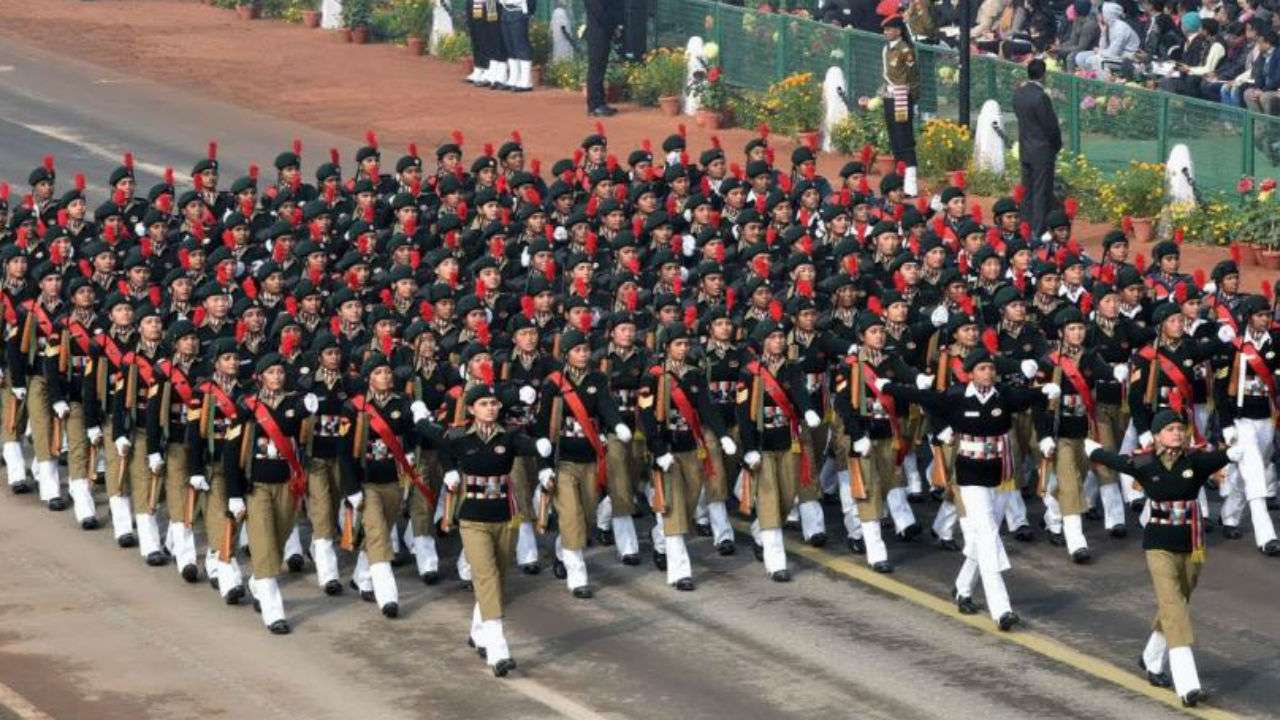
The National Cadet Corps is the youth wing of the Indian Armed Forces with its headquarters in New Delhi, India. It is open to school and college students on voluntary basis as a Tri-Services Organization, comprising the Army, the Navy and the Air Wing, engaged in grooming the youth of the country into disciplined and patriotic citizens.

The soldier youth foundation in India is a voluntary organization which recruits cadets from high schools, higher secondary, colleges and universities all over India. The Cadets are given basic military training in small arms and drill. The officers and cadets have no liability for active military service once they complete their course.

Origin

In 1949, the Girls Division was raised in order to give equal opportunities to school and college going girls. The NCC was given an inter-service image in 1950 when the Air Wing was added, followed by the Naval Wing in 1952. In the same year, the NCC curriculum was extended to include community development/social service activities as a part of the NCC syllabus at the behest of Late Pandit Jawaharlal Nehru who took keen interest in the growth of the NCC. Following the 1962 Sino-Indian War, to meet the requirement of the Nation, the NCC training was made compulsory in 1963. In 1968, the Corps was again made voluntary.

Aim and Motto

The discussion for motto of NCC was started in 11th central advisory meeting (CAC) held on 11 August 1978. At that time there were many mottos in mind like “Duty and Discipline”; “Duty, Unity and Discipline”; “Duty and Unity”; “Unity and Discipline”. Later, at the 12th CAC meeting on 12 Oct 1980 they selected and declared “Unity and Discipline” as motto for the NCC. In living up to its motto, the NCC strives to be and is one of the greatest cohesive forces of the nation, bringing together the youth hailing from different parts of the country and molding them into united and disciplined citizens of the nation.

Skill development

The benefits of joining NCC include receiving basic military training. It develops the students’ interest in three forces – Air force, Army, and Navy. NCC is the first platform that provides opportunities to the cadets to check their efficiency to join the mainstream Indian Defence Services.

The cadets are imparted training in the use of arms, along with communication skills and personality development skills, he said. The NCC helps to develop leadership qualities in students. NCC cadets Indrajith and Yashaswi have been selected for Republic Day parade in New Delhi. The NCC helps to instil confidence.

NCC is an effective organization designed to mould the youth at their most impressionable age with the aims of developing qualities of character, courage, comradeship, discipline, leadership, secular outlook, spirit of adventure and sportsmanship and the ideals of selfless service among the youth to make them useful .

Learning

Discipline, basic arms training, team ethics, following orders, various kinds of physical activities, sports, tours to remote areas, etc. are some of the things you experience and learn in NCC. These lessons are invaluable and make the journey of learning beautiful.

Link

INNOVATION MANAGEMENT: TYPES OF INNOVATION

In today’s constantly changing business environment, new opportunities and challenges arise every day which are often driven through digitalization. As a result various market forces like knowledge as business capital, the Information and Communication technologies, Internet of things and of course due to digitalization every organization seeks a competitive advantage. To master over the resulting challenges and get benefited from the opportunities, we must have a systematic and well managed Innovation. That is why now a days innovation has become a core focus area for high performing organizations to ensure long-term survival by making the desired revenue and goals.

WHAT IS AN INNOVATION?

According to Peter Drucker innovation the specific function for entrepreneurship whether in an existing business or a public service institution or a new venture started by a lone individual in family kitchen. Innovation is the means by which the entrepreneur either creates new wealth producing resources or endows existing resources with enhanced potential for creating wealth.

WHAT IS INNOVATION MANAGEMENT ?

Innovation management involves the process of managing an organization’s innovation procedure, starting from the initial stage of ideation to its final stage of successful implementation. It encompasses the decisions, activities and practices of devising and implementing an innovation strategy. These decisions, practices and actions are aimed at achieving a certain target – to generate an idea, product or a service that is of sizeable business value.

According to Gartner, innovation management is a structured process of generating, capturing, discussing and improving, organizing, evaluating and prioritizing valuable insight or alternative thinking that would otherwise not have emerged through normal processes.

The innovation management process necessitates the use of certain management tools that assist in bringing both managers and other entities on a common platform and get them to move towards a common goal. These innovation management tools can look simple but are most effective in reality. Such management tools are considered as brainstorming sessions, planning and finally prototyping. Let’s discuss about various types of innovation which helps in the growth of business.

TYPES OF INNOVATION:

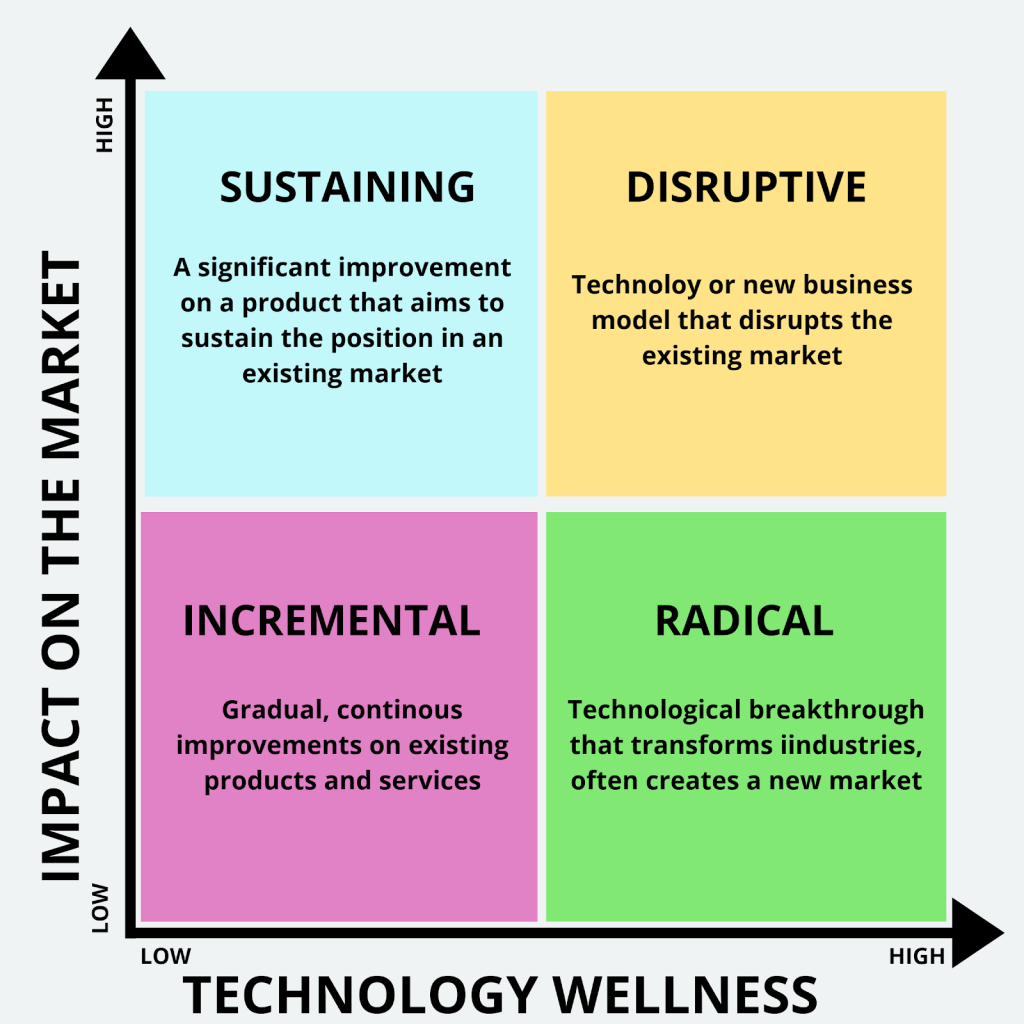
INCREMENTAL INNOVATION: The overwhelming majority of innovations are incremental in nature. Incremental innovation is nothing but improvement or adding new features or characteristics to already existed product which brings a large-scale organisational change. Incremental innovation is arguably the most accessible form of innovation, as it can often be performed without requiring huge budgets, a large team or a reorientation of the business’s strategy.

LED LIGHTBULB (Example of Incremental Innovation)

Incremental innovation doesn’t change it’s original dominant design. Incremental innovation will have less financial risks because this innovation doesn’t bring a new product or services into market rather it just modifies already existed product. This innovation can build a strong customer relationships and improves the product longevity in the market and most importantly incremental innovation is the best strategy to get a quick win in the competitive market.

The best example of incremental innovation is, The most famous E-commerce site COCO COLA, CADBURY etc…

DISRUPTIVE INNOVATION: Disruptive innovation is a theory that refers to a concept, product, or a service that creates a new value of network either by entering an existing market or by creating a completely new market. Moreover disruptive innovation refers to innovations by using new technologies that make expensive or sophisticated products and services accessible and more affordable to a broader market.

Disruptive innovation requires enabling technology with an innovative business model for building a coherent network value. One of the key features of disruptive innovation is that it modifies the process of evaluating the company and helps in the provision of better services with its new modification brought in the industry. It improves and modernize a lot of processes of a company, which further benefits the company a lot.

Examples of disruptive innovation are TESLA MOTORS, YOU TUBE, SKYPE etc…

SUSTAINING INNOVATION: Sustaining innovation is the opposite of disruptive innovation as it exists in the current market and instead of creating new value networks, it improves and grows the existing ones by satisfying the needs of a customer. Just like incremental innovation, the products that perform sustaining innovation is slightly made better with every iteration by reducing defects.

A sustaining innovation targets the high-end customers with its better performance than previously available one. The established competitors always win the battles when they operate sustaining technology efficiently. This strategy entails making a better product that can sell for higher profit margins to their best customers.

Examples of sustaining innovation are, IBM, TOYOTA etc..

RADICAL INNOVATIONS: Radical innovation is rare. It has similar characteristics to disruptive innovation but it is different in a way that it simultaneously uses revolutionary technology and a new business model.  Radical innovation solves global problems and addresses needs completely in a new way. This type of innovation completely transforms the market, or even the entire economy .

Technological innovations, such as personal computer and the internet are examples of radical innovations that have transformed the way the entire world functions and communicates. These disruptive innovations provide our society with a platform to build on top of which leads to highly accelerated economic growth where as radical innovation destroys or supplants an existing business model and blows up with something that is entirely new to the market. This types of innovation typically require a lot of time and technological development before they’re ready for the mainstream markets.

Examples of Radical innovation are, I PHONE, NETFLIX, INTERNET etc..

ANIMAL LOVERS

“Animals are a window to your soul and a doorway to your spiritual destiny. If you let them into your life and allow them to teach you, you will be better for it.”― Kim Shotola, The Soul Watchers: Animals’ Quest to Awaken Humanity

God’s creations

“Wherever there are wild animals in the world, there is always an opportunity for caring, compassion and kindness.”― Paul Oxton

Animals are the creations of God. They are as much important in the scheme of things as men. Animals, nature and man constitute the ecology. Harm to any of these means the disturbance of the ecological balance. Moreover, as God’s best creation, man has the responsibility to look after the welfare of the animals, which undoubtedly look forward to man for protection and survival. If man fails to do this duty it would be a moral crime on his part.

Respect to Almighty

“love about any animal or bird is pure because in that love u dont expect anything from them”― Kedar dhepe

Love of animals is the love of God. It is wrong to do harm to the animals, to beat them and kill them. Animals are generally good. They do not harm anybody unless they are harmed. They kill others for necessity and sport. Even ferocious animals like tigers and snakes do not injure or kill anybody unless they are attacked. Love of animals is an essential part of human nature. The domestic animals like cows, dogs, cats serve us faithfully. Small animals are dumb and meek. They depend on us. So, it is wrong to oppress and kill them. It is our moral duty to love them and keep them in their own places If we love them, they will love us and thus a natural bond will be established.

Love to nature

“The way you treat the animals around you will be the nature of the animal within you”
― Sir P.S. Jagadeesh Kumar

Animals like tigers, lions, deer end many others are part and parcel of Nature. They provide beauty and harmony to Nature. Reckless destruction of these animals is as bad as rash demolition of forests. Preservation of wild animals is a duty for all. They maintain the balance in nature. Moreover, they are a big attraction to the children, men and foreigners. We like to see the variety of God’s creations. It is also our duty to preserve them.