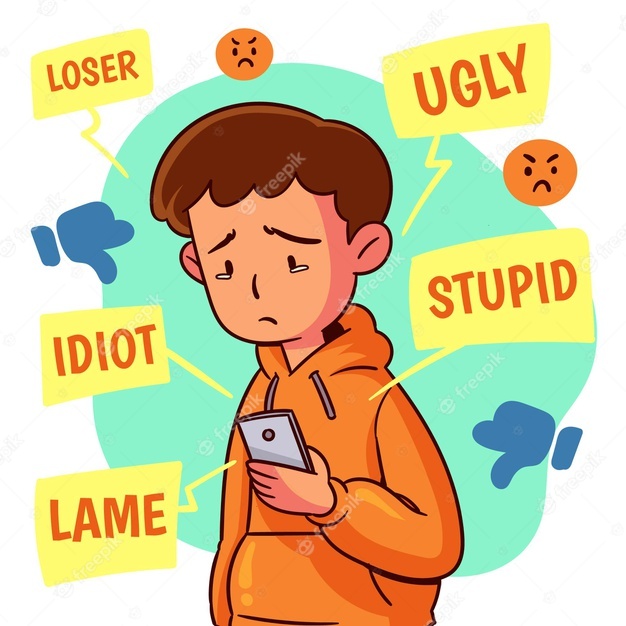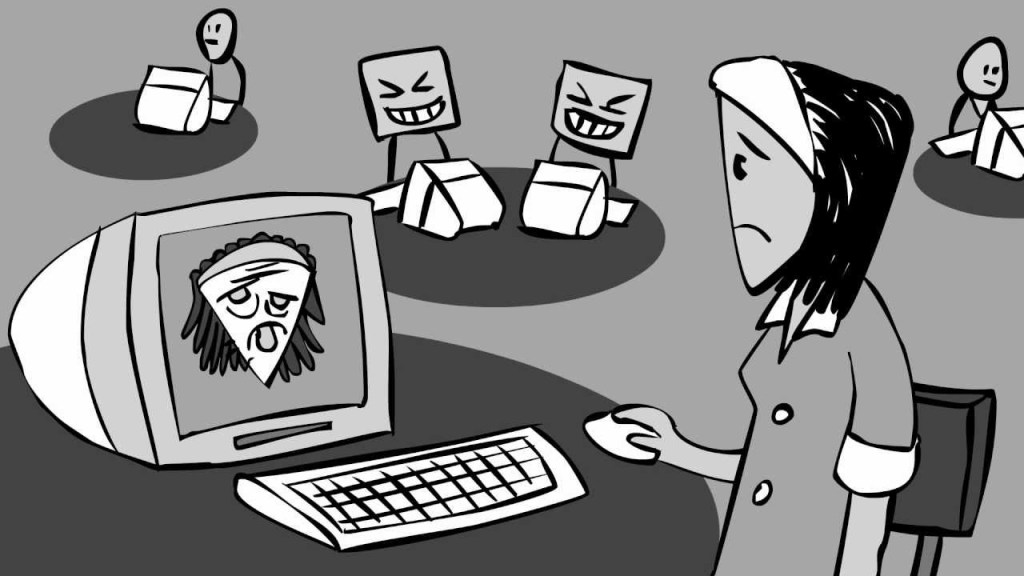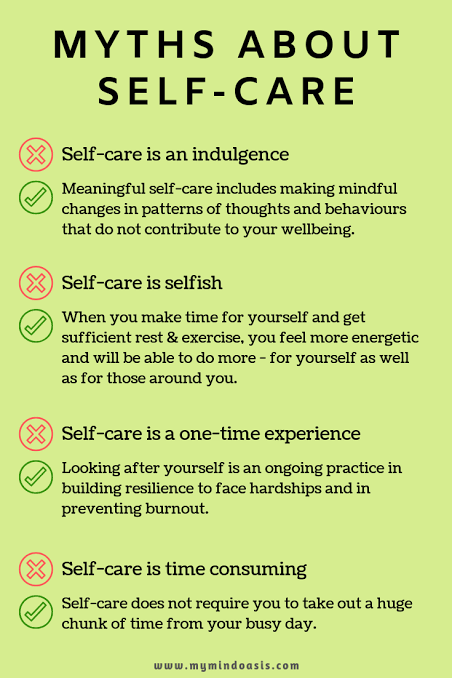
Waiting for likes on your social media posts??

DO YOU WAIT FOR EVERYBODY TO LIKE YOUR POST. DESPERATELY WAIT FOR COMMENTS OR SHARES. IF YES, DONT DO THAT. SOMEBODYS LIKE WONT MAKE A DIFFERENCE IN YOUR LIFE. IT WONT LOWER YOUR STANDARDS, IT JUST WONT.

STOP JUDGING YOURSELF THE WAY PEOPLE DO . YOU ARE THE ONE WHO HAS EMBEDDED YOUR EFFORTS TO GET THE BEST IN YOU. WHY WAIT FOR SOMEBODY’S CONSENT??

HAVE FAITH IN YOURSELF. IF WE KEEP ON WAITING FOR OTHERS TO GIVE US CONSENT, WE MIGHT START HATING OURSELVES.

WHATEVER YOU DO IS PERFECT

EVEN IF PEOPLE WHO YOU LOVE, REJECT

HAVE FAITH IN YOURSELF

YOU DONT NEED ANYBODY’S HELP

YOU HAVE THE ABILITY TO FLY

YOU WILL REALLY GO HIGH

Do We Live in a Multiverse?

As far as we currently know, there is a single expanding blob of spacetime speckled with trillions of galaxies – that’s our Universe. If there are others, we have no compelling evidence for their existence.

Amazing book about Multiverse

That said, theories of cosmology, quantum physics, and the very philosophy of science have a few problems that could be solved if our blob of ‘everything’ wasn’t, well, everything.

That doesn’t mean other universes must exist. But what if they do?

What is a universe?

It should be a simple question to answer. But different areas of science will have subtly different takes on what a universe even is.

Cosmologists might say it describes the total mass of stuff (and the space in between) that has been slowly expanding from a highly concentrated volume over the past 13.77 billion years, becoming increasingly disordered with age. 

It now stretches 93 billion light years from edge to edge, at least based on all of the visible (and invisible) stuff we can detect in some way. Beyond that limit, there are either things we can’t see, an infinite expanse of nothingness, or – in the unlikely scenario that all of space bends back around on itself – a round-trip back to the start across a hyperspherical universe. 

If we’re talking quantum physics, though, a universe might refer to all fields and their particles, and their combined influences over one another. As a general rule, a universe (like ours, at least) is a closed system, meaning it can’t suddenly lose or gain a significant sum of energy. 

Telescope under 100

Philosophically speaking, a universe might be a discrete set of fundamental laws that governs the behavior of everything we observe. A universe would be defined by its own rules that set its unique speed for light, tell particles how to push or pull, or space how it should expand. 

What is a multiverse in cosmology?

A century of astronomical observations has told us a lot about the age, size, and evolution of galaxies, stars, matter and the four dimensions we sum up as spacetime. 

One thing we know with great confidence is that everything we see now is expanding at an accelerating rate. This logically implies the Universe, at least the one we live in, used to be a lot smaller

big bang nasa infographic expansion(NASA/JPL)

We can theoretically squeeze all of the matter of the Universe down to a point where the concentration of energy reduces atoms to a soup of simpler particles and forces combine until we can’t tell them apart. Any smaller than that? Big shrugs.

If we go with what’s known as a cyclic model of cosmology, the parent universe preceded ours in some way. It might even be a lot like this one, only running in reverse compared with ours, shrinking over time into a concentrated point only to bounce back out for some reason. Played out for eternity, we might imagine the respective universes bounce back and forth in an endless yo-yo effect of growing and collapsing.

Or, if we go with what’s known as a conformal cyclic model, universes expand over trillions upon trillions of years until their cold, point-like particles are so spread out, for all mathematical purposes everything looks and acts like a brand new universe.

If you don’t like those, there’s a chance our Universe is a white hole – the hypothetical back end of a black hole from another universe. Which, logically, just might mean the black holes in our Universe could all be parents, pinching off new universes like cosmic amoebae.

What is a multiverse in quantum physics?

Early last century, physicists found theories that described matter as tiny objects only told half of the story. The other half was that matter behaved as if it also had characteristics of a wave.

Exactly what this dual nature of reality means is still a matter of debate, but from a mathematical perspective, that wave describes the rise and fall of a game of chance. Probability, you see, is built into the very machinery that makes up the gears of a universe like ours.

Of course, this isn’t our daily experience as vast collections of atoms. When we send a bucket of molecules called a rocket to the Moon as it zooms past 300,000 kilometres away, we’re not rolling dice. Classical old physics is as reliable as tomorrow’s sunrise.

But the closer we zoom in on a region of space or time, the more we need to take into account the possible range of measurements we might find. 

This randomness isn’t the result of things we don’t know – it’s because the Universe itself is yet to make up its mind. There’s nothing in quantum mechanics explaining this transition either, leaving us to imagine what it all means. https://www.youtube.com/embed/dzKWfw68M5U?ab_channel=PBSSpaceTime

In his 1957 doctoral dissertation, American physicist Hugh Everett suggested the range of possibilities are all as real as one another, representing actual realities – separate universes, if you like – just like the one we’re all familiar with.

What makes any one universe in this many worlds interpretation distinct is how each wave correlates with a specific measurement taken of other waves, a phenomenon we call entanglement.

What ‘we’ means, and why ‘we’ experience one entangled set over waves over another, isn’t clear, and in some ways presents an even bigger problem to solve. 

What is a multiverse in philosophy?

One of science’s most fundamental starting assumptions is that in spite of what your mother tells you, you’re not special. Nor is any other human, or our planet, or – by extension – our Universe.

While rare events occur from time to time, we don’t answer The Big Questions with ‘it just happened that way’. 

So why does our Universe seem to have just the right tug-of-war of forces that allow not just particles to appear, but to congeal for long enough periods into atoms that can undergo complex chemistry to produce thinking minds like ours?

Philosophically speaking, the anthropic principle (or principles, since there are many different ways to spin the idea) suggests we might have it backwards. Without these conditions, no minds would have arisen to consider the amazing turn of events. 

If just a single universe ‘just happened that way’ early one spring morning, it’d be one big coincidence. Too big really. 

But if there were infinite universes, with infinite combinations of forces pushing and pulling, some would inevitably give rise to minds that just might ask ‘are we part of a multiverse?’ 

Will we ever discover other universes?

Given the very definition of a universe relies on some kind of physical fence keeping influencing factors apart, it’s hard to imagine ways we might ever observe the existence of a sibling for our universe. If we did, we might as well see it as an extension of our own Universe anyway.

That said, there could be some cheats that could give us a glimpse.

Any experiment to find one would have to rely on that ‘fence’ having some holes in it that allow particles or energy to leak across, either into ours, or away from it. Or, in the case of universes existing in our past, monumental events that left enough of a scar that not even a rebirth could erase.

For now, we still have no good reason to think our blob of everything is anything but unique. Given we’re still learning how our own Universe works, the current gaps in physics could yet be plugged without any need to imagine a reality other than ours.

In countless other versions of this article scattered throughout the multiverse, however, the question of whether we are alone just might have a different answer.

Soft Skills.

Soft skills… Every one of us has heard this phrase. Also, you might have heard from employees, grad students, millennials, school students, or young people complaining that they lack certain soft skills. 

There is a wide range of skills that falls under the term “Soft Skills”. These skills are also known as “transferable skills”. 

A definition of Soft Skills:-

Soft skills are certain sets of traits and interpersonal skills that don’t depend on the acquired knowledge. Soft skills include common sense, the ability to deal with people, a positive flexible attitude, or how you approach life and work.

The good news is one can learn and enhance their soft skills over some time. Though it is often hard to do so. Like Hard skills, one can work on their Soft skills and can make themselves capable of using them. One can’t measure Soft skills by any exam, the only way to measure the development of one’s Soft skills is by knowing how one manages relationships around them. 

What are the most important Soft Skills?

Well, there are a lot of Soft skills. But, mentioned below are five skills that you need to learn/enhance:-

★ Communication Skills

The most essential skills include Communication skills. People with good communication skills can maintain/build good relationships around them. Also, they are likely to avoid misunderstandings and can make any workplace better. 

★ Decision Making

Being able to make decisions is a crucial part of life. Everyone one of us has to make decisions in our day-to-day life from what we want to eat to what we should wear.  But sometimes the actual decision doesn’t seem to matter; what matters is that you have made one and moved on.

★ Time management

Time management can help you finish any work within the deadline. Time management is sometimes described as having a ‘good work ethic’. Also, it is very useful for organizing family or team.

★ Leadership skills

These skills are needed to take the lead when necessary. These skills include the ability to manage and motivate others, and to commissioner work. One can learn leadership skills by enrolling in many leadership training courses. 

★ Creativity and problem-solving skills

These skills are as highly valued as leadership skills because they are hard to develop. Although it is being believed that creative thinkers are born not made. But like any other skill, these skills can also be developed. 

The skills mentioned above along with other Soft skills are required in every field whether you are a student, an employee/employer, a business owner, etc. You can reach to various programs to develop and enhance your soft skills. 

What is The International Monetary Fund ?

Intergovernmental organisations (IGOs) have always played a very important role in the global economy . These groups are generally created through the enactment of a treaty and are composed of a group with member states . The goal of individual IGOs depends on their genre of function and membership . Some of the most common and widely known IGOs include the United Nations , the World Bank and International Monetary Fund ( IMF)

International Monetary Fund () IMF also called The Fund , based in Washington ,D.C. is an international monetary institution established by 44 nations under the Bretton Woods Agreement of July 1994.

The IMF was established to promote economic and financial cooperation among its members in order to facilitate the expansion and balanced growth of world trade . It started functioning from March 1,1947 , the Fund has currently 189 member countries each of which has representation on the IMF ‘s executive board in proportion to its financial importance .

IMF is an international organisation that promotes global economic growth and financial stability, encourages international trade and reduces poverty Quotas of member countries .

IMF ‘s mission is

“To foster global Monetary cooperation ,secure financial stability , facilitate international trade , promote high employment and sustainable economic growth and reduce poverty around the world.”

Origin :-

IMF was originally created in 1945 ,as part of the Bretton Woods Agreement, which attempted to encourage international which attempted to encourage international financial cooperation .

The principal aim was to avoid the economic mistakes of the 1920s and 1930s . The attempts of many countries to return to the old gold system after the First World War failed miserably.

The World Depression of the thirties forced every country to abandon the gold standard .This led to adoption of nationalist policies which marked decline in world trade and extension of depression.

44 nations assembled at the United Nations Monetary and Financial Conference at Bretton Woods, New Hampshire from July 1 to July 22,1944 and established The International Monetary Fund .

The Article of Agreement of the IMF provided the basis of the international monetary system .


Structure of The Fund


The structure of The Fund consists of a Board of Governors , an Executive Board , A Managing Director, a Council and a staff with its headquarters in Washington DC, USA.

The Board of Governors is the top in the structure of The Fund . They are decision making organs of the Fund..They exercise power and make decisions that are binding on members and the Fund .

The board of the Governors, which now has 24 members ,meets annually in which details of the Fund activities for the previous year are presented.

Other members include :-

The Executive Board , which has 21 members at present . Five Executive Directors are appointed by the five members ( USA , UK , Germany., France and Japan ) having longest quotas .

The Managing Director is elected by the Executive Directors .He is usually political or any other international official.

The Interim Committee (now IMFC ) , is established to advise the Board of Governors on supervising the management and adoption of international monetary policy .

The Development Committee advises and reports to the Board of Governors on all aspects of the transfer of real resources to developing countries .


Objectives :-

The fundamental purposes and objectives of the Fund had been laid down in Article 1 of the original Articles of Agreement . The major six objectives of IMF are :-

1: To promote international monetary cooperation through a permanent Institution which provides the machinery for consumption and collaboration in international monetary problems.

2: To facilitate the expansion and balanced growth of international trade, and to
contribute thereby to the promotion and maintenance of high levels of employment and
real income and to the development of the productive resources of all members as
primary objective of economic policy.

3: To promote exchange stability, to maintain orderly exchange arrangements among
members, and to avoid competitive exchange depreciation.

4: To assist in the establishment of a multilateral system of payments in respect of
current transactions between members and in the elimination of foreign exchange
restrictions which hamper the growth of world trade.

5: To give confidence to members by making the general resources of the Fund temporarily available to them under adequate safeguards, thus providing them with the
opportunity to correct maladjustments in their balance of payments, without resorting
to measure destruction of national or international prosperity.

6: In accordance with the above, to shorten the duration and lessen the degree of dis –
equilibrium in the international balance of payments of members.
___________________________________________

Functions of IMF

The principal function of the IMF is to supervise the international monetary system.
Several other functions performed by the IMF .
Three major functions of IMF are :-


Surveillance over Members Economic Policies :-

The IMF closely monitors each member’s country’s economic and financial development . The IMF holds a conference with member countries on a regular basis Usually once each year to assess its economic conditions with a view to providing policy recommendations .


Financial Assistance :-

IMF functions as an agency of providing resources to meet short term and medium term
. It lends to its member countries facing BOP disequilibrium .

IMF loan is usually provided under an “arrangement ” requiring a borrowing country to undertake the specific policies and measures to resolve it’s balance of payments problem as specified in a “Letter of Intent ” .
Most IMF loans are primarily financed by its member countries through payment of quotas .


Consultative Function:

It functions as a centre for international cooperation and a source of counsel and
technical assistance to its members.IMF provides technical assistance to help member countries strengthen their capacity to design and implement effective policies in four areas :- monetary and Financial policy ; fiscal policy; statistics ; and economic and financial legislation.

Other functions :-

• Stabilizing Economics
• Maintaining Balance between demand and supply of member countries.
• Maintenance of Liquidity .
• Reducing tariffs.
• General watch .
___________________________________________

Financial Resources of The Fund :-

The bulk of financial assistance performed by the IMF has its financial resources from two sources .


(i) Subscription or quota of the member nations :-

Each member country is required to subscribe to an amount equivalent to its quota. It is
the quota on which payment obligations, credit facilities, and voting right of members
are determined. As soon as a country joins the Fund, it is assigned a quota which is
expressed in Special Drawing Rights (SDRs).


(ii) Borrowings :-

The Fund is authorised to borrow in special circumstances if its own resources prove to
be insufficient. It sells gold to member countries to replenish currency holdings. It is
entitled to borrow even from the international capital market. Though the Articles of
Agreement permits the Fund to borrow from the private capital market.

The IMF has two accounts of
operation—the General Account and the Special Drawing Account.
The Fund burrows under the General Arrangements to Borrow in order to forestall or cope with an impairment of the international monetary system.
__________________________________________

Credit Tranches :-

To meet the severe BOP disequilibrium , the Fund has been gradually raising the limit of borrowing by its members under the credit tranche.
Since the 1960s , the Fund has created several credit facilities for its members.

Some borrowing facility provided by the Fund are :-

(i) Stand-by Arrangements:
The term “stand-by” here
means that, subject to conditionality, a member has a right to draw the money made available, if needed.
This method of borrowing has become the most normal form of assistance by the Fund.
Under this form of borrowing, a member state obtains the assurance of the Fund that,
usually over 12-18 months, requests for drawings of foreign exchange (i.e., to meet
short- term BOP problems) up to a certain amount will be allowed if the country
concerned wishes.
However, the stand-by arrangements can be extended up to 3 years while repayments
are required to be made within 3-5 years of each drawing.


(ii) Extended Fund Facility (EFF):
Stand-by arrangements to stabilise a member’s BOP run usually for a period of 12-18
months. Developing countries suffer from chronic BOP problems which could not be
remedied in the short run. EFF provides credit upto a period of 10 years and loan upto 300 percent of a member’s Quotas are allowed.


(iii) Compensatory Financing Facility (CFF):
Apart from the ordinary drawing rights, there are some ‘special finances’ windows to
assist the developing countries to tide over BOP difficulties. CFF, introduced in 1963, is
one such special drawing provision.
It can now draw up to 45 p.c. Since the mid- 1990s, this has been the least-used facility.


(iv) Structural Adjustment Facility (SAF) and the Enhanced SAF (ESAF):
In 1986 a new facility—the SAF—was introduced for the benefit of low income
countries.
Under it, credit facilities for economic reform programmes are available at a low
interest rate of 0.5 p. c compared to 6 p.c. for most Fund facilities. Loans are for 10
years with a grace period of five and a half years.
SAF provides to undertake medium-term structural
adjustment programmes to foster economic growth and improve BOP conditions
The ESAF has been replaced
by a new facility, called Poverty Reduction and Growth Facility in 1999.


(v) Poverty Reduction and Growth Facility (PRGF):
The PRGF that replaced the ESAF in November 1999 provides concessional lending to
help the poorest member countries with the aim of making poverty reduction and
economic growth —the central objectives of policy programmes.


(vi) Supplemental Reserve Facility (SRF):
This instrument provides additional short-term financing to member countries facing
exceptional BOP difficulties because of a sudden and disruptive loss of market
confidence reflected in capital outflows of countries concerned. Consequent upon the
After the eruption of the East Asian financial crisis, the SRF was introduced in 1997.

___________________________________________

India And The IMF

India is one of the founder members of the IMF . It signed the Fund Agreement on 27 December , 1945 . Till 1970 India ‘s Quotas in the Fund was the fifth and it had the power to appoint permanent Executive Directors.


With increase in the Fund Quotas of other countries like Canada , Italy , Japan etc . India ceased to hold a permanent position as Executive Directors .
With the Eleventh Review of Quotas , India’s quota in the IMF declined from 2.09 per cent . As a result , India’s position in the Fund quota came down to 13th .

The current IMF data shows India’s position at seventh .


India has been benefited in certain ways by the IMF by receiving loans to meet the deficit in its balance payment in several years .India has been getting advisory help from the Fund under the Fund surveillance conditionality .
Hence , as a member India has gained much help from the IMF to have an economically stable system.

The Forgotten Trio

Benoy Badal Dinesh, the Bravery trio

The trio of 3 idiots or the trio of Yeh Zindagi Na Milege Dobara we know but there is a trio of 3 brave boys who on their own took a big step to contribute to the movement of independence of India.

The trio of three brave hearts who took matters in their hand against the British, in the Writer’s building in Kolkata, the administrative center of the city during the British rule. It was a usual day of works going on when a sudden sound of shots made eco through ages on the hearts of the British people.

the comrades were Benoy Krishan Basu, Dinesh Gupta, and Sudhir Gupta.

Benoy Krishan Basu, born in Rohitbhog, Bangladesh on 11 September 1908, completed his matriculation in Dhaka , got enrolled into Mitford medical School(Sir Salimullah Medical college), but he couldn’t able to complete his medical studies as he joined in “Mukti sangha’ a secret society under the influence of a revolutionary of Dhaka Hemchandra Ghosh.

Dinesh Chandra Gupta, born in Josholong, Bangladesh on 6 December 1911. He joined a group organized by Subhas Chandra bosh ‘Bengal volunteers while he was studying in Dhaka college, while that the Bengal volunteers transformed to a more active revolutionary association, planned of killing British police officers, for short time Dinesh Gupta was training local revolutionaries in use of firearms in Midnapore, who was responsible for the assassination of three District Magistrates in succession.

Badal Gupta, his real name was Sudhir Gupta, was born in Puba Shimulia, in the region of Dhaka, now in Mushiganj District, Bangladesh, as he inspired by a teacher of the Banaripara School of Bikrampur ‘Nikunja Sem’, joined the Bengal Volunteers, he was also influenced by his two paternal uncles ‘Dharaninath Gupta and Nagendranath Gupta who were the revolutionary activities who had a major role in the Alipore Bomb Case.

The motto of their Bravery act was of killing N S Simpson, the late Colonel of the Indian Imperial Police and the Inspector General of Police(Prisons), the person behind the worst atrocities on the inmates of prisons and other Britishers. The three men dressed in European attire came from the shadows and opened fire from their revolvers shot Simpson shot in 7 bullets on him, three on the head. Soon the British police surrounded them and there was a brief gun battle between the trio and the cops, some of the lead officers lead to severe injuries but somehow the British police overpowered them but the three men refused to surrender, immediately on the spot Badal Gupta ingested Potassium Cyanide died on spot, while Benoy and Dinesh shot themselves point-blank by their firearms. Dinesh and Benoy were taken to hospital but took their last breath on 13 December 1930 as he used to keep on injuring on the spot where the bullet was hit, Dinesh Gupta was the only one to survive, later he was martyred by hanging on 7th July 1931 at the Alipore Jail, at the age of 19 for anti-government activities and murder. 

On the 8th of December, the three young men one of 19 and two of them merely 22 achieved immortality and strike terror in the hearts of British officers by their unimaginable act.

Modern Trends in Indian Art

Modern art refers to the artistic work produced during the period of 1860s to the 1970s and represents the styles and philosophies of the art produced during that era. The term is usually pertains to the art in which the traditions of the past have been thrown aside in a spirit of experimentation. In India, the modern art movement began in the early 1900s. During 1900-1925, Bengal School dominated the Indian art.
Bengal school of painting represented the first art movement in the country. Artists like Abindranath Tagore, Nandal Bose, Raja Ravi Verma, Jamini Roy were some of the pioneers of Bengal school. It was the rebirth of Indian art. Bengal school witnessed the departure of traditional painting methods like tempera. Chinese cloth painting and Japanese wash technique were used. The Japanese water colour technique called wash became the hallmark of Bengal school. This technique diluted the impact of the colours used giving the paintings a mystic sense of space and atmosphere. The these of the paintings included religious, social and historical events. Paintings of landscapes, birds and animals were also done.
After 1925, artists refused to imitate the mannerisms of the art of the past. They argued that such imitation bounds the imagination and creativity of the artists. The contemporary artists stressed on liberating the imagination from the shackles of past. The art after 1925, was therefore very different from the previous Indian arts. There was variety in the techniques used and artworks were different from each other having more or less similarity.
Technique like cubism was used by the artist Gaganendranath. Cubism is a European style of art which aims to show all of the possible viewpoints of a person or an object all at once. Cubistic artworks look like they are made out of cubes and other geometrical shapes. Chiaroscuro, which is a characteristic of the European Renaissance was used in his famous painting ‘Magician’. Chiaroscuro is the use of strong contrasts between light and dark, usually bold contrasts affecting a whole composition.
The soft wash technique was discarded and oil painting started getting more recognition. These paintings had bold and contrasting colour scheme in comparison to the light wash technique of the Bengal school. The credit for popularising oil painting in India goes to Amrita Sher Gil.
Graphic Prints stated getting popular as well. Artist Krishna Reddy used techniques like intaglio and kaleidoscopic effects in his graphic prints. Intaglio is a printmaking technique in which the image is incised into a surface and the incised line or sunken area holds the ink. It is a process of print on engraved design. In his painting ‘Whirlpool’ which is a intaglio on paper, Krishna Reddy has also used the method of viscosity printing. Viscosity printing is a multi-colour printmaking technique which is uses the viscosity of the paint or ink.
Etching and aquatint was also used in contemporary print making. Etching is an intaglio printmaking process in which lines or areas are incised using acid into a metal plate in order to hold the ink. Aquatint is also an intaglio printmaking technique, a variant of etching that produces areas of tone rather than lines. Both of these techniques were used together to create contemporary prints. ‘The Children’ by Somnath Hore, ‘TheDevi’ by Jyoti Bhatt and ‘ Man, Women and Tree’ by K. Laxman Goud are some of the famous prints which have been made using these techniques.

https://www.jagranjosh.com/general-knowledge/bengal-school-of-art-1345270637-1

https://www.flexiprep.com/NIOS-Notes/Secondary/Painting/NIOS-Class-10-Painting-Chapter-9-Contemporary-Indian-Art-Part-1.html

Chartered Accountant

Chartered Accountants were the first Accountants to form a professional accounting body initially established in Scotland in 1854.

An Accountant is a person who specialises in the field of accounting. Chartered Accountants are Accountants for hire. They work in various sectors of the economy,managing the finance of an entity, providing financial advice and helping out with money management.

Chartered Accountancy has been one of the most popular career choices in India. There is no fixed time to complete chartered Accountancy. In this career your hard work decides your destination. There is no colleges for Chartered Accountancy. CA aspirants can approach any Institutes and work as per the instruction given by the Institutes.

Exam structure:

The Institute of Chartered Accountancy of India divided CA courses into four levels: CA foundation/CPT, CA intermediate/IPCC, 3 years of Article ship training and CA final. Each level tests students on different paper pattern based on their level and maturity.

Eligibility:

The one who passed class 12 can appeal for CPT(Common Proficiency Test) /foundation level in CA.

The degree holder can directly appeal for IPCC(Integrated Professional Competence Course) /intermediate level.

Roles of chartered Accountant:

Cost Accountant:

Collecting cost information and maintaining an expenses database. Constructing data accumulating systems

Financial controller:

Financial controller is a company’s lead Accountant. They oversee accounting activities and ensure that ledger accurately reflect money coming on and out of the company.

Auditor:

An Auditor is an authorized person who reviews and verifies the accuracy of financial records and ensures that companies comply with tax norms.

Accounts Clerk:

The responsibility of accounts clerk is to keep financial records updated, preparing reports and reconciliation statement.

Chief Financial Officer:

Chief Financial Officer is the senior executive responsible for managing the financial actions of a company. The CFO’s duties include tracking cash flow and financial planning as well as analysing the company’s financial strengths and weaknesses.

DIY

Fortunately, you can make a gorgeous, fresh-flower crown for just about the same price as a fake one — and, it’s actually really easy!

Let’s make!

<gather the goods>

#1 Flowers
–Two or three types of flowers
#2 Floral tape
– Floral tape is best for wrapping fresh flowers together.
#3 Scissors
– Keep a sharp pair of scissors handy to cut your flowers
#4 Craft wire
–You will use this to tie flowers to your crown.
#5 Wire
–This is used as a comfy base for your crown.

Directions

Step 1
Shape the wire to your desired size.
Step 2
Wrap greenery around the base of the crown.
Step 3
Create mini-flower bunches
Step 4
Attach your flower bunches to crown.

Tip :Flower crowns look best when freshly made and after 48 hours can start to look droopy. Spray with a little water and store in the fridge to keep the flowers perky for as long as possible.

Air pollution grips Macedonian Capital Skopje:

Methodology: 

● Description of the problem. 

● Cause of the problem. 

● Analysis of the problem. 

● Control of the problem. 

➡ Introduction to the problem: 

According to a World Health Organisation (WHO) study, published in early 2017, Skopje, which is located at the bottom of a valley, was among ten cities in Europe with the highest concentration of fine particles. Skopje, like the four other Balkans cities listed among the 10, has an industry based on coal or lignite, used also for heating. Skopje, Sofia, Prishtina, and Sarajevo are on the list of Europe’s most polluted cities. 

According to the local media, 38% of all deaths in Tetovo and 22% at the state level are the direct result of air pollution. Yet, the problem is neglected for most of the year. Only when winter comes and thick smog suffocates the city and its inhabitants, it is revived by the media and the political opposition. Hence, VMRO-DPMNE is now blaming the ruling SDSM for the bad air quality, as if it had not ruled the country for 10 years until 2017. 

Pollution grip on the Macedonian’s capital Due to the high air pollution the whole city is not visible from the sky. By just seeing this picture we can understand what is the actual condition of the air pollution in Macedonian.

➡ Cause of the problem: 

As a consequence, in less than five years, the number of registered vehicles increased from 350,000 to 475,000 – most running on diesel, therefore with higher emission of PM particles compared to gasoline. 

Another factor is the savage urbanization of the cities. Instead of green parks, new buildings are springing up like mushrooms after rain. Apart from the main city park, there is not a single green space in Skopje that has not shrunk in the past 10-15 years. Illegal logging is endemic around cities and in the neighboring mountain areas, further deteriorating the ecosystem. Rather than addressing the problem, politicians have exploited it for electoral purposes. 

During the VMRO-DPMNE era in 2006–2017, the SDSM constantly attacked the government’s reckless ecological policies, promising a more eco-friendly approach. Excess usage of vehicles in that particular area has adversely affected the climate change in Skopje and has increased air pollution at the same time. 

➡ Analysis of the problem:

The poor air quality in the Republic of Macedonia is predominantly due to the tiny combustion particles called PM10 (10 micrometers or less in diameter) and PM2.5 (2.5 micrometers or less in diameter). 

These can easily penetrate deep into the body, causing not only breathing problems, but also other dangerous health issues. According to the World Health Organization (WHO), 2,574 people die prematurely every year as a direct result of air pollution. Skopje’s annual mean for 2016 was 40 µg/m3 (40 micrograms per cubic meter), which is 4 times higher than the annual WHO guideline (10 µg/m3), and 60 percent greater than the official Macedonian target[2] and European guideline[3] (25 µg/m3). 

Graph 1 below shows the daily PM2.5 observations over the last year for Skopje (Centar), Bitola, Tetovo, and Kumanovo. All four cities regularly exceed the WHO daily guideline (25 µg/m3) with winter being the worst period. 

➡ Control of the problem: 

Quality and a healthy living environment are one of the basic preconditions for a quality life of all citizens in the Republic of Macedonia and a commitment of the Government of the Republic of Macedonia. Clean air is one of the main components, which, unfortunately, historically seen in the Republic of Macedonia, has seen high values in recent decades. 

Some ways to prevent the effect of air pollution in Macedonian Capital Skopje are: 

● The plantation of trees can reduce the increase of harmful chemical gases in the air. 

● Less use of vehicles. 

● More use of renewable energy in place of oils and fuels. 

● Use of solar panels.

Top Korean Variety shows that you definitely have to watch

Korean Variety shows are on top when it comes to light fun and hilarious entertainment. On the top of that it allows you to learn more about your favorite celebrities up close. If you are looking for recommendations for your next binge watching or for new variety shows to add to your watch list here are best variety shows you definitely have to watch.

Running man

The variety show is a popular and crowd favorite show for its super fun missions. The popularity of this show is not just limited to South Korea only but  is loved by the people all around the world

The show has shifted to a more natural reality variety show concept focused on games. In an episode the permanent cast members are given three to four missions to complete as they compete with each other with the celebrity guests in extremely amusing challenges.

 The show has completed 10 seasons and more than 500 episodes and still manages to entertain its viewers.

Man on a mission

The show is also known as knowing brothers and ask us anything.  The show continues to soar high viewership ratings throughout the years. The show is based on a high school concept where the cast members act like the students in classroom while guests come as newly transferred students. The show follows the daily activities of a classroom and the interaction between cast members and guests as the students in a classroom.

2 Days and 1 night

The show follows its cast members as they take trips to various places in South Korea, including many offshore islands. During the show members also complete different missions to earn reward and to avoid  punishments.

The show has included many different personalities and has earned a good rating by the viewers, and continues to entertain its audience.

All the butlers

The show is also known as Master in the House, which represents reputative figures of various fields who spent 2 days and 1 night together and get to know about each other in the hopes of gaining knowledge and wisdom. The show includes guests from different fields including athletes, Idols and influential public individuals.

 I LIVE ALONE

Have you ever wondered what celebrities do at home and when they are not in front of the camera. This show is a must watch. The show follows the life of single South Korean celebrities and provides a vies of their everyday lives. The show has gained popularity due to the relatable lifestyle of celebrities which is shown without significant filtering.

Which of these Korean Variety shows are your favorite, tell us in comments.

The doctrine of Separation of Powers:

Introduction: – 

The concept of separation of powers is that the basic element for the governance of a democratic country. This principle endorses fairness, impartiality, and uprightness within the working of a government. Although it’s not followed within the strict sense yet, most of the democratic countries have adopted its diluted version in their respective constitution. 

Meaning: – The term “trias politica” or ‘separation of powers’ was first coined by Montesquieu in 18th century French social and political philosopher. Under his model, the political authority of the state is split into Legislature, Executive, and Judiciary powers. 

Generally, all the powers of the govt. will be categories into these three classes: 

(1) Enactment of law created

(2) Interpretation of the enacted laws 

(3) Enforcement of the enacted laws Separation of power, therefore, refers to the division of presidency responsibilities into distinct branches to limit anybody branch from exercising the core function of another. 

Historical origin and Evolution: – 

The doctrine of separation of powers is of ancient origin. The separation of powers concept was 1st originated in Greek and has become widespread within the Roman Republic as a part of the initial constitution of the Roman Republic. The history of the origin of the doctrine traceable to Aristotle in the 16th and 17th centuries, French philosopher John Bodin and British politician Locke respectively had expounded on the doctrine of separation of powers. 

But it was Montesquieu ( a French jurist) who initially conveyed scientific evidence of separation of powers in his book “Espirit des Lois ” (The spirit of laws). Montesquieu’s view: – Montesquieu said that – ‘The accumulation of all power’s legislature, executive, and judicial within the same hand’s weather of 1, a few, or many and whether hereditary, self-appointed or elective, may justly be pronounced the very definition of tyranny. 

Aristotle(384-322BC) in his book “The politics” stated that “These are three elements in each Constitution in respect of which each serious lawgiver must explore for what’s advantageous to it; of those are well arranged, the constitution is beyond to be arranged and also the differences in constitutions are sure to correspond to the difference between each of those elements. 

The three are first the deliberative (which discuss everything of common importance), second the officials; and third the judicial element.

Objectives of separation of powers: – 

(1) It aims to eliminate arbitrariness, totalitarianism, and tyranny and promote an accountable and democratic variety of government. 

(2) It prevents the misuse of powers within the various organs of the govt.. 

(3) It keeps a check on all the branches of the govt by making them in control of themselves. 

(4) This principle allows all the branches to specialize themselves in their respective field to boost and improve the efficiency of the govt. 

Elements of Separation of powers: – 

(1) Legislative: – Legislative means involving or regarding the method of creating laws. the first function of the legislature is to form laws for the governance of the state. it’s the authority of amending the present rules and regulations furthermore. Generally, in India, the parliament holds the facility of creating rules and laws. 

(2) Executive: – The executive is that the part of the govt. exercising authority and holding responsibilities of the governance of the state. the chief executes and enforces laws made by the legislature. The president and therefore the Bureaucrats from the manager branch of the presidency. 

(3) Judiciary: – The judiciary is that the branch of authority during a state which is anxious with the law and also the system or is that the system of courts that interprets defends and applies the law within the name of the state and safeguards the rights of the individuals. It can even be thought of because of the mechanism for the resolution of disputes within the state or internationally. 

Reproduction and Modification in plants

We know already that flowering plants have root,stem and leaves.They are called vegetative organs.Flowers,fruits and seeds in a plant are called reproductive organs.In earlier classes we have seen that new plants can be grown from seeds.In this lesson,we are going to know how a flower changes itself into a fruit,and the modifications of root,stem and leaves of a plant.

Reproduction

We can see from this activity that watermelon plant is produced from that seeds.potato plant is not from seed,but from the steam Tuber (Vegetative part).seed is not only the source for new generation,even vegetative part of a plant can be used to produce a new plant.The process by which plants and animals produce young ones and increase their number is known as ‘reproduction’. Drumstick tree can be grown from both seeds and stem cuttings.When plants are reproduced from the seeds we call that process as sexual reproduction.All other ways of reproduction without seed are called as asexual reproduction.

Sexual reproduction

Seed is produced from a flower by the process of pollination and fertilization.This is known as sexual reproduction.To understand how seeds are formed in a flower, first we need to understand parts of a flower.

Parts of a flower

Let us compare few buds and opened flowers of Hibiscus and Datura.Observe bud and opened flower of Hibiscus and Datura.we can tabulate the characteristics of Hibiscus and Datura flowers as below.

In a bud ,we can see a green colour,leaf like structure which cover the whole bud or flower.Each of these green leaf like structure present as an outermost layer is called as sepal.This outer most ring of sepals is known as Calyx.Petals are the largest part of flowers.They are often attractive, brightly coloured, sometimes sweet scented and attract the insects.The ring of petals together is called corolla.

Inside corolla,in Hibiscus,we can observe a long tube on which many stamens are arranged.But,in Datura we can see only five stalked structures,stamens.This ring or whorl of a flower is called androecium.Each stamens consists of two parts-a stalk called filament and a lobe called anther.If you touch these lobes in a mature flower,we can get a powdery substance called pollen grains

Inside androecium whorl,we can find a female reproductive part of the flower, called gynoecium.You will find this part with a swollen bottom part.

This is a ovary.Seeds are produced in this part.On top of the ovary there is a slender tube like structure called style.The top most striky tip of the style is stigma.Pollen grains are received by the stigma.This is the fourth whorl of a flower.

Types of flowers

Flowers can be divided into two types.They are explained below.

Complete Flower

If all the four whorls-calyx,corolla,stamens and pistil are present,then it is called as complete flower.complete flowers are bisexual flowers.

Incomplete Flower

If any of these four whorls is missing,then it is called as incomplete flower.Incomplete flowers are unisexual flowers.There are two types of Unisexual flowers,male flowers and female flower.The flower with androecium and without gynoecium is called as male flower and the one with gynoecium and without androecium is known as female flowers.

Pollination

We know that flowers of pumpkin are unisexual-that is some flowers are male while many are female flowers.We can easily identify the male and female flower of pumpkin,even before the buds bloom.To understand how a flower develops into fruit,let us perform an experiment on pumpkin plant.The process by which pollen grains reach stigma is called as pollination.The flower that receives pollen grains is called pollinated flower while the one that did not receive pollen grains is called as unpollinated flower.In the above experiment we transferred the pollen grains from male flower to the female flower. This is called as an artificial pollination.However ,in nature there are many ways in which pollen grains reach the stigma of the flower and it is called as natural pollination.
In some plants like grasses, pollen grains are light.Staments shed pollen grains,and are carried by wind to other flower.Insects ,birds are also agents of pollination.Bees, butterflies and variety of birds hover around flowers. They help to carry pollen from one flower to another.Pollen grains stick to their legs,wings or abdomen when they move from one flower to another.This is called as cross pollination.when you shake,pollen grains fall.Thus,when wind shakes the flower or when a butterfly agitates the flower,pollen grains could fall into the sigma of the same flower.Some plants that have both the male and female parts within a single flower (bisexual) pollinate by this means.This is called as self pollination

Beans(Fabaceae) and tomatoes (Solanaceae) commonly self-pollinate.Even though,for example,tomato self pollinate,they need the help of the insects to create vibrations within the flowers that will effectively loosen the pollen.Paddy is mostly self pollinating using just gentle wind as the pollinating agent.The agents that are helping in pollination are called as pollinators.In many plants,pollens have to come from some other flowers.This is obvious in case of plants which have distinct male and female flowers like pumpkin.In some flowers the gynoecium matures first before the androecium shed pollens.Such as apples,plums, strawberries, pumpkins use insects for cross-pollination.

Fertilization

During pollination,pollen grains reach stigma.What happens to them after this? substance produced on the stigma causes the pollen grain to germinate.During the germination a tube develops from the pollen grain which carries male gametes and ultimately reaches female inside the ovary through the style.Male gamete fuses with the female gamete to form zygote .This process is known as fertilization.Where is this female gamete located? Inside the ovary,small rounded structures,ovules are present.In these ovules, female gamete is present.To know more about this,we should cut ovary of a flower in longitudinal and transverse ways.cut a ovary of a flower both vertically and horizontally.Observe the ovules.compare the ovary and ovules from few different flowers.Are there one or more ovules? Can you see any connection between the number of ovules in the ovary number of seeds in each fruit?

Collect some fruits like tomato,brinjal, lady’s finger(vegetable),mango,peas and custard apple and observe.You can see some green part above brinjal and lady’s finger.what are they?
Compare mango, custard apple and peas.All these are single fruits but custard apple has many small parts in it,each with a seed .Mango has a single seed and pea has many seeds.what do you understand from the above observations?
♦ A green part above fruit of brinjal and lady’s finger are sepals of a flower.In some plants,after fertilization,sepal will not fall from fruit and remain or persist with fruit.
♦️ Custard apple is made up of many fruits, aggregated together.Each fruit part is thin, membranous with some granule like, which is edible.
♦️ In mango the outer skin and middle pulpy are edible and sweet .The inner most part is with single seed.
♦️ In pea the fruit is not fleshy,but forms a convering pouch for many seeds.

In all the above fruits, Ovary,a lower most swollen part of pistil develops into a fleshy fruit.Ovules present inside the ovary gets transformed into a seed.

Divisions and geography of the Deccan Plateau:

This physiographic division is the largest part of the plateau region India. The shape of this plateau is roughly triangular.
⭐ One of the sides of this triangle is marked by the line joining Kanyakumari with Rajmahal Hills and this line passes through the Eastern Ghats.


⭐The second arm is marked by the Satpura Range, Mahadeo Hills, Maikal Range and the Rajmahal Hills.
⭐The third arm is marked by the Western Ghats.
⭐The area of this plateau is about 7 lakh square km and the height ranges from 500 to 1000 m above sea level.


⭐The Western Ghats forms the Western edge of the Panisular Plateau. It runs parallel to the Arabian Sea coast.
⭐The northern part of this range is called as Sahyadris. The height of the Sahyadris increases from North to South.
⭐Anaimudi is a sort of tri-junction of the Anaimalai Range, the Cardamom Hills and the Palani Hills.


⭐Kodaikanal is a beautiful hill resort situated on the Palani Hills.
⭐ Eastern Ghats run from Southwest to Northeast from the eastern edge of this Plateau.
⭐The range is also called as Poorvadri.


⭐The Eastern Ghats join the Western Ghats at the Nilgiri hills, bordering Karnataka and Tamil Nadu.
⭐The Eastern Ghats are not continuous like the Western Ghats.
⭐The rivers of Mahanadi, Godavari, Krishna, Pennar and Kaveri have dissected this range at many places.

Should Plastic be Banned?

A truly wonderful and magical material, plastic was invented in the year 1907 by Leo Hendrick Bakeman in New York, United States of America. This wondrous material was made from phenol and formaldehyde in a cheap and easy method. Ever since this revolutionary invention, the world as we knew it changed. Plastic replaced many materials in industries. Plastic is so widely used around the world because of its following properties:

  • Plastic is a hard material
  • Plastics are a highly dense material
  • Its tensile strength is high
  • It is resistant to heat and high temperatures
  • It is a non-conductor of electricity and heat
  • It is light in weight
  • The production of plastic is cheap and simple

All these properties make plastic the most popular material for factories as well as consumers. With the invention of plastic bags, things started to take nosedive in terms of the per capita plastic produced in the world. Everything was hunky-dory until people started to realise that plastic can’t be degraded by natural causes. Its a non-degradable material and will stay in the environment for more than 500 years to come. It is estimated that more than 6 billion metric tons of plastic waste are lying on our earth with no place to go.

Enzymes and bacterias cannot degrade plastic because plastic is not made up of naturally occurring materials. It is a purely man-made material. Most of the plastic is dumped in open lands and far away in oceans. While this seemed like a logical idea until people released that they were polluting the environment, air, water and land. The hazardous chemical in the plastics started to be seen in fishes and crops we eat which ultimately meant that plastic waste that we assumed was gone, was slowly making its way back to our bodies through our food chain. It is said that human beings have already started consuming plastics in small portions and a plastic worth the weight of a debit card in consumed every year by a person.

While plastics can’t be banned completely, because it has made our lives better. Plastic is used in advanced medical equipment to save lives. They are used in the pharma industry, the travel industry and clothing industry and the truth is, human beings cannot live without plastic. But we can surely reduce the consumption of plastic. Banning plastics completely is not a sensible idea.

Why plastic bags should be banned?

There are various alternatives to plastic bags. Jute bags, paper bags and gunny bags are some of them. Plastics bags are not so much necessary that man cannot live without it. And certain kind of plastic bags can not be recycled as well. But they surely can be reused. The habit of reusing the same plastic bags comes into effect only when the manufacture of new plastic bags are banned.

More than 20 million metric tonnes of plastic waste is dumped in the ocean and open lands. More than 50% of these are plastic bags. They are creating enormous pressure on our environment and causing irreversible pollution. It will take a herculean task to get rid of all the plastic that is produced in the world as of now. If it is not banned, then it will be impossible to get rid of it ever and the existence of the human race will be in question.

There are areas in several parts of our ocean which is covered with plastic as big as the size of India. The aquatic life is consuming these plastics and we are consuming them which disturbs the whole food cycle in our ecosystem. Banning plastic bags will at least, if not totally eliminate plastic from our earth, reduce this disturbance to our environment.

Women empowerment and child development:

Empowerment means giving power to someone to try and do something in a very country like India where the slogan originated – 

that means – Where Women are honored, divinity blossoms there, and where ever women are dishonored, all action, regardless of how noble it’s going to be, remains unfruitful. in an exceedingly country like India, the necessity for women’s empowerment may be a concern of thinking that why to try and do a nation with such great thoughts needs for the encouragement of ladies during this developing era. 

Schemes launched by the govt. of India: 

The government of India has launched many schemes for the empowerment of ladies. 

Beti Bachao, Beti Pdhao (22nd January 2015) – 

To provide education to ladies and their welfare. to stop the violation within the interest of ladies. To celebrate the birth of a lady child. 

One-Stop Centre Scheme (1st April 2015) – 

To provide support and assistance to women laid low with violence at private or at any public place, no matter caste, class, religion, region, sexual orientation, or legal status. 

UJJAWALA (December 2007) – 

For Prevention of trafficking, Rehabilitation, and Re-integration of Victims of Trafficking and Commercial Sexual Exploitation. 

Women Helpline Scheme (1st April 2015) – 

To provide 24-hour emergency and non-emergency responses to women tormented by violence including sexual offenses and harassment both within the public and personal sphere, including e family, community, workplace, etc. 

Support to Training and Employment Programme for girls (STEP) (1986-87) – 

To provide skills that give employability to women, to produce competencies and skills that enable women to become self-employed/ entrepreneurs. 

Women Empowerment and Livelihood Programme (Mid-Gangetic Plains – ‘Priyadarshini’) – 

It focuses on Women empowerment and Livelihood in Mid-Gangetic Plains. It also empowers them to deal with their political, legal, health problems.

Development of girls and youngsters in Rural Areas (DWCRA) –

To improve the socio-economic status of poor women within rural areas. By the formulation of groups of ladies for income-generating activities on a self-sustaining basis.

Many schemes have started. And still, the govt is putting its efforts into the empowerment of ladies. But somewhere, we all are lacking in our responsibilities. Still, women are afraid to travel out. 

Rapes in India:

According to the NCRB report 6,000 rape cases were reported in Rajasthan, followed by 3,065 cases in the state in 2019. 

The rape vulnerability of a lady or woman has increased up to 44 percent within the last ten years, the National Crime Records Bureau (NCRB) data shows. in line with the NCRB data, during the amount 2010-2019, a complete of three,13,289 cases were reported across India. Due to such records peoples are afraid to send their daughters, wife, mothers out. 

We all are working for the empowerment of ladies. But some people in society still follow their conservative thinking. And also, they’re taught to measure as they need the sole aim to serve their in-laws. whether or not they’re willing to try and do something, they’re blind to such forms of silly thinking. In many places of India, girls are engaged to their future husbands at a young age by their families and shortly are married to them in no time. From their childhood itself, they’re taught to measure within their limits and to not cross their boundaries. there’s nothing wrong with working with the person. Both men and ladies are equal. 

Education is that the only thing that will change the thinking of our society. We must encourage every woman to come back forward and to measure as they require to measure. Not as others want her to measure. If women are concerned, they have to be taught about their rights in society and that they must be taught to return come in this world and showcase their skills before others. there’s nothing that a lady cannot do. Some women changed the thinking of the entire world and proved to women that ladies can do the items a person does and even more efficiently.