Principles of UV Disinfection – Home Water Treatment

UV radiation has three wavelength zones: UV-A, UV-B, and UV-C, and it is this last region, the shortwave UV-C, that has germicidal properties for disinfection.  A low-pressure mercury arc lamp resembling a fluorescent lamp produces the UV light in the range of 254 manometers (nm).   A nm is one billionth of a meter (10^-9 meter). These lamps contain elemental mercury and an inert gas, such as argon, in a UV-transmitting tube, usually quartz. Traditionally, most mercury arc UV lamps have been the so-called “low pressure” type, because they operate at relatively low partial pressure of mercury, low overall vapor pressure (about 2 mbar), low external temperature (50-100oC) and low power. These lamps emit nearly monochromatic UV radiation at a wavelength of 254 nm, which is in the optimum range for UV energy absorption by nucleic acids (about 240-280 nm).

In recent years medium pressure UV lamps that operate at much higher pressures, temperatures and power levels and emit a broad spectrum of higher UV energy between 200 and 320 nm have become commercially available. However, for UV disinfection of home drinking water at the household level, the low-pressure lamps and systems are entirely adequate and even preferred to medium pressure lamps and systems. This is because they operate at lower power, lower temperature, and lower cost while being highly effective in disinfecting more than enough water for daily household use. An essential requirement for UV disinfection with lamp systems is an available and reliable source of electricity. While the power requirements of low-pressure mercury UV lamp disinfection systems are modest, they are essential for lamp operation to disinfect water. Since most microorganisms are affected by radiation around 260 nm, UV radiation is in the appropriate range for germicidal activity. There are UV lamps that produce radiation in the range of 185 nm that are effective on microorganisms and will also reduce the total organic carbon (TOC) content of the water.  For typical UV system, approximately 95 percent of the radiation passes through a quartz glass sleeve and into the untreated water.  The water is flowing as a thin film over the lamp.  The glass sleeve is designed to keep the lamp at an ideal temperature of approximately 104 °F.

UV Radiation (How it Works)

UV radiation affects microorganisms by altering the DNA in the cells and impeding reproduction. UV treatment does not remove organisms from the water, it merely inactivates them. The effectiveness of this process is related to exposure time and lamp intensity as well as general water quality parameters.  The exposure time is reported as “microwatt-seconds per square centimeter” (uwatt-sec/cm^2), and the U.S. Department of Health and Human Services has established a minimum exposure of 16,000 µwatt-sec/cm^2 for UV disinfection systems.  Most manufacturers provide a lamp intensity of 30,000-50,000µwatt-sec/cm^2.  In general, coliform bacteria, for example, are destroyed at 7,000 µwatt-sec/cm^2.  Since lamp intensity decreases over time with use, lamp replacement and proper pretreatment are key to the success of  UV disinfection. In addition, UV systems should be equipped with a warning device to alert the owner when lamp intensity falls below the germicidal range.

A Brief Understanding of Schizophrenia

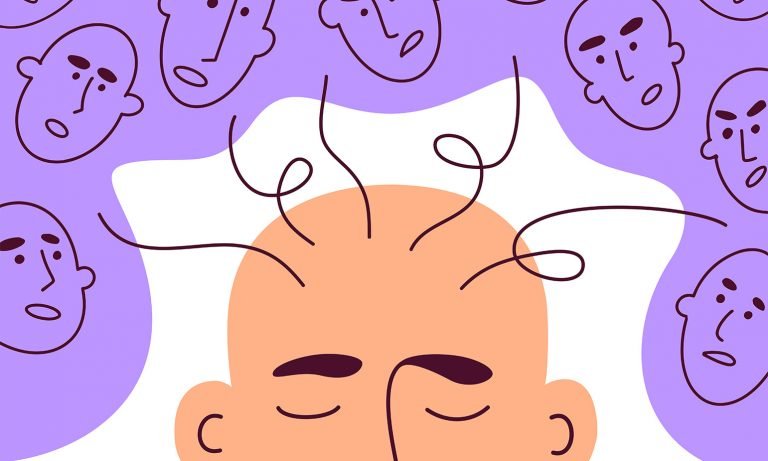
Schizophrenia is a chronic and severe mental disorder that affects the way a person thinks, behaves, expresses emotions and perceives reality. It affects around 20 million people worldwide, so it is not as common as other mental illnesses like depression or anxiety disorder. However, it is perhaps the most chronic and disabling one. It is quite evident when people are suffering from schizophrenia, as they act very abnormally and differently. This is why schizophrenics often have problems doing well in society, school, work or in their personal relationships, as they appear to have lost touch with reality and do not know how to behave like a normal, sociable people. Hence, schizophrenia is associated with considerable disability and greatly affects educational and occupational performance.

Causes

Till today, the exact causes of schizophrenia are still unknown. Research conducted on the topic suggests that it may be a combination of genetic, physical, psychological and environmental factors that cause it. So the causes may range from genetic inheritance, chemical imbalances in the brain, and the use of certain drugs and medication, to external environmental factors like trauma, excessive stress, etc.

Symptoms

As mentioned before, schizophrenia causes a wide range of symptoms on a mental, behavioural and emotional level. These symptoms may vary in number and degree from one schizophrenic to another, but there are some commonly seen symptoms among all of them;

  • Hallucinations – Seeing or hearing things in their heads, which are not there in reality. A hallucinating schizophrenic may see or hear something that do not exist, but they fully believe that it is a real experience.
  • Delusions – These are false or fictitious beliefs that schizophrenics have which are not real. Such delusions could be that someone is constantly following them when no one is, or delusions of grandeur where the schizophrenic feels as if he/she is some great, famous person.
  • Disorganized Thinking (Speech) – This means that schizophrenics lack proper communication skills and do not have much interactive capability. They may only half answer questions or not respond at all, and their speech might be meaningless and incomprehensible.
  • Disorganized Motor Behavior – Even their body movements and postures are often abnormal. The behavior may be childlike and unpredictable, and often is not focused on performing any task. They may even require help to perform daily life functions like brushing teeth, eating, etc.
  • Negative Symptoms – This generally refers to their lack of ability to function like a normal human being. They may lack hygiene and care for themselves. They may also lack emotion, or express emotions at wrong times, like showing happiness at a funeral.

Treatment

Since schizophrenia is chronic, even treatment for it is lifelong. Unfortunately, schizophrenia cannot be cured, but it can be controlled. Treatment can help the afflicted person manage the symptoms of the illness and avoid hospitalization. There is no blanket treatment plan and doctors will often tailor it to suit the individual persons. The cornerstone of schizophrenia treatment is medication. Schizophrenics will most commonly be given antipsychotic drugs to keep control of the mental disabilities and allow the person to think and function somewhat normally. Along with this, even psychosocial support from family members and in the form of counselling can help a person develop coping skills in life. This is especially important because schizophrenics often have suicidal thoughts and tendencies, and having a social support system helps them in averting these thoughts and gives them hope.

It is important to highlight here that there is a stigma, and discrimination against people with schizophrenia is common nowadays. They are also often abandoned by their families or relatives thinking that they are beyond saving. We must learn as a society that such people are not as fortunate as us, and suffer from inflictions that we cannot even imagine. Society must be educated on the fact that they are not dangerous or scary people, and must be encouraged to seek help. Hence, we must do all we can to support schizophrenics and provide them with the best help we can.

Types of learners and how to engage them

  1. Auditory and Musical learners

To engage a social learner, encourage both group collaboration and presentation. Consider:

  • Roleplaying historical events or works of literature
  • Collaborating on maths problems
  • Working as a class on comprehension questions

Auditory learners like to hear solutions and examples explained to them, and may gravitate towards music subjects and group learning as a way to understand information. Auditory learners often have a high aptitude for distinguishing notes and tones in music and speech.

Qualities often associated with auditory learners include:

  • Possessing a ‘good ear’ for music and tones
  • May be distractible
  • Likes to talk to self / others / hum / sing

Auditory learners might say words out loud or hum tones to better learn them. This strategy is key for keeping musical learners engaged in class lessons.

How to engage them?

If you’re a music teacher, you’re in luck. Auditory learners will be engaged from start to finish. For other subjects however, engaging aural learners requires some tact and forethought.

The key here is your voice (and the voice of your students). Write down something on the whiteboard, then read it out loud. Work on your delivery so you can express learning material in interesting and engaging tones. Similarly, encourage your students to read back their own notes to themselves (and the class). Hearing the sound of their own voice and the voices of others is engaging to auditory learners, but it can be a great learning tool for students of all types.

Other strategies you can try include:

  • Recording lessons for later listening and reference
  • Encouraging auditory listeners to ‘teach others’ verbally
  • Seating them away from distractions

2. Visual and Spatial learner

Visual learners like diagrams, drawing out concepts, charts and processes. They learn by looking at visual concepts, creating them, and watching other people create them. Visual learners might be organised or creative in their application, and find things like colours and shapes useful.

Visual learners often possess the following qualities:

  • Habitual doodlers / drawers
  • Observant
  • Not easily distracted
  • Enjoys planning
  • Prefers visual instructions

How to engage them?

To engage a visual learner in the classroom you’ll want to include elements like maps, diagrams and imagery. If you have a projector, try to include relevant images to go along with the course content. In geography and history, maps are helpful, while for maths and logic, go with diagrams.

Charts, images and diagrams will aid most students, so catering to visual learners doesn’t mean you have to ignore other types. When it comes to self-driven learning, encourage the spatially aware to sketch out their ideas, create mind maps and flowcharts. It should probably come to them naturally, but a bit of prompting can always help.

Other tactics you can use include:

  • Sitting visual learners near the front
  • Using colour codes and cues
  • Encouraging note taking and recopying notes during study

3. Verbal learner

Verbal learning includes both writing and speaking. Verbal learners might have a preference for reading and writing, word games and poems. Verbal learners know the meanings of a broad category of words, can use them effectively, and actively seek out new words to add to their repertoire.

Some qualities associated with verbal learners include:

  • Intellectual
  • Bookworm
  • Good story teller

Verbal learners often seek out careers in journalism and writing, administration, law and politics.

How to engage them?

Verbal learners will want to write down notes, talk about concepts and potentially present them as well. The trick with verbal learners is knowing what adjacent types of learning apply to them – are they an outgoing or more introspective verbal learner? Some may lean more to talking, while others to reading and writing. Try to cater to preference while also using their verbal abilities to push personal boundaries every once in awhile.

4. Logical and Mahematical learners

Perhaps unsurprisingly, mathematical learners err towards careers in programming, accountancy, science, research and other number and pattern-orientated careers. Some qualities associated with mathematical learners include:

  • Pattern recognition
  • Good with numbers
  • Predisposition towards grouping and classification

How to engage them?

Mathematical learners will greatly appreciate any type of learning that logically explains the subject at hand. For maths, that’s easy. For other subjects, it requires some effort and planning:

  • History and geography: Try to include statistics and classification taxonomy in your lesson plans.
  • Literature: Ask your students “What category of book is this?” Or in poetry, have them learn the meters and explain them to other students.
  • Music: Teach both musical instrument classification (woodwind etc) and the mathematical relationships between notes.
  • Art: A good starting point is the colour wheel and the effects of combining different colours.

With logical students, always look to incorporate a system. If you’re unsure, include the students in the development of that system. They’ll benefit from it greatly.

5. Physical and Kinaesthetic learner

Commonly called hands-on learners, kinesthetics prefer to physically engage with the materials of the subject matter. Some qualities associated with physical learners include:

  • Preference to ‘get their hands dirty’
  • Energetic, may drum fingers or shake legs
  • Action-orientated and outgoing
  • May de-prioritise reading and writing

Physical learners represent about 50% of the population,and gravitate towards careers with lots of hands on work like emergency services, physical education and sports.

How to engage them?

Channeling the energy and excitability of physical learners is key to offering a good lesson. Taking breaks so they can move around can help, but so can encouraging role play and movement within the lesson itself. Physical interaction is also important. The use of props and models will greatly benefit a kinaesthetic learner. Give them something to grab onto and they’ll process information much better than from a book or whiteboard.

Other strategies to engage physical learners include:

  • Encouraging movement during study (don’t punish them for fidgeting)
  • Decluttering desks and surfaces so they can focus on learning

6. Social and Interpersonal learner

Social learners show preference towards groups and collaboration. Some, but not all, will gravitate towards leadership within a group. Some of the qualities often associated with this type of learner include:

  • Extraverted
  • Good communicator
  • Sensitive and empathetic

It’s important for educators to understand that not all social learners are extraverted or highly communicative, and that they can also be visual, auditory, verbal, logical or physical learners. The interpersonal aspect perhaps better describes the settings in which they are most comfortable, rather than how they absorb information.

As such, teachers should be cognisant of the breadth of variation between different types of social learners. For example, social doesn’t strictly mean verbal. Some social learners prefer to listen in a group setting, rather than on their own.

How to engage them?

Interpersonal learners like to ‘do’ and to ‘share’. This can sometimes lead to distraction for other students who are more intrapersonal in their learning habits. To prevent this, try to channel social learners into providing value to the group, giving them tasks that use their energy usefully, with a focus on empathy for their classmates.

7. Social and Intrapersonal learner

Solitary learners can be visual, auditory, physical, verbal or logical learners. Fulfilling all the needs of the solitary student will ensure they are fully engaged. Some of the qualities often associated with this type of learner include:

  • Independent
  • Introspective
  • Private

Intrapersonal learners may gravitate towards careers with a lot of self determination or motivation, as well as solitary workloads. Think:

  • Researchers
  • Writers and authors
  • Programmers and coders

How to engage them?

In a classroom environment it can sometimes be difficult to engage a solitary learner. They might sit silently in the back of the classroom, only to ace the exam at the end of semester. For the educator, it’s important to engage them during class. Provide visual materials, books and learning aids. Designate quiet areas, and collaborate with defined sharing time so the solitary learner can feel adequately prepared.

Mixed learning approach

With large classrooms, it’s not always easy to personalise lessons, but using a mixed learning approach throughout coursework can help you cater to each type of learning style. You may decide to focus on a particular learning type each lesson, or incorporate multiple strategies within each lesson. The most important element is first recognising the differences in student learning – the rest will flow from there.


Know about Engineering departments

What does an Engineer do?
Engineers design machinery, build skyscrapers, and oversee public works, but they address society’s needs and problems on so many other levels as well. At a molecular level, they work on drug delivery systems that work inside cells. At a macro level, they look at the particle flow of pollutants through soil to clean up oil spills, abandoned industrial sites and other biohazards. At a galactic level, they design spacecraft for other-planet exploration. At an atomic level, they develop data storage that focuses on the spin of electrons in atoms. Clean drinking water, safe food storage, and the protection of our environment are also under the engineering umbrella.

What is Mechanical Engineering?

Mechanical engineering is the branch of engineering which deals with the design, manufacturing, maintenance and testing of machines. It is also considered as one of the most diverse and versatile disciplines of engineering. Mechanical engineering also includes the application of mechanics, material science, applied mathematics and physics.

With the rise of modern technology, mechanical engineering has witnessed newfound importance with more and more students opting to learn less explored domains of robotics, mechatronics, nanotechnology, etc.

New trends and future scope:

The scope of mechanical engineering no longer remains limited to just manufacturing and testing of huge machinery and equipment. With technology making new advancements, there are several new domains in mechanical engineering which are being taken up by passionate engineers. These domains include robotics, new materials, nanotechnology, computer-aided design, geomechanics, etc. The two highly pursued domains are robotics and mechatronics, both of which combine the knowledge of mechanical engineering with other streams to deliver state of the art products.

Robotics

Robotics is an interdisciplinary stream of engineering that combines mechanical engineering, electrical engineering and computer science with an aim to design and develop robotic systems along with computer systems to control them. With the AI revolution already started, Robotics as a stream has been on the rise and is expected to grow in both reach and demand in the coming decade.

Mechatronics

Mechatronics too, is an interdisciplinary branch of engineering which usually combines mechanical engineering, electrical engineering and Information technology. A mechatronic engineer is responsible for designing complex engineering systems, can assist in process automation and also test the systems in use in the processes.

From automobiles to heavy-duty lifting machines and even the modern aircrafts that defy speed barriers, a variety of modern systems are being designed under the supervision of expert mechanical engineers. You will not find mechanical engineers limiting themselves to the manufacturing industry anymore. Mechanical engineers are being welcomed in various industries with open arms and high compensation packages, provided that the candidates are skilled and proficient.

The current market scenario and scope:

According to the portal payscale.com, the average salary of mechanical engineers falls below Rs. 3.4 lakhs per annum. A few skills are able to add value to this compensation package. For example, knowledge of robotics or robotics process automation and a sound understanding of electrical systems can make a recruiting firm provide you with a better pay package, as per their need. Even though the pay package is lower in certain sectors as compared to computer science engineering, mechanical engineer with IT skills are very high in demand and the pay package is higher than CS engineers.

BYJU’S: India’s most valuable Unicorn.

Photo Credits: BYJU’s

What’s the business about?,

BYJU’s is an Indian multinational educational company which was founded in 2011 by BYJU Raveendran and Divya Gokulnath. Today, it’s the most valuable unicorn in India and world’s most valuable technological educational company.

History of BYJU’S

In 2011, Mr. Raveendran and Ms. Divya Gokulnath founded an educational company with the help of their students which provided online video based learning programmes for students of kindergarten to Grade 12th.

In 2015, with the help of Think and Learn Ltd., the business firm launched its first ever app named BYJU’s: The learning app. After that, in 2017, BYJU launched its second app for mathematics for kids and subsequently they also launched another app for parents to help them track their child’s learning course.

Rose to fame: BYJU’s

By 2018, BYJU’s had more than 15 million users and 9 hundred thousand paid users. In 2019, BYJU’s won sponsorship rights for Indian Cricket Team jersey. Popular Indian actors Mohanlal and Shah Rukh Khan are the brand ambassadors for Byju.

Major Services provided by BYJU.

Initially, educational content was only made for students from classes kindergarten to 12. But now BYJU also trains students for Indian competitive examinations like IIT-JEE, NEET, CAT, UPSC and it also trains students for international exams like GMAT and GRE.

In 2019, the company announced that it would soon start providing classes to students in their respective regional languages in India. The same year it also announced the commencement of an international app for students living in countries outside of India.

Byju’s also launched its Future School which is a Kids Coding Platform where kids are taught to code online by experts.

The video tutorials in the app are about 12-20 minutes long and they’re digital animation videos for classes 4th to 12th and hence this makes it easy for students to grasp and learn.

Road to most valued start up!

BYJU’s has raised 350 million dollars from UBS, private equity Equity Giant Blackstone and also from Abu Dhabi state fund ADQ, Phoenix Rising and Zoom.

Byju’s has raised over 1.5 billion dollars in last eighteen months because of the increase in online learning and teaching due to the COVID-19 pandemic.

Byju’s has also acquired several other small business in the recent past like White Hat Jr, Scholr, Osmo and Toppr. In fact, it’s latest fundraising comes from popular educational chain, The Akash Educational Services, estimated at about 950 million dollars.

According to Mr. Raveendran, the 21st century illiterates are not those who can’t read and write, but those who can’t learn, unlearn and relearn.

Why do Volcanoes Erupt?

You may have heard about the eruptions of volcanoes like Mount Vesuvius and Mount Tambora that devastated the land surrounding them and killed thousands of people living in their vicinity. However, not many of us stop to question why or how a volcano erupts in the first place. It is indeed not only an interesting, but also a useful bit of knowledge to have about one of the most fascinating natural phenomena that occur in our world.

What is the process?

We know that deep within the earth, the temperatures are extremely high. In fact, it is so hot that some rocks gradually start melting and become a thick flowing substance called magma. This melting takes place in the layer of the earth’s interior called the ‘mantle’. The mantle is the layer between the dense, superheated core and thin outer crust of the earth. The immense heat from the core melts the earth’s mantle and this melted rock (magma) begins its journey to the surface. The melting may happen where tectonic plates are pulling apart or when one plate is pushed down under another.

Magma being a lighter and more viscous substance than the rock surrounding it, starts rising to the top and collecting in areas known as magma chambers. As the magma rises, bubbles of gas also form inside it. Eventually, some of the runnier magma charges through any vents or fissures in the earth’s crust and gets released onto the surface as lava. Hence, magma that is released through volcanoes are then called lava, which flow in every direction away from the volcano to surrounding areas.

For the magma that is thicker in nature, the gas bubbles are not able to escape easily and the pressure starts building as the magma rises. When the pressure that is building reaches a point where it is too high for the earth’s surface to handle, an explosive eruption happens from the volcano. Such eruptions may also occur suddenly if the rocky surface above the magma has eroded over time, allowing the pressurized magma to easily burst through. Explosive eruptions are what often cause mass death and destruction, as the lava flows with much greater force and heat intensity. It can melt anything in its path, and most human creations will succumb to its natural power. The aforementioned bubbles, which are of undissolved water and sulphur, then burst with the intensity of a gunshot and release plumes of ash into the atmosphere. This ash can suffocate plants, animals and humans.

Another way eruptions happen is when water underneath the earth’s surface happens to come in contact with hot magma and creates steam. This may happen when ocean water is able to slip into the earth’s mantle and mingle with the magma. Over time, the rock strength of earth’s surface decreases as the pressure builds, and the steam can gradually build enough pressure to cause an explosion through the volcano.

It is important to highlight that some volcanic eruptions are explosive while others are not. As explained, it depends on the composition of the magma. If it is runny and gas is able to escape easily, lava will simply flow out. This is easy for people to avoid as it flows slowly and gives them time to move away. However, if magma is thick and gas cannot escape easily, pressure builds up until there is a violent explosion for it to escape. Magma blasts into the air, and lava flows at a greater speed for a greater distance. This is often unexpected and harder to escape from.

What is the role of Climate Change?

Geological studies have shown that human-induced climate change will most likely cause an increase in volcanic activity around the world. This is primarily because climate change has caused melting of glaciers in the earth’s crust. These glaciers have an impact on the flow of magma to the surface, and so melting glaciers may cause more magma eruptions. Basically, after glaciers are removed, the surface pressure decreases and the magma can more easily propagate to the surface and thereby erupt.

A team of researchers in the UK found that with the advancement of glaciers over time, there was diminishing volcanic activity. In turn, the team found that as the climate warmed up due to global warming and glaciers melted, there were more frequent and bigger eruptions. It has been found that even relatively minor climate changes may have an influence on this. Hence, it can be concluded that today’s global warming could mean more frequent, and even greater volcanic eruptions.

Agriculture

When tillage begins, other arts follow. The farmers, therefore, are the founders of human civilization.”

— Daniel Webster

Introduction

It all started thousand of years ago , when the human civilization came into existence . Agriculture was a key to survival . People were farming for there domestic purpose , not for the others .

As the civilization started to grow accustomed of agriculture , they grew food in surplus that enabled people to live in cities. Plants were independently cultivated in at least 11 regions of the world.

The development of agriculture enabled the human population to grow many times larger than could be sustained by hunting and gathering.

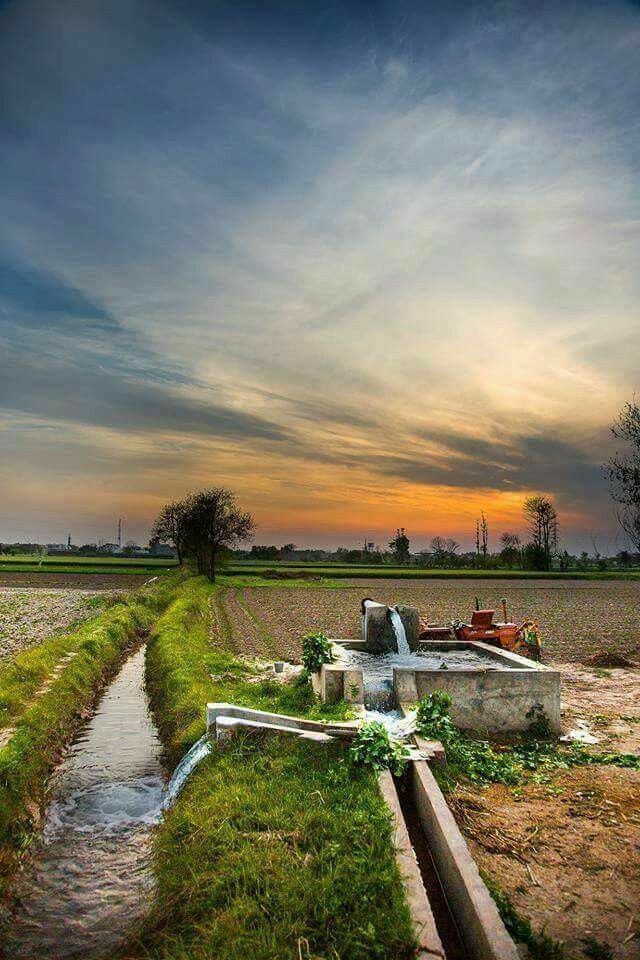
It was the beginning of different civilization in different parts of the World. From those civilizations , one of them was our’s The Indus Valley Civilization . Vedic literature provides some of the earliest written record of agriculture in India. Rigveda hymns , describes plowing, fallowing, irrigation, fruit and vegetable cultivation.

Some of the ancient and historical evidence suggests rice and cotton were cultivated in the Indus Valley.

Agriculture : In India and World today .

India ranks second worldwide in farm outputs. As per 2018, agriculture employed Indian work force and contributed 17–18% to country’s GDP.

In 2016, agriculture and allied sectors like animal husbandry, forestry and fisheries accounted for 15.4% of the GDP (gross domestic product) with about 41.49% of the workforce in 2020.India ranks first in the world with highest net cropped area followed by US and China.The total agriculture commodities export was US $ 3.50 billion in March – June 2020.

Agriculture is the primary source of livelihood for about 58% of India’s population. Share of agriculture and allied sectors in gross value added (GVA) of India at current prices stood at 17.8 % in FY20.

During 2019-20 crop year, food grain production reached a record of 296.65 million tonnes. In 2020-21, Government of India is targeting food grain production of 298 million tonnes.

India is among the 15 leading exporters of agricultural products in the world. Agricultural export from India reached US$ 38.54 billion in FY19 and US$ 35.09 billion in FY20.

Agriculture is an important industry in the United States. The agriculture industry, which includes both crops and livestock, is responsible for producing most of the world’s foods and fabrics. Agriculture impacts so many things that it’s hard to imagine a world without this important industry.

Schemes and Initiatives

Due to the high requirement of agriculture . It is important for the government to take initiatives and provide better infrastructure to the farmers. However , the required level of investment for the development of marketing, storage and cold storage infrastructure is estimated to be huge.

The Indian Council of Agricultural Research (ICAR), established in 1905, was responsible for the search leading to the “Indian Green Revolution” of the 1970s. The Union Minister of Agriculture is the president of the ICAR. The Indian Agricultural Statistics Research Institute develops new techniques for the design of agricultural experiments, analyses data in agriculture, and specialises in statistical techniques for animal and plant breeding.

Schemes by government for Indian agriculture :

  • Dairy Entrepreneurship Development Scheme.
  • Rainfed Area Development Programme (RADP)
  • Paramparagat Krishi Vikas Yojana (PKVY)
  • Pradhan Mantri Krishi Sinchai Yojana (PMKSY)
  • National Agriculture Market (e-NAM)
  • Pradhan Mantri Kisan Maandhan yojana.
  • Pradhan Mantri Fasal Bima Yojana (PMFBY)
  • Kisan Credit Card (KCC) scheme.
  • Pashu Kisan Credit Card Scheme.
  • PM-Kisan Scheme.

Conclusion

Agriculture sector is one of the prominent sector in India as well as all over the world . India is becoming self – sufficient in pulses and other crops .

Gone are the days , when India was unable to provide sufficient amount of food to the citizens . Gone are the days , when people used to think agriculture was not as important as other sectors . Gone are the days , when people used to think less of farmers . And gone are the days , when people were less educated about agriculture.

Farming is a profession of hope.

— Brett Brian

Link

The World of Nepotism

Welcome to the anti-meritocratic world, this world. What are you going to do about it? Will you stand back and watch while cronyism, nepotism, the old school tie, the private club, the right university, the right accent, the right background, the right secret society, the right religion, the right family, destroy merit so that their chosen ones can prosper at your expense. It’s time to smash the conspiracy. Break up all the mechanisms that allow privileged groups within society to rig the system in their favour and penalise anyone who doesn’t belong to their insidious cliques.

Michael Faust, The Meritocracy Party

Well , Its a very complicated questions . In the world, where one’s knowledge didn’t get recognition .

What would you do , when you get acknowledged not on the basis of your knowledge but on the basis of your relation with the owner ?

What would you do , if you don’t get promoted because you are not his /her relative ?

Do you ignore the fact that you are not the one , whom your boss approves?

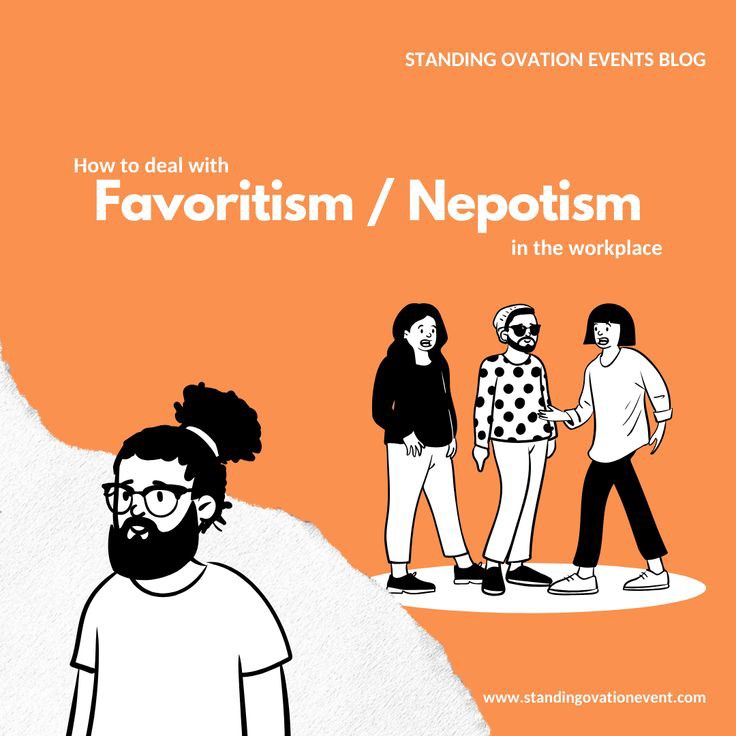
Well , if you think it’s favouritism than you are absolutely correct . You may also come accross the word NEPOTISM and if you don’t than start reading the passage . (I did as well )

This 8 letter word is destroying everyone in today’s world. And who is responsible for creating such a hypocrite. We the people have to repose this curse and make sure to control it with our coming generations, else it will destroy the whole world. And there’ll be no humanity left in this world” –

Ikramul Hannah.

Introduction

Nepotism is a the practice among those with power or influence of favouring relatives or friends, especially by giving them jobs.

Nepotism is generally defined as “the bestowal of patronage by public officers in appointing others to positions because of blood or marital relationship”.

Nepotism is found in almost all the fields but it is practiced most in business, politics, sports and entertainment sectors. It has been in practice since time immemorial, but some special cases have made it to the limelight in the past few decades.

Nepotism in India :

India has it’s fair share in the field of NEPOTISM . Well , have you ever expected that . I say , YES . Because being one of the largest country , people might become more thirsty for power . “When constantly reaching out for more, you forget what you have” Christine Szymanski.

Nepotism can be characterized as ‘the demonstration of utilizing force or impact to get out of line preferences for individuals from one’s family’.

You must be conflicted , why does nepotism exist even today ? We are living in 21st century , than why we have such orthodox thinking ? Who says no one can define what is going on in one’s mind ( well I say , isn’t is obvious ) .

From the politics to the Entertainment , from the owner to the customer, from the Bollywood to the Judiciary ; Nepotism is everywhere .

Like in OJO -MOJO , After the submission of writing competition , OJO’s class teacher asked him who wrote better . Is it MOJO or OLLY , what do you think whom he would choose . MOJO thinks OJO will choose OLLY because he likes her . But when the result announced MOJO was astounded because OJO choose MOJO’s writing . So , what do you think is it nepotism or not . Think and you will know the answer .

Bias has become the first qualification to join a party, and extreme bias the virtue to become a leader.

Link

BOOK REVIEW : HOW TO WIN FRIENDS AND INFLUENCE PEOPLE

How to win friends and influence people is a great book to read . Dale Carnegie provides timeless, rock solid and practical advice that can be applied in our personal life.

Here are few methods to win friends and influence people that I learnt from this book :

1. Don’t criticise, condemn, or complain.

2. Give honest and sincere appreciation.

3. Go out of your way to make people feel important.

4. Become genuinely interested in other people.

5. Remember to use the other person’s name.

6. When wrong, admit it quickly and emphatically.

7. Publicly praise the other person’s accomplishments.

8. Show respect for other people’s opinions.

9. Try to see things from other’s perspective.

10. To get the best of an argument , avoid it.

11. Always begin in a friendly way.

12. Ask questions rather than give orders.

13. Smile.

14. Let the other person save face.

15. Let the other people do all the talking.

HAPPY READING ; )

Climate change : In India and World today .

Let’s double down on solar energy, let’s be more energy-efficient, let’s weatherize our homes. We can build a better, healthier economy based on good-paying, clean energy jobs.”

Ian Somerhalder, Actor

Being one of the second largest country , climate change in India is having profound effect on India and all over the world . India is ranked fourth among the list of countries most affected by climate change in the period from 1996 to 2015 .

With 7% of global emissions , India emits about 3 gigatonnes (Gt) CO2eq of greenhouse gases each year; about two and a half tons per person, which is half the world average.

Due to the rise in temperature , the Tibetan plateau are causing problem to Himalayan glaciers . It directly effect in increasing the flow rate of the Ganges , Brahmaputra, Yamuna and other major rivers.

The Indira Gandhi Institute of Development Research has reported that, if the prediction of the Intergovernmental Panel on Climate Change is correct about Global warming than it may cause fall of GDP upto 9%.

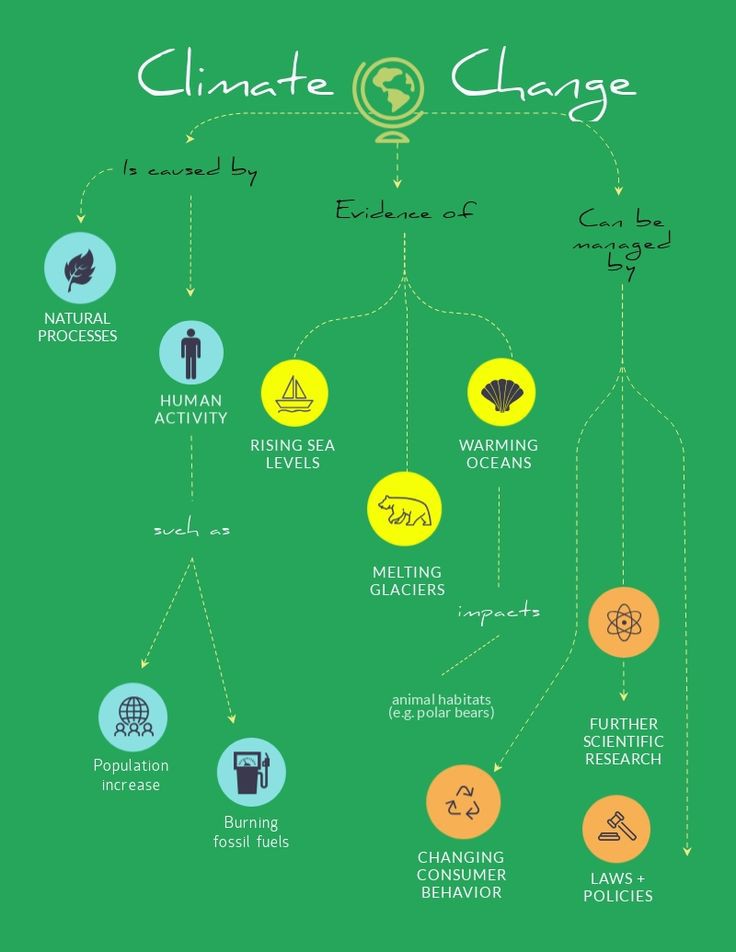
In all over the world , climate change is drastically affecting the change in temperature of the globe 🌎 . Climate change includes both global warming driven by human-induced emissions of greenhouse gases and the resulting large-scale shifts in weather patterns.

Causes :

Human envision and green house gasses are two important causes in the climate change. Greenhouse gases affect Earth’s energy balance and climate .Human activities have added greenhouse gases to the atmosphere. Human activities are changing the climate.

Other causes :

  • Power Plants.
  • Farming .
  • Deforestation.
  • Fertilizers.
  • Oil drilling.
  • Natural gas drilling.
  • Permafrost.
  • Garbage .
  • Volcanic eruption.
  • Pollution.

Campaigns

There are many campaigns that are going on . One of them is The ActNow campaign . It was launched at the UN Climate Change Conference (COP 24) in December 2018, with a call from Sir David Attenborough in conjunction with the award-winning “People’s Seat” initiative.

It signifies individual action on climate change and sustainability. By changing our habits and making choices that have less harmful effects on the environment, we can tackle the climate emergency and build a more sustainable world.

It is also working with other campaigns like The Good life goals , Anatomy of action , 170 actions to combat climate change , lazy person guide to saving the world , connect4climate , climate neutral now , trash hack , stop the waste , Think. Eat. Save. , Clean seas , breathe life , glowing glowing gone . Their may be others as well .


Prevention :

Becoming more energy efficient is a great way to prevent pollution. It causes the power plants to expend less energy that can lead to the production of greenhouse gases. … Replace your light bulbs with energy-efficient light bulbs that help you save electricity too.

  • Speak up!
  • Power your home with renewable energy.
  • Weatherize, weatherize, weatherize.
  • Invest in energy-efficient appliances.
  • Reduce water waste.
  • Actually eat the food you buy—and make less of it meat.
  • Buy better bulbs.
  • Pull the plug(s).

Conclusion

In the times , where the world is changing and taking measurements for saving the globe . Many Environmentalist , Actors , Politicians , Countries are taking precautions and actions on the climate change . It is our duty to prevent our world from falling . Take Initiative To Save The World .

Climate change is real. It is happening right now, it is the most urgent threat facing our entire species and we need to work collectively together and stop procrastinating.

Leonardo Di Caprio, Actor & Environmentalist

Link

IS LEARNING A DIFFICULT PROCESS

When it comes to the topic of learning or studies,there arises various queries and comments. Is learning that difficult or a boresome work. Before we blame our Education system or institutes,we need to realise some actual factors. Learning is not a hard job, in fact learning is a delight if you accept it as a friend. It’s just a form of entertainment from which you get to know more. Education is the thing which makes a person complete and everyone must have access to it. Often the process is misunderstood, its aim is  to learn and not merely to crack a exam or to earn a degree. In this case parents and students get worried and anxious about getting into various institutes. They believe that the only way to access it is by joining an institute and spend money on it. It is a misconception,truth is where you study doesn’t matter but how you study is important. The light is within you,the interest to learn new things will help you access it. It’s only lack of attentiveness and sometimes parent’s pressure by which students ends up in coaching centres. A person doesn’t need to go for a special coaching if he has self control and willingness to achieve his goal. It’s just needs a little effort. The process doesn’t eat much of your time but it needs your interest and concentration.

To make the learning process easier and effective one needs to grow interest which can be achieved by active form of learning.

  1. While you are learning a topic first you need to give a thorough reading so that you can form an idea.
  2. You must raise questions and try to explain it yourself. While searching for the answer you get to know more about the topic further you will grow interest in the field.
  3. To have better understanding one needs to explain the concept to other person. You should make sure that you can answer to their queries and make the concept simpler.
  4. The next thing one needs to do is to write down the concept in own words. This makes sure that you never forget the concept.

Apart form these there must be a regular practice. Inorder to follow these,one must have self discipline. If you are able to work in streamlined manner with full dedication you’ll definitely succeed in the process.Once you decide what you want,you need to focus on it without falling for any sort of distraction and must work hard to reach it. Discipline is the important factor for this, if one can practice it there is no need for the person to relay on other and can function independently.

Is it your anxiety .

“Your mind will answer most questions if you learn to relax and wait for the answer.”

—William S. Burroughs

Am I losing my mind or its just my mind playing tricks ?

In the world , where people are ready to fight against their competitor . What will happen when you loose ?

Or didn’t get what you desire the most ?

Would you accept the reality or choose to mourn for your loss.

Introduction

Do you ever feel anxious about going to the new place or meeting with new people ?

Do you ever feel the numbness in your body when you lost something or someone ?

Have you ever get overwhelmed by your fears ?

So what do you call it .

Is it an anxiety disorder?

Well hold your horses because it’s not . Like really we all feel anxious , hesitation , numbness , fear in our life . But if you think it’s an anxiety disorder . It’s a big NO .

If you want to know what is anxiety disorder and how to differentiate it from normal anxiety . You have to ask me .

SO . ASK . ME .

Well if you don’t ask me then also I will tell you .

When we feel something is crawling on our leg but didn’t find a thing . Instead of sleeping peacefully , we think of possible aspects that will make our night hell .

Well it happened with me and guess what , I always wake up middle of the night and try to find the invisible ghost ( is it only me who thinks about these weird things or it happened with you as well .)

Anxiety is when these types of situations happened only single time , maybe 2 or 3 times. But when these kind of situations happened every time whenever you sleep than maybe you have Anxiety Disorder.

What is Anxiety Disorder?

Let’s get to know about the Father before we get to know about the Son .

Anxiety is a feeling that comes and goes, but does not interfere with your everyday life.This type of anxiety is unpleasant, but it may motivate you to work harder and to do a better job.

But what about Anxiety Disorder . Well I am explaining just have some patience . You know patience is the virtue of life .

Yes , we were talking about the Son . I mean Anxiety Disorder . It is the feeling of fear may be with you all the time. It is intense and sometimes debilitating. These type of anxiety can cause more damage than you think about.

You will stop enjoy everything . In extreme cases you stop socialising with other and if it left untreated, it may be worse like you will kill yourself.

According to the APA ( American Psychiatric Association) , women are more likely than men to be diagnosed with an anxiety disorder.

Types of Anxiety Disorder

  • Panic Disorder .
  • Phobia .
  • Social Anxiety Disorder.
  • Separation Anxiety Disorder.
  • PTSD (Post Traumatic Stress Disorder.)
  • Illness Anxiety Disorder .

In present world , PTSD is most likely to be found in the women rather than men. It happens when a person goes through some traumatic experience.

Symptoms:

  • Increased heart rate.
  • Rapid breathing.
  • Restlessness.
  • Trouble concentrating.
  • Difficulty falling asleep.
  • Stop trusting.
  • Worried about small things .

Remedies :

  • Getting enough sleep.
  • Meditating.
  • Staying active and exercising.
  • Eating a healthy diet.
  • Staying active and working out.
  • Avoiding alcohol.
  • Avoiding caffeine.
  • Quitting smoking cigarettes.

Conclusion :

Anxiety Disorder can be found in anyone from 5 year old boy to 80 year old woman or from 15 year old girl to 50 year old man. It may be cured , only if it treated properly . If not , it can cause some serious issue .

What lies behind us and what lies before us are tiny matters compared to what lies within us.

—Henry Stanley Haskins

Link

Think Before You Eat

Can our eating habits effect our environment? What we today will be responsible for tomorrow’s destruction? Is there a relation between between global warming and food we eat? Answer to all these questions is a big “YES”

The relation between food and environment can be understood through chain of carbon foot print. ‘Carbon footprint’ is amount of greenhouse gases that emits due to human activities which obviously includes ‘eating habits’. Almost every food we consume emits carbon gases in certain amount. But consumption of meat releases highest carbon gases as compared to other food products. The carbon hierarchy within meat is as follows-

Beef > lamb > pork> poultry.

According to Agriculture Organisation of United Nations (FAO) emission from global live stocks is estimated at 7.1 gigatons of carbon dioxide each year. Not only consumption but also food that we waste emits carbon gases. Decomposition of waste food is a long process and throughout this process certain amount of green house gases is released , thus, deteriorating the condition of our planet. According to FAO around 1.3 billion tons of food produced for human consumption are either lost or wasted every year.

So the question arises, how can we save our planet from further destruction ? Answer is quite simple — changing our diet. Planning our diet in a careful manner may create a huge impact not only globally but also in our individual health. Eating more leafy vegetables and cutting down meat consumption will surely contribute to a noble cause. We often ignore the food choices we make and try our best to satisfy our tummy. So next time before consuming food lets ask one question, is it good for my planet and my health? This simple question may change our future.

The Road Not Taken

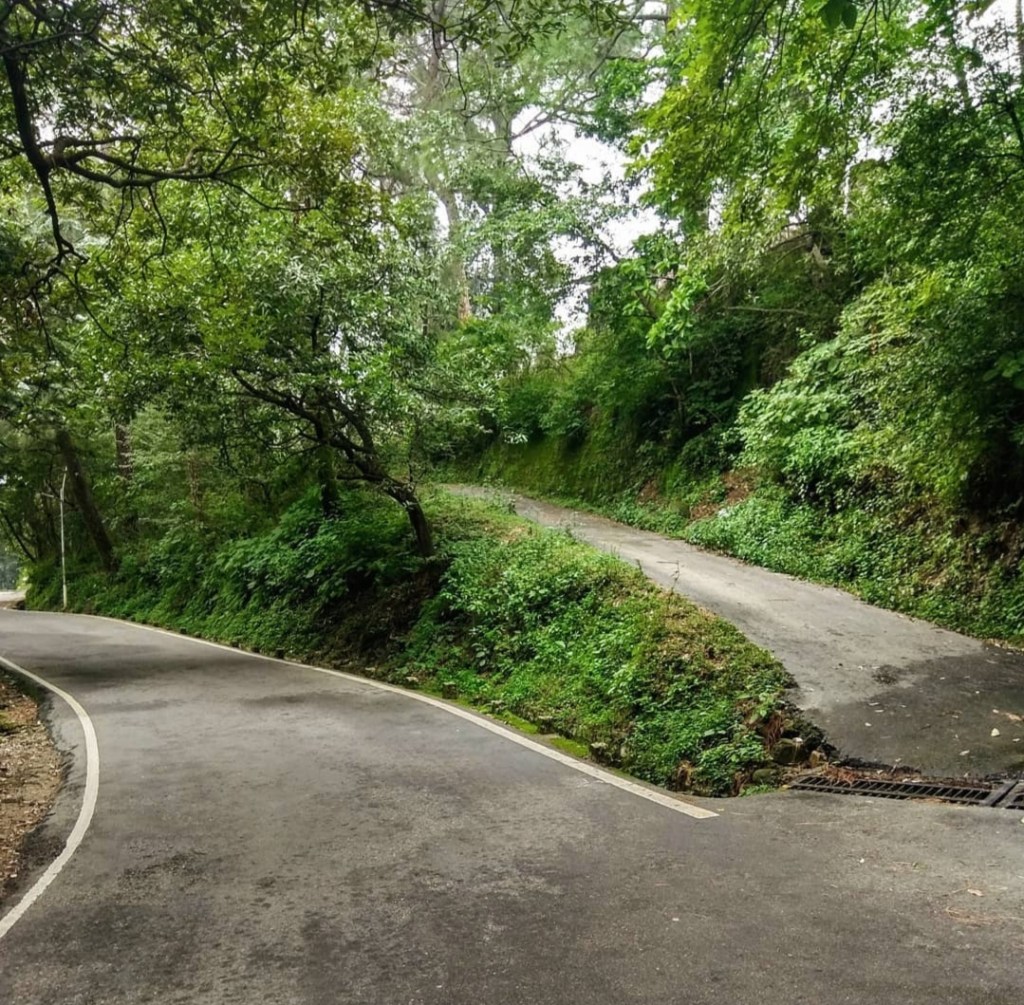
When every choice involves the loss of opportunity, which path will you choose? When your choices come with incomplete information, how can you be certain? How long will you stand still before making your choice? How confident are you when you realize you can’t save the first road for another day when the road you chose tends to lead onward to another? Whichever road you choose will make all the difference. In order to be different and do something great, you have to think different and implement things with a different approach. You have to take a different lane; the road not taken.

Remember the poem “The Road Not Taken” penned by Robert Frost?

Two roads diverged in a yellow wood,

And sorry I could not travel both

And be one traveler, long I stood

And looked down one as far as I could

To where it bent in the undergrowth…

The poem describes someone standing at a fork, or turning point, in a road in the woods, trying to decide which path he is going to take. He looks down one road as far as he can see, and after thinking for another minute, decides to take one because it looks like nobody’s been that way yet, and he is curious about where it leads. He thinks maybe he might come back another day and try out the other path but he has a feeling that the road he has chosen will lead him to new places and discoveries, and he probably won’t be back. He thinks wistfully about that road, which he did not take, and where he might have wound up if he’d gone that way instead. Part of him regrets his decision, but he also realizes that the things he’s seen and the places he’s gone because of the direction he chose has made him who he is.

This poem tells a lot about life in general. Life is all about making choices, whether it’s about choosing to change your daily diet or choosing the right partner. Every choice has its significance in some way or the other.

It makes me remember that past is always dynamic because it shapes my present and therefore, I should be careful about my present as it will take care of my future. Most importantly, this poem makes me think wisely about my choices. It reminds me that I should not make such a choice which I would regret one day and say ‘if I would have taken the other road, it would have been better’. Rather I should be proud of my decision and say ‘Yes! Since I chose the right path, it has led to all this difference’. The difference is what makes it different. Just as Frost ended the poem: “I took the road less travelled, and that’s all that matters”. There are no bad roads, there are only different battles that births different results.

In my opinion, the poet encourages the readers to create opportunities that may be overlooked by us because we all are in search of solutions for our problems rather than trying to sort out the things in the less conventional way.

International day of Tropics

The serenity of the lulling ocean is a wondrous thing to behold..more precious than the gems coveted and covered in platinum or gold…

Oksana Rus

Introduction

International day of Tropics is observed every year on June 29th . This day is celebrated to highlight the different challenges and opportunities faced by the nation as well as by the people who lived in tropical areas .

Firstly , you want to know about things like :

What are tropics ?

Why we celebrate international day of Tropics ?

Or

Is it worth it to talk about these things and is it really important ?

Well hold your horses and try to calm .

What is tropic day and why we celebrate it ?

Well a tropic day is celebrated to highlight the importance of Tropics , it signifies extraordinary and astounding diversity of tropical nations .

The Tropic defined as a area /region between tropic of Cancer and tropic of Capricorn . The day aim at promoting tropical regions and awareness to the people about the diversity of these regions .

While these regions go through little seasonal changes on day to day basis because of some factors like tomography , climatic variation that causes changes in temperature and make these regions warm.

This day introduced to the world when in June 29th , 2014 twelve leading tropical research institutes come together and collaborate. The inaugural state of the Tropics report was launched . The report offers some unique perspective for the increasing the importance of these regions .

United Nations General Assembly adopted resolution A/RES/70/267 in 2016, which declared that 29 June of each year is to be observed as the International Day of the Tropics.

The International day of Tropics briefly explained the issues affecting the tropical zone’s all over the world. To raise awareness and important role the countries played to Sustainable goals .

International day of Tropics 2021

As per the state tropics report the theme of this year is “ THE DIGITAL DIVIDE IN THE TROPICS ”

With the record of sustainable development goals as well as developmental scope . The biodiversity of these regions are maximum and its loss is also greater there. Tropical regions comprise 98% world’s mangrove forests, and around 99% mangrove species.

Due to the subpolar zone the Sun is directly overhead which is one of the region of extinction of flora and fauna in the Tropics. The region is subjected to myriad and need immediate attention to ensure sustainable development.

More than 50% of renewable water resource could be founded their. But the threat lies which causes eviction of lives in the Tropics.

Importance :

Due to the problems it’s our duty as a human being to spread awareness about the implications in climate changes , deforestation , urbanization , global warming effect the biodiversity and lives in Tropics.

The International day of Tropics organize many events in which people share their stories , events and lives in these areas and formulate strategies to ensure the development of such regions .

You who sacrifice fortunes to see the luxuriance of the tropics or the polar lights of the arctic, must pay more dearly to see the One for whom the luxuriance of the tropics is poverty and the polar lights are a tallow candle.

Nikolaj Velimirović, Prayers by the Lake

Link: